Recast Archives - gettectonic.com

From Ancient Oracles to Modern AI

The Science and Limits of Predicting the Future: From Ancient Oracles to Modern AI The Enduring Human Fascination with Prediction Throughout human history, the ability to foresee future events has held immense cultural and practical value. In ancient Greece, individuals ranging from kings to common citizens sought guidance from oracles like the Pythia at Delphi, whose cryptic pronouncements shaped military campaigns and personal decisions. The 16th century saw Nostradamus gain fame for prophecies that appeared remarkably accurate—until closer examination revealed their retrospective flexibility. Modern society has replaced divination with data-driven forecasting, yet fundamental challenges persist. As Nobel laureate Niels Bohr observed, “Prediction is very difficult, especially when it comes to the future.” This axiom holds true whether examining: The Mechanics of Modern Forecasting Scientific prediction relies on five key principles: When these conditions align—as in weather forecasting—predictions achieve notable accuracy. The European Centre for Medium-Range Weather Forecasts’ 5-day predictions now match the accuracy of 1-day forecasts from 1980. Similarly, climate models consistently project global warming trends despite annual variability. Predictive Breakdowns: When Models Fail Structural changes create what machine learning experts call “concept drift,” where historical data becomes irrelevant. The COVID-19 pandemic demonstrated this dramatically: The financial sector faces even greater challenges due to reflexivity—where predictions influence the behaviors they attempt to forecast. As George Soros noted, “Market prices are always wrong in the sense that they present a biased view of the future.” The AI Revolution in Prediction Large language models (LLMs) like ChatGPT represent a predictive breakthrough by mastering sequential word prediction. Their success stems from: Recent advances suggest even chaotic systems may become partially predictable through neural networks. University of Maryland researchers demonstrated how machine learning can forecast aspects of chaotic systems without explicit equations—though fundamental limits remain. Quantum Uncertainty and the Future of Forecasting Two 20th century scientific revolutions reshaped our understanding of predictability: While machine learning can optimize probabilistic predictions, current evidence suggests it cannot overcome quantum uncertainty’s ontological barriers. As physicist Richard Feynman observed, “Nature isn’t classical, dammit, and if you want to make a simulation of nature, you’d better make it quantum mechanical.” Conclusion: The Evolving Frontier of Prediction From Delphi to deep learning, humanity’s quest to foresee the future continues evolving. Modern tools have replaced mystical pronouncements with statistical models, yet essential limitations persist. The most accurate predictions occur in systems where: As machine learning advances, new predictive frontiers emerge—from protein folding to economic tipping points. Yet the fundamental truth remains: the future retains its essential unpredictability, ensuring our continued need for both scientific rigor and adaptive resilience. Like Related Posts AI Automated Offers with Marketing Cloud Personalization AI-Powered Offers Elevate the relevance of each customer interaction on your website and app through Einstein Decisions. Driven by a Read more Salesforce OEM AppExchange Expanding its reach beyond CRM, Salesforce.com has launched a new service called AppExchange OEM Edition, aimed at non-CRM service providers. Read more The Salesforce Story In Marc Benioff’s own words How did salesforce.com grow from a start up in a rented apartment into the world’s Read more Salesforce Jigsaw Salesforce.com, a prominent figure in cloud computing, has finalized a deal to acquire Jigsaw, a wiki-style business contact database, for Read more

Read More
The Rise of Conceptual AI

The Rise of Conceptual AI

The Rise of Conceptual AI: How Meta’s Large Concept Models Are Redefining Intelligence Beyond Tokens: The Next Evolution of AI Meta’s groundbreaking Large Concept Models (LCMs) represent a quantum leap in artificial intelligence, moving beyond the limitations of traditional language models to operate at the level of human-like conceptual understanding. Unlike conventional LLMs that process words as discrete tokens, LCMs work with semantic concepts—enabling unprecedented coherence, multimodal fluency, and cross-linguistic capabilities. How LCMs Differ From Traditional AI The Token vs. Concept Paradigm Feature Traditional LLMs (GPT, BERT) Meta’s LCMs Processing Unit Words/subwords (tokens) Full sentences/concepts Context Window Limited by token sequence length Holistic conceptual understanding Multimodality Text-focused Native text, speech, & emerging vision support Language Support Per-model limitations 200+ languages in unified space Output Coherence Degrades over long sequences Maintains narrative flow Key Innovation: The SONAR embedding space—a multidimensional framework where concepts from text, speech, and eventually images share a common mathematical representation. Inside the LCM Architecture: A Technical Breakdown 1. Conceptual Processing Pipeline 2. Benchmark Dominance Transformative Applications Enterprise Use Cases Consumer Impact Challenges on the Frontier 1. Computational Intensity 2. The Interpretability Gap 3. Expanding the Sensory Horizon The Road Ahead Meta’s research suggests LCMs could achieve human-parity in contextual understanding by 2027. Early adopters in legal and healthcare sectors already report: “Our contract review time dropped from 40 hours to 3—with better anomaly detection than human lawyers.”— Fortune 100 Legal Operations Director Why This Matters LCMs don’t just generate text—they understand and reason with concepts. This shift enables: ✅ True compositional creativity (novel solutions from combined concepts)✅ Self-correcting outputs (maintains thesis-like coherence)✅ Generalizable intelligence (skills transfer across domains) Next Steps for Organizations: “We’re not teaching AI language—we’re teaching it to think.”— Meta AI Research Lead Like Related Posts AI Automated Offers with Marketing Cloud Personalization AI-Powered Offers Elevate the relevance of each customer interaction on your website and app through Einstein Decisions. Driven by a Read more Salesforce OEM AppExchange Expanding its reach beyond CRM, Salesforce.com has launched a new service called AppExchange OEM Edition, aimed at non-CRM service providers. Read more The Salesforce Story In Marc Benioff’s own words How did salesforce.com grow from a start up in a rented apartment into the world’s Read more Salesforce Jigsaw Salesforce.com, a prominent figure in cloud computing, has finalized a deal to acquire Jigsaw, a wiki-style business contact database, for Read more

Read More
Salesforce Flow Builder

The Complete Guide to Migrating from Workflow Rules & Process Builder to Salesforce Flow

The End of an Era: Why Salesforce is Consolidating Automation Tools Salesforce has officially announced the retirement of Workflow Rules and Process Builder, marking a pivotal shift in platform automation. After Spring ’25: This consolidation addresses long-standing challenges: Why Flow is the Undisputed Future Salesforce Flow represents a quantum leap in automation capabilities: Capability Workflow Process Builder Flow Visual Designer ❌ ✔️ ✔️ Multi-Step Logic ❌ ✔️ ✔️ User Screens ❌ ❌ ✔️ External Integrations ❌ ❌ ✔️ Error Handling ❌ Limited ✔️ Scheduled Actions Basic ✔️ Advanced Reusable Components ❌ Limited ✔️ Key Advantages of Flow: Urgent Action Required: Migration Timeline Critical Milestones Risks of Delaying Migration Proven Migration Methodology Phase 1: Discovery & Assessment Phase 2: Design & Build Phase 3: Testing & Deployment Common Migration Pitfalls & Solutions Challenge Solution Logic gaps Comprehensive test cases covering edge conditions Performance issues Optimize with bulkification patterns Null handling differences Explicit null checks in flow logic Trigger order conflicts Use Flow Trigger Orchestration Pro Tip: The Migrate to Flow tool handles ~70% of use cases—plan to manually rebuild complex logic. Strategic Considerations Getting Help For organizations needing support: Critical Decision Point: Organizations with 50+ automations should consider engaging Salesforce-certified partners to accelerate migration while minimizing risk. The Bottom Line This transition represents more than just a technical change—it’s a strategic opportunity to modernize your automation foundation. By migrating to Flow now, organizations can: ✔ Eliminate technical debt✔ Unlock advanced capabilities✔ Future-proof their Salesforce investment✔ Position for AI and next-gen automation The clock is ticking—start your migration journey today to ensure a smooth transition before the sunset deadline. Like Related Posts AI Automated Offers with Marketing Cloud Personalization AI-Powered Offers Elevate the relevance of each customer interaction on your website and app through Einstein Decisions. Driven by a Read more Salesforce OEM AppExchange Expanding its reach beyond CRM, Salesforce.com has launched a new service called AppExchange OEM Edition, aimed at non-CRM service providers. Read more The Salesforce Story In Marc Benioff’s own words How did salesforce.com grow from a start up in a rented apartment into the world’s Read more Salesforce Jigsaw Salesforce.com, a prominent figure in cloud computing, has finalized a deal to acquire Jigsaw, a wiki-style business contact database, for Read more

Read More
Machine-Augmented World

Machine-Augmented World

A machine-augmented world, in the context of Salesforce, refers to a future where technology, particularly Augmented Reality (AR) and Artificial Intelligence (AI) and Machine Learning (ML), enhances and expands human capabilities and interactions, especially within the Salesforce ecosystem.  Here’s how Salesforce is embracing the “machine-augmented world”: Essentially, Salesforce’s approach to the machine-augmented world is centered on leveraging technology to enhance human capabilities and interactions within the CRM platform, leading to: Like Related Posts AI Automated Offers with Marketing Cloud Personalization AI-Powered Offers Elevate the relevance of each customer interaction on your website and app through Einstein Decisions. Driven by a Read more Salesforce OEM AppExchange Expanding its reach beyond CRM, Salesforce.com has launched a new service called AppExchange OEM Edition, aimed at non-CRM service providers. Read more The Salesforce Story In Marc Benioff’s own words How did salesforce.com grow from a start up in a rented apartment into the world’s Read more Salesforce Jigsaw Salesforce.com, a prominent figure in cloud computing, has finalized a deal to acquire Jigsaw, a wiki-style business contact database, for Read more

Read More
Datassential’s AI-Powered Salesforce Plugin is Reshaping Sales

Datassential’s AI-Powered Salesforce Plugin is Reshaping Sales

The Global Foodservice Industry’s Silent Revolution: How Datassential’s AI-Powered Salesforce Plugin is Reshaping Sales The foodservice industry is at an inflection point. In the wake of the pandemic, operators are moving beyond reactive sales tactics, demanding AI tools that proactively anticipate needs, automate workflows, and transform data into strategic insights. Enter Datassential’s Salesforce Plugin—a breakthrough solution that integrates AI-driven market intelligence directly into CRM workflows, effectively becoming the operating system for foodservice sales. Here’s why this innovation matters—and why it deserves investor attention. The Problem: Outdated Systems in a High-Stakes Industry Foodservice sales teams grapple with fragmented data, fierce competition, and staffing shortages, leaving traditional CRMs ill-equipped to deliver actionable insights. Key pain points include: The Solution: Datassential’s AI-Powered Salesforce Plugin Datassential’s plugin tackles these challenges with two game-changing features: The result? A Chicago sales rep can instantly pinpoint Midwest Mexican restaurants expanding their menus, while a Tokyo distributor identifies cafes adopting plant-based offerings—all within a few clicks. Why Investors Should Take Notice Risks to Monitor Yet Datassential’s food-specific data edge and first-mover status in AI-driven CRM tools create a defensible niche. The Investment Thesis: Data as the Ultimate Differentiator Datassential isn’t just selling a plugin—it’s building the data infrastructure layer for foodservice sales. The plugin: For investors, this represents a high-margin, scalable opportunity in a sector ripe for AI disruption. As foodservice embraces data-driven sales, Datassential’s ability to turn raw data into agentic workflows positions it as a critical player in the industry’s tech stack. The Bottom Line The shift to AI-powered sales is inevitable. Datassential’s Salesforce Plugin isn’t just a tool—it’s a strategic imperative for foodservice businesses aiming to thrive in an era of efficiency. Like Related Posts AI Automated Offers with Marketing Cloud Personalization AI-Powered Offers Elevate the relevance of each customer interaction on your website and app through Einstein Decisions. Driven by a Read more Salesforce OEM AppExchange Expanding its reach beyond CRM, Salesforce.com has launched a new service called AppExchange OEM Edition, aimed at non-CRM service providers. Read more The Salesforce Story In Marc Benioff’s own words How did salesforce.com grow from a start up in a rented apartment into the world’s Read more Salesforce Jigsaw Salesforce.com, a prominent figure in cloud computing, has finalized a deal to acquire Jigsaw, a wiki-style business contact database, for Read more

Read More
Revenue Cloud

Salesforce Revenue Cloud Advanced

Salesforce Revenue Cloud Advanced (RCA): The Ultimate Quote-to-Cash Solution Revolutionize Your Revenue Operations Salesforce Revenue Cloud Advanced (RCA) is an end-to-end revenue management platform that transforms complex quote-to-cash processes into automated, compliant, and customer-centric experiences. Designed for mid-market and enterprise organizations, RCA empowers businesses to: ✔ Simplify CPQ, billing, and revenue recognition✔ Ensure compliance with ASC 606/IFRS 15✔ Accelerate deal velocity✔ Manage multi-channel revenue streams Ideal for: SaaS, Manufacturing, High Tech, Healthcare, and other industries with subscription models, usage-based pricing, and dynamic bundling. Key Capabilities of Revenue Cloud Advanced 1. Intelligent CPQ (Configure, Price, Quote) 2. Flexible Billing & Monetization 3. Accurate Revenue Recognition 4. Partner & Channel Management Who Benefits from RCA? Team Key Value Sales Faster quoting, guided selling, deal acceleration Finance Automated revenue compliance, reduced manual errors RevOps End-to-end process automation, scalability IT Pre-built integrations, low technical debt Why Choose Salesforce RCA? Native to the Salesforce Ecosystem Seamlessly integrates with: AI-Powered Insights Enterprise-Grade Scalability Transform Your Revenue Lifecycle ✅ Close deals faster with AI-guided selling✅ Eliminate billing errors with automation✅ Stay audit-ready with compliant revenue reporting✅ Scale effortlessly as your business grows Ready to optimize your quote-to-cash process? Contact Tectonic today. Like Related Posts AI Automated Offers with Marketing Cloud Personalization AI-Powered Offers Elevate the relevance of each customer interaction on your website and app through Einstein Decisions. Driven by a Read more Salesforce OEM AppExchange Expanding its reach beyond CRM, Salesforce.com has launched a new service called AppExchange OEM Edition, aimed at non-CRM service providers. Read more The Salesforce Story In Marc Benioff’s own words How did salesforce.com grow from a start up in a rented apartment into the world’s Read more Salesforce Jigsaw Salesforce.com, a prominent figure in cloud computing, has finalized a deal to acquire Jigsaw, a wiki-style business contact database, for Read more

Read More
The AI Adoption Paradox

Dining and Virtual AI

Restaurants are increasingly adopting AI virtual assistants and bots to manage routine tasks like menu inquiries, loyalty program questions, and order tracking, allowing human staff to focus on complex service needs. Platforms like Salesforce Agentforce and Microsoft Copilot are integrated into customer-facing chat systems, apps, and call centers, handling common queries, updating loyalty credits, tracking deliveries, and escalating issues or creating internal tickets without human intervention. Some operators report a 50% reduction in simple inquiries, with guest satisfaction improving due to faster, consistent responses. Salesforce Agentforce, built on Service Cloud and Data Cloud, delivers a conversational concierge experience by analyzing customer history—past orders, loyalty status, and open cases—to provide instant answers or flag issues. For example, ezCater uses Agentforce for natural language order creation, while OpenTable scales global customer support, reducing reliance on human agents for basic tasks. Beyond chatbots, AI-powered operational tools are transforming restaurant efficiency. Computer vision systems, powered by platforms like NVIDIA NIM, Ultralytics, and Viso Suite, monitor dining areas, kitchens, and back-of-house spaces in real time. These systems actively analyze footage, detecting uncleared tables, long lines, or understaffed zones, and alerting staff to act—speeding up table turns and reducing wait times. In fast-casual settings, vision tools manage order queues and crowded pickup areas. In back-of-house, AI vision ensures food safety and equipment compliance, flagging open cooler doors or blocked pathways with automated alerts to managers or centralized teams. These systems reduce reliance on manual checks with real-time anomaly detection, integrating with facility management and workforce platforms for a cohesive response. Future applications could include predictive maintenance, labor forecasting based on traffic patterns, and training gap identification. As edge AI and APIs evolve, smart vision systems are becoming critical restaurant infrastructure. Smartbridge reports a global restaurant group processed over 6 million guest surveys using an Azure-based generative AI tool, automating sentiment analysis, ticket organization, and feedback summaries at scale. This helps chains quickly identify complaints and menu improvement opportunities. Behind the scenes, integrations rely on edge/cloud orchestration and API frameworks. Customer queries route through secure chat interfaces to Agentforce, pulling from CRM or ticket logs, while camera and sensor data feed into AI pipelines on AWS, Azure, or NVIDIA Jetson devices, triggering alerts in Slack, Jira, or ServiceNow. This enables instant responses to issues like spills, tech glitches, or guest requests without human triage. These virtual assistants form an invisible team, handling thousands of queries, freeing staff for hospitality, and moving restaurants toward “agentic AI” that proactively flags issues, prepares for busy periods, and manages inventory shortages. Virtual assistants are no longer just chatbots—they’re essential team members, enhancing operational efficiency, service consistency, and satisfaction for both customers and staff. Like Related Posts AI Automated Offers with Marketing Cloud Personalization AI-Powered Offers Elevate the relevance of each customer interaction on your website and app through Einstein Decisions. Driven by a Read more Salesforce OEM AppExchange Expanding its reach beyond CRM, Salesforce.com has launched a new service called AppExchange OEM Edition, aimed at non-CRM service providers. Read more The Salesforce Story In Marc Benioff’s own words How did salesforce.com grow from a start up in a rented apartment into the world’s Read more Salesforce Jigsaw Salesforce.com, a prominent figure in cloud computing, has finalized a deal to acquire Jigsaw, a wiki-style business contact database, for Read more

Read More
AI Agents Are the Future of Enterprise

Persona-Centric Intelligence at Scale

The CIO’s Playbook for AI Success: Persona-Centric Intelligence at Scale The New Imperative: AI That Works the Way Your Teams Do In today’s digital-first economy, AI isn’t just a tool—it’s the operating system of modern business. But too many enterprises treat AI as a one-size-fits-all solution, leading to low adoption, wasted investment, and fragmented value. The winning strategy? Persona-based AI—designing intelligence that adapts to how different roles actually work. From Siloed to Strategic: The Evolution of Enterprise AI The Problem With Platform-Locked AI Most organizations deploy AI in disconnected pockets—Salesforce for sales, Workday for HR, SAP for finance. This creates:🔴 Duplicated efforts (multiple AI models doing similar tasks)🔴 Inconsistent insights (CRM AI says one thing, ERP AI another)🔴 Vendor lock-in (intelligence trapped in specific systems) The Solution: System-Agnostic Intelligence Forward-thinking CIOs are shifting to centralized AI “as a service”—decoupling intelligence from individual platforms to power seamless, cross-functional workflows. Example: 4 Pillars of a Persona-Based AI Strategy 1. Role-Specific Intelligence AI should augment, not disrupt existing workflows:🔹 Sales Reps: Real-time deal coaching, automated lead scoring🔹 Customer Support: AI-generated case summaries, sentiment-triggered escalations🔹 HR Teams: Smart resume screening, personalized onboarding bots Real-World Impact: *”Salesforce’s Agentforce cuts rep ramp time by 40% with AI role-plays tailored to each rep’s deal pipeline.”* 2. Generative AI That Works Behind the Scenes GenAI isn’t just for drafting emails—it’s automating high-value workflows:✔ Marketing: Dynamically localizing campaign creatives✔ Legal: Auto-redlining contracts against playbooks✔ IT: Converting trouble tickets into executable scripts Key Consideration: Guardrails matter—implement strict controls for data privacy and IP protection. 3. Edge AI for Real-Time Action Smart Cities Example:📍 Problem: Mumbai’s traffic gridlock costs $22B/year in lost productivity📍 AI Solution: Edge-powered cameras + sensors dynamically reroute vehicles without cloud latency📍 Outcome: 30% faster emergency response times Enterprise Use Cases: 4. Intelligent Automation: The Silent Productivity Engine Combining RPA + AI automates complex processes end-to-end:🔸 Finance: Invoice matching → fraud detection → payment approvals🔸 Supply Chain: Demand forecasting → autonomous PO generation🔸 IT: Self-healing network alerts → auto-remediation The CIO Action Plan 1. Audit Existing AI Deployments 2. Build a Central AI Layer 3. Start With High-Impact Personas Prioritize roles where AI drives measurable ROI:🎯 Field Service Techs: AR-guided repairs + parts forecasting🎯 Account Managers: Churn risk alerts + upsell scripts 4. Measure What Matters Track persona-specific metrics: The Future Is Adaptive The next frontier? “Living Intelligence”—AI that evolves with user behavior: *”By 2026, persona-driven AI will boost enterprise productivity by 35%.”*—Gartner “The best AI doesn’t feel like AI—it feels like a smarter way to work.” Like Related Posts AI Automated Offers with Marketing Cloud Personalization AI-Powered Offers Elevate the relevance of each customer interaction on your website and app through Einstein Decisions. Driven by a Read more Salesforce OEM AppExchange Expanding its reach beyond CRM, Salesforce.com has launched a new service called AppExchange OEM Edition, aimed at non-CRM service providers. Read more The Salesforce Story In Marc Benioff’s own words How did salesforce.com grow from a start up in a rented apartment into the world’s Read more Salesforce Jigsaw Salesforce.com, a prominent figure in cloud computing, has finalized a deal to acquire Jigsaw, a wiki-style business contact database, for Read more

Read More
New Slack Innovations

Slack News from Salesforce

Starting today, we’re updating Slack plans and pricing to expand access to AI, Agentforce, and Salesforce for organizations of all sizes. With these changes, customers will benefit from native AI, access to digital labor, deeper CRM integrations, and enterprise-grade security so they can grow faster with Slack. Since our last pricing adjustment in 2022, Slack has evolved into a unified work operating system and conversational interface for all your enterprise apps, data, and agents. Now more than ever, AI, data, and security are integral to Slack and essential for bringing AI agents successfully into the digital employee experience. We are committed to giving every team an onramp to AI-powered productivity in Slack — and every organization a secure foundation to grow with digital labor. That’s why we’re simplifying our pricing and bringing innovations into the core Slack experience across all our plans. Slack users gain new features across every plan We’re integrating AI features across all paid plans, adding summarization and huddle notes to the Pro plan, while supercharging our Business+ plan with a range of AI features including workflow generation, recaps, translation, and search. Our new Enterprise+ plan unlocks AI-powered enterprise search and evolved task management capabilities across your organization. Additionally, AI agents from Agentforce and partner AI apps can now be deployed in all paid plans. Every Salesforce customer will get Slack (Free Plan) with access to Salesforce integrations in Slack, so every team can collaborate around CRM data with Salesforce Channels in Slack or from Salesforce. Business+ and Enterprise+ teams will gain premium Salesforce features to forecast revenue, swarm deals, coordinate approvals, and respond to real-time event triggers. We’re enhancing security across all plans, bringing session duration controls and native device management to all of our plans — including Free, and adding SAML-based SSO for Salesforce customers — giving every team a trusted foundation to securely connect their people, data, AI, and agents. What’s changing with Slack pricing Slack is the work operating system for the agentic era These plan additions reflect our rapid pace of innovation over the last 18 months to deliver the most comprehensive work operating system for the era of AI and digital labor. Together, we are reinventing work for the age of digital labor. Humans are at the center — connected in conversation, amplified by AI, with instant access to contextual data — all built on a strong foundation of security and trust. For more information on these updates, visit the Slack Plans page or contact your account representative. Like Related Posts AI Automated Offers with Marketing Cloud Personalization AI-Powered Offers Elevate the relevance of each customer interaction on your website and app through Einstein Decisions. Driven by a Read more Salesforce OEM AppExchange Expanding its reach beyond CRM, Salesforce.com has launched a new service called AppExchange OEM Edition, aimed at non-CRM service providers. Read more The Salesforce Story In Marc Benioff’s own words How did salesforce.com grow from a start up in a rented apartment into the world’s Read more Salesforce Jigsaw Salesforce.com, a prominent figure in cloud computing, has finalized a deal to acquire Jigsaw, a wiki-style business contact database, for Read more

Read More
The Power of Sales Automation

The Power of Sales Automation

The Power of Sales Automation: Key Benefits & Tools Sales automation streamlines repetitive tasks, allowing sales teams to focus on high-impact activities while improving accuracy, scalability, and customer engagement. Here’s how automation transforms sales operations: Key Benefits of Sales Automation ✅ Increased EfficiencyAutomation eliminates manual tasks, enabling sales teams to work smarter—not harder—and prioritize strategic efforts like closing deals. ✅ Boosted ProductivityBy handling routine processes, automation frees up time for sales reps to engage in relationship-building and revenue-driving activities. ✅ Enhanced Customer ExperienceAutomated follow-ups, personalized messaging, and timely responses create a seamless and positive buyer journey. ✅ Reduced ErrorsMinimizes human mistakes in data entry, follow-ups, and reporting, ensuring more reliable sales operations. ✅ Accurate ForecastingReal-time data and AI-driven insights improve sales predictions, helping teams make smarter decisions. ✅ Effortless ScalabilityGrow your sales operations without proportionally increasing overhead, making expansion more cost-effective. Common Sales Automation Tasks 🔹 Lead GenerationAutomated tools identify and qualify leads through social media, web forms, and AI-driven prospecting. 🔹 Email MarketingPersonalized drip campaigns nurture leads and keep prospects engaged at every stage. 🔹 Sales Call SchedulingAI-powered schedulers book meetings and send reminders, reducing back-and-forth emails. 🔹 Data ManagementCRM automation ensures customer records stay updated, improving sales team efficiency. 🔹 Quote GenerationInstant, customized quotes speed up the sales cycle and reduce manual work. 🔹 Sales ForecastingAI analyzes trends and historical data to predict future performance with greater accuracy. Top Sales Automation Tools 📌 CRM SystemsThe backbone of sales automation, centralizing customer data and streamlining workflows (e.g., Salesforce, HubSpot). 📌 Sales Engagement PlatformsAutomate outreach with sequenced emails, calls, and follow-ups (e.g., Outreach, SalesLoft). 📌 Lead Generation ToolsAI-powered solutions to find and qualify prospects (e.g., LinkedIn Sales Navigator, ZoomInfo). 📌 Email Marketing SoftwareDesign and deploy automated campaigns (e.g., Mailchimp, ActiveCampaign). 📌 AI-Powered Sales AssistantsAdvanced tools that predict customer needs, personalize interactions, and automate complex tasks (e.g., Conversica, Gong). The Future of Sales: Smarter, Faster, More Efficient Sales automation isn’t just about cutting costs—it’s about empowering teams to sell more effectively. By leveraging AI and automation, businesses can enhance productivity, improve customer relationships, and scale operations seamlessly. Is your sales team ready to automate? Like Related Posts AI Automated Offers with Marketing Cloud Personalization AI-Powered Offers Elevate the relevance of each customer interaction on your website and app through Einstein Decisions. Driven by a Read more Salesforce OEM AppExchange Expanding its reach beyond CRM, Salesforce.com has launched a new service called AppExchange OEM Edition, aimed at non-CRM service providers. Read more The Salesforce Story In Marc Benioff’s own words How did salesforce.com grow from a start up in a rented apartment into the world’s Read more Salesforce Jigsaw Salesforce.com, a prominent figure in cloud computing, has finalized a deal to acquire Jigsaw, a wiki-style business contact database, for Read more

Read More

Revolutionizing Healthcare with Salesforce Einstein AI

Imagine reducing patient no-shows by 30%, cutting administrative workload in half, and delivering hyper-personalized care—all powered by AI. This isn’t the future of healthcare; it’s what leading providers are achieving today with Salesforce Einstein. Why Healthcare Needs AI Now More Than Ever With rising patient expectations and staffing shortages, healthcare organizations must work smarter—not harder. Salesforce Einstein integrates predictive analytics, intelligent automation, and AI-driven insights directly into clinical and administrative workflows to: ✔ Prevent patient risks before they escalate✔ Automate repetitive tasks wasting staff time✔ Personalize care at scale✔ Forecast operational needs with precision But success depends on strategic implementation—which is where Salesforce healthcare consultants make the difference. How Salesforce Einstein Transforms Healthcare 1. Predictive Patient Risk Scoring 🔍 Identifies high-risk patients (readmissions, no-shows, sepsis) using real-time EHR, claims, and behavioral data. ✅ Proven Impact: Cleveland Clinic reduced missed appointments by 25% using AI-driven reminders. 2. Intelligent Workflow Automation 🤖 Auto-assigns cases, schedules follow-ups, and verifies insurance—freeing staff for patient care. ✅ Proven Impact: A multi-location practice cut case handling time by 40% with smart routing. 3. AI-Powered Virtual Assistants 💬 Chatbots handle 80% of routine queries (appointments, billing, FAQs), escalating only complex issues. ✅ Proven Impact: Johns Hopkins reduced call center wait times by 50%. 4. Real-Time Clinical Decision Support ⚠️ Alerts care teams to critical changes (e.g., abnormal labs, medication conflicts) for faster intervention. ✅ Proven Impact: A hospital network improved early sepsis detection by 35%. 5. Hyper-Personalized Patient Engagement 📲 Tailors communications (SMS, email, portal) based on individual preferences and behaviors. ✅ Proven Impact: Mayo Clinic boosted care plan adherence by 20% with personalized journeys. Real-World Success Stories Organization Use Case Result Kaiser Permanente AI-driven staffing forecasts 15% fewer overtime hours Belle Medical Geo-targeted patient promotions 30% higher campaign conversion Johns Hopkins AI triage for patient inquiries 50% faster case resolution The Key to Maximizing ROI? Expert Implementation Salesforce Einstein’s power comes from strategic deployment. The right consulting partner ensures: 🔹 Seamless integration with EHRs, telehealth, and legacy systems🔹 HIPAA-compliant AI workflows🔹 Change management for staff adoption🔹 Ongoing optimization based on real-world performance Tectonic’s healthcare-specialized Salesforce consultants have helped providers: Ready to Transform Your Healthcare Organization? ⚡ Book a free consultation to discover how Salesforce Einstein can: Let’s build a smarter, AI-powered healthcare system—together. Contact Tectonic today! Like Related Posts AI Automated Offers with Marketing Cloud Personalization AI-Powered Offers Elevate the relevance of each customer interaction on your website and app through Einstein Decisions. Driven by a Read more Salesforce OEM AppExchange Expanding its reach beyond CRM, Salesforce.com has launched a new service called AppExchange OEM Edition, aimed at non-CRM service providers. Read more The Salesforce Story In Marc Benioff’s own words How did salesforce.com grow from a start up in a rented apartment into the world’s Read more Salesforce Jigsaw Salesforce.com, a prominent figure in cloud computing, has finalized a deal to acquire Jigsaw, a wiki-style business contact database, for Read more

Read More
What is Salesforce Einstein 1

The Real Impact of Salesforce Einstein

The Real Impact of Salesforce Einstein: Beyond the Checkbox Implementation When AI Moves From Feature to Force Multiplier We’ve implemented Einstein across dozens of organizations, witnessing a clear pattern: the difference between superficial adoption and transformational results comes down to one factor – how deeply predictive intelligence is woven into operational workflows. When done right, the impact manifests in tangible, measurable ways. 1. Precision Focus: Working Smarter, Not Harder The first visible sign of successful Einstein adoption is the elimination of wasted effort. Teams stop operating on guesswork and start acting on intelligence: *”Our SDR team regained 15 hours per week by focusing only on Einstein-scored hot leads.”*– VP of Sales, SaaS Company 2. Real-Time Leadership: From Rearview Mirror to Windshield Einstein transforms management from historical reporting to predictive guidance: Traditional Approach Einstein-Enabled Leadership Monthly pipeline reviews Daily deal health pulse checks Gut-based forecasting AI-weighted revenue projections Post-mortem analysis Preemptive risk intervention Example: A manufacturing firm reduced forecast variance from ±15% to ±3% using Einstein Predictive Forecasting. 3. Your Data Finally Works For You Einstein unlocks trapped value in existing CRM data: “We discovered our highest-value customers shared three unexpected behavioral patterns we’d never tracked before.”– Director of Customer Success, FinTech 4. The Silent Efficiency Revolution AI-driven automation eliminates repetitive work: Process Before → Process AfterManual lead scoring → AI-prioritized inbound leadsFirst-in case assignment → Urgency-based routingBatch-and-blast emails → Behavior-timed campaigns 5. The Trust Transformation When teams see consistent accuracy, behavior changes fundamentally: Implementation Essentials for Real Impact Data Foundation Change Management Playbook Adoption Metrics to Track The Road Ahead Organizations that fully integrate Einstein see compound benefits: Year 1: Process efficienciesYear 2: Predictive operationsYear 3: Prescriptive automation “What began as lead scoring evolved into our competitive advantage in customer retention.”– CRO, Healthcare Technology Ready to move beyond checkbox AI?Contact us today! Transform your Einstein implementation from shelfware to strategic advantage with operationalized AI. Like Related Posts AI Automated Offers with Marketing Cloud Personalization AI-Powered Offers Elevate the relevance of each customer interaction on your website and app through Einstein Decisions. Driven by a Read more Salesforce OEM AppExchange Expanding its reach beyond CRM, Salesforce.com has launched a new service called AppExchange OEM Edition, aimed at non-CRM service providers. Read more The Salesforce Story In Marc Benioff’s own words How did salesforce.com grow from a start up in a rented apartment into the world’s Read more Salesforce Jigsaw Salesforce.com, a prominent figure in cloud computing, has finalized a deal to acquire Jigsaw, a wiki-style business contact database, for Read more

Read More
The Promise of AI in Health Outcomes

10 AI Healthcare Trends Shaping the Future

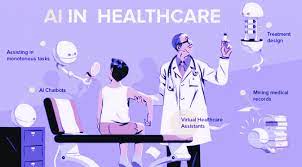
10 AI Healthcare Trends Shaping the Future (2025 & Beyond) Artificial intelligence is transforming healthcare at an unprecedented pace. With a projected 49% CAGR through 2030 (MarketsandMarkets) and generative AI accelerating innovation, hospitals, clinics, and insurers are integrating AI into clinical workflows, diagnostics, and operations. Here are the 10 biggest AI healthcare trends to watch: 1. AI Chatbots for Patient Engagement “AI chatbots cut our call center volume by 30% while improving response times.” —Jordan Archer, COO, Tryon Medical Partners 2. AI-Powered Clinical Documentation 3. Unstructured Data Analysis 4. AI Radiology & Imaging Assistants 5. Robotic Surgery & Automation 6. AI in Physical Therapy 7. AI-Generated Fitness & Wellness Plans 8. Automated Revenue Cycle Management 9. Predictive Supply Chain Optimization 10. AI-Driven Business Strategy Challenges: Equity & Adoption While AI offers immense potential, smaller clinics and rural hospitals risk falling behind due to: “We must ensure equitable access—AI shouldn’t just benefit large health systems.” —Dr. Margaret Lozovatsky, AMA The Future of AI in Healthcare ✅ 2025-2030: AI becomes standard in EHRs, diagnostics, and surgery✅ Generative AI drafts treatment plans, research papers, and insurance appeals✅ Regulatory frameworks evolve to ensure safety & fairness Bottom Line: AI isn’t replacing doctors—it’s empowering them to work smarter, faster, and more precisely. Which trend will impact your organization most? Like Related Posts AI Automated Offers with Marketing Cloud Personalization AI-Powered Offers Elevate the relevance of each customer interaction on your website and app through Einstein Decisions. Driven by a Read more Salesforce OEM AppExchange Expanding its reach beyond CRM, Salesforce.com has launched a new service called AppExchange OEM Edition, aimed at non-CRM service providers. Read more The Salesforce Story In Marc Benioff’s own words How did salesforce.com grow from a start up in a rented apartment into the world’s Read more Salesforce Jigsaw Salesforce.com, a prominent figure in cloud computing, has finalized a deal to acquire Jigsaw, a wiki-style business contact database, for Read more

Read More
gettectonic.com