Relationships Archives - gettectonic.com - Page 12
Salesforce Agentforce Integration

Salesforce Agentforce Integration

The rise of AI-powered solutions is transforming customer service, support, and automation. For organizations such as nonprofits, national associations, and large enterprises, delivering seamless customer experiences has become crucial. Salesforce’s Agentforce, a next-generation conversational AI tool, plays a vital role in this transformation. Designed to elevate customer support and interaction, Agentforce provides an intelligent and scalable solution for integrating AI chatbots into content management systems (CMS) like WordPress, Drupal, and HubSpot. Salesforce Agentforce Integration. In this detailed feature review, we will dive into the extensive capabilities of Salesforce Agentforce, analyzing its role as a conversational tool, its technical requirements, and the benefits it provides for nonprofits, national associations, and businesses. We’ll also compare its applications across various CMS platforms like Drupal, WordPress, and HubSpot, exploring its potential as a powerful AI assistant for website automation and customer interaction. Salesforce Agentforce: A Technical Perspective Salesforce Agentforce is an advanced AI-driven conversational assistant that seamlessly integrates into the Salesforce environment. By tapping into Salesforce CRM’s vast data resources, Agentforce serves as an intelligent interface, automating everything from initial customer inquiries to more personalized interactions. Utilizing natural language processing (NLP) and machine learning, it continually refines responses and scales interactions, making it an indispensable tool for organizations aiming to enhance customer service workflows. Agentforce integrates smoothly with Salesforce Service Cloud, automating both live chat support and chatbot responses. Additionally, it can connect with third-party platforms, including popular CMS solutions like WordPress, Drupal, and HubSpot, allowing organizations to centralize customer service operations in one interface. Core Features and Technical Architecture of Agentforce Natural Language Understanding (NLU) and Processing (NLP) Agentforce’s NLP capabilities are its backbone, allowing it to understand complex human language and respond contextually. This empowers it to manage initial inquiries as well as more sophisticated support requests. Agentforce’s NLU also enables it to work across different languages, dialects, and industry-specific terminology, making it particularly valuable for global organizations and national associations serving diverse audiences. Machine Learning for Continuous Improvement Agentforce’s machine learning feature enhances its ability to improve accuracy and understanding over time. Each interaction helps the chatbot evolve, making it more effective at delivering relevant, real-time responses. This model integrates directly with Salesforce’s data infrastructure, giving Agentforce access to historical data and interactions to offer highly personalized, context-aware answers. Deep Integration with Salesforce CRM As a Salesforce-native tool, Agentforce can harness CRM data in ways other AI tools cannot. By accessing customer histories, purchase data, and previous interactions, it creates personalized experiences that build customer trust. Nonprofits and associations can use this data to improve donor or member interactions, offering targeted support and outreach. Agentforce can also be tailored to retrieve specific datasets, such as an individual’s support history or ongoing service case updates. Cross-Platform Flexibility and API Integration Agentforce offers flexible APIs that enable integration with third-party systems, including CMS platforms like WordPress, Drupal, and HubSpot. This flexibility ensures that AI-powered chatbots can be deployed on organizational websites, providing a seamless experience for customers, donors, and members alike. Whether it’s a nonprofit using Drupal or a business on WordPress, Agentforce acts as the central hub for support and engagement, offering fluid interactions on top of your CMS. HubSpot users can further leverage Agentforce’s marketing features to align lead generation with personalized, chat-based interactions. Use Cases for Agentforce in Nonprofits, National Associations, and Businesses Nonprofit Organizations For nonprofits managing donor, volunteer, and beneficiary relationships, Agentforce offers scalable, automated support: National Associations National associations can use Agentforce to handle high volumes of inquiries from members and professionals: Businesses For service-based enterprises, Agentforce is essential for customer service: Salesforce Agentforce and CMS Integration: WordPress, Drupal, and HubSpot WordPress and Salesforce Agentforce Integration For WordPress users, Agentforce offers customizable chatbot widgets that enhance customer engagement, handle ecommerce inquiries, and integrate with WooCommerce for product support. Drupal and Agentforce Integration Drupal’s modular architecture allows Agentforce to automate membership management, provide multilingual support, and distribute content for nonprofits and associations. HubSpot and Agentforce Integration HubSpot users benefit from Agentforce’s ability to automate lead nurturing, sales and marketing workflows, and customer support, all while keeping HubSpot and Salesforce CRM data synchronized. Tectonic and Salesforce Agentforce Integration At Tectonic, we understand that adopting AI-powered solutions like Salesforce Agentforce is only the first step toward delivering exceptional customer experiences. We specialize in crafting, training, and implementing tailored AI chatbot solutions that enhance engagement, streamline processes, and drive growth, all while seamlessly integrating with your current website or mobile app. As a full-service digital strategy firm, Tectonic excels in integrating advanced tools like Salesforce Agentforce into platforms like WordPress, Drupal, and HubSpot, ensuring your automation strategies are executed with precision. From custom chatbot implementations to comprehensive digital strategy services, our team is dedicated to optimizing your website for engagement and lead generation. Like1 Related Posts Who is Salesforce? Who is Salesforce? Here is their story in their own words. From our inception, we’ve proudly embraced the identity of Read more Salesforce Marketing Cloud Transactional Emails Salesforce Marketing Cloud Transactional Emails are immediate, automated, non-promotional messages crucial to business operations and customer satisfaction, such as order Read more Salesforce Unites Einstein Analytics with Financial CRM Salesforce has unveiled a comprehensive analytics solution tailored for wealth managers, home office professionals, and retail bankers, merging its Financial Read more AI-Driven Propensity Scores AI plays a crucial role in propensity score estimation as it can discern underlying patterns between treatments and confounding variables Read more

Read More

Agentforce Autonomous Agents

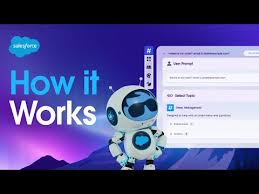
Agentforce: Transforming Business Operations with Autonomous Agents Agentforce empowers organizations to create and manage autonomous agents that streamline tasks across various business departments. These include Sales Agents, Service Agents, Marketing Agents, Commerce Agents, and Platform Agents—truly delivering on the vision of “an Agentforce in every app.” But how does Agentforce work, and what are the building blocks for configuring these agents? Salesforce emphasizes that Agentforce is built with clicks, not code, making it highly accessible to users. This claim was validated by many attendees at the ‘Agentforce Launchpad’ during Dreamforce, who noted that the tool is as declarative and user-friendly as Salesforce promised. The Building Blocks of Agentforce 1. Agent Builder The journey begins with the Agent Builder within Agentforce Studio. This configuration tool allows users to define their agent’s attributes, such as the avatar, name, and description, using natural language inputs—essentially describing the agent in conversational terms. Salesforce describes it as: “If you can dream it, Agentforce can do it.” The Agent Builder interface comprises: Salesforce also provides out-of-the-box agents, such as Sales Agents, which can be enabled via guided setup. 2. Agent Topics Topics are the foundational building blocks that determine an agent’s scope of work. For example, a topic like “Order Management” grants the agent access to data such as order histories and product specifications. In the Dreamforce keynote, Saks’ service agent demonstrated the importance of topics by resolving customer queries tied to its assigned topics. However, queries outside the defined topics were flagged as “guardrails,” ensuring the agent stayed within its designated scope. 3. Topic Actions Actions, tied to topics, define what an agent can do. These actions are often flows, such as querying a CRM database or triggering automated processes. Users can assign existing actions or create new ones by referencing Apex, Flow, prompts, or MuleSoft APIs. For example, integrating external data sources requires defining a new Agentforce action tied to a MuleSoft API. This allows the agent to query data just as human users would. Testing Agents with the Atlas Reasoning Engine Agentforce’s Atlas Reasoning Engine powers agents with advanced capabilities. Users can test agents within the Agent Builder interface, following the reasoning process step-by-step: Once configured, agents are ready to operate across their assigned communication channels (e.g., email, WhatsApp, voice). Omni Supervisor: Real-Time Agent Monitoring Omni Supervisor, originally a Service Cloud feature, now extends to monitoring agents. It provides insights into overall trends, allows real-time oversight of interactions, and even enables listening to recent conversations. The Role of Data Cloud in Agentforce Data powers Agentforce, enabling agents to provide highly contextual responses. The Data Cloud processes both structured data (e.g., Salesforce records) and unstructured data (e.g., emails, voice memos) using its Vector Database for advanced processing. 1. Retrieval Augmented Generation (RAG) Salesforce employs RAG to enhance the accuracy of agent responses. RAG integrates the Atlas Reasoning Engine with Data Cloud, creating a feedback loop. Data Cloud enriches user prompts by retrieving relevant data, making agent responses more contextual and informed. 2. New Data Streams To enhance Agentforce capabilities, data can be ingested into the platform in three ways: For instance, connecting an order management system like Snowflake is streamlined via Salesforce’s prebuilt connectors. 3. Data Graphs Data Graphs visualize relationships between Data Model Objects (DMOs), enabling users to ensure all necessary data is available for optimal agent performance. Real-time Data Graphs enhance identity resolution, segmentation, and action execution for seamless data flow. Inside Prompt Builder Prompt Builder allows users to create or refine prompts that power Agentforce actions. Low-code tools guide users through the process, offering features such as previewing results and assessing feedback toxicity ratings. Search Index in RAG The Search Index is a critical component of RAG. It retrieves relevant data from Data Cloud to enhance agent reasoning. Search parameters can be configured in three ways: Tectonic’s Thoughts Agentforce, powered by Data Cloud and advanced AI tools like the Atlas Reasoning Engine, represents a new era of automation and efficiency for businesses. Whether through Sales, Service, or Marketing Agents, organizations can leverage this technology to streamline operations, personalize customer experiences, and achieve better outcomes. With over 5,200 customers implementing Agentforce in their sandboxes within the first two days of Dreamforce, the platform is already proving its transformative potential. By 2025 over a billion agents had been created! Agentforce isn’t just about improving efficiency; it’s about redefining what’s possible for business operations. Content updated January 2025. Like Related Posts Who is Salesforce? Who is Salesforce? Here is their story in their own words. From our inception, we’ve proudly embraced the identity of Read more Salesforce Marketing Cloud Transactional Emails Salesforce Marketing Cloud Transactional Emails are immediate, automated, non-promotional messages crucial to business operations and customer satisfaction, such as order Read more Salesforce Unites Einstein Analytics with Financial CRM Salesforce has unveiled a comprehensive analytics solution tailored for wealth managers, home office professionals, and retail bankers, merging its Financial Read more AI-Driven Propensity Scores AI plays a crucial role in propensity score estimation as it can discern underlying patterns between treatments and confounding variables Read more

Read More
Salesforce for K-12 and Higher Education

Technology to Showcase the Value of Education

How Can Technology Convince Students of the Value of Higher Education? With fewer high school graduates choosing college, technology has a unique role in reigniting students’ belief in higher education. Imagine a high school student eagerly checking the mail and finding an acceptance letter from their dream college, ready to start a journey filled with opportunities, lifelong friends, and a promising future. Just a couple of decades ago, that was a common story. Today, many high schoolers aren’t looking for acceptance letters at all, uncertain if college is the best or even most practical path to success. Higher education now faces a new challenge: proving its worth to students who are increasingly weighing their options. Universities no longer simply wait for students to apply—they need to actively demonstrate that the investment will pay off. Enrollment Data Signals a Shift Away from College Once seen as a distinctive achievement, college attendance has become less of a given. In 1980, only 49% of high school graduates went on to higher education. By 2009, that number had surged to over 70%, but has since declined; by 2022, just 62% of graduates were heading straight to college. Now, with the “enrollment cliff”—a projected decrease in college-aged students due to lower birth rates—looming, colleges face intense competition to attract students. Personalization Is Key to Connecting with Students The days of “Dear applicant” are over. Today’s digital-native students want a personalized approach that speaks directly to them. If they don’t feel personally addressed through email, text, video, or even traditional mail, they may tune out and explore other options. Universities must build meaningful connections to engage students and keep their attention through every stage of the student journey. Student lifecycle management platforms, like Salesforce’s Education Cloud, have become essential tools for higher education institutions. By tracking and analyzing a student’s data—academic performance, extracurricular interests, and social behaviors—these platforms create personalized experiences that engage students from admission to graduation. Salesforce Education Cloud, for example, uses AI and robust data analytics to create a comprehensive student profile, enabling colleges to send tailored communications, schedule regular check-ins, and even reach out to parents. This personalized approach fosters a sense of connection that encourages students to enroll and stay engaged throughout their academic journey. Comprehensive Lifecycle Management and Student Support Beyond admissions, student lifecycle platforms offer extensive features that address other critical areas, from helping students who are academically struggling to managing alumni relationships and fundraising. With years of experience in supporting institutions nationwide, CDW Education partners with colleges to implement these technologies, strengthening their ability to attract, engage, and retain students. In an era when students have more educational choices than ever, colleges must actively communicate the value of a college degree and make that message resonate with each individual. By investing in technology that personalizes the student experience, higher education institutions can create a compelling case for the unique value they offer. Like Related Posts Who is Salesforce? Who is Salesforce? Here is their story in their own words. From our inception, we’ve proudly embraced the identity of Read more Salesforce Marketing Cloud Transactional Emails Salesforce Marketing Cloud Transactional Emails are immediate, automated, non-promotional messages crucial to business operations and customer satisfaction, such as order Read more Salesforce Unites Einstein Analytics with Financial CRM Salesforce has unveiled a comprehensive analytics solution tailored for wealth managers, home office professionals, and retail bankers, merging its Financial Read more AI-Driven Propensity Scores AI plays a crucial role in propensity score estimation as it can discern underlying patterns between treatments and confounding variables Read more
Read More
Competitive Landscape of Retail

Navigate the Competitive Landscape of Retail

A shorter shopping season, the rise of Chinese shopping apps, and value-conscious consumers are expected to result in modest growth this holiday season. According to Salesforce’s 2024 holiday shopping forecast, U.S. holiday sales (Nov. 1 – Dec. 31) are projected to grow 2% year-over-year, reaching $277 billion. Global sales are also predicted to increase by 2%, totaling .19 trillion. This reflects softer growth compared to 2023, when global holiday sales rose by 3%. Challenges Ahead Salesforce warns that the 2024 holiday season may be difficult for retailers, with consumers having less spending power, a shortened 26-day shopping window between Thanksgiving and Christmas, and 43% of shoppers carrying more debt than last year. Additionally, 47% of surveyed shoppers plan to spend the same as in 2023, while 40% intend to spend less. New data from Salesforce’s Shopping Index shows that two-thirds of global consumers say price will dictate their shopping choices, while less than a third will prioritize product quality. Impact of Chinese Shopping Apps Salesforce predicts that 21% of holiday purchases will come from Chinese apps like Temu, Shein, AliExpress, and TikTok, with 35% of consumers reporting increased use of these apps. TikTok, in particular, saw a 24% increase in purchases since April 2024, highlighting the growing influence of Chinese platforms on holiday shopping. Retail Strategies To navigate the competitive landscape, Salesforce recommends retailers use strategic discounts and AI-powered tools to improve efficiency, enhance customer relationships, and boost profit margins. “This season will be competitive and focused on pricing strategies,” said Caila Schwartz, Salesforce’s director of strategy and consumer insights. “Leveraging AI and customer data is essential to guide marketing campaigns and holiday promotions.” Key Findings Salesforce’s insights are based on data from 1.5 billion global shoppers across 64 countries, focusing on 12 key markets, including the U.S., Canada, and U.K. Like1 Related Posts Who is Salesforce? Who is Salesforce? Here is their story in their own words. From our inception, we’ve proudly embraced the identity of Read more Salesforce Marketing Cloud Transactional Emails Salesforce Marketing Cloud Transactional Emails are immediate, automated, non-promotional messages crucial to business operations and customer satisfaction, such as order Read more Salesforce Unites Einstein Analytics with Financial CRM Salesforce has unveiled a comprehensive analytics solution tailored for wealth managers, home office professionals, and retail bankers, merging its Financial Read more AI-Driven Propensity Scores AI plays a crucial role in propensity score estimation as it can discern underlying patterns between treatments and confounding variables Read more
Read More
Commerce Cloud and Agentic AI

Commerce Cloud and Agentic AI

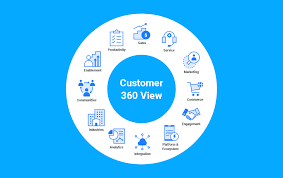
Recognizing the demand from both B2B and B2C buyers for seamless, consistent commerce experiences across online and offline channels, Salesforce has introduced an AI-powered, unified commerce version of its Commerce Cloud platform. Salesforce, a leader in merging ecommerce and CRM software, has taken a significant step toward unified commerce with this next-generation update to Salesforce Commerce Cloud. This move aligns with the expectations of both B2B buyers and consumers, who increasingly seek integrated and personalized interactions. The company states that Commerce Cloud now “natively connects all aspects of commerce—B2C, direct-to-consumer, and B2B commerce; order management; and payments—with sales, service, and marketing, all on a single platform.” This integration offers businesses a complete view of the customer journey through a shared catalog and user profile. By unifying elements like catalogs, pricing, orders, and marketing segments, companies can deliver personalized interactions, boost customer loyalty, and drive revenue across all touchpoints. Unified Commerce: A $1.5 Trillion Opportunity Salesforce cites research from Adyen, which indicates that adopting unified commerce strategies could present a $1.5 trillion opportunity for retailers globally. In North America, 76 of the top 2000 online retailers use Salesforce’s ecommerce platform. In 2023, these retailers generated over 6 billion in web sales. Salesforce’s B2B clients include major companies such as Siemens, Schneider Electric, GE Renewable Energy, and Chambers Gasket. AI-Powered Commerce Cloud Salesforce emphasizes that AI powers key aspects of its next-generation Commerce Cloud, enabling the platform to autonomously manage tasks like product recommendations and order lookups by leveraging data from digital and in-store interactions, orders, inventory levels, customer reviews, unified profiles, and CRM information. The AI-backed “Agentforce” agents are designed to assist employees in delivering personalized interactions, strengthening customer relationships, and improving profit margins. According to Justin Racine, Principal of Unified Commerce at Perficient, Salesforce’s efforts to unify the commerce experience across its broad range of products align with the needs of both B2B buyers and consumers. He notes that modern buyers expect brands to connect and communicate with them based on their previous behaviors, preferences, and purchases. Unlocking Revenue with Agentforce Michael Affronti, Senior Vice President and General Manager of Commerce Cloud, highlights that this new version embodies unified commerce by providing businesses with a single, integrated platform. The platform consolidates the entire commerce journey, with AI-powered Agentforce agents unlocking new revenue streams and delivering personalized experiences across every channel. Furniture designer and manufacturer MillerKnoll has already benefited from the unified platform. Frank DeMaria, Vice President of Digital Engineering & Platforms, mentions that the integration of sales, service, marketing, and other functions has helped the company offer personalized experiences and improve online sales and customer satisfaction across its portfolio of brands, including HermanMiller. Key Features of the New Commerce Cloud Racine adds that Salesforce’s new release unifies its product suite under a cohesive platform, providing marketers and business users with a comprehensive 360-degree view of the customer. This enables brands to build experiences and ordering workflows that are predictive rather than reactive. The integration of Agentforce represents a breakthrough, blending AI with brand interactions to unlock potential gains for merchandisers and buyers, and Racine is excited to see how these technologies enhance revenue and customer loyalty. Like Related Posts Who is Salesforce? Who is Salesforce? Here is their story in their own words. From our inception, we’ve proudly embraced the identity of Read more Salesforce Marketing Cloud Transactional Emails Salesforce Marketing Cloud Transactional Emails are immediate, automated, non-promotional messages crucial to business operations and customer satisfaction, such as order Read more Salesforce Unites Einstein Analytics with Financial CRM Salesforce has unveiled a comprehensive analytics solution tailored for wealth managers, home office professionals, and retail bankers, merging its Financial Read more AI-Driven Propensity Scores AI plays a crucial role in propensity score estimation as it can discern underlying patterns between treatments and confounding variables Read more

Read More
Salesforce 2024 outage

October 2024 Outage

On October 1st, 2024, Salesforce experienced a significant outage impacting over 80 instances, causing core services to slow to a crawl. The outage, which began around 6:30 UTC, remained unresolved over 8.5 hours later, with the root cause still unknown at that time. The outage has been particularly damaging, as Salesforce emphasizes trust as one of its core values, promoting transparency and reliability in its service delivery. While the Salesforce Trust website, which provides real-time system status updates, remained operational, some users reported difficulty accessing it when they needed outage details, adding to their frustration. This disruption has been a major blow to organizations that depend on Salesforce for essential business functions such as customer relationship management (CRM), sales pipelines, and workflow management. Key Facts About the Outage Am I Affected by the Salesforce Downtime? If you’re unsure whether your instance is affected, you can check the real-time list of impacted cases on the Salesforce Trust website. To do this, identify your organization’s instance (e.g., NA54, EU13) and compare it to the affected list. However, the Trust site itself has experienced intermittent outages during the incident. Customers have reported issues such as: If you’re encountering these problems, your Salesforce instance is likely impacted. How Salesforce is Responding Salesforce has initiated an emergency release in phases, with the first phase nearly complete. Afterward, validation checks will be performed to assess system stability. While some customers have reported that their instances have recovered, others continue to experience severe issues. Salesforce Support has provided general troubleshooting advice, such as using alternative browsers or clearing caches, but many users have found this ineffective, as the root cause lies within Salesforce’s infrastructure, not user-side configurations. What to Do Now Looking Ahead Although the root cause of the outage remains undetermined, Salesforce has committed to providing regular updates. Customers are encouraged to monitor the Salesforce Trust website and communicate with support teams. Once the cause is identified, Salesforce plans to release a detailed report on the incident and how they will prevent future occurrences. Conclusion Salesforce’s outage on October 1st has caused widespread disruption for businesses globally. While emergency updates are underway and some instances are recovering, full resolution may take time. In the meantime, staying updated and preparing for intermittent issues is critial for those who rely on Salesforce for their daily operations. Stay tuned for further updates as Salesforce continues working to restore full functionality across all affected instances. Like Related Posts Who is Salesforce? Who is Salesforce? Here is their story in their own words. From our inception, we’ve proudly embraced the identity of Read more Salesforce Marketing Cloud Transactional Emails Salesforce Marketing Cloud Transactional Emails are immediate, automated, non-promotional messages crucial to business operations and customer satisfaction, such as order Read more Salesforce Unites Einstein Analytics with Financial CRM Salesforce has unveiled a comprehensive analytics solution tailored for wealth managers, home office professionals, and retail bankers, merging its Financial Read more AI-Driven Propensity Scores AI plays a crucial role in propensity score estimation as it can discern underlying patterns between treatments and confounding variables Read more

Read More
Agentforce Unveiled

Agentforce Unveiled

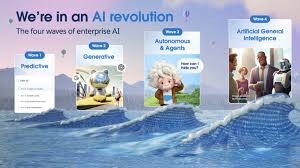
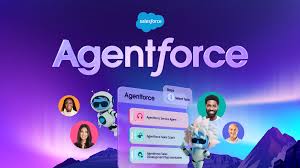
Salesforce Unveils ‘Agentforce’ to Empower a Billion AI Agents by 2025 Salesforce has introduced Agentforce, a revolutionary suite of autonomous AI agents aimed at transforming service, sales, marketing, and commerce sectors. With Agentforce, companies can rapidly scale their operations, boost efficiency, and elevate customer satisfaction by leveraging intelligent agents that handle routine tasks and complex workflows. The Agentforce Atlas Reasoning Engine powers these agents, autonomously analyzing data, making decisions, and completing tasks. This engine enables organizations to easily build, customize, and deploy their own agents using intuitive low-code tools. In addition, the Agentforce Partner Network allows customers to integrate pre-built agents from industry leaders like AWS, Google, IBM, and Workday, offering even more flexibility. Real-world impact Companies like OpenTable, Saks, and Wiley are already deploying Agentforce within their existing systems to enhance workforce capabilities and scale operations. Agentforce works autonomously, retrieving the right data on demand, building action plans, and executing them without human intervention. However, when needed, it can seamlessly hand off tasks to human employees, providing an overview of interactions, customer details, and suggested next steps. For example, Wiley has reported a 40% increase in case resolution after implementing Agentforce to handle routine inquiries. During busy seasons, like back-to-school, Agentforce has helped Wiley streamline operations, freeing up employees to handle more complex cases. Saks is also leveraging Agentforce to elevate its personalized customer experiences, empowering employees with real-time insights to deliver exceptional service. A new era of AI-driven customer success Salesforce CEO Marc Benioff is confident that Agentforce represents the third wave of AI, surpassing traditional chatbots and copilots with its fully autonomous capabilities. “Agentforce is a revolutionary and trusted solution that seamlessly integrates AI across every workflow, embedding itself deeply into the heart of the customer journey. This means anticipating needs, strengthening relationships, driving growth, and taking proactive action at every touchpoint,” Benioff said. Unlike its predecessors, Agentforce operates independently, adapting to changing conditions using real-time data. Whether responding to a customer service inquiry, qualifying sales leads, or optimizing marketing campaigns, Agentforce makes timely, relevant decisions based on an organization’s custom settings. When more human oversight is required, the platform provides detailed summaries and recommendations to assist employees in making informed decisions. Agentforce’s scalability and future Salesforce’s ambitious goal is to empower one billion AI agents by the end of 2025. This bold vision stems from the understanding that 41% of employee time is often spent on repetitive, low-impact work, according to the Salesforce Trends in AI Report. By automating these tasks, Agentforce allows employees to focus on more strategic, high-value initiatives, creating a hybrid workforce that is more effective and adaptable. Benioff noted, “While others require you to DIY your AI, Agentforce offers a fully tailored, enterprise-ready platform designed for immediate impact and scalability. Our vision is bold, and this is what AI is meant to be.” As businesses worldwide continue to explore AI’s potential, Agentforce positions Salesforce as a leader in the next wave of AI innovation, where autonomous agents enhance every facet of business operations. With over 1,000 agents already active, the future of work is a dynamic blend of human expertise and AI-powered agents, enabling organizations to thrive in an increasingly competitive landscape. Like Related Posts Who is Salesforce? Who is Salesforce? Here is their story in their own words. From our inception, we’ve proudly embraced the identity of Read more Salesforce Marketing Cloud Transactional Emails Salesforce Marketing Cloud Transactional Emails are immediate, automated, non-promotional messages crucial to business operations and customer satisfaction, such as order Read more Salesforce Unites Einstein Analytics with Financial CRM Salesforce has unveiled a comprehensive analytics solution tailored for wealth managers, home office professionals, and retail bankers, merging its Financial Read more AI-Driven Propensity Scores AI plays a crucial role in propensity score estimation as it can discern underlying patterns between treatments and confounding variables Read more

Read More
Scale and AI Influence Shape Partner Ecosystems

Scale and AI Influence Shape Partner Ecosystems

Hyperscalers’ Scale and AI Influence Shape Partner Ecosystems Despite their seemingly saturated networks, the largest cloud vendors continue to dominate as top ecosystems for service providers, according to a recent survey. Hyperscalers are playing a critical role in partner alliances, a trend that has only intensified in recent years. A study released by Tercera, an investment firm specializing in IT services, highlights the dominance of cloud giants AWS, Google Cloud, and Microsoft Azure in the partner ecosystem landscape. More than 50% of the 250 technology service providers surveyed by Tercera identified one of these three vendors as their primary partner. This data comes from Tercera’s third annual report on the Top 30 Partner Ecosystems. The report emphasizes the “gravitational pull” of these hyperscalers, attracting partners despite their already vast networks. Each of the major cloud vendors maintains relationships with thousands of software and services partners. “The hyperscalers continue to defy the law of large numbers when you look at how many partners are in their ecosystems,” said Michelle Swan, CMO at Tercera. The Shift in Channel Alliances The emergence of cloud vendors as top partners for service providers has been evident since at least 2021. That year, a survey by Accenture of 1,150 channel companies found that AWS, Google, and Microsoft accounted for the majority of revenue for these partners. This represents a significant shift in channel economics, where traditionally large hardware companies occupied the top spots in partner alliances. AI’s Role in Partner Ecosystem Growth The rise of generative AI (GenAI) is reshaping alliance strategies, as service providers increasingly align themselves with hyperscalers and their AI technology partners. For instance, AWS channel partners interested in GenAI are likely to work with Anthropic, following Amazon’s $4 billion investment in the AI company. Meanwhile, Microsoft partners tend to collaborate with OpenAI, as Microsoft has committed up to $13 billion in investments to expand their partnership. “They have their own solar systems,” Swan remarked, referencing AWS, Google, Microsoft, and the AI startups within their ecosystems. Tiers of Partner Ecosystems Tercera categorizes its top 30 ecosystems into three tiers. The first tier, known as “market anchors,” includes AWS, Google, Microsoft, and large independent software vendors (ISVs) such as Salesforce and ServiceNow. The second tier, “market movers,” features publicly traded vendors with evolving partner ecosystems. The third tier, “market challengers,” is made up of privately held vendors with a partner-centric focus, such as Anthropic and OpenAI. Generative AI Ecosystem Survey A 2024 generative AI survey conducted by TechTarget and its Enterprise Strategy Group supports the idea that the leading cloud vendors play a central role in AI ecosystems. In a poll of 610 GenAI decision-makers and users, Microsoft topped the list of ecosystems supporting GenAI initiatives, with 54% of respondents citing it as the best ecosystem. Microsoft’s partner, OpenAI, followed with 35%. Google and AWS ranked third and fourth, with 30% and 24% of the responses, respectively. The survey covered a wide range of industries, including business services and IT, further reinforcing the dominant role hyperscalers play in shaping AI and partner ecosystems. Like Related Posts Who is Salesforce? Who is Salesforce? Here is their story in their own words. From our inception, we’ve proudly embraced the identity of Read more Salesforce Marketing Cloud Transactional Emails Salesforce Marketing Cloud Transactional Emails are immediate, automated, non-promotional messages crucial to business operations and customer satisfaction, such as order Read more Salesforce Unites Einstein Analytics with Financial CRM Salesforce has unveiled a comprehensive analytics solution tailored for wealth managers, home office professionals, and retail bankers, merging its Financial Read more AI-Driven Propensity Scores AI plays a crucial role in propensity score estimation as it can discern underlying patterns between treatments and confounding variables Read more
Read More
Anthropic’s New Approach to RAG

Anthropic’s New Approach to RAG

advanced RAG methodology demonstrates how AI can overcome traditional challenges, delivering more precise, context-aware responses while maintaining efficiency and scalability.

Read More
Transforming Fundraising for Nonprofits

Transforming Fundraising for Nonprofits

Tectonic’s Expertise in Salesforce Nonprofit Cloud: Transforming Fundraising for Nonprofits Salesforce’s Nonprofit Cloud (NPC) is revolutionizing how organizations manage their fundraising, offering tools specifically designed to meet the unique needs of the nonprofit sector. A standout feature of Nonprofit Cloud is its comprehensive fundraising functionality, which goes beyond simple transaction management to support the entire lifecycle of donor engagement. Central to understanding this functionality is the “three P’s” concept—Pursuit, Promise, and Payment. These three stages enable nonprofits to effectively track and manage donor relationships and contributions. Pursuit: Tracking the Opportunity The first “P” in Salesforce’s Nonprofit Cloud Fundraising process is Pursuit. This refers to the opportunity record, where the organization is actively seeking donations but no financial transaction has occurred yet. For example, a nonprofit might be pursuing a major donation of $500,000 from a corporate sponsor. At this stage, fundraisers track their progress through various phases of the opportunity, whether they win or lose the donation bid. The focus here is on relationship-building and securing commitments rather than managing financial transactions. This early-stage tracking lays the foundation for a more organized approach as the process advances. Promise: Earninging the Commitment Once a donor—whether an individual or a corporation—has committed to contributing, the Promise phase begins. Here, the Opportunity record transforms into a Gift Commitment in Salesforce. For instance, when the company officially pledges the $500,000 donation, this formalizes their promise. The Gift Commitment record is dynamic and can be modified over time to reflect changes, such as adjusting the amount to 0,000 or setting up recurring donations. This flexibility enables nonprofits to track pledges over time and maintain accurate records of what has been promised versus what has been received. Financial teams especially benefit from this capability, as it aids in reporting and financial planning. Payment: Completing the Financial Act The final “P” is Payment, capturing the financial transaction. This is where the Gift Transaction record comes into play, reflecting the completion of the financial act. For example, once the company has paid $250,000 of the promised $400,000, the Payment record updates to reflect this. Payment records can either stand alone for one-time donations or be linked to Gift Commitments or a Gift Commitment Schedule for installment payments or recurring donations. This structure gives nonprofits the flexibility to track all stages of financial fulfillment and adjust their fundraising strategies accordingly. Leveraging the Three P’s for Success The Pursuit, Promise, and Payment framework provides nonprofits with a clear, structured approach to managing the entire donor lifecycle. This system also eases the transition from Salesforce’s legacy Nonprofit Success Pack (NPSP) to the new Nonprofit Cloud framework. By effectively tracking donation pursuits, managing gift commitments, and documenting payments, nonprofits can maintain a comprehensive, real-time view of their fundraising efforts. This streamlined process not only improves data management but also enhances transparency, fostering trust with donors. The Future of Fundraising with Salesforce Nonprofit Cloud Salesforce’s Nonprofit Cloud Fundraising functionality, anchored by the three P’s, represents a significant evolution in nonprofit technology. By offering tools that manage every stage of donor engagement—from pursuit to payment—Salesforce empowers nonprofits to maximize their fundraising potential. Organizations can cultivate stronger donor relationships, track commitments more accurately, and ensure financial transactions are completed and documented efficiently. This holistic approach enables nonprofits to make informed decisions, boost donor trust, and drive their missions forward. Want to learn more about how Tectonic can help streamline donation processes, track total payments, maintain a full 360° history of the donation cycle, and create funder-worthy visualizations? Contact us at info@tectonic.com. Like Related Posts Who is Salesforce? Who is Salesforce? Here is their story in their own words. From our inception, we’ve proudly embraced the identity of Read more Salesforce Marketing Cloud Transactional Emails Salesforce Marketing Cloud Transactional Emails are immediate, automated, non-promotional messages crucial to business operations and customer satisfaction, such as order Read more Salesforce Unites Einstein Analytics with Financial CRM Salesforce has unveiled a comprehensive analytics solution tailored for wealth managers, home office professionals, and retail bankers, merging its Financial Read more AI-Driven Propensity Scores AI plays a crucial role in propensity score estimation as it can discern underlying patterns between treatments and confounding variables Read more

Read More
Salesforce and the AI Revolution

Salesforce and the AI Revolution

In the early 2000s, Salesforce made waves in the tech world with its bold “No Software” marketing campaign, symbolized by the iconic image of the word “software” crossed out in a red circle. While it was a bit misleading—Salesforce still delivered software, just in the cloud—the campaign invited people to rethink software delivery. This marked the dawn of the cloud era, and businesses were ready for a change. Then, enter Salesforce and the AI Revolution. Today, we’re witnessing a similar shift with AI. The word “SaaS” is the latest to be crossed out in red, as AI-native applications, where AI is the core rather than an add-on, promise to disrupt service delivery at an unprecedented speed—far faster than cloud displaced on-premise software. Even Bessemer Venture Partners (BVP), a leader in identifying emerging AI trends, admits to being caught off guard by the rapid rise of AI. In its State of the Cloud 2024 report, which aptly declares “The Legacy Cloud is dead—long live AI Cloud!”, BVP highlights how even the most optimistic predictions couldn’t fully capture the pace and scale of AI’s impact. The AI Revolution: Opportunities and Disruption The AI market is evolving at breakneck speed, and entrepreneurs are scrambling to stake their claim in this quickly shifting landscape. In the early cloud era, companies like Box, Docusign, HubSpot, and Shopify found success by targeting specific business use cases with subscription-based, cloud-powered solutions. Similarly, today’s AI opportunity lies in industries where manual, repetitive tasks are still prevalent. Major AI players like OpenAI, Anthropic, and Mistral are investing billions in building large-scale language models (LLMs), but there’s a gap in the market for entrepreneurs to focus on verticals where human labor is still largely manual—such as legal, accounting, and outsourcing services. Traditionally, investors have shied away from these industries due to their reliance on manual labor, high costs, and low profit margins. But AI changes the game. Tasks once done manually can now be automated, transforming labor-intensive processes into scalable, high-margin operations. Services businesses that were once unattractive to investors will now attract attention as AI boosts profitability and efficiency. The Shift to AI-Native Applications The impact of AI-native applications will go beyond improving revenue models; they will fundamentally change how we interact with software. In the current SaaS model, users spend hours in applications, manually entering data and querying systems for answers. In contrast, AI-native B2B applications will solve problems end-to-end without requiring human input for every step. Software will work for users in the background, allowing them to focus on building relationships and making strategic decisions. However, humans won’t be removed from the equation. AI trained on real human intelligence in specific verticals will perform better than purely machine-based intelligence. The combination of human expertise and AI-native applications will drive significant, tangible business results. Avoid the “X of AI” Hype With excitement around AI reaching fever pitch, many startups are branding themselves as the “X of AI”—for instance, the “Salesforce of AI.” These claims are often surface-level, wrapping an AI solution around an existing LLM without delivering true innovation. To identify genuine AI-native solutions, look for these key characteristics: Spotting the Next AI Success Stories The AI space is noisy and crowded, and as more AI-native startups emerge, it will become even harder to separate the winners from the hype. The true innovators will be those who bring untapped data into the digital fold and streamline workflows that have historically been manual. To succeed, founders need deep knowledge of their vertical and a clear understanding of how to implement AI for real-world results. Above all, they must have the vision and drive to realize the full potential of AI-native applications, transforming industries and redefining service delivery. Like Related Posts Who is Salesforce? Who is Salesforce? Here is their story in their own words. From our inception, we’ve proudly embraced the identity of Read more Salesforce Marketing Cloud Transactional Emails Salesforce Marketing Cloud Transactional Emails are immediate, automated, non-promotional messages crucial to business operations and customer satisfaction, such as order Read more Salesforce Unites Einstein Analytics with Financial CRM Salesforce has unveiled a comprehensive analytics solution tailored for wealth managers, home office professionals, and retail bankers, merging its Financial Read more AI-Driven Propensity Scores AI plays a crucial role in propensity score estimation as it can discern underlying patterns between treatments and confounding variables Read more

Read More
Financial Services Cloud and Core

Financial Services Cloud and Core

Remember When Salesforce First Launched Financial Services Cloud in 2016? The managed package introduced a standardized data model that transformed how banks, credit unions, and implementation partners utilized Salesforce. It was a game-changer! But Salesforce hasn’t stopped innovating. Since 2019, they’ve been enhancing the core platform to meet demands for greater performance and flexibility. Now, in 2024, Salesforce has rolled out its biggest core release yet: Financial Account Management Standard Objects. This strategic update could redefine how financial data is managed within Financial Services Cloud (FSC). Understanding these updates is essential for all FSC users. The introduction of standard objects signals a major shift in the platform. Staying informed ensures that your institution remains innovative and fully leverages Financial Services Cloud. Let’s explore what’s changing and why it matters. 1. A New Era for Financial Accounts Say goodbye to limitations and hello to flexibility! The core platform introduces a modern way to manage financial accounts: The elimination of financial account triggers is a huge win for performance. Salesforce’s new data model is designed to handle real-time integrations, which can be a game-changer for many institutions. But real-time integration isn’t necessary for everyone. Depending on your organization’s needs, you might find that a combination of batch integration, on-demand integration, and data visualization works best. If you’re dealing with slow nightly batch data loads due to financial account triggers, exploring the new standard objects could be the solution to your performance woes. 2. Core Offers Benefits for Everyone 3. The FSC Managed Package is Still Supported Salesforce has reassured customers that the FSC Managed Package will continue to be supported. However, with Core advancements, Salesforce is re-evaluating its long-term strategy to provide more streamlined and scalable solutions. While migration to Core isn’t mandatory, Salesforce’s ongoing focus on this new architecture suggests that aligning with the core platform may offer increasing benefits over time. To stay ahead of the curve and access the latest features, it’s wise to explore the potential advantages of migration. Tectonic can help assess your current environment, weigh the benefits of moving to Core, and develop a strategy that aligns with your business goals. 4. Exciting Core Enhancements Core introduces powerful new features that simplify financial data management, such as: 5. The Future Is Core, and You Need the Right Partner to Chart Your Course Salesforce’s shift toward Core highlights the platform’s future direction. While the managed package remains relevant for now, Core offers a more modern, flexible solution for managing financial data. To make the most of these changes and ensure a smooth transition, partnering with an experienced team like Tectonic is crucial. Transitioning to Core requires careful planning. Here’s a roadmap to guide you: Ready to Explore the Power of Core? Contact Tectonic today to learn how we can help guide your transition to Core and capture the full potential of these new features to drive your business forward. Like1 Related Posts Who is Salesforce? Who is Salesforce? Here is their story in their own words. From our inception, we’ve proudly embraced the identity of Read more Salesforce Marketing Cloud Transactional Emails Salesforce Marketing Cloud Transactional Emails are immediate, automated, non-promotional messages crucial to business operations and customer satisfaction, such as order Read more Salesforce Unites Einstein Analytics with Financial CRM Salesforce has unveiled a comprehensive analytics solution tailored for wealth managers, home office professionals, and retail bankers, merging its Financial Read more AI-Driven Propensity Scores AI plays a crucial role in propensity score estimation as it can discern underlying patterns between treatments and confounding variables Read more
Read More
gettectonic.com