Relationships Archives - gettectonic.com - Page 14
Salesforce Underwriting Solutions

Salesforce Underwriting Solutions

Merchant Cash Advance Solutions: Enhancing Underwriting with Salesforce In today’s fast-paced financial services industry, efficient and effective underwriting is more crucial than ever. Merchant cash advances (MCAs) have emerged as a popular alternative funding option for businesses that might not qualify for traditional loans. This insight explores how integrating Salesforce with MCA software can streamline underwriting, strengthen lender-borrower relationships, and boost overall operational efficiency. Understanding Merchant Cash Advances Merchant cash advances offer businesses upfront capital in exchange for a portion of future sales. Unlike traditional loans, MCAs are often easier to secure and come with flexible repayment options tied to daily credit card receipts. However, the unique structure of MCAs brings challenges to underwriting, due to the diversity in business models and cash flow patterns. The Role of Underwriting in MCA Underwriting is a vital step in the lending process, assessing the risk associated with providing funds to a borrower. For MCAs, underwriting involves evaluating a business’s revenue streams, creditworthiness, and overall financial health. Traditional underwriting methods can be cumbersome and slow, often causing delays in funding. Challenges in Traditional Underwriting Methods The Power of Salesforce in Streamlining Underwriting Salesforce offers powerful solutions that integrate seamlessly with MCA software, effectively addressing these challenges: Benefits of Integrating MCA Software with Salesforce Key Features to Look for in MCA Software Integrated with Salesforce When choosing an MCA solution integrated with Salesforce, consider features such as: Conclusion Integrating merchant cash advance solutions with Salesforce offers a transformative approach to streamlining underwriting processes in this niche financing sector. By automating workflows, centralizing data management, enhancing communication channels, and improving overall efficiency—all while ensuring compliance—lenders can gain a competitive edge and deliver exceptional service to their clients. If you are searching for a Merchant Cash Advance, Underwriting, or financial services solution contact Tectonic today. Like Related Posts Who is Salesforce? Who is Salesforce? Here is their story in their own words. From our inception, we’ve proudly embraced the identity of Read more Salesforce Marketing Cloud Transactional Emails Salesforce Marketing Cloud Transactional Emails are immediate, automated, non-promotional messages crucial to business operations and customer satisfaction, such as order Read more Salesforce Unites Einstein Analytics with Financial CRM Salesforce has unveiled a comprehensive analytics solution tailored for wealth managers, home office professionals, and retail bankers, merging its Financial Read more AI-Driven Propensity Scores AI plays a crucial role in propensity score estimation as it can discern underlying patterns between treatments and confounding variables Read more

Read More
Salesforce Channel Order App

Salesforce Channel Order App

Salesforce’s platform powers over 4.2 million apps, and Salesforce AppExchange offers more than 4,000 solutions. These numbers highlight Salesforce’s extensive ecosystem, with the Salesforce Channel Order App (COA) playing a crucial role for businesses managing complex partner relationships and order processes. This insight looks into the Salesforce Channel Order App, exploring its purpose, when and why you should use it, core features, who benefits from it, and best practices to maximize its potential. What is the Salesforce Channel Order App? The Salesforce Channel Order App is designed to streamline and automate order management across various sales channels, whether direct, through distribution partners, or a reseller network. It simplifies what would typically be a labor-intensive process by centralizing data, automating tasks, and providing real-time visibility into orders. This results in tighter control over order workflows and enhanced partner collaboration. When to Use the Salesforce Channel Order App The Salesforce Channel Order App is most effective for businesses that manage high volumes of orders from multiple channels. It’s especially useful in industries like technology, consumer goods, and manufacturing, where multi-channel sales are integral to operations. Key Use Cases: Core Features of the Salesforce Channel Order App Who Benefits from Salesforce Channel Order App? The Salesforce Channel Order App is particularly beneficial for industries where managing orders from multiple partners is crucial. Key beneficiaries include: Best Practices for Using Salesforce Channel Order App To get the most out of Salesforce Channel Order App, consider the following best practices: Final Take The Salesforce Channel Order App is an essential tool for businesses relying on channel partners to drive sales. By automating and streamlining the order management process, COA helps businesses improve efficiency, reduce errors, and ensure orders are fulfilled accurately and on time. Whether you’re a manufacturer, technology provider, or consumer goods company, adopting COA enables better order management and strengthens relationships with partners—setting your business up for long-term success. Like Related Posts Who is Salesforce? Who is Salesforce? Here is their story in their own words. From our inception, we’ve proudly embraced the identity of Read more Salesforce Marketing Cloud Transactional Emails Salesforce Marketing Cloud Transactional Emails are immediate, automated, non-promotional messages crucial to business operations and customer satisfaction, such as order Read more Salesforce Unites Einstein Analytics with Financial CRM Salesforce has unveiled a comprehensive analytics solution tailored for wealth managers, home office professionals, and retail bankers, merging its Financial Read more AI-Driven Propensity Scores AI plays a crucial role in propensity score estimation as it can discern underlying patterns between treatments and confounding variables Read more

Read More
Thoughts on Workday With Illuminate

Workday Illuminate

Announcing Workday Illuminate™: The Next Generation of Workday AI Illuminate Harnesses the Power of the World’s Largest HR and Finance Dataset to Drive Enterprise Transformation With AI Experience the Future of Work at Workday Rising 2024 LAS VEGAS, Sept. 2024 /PRNewswire/ — Workday, Inc. (NASDAQ: WDAY), a leading provider of solutions to help organizations manage their people and money, today announced Illuminate, the next generation of Workday AI. Built on the world’s largest and cleanest HR and finance dataset, Illuminate accelerates manual tasks, assists every employee, and ultimately transforms entire business processes.  AI That Taps Into the Combined Power of HR and Finance Data and ContextIlluminate models are fueled by the more than 800 billion business transactions processed by the Workday platform annually. But the data alone doesn’t tell the full story. Illuminate understands not only the data but also the context—the “why” or “how” behind every HR and financial process, such as how processes are connected, the people and roles involved, and the current task at hand – along with previous conversational AI interactions. With this powerful combination of data and context, Illuminate enables precise decision-making, anticipates employee needs, and delivers personalized experiences like never before. “The business world is in the midst of a tectonic shift, excited about the immense potential of AI while also struggling to implement it in a way that drives meaningful results,” said Carl Eschenbach, CEO, Workday. “By placing tangible business value, responsible innovation, and user-centric design at the forefront, Workday Illuminate empowers businesses to harness AI’s full potential to drive unprecedented productivity and move forever forward.” Illuminate: Transforming the Way People WorkIlluminate works across the Workday platform, delivering powerful insights for precise decision making and streamlined actions. Illuminate will help organizations drive exponential productivity gains and significant cost savings in the following ways: Illuminate elevates people by enabling them to focus on the work that matters and do the things that are uniquely human – from spending more time with customers, constituents, or patients to pursuing more creative and meaningful work to building critical peer, team, and stakeholder relationships. Workday Ecosystem Extends the Power of IlluminateIlluminate also lets customers use AI innovations from Workday’s partners, or developed through Workday AI Gateway, and orchestrates processes across all of them on the same platform. This allows customers to leverage their existing AI investments and extend the power of Illuminate, driving even greater value and innovation across their organizations. “The rapid adoption of AI across enterprises has created a complex web of models, data pipelines, and infrastructure,” said Bob Evans of Cloud Wars. “For businesses that want to effectively manage, scale, and govern their AI initiatives – ensuring they deliver real value while also mitigating risk – it’s absolutely essential to get all of those AI components working together to complete more complex cross-functional tasks. Workday Illuminate will provide that cross-platform AI orchestration that businesses will need to be successful in this age of AI.” AvailabilityWorkday Illuminate is available to customers now, and will continue to evolve as part of Workday’s robust three year AI roadmap. About WorkdayWorkday is a leading enterprise platform that helps organizations manage their most important assets – their people and money. The Workday platform is built with AI at the core to help customers elevate people, supercharge work, and move their business forever forward. Workday is used by more than 10,500 organizations around the world and across industries – from medium-sized businesses to more than 60% of the Fortune 500. For more information about Workday, visit workday.com. © 2024 Workday, Inc. All rights reserved. Workday and the Workday logo are registered trademarks of Workday, Inc. All other brand and product names are trademarks or registered trademarks of their respective holders. Like Related Posts Who is Salesforce? Who is Salesforce? Here is their story in their own words. From our inception, we’ve proudly embraced the identity of Read more Salesforce Unites Einstein Analytics with Financial CRM Salesforce has unveiled a comprehensive analytics solution tailored for wealth managers, home office professionals, and retail bankers, merging its Financial Read more AI-Driven Propensity Scores AI plays a crucial role in propensity score estimation as it can discern underlying patterns between treatments and confounding variables Read more Tectonic’s Successful Salesforce Track Record Salesforce Technology Services Integrator – Tectonic has successfully delivered Salesforce in a variety of industries including Public Sector, Hospitality, Manufacturing, Read more


Read More
More Cool AI Tools

More Cool AI Tools

In today’s fast-paced digital world, AI is no longer a luxury but a necessity for maximizing work efficiency. With the right AI tools, businesses and individuals can automate tasks, enhance creativity, improve customer engagement, and streamline operations. Here’s a breakdown of the Top 21 AI tools you should explore to elevate your productivity and stay ahead of the curve! 1️⃣ Video CreationSynthesiaWebsite: SynthesiaAn AI video creation tool that lets you generate high-quality videos from text. Ideal for creating marketing, training, and explainer videos quickly and professionally. VeedWebsite: VeedVeed helps you create, edit, and share professional videos with ease, incorporating AI to streamline the process of adding captions, effects, and edits. SubmagicWebsite: SubmagicSubmagic uses AI to automatically generate subtitles for videos, improving accessibility and viewer engagement. 2️⃣ Customer Relationship Management (CRM)HubSpotWebsite: HubSpotHubSpot’s AI-powered CRM system streamlines customer interactions, helping businesses improve customer satisfaction, sales, and retention. FreshworksWebsite: FreshworksThis tool offers AI-driven solutions for customer service, sales, and marketing, helping companies improve relationships and resolve issues faster. HighLevelWebsite: HighLevelHighLevel integrates AI to improve customer management processes, including lead nurturing and campaign tracking. 3️⃣ Website Design and BrandingWizard AIWebsite: Wizard AIA design tool that helps you create stunning visuals and branding for your website using AI. Whether you’re looking to revamp your website or create a logo, Wizard AI makes it simple. LookaWebsite: LookaLooka offers AI-powered logo creation, making it easy for businesses and startups to design professional logos in just minutes. TurbologoWebsite: TurbologoTurbologo is another intuitive logo maker that uses AI to generate custom logo designs based on your business type and preferences. 4️⃣ Project Management and CollaborationMondayWebsite: MondayAn all-in-one project management platform that uses AI to automate workflows, track progress, and enhance team collaboration. ClickUpWebsite: ClickUpClickUp leverages AI to provide real-time project insights, task automation, and comprehensive team collaboration tools for businesses of all sizes. Golf AIWebsite: Golf AIGolf AI helps golfers refine their game with AI insights, but its technology can also be applied in the professional world, improving focus, strategy, and decision-making in various projects. 5️⃣ Marketing and Lead GenerationPipedriveWebsite: PipedriveA popular tool that helps businesses track leads and automate marketing workflows, making lead generation more efficient and scalable. Apollo AIWebsite: Apollo AIApollo enables businesses to automate sales and lead generation by using AI to find and reach potential customers, helping you connect with decision-makers faster. EnvizWebsite: EnvizThis platform uses AI to provide intelligent data analysis and insights, allowing businesses to fine-tune their marketing strategies. 6️⃣ AI for Audio and VoiceMurf AIWebsite: Murf AIAn AI voice generator that converts text into lifelike voiceovers. Ideal for creators, marketers, and educators who want to generate high-quality audio content. SpeechifyWebsite: SpeechifySpeechify turns written text into audio, helping users consume content faster. It’s perfect for multitaskers and individuals with reading disabilities. ElevenLabsWebsite: ElevenLabsElevenLabs offers state-of-the-art AI technology to generate and clone natural-sounding voices, ideal for podcasts, audiobooks, and interactive audio experiences. 🌐 Explore More AI-Powered ToolsUnlock your productivity potential with these top AI tools. Whether you’re managing projects, creating content, or building customer relationships, AI is your key to efficiency. Like Related Posts Who is Salesforce? Who is Salesforce? Here is their story in their own words. From our inception, we’ve proudly embraced the identity of Read more Salesforce Marketing Cloud Transactional Emails Salesforce Marketing Cloud Transactional Emails are immediate, automated, non-promotional messages crucial to business operations and customer satisfaction, such as order Read more Salesforce Unites Einstein Analytics with Financial CRM Salesforce has unveiled a comprehensive analytics solution tailored for wealth managers, home office professionals, and retail bankers, merging its Financial Read more AI-Driven Propensity Scores AI plays a crucial role in propensity score estimation as it can discern underlying patterns between treatments and confounding variables Read more

Read More
Slack Personality Quiz

Slack Personality Quiz

Slack has introduced a personality quiz, inspired by BuzzFeed-style formats, to understand how modern office workers interact with AI tools. Based on a survey of 5,000 full-time desk workers across six countries, the quiz categorizes users into five distinct groups based on their engagement with generative AI. From “The Rebel” to “The Maximalist,” these personas are designed to help business leaders organize teams more effectively by understanding how employees perceive and utilize AI. According to Christina Janzer, Slack’s SVP of research and analytics, the personas reflect the diverse ways workers are engaging with AI, emphasizing that there isn’t a one-size-fits-all approach. Interestingly, Slack’s recent survey revealed that while executive leadership is pushing AI adoption, two-thirds of workers have yet to use AI tools in their daily tasks. Among AI users, there’s a split between “Maximalists” (30% of respondents), who actively use AI and advocate for its benefits, and “The Underground” (20%), who also use AI regularly but more discreetly. For non-users, the personas include “Rebels” (19%), who avoid AI and remain skeptical, “Superfans” (16%), who admire AI advancements but haven’t adopted it themselves, and “Observers” (16%), who cautiously watch from the sidelines. Janzer noted demographic differences, such as a higher proportion of women and older individuals in the Rebel category, while Maximalists and Underground users tend to be younger men. Janzer emphasized that while these personas highlight current attitudes, they aren’t permanent. Businesses should take these insights into account when rolling out AI projects, ensuring they address the varied sentiments across their workforce. Like Related Posts Who is Salesforce? Who is Salesforce? Here is their story in their own words. From our inception, we’ve proudly embraced the identity of Read more Salesforce Unites Einstein Analytics with Financial CRM Salesforce has unveiled a comprehensive analytics solution tailored for wealth managers, home office professionals, and retail bankers, merging its Financial Read more AI-Driven Propensity Scores AI plays a crucial role in propensity score estimation as it can discern underlying patterns between treatments and confounding variables Read more Tectonic’s Successful Salesforce Track Record Salesforce Technology Services Integrator – Tectonic has successfully delivered Salesforce in a variety of industries including Public Sector, Hospitality, Manufacturing, Read more

Read More
Healthcare Cloud Computing

Healthcare Cloud Computing

Cloud Computing in Healthcare: Ensuring HIPAA Compliance Amid Growing Adoption As healthcare organizations increasingly turn to cloud computing for scalable and accessible IT services, ensuring HIPAA compliance remains a top priority. The global healthcare cloud computing market is projected to grow from $53.8 billion in 2024 to $120.6 billion by 2029, according to a MarketsandMarkets report. A 2023 Forrester report also highlighted that healthcare organizations are spending an average of .5 million annually on cloud services, with public cloud adoption on the rise. While cloud computing offers benefits like enhanced data mobility and cost efficiency, maintaining a HIPAA-compliant relationship with cloud service providers (CSPs) requires careful attention to regulations, establishing business associate agreements (BAAs), and proactively addressing cloud security risks. Understanding HIPAA’s Role in Cloud Computing The National Institute of Standards and Technology (NIST) defines cloud computing as a model that provides on-demand access to shared computing resources. Based on this framework, the U.S. Department of Health and Human Services (HHS) Office for Civil Rights (OCR) has issued guidance on how HIPAA’s Security, Privacy, and Breach Notification Rules apply to cloud computing. Under the HIPAA Security Rule, CSPs classified as business associates must adhere to specific standards for safeguarding protected health information (PHI). This includes mitigating the risks of unauthorized access to administrative tools and implementing internal controls to restrict access to critical operations like storage and memory. HIPAA’s Privacy Rule further restricts the use or disclosure of PHI by CSPs, even in cases where they offer “no-view services.” CSPs cannot block a covered entity’s access to PHI, even in the event of a payment dispute. Additionally, the Breach Notification Rule requires business associates, including CSPs, to promptly report any breach of unsecured PHI. Healthcare organizations engaging with CSPs should consult legal counsel and follow standard procedures for establishing HIPAA-compliant vendor relationships. The Importance of Business Associate Agreements (BAAs) A BAA is essential for ensuring that a CSP is contractually bound to comply with HIPAA. OCR emphasizes that when a covered entity engages a CSP to create, receive, or transmit electronic PHI (ePHI), the CSP becomes a business associate under HIPAA. Even if the CSP cannot access encrypted PHI, it is still classified as a business associate due to its involvement in storing and processing PHI. In 2016, the absence of a BAA led to a .7 million settlement between Oregon Health & Science University and OCR after the university stored the PHI of over 3,000 individuals on a cloud server without the required agreement. BAAs play a crucial role in defining the permitted uses of PHI and ensure that both the healthcare organization and CSP understand their responsibilities under HIPAA. They also outline protocols for breach notifications and security measures, ensuring both parties are aligned on handling potential security incidents. Key Cloud Security Considerations Despite the protections of a BAA, there are inherent risks in partnering with any new vendor. Staying informed on cloud security threats is vital for mitigating potential risks proactively. In a 2024 report, the Cloud Security Alliance (CSA) identified misconfiguration, inadequate change control, and identity management as the top threats to cloud computing. The report also pointed to the rising sophistication of cyberattacks, supply chain risks, and the proliferation of ransomware-as-a-service as growing concerns. By understanding these risks and establishing clear security policies with CSPs, healthcare organizations can better safeguard their data. Prioritizing security, establishing robust BAAs, and ensuring HIPAA compliance will allow healthcare organizations to fully leverage the advantages of cloud computing while maintaining the privacy and security of patient information. Like Related Posts Who is Salesforce? Who is Salesforce? Here is their story in their own words. From our inception, we’ve proudly embraced the identity of Read more Salesforce Marketing Cloud Transactional Emails Salesforce Marketing Cloud Transactional Emails are immediate, automated, non-promotional messages crucial to business operations and customer satisfaction, such as order Read more Salesforce Unites Einstein Analytics with Financial CRM Salesforce has unveiled a comprehensive analytics solution tailored for wealth managers, home office professionals, and retail bankers, merging its Financial Read more AI-Driven Propensity Scores AI plays a crucial role in propensity score estimation as it can discern underlying patterns between treatments and confounding variables Read more

Read More
Liberty Bank and Salesforce

Liberty Bank and Salesforce

Liberty Bank, based in Middletown, Connecticut, announced on September 5th an expanded partnership with Salesforce, the world’s leading AI-powered CRM platform, to enhance its customer engagement efforts. Liberty Bank and Salesforce. By integrating Salesforce’s Financial Services Cloud, Marketing Cloud, MuleSoft, and Salesforce Shield, Liberty Bank aims to deliver more personalized, efficient, and enriched services. This strategic investment will further position Liberty Bank as a leader in customer satisfaction and loyalty within the community banking sector. “We set out to find a strategic partner that truly understands the unique nature of banking and puts the customer first,” said David W. Glidden, Liberty Bank President and CEO. “As we continue our mission to ‘Build the Community Bank of the Future,’ having the best partners is crucial to elevating our customer experience. With Salesforce’s innovative CRM solutions, we’re investing in the future to meet the evolving needs of our customers, team members, and communities, and to exceed their expectations.” Salesforce’s platform will enable Liberty Bank to streamline operations and gain deeper insights into customers’ financial journeys, ensuring a seamless and personalized banking experience. The Financial Services Cloud offers tools specifically tailored to the banking industry, allowing for faster time-to-value. Set to roll out next year, this transformation will allow Liberty Bank to prioritize customer financial goals while maintaining a high level of service and support. “Banks of all sizes are under pressure to innovate and deliver more personalized experiences. By leveraging CRM, data, and AI, Liberty Bank will gain a comprehensive view of its customers, enabling its teams to build stronger relationships and improve overall productivity.”Greg Jacobi, VP & GM of Banking and Lending at Salesforce. About Liberty Bank Founded in 1825, Liberty Bank is the nation’s oldest and largest independent mutual bank. With nearly $8 billion in assets, Liberty operates 56 branches across Connecticut and two in Massachusetts. It provides a full range of services, including consumer and commercial banking, cash management, home mortgages, business loans, insurance, and investment services. The bank has been named a ‘Top Workplace’ by the Hartford Courant every year since 2012 and recognized as a Best-In-State Bank in Connecticut by Forbes in 2021, 2022, and 2023. For more information, visit www.liberty-bank.com. Liberty Bank and Salesforce. Interested in discussing Salesforce for your financial institution? Contact Tectonic today. Like Related Posts Who is Salesforce? Who is Salesforce? Here is their story in their own words. From our inception, we’ve proudly embraced the identity of Read more Salesforce Marketing Cloud Transactional Emails Salesforce Marketing Cloud Transactional Emails are immediate, automated, non-promotional messages crucial to business operations and customer satisfaction, such as order Read more Salesforce Unites Einstein Analytics with Financial CRM Salesforce has unveiled a comprehensive analytics solution tailored for wealth managers, home office professionals, and retail bankers, merging its Financial Read more AI-Driven Propensity Scores AI plays a crucial role in propensity score estimation as it can discern underlying patterns between treatments and confounding variables Read more

Read More
Create Delightful Experiences

Create Delightful Experiences

Ever had one of those unexpected moments when you reach out to customer service to resolve an issue, and by the end of the conversation, you’ve ended up purchasing something new—and actually feel good about it? Salesforce can help you Create Delightful Experiences. It’s those delightful experiences—when a company truly understands you—that make all the difference. Yet, far too often, these moments are the exception rather than the rule. Why is that? Despite having access to mountains of data from every click, call, and transaction, many companies still fail to create the seamless, personalized experiences that customers expect. In fact, 80% of customers believe their experiences should be better, given the wealth of data available. However, many organizations remain trapped in silos, with marketing, sales, and service teams working in isolation. The data exists, but it’s not being utilized effectively. Siloed data, un-unified data, and restricted access data make your agents seem less emphathetic. Customers expect them to know everything about them there is to know. For CMOs, this presents both a challenge and an opportunity. Positioned at the intersection of every customer touchpoint, many find themselves navigating disjointed strategies from different departments. But what if we could turn the tide? What if every interaction across any channel—whether in marketing, sales, or service—felt like one continuous conversation? From Silos to Synergy: Maximizing Every Customer Interaction The reality is that customers don’t recognize the internal barriers we’ve erected. They don’t care about the silos of marketing, sales, and service; to them, it’s one relationship. What matters most to them is being understood and treated consistently, regardless of whom they are engaging with. Create Delightful Experiences This is where a more unified approach comes into play. It’s not about collecting more data—we already have plenty of that. Instead, it’s about piecing together a puzzle where each interaction reveals a bigger picture. By doing so, we can anticipate customer needs and respond in ways that feel personal and relevant. Consider Fisher & Paykel. By integrating data from their online stores and marketing efforts, they gain a clearer understanding of their customers’ buying habits. Whether someone is a one-time buyer or a frequent shopper, they can tailor the experience accordingly. For instance, if a customer purchases a new fridge, rather than suggesting another fridge during their next visit—as if they were unaware of the previous purchase—the system might recommend relevant accessories like water filters. Plus, with connected device data, they can send timely reminders when it’s time for a replacement part. Now, picture a customer calling in with a service issue. Instead of merely resolving the problem, the representative is empowered by AI to suggest the next best action—perhaps offering a discount on a recently viewed product or an option for self-service. By leveraging AI insights from browsing behavior and purchase history, service teams can present timely offers that build trust and drive future purchases. This transformation turns service interactions into opportunities for building loyalty and generating revenue while ensuring customers feel valued and understood. With customer acquisition costs rising by 60% over the last five years, strategies like upselling, cross-selling, and referral marketing can yield new revenue at a fraction of the cost of traditional channels. The Technology That Ties It All Together None of this is feasible without the right technology. To craft these interconnected experiences, we need systems that consolidate data from every corner of the business. Salesforce’s Data Cloud accomplishes this by centralizing customer data and layering Einstein AI on top to generate meaningful, actionable insights. If your marketing chops are your muscles, your Salesforce org is your tool box. Gone are the days of guessing what customers need—you’ll know exactly when and how to engage them, transforming transactional interactions into those delightful moments that keep customers coming back. Take Air India as an example. Faced with managing over 550,000 monthly service cases within a decentralized system, they utilized Salesforce’s Data Cloud to unify customer data from various sources, providing service teams with a 360-degree view of every passenger. With AI-driven recommendations from Einstein AI, Air India’s teams can offer personalized services, such as seat upgrades during delays or tailored travel deals based on past trips. This approach not only enhances customer satisfaction but also streamlines operations and fosters business growth. The Strategic Imperative for CMOs So, what’s the key takeaway for marketers? We must think beyond our traditional roles and collaborate across the entire customer journey. It’s crucial to advocate for breaking down silos, aligning teams, and integrating data throughout our organizations. However, let’s be realistic: this is easier said than done. Internal politics can complicate efforts to unify departments, with leaders often fixated on their own priorities. The key lies in fostering a spirit of collaboration, not competition—demonstrating to other leaders how a unified approach benefits everyone. By working closely with other departments, marketing can evolve from merely a function into a pivotal part of the broader business strategy, helping to drive consistent customer experiences, increased revenue, and long-term loyalty. The future of marketing isn’t about doing more; it’s about being smarter. It’s about crafting personalized, meaningful experiences that reach the right customers at precisely the right moment, transforming every touchpoint into an opportunity to build lasting relationships. Unified data is the cornerstone of achieving this goal. Ultimately, the companies that understand their customers best will thrive—and that journey begins with us. Create Delightful Experiences with technology and AI for your customers. Like1 Related Posts Who is Salesforce? Who is Salesforce? Here is their story in their own words. From our inception, we’ve proudly embraced the identity of Read more Salesforce Marketing Cloud Transactional Emails Salesforce Marketing Cloud Transactional Emails are immediate, automated, non-promotional messages crucial to business operations and customer satisfaction, such as order Read more Salesforce Unites Einstein Analytics with Financial CRM Salesforce has unveiled a comprehensive analytics solution tailored for wealth managers, home office professionals, and retail bankers, merging its Financial Read more AI-Driven Propensity Scores AI plays a crucial role in propensity score

Read More
E-Commerce Platform Improvement

E-Commerce Platform Improvement

Section I: Problem Statement CVS Health is continuously exploring ways to improve its e-commerce platform, cvs.com. One potential enhancement is the implementation of a complementary product bundle recommendation feature on its product description pages (PDPs). For instance, when a customer browses for a toothbrush, they could also see recommendations for related products like toothpaste, dental floss, mouthwash, or teeth whitening kits. A basic version of this is already available on the site through the “Frequently Bought Together” (FBT) section. Traditionally, techniques such as association rule mining or market basket analysis have been used to identify frequently purchased products. While effective, CVS aims to go further by leveraging advanced recommendation system techniques, including Graph Neural Networks (GNN) and generative AI, to create more meaningful and synergistic product bundles. This exploration focuses on expanding the existing FBT feature into FBT Bundles. Unlike the regular FBT, FBT Bundles would offer smaller, highly complementary recommendations (a bundle includes the source product plus two other items). This system would algorithmically create high-quality bundles, such as: This strategy has the potential to enhance both sales and customer satisfaction, fostering greater loyalty. While CVS does not yet have the FBT Bundles feature in production, it is developing a Minimum Viable Product (MVP) to explore this concept. Section II: High-Level Approach The core of this solution is a Graph Neural Network (GNN) architecture. Based on the work of Yan et al. (2022), CVS adapted this GNN framework to its specific needs, incorporating several modifications. The implementation consists of three main components: Section III: In-Depth Methodology Part 1: Product Embeddings Module A: Discovering Product Segment Complementarity Relations Using GPT-4 Embedding plays a critical role in this approach, converting text (like product names) into numerical vectors to help machine learning models understand relationships. CVS uses a GNN to generate embeddings for each product, ensuring that relevant and complementary products are grouped closely in the embedding space. To train this GNN, a product-relation graph is needed. While some methods rely on user interaction data, CVS found that transaction data alone was not sufficient, as customers often purchase unrelated products in the same session. For example: Instead, CVS utilized GPT-4 to identify complementary products at a higher level in the product hierarchy, specifically at the segment level. With approximately 600 distinct product segments, GPT-4 was used to identify the top 10 most complementary segments, streamlining the process. Module B: Evaluating GPT-4 Output To ensure accuracy, CVS implemented a rigorous evaluation process: These results confirmed strong performance in identifying complementary relationships. Module C: Learning Product Embeddings With complementary relationships identified at the segment level, a product-relation graph was built at the SKU level. The GNN was trained to prioritize pairs of products with high co-purchase counts, sales volume, and low price, producing an embedding space where relevant products are closer together. This allowed for initial, non-personalized product recommendations. Part 2: User Embeddings To personalize recommendations, CVS developed user embeddings. The process involves: This framework is currently based on recent purchases, but future enhancements will include demographic and other factors. Part 3: Re-Ranking Scheme To personalize recommendations, CVS introduced a re-ranking step: Section IV: Evaluation of Recommender Output Given that CVS trained the model using unlabeled data, traditional metrics like accuracy were not feasible. Instead, GPT-4 was used to evaluate recommendation bundles, scoring them on: The results showed that the model effectively generated high-quality, complementary product bundles. Section V: Use Cases Section VI: Future Work Future plans include: Like Related Posts Who is Salesforce? Who is Salesforce? Here is their story in their own words. From our inception, we’ve proudly embraced the identity of Read more Salesforce Marketing Cloud Transactional Emails Salesforce Marketing Cloud Transactional Emails are immediate, automated, non-promotional messages crucial to business operations and customer satisfaction, such as order Read more Salesforce Unites Einstein Analytics with Financial CRM Salesforce has unveiled a comprehensive analytics solution tailored for wealth managers, home office professionals, and retail bankers, merging its Financial Read more AI-Driven Propensity Scores AI plays a crucial role in propensity score estimation as it can discern underlying patterns between treatments and confounding variables Read more

Read More
Introhive Relationship Intelligence Platform

Introhive Relationship Intelligence Platform

FREDERICTON, New Brunswick, September 12, 2024 – Introhive, the leading Relationship Intelligence platform, today announced that it is enabling its market leading, AI-Powered Relationship Intelligence for Salesforce Data Cloud empowering clients to understand in real-time the Relationship Intelligence associated with sales Opportunities Bringing Salesforce Data Cloud and AI together for enhanced insights Introhive’s integration brings the Customer 360 vision to life by providing a unified and enriched view of contact and relationship data, enabling organizations to derive advanced insights by overlaying their existing sales opportunities. As a leader in relationship intelligence and CRM data automation, Introhive provides unmatched data accuracy, ensuring reliable insights and actions from Data Cloud applications and AI tools like Salesforce Einstein Copilot. By transforming relationship data into actionable insights, organizations are empowered to make critical business decisions with confidence and turn connections into tangible business value. Enhanced decision-making with Salesforce Data Cloud “Our Relationship Intelligence capability for Salesforce Data Cloud enhances the solution we offer our clients and elevates Introhive’s role as a top-tier Data Ecosystem Partner on the Salesforce platform,” said Lee Blakemore, CEO of Introhive. “Clients will now enjoy all the benefits of Introhive’s Data Share, enhanced by Salesforce’s powerful platform, ensuring real-time access to trusted relationship data. This combination empowers firms to make critical business decisions with confidence and precision.” Lightning Web Components boost Salesforce Data Cloud integration To further strengthen its Salesforce offering, Introhive announced the launch of Lightning Web Components that seamlessly integrate powerful relationship intelligence in users flow of work. This strategic addition elevates relationship intelligence in Salesforce by making insights more contextual, accessible, and actionable. The components dynamically surface relevant relationship data, top contacts, and interaction history directly within Salesforce pages. This allows users to take proactive steps in managing their relationships, resulting in improved productivity, enhanced client retention, and accelerated revenue growth – all without disrupting existing workflows. Addressing data challenges with Salesforce Data Cloud integration In today’s data-driven business environment, organizations rely heavily on analytics for decision-making, recognizing that the quality and timeliness of information are crucial for effective data-driven strategies. Yet, siloed data, information overload, and constant context switching often lead to missed critical relationship insights, impeding businesses from fully leveraging their relationship capital to drive growth, retention, and informed business decisions. Unlocking the full potential of relationship data with Salesforce Data Cloud The addition of Introhive’s lightning web components and Data Cloud integration address these challenges by transforming how businesses manage and activate their relationship data to fuel business insights and inform decision making. This includes identifying open opportunities based on relationship strength and leveraging the best connected individuals to target accounts for strategic decision making and warm introductions. “With our integration with Salesforce Data Cloud, we’re tackling a major challenge businesses face: fully unlocking the value of their relationship data,” said Leyla Samiee, Chief Product Officer at Introhive. “Our goal is to eliminate data silos that hinder organizations from obtaining crucial relationship insights. By consistently delivering clean, reliable data, we’ve been leading this charge. This new partnership takes our efforts further by enabling smooth integration of data and interactions across various systems that impact our clients’ goals. Our Lightning Web Components, now enhanced with machine intelligence, provide real-time, actionable insights more efficiently. Through our collaboration with Salesforce Data Cloud, these services are integrated with Salesforce’s interactive platforms, offering improved visibility into relationship strength and key connections. This empowers organizations to strategically engage with their most valuable accounts, fostering growth and maximizing their relationship capital.” Salesforce Data Cloud empowers growth across industries As Salesforce maintains its position as the global CRM leader, Introhive’s enhanced offering strategically empowers organizations across industries such as accounting, consulting, legal and commercial real estate, to fully capitalize on their collective relationship network to drive their business forward. For more information about Introhive’s Data Cloud integration and Lightning Web Components, visit our website. About Introhive Introhive is the leading Relationship Intelligence Platform that empowers professional services firms to dismantle silos, fuel their CRM, and activate relationship data to foster collaboration and increase revenue. Trusted by world-renowned brands, Introhive supports over 750,000 users in 90+ countries. With offices in the US, Canada, and the UK, we’re committed to helping businesses optimize their revenue opportunities. Learn more at www.introhive.com. Like Related Posts Who is Salesforce? Who is Salesforce? Here is their story in their own words. From our inception, we’ve proudly embraced the identity of Read more Salesforce Marketing Cloud Transactional Emails Salesforce Marketing Cloud Transactional Emails are immediate, automated, non-promotional messages crucial to business operations and customer satisfaction, such as order Read more Salesforce Unites Einstein Analytics with Financial CRM Salesforce has unveiled a comprehensive analytics solution tailored for wealth managers, home office professionals, and retail bankers, merging its Financial Read more AI-Driven Propensity Scores AI plays a crucial role in propensity score estimation as it can discern underlying patterns between treatments and confounding variables Read more

Read More
Salesforce Data Migration

Salesforce Data Migration

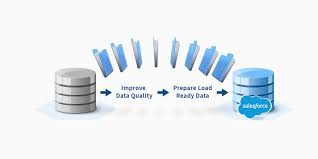
In today’s era of rapid digital transformation, efficient data migration has become increasingly important as cloud adoption gains momentum. Foundry’s research indicates that 63% of IT leaders have accelerated their cloud migrations, but 90% encounter challenges, often related to budget constraints. This emphasizes the need for meticulous planning and strategic execution. This insight focuses on Salesforce data migration, outlining why it’s essential and providing a nine-step plan for a successful migration. Additionally, we look into data preparation solutions and highlight Salesforce data migration tools, turning potential challenges into growth opportunities. Salesforce Data Migration Checklist Why is Data Migration Important? In 2011, we faced the challenge of transferring data from an old phone to a first smartphone. The contacts were especially important, but the outdated phone lacked any data transfer capabilities. Unwilling to manually re-enter everything, we researched extensively and discovered a method to extract the data into a CSV file. Converting it into vCard format, we successfully migrated all contacts. This personal experience illustrates the significance of data migration, not just for businesses but for everyday scenarios as well. For organizations, having a structured data migration plan is critical when transitioning from legacy systems to modern platforms like Salesforce. It enhances efficiency, scalability, and accessibility, supporting business growth through better data management, cost savings, and improved decision-making. Data migration also ensures integrity and security, aligning IT capabilities with evolving business needs and driving innovation in a fast-changing technological landscape. Learn how we helped Cresa migrate over 8,000 records to Salesforce with 100% accuracy. What is Salesforce Data Migration? Salesforce data migration refers to the process of transferring information from external systems—such as legacy CRM platforms or local databases—into Salesforce. This process not only preserves data integrity but also supports better decision-making, enhances customer service, and enables business growth. A well-planned Salesforce data migration strategy is critical for unlocking the full benefits of the platform and ensuring a seamless transition. Salesforce Data Migration Plan: 9 Key Steps Need Help with Data Migration to Salesforce?We offer consulting services to help you navigate your data migration challenges, from auditing to strategy execution. Contact Tectonic today. Practical Salesforce Data Migration ExampleUsing Data Loader, here’s a step-by-step guide to migrating a list of companies. After logging into Salesforce and selecting the Accounts object, you map fields from your CSV file, execute the migration, and review the logs to ensure accuracy. Like Related Posts Who is Salesforce? Who is Salesforce? Here is their story in their own words. From our inception, we’ve proudly embraced the identity of Read more Salesforce Marketing Cloud Transactional Emails Salesforce Marketing Cloud Transactional Emails are immediate, automated, non-promotional messages crucial to business operations and customer satisfaction, such as order Read more Salesforce Unites Einstein Analytics with Financial CRM Salesforce has unveiled a comprehensive analytics solution tailored for wealth managers, home office professionals, and retail bankers, merging its Financial Read more AI-Driven Propensity Scores AI plays a crucial role in propensity score estimation as it can discern underlying patterns between treatments and confounding variables Read more

Read More
Converting 15-Character IDs to 18-Character in Salesforce

Converting 15-Character IDs to 18-Character in Salesforce

In Salesforce, every record is assigned a unique Record ID, which is essential for managing data, writing formulas, and referencing records as an admin or developer. There are two types of Record IDs: a 15-character version and an 18-character version, each suited for different scenarios. Converting 15-character IDs to 18-character ones can be time-consuming when done manually, but several tools and methods can simplify the process, allowing for instant conversion with just a click. Understanding Salesforce Record IDs 15-Character Record ID The 15-character Record ID is case-sensitive and typically used in Salesforce’s user interface for tasks like editing records and generating reports. However, its case sensitivity can create issues with systems that do not recognize differences between uppercase and lowercase letters. 18-Character Record ID To mitigate case sensitivity issues, Salesforce offers an 18-character ID, which is used in APIs and tools such as Data Loader. This ID adds three additional characters to the 15-character version and is always returned by these tools during data exports. When to Use Each ID For consistency, the 18-character ID is preferable, especially when working with external systems. It’s best practice to use the 18-character ID in formulas, API calls, or any data comparisons to avoid errors caused by case sensitivity. Converting IDs Using a Formula Field in Salesforce Salesforce recommends creating a formula field with the CASESAFEID(Id) function to convert the 15-character ID to an 18-character ID. Here are some key points to consider: Implementation Steps: Once completed, this formula field will display the 18-character ID on relevant records. APIs and Software DevelopmentIf you need a more scalable or efficient solution, consider using Salesforce APIs or third-party tools for ID conversion. While online tools may suffice for small tasks, they can become unwieldy when handling hundreds or thousands of records in a CSV or Excel file. Streamlining ID Conversion with Xappex Tools Imagine the frustration of manually copying and pasting IDs! That’s where the XL-Connector and G-Connector from Xappex come into play. These tools work directly in Excel or Google Sheets, simplifying the ID conversion process. Instead of juggling multiple tools or navigating complex processes, you can seamlessly convert Salesforce IDs within your spreadsheet, saving significant time and effort. Using XL-Connector for ID Conversion in Excel Using G-Connector (Google Sheets) for ID Conversion G-Connector is Xappex’s integration tool for Google Sheets and Salesforce. If you haven’t installed it yet, do so and log in to your Salesforce org. The sheet will automatically update with the new 18-character IDs and provide links to open the records directly in Salesforce. Conclusion In summary, managing Salesforce Record IDs doesn’t have to be a hassle. While converting 15-character IDs to 18-character IDs is crucial for consistency, doing it manually can be tedious. With XL-Connector and G-Connector, you can streamline ID conversion with just a click in Excel or Google Sheets, making your workflow much more efficient. Like Related Posts Who is Salesforce? Who is Salesforce? Here is their story in their own words. From our inception, we’ve proudly embraced the identity of Read more Salesforce Marketing Cloud Transactional Emails Salesforce Marketing Cloud Transactional Emails are immediate, automated, non-promotional messages crucial to business operations and customer satisfaction, such as order Read more Salesforce Unites Einstein Analytics with Financial CRM Salesforce has unveiled a comprehensive analytics solution tailored for wealth managers, home office professionals, and retail bankers, merging its Financial Read more AI-Driven Propensity Scores AI plays a crucial role in propensity score estimation as it can discern underlying patterns between treatments and confounding variables Read more

Read More
gettectonic.com