

Relationships Archives - gettectonic.com - Page 13
Predictive Analytics

Predictive Analytics in Salesforce

Predictive Analytics in Salesforce: Enhancing Decision-Making with AI In an ever-changing business environment, companies seek tools to forecast trends and anticipate challenges, enabling them to remain competitive. Predictive analytics, powered by Salesforce’s AI capabilities, offers a cutting-edge solution for these needs. In this guide, we’ll explore how predictive analytics works and how Salesforce empowers businesses to make smarter, data-driven decisions. What is Predictive Analytics? Predictive analytics uses historical data, statistical modeling, and machine learning to forecast future outcomes. With the vast amount of data organizations generate—ranging from transaction logs to multimedia—unifying this information can be challenging due to data silos. These silos hinder the development of accurate predictive models and limit Salesforce’s ability to deliver actionable insights. The result? Missed opportunities, inefficiencies, and impersonal customer experiences. When organizations implement proper integrations and data management practices, predictive analytics can harness this data to uncover patterns and predict future events. Techniques such as logistic regression, linear regression, neural networks, and decision trees help businesses gain actionable insights that enhance planning and decision-making. Einstein Prediction Builder A key component of the Salesforce Einstein Suite, Einstein Prediction Builder enables users to create custom AI models with minimal coding or data science expertise. Using in-house data, businesses can anticipate trends, forecast customer behavior, and predict outcomes with tailored precision. Key Features of Einstein Prediction Builder Note: Einstein Prediction Builder requires an Enterprise or Unlimited Edition subscription to access. Predictive Model Types in Salesforce Salesforce employs various predictive models tailored to specific needs: Building Custom Predictions Salesforce supports custom predictions tailored to unique business needs, such as forecasting regional sales or calculating appointment attendance rates. Tips for Building Predictions Prescriptive Analytics: Turning Predictions into Actions Predictive insights are only as valuable as the actions they inspire. Einstein Next Best Action bridges this gap by providing context-specific recommendations based on predictions. How Einstein Next Best Action Works Data Quality: The Foundation of Accurate Predictions The effectiveness of predictive analytics depends on the quality of your data. Poor data—whether due to errors, duplicates, or inconsistencies—can skew results and undermine trust. Best Practices for Data Quality Modern tools like DataGroomr can automate data validation and cleaning, ensuring that predictions are based on trustworthy information. Empowering Smarter Decisions with Predictive Analytics Salesforce’s AI-driven predictive analytics transforms decision-making by providing actionable insights from historical data. Businesses can anticipate trends, improve operational efficiency, and deliver personalized customer experiences. As predictive analytics continues to evolve, companies leveraging these tools will gain a competitive edge in an increasingly dynamic marketplace. Embrace the power of predictive analytics in Salesforce to make faster, more strategic decisions and drive sustained success. Like1 Related Posts Who is Salesforce? Who is Salesforce? Here is their story in their own words. From our inception, we’ve proudly embraced the identity of Read more Salesforce Marketing Cloud Transactional Emails Salesforce Marketing Cloud Transactional Emails are immediate, automated, non-promotional messages crucial to business operations and customer satisfaction, such as order Read more Salesforce Unites Einstein Analytics with Financial CRM Salesforce has unveiled a comprehensive analytics solution tailored for wealth managers, home office professionals, and retail bankers, merging its Financial Read more AI-Driven Propensity Scores AI plays a crucial role in propensity score estimation as it can discern underlying patterns between treatments and confounding variables Read more

Read More
Sales Cloud for Manufacturing

Sales Cloud for Manufacturing

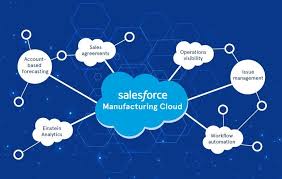
Generate Sales Agreement Insights with Sales Cloud for ManufacturingEnhance decision-making and forecasting accuracy by summarizing sales agreements to highlight deviations between planned and actual quantities and revenue. This feature analyzes sales agreement data, evaluating revenue and margin impacts, and provides actionable recommendations to improve decision-making and strengthen customer relationships. Sales Cloud for Manufacturing. Key Features: Referenced Objects:Sales Agreement, Product, Schedule Data Sources:CRM, Asset, Manufacturing Cloud, Flow How to Access: Availability:GA Oct ’24 Get Customer Interaction InsightsProvide service agents with a summarized view of past customer interactions to enhance service quality and efficiency. This feature compiles interaction timelines, enabling agents to quickly access a customer’s history, leading to improved support and satisfaction. Key Features: Referenced Objects:Contact, Case, Interaction Data Sources:CRM, Interaction Timeline How to Access: Availability:Coming Soon Like Related Posts Who is Salesforce? Who is Salesforce? Here is their story in their own words. From our inception, we’ve proudly embraced the identity of Read more Salesforce Unites Einstein Analytics with Financial CRM Salesforce has unveiled a comprehensive analytics solution tailored for wealth managers, home office professionals, and retail bankers, merging its Financial Read more AI-Driven Propensity Scores AI plays a crucial role in propensity score estimation as it can discern underlying patterns between treatments and confounding variables Read more Tectonic’s Successful Salesforce Track Record Salesforce Technology Services Integrator – Tectonic has successfully delivered Salesforce in a variety of industries including Public Sector, Hospitality, Manufacturing, Read more
Read More
Salesforce ERP Integration

Salesforce ERP Integration

Unlock the Power of Salesforce and ERP Integration Salesforce is known worldwide for its unmatched capabilities as a CRM platform. But when integrated with an ERP system, the potential multiplies. Together, they create a cohesive environment where workflows are streamlined, financial processes are optimized, decision-making is enhanced, and customer relationships are improved—all within one unified system. However, you might have questions like: How does ERP integration with Salesforce work? or What are the benefits of this integration? Let’s jump in and answer all your questions! What is ERP and Its Benefits? ERP (Enterprise Resource Planning) is software that integrates multiple business functions into a single platform. It enables you to manage key processes like human resources, accounting, sales, inventory, compliance, and order management. What makes ERP systems unique is the shared database that gives all employees access to the same real-time information across departments. While different from a CRM platform, ERP can be integrated with Salesforce to further boost business efficiency and productivity. Key benefits of an ERP system include: How Do Salesforce and ERP Work Together? Salesforce focuses on managing customer relationships, sales, marketing, and service operations. In contrast, ERP systems handle core business processes like finance, human resources, and supply chain management. When Salesforce and ERP are integrated, they create a seamless data flow between both systems. This integration synchronizes key data, like transactions and customer information, providing unified visibility across departments. It enhances efficiency and delivers better customer experiences by offering personalized services. Why Integrate Your ERP with Salesforce? While Salesforce helps manage customer relationships, integrating it with an ERP system offers additional advantages: Types of Salesforce – ERP Integrations There are various ways to integrate Salesforce with an ERP, depending on your business needs: Choosing the Right ERP to Integrate with Salesforce Not sure which ERP system is right for your Salesforce integration? Consider the following factors: ERP Systems Compatible with Salesforce Salesforce’s flexibility allows it to integrate with most ERP systems, including Sage Intacct, Sage X3, Sage 300, Sage 100, Sage 50 US, and Acumatica, among others. This flexibility ensures you can find the right ERP for your business operations. Key Functionalities with Salesforce – ERP Integration Here are some essential features you can expect from Salesforce and ERP integration: Best Practices for Seamless Integration To ensure a smooth Salesforce and ERP integration, follow these best practices: Conclusion Integrating an ERP system with Salesforce CRM can transform your business by unlocking new levels of productivity, efficiency, and growth. As your integration partner, Tectonic offers expertise in Salesforce and third-party ERP systems. Ready to streamline your operations and boost performance? Contact us today to start your ERP-Salesforce integration journey! Like1 Related Posts Who is Salesforce? Who is Salesforce? Here is their story in their own words. From our inception, we’ve proudly embraced the identity of Read more Salesforce Marketing Cloud Transactional Emails Salesforce Marketing Cloud Transactional Emails are immediate, automated, non-promotional messages crucial to business operations and customer satisfaction, such as order Read more Salesforce Unites Einstein Analytics with Financial CRM Salesforce has unveiled a comprehensive analytics solution tailored for wealth managers, home office professionals, and retail bankers, merging its Financial Read more AI-Driven Propensity Scores AI plays a crucial role in propensity score estimation as it can discern underlying patterns between treatments and confounding variables Read more

Read More
Employees Have Different Motivations

Employees Have Different Motivations

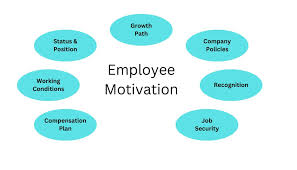
The workforce has undergone significant changes over the last two years. Today’s employees have different motivations, seeking more flexibility and purpose, while also expecting more from corporate leaders. Employees Have Different Motivations. Similarly, customers now demand high levels of personalization and exceptional experiences. How can C-suite executives keep up with these evolving expectations? Our research highlights emerging priorities for corporate leaders in these challenging times. In a recent webinar, we asked two Inc. 5000 CEOs about shifting priorities and the critical role of enhancing employee experiences to meet rising customer demands. The message was clear: efficient growth starts with your employees. Focusing on employee satisfaction, providing clear paths for growth, establishing strong values, and investing in the right tools are key drivers of success. However, for some leaders, old habits hinder progress. Today’s executives must not only be digitally proficient but also agile, with strong emotional intelligence to manage change and new relationships effectively. A prime example of this disconnect is seen in employee engagement. Salesforce’s recent report, The Experience Advantage, found that while 71% of C-suite executives believe their employees are engaged, only 51% of employees agree. Similarly, 70% of executives think their employees are happy, but only 44% of employees share that sentiment. How can companies enable their leaders to succeed in this era of heightened expectations? Let’s explore the top priorities for CEOs today. Top Priorities for Corporate Leaders In a world where CEOs are accountable to more stakeholders than ever, they must navigate an increasingly complex landscape. They’re expected to speak on social issues, advocate for sustainability, and ensure stability in times of rapid change. Adaptability is crucial for success. Here are some current top priorities for corporate leaders: At Salesforce, they’ve found success by operating with startup-style values—centering consumer trust, fostering constant innovation, and setting clear, simple goals. Marc Benioff’s V2MOM framework exemplifies this alignment in action. The New Skills Leaders Need After reviewing research and interviewing business leaders, several trends have emerged. The most successful executives today share the following traits: A 2021 IBM Institute for Business Value survey of 3,000 global CEOs revealed similar trends, highlighting purposeful agility and making technology a priority. The study found that 56% of CEOs emphasized the need for operational flexibility, and 61% were focused on empowering remote work. Key technologies driving results over the next few years include the Internet of Things (79%), cloud computing (74%), and AI (52%). A major shift on leader agendas is the growing focus on employee experience. As Salesforce’s chief growth evangelist, Tiffani Bova, noted, “Employees are now the most important stakeholder to long-term success.” Providing seamless, consumer-like experiences for employees is now essential for business growth. Our research also uncovered a key gap: 73% of C-suite executives don’t know how to use employee data to drive change. This disconnect between leadership perception and actual employee experience is undermining growth. Emotional Intelligence (EQ) Matters To close this gap, sharpening leaders’ emotional intelligence is essential. Last year, we conducted interviews with 10 CEOs across various sectors. Many revealed plans to replace C-suite team members with more digitally savvy and emotionally intelligent leaders better equipped to manage the modern workforce. Summit Leadership Partners’ 2020 research found that 80-90% of top-performing executives excelled because of their high EQ. In fact, EQ is twice as predictive of performance as technical skills or IQ. The Changing Role of Key Executives Who do CEOs rely on most? A decade ago, IBM’s Institute for Business Value found that 47% of CEOs considered the chief innovation officer critical. Today, only 4% of CEOs agree. The chief marketing officer and chief strategy officer roles have also seen significant declines in perceived importance. The positions that have gained prominence include the chief technology officer (CTO) and chief information officer (CIO), now ranked third in importance after the chief financial officer (CFO) and chief operating officer (COO). As Jeff McElfresh, COO of AT&T, observed, “Not all leaders are comfortable managing in a distributed model. We’ve got work to do to unlock the potential.” The rise in job titles related to the future of work—up 60% since the pandemic—reflects this shift, with hybrid work models becoming more common. Diversity Drives Innovation and Profitability Diversity in leadership has become essential for driving revenue and innovation. McKinsey’s 2020 report Diversity Wins found that companies with more gender-diverse executive teams were 25% more likely to achieve above-average profitability. Similarly, those with greater ethnic diversity outperformed their peers by 36%. Diverse management teams also deliver 19% higher revenues from innovation compared to less-diverse teams, according to research from BCG. As diversity becomes increasingly tied to executive compensation, companies must support a diverse leadership pipeline by developing inclusive talent strategies. Moving Forward To thrive in today’s business world, corporate leaders must plan for change, ensure all executives have both digital literacy and emotional intelligence, and redistribute power to drive success. The healthiest C-suites will include diverse leaders in key positions like COO, CFO, and CIO/CTO. Aligning the business around common goals—like those in Salesforce’s V2MOM framework—and eliminating barriers for employees are key to staying ahead. Innovation must remain a top priority. By investing in the right tools and connected platforms, companies can reduce costs and drive sustainable growth. Reach out to Tectonic for assistance in making the innovations that recognizes Employees Have Different Motivations. Like Related Posts Who is Salesforce? Who is Salesforce? Here is their story in their own words. From our inception, we’ve proudly embraced the identity of Read more Salesforce Marketing Cloud Transactional Emails Salesforce Marketing Cloud Transactional Emails are immediate, automated, non-promotional messages crucial to business operations and customer satisfaction, such as order Read more Salesforce Unites Einstein Analytics with Financial CRM Salesforce has unveiled a comprehensive analytics solution tailored for wealth managers, home office professionals, and retail bankers, merging its Financial Read more AI-Driven Propensity Scores AI plays a crucial role in propensity score estimation as it can discern underlying patterns between treatments and confounding variables Read more

Read More

How to Hire the Right Salesforce Developer

Maximizing Salesforce: How to Hire the Right Salesforce Developer Salesforce has revolutionized how businesses manage customer relationships, becoming a cornerstone for enhancing customer service and engagement. However, to fully leverage its potential, skilled professionals are needed to customize and develop the platform to meet specific business needs. Hiring the right Salesforce developer is crucial for ensuring your organization gets the most out of this powerful tool. In this guide, we’ll explore key considerations before hiring a Salesforce developer, the steps involved in the hiring process, and tips for effective Salesforce recruitment. How to Hire the Right Salesforce Developer. Understanding Salesforce Developer Roles Before diving into the hiring process, it’s essential to understand the different Salesforce roles: Your business needs may require a combination of these roles. Depending on the complexity of your Salesforce environment, you might need more than just a developer. Key Factors to Consider Before Hiring a Salesforce Developer The most critical factor when hiring a Salesforce developer is their skill set. Salesforce development requires deep knowledge of various technologies and tools. Key skills include: Assessing a candidate’s industry-specific experience can provide insight into their ability to address your business challenges. Salesforce certifications validate a professional’s expertise. Key certifications to look for include: These certifications provide assurance of the candidate’s competency. A strong Salesforce developer should not only possess technical skills but also understand business processes. Developers who can translate business requirements into technical solutions will drive business value. Salesforce development often involves troubleshooting complex issues. Assess a candidate’s problem-solving abilities through technical interviews or practical tests. Strong problem-solvers will be invaluable when unexpected challenges arise. Effective communication is vital for a Salesforce developer. They must explain technical concepts to non-technical stakeholders and document processes clearly for future maintenance. How to Hire the Right Salesforce Developer Start by defining the skills, experience, and certifications needed for the role. A well-defined job description will attract the right candidates. Create job postings that reflect the role’s responsibilities and qualifications. Use relevant keywords like “Salesforce job postings” and “Salesforce employment opportunities” to attract suitable candidates. Screen candidates based on their resumes and initial interviews, looking for a strong match between their experience and your job requirements. Evaluate candidates through practical tests to assess their Salesforce-specific coding skills and problem-solving abilities. Conduct multiple interview rounds: Salesforce Recruitment Tips Use platforms like LinkedIn and Salesforce-specific groups to find candidates and connect with the Salesforce community. Partnering with recruitment agencies that specialize in Salesforce roles can streamline the hiring process. Salesforce professionals are in high demand, so offering competitive salaries and benefits is key to attracting top talent. Identify candidates committed to professional development, as Salesforce is constantly evolving with new features and practices. Highlighting your company’s culture, values, and growth opportunities can attract top talent. Why Choose Tectonic – How to Hire the Right Salesforce Developer? Hiring the right Salesforce developer requires a thorough understanding of your business needs, a clear definition of the required skills, and a meticulous hiring process. By emphasizing these factors, you can ensure you recruit the right talent to drive your Salesforce initiatives. However many Salesforce projects don’t require a long term developer, business analyst, or project manager. Outsourcing these roles to Tectonic can provide a valuable savings in cost and improved project outcomes with a clean CRM in place from day one. At Tectonic, we take pride in being a leading Salesforce provider. Our team of certified Salesforce professionals is equipped with the skills and experience to meet your business demands. Whether you need a developer, administrator, or consultant, Tectonic’s rigorous recruiting process ensures we deliver the best talent. Partner with Tectonic to fully harness the potential of Salesforce and elevate your business to the next level. Contact us today to learn more about our Salesforce staffing solutions and how we can help you achieve your CRM goals. Like Related Posts Who is Salesforce? Who is Salesforce? Here is their story in their own words. From our inception, we’ve proudly embraced the identity of Read more Salesforce Marketing Cloud Transactional Emails Salesforce Marketing Cloud Transactional Emails are immediate, automated, non-promotional messages crucial to business operations and customer satisfaction, such as order Read more Salesforce Unites Einstein Analytics with Financial CRM Salesforce has unveiled a comprehensive analytics solution tailored for wealth managers, home office professionals, and retail bankers, merging its Financial Read more AI-Driven Propensity Scores AI plays a crucial role in propensity score estimation as it can discern underlying patterns between treatments and confounding variables Read more
Read More
Integrate Digital Delivery and Human Connection

Integrate Digital Delivery and Human Connection

Salesforce’s latest data reveals a complex challenge for banks: while digital excellence is now essential for customer satisfaction, a fully digital experience risks alienating customers who value human connections at critical moments. Banks often feel torn between scaling digital capabilities and preserving the personal touch that fosters customer loyalty. How can they strike the right balance?

Read More
Future of Customer Service

Future of Customer Service

The Future of Customer Service Is Here—And It’s Smarter Than Ever Salesforce, the global leader in CRM, has just supercharged its Service Cloud with groundbreaking AI-powered updates. These aren’t just minor tweaks—they’re game-changing innovations designed to transform how businesses understand, engage with, and delight their customers. With new features like Einstein Conversation Mining, Generative AI Survey Summarization, and Knowledge-Powered AI, Salesforce is empowering companies to: ✔ Boost customer satisfaction with hyper-personalized interactions✔ Increase agent productivity through AI-driven insights✔ Drive revenue growth by resolving issues faster and smarter Curious how? Let’s dive into Salesforce’s cutting-edge conversational AI and explore how these tools revolutionize customer service. Salesforce Service Cloud: The Ultimate Customer Service Hub Service Cloud is a cloud-based customer service platform that helps businesses streamline support, strengthen relationships, and deliver exceptional experiences. Key features include: 🔹 Centralized Case Management – Track and resolve all customer queries in one place.🔹 Omnichannel Support – Engage seamlessly across email, phone, chat, and social media.🔹 Self-Service Portal – Empower customers with FAQs, guides, and troubleshooting resources.🔹 Agent Productivity Tools – Automate workflows, generate quick responses, and flag critical issues.🔹 Advanced Analytics – Monitor performance, track resolutions, and measure customer satisfaction in real time. Now, with AI-powered conversational intelligence, Service Cloud is taking customer support to the next level. Meet Salesforce’s AI Dream Team Salesforce’s latest AI innovations unlock deeper customer insights and smarter service solutions. Here’s how each feature works: 1. Einstein Conversation Mining – Listen, Learn, Act This AI acts like a supercharged listening tool, analyzing thousands of customer interactions (calls, emails, chats) to uncover hidden trends. It helps businesses: ✅ Spot frustrations early – Proactively address issues before they escalate.✅ Personalize experiences – Tailor responses based on individual customer needs. 2. Generative AI Survey Summarization – Turn Feedback into Action No more sifting through endless survey responses. This feature instantly summarizes open-ended feedback, delivering key insights like: ✅ Emerging customer sentiment trends – Know what’s working (and what’s not).✅ Hyper-targeted marketing – Refine campaigns using real customer feedback. 3. Knowledge-Powered AI – Smarter Support, Faster Resolutions Imagine an AI assistant whispering real-time solutions to your agents. This tool: ✅ Recommends relevant knowledge articles during live chats to speed up resolutions.✅ Auto-generates new knowledge base content from customer conversations. How AI Supercharges Your Support Team Salesforce’s conversational intelligence doesn’t just help customers—it empowers agents to work smarter and faster. Here’s how: 🔸 360° Customer Insights – Agents get full context from past interactions (emails, calls, chats) for personalized service.🔸 Instant Knowledge Access – AI surfaces relevant guides and solutions mid-conversation, cutting resolution time.🔸 Automated Issue Detection – AI identifies common problems and suggests fixes, freeing agents for complex cases.🔸 Data-Driven Coaching – Analyzes agent performance to highlight strengths and areas for improvement.🔸 Proactive Support – Detects trends and predicts issues before customers even complain. The Bottom Line: Smarter Service = Happier Customers + Faster Growth With Salesforce’s AI-powered Service Cloud, businesses can: 🚀 Resolve issues faster with AI-guided insights.💡 Personalize every interaction for deeper customer connections.📈 Boost efficiency and revenue by empowering agents with real-time intelligence. The future of customer service isn’t just automated—it’s intelligent, proactive, and customer-obsessed. Ready to Transform Your Customer Support? Let’s Talk! Like Related Posts Who is Salesforce? Who is Salesforce? Here is their story in their own words. From our inception, we’ve proudly embraced the identity of Read more Salesforce Marketing Cloud Transactional Emails Salesforce Marketing Cloud Transactional Emails are immediate, automated, non-promotional messages crucial to business operations and customer satisfaction, such as order Read more Salesforce Unites Einstein Analytics with Financial CRM Salesforce has unveiled a comprehensive analytics solution tailored for wealth managers, home office professionals, and retail bankers, merging its Financial Read more AI-Driven Propensity Scores AI plays a crucial role in propensity score estimation as it can discern underlying patterns between treatments and confounding variables Read more
Read More
Salesforce AI Evolves with the Generative AI Landscape

Salesforce AI Evolves with the Generative AI Landscape

Salesforce AI: Powering Customer Relationship Management Salesforce is a leading CRM solution that has long delivered cutting-edge cloud technologies to manage customer relationships effectively. In recent months, the platform has further advanced with the integration of generative AI and AI-powered features, primarily through its AI engine, Einstein. Salesforce AI Evolves with the Generative AI Landscape. To explore how AI operates within the Salesforce ecosystem and how various business teams can leverage these innovations, this guide delves into Salesforce’s AI capabilities, products, and features. Salesforce AI: Transforming CRM Capabilities Salesforce remains a top choice in the CRM software market, offering one of the most comprehensive solutions for managing relationships across departments, industries, and initiatives. Through dedicated cloud platforms, Salesforce enables teams to oversee marketing, sales, customer service, e-commerce, and more, with tools focused on delivering enhanced customer experiences supported by powerful data analytics. With the introduction of generative AI, Salesforce has significantly elevated its native automation, workflow management, data analytics, and assistive capabilities for customer lifecycle management. Einstein Copilot exemplifies this innovation, aiding internal users with tasks such as outreach, analysis, and improving external user experiences. What is Salesforce Einstein? Salesforce Einstein is an AI-driven suite of tools integrated natively into various Salesforce Cloud applications, including Sales Cloud, Marketing Cloud, Service Cloud, and Commerce Cloud. It also operates through assistive technologies like Einstein Copilot. Einstein is built on a multitenant platform and incorporates numerous automated machine learning features to unify organizational data with CRM capabilities. Designed to make intelligent, data-driven decisions, Einstein requires no additional installation, offering a seamless user experience when paired with a compatible subscription plan. 7 Key Features of Salesforce Einstein 7 Applications of Salesforce Einstein Future Trends in Salesforce AI Bottom Line: Salesforce AI Evolves with the Generative AI Landscape Salesforce continues to enhance its AI-powered features, keeping pace with advancements in generative and predictive AI. Whether new to the platform or a seasoned user, Salesforce offers innovative, AI-centric solutions to streamline customer relationship management and business operations. Like1 Related Posts Who is Salesforce? Who is Salesforce? Here is their story in their own words. From our inception, we’ve proudly embraced the identity of Read more Salesforce Marketing Cloud Transactional Emails Salesforce Marketing Cloud Transactional Emails are immediate, automated, non-promotional messages crucial to business operations and customer satisfaction, such as order Read more Salesforce Unites Einstein Analytics with Financial CRM Salesforce has unveiled a comprehensive analytics solution tailored for wealth managers, home office professionals, and retail bankers, merging its Financial Read more AI-Driven Propensity Scores AI plays a crucial role in propensity score estimation as it can discern underlying patterns between treatments and confounding variables Read more

Read More
AI Agents Connect Tool Calling and Reasoning

AI Agents Connect Tool Calling and Reasoning

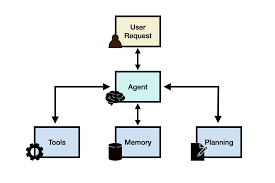
AI Agents: Bridging Tool Calling and Reasoning in Generative AI Exploring Problem Solving and Tool-Driven Decision Making in AI Introduction: The Emergence of Agentic AI Recent advancements in libraries and low-code platforms have simplified the creation of AI agents, often referred to as digital workers. Tool calling stands out as a key capability that enhances the “agentic” nature of Generative AI models, enabling them to move beyond mere conversational tasks. By executing tools (functions), these agents can act on your behalf and tackle intricate, multi-step problems requiring sound decision-making and interaction with diverse external data sources. This insight explores the role of reasoning in tool calling, examines the challenges associated with tool usage, discusses common evaluation methods for tool-calling proficiency, and provides examples of how various models and agents engage with tools. Reasoning as a Means of Problem-Solving Successful agents rely on two fundamental expressions of reasoning: reasoning through evaluation and planning, and reasoning through tool use. While both reasoning expressions are vital, they don’t always need to be combined to yield powerful solutions. For instance, OpenAI’s new o1 model excels in reasoning through evaluation and planning, having been trained to utilize chain of thought effectively. This has notably enhanced its ability to address complex challenges, achieving human PhD-level accuracy on benchmarks like GPQA across physics, biology, and chemistry, and ranking in the 86th-93rd percentile on Codeforces contests. However, the o1 model currently lacks explicit tool calling capabilities. Conversely, many models are specifically fine-tuned for reasoning through tool use, allowing them to generate function calls and interact with APIs effectively. These models focus on executing the right tool at the right moment but may not evaluate their results as thoroughly as the o1 model. The Berkeley Function Calling Leaderboard (BFCL) serves as an excellent resource for comparing the performance of various models on tool-calling tasks and provides an evaluation suite for assessing fine-tuned models against challenging scenarios. The recently released BFCL v3 now includes multi-step, multi-turn function calling, raising the standards for tool-based reasoning tasks. Both reasoning types are powerful in their own right, and their combination holds the potential to develop agents that can effectively deconstruct complex tasks and autonomously interact with their environments. For more insights into AI agent architectures for reasoning, planning, and tool calling, check out my team’s survey paper on ArXiv. Challenges in Tool Calling: Navigating Complex Agent Behaviors Creating robust and reliable agents necessitates overcoming various challenges. In tackling complex problems, an agent often must juggle multiple tasks simultaneously, including planning, timely tool interactions, accurate formatting of tool calls, retaining outputs from prior steps, avoiding repetitive loops, and adhering to guidelines to safeguard the system against jailbreaks and prompt injections. Such demands can easily overwhelm a single agent, leading to a trend where what appears to an end user as a single agent is actually a coordinated effort of multiple agents and prompts working in unison to divide and conquer the task. This division enables tasks to be segmented and addressed concurrently by distinct models and agents, each tailored to tackle specific components of the problem. This is where models with exceptional tool-calling capabilities come into play. While tool calling is a potent method for empowering productive agents, it introduces its own set of challenges. Agents must grasp the available tools, choose the appropriate one from a potentially similar set, accurately format the inputs, execute calls in the correct sequence, and potentially integrate feedback or instructions from other agents or humans. Many models are fine-tuned specifically for tool calling, allowing them to specialize in selecting functions accurately at the right time. Key considerations when fine-tuning a model for tool calling include: Common Benchmarks for Evaluating Tool Calling As tool usage in language models becomes increasingly significant, numerous datasets have emerged to facilitate the evaluation and enhancement of model tool-calling capabilities. Two prominent benchmarks include the Berkeley Function Calling Leaderboard and the Nexus Function Calling Benchmark, both utilized by Meta to assess the performance of their Llama 3.1 model series. The recent ToolACE paper illustrates how agents can generate a diverse dataset for fine-tuning and evaluating model tool use. Here’s a closer look at each benchmark: Each of these benchmarks enhances our ability to evaluate model reasoning through tool calling. They reflect a growing trend toward developing specialized models for specific tasks and extending the capabilities of LLMs to interact with the real world. Practical Applications of Tool Calling If you’re interested in observing tool calling in action, here are some examples to consider, categorized by ease of use, from simple built-in tools to utilizing fine-tuned models and agents with tool-calling capabilities. While the built-in web search feature is convenient, most applications require defining custom tools that can be integrated into your model workflows. This leads us to the next complexity level. To observe how models articulate tool calls, you can use the Databricks Playground. For example, select the Llama 3.1 405B model and grant access to sample tools like get_distance_between_locations and get_current_weather. When prompted with, “I am going on a trip from LA to New York. How far are these two cities? And what’s the weather like in New York? I want to be prepared for when I get there,” the model will decide which tools to call and what parameters to provide for an effective response. In this scenario, the model suggests two tool calls. Since the model cannot execute the tools, the user must input a sample result to simulate. Suppose you employ a model fine-tuned on the Berkeley Function Calling Leaderboard dataset. When prompted, “How many times has the word ‘freedom’ appeared in the entire works of Shakespeare?” the model will successfully retrieve and return the answer, executing the required tool calls without the user needing to define any input or manage the output format. Such models handle multi-turn interactions adeptly, processing past user messages, managing context, and generating coherent, task-specific outputs. As AI agents evolve to encompass advanced reasoning and problem-solving capabilities, they will become increasingly adept at managing

Read More
Choose Salesforce for SMS

Choose Salesforce for SMS

Why Integrating SMS with Salesforce Transforms Business Communication Effective communication is crucial in today’s fast-paced business environment. A company’s success often hinges on its ability to interact seamlessly with customers—whether through personalized service, timely updates, or the latest product offerings. Choose Salesforce for SMS. Today’s customers demand a seamless, omnichannel experience that goes beyond traditional communication methods like flyers and emails. They expect real-time, two-way interactions, which is where Salesforce SMS apps come into play. These apps, which integrate smoothly with existing CRM systems, are transforming how businesses engage with their customers. 5 Reasons to Integrate SMS with Salesforce Integrating SMS with Salesforce offers numerous benefits, primarily enhancing customer-facing efficiency and effectiveness. Here are five key advantages: SMS for Salesforce enables businesses to provide immediate customer support. For instance, logistics companies can use SMS to notify customers about delivery statuses or appointment updates in real time. SMS boasts an impressive open rate—over 95% within the first three minutes—making it a highly effective medium for increasing marketing engagement compared to email. You can even couple Salesforce SMS with tools like geofencing to send notifications via SMS when they are in the store. Integrating SMS with Salesforce allows for streamlined automation of processes such as order updates and appointment reminders. This reduces the need for manual intervention, boosts productivity, and frees up resources for more strategic tasks. Automated texts can be scheduled based on customer behavior or sales stages, optimizing workflows and enhancing efficiency. With a response rate of approximately 45%, SMS is highly effective for engaging customers. It facilitates prompt replies due to its immediate nature. Sales and marketing teams can leverage SMS for direct interactions, while retailers can use it to distribute discount codes and drive quick responses. Additionally, SMS is ideal for important notifications, enhancing customer service. By integrating SMS with Salesforce, businesses can tailor their messages to address specific customer needs and preferences. This personalization fosters stronger customer relationships and improves conversion rates. For example, a travel agency can send personalized vacation recommendations, while financial advisors can provide client-specific updates and advice. Salesforce’s integration with SMS allows for robust tracking and analysis of customer interactions and campaign effectiveness. Marketing teams can refine their strategies by reviewing metrics such as open rates, click-through rates, and conversion rates from SMS campaigns. Additionally, customer support teams can evaluate response times and resolution rates to improve service efficiency. How to Implement SMS in Salesforce To send and receive texts via Salesforce, you have several options: Salesforce offers two primary SMS solutions: Mobile Studio and Digital Engagement. For more tailored functionality, you can use Salesforce API or another API provider to develop a custom texting solution. While this offers greater flexibility and avoids extra costs, it involves significant development time and expense. Opting for a Salesforce-native SMS app from the Salesforce AppExchange can be advantageous. These apps, designed specifically for SMS within Salesforce, often offer: These native apps also come with dedicated customer support, making them a cost-effective and efficient choice. Best Practices for SMS Communication While SMS boasts high engagement rates, it’s essential to follow best practices to maintain a positive customer experience: Ensure compliance with data privacy regulations like GDPR and CCPA by securing clear consent from customers before sending SMS. Automate re-opt-in processes to maintain compliance. Send messages during the recipient’s regular business hours to avoid disturbing them at inconvenient times. Stay in touch with your audience regularly but avoid overwhelming them with excessive messages. Provide valuable content to keep engagement high. Use the same number for messaging to help customers recognize your communications and build trust. Respond promptly and courteously to customer replies. Provide clear, detailed responses to inquiries. Acknowledge and reward outstanding customer actions with thoughtful messages or gestures, such as donations to their favorite charities. Even a thank you for your purchase message can contain a surprise such as a coupon or a notification that a free gift is included with their order. Use SMS to highlight important announcements, events, or opportunities, tapping into the fear of missing out to drive engagement. SMS is the perfect omnichannel tool to incorporate into all your Salesforce journeys. Balance promotional content with conversational engagement to avoid appearing pushy and to keep the communication enjoyable for customers. People are much happier to get news they can use rather than advertisements. Encourage further engagement by including clear, actionable steps in your SMS messages, such as signing up for a free trial or using a discount code. A call to action must be designed with smaller screen views in mind. Include an easy way for recipients to unsubscribe from future messages to comply with legal requirements and respect customer preferences. By integrating SMS with Salesforce and adhering to these best practices, businesses can enhance their communication strategies, foster better customer relationships, and drive greater engagement. Like1 Related Posts Who is Salesforce? Who is Salesforce? Here is their story in their own words. From our inception, we’ve proudly embraced the identity of Read more Salesforce Marketing Cloud Transactional Emails Salesforce Marketing Cloud Transactional Emails are immediate, automated, non-promotional messages crucial to business operations and customer satisfaction, such as order Read more Salesforce Unites Einstein Analytics with Financial CRM Salesforce has unveiled a comprehensive analytics solution tailored for wealth managers, home office professionals, and retail bankers, merging its Financial Read more AI-Driven Propensity Scores AI plays a crucial role in propensity score estimation as it can discern underlying patterns between treatments and confounding variables Read more

Read More
Introducing Marketing Cloud Advanced

Introducing Marketing Cloud Advanced

Salesforce has unveiled a series of innovations in its Marketing Cloud, (Introducing Marketing Cloud Advanced) designed to empower businesses with AI-driven tools and enhanced data capabilities to elevate customer engagement. These new features aim to deepen customer relationships, improve team productivity, and boost operational efficiency. Introducing Marketing Cloud Advanced One of the standout innovations is Marketing Cloud Advanced, an upcoming edition that integrates advanced automation and AI. This edition is designed to connect marketing journeys with sales, service, and commerce workflows, offering a more personalized experience across multiple customer touchpoints. Additionally, the introduction of Agentforce for Marketing will bring generative and predictive AI into the marketing realm, helping marketers create comprehensive, end-to-end campaign experiences. Steve Hammond, Executive Vice President and General Manager of Marketing Cloud at Salesforce, commented: “Today’s most successful marketers engage customers on their terms and act as value multipliers across the entire customer experience—whether helping sales or service have more personalized conversations or re-engaging inactive customers. Built on Data Cloud, Marketing Cloud is the only solution that unifies data across every department and moment in the customer lifecycle, powered by Agentforce Agents and automation, driving growth, loyalty, and optimizing ROI.” Agentforce for Marketing introduces several capabilities that streamline marketing processes. Marketers can now plan, launch, and optimize campaigns with ease. Agentforce allows marketers to set campaign goals and brand guidelines, after which the AI generates campaign briefs, identifies target audience segments, and drafts initial emails and landing pages. The system continuously monitors performance and provides data-driven optimization suggestions based on key performance indicators (KPIs). A key addition is Einstein Marketing Intelligence (EMI), which helps marketers manage and optimize cross-channel campaign performance. EMI automates the process of data preparation, enrichment, harmonization, and visualization, enabling marketers to measure campaign effectiveness and make informed decisions to improve return on investment. Furthermore, Salesforce introduced Einstein Personalization, an AI-powered decision engine that delivers tailored customer experiences. This tool allows sales, service, and commerce teams to engage customers in real time based on live interactions and data. Using Flow’s A/B split testing feature, marketers can select dynamic email content for different audience segments and track performance to adjust strategies effectively. Sarah Lukins, General Manager of Digital at Fisher & Paykel Appliances, praised the new functionality: “Salesforce enables us to seamlessly access all of our marketing, commerce, service, sales, and external data in one place and leverage AI for more targeted audience engagement. We can now deliver more relevant and consistent personalized experiences across email, ads, web, social, and service engagements.” The Marketing Cloud Advanced Edition will roll out to customers in North America, Europe, and Latin America, while Agentforce Personalization is expected to become generally available by next summer. Additional releases include expanded Einstein multi-language support and unified SMS conversation capabilities. These innovations are part of Salesforce’s ongoing efforts to equip marketers with unified and actionable data, enhancing the performance of marketing teams and fostering deeper integration across organizations. Through AI and automation, Salesforce is helping businesses deliver more personalized, connected, and seamless customer experiences. Like Related Posts Who is Salesforce? Who is Salesforce? Here is their story in their own words. From our inception, we’ve proudly embraced the identity of Read more Salesforce Marketing Cloud Transactional Emails Salesforce Marketing Cloud Transactional Emails are immediate, automated, non-promotional messages crucial to business operations and customer satisfaction, such as order Read more Salesforce Unites Einstein Analytics with Financial CRM Salesforce has unveiled a comprehensive analytics solution tailored for wealth managers, home office professionals, and retail bankers, merging its Financial Read more AI-Driven Propensity Scores AI plays a crucial role in propensity score estimation as it can discern underlying patterns between treatments and confounding variables Read more
Read More
Tableau Einstein is Here

Tableau Einstein is Here

Tableau Einstein marks a new chapter for Tableau, transforming the analytics experience by moving beyond traditional reports and dashboards to deliver insights directly within the flow of a user’s work. This new AI-powered analytics platform blends existing Tableau and Salesforce capabilities with innovative features designed to revolutionize how users engage with data. The platform is built around four key areas: autonomous insight delivery through AI, AI-assisted development of a semantic layer, real-time data access, and a marketplace for data and AI products, allowing customers to personalize their Tableau experience. Some features, like Tableau Pulse and Tableau Agent, which provide autonomous insights, are already available. Additional tools, such as Tableau Semantics and a marketplace for AI products, are expected to launch in 2025. Access to Tableau Einstein is provided through a Tableau+ subscription, though pricing details remain private. Since being acquired by Salesforce in 2019, Tableau has shifted its focus toward AI, following the trend of many analytics vendors. In February, Tableau introduced Tableau Pulse, a generative AI-powered tool that delivers insights in natural language. In July, it also rolled out Tableau Agent, an AI assistant to help users prepare and analyze data. With AI at its core, Tableau Einstein reflects deeper integration between Tableau and Salesforce. David Menninger, an analyst at Ventana Research, commented that these new capabilities represent a meaningful step toward true integration between the two platforms. Donald Farmer, founder of TreeHive Strategy, agrees, highlighting that while the robustness of Tableau Einstein’s AI capabilities compared to its competitors remains to be seen, the platform offers more than just incremental add-ons. “It’s an impressive release,” he remarked. A Paradigm Shift in Analytics A significant aspect of Tableau Einstein is its agentic nature, where AI-powered agents deliver insights autonomously, without user prompts. Traditionally, users queried data and analyzed reports to derive insights. Tableau Einstein changes this model by proactively providing insights within the workflow, eliminating the need for users to formulate specific queries. The concept of autonomous insights, represented by tools like Tableau Pulse and Agentforce for Tableau, allows businesses to build autonomous agents that deliver actionable data. This aligns with the broader trend in analytics, where the market is shifting toward agentic AI and away from dashboard reliance. Menninger noted, “The market is moving toward agentic AI and analytics, where agents, not dashboards, drive decisions. Agents can act on data rather than waiting for users to interpret it.” Farmer echoed this sentiment, stating that the integration of AI within Tableau is intuitive and seamless, offering a significantly improved analytics experience. He specifically pointed out Tableau Pulse’s elegant design and the integration of Agentforce AI, which feels deeply integrated rather than a superficial add-on. Core Features and Capabilities One of the most anticipated features of Tableau Einstein is Tableau Semantics, a semantic layer designed to enhance AI models by enabling organizations to define and structure their data consistently. Expected to be generally available by February 2025, Tableau Semantics will allow enterprises to manage metrics, data dimensions, and relationships across datasets with the help of AI. Pre-built metrics for Salesforce data will also be available, along with AI-driven tools to simplify semantic layer management. Tableau is not the first to offer a semantic layer—vendors like MicroStrategy and Looker have similar features—but the infusion of AI sets Tableau’s approach apart. According to Tableau’s chief product officer, Southard Jones, AI makes Tableau’s semantic layer more agile and user-friendly compared to older, labor-intensive systems. Real-time data integration is another key component of Tableau Einstein, made possible through Salesforce’s Data Cloud. This integration enables Tableau users to securely access and combine structured and unstructured data from hundreds of sources without manual intervention. Unstructured data, such as text and images, is critical for comprehensive AI training, and Data Cloud allows enterprises to use it alongside structured data efficiently. Additionally, Tableau Einstein will feature a marketplace launching in mid-2025, which will allow users to build a composable infrastructure. Through APIs, users will be able to personalize their Tableau environment, share AI assets, and collaborate across departments more effectively. Looking Forward As Tableau continues to build on its AI-driven platform, Menninger and Farmer agree that the vendor’s move toward agentic AI is a smart evolution. While Tableau’s current capabilities are competitive, Menninger noted that the platform doesn’t necessarily set Tableau apart from competitors like Qlik, MicroStrategy, or Microsoft Fabric. However, the tight integration with Salesforce and the focus on agentic AI may provide Tableau with a short-term advantage in the fast-changing analytics landscape. Farmer added that Tableau Einstein’s autonomous insight generation feels like a significant leap forward for the platform. “Tableau has done great work in creating an agentic experience that feels, for the first time, like the real deal,” he said. Looking ahead, Tableau’s roadmap includes a continued focus on agentic AI, with the goal of providing each user with their own personal analyst. “It’s not just about productivity,” said Jones. “It’s about changing the value of what can be delivered.” Menninger concluded that Tableau’s shift away from dashboards is a reflection of where business intelligence is headed. “Dashboards, like data warehouses, don’t solve problems on their own. What matters is what you do with the information,” he said. “Tableau’s push toward agentic analytics and collaborative decision-making is the right move for its users and the market as a whole.” Like1 Related Posts Who is Salesforce? Who is Salesforce? Here is their story in their own words. From our inception, we’ve proudly embraced the identity of Read more Salesforce Marketing Cloud Transactional Emails Salesforce Marketing Cloud Transactional Emails are immediate, automated, non-promotional messages crucial to business operations and customer satisfaction, such as order Read more Salesforce Unites Einstein Analytics with Financial CRM Salesforce has unveiled a comprehensive analytics solution tailored for wealth managers, home office professionals, and retail bankers, merging its Financial Read more AI-Driven Propensity Scores AI plays a crucial role in propensity score estimation as it can discern underlying patterns between treatments and confounding variables Read more

Read More

Wordle Today

Most people are familiar with Wordle by now. It’s that simple yet addictive game where players try to guess a five-letter word within six attempts. Introducing WordMap: Guess the Word of the Day A few weeks ago, while using semantic search in a Retrieval-Augmented Generation (RAG) system (for those curious about RAG, there’s more information in a previous insight), an idea emerged. What if there were a game like Wordle, but instead of guessing a word based on its letter positions, players guessed the word of the day by how close their guesses were in meaning? Players would input various words, and the game would score each one based on its semantic similarity to the target word, evaluating how related the guesses are in terms of meaning or context. The goal would be to guess the word in as few tries as possible, though without a limit on the number of attempts. This concept led to the creation of ☀️ WordMap! To develop the game, it was necessary to embed both the user’s input word and the word of the day, then calculate how semantically similar they were. The game would normalize the score between 0 and 100, displaying it in a clean, intuitive user interface. Diagram of the Workflow The Embedding ChallengeRAGs are frequently used for searching relevant data based on an input. The challenge in this case was dealing with individual words instead of full paragraphs, making the context limited. There are two types of embeddings: word-level and sentence-level. While word-level embeddings might seem like the logical choice, sentence-level embeddings were chosen for simplicity. Word-Level Embeddings Word-level embeddings represent individual words as vectors in a vector space, with the premise that words with similar meanings tend to appear in similar contexts. Key Features However, word embeddings treat words in isolation, which is a limitation. For instance, the word “bank” could refer to either a financial institution or the side of a river, depending on the context. Sentence-Level Embeddings Sentence embeddings represent entire sentences (or paragraphs) as vectors, capturing the meaning by considering the order and relationships between words. Key Features The downside is that sentence embeddings require more computational resources, and longer sentences may lose some granularity. Why Sentence Embeddings Were Chosen The answer lies in simplicity. Most embedding models readily available today are sentence-based, such as OpenAI’s text-embedding-3-large. While Word2Vec could have been an option, it would have required loading a large pre-trained model. Moreover, models like Word2Vec need vast amounts of training data to be precise. Using sentence embeddings isn’t entirely inaccurate, but it does come with certain limitations. Challenges and SolutionsOne limitation was accuracy, as the model wasn’t specifically trained to embed single words. To improve precision, the input word was paired with its dictionary definition, although this method has its own drawbacks, especially when a word has multiple meanings. Another challenge was that semantic similarity scores were relatively low. For instance, semantically close guesses often didn’t exceed a cosine similarity score of 0.45. To avoid discouraging users, the scores were normalized to provide more realistic feedback. The Final Result 🎉The game is available at WordMap, and it’s ready for players to enjoy! Like Related Posts Who is Salesforce? Who is Salesforce? Here is their story in their own words. From our inception, we’ve proudly embraced the identity of Read more Salesforce Marketing Cloud Transactional Emails Salesforce Marketing Cloud Transactional Emails are immediate, automated, non-promotional messages crucial to business operations and customer satisfaction, such as order Read more Salesforce Unites Einstein Analytics with Financial CRM Salesforce has unveiled a comprehensive analytics solution tailored for wealth managers, home office professionals, and retail bankers, merging its Financial Read more AI-Driven Propensity Scores AI plays a crucial role in propensity score estimation as it can discern underlying patterns between treatments and confounding variables Read more

Read More
State Loan Processing Software by Salesforce

State Loan Processing Software by Salesforce

State Loan Processing Software: A Salesforce-Powered Solution Introduction In today’s fast-paced financial environment, efficient loan management is critical for lending institutions to succeed. Traditional loan processing methods are often inefficient, prone to errors, and unable to meet the demands of modern financial services. These outdated techniques lead to delays, compliance issues, and lost revenue. The answer lies in adopting advanced loan management software that leverages technology to streamline processes and enhance customer experiences. Current Challenges Many lenders continue to rely on outdated tools like spreadsheets and manual workflows, hindering productivity and increasing the potential for human error. A study by the National Association of Federal Credit Unions found that 60% of credit unions reported inefficiencies in their loan processes, negatively impacting member satisfaction. Key challenges faced by lending institutions include: Types of Loan Management Software To address these challenges, a variety of loan management software solutions have emerged, each designed to optimize specific aspects of the lending process. Loan Management Software Description: Automates essential loan processes like origination and payment processing. Main Features: Customer Relationship Management (CRM) Software Description: Platforms like Salesforce enable lenders to efficiently manage borrower relationships. Main Features: Compliance Management Software-State Loan Processing Software by Salesforce Description: Ensures lending practices adhere to state and federal regulations. Main Features: Analytics and Reporting Tools Description: Offers data-driven insights to guide strategic decision-making. Main Features: Integrated Payment Solutions Description: Streamlines payment processing across various channels. Main Features: Final Thoughts Adopting modern loan management software brings a host of advantages, including enhanced efficiency, improved compliance, and higher customer satisfaction. Platforms like Salesforce enable lenders to revolutionize their loan processing and management, making their operations more competitive in an evolving market. For lenders seeking to transform their approach to loan management, innovative solutions like Salesforce and Tectonic offer a path to operational excellence and business growth. Like Related Posts Who is Salesforce? Who is Salesforce? Here is their story in their own words. From our inception, we’ve proudly embraced the identity of Read more Salesforce Marketing Cloud Transactional Emails Salesforce Marketing Cloud Transactional Emails are immediate, automated, non-promotional messages crucial to business operations and customer satisfaction, such as order Read more Salesforce Unites Einstein Analytics with Financial CRM Salesforce has unveiled a comprehensive analytics solution tailored for wealth managers, home office professionals, and retail bankers, merging its Financial Read more AI-Driven Propensity Scores AI plays a crucial role in propensity score estimation as it can discern underlying patterns between treatments and confounding variables Read more

Read More
Agentforce and Thinking AI

Agentforce and Thinking AI

Agentforce is how humans with AI drive customer success together, equips organizations with autonomous agents that boost scale, efficiency, and satisfaction across service, sales, marketing, commerce, and more New Agentforce Atlas Reasoning Engine autonomously analyzes data, makes decisions, and completes tasks, providing reliable and accurate results With Agentforce, any organization can build, customize, and deploy their own agents quickly and easily, with low-code tools New Agentforce Partner Network allows customers to deploy pre-built agents and use agent actions from partners like Amazon Web Services, Google, IBM, Workday, and more Customers like OpenTable, Saks, and Wiley are turning to Agentforce because it is integrated with their apps, works across customer channels, augments their employees, and scales capacity for business needs SAN FRANCISCO — September 12, 2024 – Salesforce (NYSE: CRM), the world’s #1 AI CRM, today unveiled Agentforce, a groundbreaking suite of autonomous AI agents that augment employees and handle tasks in service, sales, marketing, and commerce, driving unprecedented efficiency and customer satisfaction. Agentforce enables companies to scale their workforces on demand with a few clicks. Agentforce’s limitless digital workforce of AI agents can analyze data, make decisions, and take action on tasks like answering customer service inquiries, qualifying sales leads, and optimizing marketing campaigns. With Agentforce, any organization can easily build, customize, and deploy their own agents for any use case across any industry. The future of AI is agents, and it’s here. Our vision is bold: to empower one billion agents with Agentforce by the end of 2025. This is what AI is meant to be.” MARC BENIOFF, CHAIR, CEO & CO-FOUNDER, SALESFORCE “Agentforce represents the Third Wave of AI—advancing beyond copilots to a new era of highly accurate, low-hallucination intelligent agents that actively drive customer success. Unlike other platforms, Agentforce is a revolutionary and trusted solution that seamlessly integrates AI across every workflow, embedding itself deeply into the heart of the customer journey. This means anticipating needs, strengthening relationships, driving growth, and taking proactive action at every touchpoint,” said Marc Benioff, Chair and CEO, Salesforce. “While others require you to DIY your AI, Agentforce offers a fully tailored, enterprise-ready platform designed for immediate impact and scalability. With advanced security features, compliance with industry standards, and unmatched flexibility. Our vision is bold: to empower one billion agents with Agentforce by the end of 2025. This is what AI is meant to be.” In contrast to now-outdated copilots and chatbots that rely on human requests and struggle with complex or multi-step tasks, Agentforce offers a new level of sophistication by operating autonomously, retrieving the right data on demand, building action plans for any task, and executing these plans without requiring human intervention. Like a self-driving car, Agentforce uses real-time data to adapt to changing conditions and operates independently within an organizations’ customized guardrails, ensuring every customer interaction is informed, relevant, and valuable. And when desired, Agentforce seamlessly hands off to human employees with a summary of the interaction, an overview of the customer’s details, and recommendations for what to do next. Industry leaders like OpenTable, Saks, and Wiley are already experiencing the transformative power of Agentforce. For example, Agentforce is helping organizations like Wiley provide customers with dynamic, conversational self-service. Agentforce is configured to answer questions using Wiley’s knowledge base already built into Salesforce so it can automatically resolve account access. It also triages registration and payment issues, directing customers to the appropriate resources. With Agentforce handling routine inquiries, Wiley has seen an over 40% increase in case resolution, outperforming their old chatbot and giving their human agents more time to focus on complex cases. Why it Matters An estimated 41% of employee time is spent on repetitive, low-impact work, and 65% of desk workers believe generative AI will allow them to be more strategic, according to the Salesforce Trends in AI Report. Every company has more jobs to be done than the resources available to do them. As a result, many jobs go unaddressed or uncompleted. Agentforce provides relief to overstretched teams with its ability to scale capacity on demand so humans can focus on higher-touch, higher-value, and more strategic outcomes. The future of work is a hybrid workforce composed of humans with agents, enabling companies to compete in an ever-changing world. Supporting Customer Quotes “Piloting Agentforce has made a noticeable difference during one of our busiest periods — back-to-school season. It’s been exciting to go live with our first agent thanks to the no-code builder, and we’ve seen a more than 40% increase in case resolution, outperforming our old bot. Agentforce helps to manage routine responsibilities and free up our service teams for more complex cases.” – Kevin Quigley, Senior Manager, Continuous Improvement, Wiley “Every interaction that restaurants and diners have with our support team must be accurate, fast, and reflective of the hospitality that restaurants show their guests. Agentforce has incredible potential to help us deliver that high touch attentiveness and support while significantly freeing up our team to address more complex needs.” – George Pokorny, SVP Customer Success, OpenTable “As we advance our personalization strategy, we believe Agentforce and its AI-powered capabilities have the potential to make a real impact on our approach to customer engagement, raising the bar in luxury retail. Agentforce will improve our effectiveness across customer touchpoints, empowering our employees and augmenting their ability to deliver the elevated and more individualized shopping experiences for which Saks is known.” – Mike Hite, Chief Technology Officer, Saks Global Like1 Related Posts Who is Salesforce? Who is Salesforce? Here is their story in their own words. From our inception, we’ve proudly embraced the identity of Read more Salesforce Marketing Cloud Transactional Emails Salesforce Marketing Cloud Transactional Emails are immediate, automated, non-promotional messages crucial to business operations and customer satisfaction, such as order Read more Salesforce Unites Einstein Analytics with Financial CRM Salesforce has unveiled a comprehensive analytics solution tailored for wealth managers, home office professionals, and retail bankers, merging its Financial Read more AI-Driven Propensity Scores AI plays a crucial role in propensity score estimation

Read More
gettectonic.com