Sales Cloud Archives - gettectonic.com - Page 3
Acceptable AI Use Policies

AI to Close Sales

AI-Powered Sales Innovations 1. Identifying the Right Prospects with Predictive AI 💡 “Which prospects should I focus on?” What AI does:Predictive AI analyzes CRM data to assess which deals are likely to close, assigning each lead a score. Example:A sales rep filters leads based on Einstein Opportunity Scoring in Sales Cloud. The system ranks opportunities from 1 (low likelihood) to 99 (high likelihood). The rep clicks on scores to see insights into why certain deals are stronger and prioritizes their outreach accordingly. 2. Automating Lead Qualification with Buyer Assistant 💡 Turn your website into a sales rep What AI does:AI replaces traditional web forms with live chat, engaging visitors in real-time and qualifying them based on set criteria. Example:A visitor starts a chat on your site. Buyer Assistant asks key questions, determines if they fit your ideal customer profile, and logs their contact details. AI cross-checks CRM data for existing records and offers an instant or scheduled meeting with a sales rep. 3. Generating Personalized Sales Emails with Einstein Copilot 💡 “Write an email introducing me to these prospects.” What AI does:Generative AI drafts tailored emails using CRM insights. Example:A rep asks Einstein Copilot to email Richard Reed about a new product launch. Einstein personalizes the message based on past interactions. The rep tweaks the tone, making it more concise and engaging before sending. 4. Summarizing Deals and Customers Instantly 💡 Get up to speed in seconds What AI does:AI consolidates deal data, recent activities, key contacts, and next steps in an easy-to-read summary. Example:A rep taking over an account pulls up Einstein Opportunity Summary to see deal value, stage, key contacts, past interactions, and pending actions—all in one place. 5. Capturing Key Sales Call Insights Automatically 💡 No more rewatching entire sales calls What AI does:AI transcribes and summarizes calls, flagging important moments, customer sentiment, objections, and follow-up actions. Example:A rep uses Einstein Conversation Insights (ECI) during a sales call. Months later, a customer asks about pricing options discussed previously. Instead of listening to the old call, the rep asks Einstein, which instantly retrieves the key details. 6. Eliminating Data Entry with Automated Activity Capture 💡 More selling, less admin work What AI does:AI logs calls, emails, and meetings automatically, ensuring CRM records are always up to date. Example:A rep emails a lead through Outlook. Einstein Activity Capture creates a deal record in Sales Cloud, tracks all interactions, and updates the pipeline stage as the conversation progresses. 7. Guided Selling with AI-Powered Close Plans 💡 “How do I close this deal?” What AI does:AI generates step-by-step close plans tailored to each deal. Example:A stalled deal faces pricing competition. The rep asks Einstein Copilot for a close plan. AI suggests a discounted product bundle to outperform the competitor. The rep then requests an email comparing pricing details, and AI drafts it instantly. The Future of AI in Sales AI is fundamentally reshaping how sales teams operate. It’s not just about efficiency—it’s about enabling reps to sell smarter and focus on high-value activities. By integrating AI across your sales workflow, you can: ✅ Prioritize the best opportunities✅ Engage prospects in real-time✅ Automate content creation✅ Streamline CRM updates✅ Close deals faster Want to unlock AI’s full potential in your sales strategy? Start by identifying the areas where AI can drive the most impact—and let the technology do the heavy lifting. Content updated March 2025. Like Related Posts Who is Salesforce? Who is Salesforce? Here is their story in their own words. From our inception, we’ve proudly embraced the identity of Read more Salesforce Unites Einstein Analytics with Financial CRM Salesforce has unveiled a comprehensive analytics solution tailored for wealth managers, home office professionals, and retail bankers, merging its Financial Read more AI-Driven Propensity Scores AI plays a crucial role in propensity score estimation as it can discern underlying patterns between treatments and confounding variables Read more Tectonic’s Successful Salesforce Track Record Salesforce Technology Services Integrator – Tectonic has successfully delivered Salesforce in a variety of industries including Public Sector, Hospitality, Manufacturing, Read more
Read More
Salesforce Spiff Announced

What is Salesforce Spiff

Salesforce Spiff: Smarter Incentives, Better Performance Drive Sales Success with Real-Time Commission Visibility Salesforce Spiff (now part of Sales Cloud) transforms Incentive Compensation Management (ICM) by automating payouts, reducing admin work, and keeping sellers motivated with instant commission tracking—all on one platform. Why Spiff Matters:💰 90% of top-performing companies use incentive programs to boost sales performance (Salesforce)📊 Real-time commission visibility helps sellers maximize earnings⚡ Low-code automation eliminates messy spreadsheets and manual errors How Spiff Works 1. Design Smarter Incentive Plans (Fast) ✅ Low-code commission builder – Easily create, test, and adjust compensation plans✅ Simulate plan changes – Predict how adjustments impact payouts before rollout 2. Motivate Sellers with Instant Earnings Visibility 💡 Real-time commission estimates – See potential earnings per deal📈 Performance dashboards – Track progress toward accelerators & bonuses📱 Mobile access – Check commissions on the go The Real Game-Changer? Transparency Spiff’s Opportunity-level commission breakdown (shown below) lets sellers:✔ See exact earnings per product – Push high-margin items strategically✔ Optimize deal structures – Compare multi-year vs. one-time contract incentives✔ Track accelerators – Know when they’re close to bonus tiers ![Spiff commission breakdown UI example] Why Sales Teams Love Spiff 🔹 No more guesswork – Sellers always know how much they’ll earn🔹 Fewer disputes – Automated calculations replace manual errors🔹 Aligned goals – Incentives directly support revenue targets Now available as a Sales Cloud add-on. Key Takeaway:Spiff turns compensation from a back-office chore into a front-line motivator—helping sellers close smarter and leaders scale growth effortlessly. Ready to see Spiff in action? Like Related Posts Who is Salesforce? Who is Salesforce? Here is their story in their own words. From our inception, we’ve proudly embraced the identity of Read more Salesforce Marketing Cloud Transactional Emails Salesforce Marketing Cloud Transactional Emails are immediate, automated, non-promotional messages crucial to business operations and customer satisfaction, such as order Read more Salesforce Unites Einstein Analytics with Financial CRM Salesforce has unveiled a comprehensive analytics solution tailored for wealth managers, home office professionals, and retail bankers, merging its Financial Read more AI-Driven Propensity Scores AI plays a crucial role in propensity score estimation as it can discern underlying patterns between treatments and confounding variables Read more

Read More
Channel Sales Management Salesforce

Channel Sales Management Salesforce

Salesforce provides tools for channel sales management, primarily through its Partner Relationship Management (PRM) solutions, which are integrated within Sales Cloud. This allows companies to manage and optimize their indirect sales channels, including partners, distributors, and resellers. Salesforce PRM offers features like partner portals, dashboards, and automation to streamline communication, collaboration, and deal management.  Key aspects of Salesforce Channel Sales Management: Benefits of Salesforce Channel Management: You could say, Salesforce provides a robust platform for managing and optimizing channel sales, enabling businesses to expand their reach, drive revenue growth, and build stronger relationships with their partners.  Content updated June 2025. Like Related Posts Who is Salesforce? Who is Salesforce? Here is their story in their own words. From our inception, we’ve proudly embraced the identity of Read more Salesforce Marketing Cloud Transactional Emails Salesforce Marketing Cloud Transactional Emails are immediate, automated, non-promotional messages crucial to business operations and customer satisfaction, such as order Read more Salesforce Unites Einstein Analytics with Financial CRM Salesforce has unveiled a comprehensive analytics solution tailored for wealth managers, home office professionals, and retail bankers, merging its Financial Read more AI-Driven Propensity Scores AI plays a crucial role in propensity score estimation as it can discern underlying patterns between treatments and confounding variables Read more

Read More

Salesforce Unveils Einstein Copilot

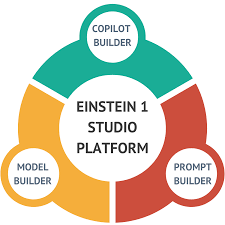
Salesforce Unveils Einstein Copilot: A New Era in AI-Powered CRM Salesforce, the world’s leading customer relationship management (CRM) platform, has introduced Einstein Copilot, an advanced AI-powered assistant designed to revolutionize business interactions with CRM systems. Seamlessly integrated within Salesforce’s ecosystem, including Data Cloud, Einstein Copilot automates complex workflows, enhances operational efficiency, and delivers highly personalized customer insights. By leveraging AI, it empowers sales, marketing, and customer service teams while ensuring compliance with data privacy and governance standards. The Challenge: Enhancing CRM Efficiency with AI As customer relationships became more intricate, businesses sought a CRM solution that could: Salesforce responded by integrating cutting-edge AI capabilities into its CRM platform, ensuring a seamless, secure, and intelligent customer experience. The Einstein Copilot Solution Salesforce has embedded Einstein Copilot across its CRM applications, transforming customer relationships through AI-driven automation. By harnessing Data Cloud, Einstein Copilot accesses unified, reliable data to generate real-time insights, helping businesses make smarter decisions and enhance customer interactions. With customization tools like Copilot Builder, Prompt Builder, Skill Builder, and Model Builder, businesses can tailor Einstein Copilot to meet their unique needs. Integration with Salesforce extensions and external APIs further optimizes workflows, automating tasks and streamlining operations. Key Features of Einstein Copilot Results: Transforming CRM with AI Since its launch, Einstein Copilot has significantly improved customer satisfaction and operational productivity by: Challenges & Considerations Despite its success, deploying Einstein Copilot presented some challenges, including: The Future of Einstein Copilot Salesforce is committed to expanding Einstein Copilot’s capabilities, focusing on: Salesforce envisions Einstein Copilot setting a new benchmark in AI-driven CRM, enabling businesses to foster stronger customer relationships, drive growth, and streamline operations. About Salesforce Salesforce is the world’s leading CRM platform, empowering businesses with innovative solutions that blend cloud computing, artificial intelligence, and big data analytics. Since its founding in 1999, Salesforce has been at the forefront of digital transformation, helping organizations optimize operations and elevate customer engagement. Conclusion Einstein Copilot marks a transformative shift in CRM, leveraging AI to enhance efficiency, automate workflows, and deliver superior customer experiences. With AI-driven automation and intelligent decision-making, businesses can now focus on building long-lasting customer relationships that drive loyalty and success. Einstein Copilot is now Agentforce. Content updated January 2025. Like Related Posts Who is Salesforce? Who is Salesforce? Here is their story in their own words. From our inception, we’ve proudly embraced the identity of Read more Salesforce Marketing Cloud Transactional Emails Salesforce Marketing Cloud Transactional Emails are immediate, automated, non-promotional messages crucial to business operations and customer satisfaction, such as order Read more Salesforce Unites Einstein Analytics with Financial CRM Salesforce has unveiled a comprehensive analytics solution tailored for wealth managers, home office professionals, and retail bankers, merging its Financial Read more AI-Driven Propensity Scores AI plays a crucial role in propensity score estimation as it can discern underlying patterns between treatments and confounding variables Read more

Read More
Einstein 1 Unveiled

Salesforce Einstein 1 Platform

Welcome to the dawn of a bold new era in enterprise Artificial Intelligence, where the world demands a platform unlike any other. Enter Salesforce Einstein 1, the pinnacle of innovation, designed to navigate terabytes of disparate data seamlessly, offer freedom in AI model selection, and integrate directly into your workflow—all while upholding customer trust. Einstein 1 Platform serves as the nexus of your data, AI, CRM, development, and security needs, consolidating them into a singular, robust framework. This empowers IT, administrators, and developers alike with an adaptable AI platform, facilitating rapid development of transformative applications and automation. Within Einstein 1 lies an array of artificial intelligence tools, reflecting the modular architecture of the core Salesforce platform. From standardized to custom solutions, Einstein 1 caters to diverse needs. Examples include out-of-the-box AI features like sales email generation in Sales Cloud and service replies in Service Cloud. Since its unveiling as Genie, now Data Cloud, at Dreamforce ‘22, Salesforce has propelled this product to the forefront of its mission. The conversation has shifted from Customer 360 to encompass AI + CRM + Data—a strategic pivot poised for success in 2024 and beyond. But what does this transformation entail? Data Cloud has been a focal point of Salesforce’s narrative, hailed as a groundbreaking CDP innovation. The recent Q4 earnings call unveiled remarkable achievements: Gartner’s endorsement further solidifies Salesforce’s position, elevating it as a leader in the Magic Quadrant, surpassing rivals like Twilio and Adobe. This achievement is remarkable given Salesforce’s relatively recent CDP certification from the CDP Institute. However, understanding the significance of Data Cloud amidst a sea of CRM solutions may elude many. Yet, the resurgence of data underscores its importance. CRMs, while pivotal for sales, support, and marketing functions, fall short in managing the breadth of modern data collection, storage, and dissemination. Enter the CDP—a dedicated platform for aggregating customer data across every touchpoint throughout the customer lifecycle. Unlike CRMs, which traditionally served as the single source of truth, CDPs offer a comprehensive view, ingesting data from myriad sources. Two key attributes distinguish CDPs and Data Cloud: Yet, amidst this data revolution, the role of artificial intelligence cannot be understated. Einstein 1, formerly known as Salesforce Customer 360, epitomizes this synergy between AI, CRM, and Data. Einstein 1 boasts a diverse array of AI tools, from pre-built features to customizable solutions housed within the Einstein 1 Studio. This enables users to craft tailored AI functionality, seamlessly integrated with Salesforce’s ecosystem. Moreover, Salesforce’s agnostic approach to LLMs empowers users to harness the full potential of AI. Whether leveraging Salesforce’s proprietary LLM or integrating third-party or proprietary models, Einstein 1 ensures flexibility and innovation. As AI continues to permeate every facet of business and personal life, Salesforce’s strategic focus on Data Cloud and Einstein could propel the company to unprecedented growth. In the ever-evolving landscape of enterprise AI, Salesforce remains at the forefront, poised to redefine the future of customer engagement and business intelligence. Like Related Posts Who is Salesforce? Who is Salesforce? Here is their story in their own words. From our inception, we’ve proudly embraced the identity of Read more Salesforce Marketing Cloud Transactional Emails Salesforce Marketing Cloud Transactional Emails are immediate, automated, non-promotional messages crucial to business operations and customer satisfaction, such as order Read more Salesforce Unites Einstein Analytics with Financial CRM Salesforce has unveiled a comprehensive analytics solution tailored for wealth managers, home office professionals, and retail bankers, merging its Financial Read more AI-Driven Propensity Scores AI plays a crucial role in propensity score estimation as it can discern underlying patterns between treatments and confounding variables Read more

Read More

Prompt Builder Einstein

Prompt Builder in Salesforce Einstein: Revolutionizing AI-Powered Automation Salesforce Einstein has introduced a groundbreaking feature called Prompt Builder, designed to simplify and enhance the way businesses leverage generative AI for automation and productivity. Prompt Builder empowers users to create, customize, and deploy AI-driven prompts without needing deep technical expertise. This tool is part of Salesforce’s broader vision to make AI accessible and actionable for everyone. Let’s explore what Prompt Builder is, how it works, and why it’s a game-changer for businesses. What is Prompt Builder? Prompt Builder is a no-code/low-code tool within Salesforce Einstein that allows users to create and manage AI prompts for generative AI models. These prompts can be used to automate tasks, generate content, and provide intelligent responses across Salesforce applications. With Prompt Builder, businesses can harness the power of AI to improve efficiency, enhance customer experiences, and drive innovation. Key Features of Prompt Builder How Does Prompt Builder Work? Use Cases for Prompt Builder 1. Customer Service 2. Sales and Marketing 3. Content Creation 4. Internal Productivity Benefits of Prompt Builder How to Get Started with Prompt Builder The Future of Prompt Builder As generative AI continues to evolve, Prompt Builder is expected to become even more powerful. Future developments may include: Conclusion Salesforce Einstein’s Prompt Builder is a transformative tool that democratizes the use of generative AI for businesses. By enabling users to create, customize, and deploy AI-driven prompts with ease, Prompt Builder empowers organizations to automate tasks, enhance customer experiences, and drive innovation. Whether you’re in sales, marketing, customer service, or any other field, Prompt Builder can help you unlock the full potential of AI. Start exploring Prompt Builder today and revolutionize the way you work with AI! Content updated November 2024. Like Related Posts Who is Salesforce? Who is Salesforce? Here is their story in their own words. From our inception, we’ve proudly embraced the identity of Read more Salesforce Marketing Cloud Transactional Emails Salesforce Marketing Cloud Transactional Emails are immediate, automated, non-promotional messages crucial to business operations and customer satisfaction, such as order Read more Salesforce Unites Einstein Analytics with Financial CRM Salesforce has unveiled a comprehensive analytics solution tailored for wealth managers, home office professionals, and retail bankers, merging its Financial Read more AI-Driven Propensity Scores AI plays a crucial role in propensity score estimation as it can discern underlying patterns between treatments and confounding variables Read more

Read More
Salesforce Quickstart

Advantages and Disadvantages of a Salesforce Quickstart

What is Quickstart in Salesforce? Quickstarts packages are great for individual departments or small sales & customer services teams who want to get the most out of their Salesforce experience from day one. Who is it for? Small to medium-sized businesses who are looking for quick deployment and want to get started with Salesforce as soon as possible. The Quickstart Advantage: Fast, Affordable, and Proven Salesforce Quickstart packages provide a streamlined path to CRM adoption, ideal for businesses that need rapid deployment without extensive customization. Key Benefits ✔ Weeks, Not Months – Pre-configured setups reduce implementation time by 60-70%✔ Cost Savings – Up to 50% lower than custom builds (initial TCO)✔ Built-in Best Practices – Leverages Salesforce’s 2M+ deployments of proven configurations✔ Faster User Adoption – Includes role-specific training for immediate productivity✔ Scalable Foundation – Designed to grow with modular add-ons When Quickstart Makes Sense Ideal Use Cases Industries Well-Suited for Quickstart Critical Limitations to Consider 1. Customization Constraints 2. Hidden Cost Drivers Potential Add-on Costs Typical Price Range Data migration services $5k-$25k Third-party integrations $10k-$50k Advanced reporting $3k-$15k 3. Scalability Challenges Strategic Decision Framework Choose Quickstart if:✅ You need core CRM functionality fast✅ Your processes align with standard Salesforce models✅ Budget is constrained (<$50k implementation) Opt for Custom if:❌ You require deep industry-specific workflows❌ You anticipate complex integrations (ERP, legacy systems)❌ You expect >50% customization of standard objects Implementation Best Practices *”Quickstart gets you 80% of the way there at 50% of the cost—but that last 20% determines long-term success.”*— Implementation Playbook The Bottom Line Salesforce Quickstart delivers speed-to-value for standardized deployments, but growing enterprises should plan for eventual re-platforming. Companies that: Achieve 3x faster breakeven compared to custom builds while maintaining flexibility for future scaling. Like Related Posts Who is Salesforce? Who is Salesforce? Here is their story in their own words. From our inception, we’ve proudly embraced the identity of Read more Salesforce Marketing Cloud Transactional Emails Salesforce Marketing Cloud Transactional Emails are immediate, automated, non-promotional messages crucial to business operations and customer satisfaction, such as order Read more Salesforce Unites Einstein Analytics with Financial CRM Salesforce has unveiled a comprehensive analytics solution tailored for wealth managers, home office professionals, and retail bankers, merging its Financial Read more AI-Driven Propensity Scores AI plays a crucial role in propensity score estimation as it can discern underlying patterns between treatments and confounding variables Read more

Read More

What is Salesforce Field Service?

Salesforce Field Service (formerly known as Salesforce Field Service Lightning or FSL) is a comprehensive solution designed to help businesses manage and optimize their field service operations. It enables organizations to schedule, dispatch, and track field service technicians, ensuring efficient service delivery and improved customer satisfaction. Salesforce Field Service is part of the broader Salesforce Service Cloud ecosystem and integrates seamlessly with other Salesforce products to provide a unified platform for managing customer service and field operations. Key Features of Salesforce Field Service Benefits of Salesforce Field Service Use Cases for Salesforce Field Service How Salesforce Field Service Works Integration with Salesforce Ecosystem Salesforce Field Service integrates seamlessly with other Salesforce products, such as: Conclusion Salesforce Field Service is a powerful tool for businesses that rely on field operations to deliver services to customers. By optimizing scheduling, enhancing technician productivity, and improving customer communication, it helps organizations streamline their field service operations and deliver exceptional customer experiences. Whether you’re managing a small team or a large workforce, Salesforce Field Service provides the tools and insights needed to succeed in today’s competitive landscape. Content updated November 2024. Like Related Posts Who is Salesforce? Who is Salesforce? Here is their story in their own words. From our inception, we’ve proudly embraced the identity of Read more Salesforce Marketing Cloud Transactional Emails Salesforce Marketing Cloud Transactional Emails are immediate, automated, non-promotional messages crucial to business operations and customer satisfaction, such as order Read more Salesforce Unites Einstein Analytics with Financial CRM Salesforce has unveiled a comprehensive analytics solution tailored for wealth managers, home office professionals, and retail bankers, merging its Financial Read more AI-Driven Propensity Scores AI plays a crucial role in propensity score estimation as it can discern underlying patterns between treatments and confounding variables Read more

Read More
Optimizing AI Agent Performance Through Strategic Data Management

Salesforce Consultant

The Salesforce Consultant: Your Guide to CRM Transformation What Does a Salesforce Consultant Do? A Salesforce Consultant is a strategic problem-solver who bridges the gap between business needs and technology. They work either in-house or as external advisors, helping organizations maximize Salesforce to improve efficiency, customer relationships, and revenue growth. Core Responsibilities ✅ Business Analysis – Identify pain points and align Salesforce solutions with company goals.✅ Process Optimization – Map workflows and automate tasks to boost productivity.✅ Solution Design & Configuration – Customize Salesforce to fit unique business needs.✅ Change Management – Train teams and ensure smooth adoption of new systems.✅ Project Leadership – Oversee implementations, integrations, and migrations. Why Businesses Need Them Many companies invest in Salesforce CRM but lack the expertise to fully leverage it. A consultant ensures:🔹 Faster ROI – Avoid costly misconfigurations.🔹 Scalability – Build systems that grow with the business.🔹 User Adoption – Drive engagement through training and support. Why Become a Salesforce Consultant? Impact & Rewards 💡 Transform Businesses – Help companies cut costs, boost revenue, and improve customer satisfaction.💡 Empower Teams – Simplify workflows so employees focus on meaningful work.💡 High Earning Potential – Skilled consultants command K–0K+ (varies by experience & certs). Career Flexibility 🌍 Work Anywhere – Remote, freelance, or in-house roles available.🚀 Growth Path – Advance to Solution Architect, Product Manager, or CTO. How to Become a Salesforce Consultant 1. Build Core Skills ✔ Business Acumen – Understand sales, marketing, or service operations.✔ Technical Proficiency – Master Salesforce Admin, Flows, and integrations.✔ Soft Skills – Communication, leadership, and Agile project management. 2. Earn Certifications Start with: 3. Gain Experience 🔹 Start as a Salesforce Admin🔹 Volunteer for non-profits (via Salesforce.org)🔹 Work on freelance projects (Upwork, Toptal) 4. Expand Your Toolkit 📌 Business Analysis – Learn requirements gathering.📌 Change Management – Study ADKAR or Prosci methodologies.📌 DevOps Basics – Understand CI/CD for Salesforce deployments. Final Thoughts Salesforce Consultants are change agents—combining tech expertise with business strategy to drive real impact. If you love problem-solving and want a dynamic, high-paying career, this path offers unlimited growth. Like Related Posts Who is Salesforce? Who is Salesforce? Here is their story in their own words. From our inception, we’ve proudly embraced the identity of Read more Salesforce Marketing Cloud Transactional Emails Salesforce Marketing Cloud Transactional Emails are immediate, automated, non-promotional messages crucial to business operations and customer satisfaction, such as order Read more Salesforce Unites Einstein Analytics with Financial CRM Salesforce has unveiled a comprehensive analytics solution tailored for wealth managers, home office professionals, and retail bankers, merging its Financial Read more AI-Driven Propensity Scores AI plays a crucial role in propensity score estimation as it can discern underlying patterns between treatments and confounding variables Read more

Read More
salesforce sales cloud

Case Management in Salesforce Sales Cloud

Does Salesforce provide a case management system? Desk is an all-in-one support application that comes ready-to-use, offering mobile support, case management, multi-channel support, and productivity tools. By integrating with other Salesforce solutions, Desk provides companies with a complete 360-degree view of each customer. Is case management included in Salesforce Sales Cloud? Sales Cloud and Service Cloud are both built on the core Salesforce Platform, sharing critical features like accounts, contacts, and case management (although in a basic form within Sales Cloud compared to Service Cloud). Sales Cloud is Salesforce’s core CRM product designed to help businesses manage their sales processes, including standard case functionality to manage cases, track customer issues, and provide support. Does Salesforce Sales Cloud support cases? Sales Cloud, as Salesforce’s primary CRM product, includes basic case functionality to help customer service teams manage cases, track customer issues, and provide support. A common misconception is that Salesforce customers believe they require Service Cloud licenses (or a separate third-party tool) to manage customer support tickets. If a Salesforce customer has a Sales Cloud license (often the entry point into the Salesforce world), they automatically gain case management features with Sales Cloud. How do I configure case management in Salesforce? Utilize queues and automated rules to assign cases to your team without constant monitoring. Cases can be assigned to a queue where team members can select from a list, helping prioritize work and automatically assign cases based on conditional rules. What is the difference between Salesforce Sales Cloud cases and Service Cloud? The primary distinction is that Sales Cloud focuses on streamlining sales efforts, while Service Cloud assists support agents in delivering exceptional customer service and resolving issues proactively. Is Email-to-Case included in Sales Cloud? Email-to-Case functionality is included in Sales Cloud licenses, providing case management features. It allows you to automatically create cases from incoming emails, which can then be managed within the Sales Cloud system. Essentially, you can have emails from customers turn into cases within Salesforce, streamlining your customer support processes.  What are the limitations of Email-to-Case in Salesforce? Email-to-Case controls the number of cases that can be created within an organization, with a default limit of 2500 cases that cannot be increased.  Daily Email Limits: Sales Cloud includes a range of case management features within its license. The Case object is a standard component that comes ‘out of the box’ with Sales Cloud, alongside Accounts, Contacts, Activities, Leads, and Opportunities. Additionally, Email-to-Case and Web-to-Case are available for self-service case creation, allowing inbound cases to be automatically generated by customers. Salesforce setup time is minimal, with configuration options such as Auto-Response rules to send branded email templates to customers and Case Assignment Rules to allocate cases to support agents or queues. Service Cloud is Salesforce’s customer service platform designed to enhance customer experiences. Adding Service Cloud to your Salesforce org unifies sales and customer service teams on a single platform, providing enhanced functionality and integration compared to standard case management with Sales Cloud. Like Related Posts Who is Salesforce? Who is Salesforce? Here is their story in their own words. From our inception, we’ve proudly embraced the identity of Read more Salesforce Marketing Cloud Transactional Emails Salesforce Marketing Cloud Transactional Emails are immediate, automated, non-promotional messages crucial to business operations and customer satisfaction, such as order Read more Salesforce Unites Einstein Analytics with Financial CRM Salesforce has unveiled a comprehensive analytics solution tailored for wealth managers, home office professionals, and retail bankers, merging its Financial Read more AI-Driven Propensity Scores AI plays a crucial role in propensity score estimation as it can discern underlying patterns between treatments and confounding variables Read more

Read More
gettectonic.com