Salesforce Partner Archives - gettectonic.com - Page 3

Salesforce Integration: Enhancing Your CRM Capabilities

Salesforce is the world’s leading CRM platform, empowering businesses to streamline operations, enhance customer relationships, and drive growth. However, to maximize its potential, integrating Salesforce with third-party applications is essential. By connecting Salesforce with various external tools—such as MailChimp, QuickBooks, WhatsApp, and LinkedIn—organizations can improve efficiency, automate workflows, and unify data across departments. But how can businesses successfully integrate these applications into their Salesforce environment, and what challenges might they face? Let’s explore. What is Salesforce Integration? Salesforce integration refers to the process of connecting Salesforce with third-party applications to facilitate seamless data flow and process automation. These integrations leverage APIs to establish communication between systems, ensuring a unified experience across different business functions such as HR, finance, marketing, and sales. Why is Salesforce Integration Important? Integrating Salesforce with other systems offers several advantages, including: Common Salesforce Integrations and Use Cases Salesforce can be integrated with a variety of platforms to enhance functionality. Some key use cases include: Challenges in Salesforce App Integration While Salesforce integrations bring numerous benefits, they also come with challenges: Tools for Successful Salesforce Integration To facilitate smooth integrations, businesses can leverage the following tools: 1. Salesforce Native Tools These tools enable direct integrations with Salesforce products. Examples include: 2. App-Native Tools Many external applications offer built-in integrations with Salesforce, such as: 3. Third-Party Middleware For more complex integrations, middleware platforms help bridge gaps between systems: Best Practices for Salesforce Integration To ensure a smooth and successful integration, businesses should follow these best practices: Final Thoughts: Should You Integrate Salesforce with Third-Party Apps? Absolutely. Integrating Salesforce with external applications enhances its capabilities, drives efficiency, and unlocks new business opportunities. However, it’s crucial to implement these integrations through a certified Salesforce partner to minimize risks and ensure seamless execution. By following best practices and using the right tools, businesses can maximize their CRM investment and drive long-term success. FAQs Have more questions about Salesforce integration? Get in touch with our certified Salesforce consultants to explore the best integration solutions for your business. Like Related Posts Who is Salesforce? Who is Salesforce? Here is their story in their own words. From our inception, we’ve proudly embraced the identity of Read more Salesforce Marketing Cloud Transactional Emails Salesforce Marketing Cloud Transactional Emails are immediate, automated, non-promotional messages crucial to business operations and customer satisfaction, such as order Read more Salesforce Unites Einstein Analytics with Financial CRM Salesforce has unveiled a comprehensive analytics solution tailored for wealth managers, home office professionals, and retail bankers, merging its Financial Read more AI-Driven Propensity Scores AI plays a crucial role in propensity score estimation as it can discern underlying patterns between treatments and confounding variables Read more

Read More
Salesforce Integration and Mulesoft

Salesforce Implementation Partner

Tectonic’s certified consultants are ready to assist with your Salesforce project and provide ongoing support. We offer a range of services, including Salesforce implementation, development, administration, integration, and training. Our implementation services cover configuration, customization, migration, integration, and support across various industries. An implementation partner is an organization licensed by Salesforce to help users select and implement CRM solutions. These partners specialize in specific industries, use cases, and drive Salesforce adoption rates. Essentially, they are organizations reviewed and approved by Salesforce to implement CRM solutions successfully. For a complete implementation, you may need a project manager, a Salesforce consultant, and possibly Salesforce developers. However, not all companies have internal resources for this, especially when just starting out. An implementation partner, typically a certified consulting services firm, is knowledgeable about the product and can help with a successful software implementation. Salesforce Implementation Process Salesforce implementation is the process of rolling out its core product, the CRM system, to centralize key business activities and communication. To find a Salesforce implementation partner, the AppExchange Salesforce site is a valuable resource. It provides a list of partners in your local area, along with reviews and partner levels. Choosing an implementation partner with technical knowledge and the ability to support other key systems is crucial. The partner should develop solid data integration solutions with third-party service providers and effectively manage the implementation process. The Right Resource Right Now There are instances when a Salesforce Implementation Partner is the right resource strategy for large-scale projects requiring a team of 10+ consultants. An experienced implementation partner understands stakeholder buy-in, effective communication, and the importance of engaging the right individuals at different points in the process. Working With a Salesforce Implementation Partner Working with an implementation partner provides access to a team of Salesforce experts, including admins, business analysts, and executive sponsors. This team guides you through every step of the implementation process, ensuring accountability and managing the overall timeline and budget. Salesforce implementations typically take multiple months, absorbing your team’s bandwidth focused on building the business. Bringing in experts reduces implementation time and allows your team to focus on their strengths. Critical success factors for Salesforce implementation include a well-defined strategy aligned with business goals, user training, effective data migration, proper customization, ongoing support, user adoption, clear communication, and a commitment to continuous improvement. Salesforce categorizes consulting partners into four levels (Base, Ridge, Crest, Summit) based on evaluations each quarter, indicating their Trailblazer consulting partner score. Trailblazer score measures a partner’s contribution against the goals set by Salesforce in four main categories: customer success, innovation, growth and impact (formerly called lead). This score can reach a maximum of 1000. The Consulting Trailblazer scorecard is updated daily; however, your tier is calculated on a quarterly basis. When you are ready to explore a Salesforce Implementation Partner, contact Tectonic. Like1 Related Posts Who is Salesforce? Who is Salesforce? Here is their story in their own words. From our inception, we’ve proudly embraced the identity of Read more Salesforce Marketing Cloud Transactional Emails Salesforce Marketing Cloud Transactional Emails are immediate, automated, non-promotional messages crucial to business operations and customer satisfaction, such as order Read more Salesforce Unites Einstein Analytics with Financial CRM Salesforce has unveiled a comprehensive analytics solution tailored for wealth managers, home office professionals, and retail bankers, merging its Financial Read more AI-Driven Propensity Scores AI plays a crucial role in propensity score estimation as it can discern underlying patterns between treatments and confounding variables Read more

Read More
tectonic logo

Selecting a Salesforce Implementation Partner for Your Business

Once you’ve determined that Salesforce.org is the ideal CRM solution for your organization, the crucial next step is selecting the right Salesforce implementation partner to collaborate with. As the resident marketing and SEO specialist at Tectonic, I can attest that terms like “the best Salesforce implementation partner” or consultant often rank high in searches related to Salesforce. So, how do you select a Salesforce implementation partner? While any Salesforce partner may assert themselves as “the best,” relying solely on Google search rankings might indicate proficiency in search engine optimization rather than comprehensive capabilities. Geographical proximity or a prominent online presence doesn’t necessarily guarantee suitability for your organization. Therefore, it’s essential to identify a Salesforce implementation partner aligned with your unique needs. Here are key tips for making this decision: What to Look For When Selecting a Salesforce Implementation Partner Specialized Experience: Independent Discovery: Budget Consideration: Track Record and Reputation When Selecting a Salesforce Implementation Partner: Communication and Project Management: Compatibility with Other Tools: Proven Process When Selecting a Salesforce Implementation Partner: Adaptability: Involve Project Sponsor/Administrator: Ongoing Support Selecting a Salesforce Implementation Partner: By considering these factors, you can make an informed decision and choose the right partner for your Salesforce.org project. It’s a bit like choosing a life partner. Good luck as you select a Salesforce implementation partner. Leverage resources like your Salesforce Account Executive’s recommendations, Salesforce’s partner list, and online searches to compile a diverse pool of potential candidates. Like Related Posts Who is Salesforce? Who is Salesforce? Here is their story in their own words. From our inception, we’ve proudly embraced the identity of Read more Salesforce Marketing Cloud Transactional Emails Salesforce Marketing Cloud Transactional Emails are immediate, automated, non-promotional messages crucial to business operations and customer satisfaction, such as order Read more Salesforce Unites Einstein Analytics with Financial CRM Salesforce has unveiled a comprehensive analytics solution tailored for wealth managers, home office professionals, and retail bankers, merging its Financial Read more AI-Driven Propensity Scores AI plays a crucial role in propensity score estimation as it can discern underlying patterns between treatments and confounding variables Read more

Read More
Salesforce IT consulting methodologies

IT Consulting Methodologies

In the domain of IT consulting project management and IT consulting methodologies, the selection of a project management methodology tailored to the project type, size, and complexity is pivotal. Various methodologies, including waterfall, agile, scrum, kanban, and hybrid, bring their own set of advantages and disadvantages.

Read More
Salesforce Document Generation

Generating Documents in Salesforce

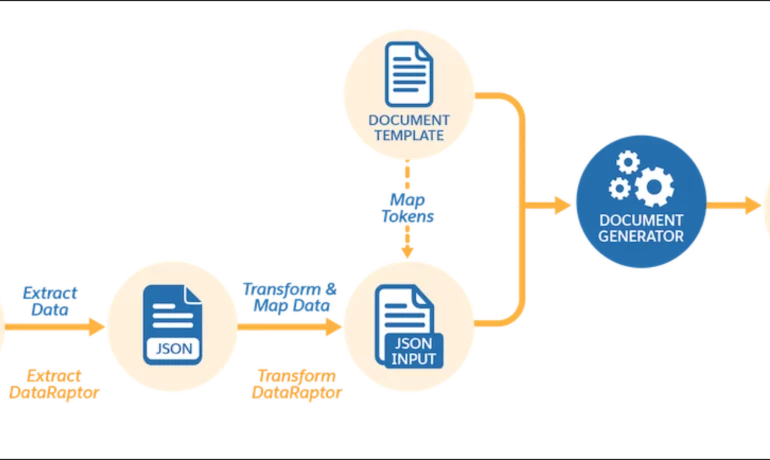
Salesforce document generation poses a challenge for businesses, given the intricacies of integration involved. Fortunately, a variety of tools are available for generating documents in Salesforce, and Tectonic is well-equipped to assist in their successful implementation. Salesforce Industries Document Generation empowers businesses to craft and manage accurate documents linked to standard Salesforce objects, encompassing contracts, opportunities, orders, quotes, and custom objects. For a more dynamic approach, Salesforce OmniStudio Document Generation facilitates the creation of documents using Microsoft Word and Microsoft PowerPoint templates. These templates can incorporate values from any JSON-based data within the text, including data sourced from various Salesforce objects. This versatile tool enables the generation of contracts, proposals, quotes, reports, non-disclosure agreements, service agreements, and more. Salesforce Industries Document Generation seamlessly integrates with Vlocity Insurance, Vlocity Health, communications, media, energy, utilities, government, and beyond. Vlocity Analytics, another valuable component, offers pre-built measurement tools that seamlessly integrate with Salesforce Reports, Dashboards, and Einstein. The Salesforce AppExchange boasts an extensive array of over 200 document generation tools. Your Salesforce partner can assist in selecting, installing, and implementing the most suitable options based on your business requirements. With Document Generation, you can generate contracts, proposals, quotes, reports, non-disclosure agreements, job offers, service agreements, and so on. You can generate documents using the specified sample client-side or server-side OmniScripts. You can also create your own OmniScripts by cloning and customizing the sample OmniScript to generate documents. Client-Side document generation is a synchronous process that results in a downloadable preview of the generated documents. You can generate documents from Microsoft Word (.docx), Microsoft PowerPoint (.pptx), and Web templates. These templates can include values from any JSON-based data in the text, including data from any Salesforce object. You can optionally convert the resulting documents to .pdf format. Server-Side document generation is available in both the OmniStudio Foundation and Salesforce Industries packages. Server-Side document generation is an asynchronous process that’s best for large and rendering-heavy documents and for document generation in batches. The Server-Side document generation service is secure and scalable and is hosted on Salesforce Hyperforce. The generated document is stored in your Salesforce org, and is attached to the object for which it’s generated. You can use Apex Classes, sample Integration Procedures, or a sample OmniScript to generate documents. Client-Side document generation supports Customer Community Plus, Customer Community, and Partner Community users to generate documents using client-side OmniScripts. Server-Side document generation supports Customer Community Plus, Customer Community, and Partner Community users to generate documents using the singleDocxServersideLwc server-side OmniScript. With the right licenses, Document Generation is available in the Salesforce Industries package. Metering measures resource utilization levels and throttling controls resource access and use based on defined rules. Metering measures the number of server-side documents that are generated by an org hourly and daily. The default hourly and daily limits for processing server-side document generation requests are 1,000 per org and 24,000 per org respectively. Throttling maintains consistency and resilience of the server-side document generation service by managing incoming server-side document generation requests from multiple orgs. Throttling can also prevent service degradation caused by high volume of requests at peak hours by blocking requests that exceed the default limits. The request details are saved in the Document Generation Processes entity. You can retrieve the blocked requests and later retry the server-side document generation. No matter what your specific document generation needs, Tectonic simplifies the process of getting your system up and running seamlessly, whether it’s through Salesforce Quickstarts or comprehensive implementation services. Content updated in 2February 2024, Shannan Hearne. Like1 Related Posts Who is Salesforce? Who is Salesforce? Here is their story in their own words. From our inception, we’ve proudly embraced the identity of Read more Salesforce Marketing Cloud Transactional Emails Salesforce Marketing Cloud Transactional Emails are immediate, automated, non-promotional messages crucial to business operations and customer satisfaction, such as order Read more Salesforce Unites Einstein Analytics with Financial CRM Salesforce has unveiled a comprehensive analytics solution tailored for wealth managers, home office professionals, and retail bankers, merging its Financial Read more AI-Driven Propensity Scores AI plays a crucial role in propensity score estimation as it can discern underlying patterns between treatments and confounding variables Read more

Read More
gettectonic.com