

Software Archives - gettectonic.com - Page 2
Salesforce Tightens Slack’s API Rules

Salesforce Tightens Slack’s API Rules

Salesforce Tightens Slack’s API Rules, Restricting AI Data Access Salesforce, the parent company of workplace messaging platform Slack, has quietly updated its API terms to block third-party software firms from indexing or storing Slack messages—a move that could significantly impact enterprise AI tools. According to a report from The Information, the changes prevent apps like Glean (a workplace AI search provider) from accessing Slack data for long-term storage or analysis. In a statement to Reuters, Salesforce framed the shift as a data security measure, saying: “As AI raises critical considerations around how customer data is handled, we’re reinforcing safeguards around how data accessed via Slack APIs can be stored, used, and shared.” What Does This Actually Mean? APIs (Application Programming Interfaces) allow different software systems to communicate. Until now, companies could use Slack’s API to: Now, those capabilities are restricted. Third-party apps can still access Slack data in real time, but they can’t retain it—meaning AI models can’t learn from past conversations. Glean reportedly warned customers that the change “hampers your ability to use your data with your chosen enterprise AI platform.” Why Is Salesforce Doing This? Officially, the company says it’s about security and responsible AI. But critics argue it’s a strategic lock-in play: Industry Backlash: “This Is Anti-Innovation” The move has sparked frustration across the tech sector, with critics accusing Salesforce of building a walled garden: The Bigger Picture: AI’s Data Wars This isn’t just about Slack—it’s part of a broader battle over AI training data: Salesforce’s move suggests that enterprise AI will increasingly run on proprietary data silos—meaning companies that control the data control the AI. What Happens Next? One thing’s clear: The age of open data for AI is ending—and the age of data feudalism is here. Like Related Posts Who is Salesforce? Who is Salesforce? Here is their story in their own words. From our inception, we’ve proudly embraced the identity of Read more Salesforce Marketing Cloud Transactional Emails Salesforce Marketing Cloud Transactional Emails are immediate, automated, non-promotional messages crucial to business operations and customer satisfaction, such as order Read more Salesforce Unites Einstein Analytics with Financial CRM Salesforce has unveiled a comprehensive analytics solution tailored for wealth managers, home office professionals, and retail bankers, merging its Financial Read more AI-Driven Propensity Scores AI plays a crucial role in propensity score estimation as it can discern underlying patterns between treatments and confounding variables Read more


Read More

AdventHealth Pioneers AI-Powered Denials Prevention Strategy

Transforming Denials Management from Reactive to Proactive While many health systems struggle with claim denial rates as high as 20%, AdventHealth is taking an innovative approach—using artificial intelligence to prevent denials before they occur. The Florida-based health system has implemented AI-driven tools that analyze medical documentation for potential issues prior to claim submission, creating a more efficient revenue cycle and better patient experience. “By identifying documentation gaps early, we’re able to address them before they become claim denials,” said Dr. Christopher Riccard, Vice President of Hospital Medicine and Clinical Documentation Integrity at AdventHealth. “This proactive approach helps us reduce delays and confusion for patients while protecting our revenue stream.” The High Cost of Claim Denials Claim denials represent more than just an administrative headache: “Denials don’t just hurt hospitals—they impact patients directly,” Riccard emphasized. “Our goal is to ensure accurate, timely billing so patients understand their financial responsibility without unnecessary delays.” How AI Prevents Denials Before They Happen AdventHealth’s partnership with Iodine Software has yielded a cutting-edge solution: Key results include: Building an Intelligent Revenue Cycle Ecosystem AdventHealth views AI-powered denials prevention as just the beginning. The health system is exploring broader applications of AI across the revenue cycle: Emerging Technologies in Action Human-Centered Implementation Riccard stresses that technology alone isn’t the solution: “Success requires thoughtful integration into existing workflows. We worked closely with our clinical teams to ensure these tools actually solve real problems rather than create new ones.” The Future of Revenue Cycle Management AdventHealth’s strategy represents a paradigm shift in healthcare finance: As Riccard notes: “Our ultimate goal is creating a self-correcting revenue cycle that supports both financial health and patient experience—where potential issues are identified and resolved almost before they emerge.” The health system’s approach demonstrates how AI, when implemented strategically, can transform one of healthcare’s most persistent challenges into an opportunity for improvement across clinical, financial, and patient experience domains. Like Related Posts Who is Salesforce? Who is Salesforce? Here is their story in their own words. From our inception, we’ve proudly embraced the identity of Read more Salesforce Unites Einstein Analytics with Financial CRM Salesforce has unveiled a comprehensive analytics solution tailored for wealth managers, home office professionals, and retail bankers, merging its Financial Read more AI-Driven Propensity Scores AI plays a crucial role in propensity score estimation as it can discern underlying patterns between treatments and confounding variables Read more Tectonic’s Successful Salesforce Track Record Salesforce Technology Services Integrator – Tectonic has successfully delivered Salesforce in a variety of industries including Public Sector, Hospitality, Manufacturing, Read more

Read More
The Power of Sales Automation

The Power of Sales Automation

The Power of Sales Automation: Key Benefits & Tools Sales automation streamlines repetitive tasks, allowing sales teams to focus on high-impact activities while improving accuracy, scalability, and customer engagement. Here’s how automation transforms sales operations: Key Benefits of Sales Automation ✅ Increased EfficiencyAutomation eliminates manual tasks, enabling sales teams to work smarter—not harder—and prioritize strategic efforts like closing deals. ✅ Boosted ProductivityBy handling routine processes, automation frees up time for sales reps to engage in relationship-building and revenue-driving activities. ✅ Enhanced Customer ExperienceAutomated follow-ups, personalized messaging, and timely responses create a seamless and positive buyer journey. ✅ Reduced ErrorsMinimizes human mistakes in data entry, follow-ups, and reporting, ensuring more reliable sales operations. ✅ Accurate ForecastingReal-time data and AI-driven insights improve sales predictions, helping teams make smarter decisions. ✅ Effortless ScalabilityGrow your sales operations without proportionally increasing overhead, making expansion more cost-effective. Common Sales Automation Tasks 🔹 Lead GenerationAutomated tools identify and qualify leads through social media, web forms, and AI-driven prospecting. 🔹 Email MarketingPersonalized drip campaigns nurture leads and keep prospects engaged at every stage. 🔹 Sales Call SchedulingAI-powered schedulers book meetings and send reminders, reducing back-and-forth emails. 🔹 Data ManagementCRM automation ensures customer records stay updated, improving sales team efficiency. 🔹 Quote GenerationInstant, customized quotes speed up the sales cycle and reduce manual work. 🔹 Sales ForecastingAI analyzes trends and historical data to predict future performance with greater accuracy. Top Sales Automation Tools 📌 CRM SystemsThe backbone of sales automation, centralizing customer data and streamlining workflows (e.g., Salesforce, HubSpot). 📌 Sales Engagement PlatformsAutomate outreach with sequenced emails, calls, and follow-ups (e.g., Outreach, SalesLoft). 📌 Lead Generation ToolsAI-powered solutions to find and qualify prospects (e.g., LinkedIn Sales Navigator, ZoomInfo). 📌 Email Marketing SoftwareDesign and deploy automated campaigns (e.g., Mailchimp, ActiveCampaign). 📌 AI-Powered Sales AssistantsAdvanced tools that predict customer needs, personalize interactions, and automate complex tasks (e.g., Conversica, Gong). The Future of Sales: Smarter, Faster, More Efficient Sales automation isn’t just about cutting costs—it’s about empowering teams to sell more effectively. By leveraging AI and automation, businesses can enhance productivity, improve customer relationships, and scale operations seamlessly. Is your sales team ready to automate? Like Related Posts Who is Salesforce? Who is Salesforce? Here is their story in their own words. From our inception, we’ve proudly embraced the identity of Read more Salesforce Marketing Cloud Transactional Emails Salesforce Marketing Cloud Transactional Emails are immediate, automated, non-promotional messages crucial to business operations and customer satisfaction, such as order Read more Salesforce Unites Einstein Analytics with Financial CRM Salesforce has unveiled a comprehensive analytics solution tailored for wealth managers, home office professionals, and retail bankers, merging its Financial Read more AI-Driven Propensity Scores AI plays a crucial role in propensity score estimation as it can discern underlying patterns between treatments and confounding variables Read more

Read More

The Rise of AI Agents

The Rise of AI Agents: How Autonomous AI is Reshaping Business As artificial intelligence advances, so does the terminology around it. The term “AI agent” is gaining traction as generative AI becomes deeply embedded in business operations. Unlike traditional AI tools that follow rigid scripts, AI agents are autonomous programs capable of learning, adapting, and executing tasks with minimal human intervention. Why AI Agents Are Booming The rapid expansion of large language models (LLMs) has slashed the cost of developing AI agents, fueling a surge in startups specializing in industry-specific AI solutions. According to Stripe’s 2024 research, AI startups achieved record revenue growth last year, signaling a shift from generic AI tools (like ChatGPT) to verticalized AI agents tailored for specific sectors. In their annual letter, Stripe co-founders Patrick and John Collison noted: “Just as SaaS evolved from horizontal platforms (Salesforce) to vertical solutions (Toast), AI is following the same path. Industry-specific AI agents ensure businesses fully harness LLMs by integrating contextual data and workflows.” AI Agents in Action: Industry Success Stories From manufacturing to finance, AI agents are already delivering tangible benefits: David Lodge, VP of Engineering at IBS Software, explains: “Fragmented systems limit AI’s potential. Unifying CRM, PMS, and loyalty data into a single platform is critical for AI to drive real transformation.” Hospitality’s AI Revolution: Breaking Down Data Silos Hotels like Wyndham and IHG have partnered with Salesforce to consolidate millions of guest records, enabling AI agents to deliver hyper-personalized service. In February 2025, Apaleo launched an AI Agent Marketplace for hospitality, allowing hotels to integrate AI solutions without costly system overhauls. Case Study: mk Hotels The Future: Autonomous Agents Redefining Workflows In September 2024, Salesforce introduced Agentforce, a platform for building secure, data-grounded AI agents that automate complex workflows. Jan Erik Aase, Partner at ISG, predicts: “The shift to agent-driven enterprises isn’t just technological—it’s cultural. As AI agents grow smarter, they’ll redefine customer interactions and decision-making.” Key Takeaways The AI agent revolution is here—and businesses that embrace it will lead the next wave of productivity and innovation. Like Related Posts Who is Salesforce? Who is Salesforce? Here is their story in their own words. From our inception, we’ve proudly embraced the identity of Read more Salesforce Marketing Cloud Transactional Emails Salesforce Marketing Cloud Transactional Emails are immediate, automated, non-promotional messages crucial to business operations and customer satisfaction, such as order Read more Salesforce Unites Einstein Analytics with Financial CRM Salesforce has unveiled a comprehensive analytics solution tailored for wealth managers, home office professionals, and retail bankers, merging its Financial Read more AI-Driven Propensity Scores AI plays a crucial role in propensity score estimation as it can discern underlying patterns between treatments and confounding variables Read more

Read More
Salesforce in a Mega-Data Deal with Informatica

Salesforce and Informatica Again

Salesforce Revives Talks to Acquire Informatica in Major Data Play San Francisco, CA – Salesforce is reportedly in advanced discussions to acquire cloud data management firm Informatica, reigniting a potential deal that collapsed last year, according to sources familiar with the matter. Deal Details & Strategic Rationale A Deal Years in the Making Strategic Fit & Potential Hurdles Salesforce’s Acquisition History The CRM giant has a track record of blockbuster deals, including: However, activist investors recently pushed Salesforce to curb large acquisitions in favor of organic growth, leading to: The revived Informatica talks suggest a strategic pivot back to growth via acquisitions. Informatica’s Ownership & Market Position What’s Next? Industry Watch: Will Salesforce secure its next big bet, or will history repeat itself with another stalled deal? Key Takeaway: If successful, this acquisition would mark Salesforce’s return to large-scale M&A, positioning it as a stronger player in AI-powered data management. Follow-up Question: How would an Informatica acquisition impact Salesforce’s competition with Microsoft, Oracle, and Snowflake? Like Related Posts Who is Salesforce? Who is Salesforce? Here is their story in their own words. From our inception, we’ve proudly embraced the identity of Read more Salesforce Marketing Cloud Transactional Emails Salesforce Marketing Cloud Transactional Emails are immediate, automated, non-promotional messages crucial to business operations and customer satisfaction, such as order Read more Salesforce Unites Einstein Analytics with Financial CRM Salesforce has unveiled a comprehensive analytics solution tailored for wealth managers, home office professionals, and retail bankers, merging its Financial Read more AI-Driven Propensity Scores AI plays a crucial role in propensity score estimation as it can discern underlying patterns between treatments and confounding variables Read more

Read More
Understanding Total Addressable Market

Understanding Total Addressable Market

Understanding Total Addressable Market (TAM): Calculation & Examples Calculating your Total Addressable Market (TAM) is the cornerstone of a strong growth strategy, ensuring all teams work toward the same goals. This metric represents your “blue sky” opportunity—the maximum revenue potential if you captured 100% of your market. Learn how to leverage TAM to refine your sales and business strategy. What Is Total Addressable Market (TAM)? TAM refers to the total demand for your product or service, measured either by the number of potential customers or the total revenue opportunity. It defines the full scope of your business opportunity. Why TAM Matters TAM vs. SAM vs. SOM: Key Differences While TAM represents the entire market, Serviceable Addressable Market (SAM) and Serviceable Obtainable Market (SOM) refine it into realistic targets: Example: From TAM to SOM Suppose you sell baseball bats in the U.S.: This breakdown helps prioritize growth strategies, such as expanding distribution or increasing production. How to Calculate TAM Basic Formula: TAM = Total Potential Customers × Average Revenue Per User (ARPU) Calculation Methods: TAM Calculation Examples 1. Software Company 2. Lemonade Stand 3. Pizzeria Expansion Common TAM Calculation Challenges & Solutions ✅ Overestimating TAM → Narrow focus using realistic customer segments.✅ Outdated Data → Re-evaluate TAM quarterly or annually.✅ Lack of Market Research → Use related industry data or pilot sales metrics. Using TAM in Strategic Planning Final Thoughts TAM helps quantify opportunities, prioritize investments, and scale effectively. Use sales planning tools to track progress and adjust strategies as markets evolve. By mastering TAM, you unlock data-driven growth—ensuring every business move aligns with real market potential. Like Related Posts Who is Salesforce? Who is Salesforce? Here is their story in their own words. From our inception, we’ve proudly embraced the identity of Read more Salesforce Marketing Cloud Transactional Emails Salesforce Marketing Cloud Transactional Emails are immediate, automated, non-promotional messages crucial to business operations and customer satisfaction, such as order Read more Salesforce Unites Einstein Analytics with Financial CRM Salesforce has unveiled a comprehensive analytics solution tailored for wealth managers, home office professionals, and retail bankers, merging its Financial Read more AI-Driven Propensity Scores AI plays a crucial role in propensity score estimation as it can discern underlying patterns between treatments and confounding variables Read more

Read More
Agentic AI Race

The Evolution Beyond AI Agents

The Evolution Beyond AI Agents: What Comes Next? The Rapid Progression of AI Terminology The landscape of artificial intelligence has undergone a remarkable transformation in just three years. What began with ChatGPT and generative AI as the dominant buzzwords quickly evolved into discussions about copilots, and most recently, agentic AI emerged as 2024‘s defining concept. This accelerated terminology cycle mirrors fashion industry trends more than traditional technology adoption curves. Major players including Adobe, Qualtrics, Oracle, OpenAI, and Deloitte have recently launched agentic AI platforms, joining earlier entrants like Microsoft, AWS, and Salesforce. This rapid market saturation suggests the industry may already be approaching the next conceptual shift before many organizations have fully implemented their current AI strategies. Examining the Staying Power of Agentic AI Industry analysts present diverging views on the longevity of the agentic AI concept. Brandon Purcell, a Forrester Research analyst, acknowledges the pattern of fleeting AI trends while recognizing agentic AI’s potential for greater staying power. He cites three key factors that may extend its relevance: Klaasjan Tukker, Adobe’s Senior Director of Product Marketing, draws parallels to mature technologies that have become invisible infrastructure. He predicts agentic AI will follow a similar trajectory, becoming so seamlessly integrated that users will interact with it as unconsciously as they use navigation apps or operate modern vehicles. The Automotive Sector as an AI Innovation Catalyst The automotive industry provides compelling examples of advanced AI applications that transcend current “agentic” capabilities. Modern autonomous vehicles demonstrate sophisticated AI behaviors including: These implementations suggest that what the tech industry currently labels as “agentic” may represent only an intermediate step toward more autonomous, context-aware systems. The Definitional Challenges of Agentic AI The technology sector faces significant challenges in establishing common definitions for emerging AI concepts. Adobe’s framework describes agents as systems possessing three core attributes: However, as Scott Brinker of HubSpot notes, the term “agentic” risks becoming overused and diluted as vendors apply it inconsistently across various applications and functionalities. Interoperability as the Critical Success Factor For agentic AI systems to deliver lasting value, industry observers emphasize the necessity of cross-platform compatibility. Phil Regnault of PwC highlights the reality that enterprise environments typically combine solutions from multiple vendors, creating integration challenges for AI implementations. Three critical layers require standardization: Without such standards, organizations risk creating new AI silos that mirror the limitations of legacy systems. The Future Beyond Agentic AI While agentic AI continues its maturation process, the technology sector’s relentless innovation cycle suggests the next conceptual breakthrough may emerge sooner than expected. Historical naming patterns for AI advancements indicate several possibilities: As these technologies evolve, they may shed specialized branding in favor of more utilitarian terminology, much as “software bots” became normalized after their initial hype cycle. The automotive parallel suggests that truly transformative AI implementations may become so seamlessly integrated that their underlying technology becomes invisible to end users—the ultimate measure of technological maturity. Until that point, the industry will likely continue its rapid cycle of innovation and rebranding, searching for the next paradigm that captures the imagination as powerfully as “agentic AI” has in 2024. Like Related Posts Who is Salesforce? Who is Salesforce? Here is their story in their own words. From our inception, we’ve proudly embraced the identity of Read more Salesforce Marketing Cloud Transactional Emails Salesforce Marketing Cloud Transactional Emails are immediate, automated, non-promotional messages crucial to business operations and customer satisfaction, such as order Read more Salesforce Unites Einstein Analytics with Financial CRM Salesforce has unveiled a comprehensive analytics solution tailored for wealth managers, home office professionals, and retail bankers, merging its Financial Read more AI-Driven Propensity Scores AI plays a crucial role in propensity score estimation as it can discern underlying patterns between treatments and confounding variables Read more
Read More

Once Upon a Time in Data Land

Once Upon a Time in Data Land: Building the Artificial Intelligence-Ready Warehouse In the early days of data, businesses simply wanted to know what had already happened in the past. Questions like “How many units shipped?” or “What were last month’s sales?” drove the first major digital settlements—the Digitally Filed Data Warehouse. Looking back this seems like the aluminum carport you can have erected in your driveway. The Meticulously Organized Library (The Digitally Filed Data Warehouse Era) Imagine a grand, meticulously organized library. Data from sales, finance, and inventory wasn’t just dumped inside—it went through ETL (Extract, Transform, Load), where it was cleaned, standardized, and structured into predefined formats. Need quarterly sales figures? They were always in the same place, ready for reliable reporting. But then, the world outside got messy. Suddenly, businesses weren’t just dealing with neat rows and columns—they faced website clicks, customer emails, sensor data, social media streams, images, and videos. The rigid Digitally Filed Data Warehouse struggled to adapt. Trying to force unstructured data through ETL was like trying to shelve a waterfall—slow, expensive, and often impossible. The Everything Shed (The Rise of the AI-Powered Warehouse) Enter the AI-Powered Warehouse—a vast, flexible storage space built for raw, unstructured data. Instead of forcing structure upfront, it embraced “store first, organize later” (schema-on-read). Data scientists could explore everything, from tweets to video transcripts, without constraints. But freedom had a cost. Without governance, many AI-Powered Warehouses became “data swamps”—cluttered, unreliable, and slow. Finding clean, trustworthy data was a treasure hunt, and building reliable AI pipelines was a challenge. Organizing the Shed (The AI-Ready Warehouse Paradigm) The solution? Structure without sacrifice. The AI-Ready Warehouse kept the flexibility of raw storage but added intelligence on top. Technologies like Delta Lake, Apache Iceberg, and Apache Hudi introduced:✔ ACID transactions (no more corrupted data)✔ Data versioning (“time travel” to past states)✔ Schema enforcement (order without rigidity)✔ Performance optimizations (speed at scale) A key innovation was the Medallion Architecture, organizing data by quality: This hybrid approach unified BI dashboards, analytics, and machine learning—all on the same foundation. The AI Factory (The Modern AI-Functioning Warehouse) Just as businesses adapted, AI evolved. Generative AI, autonomous agents, and real-time decision-making demanded more than batch-processed data. The AI-Ready Warehouse transformed into a fully integrated AI factory, built for: 🔹 Real-Time & Streaming Data 🔹 Seamless MLOps Integration 🔹 Vector Databases & Embeddings 🔹 Robust AI Governance Why This Matters for AI Agents Autonomous AI agents don’t just analyze data—they act on it. The AI-Functioning Warehouse gives them:✔ Context: Real-time data + historical insights✔ Consistency: Features match training data✔ Memory: Logged actions for continuous learning The Future: An AI-Native Data Ecosystem The journey from Digitally Filed Data Warehouse to AI-Powered Warehouse to AI-Functioning Warehouse reflects a shift from static reporting to dynamic intelligence. For businesses embracing AI, the question is no longer “Do we need a data strategy?” but “Is our data foundation AI-ready?” The answer will separate the leaders from the laggards in the age of AI. Next Steps: The future belongs to those who build not just for data, but for AI. Like Related Posts Who is Salesforce? Who is Salesforce? Here is their story in their own words. From our inception, we’ve proudly embraced the identity of Read more Salesforce Unites Einstein Analytics with Financial CRM Salesforce has unveiled a comprehensive analytics solution tailored for wealth managers, home office professionals, and retail bankers, merging its Financial Read more AI-Driven Propensity Scores AI plays a crucial role in propensity score estimation as it can discern underlying patterns between treatments and confounding variables Read more Tectonic’s Successful Salesforce Track Record Salesforce Technology Services Integrator – Tectonic has successfully delivered Salesforce in a variety of industries including Public Sector, Hospitality, Manufacturing, Read more

Read More
Sales Enablement

Salesforce’s Top Sales Enablement Tools

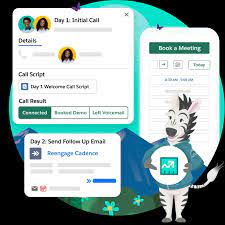
The 9 Best Sales Enablement Tools for 2025 Based on original research by Erin Hueffner, Writer at Salesforce Sales enablement software has become a must-have for high-performing sales teams. According to the Salesforce State of Sales report, adoption surged 48% in 2024, with 75% of reps crediting these tools for helping them meet quotas. But with so many options, how do you choose the right one? Below, we break down the top 9 sales enablement platforms—ranked by features, user ratings, and real-world impact. What Is Sales Enablement Software? Sales enablement tools help teams:✅ Train & onboard reps faster✅ Organize sales content (playbooks, case studies, scripts)✅ Track performance with CRM-linked analytics✅ Coach sellers with AI-driven insights The best platforms combine learning (LMS), content management (CMS), and CRM integration to drive measurable ROI. Who Uses Sales Enablement Tools? Key Benefits of Sales Enablement Software 🔹 Faster onboarding – Reduce ramp time for new hires.🔹 Higher win rates – AI recommends best-performing content.🔹 Larger deal sizes – Data reveals upselling opportunities.🔹 Shorter sales cycles – Right content at the right time. The 9 Best Sales Enablement Tools for 2025 (Ranked by G2 & Capterra ratings, features, and real-world impact) 1. Salesforce Sales Cloud Best for: End-to-end CRM-powered enablement⭐ Rating: 4.4/5 (G2) | ✅ Top Feature: AI-powered coaching (Agentforce) 2. Seismic Best for: Enterprise content & training unification⭐ Rating: 4.5/5 (G2) | ✅ Top Feature: AI-generated learning paths 3. Highspot Best for: AI-driven content recommendations⭐ Rating: 4.6/5 (Capterra) | ✅ Top Feature: Highspot Copilot (AI coaching) 4. Mindtickle Best for: Data-backed sales coaching⭐ Rating: 4.7/5 (G2) | ✅ Top Feature: AI role-play simulations 5. HubSpot Sales Hub Best for: SMBs needing CRM + enablement⭐ Rating: 4.3/5 (G2) | ✅ Top Feature: Conversation intelligence 6. Showpad Best for: Visual, interactive sales content⭐ Rating: 4.5/5 (G2) | ✅ Top Feature: AI-powered pitch coaching 7. Demodesk Best for: Virtual sales teams⭐ Rating: 4.6/5 (Capterra) | ✅ Top Feature: AI meeting summaries 8. ClientPoint Best for: Proposal & contract automation⭐ Rating: 4.4/5 (Capterra) | ✅ Top Feature: AI assistant (Meg) 9. Lessonly by Seismic Best for: Rapid sales training⭐ Rating: 4.5/5 (G2) | ✅ Top Feature: Microlearning modules Key Features to Look For 🔎 AI-powered coaching (e.g., call analysis, role-play feedback)📂 Smart content management (searchable, version-controlled libraries)📊 CRM integration (tie training to deal outcomes)📈 Predictive analytics (flag at-risk deals & skill gaps) How to Choose the Right Tool Final Verdict Sales enablement tools are no longer optional—they’re competitive necessities. The right platform can:✔ Cut ramp time by 50%+✔ Boost win rates by 20%✔ Reduce content search time by 80% Top Pick for 2025? Need AI coaching? Mindtickle & Demodesk lead the pack. Ready to enable your team? The right tool could be the difference between missing quota and smashing targets. Like Related Posts Who is Salesforce? Who is Salesforce? Here is their story in their own words. From our inception, we’ve proudly embraced the identity of Read more Salesforce Marketing Cloud Transactional Emails Salesforce Marketing Cloud Transactional Emails are immediate, automated, non-promotional messages crucial to business operations and customer satisfaction, such as order Read more Salesforce Unites Einstein Analytics with Financial CRM Salesforce has unveiled a comprehensive analytics solution tailored for wealth managers, home office professionals, and retail bankers, merging its Financial Read more AI-Driven Propensity Scores AI plays a crucial role in propensity score estimation as it can discern underlying patterns between treatments and confounding variables Read more
Read More
Streamline Data Collection from Connected Vehicles and Assets with AWS and Salesforce

Streamline Data Collection from Connected Vehicles and Assets with AWS and Salesforce

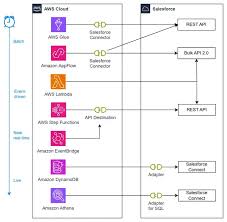
Unlock Real-Time Insights with AWS IoT and Salesforce Industry Clouds This guide explains how to gather, process, and distribute data from connected vehicles and industrial assets—such as manufacturing equipment or utility meters—into Salesforce Industry Cloud solutions using Amazon Web Services (AWS). Key AWS IoT Services for Data Collection By leveraging these services, businesses can integrate telemetry data into: Why This Integration Matters Strong customer relationships rely on real-time insights. Automakers, manufacturers, and utility providers can enhance customer interactions by unifying telemetry data with CRM workflows—enabling smarter marketing, sales, and service decisions. Prerequisites To integrate AWS IoT with Salesforce, you’ll need: AWS Services Salesforce Requirements Use Cases 1. Predictive Maintenance with AWS & Salesforce 2. In-Car Notifications 3. On-Demand Vehicle/Asset Health Insights 4. Data-Driven Customer Engagement Solution Architecture Data Flow Overview Implementation Steps 1. Set Up AWS IoT Rules 2. Configure Salesforce Event Handling 3. Enable Real-Time Analytics Conclusion By integrating AWS IoT with Salesforce Industry Clouds, businesses can:✔ Improve operational efficiency with predictive maintenance.✔ Enhance customer experiences through real-time alerts and diagnostics.✔ Drive data-driven decisions with unified analytics. Next Steps: Empower your teams with real-time IoT insights—start building today! Like Related Posts Who is Salesforce? Who is Salesforce? Here is their story in their own words. From our inception, we’ve proudly embraced the identity of Read more Salesforce Marketing Cloud Transactional Emails Salesforce Marketing Cloud Transactional Emails are immediate, automated, non-promotional messages crucial to business operations and customer satisfaction, such as order Read more Salesforce Unites Einstein Analytics with Financial CRM Salesforce has unveiled a comprehensive analytics solution tailored for wealth managers, home office professionals, and retail bankers, merging its Financial Read more AI-Driven Propensity Scores AI plays a crucial role in propensity score estimation as it can discern underlying patterns between treatments and confounding variables Read more

Read More
agentic revolution

The Agentic AI Revolution

The Agentic AI Revolution: Reskilling and Trust as Competitive Imperatives The rise of agentic AI—autonomous systems capable of independent decision-making—isn’t just another tech trend; it’s a fundamental shift in how businesses operate. With AI agents projected to unlock $6 trillion in digital labor value, companies that fail to adapt risk being outpaced by AI-driven competitors. To thrive in this new era, business leaders must focus on two critical pillars: 1. Reskilling for the Age of AI Collaboration The Urgent Skills Gap Key Competencies for the AI Era ✅ Human-AI Collaboration – Managing AI agents, prompt engineering, and oversight✅ Strategic Thinking – Shifting from routine tasks to big-picture planning✅ Leadership & Management – Overseeing AI “teams” and decision flows A Call to Action for Businesses “With AI handling routine coding, developers can now focus on system architecture and innovation—but only if we equip them for this shift.” 2. Trust: The Foundation of AI Adoption The Risks of Unchecked AI Building a Trusted AI Framework 🛡️ Guardrails & Escalation Protocols – Define when AI must defer to humans🔐 Data Protection – Ensure compliance with zero-retention LLM policies (e.g., Einstein Trust Layer)📊 Transparency Tools – Give employees visibility into AI decision logic Salesforce’s Approach: Agentforce The Path Forward: AI + Humans in Partnership Why This Matters Now Key Takeaways for Leaders Linda SaundersCountry Manager & Senior Director of Solution Engineering, Africa | Salesforce “The future belongs to businesses that combine AI’s efficiency with human ingenuity—guided by an unwavering commitment to trust.” Ready to lead in the agentic AI era? The AI revolution isn’t coming—it’s here. The question is: Will your organization be a disruptor or disrupted? Like Related Posts Who is Salesforce? Who is Salesforce? Here is their story in their own words. From our inception, we’ve proudly embraced the identity of Read more Salesforce Marketing Cloud Transactional Emails Salesforce Marketing Cloud Transactional Emails are immediate, automated, non-promotional messages crucial to business operations and customer satisfaction, such as order Read more Salesforce Unites Einstein Analytics with Financial CRM Salesforce has unveiled a comprehensive analytics solution tailored for wealth managers, home office professionals, and retail bankers, merging its Financial Read more AI-Driven Propensity Scores AI plays a crucial role in propensity score estimation as it can discern underlying patterns between treatments and confounding variables Read more

Read More
Agentic AI is Here

The Rise of Agentic AI

Beyond Predictive Models: The Rise of Agentic AI Agentic AI represents a fundamental shift from passive language models to dynamic systems capable of perception, reasoning, and action across digital and physical environments. Unlike traditional AI that merely predicts text, agentic architectures interact with the world, learn from feedback, and coordinate multiple specialized agents to solve complex problems. This evolution is built on three core principles: Core Principles of Agentic AI 1. Causality & Adaptive Decision-Making Traditional AI systems rely on statistical patterns, often producing plausible but incorrect responses. Agentic AI models cause-and-effect relationships, enabling iterative refinement when faced with unexpected outcomes. Example Applications: 2. Multimodal World Interaction Modern agentic systems integrate text, vision, and sensor data to interact with complex environments. Real-World Implementations: 3. Multi-Agent Collaboration Next-generation frameworks deploy specialized sub-agents that work in parallel rather than relying on single monolithic models. Implementation Examples: Key Components of Agentic Systems 1. Modular Skill Architectures Modern platforms enable: Use Case Scenario:A business intelligence agent that pulls real-time market data, analyzes trends, and generates reports while maintaining data governance standards 2. Multi-Agent Orchestration Advanced frameworks provide: Practical Application:Software development environments where coding, debugging, and security validation occur simultaneously through coordinated AI agents 3. Visual Environment Interaction Cutting-edge solutions bridge the gap between AI and graphical interfaces by: Implementation Example:Intelligent process automation that navigates legacy systems and modern applications without manual scripting Advanced Implementation Patterns 1. Knowledge-Enhanced Agents Example Implementation:Customer service systems that access order history, product details, and support documentation before responding 2. Human Oversight Integration Use Case:Medical diagnostic support that flags uncertain cases for professional review 3. Persistent Context Management Application Example:Project management assistants that track progress, dependencies, and timelines over weeks or months Industry Applications Sector Agentic AI Solutions Software Development Automated testing, debugging, and deployment pipelines Healthcare Integrated diagnostic systems combining multiple data sources Education Adaptive learning systems with personalized tutoring Financial Services Real-time fraud detection and risk analysis Manufacturing Dynamic process optimization and quality control Current Challenges & Research Directions Getting Started with Agentic AI For organizations beginning their agentic AI journey: The Path Forward Agentic AI represents a fundamental evolution from conversational systems to active, adaptive problem-solvers. By combining causal reasoning, specialized collaboration, and real-world interaction, these systems are moving us closer to truly intelligent automation. The future belongs to AI systems that don’t just process information – but perceive, decide, and act in dynamic environments. Organizations that embrace this paradigm today will be positioned to lead in the AI-powered economy of tomorrow. Like Related Posts Who is Salesforce? Who is Salesforce? Here is their story in their own words. From our inception, we’ve proudly embraced the identity of Read more Salesforce Unites Einstein Analytics with Financial CRM Salesforce has unveiled a comprehensive analytics solution tailored for wealth managers, home office professionals, and retail bankers, merging its Financial Read more AI-Driven Propensity Scores AI plays a crucial role in propensity score estimation as it can discern underlying patterns between treatments and confounding variables Read more Tectonic’s Successful Salesforce Track Record Salesforce Technology Services Integrator – Tectonic has successfully delivered Salesforce in a variety of industries including Public Sector, Hospitality, Manufacturing, Read more

Read More
Model Context Protocol

Model Context Protocol

The AI Revolution Has Arrived: Meet MCP, the Protocol Changing Everything Imagine an AI that doesn’t just respond—it understands. It reads your emails, analyzes your databases, knows your business inside out, and acts on live data—all through a single universal standard. That future is here, and it’s called MCP (Model Context Protocol). Already adopted by OpenAI, Google, Microsoft, and more, MCP is about to redefine how we work with AI—forever. No More Copy-Paste AI Picture this: You ask your AI assistant about Q3 performance. Instead of scrambling through spreadsheets, Slack threads, and CRM reports, the AI already knows. It pulls real-time sales figures, checks customer feedback, and delivers a polished analysis—in seconds. This isn’t sci-fi. It’s happening today, thanks to MCP. The Problem With Today’s AI: Isolated Intelligence Most AI models are like geniuses locked in a library—brilliant but cut off from the real world. Every time you copy-paste data into ChatGPT or upload files to Claude, you’re working around a fundamental flaw: AI lacks context. For businesses, deploying AI means endless custom integrations: MCP: The Universal Language for AI Introduced by Anthropic in late 2024, MCP is the USB-C of AI—a single standard connecting any AI to any data source. Here’s how it works: Instead of building N×M connections (every AI × every data source), you build N + M—one integration per AI model and one per data source. MCP in Action: The Future of Work Why MCP Changes Everything The MCP Ecosystem is Exploding In less than a year, MCP has been adopted by: Beyond RAG: Real-Time Knowledge Traditional RAG (Retrieval-Augmented Generation) relies on stale vector databases. MCP changes the game: Security & Governance Built In The Next Frontier: AI Agents & Workflow Automation MCP enables AI agents that don’t just follow scripts—they adapt. The Time to Act is Now MCP isn’t just another API—it’s the foundation for true AI integration. The question isn’t if you’ll adopt it, but how fast. Welcome to the era of connected intelligence. Like Related Posts Who is Salesforce? Who is Salesforce? Here is their story in their own words. From our inception, we’ve proudly embraced the identity of Read more Salesforce Marketing Cloud Transactional Emails Salesforce Marketing Cloud Transactional Emails are immediate, automated, non-promotional messages crucial to business operations and customer satisfaction, such as order Read more Salesforce Unites Einstein Analytics with Financial CRM Salesforce has unveiled a comprehensive analytics solution tailored for wealth managers, home office professionals, and retail bankers, merging its Financial Read more AI-Driven Propensity Scores AI plays a crucial role in propensity score estimation as it can discern underlying patterns between treatments and confounding variables Read more

Read More
gettectonic.com