SSL Archives - gettectonic.com - Page 18
Understanding AI Agents

Understanding AI Agents

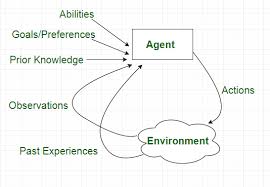
Understanding AI Agents: A Comprehensive Guide Artificial Intelligence (AI) has come a long way, offering systems that automate tasks and provide intelligent, responsive solutions. One key concept within AI is the AI agent—an autonomous system capable of perceiving its environment and taking actions to achieve specific goals. This guide explores AI agents, their types, working mechanisms, and how to build them using platforms like Microsoft Autogen and Google Vertex AI Agent Builder. It also highlights how companies like LeewayHertz and Markovate can assist in the development of AI agents. What is an AI Agent? AI agents are systems designed to interact with their environment autonomously. They process inputs, make decisions, and execute actions based on predefined rules or learned experiences. These agents range from simple rule-based systems to complex machine learning models that adapt over time. Types of AI Agents AI agents can be classified based on complexity and functionality: How AI Agents Work The working mechanism of an AI agent involves four key components: Architectural Blocks of an Autonomous AI Agent An autonomous AI agent typically includes: Building an AI Agent: The Basics Building an AI agent involves several essential steps: Microsoft Autogen: A Platform Overview Microsoft Autogen is a powerful tool for building AI agents, offering a range of features that simplify the development, training, and deployment process. Its user-friendly interface allows developers to create custom agents quickly. Key Steps to Building AI Agents with Autogen: Benefits of Autogen: Vertex AI Agent Builder: Enabling No-Code AI Development Google’s Vertex AI Agent Builder simplifies AI agent development through a no-code platform, making it accessible to users without extensive programming experience. Its drag-and-drop functionality allows for quick and efficient AI agent creation. Key Features of Vertex AI Agent Builder: Conclusion AI agents play a critical role in automating decision-making and performing tasks independently. Platforms like Microsoft Autogen and Google Vertex AI Agent Builder make the development of these agents more accessible, providing powerful tools for both novice and experienced developers. By leveraging these technologies and partnering with companies like LeewayHertz and Markovate, businesses can build custom AI agents that enhance automation, decision-making, and operational efficiency. Whether you’re starting from scratch or looking to integrate AI capabilities into your existing systems, the right tools can make the process seamless and effective. How do you think these tools stack up next to Salesforce AI Agents? Comment below. Content updated October 2024. Like Related Posts Who is Salesforce? Who is Salesforce? Here is their story in their own words. From our inception, we’ve proudly embraced the identity of Read more Salesforce Unites Einstein Analytics with Financial CRM Salesforce has unveiled a comprehensive analytics solution tailored for wealth managers, home office professionals, and retail bankers, merging its Financial Read more AI-Driven Propensity Scores AI plays a crucial role in propensity score estimation as it can discern underlying patterns between treatments and confounding variables Read more Tectonic’s Successful Salesforce Track Record Salesforce Technology Services Integrator – Tectonic has successfully delivered Salesforce in a variety of industries including Public Sector, Hospitality, Manufacturing, Read more


Read More
Building Trust in AI-Powered CRM

Embracing AI in 2024

Embracing AI in 2024: A Strategic Approach to Building AI Software Artificial Intelligence (AI) has become the cornerstone of innovation in the IT industry, captivating big tech, corporations, and investors alike. Participation in AI isn’t just beneficial—it’s imperative. While the specter of an ‘AI Bubble’ looms in public discourse, with fears of job displacement, the reality is more nuanced. AI-driven tools are indeed transforming industries, yet they also present opportunities for innovation and efficiency. Key Considerations for Harnessing AI Power Integration into Digital Services The future of AI lies in embedding it seamlessly within digital services rather than creating standalone products. This approach leverages AI’s capabilities effectively, particularly in generative AI applications. Positioning AI: Core Product vs. Business Solution When incorporating AI into your business strategy, clarity is crucial. Determine whether AI serves as the core product, enhances existing features, or solves specific business challenges. Avoid falling into commodity categories or gimmicky features that lack substantial user value. Assessing Feasibility and Readiness Evaluate your team’s AI competencies, familiarity with tools, budget constraints, and current revenue streams. Understanding these factors helps gauge the feasibility of AI development and integration within your organization. Leveraging Existing Solutions Explore AI solutions offered by major cloud providers and companies. Opt for tools that offer higher abstraction levels, simplifying integration and maintenance. Practical Steps to AI Software Development Navigating AI Use Cases Identify unique use cases where AI can solve real business problems effectively. Avoid pursuing solutions solely for novelty or investor appeal. Building Capability Assess your capability to develop AI systems. Whether you have in-house expertise or need to recruit talent, align your team with the skills required for successful implementation. Data: The Foundation of AI Success Establish robust data acquisition, processing, and storage capabilities. High-quality data is fundamental for AI performance and reliability. Designing Scalable Architecture Develop a scalable AI system architecture that supports seamless data flow, model training, deployment, and user interaction. Keep simplicity and functionality at the forefront. Continuous Improvement Monitor and refine your AI system continuously based on user feedback and industry advancements. Embrace a culture of ongoing learning and adaptation to stay ahead. Conclusion: Navigating the AI Landscape In 2024, building AI software demands a blend of innovation and pragmatism. Clear use cases, robust data management, and practical implementation are key to success. Whether adopting existing AI tools or developing proprietary solutions, prioritize delivering tangible value to users. Stay agile, continuously refine your approach, and embrace the transformative potential of AI in driving business growth and innovation. Like Related Posts Who is Salesforce? Who is Salesforce? Here is their story in their own words. From our inception, we’ve proudly embraced the identity of Read more Salesforce Unites Einstein Analytics with Financial CRM Salesforce has unveiled a comprehensive analytics solution tailored for wealth managers, home office professionals, and retail bankers, merging its Financial Read more AI-Driven Propensity Scores AI plays a crucial role in propensity score estimation as it can discern underlying patterns between treatments and confounding variables Read more Tectonic’s Successful Salesforce Track Record Salesforce Technology Services Integrator – Tectonic has successfully delivered Salesforce in a variety of industries including Public Sector, Hospitality, Manufacturing, Read more

Read More
Salesforce Automated Case Routing

Understand Salesforce Automated Case Routing

Simplified Case Management with Automation Customer service becomes easier, faster, and more effective with automation tools. A well-organized case management system ensures that customer inquiries are routed to the right person, get the correct answers, and are resolved promptly. Delays or errors in responses can lead to customer dissatisfaction, making efficient case routing critical. Salesforce Service Cloud offers robust automation tools to simplify case management and ensure the right service agents handle cases efficiently, minimizing errors and maximizing customer satisfaction. Efficient Handling of Multi-Channel Case Creation With cases being generated from multiple service channels like web, email, phone, and chat, managing them efficiently can be challenging. Service agents often spend significant time prioritizing, sorting, and assigning cases manually, which can reduce productivity. Moreover, identifying agents with specialized skills and assigning appropriate cases to them can be time-consuming. Automating this process ensures optimal resource utilization, faster resolutions, and higher customer satisfaction. Salesforce provides several tools for routing cases to the right agents: Additionally, advanced automation tools enhance case-routing efficiency: Omni-Channel Routing: Revolutionizing Case Management Omni-Channel Routing is a powerful feature that transforms inefficient systems into streamlined workflows. Without it, agents often rely on manual processes, such as selecting cases from lists, which can result in: Omni-Channel automatically assigns cases to qualified and available agents in real-time, ensuring balanced workloads and prioritizing urgent cases. It seamlessly integrates with both Salesforce Classic and Lightning Experience, saving time and enabling agents to focus on resolving cases quickly. Routing Techniques: Case Assignment Rules: Simplifying Small Business Needs Case Assignment Rules automate case ownership by assigning cases to specific users or queues based on predefined criteria. These rules apply to all cases, regardless of origin, including web-to-case, email-to-case, and more. Key Features: Escalation Rules: Prioritizing Unresolved Cases Escalation Rules help identify and resolve cases that remain unresolved within a specific timeframe. They reassign cases to specific users or teams and send notifications, ensuring: Rules are configured with business hours and time-based criteria to determine when cases should be escalated. Einstein Case Classification & Routing: AI-Powered Efficiency Salesforce Einstein uses machine learning to predict and populate case record fields automatically, reducing agent effort and improving accuracy. How It Works: Einstein Case Routing combines AI predictions with assignment or skill-based routing rules to assign cases to the most suitable agents, improving resolution speed and customer satisfaction. Conclusion Automated case routing transforms customer service by improving productivity, efficiency, and resolution speed. While Omni-Channel Routing is the most comprehensive tool for case management, Escalation and Assignment Rules also play vital roles for smaller business needs. Together, these tools enable businesses to deliver exceptional customer experiences. Like1 Related Posts Who is Salesforce? Who is Salesforce? Here is their story in their own words. From our inception, we’ve proudly embraced the identity of Read more Salesforce Marketing Cloud Transactional Emails Salesforce Marketing Cloud Transactional Emails are immediate, automated, non-promotional messages crucial to business operations and customer satisfaction, such as order Read more Salesforce Unites Einstein Analytics with Financial CRM Salesforce has unveiled a comprehensive analytics solution tailored for wealth managers, home office professionals, and retail bankers, merging its Financial Read more AI-Driven Propensity Scores AI plays a crucial role in propensity score estimation as it can discern underlying patterns between treatments and confounding variables Read more

Read More
360 SMS Salesforce Chatbot

360 SMS Salesforce Chatbot

360 SMS Salesforce Chatbot vs. Traditional Customer Support: An Analysis In the evolving tech space of customer service, businesses continue to seek ways to enhance customer satisfaction while optimizing costs. One notable resource in recent years is the increasing reliance on chatbots, with the 360 SMS chatbot emerging as a powerful SMS tool for efficient customer support. But how does it measure up against traditional customer support methods? This comparative analysis explores the effectiveness and efficiency of the 360 SMS SFDC Chatbot in contrast to conventional approaches. Understanding Traditional Customer Support Traditional customer support involves human interaction where agents handle inquiries via phone calls, emails, or in-person interactions. These methods are valued for their personalized service and ability to handle complex queries effectively. However, they come with some challenges: Introducing the 360 SMS SFDC Chatbot The 360 SMS SFDC chatbot automates business conversations independently within Salesforce environments without extensive coding. This no-code solution integrates seamlessly with Salesforce, accessing customer data to provide personalized interactions and streamline customer support processes. Key Advantages of the 360 SMS Salesforce Chatbot: Traditional Customer Support: 360 SMS SFDC Chatbot: Traditional Customer Support: 360 SMS Chatbot: Traditional Customer Support: 360 SMS Salesforce Chatbot: Traditional Customer Support: 360 SMS Salesforce Chatbot: Traditional Customer Support: 360 SMS Salesforce Chatbot: Traditional Customer Support: 360 SMS Salesforce Chatbot: Traditional Customer Support: 360 SMS Salesforce Chatbot: While traditional customer support offers personalized service and handles complex queries effectively, the 360 SMS SFDC chatbot provides 24/7 availability, scalability, and cost-effectiveness. By combining both approaches, businesses can enhance customer experiences, optimize operational costs, and meet evolving market demands effectively. Embracing innovative solutions like the 360 SMS Salesforce chatbot is crucial for staying competitive, meeting customer expectations, and transforming organizational efficiency in today’s dynamic business environment. Like Related Posts Who is Salesforce? Who is Salesforce? Here is their story in their own words. From our inception, we’ve proudly embraced the identity of Read more Salesforce Marketing Cloud Transactional Emails Salesforce Marketing Cloud Transactional Emails are immediate, automated, non-promotional messages crucial to business operations and customer satisfaction, such as order Read more Salesforce Unites Einstein Analytics with Financial CRM Salesforce has unveiled a comprehensive analytics solution tailored for wealth managers, home office professionals, and retail bankers, merging its Financial Read more AI-Driven Propensity Scores AI plays a crucial role in propensity score estimation as it can discern underlying patterns between treatments and confounding variables Read more

Read More
Salesforce Data Cloud Pioneer

Salesforce Data Cloud Pioneer

While many organizations are still building their data platforms, Salesforce Data Cloud Pioneer has made a significant leap forward. By seamlessly incorporating metadata integration, Salesforce has transformed the modern data stack into a comprehensive application platform known as the Einstein 1 Platform. Led by Muralidhar Krishnaprasad, executive vice president of engineering at Salesforce, the Einstein 1 Platform is built on the company’s metadata framework. This platform harmonizes metadata and integrates it with AI and automation, marking a new era of data utilization. The Einstein 1 Platform: Innovations and Capabilities Salesforce’s goal with the Einstein 1 Platform is to empower all business users—salespeople, service engineers, marketers, and analysts—to access, use, and act on all their data, regardless of its location, according to Krishnaprasad. The open, extensible platform not only unlocks trapped data but also equips organizations with generative AI functionality, enabling personalized experiences for employees and customers. “Analytics is very important to know how your business is doing, but you also want to make sure all that data and insights are actionable,” Krishnaprasad said. “Our goal is to blend AI, automation, and analytics together, with the metadata layer being the secret sauce.” Salesforce Data Cloud Pioneer In a conversation with George Gilbert, senior analyst at theCUBE Research, Krishnaprasad discussed the platform’s metadata integration, open-API technology, and key features. They explored how its extensibility and interoperability enhance usability across various data formats and sources. Metadata Integration: Accommodating Any IT Environment The Einstein 1 Platform is built on Trino, the federated open-source query engine, and Spark for data processing. It offers a rich set of connectors and an open, extensible environment, enabling organizations to share data between warehouses, lake houses, and other systems. “We use a hyper-engine for sub-second response times in Tableau and other data explorations,” Krishnaprasad explained. “This in-memory overlap engine ensures efficient data processing.” The platform supports various machine learning options and allows users to integrate their own large language models. Whether using Salesforce Einstein, Databricks, Vertex, SageMaker, or other solutions, users can operate without copying data. The platform includes three levels of extensibility, enabling organizations to standardize and extend their customer journey models. Users can start with basic reference models, customize them, and then generate insights, including AI-driven insights. Finally, they can introduce their own functions or triggers to act on these insights. The platform continuously performs unification, allowing users to create different unified graphs based on their needs. “We’re a multimodal system, considering your entire customer journey,” Krishnaprasad said. “We provide flexibility at all levels of the stack to create the right experience for your business.” The Triad of AI, Automation, and Analytics The platform’s foundation ingests, harmonizes, and unifies data, resulting in a standardized metadata model that offers a 360-degree view of customer interactions. This approach unlocks siloed data, much of which is in unstructured forms like conversations, documents, emails, audio, and video. “What we’ve done with this customer 360-degree model is to use unified data to generate insights and make these accessible across application surfaces, enabling reactions to these insights,” Krishnaprasad said. “This unlocks a comprehensive customer journey.” For instance, when a customer views an ad and visits the website, salespeople know what they’re interested in, service personnel understand their concerns, and analysts have the information needed for business insights. These capabilities enhance customer engagement. “Couple this with generative AI, and we enable a lot of self-service,” Krishnaprasad added. “We aim to provide accurate answers, elevating data to create a unified model and powering a unified experience across the entire customer journey.” Like Related Posts Who is Salesforce? Who is Salesforce? Here is their story in their own words. From our inception, we’ve proudly embraced the identity of Read more Salesforce Marketing Cloud Transactional Emails Salesforce Marketing Cloud Transactional Emails are immediate, automated, non-promotional messages crucial to business operations and customer satisfaction, such as order Read more Salesforce Unites Einstein Analytics with Financial CRM Salesforce has unveiled a comprehensive analytics solution tailored for wealth managers, home office professionals, and retail bankers, merging its Financial Read more AI-Driven Propensity Scores AI plays a crucial role in propensity score estimation as it can discern underlying patterns between treatments and confounding variables Read more

Read More
Best ChatGPT Competitor Tools

Best ChatGPT Competitor Tools

ChatGPT Alternatives – Best ChatGPT Competitor Tools Discover the Future of AI Chat: Explore the Top ChatGPT Alternatives for Enhanced Communication and Productivity. In an effort to avoid playing favorites, tools are presented in alphabetical order. Best ChatGPT Competitor Tools. Do you ever found yourself wishing for a ChatGPT alternative that might better suit your specific content or AI assistant needs? Whether you’re a business owner, content creator, or student, the right AI chat tool can significantly influence how you interact with information and manage tasks. In this insight, we’re looking into the top ChatGPT alternatives available in 2024. By the end, you’ll have a clear idea of which options might be best for your particular use case and why. Features What We Like What We Don’t Like Pricing Features What We Like What We Don’t Like Pricing Features What We Like What We Don’t Like Pricing Features What We Like What We Don’t Like Pricing Features What We Like What We Don’t Like Pricing Features What We Like What We Don’t Like Pricing Features What We Like What We Don’t Like Pricing Features What We Like What We Don’t Like Pricing Features What We Like What We Don’t Like Pricing Features What We Like What We Don’t Like Pricing Features What We Like What We Don’t Like Pricing BONUS Quillbot AI Great for paraphrasing small blocks of content. In the rapidly evolving world of AI chat technology, these top ChatGPT alternatives of 2024 offer a diverse range of capabilities to suit various needs and preferences. Whether you’re looking to streamline your workflow, enhance your learning, or simply engage in more dynamic conversations, there’s a tool out there (or 2 or 10) that can help boost your digital interactions. Each platform brings its unique strengths to the table, from specialized functionalities like summarizing texts or coding assistance to more general but highly efficient conversational capabilities. There is no reason to select only one. As you consider integrating these tools into your daily routine, think about how its features align with your goals. Embrace the possibilities and let these advanced technologies open new doors to efficiency, creativity, and connectivity. Create a bookmark folder just for GPT tools. New one’s pop up routinely. Happy chatting! Like Related Posts Who is Salesforce? Who is Salesforce? Here is their story in their own words. From our inception, we’ve proudly embraced the identity of Read more Salesforce Marketing Cloud Transactional Emails Salesforce Marketing Cloud Transactional Emails are immediate, automated, non-promotional messages crucial to business operations and customer satisfaction, such as order Read more Salesforce Unites Einstein Analytics with Financial CRM Salesforce has unveiled a comprehensive analytics solution tailored for wealth managers, home office professionals, and retail bankers, merging its Financial Read more AI-Driven Propensity Scores AI plays a crucial role in propensity score estimation as it can discern underlying patterns between treatments and confounding variables Read more

Read More
Can We Customize Manufacturing Cloud For Our Business

Can We Customize Manufacturing Cloud For Our Business?

Yes, Salesforce Manufacturing Cloud Can Be Customized to Meet Your Business Needs Salesforce Manufacturing Cloud is designed to be highly customizable, allowing manufacturing organizations to tailor it to their unique business requirements. Whether it’s adapting the platform to fit specific workflows, integrating with third-party systems, or enhancing reporting capabilities, Salesforce provides robust customization options to meet the specific needs of manufacturers. Here are key ways Salesforce Manufacturing Cloud can be customized: 1. Custom Data Models and Objects Salesforce allows you to create custom objects and fields to track data beyond the standard model. This flexibility enables businesses to manage unique production metrics or product configurations seamlessly within the platform. Customization Options: 2. Sales Agreement Customization Sales Agreements in Salesforce Manufacturing Cloud can be tailored to reflect your business’s specific contract terms and pricing models. You can adjust agreement structures, including the customization of terms, conditions, and rebate tracking. Customization Options: 3. Custom Workflows and Automation Salesforce offers tools like Flow Builder and Process Builder, allowing manufacturers to automate routine tasks and create custom workflows that streamline operations. Customization Options: 4. Integration with Third-Party Systems Salesforce Manufacturing Cloud can integrate seamlessly with ERP systems (like SAP or Oracle), inventory management platforms, and IoT devices to ensure a smooth data flow across departments. Integration Options: 5. Custom Reports and Dashboards With Salesforce’s robust reporting tools, you can create custom reports and dashboards that provide real-time insights into key performance indicators (KPIs) relevant to your manufacturing operations. Customization Options: 6. Custom User Interfaces Salesforce Lightning allows you to customize user interfaces to meet the needs of different roles within your organization, such as production managers or sales teams. This ensures users have quick access to relevant data. Customization Options: Conclusion Salesforce Manufacturing Cloud provides a wide range of customization options to suit the unique needs of your manufacturing business. Whether it’s adjusting data models, automating processes, or integrating with external systems, Manufacturing Cloud can be tailored to meet your operational goals. By leveraging these customizations, manufacturers can optimize their operations, improve data accuracy, and gain real-time insights to boost efficiency. If you need help customizing Salesforce Manufacturing Cloud, Service Cloud, or Sales Cloud for your business, our Salesforce Manufacturing Cloud Services team is here to assist. Like Related Posts Who is Salesforce? Who is Salesforce? Here is their story in their own words. From our inception, we’ve proudly embraced the identity of Read more Salesforce Marketing Cloud Transactional Emails Salesforce Marketing Cloud Transactional Emails are immediate, automated, non-promotional messages crucial to business operations and customer satisfaction, such as order Read more Salesforce Unites Einstein Analytics with Financial CRM Salesforce has unveiled a comprehensive analytics solution tailored for wealth managers, home office professionals, and retail bankers, merging its Financial Read more AI-Driven Propensity Scores AI plays a crucial role in propensity score estimation as it can discern underlying patterns between treatments and confounding variables Read more

Read More

Zendesk Agent Copilot for Voice

Zendesk Agent Copilot for Voice is an AI-powered tool designed to enhance the efficiency and effectiveness of customer service agents during voice interactions. It leverages artificial intelligence to provide real-time assistance, enabling agents to deliver faster, more accurate, and personalised support to customers over phone calls. Here’s an overview of its key features and benefits: Key Features of Zendesk Agent Copilot for Voice Benefits of Zendesk Agent Copilot for Voice Use Cases for Zendesk Agent Copilot for Voice How It Works Zendesk Agent Copilot for Voice integrates with your existing voice infrastructure and uses advanced natural language processing (NLP) and machine learning (ML) to analyse conversations in real time. It pulls data from Zendesk’s knowledge base, CRM, and other integrated systems to provide agents with the most relevant information and recommendations. Why It Matters In today’s competitive landscape, delivering exceptional customer service is critical. Zendesk Agent Copilot for Voice empowers agents to handle calls more effectively, reduces operational inefficiencies, and ensures a seamless, personalised experience for customers. By combining human expertise with AI-driven insights, it sets a new standard for voice-based customer support. If you’re considering implementing Zendesk Agent Copilot for Voice, it’s worth exploring how it aligns with your specific customer service goals and workflows. The tool is particularly valuable for businesses with high call volumes or those looking to enhance their voice support capabilities with AI-driven innovation. Like Related Posts Who is Salesforce? Who is Salesforce? Here is their story in their own words. From our inception, we’ve proudly embraced the identity of Read more Salesforce Unites Einstein Analytics with Financial CRM Salesforce has unveiled a comprehensive analytics solution tailored for wealth managers, home office professionals, and retail bankers, merging its Financial Read more AI-Driven Propensity Scores AI plays a crucial role in propensity score estimation as it can discern underlying patterns between treatments and confounding variables Read more Tectonic’s Successful Salesforce Track Record Salesforce Technology Services Integrator – Tectonic has successfully delivered Salesforce in a variety of industries including Public Sector, Hospitality, Manufacturing, Read more
Read More
Einstein Service Agent

Einstein Service Agent

Introducing Agentforce Service Agent: Salesforce’s Autonomous AI to Transform Chatbot Experiences Accelerate case resolutions with an intelligent, conversational interface that uses natural language and is grounded in trusted customer and business data. Deploy in minutes with ready-made templates, Salesforce components, and a large language model (LLM) to autonomously engage customers across any channel, 24/7. Establish clear privacy and security guardrails to ensure trusted responses, and escalate complex cases to human agents as needed. Editor’s Note: Einstein Service Agent is now known as Agentforce Service Agent. Salesforce has launched Agentforce Service Agent, the company’s first fully autonomous AI agent, set to redefine customer service. Unlike traditional chatbots that rely on preprogrammed responses and lack contextual understanding, Agentforce Service Agent is dynamic, capable of independently addressing a wide range of service issues, which enhances customer service efficiency. Built on the Einstein 1 Platform, Agentforce Service Agent interacts with large language models (LLMs) to analyze the context of customer messages and autonomously determine the appropriate actions. Using generative AI, it creates conversational responses based on trusted company data, such as Salesforce CRM, and aligns them with the brand’s voice and tone. This reduces the burden of routine queries, allowing human agents to focus on more complex, high-value tasks. Customers, in turn, receive faster, more accurate responses without waiting for human intervention. Available 24/7, Agentforce Service Agent communicates naturally across self-service portals and messaging channels, performing tasks proactively while adhering to the company’s defined guardrails. When an issue requires human escalation, the transition is seamless, ensuring a smooth handoff. Ease of Setup and Pilot Launch Currently in pilot, Agentforce Service Agent will be generally available later this year. It can be deployed in minutes using pre-built templates, low-code workflows, and user-friendly interfaces. “Salesforce is shaping the future where human and digital agents collaborate to elevate the customer experience,” said Kishan Chetan, General Manager of Service Cloud. “Agentforce Service Agent, our first fully autonomous AI agent, will revolutionize service teams by not only completing tasks autonomously but also augmenting human productivity. We are reimagining customer service for the AI era.” Why It Matters While most companies use chatbots today, 81% of customers would still prefer to speak to a live agent due to unsatisfactory chatbot experiences. However, 61% of customers express a preference for using self-service options for simpler issues, indicating a need for more intelligent, autonomous agents like Agentforce Service Agent that are powered by generative AI. The Future of AI-Driven Customer Service Agentforce Service Agent has the ability to hold fluid, intelligent conversations with customers by analyzing the full context of inquiries. For instance, a customer reaching out to an online retailer for a return can have their issue fully processed by Agentforce, which autonomously handles tasks such as accessing purchase history, checking inventory, and sending follow-up satisfaction surveys. With trusted business data from Salesforce’s Data Cloud, Agentforce generates accurate and personalized responses. For example, a telecommunications customer looking for a new phone will receive tailored recommendations based on data such as purchase history and service interactions. Advanced Guardrails and Quick Setup Agentforce Service Agent leverages the Einstein Trust Layer to ensure data privacy and security, including the masking of personally identifiable information (PII). It can be quickly activated with out-of-the-box templates and pre-existing Salesforce components, allowing companies to equip it with customized skills faster using natural language instructions. Multimodal Innovation Across Channels Agentforce Service Agent supports cross-channel communication, including messaging apps like WhatsApp, Facebook Messenger, and SMS, as well as self-service portals. It even understands and responds to images, video, and audio. For example, if a customer sends a photo of an issue, Agentforce can analyze it to provide troubleshooting steps or even recommend replacement products. Seamless Handoffs to Human Agents If a customer’s inquiry requires human attention, Agentforce seamlessly transfers the conversation to a human agent who will have full context, avoiding the need for the customer to repeat information. For example, a life insurance company might program Agentforce to escalate conversations if a customer mentions sensitive topics like loss or death. Similarly, if a customer requests a return outside of the company’s policy window, Agentforce can recommend that a human agent make an exception. Customer Perspective “Agentforce Service Agent’s speed and accuracy in handling inquiries is promising. It responds like a human, adhering to our diverse, country-specific guidelines. I see it becoming a key part of our service team, freeing human agents to handle higher-value issues.” — George Pokorny, SVP of Global Customer Success, OpenTable. Content updated October 2024. Like Related Posts Who is Salesforce? Who is Salesforce? Here is their story in their own words. From our inception, we’ve proudly embraced the identity of Read more Salesforce Marketing Cloud Transactional Emails Salesforce Marketing Cloud Transactional Emails are immediate, automated, non-promotional messages crucial to business operations and customer satisfaction, such as order Read more Salesforce Unites Einstein Analytics with Financial CRM Salesforce has unveiled a comprehensive analytics solution tailored for wealth managers, home office professionals, and retail bankers, merging its Financial Read more AI-Driven Propensity Scores AI plays a crucial role in propensity score estimation as it can discern underlying patterns between treatments and confounding variables Read more

Read More
Alphabet Abandons Acquisition for HubSpot

Alphabet Abandons Acquisition for HubSpot

Alphabet Abandons Acquisition Plans for HubSpot The integration between Salesforce and Hubspot could have changed drastically. The HubSpot-Salesforce integration allows you to pass data between HubSpot and Salesforce seamlessly, and maintain consistency between your marketing and sales teams. Current HubSpot Google integration includes: ability to log emails sent from Gmail into HubSpot CRM with one click, so your team spends less time on busy work and more time doing what they do best. HubSpot integrates with your Google Calendar to help you book more meetings in less time. Google parent Alphabet has abandoned its plans to acquire HubSpot, according to sources familiar with the matter. This decision puts to rest what would have been one of the year’s largest takeovers. HubSpot, Inc. is an American developer and marketer of software products for inbound marketing, sales, and customer service. HubSpot was founded by Brian Halligan and Dharmesh Shah in 2006. The talks between Alphabet and HubSpot never progressed to due diligence and fell apart shortly after the companies held initial discussions on a potential deal, the source said, on condition of anonymity to discuss confidential matters. HubSpot’s shares, a customer relationship management company, plummeted by as much as 19 percent on Wednesday (Jul 10) in New York trading, marking the most significant drop since 2020. The shares closed down 12 percent at $492.31, giving the company a market value of approximately $25 billion. Earlier this year, Alphabet had expressed interest in a potential deal with HubSpot. However, the two sides never progressed to detailed discussions or due diligence, said the sources, who requested anonymity due to the confidentiality of the matter. Representatives for Alphabet did not immediately comment. A HubSpot spokesperson also declined to comment. Any acquisition of HubSpot would have been among the largest tech deals of the year, comparable to Synopsys’s pending $34 billion acquisition of Ansys, according to data compiled by Bloomberg. HubSpot recently suffered a hack attack. HubSpot, which builds marketing software for small and medium-sized businesses, has specialized in so-called inbound marketing, where consumers start engagement with a brand. HubSpot customers apply its software to make advertising content that consumers can click on. CEO Yamini Rangan said in May on HubSpot’s financial results call that customer demand had weakened, as small businesses worried about the economic impact of high interest rates. Acquiring Cambridge, Massachusetts-based HubSpot, which caters to small and midsize enterprises, would have bolstered Alphabet’s competitiveness against rivals like Microsoft, Oracle, and Salesforce. Like Related Posts Who is Salesforce? Who is Salesforce? Here is their story in their own words. From our inception, we’ve proudly embraced the identity of Read more Salesforce Marketing Cloud Transactional Emails Salesforce Marketing Cloud Transactional Emails are immediate, automated, non-promotional messages crucial to business operations and customer satisfaction, such as order Read more Salesforce Unites Einstein Analytics with Financial CRM Salesforce has unveiled a comprehensive analytics solution tailored for wealth managers, home office professionals, and retail bankers, merging its Financial Read more AI-Driven Propensity Scores AI plays a crucial role in propensity score estimation as it can discern underlying patterns between treatments and confounding variables Read more

Read More
New Approaches to UI UX

New Approaches to UI UX

Ever-Updating Collection of New Approaches to UI/UX in the AI Era Dials, Knobs, and Sliders Physical knobs, digital sliders, and quadrant “dials” are being used to fine-tune AI responses and inputs. For example, Figma’s new Figma Slides features a novel UX where you can adjust the tone of generated text with a slider. Moving the orange indicator lets you blend between casual and professional tones, or concise and expanded content. This idea was spotted in a demo shared by Twitter user Johannes Stelzer. While I don’t have all the details, the concept is fantastic. For a personal example, I built a Chrome extension that summarizes any webpage. You can adjust the length of the output using sliders. Want a four-word summary? Slide it down. Prefer a detailed essay? Slide it up. Node-and-Edge Graph LangGraph Studio uses a node-and-edge system to visualize logic flows in LangChain Agents. Each node represents a “micro-agent” completing a specific task, and the edges show the connections between them. This modular approach allows users to build complex agents from simple, connected building blocks. The Infinite Canvas An infinite canvas provides an open, continuous workspace for limitless creativity. Examples include Figma, FigJam, TLDraw, and Visual Electric. Here’s a peek at Visual Electric’s canvas in action. Figma and FigJam also use this concept to inspire creativity. In one example, Julie W. Design is brainstorming with FigJam AI on an infinite canvas. Another example combines Claude’s Artifacts and TLDraw’s infinite canvas for nearly instant site-building capabilities. Voice Input While voice input isn’t new, it feels more natural within AI chat interfaces, popularized by OpenAI’s ChatGPT. David Lam points out that voice input works seamlessly with this mental model of a chat interface. Dot by New.Computer integrates voice input elegantly, alongside its text-based interactions. Notably, the interface includes a “pinch-out” gesture to access a hidden card view, showcasing Jason Yuan’s mastery of fluid, innovative UI design. Visual Interface AI tools are also embracing visual input. For example, OpenInterpreter uses a webcam to “read” a sticky note held up by Killian, then connects to Wi-Fi based on the written info. Side-by-Side Layout In this UI approach, a chat window appears on the left while results or outputs are shown on the right. This layout works well on desktop but requires swipes or tabs for mobile. Here are a few examples: Whole-Body Interface This example demonstrates how MediaPipe tracks body gestures to produce results. While it may rely on machine learning more than traditional AI, the outcome is undeniably cool! Like Related Posts Who is Salesforce? Who is Salesforce? Here is their story in their own words. From our inception, we’ve proudly embraced the identity of Read more Salesforce Marketing Cloud Transactional Emails Salesforce Marketing Cloud Transactional Emails are immediate, automated, non-promotional messages crucial to business operations and customer satisfaction, such as order Read more Salesforce Unites Einstein Analytics with Financial CRM Salesforce has unveiled a comprehensive analytics solution tailored for wealth managers, home office professionals, and retail bankers, merging its Financial Read more AI-Driven Propensity Scores AI plays a crucial role in propensity score estimation as it can discern underlying patterns between treatments and confounding variables Read more

Read More
Salesforce to Boost Productivity and Customer Interaction

Salesforce to Boost Productivity and Customer Interaction

Vonage, a global leader in cloud communications and a part of Ericsson, has announced that Endress+Hauser, a Swiss-based supplier of process and laboratory instrumentation and automation, has selected Vonage Contact Center for Service Cloud Voice to deliver consistent and personalized customer experiences across all channels. Salesforce to Boost Productivity and Customer Interaction With nearly 17,000 employees worldwide, Endress+Hauser sought to revolutionize their customer interactions. Vonage Contact Center for Service Cloud Voice seamlessly integrates with their existing Salesforce CRM, enhancing automation, intelligence, and engagement capabilities on a global scale. Salesforce to Boost Productivity and Customer Interaction Vonage is a trusted partner for Salesforce, offering a platform that enables businesses to manage, deploy, and consolidate multiple communication solutions for increased efficiency. Leveraging Vonage’s AI capabilities, such as real-time transcription and omnichannel routing solutions, Endress+Hauser can create deeper connections with customers and enhance agent experiences with a more informed view of the customer. Rob MacKenzie, Corporate Director of Sales Excellence at Endress+Hauser, expressed the importance of integrating communication channels to improve the customer experience, ensuring seamless interactions and capturing vital insights. Thomas Plack, SVP and Head of Industry at Salesforce Germany, highlighted how Service Cloud Voice empowers agents to handle calls and resolve issues seamlessly, enabling Endress+Hauser to adopt a proactive and personalized approach with their customers. Savinay Berry, Executive Vice President of Product and Engineering at Vonage, emphasized that Vonage solutions are tailored to organizations like Endress+Hauser, aiming to deepen customer engagement and enhance agent satisfaction. With Vonage Contact Center for Service Cloud Voice, integration with Salesforce optimizes efficiency and leverages AI-based capabilities to deliver a consistent and personalized customer experience. Like1 Related Posts Who is Salesforce? Who is Salesforce? Here is their story in their own words. From our inception, we’ve proudly embraced the identity of Read more Salesforce Marketing Cloud Transactional Emails Salesforce Marketing Cloud Transactional Emails are immediate, automated, non-promotional messages crucial to business operations and customer satisfaction, such as order Read more Salesforce Unites Einstein Analytics with Financial CRM Salesforce has unveiled a comprehensive analytics solution tailored for wealth managers, home office professionals, and retail bankers, merging its Financial Read more AI-Driven Propensity Scores AI plays a crucial role in propensity score estimation as it can discern underlying patterns between treatments and confounding variables Read more

Read More
Salesforce Agentforce Platform

Salesforce Agentforce Platform

Salesforce CEO Marc Benioff has hinted at the upcoming launch of a new AI and automation platform geared towards customer support. Salesforce Agentforce Platform. In anticipation of September’s Dreamforce event, Benioff used X, formerly Twitter, to offer a sneak peek into the platform, specifically highlighting its customer-facing “Einstein Service Agent.” In his post, Benioff underscores the essential features of the virtual agent, emphasizing how it will seamlessly blend digital and human-assisted support to expedite case resolutions. This blended experience appears to build upon the technology integrated into Salesforce following its acquisition of Airkit.ai in 2023. Airkit.ai provides a low- to no-code bot-building platform that empowers businesses to orchestrate AI-driven conversational experiences. Primarily used for service automation, Airkit enables firms to design and automate complex cross-platform workflows, enhancing automated customer interactions across Salesforce applications. The Einstein Service Agent, positioned within Salesforce’s broader Einstein 1 vision, leverages Data Cloud to create a unified, cross-functional data ecosystem. Benioff hints at the agent’s capability to span service, sales, marketing, and commerce functionalities, underscoring its pivotal role within the Salesforce ecosystem. Expanding on Airkit.ai’s foundational capabilities, Salesforce has integrated Mulesoft to enable insights triggering cross-platform automations, alongside real-time data harmonization within Data Cloud. Moreover, the platform now incorporates generative AI (GenAI), enhancing its ability to interpret text, images, and audio/video for diverse customer engagement scenarios. Despite these advancements, Benioff acknowledges that no virtual agent, even with GenAI augmentation, can resolve every customer query alone. Salesforce ensures omnichannel transfers and human handoffs to address more complex issues effectively. In an era where many vendors offer similar conversational AI capabilities, Salesforce distinguishes itself through ecosystem integration and orchestration. Benioff emphasizes the value of low- to no-code workflow orchestration, democratizing AI technology for non-programmers and fostering an inclusive AI revolution. Expect Benioff to elaborate further on these themes and unveil more details about the Agentforce Platform during his keynote at the 2024 Dreamforce event. Like Related Posts Who is Salesforce? Who is Salesforce? Here is their story in their own words. From our inception, we’ve proudly embraced the identity of Read more Salesforce Marketing Cloud Transactional Emails Salesforce Marketing Cloud Transactional Emails are immediate, automated, non-promotional messages crucial to business operations and customer satisfaction, such as order Read more Salesforce Unites Einstein Analytics with Financial CRM Salesforce has unveiled a comprehensive analytics solution tailored for wealth managers, home office professionals, and retail bankers, merging its Financial Read more AI-Driven Propensity Scores AI plays a crucial role in propensity score estimation as it can discern underlying patterns between treatments and confounding variables Read more

Read More
AI Agents in Line at HR

AI Agents in Line at HR

AI Agents in Line at HR may only be a satirical cartoon for a very short time. Sorry, Farside, but your AI bits may not be able to keep up with AI. July, 2034 — A new software unicorn has just emerged inbehind a bar in a pub in East London. Unicorn, by the way, descibes a startup company valued at over $1 billion, not necessarily with a billion dollar concept. Back to East London behind the soggy bar. Hey, its our fantasy. Besides if Amazon can start in a garage, isn’t anything possible? The CEO logs in as usual and gathers daily updates from the team. The Chief Technology Officer is suggesting a new feature to deploy. The Chief Product Officer wants to redesign the CRM (or whatever CRM has evolved to) integration. The Chief Revenue Officer is showing off the new pipeline, forecast by Accountant in a Box. The Chief Customer Officer is discussing the latest customer levitation tools and product feedback. The Chief Information Security Officer has found a new privacy conflict, which they are addressing with a newly-revised infrastructure set-up. And the Head of HR is fretting about the latest round of IT candidates. This sounds like every software business you’ve ever heard of. But the difference is that the CEO’s teammates are entirely AI, not human: The CTO is Lovable. The CPO is Cogna. The CCO is Gradient Labs. The CRO is 11x. The CISO is Zylon. Back to 2024: The Rise of AI Agents In 2024, the hottest topic in software is AI agents, or Agentic AI. Founders are rapidly standing up agentic applications that can solve specific needs in functions like sales and customer services — without a human required. Software buyers, seeing real opportunities to quickly improve their P&L, are swiftly building or purchasing these agentic products. Investors have poured hundreds of millions of dollars into startups in this space in recent months. Even Salesforce wasn’t launched with a silver AI spoon in its mouth. Salesforce began investing in artificial intelligence (AI) in 2014, when the company started acquiring machine learning startups and announced its Customer Success Platform. In 2016, Salesforce launched Einstein, its AI platform that supports several of its cloud services. Einstein is built into Salesforce products and includes features like natural language processing, machine learning, and predictive analytics. It helps organizations automate processes, make decisions based on insights, and improve the customer experience. YouTube How To Increase Revenue Using AI for CRM: Salesforce … Feb 12, 2024 — What is Salesforce Einstein? Salesforce Einstein is the first trusted artifici… TechForce Services How does Salesforce Use AI for Business Growth? Jan 31, 2024 — Powered by technologies like Machine Learning, Natural Language Processing, im… saasguru · LinkedIn · 7mo History of Salesforce AI From Predictive to Generative – LinkedIn Published Nov 27, 2023. In 2014, Salesforce, under the visionary leadership of… Twistellar AI in Salesforce: History, Present State and Prospects Organizations generate tons of data on marketing and sales, and surely your sales managers… Wikipedia Salesforce – Wikipedia In October 2014, Salesforce announced the development of its Customer Success Platform. Less than ten years ago, folks. Salesforce’s large database of data has helped the company address AI challenges quickly and with quality. The company’s data cloud offering provides AI with the right information at the right time, which can reduce friction and improve the customer experience.  Salesforce’s AI-powered solutions include: To catalyze this evolution, Salesforce strategically acquired RelateIQ in 2014. This move injected machine learning into the Salesforce ecosystem, capturing workplace communications data and providing valuable insights. Europe is home to many of these exciting companies. For example, H, a French AI agent startup, raised a $220 million seed round in May. Beyond RPA: The New Wave of AI Agents AI agents represent a significant step-change from Robotic Process Automation (RPA) bots, which, as explored last year, have several limitations due to their deterministic nature. Next-generation AI agents are non-deterministic, meaning that instead of stopping at a “dead end,” they can learn from mistakes and adjust their series of tasks. Not entirely unlock the mouse running the same maze over and over for the cheese. Eventually Mr. Squeakers learns which paths are dead ends and avoids them by making better choices at intersections. In AI Agents this makes them suited to complex and unstructured tasks and means they can transform the journey from intent to implementation in software development. They can deliver “pure work,” rather than acting only as a helpful co-pilot. The rise of AI agents is not only an opportunity to expand automation beyond what is possible with RPA but also to broadly redefine how knowledge work is performed. And by who. And even how is it defined. Given the right guardrails, next-generation AI agents have the potential to effectively and safely replace knowledge workers in many business scenarios. AI Agents in Action These agents are about to revolutionize the world of work as we know it and are already getting started. For example, Klarna recently revealed that its AI agent system handled two-thirds of customer chats in its first month in operation. While HR may not be swamped with AI CVs yet, it is certainly fathomable. One would suppose those candidates would have to be reviewed and interviewed by IT, not just HR. Here’s another deep thought. The internet of things (IoT) first appeared in a speech by Peter T. Lewis in September 1985. The Internet of Things (IoT) is a network of physical devices that can collect and transmit data over the internet using sensors, software, and other technologies. IoT devices can communicate with each other and with the cloud, and can even perform data analysis and be controlled remotely. The IoT concept was smart homes, health care environments, office spaces, and transportation. Only recently have we begun to think of the IoT as including the actual computers, or AI, in addition to sensored devices. It isn’t exactly a chicken and the egg question, but more of a

Read More
gettectonic.com