SSL Archives - gettectonic.com - Page 20
Machine-Augmented World

How Can AI Help Sales Enablement

Artificial intelligence (AI) plays a crucial role in enhancing sales enablement across various dimensions: Content Management: AI-powered sales enablement tools integrate seamlessly with CRM systems and marketing platforms, providing sales reps with instant access to relevant content. AI can assist in creating sales scripts, emails, and summaries, while also enabling efficient content search and retrieval. Coaching and Skill Development: AI analyzes sales activities to pinpoint areas where reps need coaching, offering real-time feedback after sales calls. It enables reps to record practice sessions for AI-driven assessment and scoring, fostering continuous improvement in sales techniques. Impact Analysis of Sales Content: AI evaluates the effectiveness of sales content, assessing its impact on advancing deals. This insight helps sales teams refine their content strategies to better align with customer needs and preferences. Performance Tracking: AI-driven platforms track key performance metrics such as conversion rates, win rates, and sales cycle duration. This data-driven approach enables sales leaders to evaluate the effectiveness of sales strategies and make informed decisions. Enhanced Customer Interactions: AI analyzes customer data to provide predictive insights, optimize lead scoring, and enhance engagement strategies. By identifying high-conversion leads and personalizing interactions, AI empowers sales teams to tailor their approach and improve sales outcomes. Automation of Tasks: Generative AI automates repetitive tasks like lead generation, content creation, and sales forecasting. This automation not only enhances efficiency but also allows sales reps to focus more on strategic initiatives and customer relationship building. While AI significantly enhances sales enablement by automating routine tasks and providing valuable insights, it complements rather than replaces human intuition and expertise in customer interactions and strategic decision-making. Sales organizations leveraging AI are poised to achieve greater efficiency, effectiveness, and profitability in the dynamic business landscape. As AI continues to evolve, its integration into sales processes is expected to grow, driving substantial economic benefits and transforming the way sales teams operate globally. Like Related Posts Who is Salesforce? Who is Salesforce? Here is their story in their own words. From our inception, we’ve proudly embraced the identity of Read more Salesforce Marketing Cloud Transactional Emails Salesforce Marketing Cloud Transactional Emails are immediate, automated, non-promotional messages crucial to business operations and customer satisfaction, such as order Read more Salesforce Unites Einstein Analytics with Financial CRM Salesforce has unveiled a comprehensive analytics solution tailored for wealth managers, home office professionals, and retail bankers, merging its Financial Read more AI-Driven Propensity Scores AI plays a crucial role in propensity score estimation as it can discern underlying patterns between treatments and confounding variables Read more

Read More
Salesforce with SharpLaunch

Salesforce with SharpLaunch

Supercharge Your Salesforce with SharpLaunch Streamline Your Sales ProcessIntegrate Salesforce with SharpLaunch to simplify and automate your commercial real estate (CRE) operations. Key Features Push Leads Directly to SalesforceSay goodbye to manual data entry. Automatically transfer valuable leads from SharpLaunch to Salesforce and focus on closing deals. Continuously Sync DataKeep your CRM updated effortlessly. Lead data captured in SharpLaunch syncs automatically to your Salesforce fields, ensuring accuracy and up-to-date information. Boost ProductivityBy connecting SharpLaunch with Salesforce, you can streamline workflows, reduce administrative tasks, and accelerate your sales cycle. Why SharpLaunch Stands Out Fully Customizable Designs Tailor every digital asset to match your brand.From property websites to interactive maps, SharpLaunch delivers personalized, client-facing solutions that elevate your brokerage’s presence. Enterprise-Level Integrations Unify your tech stack seamlessly.SharpLaunch integrates with any tools you’re already using, fitting into your workflows to maximize efficiency with minimal effort. World-Class Service Enjoy dedicated, personalized support.Skip the chatbots and ticket queues. Work directly with your Customer Success Manager from setup to success. Complete Data Ownership Keep control of your information.With SharpLaunch, you retain full ownership of your data, ensuring sensitive client and property information stays secure and private. Ready to Transform Your Salesforce Experience? Connect SharpLaunch to Salesforce today and empower your sales team to close deals faster while maintaining full control over your data and brand identity. Like Related Posts Who is Salesforce? Who is Salesforce? Here is their story in their own words. From our inception, we’ve proudly embraced the identity of Read more Salesforce Marketing Cloud Transactional Emails Salesforce Marketing Cloud Transactional Emails are immediate, automated, non-promotional messages crucial to business operations and customer satisfaction, such as order Read more Salesforce Unites Einstein Analytics with Financial CRM Salesforce has unveiled a comprehensive analytics solution tailored for wealth managers, home office professionals, and retail bankers, merging its Financial Read more AI-Driven Propensity Scores AI plays a crucial role in propensity score estimation as it can discern underlying patterns between treatments and confounding variables Read more

Read More
Slack for Manufacturing and Automotive

Slack for Manufacturing and Automotive

Slack for Manufacturing and Automotive Enhance productivity, reduce costs, and provide exceptional experiences with a consolidated perspective of your customer data. Streamline diverse systems, teams, and processes effortlessly through automation. Forge connections with external partners to integrate your entire ecosystem seamlessly. As manufacturing, automotive, and energy organizations transition to developing new powertrains and digital products for innovative service and revenue models, Slack offers an efficient platform for innovation. Pioneering Enterprise Security Setting the standard in enterprise security, Slack ensures data encryption in transit and at rest. It boasts comprehensive compliance and assurance programs, along with features such as audit logs, data loss prevention, and single sign-on. As the productivity platform for manufacturing, automotive, and energy, Slack ensures a secure environment. Utilizing Slack AI for Smarter Work Engage with a Slack sales representative or join the waitlist to experience the empowering capabilities of Slack AI throughout your organization. Leverage AI-powered search for swift answers, summarize conversations effortlessly, and rest assured with secure data handling by Slack AI. Explore Slack’s pivotal role in accelerating innovation across manufacturing, automotive, and energy sectors. Empowering Software Developers Discover how Slack empowers teams to introduce novel digital products and services, driving revenue and transforming customer experiences. For software developers, Slack accelerates the delivery of high-quality code, making it a preferred choice for the world’s leading producers of software, hardware, and services. Explore Slack’s webinar to uncover its potential for your team. Revolutionizing Fleet Management with Automile Challenges abound for businesses managing fleets, particularly in integrating solutions seamlessly with existing toolsets for increased productivity. Automile aims to disrupt the billion fleet management market by introducing a mobile-first API-centric solution. With REST-based JSON APIs and SDKs for PHP, Java, and C# .NET, Automile simplifies fleet management, offering web and mobile apps. Slack Integration with Automile Automile is set to release new features in March, including integrations such as Slack. By submitting the app to Slack’s App Directory, Automile aims to provide businesses with a streamlined fleet management experience within Slack. The upcoming Slack App supports Slash Commands, Interactive Messages, and Incoming Webhooks. Security First Approach Automile prioritizes security with the new Slack App, ensuring that authorized Slack team members have access. The app supports Slash Commands, enabling users to achieve specific tasks, such as checking out drivers and locating vehicles. The admin can control user access to these commands for added security. Fleet Management Commands Automile’s Slack App introduces Slash Commands for drivers and vehicles. The Driver command allows fleet managers to search for drivers, check their status, and interact with them directly from Slack. Similarly, the Vehicle command provides information on vehicle location, status, and enables task assignment. Driving Field Service Efficiency with Slack and Salesforce Service Cloud Witness how manufacturers harness the combined capabilities of Slack and Salesforce Service Cloud to empower field employees and enhance customer satisfaction. Slack’s Continued Impact Slack continues to thrive globally, supporting businesses of all sizes in achieving growth and skyrocketing productivity. Acquired by Salesforce in 2021, Slack remains an influential force in the business communication and collaboration landscape. Like1 Related Posts Who is Salesforce? Who is Salesforce? Here is their story in their own words. From our inception, we’ve proudly embraced the identity of Read more Salesforce Marketing Cloud Transactional Emails Salesforce Marketing Cloud Transactional Emails are immediate, automated, non-promotional messages crucial to business operations and customer satisfaction, such as order Read more Salesforce Unites Einstein Analytics with Financial CRM Salesforce has unveiled a comprehensive analytics solution tailored for wealth managers, home office professionals, and retail bankers, merging its Financial Read more AI-Driven Propensity Scores AI plays a crucial role in propensity score estimation as it can discern underlying patterns between treatments and confounding variables Read more

Read More
Einstein Personalization and Copilots

Einstein Personalization and Copilots

Salesforce launched a suite of new generative AI products at Connections in Chicago, including new Einstein Copilots for marketers and merchants, and Einstein Personalization. Einstein Personalization and Copilots To gain insights into these products and Salesforce’s evolving architecture, Bobby Jania, CMO of Marketing Cloud was interviewed. Salesforce’s Evolving Architecture Salesforce has a knack for introducing new names for its platforms and products, sometimes causing confusion about whether something is entirely new or simply rebranded. Reporters sought clarification on the Einstein 1 platform and its relationship to Salesforce Data Cloud. “Data Cloud is built on the Einstein 1 platform,” Jania explained. “Einstein 1 encompasses the entire Salesforce platform, including products like Sales Cloud and Service Cloud, continuing the original multi-tenant cloud concept.” Data Cloud, developed natively on Einstein 1, was the first product built on Hyperforce, Salesforce’s new cloud infrastructure. “From the start, Data Cloud has been able to connect to and read anything within Sales Cloud, Service Cloud, etc. Additionally, it can now handle both structured and unstructured data.” This marks significant progress from a few years ago when Salesforce’s platform comprised various acquisitions (like ExactTarget) that didn’t seamlessly integrate. Previously, data had to be moved between products, often resulting in duplicates. Now, Data Cloud serves as the central repository, with applications like Tableau, Commerce Cloud, Service Cloud, and Marketing Cloud all accessing the same operational customer profile without duplicating data. Salesforce customers can also import their own datasets into Data Cloud. “We wanted a federated data model,” Jania said. “If you’re using Snowflake, for example, we virtually sit on your data lake, providing value by forming comprehensive operational customer profiles.” Understanding Einstein Copilot “Copilot means having an assistant within the tool you’re using, contextually aware of your tasks and assisting you at every step,” Jania said. For marketers, this could start with a campaign brief created with Copilot’s help, identifying an audience, and developing content. “Einstein Studio is exciting because customers can create actions for Copilot that we hadn’t even envisioned.” Contrary to previous reports, there is only one Copilot, Einstein Copilot, with various use cases like marketing, merchants, and shoppers. “We use these names for clarity, but there’s just one Copilot. You can build your own use cases in addition to the ones we provide.” Marketers will need time to adapt to Copilot. “Adoption takes time,” Jania acknowledged. “This Connections event offers extensive hands-on training to help people use Data Cloud and these tools, beyond just demonstrations.” What’s New with Einstein Personalization Einstein Personalization is a real-time decision engine designed to choose the next best action or offer for customers. “What’s new is that it now runs natively on Data Cloud,” Jania explained. While many decision engines require a separate dataset, Einstein Personalization evaluates a customer holistically and recommends actions directly within Service Cloud, Sales Cloud, or Marketing Cloud. Ensuring Trust Connections presentations emphasized that while public LLMs like ChatGPT can be applied to customer data, none of this data is retained by the LLMs. This isn’t just a matter of agreements; it involves the Einstein Trust Layer. “All data passing through an LLM runs through our gateway. Personally identifiable information, such as credit card numbers or email addresses, is stripped out. The LLMs do not store the output; Salesforce retains it for auditing. Any output that returns through our gateway is logged, checked for toxicity, and only then is PII reinserted into the response. These measures ensure data safety beyond mere handshakes,” Jania said. Like Related Posts Who is Salesforce? Who is Salesforce? Here is their story in their own words. From our inception, we’ve proudly embraced the identity of Read more Salesforce Marketing Cloud Transactional Emails Salesforce Marketing Cloud Transactional Emails are immediate, automated, non-promotional messages crucial to business operations and customer satisfaction, such as order Read more Salesforce Unites Einstein Analytics with Financial CRM Salesforce has unveiled a comprehensive analytics solution tailored for wealth managers, home office professionals, and retail bankers, merging its Financial Read more AI-Driven Propensity Scores AI plays a crucial role in propensity score estimation as it can discern underlying patterns between treatments and confounding variables Read more

Read More
Salesforce Revenue Lifecycle

Salesforce Revenue Lifecycle

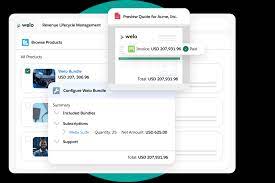
Revenue Lifecycle Management (RLM) with Revenue Cloud empowers businesses to drive profitable growth by automating the entire product-to-cash process. From managing product catalogs and pricing to order fulfillment and billing, RLM streamlines operations and accelerates revenue generation. Salesforce Revenue Lifecycle. Here’s how businesses can leverage RLM for efficient revenue lifecycle management: Additionally, RLM is available in Lightning Experience and requires a Revenue Lifecycle Management license in Sales Cloud and Service Cloud for Enterprise, Unlimited, and Developer editions. Key features of RLM include: As businesses navigate the subscription economy, RLM offers a scalable, flexible, and efficient omni-channel platform for transacting revenue. By addressing growth, churn reduction, and profitability gains, RLM empowers organizations to scale and grow, leveraging modular components and APIs to support various sales motions and use cases. With ongoing innovation and industry expertise, Salesforce and partners like Tectonic are committed to helping subscription companies achieve profitable and efficient growth with Revenue Cloud and Revenue Lifecycle Management. Like Related Posts Who is Salesforce? Who is Salesforce? Here is their story in their own words. From our inception, we’ve proudly embraced the identity of Read more Salesforce Marketing Cloud Transactional Emails Salesforce Marketing Cloud Transactional Emails are immediate, automated, non-promotional messages crucial to business operations and customer satisfaction, such as order Read more Salesforce Unites Einstein Analytics with Financial CRM Salesforce has unveiled a comprehensive analytics solution tailored for wealth managers, home office professionals, and retail bankers, merging its Financial Read more AI-Driven Propensity Scores AI plays a crucial role in propensity score estimation as it can discern underlying patterns between treatments and confounding variables Read more
Read More
AMPScript Editor Explained

AMPScript Editor Explained

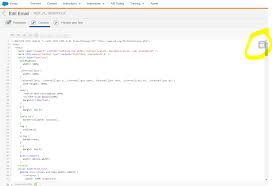
What is the Purpose of AMPscript? AMPScript Editor Explained. AMPscript serves a multitude of purposes, primarily focusing on personalization within Salesforce Marketing Cloud. This scripting language empowers users to personalize their emails by integrating subscriber or contact data. From addressing recipients by their first names to tailoring content based on individual preferences, AMPscript enhances the overall effectiveness of marketing campaigns. Exploring Inline AMPscript Inline AMPscript represents a specific use of AMPscript, distinguishing itself from AMPscript blocks. While AMPscript blocks can contain multiple lines of code, inline AMPscript typically serves a single function. The output of this function appears at the code’s location within the message. Noteworthy, inline AMPscript supports nested functions, contributing to its versatility. Understanding AMPscript in Salesforce Marketing Cloud AMPscript is Salesforce Marketing Cloud’s proprietary scripting language, prized for its ease of learning and its capacity to facilitate personalization across diverse digital marketing channels. It seamlessly integrates within HTML emails, text emails, landing pages, SMS messages, or push notifications. However, Salesforce Marketing Cloud lacks dedicated tools for editing AMPscript, both within and outside the user interface, resulting in a somewhat rudimentary and error-prone script-writing experience. Enhancing the AMPscript Editing Experience To improve the AMPscript editing process, various tools and extensions have been developed: Retrieving Data with AMPscript To fetch data from a data extension using AMPscript, the Lookup() function is employed. This function necessitates parameters such as the data extension name, the column for data retrieval, and the columns utilized for search and value specification. Like1 Related Posts Salesforce Marketing Cloud Transactional Emails Salesforce Marketing Cloud Transactional Emails are immediate, automated, non-promotional messages crucial to business operations and customer satisfaction, such as order Read more Perfect Drip Campaign In an ideal world, you effortlessly conquer the lead generation challenges with one creative arm tied behind your back, craft Read more Lookup Relationship in Salesforce What is Lookup relationship in Salesforce? Salesforce’s lookup relationships is a significant capability that allows users to connect two objects Read more Salesforce Content Builder Salesforce Content Builder empowers you to craft compelling emails and landing page templates, complete with reusable and interactive content blocks. Read more

Read More
Cost of Free Analytics

Cost of Free Analytics

Is It Time to Upgrade Your Web Analytics? For years, you might have relied on free web analytics tools, thinking they do the job or resigning yourself to an “it is what it is” mindset. But what if there’s a better way to truly understand your customers and supercharge your marketing efforts? Upgrading to a premium analytics solution could be a game changer for your brand and your peace of mind. What is the Cost of Free Analytics? It’s time to move beyond those so-called free tools (which aren’t really free when you factor in hidden costs) and invest in a robust analytics solution. The right tool can transform your approach—imagine saying goodbye to the hassle of patching together data or juggling disparate reports. With clear, comprehensive insights into customer interactions, you’ll make smarter, data-driven decisions across your business. The Pitfalls of Free Analytics Tools While free analytics tools might seem like a cost-effective choice, they come with significant drawbacks. They often offer limited functionality, delayed or incomplete data, siloed reporting, and compliance risks. Relying on these tools can lead to guesswork and errors, resulting in costly mistakes. Limited Functionality Free analytics tools barely skim the surface of what’s possible with data collection and reporting. They depend on third-party cookies and route your data through their servers, providing you with only partial insights. Essential features like persistent digital identity tracking, profile building, journey mapping, predictive analytics, and machine learning capabilities are typically missing. In contrast, premium tools leverage advanced algorithms and machine learning to unearth valuable data patterns and insights. For instance, a premium tool might reveal that users who view a product page after watching a related video are significantly more likely to make a purchase—information that could greatly influence your marketing strategy. Subpar Data Quality Free tools often lag in delivering real-time data, giving you an outdated snapshot of customer interactions. Timely data is crucial for agile marketing—without it, you risk missing out on opportunities and wasting ad spend. Stale data leads to missed chances and inefficiencies. Reporting Silos and Inaccuracies Free analytics solutions typically don’t integrate data across your organization, resulting in fragmented and siloed information. Different teams may have access to unaligned reports, often requiring multiple tools to piece together insights. This lack of a unified source of truth makes it impossible to get a comprehensive view of customer interactions across various touchpoints. Organizational Inefficiencies Managing free tools can be resource-intensive. They often require extensive tagging and manual upkeep, leading to increased costs and the risk of inaccurate data due to broken or altered tags. This inefficiency can impact long-term business decisions and strategic planning. Compliance Risks Free tools often involve sending your data to external servers, raising concerns about data loss, latency, and compliance with privacy regulations. These tools process your digital engagement and Personally Identifiable Information (PII) on their servers, complicating the task of maintaining regulatory standards and ensuring data security. The True Cost of Free Tools The reality is, “free” isn’t really free. The hidden costs and risks associated with free analytics tools can outweigh their benefits. While premium analytics solutions may seem expensive at first glance, they offer superior insights and performance improvements that provide a competitive edge. With accurate, real-time data and advanced features, investing in a premium tool is a decision that pays off. Remember, the old adage “nothing’s free” rings true—don’t jeopardize your brand’s success with subpar tools that end up costing more in the long run! Like Related Posts Who is Salesforce? Who is Salesforce? Here is their story in their own words. From our inception, we’ve proudly embraced the identity of Read more Salesforce Marketing Cloud Transactional Emails Salesforce Marketing Cloud Transactional Emails are immediate, automated, non-promotional messages crucial to business operations and customer satisfaction, such as order Read more Salesforce Unites Einstein Analytics with Financial CRM Salesforce has unveiled a comprehensive analytics solution tailored for wealth managers, home office professionals, and retail bankers, merging its Financial Read more AI-Driven Propensity Scores AI plays a crucial role in propensity score estimation as it can discern underlying patterns between treatments and confounding variables Read more
Read More
Sales Prospecting Tools

Sales Prospecting Tools

The Complete Guide to Sales Prospecting Tools Sales prospecting tools: Two men examining a touchscreen displaying dashboards and charts. With the right tools, you can spend more time building relationships that convert prospects into loyal customers. Learn how technology can help you identify and engage the right prospects more efficiently. Selling has become more challenging, with 69% of sales professionals agreeing that their jobs are harder now. That’s why sales prospecting tools are crucial—they streamline the process, making it faster and more accurate. When equipped with the right tools, you can focus more on nurturing customer relationships, turning prospects into long-term clients. In this guide, we’ll explore what sales prospecting tools are, key features to look for, and the biggest benefits they provide. What Are Sales Prospecting Tools? Sales prospecting tools are software solutions designed to help sales teams identify, engage, and convert potential customers. These tools enhance the sales prospecting process, enabling sales reps to quickly and effectively reach new buyers. They often integrate with existing platforms, such as Customer Relationship Management (CRM) software and email marketing systems, to optimize outreach and engagement. Typically, prospecting tools focus on outbound marketing, helping sales reps connect with potential customers who may not yet be familiar with the company or product. Types of Sales Prospecting Tools Selecting the right sales prospecting tool depends on your current prospecting methods and future goals. Below are the most common categories of prospecting tools: Lead Generation Tools Lead generation tools help sales teams identify prospects who are ready to purchase. These tools streamline workflows, enhance productivity, and flag potential buyers based on their online activity. For example, they might alert a rep when a prospect searches for solutions related to your product or service. Some lead generation tools also enable mass outreach, such as power dialers that allow sales reps to call multiple prospects simultaneously. Choosing the right lead generation tool depends on how your target customers prefer to engage. For instance, if you have better results from social media interactions than phone calls, a power dialer may not be the best fit. Evaluate your analytics and future goals to determine which tool will maximize your success. CRM Software CRM software manages all customer and prospect interactions across sales, service, marketing, and more. Acting as a single source of truth, CRM platforms centralize all sales activity in one location, allowing leaders to assign prospects and track progress more effectively. With AI-powered features, CRM tools can guide reps on the next best steps and personalize workflows, improving conversion rates. CRMs also provide critical insights for targeting prospects more likely to convert. Social Media Prospecting Tools Social media has become a powerful channel for sales prospecting. Specialized tools scrape social platforms for data to help sales reps identify prospects ready for outreach. For instance, they can track user activity related to the business problem your product solves and notify reps when users engage with relevant content. The integration of AI in social media prospecting tools has further boosted their effectiveness. As AI continues to evolve, expect more sophisticated features in this space. Why Are Sales Prospecting Tools Important? In today’s competitive market, your prospects are also being contacted by your competitors—most of whom are using advanced sales prospecting tools. If you’re not using similar tools, you risk falling behind. Sales prospecting tools help level the playing field by streamlining research and outreach, allowing reps to connect with the right prospects at the right time. However, these tools must be used strategically. Simply contacting more people won’t guarantee more sales. Personalization and targeting remain key. Using the insights provided by these tools, sales reps can tailor their messages and approaches, making each outreach effort more effective. Benefits of Using Sales Prospecting Tools When fully integrated into your sales processes, prospecting tools can deliver substantial benefits, including: Key Features to Look for in Sales Prospecting Tools To ensure your sales prospecting tool adds value to your business, consider the following features: Compliance Keeping up with constantly changing rules around prospecting—especially across different channels—can be daunting. A good prospecting tool automates compliance, ensuring your emails, calls, and social media outreach meet best practices and regulations. Ease of Use Your prospecting tool should simplify your workflow, not complicate it. Look for intuitive interfaces and tools that can automate repetitive tasks, such as dialing multiple numbers or sending emails in bulk. AI-Powered Analytics Tools with AI capabilities can generate valuable insights, such as identifying the best time to call a prospect or suggesting which channel is most likely to yield a response. System Integration Your prospecting tool should seamlessly integrate with existing systems, such as CRMs and marketing automation platforms, to ensure data flows smoothly and insights are actionable across your entire workflow. Customizable and Scalable Your sales process is unique to your business. Opt for customizable and scalable tools that can adapt as your needs change, ensuring you get maximum ROI from your investment. Make Prospecting Work for Your Business Without the right tools, your team is at a disadvantage compared to competitors using advanced sales prospecting technologies. Finding a tool with the right features and customizing it for your specific needs—such as pricing structures and campaign strategies—can empower your team to prospect more efficiently, yielding better results in less time. Content updated October 2024. Like Related Posts Who is Salesforce? Who is Salesforce? Here is their story in their own words. From our inception, we’ve proudly embraced the identity of Read more Salesforce Marketing Cloud Transactional Emails Salesforce Marketing Cloud Transactional Emails are immediate, automated, non-promotional messages crucial to business operations and customer satisfaction, such as order Read more Salesforce Unites Einstein Analytics with Financial CRM Salesforce has unveiled a comprehensive analytics solution tailored for wealth managers, home office professionals, and retail bankers, merging its Financial Read more AI-Driven Propensity Scores AI plays a crucial role in propensity score estimation as it can discern underlying patterns between treatments and confounding variables Read more

Read More
AI Design Beyond the Chatbot

AI Design Beyond the Chatbot

As AI continues to advance, designers, builders, and creators are confronted with profound questions about the future of applications and how users will engage with digital experiences. AI Design Beyond the Chatbot. Generative AI has opened up vast possibilities, empowering people to utilize AI for tasks such as writing articles, generating marketing materials, building teaching assistants, and summarizing data. However, alongside its benefits, there are challenges. Sometimes, generative AI produces unexpected or biased responses, a phenomenon known as hallucination. In response, approaches like retrieval augmented generation (RAG) have emerged as effective solutions. RAG leverages a vector database, like SingleStore, to retrieve relevant information and provide users with contextually accurate responses. AI Design Beyond the Chatbot Looking ahead, the evolution of AI may lead to a future where users interact with a central LLM operating system, fostering more personalized and ephemeral experiences. Concepts like Mercury OS offer glimpses into this potential future. Moreover, we anticipate the rise of multimodal experiences, including voice and gesture interfaces, making technology more ubiquitous in our lives. Imran Chaudhri’s demonstration of a screen-less future, where humans interact with computers through natural language, exemplifies this trend. However, amidst these exciting prospects, the current state of AI integration in businesses varies. While some are exploring innovative ways to leverage AI, others may simply add AI chat interfaces without considering contextual integration. To harness AI effectively, it’s crucial to identify the right use cases and prioritize user value. AI should enhance experiences by reducing task time, simplifying tasks, or personalizing experiences. Providing contextual assistance is another key aspect. AI models can offer tailored suggestions and recommendations based on user context, enriching the user experience. Notion and Coda exemplify this by seamlessly integrating AI recommendations into user workflows. Furthermore, optimizing for creativity and control ensures users feel empowered in creation experiences. Tools like Adobe Firefly strike a balance between providing creative freedom and offering control over generated content. Building good prompts is essential for obtaining quality results from AI models. Educating users on how to construct effective prompts and managing expectations regarding AI limitations are critical considerations. Ultimately, as AI becomes more integrated into daily workflows, it’s vital to ensure seamless integration into user experiences. Responsible AI design requires ongoing dialogue and exploration to navigate this rapidly evolving landscape effectively. Like Related Posts Who is Salesforce? Who is Salesforce? Here is their story in their own words. From our inception, we’ve proudly embraced the identity of Read more Salesforce Marketing Cloud Transactional Emails Salesforce Marketing Cloud Transactional Emails are immediate, automated, non-promotional messages crucial to business operations and customer satisfaction, such as order Read more Salesforce Unites Einstein Analytics with Financial CRM Salesforce has unveiled a comprehensive analytics solution tailored for wealth managers, home office professionals, and retail bankers, merging its Financial Read more AI-Driven Propensity Scores AI plays a crucial role in propensity score estimation as it can discern underlying patterns between treatments and confounding variables Read more
Read More
Otter AI S-Docs and Salesforce

Otter AI S-Docs and Salesforce

Numerous vendors in the enterprise software market are currently emphasizing their AI capabilities, envisioning a future where AI can address a wide array of global challenges, from healthcare to climate change. While the realization of these claims remains uncertain, the practical and impactful applications of AI in everyday scenarios often go unnoticed. There exists ample opportunity for leveraging AI tools that are readily available and require minimal setup to enhance efficiency. Otter AI S-Docs and Salesforce. One such example is S-Docs, a document automation vendor integrated natively on the Salesforce platform, which is harnessing Otter.ai, an AI transcription service, to revolutionize its sales process and product development. S-Docs is seamlessly integrating Otter.ai into its digital collaboration tools, enabling automatic transcription during sales calls. This not only aids sales representatives in navigating diverse dialects but also streamlines post-call administrative tasks, prompting quicker action. Moreover, the product development team at S-Docs is leveraging Otter.ai to analyze the transcribed content from sales calls and incorporate insights into its product feedback loop. This integration was sparked by S-Docs’ CTO, Anand Narasimhan, who discovered Otter.ai through a LinkedIn connection and recognized its potential value for the business. Initially used during team calls and sprint reviews, Otter.ai’s high transcription accuracy and insightful summaries impressed Narasimhan and his colleague, Keith Bossier, VP of Sales at S-Docs. Subsequently, Otter.ai was adopted by the sales and customer success teams, offering benefits that surpassed those of their previous provider, Gong. For the sales team, Otter.ai significantly reduces the administrative burden by providing real-time transcriptions, catch-all summaries, and key takeaways from meetings. This facilitates quicker follow-ups and enhances the overall customer experience. Buoyed by the success in sales, S-Docs is exploring avenues to expand the use of Otter.ai across its business. Bossier envisions leveraging transcripts from sales calls for onboarding new representatives, while Narasimhan explores integrating the captured content into the product development cycle. Additionally, they are collaborating with Otter.ai to introduce automated action items directly into the S-Docs platform, further streamlining operations and enhancing efficiency. As S-Docs continues to innovate and optimize its processes with Otter.ai, it exemplifies the tangible benefits of leveraging AI in practical business scenarios. Like Related Posts Who is Salesforce? Who is Salesforce? Here is their story in their own words. From our inception, we’ve proudly embraced the identity of Read more Salesforce Marketing Cloud Transactional Emails Salesforce Marketing Cloud Transactional Emails are immediate, automated, non-promotional messages crucial to business operations and customer satisfaction, such as order Read more Salesforce Unites Einstein Analytics with Financial CRM Salesforce has unveiled a comprehensive analytics solution tailored for wealth managers, home office professionals, and retail bankers, merging its Financial Read more AI-Driven Propensity Scores AI plays a crucial role in propensity score estimation as it can discern underlying patterns between treatments and confounding variables Read more

Read More
Why Education Cloud

Why Education Cloud

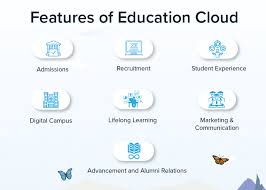
Salesforce Education Cloud is a comprehensive solution designed for higher education institutions, offering powerful tools to manage every aspect of the student lifecycle—from recruitment and admissions to student success and alumni engagement. However, to fully maximize the benefits of Salesforce Education Cloud, institutions need a partner that understands the unique challenges and needs of higher education. Our team specializes in implementing Salesforce Education Cloud, ensuring that your institution has the right tools to drive success at every stage of the student journey. Student 360 Customization We can help tailor Salesforce’s Student 360 to fit your institution’s specific needs, providing a unified, comprehensive view of each student. By integrating all your data sources seamlessly, we empower your staff with actionable insights that enhance student success and support. Customized Solutions for Your Institution Our Tectonic team focuses on delivering custom configurations aligned with your institution’s unique processes and goals. This tailored approach ensures you have the precise tools needed to support and optimize every stage of the student lifecycle. Continuous Optimization As your institution evolves, so should your Salesforce Education Cloud solution. We’re committed to helping your system grow with you, optimizing it to meet changing demands and driving ongoing success and improvement. AI and Automation to Streamline Processes From automating admissions workflows to using predictive analytics for student retention, Salesforce’s AI and automation features keep your institution ahead of the curve. We collaborate closely with your team to streamline repetitive tasks, set up AI-driven insights, and ensure your staff can leverage these tools to improve efficiency and make data-informed decisions. Alumni Engagement and Fundraising Salesforce Education Cloud offers advanced tools to foster alumni relationships and manage donor relations. We help you customize these tools to segment alumni databases, execute targeted outreach campaigns, and strengthen fundraising efforts, ensuring lasting engagement with graduates. By partnering with Tectonic, your institution will harness the full potential of Salesforce Education Cloud, driving student success and strengthening alumni connections for the long term. Content updated August 2024. Like Related Posts Who is Salesforce? Who is Salesforce? Here is their story in their own words. From our inception, we’ve proudly embraced the identity of Read more Salesforce Marketing Cloud Transactional Emails Salesforce Marketing Cloud Transactional Emails are immediate, automated, non-promotional messages crucial to business operations and customer satisfaction, such as order Read more Salesforce Unites Einstein Analytics with Financial CRM Salesforce has unveiled a comprehensive analytics solution tailored for wealth managers, home office professionals, and retail bankers, merging its Financial Read more AI-Driven Propensity Scores AI plays a crucial role in propensity score estimation as it can discern underlying patterns between treatments and confounding variables Read more

Read More
Advances in AI Models

Advances in AI Models

Advances in AI Models Let’s take a moment to appreciate the transformative impact large language models (LLMs) have had on the world. Before the rise of LLMs, researchers spent years training AI to generate images, but these models had significant limitations. Advances in AI Models. One promising neural network architecture was the generative adversarial network (GAN). In a GAN, two networks play a cat-and-mouse game: one tries to create realistic images while the other tries to distinguish between generated and real images. Over time, the image-creating network improves at tricking the other. While GANs can generate convincing images, they typically excel at creating images of a single subject type. For example, a GAN that creates excellent images of cats might struggle with images of mice. GANs can also experience “mode collapse,” where the network generates the same image repeatedly because it always tricks the discriminator. An AI that produces only one image repeatedly isn’t very useful. What’s truly useful is an AI model capable of generating diverse images, whether it’s a cat, a mouse, or a cat in a mouse costume. Such models exist and are known as diffusion models, named for the underlying math that resembles diffusion processes like a drop of dye spreading in water. These models are trained to connect images and text, leveraging vast amounts of captioned images on the internet. With enough samples, a model can extract the essence of “cat,” “mouse,” and “costume,” embedding these elements into generated images using diffusion principles. The results are often stunning. Some of the most well-known diffusion models include DALL-E, Imagen, Stable Diffusion, and Midjourney. Each model differs in training data, embedding language details, and user interaction, leading to varied results. As research and development progress, these tools continue to evolve rapidly. Uses of Generative AI for Imagery Generative AI can do far more than create cute cat cartoons. By fine-tuning generative AI models and combining them with other algorithms, artists and innovators can create, manipulate, and animate imagery in various ways. Here are some examples: Text-to-Image Generative AI allows for incredible artistic variety using text-to-image techniques. For instance, you can generate a hand-drawn cat or opt for a hyperrealistic or mosaic style. If you can imagine it, diffusion models can interpret your intention successfully. Text-to-3D Model Creating 3D models traditionally requires technical skill, but generative AI tools like DreamFusion can generate 3D models along with detailed descriptions of coloring, lighting, and material properties, meeting the growing demand in commerce, manufacturing, and entertainment. Image-to-Image Images can be powerful prompts for generative AI models. Here are some use cases: Animation Creating a series of consistent images for animation is challenging due to inherent randomness in generated images. However, researchers have developed methods to reduce variations, enabling smoother animations. All the use cases for still images can be adapted for animation. For example, style transfer can turn a video of a skateboarder into an anime-style animation. AI models trained on speech patterns can animate the lips of a generated 3D character. Embracing Generative AI Generative AI offers enormous possibilities for creating stunning imagery. As you explore these capabilities, it’s essential to use them responsibly. In the next unit, you’ll learn how to leverage generative AI’s potential in an ethical and effective manner. Like Related Posts Who is Salesforce? Who is Salesforce? Here is their story in their own words. From our inception, we’ve proudly embraced the identity of Read more Salesforce Unites Einstein Analytics with Financial CRM Salesforce has unveiled a comprehensive analytics solution tailored for wealth managers, home office professionals, and retail bankers, merging its Financial Read more AI-Driven Propensity Scores AI plays a crucial role in propensity score estimation as it can discern underlying patterns between treatments and confounding variables Read more Tectonic’s Successful Salesforce Track Record Salesforce Technology Services Integrator – Tectonic has successfully delivered Salesforce in a variety of industries including Public Sector, Hospitality, Manufacturing, Read more
Read More
MuleSoft Certifications Now Unified with Salesforce Certifications

MuleSoft Certifications Now Unified with Salesforce Certifications

MuleSoft Certifications Now Unified with Salesforce Certifications As of May 6, 2024, MuleSoft certifications have been officially integrated into the Salesforce Certification program, with management now handled through Webassessor. This move simplifies the certification process, enabling professionals to manage both their Salesforce and MuleSoft credentials within a single platform, streamlining maintenance and tracking. This article delves into the merging of MuleSoft certifications with Salesforce’s Trailhead platform, highlighting what this means for professionals in both ecosystems. The update offers a significant improvement in managing certifications, particularly for those working across both platforms, as Salesforce has owned MuleSoft since 2018. We’ll cover what this change entails for current certification holders, key dates in the transition, and the new opportunities this unified platform brings—including new certifications. What is MuleSoft? MuleSoft is a leading integration platform that enables businesses to connect applications, data, and devices seamlessly. As an Integration Platform as a Service (iPaaS), MuleSoft facilitates the integration of cloud-based and on-premise applications, ensuring smooth workflows across various systems. Acquired by Salesforce in 2018, MuleSoft powers the integration layer of the Salesforce ecosystem, playing a crucial role in enabling businesses to unify their systems and create connected experiences. With the increasing demand for digital transformation and connected systems, MuleSoft expertise is becoming ever more valuable in the job market. MuleSoft Certifications and Training MuleSoft certifications validate expertise in designing, building, and managing integrations using the Anypoint Platform. Prior to this transition, MuleSoft certifications were handled through the MuleSoft Training portal, which was separate from Salesforce’s broader certification system. While this independent platform was functional, it required separate accounts and processes, making exam registration and certification management more cumbersome. By integrating MuleSoft certifications into Trailhead, Salesforce has simplified this process, offering a unified, more user-friendly experience for managing certifications. Transition Timeline The following key dates marked the transition: What This Means for Current MuleSoft Certification Holders For those already certified through MuleSoft, the migration to Salesforce’s certification system should have occurred automatically. MuleSoft credentials were transferred to their Trailblazer profiles for anyone with existing Webassessor accounts. A confirmation email was sent to ensure that the transition was successful. For those without a Webassessor account, one was created on their behalf, with login details provided via email by April 2024. Certification Maintenance MuleSoft certification holders with maintenance pending as of January 1, 2024, are not required to complete additional tasks through the old system. The expectation is that certification holders will have ample time to familiarize themselves with the new Trailhead process before maintenance requirements are introduced in 2025. New Certifications on Trailhead With the migration, certifications such as the MuleSoft Certified Catalyst Specialist and MuleSoft Certified Hyperautomation Specialist have also been integrated into Trailhead. Though not entirely new, these certifications were part of the legacy MuleSoft program, originally launched in late 2022 and early 2023. Summary The integration of MuleSoft certifications into Salesforce’s Trailhead platform marks a significant step towards a unified, more efficient credentialing process. This transition simplifies certification management, making it easier for professionals to stay current across both platforms. By merging these certifications, Salesforce is empowering professionals to fully leverage the combined capabilities of Salesforce and MuleSoft, further enhancing their skill sets in an increasingly interconnected digital landscape. Content updated September 2024. Like Related Posts Who is Salesforce? Who is Salesforce? Here is their story in their own words. From our inception, we’ve proudly embraced the identity of Read more Salesforce Marketing Cloud Transactional Emails Salesforce Marketing Cloud Transactional Emails are immediate, automated, non-promotional messages crucial to business operations and customer satisfaction, such as order Read more Salesforce Unites Einstein Analytics with Financial CRM Salesforce has unveiled a comprehensive analytics solution tailored for wealth managers, home office professionals, and retail bankers, merging its Financial Read more AI-Driven Propensity Scores AI plays a crucial role in propensity score estimation as it can discern underlying patterns between treatments and confounding variables Read more
Read More
AI Data Foundation

AI Data Foundation

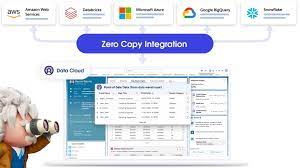
In the era of AI, the Data Foundation is crucial for empowering AI-driven customer experiences. Data Cloud emerges as a unifying force, seamlessly integrating data to fuel transformative AI encounters and elevate customer-centricity. Beyond mere data management, Data Cloud represents a significant advancement, enabling profound insights by harmonizing diverse data sources with CRM data from the Salesforce platform. This convergence facilitates the unlocking of actionable insights critical for informed decision-making. In a strategic collaboration, Salesforce and AWS extend their partnership to enhance AI capabilities. AWS AI services are integrated into Salesforce’s Einstein Trust Layer, empowering Data Cloud with seamless access to AWS data services and compute resources. Additionally, Data Cloud and other Salesforce offerings are now accessible through the AWS Marketplace, streamlining procurement processes. This insight explores how Data Cloud unifies vast and varied business data with CRM data from the Salesforce Einstein Platform. It serves as a robust foundation for AI-powered customer experiences, providing businesses with unprecedented insights into their data universe. With Data Cloud, businesses can seamlessly combine CRM data with diverse sources, including transactional data, IoT device data, and social media interactions. This consolidation fosters a single source of truth, enhancing decision-making and the relevance of AI models. Unlike traditional approaches that involve laborious data movement, Data Cloud operates on AWS infrastructure, enabling seamless data connectivity and preparation without the need for ETL processes. Leveraging Apache Iceberg and Salesforce’s contributions, Data Cloud ensures data consistency, flexibility, and interoperability, essential for AI-driven insights. Moreover, Data Graphs offer a novel approach to assemble and rapidly access data collections from disparate sources, facilitating grounded AI experiences. Through Model Builder and Einstein Copilot Studio, businesses can seamlessly access Data Cloud data in Amazon SageMaker for custom AI model creation without ETL overheads. This partnership between Salesforce and AWS represents a paradigm shift in data management and AI integration. By combining Salesforce’s customer-centric approach with AWS’s scalable infrastructure, Data Cloud empowers businesses to harness AI as a practical tool for growth and innovation in the digital era. Like1 Related Posts Who is Salesforce? Who is Salesforce? Here is their story in their own words. From our inception, we’ve proudly embraced the identity of Read more Salesforce Marketing Cloud Transactional Emails Salesforce Marketing Cloud Transactional Emails are immediate, automated, non-promotional messages crucial to business operations and customer satisfaction, such as order Read more Salesforce Unites Einstein Analytics with Financial CRM Salesforce has unveiled a comprehensive analytics solution tailored for wealth managers, home office professionals, and retail bankers, merging its Financial Read more AI-Driven Propensity Scores AI plays a crucial role in propensity score estimation as it can discern underlying patterns between treatments and confounding variables Read more

Read More
gettectonic.com