Tableau Archives - gettectonic.com - Page 3

Data Cloud Billable Usage

Data Cloud Billable Usage Overview Usage of certain Data Cloud features impacts credit consumption. To track usage, access your Digital Wallet within your Salesforce org. For specific billing details, refer to your contract or contact your Account Executive. Important Notes ⚠️ Customer Data Platform (CDP) Licensing – If your Data Cloud org operates under a CDP license, refer to Customer Data Platform Billable Usage Calculations instead.⚠️ Sandbox Usage – Data Cloud sandbox consumption affects credits, with usage tracked separately on Data Cloud sandbox cards. Understanding Usage Calculations Credit consumption is based on the number of units used multiplied by the multiplier on the rate card for that usage type. Consumption is categorized as follows: 1. Data Service Usage Service usage is measured by records processed, queried, or analyzed. Billing Category Description Batch Data Pipeline Based on the volume of batch data processed via Data Cloud data streams. Batch Data Transforms Measured by the higher of rows read vs. rows written. Incremental transforms only count changed rows after the first run. Batch Profile Unification Based on source profiles processed by an identity resolution ruleset. After the first run, only new/modified profiles are counted. Batch Calculated Insights Based on the number of records in underlying objects used to generate Calculated Insights. Data Queries Based on records processed, which depends on query structure and total records in the queried objects. Unstructured Data Processed Measured by the amount of unstructured data (PDFs, audio/video files) processed. Streaming Data Pipeline Based on records ingested through real-time data streams (web, mobile, streaming ingestion API). Streaming Data Transforms Measured by the number of records processed in real-time transformations. Streaming Calculated Insights Usage is based on the number of records processed in streaming insights calculations. Streaming Actions (including lookups) Measured by the number of records processed in data lookups and enrichments. Inferences Based on predictive AI model usage, including one prediction, prescriptions, and top predictors. Applies to internal (Einstein AI) and external (BYOM) models. Data Share Rows Shared (Data Out) Based on the new/changed records processed for data sharing. Data Federation or Sharing Rows Accessed Based on records returned from external data sources. Only cross-region/cross-cloud queries consume credits. Sub-second Real-Time Events & API Based on profile events, engagement events, and API calls in real-time processing. Private Connect Data Processed Measured by GB of data transferred via private network routes. 🔹 Retired Billing Categories: Accelerated Data Queries and Real-Time Profile API (no longer billed after August 16, 2024). 2. Data Storage Allocation Storage usage applies to Data Cloud, Data Cloud for Marketing, and Data Cloud for Tableau. Billing Category Description Storage Beyond Allocation Measured by data storage exceeding your allocated limit. 3. Data Spaces Billing Category Description Data Spaces Usage is based on the number of data spaces beyond the default allocation. 4. Segmentation & Activation Usage applies to Data Cloud for Marketing customers and is based on records processed, queried, or activated. Billing Category Description Segmentation Based on the number of records processed for segmentation. Batch Activations Measured by records processed for batch activations. Activate DMO – Streaming Based on new/updated records in the Data Model Object (DMO) during an activation. If a data graph is used, the count is doubled. 5. Ad Audiences Service Usage Usage is calculated based on the number of ad audience targets created. Billing Category Description Ad Audiences Measured by the number of ad audience targets generated. 6. Data Cloud Real-Time Profile Real-time service usage is based on the number of records associated with real-time data graphs. Billing Category Description Sub-second Real-Time Profiles & Entities Based on the unique real-time data graph records appearing in the cache during the billing month. Each unique record is counted only once, even if it appears multiple times. 📌 Example: If a real-time data graph contains 10M cached records on day one, and 1M new records are added daily for 30 days, the total count would be 40M records. 7. Customer Data Platform (CDP) Billing Previously named Customer Data Platform orgs are billed based on contracted entitlements. Understanding these calculations can help optimize data management and cost efficiency. Track & Manage Your Usage 🔹 Digital Wallet – Monitor Data Cloud consumption across all categories.🔹 Feature & Usage Documentation – Review guidelines before activating features to optimize cost.🔹 Account Executive Consultation – Contact your AE to understand credit consumption and scalability options. Like Related Posts Who is Salesforce? Who is Salesforce? Here is their story in their own words. From our inception, we’ve proudly embraced the identity of Read more Salesforce Marketing Cloud Transactional Emails Salesforce Marketing Cloud Transactional Emails are immediate, automated, non-promotional messages crucial to business operations and customer satisfaction, such as order Read more Salesforce Unites Einstein Analytics with Financial CRM Salesforce has unveiled a comprehensive analytics solution tailored for wealth managers, home office professionals, and retail bankers, merging its Financial Read more AI-Driven Propensity Scores AI plays a crucial role in propensity score estimation as it can discern underlying patterns between treatments and confounding variables Read more
Read More
salesforce end to end

Salesforce and Google Announcement

Salesforce (NYSE:CRM) has entered into a deal with Google (NASDAQ:GOOGL) to offer its customer relations management software, Agentforce artificial intelligence assistants, and Data Cloud offerings through Google Cloud, the companies announced today. Google and Salesforce already have many of the same clients, and this new deal will allow for more product integration between Google Workspace and Salesforce’s customer relationship management and AI offerings. Salesforce already uses Amazon (AMZN) Web Services for much of its cloud computing. “Our mutual customers have asked us to be able to work more seamlessly across Salesforce and Google Cloud, and this expanded partnership will help them accelerate their AI transformations with agentic AI, state-of-the-art AI models, data analytics, and more,” said Thomas Kurian, CEO of Google Cloud. The deal is expected to total $2.5B over the next seven years, according to a report by Bloomberg. Salesforce and Google today announced a major expansion of their strategic partnership, delivering choice in the models and capabilities businesses use to build and deploy AI-powered agents. In today’s constantly evolving AI landscape, innovations like autonomous agents are emerging so quickly that businesses struggle to keep pace. This expanded partnership provides crucial flexibility, empowering customers to develop tailored AI solutions that meet their specific needs, rather than being locked into a single model provider. Google Cloud is at the forefront of enterprise AI innovation with millions of developers building with Google’s cutting-edge Gemini models and on Google Cloud’s AI-optimized infrastructure. This expanded partnership will empower Salesforce customers to build Agentforce agents using Gemini and to deploy Salesforce on Google Cloud. This is an expansion of the existing partnership that allows customers to use data from Data Cloud and Google BigQuery bi-directionally via zero-copy technology—further equipping customers with the data, AI, trust, and actions they need to bring autonomous agents into their businesses. Additionally, this integration empowers Agentforce agents with the ability to reference up-to-the-minute data, news, current events, and credible citations, substantially enhancing their contextual awareness and ability to deliver accurate, evidence-backed responses. For example, in supply chain management and logistics, an agent built with Agentforce could track shipments and monitor inventory levels in Salesforce Commerce Cloud and proactively identify potential disruptions using real-time data from Google Search, including weather conditions, port congestion, and geopolitical events. Availability is expected in the coming months. AI: Unlocking the Power of Choice and Flexibility with Gemini and Agentforce Businesses need the freedom to choose the best models for their needs rather than be locked into one vendor. In 2025, Google’s Gemini models will also be available for prompt building and reasoning directly within Agentforce. With Gemini and Agentforce, businesses will benefit from: For example, an insurance customer can submit a claim with photos of the damage and an audio voicemail from a witness. Agentforce, using Gemini, can then help the insurance provider deliver better customer experiences by processing all these inputs, assessing the claim’s validity, and even using text-to-speech to contact the customer with a resolution, streamlining the traditionally lengthy claims process. Availability is expected this year. Trust: Salesforce Platform deployed on Google Cloud Customers will be able to use Salesforce’s unified platform (Agentforce, Data Cloud, Customer 360) on Google Cloud’s highly secure, AI-optimized infrastructure, benefiting from features like dynamic grounding, zero data retention, and toxicity detection provided by the Einstein Trust Layer. Once Salesforce products are available on Google Cloud, customers will also have the ability to procure Salesforce offerings through the Google Cloud Marketplace, opening up new possibilities for global businesses to optimize their investments across Salesforce and Google Cloud and benefiting thousands of existing joint customers. Action: Enhanced Employee Productivity and Customer Service with AI-Powered Integrations Millions use Salesforce and Google Cloud daily. This partnership prioritizes choice and flexibility, enabling seamless cross-platform work. New and deeper connections between platforms like Salesforce Service Cloud and Google Cloud’s Customer Engagement Suite, as well as Slack and Google Workspace, will empower AI agents and service representatives with unified data access, streamlined workflows, and advanced AI capabilities, regardless of platform. Salesforce and Google Cloud are deeply integrating their customer service platforms—Salesforce Service Cloud and Google Cloud’s Customer Engagement Suite—to create a seamless and intelligent support experience. Expected later this year, this unified approach empowers AI agents in Service Cloud with: Salesforce and Google Cloud are also exploring deeper integrations between Slack and Google Workspace, boosting productivity and creating a more cohesive digital workspace for teams and organizations. The companies are currently exploring use cases such as: Expanding Partnership Capabilities and Integrations This partnership goes beyond core product integrations to deliver a more connected and intelligent data foundation for businesses. Expected availability throughout 2025: This landmark partnership between Salesforce and Google represents a strategic paradigm shift in enterprise AI deployment, emphasizing infrastructure innovation, AI capability enhancement, and enterprise value. The integration of Google Search grounding provides a unique competitive advantage, offering real-time, factual responses backed by the world’s most comprehensive search engine. The companies are committed to ongoing innovation and deeper collaboration to empower businesses with even more powerful solutions. Like1 Related Posts Who is Salesforce? Who is Salesforce? Here is their story in their own words. From our inception, we’ve proudly embraced the identity of Read more Salesforce Marketing Cloud Transactional Emails Salesforce Marketing Cloud Transactional Emails are immediate, automated, non-promotional messages crucial to business operations and customer satisfaction, such as order Read more Salesforce Unites Einstein Analytics with Financial CRM Salesforce has unveiled a comprehensive analytics solution tailored for wealth managers, home office professionals, and retail bankers, merging its Financial Read more AI-Driven Propensity Scores AI plays a crucial role in propensity score estimation as it can discern underlying patterns between treatments and confounding variables Read more

Read More
Data Cloud and Genpact

Unlock the Power of Your Data with Data Cloud

Seamlessly Connect, Unify, and Activate Your Data Data Cloud enables you to harness the full potential of your data—structured or unstructured—by integrating it across multiple sources. Key Capabilities: ✔ Connect All Data Sources – Ingest both batch and streaming data seamlessly.✔ Zero-Copy Data Federation – Access data without duplicating it.✔ Data Transformation & Governance – Standardize and secure your data.✔ Harmonize to a Common Data Model – Ensure consistency across datasets.✔ Identity Resolution – Unify data with advanced rulesets.✔ Advanced Analytics & Insights – Query, analyze, and extract business intelligence.✔ AI-Powered Predictions – Use AI to anticipate customer behavior.✔ Segmentation & Activation – Create targeted audience segments for personalized experiences.✔ Multi-Source Data Activation – Output data to multiple channels based on business needs.✔ Integration with Agentforce – Leverage data for AI-powered automation.✔ Continuous Optimization – Measure, refine, and enhance your data strategy. Designed for Every Role Data Cloud provides role-specific functionality, ensuring value across your organization. User Description Learn More Admins Enhance your admin skills with Data Cloud. Administer Data Cloud (Trailhead) Analysts Leverage Tableau to expand your analytics capabilities. Tableau Cloud Help Documentation Builders Develop applications using Data Cloud. ISVforce Guide Business Users Ingest data for diverse business needs. Salesforce Help Data Architects Map and model data effectively. Salesforce Architects Frameworks Developers Utilize APIs and SDKs to interact with Data Cloud. Data Cloud Developer Center Marketers Segment and activate audiences for cross-channel campaigns. Segmentation in Data Cloud (Trailhead) Partners Implement Data Cloud for customers. Partner Learning Camp Get Started with Data Cloud Customize Your Experience Data Cloud is built to scale, allowing you to tailor features to your business needs. While some features are included, others are available as add-ons or have adjustable limits. Work with your account executive to find the right solution. Available Editions: 📌 Data Cloud Starter – Get core Data Cloud functionality. 📌 Data Cloud + Tableau – Unlock powerful analytics with Tableau Enterprise. 📌 Marketing Use Cases – Leverage Segmentation and Activation for personalized marketing campaigns. 📌 Industry-Specific Solutions – Tailor Data Cloud for specialized needs. Better Together: Data & AI The best AI solutions are built on trusted, high-quality data. Data Cloud consolidates disparate data sources into unified customer and account profiles, fueling AI-driven automation and insights with Agentforce. Unlock the full potential of your data with Salesforce Data Cloud. Ready to get started? Learn more. Like Related Posts Who is Salesforce? Who is Salesforce? Here is their story in their own words. From our inception, we’ve proudly embraced the identity of Read more Salesforce Marketing Cloud Transactional Emails Salesforce Marketing Cloud Transactional Emails are immediate, automated, non-promotional messages crucial to business operations and customer satisfaction, such as order Read more Salesforce Unites Einstein Analytics with Financial CRM Salesforce has unveiled a comprehensive analytics solution tailored for wealth managers, home office professionals, and retail bankers, merging its Financial Read more AI-Driven Propensity Scores AI plays a crucial role in propensity score estimation as it can discern underlying patterns between treatments and confounding variables Read more
Read More
Salesforce Government Cloud

4 Warning Signs Your Government Agency Needs a Data Strategy Overhaul

The Critical Role of Data in Modern Government In an era where Spotify predicts your next favorite song and Amazon anticipates your orders, citizens now expect the same level of responsiveness from government services. Yet many agencies struggle with disjointed systems, inaccessible data, and slow insights – creating costly inefficiencies when they can least afford them. McKinsey estimates that better data utilization could unlock .2 trillion annually across public sectors. With AI advancements accelerating, here’s how to spot if your agency’s data strategy is falling behind: 🔴 Red Flag #1: Data Silos Are Strangling Your Operations 🔴 Red Flag #2: Insights Arrive Too Late to Matter 🔴 Red Flag #3: Data Doesn’t Connect to Mission Goals 🔴 Red Flag #4: Your Systems Can’t Adapt to New Demands The Path Forward: Building a Smarter Data Foundation Leading agencies are taking these steps to transform their data capabilities: “The best-performing agencies treat data like a strategic asset – not an IT afterthought.”– Public Sector Technology Director, Salesforce Your Next Move:Conduct a 30-day data health check to identify your biggest gaps. Start by interviewing frontline staff about their daily data frustrations – their pain points will reveal your most urgent priorities. Need help assessing your data readiness?  Contact the Public Sector team at Tectonic today. Like Related Posts Who is Salesforce? Who is Salesforce? Here is their story in their own words. From our inception, we’ve proudly embraced the identity of Read more Salesforce Marketing Cloud Transactional Emails Salesforce Marketing Cloud Transactional Emails are immediate, automated, non-promotional messages crucial to business operations and customer satisfaction, such as order Read more Salesforce Unites Einstein Analytics with Financial CRM Salesforce has unveiled a comprehensive analytics solution tailored for wealth managers, home office professionals, and retail bankers, merging its Financial Read more AI-Driven Propensity Scores AI plays a crucial role in propensity score estimation as it can discern underlying patterns between treatments and confounding variables Read more

Read More
salesforce agentforce ai powered agentic agents

Agentforce 2.0

Salesforce, the leading CRM provider, is set to launch Agentforce 2.0 in February 2025—an AI-powered toolset designed as a “digital labor platform for building a limitless workforce for the enterprise.” Agentforce 2.0 is a comprehensive AI system that enhances teams with autonomous AI agents embedded in everyday workflows. Among its key offerings are AI-driven agents for Sales Development and Sales Coaching, with pricing starting at $2 per conversation. With this release, Salesforce introduces a library of pre-built skills and workflow integrations, enabling rapid customization and seamless deployment within Slack. Marc Benioff, Chair and CEO of Salesforce, stated, “We’re seamlessly bringing together AI, data, apps, and automation with humans to reshape how work gets done. Agentforce 2.0 cements our position as the leader in digital labor solutions, allowing any company to build a limitless workforce that can truly transform their business.” Agentforce 2.0 includes pre-built AI skills across CRM, Slack, Tableau, and partner-developed integrations via the AppExchange. Customers can further extend Agentforce’s capabilities using MuleSoft, enabling low-code workflows that integrate with any system. The release also introduces an enhanced Agent Builder, which interprets natural language instructions—such as “Onboard New Product Managers”—to automatically generate new AI agents. These agents combine pre-made skills with custom logic built directly in Salesforce, offering unmatched flexibility and efficiency. Additionally, Agentforce 2.0 features Tableau Skills for advanced analytics and insights, further empowering businesses to harness AI-driven decision-making. Like1 Related Posts Who is Salesforce? Who is Salesforce? Here is their story in their own words. From our inception, we’ve proudly embraced the identity of Read more Salesforce Marketing Cloud Transactional Emails Salesforce Marketing Cloud Transactional Emails are immediate, automated, non-promotional messages crucial to business operations and customer satisfaction, such as order Read more Salesforce Unites Einstein Analytics with Financial CRM Salesforce has unveiled a comprehensive analytics solution tailored for wealth managers, home office professionals, and retail bankers, merging its Financial Read more AI-Driven Propensity Scores AI plays a crucial role in propensity score estimation as it can discern underlying patterns between treatments and confounding variables Read more
Read More
Slack AI Exploit Prevented

Salesforce Einstein Copilot and Slack

Salesforce Einstein Copilot (now Agentforce) can be connected to Slack, allowing users to access AI-powered CRM insights and take actions directly within Slack.  Here’s a more detailed explanation: Like Related Posts Who is Salesforce? Who is Salesforce? Here is their story in their own words. From our inception, we’ve proudly embraced the identity of Read more Salesforce Marketing Cloud Transactional Emails Salesforce Marketing Cloud Transactional Emails are immediate, automated, non-promotional messages crucial to business operations and customer satisfaction, such as order Read more Salesforce Unites Einstein Analytics with Financial CRM Salesforce has unveiled a comprehensive analytics solution tailored for wealth managers, home office professionals, and retail bankers, merging its Financial Read more AI-Driven Propensity Scores AI plays a crucial role in propensity score estimation as it can discern underlying patterns between treatments and confounding variables Read more

Read More

Hidden Insights with Tableau

Unlock Hidden Insights with Tableau After you’ve combined, unified, and harmonized your data in Data Cloud, it’s now ready for you to analyze. Use Tableau to find useful and actionable insights that can drive business success and create a personalized experience for your customers. Data Cloud, Tableau, and Salesforce 360 apps work together to consolidate your data and create a single customer record. Unlock hidden insights, and make decisions based on all your customer data. With Data Cloud and Tableau, you can: Like Related Posts Who is Salesforce? Who is Salesforce? Here is their story in their own words. From our inception, we’ve proudly embraced the identity of Read more Salesforce Marketing Cloud Transactional Emails Salesforce Marketing Cloud Transactional Emails are immediate, automated, non-promotional messages crucial to business operations and customer satisfaction, such as order Read more Salesforce Unites Einstein Analytics with Financial CRM Salesforce has unveiled a comprehensive analytics solution tailored for wealth managers, home office professionals, and retail bankers, merging its Financial Read more AI-Driven Propensity Scores AI plays a crucial role in propensity score estimation as it can discern underlying patterns between treatments and confounding variables Read more

Read More
tableau einstein alliance

Tableau Einstein Alliance

Salesforce has announced the Tableau Einstein Alliance, a partner community designed to develop and deliver AI solutions and analytical tools for Tableau Einstein, which is integrated with the Salesforce platform and Agentforce. The Alliance offers partners exclusive benefits, such as access to Salesforce’s data and AI advancements, product roadmap insights, expert support, marketing promotions, and co-selling opportunities. Partners will be able to use the Alliance to create apps, agents, and AI innovations that help customers quickly leverage their data and AI investments. Set to launch in February 2025, the Alliance will begin with 25 founding members, including Atrium, Capgemini, Deloitte, IBM, and Slalom. Solutions developed through the Alliance will be available on Salesforce AppExchange and the upcoming Tableau Marketplace, where developers can share and monetize their analytical assets. The initiative underscores the importance of partner ecosystems in advancing technological innovations, particularly with the release of Agentforce. Salesforce views these partnerships as critical to the future of data and analytics, with partners playing a key role in helping customers integrate AI-driven insights across their operations. “So much of Tableau’s success is thanks to our partners’ investment in our customers. Now, we’re investing in the Tableau Einstein Alliance to grow an ecosystem of visionary and innovative partners that will help our customers integrate Agentforce into every aspect of analytics. The future of data and analytics is now, and our partners are a critical part of the journey,” said Ryan Aytay, CEO of Tableau. Like Related Posts Who is Salesforce? Who is Salesforce? Here is their story in their own words. From our inception, we’ve proudly embraced the identity of Read more Salesforce Marketing Cloud Transactional Emails Salesforce Marketing Cloud Transactional Emails are immediate, automated, non-promotional messages crucial to business operations and customer satisfaction, such as order Read more Salesforce Unites Einstein Analytics with Financial CRM Salesforce has unveiled a comprehensive analytics solution tailored for wealth managers, home office professionals, and retail bankers, merging its Financial Read more AI-Driven Propensity Scores AI plays a crucial role in propensity score estimation as it can discern underlying patterns between treatments and confounding variables Read more

Read More
Democratize Data with Einstein Copilot for Tableau

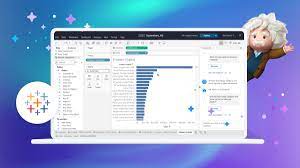
What is Einstein in Tableau?

In the context of Tableau, “Einstein” refers to a suite of AI-powered features developed by Salesforce. These features, collectively known as Tableau Einstein, are designed to enhance Tableau’s capabilities by incorporating AI into various aspects of data analysis, from data preparation and visualization to prediction and recommendation.  Here’s a more detailed breakdown: In essence, Einstein in Tableau aims to empower users to make smarter decisions by incorporating AI into their data analysis workflows, providing insights, predictions, and recommendations that would otherwise be difficult or time-consuming to uncover manually. Like Related Posts Who is Salesforce? Who is Salesforce? Here is their story in their own words. From our inception, we’ve proudly embraced the identity of Read more Salesforce Marketing Cloud Transactional Emails Salesforce Marketing Cloud Transactional Emails are immediate, automated, non-promotional messages crucial to business operations and customer satisfaction, such as order Read more Salesforce Unites Einstein Analytics with Financial CRM Salesforce has unveiled a comprehensive analytics solution tailored for wealth managers, home office professionals, and retail bankers, merging its Financial Read more AI-Driven Propensity Scores AI plays a crucial role in propensity score estimation as it can discern underlying patterns between treatments and confounding variables Read more
Read More
Salesforce Data Cloud Hits $900M in Revenue

Salesforce Data Cloud CDP

Salesforce Data Cloud: The Ultimate Customer Data Platform (CDP) Guide Transform Customer Data into Actionable Insights Salesforce Data Cloud (formerly Salesforce CDP) revolutionizes how businesses unify and activate customer data across every touchpoint. By consolidating information from websites, mobile apps, CRM systems, and more, it creates 360° customer profiles that power personalized marketing, sales, and service experiences. What is Salesforce Data Cloud? Salesforce Data Cloud is an AI-powered Customer Data Platform (CDP) that: 💡 Key Benefit: Break down data silos to deliver hyper-personalized customer journeys. Data Cloud vs. Traditional CRM: Key Differences Feature Salesforce CRM Salesforce Data Cloud Data Scope Sales/Service records only All customer interactions (web, email, ads, IoT) Real-Time Updates Manual/periodic syncs Instant profile enrichment AI Capabilities Basic analytics Predictive insights + GenAI recommendations Use Cases Pipeline management Omnichannel personalization Core Capabilities 1. Unified Customer Profiles 2. AI-Powered Segmentation 3. Activation Across Channels 4. Privacy & Compliance How Businesses Use Data Cloud 🚀 Boost E-Commerce Sales 📈 Optimize Ad Spend 🤖 Enhance Customer Service Technical Deep Dive Data Integration Options Key Concepts Getting Started 1. Choose Your Edition 2. Implement in 4 Steps 3. Train Your Team The Future of Data Cloud Final Verdict Salesforce Data Cloud is not just a CDP—it’s the central nervous system for customer-centric businesses. By unifying data + AI, it turns insights into personalized experiences at scale. Ready to explore? Contact Tectonic today. 🔥 Pro Tip: Pair with Einstein AI for predictive analytics and Genie for real-time streaming data. Content updated July 2025. Like Related Posts Who is Salesforce? Who is Salesforce? Here is their story in their own words. From our inception, we’ve proudly embraced the identity of Read more Salesforce Marketing Cloud Transactional Emails Salesforce Marketing Cloud Transactional Emails are immediate, automated, non-promotional messages crucial to business operations and customer satisfaction, such as order Read more Salesforce Unites Einstein Analytics with Financial CRM Salesforce has unveiled a comprehensive analytics solution tailored for wealth managers, home office professionals, and retail bankers, merging its Financial Read more AI-Driven Propensity Scores AI plays a crucial role in propensity score estimation as it can discern underlying patterns between treatments and confounding variables Read more

Read More
salesforce unified knowledge

The Low-Code Revolution

The Low-Code Revolution: How Salesforce is Democratizing CRM Customization Redefining CRM Development Through Visual Innovation Salesforce has pioneered a fundamental shift in customer relationship management by embracing low-code/no-code technology, transforming how organizations customize their CRM platforms. This revolutionary approach enables business users across departments to actively participate in solution development through intuitive visual interfaces rather than complex programming. The low-code movement represents more than just simplified development—it’s a strategic empowerment of business teams to rapidly adapt systems to evolving needs without creating IT bottlenecks. By 2025, Gartner predicts 70% of new applications will use low-code/no-code technologies, with Salesforce positioned at the forefront of this transformation. Understanding the Low-Code/No-Code Paradigm Visual Development for Business Agility Low-code/no-code platforms replace traditional programming with: This approach creates a spectrum of capability: The Strategic Advantages of Salesforce’s Approach 1. Accelerated Digital Transformation 2. Cost-Effective Innovation 3. Cross-Functional Collaboration Salesforce’s Low-Code Ecosystem Core Platform Capabilities Expanding Possibilities Real-World Impact Across Industries Financial Services A regional bank reduced loan processing time by 40% by enabling loan officers to build their own workflow automations using Salesforce Flow. Healthcare A hospital network created a patient intake portal in three days using Lightning App Builder, eliminating a six-month development backlog. Retail A global retailer empowered store managers to build custom inventory apps, improving stock accuracy by 25% without IT involvement. The Future of Enterprise Development Salesforce’s low-code strategy represents more than just simplified tools—it’s redefining the relationship between business needs and technical solutions. Key emerging trends include: Implementing a Successful Low-Code Strategy Organizations maximizing Salesforce’s low-code potential typically: Conclusion: The Democratization of Digital Transformation Salesforce’s low-code/no-code revolution represents a fundamental shift in how businesses approach CRM customization and digital innovation. By empowering business users to become active participants in solution development, organizations can achieve: As the platform continues to evolve, Salesforce is positioned to lead the next wave of enterprise software—where the power to transform business processes resides not just with technical teams, but across the entire organization. This democratization of development capability marks a new era of business agility and competitive advantage. Content updated April 2025. Like Related Posts Who is Salesforce? Who is Salesforce? Here is their story in their own words. From our inception, we’ve proudly embraced the identity of Read more Salesforce Marketing Cloud Transactional Emails Salesforce Marketing Cloud Transactional Emails are immediate, automated, non-promotional messages crucial to business operations and customer satisfaction, such as order Read more Salesforce Unites Einstein Analytics with Financial CRM Salesforce has unveiled a comprehensive analytics solution tailored for wealth managers, home office professionals, and retail bankers, merging its Financial Read more AI-Driven Propensity Scores AI plays a crucial role in propensity score estimation as it can discern underlying patterns between treatments and confounding variables Read more
Read More
gettectonic.com