- gettectonic.com - Page 3

Eloqua Salesforce Integration

About Salesforce integration with Oracle Eloqua Synchronizes accounts, contacts, leads and opportunities in Salesforce with Oracle Eloqua. For more information, see Data imports from Salesforce to Oracle Eloqua. Uses contact data in Oracle Eloqua to update contacts and generate sales leads in Salesforce. However, the integration of Oracle Eloqua with Salesforce comes with certain limitations that can have adverse effects on businesses. In this blog post, we will explore these limitations and how Salesforce Marketing Cloud can serve as a solution. Limitations: 1. Integration Process 2. Flexibility and Customization 3. Data Synchronization 4. User Experience and Interface 5. API Limitations Like Related Posts Who is Salesforce? Who is Salesforce? Here is their story in their own words. From our inception, we’ve proudly embraced the identity of Read more Salesforce Marketing Cloud Transactional Emails Salesforce Marketing Cloud Transactional Emails are immediate, automated, non-promotional messages crucial to business operations and customer satisfaction, such as order Read more Salesforce Unites Einstein Analytics with Financial CRM Salesforce has unveiled a comprehensive analytics solution tailored for wealth managers, home office professionals, and retail bankers, merging its Financial Read more AI-Driven Propensity Scores AI plays a crucial role in propensity score estimation as it can discern underlying patterns between treatments and confounding variables Read more

Read More
Salesforce Success Story

Case Study: Higher Education Software Provider-Higher Education Intelligence-Salesforce Sales/Service/Experience Clouds

Salesforce in a Higher Education Intelligence Solutions Company Leveraging Salesforce to Support Acquisition and High Organic Growth Industry: Educational Technology Sales Cloud Service Cloud Experience Cloud salesforce higher ed software provider A Higher Education Software Provider, formed via multiple acquisitions, services more than 1,700 higher education institutions with educational solutions for assessment and accreditation planning, learning outcome, ePortfolios, faculty activity reporting, course evaluation and institutional surveys, and curriculum and catalog management.  Salesforce higher ed software provider. Salesforce Higher Ed Software Provider PROBLEM SOLUTION RESULT Like Related Posts Salesforce Marketing Cloud Transactional Emails Salesforce Marketing Cloud Transactional Emails are immediate, automated, non-promotional messages crucial to business operations and customer satisfaction, such as order Read more Asset Management Salesforce Can Salesforce do asset management? You can manage assets in Consumer Goods (desktop) and in the Consumer Goods offline mobile Read more Lookup Relationship in Salesforce What is Lookup relationship in Salesforce? Salesforce’s lookup relationships is a significant capability that allows users to connect two objects Read more Listview in Salesforce What is a listview in Salesforce? A list view is a filtered list of records where you can view records Read more

Read More
Einstein GPT Links to Flow and Data Cloud

Einstein GPT Links to Flow and Data Cloud

Salesforce Harnesses AI and Data Integration to Drive Autonomous, Intelligent Enterprise-Einstein GPT Links to Flow and Data Cloud Salesforce is forging ahead with innovative advancements, seamlessly integrating Einstein GPT and Data Cloud into Flow to propel the autonomous, intelligent enterprise. This article explores how these technologies collaborate to enhance customer experiences and streamline business operations. Einstein GPT Links to Flow and Data Cloud for Intelligent Enterprise Einstein GPT, Salesforce’s groundbreaking generative AI CRM technology, merges proprietary AI models with cutting-edge generative AI from diverse partners, alongside real-time data from the Salesforce Data Cloud. With Einstein GPT, users can leverage this data within their Salesforce CRM to generate adaptive content using natural-language prompts, responding dynamically to evolving customer information and preferences. The Data Cloud consolidates a company’s customer data from various channels into a unified, real-time customer profile. By empowering Flow with the Data Cloud, customers can automate intricate workflows triggered by real-time changes. Flow paired with Einstein GPT offers a conversational interface for creating and adjusting automation, significantly simplifying the process and reducing barriers for non-technical users. Einstein GPT Across Sales, Service, Marketing, and Development Salesforce introduces Einstein GPT across Sales, Service, Marketing, and Development to automate tasks such as composing emails, scheduling meetings, generating knowledge articles from case notes, and crafting personalized content across multiple platforms. Developers benefit from enhanced productivity with AI-driven code generation and assistance using Salesforce Research’s language model. By combining Einstein AI models with ChatGPT or similar models, customers can use natural-language prompts on CRM data to trigger powerful automation and generate personalized content efficiently. Generative AI Fund Salesforce Ventures launches a $250 million Generative AI Fund to invest in promising startups, bolster the startup ecosystem, and advance responsible and trusted generative AI technologies. Real-World Applications Flow, empowered by the Data Cloud, enables businesses to personalize every interaction. For instance, marketers optimize retail experiences with real-time data-driven automation for in-store discounts, while financial services automate fraud detection by flagging suspicious transactions. Manufacturing companies enhance efficiency by monitoring machine performance and automating maintenance requests based on real-time data. Einstein GPT Links to Flow and Data Cloud Real-time automation transforms energy solution commissioning. Salesforce automation streamlines energy production snapshots and system registration for incentives, enhancing operational efficiency and ensuring customer satisfaction. Salesforce is leading the charge in revolutionizing AI-driven content and real-time data integration to automate workflows and deliver personalized customer experiences. The integration of Einstein GPT and Data Cloud into Flow simplifies automation creation and fosters accessibility for all users. With the launch of Einstein GPT for diverse business functions and the Generative AI Fund, Salesforce demonstrates its commitment to responsible, trusted, and innovative AI solutions. Across industries, Salesforce is paving the way for a future powered by autonomous, intelligent enterprises. Like1 Related Posts Who is Salesforce? Who is Salesforce? Here is their story in their own words. From our inception, we’ve proudly embraced the identity of Read more Salesforce Marketing Cloud Transactional Emails Salesforce Marketing Cloud Transactional Emails are immediate, automated, non-promotional messages crucial to business operations and customer satisfaction, such as order Read more Salesforce Unites Einstein Analytics with Financial CRM Salesforce has unveiled a comprehensive analytics solution tailored for wealth managers, home office professionals, and retail bankers, merging its Financial Read more AI-Driven Propensity Scores AI plays a crucial role in propensity score estimation as it can discern underlying patterns between treatments and confounding variables Read more

Read More
Guide to Who is Running Flows

Guide to Who is Running Flows

Understanding the Role of the Running User in Flows Guide to Who is Running Flows. The running user in a flow is the individual who initiates the flow, either the current user or the Automated Process user. This user determines what actions the flow can perform with Salesforce data when executed in user context. Grasping the significance of the running user is crucial when designing automation in Flow Builder, as it directly affects record operations and troubleshooting. Let’s dig deeper into this essential aspect. Identifying the Running User The running user is the person who triggers the flow, which can be either the current user or the Automated Process user. Recognizing the running user provides insights into flow actions and aids in diagnosing issues. For flows operating in user context, the running user’s profile and permission sets determine the flow’s object permissions and field-level access. When a flow interacts with Salesforce data, it adheres to these permissions and access levels. Flow Execution Context Flows operate within three distinct contexts: user context, system context with sharing, and system context without sharing. Each context affects how the flow interacts with Salesforce data and respects user permissions and access levels. Understanding Flow Types and Contexts Different flow types operate within specific contexts: By understanding the role of the running user, you can optimize Flow’s capabilities in your automation processes. Maximize the power of Flow with confidence, ensuring compliance with user permissions and access levels. #LetItFlow! For more automation insights, visit our Automation pages on our insights. Like Related Posts Who is Salesforce? Who is Salesforce? Here is their story in their own words. From our inception, we’ve proudly embraced the identity of Read more Salesforce Marketing Cloud Transactional Emails Salesforce Marketing Cloud Transactional Emails are immediate, automated, non-promotional messages crucial to business operations and customer satisfaction, such as order Read more Salesforce Unites Einstein Analytics with Financial CRM Salesforce has unveiled a comprehensive analytics solution tailored for wealth managers, home office professionals, and retail bankers, merging its Financial Read more AI-Driven Propensity Scores AI plays a crucial role in propensity score estimation as it can discern underlying patterns between treatments and confounding variables Read more

Read More
Salesforce Flow

Einstein GPT Integration with Flow and Data Cloud Now Available

Salesforce has recently unveiled exciting new capabilities for Flow, Einstein GPT Integration with Flow and Data Cloud. Introducing Einstein GPT and Data Cloud features to its growing family of automation tools. This development empowers everyday administrators, eliminating the need for extensive engineering teams to harness large datasets for automation purposes. The groundbreaking aspect lies in the ability to achieve this in real-time, using a user-friendly interface without the need for coding. Introduction to Einstein GPT: Einstein GPT builds upon ChatGPT technology, combining public and private AI models with CRM data within Salesforce. This allows users to pose natural-language prompts directly within Salesforce CRM, receiving AI-generated content that adapts continuously to changing customer information and needs. The learning capability of Einstein GPT ensures ongoing improvement based on user input, aligning with best practices. Einstein GPT for Flow: When integrated with Salesforce Flow, Einstein GPT enables users to create and modify automations through a conversational interface, simplifying the flow creation process significantly. This fusion lowers barriers for non-technical users, enhancing the overall experience with Flow Builder and ensuring adherence to best practices. Key benefits of Einstein GPT for Flow include: Pricing details for Einstein GPT products are pending confirmation, and Salesforce will soon announce pilot program dates to broaden accessibility. Data Cloud for Flow: Introduced at Dreamforce 2022, Salesforce Data Cloud, formerly Genie, facilitates highly personalized customer experiences in real-time. Serving as a command center for customer data, Data Cloud integrates real-time data streams with Salesforce data, powering Flow with actionable insights. By combining Data Cloud with Flow, users can automate complex workflows and trigger actions based on real-time changes without the need for extensive IT involvement. This approach streamlines the process of designing, building, and testing custom integrations, reducing the burden on IT teams. Key advantages of Data Cloud for Flow include: These announcements bring forth transformative capabilities, making data utilization more accessible and streamlining the automation process within Salesforce. The combination of Einstein GPT and Data Cloud for Flow opens up possibilities for creating personalized and interconnected customer experiences across different sectors. Like1 Related Posts Who is Salesforce? Who is Salesforce? Here is their story in their own words. From our inception, we’ve proudly embraced the identity of Read more Salesforce Marketing Cloud Transactional Emails Salesforce Marketing Cloud Transactional Emails are immediate, automated, non-promotional messages crucial to business operations and customer satisfaction, such as order Read more Salesforce Unites Einstein Analytics with Financial CRM Salesforce has unveiled a comprehensive analytics solution tailored for wealth managers, home office professionals, and retail bankers, merging its Financial Read more AI-Driven Propensity Scores AI plays a crucial role in propensity score estimation as it can discern underlying patterns between treatments and confounding variables Read more

Read More
What is Health Cloud

What is Health Cloud?

Salesforce Health Cloud, a specialized platform designed for healthcare organizations, aims to streamline operations and provide personalized care. By leveraging cloud technology, mobile capabilities, and social integration, Health Care Cloud enhances productivity, reduces costs, and offers a comprehensive view of patient data. Salesforce keeps electronic personal health information (ephi) safe and secure. Since its inception, Salesforce Health Cloud has evolved significantly to meet the unique and challenging needs of the healthcare sector. The introduction of Customer 360 for Health marks a milestone in fostering empathetic care and promoting collaboration among healthcare teams. What is Salesforce Health Cloud? At its core, Health Cloud facilitates seamless collaboration among healthcare teams to ensure optimal patient care. With robust security measures in place, patient data remains secure and accessible only to authorized personnel. Salesforce Health provides care teams with convenient access to both clinical and non-clinical patient information, including health conditions, medications, appointment history, communication preferences, and data from Electronic Health Records (EHRs). Categorized under Salesforce Industry Clouds, Health Cloud combines CRM capabilities with specialized features tailored for healthcare providers, payers, medical device companies, and pharmaceutical manufacturers. Its goal is to deliver personalized, connected care across the entire, sometimes disjointed healthcare ecosystem. Why Use Salesforce Health Cloud? Salesforce Health offers benefits to various stakeholders within the healthcare industry, including providers, payers, manufacturers, and research organizations. In a challenging healthcare landscape, Health Cloud addresses concerns such as managing complex patient data and enhancing patient experiences effectively. Success stories from organizations like New England Biolabs and John Muir Health highlight the impact of Health Salesforce in streamlining operations, improving customer satisfaction, and enhancing care coordination. Despite its transformative potential, widespread adoption and success require rebuilding patient trust, delivering empathetic care, and prioritizing data security. Tools like Health Cloud play a crucial role in achieving these goals. The Health Cloud Data Model Central to Salesforce Health is the flexible Health Cloud Data Model, built atop the Salesforce Platform. This model organizes diverse healthcare data sources, leveraging standard objects like Accounts and Contacts alongside custom objects tailored for healthcare applications. The data model revolves around organizing data around the patient, providing care teams with a holistic view for informed decision-making and personalized care. It supports interoperability and adheres to healthcare data standards like HL7 and FHIR, enabling seamless integration with EHRs and other healthcare applications. Key Features of Salesforce Health Salesforce Health Cloud offers a suite of robust features, including: Patient 360: Provides a unified view of the patient, consolidating demographics, clinical data, and interactions for informed decision-making and personalized care. Care Plans: Enables care teams to create, track, and manage personalized care plans, incorporating goals, tasks, and milestones to monitor patient progress. Care Coordination: Facilitates collaboration among care teams, supporting secure messaging and information sharing across providers. Health Timeline: Offers an interactive visualization of a patient’s medical history, including encounters, lab results, and medications, aiding in understanding and decision-making. Einstein Analytics for Healthcare: Utilizes AI to deliver advanced insights and predictions, empowering organizations to enhance patient outcomes and operational efficiency. Patient 360 for Health In addition to existing features, Salesforce introduces new innovations under Patient 360 for Health, powered by AI. These updates include: Advanced Therapy Management: Streamlines treatment processes for pharmaceutical companies, offering full visibility into patient treatment. Salesforce Genie for Healthcare: Integrates real-time clinical and non-clinical data to create comprehensive patient profiles. AI-Supported Health Timeline: Enhances navigation and accessibility of patient records and journeys through AI. Home Health: Automates intake and scheduling for in-home treatment, optimizing patient preferences. Data Cloud for Healthcare: Connects clinical and non-clinical patient data from multiple sources into a real-time patient profile. MuleSoft Direct for Health Cloud: Provides out-of-the-box connectors to access EHR data, facilitating smoother integration. Tableau Accelerators for Health Cloud: Offers ready-to-use dashboards for various use cases, empowering teams with data-driven insights. Integration With MuleSoft Salesforce Health seamlessly integrates with MuleSoft, enabling organizations to connect with existing EHRs, billing systems, and healthcare applications. MuleSoft’s Anypoint Platform provides pre-built connectors and APIs to simplify integration and unlock the full potential of healthcare data. Salesforce Health Cloud is not only a powerful platform for healthcare organizations but also a catalyst for positive change in patient care and operational efficiency. By leveraging HC’s capabilities, healthcare organizations can deliver exceptional patient experiences, streamline processes, and ensure data security and compliance. With continuous integration and innovation within the Salesforce ecosystem, Health Cloud remains positioned to drive transformative change in the healthcare industry, addressing challenges and paving the way for a brighter future in healthcare. Considering Salesforce Health Cloud for your practice? Contact Tectonic today. Like1 Related Posts Who is Salesforce? Who is Salesforce? Here is their story in their own words. From our inception, we’ve proudly embraced the identity of Read more Salesforce Marketing Cloud Transactional Emails Salesforce Marketing Cloud Transactional Emails are immediate, automated, non-promotional messages crucial to business operations and customer satisfaction, such as order Read more Salesforce Unites Einstein Analytics with Financial CRM Salesforce has unveiled a comprehensive analytics solution tailored for wealth managers, home office professionals, and retail bankers, merging its Financial Read more AI-Driven Propensity Scores AI plays a crucial role in propensity score estimation as it can discern underlying patterns between treatments and confounding variables Read more

Read More
Salesforce Nonprofit Cloud

Trustworthy Data in AI

Behind transformative breakthroughs powered by generative AI, advanced analytics, and real-time personalization, is the quiet reliance on trusted data. Trustworthy Data in AI powers much of what we do. Nearly all analytics and IT decision makers surveyed (92%) say trustworthy data is needed more than than ever before. How can business, IT, and analytics leaders harness data to fuel these opportunities and overcome roadblocks that are derailing data-driven strategies? Let’s uncover the obstacles leaders are facing and the tactics they’re focusing on to maximize their data’s volume. Characteristics of trustworthy AI systems include: valid and reliable, safe, secure and resilient, accountable and transparent, explainable and interpretable, privacy-enhanced, and fair with harmful bias managed. What is trustworthy use of artificial intelligence? Together, governance and compliance are the means by which an organization and its stakeholders ensure AI deployments are ethical and can be trusted. User privacy is respected, and data is not used or stored beyond its intended and stated use and duration; users are able to opt-in / out of sharing their data. Requirements of Trustworthy AI Like Related Posts AI-Driven Propensity Scores AI plays a crucial role in propensity score estimation as it can discern underlying patterns between treatments and confounding variables Read more What is Salesforce? Salesforce is cloud-based CRM software. It makes it easier for companies to find more prospects, close more deals, and connect Read more Einstein Relationship Insights ERI, serves as an AI-powered research assistant, enhancing sales processes. ERI operates as a desktop plugin with a browser extension, Read more Joined Datasets in B2B Marketing Analytics B2BMA empowers users to generate additional datasets using the data manager. This process involves creating datasets in various ways, such Read more

Read More
Salesforce Home Page Customization

Why Customize Salesforce?

You should customize Salesforce to tailor the CRM platform to your specific business needs, optimize operations, enhance data management, improve user experience, and drive business growth and efficiency.  Here’s a more detailed breakdown of why Salesforce customization is beneficial: 1. Aligning with Unique Business Needs: 2. Enhancing Efficiency and Productivity: 3. Driving Business Growth and Competitive Advantage: Like Related Posts Who is Salesforce? Who is Salesforce? Here is their story in their own words. From our inception, we’ve proudly embraced the identity of Read more Salesforce Marketing Cloud Transactional Emails Salesforce Marketing Cloud Transactional Emails are immediate, automated, non-promotional messages crucial to business operations and customer satisfaction, such as order Read more Salesforce Unites Einstein Analytics with Financial CRM Salesforce has unveiled a comprehensive analytics solution tailored for wealth managers, home office professionals, and retail bankers, merging its Financial Read more AI-Driven Propensity Scores AI plays a crucial role in propensity score estimation as it can discern underlying patterns between treatments and confounding variables Read more

Read More
Salesforce Nonprofit Cloud

Salesforce Nonprofit Cloud

Salesforce Nonprofit Cloud is a comprehensive Customer Relationship Management platform covering donor management, grant-making, fundraising, program management, and marketing. It empowers nonprofits to measure, track, and update data across all aspects of their operations, driving growth and success through data-driven decisions. The nonprofit sector is challenged by limited manpower and any economic downturns. Salesforce Nonprofit helps your organization accomplish more with less staff and use predictive analytics to focus on donors who are the most likely to respond to your messages. Create efficiency with data and insights and effectively scale and deliver your mission. Learn about the secure, flexible platform built for and used by over 50,000 nonprofits. What’s Encompassed in Nonprofit Cloud Nonprofit Cloud integrates features and products harnessed from the robust Salesforce platform, offering expedited and streamlined access to Salesforce’s array of innovative products and services. The Salesforce Platform The cornerstone of Nonprofit Cloud, the cloud-based Salesforce platform, inclusive of Service Cloud and Sales Cloud, is an integral part of the product. This platform furnishes relationship management, collaboration, integration, and data insight capabilities, providing a comprehensive 360-degree view of constituents. This enables more effective service delivery, management, and interaction. Additionally, the platform complies with stringent data security regulations, facilitating swift deployment and scalability. Nonprofit Cloud Data Model The Nonprofit Cloud data model encompasses Constituent Management, Fundraising, Program Management, Case Management, and Outcome Management. Constituent Management provides essential information for a holistic understanding of constituents, managing intricate relationships and visualizing their connections. Fundraising tools empower donor engagement, fund acquisition, and strategic planning with data-driven insights. Program Management enhances productivity, eliminates data silos, and facilitates timely decision-making. Case Management supports participant achievements by offering a comprehensive view of each participant, enabling personalized experiences. Use Outcome Management to define your impact strategy or theory of change, collect your data, track your progress, and evaluate the effectiveness of your programs. The Toolkit Nonprofit Cloud includes a toolkit featuring components and tools that leverage the platform and data model. OmniStudio, Action Plans, Actionable Relationship Center (ARC), Business Rules Engine, and other components, services, and tools automate paper-based and cumbersome processes. For instance, dynamic questionnaires can be created to expedite intake and referral processes. Experience Cloud for Nonprofits and Nonprofit Cloud for Grantmaking Extend beyond the Nonprofit Cloud data model with Experience Cloud for Nonprofits or Nonprofit Cloud for Grantmaking. Experience Cloud for Nonprofits offers a secure online portal for collaborating with external users. Site users can access and interact with cases, programs, and benefits, with customizable access to objects and features based on business requirements. Nonprofit Cloud for Grantmaking incorporates grant and budget management features. The Grantmaking data model supports the entire grant life cycle, including creating funding opportunities, managing applications and reviews, and tracking grant applicant budgets and results. Use Outcome Management with Nonprofit Cloud to track: If you are a nonprofit organization looking for a platform to make your mission easier, contact Tectonic today to learn more about Salesforce Nonprofit Cloud. Like1 Related Posts Who is Salesforce? Who is Salesforce? Here is their story in their own words. From our inception, we’ve proudly embraced the identity of Read more Salesforce Marketing Cloud Transactional Emails Salesforce Marketing Cloud Transactional Emails are immediate, automated, non-promotional messages crucial to business operations and customer satisfaction, such as order Read more Salesforce Unites Einstein Analytics with Financial CRM Salesforce has unveiled a comprehensive analytics solution tailored for wealth managers, home office professionals, and retail bankers, merging its Financial Read more AI-Driven Propensity Scores AI plays a crucial role in propensity score estimation as it can discern underlying patterns between treatments and confounding variables Read more
Read More
Sales Cloud Einstein

Einstein Activity Capture

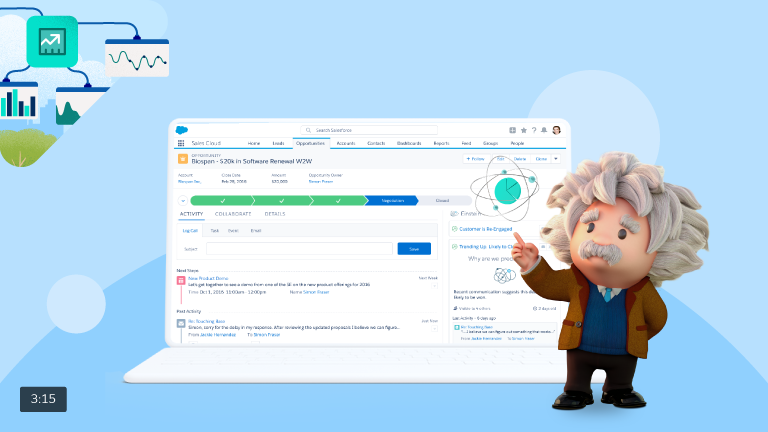
Einstein Activity Capture is a productivity-boosting tool that helps keep data between Salesforce and your email and calendar applications up to date. Note: Starting in late 2023, existing EAC services and data are migrating to Hyperforce. What is the difference between Salesforce Inbox and EAC? Salesforce Inbox excels in providing a unified email and calendar management interface, while EAC automates activity tracking and delivers AI-driven insights. Assess your specific sales requirements, budget, and preferences to determine which solution aligns best with your needs. What is the difference between lightning sync and Einstein activity capture? EAC has the same functionality as Lightning Sync, but it also automatically logs emails (both incoming and outgoing) in addition to events. EAC works in the background as well, so no user intervention is required. Does Einstein activity capture automatically log emails? Einstein Activity Capture (EAC) is part of the Sales Cloud family. It uses the power of AI to automatically log events and emails against their respective Salesforce records and can also sync Contacts from Gmail or Outlook. Why use Einstein activity capture? EAC is a productivity-boosting tool that helps keep data between Salesforce and your email and calendar applications up to date. How long does EAC store emails? The default is 24 months. The amount can range from 3 months to 5 years. How do I delete emails from EAC? To delete activity by email address: Does EAC sync contacts? EAC can sync up to 50,000 contacts per user. An additional non-syncing contact is picked up for sync only when one of the 50,000 stops syncing. What is the difference between EAC and Gmail integration? The main difference between these two is that Salesforce Gmail integration and Salesforce Inbox are both designed to providing users with Salesforce data and functionality within their email interface, while EAC focuses on automating data entry. What is the limit of Einstein activity capture? If you have only standard EAC users, a maximum of 6 months of captured activity data is stored and displayed on the activity timeline. Like1 Related Posts Who is Salesforce? Who is Salesforce? Here is their story in their own words. From our inception, we’ve proudly embraced the identity of Read more Salesforce Marketing Cloud Transactional Emails Salesforce Marketing Cloud Transactional Emails are immediate, automated, non-promotional messages crucial to business operations and customer satisfaction, such as order Read more Salesforce Unites Einstein Analytics with Financial CRM Salesforce has unveiled a comprehensive analytics solution tailored for wealth managers, home office professionals, and retail bankers, merging its Financial Read more AI-Driven Propensity Scores AI plays a crucial role in propensity score estimation as it can discern underlying patterns between treatments and confounding variables Read more

Read More
gettectonic.com