Differentiating Pardot and Marketing Cloud
Do you use email for your business? The CAN-SPAM Act, a law that regulates commercial email, sets requirements for these messages, grants recipients the right to stop receiving emails, and imposes significant penalties for non-compliance. The FTC enforces the CAN-SPAM Act and the associated CAN-SPAM Rule. Contrary to what its name might suggest, the CAN-SPAM Act isn’t limited to bulk email. It applies to all commercial messages, which are defined as any electronic mail message primarily intended to advertise or promote a commercial product or service, including emails that promote content on commercial websites. The law also applies to business-to-business email, meaning every email, such as one announcing a new product line to former customers, must adhere to CAN-SPAM regulations. Each individual email that violates the CAN-SPAM Act can result in penalties of up to $51,744, making compliance crucial. Fortunately, following the law is straightforward. Here’s an overview of CAN-SPAM’s key requirements: Frequently Asked Questions: Q: How do I know if the CAN-SPAM Act applies to the emails my business sends? A: The law applies based on the “primary purpose” of the message. An email can contain three types of content: If the message’s primary purpose is commercial, it must comply with CAN-SPAM. If it’s transactional or relationship-based, it must still avoid false or misleading routing information but is otherwise exempt from most CAN-SPAM requirements. Q: How can I determine if an email is a transactional or relationship message? A: An email is transactional or relationship-focused if it: These categories are interpreted narrowly, so be careful when assuming that any message sent to subscribers or members is transactional or relationship-based. Consider whether a reasonable recipient would view the email’s primary purpose as fitting into one of these categories. If not, the email must comply with CAN-SPAM. Q: What if an email combines commercial and transactional/relationship content? A: When an email includes both commercial and transactional/relationship content, the primary purpose determines its status. If the subject line leads a recipient to believe the message is primarily commercial or if the transactional/relationship content isn’t prominent at the beginning, the email is considered commercial and must comply with CAN-SPAM. Need More Information? For more detailed guidance on CAN-SPAM compliance, refer to the full CAN-SPAM Act or consult the FTC’s resources. Q: What if a message contains both commercial content and content classified as “other”? A: If a message includes both commercial content and other types of content, the CAN-SPAM Act applies if the primary purpose of the message is commercial. This determination is made if: Factors that influence this interpretation include the placement of the commercial content (e.g., whether it appears at the beginning of the message), the proportion of the message dedicated to commercial content, and how elements like color, graphics, and text style are used to emphasize the commercial aspects. Q: What if an email includes content from more than one company? Who is responsible for CAN-SPAM compliance? A: When an email promotes the products, services, or websites of multiple marketers, the responsible “sender” under the CAN-SPAM Act is typically determined by agreement among the marketers. The designated sender must: If the designated sender fails to meet these obligations, all marketers involved may be held liable as senders. Q: My company sends emails with a “Forward to a Friend” feature. Who is responsible for CAN-SPAM compliance for these forwarded messages? A: Whether a seller or forwarder is considered a “sender” or “initiator” under the CAN-SPAM Act depends on the situation. Typically, the Act applies if the seller offers an incentive for forwarding the message, such as money, discounts, or sweepstakes entries. In such cases, the seller is likely responsible for compliance. If a seller provides any benefit in exchange for forwarding an email or generating traffic, they are likely subject to CAN-SPAM regulations. Q: What are the penalties for violating the CAN-SPAM Act? A: Each email that violates the CAN-SPAM Act can result in penalties of up to $51,744, with the possibility of multiple parties being held responsible. Both the company whose product is promoted and the company that sent the message can be liable. Additionally, emails that contain misleading claims may be subject to other laws, like Section 5 of the FTC Act, which prohibits deceptive advertising. The CAN-SPAM Act also includes aggravated violations that could lead to additional fines and even criminal penalties, including imprisonment, for: Civil penalties may also require restitution to consumers under Section 19 of the FTC Act, covering not just what consumers paid, but also the value of their lost time. Q: Are there specific rules for sexually explicit marketing emails? A: Yes, the FTC has rules under the CAN-SPAM Act for emails with sexually explicit content. These emails must start with “SEXUALLY-EXPLICIT:” in the subject line. The body of the email must initially display only this warning and the standard CAN-SPAM information: the message’s commercial nature, the sender’s physical address, and an opt-out method. No images or graphics are allowed in this part of the message, ensuring that sexually explicit content isn’t viewable without an affirmative action, like scrolling or clicking. This requirement doesn’t apply if the recipient has previously given consent to receive such messages. About the FTC The FTC is dedicated to preventing fraudulent, deceptive, and unfair practices affecting businesses and consumers. You can report scams and unethical business practices at ReportFraud.ftc.gov. For guidance on legal compliance, visit business.ftc.gov. Understanding and fulfilling your compliance obligations is smart business practice, regardless of your organization’s size or industry. For updates on cases and initiatives, subscribe to the FTC’s Business Blog. Your Opportunity to Comment The National Small Business Ombudsman and 10 Regional Fairness Boards collect feedback from small businesses regarding federal compliance and enforcement activities. The Ombudsman evaluates these activities annually and rates each agency’s responsiveness to small businesses. Comments can be submitted without fear of reprisal by calling 1-888-REGFAIR (1-888-734-3247) or visiting www.sba.gov/ombudsman. Content updated January 2024. Like Related Posts Who is Salesforce? Who is Salesforce? Here is their story in their
Let’s embark on a journey through the intricate world of prompt engineering, guided by the tales of seasoned explorers who have braved the highs and lows of AI interactions. Picture these individuals as a daring voyager, charting unexplored territories to uncover the secrets of prompt mastery, all so that others may navigate these waters with ease. Useful ChatGPT Techniques. In this epic insight, our intrepid explorers shars a treasure trove of insights gleaned from their odyssey—a veritable “best of” plethora chronicling their conquests and not-so-conquests. From the peaks of success to the valleys of failure, every twist and turn in their adventure has led to the refinement of their craft. Prepare to be enthralled as they unravel the enigma of prompt design, revealing its pivotal role in shaping AI interactions. With each revelation, they unveil the power of perfect prompt design to elevate solutions, enchant customers, and conquer the myriad challenges that lie in wait. But this is no ordinary tale of technical prowess—no, dear reader, it is a grand odyssey teeming with intrigue and excitement. From the bustling streets of AI-powered applications to the untamed wilderness of off-topic queries, hallucinations, flat-out lies, and toxic language, our heroes navigate it all with cunning and finesse. Along the way, they impart their hard-earned wisdom, offering practical advice and cunning strategies to fellow travelers eager to tread the same path. With each chapter, they peel back the layers of mystery surrounding prompt engineering, illuminating the way forward for those brave enough to follow. So, dear reader, strap in and prepare for an adventure like no other. With our intrepid explorers as your guide, you’ll embark on a thrilling quest to unlock the secrets of prompt mastery and harness the full potential of AI-powered interactions. Why Prompt Design Matters Prompt design plays a crucial role in optimizing various aspects of your solution. A well-crafted prompt can: Let’s dive into the essential prompting approaches with the following table of contents: Prompts can be quite long and complex. Often, long, and carefully crafted prompts with the right ingredients can lead to a huge reduction in incorrectly processed user utterances. But always keep in mind that most prompt tokens have a price, i.e. the longer the prompt, the more expensive it is to call the API. Recently, however, there have been attempts to make prompt input tokens cheaper than output tokens. By mastering these prompting techniques, you can create prompts that not only enhance performance but also deliver exceptional customer experiences. Like Related Posts AI-Driven Propensity Scores AI plays a crucial role in propensity score estimation as it can discern underlying patterns between treatments and confounding variables Read more Einstein Relationship Insights ERI, serves as an AI-powered research assistant, enhancing sales processes. ERI operates as a desktop plugin with a browser extension, Read more Joined Datasets in B2B Marketing Analytics B2BMA empowers users to generate additional datasets using the data manager. This process involves creating datasets in various ways, such Read more AI in Sales Enablement automation, and personalization to enhance sales processes, increase customer engagement, and drive revenue growth. Companies are working with AI to Read more
Generative AI, Salesforce, and the Commitment to Trust The excitement surrounding generative AI is palpable as it unlocks new dimensions of creativity for individuals and promises significant productivity gains for businesses. Engaging with generative AI can be a great experience, whether creating superhero versions of your pets with Midjourney or crafting pirate-themed poems using ChatGPT. According to Salesforce research, employees anticipate saving an average of 5 hours per week through the adoption of generative AI, translating to a substantial monthly time gain for full-time workers. Whether designing content for sales and marketing or creating a cute version of a beloved story, generative AI is a tool that helps users create content faster. However, amidst the enthusiasm, questions arise, including concerns about the security and privacy of data. Users ponder how to leverage generative AI tools while safeguarding their own and their customers’ data. Questions also revolve around the transparency of data collection practices by different generative AI providers and ensuring that personal or company data is not inadvertently used to train AI models. Additionally, there’s a need for assurance regarding the accuracy, impartiality, and reliability of AI-generated responses. Salesforce has been at the forefront of addressing these concerns, having embraced artificial intelligence for nearly a decade. The Einstein platform, introduced in 2016, marked Salesforce’s foray into predictive AI, followed by investments in large language models (LLMs) in 2018. The company has diligently worked on generative AI solutions to enhance data utilization and productivity for their customers. The Einstein Trust Layer is designed with private, zero-retention architecture. Emphasizing the value of Trust, Salesforce aims to deliver not just technological capabilities but also a responsible, accountable, transparent, empowering, and inclusive approach. The Einstein Trust Layer represents a pivotal development in ensuring the security of generative AI within Salesforce’s offerings. The Einstein Trust Layer is designed to enhance the security of generative AI by seamlessly integrating data and privacy controls into the end-user experience. These controls, forming gateways and retrieval mechanisms, enable the delivery of AI securely grounded in customer and company data, mitigating potential security risks. The Trust Layer incorporates features such as secure data retrieval, dynamic grounding, data masking, zero data retention, toxic language detection, and an audit trail, all aimed at protecting data and ensuring the appropriateness and accuracy of AI-generated content. Salesforce proactively provided the ability for any admin to control how prompt inputs and outputs are generated, including reassurance over data privacy and reducing toxicity. This innovative approach allows customers to leverage the benefits of generative AI without compromising data security and privacy controls. The Trust Layer acts as a safeguard, facilitating secure access to various LLMs, both within and outside Salesforce, for diverse business use cases, including sales emails, work summaries, and service replies in contact centers. Through these measures, Salesforce underscores its commitment to building the most secure generative AI in the industry. Generating content within Salesforce can be achieved through three methods: CRM Solutions: Einstein Copilot Studio: Einstein LLM Generations API: An overarching feature of these AI capabilities is that every Language Model (LLM) generation is meticulously crafted through the Trust Layer, ensuring reliability and security. At Tectonic, we look forward to helping you embrace and utilize generative AI with Einstein save time. Like1 Related Posts Who is Salesforce? Who is Salesforce? Here is their story in their own words. From our inception, we’ve proudly embraced the identity of Read more Salesforce Marketing Cloud Transactional Emails Salesforce Marketing Cloud Transactional Emails are immediate, automated, non-promotional messages crucial to business operations and customer satisfaction, such as order Read more Salesforce Unites Einstein Analytics with Financial CRM Salesforce has unveiled a comprehensive analytics solution tailored for wealth managers, home office professionals, and retail bankers, merging its Financial Read more AI-Driven Propensity Scores AI plays a crucial role in propensity score estimation as it can discern underlying patterns between treatments and confounding variables Read more
ChatGPT and Salesforce The integration of ChatGPT with Salesforce presents an opportunity to streamline organizational processes, resulting in significant time savings. This integration not only enhances CRM data management with generative AI but also takes the customer experience to new heights. Integration Process: To integrate ChatGPT with Salesforce, the typical process involves creating an account on the OpenAI platform and generating an API key. These steps ensure successful integration by providing API access and authentication credentials. It’s crucial to treat the API key with the same security measures as a password to safeguard the integration. Salesforce and OpenAI Collaboration: While Salesforce offers access to AI through its Einstein GPT suite of products, Salesforce Admins and Developers have also begun directly integrating with OpenAI’s APIs and various AppExchange apps. They are incorporating these tools into their offerings to introduce new AI-powered features, enhancing their platforms’ capabilities. Role of ChatGPT and Salesforce Admins: ChatGPT does not aim to replace Salesforce Admins but rather to augment their effectiveness and productivity. Admins with strong analytical and administrative skills can leverage ChatGPT to expedite configuration tasks. However, mastering the collaboration with ChatGPT is essential to enhance the quality of results. Understanding ChatGPT: ChatGPT, developed by OpenAI, represents a breakthrough in AI beyond conventional chatbots. It operates on the OpenAI GPT-3.5 family of large language models, incorporating both supervised and reinforcement learning techniques. Backed by OpenAI, ChatGPT employs natural language processing (NLP) to interact conversationally, mirroring human dialogue. OpenAI, founded in San Francisco, boasts substantial support from industry leaders like Microsoft. OpenAI and GPT-4: OpenAI recently unveiled GPT-4, the latest iteration of its popular ChatGPT model. GPT-4 boasts enhanced capabilities, including image processing and increased word processing capacity. With millions of users since its launch, ChatGPT continues to evolve, offering unparalleled NLP functionality. Top Use Cases for ChatGPT in Salesforce: Explore the potential of ChatGPT and Salesforce with features and scenarios, including natural language processing, chatbots, predictive sales, personalized communication, and analysis of conversational data. Einstein GPT: Salesforce introduces Einstein GPT, the world’s first generative AI for CRM. Einstein GPT enables the generation of tailored content from CRM data, ensuring relevance in every interaction, be it emails, reports, knowledge articles, or code snippets. Community Insights: As the AI landscape, particularly ChatGPT, continues to evolve, it’s essential to understand its implications for the Salesforce ecosystem. The Salesforce community acknowledges the power of ChatGPT as a sophisticated chatbot built on advanced AI technology, poised to revolutionize various Salesforce roles and experiences. What is Salesforce doing with ChatGPT? The integration between ChatGPT and Salesforce can optimize a significant portion of organizational processes, resulting in considerable time savings. This not only enhances CRM data management, now powered by generative AI, but also elevates the customer experience to a new level. Can we integrate ChatGPT with Salesforce? This typically involves creating an account on the OpenAI platform and generating an API key. To set up your API access and authentication credentials for a successful ChatGPT for Salesforce integration, follow the steps below. Treat your API key like a password to protect the security of your integration. Is Salesforce using OpenAI? While Salesforce enables customers to access it via its Einstein GPT suite of products, Salesforce Admins and Developers have also started integrating directly with OpenAI’s APIs and the many AppExchange apps. They are now embedding it into their offerings to deliver new AI-powered features. ChatGPT has shown the world the potential of AI beyond simple chatbots. Join Tectonic on the AI journey and learn about How to use ChatGPT for Salesforce, Its use cases, Integration and how you can implement it in Salesforce. Salesforce’s new marketing message is AI + Data + CRM. It all adds up to customer magic. At the heart of this magic is Generative AI or GPT, not ChatGPT. Of course, AI advancements will mean very different things across the wide variety of Salesforce roles and day-to-day experiences. With more and more “GPT” tools being launched each week, how is the Salesforce community using the Chat variety in their day-to-day roles, and how do they see it evolving over the coming months and years? ChatGPT is nothing more than a chatbot, akin to Einstein bots. However, it’s a powerful one! Built on the OpenAI GPT-3.5 family of large language models and both supervised and reinforcement learning techniques, ChatGPT was trained on a vast amount of internet text with a cutoff in January 2022. It has been optimized for natural language processing tasks such as text generation, question answering, translation, and text classification. The technology behind ChatGPT is advanced and continues to evolve, relying on machine learning and deep learning techniques. Like Related Posts Who is Salesforce? Who is Salesforce? Here is their story in their own words. From our inception, we’ve proudly embraced the identity of Read more Salesforce Marketing Cloud Transactional Emails Salesforce Marketing Cloud Transactional Emails are immediate, automated, non-promotional messages crucial to business operations and customer satisfaction, such as order Read more Salesforce Unites Einstein Analytics with Financial CRM Salesforce has unveiled a comprehensive analytics solution tailored for wealth managers, home office professionals, and retail bankers, merging its Financial Read more AI-Driven Propensity Scores AI plays a crucial role in propensity score estimation as it can discern underlying patterns between treatments and confounding variables Read more
Salesforce introduces the latest iteration of Einstein, introducing a Conversational AI Assistant to integrate seamlessly into every CRM application and enhance the overall customer experience. The new Einstein Copilot, powered by generative AI, is designed to boost productivity by seamlessly integrating into the workflow. Additionally, organizations can tailor Einstein Copilot to meet their specific business requirements using Einstein Copilot Studio. The inclusion of the Einstein Trust Layer ensures the protection of sensitive data while allowing companies to leverage their trusted data to enhance generative AI responses within the platform. The reality is every company will undergo an AI transformation to increase productivity, drive efficiency, and deliver incredible customer and employee experiences. With Einstein Copilot and Data Cloud we’re making it easy to create powerful AI assistants and infuse trusted AI into the flow of work across every job, business, and industry. In this new world, everyone can now be an Einstein. Marc Benioff, Chair and CEO, Salesforce Einstein Copilot is designed to generate reliable and precise recommendations and content for specific tasks such as constructing digital storefronts, crafting custom code, creating data visualizations, and guiding sales associates in closing deals efficiently. Grounded securely with customer data from Salesforce Data Cloud, encompassing customer data, enterprise content, telemetry data, Slack conversations, and other structured and unstructured data, Einstein Copilot ensures informed and accurate decision-making. In contrast to previous generative AI copilot solutions that operated as separate applications, Einstein Copilot is natively integrated within the world’s leading AI CRM. It taps into data from any Salesforce application, enhancing the generation of more accurate AI-powered recommendations and content. Employing natural language prompts, Einstein Copilot can perform various tasks in sales, service, marketing, commerce, development, Tableau, and industry-specific scenarios: Sales: Service: Marketing: Commerce: Developers: Tableau: Industry-specific: Like1 Related Posts Who is Salesforce? Who is Salesforce? Here is their story in their own words. From our inception, we’ve proudly embraced the identity of Read more Salesforce Unites Einstein Analytics with Financial CRM Salesforce has unveiled a comprehensive analytics solution tailored for wealth managers, home office professionals, and retail bankers, merging its Financial Read more AI-Driven Propensity Scores AI plays a crucial role in propensity score estimation as it can discern underlying patterns between treatments and confounding variables Read more Tectonic’s Successful Salesforce Track Record Salesforce Technology Services Integrator – Tectonic has successfully delivered Salesforce in a variety of industries including Public Sector, Hospitality, Manufacturing, Read more
It All Begins with Strategy A robust AI strategy is the cornerstone of successful AI implementation. It provides clarity on vision, purpose, short and long-term goals, and necessary steps for the entire organization. Rooted in data, this strategy should include measurable objectives and KPIs to foster seamless collaboration across teams. As with any strategic initiative, it starts with trustworthy data. Having An Effective AI Strategy. Keys to Having An Effective AI Strategy Prepare Your Data Define Business Goals Identify and Prioritize Use Cases Establish Data Governance Policies Check Your Technology Stack Emphasize Continuous Improvement Start Small Like Related Posts Who is Salesforce? Who is Salesforce? Here is their story in their own words. From our inception, we’ve proudly embraced the identity of Read more Salesforce Unites Einstein Analytics with Financial CRM Salesforce has unveiled a comprehensive analytics solution tailored for wealth managers, home office professionals, and retail bankers, merging its Financial Read more AI-Driven Propensity Scores AI plays a crucial role in propensity score estimation as it can discern underlying patterns between treatments and confounding variables Read more Tectonic’s Successful Salesforce Track Record Salesforce Technology Services Integrator – Tectonic has successfully delivered Salesforce in a variety of industries including Public Sector, Hospitality, Manufacturing, Read more
Salesforce digital engagement refers to the interaction between an external consumer or customer and an organization through various online channels. In this insight, we will discuss Digital Engagement and the process of setting it up within the Salesforce platform. Salesforce Digital Engagement aims to involve customers at the right time across diverse digital channels, such as mobile messaging, web chat, social networks, and more, ensuring a seamless service experience. Salesforce Digital Engagement Explained Various Ways to Contact the Company: The Most Critical Aspect During Shopping: The ability to contact via Call, SMS, Social Media, Website, etc., with a focus on quick personalized responses and maintaining data privacy and trust. Digital Engagement emerges as a potent tool for customer engagement through different digital channels like mobile messaging, web chat, WhatsApp, Facebook Messages, and various social networks. Terminology Related to Digital Engagement: Like1 Related Posts Who is Salesforce? Who is Salesforce? Here is their story in their own words. From our inception, we’ve proudly embraced the identity of Read more Salesforce Marketing Cloud Transactional Emails Salesforce Marketing Cloud Transactional Emails are immediate, automated, non-promotional messages crucial to business operations and customer satisfaction, such as order Read more Salesforce Unites Einstein Analytics with Financial CRM Salesforce has unveiled a comprehensive analytics solution tailored for wealth managers, home office professionals, and retail bankers, merging its Financial Read more AI-Driven Propensity Scores AI plays a crucial role in propensity score estimation as it can discern underlying patterns between treatments and confounding variables Read more
Tectonic offers several reasons why join the Salesforce Trailblazers. It sounds a little bit like a sports team, no? Elevate Your Salesforce Proficiency: “Being part of the Service Trailblazer Community greatly enhances my own Salesforce journey through connection and shared knowledge. I started with Trailhead and have guided many staff and coworkers with trails tailored to their Salesforce needs. Trailhead never disappoints me; it remains expansive, well-written, up-to-date, and relevant.” Julie O’Donnell, Salesforce administration manager at Quickbase Join a Supportive Community: Shape the Future of Customer Service: Why join the Salesforce Trailblazers Joining the Service Trailblazer Community propels you into a realm of collaboration, innovation, and continuous learning. So, rather than just following the trail, blaze it alongside your fellow customer Service Stars. There is always something new to learn and with Salesforce providing three major releases a year, monthly updates, and new products, you want to stay in the know. Like1 Related Posts Who is Salesforce? Who is Salesforce? Here is their story in their own words. From our inception, we’ve proudly embraced the identity of Read more Salesforce Marketing Cloud Transactional Emails Salesforce Marketing Cloud Transactional Emails are immediate, automated, non-promotional messages crucial to business operations and customer satisfaction, such as order Read more Salesforce Unites Einstein Analytics with Financial CRM Salesforce has unveiled a comprehensive analytics solution tailored for wealth managers, home office professionals, and retail bankers, merging its Financial Read more AI-Driven Propensity Scores AI plays a crucial role in propensity score estimation as it can discern underlying patterns between treatments and confounding variables Read more
Tableau GPT is a suite of AI-powered features within the Tableau platform designed to simplify and democratize data analysis. It leverages generative AI to automate tasks, generate insights, and make data more accessible to a wider range of users, including those with less technical expertise. Key features and capabilities of Tableau GPT: How Tableau GPT benefits users: Like Related Posts Who is Salesforce? Who is Salesforce? Here is their story in their own words. From our inception, we’ve proudly embraced the identity of Read more Salesforce Unites Einstein Analytics with Financial CRM Salesforce has unveiled a comprehensive analytics solution tailored for wealth managers, home office professionals, and retail bankers, merging its Financial Read more AI-Driven Propensity Scores AI plays a crucial role in propensity score estimation as it can discern underlying patterns between treatments and confounding variables Read more Tectonic’s Successful Salesforce Track Record Salesforce Technology Services Integrator – Tectonic has successfully delivered Salesforce in a variety of industries including Public Sector, Hospitality, Manufacturing, Read more
In today’s fast-paced and competitive business environment, companies are continually searching for ways to optimize their sales processes and achieve their revenue targets. Configure, Price, Quote (CPQ) tools have emerged as a game-changing solution, enabling businesses to streamline operations, enhance customer satisfaction, and drive significant revenue growth. By automating manual tasks such as quote generation, pricing calculations, and customer data management, CPQ tools have a profound impact on key sales performance metrics. How CPQ Tools Transform Sales Performance Key Sales Metrics Positively Impacted by CPQ While CPQ tools influence a wide range of sales performance metrics, the following are particularly positively affected: Conclusion CPQ tools are indispensable for businesses looking to enhance their sales performance and achieve their revenue goals. By automating manual processes, providing actionable insights, and delivering a seamless customer experience, CPQ tools significantly improve key sales metrics such as quote turnaround time, accuracy, win rates, average deal size, and team productivity. As the sales landscape continues to evolve, CPQ tools will play an increasingly critical role in driving revenue growth and ensuring long-term success. Businesses that invest in CPQ solutions position themselves to outperform competitors, deliver exceptional customer experiences, and achieve sustainable growth. Like Related Posts Who is Salesforce? Who is Salesforce? Here is their story in their own words. From our inception, we’ve proudly embraced the identity of Read more Salesforce Unites Einstein Analytics with Financial CRM Salesforce has unveiled a comprehensive analytics solution tailored for wealth managers, home office professionals, and retail bankers, merging its Financial Read more AI-Driven Propensity Scores AI plays a crucial role in propensity score estimation as it can discern underlying patterns between treatments and confounding variables Read more Tectonic’s Successful Salesforce Track Record Salesforce Technology Services Integrator – Tectonic has successfully delivered Salesforce in a variety of industries including Public Sector, Hospitality, Manufacturing, Read more
AI has emerged as an effective solution to tackle the challenges arising from the sheer volume and rapidity of data in the marketing landscape. This article delves into some cutting-edge functionalities presented by Einstein within the Salesforce Marketing Cloud, showcasing how these features empower marketers to enhance performance and streamline their workflows. Einstein for Marketing Cloud uses Salesforce’s AI to help you best evaluate and implement your marketing activities. Use valuable insights on audiences, send time, engagement frequency, and your content to best target your customers. Deliver information to your customers when they need it and how they need it. Einstein in Marketing Cloud offers a range of opportunities for you to analyze, automate, and optimize your content. Use the apps throughout Marketing Cloud platforms to gain insight and better target your audiences. Salesforce Einstein for Marketing Cloud In the dynamic realm of marketing and sales, the pursuit of refining strategies is perpetual. Einstein Social Insights Within the Marketing Cloud’s Social Studio feature, marketers can publish content, engage in conversations, and analyze social data. Einstein augments this platform, introducing AI-powered capabilities: These advanced features empower marketers to optimize social strategy, fostering brand loyalty. For instance: Einstein Vision for Social With over 3 billion images uploaded to social platforms daily, Einstein Vision for Social equips marketers to analyze and derive insights from images. Marketers can train Social Studio to recognize images related to their brand, including products, logos, scenes, and food. This enriched data allows for a deeper understanding of brand followers, facilitating engagement and measurement of marketing efforts. Lookalikes Einstein lookalikes leverage lookalike modeling, identifying common traits among current customers to target new customers with similar characteristics. This tool streamlines the process, allowing marketers to create rich audiences and segments for modeling purposes using first, second, and third-party data in Audience Studio. Einstein Journey Insights In today’s consumer-centric world, Einstein Journey Insights helps marketers comprehend customer journeys by tracking interactions across touchpoints like web browsing and email. Advanced attribution modeling enhances engagements and event sequences, leading to specific goals such as purchases or product reviews. Interactive reports and visualizations enable marketers to optimize campaigns by comparing planned journeys with organic consumer journeys. Einstein Content Tagging Personalized and engaging messages demand an organized library of content. Einstein Content Tagging and image recognition technology automatically add and update content tags and metadata, helping marketers manage their assets efficiently. Smart Orchestration Einstein Send Time Optimization determines the best time to send an email or push notification. Einstein Engagement Frequency evaluates your contacts and identifies the optimal number of email messages or push notifications to send. Marketing Cloud Intelligence As marketing budgets increase, the need for ROI and superior customer experiences rises. Marketing Cloud Intelligence delivers AI-generated insights through automated regression modeling and statistical analysis. Einstein Marketing Insights sifts through data to identify high and low performers, enabling marketers to make informed decisions swiftly and optimize strategies for better results. The Einstein features in Salesforce Marketing Cloud present myriad opportunities for marketers to optimize their performance and work more efficiently. By harnessing these AI-powered capabilities, marketers can make informed decisions rapidly, fostering better brand engagement and higher ROIs. Tectonic is ready to assist you in deploying Einstein for Marketing Cloud. Contact us today. Like1 Related Posts Who is Salesforce? Who is Salesforce? Here is their story in their own words. From our inception, we’ve proudly embraced the identity of Read more Salesforce Marketing Cloud Transactional Emails Salesforce Marketing Cloud Transactional Emails are immediate, automated, non-promotional messages crucial to business operations and customer satisfaction, such as order Read more Salesforce Unites Einstein Analytics with Financial CRM Salesforce has unveiled a comprehensive analytics solution tailored for wealth managers, home office professionals, and retail bankers, merging its Financial Read more AI-Driven Propensity Scores AI plays a crucial role in propensity score estimation as it can discern underlying patterns between treatments and confounding variables Read more
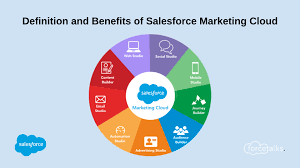
Discover the dynamic capabilities of Salesforce Marketing Cloud, an all-encompassing platform meticulously engineered to elevate digital engagement, refine marketing strategies, and personalize customer interactions, ultimately fostering satisfaction and driving revenue growth. Salesforce Marketing Cloud, affectionately known as SFMC, encapsulates Salesforce’s suite of tools meticulously designed for multi-channel engagement, digital marketing, automation, analytics, and personalization. Operating as a Software as a Service (SaaS), this platform offers a wealth of functionalities along with supplementary add-on features from Salesforce and third-party vendors via the Salesforce AppExchange. Within the expansive realm of Salesforce Marketing Cloud, an array of products facilitates diverse marketing processes, including executing multi-channel campaigns, orchestrating dynamic customer journeys, analyzing marketing performance, implementing personalization strategies, conducting digital advertising campaigns, and managing data effectively. Key Components and Features: A standout feature is the seamless integration of Salesforce’s artificial intelligence, Einstein, which enhances functionalities across the suite. For instance, Salesforce Marketing Cloud Engagement offers personalized email content recommendations, optimized send times, and real-time messaging performance monitoring. Highlighted Features: Let’s delve deeper into Salesforce Marketing Cloud Engagement to exemplify its capabilities: Data Management: SFDC Marketing Cloud Engagement operates on a relational database, enabling the creation of customized data models aligned with organizational needs. It seamlessly integrates data from various sources, facilitating segmentation, personalization, and automated activities triggered by data changes. Is Salesforce Marketing Cloud Right for Your Organization? Marketing Cloud caters to diverse industries and company sizes, offering customizable solutions to enhance customer engagement and drive business outcomes. Notable success stories include increased email open rates at Coca-Cola Germany and cost reductions at Adidas through automation. Considerations: Ultimately, Marketing Cloud empowers organizations to deliver personalized, engaging customer experiences, driving desired business outcomes, and fostering lasting relationships. Like Related Posts Salesforce Marketing Cloud Transactional Emails Salesforce Marketing Cloud Transactional Emails are immediate, automated, non-promotional messages crucial to business operations and customer satisfaction, such as order Read more Perfect Drip Campaign In an ideal world, you effortlessly conquer the lead generation challenges with one creative arm tied behind your back, craft Read more What is Salesforce? Salesforce is cloud-based CRM software. It makes it easier for companies to find more prospects, close more deals, and connect Read more Salesforce Content Builder Salesforce Content Builder empowers you to craft compelling emails and landing page templates, complete with reusable and interactive content blocks. Read more
Within the expansive and rapidly growing digital domain, IT leaders and organizations confront an array of cybersecurity threats, akin to modern-day magicians working with tricks and deceptions to steal digital secrets. To counter these threats against cybersecurity and AI, businesses must bolster their defenses. Among the prominent cybersecurity concerns, three primary threats persistently trouble IT leaders: phishing, ransomware, and denial-of-service (DoS) and distributed denial-of-service (DDoS) attacks. Phishing: Cybercriminals cast hooks into the digital ocean, hoping to ensnare unsuspecting victims through malicious emails or harmful links, leading to unwittingly downloading malware. In targeted spearphishing efforts, cybercriminals craft personalized outreach, posing as trusted colleagues or contacts. Ransomware: This form of malware blocks access to computer systems by encrypting them, demanding victims pay a substantial ransom to regain access to their own information. DoS and DDoS Attacks: These attacks disrupt networks by inundating them with requests, making it challenging or nearly impossible for legitimate users to access them. Insider Breach: Insider breaches, whether accidental or intentional, occur when an employee or authorized individual exposes systems to an attack. Accidental breaches may happen when an employee’s laptop is stolen, providing unauthorized access, while intentional breaches involve malicious employees facilitating entry for other cybercriminals or divulging proprietary information. Supply Chain Attack: Exploiting vulnerabilities in third-party vendors’ security practices, hackers infiltrate networks and inflict harm, even when an organization’s data management security is robust. AI in Cybersecurity: As businesses adopt AI tools, understanding associated risks is crucial. Robust data protection measures are essential, while AI aids in automating cyberattack detection and response efforts. Amidst escalating threats, AI tools continuously scan networks, devise solutions, and act swiftly to safeguard sensitive data. Automation tools driven by AI address the shortage of 3.4 million cybersecurity experts globally. Securing the Future: As digital networks expand, cybersecurity practices must evolve. Emerging technologies like AI and machine learning play vital roles in monitoring the threat landscape. However, human awareness and adherence to best practices remain crucial. In this dynamic digital world, the collaboration of technology and human vigilance stands as our most robust defense against cyber threats. Like Related Posts AI-Driven Propensity Scores AI plays a crucial role in propensity score estimation as it can discern underlying patterns between treatments and confounding variables Read more Salesforce AI Einstein Next Best Action Salesforce AI Einstein Next Best Action is a feature designed to identify the most effective actions available to agents and Read more Einstein Relationship Insights ERI, serves as an AI-powered research assistant, enhancing sales processes. ERI operates as a desktop plugin with a browser extension, Read more Joined Datasets in B2B Marketing Analytics B2BMA empowers users to generate additional datasets using the data manager. This process involves creating datasets in various ways, such Read more
Email Marketing for Hotels