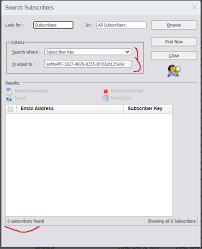
- gettectonic.com - Page 28
What is the subscriber key?

Salesforce Subscriber Key

What is a Salesforce Subscriber key? A subscriber key is a text field that contains a value that uniquely identifies a subscriber in your Marketing Cloud account. A subscriber key is limited to 254 English characters. Avoid using email addresses as subscriber keys. The subscriber key is also sometimes referred to as the contact key. What is the difference between primary key and subscriber key? You can have more than 1 primary key, and it uniquely identifies a row in a data extension. It also ensures records are not overwritten when you create an import activity. Subscriber Key – Contains a value that uniquely identifies a subscriber in your system. What is the difference between subscriber ID and key? Subscriber ID is a system defined unique identifier representing a Subscriber. Subscriber Key is a user defined unique identifier representing a Subscriber. How will a subscriber key be populated in all subscribers? Subscriber Key values are set in the following ways: An import into All Subscribers. An API call that sends a message (in all channels) A send to a Data Extension that has a sendable field mapped. What is the difference between contact key and subscriber key in Salesforce Marketing Cloud? This key is used to identify a single person across multiple channels inside of Marketing Cloud. In Email Studio, that key is called the “Subscriber Key”. In other channels, such as Mobile Connect or Mobile Push, that value is called “Contact Key”. What is a primary key in Salesforce Marketing Cloud? A primary key designates a field or fields as significant for evaluating data in a Data Extension. Adding this property to a Data Extension will result in those fields being indexed. It is always possible to use a relational database model for data in the Marketing Cloud. What is the difference between a subscriber and contact? A subscriber in SFMC primarily represents an individual’s email communication preferences and is associated with email campaigns, while a contact represents a broader customer profile that includes information beyond email, allowing you to engage with customers across various channels. Like3 Related Posts Salesforce Marketing Cloud Transactional Emails Salesforce Marketing Cloud Transactional Emails are immediate, automated, non-promotional messages crucial to business operations and customer satisfaction, such as order Read more Perfect Drip Campaign In an ideal world, you effortlessly conquer the lead generation challenges with one creative arm tied behind your back, craft Read more Salesforce Content Builder Salesforce Content Builder empowers you to craft compelling emails and landing page templates, complete with reusable and interactive content blocks. Read more Demandbase Salesforce Integration The integration of Demandbase with Salesforce creates a seamless connection between Demandbase One and your Salesforce CRM, establishing a bidirectional Read more
Read More

Review Benefit Eligibility When Circumstances Change

Benefits management involves the comprehensive process of identifying, planning, measuring, and tracking benefits from the inception of a program or project investment until the realization of the final projected benefit. Its aim is to ensure that the desired benefits are specific, measurable, agreed upon, realistic, and time-bound. Review Benefit Eligibility When Circumstances Change. Reviewing benefit eligibility should occur when circumstances change, enabling adjustments to disbursements. Constituents can be easily referred to providers using a guided flow, while gaining insights into caseload trends and community impact can boost caseworker efficiency. Additionally, expediting complaint filing for judicial and investigative cases, and allowing constituents to raise service requests on the public portal, can reduce administrative burdens. Review Benefit Eligibility When Circumstances Change To address the needs of eligible constituents, offer monetary benefits in various forms, such as social insurance, tax benefits, subsidies, food and housing assistance, or direct cash assistance. This assistance can be provided through direct or indirect transfers of resources or credits for a specified period. Eligibility criteria for benefits may include factors like age, income, expenses, household size, and others. Applications are reviewed and screened to approve eligible ones. Benefits are then assigned to eligible applicants, specifying details such as the amount and frequency of the benefit. Configuration options allow benefits to be disbursed automatically for upcoming payment schedules or manually. Constituents should be enabled to search for benefits they are eligible for, apply for them, and track the status of their applications and assigned benefits. They should also have access to view a schedule of payments they can expect to receive, along with explanations for decisions made. To set up benefits management: Reviewing applications for benefit eligibility involves: Like Related Posts Who is Salesforce? Who is Salesforce? Here is their story in their own words. From our inception, we’ve proudly embraced the identity of Read more Salesforce Marketing Cloud Transactional Emails Salesforce Marketing Cloud Transactional Emails are immediate, automated, non-promotional messages crucial to business operations and customer satisfaction, such as order Read more Salesforce Unites Einstein Analytics with Financial CRM Salesforce has unveiled a comprehensive analytics solution tailored for wealth managers, home office professionals, and retail bankers, merging its Financial Read more AI-Driven Propensity Scores AI plays a crucial role in propensity score estimation as it can discern underlying patterns between treatments and confounding variables Read more

Read More
Salesforce Loyalty Management

Salesforce Loyalty Program Explained

Loyalty Management enables you to customize programs that precisely align with the unique needs of your business and customer base. Salesforce, equipped with a flexible platform, aids businesses in reimagining their loyalty strategies. The Salesforce Loyalty Cloud empowers businesses across various industries to effortlessly build intelligent loyalty programs without the need for coding. These programs incentivize customers to engage more with the brand, fostering repeat business. Salesforce Loyalty Program Explained. Unleash the full potential of your Customer Loyalty platform through impactful features: The centralized program management feature allows you to configure loyalty programs tailored to your needs, activate segments across channels quickly, and iterate based on results. Improved customer engagement uses behavior analysis to optimize experiences across web and mobile, tailoring them to individual users. Cross-industry partnerships provide customers with more options, and fast time-to-market for referral promotions is facilitated through a guided setup wizard. Identifying brand advocates and implementing AI-powered referral programs with predictive dashboards enhance program impact. Personalizing promotions based on member data and utilizing predictive performance insights maximize engagement and ROI. A single customer view connects loyalty across the customer experience, triggering marketing journeys and providing insights for enhanced interactions. Elevate your loyalty initiatives, engage customers effectively, and drive business growth with the robust capabilities of the Customer Loyalty platform and the expert guidance from Tectonic. Like1 Related Posts Who is Salesforce? Who is Salesforce? Here is their story in their own words. From our inception, we’ve proudly embraced the identity of Read more Salesforce Marketing Cloud Transactional Emails Salesforce Marketing Cloud Transactional Emails are immediate, automated, non-promotional messages crucial to business operations and customer satisfaction, such as order Read more Salesforce Unites Einstein Analytics with Financial CRM Salesforce has unveiled a comprehensive analytics solution tailored for wealth managers, home office professionals, and retail bankers, merging its Financial Read more AI-Driven Propensity Scores AI plays a crucial role in propensity score estimation as it can discern underlying patterns between treatments and confounding variables Read more

Read More
Salesforce CDP

When Was Salesforce CDP Released?

Customer Data Platforms (CDPs) allow marketing organizations to have a single and complete source of truth around their customer data.  Salesforce CDP Released to address this need. Salesforce CDP Released In May 2021, Salesforce launched their own Customer Data Platform (CDP), an enhancement of the product formerly known as Customer Audience 360 (CA360). The customer data platform (CDP) is one of the fastest-growing categories of marketing technology today. Customer Data Platform, formerly Salesforce CDP, helps you connect and unify customer data. Across systems, power the connected and personalized marketing experiences that your customers expect, and analyze cross-channel engagement behavior. Activate loyalty, transaction, engagement attributes, and more from Customer Data Platform. Marketers can send additional customer profile information to marketing platforms, like Marketing Cloud Engagement, to enhance personalized communications. As a developer, you can use the CDP Python connector to leverage the power of Query API to extract data from Customer Data Platform into your environment. What is the difference between Salesforce CRM and CDP? Ultimately the difference between a CDP and CRM comes down to who primarily uses these tools and how each collects data. In short, CRMs organize and manage customer-facing interactions with your team while CDPs collect data from across your tech stack to understand customer behavior and traits more broadly. Is Salesforce Genie the same as CDP? Although Salesforce CDP and Genie are both beneficial tools for organizations, they have different functions. Salesforce CDP is certainly a superior option if you’re trying to increase your marketing and sales activities. Salesforce CDP Is Now Customer Data Platform The name change doesn’t change the functionality of Customer Data Platform. Is Salesforce CDP now data cloud? Salesforce Data Cloud is not a replacement for formerly Salesforce CDP – you will still be able to purchase, and use, Salesforce CDP. No doubt that there’s plenty on the horizon for Data Cloud, arguably Salesforce’s hottest product. Salesforce’s CDP offering was has been renamed a few times: Customer 360 Audiences → Salesforce CDP → Marketing Cloud Customer Data Platform → Salesforce Data Cloud. Content updated November 2023. Like1 Related Posts Tectonic’s Successful Salesforce Track Record Salesforce Technology Services Integrator – Tectonic has successfully delivered Salesforce in a variety of industries including Public Sector, Hospitality, Manufacturing, Read more What is Salesforce? Salesforce is cloud-based CRM software. It makes it easier for companies to find more prospects, close more deals, and connect Read more Capture Initial Traffic Source With Google Analytics To ensure the proper sequencing of Tags, modify the Tag sequencing in the Google Analytics preview Tag settings. The custom Read more Snowflake and Salesforce with Embed Snowflake has deepened its partnership with investor Salesforce by introducing two tools that seamlessly connect their cloud-native systems. Snowflake and Read more

Read More
Salesforce Nonprofit Cloud

Advance Your Mission With Salesforce for Nonprofits

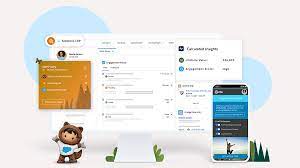
Consider the current operational framework of your organization, especially if it lacks a CRM system. Can you envision a more efficient method for tracking contacts, appointments, programs, services, fundraising, events, resources, and all the other vital information your organization requires? Enter Salesforce for Nonprofits, a solution that offers numerous advantages: How does Salesforce for Nonprofits facilitate the achievement of these goals? It offers a suite of pre-built apps, tools, features, services, and technologies specifically tailored to meet the unique needs of nonprofits across various sizes, types, and missions. Contact Tectonic today to open up a dialogue about Salesforce Nonprofit for your organization. We are please to announce our new Nonprofit Cloud Salesforce Implementation Solution. Like1 Related Posts Tectonic’s Successful Salesforce Track Record Salesforce Technology Services Integrator – Tectonic has successfully delivered Salesforce in a variety of industries including Public Sector, Hospitality, Manufacturing, Read more Cloud Computing for NGOs As cloud computing becomes more prevalent and accessible, nonprofits are increasingly leveraging its benefits to enhance operations, boost fundraising efforts, Read more Salesforce Nonprofit for Fundraising This app furnishes a comprehensive overview of fundraising activities and data, allowing executives and top-level managers to monitor their organization’s Read more Business Card Scanner App for Salesforce Can I Scan a Business Card into Salesforce? Yes, you can scan a business card into Salesforce if your scanning Read more

Read More
Salesforce Success Story

Case Study: Salesforce Innovation for Hospitality

Major hospitality management firm, moves to the cloud and adopts Google Cloud and Salesforce to improve operational insights and decision-making. Tectonic assisted them to move to the cloud and obtatin quicker, actionable insights with business intelligence. Salesforce Innovation for Hospitality.

Read More
Different Ways to Create Cases in Salesforce

What Are the Different Ways to Create Cases in Salesforce?

What are the different ways to create cases in Salesforce? There are four primary methods to generate a case in Salesforce: What are Cases in Salesforce? A case in Salesforce denotes a behavioral event and may involve related Behavior Involvement records. Notably, the Case object serves distinct purposes in EDA compared to standard Salesforce, encompassing two EDA-specific fields facilitating behavior event tracking. Administrators can configure Web-to-Case and Email-to-Case or On-Demand Email-to-Case for automated case capture from websites and customer emails. Customers can log cases through various portals, and manual creation is possible through the Cases tab, related lists, or record detail pages. Unanswered or problematic questions from an answers site can be escalated into new cases. Case Management: Cases encapsulate assessment explanations, questions, or client complications. They provide a means to record and address customer issues efficiently. Key benefits include centralizing customer support interactions, integrating case information with knowledge bases, and streamlining business processes through automatic case escalation and workflow tasks. How do Cases Work in Salesforce? Cases in Salesforce represent customers’ questions or feedback regarding provided services. For instance, if a company sells product A, related inquiries would contribute to opportunity line items. Different ways to create cases in Salesforce: To create a case from a support email or call, follow these steps: Creating a Case Team in Salesforce: To create case teams, follow these steps: Closing Cases: Cases can be closed by administrators or users with “Manage Cases” permission using the Close button. Follow these steps: Deleting Cases: To delete a case, use the “Del” option on the cases list page or the “Delete” button on the case detail page. Only users with the “Delete” permission on cases can perform this action. Difference Between Case and Task in Salesforce: Tasks are for to-dos, while cases are used for requests or complaints. Although cases can handle both, altering case management processes may necessitate distinct processes for to-dos and customer cases. Visibility of Cases in Salesforce: If organization-wide sharing defaults for Cases are set to ‘Private’ with ‘Grant Access Using Hierarchies’ enabled, only the case owner, owner’s managers in the role hierarchy, Salesforce admins, and profiles with ‘View All’ object permission on Cases can view a case. What are Cases in Salesforce? Cases represent behavioral events and can involve related Behavior Involvement records. The Case object serves different purposes in EDA compared to standard Salesforce, featuring two unique EDA-specific fields for behavior event tracking. Creating a Case Object in Salesforce: To create a case object in Salesforce, follow these steps: Different ways to create cases in Salesforce Like2 Related Posts Asset Management Salesforce Can Salesforce do asset management? You can manage assets in Consumer Goods (desktop) and in the Consumer Goods offline mobile Read more Lookup Relationship in Salesforce What is Lookup relationship in Salesforce? Salesforce’s lookup relationships is a significant capability that allows users to connect two objects Read more What is Salesforce? Salesforce is cloud-based CRM software. It makes it easier for companies to find more prospects, close more deals, and connect Read more Generating Documents in Salesforce Salesforce document generation poses a challenge for businesses, given the intricacies of integration involved. Fortunately, a variety of tools are Read more

Read More
Salesforce

Data Cloud for Tableau

Data Cloud for Tableau is another valuable tool, allowing organizations to unlock customer data and generate actionable insights at scale. The platform natively connects to integrated, unified data from various sources, including Salesforce instances, facilitating visualization, automation, exploration, and action on data. It simplifies the creation of real-time customer data platforms, aiding in the discovery of customer insights and data-driven decision-making. In the pursuit of transforming into a customer-centric company, the ability to swiftly act on insights and deliver personalized customer experiences is more crucial than ever. In today’s business landscape, where demands are high and resources are limited, leaders require access to reliable, up-to-date Key Performance Indicators (KPIs) and data-driven insights to effectively manage their businesses, stay ahead of the competition, and offer unparalleled customer experiences. Getting Good Data However, obtaining good data and actionable insights has proven to be challenging. Traditional approaches involved constructing intricate data pipelines for data replication, resulting in brittle, complex, and time-consuming architectures. These structures necessitated data duplication and substantial investments in data warehouses, making the process of making informed business decisions frustrating and time-intensive. Salesforce Data Cloud for Tableau addresses these challenges. It stands out for its ease of use, deployment, and scalability. All customer data becomes instantly accessible, up-to-date, trusted, and secure. Data Cloud for Tableau emerges as the swiftest and most scalable solution for unlocking customer data and facilitating the delivery of actionable, real-time insights. Now, let’s dig into what Salesforce Data Cloud for Tableau entails. Salesforce Data Cloud, recognized as the leading CRM data cloud, serves as a real-time data platform, offering a unified source of truth for customer data. This platform is designed to tackle significant data pipeline challenges. Powering the entire Salesforce Customer 360 platform. Thereby enabling organizations to ingest, harmonize, and unify all customer data across various channels and interactions. The result is a single, real-time customer profile. By enhancing automation, intelligence, integration, and real-time experiences across the Customer 360. Data Cloud for Tableau transforms trusted and current customer data into dynamic, visual, and actionable analytics and insights. Seamlessly integrating all Salesforce data into Tableau. It empowers individuals across the organization with valuable insights to unlock customer value and make quicker, informed decisions. Simplifying the process of building a real-time customer data platform, Data Cloud for Tableau facilitates easy visualization, automation, exploration, and action on data from any source, enabling efficient tracking of key performance indicators (KPIs) essential to the business. Additionally, we ensure secure, real-time, and open data sharing between Salesforce and Snowflake. This facilitates direct access to data stored in Snowflake by Data Cloud for Tableau and vice versa. By creating a real-time Customer 360 view across the two platforms without the need for data movement or duplication. Data Cloud empowers you to uncover concealed insights within your customer data, allowing you to: To understand how Data Cloud and Tableau collaborate, envision Tableau as the data visualization and business intelligence layer atop Data Cloud. This combination enables you to perceive, comprehend, and act on your live customer data. The features of this collaboration cover functionality across five key categories for enterprise customer data: Connect, Harmonize, Unify, Analyze and Predict, and Act. Like Related Posts Capture Initial Traffic Source With Google Analytics To ensure the proper sequencing of Tags, modify the Tag sequencing in the Google Analytics preview Tag settings. The custom Read more Joined Datasets in B2B Marketing Analytics B2BMA empowers users to generate additional datasets using the data manager. This process involves creating datasets in various ways, such Read more Snowflake and Salesforce with Embed Snowflake has deepened its partnership with investor Salesforce by introducing two tools that seamlessly connect their cloud-native systems. Snowflake and Read more Salesforce CDP Explained What is a Customer Data Platform (CDP)? A Customer Data Platform (CDP) is one of the most transformative tools in Read more

Read More
Salesforce Automation

Using Automation Tools in Salesforce

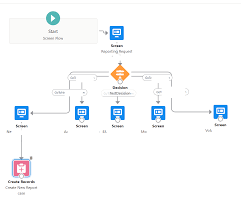
Automation streamlines repetitive tasks in your business, such as creating follow-up messages or sending reminder emails, saving critical time and reducing errors. Salesforce offers four main automation tools to help businesses optimize their processes and enhance efficiency: Workflow Rules, Process Builder, Flow, and Apex. While these tools can significantly improve productivity, there are additional resources to further enhance automation capabilities. Salesforce Automation Tools Overview Salesforce provides multiple automation tools to streamline business processes and save time. Here’s an overview of some of these tools: Workflow Rules: These rules automate simple business processes by setting criteria and actions based on record changes in Salesforce. Process Builder: This tool allows you to create more complex automated processes using a graphical interface, including triggering actions based on multiple criteria. Flow: Flow enables you to automate even more sophisticated processes by guiding users through screens and automating complex logic, similar to building a program. Apex: For developers, Apex provides a powerful programming language to create custom automation solutions tailored to specific business needs. Each of these tools has its strengths and use cases, allowing businesses to choose the most appropriate tool for their requirements. Salesforce Workflow Automation To automate workflows in Salesforce, you can utilize several options: Process Builder: This tool enables you to create automated processes triggered by various Salesforce events, allowing for more advanced workflow automation. Salesforce Automation Rules Automation rules in Salesforce are criteria-based rules that identify matching prospects and apply predefined actions to them. These rules help streamline and automate lead management processes, ensuring timely actions are taken based on prospect criteria. Automating Tasks in Salesforce Salesforce Macros provide a way to automate repetitive tasks for your team, allowing you to solve customer issues with a single click. The Macro Builder enables you to define the logic behind these automated tasks, improving efficiency and productivity. Choosing the Right Automation in Salesforce Flow Builder is a versatile tool for automating repetitive business processes in Salesforce. Additional features such as approval processes, Flow Orchestration, Einstein Next Best Action, and Apex can further enhance automation capabilities based on specific business requirements. Salesforce Automation Technology Overview Salesforce automation technology encompasses tools and software platforms designed to automate various tasks expected of sales teams, such as data entry and email communication. By reducing manual workload, these technologies help sales teams focus more on revenue-generating activities. The Power of Automation in Salesforce Salesforce offers a comprehensive suite of automation tools that empower users to automate processes and approvals without writing any code. These tools provide guided visual experiences and behind-the-scenes automation, enabling businesses to streamline operations efficiently. In conclusion, Salesforce provides a range of automation tools and technologies to help businesses streamline processes, save time, and improve productivity. Understanding the capabilities of these tools and choosing the right ones for your specific requirements can greatly enhance your automation efforts. Like Related Posts Who is Salesforce? Who is Salesforce? Here is their story in their own words. From our inception, we’ve proudly embraced the identity of Read more Salesforce Marketing Cloud Transactional Emails Salesforce Marketing Cloud Transactional Emails are immediate, automated, non-promotional messages crucial to business operations and customer satisfaction, such as order Read more Salesforce Unites Einstein Analytics with Financial CRM Salesforce has unveiled a comprehensive analytics solution tailored for wealth managers, home office professionals, and retail bankers, merging its Financial Read more AI-Driven Propensity Scores AI plays a crucial role in propensity score estimation as it can discern underlying patterns between treatments and confounding variables Read more

Read More
Sales Cloud Einstein

Einstein GPT from Salesforce

Salesforce, the leading global CRM provider, has unveiled Einstein GPT, the world’s first generative AI CRM technology. Engineered to craft personalized content across sales, service, marketing, commerce, and IT interactions, Einstein GPT aims to enhance employee productivity and elevate customer experiences. While Salesforce had previously integrated AI into its ecosystem with Einstein AI, the introduction of Einstein GPT represents a notable advancement. Leaning on OpenAI’s capabilities, Einstein GPT is an empowered iteration of existing technology, aligning with Salesforce’s commitment to artificial intelligence technology adoption. Einstein GPT from Salesforce Einstein GPT operates as an open and extensible platform, leveraging trusted, real-time data for training. It facilitates public and private AI models tailored for CRM, integrating seamlessly with OpenAI to offer generative AI capabilities. This enables users to connect data to OpenAI’s advanced models or choose external models, employing natural-language prompts within Salesforce CRM for content generation that dynamically adapts to evolving customer information and needs. The technology infusion of Einstein GPT involves combining Salesforce’s proprietary AI models with generative AI tech from an ecosystem of partners and real-time data from the Salesforce Data Cloud. This combination allows the generation of personalized content, including emails for sales, responses for customer service, targeted content for marketers, and auto-generated code for developers. The collaboration with OpenAI extends Salesforce’s capabilities by merging OpenAI’s enterprise-grade ChatGPT with Salesforce’s private AI models. Additionally, Salesforce Ventures announced the Generative AI Fund. This is a 0 million investment initiative supporting startups to foster responsible, trusted, and generative AI development. Einstein GPT introduces various applications, such as Einstein GPT for Sales, Service, Marketing, and Developers. These applications empower users to auto-generate things they used to have to write. Sales tasks, enhanced customer service interactions, dynamically created personalized content, and improved developer productivity through an AI chat assistant. To further enhance collaboration, Salesforce and OpenAI introduced the ChatGPT for Slack app. Thus offering AI-powered conversation summaries. The research tools and writing assistance within the Slack platform are aided by Einstein.. Prominent organizations like HPE, L’Oréal, RBC US Wealth Management, and S&P Global Ratings have acknowledged the value of generative AI. They are all improving customer engagement. Like1 Related Posts Who is Salesforce? Who is Salesforce? Here is their story in their own words. From our inception, we’ve proudly embraced the identity of Read more Salesforce Marketing Cloud Transactional Emails Salesforce Marketing Cloud Transactional Emails are immediate, automated, non-promotional messages crucial to business operations and customer satisfaction, such as order Read more Salesforce Unites Einstein Analytics with Financial CRM Salesforce has unveiled a comprehensive analytics solution tailored for wealth managers, home office professionals, and retail bankers, merging its Financial Read more AI-Driven Propensity Scores AI plays a crucial role in propensity score estimation as it can discern underlying patterns between treatments and confounding variables Read more

Read More
Salesforce Solutions for Communications

Salesforce Solutions for Communications

Salesforce has recently unveiled tailored Salesforce Solutions for Communications aimed at enhancing customer experiences through advanced analytics, automation tools, and AI-driven customer service. These innovations empower providers to gain deeper insights into their customers, automate interactions, and effectively monitor customer satisfaction levels. For communication providers looking to elevate their customer service, Salesforce’s automation solutions offer significant benefits. They ensure seamless and efficient handling of every customer interaction, leading to improved satisfaction and increased loyalty. Salesforce Solutions for Communication Providers Salesforce offers a comprehensive suite of solutions specifically designed for communication providers to enhance customer experiences. This suite includes: Salesforce Customer Engagement Platform (CXP) and Tools The Salesforce Customer Engagement Platform equips communication providers with a suite of tools to enhance customer experiences, including: Salesforce Einstein AI Platform for Communication Providers The Salesforce Einstein AI Platform is tailored to improve customer experiences for communication providers by analyzing extensive datasets to identify patterns, understand customer needs, and optimize interactions, ultimately enhancing overall customer experience. Benefits of the Salesforce Customer Engagement Platform The Salesforce Customer Engagement Platform offers communication providers various benefits, including enhanced customer experience, increased sales, and improved operational efficiencies. Features such as social listening and engagement analytics enable providers to understand customer sentiment and behavior, facilitating personalized interactions and driving sales growth. New Salesforce Innovations for Communication Providers New innovations from Salesforce include analytics, AI, and prebuilt solutions that automate processes, improve customer experiences, and reduce operational costs. Integrations with WhatsApp enable richer customer engagements, personalized experiences, and automated interactions through chatbots. In conclusion, Salesforce’s solutions for communication providers represent a significant advancement in improving customer experiences, revolutionizing how providers interact with their clientele to achieve positive outcomes and business growth. Contact Tectonic today to explore Salesforce communications solutions. Like Related Posts Who is Salesforce? Who is Salesforce? Here is their story in their own words. From our inception, we’ve proudly embraced the identity of Read more Salesforce Marketing Cloud Transactional Emails Salesforce Marketing Cloud Transactional Emails are immediate, automated, non-promotional messages crucial to business operations and customer satisfaction, such as order Read more Salesforce Unites Einstein Analytics with Financial CRM Salesforce has unveiled a comprehensive analytics solution tailored for wealth managers, home office professionals, and retail bankers, merging its Financial Read more AI-Driven Propensity Scores AI plays a crucial role in propensity score estimation as it can discern underlying patterns between treatments and confounding variables Read more

Read More

Tectonic at a Glance

Tectonic delivered over 500 successful implementations. Tectonic at a Glance 4.9 Customer Satisfaction Rating Salesforce partner delivering innovative business results through Sales, Service, Marketing, & Experience Clouds. Tectonic at a Glance We help our customers transform their organizations to be more data-driven through: Contact Tectonic today. ​ Like Related Posts Who is Salesforce? Who is Salesforce? Here is their story in their own words. From our inception, we’ve proudly embraced the identity of Read more Salesforce Marketing Cloud Transactional Emails Salesforce Marketing Cloud Transactional Emails are immediate, automated, non-promotional messages crucial to business operations and customer satisfaction, such as order Read more Salesforce Unites Einstein Analytics with Financial CRM Salesforce has unveiled a comprehensive analytics solution tailored for wealth managers, home office professionals, and retail bankers, merging its Financial Read more AI-Driven Propensity Scores AI plays a crucial role in propensity score estimation as it can discern underlying patterns between treatments and confounding variables Read more

Read More
gettectonic.com