- gettectonic.com - Page 4
Salesforce Data Cloud

Salesforce Data Cloud vs Snowflake

A Comprehensive Comparison In the today’s data-driven world, businesses increasingly turn to cloud-based data platforms for managing, analyzing, and deriving insights from their customer data. Among the prominent options available, Salesforce Data Cloud and Snowflake stand out from the crowd. While both platforms offer robust capabilities, they exhibit distinct strengths and weaknesses. This insight looks into the comparison of Salesforce Data Cloud vs Snowflake. Salesforce Data Cloud: Salesforce Data Cloud is a hyperscale customer data platform (CDP) designed to help businesses consolidate all their customer data, including engagement data sourced externally. It establishes a unified view of the customer, empowering businesses to personalize experiences, enhance decision-making, and foster growth. Snowflake: Snowflake is a cloud-based data warehousing platform that facilitates the storage, analysis, and sharing of data for businesses. It encompasses a wide array of features, including an awesome SQL engine, elastic scalability, and compatibility with various data sources. Salesforce Data Cloud vs Snowflake Feature Salesforce Data Cloud Snowflake Focus Customer data General data Strengths Data enrichment, personalization, real-time updates Scalability, analytics, SQL support Weaknesses Less flexible than Snowflake, limited analytics capabilities Not as user-friendly as Salesforce Data Cloud Pricing Based on data volume Based on usage The ideal platform for you will be contingent on your specific needs and requirements. If your primary focus is on managing customer data and enhancing customer engagement, Salesforce Data Cloud proves to be a suitable option. On the other hand, if you require a more versatile data platform capable of handling a broad range of data types and workloads, Snowflake emerges as a better choice. Additional considerations include: Ultimately, the most effective way to determine the right platform for you is to experiment with both and assess which one aligns better with your preferences. Contact Tectonic today to explore Data Cloud and Snowflake for your data needs. Like2 Related Posts Lookup Relationship in Salesforce What is Lookup relationship in Salesforce? Salesforce’s lookup relationships is a significant capability that allows users to connect two objects Read more Lightning Dialer Salesforce What is Lightning Dialer Salesforce? Lightning Dialer Salesforce offers an outbound calling product with the option to add inbound calling Read more Capture Initial Traffic Source With Google Analytics To ensure the proper sequencing of Tags, modify the Tag sequencing in the Google Analytics preview Tag settings. The custom Read more Summary Formulas and Row Level Formulas Salesforce report formulas serve various purposes, from grouping records to performing calculations and comparing data. In the Salesforce Report Builder, Read more
Read More
Technical Debt

Salesforce Technical Debt

Technical debt represents the additional effort required for subsequent rework due to opting for a quick solution over a more comprehensive approach during development. It aligns with the concept of “Shift Left,” emphasizing the cost-effectiveness of addressing issues early in the process. In the realm of Salesforce, technical debt is an inevitable aspect, akin to a necessary evil. Repaying this debt is crucial to prevent the accrual of “interest” that could impede agility in the long run. Traditionally associated with developers taking code shortcuts, the rise of low-code platforms like Salesforce has expanded the sources of technical debt to include configurations made through “clicks” in addition to code. This guide recognizes that Salesforce technical debt often becomes substantial enough to involve architects, shedding light on how it has evolved into a collective concern. Understanding Salesforce Technical Debt: Technical debt arises from choosing expedient solutions (quickly built without a thorough understanding of business requirements) instead of more time-consuming, superior alternatives. It can also result from solutions initially designed to function in a specific way but require adjustments due to evolving business needs. A comprehensive view of technical debt encompasses both code and declarative customizations, addressing instances where standard functionality was impractical or unavailable. Considering everything as technical debt, the concept is labeled as such because it necessitates repayment. Levels of “interest” paid on this debt can be categorized: Excessive technical debt might compel a business to discard the entire Salesforce org and commence anew, resulting in the loss of years of investment. Causes of Technical Debt: Multiple factors contribute to the accumulation of technical debt in organizations: Managing technical debt entails navigating the trade-off between “delayed gratification” and anticipating future costs. Like2 Related Posts Who is Salesforce? Who is Salesforce? Here is their story in their own words. From our inception, we’ve proudly embraced the identity of Read more Salesforce Marketing Cloud Transactional Emails Salesforce Marketing Cloud Transactional Emails are immediate, automated, non-promotional messages crucial to business operations and customer satisfaction, such as order Read more Salesforce Unites Einstein Analytics with Financial CRM Salesforce has unveiled a comprehensive analytics solution tailored for wealth managers, home office professionals, and retail bankers, merging its Financial Read more AI-Driven Propensity Scores AI plays a crucial role in propensity score estimation as it can discern underlying patterns between treatments and confounding variables Read more

Read More
Public Sector Care and Services Management

Public Sector Care and Services Management

Embracing Technology for Proactive Governance: Public Sector Care and Services Management In navigating the complexities of modern governance and service delivery, embracing technology trends presents an opportunity for governments to proactively address challenges and deliver impactful outcomes to the citizens they serve. Through strategic investment in reliable technology, governments can build trust with constituents, enhance the citizen experience, and drive cost savings. Public Sector Care and Services Management Salesforce, globally recognized as the leading CRM, consistently rises with its adaptable features tailored to diverse audiences. Its innovative solutions cater to unique needs across industries and sectors, including the public sector. Salesforce offers a suite of solutions designed to optimize operations within any public office setting, acknowledging the critical role of technology in enhancing efficiency. But Salesforce Public Services Solutions are not just a cookie-cutter government application. Public Sector Care and Services Management solutions from Salesforce are fully customizable. Understanding the Role of Salesforce in the Public Sector The public sector encompasses governmental bodies responsible for addressing fundamental citizen concerns at various levels, from local to federal. These entities can significantly enhance their efficiency by leveraging the right technological tools. Salesforce is committed to streamlining processes within the public sector, recognizing its pivotal role in ensuring effective governance. Expectations for government offices parallel those of private enterprises, with citizens expecting service quality comparable to the private sector. Therefore, public entities are tasked with delivering efficiency, agility, and direct engagement, thereby demonstrating their commitment to serving the populace. Salesforce offers a range of solutions tailored to meet the unique demands of the public sector. Tailored Salesforce Solutions for the Public Sector Salesforce’s offerings for the public sector comprise applications meticulously crafted to address specific government and constituent requirements. These flexible and secure e-government tools aim to revolutionize the sector’s operations by providing a comprehensive view of citizens and enhancing the effectiveness of public employees. By simplifying processes and fostering innovation, these solutions drive efficiency at both organizational and individual levels, facilitating smoother operations. Integrated into Public Sector Solutions, these offerings leverage Salesforce’s standard functionalities and Service Cloud capabilities. They enable the creation of an Experience Cloud site, granting citizens seamless access to government services. Some available solutions cater to general tasks managed by public sector agencies, including: Key Advantages of Salesforce Solutions for the Public Sector Salesforce solutions offer numerous advantages to the public sector, aligning with the demands of citizens and employees. These include enhanced citizen service, improved accessibility, agile responsiveness, employee experience enhancement, increased productivity, enhanced transparency, flexibility, adaptation, and cost reduction. Salesforce emerges as a crucial success tool in the public sector’s modernization journey, transforming processes to be more agile and efficient. For public sector and tribal government organizations seeking to implement Salesforce solutions tailored for the public sector, assistance from experienced teams like Tectonic can ensure a successful transition. Contact Tectonic today for Public Sector Care and Services Management. Like1 Related Posts Who is Salesforce? Who is Salesforce? Here is their story in their own words. From our inception, we’ve proudly embraced the identity of Read more Salesforce Marketing Cloud Transactional Emails Salesforce Marketing Cloud Transactional Emails are immediate, automated, non-promotional messages crucial to business operations and customer satisfaction, such as order Read more Salesforce Unites Einstein Analytics with Financial CRM Salesforce has unveiled a comprehensive analytics solution tailored for wealth managers, home office professionals, and retail bankers, merging its Financial Read more AI-Driven Propensity Scores AI plays a crucial role in propensity score estimation as it can discern underlying patterns between treatments and confounding variables Read more

Read More
Zapier for Salesforce

Salesforce and Zapier and Anything You Can Imagine

Zapier enables you to connect Salesforce with thousands of the most popular third-party apps, so you can automate your work and have more time for what matters most—no code required. Providing easy automation for busy Salesforce users. Zapier transfers info between your web apps automatically, so you can focus on your most important work. Zapier is “middleware” that sits between two other services. It allows software services to create Triggers and Actions. Each combination of a Trigger and an Action is called a Zap. Triggers are how your app’s users can start automated workflows whenever an item is added or updated in your app. There are two types of triggers in Zapier: Actions are how your app’s use the data. The action is the effect of the cause (trigger). What is the difference between actions and triggers in Zapier? Every Zap starts with a single trigger that watches for new or updated data, starting the user’s workflow. Action steps then make use of that data. Zapier actions create or update a single item in your app through API calls that include multiple details from user customized input fields. Is Zapier considered an API? Yes, Zapier is an API tool. Zapier is a web-based automation tool that allows you to connect and automate different web services and applications without the need for any coding. It uses APIs (Application Programming Interfaces) to communicate with the different services and applications that it connects to. About AI by Zapier Smart task and text handling powered by a flexible AI. Create text prompts to perform standard tasks like extracting lead (or other) data or answering discrete questions like “where should this message be routed?”. Or, create your own! What coding language does Zapier use? Zapier is a monolithic application built on Python and Django. There’s a lot of momentum with Python and it is very difficult changing course to another programming language while the service is running. Why is Zapier so popular? Zapier is a powerful tool for automating workflows and combining different business applications without requiring any additional coding skills. Is Zapier actually useful? Users have found that Zapier is a versatile automation tool that simplifies complex problems and enhances efficiency in various industries. With its easy-to-use interface, users can create automation workflows and connect different apps and platforms seamlessly. Around the world in 2024, over 9973 companies have started using Zapier as Integration tool. Netflix, Inc. PayPal Holdings, Inc. Trimble, Inc. If you need assistance connecting apps to Salesforce with Zapier, contact Tectonic today. Like Related Posts Who is Salesforce? Who is Salesforce? Here is their story in their own words. From our inception, we’ve proudly embraced the identity of Read more Salesforce Marketing Cloud Transactional Emails Salesforce Marketing Cloud Transactional Emails are immediate, automated, non-promotional messages crucial to business operations and customer satisfaction, such as order Read more Salesforce Unites Einstein Analytics with Financial CRM Salesforce has unveiled a comprehensive analytics solution tailored for wealth managers, home office professionals, and retail bankers, merging its Financial Read more AI-Driven Propensity Scores AI plays a crucial role in propensity score estimation as it can discern underlying patterns between treatments and confounding variables Read more

Read More
Salesforce AI Introduces SFR-Judge

Steps to AI Implementation

“You don’t have to sell people on the potential. What you do have to sell people on is how do we go about it.”— Deep Srivastav, Data Leadership Collaborative Developing an Effective AI Strategy: A Seven-Step Framework A well-defined AI strategy is the foundation for success. It provides clarity on vision, purpose, and goals while ensuring teams understand the steps needed to get there. By adopting a data-driven approach with measurable objectives and key performance indicators (KPIs), businesses can foster seamless collaboration and maximize AI’s impact. Key Steps to Building a Successful AI Strategy 1. Define Clear Business Objectives Start by aligning AI initiatives with overarching business goals. Clearly outline what success looks like and identify areas where AI can drive the most value. 2. Assess Your Data Readiness Evaluate the quality, quantity, and accessibility of your data. Identify gaps that could impact AI performance and ensure you have a strong data foundation for accurate insights. 3. Identify and Prioritize AI Use Cases Determine which business processes can benefit from AI, balancing short-term wins with long-term strategic projects. Focus on use cases that align with your objectives and offer the highest return on investment. 4. Build a Multidisciplinary Team AI success requires expertise across multiple domains. Assemble a team that includes data scientists, business strategists, engineers, and ethics specialists to guide AI development and deployment. 5. Choose the Right AI Technologies Select AI tools and platforms that match your business needs. Consider scalability, security, integration capabilities, and ease of deployment when evaluating your technology stack. 6. Pilot with Proof-of-Concept Projects Start small by running controlled pilot projects to test feasibility, validate assumptions, and refine your approach. This minimizes risk while providing valuable insights before scaling AI across the organization. 7. Monitor, Evaluate, and Improve AI is not a one-time implementation—it requires continuous monitoring and refinement. Track performance, gather stakeholder feedback, and iterate based on data-driven insights to optimize outcomes. Key Considerations for AI Implementation ✅ Ethical AI & Bias MitigationEstablish guidelines to ensure AI operates fairly, transparently, and responsibly, addressing potential biases and privacy concerns. ✅ Change Management & Stakeholder Buy-inEffectively communicate AI’s role within the organization, ensuring employees understand its benefits and adapt to new workflows. ✅ Security & ComplianceImplement robust security measures to safeguard data and adhere to industry regulations, ensuring responsible AI adoption. By following these steps, organizations can create an AI strategy that not only drives innovation but also delivers measurable business impact while mitigating risks. The key to AI success isn’t just recognizing its potential—it’s about executing it the right way. Like Related Posts Who is Salesforce? Who is Salesforce? Here is their story in their own words. From our inception, we’ve proudly embraced the identity of Read more Salesforce Unites Einstein Analytics with Financial CRM Salesforce has unveiled a comprehensive analytics solution tailored for wealth managers, home office professionals, and retail bankers, merging its Financial Read more AI-Driven Propensity Scores AI plays a crucial role in propensity score estimation as it can discern underlying patterns between treatments and confounding variables Read more Tectonic’s Successful Salesforce Track Record Salesforce Technology Services Integrator – Tectonic has successfully delivered Salesforce in a variety of industries including Public Sector, Hospitality, Manufacturing, Read more

Read More
Salesforce government and public sector solutions

Show Required Permits on the Constituent Panel

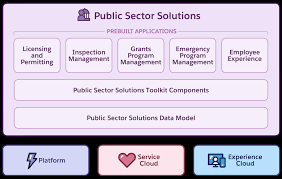
Show the permits that are required for a business type, including details about permit dependencies. Show Required Permits on the Constituent Panel. Your Salesforce Public Sector Solution has you covered. Publish dynamic forms on a public portal, where constituents can easily submit and track applications for individual and business licenses and permits. Review and approve applications using automated processes that ensure integrity and consistency across the workflow. The Permits page that’s provided with the Licenses And Permits site template allows constituents to search for and see the licenses and permits that are required for different types of businesses. It includes the Permits component, which shows a list of all business regulatory authorization types and dependencies defined in your Public Sector Solutions org. No site configuration is required for the Permits page, although you can customize its title and description in the Rich Content Editor. To include the Permits component on another site page, drag it to that page from the Components panel. Show Required Permits on the Constituent Panel Part of the Salesforce Public Sector Solutions offering. For more information, contact Tectonic today. Helping you transform the delivery of public services with flexible, secure e-government tools that support both sides of the service counter. See how Public Sector Solutions broadly supports agencies engaged in licensing, permitting, inspections, emergency response, social and human services, grants management, and more. Salesforce offers a free trial of the public sector solutions Salesforce product. Public Sector Solutions Data Model Understand the relationships between objects in Public Sector Solutions. Public Sector Solutions uses a suite of standard Salesforce objects to structure and store data related to licensing and permitting, inspections and assessments, case and program management, benefit management, grantmaking, and other features. To better understand how features work, it helps to look at the data models, which are graphical representations of collections of objects and their relationships. For data models of Public Sector Solutions features, see Salesforce developer documentation. Create guided application and intake forms for Public Sector Solutions constituents that ask questions based on previous responses. OmniScript, part of the OmniStudio suite of automation services, components, and objects, lets you create complex, dynamic web forms with little or no code. Simply drag interactive elements from a Build panel onto an OmniScript canvas, arrange them as desired, and configure properties that define how the element shows, what it does, and how it works. Elements can include a wide array of question input types as well as DataRaptors, which draw on data from your Public Sector Solutions org, and other actions and functions. OmniScripts can even include other OmniScripts.Use OmniScripts to create guided user experiences including application and intake forms forlicenses, permits, services, benefits, and grants. Like Related Posts Who is Salesforce? Who is Salesforce? Here is their story in their own words. From our inception, we’ve proudly embraced the identity of Read more Salesforce Marketing Cloud Transactional Emails Salesforce Marketing Cloud Transactional Emails are immediate, automated, non-promotional messages crucial to business operations and customer satisfaction, such as order Read more Salesforce Unites Einstein Analytics with Financial CRM Salesforce has unveiled a comprehensive analytics solution tailored for wealth managers, home office professionals, and retail bankers, merging its Financial Read more AI-Driven Propensity Scores AI plays a crucial role in propensity score estimation as it can discern underlying patterns between treatments and confounding variables Read more

Read More
SWOT Templates

SWOT Templates

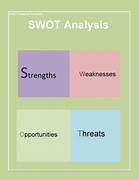
Top SWOT Analysis Templates for Any Business Strategic planning is crucial for businesses aiming to grow. Whether launching a new product, tackling competition, or enhancing existing offerings, a SWOT analysis can help you understand your current position and develop a confident path forward. When engaging in strategic brainstorming, avoid getting bogged down by documentation. Focus on expansive thinking and creative problem-solving instead. To aid in this process, we’ve compiled some of the best SWOT analysis templates available online. These templates handle the layout and design so you can concentrate on deep thinking. Read on to discover the value of SWOT analyses and our top template picks. What is a SWOT Analysis? A SWOT analysis is a framework for evaluating your company’s market position by examining internal and external factors. It helps identify your strengths, weaknesses, opportunities, and threats. The strengths and weaknesses sections focus on internal factors, such as products, value propositions, teams, and resources. Opportunities and threats examine external factors, including customers, competitors, industry trends, and broader market forces. Why Conduct a SWOT Analysis? A SWOT analysis provides a clear visualization of your business’s current standing. By understanding your strengths, areas for improvement, and external influences, you can formulate effective strategies for progress. Periodic SWOT analyses are beneficial for continuous improvement and essential during significant initiatives or changes, such as: SWOT analyses can also be applied to individual team members, useful for performance reviews or team reorganizations. Top SWOT Analysis Templates for Any Business Here are seven excellent SWOT analysis templates suitable for any business: For SWOT analyses that will be part of larger presentations, Canva’s drag-and-drop design tool offers dozens of templates. Customize with your brand colors and insert into your strategy deck or PDF. Miro’s virtual whiteboard template goes beyond traditional SWOT frameworks by adding sections for potential actions. Explore how to leverage strengths and opportunities or mitigate weaknesses using opportunities. Smartsheet provides templates for both Google Docs and Microsoft Word. Whether evaluating a business goal or personal performance, these templates are versatile and easy to use. TemplateLAB offers SWOT analysis templates in multiple formats, including Word Doc, PowerPoint, PDF, and Photoshop. Choose from a range of styles for both internal brainstorming and formal presentations. Airtable combines the structure of Excel with better organization for written content. Its SWOT analysis template is perfect for those who prefer spreadsheet-style work with enhanced labeling and filtering capabilities. SCORE’s simple Word Doc template provides all the necessary elements for a SWOT analysis without any extra distractions. SCORE also offers free resources, including mentorship and educational opportunities. For those looking to incorporate AI, Notion offers a template that leverages ChatGPT. Input your business information, and ChatGPT generates a SWOT analysis, offering insights you might not have considered. Bonus: WordStream Free SWOT Analysis Template For a comprehensive solution, try the WordStream template in Google Sheets. It’s an excellent tool for SWOT analysis brainstorming sessions. Use a SWOT Analysis Template Today for Business Growth Tomorrow When choosing a template, prioritize strategic work over perfect design. Select one and dive into the brainstorming process with your team to gain valuable insights for your business. If you need assistance with your marketing strategy, explore our solutions to maximize strengths and minimize weaknesses for long-term success. Like Related Posts Who is Salesforce? Who is Salesforce? Here is their story in their own words. From our inception, we’ve proudly embraced the identity of Read more Salesforce Marketing Cloud Transactional Emails Salesforce Marketing Cloud Transactional Emails are immediate, automated, non-promotional messages crucial to business operations and customer satisfaction, such as order Read more Salesforce Unites Einstein Analytics with Financial CRM Salesforce has unveiled a comprehensive analytics solution tailored for wealth managers, home office professionals, and retail bankers, merging its Financial Read more AI-Driven Propensity Scores AI plays a crucial role in propensity score estimation as it can discern underlying patterns between treatments and confounding variables Read more

Read More
Customer Experience

Improving Customer Experiences (CX)

In 2024, maintaining competitiveness requires businesses to prioritize personalization and agility within their customer experience (CX) strategy. Here are strategies for improving customer experiences with programs from Tectonic: By focusing on these key areas, organizations can navigate the continually evolving CX landscape and deliver exceptional customer experiences. Tectonic is ready to collaborate, customizing your Salesforce tools to create remarkable customer experiences. You might want to learn more about Salesforce Marketing Cloud Personalization. This Salesforce tool improves customer experiences using data and automation. Like1 Related Posts Tectonic’s Successful Salesforce Track Record Salesforce Technology Services Integrator – Tectonic has successfully delivered Salesforce in a variety of industries including Public Sector, Hospitality, Manufacturing, Read more Step By Step Guide to a Salesforce Quickstart Salesforce Implementation with a Tectonic Quickstart: Step-by-Step Salesforce Quickstart Guide. Step 1: Define Your Business Requirements Identify specific business processes Read more Generating Documents in Salesforce Salesforce document generation poses a challenge for businesses, given the intricacies of integration involved. Fortunately, a variety of tools are Read more Cool Ways to Use Surveys With Salesforce Leveraging survey forms is an effective way to gather real-life insights from individuals crucial to your organization. Salesforce facilitates survey Read more

Read More
gettectonic.com