- gettectonic.com - Page 4
Dreamforce 24 Insights

Dreamforce 24 Insights

Three Key Insights You Might Have Missed from Dreamforce ’24 In today’s digital-driven world, interconnected systems are commonplace and essential, making platform integration and unified operations critical. As AI becomes more central, technologies like Salesforce Agentforce AI are drawing increased attention. At Dreamforce ’24, automation and AI were the event’s stars, particularly Salesforce’s plans for Agentforce AI. Dreamforce 24 Insights. Here are three key insights from Dreamforce ’24 that you might have missed: 1. Salesforce’s Automation Plans Could Reshape Its Future Salesforce has a solid reputation for business automation, but now, with agentic systems entering the picture, the company is looking at a transformative opportunity. John Furrier of theCUBE noted during Dreamforce, “Salesforce is positioned to use generative AI to simplify complexity and reduce the steps required to get things done.” As Salesforce integrates generative AI, the emphasis on securing and utilizing data becomes paramount. Christophe Bertrand of theCUBE pointed out that many organizations are not fully utilizing their data. The introduction of Agentforce AI, which aims to leverage this untapped potential, could bring automation to new heights and fundamentally transform how businesses operate. 2. Salesforce Agentforce AI Aims to Integrate Seamlessly Into Business Workflows A major focus of Dreamforce was Salesforce’s new AI offering—Agentforce. According to Muralidhar Krishnaprasad, Salesforce’s CTO, this represents the next stage of AI for the company. While earlier efforts focused on predictive AI (Einstein) and generative AI copilots, Agentforce moves toward more autonomous AI agents. “Our platform will be one of the most comprehensive for agent development,” Krishnaprasad explained. He highlighted that Agentforce will allow businesses to deploy AI agents across various functions—advertising, sales, service, and analytics—creating a seamless AI-driven ecosystem within the Salesforce platform. David Schmaier, president and CPO of Salesforce, added that Agentforce will transform customer interactions by integrating AI agents with Salesforce Data Cloud to deliver more personalized and efficient experiences. 3. Strategic Partnerships Are Streamlining Business and Enhancing Customer Solutions At Dreamforce, partnerships played a key role in Salesforce’s strategy for the future. A collaboration between Salesforce and AWS is streamlining procurement for joint customers through AWS Marketplace. This partnership allows companies to optimize their spend management and simplify the purchasing process for Salesforce products. IBM is also leveraging Agentforce to drive new outcomes through watsonx Orchestrate, as Nick Otto, IBM’s head of global strategic partnerships, explained. Automation and orchestration have been focal points for both IBM and Salesforce. Another partnership with Canva showcased AI-driven data autofill capabilities that integrate with Salesforce CRM. This allows sales teams to create personalized presentations at scale, automating workflows and increasing efficiency, as noted by Canva’s Chief Customer Officer, Rob Giglio. These insights from Dreamforce ’24 highlight the growing importance of AI, automation, and strategic partnerships in shaping the future of business operations with Salesforce at the forefront. Like Related Posts Who is Salesforce? Who is Salesforce? Here is their story in their own words. From our inception, we’ve proudly embraced the identity of Read more Salesforce Marketing Cloud Transactional Emails Salesforce Marketing Cloud Transactional Emails are immediate, automated, non-promotional messages crucial to business operations and customer satisfaction, such as order Read more Salesforce Unites Einstein Analytics with Financial CRM Salesforce has unveiled a comprehensive analytics solution tailored for wealth managers, home office professionals, and retail bankers, merging its Financial Read more AI-Driven Propensity Scores AI plays a crucial role in propensity score estimation as it can discern underlying patterns between treatments and confounding variables Read more


Read More
Salesforce Success Story

Case Study: Salesforce Advanced Forcasting and Streamline Operations Yields Big Change and Bigger Results

Case Study: Salesforce Advanced Forcsting and Streamline Operations Yields Big Change and Bigger Results

Read More
Next Gen Commerce Cloud

Next Gen Commerce Cloud

Salesforce has launched the next generation of Commerce Cloud, delivering a unified platform that connects B2C, DTC, and B2B commerce, along with Order Management, Payments, and more, to drive seamless customer experiences and revenue growth. With these innovations, businesses can scale across digital and physical channels while leveraging trusted AI and enterprise-wide data for smarter operations. Next Gen Commerce Cloud. Key features include Autonomous Agentforce Agents, which enhance commerce for merchants, buyers, and shoppers by automating tasks such as product recommendations and order tracking. Companies like MillerKnoll have seen success by using Commerce Cloud’s innovations to scale their workforce and drive revenue across multiple channels. New Agentforce Agents for Commerce — Merchant, Buyer, and Personal Shopper — autonomously manage tasks and improve the customer journey. They handle tasks without human intervention, such as product recommendations or order lookups, drawing insights from rich data sources like customer interactions, inventory, orders, and reviews. By tapping into unified data, these agents augment employees, offering tailored experiences and increasing efficiency, while strictly adhering to privacy and security standards. Salesforce’s Commerce Cloud now natively integrates every part of the commerce journey, helping businesses break down data silos and offer consistent, personalized interactions. As Michael Affronti, SVP and GM of Commerce Cloud, highlights: “Unified commerce is the future, breaking down silos to deliver seamless experiences across all channels.” Key new features and functionalities include: With these advancements, Commerce Cloud empowers businesses to create seamless, AI-powered experiences that drive customer loyalty, operational efficiency, and revenue growth across every touchpoint. Like Related Posts Who is Salesforce? Who is Salesforce? Here is their story in their own words. From our inception, we’ve proudly embraced the identity of Read more Salesforce Marketing Cloud Transactional Emails Salesforce Marketing Cloud Transactional Emails are immediate, automated, non-promotional messages crucial to business operations and customer satisfaction, such as order Read more Salesforce Unites Einstein Analytics with Financial CRM Salesforce has unveiled a comprehensive analytics solution tailored for wealth managers, home office professionals, and retail bankers, merging its Financial Read more AI-Driven Propensity Scores AI plays a crucial role in propensity score estimation as it can discern underlying patterns between treatments and confounding variables Read more
Read More
How to Achieve AI Democratization

How to Achieve AI Democratization

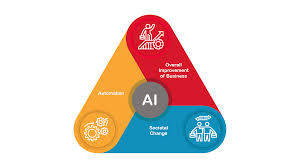
AI democratization empowers non-experts by placing AI tools in the hands of everyday users, enabling them to harness the technology’s potential without requiring specialized technical skills. Today, IT leaders are increasingly focused on expanding AI’s benefits across the enterprise. The growing number of AI-based tools is making this more achievable. In some respects, democratization extends the concept of low- and no-code development—allowing non-developers to create software—into the realm of AI. However, it’s also about ensuring data is accessible and fostering data literacy throughout the organization. This doesn’t mean every employee needs to write machine learning scripts. Instead, it means business professionals should understand AI’s potential, identify relevant use cases, and apply insights to drive business outcomes. Achieving AI democratization is feasible, thanks to decentralized governance models and the emergence of AI-focused services. However, as with any new technology, democratization brings both benefits and challenges. How to Achieve AI Democratization AI is no longer reserved for experts. Tools like Google Colab and Microsoft’s Azure OpenAI Service have simplified AI development, enabling more employees to participate by writing and sharing code for various projects. To maximize the impact, enterprises must train business users on the basics of AI and how it can enhance their daily work. According to Arpit Mehra, Practice Director at Everest Group, decentralized governance models can help organizations build strategies for data and technology learning. Key strategies include: Arun Chandrasekaran, VP and Analyst at Gartner, also advises companies to focus on intelligent applications in areas such as customer engagement and talent acquisition, which can provide specialized training. Benefits and Challenges of AI Democratization AI democratization can significantly expand an organization’s capabilities. By placing AI in the hands of more employees, businesses reduce barriers to adoption, cut costs, and create highly accurate AI models. “Making AI more accessible broadens the scope of what businesses can achieve,” said Michael Shehab, PwC U.S. Technology and Innovation Leader. AI democratization also helps companies address IT talent shortages by upskilling employees and enabling them to integrate AI into their workflows. This approach improves productivity, allowing businesses to more easily spot trends and patterns within large data sets. However, challenges also arise. If AI is implemented without proper oversight, the technology is susceptible to bias. Poor training could lead to decision-making based on inaccurate or skewed data. Business leaders must ensure they understand who is using AI tools and establish standards for responsible use. Without careful testing, AI applications can automate mistakes that go unnoticed but may cause significant issues. Ed Murphy, SVP and Head of Data Science at 1010data, emphasizes the importance of testing to prevent these errors. To mitigate risks, organizations should invest in upskilling and reskilling employees. A well-defined training plan will enable nontechnical teams to participate in AI adoption and deployment effectively. Mehra from Everest Group also suggests exploring MLOps technologies to simplify AI development and streamline processes. Ultimately, AI democratization will benefit businesses that recognize AI’s potential beyond a small group of experts. While the benefits are clear, organizations must remain vigilant about the risks to ensure successful AI integration and reap the rewards of their efforts. Like1 Related Posts Who is Salesforce? Who is Salesforce? Here is their story in their own words. From our inception, we’ve proudly embraced the identity of Read more Salesforce Marketing Cloud Transactional Emails Salesforce Marketing Cloud Transactional Emails are immediate, automated, non-promotional messages crucial to business operations and customer satisfaction, such as order Read more Salesforce Unites Einstein Analytics with Financial CRM Salesforce has unveiled a comprehensive analytics solution tailored for wealth managers, home office professionals, and retail bankers, merging its Financial Read more AI-Driven Propensity Scores AI plays a crucial role in propensity score estimation as it can discern underlying patterns between treatments and confounding variables Read more
Read More
Tableau Einstein is Here

Tableau Einstein is Here

Tableau Einstein marks a new chapter for Tableau, transforming the analytics experience by moving beyond traditional reports and dashboards to deliver insights directly within the flow of a user’s work. This new AI-powered analytics platform blends existing Tableau and Salesforce capabilities with innovative features designed to revolutionize how users engage with data. The platform is built around four key areas: autonomous insight delivery through AI, AI-assisted development of a semantic layer, real-time data access, and a marketplace for data and AI products, allowing customers to personalize their Tableau experience. Some features, like Tableau Pulse and Tableau Agent, which provide autonomous insights, are already available. Additional tools, such as Tableau Semantics and a marketplace for AI products, are expected to launch in 2025. Access to Tableau Einstein is provided through a Tableau+ subscription, though pricing details remain private. Since being acquired by Salesforce in 2019, Tableau has shifted its focus toward AI, following the trend of many analytics vendors. In February, Tableau introduced Tableau Pulse, a generative AI-powered tool that delivers insights in natural language. In July, it also rolled out Tableau Agent, an AI assistant to help users prepare and analyze data. With AI at its core, Tableau Einstein reflects deeper integration between Tableau and Salesforce. David Menninger, an analyst at Ventana Research, commented that these new capabilities represent a meaningful step toward true integration between the two platforms. Donald Farmer, founder of TreeHive Strategy, agrees, highlighting that while the robustness of Tableau Einstein’s AI capabilities compared to its competitors remains to be seen, the platform offers more than just incremental add-ons. “It’s an impressive release,” he remarked. A Paradigm Shift in Analytics A significant aspect of Tableau Einstein is its agentic nature, where AI-powered agents deliver insights autonomously, without user prompts. Traditionally, users queried data and analyzed reports to derive insights. Tableau Einstein changes this model by proactively providing insights within the workflow, eliminating the need for users to formulate specific queries. The concept of autonomous insights, represented by tools like Tableau Pulse and Agentforce for Tableau, allows businesses to build autonomous agents that deliver actionable data. This aligns with the broader trend in analytics, where the market is shifting toward agentic AI and away from dashboard reliance. Menninger noted, “The market is moving toward agentic AI and analytics, where agents, not dashboards, drive decisions. Agents can act on data rather than waiting for users to interpret it.” Farmer echoed this sentiment, stating that the integration of AI within Tableau is intuitive and seamless, offering a significantly improved analytics experience. He specifically pointed out Tableau Pulse’s elegant design and the integration of Agentforce AI, which feels deeply integrated rather than a superficial add-on. Core Features and Capabilities One of the most anticipated features of Tableau Einstein is Tableau Semantics, a semantic layer designed to enhance AI models by enabling organizations to define and structure their data consistently. Expected to be generally available by February 2025, Tableau Semantics will allow enterprises to manage metrics, data dimensions, and relationships across datasets with the help of AI. Pre-built metrics for Salesforce data will also be available, along with AI-driven tools to simplify semantic layer management. Tableau is not the first to offer a semantic layer—vendors like MicroStrategy and Looker have similar features—but the infusion of AI sets Tableau’s approach apart. According to Tableau’s chief product officer, Southard Jones, AI makes Tableau’s semantic layer more agile and user-friendly compared to older, labor-intensive systems. Real-time data integration is another key component of Tableau Einstein, made possible through Salesforce’s Data Cloud. This integration enables Tableau users to securely access and combine structured and unstructured data from hundreds of sources without manual intervention. Unstructured data, such as text and images, is critical for comprehensive AI training, and Data Cloud allows enterprises to use it alongside structured data efficiently. Additionally, Tableau Einstein will feature a marketplace launching in mid-2025, which will allow users to build a composable infrastructure. Through APIs, users will be able to personalize their Tableau environment, share AI assets, and collaborate across departments more effectively. Looking Forward As Tableau continues to build on its AI-driven platform, Menninger and Farmer agree that the vendor’s move toward agentic AI is a smart evolution. While Tableau’s current capabilities are competitive, Menninger noted that the platform doesn’t necessarily set Tableau apart from competitors like Qlik, MicroStrategy, or Microsoft Fabric. However, the tight integration with Salesforce and the focus on agentic AI may provide Tableau with a short-term advantage in the fast-changing analytics landscape. Farmer added that Tableau Einstein’s autonomous insight generation feels like a significant leap forward for the platform. “Tableau has done great work in creating an agentic experience that feels, for the first time, like the real deal,” he said. Looking ahead, Tableau’s roadmap includes a continued focus on agentic AI, with the goal of providing each user with their own personal analyst. “It’s not just about productivity,” said Jones. “It’s about changing the value of what can be delivered.” Menninger concluded that Tableau’s shift away from dashboards is a reflection of where business intelligence is headed. “Dashboards, like data warehouses, don’t solve problems on their own. What matters is what you do with the information,” he said. “Tableau’s push toward agentic analytics and collaborative decision-making is the right move for its users and the market as a whole.” Like1 Related Posts Who is Salesforce? Who is Salesforce? Here is their story in their own words. From our inception, we’ve proudly embraced the identity of Read more Salesforce Marketing Cloud Transactional Emails Salesforce Marketing Cloud Transactional Emails are immediate, automated, non-promotional messages crucial to business operations and customer satisfaction, such as order Read more Salesforce Unites Einstein Analytics with Financial CRM Salesforce has unveiled a comprehensive analytics solution tailored for wealth managers, home office professionals, and retail bankers, merging its Financial Read more AI-Driven Propensity Scores AI plays a crucial role in propensity score estimation as it can discern underlying patterns between treatments and confounding variables Read more

Read More

Wordle Today

Most people are familiar with Wordle by now. It’s that simple yet addictive game where players try to guess a five-letter word within six attempts. Introducing WordMap: Guess the Word of the Day A few weeks ago, while using semantic search in a Retrieval-Augmented Generation (RAG) system (for those curious about RAG, there’s more information in a previous insight), an idea emerged. What if there were a game like Wordle, but instead of guessing a word based on its letter positions, players guessed the word of the day by how close their guesses were in meaning? Players would input various words, and the game would score each one based on its semantic similarity to the target word, evaluating how related the guesses are in terms of meaning or context. The goal would be to guess the word in as few tries as possible, though without a limit on the number of attempts. This concept led to the creation of ☀️ WordMap! To develop the game, it was necessary to embed both the user’s input word and the word of the day, then calculate how semantically similar they were. The game would normalize the score between 0 and 100, displaying it in a clean, intuitive user interface. Diagram of the Workflow The Embedding ChallengeRAGs are frequently used for searching relevant data based on an input. The challenge in this case was dealing with individual words instead of full paragraphs, making the context limited. There are two types of embeddings: word-level and sentence-level. While word-level embeddings might seem like the logical choice, sentence-level embeddings were chosen for simplicity. Word-Level Embeddings Word-level embeddings represent individual words as vectors in a vector space, with the premise that words with similar meanings tend to appear in similar contexts. Key Features However, word embeddings treat words in isolation, which is a limitation. For instance, the word “bank” could refer to either a financial institution or the side of a river, depending on the context. Sentence-Level Embeddings Sentence embeddings represent entire sentences (or paragraphs) as vectors, capturing the meaning by considering the order and relationships between words. Key Features The downside is that sentence embeddings require more computational resources, and longer sentences may lose some granularity. Why Sentence Embeddings Were Chosen The answer lies in simplicity. Most embedding models readily available today are sentence-based, such as OpenAI’s text-embedding-3-large. While Word2Vec could have been an option, it would have required loading a large pre-trained model. Moreover, models like Word2Vec need vast amounts of training data to be precise. Using sentence embeddings isn’t entirely inaccurate, but it does come with certain limitations. Challenges and SolutionsOne limitation was accuracy, as the model wasn’t specifically trained to embed single words. To improve precision, the input word was paired with its dictionary definition, although this method has its own drawbacks, especially when a word has multiple meanings. Another challenge was that semantic similarity scores were relatively low. For instance, semantically close guesses often didn’t exceed a cosine similarity score of 0.45. To avoid discouraging users, the scores were normalized to provide more realistic feedback. The Final Result 🎉The game is available at WordMap, and it’s ready for players to enjoy! Like Related Posts Who is Salesforce? Who is Salesforce? Here is their story in their own words. From our inception, we’ve proudly embraced the identity of Read more Salesforce Marketing Cloud Transactional Emails Salesforce Marketing Cloud Transactional Emails are immediate, automated, non-promotional messages crucial to business operations and customer satisfaction, such as order Read more Salesforce Unites Einstein Analytics with Financial CRM Salesforce has unveiled a comprehensive analytics solution tailored for wealth managers, home office professionals, and retail bankers, merging its Financial Read more AI-Driven Propensity Scores AI plays a crucial role in propensity score estimation as it can discern underlying patterns between treatments and confounding variables Read more
Read More
Is Agentforce Different?

Is Agentforce Different?

The Salesforce hype machine is in full swing, with product announcements like Chatter, Einstein GPT, and Data Cloud, all positioned as revolutionary tools that promise to transform how we work. Is Agentforce Different? However, it’s often difficult to separate fact from fiction in the world of Salesforce. The cloud giant thrives on staying ahead of technological advancements, which means reinventing itself every year with new releases and updates. You could even say three times per year with the major releases. Why Enterprises Need Multiple Salesforce Orgs Over the past decade, Salesforce product launches have been hit or miss—primarily miss. Offerings like IoT Cloud, Work.com, and NFT Cloud have faded into obscurity. This contrasts sharply with Salesforce’s earlier successes, such as Service Cloud, the AppExchange, Force.com, Salesforce Lightning, and Chatter, which defined its first decade in business. One notable exception is Data Cloud. This product has seen significant success and now serves as the cornerstone of Salesforce’s future AI and data strategy. With Salesforce’s growth slowing quarter over quarter, the company must find new avenues to generate substantial revenue. Artificial Intelligence seems to be their best shot at reclaiming a leadership position in the next technological wave. Is Agentforce Different? While Salesforce has been an AI leader for over a decade, the hype surrounding last year’s Dreamforce announcements didn’t deliver the growth the company was hoping for. The Einstein Copilot Studio—comprising Copilot, Prompt Builder, and Model Builder—hasn’t fully lived up to expectations. This can be attributed to a lack of AI readiness among enterprises, the relatively basic capabilities of large language models (LLMs), and the absence of fully developed use cases. In Salesforce’s keynote, it was revealed that over 82 billion flows are launched weekly, compared to just 122,000 prompts executed. While Flow has been around for years, this stat highlights that the use of AI-powered prompts is still far from mainstream—less than one prompt per Salesforce customer per week, on average. When ChatGPT launched at the end of 2022, many predicted the dawn of a new AI era, expecting a swift and dramatic transformation of the workplace. Two years later, it’s clear that AI’s impact has yet to fully materialize, especially when it comes to influencing global productivity and GDP. However, Salesforce’s latest release feels different. While AI Agents may seem new to many, this concept has been discussed in AI circles for decades. Marc Benioff’s recent statements during Dreamforce reflect a shift in strategy, including a direct critique of Microsoft’s Copilot product, signaling the intensifying AI competition. This year’s marketing strategy around Agentforce feels like it could be the transformative shift we’ve been waiting for. While tools like Salesforce Copilot will continue to evolve, agents capable of handling service cases, answering customer questions, and booking sales meetings instantly promise immediate ROI for organizations. Is the Future of Salesforce in the Hands of Agents? Despite the excitement, many questions remain. Are Salesforce customers ready for agents? Can organizations implement this technology effectively? Is Agentforce a real breakthrough or just another overhyped concept? Agentforce may not be vaporware. Reports suggest that its development was influenced by Salesforce’s acquisition of Airkit.AI, a platform that claims to resolve 90% of customer queries. Salesforce has even set up dedicated launchpads at Dreamforce to help customers start building their own agents. Yet concerns remain, especially regarding Salesforce’s complexity, technical debt, and platform sprawl. These issues, highlighted in this year’s Salesforce developer report, cannot be overlooked. Still, it’s hard to ignore Salesforce’s strategic genius. The platform has matured to the point where it offers nearly every functionality an organization could need, though at times the components feel a bit disconnected. For instance: Salesforce is even hinting at usage-based pricing, with a potential $2 charge per conversation—an innovation that could reshape their pricing model. Will Agents Be Salesforce’s Key to Future Growth? With so many unknowns, only time will tell if agents will be the breakthrough Salesforce needs to regain the momentum of its first two decades. Regardless, agents appear to be central to the future of AI. Leading organizations like Copado are also launching their own agents, signaling that this trend will define the next phase of AI innovation. In today’s macroeconomic environment, where companies are overstretched and workforce demands are high, AI’s ability to streamline operations and improve customer service has never been more critical. Whoever cracks customer service AI first could lead the charge in the inevitable AI spending boom. We’re all waiting to see if Salesforce has truly cracked the AI code. But one thing is certain: the race to dominate AI in customer service has begun. And Salsesforce may be at the forefront. Like Related Posts Who is Salesforce? Who is Salesforce? Here is their story in their own words. From our inception, we’ve proudly embraced the identity of Read more Salesforce Marketing Cloud Transactional Emails Salesforce Marketing Cloud Transactional Emails are immediate, automated, non-promotional messages crucial to business operations and customer satisfaction, such as order Read more Salesforce Unites Einstein Analytics with Financial CRM Salesforce has unveiled a comprehensive analytics solution tailored for wealth managers, home office professionals, and retail bankers, merging its Financial Read more AI-Driven Propensity Scores AI plays a crucial role in propensity score estimation as it can discern underlying patterns between treatments and confounding variables Read more

Read More
chatGPT open ai 01

ChatGPT Open AI o1

OpenAI has firmly established itself as a leader in the generative AI space, with its ChatGPT being one of the most well-known applications of AI today. Powered by the GPT family of large language models (LLMs), ChatGPT’s primary models, as of September 2024, are GPT-4o and GPT-3.5. In August and September 2024, rumors surfaced about a new model from OpenAI, codenamed “Strawberry.” Speculation grew as to whether this was a successor to GPT-4o or something else entirely. The mystery was resolved on September 12, 2024, when OpenAI launched its new o1 models, including o1-preview and o1-mini. What Is OpenAI o1? The OpenAI o1 family is a series of large language models optimized for enhanced reasoning capabilities. Unlike GPT-4o, the o1 models are designed to offer a different type of user experience, focusing more on multistep reasoning and complex problem-solving. As with all OpenAI models, o1 is a transformer-based architecture that excels in tasks such as content summarization, content generation, coding, and answering questions. What sets o1 apart is its improved reasoning ability. Instead of prioritizing speed, the o1 models spend more time “thinking” about the best approach to solve a problem, making them better suited for complex queries. The o1 models use chain-of-thought prompting, reasoning step by step through a problem, and employ reinforcement learning techniques to enhance performance. Initial Launch On September 12, 2024, OpenAI introduced two versions of the o1 models: Key Capabilities of OpenAI o1 OpenAI o1 can handle a variety of tasks, but it is particularly well-suited for certain use cases due to its advanced reasoning functionality: How to Use OpenAI o1 There are several ways to access the o1 models: Limitations of OpenAI o1 As an early iteration, the o1 models have several limitations: How OpenAI o1 Enhances Safety OpenAI released a System Card alongside the o1 models, detailing the safety and risk assessments conducted during their development. This includes evaluations in areas like cybersecurity, persuasion, and model autonomy. The o1 models incorporate several key safety features: GPT-4o vs. OpenAI o1: A Comparison Here’s a side-by-side comparison of GPT-4o and OpenAI o1: Feature GPT-4o o1 Models Release Date May 13, 2024 Sept. 12, 2024 Model Variants Single Model Two: o1-preview and o1-mini Reasoning Capabilities Good Enhanced, especially in STEM fields Performance Benchmarks 13% on Math Olympiad 83% on Math Olympiad, PhD-level accuracy in STEM Multimodal Capabilities Text, images, audio, video Primarily text, with developing image capabilities Context Window 128K tokens 128K tokens Speed Fast Slower due to more reasoning processes Cost (per million tokens) Input: $5; Output: $15 o1-preview: $15 input, $60 output; o1-mini: $3 input, $12 output Availability Widely available Limited to specific users Features Includes web browsing, file uploads Lacks some features from GPT-4o, like web browsing Safety and Alignment Focus on safety Improved safety, better resistance to jailbreaking ChatGPT Open AI o1 OpenAI o1 marks a significant advancement in reasoning capabilities, setting a new standard for complex problem-solving with LLMs. With enhanced safety features and the ability to tackle intricate tasks, o1 models offer a distinct upgrade over their predecessors. Like Related Posts Who is Salesforce? Who is Salesforce? Here is their story in their own words. From our inception, we’ve proudly embraced the identity of Read more Salesforce Unites Einstein Analytics with Financial CRM Salesforce has unveiled a comprehensive analytics solution tailored for wealth managers, home office professionals, and retail bankers, merging its Financial Read more AI-Driven Propensity Scores AI plays a crucial role in propensity score estimation as it can discern underlying patterns between treatments and confounding variables Read more Tectonic’s Successful Salesforce Track Record Salesforce Technology Services Integrator – Tectonic has successfully delivered Salesforce in a variety of industries including Public Sector, Hospitality, Manufacturing, Read more

Read More
State Loan Processing Software by Salesforce

State Loan Processing Software by Salesforce

State Loan Processing Software: A Salesforce-Powered Solution Introduction In today’s fast-paced financial environment, efficient loan management is critical for lending institutions to succeed. Traditional loan processing methods are often inefficient, prone to errors, and unable to meet the demands of modern financial services. These outdated techniques lead to delays, compliance issues, and lost revenue. The answer lies in adopting advanced loan management software that leverages technology to streamline processes and enhance customer experiences. Current Challenges Many lenders continue to rely on outdated tools like spreadsheets and manual workflows, hindering productivity and increasing the potential for human error. A study by the National Association of Federal Credit Unions found that 60% of credit unions reported inefficiencies in their loan processes, negatively impacting member satisfaction. Key challenges faced by lending institutions include: Types of Loan Management Software To address these challenges, a variety of loan management software solutions have emerged, each designed to optimize specific aspects of the lending process. Loan Management Software Description: Automates essential loan processes like origination and payment processing. Main Features: Customer Relationship Management (CRM) Software Description: Platforms like Salesforce enable lenders to efficiently manage borrower relationships. Main Features: Compliance Management Software-State Loan Processing Software by Salesforce Description: Ensures lending practices adhere to state and federal regulations. Main Features: Analytics and Reporting Tools Description: Offers data-driven insights to guide strategic decision-making. Main Features: Integrated Payment Solutions Description: Streamlines payment processing across various channels. Main Features: Final Thoughts Adopting modern loan management software brings a host of advantages, including enhanced efficiency, improved compliance, and higher customer satisfaction. Platforms like Salesforce enable lenders to revolutionize their loan processing and management, making their operations more competitive in an evolving market. For lenders seeking to transform their approach to loan management, innovative solutions like Salesforce and Tectonic offer a path to operational excellence and business growth. Like Related Posts Who is Salesforce? Who is Salesforce? Here is their story in their own words. From our inception, we’ve proudly embraced the identity of Read more Salesforce Marketing Cloud Transactional Emails Salesforce Marketing Cloud Transactional Emails are immediate, automated, non-promotional messages crucial to business operations and customer satisfaction, such as order Read more Salesforce Unites Einstein Analytics with Financial CRM Salesforce has unveiled a comprehensive analytics solution tailored for wealth managers, home office professionals, and retail bankers, merging its Financial Read more AI-Driven Propensity Scores AI plays a crucial role in propensity score estimation as it can discern underlying patterns between treatments and confounding variables Read more
Read More
Salesforce Certified AI Associate

Salesforce Certified AI Associate

The Salesforce Certified AI Associate certification is a professional credential that demonstrates your knowledge of artificial intelligence (AI) and its application within Salesforce platforms. This certification is perfect for individuals aiming to enhance their ability to use AI to drive business outcomes. Key topics covered in the certification include: Trailblazer Trailhead for Salesforce Certified AI Associate Like Related Posts Who is Salesforce? Who is Salesforce? Here is their story in their own words. From our inception, we’ve proudly embraced the identity of Read more Salesforce Marketing Cloud Transactional Emails Salesforce Marketing Cloud Transactional Emails are immediate, automated, non-promotional messages crucial to business operations and customer satisfaction, such as order Read more Salesforce Unites Einstein Analytics with Financial CRM Salesforce has unveiled a comprehensive analytics solution tailored for wealth managers, home office professionals, and retail bankers, merging its Financial Read more AI-Driven Propensity Scores AI plays a crucial role in propensity score estimation as it can discern underlying patterns between treatments and confounding variables Read more

Read More
Training and Testing Data

Training and Testing Data

Data plays a pivotal role in machine learning (ML) and artificial intelligence (AI). Tasks such as recognition, decision-making, and prediction rely on knowledge acquired through training. Much like a parent teaches their child to distinguish between a cat and a bird, or an executive learns to identify business risks hidden within detailed quarterly reports, ML models require structured training using high-quality, relevant data. As AI continues to reshape the modern business landscape, the significance of training data becomes increasingly crucial. What is Training Data? The two primary strengths of ML and AI lie in their ability to identify patterns in data and make informed decisions based on that data. To execute these tasks effectively, models need a reference framework. Training data provides this framework by establishing a baseline against which models can assess new data. For instance, consider the example of image recognition for distinguishing cats from birds. ML models cannot inherently differentiate between objects; they must be taught to do so. In this scenario, training data would consist of thousands of labeled images of cats and birds, highlighting relevant features—such as a cat’s fur, pointed ears, and four legs versus a bird’s feathers, absence of ears, and two feet. Training data is generally extensive and diverse. For the image recognition case, the dataset might include numerous examples of various cats and birds in different poses, lighting conditions, and settings. The data must be consistent enough to capture common traits while being varied enough to represent natural differences, such as cats of different fur colors in various postures like crouching, sitting, standing, and jumping. In business analytics, an ML model first needs to learn the operational patterns of a business by analyzing historical financial and operational data before it can identify problems or recognize opportunities. Once trained, the model can detect unusual patterns, like abnormally low sales for a specific item, or suggest new opportunities, such as a more cost-effective shipping option. After ML models are trained, tested, and validated, they can be applied to real-world data. For the cat versus bird example, a trained model could be integrated into an AI platform that uses real-time camera feeds to identify animals as they appear. How is Training Data Selected? The adage “garbage in, garbage out” resonates particularly well in the context of ML training data; the performance of ML models is directly tied to the quality of their training data. This underscores the importance of data sources, relevance, diversity, and quality for ML and AI developers. Data SourcesTraining data is seldom available off-the-shelf, although this is evolving. Sourcing raw data can be a complex task—imagine locating and obtaining thousands of images of cats and birds for the relatively straightforward model described earlier. Moreover, raw data alone is insufficient for supervised learning; it must be meticulously labeled to emphasize key features that the ML model should focus on. Proper labeling is crucial, as messy or inaccurately labeled data can provide little to no training value. In-house teams can collect and annotate data, but this process can be costly and time-consuming. Alternatively, businesses might acquire data from government databases, open datasets, or crowdsourced efforts, though these sources also necessitate careful attention to data quality criteria. In essence, training data must deliver a complete, diverse, and accurate representation for the intended use case. Data RelevanceTraining data should be timely, meaningful, and pertinent to the subject at hand. For example, a dataset containing thousands of animal images without any cat pictures would be useless for training an ML model to recognize cats. Furthermore, training data must relate directly to the model‘s intended application. For instance, business financial and operational data might be historically accurate and complete, but if it reflects outdated workflows and policies, any ML decisions based on it today would be irrelevant. Data Diversity and BiasA sufficiently diverse training dataset is essential for constructing an effective ML model. If a model’s goal is to identify cats in various poses, its training data should encompass images of cats in multiple positions. Conversely, if the dataset solely contains images of black cats, the model’s ability to identify white, calico, or gray cats may be severely limited. This issue, known as bias, can lead to incomplete or inaccurate predictions and diminish model performance. Data QualityTraining data must be of high quality. Problems such as inaccuracies, missing data, or poor resolution can significantly undermine a model’s effectiveness. For instance, a business’s training data may contain customer names, addresses, and other information. However, if any of these details are incorrect or missing, the ML model is unlikely to produce the expected results. Similarly, low-quality images of cats and birds that are distant, blurry, or poorly lit detract from their usefulness as training data. How is Training Data Utilized in AI and Machine Learning? Training data is input into an ML model, where algorithms analyze it to detect patterns. This process enables the ML model to make more accurate predictions or classifications on future, similar data. There are three primary training techniques: Where Does Reinforcement Learning Fit In? Unlike supervised and unsupervised learning, which rely on predefined training datasets, reinforcement learning adopts a trial-and-error approach, where an agent interacts with its environment. Feedback in the form of rewards or penalties guides the agent’s strategy improvement over time. Whereas supervised learning depends on labeled data and unsupervised learning identifies patterns in raw data, reinforcement learning emphasizes dynamic decision-making, prioritizing ongoing experience over static training data. This approach is particularly effective in fields like robotics, gaming, and other real-time applications. The Role of Humans in Supervised Training The supervised training process typically begins with raw data since comprehensive and appropriately pre-labeled datasets are rare. This data can be sourced from various locations or even generated in-house. Training Data vs. Testing Data Post-training, ML models undergo validation through testing, akin to how teachers assess students after lessons. Test data ensures that the model has been adequately trained and can deliver results within acceptable accuracy and performance ranges. In supervised learning,

Read More
Agentforce and Thinking AI

Agentforce and Thinking AI

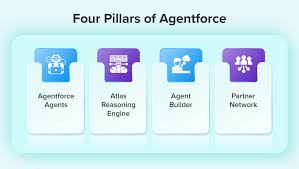
Agentforce is how humans with AI drive customer success together, equips organizations with autonomous agents that boost scale, efficiency, and satisfaction across service, sales, marketing, commerce, and more New Agentforce Atlas Reasoning Engine autonomously analyzes data, makes decisions, and completes tasks, providing reliable and accurate results With Agentforce, any organization can build, customize, and deploy their own agents quickly and easily, with low-code tools New Agentforce Partner Network allows customers to deploy pre-built agents and use agent actions from partners like Amazon Web Services, Google, IBM, Workday, and more Customers like OpenTable, Saks, and Wiley are turning to Agentforce because it is integrated with their apps, works across customer channels, augments their employees, and scales capacity for business needs SAN FRANCISCO — September 12, 2024 – Salesforce (NYSE: CRM), the world’s #1 AI CRM, today unveiled Agentforce, a groundbreaking suite of autonomous AI agents that augment employees and handle tasks in service, sales, marketing, and commerce, driving unprecedented efficiency and customer satisfaction. Agentforce enables companies to scale their workforces on demand with a few clicks. Agentforce’s limitless digital workforce of AI agents can analyze data, make decisions, and take action on tasks like answering customer service inquiries, qualifying sales leads, and optimizing marketing campaigns. With Agentforce, any organization can easily build, customize, and deploy their own agents for any use case across any industry. The future of AI is agents, and it’s here. Our vision is bold: to empower one billion agents with Agentforce by the end of 2025. This is what AI is meant to be.” MARC BENIOFF, CHAIR, CEO & CO-FOUNDER, SALESFORCE “Agentforce represents the Third Wave of AI—advancing beyond copilots to a new era of highly accurate, low-hallucination intelligent agents that actively drive customer success. Unlike other platforms, Agentforce is a revolutionary and trusted solution that seamlessly integrates AI across every workflow, embedding itself deeply into the heart of the customer journey. This means anticipating needs, strengthening relationships, driving growth, and taking proactive action at every touchpoint,” said Marc Benioff, Chair and CEO, Salesforce. “While others require you to DIY your AI, Agentforce offers a fully tailored, enterprise-ready platform designed for immediate impact and scalability. With advanced security features, compliance with industry standards, and unmatched flexibility. Our vision is bold: to empower one billion agents with Agentforce by the end of 2025. This is what AI is meant to be.” In contrast to now-outdated copilots and chatbots that rely on human requests and struggle with complex or multi-step tasks, Agentforce offers a new level of sophistication by operating autonomously, retrieving the right data on demand, building action plans for any task, and executing these plans without requiring human intervention. Like a self-driving car, Agentforce uses real-time data to adapt to changing conditions and operates independently within an organizations’ customized guardrails, ensuring every customer interaction is informed, relevant, and valuable. And when desired, Agentforce seamlessly hands off to human employees with a summary of the interaction, an overview of the customer’s details, and recommendations for what to do next. Industry leaders like OpenTable, Saks, and Wiley are already experiencing the transformative power of Agentforce. For example, Agentforce is helping organizations like Wiley provide customers with dynamic, conversational self-service. Agentforce is configured to answer questions using Wiley’s knowledge base already built into Salesforce so it can automatically resolve account access. It also triages registration and payment issues, directing customers to the appropriate resources. With Agentforce handling routine inquiries, Wiley has seen an over 40% increase in case resolution, outperforming their old chatbot and giving their human agents more time to focus on complex cases. Why it Matters An estimated 41% of employee time is spent on repetitive, low-impact work, and 65% of desk workers believe generative AI will allow them to be more strategic, according to the Salesforce Trends in AI Report. Every company has more jobs to be done than the resources available to do them. As a result, many jobs go unaddressed or uncompleted. Agentforce provides relief to overstretched teams with its ability to scale capacity on demand so humans can focus on higher-touch, higher-value, and more strategic outcomes. The future of work is a hybrid workforce composed of humans with agents, enabling companies to compete in an ever-changing world. Supporting Customer Quotes “Piloting Agentforce has made a noticeable difference during one of our busiest periods — back-to-school season. It’s been exciting to go live with our first agent thanks to the no-code builder, and we’ve seen a more than 40% increase in case resolution, outperforming our old bot. Agentforce helps to manage routine responsibilities and free up our service teams for more complex cases.” – Kevin Quigley, Senior Manager, Continuous Improvement, Wiley “Every interaction that restaurants and diners have with our support team must be accurate, fast, and reflective of the hospitality that restaurants show their guests. Agentforce has incredible potential to help us deliver that high touch attentiveness and support while significantly freeing up our team to address more complex needs.” – George Pokorny, SVP Customer Success, OpenTable “As we advance our personalization strategy, we believe Agentforce and its AI-powered capabilities have the potential to make a real impact on our approach to customer engagement, raising the bar in luxury retail. Agentforce will improve our effectiveness across customer touchpoints, empowering our employees and augmenting their ability to deliver the elevated and more individualized shopping experiences for which Saks is known.” – Mike Hite, Chief Technology Officer, Saks Global Like1 Related Posts Who is Salesforce? Who is Salesforce? Here is their story in their own words. From our inception, we’ve proudly embraced the identity of Read more Salesforce Marketing Cloud Transactional Emails Salesforce Marketing Cloud Transactional Emails are immediate, automated, non-promotional messages crucial to business operations and customer satisfaction, such as order Read more Salesforce Unites Einstein Analytics with Financial CRM Salesforce has unveiled a comprehensive analytics solution tailored for wealth managers, home office professionals, and retail bankers, merging its Financial Read more AI-Driven Propensity Scores AI plays a crucial role in propensity score estimation

Read More
Large Action Models and AI Agents

Large Action Models and AI Agents

The introduction of LAMs marks a significant advancement in AI, focusing on actionable intelligence. By enabling robust, dynamic interactions through function calling and structured output generation, LAMs are set to redefine the capabilities of AI agents across industries.

Read More
Embedded Salesforce Einstein

Embedded Salesforce Einstein

In a world where data is everything, businesses are constantly seeking ways to better understand their customers, streamline operations, and make smarter decisions. Enter Salesforce Einstein—a powerful AI solution embedded within the Salesforce platform that is revolutionizing how companies operate, regardless of size. By leveraging advanced analytics, automation, and machine learning, Einstein helps businesses boost efficiency, drive innovation, and deliver exceptional customer experiences. Embedded Salesforce Einstein is the answer. Here’s how Salesforce Einstein is transforming business: Imagine anticipating customer needs, market trends, or operational challenges before they happen. While it’s not magic, Salesforce Einstein’s AI-powered insights and predictions come remarkably close. By transforming vast amounts of data into actionable insights, Einstein enables businesses to anticipate future scenarios and make well-informed decisions. Industry insight: In financial services, success hinges on anticipating market shifts and client needs. Banks and investment firms leverage Einstein to analyze historical market data and client behavior, predicting which financial products will resonate next. For example, investment advisors might receive AI-driven recommendations tailored to individual clients, boosting engagement and satisfaction. Manufacturers also benefit from Einstein’s predictive maintenance tools, which analyze data from machinery to anticipate equipment failures. A car manufacturer, for instance, could use these insights to schedule maintenance during off-peak hours, minimizing downtime and preventing costly disruptions. Personalization is now a necessity. Salesforce Einstein elevates personalization by analyzing customer data to offer tailored recommendations, messages, and services. Industry insight: In e-commerce, personalized recommendations are often the key to converting browsers into loyal customers. An online bookstore using Einstein might analyze browsing history and past purchases to suggest new releases in genres the customer loves, driving repeat sales. In healthcare, Einstein’s personalization can improve patient outcomes by providing customized follow-up care. Hospitals can use Einstein to analyze patient histories and treatment data, offering reminders tailored to each patient’s needs, improving adherence to care plans and speeding recovery. Salesforce Einstein’s sales intelligence tools, such as Lead Scoring and Opportunity Insights, enable sales teams to focus on the most promising leads. This targeted approach drives higher conversion rates and more efficient sales processes. Industry insight: In real estate, Einstein helps agents manage numerous leads by scoring potential buyers based on their engagement with property listings. A buyer who repeatedly views homes in a specific area is flagged, prompting agents to prioritize their outreach, accelerating the sales process. In the automotive industry, Einstein identifies leads closer to purchasing by analyzing behaviors such as online vehicle configuration and test drive bookings. This allows sales teams to focus on high-potential buyers, closing deals faster. Automation is at the heart of Salesforce Einstein’s ability to streamline processes and boost productivity. By automating repetitive tasks like data entry and customer inquiries, Einstein frees employees to focus on strategic activities, improving overall efficiency. Industry insight: In insurance, Einstein Bots can handle routine tasks like policy inquiries and claim submissions, freeing up human agents for more complex issues. This leads to faster response times and reduced operational costs. In banking, Einstein-powered chatbots manage routine inquiries such as balance checks or transaction histories. By automating these interactions, banks reduce the workload on call centers, allowing agents to provide more personalized financial advice. Einstein Discovery democratizes data analytics, making it easier for non-technical users to explore data and uncover actionable insights. This tool identifies key business drivers and provides recommendations, making data accessible for all. Industry insight: In healthcare, predictive insights are helping providers identify patients at risk of chronic conditions like diabetes. With Einstein Discovery, healthcare providers can flag at-risk individuals early, implementing targeted care plans that improve outcomes and reduce long-term costs. For energy companies, Einstein Discovery analyzes data from sensors and weather patterns to predict equipment failures and optimize resource management. A utility company might use these insights to schedule preventive maintenance ahead of storms, reducing outages and enhancing service reliability. More Than a Tool – Embedded Salesforce Einstein Salesforce Einstein is more than just an AI tool—it’s a transformative force enabling businesses to unlock the full potential of their data. From predicting trends and personalizing customer experiences to automating tasks and democratizing insights, Einstein equips companies to make smarter decisions and enhance performance across industries. Whether in retail, healthcare, or technology, Einstein delivers the tools needed to thrive in today’s competitive landscape. Tectonic empowers organizations with Salesforce solutions that drive organizational excellence. Contact Tectonic today. Like1 Related Posts Who is Salesforce? Who is Salesforce? Here is their story in their own words. From our inception, we’ve proudly embraced the identity of Read more Salesforce Marketing Cloud Transactional Emails Salesforce Marketing Cloud Transactional Emails are immediate, automated, non-promotional messages crucial to business operations and customer satisfaction, such as order Read more Salesforce Unites Einstein Analytics with Financial CRM Salesforce has unveiled a comprehensive analytics solution tailored for wealth managers, home office professionals, and retail bankers, merging its Financial Read more AI-Driven Propensity Scores AI plays a crucial role in propensity score estimation as it can discern underlying patterns between treatments and confounding variables Read more

Read More
Data Governance Frameworks

Data Governance Frameworks

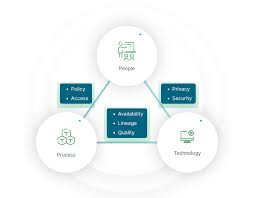
Examples of Data Governance Frameworks Data governance is not a one-size-fits-all approach. Organizations must carefully choose a framework that aligns with their unique goals, structure, and culture. Data is one of an organization’s most valuable assets, and proper governance is key to unlocking its potential. Without a well-designed framework, companies risk poor data quality, privacy breaches, regulatory noncompliance, and missed insights. A data governance framework provides a structured way to manage data throughout its lifecycle, including policies, processes, and standards to ensure data is accurate, accessible, and secure. By putting clear guidelines in place, organizations can increase trust in their data and improve decision-making. Key Pillars of a Data Governance Frameworks A robust data governance framework typically rests on four key pillars: 1. Center-Out Model The center-out model places a centralized team, such as a data governance council, at the core of the governance process. This group establishes policies and oversees data management across the organization, balancing consistency with flexibility for different departments. The Data Governance Institute’s framework is an example of this model. It focuses on creating a Data Governance Office responsible for managing key governance functions such as setting data policies, assigning data stewards, and monitoring compliance. The framework provides a clear structure while allowing business units some leeway in adapting governance practices to their needs. PwC’s model also adopts a center-out approach, with an emphasis on using data governance to monetize data assets. It highlights the importance of maintaining consistency while minimizing the risk of data silos. 2. Top-Down Model In the top-down model, data governance is driven by executive leadership, ensuring alignment with strategic goals. This model provides authority for enforcing governance standards but may face challenges if business units feel disconnected from the central governance team. McKinsey’s framework exemplifies this approach, focusing on integrating data governance with broader business transformation efforts. Executive leadership plays a key role in ensuring that governance initiatives receive the necessary attention and resources. 3. Hybrid Model The hybrid model combines centralized governance with flexibility for individual business units. It establishes an enterprise-wide framework while allowing departments to adapt governance practices to their specific needs. The Eckerson Group’s Modern Data Governance Framework represents a hybrid approach. It emphasizes the importance of people and culture, alongside technology and processes, and encourages organizations to create a roadmap for governance that evolves as needs change. This model provides a balance between centralized control and decentralized flexibility. 4. Bottom-Up Model In the bottom-up model, data governance is driven by subject matter experts and data stakeholders across the organization. This approach promotes collaboration and buy-in from the people closest to the data, ensuring that governance policies are practical and effective. The DAMA-DMBOK framework, developed by the Data Management Association, is a prime example. Although flexible, it often starts as a bottom-up initiative, driven by IT departments and data experts who later gain executive support. 5. Silo-In Model The silo-in model allows individual business units or departments to create their own governance practices. While this approach addresses localized data issues, it often leads to inconsistencies and challenges when the organization needs to integrate data across the enterprise. Though not widely recommended, the silo-in approach may emerge when specific business units take the initiative to establish governance due to regulatory requirements or data management needs within their domains. However, as organizations mature, they often transition to more holistic frameworks to support cross-functional collaboration and data integration. Choosing the Right Framework Selecting the right data governance framework involves evaluating the organization’s needs, structure, and culture. Whether an organization adopts a center-out, top-down, hybrid, bottom-up, or silo-in approach, success depends on involving key stakeholders, securing executive buy-in, and committing to continuous improvement. By treating data as a critical asset and implementing a governance framework that aligns with its business strategy, an organization can ensure that its data management practices support growth, innovation, and regulatory compliance. Like Related Posts Who is Salesforce? Who is Salesforce? Here is their story in their own words. From our inception, we’ve proudly embraced the identity of Read more Salesforce Marketing Cloud Transactional Emails Salesforce Marketing Cloud Transactional Emails are immediate, automated, non-promotional messages crucial to business operations and customer satisfaction, such as order Read more Salesforce Unites Einstein Analytics with Financial CRM Salesforce has unveiled a comprehensive analytics solution tailored for wealth managers, home office professionals, and retail bankers, merging its Financial Read more AI-Driven Propensity Scores AI plays a crucial role in propensity score estimation as it can discern underlying patterns between treatments and confounding variables Read more

Read More
gettectonic.com