- gettectonic.com - Page 3
Matching Record Check

Matching Record Check

Salesforce Matching Record Check in Flow Create Element: Summer ’24 Update With the Summer ’24 Release, Salesforce introduced a new feature allowing users to check for matching records when using the Create element in Flows. This enhancement provides more control over record creation, especially when dealing with potential duplicates. Single Record Creation with Matching Check When a matching record is identified, you have the following options: If multiple matching records are found, you can choose to: It’s important to note that the definition of a “matching record” in this context is not tied to Salesforce’s traditional matching and duplicate rules. Instead, it is determined by the criteria you set within the Create element. You can specify multiple criteria lines and combine them using AND or OR logic. For example, a match could be identified if both the phone number and last name match the values in the record you’re creating. Use Cases for Single Record Creation and Matching Check This feature can be used to create or update various types of records, such as contacts or leads. It is particularly useful in scenarios where duplicate records need to be avoided, like adding campaign members or public group members. Salesforce typically throws an error if a Flow attempts to add a member who already exists, but this new feature allows you to handle such cases more gracefully. Limitations: Creating Multiple Records with Matching Check: Winter ’25 Update With the Winter ’25 Release, Salesforce extended this functionality to handle collections of records within the Create element. When working with multiple records, you can specify the field to identify existing records: You can also decide what happens if a record creation or update fails: This feature is particularly useful for scenarios like importing leads from an external marketing tool or syncing billing and payment activities from an accounting platform. It mimics the upsert functionality found in other data import tools. Limitations: This enhancement offers more flexibility and control when managing records in Salesforce, ensuring that your data remains clean and accurate while avoiding potential errors in automated processes. Like Related Posts Who is Salesforce? Who is Salesforce? Here is their story in their own words. From our inception, we’ve proudly embraced the identity of Read more Salesforce Marketing Cloud Transactional Emails Salesforce Marketing Cloud Transactional Emails are immediate, automated, non-promotional messages crucial to business operations and customer satisfaction, such as order Read more Salesforce Unites Einstein Analytics with Financial CRM Salesforce has unveiled a comprehensive analytics solution tailored for wealth managers, home office professionals, and retail bankers, merging its Financial Read more AI-Driven Propensity Scores AI plays a crucial role in propensity score estimation as it can discern underlying patterns between treatments and confounding variables Read more


Read More
Salesforce Supports Babies and Their Families

Salesforce Supports Babies and Their Families

GE Appliances and Mothers’ Milk Bank Northeast Partner to Support Babies and Families with Cutting-Edge Technology GE Appliances, a leader in home appliances, has announced a transformative partnership with Mothers’ Milk Bank Northeast, a non-profit organization dedicated to providing life-saving pasteurized donor human milk to premature and medically fragile babies. This collaboration is set to revolutionize milk donation tracking and management, providing vital support to vulnerable infants at critical times. “This initiative is a game-changer for our organization,” said Deborah Youngblood, CEO of Mothers’ Milk Bank Northeast. “The new system enables us to track milk donations more efficiently, manage donor information, and ultimately supply more life-saving milk to infants in need across the country.” Research confirms that breast milk significantly reduces the risk of life-threatening diseases in fragile newborns, especially those in NICU care. When a mother’s milk is unavailable, donor milk becomes a critical and often life-saving alternative. However, ensuring safe, timely deliveries and maintaining connections with both donors and beneficiaries has been a persistent challenge. Recognizing the need for a more efficient system, the milk bank partnered with GE Appliances to implement a cloud-based software solution powered by Salesforce. The aim was to streamline donation tracking, improve donor screening, and increase milk availability for families. The collaboration combines GE Appliances’ expertise in digital transformation and AI with Mothers’ Milk Bank Northeast’s commitment to family support. Leveraging Salesforce technology, they developed a more efficient system for managing milk donations, improving donor screenings, and enhancing milk distribution. Since implementing the new system, the non-profit has seen a 15% increase in milk production, allowing it to provide more milk to families in need and safeguard the health of more infants. “GE Appliances is redefining how we engage with communities, focusing on skills-based volunteerism to make a transformational impact,” said Anne Limberg, Senior Principal Digital Technology Program Manager at GE Appliances. “We assembled an all-women, global team with expertise in technology and project management to design a custom Salesforce platform tailored to the specific needs of Mothers’ Milk Bank Northeast. This partnership demonstrates how we can leverage our expertise to support essential causes.” Through Salesforce tools like Experience Cloud, Marketing Cloud, and Sales Cloud, along with GE Appliances’ existing development capabilities, the milk bank’s staff and volunteers are supported throughout the process—from milk collection and pasteurization to distribution in hospitals. “Salesforce is dedicated to using technology for good,” said Lori Freeman, VP and GM of Nonprofit at Salesforce. “We are proud to collaborate with GE Appliances and Mothers’ Milk Bank Northeast to deliver solutions that positively impact families and support the health of vulnerable infants.” In addition to the digital solutions, GE Appliances has provided essential cold storage units to ensure the safe preservation of donor milk during distribution. About GE Appliances GE Appliances, a Haier company, believes in making “good things, for life.” As creators, thinkers, and makers, we strive to find better ways to improve lives. Our diversity strengthens us, allowing us to better understand and serve our customers and meet their needs. About Mothers’ Milk Bank Northeast Mothers’ Milk Bank Northeast is a non-profit organization that collects, pasteurizes, and distributes donor milk to premature and medically fragile babies. Providing over 1.5 million essential feedings annually, the organization serves more than 100 hospitals in the Northeast, playing a critical role in the health of vulnerable infants. Like Related Posts Who is Salesforce? Who is Salesforce? Here is their story in their own words. From our inception, we’ve proudly embraced the identity of Read more Salesforce Marketing Cloud Transactional Emails Salesforce Marketing Cloud Transactional Emails are immediate, automated, non-promotional messages crucial to business operations and customer satisfaction, such as order Read more Salesforce Unites Einstein Analytics with Financial CRM Salesforce has unveiled a comprehensive analytics solution tailored for wealth managers, home office professionals, and retail bankers, merging its Financial Read more AI-Driven Propensity Scores AI plays a crucial role in propensity score estimation as it can discern underlying patterns between treatments and confounding variables Read more

Read More
Salesforce and SnapLogic Integration

Salesforce and SnapLogic Integration

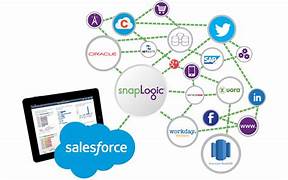
Salesforce and SnapLogic integrations couldn’t be easier with the Tray platform’s robust Salesforce and SnapLogic connectors, which can connect to any service without the need for separate integration tools. Salesforce provides customer relationship management service software, and has a complementary suite of enterprise applications as well. These are focused on customer service, marketing automation, analytics, and application development. It is the market leader in CRM solutions. The latest Salesforce connector v8.7 exposes the v46.0 of Salesforce’s REST API. More information can be found on their primary API documentation (v1) site. Encountering issues while authenticating with Salesforce, especially during the integration of a third-party app like Tray, may result from Salesforce blocking the application. Salesforce’s default settings or specific organizational security policies can automatically block third-party apps that administrators have not pre-authorized. This is a standard precaution to prevent unauthorized access. Steps to Unblock an App in Salesforce: Use cases In each of these examples, Lead Scoring and Prioritization Objective: Automatically score and prioritize leads based on their attributes and activities. Steps: This example leverages AI for lead classification while combining it with traditional data processing for a comprehensive lead scoring system. Like Related Posts Who is Salesforce? Who is Salesforce? Here is their story in their own words. From our inception, we’ve proudly embraced the identity of Read more Salesforce Marketing Cloud Transactional Emails Salesforce Marketing Cloud Transactional Emails are immediate, automated, non-promotional messages crucial to business operations and customer satisfaction, such as order Read more Salesforce Unites Einstein Analytics with Financial CRM Salesforce has unveiled a comprehensive analytics solution tailored for wealth managers, home office professionals, and retail bankers, merging its Financial Read more AI-Driven Propensity Scores AI plays a crucial role in propensity score estimation as it can discern underlying patterns between treatments and confounding variables Read more
Read More
AI Leader Salesforce

AI Leader Salesforce

Salesforce Is a Wild Mustang in the AI Race In the bustling world of artificial intelligence, Salesforce Inc. has emerged as an unsurpassed and true leader. “Salesforce?” one might wonder. The company known for its customer relationship management software? How can it be an AI leader if it is only focused on each department or division (or horse) is only focused on its own survival? AI Leader Salesforce. Herds of horses have structure, unique and important roles they each play. While they survival depends greatly on each members’ independece they must remain steadfast in the roles and responsibilities they carry to the entire herd. The lead stallion must be the protector. The lead mare must organize all the mothers and foals into obedient members of the herd. But they must all collaborate. AI Leader Salesforce To stay strong and competetive Salesforce is making bold strides in AI as well. Recently, the company became the first major tech firm to introduce a new class of generative AI tools known as “agents,” which have long been discussed by others but never fully realized. Unlike its competitors, Salesforce is upfront about how these innovative tools might impact employment. This audacious approach could be the key to propelling the company ahead in the AI race, particularly as newer players like OpenAI and Anthropic make their moves. Marc Benioff, Salesforce’s dynamic CEO, is driving this change. Known for his unconventional strategies that helped propel Salesforce to the forefront of the software-as-a-service (SaaS) revolution, Benioff has secured a client base that includes 90% of Fortune 500 companies, such as Walt Disney Co. and Ford Motor Co. Salesforce profits from subscriptions to applications like Sales Cloud and Service Cloud, which help businesses manage their sales and customer service processes. At the recent Dreamforce conference, Salesforce unveiled Agentforce, a new service that enables customers to deploy autonomous AI-powered agents. If Benioff himself is the alpha herd leader, Agentforce may well be the lead mare. Salesforce distinguishes itself by replacing traditional chatbots with these new agents. While chatbots, powered by technologies from companies like OpenAI, Google, and Anthropic, typically handle customer inquiries, agents can perform actions such as filing complaints, booking appointments, or updating shipping addresses. The notion of AI “taking action” might seem risky, given that generative models can sometimes produce erroneous results. Imagine an AI mishandling a booking. However, Salesforce is confident that this won’t be an issue. “Hallucinations go down to zero because [Agentforce] is only allowed to generate content from the sources you’ve trained it on,” says Bill Patterson, corporate strategy director at Salesforce. This approach is touted as more reliable than models that scrape the broader internet, which can include inaccurate information. Salesforce’s willingness to confront a typically sensitive issue — the potential job displacement caused by AI — is also noteworthy. Unlike other AI companies that avoid discussing the impact of cost-cutting on employment, Salesforce openly addresses it. For instance, education publisher John Wiley & Sons Inc. reported that using Agentforce reduced the time spent answering customer inquiries by nearly 50% over three months. This efficiency meant Wiley did not need to hire additional staff for the back-to-school season. In the herd, the leader must acknowledge some of his own offspring will have to join other herds, there is a genetic survival of the fittest factor. I would suspect Benioff will re-train and re-purpose as many of the Salesforce family as he can, rather than seeing them leave the herd. Benioff highlighted this in his keynote, asking, “What if you could surge your service organization and your sales organization without hiring more people?” That’s the promise of Agentforce. And what if? Imagine the herd leader having to be always the alpha, always on guard, always in protective mode. When does he slngeep, eat, rest, and recuperate? Definitely not by bringing in another herd leader. The two inevitably come to arms each excerting their dominance until one is run off by the other, to survive on his own. The herd leader needs to clone himself, create additional herd, or corporate, assets to help him do his job better. Enter the power behind Salesforce’s long history with Artificial Intelligence. The effectiveness of Salesforce’s tools in delivering a return on investment remains to be seen, especially as many businesses struggle to evaluate the success of generative AI. Nonetheless, Salesforce poses a significant challenge to newer firms like OpenAI and Anthropic, which have privately acknowledged their use of Salesforce’s CRM software. For many chief innovation officers, it’s easier to continue leveraging Salesforce’s existing platform rather than adopt new technologies. Like the healthiest of the band of Mustangs, the most skilled and aggressive will thrive and survive. Salesforce’s established presence and broad distribution put it in a strong position at a time when large companies are often hesitant to embrace new tech. Its fearless approach to job displacement suggests the company is poised to profit significantly from its AI venture. As a result, Salesforce may well become a formidable competitor in the AI world. Furthermore taking its own investment in AI education to new heights, one can believe that Salesforce has an eye on people and not just profits. Much like the lead stallion in a wild herd, Salesforce is protecting itself and its biggest asset, its people! By Tectonic’s Salesforce Solutions Architect, Shannan Hearne Like Related Posts Who is Salesforce? Who is Salesforce? Here is their story in their own words. From our inception, we’ve proudly embraced the identity of Read more Salesforce Marketing Cloud Transactional Emails Salesforce Marketing Cloud Transactional Emails are immediate, automated, non-promotional messages crucial to business operations and customer satisfaction, such as order Read more Salesforce Unites Einstein Analytics with Financial CRM Salesforce has unveiled a comprehensive analytics solution tailored for wealth managers, home office professionals, and retail bankers, merging its Financial Read more AI-Driven Propensity Scores AI plays a crucial role in propensity score estimation as it can discern underlying patterns between treatments and confounding variables Read more

Read More
CISA Launches New Services Portal

CISA Launches New Services Portal

CISA Launches New Services Portal to Enhance Incident Reporting and Support In August, the Cybersecurity and Infrastructure Security Agency (CISA) introduced the CISA Services Portal, designed to streamline the process of reporting cybersecurity incidents and enhance information sharing. “The new CISA Services Portal improves the reporting process and offers more features for our voluntary reporters. We ask organizations reporting an incident to provide details such as the impacted entity, contact information, incident description, technical indicators, and mitigation steps,” a CISA spokesperson stated via email. By collecting detailed reports, CISA and its partners can assist victims in mitigating the effects of cyber incidents, prevent attackers from reusing tactics, and gain insights into the broader scope of adversary campaigns. This information-sharing benefits not just the initial victim but also helps protect other organizations from potential attacks. How the Portal Works The CISA Services Portal follows guidelines outlined in the NIST Special Publication 800-61 Revision 2, which defines a cyber incident as: In addition to cyber incidents, users can report malware, software vulnerabilities, threat indicators, and vulnerabilities in government websites. For reporting cyberattacks on critical infrastructure, users are directed to a different link as required by CIRCIA regulations. When using the portal, users are guided through a step-by-step reporting process, which includes identifying the affected organization, providing a detailed description of the incident, and outlining the technical details of the breach. What Makes CISA’s Portal Unique? While many breach reporting portals exist, CISA’s stands out for several reasons. It is a voluntary, stand-alone government portal available to all entities nationwide. It does not replace any breach reporting processes mandated by federal, state, local, or industry-specific regulations, such as those required by the FTC or FCC. The portal allows users to report incidents on behalf of their organization or as individual users. It also offers the option to set up an account for ongoing communication with CISA, where users can save, update, and share reports. What truly differentiates CISA’s portal is its capability to provide direct assistance in incident response and recovery. This is particularly valuable for small and medium-sized businesses that may lack the resources to effectively handle cyber incidents. Although reporting to CISA is not mandatory, the agency strongly encourages organizations to voluntarily report incidents or suspicious activity. CISA has also developed a guide to help prepare organizations for submitting reports, ensuring they have all necessary details related to the breach and their mitigation efforts. “Any organization experiencing a cyberattack or incident should report it—not only for their benefit but to help the broader community. CISA and our government partners have unique tools to assist with response and recovery, but we need to know about the incident to provide support,” said Jeff Greene, CISA Executive Assistant Director for Cybersecurity, in a statement announcing the portal. The new CISA Services Portal aims to strengthen collaboration, offering a more efficient and supportive environment for incident reporting and response. Salesforce comment: SAN FRANCISCO, Sept. 25, 2015—Salesforce (NYSE: CRM), the Customer Success Platform and world’s #1 CRM company, today issued the following statement on the proposed Cybersecurity Information Sharing Act of 2015 (“CISA”): “At Salesforce, trust is our number one value and nothing is more important to our company than the privacy of our customers’ data,” said Burke Norton, chief legal officer, Salesforce. “Contrary to reports, Salesforce does not support CISA and has never supported CISA.” Like Related Posts Who is Salesforce? Who is Salesforce? Here is their story in their own words. From our inception, we’ve proudly embraced the identity of Read more Salesforce Unites Einstein Analytics with Financial CRM Salesforce has unveiled a comprehensive analytics solution tailored for wealth managers, home office professionals, and retail bankers, merging its Financial Read more AI-Driven Propensity Scores AI plays a crucial role in propensity score estimation as it can discern underlying patterns between treatments and confounding variables Read more Tectonic’s Successful Salesforce Track Record Salesforce Technology Services Integrator – Tectonic has successfully delivered Salesforce in a variety of industries including Public Sector, Hospitality, Manufacturing, Read more

Read More
Data Cloud and Autonomous Agents

Data Cloud and Autonomous Agents

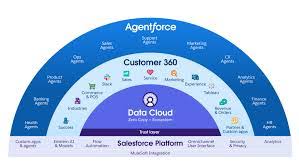
Salesforce is building momentum with Data Cloud, the heartbeat of its platform and foundation for Agentforce, fueled by strong business demand for unified data to deliver personalized, contextually relevant, and timely customer experiences across its Customer 360 applications, Flow, analytics, and Agentforce—Salesforce’s groundbreaking suite of autonomous AI agents. This week, Salesforce unveiled a major pivot in its AI strategy during its annual Dreamforce conference. The company is introducing AI tools that can handle tasks without human supervision, alongside a new pricing model. Customers will now pay US per conversation held by Salesforce’s new AI “agents,” which are designed to manage tasks such as customer service and scheduling sales meetings autonomously. This shift in strategy reflects Salesforce’s forward-thinking approach to AI and its potential to transform not only technology but also business models. By focusing on AI agents, Salesforce is responding to a market demand for increased workforce capacity without the need for full-time hires or gig workers—a point emphasized by CEO Marc Benioff during his keynote speech. Building on its predictive Einstein platform, Agentforce represents Salesforce’s next step in AI evolution. “Think of it as the next evolution of our AI wave,” said Muralidhar Krishnaprasad, Salesforce’s president and CTO. “We had AI wave one with Einstein’s predictive capabilities, AI wave two with generative AI copilots, and now we’re entering the age of agents.” Agentforce is designed to augment work by handling tasks across platforms, leveraging Salesforce’s Data Cloud to channel structured and unstructured data into agentic experiences. These agents, powered by the Atlas reasoning engine, use dynamic plans and Retrieval-Augmented Generation (RAG) techniques to address real-time customer questions and deliver actionable insights. Salesforce’s AI agents can operate autonomously, supporting businesses by handling a range of customer interactions and tasks with minimal human intervention. Adding to the AI-driven innovations, Salesforce introduced several new Data Cloud advancements that further enhance an organization’s ability to transform customer experiences using data and AI. These include: Data Cloud continues to drive impressive growth, with a 130% YoY increase in paid customers, processing 2.3 quadrillion records in the second quarter alone. Customers like The Adecco Group, Aston Martin, and Air India rely on Data Cloud to unify their data and deliver personalized, real-time customer experiences. For example, Air India uses Data Cloud to integrate data across its loyalty, reservations, and flight systems, allowing it to manage over 550,000 service cases each month. As AI reshapes the industry, Salesforce’s pivot to autonomous agents and a conversation-based pricing model shows its commitment to leading the charge in enterprise AI adoption, with Data Cloud as its driving force. Despite some software vendors struggling to capitalize on AI advancements, Salesforce’s new model positions it to thrive in a market where AI’s impact is just beginning to unfold. Like Related Posts Who is Salesforce? Who is Salesforce? Here is their story in their own words. From our inception, we’ve proudly embraced the identity of Read more Salesforce Marketing Cloud Transactional Emails Salesforce Marketing Cloud Transactional Emails are immediate, automated, non-promotional messages crucial to business operations and customer satisfaction, such as order Read more Salesforce Unites Einstein Analytics with Financial CRM Salesforce has unveiled a comprehensive analytics solution tailored for wealth managers, home office professionals, and retail bankers, merging its Financial Read more AI-Driven Propensity Scores AI plays a crucial role in propensity score estimation as it can discern underlying patterns between treatments and confounding variables Read more
Read More
Winter 25 Release Ready

Winter 25 Release Ready

As summer wraps up and we return from our vacations, it’s time to shift our focus to winter — at least for those of us working in the Salesforce ecosystem. Salesforce’s three major releases each year mean that fall is the only season we skip, jumping straight from summer into the Winter ‘25 Release. Key dates for the Salesforce Winter ‘25 Release include September 6, October 5, and October 12. However, the exact date of the update depends on your Salesforce instance. To find out when your instance will be updated, visit Salesforce Trust, search by instance name or domain, and click “maintenance” to see your specific schedule. As a certified Salesforce professional, I’m excited about the new features rolling out in the coming weeks. Here’s a preview of some of the most important updates in the Winter ‘25 Release: 1. Inline Editing in the Enhanced User List View One long-awaited update is inline editing for user records. While this feature has existed for most objects, it wasn’t available for the user object. With the Winter ‘25 update, inline editing for users will be available through the enhanced user list view, which can be enabled in Setup. 2. View Object Access from Object Manager This update is sure to streamline workflows, offering a read-only object access summary in Object Manager. This summary provides a clear view of access to each object. Although it’s currently read-only, future releases are expected to enable CRUD edits directly from this summary, further enhancing object management. 3. Centralized Management of User Details User information will now be consolidated in the enhanced user access summary page. Both standard and custom user fields will be aligned with the user details section of the assigned profile page layout, simplifying the process of viewing and editing user details. The summary view will be accessible directly from a user’s record in Setup. 4. Insights into User Permission Assignments The Winter ‘25 update introduces a new “user access summary” feature, which provides insights into the profiles, permission sets, and permission set groups that grant specific permissions to users. This new option in Setup will greatly simplify user management, making it easier to track down permissions that were previously harder to locate. 5. Simplified Public Group Membership Management Managing public groups will be more efficient with the new public group summary page. This update improves performance and makes it easier to handle users, roles, and nested groups. The improved member selection experience will allow us to add or remove up to 100 members at once and edit or delete public groups directly from the summary page. 6. Sales Cloud Go: Discover and Set Up Features Easily Sales Cloud Go, a new feature arriving with the Winter ‘25 Release, will help users discover and enable Sales Cloud features with just a click. Located in Sales Setup, Sales Cloud Go offers screenshots, guided tours, videos, and help topics for each feature. If your account app is activated, you’ll even be able to purchase add-on licenses directly from Sales Cloud Go. 7. Conditional Formatting for Record Fields Dynamic forms are getting a boost with the addition of conditional formatting in the Salesforce Lightning App Builder. This feature will enable admins to apply formatting to fields based on rule sets, helping users quickly identify key information on a record page. These updates reflect Salesforce’s continued commitment to improving user experience and streamlining processes. As we look forward to the Winter ‘25 Release, these new features promise to enhance productivity and simplify many aspects of Salesforce management. Like Related Posts Who is Salesforce? Who is Salesforce? Here is their story in their own words. From our inception, we’ve proudly embraced the identity of Read more Salesforce Marketing Cloud Transactional Emails Salesforce Marketing Cloud Transactional Emails are immediate, automated, non-promotional messages crucial to business operations and customer satisfaction, such as order Read more Salesforce Unites Einstein Analytics with Financial CRM Salesforce has unveiled a comprehensive analytics solution tailored for wealth managers, home office professionals, and retail bankers, merging its Financial Read more AI-Driven Propensity Scores AI plays a crucial role in propensity score estimation as it can discern underlying patterns between treatments and confounding variables Read more

Read More
Choose Salesforce for SMS

Choose Salesforce for SMS

Why Integrating SMS with Salesforce Transforms Business Communication Effective communication is crucial in today’s fast-paced business environment. A company’s success often hinges on its ability to interact seamlessly with customers—whether through personalized service, timely updates, or the latest product offerings. Choose Salesforce for SMS. Today’s customers demand a seamless, omnichannel experience that goes beyond traditional communication methods like flyers and emails. They expect real-time, two-way interactions, which is where Salesforce SMS apps come into play. These apps, which integrate smoothly with existing CRM systems, are transforming how businesses engage with their customers. 5 Reasons to Integrate SMS with Salesforce Integrating SMS with Salesforce offers numerous benefits, primarily enhancing customer-facing efficiency and effectiveness. Here are five key advantages: SMS for Salesforce enables businesses to provide immediate customer support. For instance, logistics companies can use SMS to notify customers about delivery statuses or appointment updates in real time. SMS boasts an impressive open rate—over 95% within the first three minutes—making it a highly effective medium for increasing marketing engagement compared to email. You can even couple Salesforce SMS with tools like geofencing to send notifications via SMS when they are in the store. Integrating SMS with Salesforce allows for streamlined automation of processes such as order updates and appointment reminders. This reduces the need for manual intervention, boosts productivity, and frees up resources for more strategic tasks. Automated texts can be scheduled based on customer behavior or sales stages, optimizing workflows and enhancing efficiency. With a response rate of approximately 45%, SMS is highly effective for engaging customers. It facilitates prompt replies due to its immediate nature. Sales and marketing teams can leverage SMS for direct interactions, while retailers can use it to distribute discount codes and drive quick responses. Additionally, SMS is ideal for important notifications, enhancing customer service. By integrating SMS with Salesforce, businesses can tailor their messages to address specific customer needs and preferences. This personalization fosters stronger customer relationships and improves conversion rates. For example, a travel agency can send personalized vacation recommendations, while financial advisors can provide client-specific updates and advice. Salesforce’s integration with SMS allows for robust tracking and analysis of customer interactions and campaign effectiveness. Marketing teams can refine their strategies by reviewing metrics such as open rates, click-through rates, and conversion rates from SMS campaigns. Additionally, customer support teams can evaluate response times and resolution rates to improve service efficiency. How to Implement SMS in Salesforce To send and receive texts via Salesforce, you have several options: Salesforce offers two primary SMS solutions: Mobile Studio and Digital Engagement. For more tailored functionality, you can use Salesforce API or another API provider to develop a custom texting solution. While this offers greater flexibility and avoids extra costs, it involves significant development time and expense. Opting for a Salesforce-native SMS app from the Salesforce AppExchange can be advantageous. These apps, designed specifically for SMS within Salesforce, often offer: These native apps also come with dedicated customer support, making them a cost-effective and efficient choice. Best Practices for SMS Communication While SMS boasts high engagement rates, it’s essential to follow best practices to maintain a positive customer experience: Ensure compliance with data privacy regulations like GDPR and CCPA by securing clear consent from customers before sending SMS. Automate re-opt-in processes to maintain compliance. Send messages during the recipient’s regular business hours to avoid disturbing them at inconvenient times. Stay in touch with your audience regularly but avoid overwhelming them with excessive messages. Provide valuable content to keep engagement high. Use the same number for messaging to help customers recognize your communications and build trust. Respond promptly and courteously to customer replies. Provide clear, detailed responses to inquiries. Acknowledge and reward outstanding customer actions with thoughtful messages or gestures, such as donations to their favorite charities. Even a thank you for your purchase message can contain a surprise such as a coupon or a notification that a free gift is included with their order. Use SMS to highlight important announcements, events, or opportunities, tapping into the fear of missing out to drive engagement. SMS is the perfect omnichannel tool to incorporate into all your Salesforce journeys. Balance promotional content with conversational engagement to avoid appearing pushy and to keep the communication enjoyable for customers. People are much happier to get news they can use rather than advertisements. Encourage further engagement by including clear, actionable steps in your SMS messages, such as signing up for a free trial or using a discount code. A call to action must be designed with smaller screen views in mind. Include an easy way for recipients to unsubscribe from future messages to comply with legal requirements and respect customer preferences. By integrating SMS with Salesforce and adhering to these best practices, businesses can enhance their communication strategies, foster better customer relationships, and drive greater engagement. Like1 Related Posts Who is Salesforce? Who is Salesforce? Here is their story in their own words. From our inception, we’ve proudly embraced the identity of Read more Salesforce Marketing Cloud Transactional Emails Salesforce Marketing Cloud Transactional Emails are immediate, automated, non-promotional messages crucial to business operations and customer satisfaction, such as order Read more Salesforce Unites Einstein Analytics with Financial CRM Salesforce has unveiled a comprehensive analytics solution tailored for wealth managers, home office professionals, and retail bankers, merging its Financial Read more AI-Driven Propensity Scores AI plays a crucial role in propensity score estimation as it can discern underlying patterns between treatments and confounding variables Read more

Read More
Introducing Marketing Cloud Advanced

Introducing Marketing Cloud Advanced

Salesforce has unveiled a series of innovations in its Marketing Cloud, (Introducing Marketing Cloud Advanced) designed to empower businesses with AI-driven tools and enhanced data capabilities to elevate customer engagement. These new features aim to deepen customer relationships, improve team productivity, and boost operational efficiency. Introducing Marketing Cloud Advanced One of the standout innovations is Marketing Cloud Advanced, an upcoming edition that integrates advanced automation and AI. This edition is designed to connect marketing journeys with sales, service, and commerce workflows, offering a more personalized experience across multiple customer touchpoints. Additionally, the introduction of Agentforce for Marketing will bring generative and predictive AI into the marketing realm, helping marketers create comprehensive, end-to-end campaign experiences. Steve Hammond, Executive Vice President and General Manager of Marketing Cloud at Salesforce, commented: “Today’s most successful marketers engage customers on their terms and act as value multipliers across the entire customer experience—whether helping sales or service have more personalized conversations or re-engaging inactive customers. Built on Data Cloud, Marketing Cloud is the only solution that unifies data across every department and moment in the customer lifecycle, powered by Agentforce Agents and automation, driving growth, loyalty, and optimizing ROI.” Agentforce for Marketing introduces several capabilities that streamline marketing processes. Marketers can now plan, launch, and optimize campaigns with ease. Agentforce allows marketers to set campaign goals and brand guidelines, after which the AI generates campaign briefs, identifies target audience segments, and drafts initial emails and landing pages. The system continuously monitors performance and provides data-driven optimization suggestions based on key performance indicators (KPIs). A key addition is Einstein Marketing Intelligence (EMI), which helps marketers manage and optimize cross-channel campaign performance. EMI automates the process of data preparation, enrichment, harmonization, and visualization, enabling marketers to measure campaign effectiveness and make informed decisions to improve return on investment. Furthermore, Salesforce introduced Einstein Personalization, an AI-powered decision engine that delivers tailored customer experiences. This tool allows sales, service, and commerce teams to engage customers in real time based on live interactions and data. Using Flow’s A/B split testing feature, marketers can select dynamic email content for different audience segments and track performance to adjust strategies effectively. Sarah Lukins, General Manager of Digital at Fisher & Paykel Appliances, praised the new functionality: “Salesforce enables us to seamlessly access all of our marketing, commerce, service, sales, and external data in one place and leverage AI for more targeted audience engagement. We can now deliver more relevant and consistent personalized experiences across email, ads, web, social, and service engagements.” The Marketing Cloud Advanced Edition will roll out to customers in North America, Europe, and Latin America, while Agentforce Personalization is expected to become generally available by next summer. Additional releases include expanded Einstein multi-language support and unified SMS conversation capabilities. These innovations are part of Salesforce’s ongoing efforts to equip marketers with unified and actionable data, enhancing the performance of marketing teams and fostering deeper integration across organizations. Through AI and automation, Salesforce is helping businesses deliver more personalized, connected, and seamless customer experiences. Like Related Posts Who is Salesforce? Who is Salesforce? Here is their story in their own words. From our inception, we’ve proudly embraced the identity of Read more Salesforce Marketing Cloud Transactional Emails Salesforce Marketing Cloud Transactional Emails are immediate, automated, non-promotional messages crucial to business operations and customer satisfaction, such as order Read more Salesforce Unites Einstein Analytics with Financial CRM Salesforce has unveiled a comprehensive analytics solution tailored for wealth managers, home office professionals, and retail bankers, merging its Financial Read more AI-Driven Propensity Scores AI plays a crucial role in propensity score estimation as it can discern underlying patterns between treatments and confounding variables Read more

Read More
Salesforce to Acquire Zoomin

Salesforce to Acquire Zoomin

Salesforce to Acquire Zoomin: Enhancing AI Capabilities with Unstructured Data Salesforce, the world’s leading AI CRM, has signed a definitive agreement to acquire Zoomin, a top data management provider specializing in unstructured data. This acquisition is a pivotal move that will strengthen Salesforce’s Data Cloud, empowering AI agents with more personalized, context-aware capabilities. With Zoomin’s technology, Salesforce’s Agentforce platform will gain new intelligence, allowing customers to build AI that delivers real-time, data-driven responses tailored to individual needs. The acquisition is expected to close in the fourth quarter of Salesforce’s fiscal year 2025, subject to customary closing conditions. “Proprietary unstructured data is powerful fuel our customers can use for AI agents and customer experiences,” said Rahul Auradkar, EVP & GM of Unified Data Services & Einstein at Salesforce. “Zoomin’s proven expertise and technology will accelerate Data Cloud’s innovation and enable our customers to get better value from Agentforce. This transaction underscores our commitment to help customers harness the value of all their data, offering contextual AI experiences backed by enterprise-leading trust controls.” Strategic Value of the Acquisition With the integration of Zoomin’s technology, Salesforce can unlock new use cases for customers across various touchpoints. For example, Service Cloud users will be able to automate service interactions by leveraging enterprise knowledge, enhancing the efficiency of Agentforce for service representatives. This integration will lead to faster issue resolution, increased customer satisfaction, and reduced operational costs. Zoomin’s ability to consolidate unstructured data from multiple sources will empower service teams with a comprehensive understanding of their customers, turning distributed knowledge into actionable insights. Zoomin’s CEO, Gal Oron, echoed this sentiment: “We’re both humbled and excited to join forces with Salesforce. As organizations accelerate their enterprise AI transformation, our joint mission is to support them and ensure AI doesn’t hit the data wall. As part of the #1 AI CRM, we’ll enable customers to leverage their existing enterprise data in ways they never thought possible.” A Long-Standing Partnership Zoomin has been a Salesforce AppExchange partner since 2018 and became a part of the Salesforce Ventures portfolio in 2019. Through this partnership, hundreds of Salesforce customers already use Zoomin’s unified knowledge platform to deliver intuitive customer experiences. This acquisition builds on that foundation, with Zoomin set to enhance Salesforce’s AI-driven platforms by making enterprise knowledge more accessible and usable for AI agents. Despite the significance of this acquisition, Salesforce noted that it would not result in any changes to its financial guidance provided in August 2024, and no further financial details will be disclosed. This move is part of Salesforce’s broader strategy to push deeper into AI-powered customer experiences, enabling customers to utilize the full potential of their data for more intelligent, personalized interactions across all channels. Like Related Posts Who is Salesforce? Who is Salesforce? Here is their story in their own words. From our inception, we’ve proudly embraced the identity of Read more Salesforce Marketing Cloud Transactional Emails Salesforce Marketing Cloud Transactional Emails are immediate, automated, non-promotional messages crucial to business operations and customer satisfaction, such as order Read more Salesforce Unites Einstein Analytics with Financial CRM Salesforce has unveiled a comprehensive analytics solution tailored for wealth managers, home office professionals, and retail bankers, merging its Financial Read more AI-Driven Propensity Scores AI plays a crucial role in propensity score estimation as it can discern underlying patterns between treatments and confounding variables Read more
Read More
Unique Form Links With Jotform

Unique Form Links With Jotform

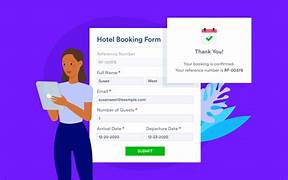
Create Unique Form Links with Jotform Once you’ve set up Salesforce Prefill, you can generate unique form links for your customers, automatically populating forms with their specific data. This helps minimize errors and ensures the data collected is accurate and consistent. Steps to Create and Send Personalized Links Each recipient will receive an email with a link to their prefilled form. If you prefer to distribute the links manually, you can download them using the Download option at the top. Unique Form Links With Jotform for Salesforce are an easy solution for your Salesforce org. Need assistance implementing Jotform? Contact Tectonic today. Like Related Posts Who is Salesforce? Who is Salesforce? Here is their story in their own words. From our inception, we’ve proudly embraced the identity of Read more Salesforce Marketing Cloud Transactional Emails Salesforce Marketing Cloud Transactional Emails are immediate, automated, non-promotional messages crucial to business operations and customer satisfaction, such as order Read more Salesforce Unites Einstein Analytics with Financial CRM Salesforce has unveiled a comprehensive analytics solution tailored for wealth managers, home office professionals, and retail bankers, merging its Financial Read more AI-Driven Propensity Scores AI plays a crucial role in propensity score estimation as it can discern underlying patterns between treatments and confounding variables Read more
Read More
Agentforce - AI's New Role in Sales and Service

Agentforce – AI’s New Role in Sales and Service

From Science Fiction to Reality: AI’s Game-Changing Role in Service and Sales AI for service and sales has reached a critical tipping point, driving rapid innovation. At Dreamforce in San Francisco, hosted by Salesforce we explored how Salesforce clients are leveraging CRM, Data Cloud, and AI to extract real business value from their Salesforce investments. In previous years, AI features branded under “Einstein” had been met with skepticism. These features, such as lead scoring, next-best-action suggestions for service agents, and cross-sell/upsell recommendations, often required substantial quality data in the CRM and knowledge base to be effective. However, customer data was frequently unreliable, with duplicate records and missing information, and the Salesforce knowledge base was underused. Building self-service capabilities with chatbots was also challenging, requiring accurate predictions of customer queries and well-structured decision trees. This year’s Dreamforce revealed a transformative shift. The advancements in AI, especially for customer service and sales, have become exceptionally powerful. Companies now need to take notice of Salesforce’s capabilities, which have expanded significantly. Agentforce – AI’s New Role in Sales and Service Some standout Salesforce features include: At Dreamforce, we participated in a workshop where they built an AI agent capable of responding to customer cases using product sheets and company knowledge within 90 minutes. This experience demonstrated how accessible AI solutions have become, no longer requiring developers or LLM experts to set up. The key challenge lies in mapping external data sources to a unified data model in Data Cloud, but once achieved, the potential for customer service and sales is immense. How AI and Data Integrate to Transform Service and Sales Businesses can harness the following integrated components to build a comprehensive solution: Real-World Success and AI Implementation OpenTable shared a successful example of building an AI agent for its app in just two months, using a small team of four. This was a marked improvement from the company’s previous chatbot projects, highlighting the efficiency of the latest AI tools. Most CEOs of large enterprises are exploring AI strategies, whether by developing their own LLMs or using pre-existing models. However, many of these efforts are siloed, and engineering costs are high, leading to clunky transitions between AI and human agents. Tectonic is well-positioned to help our clients quickly deploy AI-powered solutions that integrate seamlessly with their existing CRM and ERP systems. By leveraging AI agents to streamline customer interactions, enhance sales opportunities, and provide smooth handoffs to human agents, businesses can significantly improve customer experiences and drive growth. Tectonic is ready to help businesses achieve similar success with AI-driven innovation. Like Related Posts Who is Salesforce? Who is Salesforce? Here is their story in their own words. From our inception, we’ve proudly embraced the identity of Read more Salesforce Marketing Cloud Transactional Emails Salesforce Marketing Cloud Transactional Emails are immediate, automated, non-promotional messages crucial to business operations and customer satisfaction, such as order Read more Salesforce Unites Einstein Analytics with Financial CRM Salesforce has unveiled a comprehensive analytics solution tailored for wealth managers, home office professionals, and retail bankers, merging its Financial Read more AI-Driven Propensity Scores AI plays a crucial role in propensity score estimation as it can discern underlying patterns between treatments and confounding variables Read more

Read More
Oracle Advertising Sundown

Oracle Advertising Sundown

Oracle Shifts Focus to B2B CX, Introduces New Fusion Cloud Features Despite winding down its online advertising products, Oracle is doubling down on its investment in customer experience (CX) technology, particularly in enabling B2B buying and supporting subscription and consumption models. During the Oracle CloudWorld conference on Wednesday, the company unveiled new capabilities for its Fusion Cloud Customer Experience and Unity Customer Data Platform. These enhancements empower Oracle CX users to analyze customer profiles to assemble B2B buying teams, leverage generative AI tools like native analytics, and utilize industry-specific accelerators to speed up the adoption of customer data tools. Key features include the ability to create self-service sites for individual accounts, enabling customers to review and summarize contracts using generative AI, receive quotes, and renew subscriptions. Other features enhance “assisted buying experiences,” blending self-service and human interaction, while tools like account onboarding and AI-powered email drafting simplify full-service sales processes. Subscription models, though still in their early stages for B2B, offer a streamlined alternative to traditional procurement processes. As Liz Miller, an analyst at Constellation Research, noted, subscription-based buying is easier and quicker, avoiding the lengthy procurement cycles many B2B buyers are familiar with. “The pain of traditional B2B buying is still fresh in everyone’s mind,” she said. Oracle Advertising Shuts Down Oracle’s advertising product support will end on September 30, as confirmed by CEO Safra Catz during the company’s June earnings call. The Oracle Advertising Data Management Platform (DMP), built from its BlueKai acquisition, is being retired, following in the footsteps of Salesforce, which discontinued its Audience Studio in 2021. Despite Oracle winding down its ad platform, this move shouldn’t be seen as a shift away from customer experience. Oracle founder Larry Ellison remains deeply involved in shaping the company’s CX strategy, with a focus on marketing tools and Apex low-code platforms, said Rob Pinkerton, Oracle’s senior vice president. Oracle’s modernized CX suite, built on the Fusion Cloud platform, has evolved significantly in recent years, though questions remain about whether it’s too late to regain market share. “Oracle as a CX platform has fallen off the radar for many buyers,” said Miller, adding that customers are no longer debating between Oracle, Microsoft, and Salesforce in the CX space. New Industry-Specific Tools for CX Oracle has also expanded its CX platform with industry-specific tools designed to accelerate the adoption of its customer data platform (CDP) across sectors such as high tech, manufacturing, professional services, telecommunications, utilities, financial services, travel, and retail. According to Rebecca Wettemann, CEO of research firm Valoir, Oracle’s Fusion platform has matured significantly and now supports the complexity of modern customer needs. Wettemann highlighted how common components like customer interaction summaries can be adapted for multiple industries, delivering faster results than traditional applications. Oracle’s Clinical Digital Assistant is one such example of this approach, illustrating the platform’s versatility and AI-driven enhancements. With these developments, Oracle continues to refine its CX offerings to better meet the unique demands of B2B customers, providing tools that streamline operations and enhance customer experiences across various industries. Like Related Posts Who is Salesforce? Who is Salesforce? Here is their story in their own words. From our inception, we’ve proudly embraced the identity of Read more Salesforce Marketing Cloud Transactional Emails Salesforce Marketing Cloud Transactional Emails are immediate, automated, non-promotional messages crucial to business operations and customer satisfaction, such as order Read more Salesforce Unites Einstein Analytics with Financial CRM Salesforce has unveiled a comprehensive analytics solution tailored for wealth managers, home office professionals, and retail bankers, merging its Financial Read more AI-Driven Propensity Scores AI plays a crucial role in propensity score estimation as it can discern underlying patterns between treatments and confounding variables Read more

Read More
Key Sales Statistics and Trends

Sales Statistics and Trends

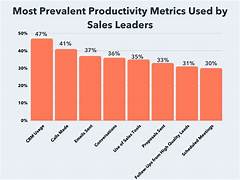
Key Sales Statistics and Trends Sales professionals often face a rapidly evolving industry, with constant changes to navigate. The key to successfully maneuvering through these shifts is a deep understanding of sales data and trends. Here’s a detailed look at the current state of sales, highlighting both opportunities and challenges. Key Sales Statistics and Trends. Revenue Growth Trends Sales Challenges AI and Data Insights Enablement and Training Employee Experience For more insights and detailed statistics, download the full State of Sales Report from Salesforce. Like Related Posts Who is Salesforce? Who is Salesforce? Here is their story in their own words. From our inception, we’ve proudly embraced the identity of Read more Salesforce Marketing Cloud Transactional Emails Salesforce Marketing Cloud Transactional Emails are immediate, automated, non-promotional messages crucial to business operations and customer satisfaction, such as order Read more Salesforce Unites Einstein Analytics with Financial CRM Salesforce has unveiled a comprehensive analytics solution tailored for wealth managers, home office professionals, and retail bankers, merging its Financial Read more AI-Driven Propensity Scores AI plays a crucial role in propensity score estimation as it can discern underlying patterns between treatments and confounding variables Read more
Read More
Open AI Update

Open AI Update

OpenAI has established itself as a leading force in the generative AI space, with its ChatGPT being one of the most widely recognized AI tools. Powered by the GPT series of large language models (LLMs), as of September 2024, ChatGPT primarily uses GPT-4o and GPT-3.5. This insight provides an Open AI Update. In August and September 2024, rumors circulated about a new model from OpenAI, codenamed “Strawberry.” Initially, it was unclear if this model would be a successor to GPT-4o or something entirely different. On September 12, 2024, the mystery was resolved with the official launch of OpenAI’s o1 models, including o1-preview and o1-mini. What is OpenAI o1? OpenAI o1 is a new family of LLMs optimized for advanced reasoning tasks. Unlike earlier models, o1 is designed to improve problem-solving by reasoning through queries rather than just generating quick responses. This deeper processing aims to produce more accurate answers to complex questions, particularly in fields like STEM (science, technology, engineering, and mathematics). The o1 models, currently available in preview form, are intended to provide a new type of LLM experience beyond what GPT-4o offers. Like all OpenAI LLMs, the o1 series is built on transformer architecture and can be used for tasks such as content summarization, new content generation, question answering, and writing code. Key Features of OpenAI o1 The standout feature of the o1 models is their ability to engage in multistep reasoning. By adopting a “chain-of-thought” approach, o1 models break down complex problems and reason through them iteratively. This makes them particularly adept at handling intricate queries that require a more thoughtful response. The initial September 2024 launch included two models: Use Cases for OpenAI o1 The o1 models can perform many of the same functions as GPT-4o, such as answering questions, summarizing content, and generating text. However, they are particularly suited for tasks that benefit from enhanced reasoning, including: Availability and Access The o1-preview and o1-mini models are available to users of ChatGPT Plus and Team as of September 12, 2024. OpenAI plans to extend access to ChatGPT Enterprise and Education users starting September 19, 2024. While free ChatGPT users do not have access to these models at launch, OpenAI intends to introduce o1-mini to free users in the future. Developers can also access the models through OpenAI’s API, and third-party platforms such as Microsoft Azure AI Studio and GitHub Models offer integration. Limitations of OpenAI o1 As preview models, o1 comes with certain limitations: Enhancing Safety with OpenAI o1 To ensure safety, OpenAI released a System Card that outlines how the o1 models were evaluated for risks like cybersecurity threats, persuasion, and model autonomy. The o1 models improve safety through: GPT-4o vs. OpenAI o1 Here’s a quick comparison between GPT-4o and OpenAI’s new o1 models: Feature GPT-4o o1 Models Release Date May 13, 2024 Sept. 12, 2024 Model Variants Single model Two variants: o1-preview and o1-mini Reasoning Capabilities Good Enhanced, especially for STEM fields Mathematics Olympiad Score 13% 83% Context Window 128K tokens 128K tokens Speed Faster Slower due to in-depth reasoning Cost (per million tokens) Input: $5; Output: $15 o1-preview: $15 input, $60 output; o1-mini: $3 input, $12 output Safety and Alignment Standard Enhanced safety, better jailbreak resistance OpenAI’s o1 models bring a new level of reasoning and accuracy, making them a promising advancement in generative AI. Like1 Related Posts Who is Salesforce? Who is Salesforce? Here is their story in their own words. From our inception, we’ve proudly embraced the identity of Read more Salesforce Unites Einstein Analytics with Financial CRM Salesforce has unveiled a comprehensive analytics solution tailored for wealth managers, home office professionals, and retail bankers, merging its Financial Read more AI-Driven Propensity Scores AI plays a crucial role in propensity score estimation as it can discern underlying patterns between treatments and confounding variables Read more Tectonic’s Successful Salesforce Track Record Salesforce Technology Services Integrator – Tectonic has successfully delivered Salesforce in a variety of industries including Public Sector, Hospitality, Manufacturing, Read more

Read More
gettectonic.com