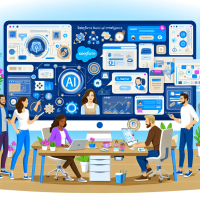
The Healthcare Industry’s Digital Transformation: An Opportunity Unveiled – Salesforce Healthcare and AI
Historically, the healthcare sector has lagged behind in technology adoption, particularly software. It consistently invests less in IT and software compared to other industries, relying heavily on manual processes and outdated tools like faxes and phone calls. Unlike other sectors where platforms like Salesforce, Slack, JIRA, and Notion dominate, healthcare has yet to see similar technological integration.
Salesforce Healthcare and AI Future
While this low adoption of software has previously been seen as a drawback, it now presents a significant opportunity. Unlike industries burdened by extensive investments in legacy systems, healthcare is not encumbered by sunk costs. This freedom allows it to embrace cutting-edge AI innovations without the hesitation of overhauling existing, expensive software infrastructures.
Addressing the Staffing Crisis
The healthcare industry is grappling with a severe staffing crisis, with a shortfall of over 100,000 doctors and nurses projected over the next five years. The increasing complexity of medical care, driven by advancements in diagnostics, continuous monitoring, and new treatments, contributes to an overwhelming amount of information for clinicians. To manage this, healthcare requires new tools capable of processing complex data in real-time to support critical decisions for an aging population with more complex health needs.
The most valuable asset in healthcare is clinical judgment, which is currently exclusive to human practitioners. A major challenge is to extend this clinical judgment beyond the existing workforce and physical locations, making it accessible to all who need it. Additionally, ensuring that every clinician performs at the highest level is crucial.
The Role of Administrative and Clinical AI
Administrative AI is essential for reducing the overhead of healthcare delivery, allowing for better resource management and efficiency. Clinical AI products, though challenging to develop due to their high-stakes nature, are uniquely positioned to address these needs. They must integrate seamlessly into existing environments, adding a layer of sophistication to healthcare processes.
Regulatory Advantages for Clinical AI
One of healthcare’s advantages in adopting AI is its well-established regulatory framework. The FDA has approved numerous clinical AI products and is developing processes to keep pace with advancements in machine learning and generative AI. This rigorous approval process ensures that only the most reliable and clinically sound products make it to market, creating a higher barrier to entry but also a stronger competitive advantage for those that succeed.
The Scale of Opportunity
The healthcare industry is a massive $4 trillion+ market, predominantly driven by human labor rather than technology. Historically, enterprise software companies have struggled to penetrate this sector, as IT budgets represent just 3.5% of revenue—less than half of that in financial services.
However, with AI tools advancing rapidly, they are increasingly seen as “AI staff” rather than mere software. This shift opens up opportunities not just in software but in transforming service delivery, potentially disrupting a market valued in trillions rather than billions. The scale of this opportunity far exceeds past software ventures, as reflected in the significant capital and valuations flowing into AI-driven healthcare companies.
Whether you’re launching a new clinic, developing infrastructure for the healthcare system, or creating innovative payment or insurance models, now is an unprecedented time to enter the healthcare space. The transformative power of AI is poised to redefine how healthcare companies are built, scaled, and brought to market.

Who is Salesforce? Here is their story in their own words. From our inception, we've proudly embraced the identity of Read more
Salesforce Marketing Cloud Transactional Emails are immediate, automated, non-promotional messages crucial to business operations and customer satisfaction, such as order Read more

Salesforce has unveiled a comprehensive analytics solution tailored for wealth managers, home office professionals, and retail bankers, merging its Financial Read more
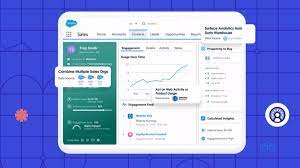
AI plays a crucial role in propensity score estimation as it can discern underlying patterns between treatments and confounding variables Read more