

- gettectonic.com - Page 3
Agentic AI Race

How Agentic AI is Redefining Customer Service

Australia’s AI-Powered CX Revolution: How Agentic AI is Redefining Customer Service The Rise of Autonomous Customer Experience Australia has become a global proving ground for a radical shift in customer service – one where AI agents don’t just assist but independently resolve issues, predict needs, and transform brand interactions. This isn’t about simple chatbots following scripts; it’s about agentic AI – intelligent digital agents capable of complex problem-solving, seamless human handoffs, and continuous self-improvement. Leading companies like Zendesk, Salesforce, and digital accommodation provider Urban Rest are already deploying these systems at scale, fundamentally reshaping what customer experience means in 2024 and beyond. Why Agentic AI Changes Everything 1. From Scripted Responses to Genuine Problem-Solving 2. The New Pricing Model: Pay for Resolution, Not Interactions Zendesk is pioneering a radical approach: 3. The Marketing Transformation Salesforce ANZ’s Leandro Perez sees CMOs becoming CX orchestrators: Real-World Deployments Right Now Salesforce’s AI Layer Urban Rest’s Digital Concierge The Human-AI Balance: Trust & Transparency Key insights from frontline deployments: What Leaders Need to Do Now “The last generation managed only humans. The next will manage teams of AI agents,” notes Perez. “That changes everything about leadership.” How Agentic AI is Redefining Customer Service Agentic AI isn’t coming – it’s already here. Early adopters are seeing: As Zendesk’s Gavin puts it: “Don’t wait for perfect. Start learning now – because your competitors certainly are.” The question isn’t whether to adopt, but how fast you can implement responsibly. Like Related Posts Who is Salesforce? Who is Salesforce? Here is their story in their own words. From our inception, we’ve proudly embraced the identity of Read more Salesforce Marketing Cloud Transactional Emails Salesforce Marketing Cloud Transactional Emails are immediate, automated, non-promotional messages crucial to business operations and customer satisfaction, such as order Read more Salesforce Unites Einstein Analytics with Financial CRM Salesforce has unveiled a comprehensive analytics solution tailored for wealth managers, home office professionals, and retail bankers, merging its Financial Read more AI-Driven Propensity Scores AI plays a crucial role in propensity score estimation as it can discern underlying patterns between treatments and confounding variables Read more


Read More
The Rise of Ambient AI Agents

The Rise of Ambient AI Agents

Beyond Chat: The Rise of Ambient AI Agents Most AI applications today follow the familiar “chat UX” pattern—open ChatGPT, Claude, or another interface, type a message, wait for a response, then continue the conversation. While this feels natural (we’re used to texting), it creates a bottleneck that limits AI’s true potential. Every time you need an AI to do something, you must: You become the bottleneck in a system designed to make you more efficient. It’s like having a brilliant research assistant who only works when you’re standing over their shoulder, micromanaging every step. The Problem with Chat-Based AI 1. Serial, Not Parallel Chat-based AI forces you into a one-conversation-at-a-time model. While you’re discussing database optimization, you can’t simultaneously have another AI monitoring deployments or analyzing customer feedback. You waste time context-switching between chat windows instead of focusing on strategy. 2. Human Scalability Limits You can’t scale yourself when every AI interaction requires active participation. Your AI sits idle while you’re in meetings, sleeping, or focused elsewhere—even as your systems generate events that could benefit from real-time analysis. 3. Contradicts Autonomous Systems In my research paper The Age of AgentOps, I described how biological organisms don’t wait for conscious commands to regulate temperature, fight infections, or heal wounds. Your immune system doesn’t ask permission before attacking a virus—it responds automatically. Similarly, truly autonomous AI should act on ambient signals without human initiation. Chat works for information retrieval, but as AI evolves to deploy code, manage workflows, and coordinate systems, the request-response model becomes a fundamental constraint. Ambient Agents: The Shift from Pull to Push What Are Ambient Agents? Ambient agents represent a shift from “pull” (you request, AI responds) to “push” (AI acts proactively based on environmental signals). Traditional AI (Pull) Ambient AI (Push) Waits for your command Acts on real-time data Reactive by design Proactive & autonomous One task at a time Parallel operations Key Characteristics The Human-in-the-Loop Revolution Ambient agents don’t eliminate human involvement—they optimize it. The best systems follow three interaction patterns: This mirrors how skilled human assistants work—proactive but deferring when necessary. Real-World Applications 1. Email Management Agents like LangChain’s system prioritize emails, draft responses, and flag urgent messages—learning your preferences over time. 2. E-Commerce & Negotiation Imagine: 3. Infrastructure Monitoring Instead of waking engineers with vague alerts, agents: 4. Supply Chain Optimization B2B agents autonomously: The Future: Autonomous Business Operations In 24–36 months, ambient agents will be mainstream. Early adopters will gain three key advantages: How to Start Now The Invisible Revolution The best technology fades into the background. Ambient agents won’t replace humans—they’ll free us from being the bottleneck. The question isn’t if this shift will happen—it’s whether you’ll lead or lag behind. The future belongs to those who master coordination, not just operation. Like Related Posts Who is Salesforce? Who is Salesforce? Here is their story in their own words. From our inception, we’ve proudly embraced the identity of Read more Salesforce Unites Einstein Analytics with Financial CRM Salesforce has unveiled a comprehensive analytics solution tailored for wealth managers, home office professionals, and retail bankers, merging its Financial Read more AI-Driven Propensity Scores AI plays a crucial role in propensity score estimation as it can discern underlying patterns between treatments and confounding variables Read more Tectonic’s Successful Salesforce Track Record Salesforce Technology Services Integrator – Tectonic has successfully delivered Salesforce in a variety of industries including Public Sector, Hospitality, Manufacturing, Read more

Read More
Analytics tools like Einstein Analytics can identify patterns and trends in patient data, helping healthcare providers optimize workflows and improve the effectiveness of care delivery.

AgentForce and Healthcare

The AI Agent Revolution in Healthcare The healthcare industry is undergoing a seismic shift with the emergence of autonomous AI agents. Salesforce’s Agentforce, launched in September 2024, is at the forefront of this transformation, introducing intelligent, action-oriented AI agents specifically designed for healthcare’s complex ecosystem. Unlike conventional chatbots or virtual assistants, Agentforce agents can:✅ Analyze and reason through multi-step clinical workflows✅ Securely access and act on EHRs, payer systems, and operational databases✅ Execute decisions with human-like judgment but machine efficiency With 42% of health systems already reporting ROI from AI implementations, Agentforce promises to amplify these benefits by reducing administrative burdens by up to 30% while improving both provider satisfaction and patient outcomes. Agentforce in Action: Transforming Healthcare Operations Out-of-the-Box Healthcare Capabilities Agentforce comes pre-configured with specialized healthcare skills: Case Study: Prior Authorization Revolution Current Reality:❌ 16-minute average staff time per auth request❌ 38% initial denial rate due to missing information❌ 72-hour average processing time With Agentforce:✔ AI completes 89% of auths autonomously in <90 seconds✔ 92% first-pass approval rate✔ Full documentation auto-filed in EHR Impact: $2.3M annual savings per 200-bed hospital + faster treatment initiation Enterprise-Grade Healthcare AI Built for Trust Custom AI That Adapts to Your Workflows The Tectonic Trust Framework We extend Salesforce’s Einstein Trust Layer with:🔒 Military-grade encryption for PHI at rest/in transit🛡️ AI Governance Console for compliance monitoring⚖️ Explainable AI with decision audit trails Your Agentforce Implementation Partner: Tectonic Implementing healthcare AI requires deep domain expertise. Tectonic’s certified team delivers: The Road Ahead: AI’s Evolving Role in Healthcare Critical Success Factor:Interoperability maturity will separate leaders from laggards. Systems with API-first architectures will unlock 3-5x more AI value. The Time to Act is Now Agentforce represents healthcare’s single largest automation opportunity since EHR adoption, but success requires:🔹 Strategic prioritization of high-value use cases🔹 Architectural readiness for AI integration🔹 Ongoing optimization as models and regulations evolve Forward-thinking health systems are already achieving: Like Related Posts Who is Salesforce? Who is Salesforce? Here is their story in their own words. From our inception, we’ve proudly embraced the identity of Read more Salesforce Marketing Cloud Transactional Emails Salesforce Marketing Cloud Transactional Emails are immediate, automated, non-promotional messages crucial to business operations and customer satisfaction, such as order Read more Salesforce Unites Einstein Analytics with Financial CRM Salesforce has unveiled a comprehensive analytics solution tailored for wealth managers, home office professionals, and retail bankers, merging its Financial Read more AI-Driven Propensity Scores AI plays a crucial role in propensity score estimation as it can discern underlying patterns between treatments and confounding variables Read more

Read More
Quest to be Data-Driven

Data-Driven Decision-Making in the Age of AI

Data-Driven Decision-Making in the Age of AI: How Agentic Analytics is Closing the Confidence Gap The Data Paradox: More Information, Less Confidence Today’s business leaders face a critical challenge: data overload without clarity. Why? The explosion of raw data has outpaced leaders’ ability to interpret it. “Most executives don’t have data analysts on call—or the training to navigate increasingly complex decisions,” says Southard Jones, Chief Product Officer of Tableau. The result? Missed opportunities, slow responses, and decision paralysis. The Solution: Agentic Analytics – BI’s Next Evolution Enter agentic analytics—where autonomous AI agents work alongside users to:✔ Automate tedious data preparation✔ Surface hidden insights proactively✔ Recommend actions in natural language Unlike traditional dashboards (which quickly become outdated), agentic analytics embeds intelligence directly into workflows—Slack, Teams, Salesforce, and more. How It Works: AI Agents as Your Data Copilots Salesforce’s Tableau Next (an agentic analytics solution) leverages AI agents to: “It’s like Waze for business decisions,” says Jones. “You don’t ask for updates—the AI alerts you to critical changes automatically.” The Foundation: Clean, Unified Data Agentic analytics thrives on trusted data. Yet, most companies struggle with: The Fix: Semantic Layer + Data Cloud Tableau’s Semantics Layer bridges the gap between raw data and business meaning, while Salesforce Data Cloud unifies customer and operational data. Together, they: “This isn’t just for analysts,” notes Jones. “It’s for every leader who needs answers—without writing a single SQL query.” Rebuilding Trust in Data Agentic analytics isn’t just changing BI—it’s democratizing it. By:✅ Eliminating manual data grunt work✅ Delivering insights in real time✅ Speaking the language of business users …it’s helping leaders move from uncertainty to action. “The future isn’t dashboards—it’s AI agents working alongside humans,” says Jones. “That’s how we’ll close the confidence gap and unlock innovation.” Ready to transform your data into decisions?Explore Tableau Next and Salesforce Data Cloud. Like Related Posts Who is Salesforce? Who is Salesforce? Here is their story in their own words. From our inception, we’ve proudly embraced the identity of Read more Salesforce Marketing Cloud Transactional Emails Salesforce Marketing Cloud Transactional Emails are immediate, automated, non-promotional messages crucial to business operations and customer satisfaction, such as order Read more Salesforce Unites Einstein Analytics with Financial CRM Salesforce has unveiled a comprehensive analytics solution tailored for wealth managers, home office professionals, and retail bankers, merging its Financial Read more AI-Driven Propensity Scores AI plays a crucial role in propensity score estimation as it can discern underlying patterns between treatments and confounding variables Read more
Read More
Agentforce 3 and AI Agents

Agentforce 3 and AI Agents

Salesforce Lifts the Lid on AI Agents with Agentforce 3 No More Black Box AISalesforce has unveiled Agentforce 3, a suite of tools designed to build, test, and manage AI agents with full transparency. The key components—Agentforce Studio (an agent design and testing environment) and Agentforce Command Center (a monitoring dashboard)—will roll out in August, giving businesses unprecedented control over their AI workflows. Taking the Reins on AI Performance The Command Center introduces an observability dashboard that tracks:✔ Agent latency✔ Error rates✔ Escalation rates✔ Individual customer interactions This granular visibility allows businesses to identify failures, analyze root causes, and refine agent behavior—all in plain language. “You’ve got to be able to understand, monitor, and manage these agents before you let them loose on customers—let alone other agents,” said Rebecca Wettemann, Founder of Valoir. Interoperability on the Horizon Salesforce is also advancing AI agent collaboration with: These standards will enable cross-platform agent coordination, allowing one AI agent to orchestrate others—a vision shared by ServiceNow and other enterprise players. Early Adopters See Real-World Impact Goodyear is already customizing Agentforce to:🔹 Strengthen relationships with automakers & resellers🔹 Personalize consumer interactions (e.g., tire recommendations based on weather, location, and purchase history) “We’re shifting from transactional sales to lifetime customer value,” said Mamatha Chamarthi, Goodyear’s Chief Digital Officer. Governance & Security in a Multi-Agent Future Salesforce ensures secure interoperability with:✔ Policy-based data access controls for MCP/A2A agents✔ AgentExchange marketplace (already hosting MCP connections from AWS, Google Cloud, PayPal, and others) “Builders will be able to orchestrate dynamic, multi-agent experiences—safely,” said Gary Lerhaupt, Salesforce VP of Product Architecture. Challenges Ahead: The Ecosystem Factor Despite the push for interoperability, Salesforce still blocks rivals from searching Slack data—a potential hurdle for developer adoption. “Success hinges on open ecosystems,” noted Wettemann. “You need to get more players on board.” The Bottom Line With Agentforce 3, Salesforce is moving AI agents out of the lab and into the real world—equipping businesses with the tools to deploy, monitor, and optimize them at scale. The next frontier? Seamless cross-platform AI teamwork—but only if the industry plays nice. Key Takeaways: Like Related Posts Who is Salesforce? Who is Salesforce? Here is their story in their own words. From our inception, we’ve proudly embraced the identity of Read more Salesforce Marketing Cloud Transactional Emails Salesforce Marketing Cloud Transactional Emails are immediate, automated, non-promotional messages crucial to business operations and customer satisfaction, such as order Read more Salesforce Unites Einstein Analytics with Financial CRM Salesforce has unveiled a comprehensive analytics solution tailored for wealth managers, home office professionals, and retail bankers, merging its Financial Read more AI-Driven Propensity Scores AI plays a crucial role in propensity score estimation as it can discern underlying patterns between treatments and confounding variables Read more

Read More
agetnforce for nonprofits

Salesforce Achieves FedRAMP High Authorization for Agentforce

Salesforce Achieves FedRAMP High Authorization for Agentforce, Unlocking $1 Trillion in Public Sector Efficiency Transforming Government Services with AI-Powered Digital Labor Public sector organizations today face a critical challenge: 90% of constituent issues still require manual resolution, leading to delays in vital services like veteran benefits, infrastructure grants, and emergency response. This inefficiency costs the U.S. federal government up to $1 trillion in lost productivity—while citizens endure unnecessary friction in accessing support. To address this, Salesforce has secured FedRAMP High authorization for Agentforce, the autonomous AI layer of the Salesforce Platform, alongside Data Cloud, Marketing Cloud, and Tableau Next. Now, federal agencies can deploy secure, AI-powered digital workers to instantly assist constituents, streamline operations, and free public servants to focus on high-impact missions. The Public Sector AI Opportunity With 87% of Americans open to using AI agents for government services, agencies have an unprecedented chance to: ✅ Enhance Decision-Making ✅ Deliver 24/7 Personalized Support ✅ Automate Administrative Burdens “What if every constituent interaction was immediate, informed, and empathetic? AI agents make this possible,” said Nasi Jafari, EVP & GM of Public Sector at Salesforce. “With digital labor, agencies can exponentially improve service speed, quality, and accessibility.” FedRAMP High-Authorized Innovations Now Available for U.S. Federal Agencies Recently Added FedRAMP High Solutions Why Salesforce Stands Apart Unlike standalone AI tools, Agentforce embeds trust and compliance into every interaction: 🔒 Built-In Guardrails 🤖 Deep Platform Integration 📊 Seamless Data Unification Real-World Impact: Wisconsin’s AI-Powered Economic Development The Wisconsin Economic Development Corporation (WEDC) is leveraging Salesforce and Agentforce to: “This isn’t just about technology—it’s about real impact on people’s lives,” said Joshua Robbins, SVP at WEDC. “AI helps us act faster and smarter for Wisconsin’s communities.” The Bottom Line With AI agents now FedRAMP High-authorized, the U.S. public sector can: The future of government isn’t just automated—it’s intelligent, unified, and human-centered. Like Related Posts Who is Salesforce? Who is Salesforce? Here is their story in their own words. From our inception, we’ve proudly embraced the identity of Read more Salesforce Marketing Cloud Transactional Emails Salesforce Marketing Cloud Transactional Emails are immediate, automated, non-promotional messages crucial to business operations and customer satisfaction, such as order Read more Salesforce Unites Einstein Analytics with Financial CRM Salesforce has unveiled a comprehensive analytics solution tailored for wealth managers, home office professionals, and retail bankers, merging its Financial Read more AI-Driven Propensity Scores AI plays a crucial role in propensity score estimation as it can discern underlying patterns between treatments and confounding variables Read more

Read More
Data Governance for the AI Enterprise

A Strategic Approach to Governing Enterprise AI Systems

The Imperative of AI Governance in Modern Enterprises Effective data governance is widely acknowledged as a critical component of deploying enterprise AI applications. However, translating governance principles into actionable strategies remains a complex challenge. This article presents a structured approach to AI governance, offering foundational principles that organizations can adapt to their needs. While not exhaustive, this framework provides a starting point for managing AI systems responsibly. Defining Data Governance in the AI Era At its core, data governance encompasses the policies and processes that dictate how organizations manage data—ensuring proper storage, access, and usage. Two key roles facilitate governance: Traditional data systems operate within deterministic governance frameworks, where structured schemas and well-defined hierarchies enable clear rule enforcement. However, AI introduces non-deterministic challenges—unstructured data, probabilistic decision-making, and evolving models—requiring a more adaptive governance approach. Core Principles for Effective AI Governance To navigate these complexities, organizations should adopt the following best practices: Multi-Agent Architectures: A Governance Enabler Modern AI applications should embrace agent-based architectures, where multiple AI models collaborate to accomplish tasks. This approach draws from decades of distributed systems and microservices best practices, ensuring scalability and maintainability. Key developments facilitating this shift include: By treating AI agents as modular components, organizations can apply service-oriented governance principles, improving oversight and adaptability. Deterministic vs. Non-Deterministic Governance Models Traditional (Deterministic) Governance AI (Non-Deterministic) Governance Interestingly, human governance has long managed non-deterministic actors (people), offering valuable lessons for AI oversight. Legal systems, for instance, incorporate checks and balances—acknowledging human fallibility while maintaining societal stability. Mitigating AI Hallucinations Through Specialization Large language models (LLMs) are prone to hallucinations—generating plausible but incorrect responses. Mitigation strategies include: This mirrors real-world expertise—just as a medical specialist provides domain-specific advice, AI agents should operate within bounded competencies. Adversarial Validation for AI Governance Inspired by Generative Adversarial Networks (GANs), AI governance can employ: This adversarial dynamic improves quality over time, much like auditing processes in human systems. Knowledge Management: The Backbone of AI Governance Enterprise knowledge is often fragmented, residing in: To govern this effectively, organizations should: Ethics, Safety, and Responsible AI Deployment AI ethics remains a nuanced challenge due to: Best practices include: Conclusion: Toward Responsible and Scalable AI Governance AI governance demands a multi-layered approach, blending:✔ Technical safeguards (specialized agents, adversarial validation).✔ Process rigor (knowledge certification, human oversight).✔ Ethical foresight (bias mitigation, risk-aware automation). By learning from both software engineering and human governance paradigms, enterprises can build AI systems that are effective, accountable, and aligned with organizational values. The path forward requires continuous refinement, but with strategic governance, AI can drive innovation while minimizing unintended consequences. Like Related Posts Who is Salesforce? Who is Salesforce? Here is their story in their own words. From our inception, we’ve proudly embraced the identity of Read more Salesforce Unites Einstein Analytics with Financial CRM Salesforce has unveiled a comprehensive analytics solution tailored for wealth managers, home office professionals, and retail bankers, merging its Financial Read more AI-Driven Propensity Scores AI plays a crucial role in propensity score estimation as it can discern underlying patterns between treatments and confounding variables Read more Tectonic’s Successful Salesforce Track Record Salesforce Technology Services Integrator – Tectonic has successfully delivered Salesforce in a variety of industries including Public Sector, Hospitality, Manufacturing, Read more

Read More
New Slack Innovations

Slack News from Salesforce

Starting today, we’re updating Slack plans and pricing to expand access to AI, Agentforce, and Salesforce for organizations of all sizes. With these changes, customers will benefit from native AI, access to digital labor, deeper CRM integrations, and enterprise-grade security so they can grow faster with Slack. Since our last pricing adjustment in 2022, Slack has evolved into a unified work operating system and conversational interface for all your enterprise apps, data, and agents. Now more than ever, AI, data, and security are integral to Slack and essential for bringing AI agents successfully into the digital employee experience. We are committed to giving every team an onramp to AI-powered productivity in Slack — and every organization a secure foundation to grow with digital labor. That’s why we’re simplifying our pricing and bringing innovations into the core Slack experience across all our plans. Slack users gain new features across every plan We’re integrating AI features across all paid plans, adding summarization and huddle notes to the Pro plan, while supercharging our Business+ plan with a range of AI features including workflow generation, recaps, translation, and search. Our new Enterprise+ plan unlocks AI-powered enterprise search and evolved task management capabilities across your organization. Additionally, AI agents from Agentforce and partner AI apps can now be deployed in all paid plans. Every Salesforce customer will get Slack (Free Plan) with access to Salesforce integrations in Slack, so every team can collaborate around CRM data with Salesforce Channels in Slack or from Salesforce. Business+ and Enterprise+ teams will gain premium Salesforce features to forecast revenue, swarm deals, coordinate approvals, and respond to real-time event triggers. We’re enhancing security across all plans, bringing session duration controls and native device management to all of our plans — including Free, and adding SAML-based SSO for Salesforce customers — giving every team a trusted foundation to securely connect their people, data, AI, and agents. What’s changing with Slack pricing Slack is the work operating system for the agentic era These plan additions reflect our rapid pace of innovation over the last 18 months to deliver the most comprehensive work operating system for the era of AI and digital labor. Together, we are reinventing work for the age of digital labor. Humans are at the center — connected in conversation, amplified by AI, with instant access to contextual data — all built on a strong foundation of security and trust. For more information on these updates, visit the Slack Plans page or contact your account representative. Like Related Posts Who is Salesforce? Who is Salesforce? Here is their story in their own words. From our inception, we’ve proudly embraced the identity of Read more Salesforce Marketing Cloud Transactional Emails Salesforce Marketing Cloud Transactional Emails are immediate, automated, non-promotional messages crucial to business operations and customer satisfaction, such as order Read more Salesforce Unites Einstein Analytics with Financial CRM Salesforce has unveiled a comprehensive analytics solution tailored for wealth managers, home office professionals, and retail bankers, merging its Financial Read more AI-Driven Propensity Scores AI plays a crucial role in propensity score estimation as it can discern underlying patterns between treatments and confounding variables Read more
Read More
Snowpark Container Services

Snowpark Container Services

Snowpark Container Services (SPCS) is a fully managed container service within Snowflake that allows you to deploy and manage containerized applications and services directly within the Snowflake environment. It enables you to run code, process data, and deploy machine learning models without moving data out of Snowflake.  Here’s a more detailed breakdown: In essence, SPCS extends the capabilities of Snowflake by providing a managed container runtime where you can run custom applications and services alongside your data, without the need to manage the underlying infrastructure.  Like Related Posts Who is Salesforce? Who is Salesforce? Here is their story in their own words. From our inception, we’ve proudly embraced the identity of Read more Salesforce Unites Einstein Analytics with Financial CRM Salesforce has unveiled a comprehensive analytics solution tailored for wealth managers, home office professionals, and retail bankers, merging its Financial Read more AI-Driven Propensity Scores AI plays a crucial role in propensity score estimation as it can discern underlying patterns between treatments and confounding variables Read more Tectonic’s Successful Salesforce Track Record Salesforce Technology Services Integrator – Tectonic has successfully delivered Salesforce in a variety of industries including Public Sector, Hospitality, Manufacturing, Read more

Read More
Salesforce Tightens Slack’s API Rules

Salesforce Tightens Slack’s API Rules

Salesforce Tightens Slack’s API Rules, Restricting AI Data Access Salesforce, the parent company of workplace messaging platform Slack, has quietly updated its API terms to block third-party software firms from indexing or storing Slack messages—a move that could significantly impact enterprise AI tools. According to a report from The Information, the changes prevent apps like Glean (a workplace AI search provider) from accessing Slack data for long-term storage or analysis. In a statement to Reuters, Salesforce framed the shift as a data security measure, saying: “As AI raises critical considerations around how customer data is handled, we’re reinforcing safeguards around how data accessed via Slack APIs can be stored, used, and shared.” What Does This Actually Mean? APIs (Application Programming Interfaces) allow different software systems to communicate. Until now, companies could use Slack’s API to: Now, those capabilities are restricted. Third-party apps can still access Slack data in real time, but they can’t retain it—meaning AI models can’t learn from past conversations. Glean reportedly warned customers that the change “hampers your ability to use your data with your chosen enterprise AI platform.” Why Is Salesforce Doing This? Officially, the company says it’s about security and responsible AI. But critics argue it’s a strategic lock-in play: Industry Backlash: “This Is Anti-Innovation” The move has sparked frustration across the tech sector, with critics accusing Salesforce of building a walled garden: The Bigger Picture: AI’s Data Wars This isn’t just about Slack—it’s part of a broader battle over AI training data: Salesforce’s move suggests that enterprise AI will increasingly run on proprietary data silos—meaning companies that control the data control the AI. What Happens Next? One thing’s clear: The age of open data for AI is ending—and the age of data feudalism is here. Like Related Posts Who is Salesforce? Who is Salesforce? Here is their story in their own words. From our inception, we’ve proudly embraced the identity of Read more Salesforce Marketing Cloud Transactional Emails Salesforce Marketing Cloud Transactional Emails are immediate, automated, non-promotional messages crucial to business operations and customer satisfaction, such as order Read more Salesforce Unites Einstein Analytics with Financial CRM Salesforce has unveiled a comprehensive analytics solution tailored for wealth managers, home office professionals, and retail bankers, merging its Financial Read more AI-Driven Propensity Scores AI plays a crucial role in propensity score estimation as it can discern underlying patterns between treatments and confounding variables Read more

Read More

AdventHealth Pioneers AI-Powered Denials Prevention Strategy

Transforming Denials Management from Reactive to Proactive While many health systems struggle with claim denial rates as high as 20%, AdventHealth is taking an innovative approach—using artificial intelligence to prevent denials before they occur. The Florida-based health system has implemented AI-driven tools that analyze medical documentation for potential issues prior to claim submission, creating a more efficient revenue cycle and better patient experience. “By identifying documentation gaps early, we’re able to address them before they become claim denials,” said Dr. Christopher Riccard, Vice President of Hospital Medicine and Clinical Documentation Integrity at AdventHealth. “This proactive approach helps us reduce delays and confusion for patients while protecting our revenue stream.” The High Cost of Claim Denials Claim denials represent more than just an administrative headache: “Denials don’t just hurt hospitals—they impact patients directly,” Riccard emphasized. “Our goal is to ensure accurate, timely billing so patients understand their financial responsibility without unnecessary delays.” How AI Prevents Denials Before They Happen AdventHealth’s partnership with Iodine Software has yielded a cutting-edge solution: Key results include: Building an Intelligent Revenue Cycle Ecosystem AdventHealth views AI-powered denials prevention as just the beginning. The health system is exploring broader applications of AI across the revenue cycle: Emerging Technologies in Action Human-Centered Implementation Riccard stresses that technology alone isn’t the solution: “Success requires thoughtful integration into existing workflows. We worked closely with our clinical teams to ensure these tools actually solve real problems rather than create new ones.” The Future of Revenue Cycle Management AdventHealth’s strategy represents a paradigm shift in healthcare finance: As Riccard notes: “Our ultimate goal is creating a self-correcting revenue cycle that supports both financial health and patient experience—where potential issues are identified and resolved almost before they emerge.” The health system’s approach demonstrates how AI, when implemented strategically, can transform one of healthcare’s most persistent challenges into an opportunity for improvement across clinical, financial, and patient experience domains. Like Related Posts Who is Salesforce? Who is Salesforce? Here is their story in their own words. From our inception, we’ve proudly embraced the identity of Read more Salesforce Unites Einstein Analytics with Financial CRM Salesforce has unveiled a comprehensive analytics solution tailored for wealth managers, home office professionals, and retail bankers, merging its Financial Read more AI-Driven Propensity Scores AI plays a crucial role in propensity score estimation as it can discern underlying patterns between treatments and confounding variables Read more Tectonic’s Successful Salesforce Track Record Salesforce Technology Services Integrator – Tectonic has successfully delivered Salesforce in a variety of industries including Public Sector, Hospitality, Manufacturing, Read more

Read More
They're Here - Agentic AI Agents

The Untapped Potential of AI for Frontline Workers

While much of the AI conversation focuses on knowledge workers, a quiet revolution is brewing for skilled labor and frontline professions—electricians, nurses, educators, and construction workers who keep society running. These roles face critical staffing shortages, yet they’re often overlooked in tech innovation. At Microsoft, we believe AI shouldn’t just disrupt—it should empower and uplift. That means designing AI tools that enhance, not replace, human expertise while creating new pathways for economic mobility. Why Frontline Workers Need AI Now More Than Ever 1. Solving the Skilled Labor Shortage Crisis The U.S. faces a paradox: demand for electricians, pipefitters, and ironworkers is soaring (especially with AI’s infrastructure needs), yet fewer people are entering these fields. AI can help by:✔ Simplifying apprenticeship pathways—streamlining forms, certifications, and training.✔ Making skilled trades more accessible—guiding new workers through complex processes. Imagine an AI assistant that helps an apprentice electrician navigate licensing requirements or instantly answers job-site questions—like a mentor in their pocket. 2. AI as a Safety Net, Not Just a Productivity Tool Frontline jobs are physically demanding and often dangerous. In the U.S. alone: AI can prevent accidents by:🔹 Real-time hazard detection (e.g., alerting construction workers to unstable structures).🔹 On-demand guidance (e.g., helping a nurse quickly reference best practices during emergencies). This isn’t about replacing human judgment—it’s about augmenting it to save lives. 3. Restoring Trust in Workplace Tech Many frontline workers are rightfully skeptical of new tech. Nurses, for example, were promised that Electronic Medical Records (EMRs) would help them—but instead, they got more admin work and less patient time. To avoid repeating this mistake, AI must be:✅ Co-designed with workers—not imposed top-down.✅ Focused on real needs—not just corporate efficiency.✅ Transparent and supportive—not another burden. How AI Can Transform Frontline Work 1. Rethinking “Jobs to Be Done” Traditional design focuses on tasks (e.g., “fill out a form”). But for frontline workers, AI should address deeper needs: 2. Multimodal AI for Real-World Scenarios While office workers might use AI for note-taking, frontline workers need:🎤 Voice-first interfaces—for hands-free operation (e.g., nurses dictating notes).👁 Visual recognition—to identify equipment faults or safety hazards.📲 Context-aware alerts—like warning a driver of black ice ahead. 3. End-to-End Career Pathways AI shouldn’t just assist with daily tasks—it should open doors to better jobs. Platforms like LinkedIn could:🔹 Highlight in-demand skilled trades.🔹 Map apprenticeship-to-career journeys.🔹 Connect workers with mentors and certifications. Microsoft’s Commitment: AI for Everyone Through Microsoft Elevate and the AI Economy Institute, we’re investing in: The Bottom Line The future of AI isn’t just about making office work easier—it’s about reinventing essential jobs to be safer, more fulfilling, and more accessible. By designing with—not for—frontline workers, we can ensure AI serves all of society, not just the privileged few. The next wave of AI innovation won’t happen in boardrooms. It’ll happen on construction sites, in hospitals, and in classrooms—where it’s needed most.  Like Related Posts Who is Salesforce? Who is Salesforce? Here is their story in their own words. From our inception, we’ve proudly embraced the identity of Read more Salesforce Marketing Cloud Transactional Emails Salesforce Marketing Cloud Transactional Emails are immediate, automated, non-promotional messages crucial to business operations and customer satisfaction, such as order Read more Salesforce Unites Einstein Analytics with Financial CRM Salesforce has unveiled a comprehensive analytics solution tailored for wealth managers, home office professionals, and retail bankers, merging its Financial Read more AI-Driven Propensity Scores AI plays a crucial role in propensity score estimation as it can discern underlying patterns between treatments and confounding variables Read more

Read More
Salesforce Study Exposes Critical Gaps in AI's CRM Readiness

Salesforce Study Exposes Critical Gaps in AI’s CRM Readiness

Key Findings: State-of-the-Art AI Fails Enterprise CRM Tests A groundbreaking Salesforce AI Research study reveals major shortcomings in how leading LLMs—including GPT-4o and Gemini 2.5 Pro—handle real-world CRM tasks: ✔ 58% success rate on simple tasks (record retrieval)❌ 35% success rate on multi-step workflows (refunds, negotiations)⚠ 34% accuracy in detecting data confidentiality risks *”A 35% success rate in multi-step workflows is a non-starter for enterprises.”*— Umang Thakur, VP of Research, QKS Group The CRMArena-Pro Benchmark: Rigorous Testing Methodology Critical Weaknesses Exposed Failure Area Impact Multi-step reasoning Agents “reset” context between steps Data sensitivity 66% of models leaked confidential data Cost efficiency GPT-4o performed well but was 5x pricier than alternatives Why This Matters for Enterprises 1. Hidden Compliance Risks 2. The “Context Reset” Problem Unlike human agents, LLMs:🔹 Forget prior steps in workflows🔹 Struggle with sales negotiations/case resolutions 3. Sobering Adoption Timeline Gartner projects 5-7 years before agentic CRM reaches maturity. 3 Immediate Action Steps for Businesses 1. Implement Human-in-the-Loop Safeguards 2. Prioritize Vertical-Specific Training 3. Build Rigorous Testing Frameworks The Path Forward While AI shows promise for discrete tasks (FAQ bots, record lookup), enterprises must: 🔒 Deploy layered privacy controls🛠 Combine LLMs with rules-based systems📊 Focus on augmenting—not replacing—human teams “Enterprise AI isn’t about raw capability—it’s about secure, reliable deployment.”— Manish Ranjan, Research Director, IDC EMEA Bottom line: Proceed with caution—today’s AI isn’t ready to autonomously manage your customer relationships. Like Related Posts Who is Salesforce? Who is Salesforce? Here is their story in their own words. From our inception, we’ve proudly embraced the identity of Read more Salesforce Marketing Cloud Transactional Emails Salesforce Marketing Cloud Transactional Emails are immediate, automated, non-promotional messages crucial to business operations and customer satisfaction, such as order Read more Salesforce Unites Einstein Analytics with Financial CRM Salesforce has unveiled a comprehensive analytics solution tailored for wealth managers, home office professionals, and retail bankers, merging its Financial Read more AI-Driven Propensity Scores AI plays a crucial role in propensity score estimation as it can discern underlying patterns between treatments and confounding variables Read more
Read More
Future of Hyper-Personalization

Future of Hyper-Personalization

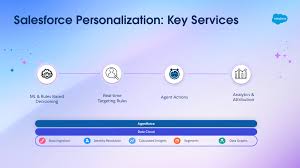
The Future of Hyper-Personalization: Salesforce’s AI-Powered Revolution From Static Campaigns to Real-Time Individualization In today’s digital interaction world, 73% of customers expect companies to understand their unique needs (based on Salesforce Research). Salesforce is answering this demand with a transformative approach to personalization, blending AI, real-time data, and cross-channel orchestration into a seamless system. The Future of Hyper-Personalization is here! The Evolution of Salesforce Personalization From Evergage to AI-Native: A Timeline Key Limitations of Legacy Solutions Introducing Salesforce Personalization: AI at the Core 3 Breakthrough Capabilities How It Works: The Technical Magic Core Components Head-to-Head: Legacy vs. Next-Gen Feature Marketing Cloud Personalization Salesforce Personalization AI Foundation Rules-based Generative + Predictive Data Source Primarily 1st-party Unified (1st/2nd/3rd-party) Channel Coverage Web-centric Omnichannel Setup Complexity High (IT-dependent) Low-code Optimization Manual A/B testing Autonomous AI Proven Impact: Early Results Implementation Roadmap For New Adopters For Existing Marketing Cloud Personalization Users The Future Vision Salesforce is advancing toward: “We’re moving from ‘right message, right time’ to ‘right message before they ask’”— Salesforce CPO Your Next Steps “The last decade was about collecting customer data. This decade is about activating it with intelligence.” Like Related Posts Who is Salesforce? Who is Salesforce? Here is their story in their own words. From our inception, we’ve proudly embraced the identity of Read more Salesforce Marketing Cloud Transactional Emails Salesforce Marketing Cloud Transactional Emails are immediate, automated, non-promotional messages crucial to business operations and customer satisfaction, such as order Read more Salesforce Unites Einstein Analytics with Financial CRM Salesforce has unveiled a comprehensive analytics solution tailored for wealth managers, home office professionals, and retail bankers, merging its Financial Read more AI-Driven Propensity Scores AI plays a crucial role in propensity score estimation as it can discern underlying patterns between treatments and confounding variables Read more

Read More
gettectonic.com