While much of the AI conversation focuses on knowledge workers, a quiet revolution is brewing for skilled labor and frontline professions—electricians, nurses, educators, and construction workers who keep society running. These roles face critical staffing shortages, yet they’re often overlooked in tech innovation.
At Microsoft, we believe AI shouldn’t just disrupt—it should empower and uplift. That means designing AI tools that enhance, not replace, human expertise while creating new pathways for economic mobility.
Why Frontline Workers Need AI Now More Than Ever
1. Solving the Skilled Labor Shortage Crisis
The U.S. faces a paradox: demand for electricians, pipefitters, and ironworkers is soaring (especially with AI’s infrastructure needs), yet fewer people are entering these fields. AI can help by:
✔ Simplifying apprenticeship pathways—streamlining forms, certifications, and training.
✔ Making skilled trades more accessible—guiding new workers through complex processes.
Imagine an AI assistant that helps an apprentice electrician navigate licensing requirements or instantly answers job-site questions—like a mentor in their pocket.
2. AI as a Safety Net, Not Just a Productivity Tool
Frontline jobs are physically demanding and often dangerous. In the U.S. alone:
- Nearly 1 million workplace injuries occur annually in manufacturing and trucking.
- Long shifts in unpredictable conditions increase risks.
AI can prevent accidents by:
🔹 Real-time hazard detection (e.g., alerting construction workers to unstable structures).
🔹 On-demand guidance (e.g., helping a nurse quickly reference best practices during emergencies).
This isn’t about replacing human judgment—it’s about augmenting it to save lives.
3. Restoring Trust in Workplace Tech
Many frontline workers are rightfully skeptical of new tech. Nurses, for example, were promised that Electronic Medical Records (EMRs) would help them—but instead, they got more admin work and less patient time.
To avoid repeating this mistake, AI must be:
✅ Co-designed with workers—not imposed top-down.
✅ Focused on real needs—not just corporate efficiency.
✅ Transparent and supportive—not another burden.
How AI Can Transform Frontline Work
1. Rethinking “Jobs to Be Done”
Traditional design focuses on tasks (e.g., “fill out a form”). But for frontline workers, AI should address deeper needs:
- Instead of just automating performance reviews, AI could prepare meaningful career conversations by summarizing achievements and suggesting growth opportunities.
- For truckers, AI shouldn’t just log hours—it should predict fatigue risks and optimize routes for safety.
2. Multimodal AI for Real-World Scenarios
While office workers might use AI for note-taking, frontline workers need:
🎤 Voice-first interfaces—for hands-free operation (e.g., nurses dictating notes).
👁 Visual recognition—to identify equipment faults or safety hazards.
📲 Context-aware alerts—like warning a driver of black ice ahead.
3. End-to-End Career Pathways
AI shouldn’t just assist with daily tasks—it should open doors to better jobs. Platforms like LinkedIn could:
🔹 Highlight in-demand skilled trades.
🔹 Map apprenticeship-to-career journeys.
🔹 Connect workers with mentors and certifications.
Microsoft’s Commitment: AI for Everyone
Through Microsoft Elevate and the AI Economy Institute, we’re investing in:
- Upskilling programs for frontline workers.
- Human-centered AI design that prioritizes safety and trust.
- Tools like Microsoft 365 Copilot, adapted for physical, high-stakes environments.
- Salesforce Agentforce puts the power of agentic ai at your fingertips.
The Bottom Line
The future of AI isn’t just about making office work easier—it’s about reinventing essential jobs to be safer, more fulfilling, and more accessible. By designing with—not for—frontline workers, we can ensure AI serves all of society, not just the privileged few.
The next wave of AI innovation won’t happen in boardrooms. It’ll happen on construction sites, in hospitals, and in classrooms—where it’s needed most.
Who is Salesforce? Here is their story in their own words. From our inception, we've proudly embraced the identity of Read more
Salesforce Marketing Cloud Transactional Emails are immediate, automated, non-promotional messages crucial to business operations and customer satisfaction, such as order Read more

Salesforce has unveiled a comprehensive analytics solution tailored for wealth managers, home office professionals, and retail bankers, merging its Financial Read more
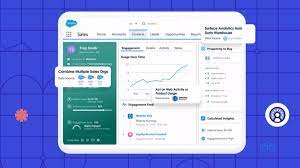
AI plays a crucial role in propensity score estimation as it can discern underlying patterns between treatments and confounding variables Read more