Marketing Automation Archives - gettectonic.com - Page 11
Sending Emails Through Salesforce

Journey Builder or Automation Studio

Both Journey Builder and Automation Studio are robust tools available to Marketing Cloud customers. However, determining when to use each one and how they complement each other can sometimes be confusing. Automation Studio primarily focuses on ETL (Extract, Transform, Load) processes in marketing automation. It enables marketers to integrate data from various systems and automate tasks for segmentation and email campaign deployment. With Automation Studio, marketers can create highly advanced automated segmentation using data filters and queries, making it ideal for repetitive processes. It also allows users to execute SQL queries to retrieve and store data extension information. On the other hand, Journey Builder is a user-friendly, drag-and-drop tool designed for creating personalized, engagement-based customer journeys. It facilitates individualized, multi-channel communications at scale and provides goal and success measurements for monitoring and management. Unlike Automation, Journey Builder offers more opportunities for testing strategies and optimizing messages based on real-time engagement and interaction. One key difference between the two tools is that Journey Builder offers built-in goal reporting, providing real-time insights into campaign performance and customer engagement. Another distinction is that while Automation Studio relies on batch processing, Journey Builder allows individuals to enter journeys on an individual level, enabling real-time monitoring and action based on customer behavior. To decide which tool to use, consider the following questions: In many cases, it’s not a matter of choosing between Journey Builder vs Automation Studio but rather leveraging both tools together. By combining the powerful segmentation capabilities of Automation Studio with the personalized journey creation features of Journey Builder, marketers can deliver highly targeted and personalized messaging to their customers. Automation Studio is best for complex segmentation at scale, while Journey Builder guides customers through customized journeys based on Marketing Cloud data. Ultimately, using both tools together allows marketers to create seamless, personalized experiences for their customers. Like1 Related Posts Who is Salesforce? Who is Salesforce? Here is their story in their own words. From our inception, we’ve proudly embraced the identity of Read more Salesforce Marketing Cloud Transactional Emails Salesforce Marketing Cloud Transactional Emails are immediate, automated, non-promotional messages crucial to business operations and customer satisfaction, such as order Read more Salesforce Unites Einstein Analytics with Financial CRM Salesforce has unveiled a comprehensive analytics solution tailored for wealth managers, home office professionals, and retail bankers, merging its Financial Read more AI-Driven Propensity Scores AI plays a crucial role in propensity score estimation as it can discern underlying patterns between treatments and confounding variables Read more
Read More
Slack and Salesforce

Salesforce Acquires Slack

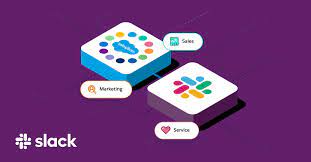
The buzz surrounding the Salesforce Acquires Slack announcement has been ongoing, culminating in the official approval on December 1, 2020, with Salesforce, a leading CRM entity, acquiring Slack for a substantial $27.7 billion. Salesforce’s CEO, Marc Benioff, hailed the acquisition as a ‘match made in heaven,’ and this sentiment resonates widely. While Salesforce had previously ventured into the collaboration space with Chatter, Community Cloud, and Quip, the results weren’t as impactful as desired. However, the incorporation of applications and data integration through Mulesoft and business intelligence via Tableau bolstered Salesforce’s toolkit. The addition of Slack solidifies Salesforce’s entry into the communication and collaboration domain. This acquisition signals a transformative shift in the digital work landscape, particularly for digital natives. It signifies a strategic move by Salesforce to enhance its focus on customer-facing tools and delve into the employee engagement market. The collaboration with Slack positions Salesforce to address the market dynamics more effectively. The integration of Salesforce’s CRM capabilities with Slack’s platform, which unites people, data, and tools for seamless collaboration, is poised to reshape the market. Slack’s open platform, with integration capabilities spanning 2400 apps, positions Salesforce to tap into a broad user base. The collaboration will contribute revenue and data to fuel Salesforce’s AI projects, amplifying its capabilities. The impact on Microsoft is noteworthy, as Slack becomes a formidable competitor to Microsoft’s Teams. This intensifies the competition in the cloud services arena, particularly amid the accelerated shift towards remote work. For users, the amalgamation of Salesforce and Slack promises to create a new ‘operating system’ for businesses navigating the digital landscape. This unified platform aims to simplify organizational workflows, connecting employees, customers, and partners seamlessly. Key implications for users include the ability to: Salesforce’s plan to integrate Slack with its Customer 360 software and designate Slack as its new interface underscores its commitment to revolutionizing communication, collaboration, and action on customer information. The user benefits extend to facilitating conversations among sales teams, customers, and playing a pivotal role in customer service. The recent introduction of Slack Connect, enabling communication and collaboration with external partners, further expands Slack’s utility. Salesforce’s extensive enterprise app ecosystem combined with Slack’s capabilities sets the stage for a robust open ecosystem of apps and workflows. This collaborative environment empowers developers to innovate and create applications that align with customer preferences. While Salesforce envisions future revenue and growth through the integration of Slack, the operational intricacies of this merger may pose challenges. Salesforce’s past strategies suggest an initial hands-off approach, allowing Slack to operate independently. This acquisition marks the initial steps toward reshaping how we work, collaborate, and automate workflows and business processes in the cloud. Content updated December 2023. Like Related Posts Who is Salesforce? Who is Salesforce? Here is their story in their own words. From our inception, we’ve proudly embraced the identity of Read more Salesforce Marketing Cloud Transactional Emails Salesforce Marketing Cloud Transactional Emails are immediate, automated, non-promotional messages crucial to business operations and customer satisfaction, such as order Read more Salesforce Unites Einstein Analytics with Financial CRM Salesforce has unveiled a comprehensive analytics solution tailored for wealth managers, home office professionals, and retail bankers, merging its Financial Read more AI-Driven Propensity Scores AI plays a crucial role in propensity score estimation as it can discern underlying patterns between treatments and confounding variables Read more

Read More
Salesforce and Marketo

Marketo and Salesforce Integration

Marketo Engage and Salesforce integration forms a seamless email marketing partnership, ensuring synchronization of your sales and marketing data. Marketo constantly syncs with Salesforce, operating throughout the day. The synchronization process involves periodic intervals with a 5-minute pause before resuming. During a single sync session, Marketo makes 25 API calls to check if your Salesforce objects need updating. This bidirectional sync between Salesforce and Marketo pertains exclusively to leads, contacts, and Salesforce campaigns. Any changes made in either Salesforce or Marketo in these categories are mirrored in both systems. However, all other syncs occur solely from Salesforce to Marketo. To sync a Marketo field to Salesforce, follow these steps: For optimal syncing between Salesforce and Marketo, adhere to best practices: Marketo and Salesforce Marketing Cloud catered to different marketer needs initially, with Marketo primarily designed for Business to Business (B2B) solutions and Marketing Cloud positioned as a Business to Consumer (B2C) platform. Integrating Marketo with Salesforce enhances the sales process, streamlining the work of the sales team to identify and channel leads more efficiently through the sales funnel. Marketo is one of many marketing automation platforms that can be integrated with Salesforce. Like1 Related Posts Who is Salesforce? Who is Salesforce? Here is their story in their own words. From our inception, we’ve proudly embraced the identity of Read more Salesforce Marketing Cloud Transactional Emails Salesforce Marketing Cloud Transactional Emails are immediate, automated, non-promotional messages crucial to business operations and customer satisfaction, such as order Read more Salesforce Unites Einstein Analytics with Financial CRM Salesforce has unveiled a comprehensive analytics solution tailored for wealth managers, home office professionals, and retail bankers, merging its Financial Read more AI-Driven Propensity Scores AI plays a crucial role in propensity score estimation as it can discern underlying patterns between treatments and confounding variables Read more

Read More
Salesforce

Salesforce Platform Explained

The Salesforce Platform, formerly known as Force.com, serves as the foundational framework that spans the Sales and Service Clouds, offering robust capabilities for tailoring standard Salesforce products. Within this platform, you have the flexibility to construct custom data tables using custom objects, initiate automation through Flow, and design personalized user interfaces utilizing the Lightning App Builder. Salesforce is a CRM platform and also a centralized platform for managing customer accounts, sales leads, activities, customer support cases, and more. Users can access Salesforce through a web browser, mobile app, or desktop application. Salesforce provides users comprehensive tools to manage customer data, automate processes, analyze data and insights, and create personalized customer experiences. Salesforce also offers a variety of solutions for customer service, marketing automation, commerce, app development, and more. For those seeking a wholly unique experience, the option to acquire Salesforce Platform licenses, considerably more economical than, for instance, Sales Cloud licenses, allows you to develop entirely customized applications on the Salesforce platform. What is Salesforce used for? Salesforce is used for streamlining sales, service, and marketing activities via industry-specific products. With seamless software integration. It offers solutions for various needs such as Sales Cloud, Service Cloud, Marketing Cloud, Community Cloud, Field Services, CPQ and Billing etc. Is the Salesforce platform just CRM? Salesforce has completely changed the idea of traditional CRM. It merged all the features of a traditional CRM with a bunch of new unique tools and capabilities. Thus offering its users MUCH more than ever before. Top Salesforce customers in the USA are U.S. Bank, Amazon Web Services, American Express, Walmart, and T-Mobile. Overall, more than 59% of Salesforce clients come from the USA, as for the end of 2022. Salesforce Platform Pricing – click here. The Salesforce Platform is now Einstein 1. The bold new future of enterprise AI requires a new type of platform. One that can handle terabytes of disconnected data, have the freedom to choose your AI models, and connect directly into the flow of work, all while maintaining customer trust. The Einstein 1 Platform unifies your data, AI, CRM, development, and security into a single, comprehensive platform. It empowers IT, admins, and developers with an extensible AI platform, facilitating fast development of generative apps and automation. Accelerate development and maximize your developers and admins time across workflows, app customization and configurations. Keep your data safe and sound by securing your Salesforce org with Salesforce’s portfolio of security and privacy products. Activate all your customer data across Salesforce applications at every touch point using relevant insights and contextual data in the flow of work. Content updated December 2023. Like1 Related Posts Who is Salesforce? Who is Salesforce? Here is their story in their own words. From our inception, we’ve proudly embraced the identity of Read more Salesforce Marketing Cloud Transactional Emails Salesforce Marketing Cloud Transactional Emails are immediate, automated, non-promotional messages crucial to business operations and customer satisfaction, such as order Read more Salesforce Unites Einstein Analytics with Financial CRM Salesforce has unveiled a comprehensive analytics solution tailored for wealth managers, home office professionals, and retail bankers, merging its Financial Read more AI-Driven Propensity Scores AI plays a crucial role in propensity score estimation as it can discern underlying patterns between treatments and confounding variables Read more
Read More
Salesforce Marketing Cloud Journey Builder

Entry Sources in Salesforce Journey Builder

Journey Builder in Salesforce Marketing Cloud serves as a tool enabling digital marketers to craft personalized customer journeys by triggering specific actions based on individual customer behavior. Entry sources in Salesforce Journey Builder send customers on a customized journey. The entry source within Journey Builder signifies the starting point of a customer’s journey, determining how customers enter it. This entry source can be a sendable data extension, a Journey Builder Audience, or an entry event. It’s important to recognize that once a journey is activated, it utilizes a snapshot of the entry source data extension. Any modifications made to the data extension (or the recipients in it) after activation will not be recognized by the ongoing journey. To incorporate new fields or changes to the entry source data extension, creating a new version of the journey is necessary. An entry event, the trigger prompting one or more contacts to enter a journey, is recorded in a data source monitored by Journey Builder at a schedule set by the user. Entry events can be specific to a particular journey or reused across multiple journeys. Journey Builder configuration allows the initiation of a journey based on any event configured in the Marketing Cloud instance. Editing or reviewing the entry source configuration is possible before activating a journey; however, active entry sources cannot be edited. To make changes, a new version of the journey needs to be created. Remember if you create a new version of an existing journey, recipients already in the journey will continue through the previous version by default. When opting for a sendable data extension as an entry source, it is best to include fields essential for personalization or dynamic content. It’s also recommended to use a single entry source data extension created through a query if the journey’s data is stored in multiple extensions. Pre-filtering the audience data extension can expedite processing. Using synchronized data extensions to populate an entry source data extension in journeys involving Sales Cloud or Service Cloud data alongside Marketing Cloud data is considered a best practice. Tectonic, as your Salesforce implementation partner, ensures a tailored Salesforce solution aligning with your business needs and models through our comprehensive discovery process. Like Related Posts Who is Salesforce? Who is Salesforce? Here is their story in their own words. From our inception, we’ve proudly embraced the identity of Read more Salesforce Marketing Cloud Transactional Emails Salesforce Marketing Cloud Transactional Emails are immediate, automated, non-promotional messages crucial to business operations and customer satisfaction, such as order Read more Salesforce Unites Einstein Analytics with Financial CRM Salesforce has unveiled a comprehensive analytics solution tailored for wealth managers, home office professionals, and retail bankers, merging its Financial Read more AI-Driven Propensity Scores AI plays a crucial role in propensity score estimation as it can discern underlying patterns between treatments and confounding variables Read more
Read More
Salesforce

What is Salesforce?

Salesforce is cloud-based CRM software. It makes it easier for companies to find more prospects, close more deals, and connect with customers in a whole new, personalized way, so they can provide them with amazing service at scale. Salesforce, Inc. is an American cloud-based software company headquartered in San Francisco, California. It provides customer relationship management software and applications focused on sales, customer service, marketing automation, e-commerce, analytics, and application development. According to Wikipedia… Salesforce brings together all your data, from any source. Customer 360, the complete suite of products, unites your sales, service, marketing, commerce, and IT teams with a single, shared view of customer information. With artificial intelligence integrated across all products, SFDC helps everyone in your company work more productively and better deliver the personalized experiences customers love. To explore all Salesforce has to offer for your business, contact Tectonic today. Salesforce is cloud-based CRM software (What is CRM?). It makes it easier for companies to find more prospects, close more deals, and connect with customers in a whole new way, so they can provide them with amazing service at scale. Salesforce brings together all your data, from any source. Customer 360, our complete suite of products, unites your sales, service, marketing, commerce, and IT teams with a single, shared view of customer information. With artificial intelligence integrated across all products, SFDC helps everyone in your company work more productively and better deliver the personalized experiences customers love. Content updaed February 2025, Shannan Hearne Like Related Posts Who is Salesforce? Who is Salesforce? Here is their story in their own words. From our inception, we’ve proudly embraced the identity of Read more Salesforce Marketing Cloud Transactional Emails Salesforce Marketing Cloud Transactional Emails are immediate, automated, non-promotional messages crucial to business operations and customer satisfaction, such as order Read more Salesforce Unites Einstein Analytics with Financial CRM Salesforce has unveiled a comprehensive analytics solution tailored for wealth managers, home office professionals, and retail bankers, merging its Financial Read more AI-Driven Propensity Scores AI plays a crucial role in propensity score estimation as it can discern underlying patterns between treatments and confounding variables Read more
Read More
Salesforce Marketing Cloud

Salesforce Marketing Cloud Transactional Emails

Salesforce Marketing Cloud Transactional Emails are immediate, automated, non-promotional messages crucial to business operations and customer satisfaction, such as order confirmation emails, shipping notifications, confirmations, etc. The Transactional Messaging API in Marketing Cloud, an upgraded version of Triggered Sends in Email Studio, offers enhanced scalability and flexibility. However, with increased flexibility comes the responsibility of monitoring these mission-critical emails. Let’s explore how to set up this monitoring process. Salesforce AppExchange Mastery: Note: This guide assumes familiarity with the Transactional Messaging API and covers advanced topics. If you’re new to the Transactional Messaging API, consider checking out the Trailhead Module for basics. Marketing Cloud Transactional Messaging API vs Triggered Sends: The Transactional Messaging API in Marketing Cloud boasts advantages over its predecessor, Triggered Sends in Email Studio: However, there are notable limitations: Transactional Messages Performance with Intelligence Reports for Marketing Cloud: The second limitation, monitoring transactional messages, is critical for business operations and customer satisfaction. Event Notification Service (ENS) serves as the solution, sending notifications for specific events in Marketing Cloud, such as the failure to send transactional emails. Step-by-Step Solution: Step 1: Create the VerificationKey Data Extension: Set up a Data Extension named “TransactionalSendsVerificationKey” to temporarily store the Verification Key required for URL Callback verification. Step 2: Creating the Callback CloudPage: Establish a CloudPage to receive events from ENS. Initially, the CloudPage stores the verification code. Step 3: Create and Verify the Callback: Create and verify the callback in Marketing Cloud by registering a new URL Callback and completing the details with the CloudPage URL. Step 4: Create the ENS Log Data Extension: Create a Data Extension called “TransactionalSendsMonitor” to store details of notifications from ENS. Step 5: Modify the Callback CloudPage to Process Events: Update the Callback CloudPage code to process notification payloads and store them in the “TransactionalSendsMonitor” Data Extension. Step 6: Create the Monitoring Automation: Build an automation with a verification activity to count the number of rows in the monitoring Data Extension. This solution enables the monitoring of critical emails, providing a streamlined process for troubleshooting. Transactional email journeys can also be created. Send Salesforce Marketing Cloud transaction emails with Journey Builder. Create a Transactional Send Journey Like2 Related Posts Who is Salesforce? Who is Salesforce? Here is their story in their own words. From our inception, we’ve proudly embraced the identity of Read more Salesforce Unites Einstein Analytics with Financial CRM Salesforce has unveiled a comprehensive analytics solution tailored for wealth managers, home office professionals, and retail bankers, merging its Financial Read more AI-Driven Propensity Scores AI plays a crucial role in propensity score estimation as it can discern underlying patterns between treatments and confounding variables Read more Tectonic’s Successful Salesforce Track Record Salesforce Technology Services Integrator – Tectonic has successfully delivered Salesforce in a variety of industries including Public Sector, Hospitality, Manufacturing, Read more
Read More
gettectonic.com