Salesforce Optimization Archives - gettectonic.com - Page 2
Value-Based Care Technologies

Value-Based Care Technologies

Essential Technologies for Value-Based Care Success As healthcare providers increasingly adopt value-based care, they must invest in the right technologies and resources to succeed in this model, which incentivizes high-quality, cost-effective care. Value-Based Care Technologies tie reimbursement to care quality, making providers accountable for patient outcomes while providing resources to enhance care. As of 2021, nearly 60% of healthcare payments were already tied to value-based models, according to the Health Care Payment Learning and Action Network (HCP LAN). While partnerships can initiate value-based care, providers must invest in the right technology to fully achieve the intended outcomes. Health Information Exchange (HIE) A robust health information exchange (HIE) is fundamental to value-based care, as it enables providers and payers to access high-quality data seamlessly. HIE allows healthcare professionals to share patients’ medical information electronically across organizations, promoting care coordination by giving providers a comprehensive view of patient needs. For patients, HIE enables more informed involvement in their care by making their health data accessible across specialists, labs, and pharmacies. While joining an HIE may involve new technology investments and workflow adjustments, it ultimately enhances provider access to critical health data. Population Health Management Tools Population health management tools help providers assess health outcomes within groups rather than focusing on individuals alone. These tools aggregate and analyze data, allowing practices to identify high-risk patients and create targeted interventions. This not only enhances health outcomes but can also reduce costs by avoiding expensive treatments. Patient engagement tools, such as telehealth and remote patient monitoring, are essential in population health management, especially for monitoring high-risk patients when in-person care is not feasible. Digital surveys integrated within patient portals can provide insights into social determinants of health, adding a broader context to patient needs. Data Analytics Data analytics transform healthcare data into actionable insights across four types: descriptive, diagnostic, predictive, and prescriptive. Providers can use these analytics to reduce hospital readmissions, predict diseases, and identify chronic illnesses. Data integration and risk stratification capabilities are especially valuable in value-based care, enabling providers to track patient health outcomes effectively and prioritize high-risk cases. Artificial Intelligence & Machine Learning AI and machine learning support many data analytics functions, helping identify patient needs and easing administrative burdens. Given staffing shortages and burnout—reported by 63% of physicians in 2021, according to the American Medical Association (AMA)—AI can automate tasks like documentation, charting, and scheduling, allowing providers to focus more on patient care. Additionally, AI-driven automation in revenue cycle management tasks, such as billing and coding, can reduce the administrative workload associated with value-based care. Price Transparency Technology Price transparency empowers patients to seek cost-effective care, a core principle of value-based models. When providers comply with transparency regulations, patients can better understand their costs and make informed decisions. For providers, leveraging price transparency tools ensures compliance and facilitates partnerships with payers by enabling more effective negotiation, which supports the overall goals of value-based care. As healthcare continues shifting to value-based models, investing in these technologies is critical for providers aiming for long-term success. While these tools rdo equire substantial investment, they are essential for improving patient outcomes, optimizing care quality, and ensuring sustainability in value-based care. When evaluating and choosing healthcare technology tools, contact Tectonic for help. Like1 Related Posts Who is Salesforce? Who is Salesforce? Here is their story in their own words. From our inception, we’ve proudly embraced the identity of Read more Salesforce Marketing Cloud Transactional Emails Salesforce Marketing Cloud Transactional Emails are immediate, automated, non-promotional messages crucial to business operations and customer satisfaction, such as order Read more Salesforce Unites Einstein Analytics with Financial CRM Salesforce has unveiled a comprehensive analytics solution tailored for wealth managers, home office professionals, and retail bankers, merging its Financial Read more AI-Driven Propensity Scores AI plays a crucial role in propensity score estimation as it can discern underlying patterns between treatments and confounding variables Read more


Read More
Energy and Utilities with Salesforce Winter 25 Updates

Energy and Utilities with Salesforce Winter 25 Updates

If you’re ready to embrace these innovations, reach out to Tectonic for expert guidance on optimizing your Salesforce instance. Together, we can help your organization harness the full potential of these game-changing features.

Read More
Digital Transformation for Life Sciences

Salesforce Winter 25 Release for Life Sciences

The Salesforce Winter ’25 release introduces groundbreaking updates tailored to the life sciences industry. Whether you’re in pharmaceuticals, biotech, or medical devices, these innovations aim to streamline operations, enhance patient care, and strengthen stakeholder relationships. Let’s explore the key enhancements: Quote and Agreement Automation Salesforce’s advancements in Quote and Agreement Automation simplify pricing and contractual negotiations for life sciences organizations. Key benefits include: These updates not only improve operational efficiency but also reduce errors and compliance risks, helping organizations stay ahead in a highly regulated industry. Financial Assistance Programs Navigating financial support for patients can be challenging, but Salesforce is making it easier. The Winter ’25 release enhances tools for managing financial assistance programs, ensuring eligible patients get the support they need. Key features include: By easing the financial burden on patients, these updates strengthen trust and foster better patient-provider relationships. Participant Recruitment and Enrollment Recruiting and enrolling participants for clinical trials is now more efficient with Salesforce’s new AI-driven tools. Notable improvements include: These updates not only shorten recruitment timelines but also enhance the overall trial experience for participants. Patient Program Outcome Management Tracking patient outcomes is vital for life sciences companies, and Salesforce’s Patient Program Outcome Management tools deliver powerful capabilities. Features include: These tools empower organizations to make data-driven decisions, improving program effectiveness and elevating patient care. Pharmacy Benefits Verification Verifying patient benefits is often a time-consuming task. The Winter ’25 release introduces automation to streamline this process. Key highlights: By simplifying benefits verification, this update enhances efficiency for providers and ensures a smoother experience for patients. Why It Matters for Life Sciences The Winter ’25 release is a leap forward for the life sciences industry, offering tools that: From automating quotes and agreements to improving patient support and trial management, these updates empower organizations to focus on delivering exceptional care and innovation. Ready to Transform Your Salesforce Experience?Tectonic is here to help you unlock the full potential of these enhancements. Whether you’re looking to optimize patient care, streamline operations, or improve outcomes, we’ll guide you every step of the way. Contact Tectonic today to get started! Like Related Posts Who is Salesforce? Who is Salesforce? Here is their story in their own words. From our inception, we’ve proudly embraced the identity of Read more Salesforce Marketing Cloud Transactional Emails Salesforce Marketing Cloud Transactional Emails are immediate, automated, non-promotional messages crucial to business operations and customer satisfaction, such as order Read more Salesforce Unites Einstein Analytics with Financial CRM Salesforce has unveiled a comprehensive analytics solution tailored for wealth managers, home office professionals, and retail bankers, merging its Financial Read more AI-Driven Propensity Scores AI plays a crucial role in propensity score estimation as it can discern underlying patterns between treatments and confounding variables Read more

Read More

Customization and Configuration in Salesforce

Salesforce Customization vs. Configuration: Choosing the Right Approach for Your Business Salesforce has become a top choice for businesses aiming to strengthen customer relationships and achieve their goals. Its flexibility to adapt to diverse needs through customization and configuration makes it stand out. While both approaches aim to tailor your Salesforce Org to meet specific business requirements, they differ in methodology and use cases. This insight will help you understand their differences and provide insights into when and how to choose between them. Let’s get the insight! What is Salesforce Customization? Salesforce customization involves enhancing your Salesforce Org by introducing tailored features, functionalities, and applications through coding. It goes beyond the out-of-the-box capabilities, enabling you to extend your platform to meet unique and complex business requirements. This approach requires expertise from a Salesforce developer who leverages tools such as Apex, Lightning Components, and the Salesforce Code Builder to create custom solutions. Examples of Customization: What is Salesforce Configuration? Salesforce configuration refers to adapting Salesforce’s native features to meet business needs without modifying the underlying code. By using tools such as drag-and-drop builders, configuration allows users—even those without technical expertise—to optimize the platform’s functionality. Examples of Configuration: Key Differences Between Customization and Configuration Basis Customization Configuration Level of Personalization High personalization, tailored to unique needs Limited to Salesforce’s native capabilities Implementation Requires coding expertise and detailed development Simpler, relies on drag-and-drop tools Time to Deploy Longer development cycles Faster implementation and deployment Maintenance Can require ongoing updates and compatibility adjustments during Salesforce upgrades Easier to maintain, as it aligns with standard platform updates Cost Higher costs due to skilled developer involvement Cost-effective; can be handled by in-house admins Risk Higher risks due to potential code conflicts or errors Lower risks, but over-configuration can lead to complexity Best Practices for Customization and Configuration Choosing the Right Approach The decision to opt for customization or configuration depends on factors like business requirements, budget, timeline, and project complexity. Sometimes, a hybrid approach that combines customization and configuration is the best solution, providing flexibility while optimizing costs and implementation speed. Why Partner with Salesforce Experts? Partnering with experienced Salesforce consultants at Tectonic ensures your Org is tailored to meet your specific business needs. They analyze your workflows, processes, and challenges to recommend the most effective approach—whether it’s customization, configuration, or a blend of both. At Tectonic, our team of 200+ Salesforce experts specializes in delivering tailored solutions that maximize ROI. From development to ongoing maintenance, we ensure your Salesforce Org aligns with your long-term goals. Ready to transform your Salesforce platform? Let’s discuss how we can help. Like Related Posts Who is Salesforce? Who is Salesforce? Here is their story in their own words. From our inception, we’ve proudly embraced the identity of Read more Salesforce Marketing Cloud Transactional Emails Salesforce Marketing Cloud Transactional Emails are immediate, automated, non-promotional messages crucial to business operations and customer satisfaction, such as order Read more Salesforce Unites Einstein Analytics with Financial CRM Salesforce has unveiled a comprehensive analytics solution tailored for wealth managers, home office professionals, and retail bankers, merging its Financial Read more AI-Driven Propensity Scores AI plays a crucial role in propensity score estimation as it can discern underlying patterns between treatments and confounding variables Read more

Read More
Data Analytics for Disease Management

Data Analytics for Disease Management

Healthcare IT advancements, especially electronic health records (EHRs), have made it easier to gather and store data, which, in turn, fuels population health initiatives and improves patient outcomes. The Agency for Healthcare Research and Quality highlights that using health IT tools can significantly enhance chronic disease management by promoting efficient care delivery, information-sharing, and patient education. However, selecting and adopting the right analytics tools remains challenging. Here are five essential data analytics tools that healthcare providers can leverage for effective chronic disease management.

Read More
Tectonic Salesforce Customization

Salesforce Customization Requests

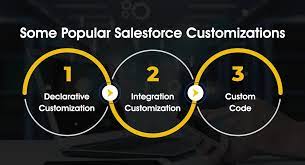
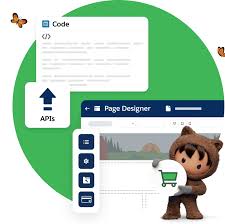
The Most Commonly Requested Salesforce Customizations Salesforce’s flexibility is one of its biggest strengths, allowing businesses to tailor the platform to meet their unique needs. Here are the most frequently requested types of customizations: 1. Declarative Customization Make adjustments using Salesforce’s built-in tools—no coding required. Examples: Ideal For:Businesses looking for straightforward changes to enhance usability without requiring programming expertise. 2. Integration Customization Connect Salesforce with third-party systems to streamline workflows and centralize data. Examples: Benefits:Boost operational efficiency by enabling seamless communication between systems. 3. Custom Code Development Go beyond standard functionality with tailored solutions using Apex, Visualforce, or Lightning Web Components. Examples: Best For:Organizations with advanced or highly specific requirements that declarative tools can’t fulfill. 4. User Interface (UI) Customization Adapt the look and feel of Salesforce to improve user experience and align with your brand. Examples: Goal:Create an intuitive, visually appealing interface that boosts productivity and user adoption. 5. Workflow Automation Save time by automating repetitive tasks and processes. Examples: Impact:Streamline operations, reduce manual workloads, and improve efficiency. 6. Reporting and Analytics Customization Provide actionable insights with tailored reports and dashboards. Examples: Advantage:Empower teams to make data-driven decisions with clear, relevant insights. 7. Mobile Optimization Ensure a seamless Salesforce experience for users on mobile devices. Examples: Purpose:Keep teams connected and productive, regardless of location. Conclusion Salesforce customization goes beyond CRM—it transforms the platform into a tailored solution that aligns with your unique business processes. Whether you’re looking for simple adjustments or advanced integrations, these customizations unlock Salesforce’s full potential to drive operational success. Ready to Get Started?Discover how our Salesforce customization services can help tailor the platform to your specific needs. Let’s work together to maximize your investment and achieve your business goals! Like Related Posts Who is Salesforce? Who is Salesforce? Here is their story in their own words. From our inception, we’ve proudly embraced the identity of Read more Salesforce Marketing Cloud Transactional Emails Salesforce Marketing Cloud Transactional Emails are immediate, automated, non-promotional messages crucial to business operations and customer satisfaction, such as order Read more Salesforce Unites Einstein Analytics with Financial CRM Salesforce has unveiled a comprehensive analytics solution tailored for wealth managers, home office professionals, and retail bankers, merging its Financial Read more AI-Driven Propensity Scores AI plays a crucial role in propensity score estimation as it can discern underlying patterns between treatments and confounding variables Read more

Read More
Cybersecurity

Cybersecurity Regulations for Hospitals

Beyond the 72-hour reporting requirement, which took effect on October 2, 2024, hospitals must implement key cybersecurity measures, such as multifactor authentication and a robust incident response plan, by October 2025. These regulations currently apply only to general hospitals, excluding other healthcare facilities like nursing homes and diagnostic centers.

Read More
Document Checklist in Salesforce Screen Flow

Document Checklist in Salesforce Screen Flow

One effective way to accomplish this is by using the Document Matrix element in Discovery Framework–based OmniScripts. This approach allows you to streamline the assessment process and ensure that the advisor uploads the correct documents.

Read More
Salesforce and Stripe Integration

Salesforce and Stripe Integration

Processing weekly payments can often become time-consuming, with organizations spending significant time just tracking payments post-invoice. Timely updates on payment processing have been a longstanding priority, particularly for companies needing flexible payment options to meet beneficiary needs. The integration of Stripe with Salesforce addresses these challenges, offering a streamlined, efficient solution. Salesforce and Stripe Integration. With a focus on faster processing, this integration enhances payment management, invoicing, and financial oversight. Here’s an overview of the benefits that Stripe and Salesforce integration brings to businesses. Key Benefits of Integrating Stripe with Salesforce Modern businesses demand efficient, seamless transactions. Here are some of the major advantages of combining Stripe and Salesforce: Why Businesses Should Consider Salesforce and Stripe Integration Having implemented this integration for various clients, we have seen how it supports efficient operations. Here are a few reasons why businesses should consider this approach: Simplify Payments with Salesforce and Stripe Integration The Stripe and Salesforce integration represents a transformative opportunity for businesses to improve operational efficiency and customer experience. Beyond a simple tool pairing, this integration paves the way for scalable, complex business operations. Successful integration, however, requires knowledgeable professionals who understand the nuances of customization to fit each organization’s unique needs. Reach out to experienced experts to optimize your integration and harness its full potential. Like Related Posts Who is Salesforce? Who is Salesforce? Here is their story in their own words. From our inception, we’ve proudly embraced the identity of Read more Salesforce Marketing Cloud Transactional Emails Salesforce Marketing Cloud Transactional Emails are immediate, automated, non-promotional messages crucial to business operations and customer satisfaction, such as order Read more Salesforce Unites Einstein Analytics with Financial CRM Salesforce has unveiled a comprehensive analytics solution tailored for wealth managers, home office professionals, and retail bankers, merging its Financial Read more AI-Driven Propensity Scores AI plays a crucial role in propensity score estimation as it can discern underlying patterns between treatments and confounding variables Read more

Read More
Battle of Copilots

Battle of Copilots

Salesforce is directly challenging Microsoft in the growing battle of AI copilots, which are designed to enhance customer experience (CX) across key business functions like sales and support. In this competitive landscape, Salesforce is taking on not only Microsoft but also major AI rivals such as Google Gemini, OpenAI GPT, and IBM watsonx. At the heart of this strategy is Salesforce Agentforce, a platform that leverages autonomous decision-making to meet enterprise demands for data and AI abstraction. Salesforce Dreamforce Highlights One of the most significant takeaways from last month’s Dreamforce conference in San Francisco was the unveiling of autonomous agents, bringing advanced GenAI capabilities to the app development process. CEO Marc Benioff and other Salesforce executives made it clear that Salesforce is positioning itself to compete with Microsoft’s Copilot, rebranding and advancing its own AI assistant, previously known as Einstein AI. Microsoft’s stronghold, however, lies in Copilot’s seamless integration with widely used products like Teams, Outlook, PowerPoint, and Word. Furthermore, Microsoft has established itself as a developer’s favorite, especially with GitHub Copilot and the Azure portfolio, which are integral to app modernization in many enterprises. “Salesforce faces an uphill battle in capturing market share from these established players,” says Charlotte Dunlap, Research Director at GlobalData. “Salesforce’s best chance lies in highlighting the autonomous capabilities of Agentforce—enabling businesses to automate more processes, moving beyond basic chatbot functions, and delivering a personalized customer experience.” This emphasis on autonomy is vital, given that many enterprises are still grappling with the complexities of emerging GenAI technologies. Dunlap points out that DevOps teams are struggling to find third-party expertise that understands how GenAI fits within existing IT systems, particularly around security and governance concerns. Salesforce’s focus on automation, combined with the integration prowess of MuleSoft, positions it as a key player in making GenAI tools more accessible and intuitive for businesses. Elevating AI Abstraction and Automation Salesforce has increasingly focused on the idea of abstracting data and AI, exemplified by its Data Cloud and low-level UI capabilities. Now, with models like the Atlas Reasoning Engine, Salesforce is looking to push beyond traditional AI assistants. These tools are designed to automate complex, previously human-dependent tasks, spanning functions like sales, service, and marketing. Simplifying the Developer Experience The true measure of Salesforce’s success in its GenAI strategy will emerge in the coming months. The company is well aware that its ability to simplify the developer experience is critical. Enterprises are looking for more than just AI innovation—they want thought leadership that can help secure budget and executive support for AI initiatives. Many companies report ongoing struggles in gaining that internal buy-in, further underscoring the importance of strong, strategic partnerships with technology providers like Salesforce. In its pursuit to rival Microsoft Copilot, Salesforce’s future hinges on how effectively it can build on its track record of simplifying the developer experience while promoting the unique autonomous qualities of Agentforce. Like Related Posts Who is Salesforce? Who is Salesforce? Here is their story in their own words. From our inception, we’ve proudly embraced the identity of Read more Salesforce Marketing Cloud Transactional Emails Salesforce Marketing Cloud Transactional Emails are immediate, automated, non-promotional messages crucial to business operations and customer satisfaction, such as order Read more Salesforce Unites Einstein Analytics with Financial CRM Salesforce has unveiled a comprehensive analytics solution tailored for wealth managers, home office professionals, and retail bankers, merging its Financial Read more AI-Driven Propensity Scores AI plays a crucial role in propensity score estimation as it can discern underlying patterns between treatments and confounding variables Read more
Read More
Einstein Copilot for Healthcare

Einstein Copilot for Healthcare

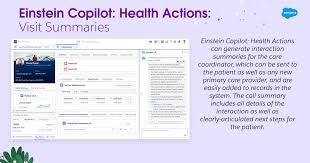
Einstein Copilot for Healthcare – Salesforce has introduced a new AI-powered healthcare assistant within its CRM system, marking its latest move to expand into the healthcare industry. As AI development accelerates, tech giants like Microsoft, Google, Amazon Web Services, and Salesforce are capitalizing on the opportunity to integrate AI and cloud technologies into healthcare to streamline administrative and operational tasks. Salesforce’s healthcare-specific AI tool, Einstein Copilot, is a conversational assistant that leverages an organization’s private data to provide relevant responses. Einstein Copilot enables healthcare providers and care teams to digitally capture and summarize information from both clinical and nonclinical sources, update patient records, and automate manual workflows. Key Features of Einstein Copilot Providers can use Einstein Copilot to generate patient summaries that include medications, diagnoses, social determinants, assessments, clinical service requests, and care gaps. A care manager can also ask the assistant to find an in-network provider based on location, specialty, and insurance coverage, and auto-fill referral forms using natural language prompts. The AI assistant can also trigger workflows for tasks such as sending referrals, scheduling appointments, and updating care plans. Salesforce expects Einstein Copilot to be HIPAA-compliant by summer 2024, with Copilot: Health Actions slated for general availability in winter 2024. Digitizing Health Assessments Salesforce is adding a feature called Assessment Generation that allows healthcare organizations to digitize standardized health assessments. These can be automatically populated into Salesforce Health Cloud, filled out electronically, and tracked for progress over time. Reducing Administrative Waste Salesforce cites research from McKinsey & Co. showing that administrative costs account for nearly a quarter of U.S. healthcare spending, with a potential savings of up to $320 billion. By integrating AI and CRM tools, Salesforce aims to reduce the operational burden on healthcare providers and improve patient outcomes. Amit Khanna, Senior Vice President and General Manager for Health at Salesforce, highlighted the value of these innovations: “These new data, AI, and CRM features reduce the administrative and operational burden for healthcare providers, leading to better outcomes for patients. With Salesforce’s trusted AI, healthcare organizations excited about generative AI—but wary of clinical and security concerns—can confidently integrate these innovations into their workflows.” Early Adopters and Impact Healthcare providers including Baptist Health South Florida and HarmonyCares are already leveraging Salesforce to personalize patient interactions and create unified patient views. HarmonyCares, which operates across 14 states with over 150 primary care providers, has used Salesforce’s AI-driven field service platform to streamline patient scheduling. The company reported a 50% increase in self-scheduling efficiency since adopting the platform and plans to expand its use of Salesforce Health Cloud for care management and engagement. Kristin Darby, Chief Information Officer at HarmonyCares, emphasized the benefits of AI in healthcare: “AI will dramatically improve our ability to quickly synthesize patient needs and preferences, enabling us to offer a more personalized experience with greater accuracy.” However, the integration of AI in healthcare is not without skepticism. A recent survey revealed that 69% of individuals are uncomfortable with AI being used to diagnose them, though more than half are open to its use in nonclinical tasks like scheduling and billing. Salesforce’s Healthcare Journey Salesforce first launched Health Cloud in 2015 to help providers manage patients by aggregating data from electronic medical records, devices, and wearables. In 2022, the company expanded this offering with Customer 360 for Health, a unified platform that combines real-time data from Data Cloud, Einstein AI, and automation tools like Flow to streamline processes such as prior authorizations, intake, and patient scheduling. Like Related Posts Who is Salesforce? Who is Salesforce? Here is their story in their own words. From our inception, we’ve proudly embraced the identity of Read more Salesforce Marketing Cloud Transactional Emails Salesforce Marketing Cloud Transactional Emails are immediate, automated, non-promotional messages crucial to business operations and customer satisfaction, such as order Read more Salesforce Unites Einstein Analytics with Financial CRM Salesforce has unveiled a comprehensive analytics solution tailored for wealth managers, home office professionals, and retail bankers, merging its Financial Read more AI-Driven Propensity Scores AI plays a crucial role in propensity score estimation as it can discern underlying patterns between treatments and confounding variables Read more

Read More
Gen AI to Predict and Automate Discharge

Gen AI to Predict and Automate Discharge

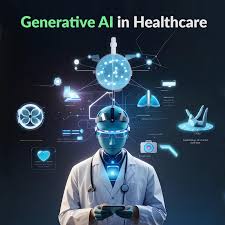
While electronic health records (EHRs) have improved data exchange for care coordination, they have also increased the clinical documentation burden on healthcare providers. Research from 2023 suggests that clinicians may now spend more time on EHRs than on direct patient care. On average, providers spend over 36 minutes on EHR tasks for every 30-minute patient visit. Generative AI, however, holds the potential to transform this. As defined by the Government Accountability Office, generative AI (GenAI) is a technology that can create content—such as text, images, audio, or video—based on user prompts. With the rise of chatbot interfaces like Chat-GPT, health IT vendors and healthcare systems are piloting GenAI tools to streamline clinical documentation. While the technology shows promise in reducing the documentation burden and mitigating clinician burnout, several challenges still hinder widespread adoption. Ambient Clinical Intelligence Ambient clinical intelligence leverages smartphone microphones and GenAI to transcribe patient encounters in real time, producing draft clinical documentation for providers to review within seconds. A 2024 study examined the use of ambient AI scribes by 10,000 physicians and staff at The Permanente Medical Group. The results were promising—providers reported better patient conversations and less after-hours EHR documentation. However, accuracy is critical for patient safety. A 2023 study found that ambient AI tools struggle with non-lexical conversational sounds (NLCSes)—like “mm-hm” and “uh-uh”—which patients and providers use to convey information. For instance, a patient might say “Mm-hm” to confirm they have no allergies to antibiotics. The study found that while the AI tools had a word error rate of 12% for all words, the error rate for NLCSes conveying clinically relevant information was as high as 98.7%. These inaccuracies could lead to patient safety risks, highlighting the importance of provider review. Patient Communication Patient portal messaging has surged since the COVID-19 pandemic, with a 2023 report showing a 157% increase in messages compared to pre-pandemic levels. To manage inbox overload, healthcare systems are exploring generative AI for drafting responses to patient messages. Clinicians review and edit these drafts before sending them to patients. A 2024 study found that primary care physicians rated AI-generated responses higher in communication style and empathy than those written by providers. However, the AI-generated responses were often longer and more complex, posing challenges for patients with lower health or English literacy. There are also potential risks to clinical decision-making. A 2024 simulation study revealed that the content of replies to patient messages changed when physicians used AI assistance, introducing an automation bias that could impact patient outcomes. Although most AI-generated drafts posed minimal safety risks, a small portion, if left unedited, could result in severe harm or death. Although GenAI may reduce the cognitive load of writing replies, it might not significantly decrease the overall time spent on patient communications. A recent study showed that while providers felt less emotional exhaustion when using AI to draft messages, the time spent on replying, reading, and writing messages remained unchanged from pre-pilot levels. Discharge Summaries Generative AI has also been shown to improve the readability of patient discharge summaries. A study published in JAMA Network Open demonstrated that GenAI could lower the reading level of discharge notes from an eleventh-grade to a sixth-grade level, which is more appropriate for diverse health literacy levels. However, accuracy is still a concern. Physician reviews of these AI-generated summaries found that while some were complete, others contained omissions and inaccuracies that raised safety concerns. Balancing AI’s Benefits with Oversight While generative AI shows promise in alleviating the documentation burden and improving patient communication, challenges remain. Issues such as accurately capturing non-verbal cues and ensuring document accuracy underscore the need for careful provider oversight. As AI technologies continue to evolve, ensuring that the benefits are balanced with provider review will be crucial for safe and effective healthcare implementation. Like Related Posts Who is Salesforce? Who is Salesforce? Here is their story in their own words. From our inception, we’ve proudly embraced the identity of Read more Salesforce Unites Einstein Analytics with Financial CRM Salesforce has unveiled a comprehensive analytics solution tailored for wealth managers, home office professionals, and retail bankers, merging its Financial Read more AI-Driven Propensity Scores AI plays a crucial role in propensity score estimation as it can discern underlying patterns between treatments and confounding variables Read more Tectonic’s Successful Salesforce Track Record Salesforce Technology Services Integrator – Tectonic has successfully delivered Salesforce in a variety of industries including Public Sector, Hospitality, Manufacturing, Read more
Read More
Generative AI and Patient Engagement

Generative AI and Patient Engagement

The healthcare industry is undergoing a significant digital transformation, with generative AI and chatbots playing a prominent role in various patient engagement applications. Technologies such as online symptom checkers, appointment scheduling, patient navigation tools, medical search engines, and patient portal messaging are prime examples of how AI is enhancing patient-facing interactions. These advancements aim to alleviate staff workload while improving the overall patient experience, according to industry experts. However, even these patient-centric applications face challenges, such as the risk of generating medical misinformation or biased outcomes. As healthcare professionals explore the potential of generative AI and chatbots, they must also implement safeguards to prevent the spread of false information and mitigate disparities in care. Online Symptom Checkers Online symptom checkers allow patients to input their symptoms and receive a list of potential diagnoses, helping them decide the appropriate level of care, whether it’s urgent care or self-care at home. These tools hold promise for improving patient experiences and operational efficiency, reducing unnecessary healthcare visits. For healthcare providers, they help triage patients, ensuring those who need critical care receive it. However, the effectiveness of online symptom checkers is mixed. A 2022 literature review revealed that diagnostic accuracy ranged between 19% and 37.9%, while triage accuracy was higher, between 48.9% and 90%. Patient reception to these tools has been lukewarm as well, with some expressing dissatisfaction with the COVID-19 symptom checkers during the pandemic, mainly when the tools did not emulate human interaction. Moreover, studies have indicated that these tools might exacerbate health inequities, as users tend to be younger, female, and more digitally literate. To mitigate this, developers must ensure that chatbots can communicate in multiple languages, replicate human interactions, and escalate to human providers when needed. Self-Scheduling and Patient Navigation Generative AI and conversational AI have shown promise in addressing lower-level patient inquiries, such as appointment scheduling and navigation, reducing the strain on healthcare staff. AI-driven scheduling systems help fill gaps in navigation by assisting patients with appointment bookings and answering logistical questions, like parking or directions. A December 2023 review noted that AI-optimized patient scheduling reduces provider time burdens and improves patient satisfaction. However, barriers such as health equity, access to broadband, and patient trust must be addressed to ensure effective implementation. While organizations need to ensure these systems are accessible to all, AI is a valuable tool for managing routine patient requests, freeing staff to focus on more complex issues. Online Medical Research AI tools like ChatGPT are expanding on the “Dr. Google” phenomenon, offering patients a way to search for medical information. Despite initial concerns from clinicians about online medical searches, recent studies show that generative AI tools can provide accurate and understandable information. For instance, ChatGPT accurately answered breast cancer screening questions 88% of the time in one 2023 study and offered adequate colonoscopy preparation information in another. However, patients remain cautious about AI-generated medical advice. A 2023 survey revealed that nearly half of respondents were concerned about potential misinformation, and many were unsure about the sources AI tools use. Addressing these concerns by validating source material and providing supplementary educational resources will be crucial for building patient trust. Patient Portal Messaging and Provider Communication Generative AI is also finding its place in patient portal messaging, where it can generate responses to patient inquiries, helping to alleviate clinician burnout. In a 2024 study, AI-generated responses within a patient portal were often indistinguishable from those written by clinicians, requiring human editing in only 58% of cases. While chatbot-generated messages have been found to be more empathetic than those written by overworked providers, it’s important to ensure AI-generated responses are always reviewed by healthcare professionals to catch any potential errors. In addition to patient engagement, generative AI is being used in clinical decision support and ambient documentation, showcasing its potential to improve healthcare efficiency. However, developers and healthcare organizations must remain vigilant about preventing algorithmic bias and other AI-related risks. Like Related Posts Who is Salesforce? Who is Salesforce? Here is their story in their own words. From our inception, we’ve proudly embraced the identity of Read more Salesforce Marketing Cloud Transactional Emails Salesforce Marketing Cloud Transactional Emails are immediate, automated, non-promotional messages crucial to business operations and customer satisfaction, such as order Read more Salesforce Unites Einstein Analytics with Financial CRM Salesforce has unveiled a comprehensive analytics solution tailored for wealth managers, home office professionals, and retail bankers, merging its Financial Read more AI-Driven Propensity Scores AI plays a crucial role in propensity score estimation as it can discern underlying patterns between treatments and confounding variables Read more
Read More
gettectonic.com