Advertising Archives - gettectonic.com - Page 2
Dreamforce 24 Insights

Dreamforce 24 Insights

Three Key Insights You Might Have Missed from Dreamforce ’24 In today’s digital-driven world, interconnected systems are commonplace and essential, making platform integration and unified operations critical. As AI becomes more central, technologies like Salesforce Agentforce AI are drawing increased attention. At Dreamforce ’24, automation and AI were the event’s stars, particularly Salesforce’s plans for Agentforce AI. Dreamforce 24 Insights. Here are three key insights from Dreamforce ’24 that you might have missed: 1. Salesforce’s Automation Plans Could Reshape Its Future Salesforce has a solid reputation for business automation, but now, with agentic systems entering the picture, the company is looking at a transformative opportunity. John Furrier of theCUBE noted during Dreamforce, “Salesforce is positioned to use generative AI to simplify complexity and reduce the steps required to get things done.” As Salesforce integrates generative AI, the emphasis on securing and utilizing data becomes paramount. Christophe Bertrand of theCUBE pointed out that many organizations are not fully utilizing their data. The introduction of Agentforce AI, which aims to leverage this untapped potential, could bring automation to new heights and fundamentally transform how businesses operate. 2. Salesforce Agentforce AI Aims to Integrate Seamlessly Into Business Workflows A major focus of Dreamforce was Salesforce’s new AI offering—Agentforce. According to Muralidhar Krishnaprasad, Salesforce’s CTO, this represents the next stage of AI for the company. While earlier efforts focused on predictive AI (Einstein) and generative AI copilots, Agentforce moves toward more autonomous AI agents. “Our platform will be one of the most comprehensive for agent development,” Krishnaprasad explained. He highlighted that Agentforce will allow businesses to deploy AI agents across various functions—advertising, sales, service, and analytics—creating a seamless AI-driven ecosystem within the Salesforce platform. David Schmaier, president and CPO of Salesforce, added that Agentforce will transform customer interactions by integrating AI agents with Salesforce Data Cloud to deliver more personalized and efficient experiences. 3. Strategic Partnerships Are Streamlining Business and Enhancing Customer Solutions At Dreamforce, partnerships played a key role in Salesforce’s strategy for the future. A collaboration between Salesforce and AWS is streamlining procurement for joint customers through AWS Marketplace. This partnership allows companies to optimize their spend management and simplify the purchasing process for Salesforce products. IBM is also leveraging Agentforce to drive new outcomes through watsonx Orchestrate, as Nick Otto, IBM’s head of global strategic partnerships, explained. Automation and orchestration have been focal points for both IBM and Salesforce. Another partnership with Canva showcased AI-driven data autofill capabilities that integrate with Salesforce CRM. This allows sales teams to create personalized presentations at scale, automating workflows and increasing efficiency, as noted by Canva’s Chief Customer Officer, Rob Giglio. These insights from Dreamforce ’24 highlight the growing importance of AI, automation, and strategic partnerships in shaping the future of business operations with Salesforce at the forefront. Like Related Posts Who is Salesforce? Who is Salesforce? Here is their story in their own words. From our inception, we’ve proudly embraced the identity of Read more Salesforce Marketing Cloud Transactional Emails Salesforce Marketing Cloud Transactional Emails are immediate, automated, non-promotional messages crucial to business operations and customer satisfaction, such as order Read more Salesforce Unites Einstein Analytics with Financial CRM Salesforce has unveiled a comprehensive analytics solution tailored for wealth managers, home office professionals, and retail bankers, merging its Financial Read more AI-Driven Propensity Scores AI plays a crucial role in propensity score estimation as it can discern underlying patterns between treatments and confounding variables Read more
Read More
Boostr and Salesforce

Boostr and Salesforce

Boostr’s Automated OMS and Salesforce Media Cloud Aim to Deliver an AI-Powered Full-Service Advertising Management Solution NEW YORK, Sept. 12, 2024 /PRNewswire-PRWeb/ — Boostr, a leading advertising management platform for media companies, today announced that it’s teaming up with Salesforce, the #1 AI CRM, on a new integration that aims to transform the way media and entertainment companies manage their customer data and streamlines advertising sales operations. By integrating Boostr’s Order Management System (OMS) directly with Salesforce’s Media Cloud, together, the companies will provide mutual customers with faster time to value, better ROI, and more efficient ad campaign execution. Boostr’s OMS is reshaping media operations from proposal generation through planning, buying, reconciliation, and billing. By providing AI-powered proposal recommendations with Proposal-IQ, real-time inventory visibility, and more than 50 out-of-the-box workflow automations, Boostr’s OMS streamlines media operations for Ad Sales and Ad Ops teams. The goal of the collaboration is to provide mutual customers with a comprehensive end-to-end advertising sales solution for media companies of all sizes, including broadcasters selling across linear TV, digital, and streaming inventory, as well as retail media networks and digital publishers managing multiple sales channels. It will eliminate dual data entry by automating the opportunity-to-order process, providing delivery data back to Media Cloud and keep all master data in sync automatically across both platforms. “We’re excited to collaborate with Boostr to offer media & entertainment companies a comprehensive platform to help their teams simplify and automate converged advertising operations.” – Christopher Dean, SVP and GM for Communications, Media & Entertainment at Salesforce.Post this “We are thrilled to integrate with Salesforce’s Media Cloud on behalf of our mutual customers,” said Patrick O’Leary, CEO of Boostr. “This integration is a significant upgrade as Media Cloud and Boostr’s data model are highly aligned resulting in a more turnkey, faster time to value solution.” “In today’s increasingly fragmented advertising ecosystem, media and entertainment companies are looking to automate advertising sales and campaign management processes to enhance operational efficiency across their monetization streams,” said Christopher Dean, SVP and GM for Communications, Media & Entertainment at Salesforce. “We’re excited to collaborate with Boostr to offer media & entertainment companies a comprehensive platform to help their teams simplify and automate converged advertising operations.” For more information, please visit: http://www.boostr.com. Salesforce, Media Cloud, and others are trademarks of Salesforce, inc. *Disclaimer: Any unreleased services or features referenced here aren’t currently available and may not be delivered on time or at all. Customers should make their purchase decisions based upon features that are currently available. About Boostr:Boostr is the leading provider of advertising management platforms for publishers and media companies. Boostr’s unified platform streamlines sales, finance, ad ops, and RevOps workflows, enabling businesses to close deals faster, automate tasks, and gain real-time financial transparency. For more information about Boostr, go to http://www.boostr.com. Like Related Posts Who is Salesforce? Who is Salesforce? Here is their story in their own words. From our inception, we’ve proudly embraced the identity of Read more Salesforce Marketing Cloud Transactional Emails Salesforce Marketing Cloud Transactional Emails are immediate, automated, non-promotional messages crucial to business operations and customer satisfaction, such as order Read more Salesforce Unites Einstein Analytics with Financial CRM Salesforce has unveiled a comprehensive analytics solution tailored for wealth managers, home office professionals, and retail bankers, merging its Financial Read more AI-Driven Propensity Scores AI plays a crucial role in propensity score estimation as it can discern underlying patterns between treatments and confounding variables Read more

Read More
Salesforce Holiday Forecast

Salesforce Holiday Forecast

Value-conscious consumers are increasingly opting for lower-cost options, waiting strategically for discounts, and turning to budget-friendly Chinese shopping apps, leading to a projected 2% year-over-year (YoY) growth in holiday sales both in the U.S. and globally, according to the Salesforce Shopping Index. This index analyzes data from over 1.5 billion global consumers on retail sites. The Salesforce Holiday Forecast isn’t necessarily bleak, but it will leave some merchants feeling glum. In 2023, holiday sales grew by 3% YoY, reaching .17 trillion. However, Salesforce forecasts that global sales for November through December 2024 will only reach .19 trillion, with the U.S. contributing $277 billion. This modest projection aligns with Salesforce consumer surveys, which indicate that while 47% of shoppers plan to spend the same amount as in 2023, 40% intend to spend less this year. “The global economy remains fraught with risks, despite inflation stabilizing,” said Rob Garf, VP and General Manager of Consumer Goods at Salesforce, during a recent briefing. “Interest rates are still high, global conflicts are disrupting supply chains, and we see consumers transferring inflationary costs to debt.” Indeed, a Salesforce survey conducted earlier this month revealed that 37% of consumers are using credit cards more frequently than last year, 32% are turning to buy now, pay later (BNPL) services, and 43% are carrying more monthly debt. Rising Popularity of Chinese Shopping Apps Consumers seeking value are gravitating towards deep-discount Chinese shopping apps like Temu, Shein, and increasingly, TikTok. According to Salesforce’s August 2024 survey, 63% of consumers have made a purchase through these apps in the past six months, and 50% plan to use them during the holiday season. These figures are even higher among Gen Z and millennial consumers, with 80% having purchased from these apps in the past six months and nearly 70% planning to do so during the holidays. Overall, Salesforce predicts that Chinese shopping apps will account for just over 21% of holiday purchases! “Temu and Shein lead the pack, but TikTok is gaining traction, up 24% since April, making it the third most popular app,” said Caila Schwartz, Director of Consumer Insights and Strategy at Salesforce. Consumers cite value as the primary reason for using these apps (58%), far ahead of fast shipping (28%). Consumers Plan to Wait for Cyber Week Deals Many shoppers intend to stretch their budgets by holding off on purchases until Cyber Week, the period around Thanksgiving that includes Black Friday and Cyber Monday. “In 2023, price-conscious consumers waited for Cyber Week to make purchases, and we expect this trend to be even stronger this year,” Schwartz noted. Salesforce data shows that 67% of shoppers are delaying “splurge” purchases until Cyber Week. Salesforce forecasts that global discount rates will briefly rise in October, likely coinciding with the fall edition of Amazon Prime Day, when many retailers run promotions to capture the holiday season’s momentum. Discount rates are expected to peak at an average of 28% globally during Cyber Week, with U.S. discounts forecasted to reach 30%. Shorter Season Highlights BOPIS Importance With only 27 days between Thanksgiving (Nov. 28) and Christmas this year, retailers with strong buy online, pick up in-store (BOPIS) offerings will have a significant advantage. Salesforce predicts that BOPIS will account for one-third (33%) of global online orders during the week before Christmas and Boxing Week. The compressed season will increase the pressure on retailers to execute BOPIS effectively, as failing to meet customer expectations could have serious reputational costs. “Retailers can extend the digital shopping season with BOPIS, but the real winners will be those who can deliver on it,” Garf emphasized. “Store associates are already feeling the strain, especially during the holidays, and some retailers have scaled back their BOPIS offerings, citing increased anxiety among both staff and customers.” Holiday Strategy: Prioritize Customer Acquisition To capture a share of what may be a smaller holiday “pie,” retailers should focus on customer acquisition—and the sooner, the better. With the 2024 elections in the U.S. and many other countries, advertising costs and space availability will be at a premium, making it harder for brands to reach consumers. “Online traffic is cheaper now than it will be in a few months, when political ad spending ramps up,” said David Oksman, VP of Marketing and DTC at Samsonite, who joined Garf and Schwartz at the briefing. “Acquisition costs will rise even more than we’ve seen before.” One additional challenge of holiday sales in an election year. Oksman recommends tried-and-true tactics for driving acquisition and gathering customer data: “Fall is a great time for sweepstakes and giveaways. The old playbooks still work, and customer acquisition is gold.” A sweepstakes prize like a shopping spree or offering exclusive early access to products or deals can incentivize consumers to share their email addresses with a brand. “Loyalty programs are another strong value proposition in the consumer’s mind,” Schwartz added. “Even if you’re not offering points, benefits like free returns or shipping can encourage shoppers to sign up.” Right now is the best time to engage in reactivation campaigns to old customers and prospects. Like Related Posts Who is Salesforce? Who is Salesforce? Here is their story in their own words. From our inception, we’ve proudly embraced the identity of Read more Salesforce Marketing Cloud Transactional Emails Salesforce Marketing Cloud Transactional Emails are immediate, automated, non-promotional messages crucial to business operations and customer satisfaction, such as order Read more Salesforce Unites Einstein Analytics with Financial CRM Salesforce has unveiled a comprehensive analytics solution tailored for wealth managers, home office professionals, and retail bankers, merging its Financial Read more AI-Driven Propensity Scores AI plays a crucial role in propensity score estimation as it can discern underlying patterns between treatments and confounding variables Read more

Read More
Small Language Models

Small Language Models

Large language models (LLMs) like OpenAI’s GPT-4 have gained acclaim for their versatility across various tasks, but they come with significant resource demands. In response, the AI industry is shifting focus towards smaller, task-specific models designed to be more efficient. Microsoft, alongside other tech giants, is investing in these smaller models. Science often involves breaking complex systems down into their simplest forms to understand their behavior. This reductionist approach is now being applied to AI, with the goal of creating smaller models tailored for specific functions. Sébastien Bubeck, Microsoft’s VP of generative AI, highlights this trend: “You have this miraculous object, but what exactly was needed for this miracle to happen; what are the basic ingredients that are necessary?” In recent years, the proliferation of LLMs like ChatGPT, Gemini, and Claude has been remarkable. However, smaller language models (SLMs) are gaining traction as a more resource-efficient alternative. Despite their smaller size, SLMs promise substantial benefits to businesses. Microsoft introduced Phi-1 in June last year, a smaller model aimed at aiding Python coding. This was followed by Phi-2 and Phi-3, which, though larger than Phi-1, are still much smaller than leading LLMs. For comparison, Phi-3-medium has 14 billion parameters, while GPT-4 is estimated to have 1.76 trillion parameters—about 125 times more. Microsoft touts the Phi-3 models as “the most capable and cost-effective small language models available.” Microsoft’s shift towards SLMs reflects a belief that the dominance of a few large models will give way to a more diverse ecosystem of smaller, specialized models. For instance, an SLM designed specifically for analyzing consumer behavior might be more effective for targeted advertising than a broad, general-purpose model trained on the entire internet. SLMs excel in their focused training on specific domains. “The whole fine-tuning process … is highly specialized for specific use-cases,” explains Silvio Savarese, Chief Scientist at Salesforce, another company advancing SLMs. To illustrate, using a specialized screwdriver for a home repair project is more practical than a multifunction tool that’s more expensive and less focused. This trend towards SLMs reflects a broader shift in the AI industry from hype to practical application. As Brian Yamada of VLM notes, “As we move into the operationalization phase of this AI era, small will be the new big.” Smaller, specialized models or combinations of models will address specific needs, saving time and resources. Some voices express concern over the dominance of a few large models, with figures like Jack Dorsey advocating for a diverse marketplace of algorithms. Philippe Krakowski of IPG also worries that relying on the same models might stifle creativity. SLMs offer the advantage of lower costs, both in development and operation. Microsoft’s Bubeck emphasizes that SLMs are “several orders of magnitude cheaper” than larger models. Typically, SLMs operate with around three to four billion parameters, making them feasible for deployment on devices like smartphones. However, smaller models come with trade-offs. Fewer parameters mean reduced capabilities. “You have to find the right balance between the intelligence that you need versus the cost,” Bubeck acknowledges. Salesforce’s Savarese views SLMs as a step towards a new form of AI, characterized by “agents” capable of performing specific tasks and executing plans autonomously. This vision of AI agents goes beyond today’s chatbots, which can generate travel itineraries but not take action on your behalf. Salesforce recently introduced a 1 billion-parameter SLM that reportedly outperforms some LLMs on targeted tasks. Salesforce CEO Mark Benioff celebrated this advancement, proclaiming, “On-device agentic AI is here!” Like Related Posts Who is Salesforce? Who is Salesforce? Here is their story in their own words. From our inception, we’ve proudly embraced the identity of Read more Salesforce Marketing Cloud Transactional Emails Salesforce Marketing Cloud Transactional Emails are immediate, automated, non-promotional messages crucial to business operations and customer satisfaction, such as order Read more Salesforce Unites Einstein Analytics with Financial CRM Salesforce has unveiled a comprehensive analytics solution tailored for wealth managers, home office professionals, and retail bankers, merging its Financial Read more AI-Driven Propensity Scores AI plays a crucial role in propensity score estimation as it can discern underlying patterns between treatments and confounding variables Read more

Read More
Alphabet Abandons Acquisition for HubSpot

Alphabet Abandons Acquisition for HubSpot

Alphabet Abandons Acquisition Plans for HubSpot The integration between Salesforce and Hubspot could have changed drastically. The HubSpot-Salesforce integration allows you to pass data between HubSpot and Salesforce seamlessly, and maintain consistency between your marketing and sales teams. Current HubSpot Google integration includes: ability to log emails sent from Gmail into HubSpot CRM with one click, so your team spends less time on busy work and more time doing what they do best. HubSpot integrates with your Google Calendar to help you book more meetings in less time. Google parent Alphabet has abandoned its plans to acquire HubSpot, according to sources familiar with the matter. This decision puts to rest what would have been one of the year’s largest takeovers. HubSpot, Inc. is an American developer and marketer of software products for inbound marketing, sales, and customer service. HubSpot was founded by Brian Halligan and Dharmesh Shah in 2006. The talks between Alphabet and HubSpot never progressed to due diligence and fell apart shortly after the companies held initial discussions on a potential deal, the source said, on condition of anonymity to discuss confidential matters. HubSpot’s shares, a customer relationship management company, plummeted by as much as 19 percent on Wednesday (Jul 10) in New York trading, marking the most significant drop since 2020. The shares closed down 12 percent at $492.31, giving the company a market value of approximately $25 billion. Earlier this year, Alphabet had expressed interest in a potential deal with HubSpot. However, the two sides never progressed to detailed discussions or due diligence, said the sources, who requested anonymity due to the confidentiality of the matter. Representatives for Alphabet did not immediately comment. A HubSpot spokesperson also declined to comment. Any acquisition of HubSpot would have been among the largest tech deals of the year, comparable to Synopsys’s pending $34 billion acquisition of Ansys, according to data compiled by Bloomberg. HubSpot recently suffered a hack attack. HubSpot, which builds marketing software for small and medium-sized businesses, has specialized in so-called inbound marketing, where consumers start engagement with a brand. HubSpot customers apply its software to make advertising content that consumers can click on. CEO Yamini Rangan said in May on HubSpot’s financial results call that customer demand had weakened, as small businesses worried about the economic impact of high interest rates. Acquiring Cambridge, Massachusetts-based HubSpot, which caters to small and midsize enterprises, would have bolstered Alphabet’s competitiveness against rivals like Microsoft, Oracle, and Salesforce. Like Related Posts Who is Salesforce? Who is Salesforce? Here is their story in their own words. From our inception, we’ve proudly embraced the identity of Read more Salesforce Marketing Cloud Transactional Emails Salesforce Marketing Cloud Transactional Emails are immediate, automated, non-promotional messages crucial to business operations and customer satisfaction, such as order Read more Salesforce Unites Einstein Analytics with Financial CRM Salesforce has unveiled a comprehensive analytics solution tailored for wealth managers, home office professionals, and retail bankers, merging its Financial Read more AI-Driven Propensity Scores AI plays a crucial role in propensity score estimation as it can discern underlying patterns between treatments and confounding variables Read more
Read More
Changes in Advertising Changing CRMs

Changes in Advertising Changing CRMs

Oracle announced last week that it is exiting the advertising business and will sunset its adtech by September 30. While the announcement is not surprising given the massive layoffs in 2022 affecting Oracle Advertising teams, the rapidity of Oracle Advertising’s decline is a clear indicator of how swiftly the digital advertising landscape can evolve. This move is likely just the first of many significant Changes in Advertising Changing CRMs. What happened? Oracle Advertising faced challenges beginning in 2018 and never managed to recover. Several forces related to data deprecation adversely impacted the business: Changes in Advertising Changing CRMs Retooling its acquisitions to function in a consent-driven and regulated environment would have required significant investment from Oracle. Given its track record with privacy law compliance, this would have been a daunting task, necessitating both rapid innovation and market trust in its solutions. What does this mean for the advertising ecosystem? Oracle’s exit from adtech marks a significant shift in the advertising ecosystem. The sharp decline in advertising revenue from $2 billion in 2022 to $300 million in 2024 suggests a major miscalculation by Oracle. Without demand- or supply-side platforms (unlike Google, Microsoft, and Amazon) and lacking a large audience base (unlike Meta, Disney, and Netflix), Oracle’s benefits as an adtech partner or acquirer were unclear. The key question now is whether Oracle’s intellectual property will find new ownership and continue in some form. What does this mean for the marketing ecosystem? The broader marketing ecosystem is likely to see more shifts as major players adapt to the new landscape. Leading martech vendors like Adobe and Salesforce have already transitioned from DMPs to CDPs. Adobe Real-Time CDP and Salesforce Data Cloud for Marketing are gaining market share, while Oracle has struggled in the B2C martech space. Oracle’s decision to cut investments in martech and adtech has significantly impaired its B2C market efforts, with products like Responsys failing to gain the traction that Eloqua has in the B2B space. Oracle also announced it will sunset related B2C marketing products like Oracle Maxymiser in the coming months. These changes are just the beginning of a broader transformation in digital advertising, driven by evolving privacy standards, consumer expectations, and technological advancements. This marks the dawn of a new era in which agility and compliance will be key to success in the digital advertising and marketing landscapes. Like Related Posts Who is Salesforce? Who is Salesforce? Here is their story in their own words. From our inception, we’ve proudly embraced the identity of Read more Salesforce Marketing Cloud Transactional Emails Salesforce Marketing Cloud Transactional Emails are immediate, automated, non-promotional messages crucial to business operations and customer satisfaction, such as order Read more Salesforce Unites Einstein Analytics with Financial CRM Salesforce has unveiled a comprehensive analytics solution tailored for wealth managers, home office professionals, and retail bankers, merging its Financial Read more AI-Driven Propensity Scores AI plays a crucial role in propensity score estimation as it can discern underlying patterns between treatments and confounding variables Read more
Read More
Agentic AI is Here

Agentic AI is Here

Embracing the Era of Agentic AI: Redefining Autonomous Systems A new paradigm in artificial intelligence, known as “Agentic Artificial Intelligence,” is poised to revolutionize the capabilities of the known autonomous universe. This cutting-edge technology represents a significant leap forward in AI-driven decision-making and action, promising transformative impacts across various industries including healthcare, manufacturing, IT, finance, marketing, and HR. Agents are the way to go! There is no two ways about this. Looking into the progression of the Large Language Model based applications since last year, its not hard to see that the Agentic Process (agents as reusable, specific and dedicated single unit of work) — would be the way to build Gen AI applications. What is Agentic AI? Agentic Artificial Intelligence marks a departure from traditional AI models that primarily focus on passive observation and analysis. Unlike its predecessors, which often require human intervention to execute tasks, Agentic AI systems possess the autonomy to initiate actions independently based on their assessments. This allows them to navigate much more complex environments and undertake tasks with a level of initiative and adaptability previously unseen. At least outside of sci-fy movies. Real-World Applications of Agentic Artificial Intelligence Healthcare In healthcare, Agentic AI systems are transforming patient care. These systems autonomously monitor vital signs, administer medication, and assist in surgical procedures with unparalleled precision. By augmenting healthcare professionals’ capabilities, these AI-driven agents enhance patient outcomes and streamline care processes. Augmenting is the key word, here. Manufacturing and Logistics In manufacturing and logistics, Agentic AI optimizes operations and boosts efficiency. Intelligent agents handle predictive maintenance of machinery, autonomous inventory management, and robotic assembly. Leveraging advanced algorithms and sensor technologies, these systems anticipate issues, coordinate complex workflows, and adapt to real-time production demands, driving a shift towards fully autonomous production environments. Customer Service Within enterprises, AI agents are revolutionizing business operations across various departments. In customer service, AI-powered chatbots with Agentic Artificial Intelligence capabilities engage with customers in natural language, providing personalized assistance and resolving queries efficiently. This enhances customer satisfaction and allows human agents to focus on more complex tasks. Marketing and Sales Agentic Artificial Intelligence empowers marketing and sales teams to analyze vast datasets, identify trends, and personalize campaigns with unprecedented precision. By understanding customer behavior and preferences at a granular level, AI agents optimize advertising strategies, maximize conversion rates, and drive revenue growth. Finance and Accounting In finance and accounting, Agentic AI streamlines processes like invoice processing, fraud detection, and risk management. These AI-driven agents analyze financial data in real time, flag anomalies, and provide insights that enable faster, more informed decision-making, thereby improving operational efficiency. Ethical Considerations of Agentic Artificial Intelligence The rise of Agentic AI also brings significant ethical and societal challenges. Concerns about data privacy, algorithmic bias, and job displacement necessitate robust regulation and ethical frameworks to ensure responsible and equitable deployment of AI technologies. Navigating the Future with Agentic AI The advent of Agentic AI ushers in a new era of autonomy and innovation in artificial intelligence. As these intelligent agents permeate various facets of our lives and enterprises, they present both challenges and opportunities. To navigate this new world, we must approach it with foresight, responsibility, and a commitment to harnessing technology for the betterment of humanity. Like1 Related Posts Who is Salesforce? Who is Salesforce? Here is their story in their own words. From our inception, we’ve proudly embraced the identity of Read more Salesforce Marketing Cloud Transactional Emails Salesforce Marketing Cloud Transactional Emails are immediate, automated, non-promotional messages crucial to business operations and customer satisfaction, such as order Read more Salesforce Unites Einstein Analytics with Financial CRM Salesforce has unveiled a comprehensive analytics solution tailored for wealth managers, home office professionals, and retail bankers, merging its Financial Read more AI-Driven Propensity Scores AI plays a crucial role in propensity score estimation as it can discern underlying patterns between treatments and confounding variables Read more

Read More
Hollywood's Fear of AI

Hollywood’s Fear of AI

For the past 18 months, there has been a focus on why Generative AI (GenAI) poses a disruptive threat to Hollywood. Hollywood’s Fear of AI is entirely reasonable. This insight, most recently detailed in an investor presentation, highlights how GenAI will democratize high production-value video creation and exacerbate the low-end disruption of Hollywood already underway by creator content. The exploration now turns to another angle: why it will be challenging for major studios to capitalize on these tools, particularly AI video generators like Sora, Veo, and Runway Gen-3. Hollywood’s Fear of AI. Key Points: Early Adoption Outside Major Studios: The most promising early use cases for AI video generators will be outside major Hollywood studios. These include empowering independent creators and producers, as well as applications in advertising, music videos, and educational or corporate videos. AI won’t replace Hollywood but poses a bigger risk of disrupting it, requiring a disruptive innovation and incumbents who can’t respond effectively. Detailed Analysis: Sora’s Impact: AI has been part of the TV and film production process for a long time. Many studios use AI for concept art, localization services, and post-production work. However, AI video generators like Sora represent a new way to create video, potentially replacing much of the principal photography. The announcement of Sora was a watershed moment, showcasing radical improvements in temporal coherence, character consistency, and video length. Hollywood’s Fear of AI Legal Quagmire: Hollywood’s extensive legal framework complicates the adoption of GenAI. Studios need clear legal resolutions before extensively using GenAI in principal photography. The primary concerns are: Technical Limitations: AI video generators still fall short of professional standards. Issues include limited training sets, lack of understanding of physics, history, and geography, and insufficient control over video production elements like camera angles, lighting, and film stock. Near-Term Use Cases: Conclusion: While AI video generators won’t replace traditional Hollywood production soon, they have the potential to significantly disrupt the industry. The early adoption of these tools will likely occur outside the major studios, empowering independent creators and other sectors like advertising and education. The evolution of AI video generators continues to pose both challenges and opportunities for Hollywood. Like Related Posts Who is Salesforce? Who is Salesforce? Here is their story in their own words. From our inception, we’ve proudly embraced the identity of Read more Salesforce Unites Einstein Analytics with Financial CRM Salesforce has unveiled a comprehensive analytics solution tailored for wealth managers, home office professionals, and retail bankers, merging its Financial Read more AI-Driven Propensity Scores AI plays a crucial role in propensity score estimation as it can discern underlying patterns between treatments and confounding variables Read more Asset Management Salesforce Can Salesforce do asset management? You can manage assets in Consumer Goods (desktop) and in the Consumer Goods offline mobile Read more

Read More
AI-Powered Smarter Media

AI-Powered Smarter Media

Transforming Retail Media: Personalization and Faster Monetization with Smarter Media Dentsu, a leading growth and transformation partner, has announced a strategic collaboration with Salesforce, the world’s #1 AI-powered CRM, to launch Smarter Media—an innovative solution designed to accelerate retail media monetization through personalized buying experiences powered by AI. Why Smarter Media Matters With shifting consumer priorities, personalized retail experiences are more critical than ever. Salesforce research highlights that: Smarter Media addresses this growing demand by enabling retailers to quickly adapt, offering tailored buying experiences that strengthen customer loyalty while driving revenue. What is Smarter Media? Smarter Media combines the power of Salesforce’s ecosystem—including Media Cloud, Sales Cloud, and Marketing Cloud Engagement—to deliver an end-to-end retail media solution. The platform assesses a brand’s retail media maturity, identifies gaps, and creates a roadmap to optimize media, technology, and skills. The solution simplifies access to advanced media technology, empowering brands to connect with customers 24/7, expand their customer base, and nurture long-term relationships. Key Features and Benefits 1. Comprehensive Assessment 2. AI-Powered Personalization 3. Built for Retail Media Success 4. Quick and Easy Adoption How Smarter Media Works Smarter Media combines Salesforce Sales Cloud’s leading sales and pipeline management tools with Media Cloud’s Advertising Sales Management application. The result is a solution that seamlessly supports both simple and complex retailer models: Real-World Value Across Retail By addressing challenges like fragmented media strategies and inaccessible technology, Smarter Media delivers transformative value for retailers: Driving Innovation Together Paul Lynch, Integrated Solutions Lead for Commerce and Retail at Dentsu UK&I, shared: “Smarter Media will democratize cutting-edge technology for brands by providing a one-stop solution to create personalized buying experiences. In today’s experience economy, maintaining compelling customer relationships has never been more vital.” Christopher Dean, SVP and GM for Communications, Media & Entertainment at Salesforce, added: “By combining Salesforce Media Cloud’s industry-specific solutions with Dentsu’s creative retail media expertise, we’re making advanced media technology accessible for retailers, helping them thrive in a competitive market.” The Future of Retail Media Smarter Media from Dentsu and Salesforce offers a transformative approach to retail media, empowering brands to deliver personalized experiences, improve customer loyalty, and accelerate revenue growth—all while leveraging cutting-edge AI and automation. With its ability to deliver value in just six months, Smarter Media is the ultimate solution for retailers looking to succeed in today’s fast-paced, customer-centric market. Like Related Posts Who is Salesforce? Who is Salesforce? Here is their story in their own words. From our inception, we’ve proudly embraced the identity of Read more Salesforce Marketing Cloud Transactional Emails Salesforce Marketing Cloud Transactional Emails are immediate, automated, non-promotional messages crucial to business operations and customer satisfaction, such as order Read more Salesforce Unites Einstein Analytics with Financial CRM Salesforce has unveiled a comprehensive analytics solution tailored for wealth managers, home office professionals, and retail bankers, merging its Financial Read more AI-Driven Propensity Scores AI plays a crucial role in propensity score estimation as it can discern underlying patterns between treatments and confounding variables Read more

Read More
Employ ChatGPT

50 Ways to Employ ChatGPT

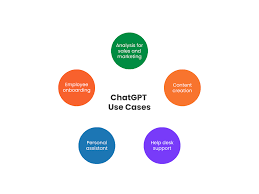
You’ve likely heard of ChatGPT by now—a remarkably intelligent AI capable of understanding and communicating like a human. You can Employ ChatGPT. But did you realize just how adaptable this language model is? With the appropriate prompts, ChatGPT can swiftly assist you with a myriad of tasks. To my mind, ChatGPT is fully helpful right until you employ it to write about itself and it begins to brag. The anticipation is over, and this marks the beginning of the multitasking journey with ChatGPT. This AI can effortlessly handle these tasks in mere seconds with relatively straightforward prompts. We’re talking about a wide range of activities, from writing and editing to coding and marketing. The key lies in providing ChatGPT with clear, concise instructions upfront. Generative AI prompts are the most important factor to getting good results. Once you unlock that capability, a plethora of possibilities emerges for expediting your workflow. I’ve compiled 50 examples of tasks that ChatGPT can accomplish in seconds with the right prompts. Prepare to be amazed by the efficiency of this AI assistant! So, grab a cup of coffee and settle in as we hop into how this exceptional AI simplifies complex tasks effortlessly. The future is now, and it goes by the name of ChatGPT! 50 Tasks that ChatGPT Can Complete in Seconds with Simple Prompts: While ChatGPT cannot fully replicate human intelligence, it impresses with its conversational abilities, data analysis, content generation, and predictive capabilities. Just envision the evolution of this AI prodigy as researchers continue to enhance its skills! Examples of clear ChatGPT prompts. Writing/Editing Prompts: Research/Analysis Prompts: Creative Writing Prompts: Coding Prompts: Business/Marketing: There you have it — 50 ways ChatGPT can significantly simplify your life with just a few well-crafted prompts. The potential is virtually limitless when you can effectively communicate your needs to this highly capable AI. The things you can do with generative AI are mainly limited by the data your AI tool has access to. Remember with ChatGPT when it last had update to the world wide web. It cannot help you right about today’s events, but can assist with building historical context, for example. Whether it’s creative writing endeavors, coding challenges, marketing endeavors, or research tasks, ChatGPT is there to assist you, provided you know how to prompt it effectively. The key lies in delivering clear, straightforward, and precise instructions. You can employ ChatGPT to assist with many tasks. The key word is assist. You cannot employ ChatGPT to completely do your job for you. Experiment with prompts tailored to your specific requirements. Once you discover the right approach, you’ll be amazed by ChatGPT’s ability to accomplish tasks in a matter of seconds. One thing is certain—with ChatGPT handling the heavy lifting, humans are liberated to be more creative and concentrate on meaningful work. Like Related Posts Salesforce Marketing Cloud Transactional Emails Salesforce Marketing Cloud Transactional Emails are immediate, automated, non-promotional messages crucial to business operations and customer satisfaction, such as order Read more Salesforce Unites Einstein Analytics with Financial CRM Salesforce has unveiled a comprehensive analytics solution tailored for wealth managers, home office professionals, and retail bankers, merging its Financial Read more AI-Driven Propensity Scores AI plays a crucial role in propensity score estimation as it can discern underlying patterns between treatments and confounding variables Read more Tectonic’s Successful Salesforce Track Record Salesforce Technology Services Integrator – Tectonic has successfully delivered Salesforce in a variety of industries including Public Sector, Hospitality, Manufacturing, Read more
Read More
Salesforce Einstein 1 Platform

Key Benefits of Einstein 1 for Enterprise

Save time, scale your resources, and get more from your tech budget: Use automation to do more without needing to add extra resourcesand increase productivity across your company using low code solutions including copilot builders with custom actions.● Empower sales to sell smarter and close deals faster: Sell more efficiently with enablement build into the flow of work. Dynamically generatesales tasks like composing personalised emails, scheduling messages and preparing for the next meeting. .● Delight customers with faster and better service: Increase customer satisfaction and resolve cases faster with personalised support at scaleusing data from across the business to automate agent tasks..● Support personalised marketing at every touchpoint: Using Einstein’s conversational assistant marketing can dynamically generatepersonalised content to engage customers and prospects across email, web, advertising and more.● Start fast with no set up: Embedded across Customer 360, Einstein is ready today for use across every customer interaction, enhancingexperiences with relevant AI-generated content.● Enable the benefits of AI without putting your brand at risk: The Einstein Trust Layer sets a new industry stand for trust, implementing azero retention architecture that ensures your data is never stored outside Salesforce. Like Related Posts Who is Salesforce? Who is Salesforce? Here is their story in their own words. From our inception, we’ve proudly embraced the identity of Read more Salesforce Marketing Cloud Transactional Emails Salesforce Marketing Cloud Transactional Emails are immediate, automated, non-promotional messages crucial to business operations and customer satisfaction, such as order Read more Salesforce Unites Einstein Analytics with Financial CRM Salesforce has unveiled a comprehensive analytics solution tailored for wealth managers, home office professionals, and retail bankers, merging its Financial Read more AI-Driven Propensity Scores AI plays a crucial role in propensity score estimation as it can discern underlying patterns between treatments and confounding variables Read more
Read More
Salesforce for Travel, Transportation, and Hospitality

Hotel Salesforce CRM for Hospitality

Salesforce offers hospitality professionals the tools to address marketing, sales, and customer support needs through the Marketing, Service, and Sales Cloud. Hotel Salesforce CRM for Hospitality. Customer Relationship Management (CRM) software tailored for hotels assists in engaging guests, managing reservations, coordinating projects, and streamlining communications. Hotel CRM software simplifies operations within the hospitality sector. Salesforce for Hospitality Customer Experience In the travel industry, particularly in hotels, customer experience reigns supreme. Hotels serve as temporary homes for guests, making their experience pivotal in determining future patronage. However, with the surge in travel and advancements in technology, the demand for personalized experiences has escalated. Meeting these expectations is essential not only for standing out in a competitive market but also for maintaining a positive online reputation. As travel becomes more accessible and prices decrease, managing a large volume of customers while delivering personalized experiences presents a significant challenge. Hotels must deepen their understanding of customers to avoid losing them amid the crowd. This is where CRM comes into play. CRMs for Hospitality CRM entails managing customer expectations, interactions, and loyalty to provide the most personalized journey possible. Modern CRM solutions, often cloud-based and mobile-compatible, leverage AI and big data to comprehend customers better and deliver proactive solutions, ensuring timely and relevant interactions. Hotel CRMs are specifically designed to address the unique needs of the hospitality industry. They assist in monitoring online reviews and social media chatter, enabling prompt responses to maintain a positive online reputation. Quick problem-solving is crucial in hotels, and CRM tools streamline issue resolution by providing relevant customer information promptly. Moreover, hotel CRMs enhance guest experiences by facilitating personalized journeys from initial contact to post-stay interactions. Mobile access is essential for guests, and many CRM platforms offer tools for building mobile apps and portals to enhance convenience. Hotel Salesforce CRM for Hospitality Ultimately, CRM systems empower hotels to manage customer loyalty effectively, offering better communication, multi-channel advertising, and useful employee tools. For hotels seeking these benefits, choosing the right CRM is crucial. Salesforce stands out as a top platform for hotel CRM, providing comprehensive solutions to meet diverse industry needs. In today’s travel and hospitality industry, efficiency and exceptional guest experiences are paramount. To achieve this, companies must focus on automating routine tasks, unifying data, and leveraging AI for insights. Exceptional experiences remain the best way to attract and retain customers, driving efficient growth even in challenging times. If your hotel or hospitality destination is looking to increase guest satisfaction, contact Tectonic about Salesforce today. Like1 Related Posts Who is Salesforce? Who is Salesforce? Here is their story in their own words. From our inception, we’ve proudly embraced the identity of Read more Salesforce Marketing Cloud Transactional Emails Salesforce Marketing Cloud Transactional Emails are immediate, automated, non-promotional messages crucial to business operations and customer satisfaction, such as order Read more Salesforce Unites Einstein Analytics with Financial CRM Salesforce has unveiled a comprehensive analytics solution tailored for wealth managers, home office professionals, and retail bankers, merging its Financial Read more AI-Driven Propensity Scores AI plays a crucial role in propensity score estimation as it can discern underlying patterns between treatments and confounding variables Read more
Read More
gettectonic.com