Advertising Archives - gettectonic.com - Page 3
Data Cloud and Snowflake Bidrectional Data Sharing

Data Cloud and Snowflake Bidrectional Data Sharing

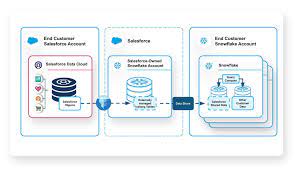
Salesforce Data Cloud and Snowflake are excited to announce that bidirectional data sharing between Snowflake, the Data Cloud company, and Salesforce Data Cloud is now generally available. In September, we introduced the ability for organizations to leverage Salesforce data directly in Snowflake via zero-ETL data sharing, enabling unified customer and business data, accelerating decision-making, and streamlining business processes. Today, we’re thrilled to share that customers can now also share Snowflake data into the Salesforce Data Cloud, using the same zero-ETL innovation to reduce friction and quickly surface powerful insights across sales, service, marketing, and commerce applications. Data Cloud and Snowflake Bidrectional Data Sharing. Data Cloud and Snowflake Bidrectional Data Sharing Enterprises generate valuable customer data within Salesforce applications, while increasingly relying on Snowflake as their preferred data platform for storing, modeling, and analyzing their full data estate. This integration between Salesforce and Snowflake minimizes friction, data latency, scale limitations, and data engineering costs associated with using these two leading platforms. The Snowflake Marketplace also offers customers the opportunity to acquire new data sets to enhance or fill gaps in their existing business data, driving innovation. By combining enterprise data and third-party data from Snowflake Marketplace with valuable customer data from Salesforce applications, organizations can unify their data and build powerful AI solutions to surface rich insights, driving superior and differentiated customer experiences. “Zero-ETL data sharing between Salesforce Data Cloud and Snowflake is game-changing. It has opened up new frontiers of data collaboration. We’re excited to see how customers are powering their customer data analytics and developing innovative AI solutions with near real-time data from Salesforce and Snowflake, generating incredible business value. Now that this integration is generally available, this kind of innovation will be broadly accessible,” says Christian Kleinerman, SVP of Product, Snowflake. Power Personalized Experiences with Salesforce and Snowflake Data sharing between Salesforce Data Cloud and Snowflake brings together holistic insights, empowering multiple customer-facing departments within any organization to create a truly robust customer 360. As Snowflake’s Chief Marketing Officer, Denise Persson, often states, a true, enterprise-wide customer 360 is the beating heart of a modern, customer-facing organization. The applicability of this integration spans various industries and unlocks new growth opportunities. For example: The bidirectional integration enables data sharing across business systems, Salesforce clouds, and operational systems, facilitating data set analysis and future action planning. This brings actionable insights and drives actions, unleashing a new level of customer experience and business productivity. Like Related Posts Who is Salesforce? Who is Salesforce? Here is their story in their own words. From our inception, we’ve proudly embraced the identity of Read more Salesforce Marketing Cloud Transactional Emails Salesforce Marketing Cloud Transactional Emails are immediate, automated, non-promotional messages crucial to business operations and customer satisfaction, such as order Read more Salesforce Unites Einstein Analytics with Financial CRM Salesforce has unveiled a comprehensive analytics solution tailored for wealth managers, home office professionals, and retail bankers, merging its Financial Read more AI-Driven Propensity Scores AI plays a crucial role in propensity score estimation as it can discern underlying patterns between treatments and confounding variables Read more
Read More
Data Cloud Credits

Data Cloud Credits

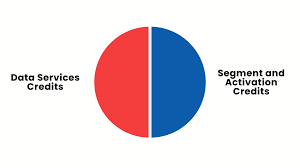
Credits are the currency of usage in Salesforce Data Cloud, where every action performed consumes credits. The consumption rate varies based on the complexity and compute cost of the action, reflecting different platform features. Data Cloud Pricing Model The pricing model for Data Cloud consists of three primary components: Data Service Credits Each platform action incurs a specific compute cost. For instance, processes like connecting, ingesting, transforming, and harmonizing data all consume ‘data service credits’. These credits are further divided into categories such as connect, harmonize, and activate, each encompassing multiple services with differing consumption rates. Segment and Activation Credits Apart from data service credits, ‘segment and activation credits’ are consumed based on the number of rows processed when publishing and activating segments. Monitoring Consumption Currently, Data Cloud users must request a consumption report from their Salesforce Account Executive to review credit and storage usage. However, the new Digital Wallet feature in the Summer ’24 Release will provide users with real-time monitoring capabilities. This includes tracking credit and storage consumption trends by usage type directly within the platform. Considerations and Best Practices To optimize credit consumption and ensure efficient use of resources, consider the following best practices: Final Thoughts Credits are integral to Data Cloud’s pricing structure, reflecting usage across various platform activities. Proactive monitoring through the Digital Wallet feature enables users to manage credits effectively, ensuring optimal resource allocation and cost efficiency. Content updated June 2024. Like Related Posts Who is Salesforce? Who is Salesforce? Here is their story in their own words. From our inception, we’ve proudly embraced the identity of Read more Salesforce Marketing Cloud Transactional Emails Salesforce Marketing Cloud Transactional Emails are immediate, automated, non-promotional messages crucial to business operations and customer satisfaction, such as order Read more Salesforce Unites Einstein Analytics with Financial CRM Salesforce has unveiled a comprehensive analytics solution tailored for wealth managers, home office professionals, and retail bankers, merging its Financial Read more AI-Driven Propensity Scores AI plays a crucial role in propensity score estimation as it can discern underlying patterns between treatments and confounding variables Read more
Read More
Google 360 Analytics Dashboard in Marketing Cloud

Salesforce Audience Insights

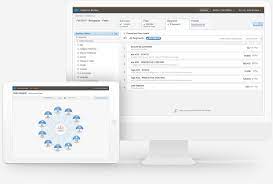
Salesforce Audience Insights By Tectonic’s Marketing Consultant, Shannan Hearne Salesforce Marketing Cloud is so much more than just an email sending platform. This insight explores how it can power your advertising.; Marketing Cloud offers robust audience segmentation capabilities, empowering marketers to effectively segment their customer base. The integration of AI through Audience Insights enhances this power. Formerly known as Advertising Studio, the platform is now recognized as Marketing Cloud Advertising. Audience Insights provides a deeper understanding of customers by unveiling unique characteristics, interests, and behaviors of user groups interacting with your ads and converting. By connecting Marketing Cloud Advertising to paid media channels, you can optimize your audience strategy, gaining a unified, cross-channel view and assessing the effectiveness of first-party audiences through a dedicated dashboard. Key features of Audience Insights include: To leverage Audience Insights, your Marketing Cloud Intelligence admin needs to configure it before connecting Advertising to paid media channels. This integration allows you to analyze the effectiveness of first-party audiences with a single, cross-channel perspective. As a Marketing Cloud Advertising customer with a Marketing Cloud Intelligence license, you gain access to comprehensive audience and campaign analytics through Audience Insights for Marketing Cloud Advertising. This application is conveniently available in the Marketing Cloud Intelligence Marketplace. Utilize the Audience Insights for Advertising Studio dashboard to refine campaigns using first-party audiences. Additionally, the Marketing Insights for Sales Cloud solution facilitates a deeper understanding of how marketing efforts and spend translate into revenue, offering insights into the sales funnel and guiding strategic decisions. Salesforce Audience Insights The Marketing Insights for Sales Cloud solution utilizes objects such as Leads, Opportunities, Accounts, Contacts, Campaigns, and Campaign Members to provide a holistic view of marketing and sales alignment. Setting up your digital advertising strategy within Salesforce, particularly through Advertising Studio, yields significant benefits. Integration with Google Analytics 360 expands your digital marketing and analytics possibilities. Advertising Studio seamlessly connects with advertising platforms like Google Display Ads, Facebook Ads, Instagram, Pinterest, Twitter, LinkedIn, AdWords, Gmail, and YouTube. Are you ready to employ the full power of Salesforce Marketing Cloud and Advertising Studio? Contact Tectonic today. Like3 Related Posts Salesforce Marketing Cloud Transactional Emails Salesforce Marketing Cloud Transactional Emails are immediate, automated, non-promotional messages crucial to business operations and customer satisfaction, such as order Read more AI-Driven Propensity Scores AI plays a crucial role in propensity score estimation as it can discern underlying patterns between treatments and confounding variables Read more Perfect Drip Campaign In an ideal world, you effortlessly conquer the lead generation challenges with one creative arm tied behind your back, craft Read more Asset Management Salesforce Can Salesforce do asset management? You can manage assets in Consumer Goods (desktop) and in the Consumer Goods offline mobile Read more
Read More
Marketing Cloud Tik Tok

Marketing Cloud Tik Tok

TikTok Introduces No-Code Integration for Salesforce Marketing Cloud TikTok has launched a no-code integration for Salesforce Marketing Cloud, designed to help advertisers transfer leads generated by their campaigns to Salesforce in real-time. This new integration ensures that leads captured on TikTok are automatically synced to Salesforce Marketing Cloud, eliminating the need for manual lead downloads by advertisers. Benefits of the Integration: Salesforce first enabled Commerce Cloud users to sell through TikTok in July 2022, positioning TikTok alongside other major social media channels like Facebook, Instagram, and Snapchat. This broadened the marketing and sales avenues for merchants. The new TikTok integration is available on Salesforce’s enterprise cloud marketplace, AppExchange, for businesses utilizing the Salesforce Marketing Cloud. Why This Integration Matters: Introducing TikTok AdZ: Filling the Gap in Salesforce Marketing Cloud Salesforce Marketing Cloud’s Advertising Studio did not previously integrate with TikTok, leaving a significant gap in the market. The new app, TikTok AdZ, created by Cezium, fills this gap by integrating TikTok advertising with marketing and CRM data, adding value in four key ways: 1. Acquisition: 2. Nurturing: 3. Retention: 4. Media Bidding Optimization: Key Features of TikTok AdZ: Target Using First-Party Data:With third-party cookies depreciating, TikTok AdZ allows advertisers to use first and second-party data for targeted ads, ensuring compliance with consumer privacy laws. Growth of Brand Awareness:Build a strong follower base on TikTok by creating custom audiences from existing customers or email subscribers and targeting them with exclusive promotions, influencer campaigns, and product demos. Audience Matching:Utilize TikTok’s lookalike audience feature to target users similar to your existing audience, increasing the likelihood of conversion. Audience Suppression:Optimize advertising spend by suppressing ads for unsatisfied customers or recent complainers, focusing on audiences more likely to convert. Use TikTok in Journey Builder:Leverage unified data to create personalized, contextual, and human engagements across marketing, commerce, service, and sales through multi-step automation in Journey Builder. Hyper-Personalization:Enhance personalization efforts with features like geotargeting, upselling and cross-selling, seasonal promotions, abandoned browse retargeting, and abandoned cart recovery. Summary As one of the largest social platforms globally, TikTok is essential for modern advertising strategies. TikTok AdZ streamlines the process, offering the tools needed to create personalized and effective ads that target the right audience on TikTok. Embrace this powerful integration to stay ahead of the competition, streamline lead generation, and watch your conversion rates soar. Reach out to your TikTok Rep or Salesforce Account Executive to get started today. Like Related Posts Who is Salesforce? Who is Salesforce? Here is their story in their own words. From our inception, we’ve proudly embraced the identity of Read more Salesforce Marketing Cloud Transactional Emails Salesforce Marketing Cloud Transactional Emails are immediate, automated, non-promotional messages crucial to business operations and customer satisfaction, such as order Read more Salesforce Unites Einstein Analytics with Financial CRM Salesforce has unveiled a comprehensive analytics solution tailored for wealth managers, home office professionals, and retail bankers, merging its Financial Read more AI-Driven Propensity Scores AI plays a crucial role in propensity score estimation as it can discern underlying patterns between treatments and confounding variables Read more
Read More
can-spam act

CAN-SPAM Act

Do you use email for your business? The CAN-SPAM Act, a law that regulates commercial email, sets requirements for these messages, grants recipients the right to stop receiving emails, and imposes significant penalties for non-compliance. The FTC enforces the CAN-SPAM Act and the associated CAN-SPAM Rule. Contrary to what its name might suggest, the CAN-SPAM Act isn’t limited to bulk email. It applies to all commercial messages, which are defined as any electronic mail message primarily intended to advertise or promote a commercial product or service, including emails that promote content on commercial websites. The law also applies to business-to-business email, meaning every email, such as one announcing a new product line to former customers, must adhere to CAN-SPAM regulations. Each individual email that violates the CAN-SPAM Act can result in penalties of up to $51,744, making compliance crucial. Fortunately, following the law is straightforward. Here’s an overview of CAN-SPAM’s key requirements: Frequently Asked Questions: Q: How do I know if the CAN-SPAM Act applies to the emails my business sends? A: The law applies based on the “primary purpose” of the message. An email can contain three types of content: If the message’s primary purpose is commercial, it must comply with CAN-SPAM. If it’s transactional or relationship-based, it must still avoid false or misleading routing information but is otherwise exempt from most CAN-SPAM requirements. Q: How can I determine if an email is a transactional or relationship message? A: An email is transactional or relationship-focused if it: These categories are interpreted narrowly, so be careful when assuming that any message sent to subscribers or members is transactional or relationship-based. Consider whether a reasonable recipient would view the email’s primary purpose as fitting into one of these categories. If not, the email must comply with CAN-SPAM. Q: What if an email combines commercial and transactional/relationship content? A: When an email includes both commercial and transactional/relationship content, the primary purpose determines its status. If the subject line leads a recipient to believe the message is primarily commercial or if the transactional/relationship content isn’t prominent at the beginning, the email is considered commercial and must comply with CAN-SPAM. Need More Information? For more detailed guidance on CAN-SPAM compliance, refer to the full CAN-SPAM Act or consult the FTC’s resources. Q: What if a message contains both commercial content and content classified as “other”? A: If a message includes both commercial content and other types of content, the CAN-SPAM Act applies if the primary purpose of the message is commercial. This determination is made if: Factors that influence this interpretation include the placement of the commercial content (e.g., whether it appears at the beginning of the message), the proportion of the message dedicated to commercial content, and how elements like color, graphics, and text style are used to emphasize the commercial aspects. Q: What if an email includes content from more than one company? Who is responsible for CAN-SPAM compliance? A: When an email promotes the products, services, or websites of multiple marketers, the responsible “sender” under the CAN-SPAM Act is typically determined by agreement among the marketers. The designated sender must: If the designated sender fails to meet these obligations, all marketers involved may be held liable as senders. Q: My company sends emails with a “Forward to a Friend” feature. Who is responsible for CAN-SPAM compliance for these forwarded messages? A: Whether a seller or forwarder is considered a “sender” or “initiator” under the CAN-SPAM Act depends on the situation. Typically, the Act applies if the seller offers an incentive for forwarding the message, such as money, discounts, or sweepstakes entries. In such cases, the seller is likely responsible for compliance. If a seller provides any benefit in exchange for forwarding an email or generating traffic, they are likely subject to CAN-SPAM regulations. Q: What are the penalties for violating the CAN-SPAM Act? A: Each email that violates the CAN-SPAM Act can result in penalties of up to $51,744, with the possibility of multiple parties being held responsible. Both the company whose product is promoted and the company that sent the message can be liable. Additionally, emails that contain misleading claims may be subject to other laws, like Section 5 of the FTC Act, which prohibits deceptive advertising. The CAN-SPAM Act also includes aggravated violations that could lead to additional fines and even criminal penalties, including imprisonment, for: Civil penalties may also require restitution to consumers under Section 19 of the FTC Act, covering not just what consumers paid, but also the value of their lost time. Q: Are there specific rules for sexually explicit marketing emails? A: Yes, the FTC has rules under the CAN-SPAM Act for emails with sexually explicit content. These emails must start with “SEXUALLY-EXPLICIT:” in the subject line. The body of the email must initially display only this warning and the standard CAN-SPAM information: the message’s commercial nature, the sender’s physical address, and an opt-out method. No images or graphics are allowed in this part of the message, ensuring that sexually explicit content isn’t viewable without an affirmative action, like scrolling or clicking. This requirement doesn’t apply if the recipient has previously given consent to receive such messages. About the FTC The FTC is dedicated to preventing fraudulent, deceptive, and unfair practices affecting businesses and consumers. You can report scams and unethical business practices at ReportFraud.ftc.gov. For guidance on legal compliance, visit business.ftc.gov. Understanding and fulfilling your compliance obligations is smart business practice, regardless of your organization’s size or industry. For updates on cases and initiatives, subscribe to the FTC’s Business Blog. Your Opportunity to Comment The National Small Business Ombudsman and 10 Regional Fairness Boards collect feedback from small businesses regarding federal compliance and enforcement activities. The Ombudsman evaluates these activities annually and rates each agency’s responsiveness to small businesses. Comments can be submitted without fear of reprisal by calling 1-888-REGFAIR (1-888-734-3247) or visiting www.sba.gov/ombudsman. Content updated January 2024. Like Related Posts Who is Salesforce? Who is Salesforce? Here is their story in their

Read More
Contact Builder is responsible for aggregating customer data from multiple source into a single customer view, known as the contact model in marketing cloud. For more information refer to the official documentation. Audience Builder is a segmentation tool, that abstracts the traditional SQL process for building segments and allows marketers to build segments by dragging and dropping them. For more information, please refer to the the documentation. Contact Builder has been moved to the Audience Builder tab

Audience Builder Contact Builder

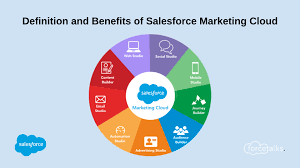
Contact Builder, formerly known as Audience Builder, is a robust tool within Marketing Cloud designed to manage data associated with contacts, referred to as ‘people’ records. This platform provides access to both demographic and behavioral information, which is organized into ‘attribute groups’ (such as abandoned carts), ‘events,’ and ‘populations,’ allowing for efficient segmentation of data. The primary distinction between Audience Builder and Contact Builder lies in their functionalities within Marketing Cloud. While Audience Builder focuses on segmenting data, Contact Builder serves as the tool for defining the data model within the Marketing Cloud ecosystem. Contact Builder is integral to data management within Marketing Cloud and will continue to play a central role in the platform’s operations. Marketing Cloud Audience Builder has empowered marketers to create finely segmented audiences based on behavioral and demographic data. With its retirement, the question arises: “What comes next?” To address this, Marketing Cloud offers engagement marketing tools powered by AI, enabling marketers to activate their data and deliver personalized campaigns at scale to enhance customer lifetime value. These tools include: Email Marketing: Cross-Channel Analytics: “After adopting Salesforce Marketing Cloud and using it to hyper-target our audience, we are able to reduce the waste of our current marketing budget and become more efficient with spending on initiatives that deliver better results“ Kyall MaiSVP & Chief Innovation Officer, Esquire Contact Builder vs. Audience Builder Contact Builder serves as the central hub for managing attribute values associated with each contact within Marketing Cloud. It maintains a comprehensive database of contact information and facilitates the organization and linkage of data from various sources, including ERP systems, CRM systems, and POS systems. This tool offers a unified view of customer interactions with the brand, enabling personalized communication across channels such as email, SMS, and push notifications. Audience Builder, now known as Contact Builder, dynamically creates targeted audiences based on stored attribute and behavioral values of contacts. These audiences are generated according to specific rules and criteria defined by the user. Audience Builder helps marketers segment contacts effectively, allowing for precise targeting or exclusion from marketing activities within Marketing Cloud Engagement. Key Features and Functions: Contact Builder: Audience Builder: While both Contact Builder and Audience Builder are essential components of Marketing Cloud, Contact Builder takes precedence as the primary tool for managing contact data and enabling personalized customer interactions. Audience Builder, now integrated into Contact Builder, continues to play a vital role in audience segmentation and targeting within Marketing Cloud Engagement. Contact Builder is responsible for aggregating customer data from multiple source into a single customer view, known as the contact model in marketing cloud. For more information refer to the official documentation. Audience Builder is a segmentation tool, that abstracts the traditional SQL process for building segments and allows marketers to build segments by dragging and dropping them. For more information, please refer to the the documentation. Contact Builder has been moved to the Audience Builder tab. Like1 Related Posts Who is Salesforce? Who is Salesforce? Here is their story in their own words. From our inception, we’ve proudly embraced the identity of Read more Salesforce Marketing Cloud Transactional Emails Salesforce Marketing Cloud Transactional Emails are immediate, automated, non-promotional messages crucial to business operations and customer satisfaction, such as order Read more Salesforce Unites Einstein Analytics with Financial CRM Salesforce has unveiled a comprehensive analytics solution tailored for wealth managers, home office professionals, and retail bankers, merging its Financial Read more AI-Driven Propensity Scores AI plays a crucial role in propensity score estimation as it can discern underlying patterns between treatments and confounding variables Read more
Read More
Salesforce Marketing Cloud Journey Builder

Journey Builder Explained

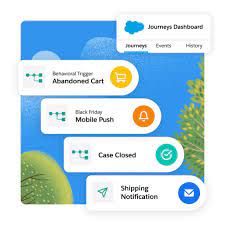
In B2C marketing, the focus on Journey Builder within the Marketing Cloud framework is essential to take customers on journeys with personalized interactions depending on where they are at in the buying cycle. This tool empowers marketers to craft intricate marketing journeys that deliver personalized experiences to customers. Operating within Marketing Cloud, the journey tool orchestrates comprehensive customer journeys, facilitating interactions across multiple platforms such as email, mobile, advertising, and websites. It stands as a foundational element of Marketing Cloud, primarily tailored for B2C initiatives. Salesforce Journey Builder facilitates a deeper understanding of customers by triggering actions based on their unique behaviors and ensuring consistent messaging across channels. As consumers navigate seamlessly between platforms and devices, brands must offer personalized and seamless journeys to maximize customer lifetime value. To achieve this, marketers must address key questions: Answering these questions requires a comprehensive view of the customer journey, with actions aligned to evolving customer expectations. With Salesforce Marketing Cloud Journey Builder, marketers can attain a unified view of all customer interactions, optimizing end-to-end journeys. Journey Builder provides visibility into consumer interactions across marketing channels, including email, mobile, social ads, and more. By connecting these interactions, marketers gain insights for improved message crafting, campaign design, and automation, fostering seamless customer experiences and fostering loyalty. Interactions a customer may have with the brand throughout their journey include clicking on an ad, opening an email, making a purchase, conversing with customer support, and more. Journey Builder, as an event-driven tool, initiates conversations based on customer history, preferences, and real-time behavior, supporting visual mapping of simple or complex journeys. However, Journey Builder operates within Marketing Cloud and utilizes content and audiences from Email Studio, Mobile Studio, Advertising Studio, Content Builder, and Audience Builder. It leverages event-driven triggers to react to customer actions, such as downloading an app or leaving a shopping cart abandoned, thus enabling timely and relevant responses. Key features of Journey Builder include a user-friendly drag-and-drop interface, entry and filter criteria for swift actions, and powerful add-ons for enhanced functionality. Ultimately, Salesforce Journey Builder facilitates a seamless customer experience by guiding journeys, ensuring consistent messaging, adapting to evolving needs, and maintaining brand consistency across channels. Like1 Related Posts Who is Salesforce? Who is Salesforce? Here is their story in their own words. From our inception, we’ve proudly embraced the identity of Read more Salesforce Marketing Cloud Transactional Emails Salesforce Marketing Cloud Transactional Emails are immediate, automated, non-promotional messages crucial to business operations and customer satisfaction, such as order Read more Salesforce Unites Einstein Analytics with Financial CRM Salesforce has unveiled a comprehensive analytics solution tailored for wealth managers, home office professionals, and retail bankers, merging its Financial Read more AI-Driven Propensity Scores AI plays a crucial role in propensity score estimation as it can discern underlying patterns between treatments and confounding variables Read more
Read More
Salesforce Marketing Cloud Personalization

AI and Marketing Personalization

AI Personalization Marketing: The Future of Customized Advertising Artificial intelligence (AI) is revolutionizing advertising by replacing generic mass marketing campaigns with highly targeted and relevant ads personalized through AI technology. Advanced AI and machine learning capabilities enable businesses to tailor and optimize marketing messages at scale. By leveraging extensive data insights, AI empowers businesses to understand customer needs and preferences on a personal level, allowing for customized messages and recommendations throughout the buyer’s journey. 5 Benefits of AI Personalization in Marketing Practical Applications of AI-Based Personalization in Marketing AI significantly enhances marketing effectiveness by analyzing extensive customer data to inform targeted campaigns. According to Babak Hodjat, CTO of Cognizant, integrating AI with business data empowers decision-making and drives key performance indicators. Explore more insights from Babak Hodjat in eWeek’s interview on AI’s transformative impact on marketing. AI-Powered Tools for Enhanced Personalization Challenges and Considerations for AI Personalization Implementation Implementing AI personalization presents challenges such as costs, ethical concerns, and data privacy considerations. Businesses must ensure transparent data practices and compliance with regulations like GDPR and CCPA to mitigate risks associated with data security and bias in AI algorithms. Best Practices for Effective AI Personalization Marketing Successful AI personalization strategies begin with clearly defined goals, ethical data practices, and the strategic use of AI tools to optimize marketing efforts. Regular monitoring and refinement based on data-driven insights ensure continuous improvement in campaign effectiveness and customer engagement. Conclusion AI personalization is reshaping marketing by delivering tailored experiences that drive customer engagement and business growth. Strategic implementation of AI tools enables marketers to unlock new levels of personalization while navigating ethical considerations and regulatory requirements. Embracing AI in marketing empowers brands to connect with customers on a deeper level, fostering loyalty and driving sustainable business success. Like Related Posts Who is Salesforce? Who is Salesforce? Here is their story in their own words. From our inception, we’ve proudly embraced the identity of Read more Salesforce Marketing Cloud Transactional Emails Salesforce Marketing Cloud Transactional Emails are immediate, automated, non-promotional messages crucial to business operations and customer satisfaction, such as order Read more Salesforce Unites Einstein Analytics with Financial CRM Salesforce has unveiled a comprehensive analytics solution tailored for wealth managers, home office professionals, and retail bankers, merging its Financial Read more AI-Driven Propensity Scores AI plays a crucial role in propensity score estimation as it can discern underlying patterns between treatments and confounding variables Read more

Read More
gettectonic.com