AI Agents Archives - gettectonic.com - Page 6
AI Agents and Work

From AI Workflows to Autonomous Agents

From AI Workflows to Autonomous Agents: The Path to True AI Autonomy Building functional AI agents is often portrayed as a straightforward task—chain a large language model (LLM) to some APIs, add memory, and declare autonomy. Yet, anyone who has deployed such systems in production knows the reality: agents that perform well in controlled demos often falter in the real world, making poor decisions, entering infinite loops, or failing entirely when faced with unanticipated scenarios. AI Workflows vs. AI Agents: Key Differences The distinction between workflows and agents, as highlighted by Anthropic and LangGraph, is critical. Workflows dominate because they work reliably. But to achieve true agentic AI, the field must overcome fundamental challenges in reasoning, adaptability, and robustness. The Evolution of AI Workflows 1. Prompt Chaining: Structured but Fragile Breaking tasks into sequential subtasks improves accuracy by enforcing step-by-step validation. However, this approach introduces latency, cascading failures, and sometimes leads to verbose but incorrect reasoning. 2. Routing Frameworks: Efficiency with Blind Spots Directing tasks to specialized models (e.g., math to a math-optimized LLM) enhances efficiency. Yet, LLMs struggle with self-assessment—they often attempt tasks beyond their capabilities, leading to confident but incorrect outputs. 3. Parallel Processing: Speed at the Cost of Coherence Running multiple subtasks simultaneously speeds up workflows, but merging conflicting results remains a challenge. Without robust synthesis mechanisms, parallelization can produce inconsistent or nonsensical outputs. 4. Orchestrator-Worker Models: Flexibility Within Limits A central orchestrator delegates tasks to specialized components, enabling scalable multi-step problem-solving. However, the system remains bound by predefined logic—true adaptability is still missing. 5. Evaluator-Optimizer Loops: Limited by Feedback Quality These loops refine performance based on evaluator feedback. But if the evaluation metric is flawed, optimization merely entrenches errors rather than correcting them. The Four Pillars of True Autonomous Agents For AI to move beyond workflows and achieve genuine autonomy, four critical challenges must be addressed: 1. Self-Awareness Current agents lack the ability to recognize uncertainty, reassess faulty reasoning, or know when to halt execution. A functional agent must self-monitor and adapt in real-time to avoid compounding errors. 2. Explainability Workflows are debuggable because each step is predefined. Autonomous agents, however, require transparent decision-making—they should justify their reasoning at every stage, enabling developers to diagnose and correct failures. 3. Security Granting agents API access introduces risks beyond content moderation. True agent security requires architectural safeguards that prevent harmful or unintended actions before execution. 4. Scalability While workflows scale predictably, autonomous agents become unstable as complexity grows. Solving this demands more than bigger models—it requires agents that handle novel scenarios without breaking. The Road Ahead: Beyond the Hype Today’s “AI agents” are largely advanced workflows masquerading as autonomous systems. Real progress won’t come from larger LLMs or longer context windows, but from agents that can:✔ Detect and correct their own mistakes✔ Explain their reasoning transparently✔ Operate securely in open environments✔ Scale intelligently to unforeseen challenges The shift from workflows to true agents is closer than it seems—but only if the focus remains on real decision-making, not just incremental automation improvements. Like Related Posts Who is Salesforce? Who is Salesforce? Here is their story in their own words. From our inception, we’ve proudly embraced the identity of Read more Salesforce Unites Einstein Analytics with Financial CRM Salesforce has unveiled a comprehensive analytics solution tailored for wealth managers, home office professionals, and retail bankers, merging its Financial Read more AI-Driven Propensity Scores AI plays a crucial role in propensity score estimation as it can discern underlying patterns between treatments and confounding variables Read more Tectonic’s Successful Salesforce Track Record Salesforce Technology Services Integrator – Tectonic has successfully delivered Salesforce in a variety of industries including Public Sector, Hospitality, Manufacturing, Read more


Read More
Salesforce prompt builder

Mastering Agentforce

Mastering Agentforce: How to Supercharge Salesforce with AI-Powered Prompts Unlocking the Power of Agentforce Salesforce’s Agentforce is transforming how businesses automate marketing and sales—using generative AI to handle repetitive tasks, respond to prospect behavior in real time, and drive smarter strategies with less effort. But to fully leverage Agentforce, you need to master prompt engineering—the art of crafting effective AI instructions. (Don’t let the term “engineering” intimidate you—it simply means writing clear, structured prompts!) AI Prompts 101: The Key to Personalized Automation An AI prompt is a detailed instruction that guides Salesforce’s large language model (LLM) to generate relevant, business-specific responses. Why Prompts Matter Introducing Salesforce Prompt Builder Prompt Builder is Agentforce’s central hub for creating, managing, and applying reusable prompt templates across your AI Agents. How It Works 3 Types of Prompt Templates Step-by-Step: How to Use Prompt Builder 1. Get Access 2. Open Prompt Builder 3. Craft Your Prompt Every effective prompt should include:✅ Who’s involved? (Roles, relationships, data)Example: “You are a marketer named {!user.firstname} writing to {!account.name}, a potential customer.” ✅ Context (Tone, style, language)Example: “Write a professional yet conversational email in British English.” ✅ Goal (What should the AI accomplish?)Example: “Persuade {!account.name} to book a 15-minute intro call.” ✅ Constraints (Word limits, data boundaries)Example: “Keep under 300 words. Avoid jargon and unsupported claims.” 📌 Pro Tip: Draft prompts in a separate doc first for easy editing. 4. Test & Refine Before going live:✔ Verify responses match your goals & brand voice.✔ Check for bias, errors, or inconsistencies.✔ Fine-tune by adding more context or rephrasing. 5. Deploy Activate your prompt for use in: Why This Changes Everything With Agentforce + Prompt Builder, Salesforce users can:🚀 Scale hyper-personalized outreach without manual work.🤖 Automate repetitive tasks while maintaining brand consistency.📈 Drive higher ROI with AI that adapts to real-time data. Ready to transform your Salesforce automation? Start engineering smarter prompts today! Like Related Posts Who is Salesforce? Who is Salesforce? Here is their story in their own words. From our inception, we’ve proudly embraced the identity of Read more Salesforce Marketing Cloud Transactional Emails Salesforce Marketing Cloud Transactional Emails are immediate, automated, non-promotional messages crucial to business operations and customer satisfaction, such as order Read more Salesforce Unites Einstein Analytics with Financial CRM Salesforce has unveiled a comprehensive analytics solution tailored for wealth managers, home office professionals, and retail bankers, merging its Financial Read more AI-Driven Propensity Scores AI plays a crucial role in propensity score estimation as it can discern underlying patterns between treatments and confounding variables Read more

Read More

Once Upon a Time in Data Land

Once Upon a Time in Data Land: Building the Artificial Intelligence-Ready Warehouse In the early days of data, businesses simply wanted to know what had already happened in the past. Questions like “How many units shipped?” or “What were last month’s sales?” drove the first major digital settlements—the Digitally Filed Data Warehouse. Looking back this seems like the aluminum carport you can have erected in your driveway. The Meticulously Organized Library (The Digitally Filed Data Warehouse Era) Imagine a grand, meticulously organized library. Data from sales, finance, and inventory wasn’t just dumped inside—it went through ETL (Extract, Transform, Load), where it was cleaned, standardized, and structured into predefined formats. Need quarterly sales figures? They were always in the same place, ready for reliable reporting. But then, the world outside got messy. Suddenly, businesses weren’t just dealing with neat rows and columns—they faced website clicks, customer emails, sensor data, social media streams, images, and videos. The rigid Digitally Filed Data Warehouse struggled to adapt. Trying to force unstructured data through ETL was like trying to shelve a waterfall—slow, expensive, and often impossible. The Everything Shed (The Rise of the AI-Powered Warehouse) Enter the AI-Powered Warehouse—a vast, flexible storage space built for raw, unstructured data. Instead of forcing structure upfront, it embraced “store first, organize later” (schema-on-read). Data scientists could explore everything, from tweets to video transcripts, without constraints. But freedom had a cost. Without governance, many AI-Powered Warehouses became “data swamps”—cluttered, unreliable, and slow. Finding clean, trustworthy data was a treasure hunt, and building reliable AI pipelines was a challenge. Organizing the Shed (The AI-Ready Warehouse Paradigm) The solution? Structure without sacrifice. The AI-Ready Warehouse kept the flexibility of raw storage but added intelligence on top. Technologies like Delta Lake, Apache Iceberg, and Apache Hudi introduced:✔ ACID transactions (no more corrupted data)✔ Data versioning (“time travel” to past states)✔ Schema enforcement (order without rigidity)✔ Performance optimizations (speed at scale) A key innovation was the Medallion Architecture, organizing data by quality: This hybrid approach unified BI dashboards, analytics, and machine learning—all on the same foundation. The AI Factory (The Modern AI-Functioning Warehouse) Just as businesses adapted, AI evolved. Generative AI, autonomous agents, and real-time decision-making demanded more than batch-processed data. The AI-Ready Warehouse transformed into a fully integrated AI factory, built for: 🔹 Real-Time & Streaming Data 🔹 Seamless MLOps Integration 🔹 Vector Databases & Embeddings 🔹 Robust AI Governance Why This Matters for AI Agents Autonomous AI agents don’t just analyze data—they act on it. The AI-Functioning Warehouse gives them:✔ Context: Real-time data + historical insights✔ Consistency: Features match training data✔ Memory: Logged actions for continuous learning The Future: An AI-Native Data Ecosystem The journey from Digitally Filed Data Warehouse to AI-Powered Warehouse to AI-Functioning Warehouse reflects a shift from static reporting to dynamic intelligence. For businesses embracing AI, the question is no longer “Do we need a data strategy?” but “Is our data foundation AI-ready?” The answer will separate the leaders from the laggards in the age of AI. Next Steps: The future belongs to those who build not just for data, but for AI. Like Related Posts Who is Salesforce? Who is Salesforce? Here is their story in their own words. From our inception, we’ve proudly embraced the identity of Read more Salesforce Unites Einstein Analytics with Financial CRM Salesforce has unveiled a comprehensive analytics solution tailored for wealth managers, home office professionals, and retail bankers, merging its Financial Read more AI-Driven Propensity Scores AI plays a crucial role in propensity score estimation as it can discern underlying patterns between treatments and confounding variables Read more Tectonic’s Successful Salesforce Track Record Salesforce Technology Services Integrator – Tectonic has successfully delivered Salesforce in a variety of industries including Public Sector, Hospitality, Manufacturing, Read more
Read More
AI Agent Revolution

The Salesforce AI Agent Maturity Model

The Salesforce AI Agent Maturity Model: A Roadmap for Scaling Intelligent Automation With 84% of CIOs believing AI will be as transformative as the internet, strategic adoption is no longer optional—it’s a competitive imperative. Yet many organizations struggle with where to begin, how to scale AI agents, and how to measure success. To help enterprises navigate this challenge, Salesforce has introduced the Agentic Maturity Model, a four-stage framework that guides businesses from basic automation to advanced, multi-agent ecosystems. “While agents can be deployed quickly, scaling them effectively requires a thoughtful, phased approach,” said Shibani Ahuja, SVP of Enterprise IT Strategy at Salesforce. “This model provides a clear roadmap to help organizations progress toward higher levels of AI maturity.” How Leading Companies Are Using the Framework Wiley: Building a Future-Ready AI Foundation “Visionary leadership is essential in today’s rapidly evolving AI landscape,” said Kevin Quigley, Director of Process Improvement at Wiley. “Salesforce’s framework ensures the building blocks we create today will support our long-term AI strategy.” Alpine Intel: Accelerating Efficiency in Insurance “Every minute saved counts in our high-volume claims business,” said Kelly Bentubo, Director of Architecture at Alpine Intel. “This model brings clarity to scaling AI—helping us move from time-saving automations to advanced multi-agent applications.” The Four Levels of Agentic Maturity Level 0: Fixed Rules & Repetitive Tasks (Chatbots & Co-pilots) What it is: Basic automation with no reasoning—think FAQ bots or scripted workflows.Example: A chatbot handling password resets via predefined decision trees. How to Advance to Level 1:✔ Identify rigid processes ripe for AI reasoning.✔ Measure time/cost savings from automation.✔ Start with low-risk, employee-facing agents. Level 1: Information Retrieval Agents What it is: AI that fetches data and suggests actions (but doesn’t act alone).Example: A support agent recommending troubleshooting steps from a knowledge base. How to Advance to Level 2:✔ Shift from recommendations to autonomous actions.✔ Improve data quality and governance.✔ Track metrics like case deflection and CSAT. Level 2: Simple Orchestration (Single Domain) What it is: Agents automating multi-step tasks within one system.Example: Scheduling meetings + sending follow-ups using calendar/email data. How to Advance to Level 3:✔ Choose between specialized agents or a “mega-agent.”✔ Extend capabilities with API integrations.✔ Design scalable architecture for future growth. Level 3: Complex Orchestration (Cross-Domain) What it is: AI coordinating workflows across departments (e.g., sales + service).Example: An agent analyzing CRM, support tickets, and financial data to optimize deals. How to Advance to Level 4:✔ Build a universal communication layer for agents.✔ Implement dynamic agent discovery & governance.✔ Measure ROI via cost savings and revenue impact. Level 4: Multi-Agent Ecosystems What it is: AI teams collaborating across systems with human oversight.Example: Agents processing orders, managing inventory, and routing feedback in real time. Maximizing Value:✔ Strengthen security for ecosystem-wide AI.✔ Develop new business models powered by agent collaboration.✔ Track revenue growth, retention, and operational efficiency. Beyond Technology: Key Implementation Factors “AI success hinges on more than just tech,” notes Ahuja. Organizations must: By addressing these pillars, businesses can accelerate AI adoption—turning experimentation into scalable, measurable value. Contact Tectonic today to harness the power of AI and move along the AI Agent maturity continuum. Like Related Posts Who is Salesforce? Who is Salesforce? Here is their story in their own words. From our inception, we’ve proudly embraced the identity of Read more Salesforce Marketing Cloud Transactional Emails Salesforce Marketing Cloud Transactional Emails are immediate, automated, non-promotional messages crucial to business operations and customer satisfaction, such as order Read more Salesforce Unites Einstein Analytics with Financial CRM Salesforce has unveiled a comprehensive analytics solution tailored for wealth managers, home office professionals, and retail bankers, merging its Financial Read more AI-Driven Propensity Scores AI plays a crucial role in propensity score estimation as it can discern underlying patterns between treatments and confounding variables Read more

Read More
Informatica, Agentforce, and Salesforce

Informatica, Agentforce, and Salesforce

Informatica and Salesforce Deepen AI Partnership to Power Smarter Customer Experiences Las Vegas, [May, 2025] – At Informatica World, Informatica (NYSE: INFA) announced an expanded collaboration with Salesforce to integrate its Intelligent Data Management Cloud (IDMC) with Salesforce Agentforce, enabling enterprises to deploy AI agents fueled by trusted, real-time customer data. Bringing Trusted Data to AI-Powered Workflows The integration centers on Informatica’s Master Data Management (MDM), which distills fragmented customer data into unified, accurate “golden records.” These records will enhance Agentforce AI agents—used by sales and service teams—to deliver: “Data is foundational for agentic AI,” said Tyler Carlson, SVP of Business Development at Salesforce. “With Informatica’s MDM, Salesforce customers can ground AI interactions in high-quality data for more targeted service and engagement.” Key Capabilities (Available H2 2025 on Salesforce AppExchange) “This is about action, not just insights,” emphasized Rik Tamm-Daniels, GVP of Strategic Ecosystems at Informatica. “We’re embedding reliable enterprise data directly into Agentforce to drive measurable outcomes.” Why It Matters As AI agents handle more customer interactions, data quality becomes critical. This partnership ensures Agentforce operates on clean, governed data—reducing hallucinations and bias while improving relevance. The MDM SaaS tools for Agentforce will enter pilot testing soon, with general availability slated for late 2025. Like Related Posts Who is Salesforce? Who is Salesforce? Here is their story in their own words. From our inception, we’ve proudly embraced the identity of Read more Salesforce Marketing Cloud Transactional Emails Salesforce Marketing Cloud Transactional Emails are immediate, automated, non-promotional messages crucial to business operations and customer satisfaction, such as order Read more Salesforce Unites Einstein Analytics with Financial CRM Salesforce has unveiled a comprehensive analytics solution tailored for wealth managers, home office professionals, and retail bankers, merging its Financial Read more AI-Driven Propensity Scores AI plays a crucial role in propensity score estimation as it can discern underlying patterns between treatments and confounding variables Read more

Read More
designing ai agents the right way

Designing AI Agents the Right Way

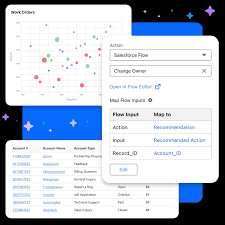
Designing AI agents effectively involves a structured approach, starting with defining clear objectives and aligning them with business needs. It also requires careful data collection and preparation, selecting the right machine learning models, and crafting a robust architecture. Finally, building in feedback loops and prioritizing continuous monitoring and improvement are crucial for success.  Here’s a more detailed breakdown: 1. Define Objectives and Purpose: 2. Data Collection and Preparation: 3. Choose the Right Models and Tools: 4. Design the Agent Architecture: 5. Training and Refinement: 6. Testing and Validation: 7. Deployment, Monitoring, and Iteration: 8. Key Considerations: By following these principles, you can design AI agents that are not only effective but also robust, scalable, and aligned with your business objectives. Like Related Posts Who is Salesforce? Who is Salesforce? Here is their story in their own words. From our inception, we’ve proudly embraced the identity of Read more Salesforce Unites Einstein Analytics with Financial CRM Salesforce has unveiled a comprehensive analytics solution tailored for wealth managers, home office professionals, and retail bankers, merging its Financial Read more AI-Driven Propensity Scores AI plays a crucial role in propensity score estimation as it can discern underlying patterns between treatments and confounding variables Read more Tectonic’s Successful Salesforce Track Record Salesforce Technology Services Integrator – Tectonic has successfully delivered Salesforce in a variety of industries including Public Sector, Hospitality, Manufacturing, Read more
Read More
Agentic AI is Here

How IT Leaders Are Deploying Agentic AI to Transform Business Workflows

The next wave of enterprise AI isn’t just about chatbots—it’s about autonomous agents that execute complex workflows end-to-end. Leading CIOs and CTOs are now embedding agentic AI across sales, customer service, finance, and IT operations to drive efficiency, accuracy, and scalability. “We’re not just automating tasks—we’re reimagining how work gets done,” says Kellie Romack, CDIO at ServiceNow. The momentum is undeniable: So where are the biggest impacts? Here’s how forward-thinking execs are deploying AI agents today. 🚀 Top Use Cases for Agentic AI 1. Supercharging Sales & Pipeline Growth “Agentic AI helps sales teams focus on high-potential clients while automating routine follow-ups.” — Jay Upchurch, CIO, SAS 2. Hyper-Personalized Customer Experiences “We cut student research time from 35 minutes to under 3—freeing advisors for deeper mentorship.” — Siva Kumari, CEO, College Possible 3. Self-Healing IT & Security Operations Gartner predicts AI will reduce manual data integration work by 60%. 4. Frictionless Back-Office Automation “We’re targeting repetitive, rules-based workflows first—like finance and procurement.” — Milind Shah, CTO, Xerox 🔑 Key Implementation Insights What’s Working ✅ Start with high-volume, repetitive tasks (e.g., ticket routing, data entry)✅ Prioritize workflows with clean, structured data✅ Use AI for augmentation—not replacement Biggest Challenges ⚠️ Data integration hurdles (55% of leaders cite this as #1 blocker)⚠️ Governance & compliance risks⚠️ Testing non-deterministic AI outputs “The real breakthrough comes when AI agents collaborate across systems—not just operate in silos.” — Kellie Romack, ServiceNow 🔮 The Future: From Assistants to Autonomous Decision-Makers Early adopters see agentic AI evolving in three phases: Salesforce, Microsoft, and IBM are already rolling out agentic frameworks—but only 11% of enterprises have full-scale adoption today. “Soon, thousands of AI agents will work in the background like a digital workforce—always on, always improving.” — Romack Your Move Where could agentic AI eliminate bottlenecks in your workflows? The most successful implementations: The question isn’t if you’ll deploy AI agents—but where they’ll drive the most value first. How is your organization experimenting with agentic AI? Share your insights below! Like Related Posts Who is Salesforce? Who is Salesforce? Here is their story in their own words. From our inception, we’ve proudly embraced the identity of Read more Salesforce Marketing Cloud Transactional Emails Salesforce Marketing Cloud Transactional Emails are immediate, automated, non-promotional messages crucial to business operations and customer satisfaction, such as order Read more Salesforce Unites Einstein Analytics with Financial CRM Salesforce has unveiled a comprehensive analytics solution tailored for wealth managers, home office professionals, and retail bankers, merging its Financial Read more AI-Driven Propensity Scores AI plays a crucial role in propensity score estimation as it can discern underlying patterns between treatments and confounding variables Read more

Read More
Salesforce Heroku

Heroku Unveils Next-Gen AI Development Platform

Salesforce’s Heroku—the cloud platform powering 65M+ apps and 65B daily requests—is stepping into the AI era with a suite of new tools designed to accelerate AI application development. Key Innovations for AI & Event-Driven Apps 1. Heroku AppLink (Pilot) 2. Heroku Eventing 3. Heroku Fir Generation Enhanced Developer Experience 🚀 VS Code Extension 💻 Expanded .NET Support 📊 Heroku-Jupyter Why This Matters ✅ Faster AI app development with low-code + pro-code flexibility.✅ Real-time event-driven AI via Heroku Eventing.✅ Enterprise-ready scalability on Kubernetes & OCI.✅ Smoother dev workflows with VS Code & Jupyter integration. Building AI apps? Heroku’s new platform cuts deployment time in half. Start today! Like Related Posts Who is Salesforce? Who is Salesforce? Here is their story in their own words. From our inception, we’ve proudly embraced the identity of Read more Salesforce Marketing Cloud Transactional Emails Salesforce Marketing Cloud Transactional Emails are immediate, automated, non-promotional messages crucial to business operations and customer satisfaction, such as order Read more Salesforce Unites Einstein Analytics with Financial CRM Salesforce has unveiled a comprehensive analytics solution tailored for wealth managers, home office professionals, and retail bankers, merging its Financial Read more AI-Driven Propensity Scores AI plays a crucial role in propensity score estimation as it can discern underlying patterns between treatments and confounding variables Read more

Read More
agentic revolution

The Agentic AI Revolution

The Agentic AI Revolution: Reskilling and Trust as Competitive Imperatives The rise of agentic AI—autonomous systems capable of independent decision-making—isn’t just another tech trend; it’s a fundamental shift in how businesses operate. With AI agents projected to unlock $6 trillion in digital labor value, companies that fail to adapt risk being outpaced by AI-driven competitors. To thrive in this new era, business leaders must focus on two critical pillars: 1. Reskilling for the Age of AI Collaboration The Urgent Skills Gap Key Competencies for the AI Era ✅ Human-AI Collaboration – Managing AI agents, prompt engineering, and oversight✅ Strategic Thinking – Shifting from routine tasks to big-picture planning✅ Leadership & Management – Overseeing AI “teams” and decision flows A Call to Action for Businesses “With AI handling routine coding, developers can now focus on system architecture and innovation—but only if we equip them for this shift.” 2. Trust: The Foundation of AI Adoption The Risks of Unchecked AI Building a Trusted AI Framework 🛡️ Guardrails & Escalation Protocols – Define when AI must defer to humans🔐 Data Protection – Ensure compliance with zero-retention LLM policies (e.g., Einstein Trust Layer)📊 Transparency Tools – Give employees visibility into AI decision logic Salesforce’s Approach: Agentforce The Path Forward: AI + Humans in Partnership Why This Matters Now Key Takeaways for Leaders Linda SaundersCountry Manager & Senior Director of Solution Engineering, Africa | Salesforce “The future belongs to businesses that combine AI’s efficiency with human ingenuity—guided by an unwavering commitment to trust.” Ready to lead in the agentic AI era? The AI revolution isn’t coming—it’s here. The question is: Will your organization be a disruptor or disrupted? Like Related Posts Who is Salesforce? Who is Salesforce? Here is their story in their own words. From our inception, we’ve proudly embraced the identity of Read more Salesforce Marketing Cloud Transactional Emails Salesforce Marketing Cloud Transactional Emails are immediate, automated, non-promotional messages crucial to business operations and customer satisfaction, such as order Read more Salesforce Unites Einstein Analytics with Financial CRM Salesforce has unveiled a comprehensive analytics solution tailored for wealth managers, home office professionals, and retail bankers, merging its Financial Read more AI-Driven Propensity Scores AI plays a crucial role in propensity score estimation as it can discern underlying patterns between treatments and confounding variables Read more

Read More
Agentic AI is Here

The Rise of Agentic AI

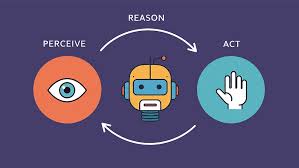
Beyond Predictive Models: The Rise of Agentic AI Agentic AI represents a fundamental shift from passive language models to dynamic systems capable of perception, reasoning, and action across digital and physical environments. Unlike traditional AI that merely predicts text, agentic architectures interact with the world, learn from feedback, and coordinate multiple specialized agents to solve complex problems. This evolution is built on three core principles: Core Principles of Agentic AI 1. Causality & Adaptive Decision-Making Traditional AI systems rely on statistical patterns, often producing plausible but incorrect responses. Agentic AI models cause-and-effect relationships, enabling iterative refinement when faced with unexpected outcomes. Example Applications: 2. Multimodal World Interaction Modern agentic systems integrate text, vision, and sensor data to interact with complex environments. Real-World Implementations: 3. Multi-Agent Collaboration Next-generation frameworks deploy specialized sub-agents that work in parallel rather than relying on single monolithic models. Implementation Examples: Key Components of Agentic Systems 1. Modular Skill Architectures Modern platforms enable: Use Case Scenario:A business intelligence agent that pulls real-time market data, analyzes trends, and generates reports while maintaining data governance standards 2. Multi-Agent Orchestration Advanced frameworks provide: Practical Application:Software development environments where coding, debugging, and security validation occur simultaneously through coordinated AI agents 3. Visual Environment Interaction Cutting-edge solutions bridge the gap between AI and graphical interfaces by: Implementation Example:Intelligent process automation that navigates legacy systems and modern applications without manual scripting Advanced Implementation Patterns 1. Knowledge-Enhanced Agents Example Implementation:Customer service systems that access order history, product details, and support documentation before responding 2. Human Oversight Integration Use Case:Medical diagnostic support that flags uncertain cases for professional review 3. Persistent Context Management Application Example:Project management assistants that track progress, dependencies, and timelines over weeks or months Industry Applications Sector Agentic AI Solutions Software Development Automated testing, debugging, and deployment pipelines Healthcare Integrated diagnostic systems combining multiple data sources Education Adaptive learning systems with personalized tutoring Financial Services Real-time fraud detection and risk analysis Manufacturing Dynamic process optimization and quality control Current Challenges & Research Directions Getting Started with Agentic AI For organizations beginning their agentic AI journey: The Path Forward Agentic AI represents a fundamental evolution from conversational systems to active, adaptive problem-solvers. By combining causal reasoning, specialized collaboration, and real-world interaction, these systems are moving us closer to truly intelligent automation. The future belongs to AI systems that don’t just process information – but perceive, decide, and act in dynamic environments. Organizations that embrace this paradigm today will be positioned to lead in the AI-powered economy of tomorrow. Like Related Posts Who is Salesforce? Who is Salesforce? Here is their story in their own words. From our inception, we’ve proudly embraced the identity of Read more Salesforce Unites Einstein Analytics with Financial CRM Salesforce has unveiled a comprehensive analytics solution tailored for wealth managers, home office professionals, and retail bankers, merging its Financial Read more AI-Driven Propensity Scores AI plays a crucial role in propensity score estimation as it can discern underlying patterns between treatments and confounding variables Read more Tectonic’s Successful Salesforce Track Record Salesforce Technology Services Integrator – Tectonic has successfully delivered Salesforce in a variety of industries including Public Sector, Hospitality, Manufacturing, Read more
Read More
Does Salesforce Have Artificial Intelligence?

AI Goes Mainstream

AI Goes Mainstream: How Small Businesses Are Harnessing Autonomous Agents for Growth Artificial intelligence is no longer just for big corporations. As generative AI tools have become more accessible, small and medium-sized businesses (SMBs) are rapidly adopting AI—with 75% now investing in AI solutions, according to recent data. High-growth SMBs are nearly twice as likely to embrace AI than those struggling to stay afloat. The shift from generative AI to agentic AI—where AI systems autonomously make decisions and take action—is unlocking even greater potential for SMBs. “We’re entering a new era of productivity that will transform businesses of all sizes, especially SMBs,” says Adam Evans, EVP & GM of Salesforce AI, who leads Agentforce, a platform that embeds AI agents into business workflows. “With autonomous AI, small teams can scale like never before.” A serial entrepreneur who sold two AI startups to Salesforce, Evans understands the challenges SMBs face. “Small businesses are always stretched thin. Agentforce gives them a 24/7 digital workforce across sales, service, and marketing—unlocking unlimited capacity.” Here’s how forward-thinking SMBs are using AI to drive growth: 1. Automated Marketing at Scale Many SMBs have tiny (or even one-person) marketing teams. AI-powered agents can:✅ Generate campaign briefs in seconds✅ Identify high-value audience segments✅ Create personalized content and customer journeys✅ Optimize campaigns in real time based on performance “Agentforce doesn’t just set up campaigns—it continuously refines them, ensuring maximum impact,” says Evans. 2. Hyper-Personalized Sales Outreach Generic sales emails don’t cut it anymore. AI agents can now craft bespoke outreach by:📊 Pulling CRM data on past interactions🏢 Analyzing prospect company profiles📑 Applying a business’s best sales playbooks “The AI synthesizes all this to write emails tailored to each lead’s role, industry, and interests,” Evans explains. 3. AI-Powered Shopping Assistants Imagine an AI personal shopper that:🛍️ Guides customers to the perfect product💬 Answers questions via chat (on websites, WhatsApp, etc.)🤝 Upsells and cross-sells intelligently “Agentforce acts as a 24/7 sales rep, helping convert browsers into buyers while freeing up human teams for high-touch relationships,” says Evans. The Bottom Line With AI handling repetitive tasks, SMBs can:✔ Compete with larger players despite smaller teams✔ Deliver enterprise-grade personalization✔ Turn data into actionable insights instantly “The businesses that thrive will be those that deploy AI agents to handle routine work while humans focus on strategy and creativity,” Evans predicts. “This isn’t the future—it’s happening right now.” For SMBs, the message is clear: AI adoption is no longer optional. It’s the key to staying relevant, efficient, and competitive. Like Related Posts Who is Salesforce? Who is Salesforce? Here is their story in their own words. From our inception, we’ve proudly embraced the identity of Read more Salesforce Marketing Cloud Transactional Emails Salesforce Marketing Cloud Transactional Emails are immediate, automated, non-promotional messages crucial to business operations and customer satisfaction, such as order Read more Salesforce Unites Einstein Analytics with Financial CRM Salesforce has unveiled a comprehensive analytics solution tailored for wealth managers, home office professionals, and retail bankers, merging its Financial Read more AI-Driven Propensity Scores AI plays a crucial role in propensity score estimation as it can discern underlying patterns between treatments and confounding variables Read more

Read More
gettectonic.com