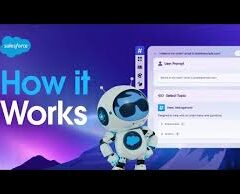
The “Agentforce One” solution is a rebrand and expansion of Einstein One, which bundles tools for sales and service teams into a single package.
From July, Sales and Service Cloud customers will get unlimited access to Agentforce One for a single per-user, per-month price, as per Patterson.
With this release, Salesforce will likely hope to serve up starter Agentforce use cases that inspire adoption and build confidence in the platform for more advanced, custom experimentation.
Marketing Cloud Next drops in July 2025. This is not a rebrand but an advance of Marketing Cloud on core ripe with agentic marketing, actionable data, cross-departmental workflows and more.
The Constant Evolution of Salesforce
Salesforce has built its reputation on continuous innovation, reflected in its frequent product rebrands and strategic naming changes. From its own corporate identity shift (dropping “.com” in 2022) to major platform overhauls like the transition from Einstein to Agentforce, these changes signal important strategic directions for the CRM giant.
For professionals building on the platform or leading digital transformation initiatives, understanding these rebrands is critical for:
- Effective cross-team communication (avoiding confusion between legacy and current names)
- Strategic tool selection (matching solutions to business needs)
- Future-proofing implementations (aligning with Salesforce’s roadmap)
- Optimizing CI/CD pipelines (adapting to metadata changes)
Why Rebrands Matter More Than You Think
Salesforce’s naming conventions often reflect fundamental shifts in capability and strategy:
- AI Revolution: The Einstein-to-Agentforce transition marked Salesforce’s pivot to autonomous AI agents
- Data Unification: The evolution from CDP to Genie to Data Cloud signaled real-time data ambitions
- Product Consolidation: Marketing Cloud’s absorption of Pardot, ExactTarget and others created unified solutions
These changes frequently outpace documentation and community adoption, creating transitional periods where multiple names coexist. For example:
- Many still refer to “Pardot” rather than “Marketing Cloud Account Engagement”
- “Einstein Analytics” persists in conversations despite the Tableau CRM rebrand
- Metadata prefixes (like SBQQ for CPQ) often retain legacy naming long after product rebrands
Comprehensive Rebrand Tracker: What Changed and Why
Marketing Suite Evolution
| Legacy Name | Current Brand | Strategic Rationale |
|---|---|---|
| Pardot | Marketing Cloud Account Engagement | Unified marketing taxonomy |
| ExactTarget | Marketing Cloud Engagement | Platform consolidation |
| Evergage | Marketing Cloud Personalization | Feature alignment |
| Datorama | Marketing Cloud Intelligence | Analytics integration |
Sales Transformation
| Legacy Name | Current Brand | Strategic Rationale |
|---|---|---|
| Steelbrick | Revenue Cloud (from CPQ) | End-to-end revenue focus |
| High Velocity Sales | Sales Engagement | Broader application |
| MyTrailhead | Sales Enablement | Clearer value prop |
Service & Field Operations
| Legacy Name | Current Brand | Strategic Rationale |
|---|---|---|
| Field Service Lightning | Salesforce Field Service | Simplified branding |
| Live Agent | Digital Engagement (Chat) | Omnichannel approach |
Commerce Cloud Journey
- Demandware → B2C Commerce Cloud
- CloudCraze → B2B Commerce Cloud
Experience Cloud (Formerly Community Cloud)
Key changes:
- Lightning Community Builder → Experience Builder
- My Communities → My Experiences
- Community Templates → Experience Templates
Analytics Evolution
| Legacy Name | Current Brand | Strategic Rationale |
|---|---|---|
| Einstein Analytics | Tableau CRM | Brand synergy |
| Wave Analytics | CRM Analytics | Platform unification |
AI’s Transformational Rebrand
The most significant recent shift:
- Einstein Platform → Agentforce
- Einstein GPT → Agentforce AI
- New additions: Agentforce 2DX (2025) with proactive agents
Data Platform Progression
- Customer 360 Audiences → Data Cloud
- Salesforce Genie → Absorbed into Data Cloud (2023)
Strategic Insights Behind the Changes
- From Features to Solutions: Rebrands increasingly emphasize business outcomes rather than technical capabilities
- Acquisition Integration: Most rebrands follow acquisitions (Steelbrick→CPQ, Vlocity→Industries)
- UX Alignment: “Lightning” naming convention phased out for clearer terminology
- AI-Centric Future: The Agentforce rebrand positions AI as the new platform foundation
Practical Implications for Teams
- Metadata Awareness: Many legacy prefixes remain (SBQQ, c__) despite product rebrands
- Documentation Challenges: Resources may reference multiple naming conventions
- Training Considerations: User adoption requires clear communication about changes
- Roadmap Alignment: Rebrands often precede major functional enhancements
Staying Ahead of the Curve
To navigate Salesforce’s evolving landscape:
- Monitor Official Channels: Salesforce Releases and Trailblazer Community
- Leverage Metadata Inspector: Identify legacy components needing updates
- Participate in Pilot Programs: Gain early insight into upcoming changes
- Follow Ecosystem Thought Leaders: Podcasts and blogs often decode rebrand implications
The platform’s continuous evolution presents both challenges and opportunities. By understanding the rationale behind these changes, teams can make more strategic decisions and future-proof their Salesforce investments.
Content updated July 2025.

Who is Salesforce? Here is their story in their own words. From our inception, we've proudly embraced the identity of Read more
Salesforce Marketing Cloud Transactional Emails are immediate, automated, non-promotional messages crucial to business operations and customer satisfaction, such as order Read more

Salesforce has unveiled a comprehensive analytics solution tailored for wealth managers, home office professionals, and retail bankers, merging its Financial Read more
AI plays a crucial role in propensity score estimation as it can discern underlying patterns between treatments and confounding variables Read more