

Artificial Intelligence Archives - gettectonic.com - Page 5
Unlocking the Future of AI with Phidata

Unlocking the Future of AI with Phidata

Unlocking the Future of AI with Phidata: Build Smarter, Faster, and Better In a world where artificial intelligence is at the core of innovation, developing intelligent systems that can understand, reason, and act is no longer a luxury—it’s a necessity. Yet, creating these systems from the ground up can feel daunting, even for experienced developers. Enter Phidata, a revolutionary platform that simplifies the process of building intelligent multi-modal agents and workflows. Phidata isn’t just a framework—it’s a transformative toolkit for crafting AI systems that think critically, collaborate effectively, and solve complex problems. Whether you’re a developer, data scientist, or AI enthusiast, Phidata empowers you to create agents with memory, knowledge, and advanced reasoning capabilities, all while seamlessly integrating cutting-edge tools. Here’s your guide to this groundbreaking platform. Why Phidata Stands Out Phidata reimagines how developers design and deploy AI agents by blending simplicity with robust functionality. Here’s what makes it a game-changer: Elegantly Simple Development Phidata’s intuitive design enables you to create powerful agents with minimal code. Clean, concise, and efficient, it’s as simple as writing a “Hello World!” script to set up an agent capable of performing tasks like web searches or data analysis. Unmatched Flexibility From integrating diverse tools to customizing agent instructions, Phidata equips your AI to tackle complex, real-world challenges effortlessly. Whether you’re building agents for financial forecasting, content creation, or automated research, Phidata has you covered. Multi-Modal Intelligence Phidata agents can seamlessly interact with multiple data types, including text, images, audio, and video. This multi-modal capability ensures adaptability across industries and use cases, from visual data analysis to language translation. Collaborative Multi-Agent Workflows Why settle for a single-agent approach when you can create teams of intelligent agents? Phidata enables collaborative multi-agent workflows, where agents work together to achieve shared objectives—like a team of digital coworkers, each bringing their unique expertise to the table. Intuitive User Interface Phidata’s sleek, user-friendly interface makes interacting with your agents effortless. Say goodbye to frustrating debugging and focus on what matters: building innovative solutions. Built-In Reasoning and Knowledge (RAG) Phidata integrates structured reasoning and knowledge retrieval directly into its framework. This ensures your agents deliver organized, insightful responses tailored to your needs—whether for decision-making or customer engagement. Real-Time Monitoring and Debugging Track your agents’ performance with Phidata’s built-in monitoring and debugging tools. Fine-tune their behavior, optimize workflows, and ensure peak performance at all times. Transform Possibilities Into Reality Phidata opens the door to limitless possibilities, empowering you to: Whether you’re automating workflows, analyzing data, or designing innovative applications, Phidata redefines what’s possible with AI. Take the leap into the future of intelligent systems and start building smarter today with Phidata. Like Related Posts Who is Salesforce? Who is Salesforce? Here is their story in their own words. From our inception, we’ve proudly embraced the identity of Read more Salesforce Marketing Cloud Transactional Emails Salesforce Marketing Cloud Transactional Emails are immediate, automated, non-promotional messages crucial to business operations and customer satisfaction, such as order Read more Salesforce Unites Einstein Analytics with Financial CRM Salesforce has unveiled a comprehensive analytics solution tailored for wealth managers, home office professionals, and retail bankers, merging its Financial Read more AI-Driven Propensity Scores AI plays a crucial role in propensity score estimation as it can discern underlying patterns between treatments and confounding variables Read more


Read More
copilots and agentic ai

Transforming Industries and Redefining Workflows

The Rise of Agentic AI: Transforming Industries and Redefining Workflows Artificial Intelligence (AI) is evolving faster than we anticipated. No longer limited to predicting outcomes or generating content, AI systems are now capable of handling complex tasks and making autonomous decisions. This new era—driven by Agentic AI—is set to redefine the workplace and transform industries. From Prediction to Autonomy: The Three Waves of AI To understand where we’re headed, it’s important to see how far AI has come. Arun Parameswaran, SVP & MD of Salesforce India, describes it as a fundamental shift: “What has changed with agents is their ability to handle complex reasoning… and, most importantly, to take action.” Unlike previous AI models that recommend or predict, Agentic AI executes tasks, reshaping customer experiences and operational workflows. Agentic AI in Action: Industry Applications At a recent Mint x Salesforce India deep-dive event on AI, industry leaders explored how Agentic AI is driving transformation across sectors. The panel featured: Here’s how Agentic AI is already making an impact: 1. Revolutionizing Customer Support Traditional chatbots have limited capabilities. Agentic AI, however, understands urgency and context. 2. Accelerating Business Decisions In finance and supply chain management, AI agents analyze vast amounts of data and execute decisions autonomously. 3. Transforming Travel & Aviation Airlines are leveraging AI to optimize booking systems, reduce costs, and enhance efficiency. 4. Automating Wealth Management AI agents in financial services monitor markets, adjust strategies, and offer personalized investment recommendations in real time. The Risks & Responsibilities of Agentic AI With great autonomy comes great responsibility. The potential of Agentic AI is vast—but so are the challenges: The Future of Work: AI as a Partner, Not a Replacement Despite concerns about job displacement, AI is more likely to reshape rather than replace roles. What Are AI Agents? AI agents go beyond traditional models like ChatGPT or Gemini. They are proactive, self-learning systems that: They fall into two categories: “AI agents don’t just wait for commands; they anticipate needs and act,” says Dr. Tomer Simon, Chief Scientist at Microsoft Research Israel. AI Agents in the Workplace: A Shift in Roles AI agents streamline processes, but they don’t eliminate the need for human oversight. Salesforce’s Agentforce is a prime example: “Companies need to integrate AI, not fear it. Those who fail to adopt AI tools risk drowning in tasks AI can handle,” warns Dr. Omri Allouche, Chief Scientist at Gong. The Road Ahead: AI-Driven Business Growth Agentic AI is not about replacing people—it’s about empowering them. As organizations re-evaluate workflows and embrace AI collaboration, the companies that act early will gain a competitive edge in efficiency and innovation. Final Thought The AI revolution is here, and Agentic AI is at its forefront. The key question isn’t whether AI will transform industries—it’s how organizations will adapt and thrive in this new era. Like Related Posts Who is Salesforce? Who is Salesforce? Here is their story in their own words. From our inception, we’ve proudly embraced the identity of Read more Salesforce Marketing Cloud Transactional Emails Salesforce Marketing Cloud Transactional Emails are immediate, automated, non-promotional messages crucial to business operations and customer satisfaction, such as order Read more Salesforce Unites Einstein Analytics with Financial CRM Salesforce has unveiled a comprehensive analytics solution tailored for wealth managers, home office professionals, and retail bankers, merging its Financial Read more AI-Driven Propensity Scores AI plays a crucial role in propensity score estimation as it can discern underlying patterns between treatments and confounding variables Read more

Read More
salesforce agentforce ai powered agentic agents

AI for Membership Sites

AI for Membership Sites: How Artificial Intelligence is Driving New Revenue for Member-Only Platforms Membership sites are entering a transformative era where “AI is the New UI.” Two recent developments illustrate this trend and underscore how artificial intelligence is redefining user interaction and unlocking new revenue streams. The first insight comes from Dr. John Sviokla’s Forbes article, “AI Is The New UI: 3 Steps Business Leaders Must Take Now”. Sviokla emphasizes a fundamental shift: “For decades, we’ve interacted with technology through screens, buttons, and menus. But a fundamental shift is underway — artificial intelligence is becoming the new user interface.” The second example involves a large members-only association in the airline industry. This organization has implemented custom AI chatbots within its member portal to address a growing challenge: members no longer have time to sift through lengthy PDFs or dense slide decks. Instead, they crave fast, ChatGPT-style access to information—and they’re willing to pay for it. A Paradigm Shift in User Interfaces Historically, intuitive gestures and responsive designs revolutionized how people interacted with technology. Today, AI is driving the next evolution, moving interfaces from static designs to dynamic, user-centric experiences. Dr. Sviokla notes: “This transformation isn’t just about chatbots; it’s about AI becoming the primary means through which we interact with systems, data, and machines. For business leaders, this shift represents both an opportunity and an imperative to reimagine how their organizations engage with customers and operate internally.” AI-powered interfaces offer users immediate, conversational, and personalized access to information, bypassing the traditional maze of links and menus. For membership sites, this evolution is particularly significant, as it transforms how members interact with content and services. The “ChatGPT Effect” on Membership Sites The rise of ChatGPT has shifted consumer expectations for digital interactions. Websites are now adopting chatbots and virtual assistants that provide tailored experiences. For membership sites, this technology enables: For example, organizations are deploying AI assistants on their websites to handle various functions, such as sales inquiries, product support, and pricing guidance. These tools enhance member satisfaction and provide opportunities for new revenue streams. AI as a Revenue Generator Membership sites leveraging AI are seeing measurable financial benefits. Consider a crypto token regulation platform that integrated custom AI chatbots. These tools allow members to interact with proprietary data in real time, transforming static content into a dynamic, accessible resource. This shift has significantly increased the platform’s value proposition, attracting and retaining members willing to pay a premium for enhanced access. Starting Small: A Scalable Approach to AI Implementing AI doesn’t require a complete system overhaul. Membership sites can begin with a simple, custom chatbot built using existing content, such as publicly available documents or FAQs. By monitoring member interactions and gathering feedback, organizations can gradually expand their AI capabilities. The key is to focus on enhancing the member experience. Missteps often occur when organizations adopt overly complex solutions that fail to address real user needs. A phased approach ensures AI integration adds value and aligns with member expectations. The Future of AI in Membership Sites The potential for AI in membership sites extends far beyond chatbots. Future applications include: For example, the Martin Trust Center for MIT Entrepreneurship recently launched an AI-powered tool specifically designed to serve its members. These types of innovations highlight how AI can enhance the member experience while driving operational and financial success. Reimagining Member Engagement Membership sites that embrace AI as a foundational component of their user experience are positioning themselves for long-term success. By focusing on solving real problems and delivering meaningful interactions, organizations can strengthen member relationships and drive sustainable growth. For membership sites, the question is no longer whether to adopt AI but how quickly they can integrate it. AI represents an opportunity—and an imperative—to transform the way members interact with content, data, and services. The sites that act now will set the standard for the future of member-driven platforms. Like Related Posts Who is Salesforce? Who is Salesforce? Here is their story in their own words. From our inception, we’ve proudly embraced the identity of Read more Salesforce Unites Einstein Analytics with Financial CRM Salesforce has unveiled a comprehensive analytics solution tailored for wealth managers, home office professionals, and retail bankers, merging its Financial Read more AI-Driven Propensity Scores AI plays a crucial role in propensity score estimation as it can discern underlying patterns between treatments and confounding variables Read more Tectonic’s Successful Salesforce Track Record Salesforce Technology Services Integrator – Tectonic has successfully delivered Salesforce in a variety of industries including Public Sector, Hospitality, Manufacturing, Read more

Read More
Opportunity Scoring with Einstein

Agentforce Versus Einstein

Salesforce offers a variety of tools and platforms to help businesses manage customer relationships, automate processes, and leverage AI for better decision-making. Two of its prominent offerings in the customer service and AI space are Service Cloud (Agent Console) and Einstein AI. Here’s a comparison of Agent Console (part of Service Cloud) and Einstein: 1. Salesforce Agent Console (Service Cloud) The Agent Console is a core component of Salesforce’s Service Cloud, which is designed to help customer service agents manage cases, interactions, and customer data efficiently. Key Features: Use Case: The Agent Console is ideal for customer service teams that need a centralized platform to manage customer interactions and resolve issues quickly. 2. Salesforce Einstein Einstein is Salesforce’s AI platform that integrates artificial intelligence across Salesforce products, including Service Cloud, Sales Cloud, Marketing Cloud, and more. It provides predictive analytics, automation, and personalized recommendations. Key Features: Use Case: Einstein is ideal for organizations looking to leverage AI to enhance customer service, improve decision-making, and automate routine tasks. Agent Console vs. Einstein: Key Differences Feature/Aspect Agent Console (Service Cloud) Einstein AI Purpose Centralized platform for managing customer service operations. AI-powered insights, automation, and personalization. Core Functionality Case management, omnichannel support, and agent productivity tools. Predictive analytics, chatbots, and AI-driven recommendations. Automation Workflow automation for case management and task routing. AI bots and automated responses for customer inquiries. Insights Basic reporting and analytics for agent performance. Advanced predictive analytics and AI-driven insights. Integration Part of Service Cloud, focused on customer service. Integrated across Salesforce products (Sales, Service, Marketing, etc.). User Interaction Primarily used by customer service agents. Used by agents, managers, and customers (via bots). How They Work Together The Agent Console and Einstein are not mutually exclusive; they complement each other. For example: Which One Should You Use? In many cases, businesses use both together to create a seamless, AI-enhanced customer service experience. Like Related Posts Who is Salesforce? Who is Salesforce? Here is their story in their own words. From our inception, we’ve proudly embraced the identity of Read more Salesforce Marketing Cloud Transactional Emails Salesforce Marketing Cloud Transactional Emails are immediate, automated, non-promotional messages crucial to business operations and customer satisfaction, such as order Read more Salesforce Unites Einstein Analytics with Financial CRM Salesforce has unveiled a comprehensive analytics solution tailored for wealth managers, home office professionals, and retail bankers, merging its Financial Read more AI-Driven Propensity Scores AI plays a crucial role in propensity score estimation as it can discern underlying patterns between treatments and confounding variables Read more

Read More

Salesforce and AWS-Agentic Enterprise

Salesforce and AWS: Driving the Future of the Agentic Enterprise As AI-powered agents redefine the way businesses operate, strategic partnerships are playing a pivotal role in harnessing the power of data and artificial intelligence. Salesforce and AWS, two industry leaders, have taken significant steps toward building a smarter, agentic enterprise through their expanded collaboration. One year into this strategic partnership, their joint efforts are delivering transformative AI and data solutions, helping customers like Buyers Edge Platform unlock new efficiencies and capabilities. A Partnership Fueling Agentic AI Salesforce and AWS are aligning their AI and data initiatives to pave the way for advanced agentic systems—autonomous AI agents designed to enhance business operations and customer experiences. Among their notable achievements over the past year are: These innovations are creating an ecosystem that supports the delivery of agentic AI, enabling businesses to streamline operations and tap into new value from their data. “By integrating data and AI capabilities across our platforms, Salesforce and AWS are building a strong foundation for the future of agentic systems,” said Brian Landsman, EVP of Global Business Development and Technology Partnerships at Salesforce. “With a majority of large companies planning to implement agents by 2027, organizations need trusted partners to help them achieve their vision of a smarter enterprise.” Making AI More Accessible Salesforce is simplifying access to AI technology through the AWS Marketplace, offering customers an integrated solution that includes Agentforce—the agentic layer of the Salesforce platform. Agentforce enables businesses to deploy autonomous AI agents across various operations, streamlining workflows and delivering measurable results. Available in 23 countries, Salesforce’s presence on AWS Marketplace offers customers key advantages, including: By removing barriers to adoption, Salesforce and AWS empower companies to focus on leveraging technology for growth rather than navigating complex procurement systems. A New Era of Enterprise Efficiency As businesses increasingly rely on data and AI to remain competitive, the Salesforce-AWS partnership is setting the stage for enterprises to achieve more with agentic systems. These systems allow companies to execute complex tasks with unprecedented efficiency, maximizing ROI on technology investments. “Our partnership with Salesforce empowers mutual customers to realize the full potential of their data and AI investments,” said Chris Grusz, Managing Director of Technology Partnerships at AWS. “Together, we’re delivering immediate, actionable insights with agentic AI, enabling organizations to automate strategically and unlock more value across their operations.” Looking Ahead By seamlessly integrating data and AI capabilities, Salesforce and AWS are not just building technology solutions—they’re reshaping how enterprises operate and thrive in the digital age. As agentic AI becomes an essential part of business strategy, this partnership provides a blueprint for leveraging technology to drive smarter, more agile, and more effective enterprises. Like Related Posts Who is Salesforce? Who is Salesforce? Here is their story in their own words. From our inception, we’ve proudly embraced the identity of Read more Salesforce Marketing Cloud Transactional Emails Salesforce Marketing Cloud Transactional Emails are immediate, automated, non-promotional messages crucial to business operations and customer satisfaction, such as order Read more Salesforce Unites Einstein Analytics with Financial CRM Salesforce has unveiled a comprehensive analytics solution tailored for wealth managers, home office professionals, and retail bankers, merging its Financial Read more AI-Driven Propensity Scores AI plays a crucial role in propensity score estimation as it can discern underlying patterns between treatments and confounding variables Read more

Read More
Unlocking the Future of AI with Phidata

Data Masking Explained

What is Data Masking? Data masking is a crucial data security technique that replaces sensitive information with realistic yet fictitious values, ensuring the original data remains protected from unauthorized access. This method secures sensitive data—such as personally identifiable information (PII), financial records, or proprietary business data—while still allowing it to be used for testing, development, or analytics. An effective data masking solution should include these core features: Data masking plays a vital role in data governance, helping organizations control access to sensitive information while balancing security and usability. Why Does Data Masking Matter for AI and Agent Testing? As artificial intelligence continues to drive business transformation, it relies heavily on data to train models, generate insights, and automate workflows. However, using real customer and enterprise data in AI development poses significant privacy risks. Data masking mitigates these risks by enabling AI systems to train on realistic yet anonymized datasets, keeping sensitive production data secure. Protecting Sensitive Data Testing AI-powered Salesforce applications often requires realistic datasets, including PII, financial information, and confidential business records. Using unmasked data in non-production environments increases exposure risks, such as insider threats, misconfigurations, or accidental leaks. By replacing sensitive data with masked equivalents, organizations can maintain privacy while enabling effective development and testing. Ensuring Compliance with Data Protection Regulations Regulatory frameworks like GDPR, CCPA, and HIPAA impose strict requirements for handling sensitive data—even in testing environments. GDPR, for example, mandates pseudonymization or anonymization to protect privacy. Failure to implement proper data masking strategies can result in severe fines and reputational damage. Masking ensures compliance while maintaining a secure foundation for Salesforce testing. Enhancing Test Accuracy AI-driven Salesforce applications require realistic testing scenarios to ensure functionality and accuracy. Masked data preserves the structure and variability of original CRM datasets, allowing developers to simulate real-world interactions without exposing sensitive information. This approach improves test precision and accelerates the deployment of high-quality applications. Reducing Bias and Promoting Fairness Data masking also supports fairness in AI models by removing personally identifiable details that could unintentionally introduce bias. Anonymizing sensitive attributes helps organizations build ethical, unbiased AI systems that support diverse and equitable outcomes. Key Considerations for Implementing Data Masking To effectively implement data masking in Salesforce environments, organizations should consider the following: Define Scope and Objectives Before masking data, determine what needs protection—whether it’s customer records, financial transactions, or proprietary insights. Align masking strategies with business goals, such as development, testing, or compliance, to ensure maximum effectiveness. Select the Right Masking Techniques Different masking methods serve distinct purposes: By integrating data masking into privacy-first strategies, organizations not only ensure compliance but also foster secure innovation and long-term digital trust. A Privacy-First Approach to AI Development As privacy becomes a defining factor in AI and trust-driven application development, data masking is an essential safeguard for security, compliance, and ethical innovation. For organizations leveraging Salesforce AI solutions like Agentforce, masking enables the safe use of realistic but anonymized datasets, ensuring privacy while accelerating AI-driven transformation. Start with Salesforce’s built-in data masking tools to secure sensitive information and empower secure, compliant, and forward-thinking AI development. Like Related Posts Who is Salesforce? Who is Salesforce? Here is their story in their own words. From our inception, we’ve proudly embraced the identity of Read more Salesforce Marketing Cloud Transactional Emails Salesforce Marketing Cloud Transactional Emails are immediate, automated, non-promotional messages crucial to business operations and customer satisfaction, such as order Read more Salesforce Unites Einstein Analytics with Financial CRM Salesforce has unveiled a comprehensive analytics solution tailored for wealth managers, home office professionals, and retail bankers, merging its Financial Read more AI-Driven Propensity Scores AI plays a crucial role in propensity score estimation as it can discern underlying patterns between treatments and confounding variables Read more

Read More
From Chatbots to Agentic AI

From Chatbots to Agentic AI

The transition from LLM-powered chatbots to agentic systems, or agentic AI, can be summed up by the old saying: “Less talk, more action.” Keeping up with advancements in AI can be overwhelming, especially when managing an existing business. The speed and complexity of innovation can make it feel like the first day of school all over again. This insight offers a comprehensive look at AI agents, their components, and key characteristics. The introductory section breaks down the elements that form the term “AI agent,” providing a clear definition. After establishing this foundation, we explore the evolution of LLM applications, particularly the shift from traditional chatbots to agentic systems. The goal is to understand why AI agents are becoming increasingly vital in AI development and how they differ from LLM-powered chatbots. By the end of this guide, you will have a deeper understanding of AI agents, their potential applications, and their impact on organizational workflows. For those of you with a technical background who prefer to get hands-on, click here for the best repository for AI developers and builders. What is an AI Agent? Components of AI Agents To understand the term “AI agent,” we need to examine its two main components. First, let’s consider artificial intelligence, or AI. Artificial Intelligence (AI) refers to non-biological intelligence that mimics human cognition to perform tasks traditionally requiring human intellect. Through machine learning and deep learning techniques, algorithms—especially neural networks—learn patterns from data. AI systems are used for tasks such as detection, classification, and prediction, with content generation becoming a prominent domain due to transformer-based models. These systems can match or exceed human performance in specific scenarios. The second component is “agent,” a term commonly used in both technology and human contexts. In computer science, an agent refers to a software entity with environmental awareness, able to perceive and act within its surroundings. A computational agent typically has the ability to: In human contexts, an agent is someone who acts on behalf of another person or organization, making decisions, gathering information, and facilitating interactions. They often play intermediary roles in transactions and decision-making. To define an AI agent, we combine these two perspectives: it is a computational entity with environmental awareness, capable of perceiving inputs, acting with tools, and processing information using foundation models backed by both long-term and short-term memory. Key Components and Characteristics of AI Agents From LLMs to AI Agents Now, let’s take a step back and understand how we arrived at the concept of AI agents, particularly by looking at how LLM applications have evolved. The shift from traditional chatbots to LLM-powered applications has been rapid and transformative. Form Factor Evolution of LLM Applications Traditional Chatbots to LLM-Powered Chatbots Traditional chatbots, which existed before generative AI, were simpler and relied on heuristic responses: “If this, then that.” They followed predefined rules and decision trees to generate responses. These systems had limited interactivity, with the fallback option of “Speak to a human” for complex scenarios. LLM-Powered Chatbots The release of OpenAI’s ChatGPT on November 30, 2022, marked the introduction of LLM-powered chatbots, fundamentally changing the game. These chatbots, like ChatGPT, were built on GPT-3.5, a large language model trained on massive datasets. Unlike traditional chatbots, LLM-powered systems can generate human-like responses, offering a much more flexible and intelligent interaction. However, challenges remained. LLM-powered chatbots struggled with personalization and consistency, often generating plausible but incorrect information—a phenomenon known as “hallucination.” This led to efforts in grounding LLM responses through techniques like retrieval-augmented generation (RAG). RAG Chatbots RAG is a method that combines data retrieval with LLM generation, allowing systems to access real-time or proprietary data, improving accuracy and relevance. This hybrid approach addresses the hallucination problem, ensuring more reliable outputs. LLM-Powered Chatbots to AI Agents As LLMs expanded, their abilities grew more sophisticated, incorporating advanced reasoning, multi-step planning, and the use of external tools (function calling). Tool use refers to an LLM’s ability to invoke specific functions, enabling it to perform more complex tasks. Tool-Augmented LLMs and AI Agents As LLMs became tool-augmented, the emergence of AI agents followed. These agents integrate reasoning, planning, and tool use into an autonomous, goal-driven system that can operate iteratively within a dynamic environment. Unlike traditional chatbot interfaces, AI agents leverage a broader set of tools to interact with various systems and accomplish tasks. Agentic Systems Agentic systems—computational architectures that include AI agents—embody these advanced capabilities. They can autonomously interact with systems, make decisions, and adapt to feedback, forming the foundation for more complex AI applications. Components of an AI Agent AI agents consist of several key components: Characteristics of AI Agents AI agents are defined by the following traits: Conclusion AI agents represent a significant leap from traditional chatbots, offering greater autonomy, complexity, and interactivity. However, the term “AI agent” remains fluid, with no universal industry standard. Instead, it exists on a continuum, with varying degrees of autonomy, adaptability, and proactive behavior defining agentic systems. Value and Impact of AI Agents The key benefits of AI agents lie in their ability to automate manual processes, reduce decision-making burdens, and enhance workflows in enterprise environments. By “agentifying” repetitive tasks, AI agents offer substantial productivity gains and the potential to transform how businesses operate. As AI agents evolve, their applications will only expand, driving new efficiencies and enabling organizations to leverage AI in increasingly sophisticated ways. Like Related Posts Who is Salesforce? Who is Salesforce? Here is their story in their own words. From our inception, we’ve proudly embraced the identity of Read more Salesforce Unites Einstein Analytics with Financial CRM Salesforce has unveiled a comprehensive analytics solution tailored for wealth managers, home office professionals, and retail bankers, merging its Financial Read more AI-Driven Propensity Scores AI plays a crucial role in propensity score estimation as it can discern underlying patterns between treatments and confounding variables Read more Tectonic’s Successful Salesforce Track Record Salesforce Technology Services Integrator – Tectonic has successfully delivered Salesforce in a variety of industries including Public Sector, Hospitality, Manufacturing, Read more

Read More
Salesforce AI Research Introduces BLIP-3-Video

Salesforce AI Research Introduces BLIP-3-Video

Salesforce AI Research Introduces BLIP-3-Video: A Groundbreaking Multimodal Model for Efficient Video Understanding Vision-language models (VLMs) are transforming artificial intelligence by merging visual and textual data, enabling advancements in video analysis, human-computer interaction, and multimedia applications. These tools empower systems to generate captions, answer questions, and support decision-making, driving innovation in industries like entertainment, healthcare, and autonomous systems. However, the exponential growth in video-based tasks has created a demand for more efficient processing solutions that can manage the vast amounts of visual and temporal data inherent in videos. The Challenge of Scaling Video Understanding Existing video-processing models face significant inefficiencies. Many rely on processing each frame individually, creating thousands of visual tokens that demand extensive computational resources. This approach struggles with long or complex videos, where balancing computational efficiency and accurate temporal understanding becomes crucial. Attempts to address this issue, such as pooling techniques used by models like Video-ChatGPT and LLaVA-OneVision, have only partially succeeded, as they still produce thousands of tokens. Introducing BLIP-3-Video: A Breakthrough in Token Efficiency To tackle these challenges, Salesforce AI Research has developed BLIP-3-Video, a cutting-edge vision-language model optimized for video processing. The key innovation lies in its temporal encoder, which reduces visual tokens to just 16–32 tokens per video, significantly lowering computational requirements while maintaining strong performance. The temporal encoder employs a spatio-temporal attentional pooling mechanism, selectively extracting the most informative data from video frames. By consolidating spatial and temporal information into compact video-level tokens, BLIP-3-Video streamlines video processing without sacrificing accuracy. Efficient Architecture for Scalable Video Tasks BLIP-3-Video’s architecture integrates: This design ensures that the model efficiently captures essential temporal information while minimizing redundant data. Performance Highlights BLIP-3-Video demonstrates remarkable efficiency, achieving accuracy comparable to state-of-the-art models like Tarsier-34B while using a fraction of the tokens: For context, Tarsier-34B requires 4608 tokens for eight video frames, whereas BLIP-3-Video achieves similar results with only 32 tokens. On multiple-choice tasks, the model excelled: These results highlight BLIP-3-Video as one of the most token-efficient models in video understanding, offering top-tier performance while dramatically reducing computational costs. Advancing AI for Real-World Video Applications BLIP-3-Video addresses the critical challenge of token inefficiency, proving that complex video data can be processed effectively with far fewer resources. Developed by Salesforce AI Research, the model paves the way for scalable, real-time video processing across industries, including healthcare, autonomous systems, and entertainment. By combining efficiency with high performance, BLIP-3-Video sets a new standard for vision-language models, driving the practical application of AI in video-based systems. Like Related Posts Who is Salesforce? Who is Salesforce? Here is their story in their own words. From our inception, we’ve proudly embraced the identity of Read more Salesforce Marketing Cloud Transactional Emails Salesforce Marketing Cloud Transactional Emails are immediate, automated, non-promotional messages crucial to business operations and customer satisfaction, such as order Read more Salesforce Unites Einstein Analytics with Financial CRM Salesforce has unveiled a comprehensive analytics solution tailored for wealth managers, home office professionals, and retail bankers, merging its Financial Read more AI-Driven Propensity Scores AI plays a crucial role in propensity score estimation as it can discern underlying patterns between treatments and confounding variables Read more
Read More
AI Captivates the World

AI Captivates the World

In the late 1990s, a transformative moment unfolded that expanded the world to enquiring minds—the screeching of a dial-up modem, followed by a pixelated “Welcome” screen that connected users to a vast, invisible network spanning the globe. The internet revolution redefined how people interacted with information and one another, permanently reshaping digital communication. Fast forward to 2024, and a similar wave of innovation is underway. Artificial intelligence is captivating the world with its ability to understand, create, and process information. Massive datasets can now be uploaded to AI tools, which instantly distill complex insights—tasks that once took teams of analysts weeks to complete are now executed in seconds. Just as the internet linked people and information, AI is deepening connectivity across all aspects of life, from healthcare and finance to workplaces and homes. In this evolving digital divide, designers hold a critical role—not only in making AI usable but in ensuring it remains understandable, trustworthy, and human-centered. As Fei-Fei Li, Co-Director of Stanford’s Human-Centered AI Institute, states, “If we want machines to think, we need to teach them to see.” The traditional linear process of problem ideation, design, prototyping, and delivery is no longer sufficient for AI design. Instead, designers find themselves on an “AI design rollercoaster”—a dynamic cycle of constant iteration. One day, a seemingly impossible feature is prototyped, and the next, the entire approach pivots due to breakthroughs in large language model (LLM) capabilities. Many teams develop working prototypes before even defining their target audience. It is akin to painting a landscape from a moving train—compelling, challenging, and occasionally bewildering. However, this state of flux is where innovation thrives. Strategies for Designers: Understanding AI’s Capabilities and Limitations Designing for AI requires an understanding of its strengths and weaknesses. While designers do not need to become machine learning engineers, they must grasp AI fundamentals to communicate effectively with technical teams. For example, neural networks excel at recognizing patterns in unstructured data but often struggle with logical reasoning. Recognizing these limitations prevents the development of features that sound promising in theory but fail in practice. Strategies for Designers: Designing for Data Scalability Data is the lifeblood of AI systems, yet its quality and availability fluctuate over time. Designers must create interfaces that can adapt to changing data landscapes. For instance, an AI-powered personal finance app may initially rely on basic transaction data but later incorporate richer datasets for advanced investment recommendations. Interfaces should be modular and scalable, capable of accommodating evolving AI functionalities. Strategies for Designers: The Role of Prototyping in AI Design Static wireframes and basic mockups are insufficient for AI-driven products. AI prototypes must capture the responsive, dynamic nature of intelligent systems. Interactive prototypes offer stakeholders a tangible preview of AI’s potential, highlighting both opportunities and challenges early in the design process. Strategies for Designers: Developing AI Design Intuition To navigate AI design effectively, professionals must cultivate an “AI design sixth sense”—an intuitive understanding of what works well in AI-driven interactions. Immersing in AI experiences, exploring different tools, and analyzing emerging design patterns help build this expertise. Strategies for Designers: Pushing Boundaries in AI Design There are no established rulebooks for AI design—only a vast frontier waiting to be explored. The absence of rigid norms offers designers the freedom to experiment and push boundaries. Some of the most groundbreaking innovations stem from unconventional ideas once deemed impractical. Strategies for Designers: Strengthening Collaboration Between Design and Engineering In AI product design, the traditional “design then handoff” model is giving way to a more integrated approach. Designers and engineers increasingly work in tandem, refining AI experiences through continuous iteration. Some of the most effective design solutions emerge from close collaboration with technical teams. Strategies for Designers: The Next Frontier of Design As AI design continues to evolve, the parallels to the early days of the internet are striking. The excitement, potential, and magnitude of change are reminiscent of Web 1.0, yet amplified in scope. Looking ahead, the field must address profound questions: Will AI become indistinguishable from human intelligence? Will designers craft interfaces for AI-human hybrids yet to be imagined? Designers play an essential role in shaping this future—not as passive observers, but as architects of the next digital revolution. The experiences they create will define humanity’s interactions with artificial intelligence. This responsibility should inspire innovation, challenge conventions, and push the boundaries of what is possible. Call to Action Begin the AI design journey today. Choose an AI tool, explore its interface, and analyze its capabilities. Identify strengths, weaknesses, and opportunities for improvement. Share insights with fellow designers and contribute to the evolving conversation on AI design. The next breakthrough may arise from a single moment of curiosity. Like Related Posts Who is Salesforce? Who is Salesforce? Here is their story in their own words. From our inception, we’ve proudly embraced the identity of Read more Salesforce Unites Einstein Analytics with Financial CRM Salesforce has unveiled a comprehensive analytics solution tailored for wealth managers, home office professionals, and retail bankers, merging its Financial Read more AI-Driven Propensity Scores AI plays a crucial role in propensity score estimation as it can discern underlying patterns between treatments and confounding variables Read more Tectonic’s Successful Salesforce Track Record Salesforce Technology Services Integrator – Tectonic has successfully delivered Salesforce in a variety of industries including Public Sector, Hospitality, Manufacturing, Read more

Read More
ai

2024 The Year of Generative AI

Was 2024 the Year Generative AI Delivered? Here’s What Happened Industry experts hailed 2024 as the year generative AI would take center stage. Operational use cases were emerging, technology was simplifying access, and general artificial intelligence felt imminent. So, how much of that actually came true? Well… sort of. As the year wraps up, some predictions have hit their mark, while others — like general AI — remain firmly in development. Let’s break down the trends, insights from investor Tomasz Tunguz, and what’s ahead for 2025. 1. A World Without Reason Three years into our AI evolution, businesses are finding value, but not universally. Tomasz Tunguz categorizes AI’s current capabilities into: While prediction and search have gained traction, reasoning models still struggle. Why? Model accuracy. Tunguz notes that unless a model has repeatedly seen a specific pattern, it falters. For example, an AI generating an FP&A chart might succeed — but introduce a twist, like usage-based billing, and it’s lost. For now, copilots and modestly accurate search reign supreme. 2. Process Over Tooling A tool’s value lies in how well it fits into established processes. As data teams adopt AI, they’re realizing that production-ready AI demands robust processes, not just shiny tools. Take data quality — a critical pillar for AI success. Sampling a few dbt tests or point solutions won’t cut it anymore. Teams need comprehensive solutions that deliver immediate value. In 2025, expect a shift toward end-to-end platforms that simplify incident management, enhance data quality ownership, and enable domain-level solutions. The tools that integrate seamlessly and address these priorities will shape AI’s future. 3. AI: Cost Cutter, Not Revenue Generator For now, AI’s primary business value lies in cost reduction, not revenue generation. Tools like AI-driven SDRs can increase sales pipelines, but often at the cost of quality. Instead, companies are leveraging AI to cut costs in areas like labor. Examples include Klarna reducing two-thirds of its workforce and Microsoft boosting engineering productivity by 50-75%. Cost reduction works best in scenarios with repetitive tasks, hiring challenges, or labor shortages. Meanwhile, specialized services like EvenUp, which automates legal demand letters, show potential for revenue-focused AI use cases. 4. A Slower but Smarter Adoption Curve While 2023 saw a wave of experimentation with AI, 2024 marked a period of reflection. Early adopters have faced challenges with implementation, ROI, and rapidly changing tech. According to Tunguz, this “dress rehearsal” phase has informed organizations about what works and what doesn’t. Heading into 2025, expect a more calculated wave of AI adoption, with leaders focusing on tools that deliver measurable value — and faster. 5. Small Models for Big Gains In enterprise AI, small, fine-tuned models are gaining favor over massive, general-purpose ones. Why? Small models are cheaper to run and often outperform their larger counterparts when fine-tuned for specific tasks. For example, training an 8-billion-parameter model on 10,000 support tickets can yield better results than a general model trained on a broad corpus. Legal and cost challenges surrounding large proprietary models further push enterprises toward smaller, open-source solutions, especially in highly regulated industries. 6. Blurring Lines Between Analysts and Engineers The demand for data and AI solutions is driving a shift in responsibilities. AI-enabled pipelines are lowering barriers to entry, making self-serve data workflows more accessible. This trend could consolidate analytical and engineering roles, streamlining collaboration and boosting productivity in 2025. 7. Synthetic Data: A Necessary Stopgap With finite real-world training data, synthetic datasets are emerging as a stopgap solution. Tools like Tonic and Gretel create synthetic data for AI training, particularly in regulated industries. However, synthetic data has limits. Over time, relying too heavily on it could degrade model performance, akin to a diet lacking fresh nutrients. The challenge will be finding a balance between real and synthetic data as AI advances. 8. The Rise of the Unstructured Data Stack Unstructured data — long underutilized — is poised to become a cornerstone of enterprise AI. Only about half of unstructured data is analyzed today, but as AI adoption grows, this figure will rise. Organizations are exploring tools and strategies to harness unstructured data for training and analytics, unlocking its untapped potential. 2025 will likely see the emergence of a robust “unstructured data stack” designed to drive business value from this vast, underutilized resource. 9. Agentic AI: Not Ready for Prime Time While AI copilots have proven useful, multi-step AI agents still face significant challenges. Due to compounding accuracy issues (e.g., 90% accuracy over three steps drops to ~50%), these agents are not yet ready for production use. For now, agentic AI remains more of a conversation piece than a practical tool. 10. Data Pipelines Are Growing, But Quality Isn’t As enterprises scale their AI efforts, the number of data pipelines is exploding. Smaller, fine-tuned models are being deployed at scale, often requiring hundreds of millions of pipelines. However, this rapid growth introduces data quality risks. Without robust quality management practices, teams risk inconsistent outputs, bottlenecks, and missed opportunities. Looking Ahead to 2025 As AI evolves, enterprises will face growing pains, but the opportunities are undeniable. From streamlining processes to leveraging unstructured data, 2025 promises advancements that will redefine how organizations approach AI and data strategy. The real challenge? Turning potential into measurable, lasting impact. Like Related Posts Who is Salesforce? Who is Salesforce? Here is their story in their own words. From our inception, we’ve proudly embraced the identity of Read more Salesforce Unites Einstein Analytics with Financial CRM Salesforce has unveiled a comprehensive analytics solution tailored for wealth managers, home office professionals, and retail bankers, merging its Financial Read more AI-Driven Propensity Scores AI plays a crucial role in propensity score estimation as it can discern underlying patterns between treatments and confounding variables Read more Tectonic’s Successful Salesforce Track Record Salesforce Technology Services Integrator – Tectonic has successfully delivered Salesforce in a variety of industries including Public Sector, Hospitality, Manufacturing, Read more
Read More
AI-Powered Smarter Media

AI Transforming Precision Medicine

How AI-Driven Data Curation is Transforming Precision Medicine Precision medicine—a healthcare approach that personalizes disease prevention and treatment based on insights into a patient’s genes, environment, and behavior—holds incredible promise. However, its success depends on high-quality, curated data from sources like electronic health records (EHRs). This reliance creates significant challenges for healthcare providers and researchers. Can artificial intelligence (AI) help address these hurdles? AI-enabled data curation is already making strides in advancing precision medicine, particularly in oncology. By analyzing vast datasets, including structured and unstructured information, AI is helping healthcare organizations accelerate research and improve patient outcomes. Data Curation Challenges in Precision Medicine Real-world data (RWD) is a key driver of precision medicine, but processing this data is fraught with challenges. According to Dr. C.K. Wang, Chief Medical Officer at COTA, Inc., EHRs provide unprecedented access to detailed patient information, enabling deeper insights into care patterns. However, much of this data resides in unstructured formats, such as clinicians’ notes, making it difficult to extract and analyze. “To transform this unstructured data into actionable insights, significant human expertise and resources are required,” Wang explained. While AI tools like COTA’s CAILIN, which uses advanced search capabilities, streamline this process, human involvement remains essential. Wang emphasized that even with the rapid advancements in AI, healthcare data curation requires expert oversight to ensure quality and reliability. “The adage ‘junk in, junk out’ applies here—without high-quality training data, AI cannot generate meaningful insights,” he noted. PHI and COTA: A Collaborative Approach to AI-Driven Curation To overcome these challenges, Precision Health Informatics (PHI), a subsidiary of Texas Oncology, partnered with COTA to enhance their data curation capabilities. The collaboration aims to integrate structured and unstructured data, including clinician notes and patient-reported outcomes, into a unified resource for precision medicine. PHI’s database, which represents 1.6 million patient journeys, provides a rich resource for hypothesis-driven studies and clinical trial enrichment. However, much of this data was siloed or unstructured, requiring advanced tools and expert intervention. Lori Brisbin, Chief Operating Officer at PHI, highlighted the importance of partnering with a data analytics leader. “COTA’s strong clinical knowledge in oncology allowed them to identify data gaps and recommend improvements,” she said. This partnership is yielding significant results, including a high data attrition rate of 87%—far surpassing the industry average of 50% for similar projects. The Role of AI in Cancer Care AI tools like CAILIN are helping PHI and COTA refine data curation processes by: Brisbin likened the role of AI to sorting images: “If you’re looking for German shepherds, AI will narrow the search but might include similar images, like wolves or huskies. Experts are still needed to validate and refine the results.” Building the Foundation for Better Outcomes The integration of high-quality RWD into analytics efforts is reshaping precision medicine. While clinical trial data offers valuable insights, it often lacks the variability seen in real-world scenarios. Adding RWD to these datasets helps expand the scope of research and ensure broader applicability. For instance, cancer care guidelines developed with RWD can account for diverse patient populations and treatment approaches. COTA’s work with PHI underscores the value of collaborative data curation, with AI streamlining processes and human experts ensuring accuracy. The Future of AI in Precision Medicine As healthcare organizations invest in data-driven innovation, AI will play an increasingly pivotal role in enabling precision medicine. However, challenges remain. Wang noted that gaps in EHR data, such as missing survival metrics, can undermine oncological outcomes research. Advances in interoperability and external data sources will be key to addressing these issues. “The foundation of our partnership is built on leveraging data insights to enhance care quality and improve operational efficiency,” Wang said. Through AI-powered tools and meaningful partnerships, precision medicine is poised to deliver transformative results, empowering providers to offer tailored treatments that improve patient outcomes at scale. Like Related Posts Who is Salesforce? Who is Salesforce? Here is their story in their own words. From our inception, we’ve proudly embraced the identity of Read more Salesforce Unites Einstein Analytics with Financial CRM Salesforce has unveiled a comprehensive analytics solution tailored for wealth managers, home office professionals, and retail bankers, merging its Financial Read more AI-Driven Propensity Scores AI plays a crucial role in propensity score estimation as it can discern underlying patterns between treatments and confounding variables Read more Tectonic’s Successful Salesforce Track Record Salesforce Technology Services Integrator – Tectonic has successfully delivered Salesforce in a variety of industries including Public Sector, Hospitality, Manufacturing, Read more

Read More
AI Agents Set to Break Through in 2025

AI Agents Set to Break Through in 2025

2025: The Year AI Agents Transform Work and Life Despite years of hype around artificial intelligence, its true disruptive impact has so far been limited. However, industry experts believe that’s about to change in 2025 as autonomous AI agents prepare to enter and reshape nearly every facet of our lives. Since OpenAI’s ChatGPT took the world by storm in late 2022, billions of dollars have been funneled into the AI sector. Big tech and startups alike are racing to harness the transformative potential of the technology. Yet, while millions now interact with AI chatbots daily, turning them into tools that deliver tangible business value has proven challenging. A recent study by Boston Consulting Group revealed that only 26% of companies experimenting with AI have progressed beyond proof of concept to derive measurable value. This lag reflects the limitations of current AI tools, which serve primarily as copilots—capable of assisting but requiring constant oversight and remaining prone to errors. AI Agents Set to Break Through in 2025 The status quo, however, is poised for a radical shift. Autonomous AI agents—capable of independently analyzing information, making decisions, and taking action—are expected to emerge as the industry’s next big breakthrough. “For the first time, technology isn’t just offering tools for humans to do work,” Salesforce CEO Marc Benioff wrote in Time. “It’s providing intelligent, scalable digital labor that performs tasks autonomously. Instead of waiting for human input, agents can analyze information, make decisions, and adapt as they go.” At their core, AI agents leverage the same large language models (LLMs) that power tools like ChatGPT. But these agents take it further, acting as reasoning engines that develop step-by-step strategies to execute tasks. Armed with access to external data sources like customer records or financial databases and equipped with software tools, agents can achieve goals independently. While current LLMs still face reasoning limitations, advancements are on the horizon. New models like OpenAI’s “o1” and DeepSeek’s “R1” are specialized for reasoning, sparking hope that 2025 will see agents grow far more capable. Big Tech and Startups Betting Big Major players are already gearing up for this new era. Startups are also eager to carve out their share of the market. According to Pitchbook, funding deals for agent-focused ventures surged by over 80% in 2024, with the median deal value increasing nearly 50%. Challenges to Overcome Despite the enthusiasm, significant hurdles remain. 2025: A Turning Point Despite these challenges, many experts believe 2025 will mark the mainstream adoption of AI agents. A New World of Work No matter the pace, it’s clear that AI agents will dominate the industry’s focus in 2025. If the technology delivers on its promise, the workplace could undergo a profound transformation, enabling entirely new ways of working and automating tasks that once required human intervention. The question isn’t if agents will redefine the way we work—it’s how fast. By the end of 2025, the shift could be undeniable. Like Related Posts Who is Salesforce? Who is Salesforce? Here is their story in their own words. From our inception, we’ve proudly embraced the identity of Read more Salesforce Marketing Cloud Transactional Emails Salesforce Marketing Cloud Transactional Emails are immediate, automated, non-promotional messages crucial to business operations and customer satisfaction, such as order Read more Salesforce Unites Einstein Analytics with Financial CRM Salesforce has unveiled a comprehensive analytics solution tailored for wealth managers, home office professionals, and retail bankers, merging its Financial Read more AI-Driven Propensity Scores AI plays a crucial role in propensity score estimation as it can discern underlying patterns between treatments and confounding variables Read more

Read More
Gen AI Unleased With Vector Database

Knowledge Graphs and Vector Databases

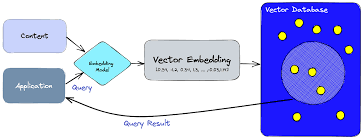
The Role of Knowledge Graphs and Vector Databases in Retrieval-Augmented Generation (RAG) In the dynamic AI landscape, Retrieval-Augmented Generation (RAG) systems are revolutionizing data retrieval by combining artificial intelligence with external data sources to deliver contextual, relevant outputs. Two core technologies driving this innovation are Knowledge Graphs and Vector Databases. While fundamentally different in their design and functionality, these tools complement one another, unlocking new potential for solving complex data problems across industries. Understanding Knowledge Graphs: Connecting the Dots Knowledge Graphs organize data into a network of relationships, creating a structured representation of entities and how they interact. These graphs emphasize understanding and reasoning through data, offering explainable and highly contextual results. How They Work Strengths Limitations Applications Vector Databases: The Power of Similarity In contrast, Vector Databases thrive in handling unstructured data such as text, images, and audio. By representing data as high-dimensional vectors, they excel at identifying similarities, enabling semantic understanding. How They Work Strengths Limitations Applications Combining Knowledge Graphs and Vector Databases: A Hybrid Approach While both technologies excel independently, their combination can amplify RAG systems. Knowledge Graphs bring reasoning and structure, while Vector Databases offer rapid, similarity-based retrieval, creating hybrid systems that are more intelligent and versatile. Example Use Cases Knowledge Graphs vs. Vector Databases: Key Differences Feature Knowledge Graphs Vector Databases Data Type Structured Unstructured Core Strength Relational reasoning Similarity-based retrieval Explainability High Low Scalability Limited for large datasets Efficient for massive datasets Flexibility Schema-dependent Schema-free Challenges in Implementation Future Trends: The Path to Convergence As AI evolves, the distinction between Knowledge Graphs and Vector Databases is beginning to blur. Emerging trends include: This convergence is paving the way for smarter, more adaptive systems that can handle both structured and unstructured data seamlessly. Conclusion Knowledge Graphs and Vector Databases represent two foundational technologies in the realm of Retrieval-Augmented Generation. Knowledge Graphs excel at reasoning through structured relationships, while Vector Databases shine in unstructured data retrieval. By combining their strengths, organizations can create hybrid systems that offer unparalleled insights, efficiency, and scalability. In a world where data continues to grow in complexity, leveraging these complementary tools is essential. Whether building intelligent healthcare systems, enhancing recommendation engines, or powering semantic search, the synergy between Knowledge Graphs and Vector Databases is unlocking the next frontier of AI innovation, transforming how industries harness the power of their data. Like Related Posts Who is Salesforce? Who is Salesforce? Here is their story in their own words. From our inception, we’ve proudly embraced the identity of Read more Salesforce Unites Einstein Analytics with Financial CRM Salesforce has unveiled a comprehensive analytics solution tailored for wealth managers, home office professionals, and retail bankers, merging its Financial Read more AI-Driven Propensity Scores AI plays a crucial role in propensity score estimation as it can discern underlying patterns between treatments and confounding variables Read more Tectonic’s Successful Salesforce Track Record Salesforce Technology Services Integrator – Tectonic has successfully delivered Salesforce in a variety of industries including Public Sector, Hospitality, Manufacturing, Read more

Read More
AI and UX Design

AI and UX Design

This insight comprehensively covers how AI is transforming UX design, presenting both opportunities and challenges while emphasizing the importance of maintaining a human-centric approach. Here’s a polished and slightly condensed version, retaining the core points for better clarity and engagement: AI in UX Design: Transforming Experiences in 2024 and Beyond In 2024, artificial intelligence (AI) is redefining user experience (UX) design and research. From streamlining processes to elevating personalization, UX professionals are integrating AI into their workflows to create experiences that are more intuitive and efficient. This insight explores how AI is reshaping UX and how designers can leverage it while preserving the human touch. How AI is Revolutionizing UX Design 1. Advanced AI Technologies in UXAI technologies like machine learning (ML), natural language processing (NLP), and computer vision are empowering designers with tools to understand user behavior better, build conversational interfaces, and create accessible, adaptable designs. These innovations provide deeper insights into user preferences and help refine interfaces to align with evolving needs. 2. Automating Routine Design TasksAI is taking over repetitive tasks such as rapid prototyping, A/B testing, and user data analysis, allowing designers to focus on creative, strategic challenges. For example: 3. Enhanced PersonalizationAI-driven systems offer dynamic content delivery, adaptive interfaces, and predictive behavior modeling to craft uniquely tailored experiences. These enhancements not only engage users but also foster loyalty by addressing individual preferences in real time. Balancing AI and Human-Centric Design While AI accelerates UX processes, maintaining a human-centered approach is essential. Successful integration requires: Best Practices for AI-Driven UX Design Ethical Considerations in AI-Enhanced UX Ethics remain at the forefront of AI in UX. Key concerns include: Learning from Case Studies These examples highlight how thoughtful AI integration can transform UX into a seamless, user-friendly journey. Preparing for Future Trends Looking ahead to 2025 and beyond, AI will continue to introduce innovations like emotional recognition and generative design, enabling even more intuitive user experiences. However, challenges such as data privacy concerns and high implementation costs will persist. UX professionals must adapt by blending AI-driven insights with human creativity, ensuring that designs remain empathetic and accessible. Conclusion AI is revolutionizing UX design, offering tools to enhance efficiency, personalization, and user engagement. The key to success lies in using AI as a complement to creativity rather than a replacement. By balancing automation with human-centered principles and committing to ethical practices, businesses can harness AI to create transformative, user-focused designs that truly resonate. Like Related Posts Who is Salesforce? Who is Salesforce? Here is their story in their own words. From our inception, we’ve proudly embraced the identity of Read more Salesforce Unites Einstein Analytics with Financial CRM Salesforce has unveiled a comprehensive analytics solution tailored for wealth managers, home office professionals, and retail bankers, merging its Financial Read more AI-Driven Propensity Scores AI plays a crucial role in propensity score estimation as it can discern underlying patterns between treatments and confounding variables Read more Tectonic’s Successful Salesforce Track Record Salesforce Technology Services Integrator – Tectonic has successfully delivered Salesforce in a variety of industries including Public Sector, Hospitality, Manufacturing, Read more

Read More
gettectonic.com