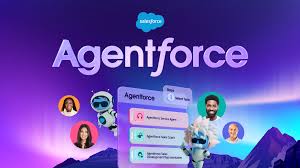
Salesforce Reinvents AI Pricing: How Agentforce 2.0’s New Model Changes the Game
From Conversations to Actions: Salesforce’s Bold Pricing Shift
When Salesforce launched Agentforce 2.0 in October 2024, it raced ahead of competitors like Microsoft, SAP, and ServiceNow, positioning itself as the go-to platform for enterprise AI agents.
The initial -per-conversation model worked well for simple use cases—like AI handling frontline customer chats—but as businesses experimented further, limitations emerged.
- Some AI agents delivered strong ROI, while others struggled to justify costs.
- Complex workflows (e.g., quote generation, data processing) didn’t fit a per-chat model.
- Customers demanded more flexibility and transparency in pricing.
Now, Salesforce is rolling out a game-changing update: action-based pricing.
The New Pricing Model: Pay for What the AI Actually Does
Bill Patterson, EVP of Corporate Strategy at Salesforce, explains:
“We’re moving to an action-oriented model—charging for the actual work AI agents perform, not just conversations.”
Key Features of the New Pricing:
✅ Flex Credits – Universal currency for AI actions across Sales, Service, and Marketing Clouds
✅ $0.10 per action (20 credits) – Only pay when the AI completes a task
✅ No hidden fees – Unlike hyperscalers, no separate charges for compute, storage, or LLM calls
Example:
- Old Model: $2 per conversation (regardless of complexity).
- New Model: If an AI agent processes a refund ($0.10) + updates CRM ($0.10), total cost = $0.20.
“Think of it like electricity—you don’t pay differently for your fridge vs. your stove. Flex Credits power all AI agents uniformly.”
— Bill Patterson
Two Major Additions: Flex Agreement & Digital Wallet
1. Flex Agreement: Convert Unused Licenses into AI Credits
Many companies overbuy CRM licenses during hiring surges. Now, they can trade unused licenses into Flex Credits for AI agents.
Why It Matters:
- Balances human and digital labor costs.
- Lets businesses scale AI during peak demand without new purchases.
2. Digital Wallet: Control & Monitor AI Spending
A new centralized dashboard lets companies:
📊 Track AI agent usage in real-time
🛑 Set spending limits (e.g., cap expensive agents)
📈 Measure ROI per agent
“This isn’t about nickel-and-diming customers—it’s about fair, scalable pricing that grows with AI adoption.”
How Does Salesforce Compare to Competitors?
| Pricing Model | Salesforce | Hyperscalers (AWS, Azure) | AI Startups |
|---|---|---|---|
| Basis | Actions completed | Compute + microservices | “Employee replacement” flat fees |
| Flexibility | ✅ Universal Flex Credits | ❌ Complex tiered pricing | ❌ Rigid per-agent costs |
| Transparency | ✅ Clear per-action cost | ❌ Hidden API/LLM fees | ✅ Fixed but inflexible |
Salesforce’s edge?
- Simpler than hyperscalers (no compute/storage metering).
- More scalable than startups (no per-agent lock-in).
Agentforce One: The Next Evolution
Coming in July 2025, Salesforce is rebranding Einstein One as Agentforce One—a bundled AI package for Sales & Service Cloud users.
What’s Included?
- Unlimited AI agent access (for a fixed per-user fee).
- Pre-built workflows for common sales/service tasks.
- Gateway to advanced AI experimentation.
Goal: Lower the barrier to entry and accelerate AI adoption across Salesforce’s 150,000+ customers.
Will This Boost Agentforce Adoption?
✅ 8,000 companies already use Agentforce (fastest-growing Salesforce product ever).
✅ Flex Credits remove cost uncertainty.
✅ Digital Wallet enables better budgeting.
But… 8,000 is just 5% of Salesforce’s customer base. The new pricing could be the push needed to unlock mass adoption.
The Bottom Line
Salesforce’s pricing shift isn’t just about cost—it’s about trust. By moving to action-based billing, they’re ensuring customers:
✔ Only pay for valuable AI work
✔ Can scale AI across departments
✔ Gain full visibility into ROI
What’s next? As AI costs normalize, Salesforce’s flexible, transparent model could set the industry standard.
🚀 Ready to explore Agentforce?
Contact us today!
“This is the pricing model AI-powered businesses have been waiting for.”
— CIO, Fortune 500 Salesforce Customer

Who is Salesforce? Here is their story in their own words. From our inception, we've proudly embraced the identity of Read more
Salesforce Marketing Cloud Transactional Emails are immediate, automated, non-promotional messages crucial to business operations and customer satisfaction, such as order Read more

Salesforce has unveiled a comprehensive analytics solution tailored for wealth managers, home office professionals, and retail bankers, merging its Financial Read more

AI plays a crucial role in propensity score estimation as it can discern underlying patterns between treatments and confounding variables Read more