B2B Marketing Analytics Archives - gettectonic.com
being ai-driven

The Impact of AI on Jobs

The Impact of AI on Jobs: A Historical and Transformative Perspective For centuries, people have feared losing jobs to technological advancements. From the introduction of the printing press in 1440 to the widespread adoption of assembly lines in manufacturing, history has followed a familiar pattern: a wave of panic followed by a surge of innovation. Today, with AI in the spotlight, headlines warn of job-stealing robots. Yet, AI is not here to take jobs; it’s revealing new ones—and at an unprecedented pace. A Paradigm Shift: AI as a Job Creator Contrary to popular belief, AI is reshaping the job market for the better. Rather than replacing workers, it amplifies human potential, pushing society toward work that is creative, strategic, and uniquely human. Instead of asking, “Will AI take my job?” the better question is, “What new opportunities can AI unlock?” The answers are exciting and transformative. Lessons from the Past Technological disruption is far from new. The printing press, the weaving loom, and even the internet all provoked fears of mass unemployment. Yet, each time, these innovations sparked transformation rather than devastation. Consider the ATM, introduced in the 1960s. Initially, bank tellers feared redundancy. However, rather than replacing tellers, ATMs automated routine tasks, freeing human workers to focus on customer service and financial advising. In fact, the number of bank tellers increased in the decades following ATM adoption. AI follows the same trajectory. By handling repetitive tasks like sorting emails or managing schedules, AI frees workers to focus on areas requiring emotional intelligence, creativity, and problem-solving. AI: A Partner, Not a Competitor AI excels in areas that humans struggle with, such as processing vast datasets, recognizing patterns, and executing repetitive tasks with precision. However, it lacks empathy, context, and abstract thinking—traits that remain uniquely human. For example, IBM Watson can analyze millions of medical journals to suggest treatment options. Yet, a doctor’s role remains indispensable, as patients need empathy, understanding, and a human touch. Similarly, legal AI tools like CaseText can streamline research, but building persuasive arguments and negotiating terms require skills no algorithm can match. Rather than replacing professionals, AI enhances their productivity, enabling them to focus on higher-value tasks. The Birth of Entirely New Industries AI is not only reshaping existing jobs but also creating new roles and industries. The rise of generative AI has introduced positions like prompt engineers, who design effective queries to maximize AI’s output. Similarly, the need for unbiased algorithms has created the field of data ethics, where specialists ensure AI systems prioritize equity and fairness. These roles underscore an important reality: AI doesn’t eliminate opportunities—it redefines them. Addressing Ethical Challenges AI’s reliance on data is both its strength and its vulnerability. Algorithms trained on biased data can perpetuate harmful stereotypes, as seen in Amazon’s failed hiring algorithm, which penalized women. This challenge has given rise to data ethicists tasked with auditing algorithms and designing fair systems, further showcasing how AI disruption creates new fields and opportunities. Augmentation Over Replacement Fear of AI stems from misunderstanding its role. Machines are adept at repetitive and analytical tasks, but they lack the nuanced understanding required for roles in fields like art, music, and medicine. AI tools such as Adobe Sensei or AIVA enhance creativity, allowing artists and musicians to experiment, iterate, and push boundaries. Just as the printing press democratized writing rather than ending it, AI empowers workers to focus on what makes us uniquely human. A Future Worth Working Toward AI represents a profound shift in how society views work. It is not a destroyer of jobs but a catalyst for transformation. By automating inefficiencies and reinforcing human strengths, AI unlocks opportunities yet to be imagined. Rather than fearing the rise of AI, embracing its potential can lead to a future where work is more meaningful, creative, and impactful—an evolution worth striving for. Like Related Posts Who is Salesforce? Who is Salesforce? Here is their story in their own words. From our inception, we’ve proudly embraced the identity of Read more Salesforce Marketing Cloud Transactional Emails Salesforce Marketing Cloud Transactional Emails are immediate, automated, non-promotional messages crucial to business operations and customer satisfaction, such as order Read more Salesforce Unites Einstein Analytics with Financial CRM Salesforce has unveiled a comprehensive analytics solution tailored for wealth managers, home office professionals, and retail bankers, merging its Financial Read more AI-Driven Propensity Scores AI plays a crucial role in propensity score estimation as it can discern underlying patterns between treatments and confounding variables Read more

Read More
b2b marketing cloud salesforce

What is B2B in Marketing Cloud?

In the context of Salesforce Marketing Cloud, “B2B” refers to the Business-to-Business aspect of marketing, meaning engaging with other businesses, rather than individual consumers, to drive sales. Salesforce Marketing Cloud B2B provides tools for businesses to manage their B2B marketing efforts, including lead generation, nurturing, and campaign management.  Key aspects of Salesforce Marketing Cloud B2B: In essence, B2B marketing within Salesforce Marketing Cloud focuses on the unique needs and behaviors of business customers, providing the tools to nurture and engage with them effectively.  Like Related Posts Who is Salesforce? Who is Salesforce? Here is their story in their own words. From our inception, we’ve proudly embraced the identity of Read more Salesforce Marketing Cloud Transactional Emails Salesforce Marketing Cloud Transactional Emails are immediate, automated, non-promotional messages crucial to business operations and customer satisfaction, such as order Read more Salesforce Unites Einstein Analytics with Financial CRM Salesforce has unveiled a comprehensive analytics solution tailored for wealth managers, home office professionals, and retail bankers, merging its Financial Read more AI-Driven Propensity Scores AI plays a crucial role in propensity score estimation as it can discern underlying patterns between treatments and confounding variables Read more
Read More
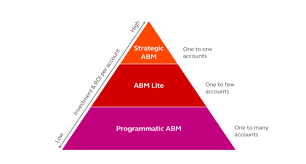
Account Planning With Salesforce

CRM Analytics Limits

When using CRM Analytics, keep these limits in mind. API Call Limits These limits apply to all supported editions. API Call Limit Maximum concurrent CRM Analytics API calls per org 100 Maximum CRM Analytics API calls per user per hour 10,000 Dataset Row Storage Allocations per License In Salesforce org, your total row storage limit for all registered datasets combined depends on your license combination. Each license allocates a different number of rows. Baseline Row Allocation Allocated Rows CRM Analytics Plus 10 billion CRM Analytics Growth 100 million Sales Analytics 25 million Service Analytics 25 million Event Monitoring Analytics 50 million B2B Marketing Analytics 25 million CRM Analytics for Financial Services Cloud 25 million CRM Analytics for Health Cloud 25 million Extra Data Rows license 100 million Your total row storage limit is a combination of your active licenses. For example: Because the CRM Analytics Plus license includes the Sales Analytics and Service Analytics licenses, your total row allocation remains 10 billion. Similarly, the CRM Analytics Growth license includes the Sales Analytics and the Service Analytics licenses, so your total row allocation remains 100 million. However, if you obtain another Sales Analytics or Services Analytics license, your row limit increases by 25 million for each added license. Dataset Row Limits Each dataset supports up to 2 billion rows. If your Salesforce org has less than 2 billion allocated rows, each dataset supports up to your org’s allocated rows. Dataset Field Limits Value Limit Maximum number of fields in a dataset 5,000 (including up to 1,000 date fields) Maximum number of decimal places for each value in a numeric field in a dataset (overflow limit) 17 decimal placesWhen a value exceeds the maximum number of decimal places, it overflows. Both 100,000,000,000,000,000 and 10,000,000,000,000,000.0 overflow because they use more than 17 decimal places. A number also overflows if it’s greater (or less) than the maximum (or minimum) supported value. 36,028,797,018,963,968 overflows because its value is greater than 36,028,797,018,963,967. -36,028,797,018,963,968 overflows because it’s less than -36,028,797,018,963,967.When a number overflows, the resulting behavior in CRM Analytics is unpredictable. Sometimes CRM Analytics throws an error. Sometimes it replaces a numeric value with a null value. And sometimes mathematical calculations, such as sums or averages, return incorrect results. Occasionally, CRM Analytics handles numbers up to 19 digits without overflowing because they are within the maximum value for a 64-bit signed integer (263 – 1). But numbers of these lengths aren’t guaranteed to process.As a best practice, stick with numbers that are 17 decimal places or fewer. If numbers that would overflow are necessary, setting lower precision and scale on the dataset containing the large numbers sometimes prevents overflow. If your org hasn’t enabled the handling of numeric values, the maximum number of decimal places for each value in a numeric field in a dataset is 16. All orgs created after Spring ’17 have Null Measure Handling enabled. Maximum value for each numeric field in a dataset, including decimal places 36,028,797,018,963,967For example, if three decimal places are used, the maximum value is 36,028,797,018,963.967 Minimum value for each numeric field in a dataset, including decimal places -36,028,797,018,963,968For example, if five decimal places are used, the minimum value is -36,028,797,018,9.63968 Maximum number of characters in a field 32,000 Data Sync Limits If you extract more than 100 objects in your dataflows, contact Salesforce Customer Support before you enable data sync. Value Limit Maximum number of concurrent data sync runs 3 Maximum number of objects that can be enabled for data sync, including local and remote objects 100 Maximum amount of time each data sync job can run for local objects 24 hours Maximum amount of time each data sync job can run for remote objects 12 hours Data sync limits for each job:Marketo Connector (Beta)NetSuite ConnectorZendesk Connector Up to 100,000 rows or 500 MB per object, whichever limit is reached first Data sync limits for each job:Amazon Athena ConnectorAWS RDS Oracle ConnectorDatabricks ConnectorGoogle Analytics ConnectorGoogle Analytics Core Reporting V4 ConnectorOracle Eloqua ConnectorSAP HANA Cloud ConnectorSAP HANA Connector Up to 10 million rows or 5 GB per object, whichever limit is reached first Data sync limits for each job*:AWS RDS Aurora MySQL ConnectorAWS RDS Aurora PostgresSQL ConnectorAWS RDS MariaDB ConnectorAWS RDS MySQL ConnectorAWS RDS PostgreSQL ConnectorAWS RDS SQL Server ConnectorGoogle Cloud Spanner ConnectorMicrosoft Azure Synapse Analytics ConnectorMicrosoft Dynamics CRM ConnectorSalesforce External ConnectorSalesforce Contacts Connector for Marketing Cloud EngagementSalesforce OAuth 2.0 Connector for Marketing Cloud Engagement Up to 20 million rows or 10 GB per object, whichever limit is reached first Data sync limits for each job*:Amazon Redshift ConnectorAmazon S3 ConnectorCustomer 360 Global Profile Data Connector (Beta)Google BigQuery for Legacy SQL ConnectorGoogle BigQuery Standard SQL ConnectorHeroku Postgres ConnectorMicrosoft Azure SQL Database ConnectorSnowflake Input Connector Up to 100 million rows or 50 GB per object, whichever limit is reached first *When using these connectors, Salesforce Government Cloud org data is protected in transit with advanced encryption and can sync up to 10 million rows or 5 GB for each connected object, whichever limit is reached first. Note When using a Salesforce local input connection, CRM Analytics bulk API usage doesn’t count towards Salesforce bulk API limits. Use of the external Salesforce connection and output connection impacts your limits. The dataflow submits a separate bulk API call to extract data from each Salesforce object. The dataflow uses a batch size of 100,000–250,000, depending on whether the dataflow or the bulk API chunks the data. As a result, to extract 1 million rows from an object, the dataflow creates 4–10 batches. Recipe and Dataflow Limits Important In Winter ‘24, recipe runs over 2 minutes are counted against the limit. Previously, the recipe run counts weren’t correct. For more information, see Known Issue – Recipe runs are not counting towards the daily maximum run limit. Value Limit Maximum amount of time each recipe or dataflow can run 48 hours Maximum number of recipes 1,000 Maximum number of dataflows definitions (with data sync enabled) 100 Maximum number of dataflow and recipe runs in a rolling

Read More
gettectonic.com