Cloud Archives - gettectonic.com - Page 2
Salesforce AI Agents and New Data Cloud Features

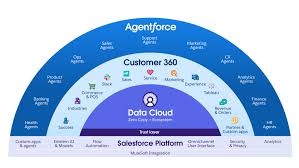
Salesforce CDP and Data Cloud

What is the difference between Salesforce CDP and data Cloud? AI Overview Salesforce Data Cloud and Salesforce CDP (Customer Data Platform) are closely related, but Data Cloud is a broader, more comprehensive platform. Data Cloud extends the core CDP functionality to encompass all business data, not just customer data, and integrates it with the broader Salesforce ecosystem according to saasguru.  Here’s a breakdown of the key differences: Salesforce CDP (Now part of Data Cloud): Salesforce Data Cloud: Key Differences Summarized: In essence, Data Cloud is a more mature and broader evolution of the original CDP functionality, extending its benefits to a wider range of business data and applications within the Salesforce ecosystem according to Salesforce Ben.  Like Related Posts Who is Salesforce? Who is Salesforce? Here is their story in their own words. From our inception, we’ve proudly embraced the identity of Read more Salesforce Marketing Cloud Transactional Emails Salesforce Marketing Cloud Transactional Emails are immediate, automated, non-promotional messages crucial to business operations and customer satisfaction, such as order Read more Salesforce Unites Einstein Analytics with Financial CRM Salesforce has unveiled a comprehensive analytics solution tailored for wealth managers, home office professionals, and retail bankers, merging its Financial Read more AI-Driven Propensity Scores AI plays a crucial role in propensity score estimation as it can discern underlying patterns between treatments and confounding variables Read more

Read More
AWS Salesforce

AWS Unveils New Agent-Based AI Tools

AWS Unveils New Agent-Based AI Tools, Doubles Down on Developer-Focused Innovation At the AWS Summit New York City 2025, Amazon Web Services (AWS) announced a suite of new agent-based AI tools, reinforcing its commitment to agentic AI—a paradigm shift where AI systems not only generate responses but autonomously take actions. Key Announcements: Why Agentic AI? AWS believes agentic AI is transforming technology by enabling hyper-automation—where AI doesn’t just analyze or summarize but acts on behalf of users. To accelerate adoption, AWS is investing an additional 0M in its Generative AI Innovation Center. “The goal is to help organizations move beyond generative AI to AI that can take action,” said Taimur Rashid, AWS Managing Director of Generative AI Innovation. Industry Reactions: A Developer-First Approach Analysts note AWS is targeting enterprise developers with advanced tooling, differentiating itself from low-code platforms like Salesforce. However, Mark Beccue (Omdia) cautions:“AWS risks missing buyers by focusing too narrowly on developers. They need a clearer end-to-end story.” Partner Perspective: Solving Real-World AI Challenges John Balsavage (A&I Solutions Inc.), an AWS partner, highlights AgentCore Observability as critical for improving AI agent accuracy:“90% accuracy isn’t enough—we need full traceability to reach 100%.” He also praised Kiro, AWS’s new agentic IDE, for simplifying AI prompting:“It generates better requirements, helping developers build more effectively.” AWS Marketplace Expansion & New Integrations AWS also launched: Challenges Ahead While AWS aims to simplify AI development, analysts question: “AWS is trying to be the middle ground between raw AI tools and fully packaged solutions,” said Andersen. “Execution will be key.” The Bottom Line AWS is betting big on agentic AI, arming developers with powerful tools—but success hinges on bridging the gap between technical capability and business impact. Like Related Posts Who is Salesforce? Who is Salesforce? Here is their story in their own words. From our inception, we’ve proudly embraced the identity of Read more Salesforce Marketing Cloud Transactional Emails Salesforce Marketing Cloud Transactional Emails are immediate, automated, non-promotional messages crucial to business operations and customer satisfaction, such as order Read more Salesforce Unites Einstein Analytics with Financial CRM Salesforce has unveiled a comprehensive analytics solution tailored for wealth managers, home office professionals, and retail bankers, merging its Financial Read more AI-Driven Propensity Scores AI plays a crucial role in propensity score estimation as it can discern underlying patterns between treatments and confounding variables Read more

Read More
health and life sciences

Why B2C Experience Platforms Are the Next Big Investment

The Digital Healthcare Revolution: Why B2C Experience Platforms Are the Next Big Investment The healthcare sector is in the midst of a digital transformation revolution, with Business-to-Consumer (B2C) Digital Experience Platforms (DXPs) emerging as the dominant force for positive patient outcomes. Projected to grow at a 13.9% CAGR through 2030, these platforms are redefining patient engagement through AI-powered personalization, IoT integration, and cloud-based interoperability. For investors, this represents a generational opportunity—particularly in market leaders Adobe (ADBE), Microsoft (MSFT), and Salesforce (CRM)—as healthcare shifts from facility-centric to patient-first digital ecosystems. But this is not an investing article. It is an insight based on growth potential of the top Digital Experience Platform players. Why B2C DXPs Are Disrupting Healthcare The traditional healthcare model—reactive, fragmented, and provider-controlled—is being replaced by on-demand, data-driven patient experiences. B2C DXPs sit at the center of this shift by offering: ✔ Hyper-personalized care journeys – AI-driven platforms like Innovaccer’s HXP and Salesforce Health Cloud deliver tailored treatment plans, automated medication adherence tools, and condition-specific education. ✔ Seamless wearables/IoT integration – Real-time data from smartwatches, glucose monitors, and remote patient monitoring (RPM) devices enable preventive care and reduce hospital readmissions. ✔ Unified patient portals – A single digital front door for EHR access, telehealth visits, billing, and provider messaging—reducing friction in care delivery. North America leads adoption, but Asia-Pacific is the fastest-growing market, fueled by aging populations and government telehealth investments. The Winning Formula: AI + Cloud Scalability The most successful DXPs combine AI/ML intelligence with cloud infrastructure—a segment already commanding 63.7% market share. Key advantages: 🔹 Cost efficiency – Pay-as-you-go cloud models eliminate legacy IT costs.🔹 Regulatory compliance – Built-in HIPAA/GDPR adherence ensures data security.🔹 Interoperability – Open APIs connect EHRs, wearables, and third-party apps seamlessly. Microsoft’s Azure Healthcare APIs and Salesforce Health Cloud are already powering AI-driven patient engagement at scale, while Adobe Experience Cloud dominates personalized content delivery. Salesforce (CRM) – The Patient Engagement Leader Risks & Mitigations ⚠ Regulatory complexity – HIPAA/GDPR compliance requires ongoing investment (mitigated by cloud providers’ built-in security).⚠ EHR fragmentation – Legacy systems may slow interoperability (offset by FHIR API adoption).⚠ Competition – Startups like Innovaccer are innovating quickly (but lack scale of MSFT, CRM, ADBE). Bottom Line: The Time to Act Is Now The .3B DXP healthcare market by 2030 is just the beginning. With telehealth adoption up 70% post-pandemic and 416M connected health devices expected by 2030, patient demand for seamless digital experiences will only accelerate. Adobe, Microsoft, and Salesforce are not just tech stocks—they’re the infrastructure of healthcare’s digital future. Health care payers and providers who recognize this shift early will capitalize on a decade of growth. Data: Vision Research Reports, Grand View Research, company filings. Like Related Posts Who is Salesforce? Who is Salesforce? Here is their story in their own words. From our inception, we’ve proudly embraced the identity of Read more Salesforce Marketing Cloud Transactional Emails Salesforce Marketing Cloud Transactional Emails are immediate, automated, non-promotional messages crucial to business operations and customer satisfaction, such as order Read more Salesforce Unites Einstein Analytics with Financial CRM Salesforce has unveiled a comprehensive analytics solution tailored for wealth managers, home office professionals, and retail bankers, merging its Financial Read more AI-Driven Propensity Scores AI plays a crucial role in propensity score estimation as it can discern underlying patterns between treatments and confounding variables Read more

Read More
AWS Salesforce

AWS Doubles Down on Agentic AI with New Developer Tools at NYC Summit

At its AWS Summit New York City 2025 conference, Amazon Web Services unveiled a comprehensive suite of agent-based AI tools, signaling its strategic bet on what it calls “the next fundamental shift in enterprise AI.” Core Offerings: Building Blocks for Agentic Systems The cloud leader introduced Amazon Bedrock AgentCore, now in preview, which provides seven foundational services for deploying AI agents at scale: “This represents a step function change in what’s possible for AI agents,” said Swami Sivasubramanian, AWS VP for Agentic AI, during his keynote. The suite supports any AI framework or model while addressing critical enterprise requirements around security and scalability. Complementary AI Infrastructure Updates AWS also announced: The company is backing these technical investments with an additional $100 million for its Generative AI Innovation Center, focusing on hyperautomation use cases. Developer-Centric Approach Faces Mixed Reactions Analysts note AWS’s strategy differs from competitors by targeting professional developers rather than citizen developers: “It’s geared toward the hardcore professional developer,” said Jason Andersen of Moor Insights & Strategy, contrasting AWS’s CLI-heavy approach with Salesforce’s low-code solutions. However, Omdia’s Mark Beccue cautioned: “When talking about agents, you must have the complete story.” He suggested the developer focus might overlook key decision-makers. Ecosystem Expansion Notable ecosystem developments include: Early adopters like A&I Solutions President John Balsavage highlight observability tools as critical for improving agent accuracy beyond current 90% benchmarks. Challenges Ahead While AWS aims to simplify complex AI orchestration, analysts question whether it can: The summit also revealed AWS Academy is providing free certification exam vouchers to over 6,600 students, potentially growing its AI-skilled workforce. Meanwhile, Anthropic (an AWS partner) launched new analytics for its Claude Code assistant. Like Related Posts Who is Salesforce? Who is Salesforce? Here is their story in their own words. From our inception, we’ve proudly embraced the identity of Read more Salesforce Marketing Cloud Transactional Emails Salesforce Marketing Cloud Transactional Emails are immediate, automated, non-promotional messages crucial to business operations and customer satisfaction, such as order Read more Salesforce Unites Einstein Analytics with Financial CRM Salesforce has unveiled a comprehensive analytics solution tailored for wealth managers, home office professionals, and retail bankers, merging its Financial Read more AI-Driven Propensity Scores AI plays a crucial role in propensity score estimation as it can discern underlying patterns between treatments and confounding variables Read more

Read More
Content Marketing Lessons

Marketing Cloud Next Explained

Marketing Cloud Next: The Future of AI-Powered, Unified Marketing In today’s hyper-connected world, marketers face relentless challenges: siloed data, complex integrations, and limited AI-driven personalization. These barriers don’t just slow them down—they prevent real, meaningful customer connections. Marketing Cloud Next Explained to address these challenges. What if there was a natively integrated, AI-powered platform that could break through these obstacles? Introducing Marketing Cloud Next Marketing Cloud Next is a revolutionary module built directly on Salesforce Core, eliminating the need for clunky integrations. It unifies CRM data, AI-driven insights, and real-time customer profiles—giving marketers a single source of truth to power hyper-personalized campaigns. Why It’s a Game-Changer ✅ Native on Salesforce Core – No middleware, no syncing delays. Real-time access to Accounts, Contacts, Opportunities, and Custom Objects—all within your marketing platform. ✅ AI-Powered by Agentforce – Not just AI for show, but AI that works: ✅ Real-Time Data Cloud Integration – Activate unified customer profiles with zero ETL (Extract, Transform, Load), ensuring every interaction is personalized with the latest data. Core Capabilities: Smarter, Faster, More Impactful Marketing 1. AI-Driven Campaign Creation 2. Advanced Segmentation & Automation 3. Omnichannel Engagement 4. Real-Time Analytics & ROI Tracking The Bottom Line: Faster, Simpler, Higher ROI 🚀 Launch campaigns in weeks, not months – Cut through complexity with native integration.💡 Boost engagement with AI personalization – Drive higher conversions & loyalty.📈 Increase revenue with data-driven marketing – Turn insights into growth. Marketing Cloud Next isn’t just another tool—it’s the future of customer engagement. Ready to transform your marketing? Let’s talk. Like Related Posts Who is Salesforce? Who is Salesforce? Here is their story in their own words. From our inception, we’ve proudly embraced the identity of Read more Salesforce Marketing Cloud Transactional Emails Salesforce Marketing Cloud Transactional Emails are immediate, automated, non-promotional messages crucial to business operations and customer satisfaction, such as order Read more Salesforce Unites Einstein Analytics with Financial CRM Salesforce has unveiled a comprehensive analytics solution tailored for wealth managers, home office professionals, and retail bankers, merging its Financial Read more AI-Driven Propensity Scores AI plays a crucial role in propensity score estimation as it can discern underlying patterns between treatments and confounding variables Read more

Read More
agent2agent protocol explained

Google’s Agent2Agent Protocol Explained

Google’s Agent2Agent Protocol (A2A): The Open Standard for AI Agent Collaboration A New Era of AI Interoperability On April 9, 2025, Google introduced the Agent2Agent Protocol (A2A), a standardized framework enabling AI agents to discover, communicate, and collaborate across different platforms securely. Just months later, on June 23, 2025, Google donated A2A—including its specifications, SDKs, and developer tools—to the Linux Foundation, ensuring neutral, open governance for the protocol’s future. “By contributing A2A, Google is ensuring neutral governance for the project for the remainder of its existence.”— Mike Dolan, SVP, Legal & Strategic Programs, Linux Foundation This move prevents any single company from controlling A2A, fostering an open ecosystem where AI agents from different vendors can seamlessly interact. How A2A Works: Secure, Scalable AI Collaboration A2A defines two types of agents: Key Features 🔹 Agent Cards – Each agent advertises its capabilities (name, functions, authentication methods) without exposing proprietary logic or internal data.🔹 HTTPS-Based Messaging – Secure, real-time communication between agents.🔹 Task Delegation & Progress Tracking – Agents exchange structured messages to update on task status or request additional input.🔹 Enterprise-Grade Security – No exposure of internal states, ensuring data privacy and IP protection. Why A2A Matters Without a universal protocol, AI agent integration is manual, brittle, and hard to scale. A2A solves this by:✅ Eliminating point-to-point custom integrations✅ Enabling dynamic task routing & resource allocation✅ Reducing human intervention in automated workflows Early Adoption & Industry Support Over 100 companies—including AWS, Cisco, Microsoft, Salesforce, SAP, and ServiceNow—have endorsed A2A. A Technical Steering Committee (with members from these firms) now governs the protocol’s evolution. “PayPal, ServiceNow, and Salesforce already support A2A and are integrating it into their platforms.”— Rao Surapaneni, VP & GM, Google Cloud The Future of AI Agent Ecosystems While A2A has strong momentum, alternative protocols like: more are also emerging. However, A2A’s open governance, enterprise security, and broad industry backing position it as a leading candidate for universal AI agent interoperability. What’s Next? As businesses deploy more AI agents, A2A could become the TCP/IP of AI collaboration—a foundational layer enabling autonomous, cross-platform workflows. Sourced from Matt Vartabedian’s article in NoJitter. Like Related Posts Who is Salesforce? Who is Salesforce? Here is their story in their own words. From our inception, we’ve proudly embraced the identity of Read more Salesforce Marketing Cloud Transactional Emails Salesforce Marketing Cloud Transactional Emails are immediate, automated, non-promotional messages crucial to business operations and customer satisfaction, such as order Read more Salesforce Unites Einstein Analytics with Financial CRM Salesforce has unveiled a comprehensive analytics solution tailored for wealth managers, home office professionals, and retail bankers, merging its Financial Read more AI-Driven Propensity Scores AI plays a crucial role in propensity score estimation as it can discern underlying patterns between treatments and confounding variables Read more

Read More
Healthcare Cloud Computing

How Salesforce Health Cloud is Transforming Modern Hospitals

The healthcare industry faces unprecedented challenges: delivering personalized patient care, maintaining strict compliance, and optimizing operational efficiency—all while managing complex data ecosystems. Salesforce Health Cloud has won as a leading solution, empowering hospitals to meet these demands through intelligent, integrated technology. Here’s why forward-thinking healthcare organizations are adopting Health Cloud—and how it’s reshaping hospital operations. 1. Personalized Patient Engagement Today’s patients expect seamless, consumer-grade experiences from their healthcare providers. Salesforce Health Cloud enables hospitals to:✔ Deliver mobile-responsive patient portals for easy access to records and appointments.✔ Automate personalized follow-ups (e.g., medication reminders, post-visit surveys).✔ Tailor communication based on patient history and preferences. Why it matters: Engaged patients adhere better to treatment plans and report higher satisfaction—key drivers of improved outcomes. 2. Seamless Care Team Coordination Fragmented care—where specialists, nurses, and administrators work in silos—leads to inefficiencies and errors. Health Cloud connects all stakeholders on a unified platform, enabling:✔ Real-time collaboration across departments.✔ Centralized patient histories (no more chasing down records).✔ Automated task assignments and progress tracking. Why it matters: Coordinated care reduces redundancies, improves accuracy, and elevates patient trust. 3. AI-Powered Decision-Making Health Cloud goes beyond data storage—it turns information into actionable intelligence with:✔ Real-time analytics on treatment outcomes, readmission risks, and patient satisfaction.✔ Predictive tools to identify high-risk patients before complications arise.✔ Custom dashboards for performance tracking at every level. Why it matters: Data-driven decisions lead to better resource allocation, fewer errors, and higher-quality care. 4. Unified Patient Data Management Hospitals juggle EHRs, lab systems, billing software, and more—often with no integration. Health Cloud consolidates all data into a single source of truth, offering:✔ A 360-degree patient view (medical history, appointments, insurance, social determinants of health).✔ Secure, instant access for authorized providers.✔ Reduced manual entry and duplicate records. Why it matters: Disjointed data causes delays and mistakes. Centralization improves efficiency and patient safety. 5. Built-In HIPAA Compliance & Security Healthcare data breaches cost millions and erode trust. Health Cloud provides:✔ Enterprise-grade encryption and access controls.✔ Audit trails for all data interactions.✔ Pre-configured HIPAA-compliant workflows. Why it matters: Compliance isn’t optional. Health Cloud protects sensitive data without sacrificing usability. 6. Scalability for Future Growth Whether expanding services, adding telehealth, or integrating new EHRs, Health Cloud adapts effortlessly thanks to:✔ Open APIs for seamless interoperability.✔ Modular design to add features as needs evolve.✔ Cloud-based flexibility to scale across locations. Why it matters: Healthcare never stands still. A future-proof system ensures long-term success. 7. Operational Efficiency & Cost Savings Administrative waste drains hospital resources. Health Cloud automates routine tasks, including:✔ Appointment scheduling and reminders.✔ Referral management and prior authorizations.✔ Case management workflows. Why it matters: Streamlined operations cut costs, reduce staff burnout, and improve patient throughput. The Bottom Line Salesforce Health Cloud isn’t just another IT tool—it’s a strategic asset that bridges the gap between patient care and operational excellence. Hospitals leveraging its full potential see:✅ Higher patient satisfaction (through personalized engagement).✅ Stronger care team alignment (breaking down silos).✅ Smarter decision-making (powered by AI and analytics).✅ Lower compliance risks (with built-in security). As healthcare evolves, the hospitals that thrive will be those that embrace connected, intelligent platforms like Health Cloud. The question isn’t if to adopt it—but how soon your organization can start reaping the benefits. Ready to transform your hospital’s operations? Salesforce Health Cloud is the proven solution for healthcare’s toughest challenges. Contact Tectonic to learn more. Like Related Posts Who is Salesforce? Who is Salesforce? Here is their story in their own words. From our inception, we’ve proudly embraced the identity of Read more Salesforce Marketing Cloud Transactional Emails Salesforce Marketing Cloud Transactional Emails are immediate, automated, non-promotional messages crucial to business operations and customer satisfaction, such as order Read more Salesforce Unites Einstein Analytics with Financial CRM Salesforce has unveiled a comprehensive analytics solution tailored for wealth managers, home office professionals, and retail bankers, merging its Financial Read more AI-Driven Propensity Scores AI plays a crucial role in propensity score estimation as it can discern underlying patterns between treatments and confounding variables Read more

Read More
Revenue Cloud

Salesforce Revenue Cloud Advanced

Salesforce Revenue Cloud Advanced (RCA): The Ultimate Quote-to-Cash Solution Revolutionize Your Revenue Operations Salesforce Revenue Cloud Advanced (RCA) is an end-to-end revenue management platform that transforms complex quote-to-cash processes into automated, compliant, and customer-centric experiences. Designed for mid-market and enterprise organizations, RCA empowers businesses to: ✔ Simplify CPQ, billing, and revenue recognition✔ Ensure compliance with ASC 606/IFRS 15✔ Accelerate deal velocity✔ Manage multi-channel revenue streams Ideal for: SaaS, Manufacturing, High Tech, Healthcare, and other industries with subscription models, usage-based pricing, and dynamic bundling. Key Capabilities of Revenue Cloud Advanced 1. Intelligent CPQ (Configure, Price, Quote) 2. Flexible Billing & Monetization 3. Accurate Revenue Recognition 4. Partner & Channel Management Who Benefits from RCA? Team Key Value Sales Faster quoting, guided selling, deal acceleration Finance Automated revenue compliance, reduced manual errors RevOps End-to-end process automation, scalability IT Pre-built integrations, low technical debt Why Choose Salesforce RCA? Native to the Salesforce Ecosystem Seamlessly integrates with: AI-Powered Insights Enterprise-Grade Scalability Transform Your Revenue Lifecycle ✅ Close deals faster with AI-guided selling✅ Eliminate billing errors with automation✅ Stay audit-ready with compliant revenue reporting✅ Scale effortlessly as your business grows Ready to optimize your quote-to-cash process? Contact Tectonic today. Like Related Posts Who is Salesforce? Who is Salesforce? Here is their story in their own words. From our inception, we’ve proudly embraced the identity of Read more Salesforce Marketing Cloud Transactional Emails Salesforce Marketing Cloud Transactional Emails are immediate, automated, non-promotional messages crucial to business operations and customer satisfaction, such as order Read more Salesforce Unites Einstein Analytics with Financial CRM Salesforce has unveiled a comprehensive analytics solution tailored for wealth managers, home office professionals, and retail bankers, merging its Financial Read more AI-Driven Propensity Scores AI plays a crucial role in propensity score estimation as it can discern underlying patterns between treatments and confounding variables Read more

Read More
Salesforce Einstein and Einstein Automate

Smarter Predictions, Faster Decisions

Einstein AI in 2025: Smarter Predictions, Faster Decisions The Evolution of Salesforce Einstein The Summer ’25 release transforms Einstein from a predictive scoring engine into an active decision-making partner. With deeper CRM integration and enhanced explainability, Einstein now delivers: ✅ Context-aware automation through natural language Flow creation✅ Real-time analytics that drive immediate action✅ Transparent model governance for regulated industries Key Innovations in the Summer ’25 Release 1. Einstein for Flow: Intelligent Automation Made Simple What’s New: Impact: 2. Einstein CRM Analytics: Live Decision Intelligence Enhanced Capabilities: Sample Use Case:A sales manager sees: Benefits: 3. Trust Through Transparency New Governance Features: Critical For: Industry-Specific Applications Sector Einstein 2025 Use Cases Sales Real-time deal coaching, automated follow-ups based on engagement signals Service Predictive case routing, customer churn prevention flows Marketing Dynamic journey adjustments based on real-time propensity scores Healthcare Compliance-aware patient outreach automation Implementation Roadmap Why This Matters The Summer ’25 release closes the gap between insight and action by:🔹 Democratizing AI – Business users create sophisticated automations🔹 Accelerating Decisions – Live data eliminates reporting lag🔹 Building Trust – Explainable AI meets compliance requirements “With these updates, Einstein moves from predicting outcomes to driving outcomes,” said Salesforce Chief Product Officer. Like Related Posts Who is Salesforce? Who is Salesforce? Here is their story in their own words. From our inception, we’ve proudly embraced the identity of Read more Salesforce Marketing Cloud Transactional Emails Salesforce Marketing Cloud Transactional Emails are immediate, automated, non-promotional messages crucial to business operations and customer satisfaction, such as order Read more Salesforce Unites Einstein Analytics with Financial CRM Salesforce has unveiled a comprehensive analytics solution tailored for wealth managers, home office professionals, and retail bankers, merging its Financial Read more AI-Driven Propensity Scores AI plays a crucial role in propensity score estimation as it can discern underlying patterns between treatments and confounding variables Read more

Read More
AI Agents and Work

Augmentation, Not Replacement, at Salesforce

Marc Benioff’s AI Vision: Augmentation, Not Replacement, at Salesforce Salesforce CEO Marc Benioff made waves last week by revealing that 30-50% of the company’s work is now AI-driven—a milestone in its push toward “agentic” automation. But rather than framing AI as a job killer, Benioff insists it’s a collaborative force, augmenting human workers rather than replacing them. AgentForce Hits 1 Million Conversations At the UN’s AI for Good Summit in Geneva, Benioff highlighted Salesforce’s AgentForce—an AI-powered platform integrated with Service Cloud—which has now handled over 1 million customer interactions in just nine months. “We have about 9,000 human support agents. AgentForce has delivered a million conversations—the same as our human agents in that period. But it’s not AI replacing people; it’s AI working alongside them.” Key takeaways: The “Digital Labor” Philosophy Benioff’s vision of “Digital Labor“ positions AI as a co-worker, not a usurper: Job Fears vs. Reality: “Radical Augmentation, Not Mass Layoffs” Despite media hype about AI-driven job cuts, Benioff pushes back: “I don’t see AI causing mass white-collar layoffs. It’s about reshaping work—not eliminating it.” Salesforce’s hiring shifts reflect this: The Bottom Line: AI as a Productivity Multiplier Benioff’s mantra? “Be Customer Zero.” Salesforce is stress-testing AI internally before selling it to clients. The goal isn’t to replace humans—but to supercharge their capabilities. “Let’s take a pause, boost productivity with AI, then scale again. That’s the future of work.” Final ThoughtWhile AI anxiety dominates headlines, Benioff’s augmentation-first approach offers a pragmatic middle ground. For Salesforce—and the broader economy—the question isn’t “Will AI take jobs?” but “How can AI make work better?” Like Related Posts Who is Salesforce? Who is Salesforce? Here is their story in their own words. From our inception, we’ve proudly embraced the identity of Read more Salesforce Marketing Cloud Transactional Emails Salesforce Marketing Cloud Transactional Emails are immediate, automated, non-promotional messages crucial to business operations and customer satisfaction, such as order Read more Salesforce Unites Einstein Analytics with Financial CRM Salesforce has unveiled a comprehensive analytics solution tailored for wealth managers, home office professionals, and retail bankers, merging its Financial Read more AI-Driven Propensity Scores AI plays a crucial role in propensity score estimation as it can discern underlying patterns between treatments and confounding variables Read more

Read More
DXP - Digital Experience Platform

DXP – Digital Experience Platform

A Digital Experience Platform (DXP) is a set of integrated technologies that help organizations create, manage, and deliver personalized digital experiences across various touchpoints. DXPs aim to provide a central hub for managing a company’s digital ecosystem, enabling consistent and engaging customer interactions. They often include features like content management, e-commerce, personalization, and experimentation.  Key aspects of a DXP: Benefits of using a DXP: Like Related Posts Who is Salesforce? Who is Salesforce? Here is their story in their own words. From our inception, we’ve proudly embraced the identity of Read more Salesforce Marketing Cloud Transactional Emails Salesforce Marketing Cloud Transactional Emails are immediate, automated, non-promotional messages crucial to business operations and customer satisfaction, such as order Read more Salesforce Unites Einstein Analytics with Financial CRM Salesforce has unveiled a comprehensive analytics solution tailored for wealth managers, home office professionals, and retail bankers, merging its Financial Read more AI-Driven Propensity Scores AI plays a crucial role in propensity score estimation as it can discern underlying patterns between treatments and confounding variables Read more

Read More
ai agent interoperability

Salesforce Unveils Open AI Ecosystem with Agentforce and MCP Integration

Breaking the AI Interoperability Paradox Salesforce is solving the critical challenge facing enterprise AI adoption—how to balance open innovation with enterprise-grade security. With its upcoming Model Context Protocol (MCP) support for Agentforce, Salesforce is creating the first truly open yet governed ecosystem for AI agent collaboration. The $6T Digital Labor Opportunity Current barriers to AI adoption: Salesforce’s solution enables:✔ Native agent interoperability via open standards✔ Enterprise-grade governance baked into every connection✔ 16x faster deployment than DIY approaches AgentExchange: The Trusted Marketplace for AI Agents Key Innovations Partner Ecosystem in Action Partner AI Agent Capabilities Enabled AWS Unstructured data processing across Bedrock, Aurora DBs, and multimedia Box Intelligent contract analysis and automated workflow triggers Google Cloud Location-aware AI combining Maps, generative models, and transactional data PayPal End-to-end agentic commerce from product listing to dispute resolution Stripe Real-time payment operations and subscription management WRITER Compliant content generation within Salesforce workflows The Salesforce Advantage “With MCP, we’re creating a new category of agent-first businesses,” says Brian Landsman, CEO of AppExchange. “Partners build once and connect everywhere—without the security tradeoffs of traditional integrations.” Enterprise Benefits The Future of Digital Labor This announcement marks a pivotal shift in enterprise AI: Available in pilot July 2024, Salesforce’s MCP integration positions Agentforce as the hub for the next generation of enterprise AI—where security and innovation coexist to unlock the full trillion potential of digital labor. Like Related Posts Who is Salesforce? Who is Salesforce? Here is their story in their own words. From our inception, we’ve proudly embraced the identity of Read more Salesforce Marketing Cloud Transactional Emails Salesforce Marketing Cloud Transactional Emails are immediate, automated, non-promotional messages crucial to business operations and customer satisfaction, such as order Read more Salesforce Unites Einstein Analytics with Financial CRM Salesforce has unveiled a comprehensive analytics solution tailored for wealth managers, home office professionals, and retail bankers, merging its Financial Read more AI-Driven Propensity Scores AI plays a crucial role in propensity score estimation as it can discern underlying patterns between treatments and confounding variables Read more

Read More
The AI Adoption Paradox

Dining and Virtual AI

Restaurants are increasingly adopting AI virtual assistants and bots to manage routine tasks like menu inquiries, loyalty program questions, and order tracking, allowing human staff to focus on complex service needs. Platforms like Salesforce Agentforce and Microsoft Copilot are integrated into customer-facing chat systems, apps, and call centers, handling common queries, updating loyalty credits, tracking deliveries, and escalating issues or creating internal tickets without human intervention. Some operators report a 50% reduction in simple inquiries, with guest satisfaction improving due to faster, consistent responses. Salesforce Agentforce, built on Service Cloud and Data Cloud, delivers a conversational concierge experience by analyzing customer history—past orders, loyalty status, and open cases—to provide instant answers or flag issues. For example, ezCater uses Agentforce for natural language order creation, while OpenTable scales global customer support, reducing reliance on human agents for basic tasks. Beyond chatbots, AI-powered operational tools are transforming restaurant efficiency. Computer vision systems, powered by platforms like NVIDIA NIM, Ultralytics, and Viso Suite, monitor dining areas, kitchens, and back-of-house spaces in real time. These systems actively analyze footage, detecting uncleared tables, long lines, or understaffed zones, and alerting staff to act—speeding up table turns and reducing wait times. In fast-casual settings, vision tools manage order queues and crowded pickup areas. In back-of-house, AI vision ensures food safety and equipment compliance, flagging open cooler doors or blocked pathways with automated alerts to managers or centralized teams. These systems reduce reliance on manual checks with real-time anomaly detection, integrating with facility management and workforce platforms for a cohesive response. Future applications could include predictive maintenance, labor forecasting based on traffic patterns, and training gap identification. As edge AI and APIs evolve, smart vision systems are becoming critical restaurant infrastructure. Smartbridge reports a global restaurant group processed over 6 million guest surveys using an Azure-based generative AI tool, automating sentiment analysis, ticket organization, and feedback summaries at scale. This helps chains quickly identify complaints and menu improvement opportunities. Behind the scenes, integrations rely on edge/cloud orchestration and API frameworks. Customer queries route through secure chat interfaces to Agentforce, pulling from CRM or ticket logs, while camera and sensor data feed into AI pipelines on AWS, Azure, or NVIDIA Jetson devices, triggering alerts in Slack, Jira, or ServiceNow. This enables instant responses to issues like spills, tech glitches, or guest requests without human triage. These virtual assistants form an invisible team, handling thousands of queries, freeing staff for hospitality, and moving restaurants toward “agentic AI” that proactively flags issues, prepares for busy periods, and manages inventory shortages. Virtual assistants are no longer just chatbots—they’re essential team members, enhancing operational efficiency, service consistency, and satisfaction for both customers and staff. Like Related Posts Who is Salesforce? Who is Salesforce? Here is their story in their own words. From our inception, we’ve proudly embraced the identity of Read more Salesforce Marketing Cloud Transactional Emails Salesforce Marketing Cloud Transactional Emails are immediate, automated, non-promotional messages crucial to business operations and customer satisfaction, such as order Read more Salesforce Unites Einstein Analytics with Financial CRM Salesforce has unveiled a comprehensive analytics solution tailored for wealth managers, home office professionals, and retail bankers, merging its Financial Read more AI-Driven Propensity Scores AI plays a crucial role in propensity score estimation as it can discern underlying patterns between treatments and confounding variables Read more

Read More
gettectonic.com