Compliance Archives - gettectonic.com - Page 9
Scope of Generative AI

Generative AI Game Changer for Cybersecurity

Generative AI: A Game Changer for Cybersecurity—Both Good and Bad Generative AI is revolutionizing cybersecurity, enabling both cybercriminals and defenders to operate faster, smarter, and at a larger scale. How Hackers Leverage GenAI Cybercriminals are using generative AI to: One real-world example: In early 2024, fraudsters used a deepfake of a multinational company’s CFO to trick an employee into transferring $25 million. How Cybersecurity Teams Use GenAI for Defense Enterprise security teams are adopting generative AI to: According to a 2024 CrowdStrike survey, 64% of cybersecurity professionals are already researching or using AI tools, with 69% planning to invest further within a year. The Risks of AI in Cybersecurity Despite its benefits, AI introduces new risks: Security leaders must balance AI adoption with human oversight to maximize its defensive potential while minimizing unintended risks. As AI continues to shape the cybersecurity landscape, both attackers and defenders must adapt to stay ahead. Like Related Posts Who is Salesforce? Who is Salesforce? Here is their story in their own words. From our inception, we’ve proudly embraced the identity of Read more Salesforce Unites Einstein Analytics with Financial CRM Salesforce has unveiled a comprehensive analytics solution tailored for wealth managers, home office professionals, and retail bankers, merging its Financial Read more AI-Driven Propensity Scores AI plays a crucial role in propensity score estimation as it can discern underlying patterns between treatments and confounding variables Read more Tectonic’s Successful Salesforce Track Record Salesforce Technology Services Integrator – Tectonic has successfully delivered Salesforce in a variety of industries including Public Sector, Hospitality, Manufacturing, Read more

Read More
Agentforce Redefines Generative AI

The Rise of Agentic AI: Balancing Innovation and Trust

Agentic AI is transforming industries, and Salesforce’s Agentforce is proving to be a catalyst for both economic growth and workforce empowerment. For companies like Wiley, Agentforce has increased case resolutions by 40%, surpassing the performance of its previous chatbot and allowing employees to focus on more complex cases. However, a new Salesforce white paper emphasizes that simply deploying AI agents isn’t enough to drive productivity and build trust—they must operate within well-defined frameworks that ensure responsible AI adoption. “AI has the potential to enhance trust, efficiency, and effectiveness in our institutions,” said Eric Loeb, EVP of Global Government Affairs at Salesforce. “Salesforce research shows 90% of constituents are open to using AI agents for government services, drawn by benefits like 24/7 access, faster response times, and streamlined processes.” Key Considerations for Policymakers in the Age of AI Agents To strike a balance between risk and opportunity, the Salesforce white paper outlines critical areas policymakers must address: 🔹 Human-AI Collaboration – Employees must develop new skills to configure, manage, and oversee AI agents, ensuring they can be easily programmed and adapted for various tasks. 🔹 Reliability & Guardrails – AI agents must be engineered with fail-safes that enable clear handoffs to human workers and mechanisms to detect and correct AI hallucinations. 🔹 Cross-Domain Fluency – AI must be designed to interpret and act on data from diverse sources, making seamless enterprise-wide integrations essential. 🔹 Transparency & Explainability – Users must know when they’re interacting with AI, and regulators need visibility into how decisions are made to ensure compliance and accountability. 🔹 Data Governance & Privacy – AI agents often require access to sensitive information. Strong privacy and security safeguards are crucial to maintaining trust. 🔹 Security & AI Safety – AI systems must be resilient against adversarial attacks that attempt to manipulate or deceive them into producing inaccurate outputs. 🔹 Ethical AI Use – Companies should establish clear ethical guidelines to govern AI behavior, ensuring responsible deployment and human-AI collaboration. 🔹 Agent-to-Agent Interactions – Standardized protocols and security measures must be in place to ensure controlled, predictable AI behavior and auditability of decisions. Building an Agent-Ready Ecosystem While AI agents represent the next wave of enterprise innovation, policy frameworks must evolve to foster responsible adoption. Policymakers must look beyond AI development and equip the workforce with the skills needed to work alongside these digital assistants. “It’s no longer a question of whether AI agents should be part of the workforce—but how to optimize human and digital labor to achieve the best outcomes,” said Loeb. “Governments must implement policies that ensure AI agents are deployed responsibly, creating more meaningful and productive work environments.” Next Steps Salesforce’s white paper provides a roadmap for policymakers navigating the agentic AI revolution. By focusing on risk-based approaches, transparency, and robust safety measures, businesses and governments alike can unlock the full potential of AI agents—while ensuring trust, accountability, and innovation. Like Related Posts Who is Salesforce? Who is Salesforce? Here is their story in their own words. From our inception, we’ve proudly embraced the identity of Read more Salesforce Marketing Cloud Transactional Emails Salesforce Marketing Cloud Transactional Emails are immediate, automated, non-promotional messages crucial to business operations and customer satisfaction, such as order Read more Salesforce Unites Einstein Analytics with Financial CRM Salesforce has unveiled a comprehensive analytics solution tailored for wealth managers, home office professionals, and retail bankers, merging its Financial Read more AI-Driven Propensity Scores AI plays a crucial role in propensity score estimation as it can discern underlying patterns between treatments and confounding variables Read more


Read More
deepseek deep dive

DeepSeek iOS App Poses Major Privacy Risks

Security Alert: DeepSeek iOS App Poses Major Privacy Risks Cybersecurity researchers at NowSecure have issued a stark warning about the iOS version of DeepSeek, currently the third most popular app on the App Store. Their analysis reveals serious security flaws, making the app a major privacy risk that users should delete immediately. According to NowSecure’s findings, DeepSeek: Additionally, DeepSeek relies on ByteDance’s Volcano Engine, tying it to TikTok’s parent company, further raising privacy and regulatory concerns. For personal devices, this poses a significant security risk. For company-owned iPhones, the risks are even greater, especially regarding data privacy and compliance. US Regulators Take Action DeepSeek’s security risks have drawn scrutiny from U.S. lawmakers concerned about national security and data privacy. Representatives Josh Gottheimer (D-NJ) and Darin LaHood (R-IL) have introduced the No DeepSeek on Government Devices Act, seeking to ban the app from government-issued phones. While the full text of the bill is not yet available, legislators cite research indicating that DeepSeek’s code is “directly linked to the Chinese Communist Party” and capable of transmitting user data to China Mobile, a Chinese state-owned telecom firm sanctioned by the U.S. For those concerned about data security, the safest approach is to remove DeepSeek from your device and, if necessary, switch to a locally-run model that does not transmit data externally. HPE Warns Employees of Data Breach Meanwhile, Hewlett Packard Enterprise (HPE) has notified employees of a nation-state attack that may have compromised personal data. In a letter sent to staff, HPE disclosed that an unauthorized party accessed its cloud email environment, potentially exposing employee information. While the impact appears limited—only ten employees were affected, according to Massachusetts’ data breach report—the breach raises concerns about targeted cyberattacks on enterprise tech firms. HPE had previously disclosed a similar attack in January 2024, attributing it to Russia’s Cozy Bear hacking group, which is known for infiltrating high-profile networks. Reports suggest this latest breach also targeted Microsoft Office 365 accounts, highlighting ongoing threats to corporate cloud environments. Takeaway From DeepSeek’s security risks to HPE’s cyberattack, these incidents underscore the importance of data privacy, secure app usage, and robust enterprise security measures. Whether for personal or corporate security, staying informed and taking proactive steps is critical in today’s evolving digital landscape. Like Related Posts Who is Salesforce? Who is Salesforce? Here is their story in their own words. From our inception, we’ve proudly embraced the identity of Read more Salesforce Unites Einstein Analytics with Financial CRM Salesforce has unveiled a comprehensive analytics solution tailored for wealth managers, home office professionals, and retail bankers, merging its Financial Read more AI-Driven Propensity Scores AI plays a crucial role in propensity score estimation as it can discern underlying patterns between treatments and confounding variables Read more Tectonic’s Successful Salesforce Track Record Salesforce Technology Services Integrator – Tectonic has successfully delivered Salesforce in a variety of industries including Public Sector, Hospitality, Manufacturing, Read more

Read More
Salesforce Life Sciences Cloud and Honeywell

Salesforce Life Sciences Cloud and Honeywell

Honeywell’s TrackWise® Quality solution suite, in combination with Salesforce Life Sciences Cloud, will provide a comprehensive software platform for pharmaceutical and medical technology companies. Honeywell has expanded its strategic partnership with Salesforce, Inc. to introduce an integrated software platform designed for the life sciences industry. This platform, which includes Honeywell’s TrackWise Quality, Salesforce Life Sciences Cloud, Agentforce, and other solutions, aims to help pharmaceutical and medical technology companies accelerate the delivery of critical medications and healthcare devices with enhanced safety and cost efficiency. By digitizing and automating quality and compliance processes, Honeywell’s TrackWise Quality enables companies to manufacture products more efficiently, mitigate risks, reduce production costs, and bring safer products to market faster. Salesforce Life Sciences Cloud consolidates diverse data sources—such as clinical test results and medical records—to optimize interactions between pharmaceutical and medtech organizations, healthcare professionals, partners, and patients. This collaboration underscores the shared commitment of Honeywell and Salesforce to advancing automation and efficiency in the life sciences sector. “Our ongoing commitment to providing innovative software to manufacturers of critical life-supporting treatments centers around fostering trust between providers and patients,” said Frank Defesche, SVP & GM, Life Sciences at Salesforce. “The long-standing collaboration between Salesforce and Honeywell strengthens the life sciences industry by enhancing quality interactions and products, ultimately leading to improved patient outcomes.” “Partnering with Salesforce allows us to leverage our combined expertise in life sciences to drive operational efficiency, improve quality, and enhance patient-centric solutions through technology,” said Sunil Pandita, Vice President & General Manager of Honeywell Life Sciences. “From assisting patients in finding life-changing clinical trials to detecting anomalies in pharmaceutical manufacturing, Honeywell and Salesforce technologies are enabling better patient care.” Honeywell’s TrackWise Quality fosters a proactive approach to quality management by integrating industry best practices, advanced tracking and analytics, and artificial intelligence (AI) capabilities. This empowers life sciences companies to harness data more effectively, optimize performance, and enhance decision-making processes. Salesforce Life Sciences Cloud serves as a comprehensive, AI-powered engagement platform for pharmaceutical and medtech companies. Built on Sales Cloud and Service Cloud, it streamlines processes such as automating pharmacy benefit verification and expediting the screening of clinical trial candidates. These enhancements improve patient access, medication adherence, and accelerate diverse patient recruitment while reducing trial attrition. Additional Salesforce solutions within the platform include Agentforce, Data Cloud, and Analytics. As part of its continued commitment to life sciences customers, Honeywell has joined the Salesforce Agentforce Partner Network, a global ecosystem of partners developing solutions for regulatory-compliant training materials for life sciences professionals. To learn more about Honeywell’s industry-leading technologies for life sciences, visit: www.honeywell.com/us/en/industries/life-sciences. Salesforce, Salesforce Life Sciences Cloud, Agentforce, Data Cloud, and other names are trademarks of Salesforce, Inc. About Honeywell Honeywell is a diversified operating company serving a wide range of industries worldwide. Its business aligns with three key megatrends—automation, the future of aviation, and energy transition—supported by the Honeywell Accelerator operating system and Honeywell Forge IoT platform. As a trusted partner, Honeywell helps organizations address complex global challenges, delivering innovative solutions through its Aerospace Technologies, Industrial Automation, Building Automation, and Energy and Sustainability Solutions segments. For more news and updates on Honeywell, visit www.honeywell.com/newsroom. Like Related Posts Who is Salesforce? Who is Salesforce? Here is their story in their own words. From our inception, we’ve proudly embraced the identity of Read more Salesforce Marketing Cloud Transactional Emails Salesforce Marketing Cloud Transactional Emails are immediate, automated, non-promotional messages crucial to business operations and customer satisfaction, such as order Read more Salesforce Unites Einstein Analytics with Financial CRM Salesforce has unveiled a comprehensive analytics solution tailored for wealth managers, home office professionals, and retail bankers, merging its Financial Read more AI-Driven Propensity Scores AI plays a crucial role in propensity score estimation as it can discern underlying patterns between treatments and confounding variables Read more

Read More

Agentforce for Sales Teams

3 Immediate Ways to Drive Value with Agentforce 1. Autonomous 24/7 Lead Nurturing Agentforce transforms lead management by: Impact: Reduces lead response time from hours to minutes while increasing conversion rates by up to 30%. 2. Dedicated Sales Coaching Agentforce acts as a personal coach for every rep by: Impact: New reps ramp up 40% faster, while experienced sellers improve win rates by 15-20%. 3. Instant Quoting Capabilities Agentforce accelerates deal velocity through: Impact: Reduces quote turnaround time from days to minutes while eliminating 90% of manual errors. Why Agentforce is Transforming Sales Teams Built natively on Salesforce, Agentforce combines autonomous AI agents with your CRM data to:✔ Automate 60%+ of non-selling activities✔ Provide real-time deal intelligence✔ Scale top-performer strategies across entire teams Proven Results: Implementation Made Simple Getting started requires just three steps: “Our SDR team now handles 3x more leads without adding staff, while our AE close rates improved by 22% in just 90 days.”—VP of Sales, Mid-Market SaaS Company Agentforce for Sales Teams Transform your sales process in weeks, not years—with AI that works alongside your team, not instead of it. Like Related Posts Who is Salesforce? Who is Salesforce? Here is their story in their own words. From our inception, we’ve proudly embraced the identity of Read more Salesforce Marketing Cloud Transactional Emails Salesforce Marketing Cloud Transactional Emails are immediate, automated, non-promotional messages crucial to business operations and customer satisfaction, such as order Read more Salesforce Unites Einstein Analytics with Financial CRM Salesforce has unveiled a comprehensive analytics solution tailored for wealth managers, home office professionals, and retail bankers, merging its Financial Read more AI-Driven Propensity Scores AI plays a crucial role in propensity score estimation as it can discern underlying patterns between treatments and confounding variables Read more

Read More
Potential of GenAI in Healthcare

5 Key Use Cases for Generative AI in Healthcare Documentation

Generative AI (GenAI) holds significant promise for improving healthcare documentation, but clear regulations and standards are needed to maximize benefits while minimizing risks. Healthcare documentation encompasses medical histories, clinical notes, diagnostic results, treatment plans, prescriptions, and billing records. Studies show that clinicians spend more time on documentation than patient care—a major contributor to burnout. GenAI can help by automating electronic health record (EHR) data entry and drafting medical notes for clinician review. According to a February 2025 American Medical Association (AMA) survey, early GenAI adoption in healthcare focuses on administrative tasks that enhance documentation quality and efficiency. For example, Microsoft’s Dax Copilot saves clinicians five minutes per patient encounter, while Oracle Health Clinical AI Agent reduces documentation time by nearly 30%. Here are five key ways GenAI improves healthcare documentation: 1. Streamline Workflows GenAI reduces administrative burdens by automating documentation tasks, allowing clinicians to focus more on patient care. Key applications include: A JAMA Network Open (2024) study found AI-generated draft replies to patient messages reduced provider workload and emotional exhaustion, suggesting strong potential for workflow efficiency. 2. Improve Data Accuracy GenAI enhances documentation precision by identifying missing or inconsistent data. Applications include: By minimizing manual entry, GenAI helps prevent errors that lead to billing delays or compliance issues. 3. Optimize Medical Data Approximately 80% of healthcare data is unstructured (e.g., physician notes, scanned documents). GenAI transforms this into structured, usable formats by: This optimization improves interoperability and speeds up decision-making. 4. Reduce Clinician Burnout Physician burnout is often linked to excessive documentation. GenAI alleviates stress by: A UC San Diego (2024) study found that AI-assisted documentation helps clinicians engage more with patients, improving satisfaction and outcomes. 5. Enhance Patient Engagement GenAI improves patient interactions by: By reducing screen time during visits, GenAI helps clinicians build stronger patient relationships. Best Practices for GenAI in Healthcare Documentation To ensure safe and effective AI adoption:✔ Start with pilot programs – Test AI tools in controlled settings.✔ Train clinicians on AI review – Ensure staff can validate AI-generated content.✔ Notify patients about AI use – Maintain transparency in documentation.✔ Secure patient data – Encrypt and de-identify protected health information (PHI).✔ Maintain audit logs – Track AI-generated documentation for accuracy and compliance. Challenges & Future Outlook GenAI faces hurdles in data privacy, regulatory compliance, and liability. Until formal standards emerge, frameworks like the WHO’s AI Ethics Guidelines and Coalition for Health AI (CHAI) Assurance Standards can help guide responsible use. As multimodal AI models advance, GenAI will better adapt to clinician workflows. However, strong governance is essential to balance innovation with patient safety. Conclusion GenAI is transforming healthcare documentation by reducing burnout, improving accuracy, and enhancing patient engagement. By implementing best practices and robust governance, healthcare organizations can harness AI’s potential while mitigating risks. Content updated April 2025. Like Related Posts Who is Salesforce? Who is Salesforce? Here is their story in their own words. From our inception, we’ve proudly embraced the identity of Read more Salesforce Marketing Cloud Transactional Emails Salesforce Marketing Cloud Transactional Emails are immediate, automated, non-promotional messages crucial to business operations and customer satisfaction, such as order Read more Salesforce Unites Einstein Analytics with Financial CRM Salesforce has unveiled a comprehensive analytics solution tailored for wealth managers, home office professionals, and retail bankers, merging its Financial Read more AI-Driven Propensity Scores AI plays a crucial role in propensity score estimation as it can discern underlying patterns between treatments and confounding variables Read more

Read More
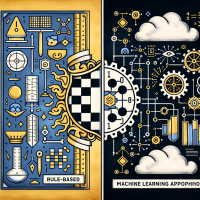
Rule-Based vs. Machine Learning Deduplication Approaches

Rule-Based vs. Machine Learning Deduplication Approaches

Choosing the Right Tool for Salesforce Deduplication: Rule-Based vs. Machine Learning Approaches When you browse Salesforce AppExchange for a deduplication solution, you’re presented with two primary options: rule-based deduplication tools or machine learning-powered applications. Both have their strengths, but understanding their methods will help you make an informed decision. Below, we’ll explore these approaches and their pros and cons to guide your choice. Why Salesforce’s Built-in Deduplication Falls Short Salesforce, while a powerful CRM, doesn’t excel at large-scale deduplication. Its native tools are limited to basic, rule-based matching, which may struggle with complexities like typos, inconsistent formatting, or unstructured data. Additionally, Salesforce’s deduplication features lack the scalability required for organizations dealing with large datasets or multiple data sources (e.g., third-party integrations, legacy systems). Businesses often need supplemental tools to address overlapping records or inconsistencies effectively. How Rule-Based Deduplication Works Popular rule-based tools on AppExchange, such as Cloudingo, DemandTools, DataGroomr, and Duplicate Check, require users to create filters that define what constitutes a duplicate. For example: Ultimately, the user manually defines the rules, deciding how duplicates are identified and handled. Benefits of Rule-Based Deduplication Drawbacks of Rule-Based Deduplication How Machine Learning-Based Deduplication Works Machine learning (ML)-powered tools rely on algorithms to identify patterns and relationships in data, detecting duplicates that may not be apparent through rigid rules. Key Features of ML Deduplication Techniques Used Benefits of ML-Based Deduplication Drawbacks of ML-Based Deduplication When to Choose Rule-Based vs. Machine Learning Deduplication Choose Rule-Based Deduplication If: Choose Machine Learning-Based Deduplication If: Selecting the Right Deduplication Tool When evaluating tools on AppExchange, consider these factors: Tectonic’s Closing Thoughts Rule-based and machine learning-based deduplication each serve distinct purposes. The right choice depends on your data’s complexity, the resources available, and your organization’s goals. Whether you’re seeking a quick, transparent solution or a powerful, scalable tool, AppExchange offers options to meet your needs and help maintain a clean Salesforce data environment. Like Related Posts Who is Salesforce? Who is Salesforce? Here is their story in their own words. From our inception, we’ve proudly embraced the identity of Read more Salesforce Marketing Cloud Transactional Emails Salesforce Marketing Cloud Transactional Emails are immediate, automated, non-promotional messages crucial to business operations and customer satisfaction, such as order Read more Salesforce Unites Einstein Analytics with Financial CRM Salesforce has unveiled a comprehensive analytics solution tailored for wealth managers, home office professionals, and retail bankers, merging its Financial Read more AI-Driven Propensity Scores AI plays a crucial role in propensity score estimation as it can discern underlying patterns between treatments and confounding variables Read more
Read More
collaboration between humans and AI

The Synergy of AI and Human Expertise in Modern Customer Service

The Balanced Approach to Customer Support In today’s demanding service landscape, businesses face a critical challenge: meeting rising customer expectations while maintaining operational efficiency. Research reveals that 77% of customers demand immediate interaction when contacting companies, while 65% expect organizations to adapt dynamically to their evolving needs. The solution lies not in choosing between artificial intelligence and human representatives, but in strategically combining their complementary strengths. The AI Advantage in Customer Service Artificial intelligence brings transformative capabilities to customer support operations: 1. Operational Efficiency 2. Intelligent Insights 3. Proactive Engagement Platforms like Salesforce’s Agentforce demonstrate AI’s potential, combining around-the-clock availability with continuous learning capabilities that adapt to changing customer needs while operating within established business parameters. The Irreplaceable Human Element While AI excels at efficiency, human representatives provide essential qualities that technology cannot replicate: 1. Emotional Intelligence 2. Complex Problem-Solving 3. Relationship Building The Power of Collaborative Service The most effective customer service strategies integrate AI and human capabilities through: 1. Intelligent Assistance ToolsPlatforms like Service Assistant demonstrate this synergy by: 2. Optimized Workflows 3. Continuous Improvement Implementing an Integrated Service Strategy Organizations can develop this balanced approach through: 1. Strategic Technology Deployment 2. Workforce Development 3. Performance Measurement The Future of Customer Service The most successful service organizations will be those that: By harmonizing artificial intelligence with human expertise, businesses can deliver the responsive, personalized service that modern customers demand while maintaining the authentic connections that build lasting loyalty. This balanced approach represents not just the present of customer service, but its future. Like Related Posts Who is Salesforce? Who is Salesforce? Here is their story in their own words. From our inception, we’ve proudly embraced the identity of Read more Salesforce Marketing Cloud Transactional Emails Salesforce Marketing Cloud Transactional Emails are immediate, automated, non-promotional messages crucial to business operations and customer satisfaction, such as order Read more Salesforce Unites Einstein Analytics with Financial CRM Salesforce has unveiled a comprehensive analytics solution tailored for wealth managers, home office professionals, and retail bankers, merging its Financial Read more AI-Driven Propensity Scores AI plays a crucial role in propensity score estimation as it can discern underlying patterns between treatments and confounding variables Read more

Read More
Financial Services Sector

Fundingo Outshines Mortgage Automator

Why Fundingo Outshines Mortgage Automator: A Salesforce-Based Perspective Introduction In the dynamic world of loan servicing and mortgage management, businesses face increasing demands for flexibility, efficiency, and scalability. While Mortgage Automator is a well-known provider, many users encounter significant challenges, including inflexible loan structures and cumbersome reporting processes. Fundingo, a Salesforce-native solution, addresses these issues head-on with a modern, adaptable, and user-friendly approach to loan management. Pain Points of Mortgage Automator Despite its established presence, Mortgage Automator comes with notable limitations: Fundingo’s Competitive Edge Fundingo offers a suite of advantages designed for modern lending institutions, making it the superior choice: Head-to-Head Comparison Feature Fundingo Mortgage Automator Flexibility High – Supports diverse loan products Limited – Rigid loan structures Reporting Automated and user-friendly Complex and manual processes Integrations Seamless with Salesforce ecosystem Poor integration capabilities Scalability Cost-effective, built-in scalability Expensive add-ons hinder growth Security & Compliance SOC 1 certified Basic security measures Summary Fundingo emerges as the ideal solution for modern loan servicing and mortgage management. By addressing the common challenges associated with Mortgage Automator—rigid loan structures, manual processes, and costly add-ons—Fundingo provides a flexible, scalable, and secure alternative. Its Salesforce-native design, built-in CRM, mobile accessibility, exceptional uptime, and robust security measures make it the best competitor in the market, empowering financial institutions to deliver exceptional service while optimizing operational efficiency. Like Related Posts Who is Salesforce? Who is Salesforce? Here is their story in their own words. From our inception, we’ve proudly embraced the identity of Read more Salesforce Marketing Cloud Transactional Emails Salesforce Marketing Cloud Transactional Emails are immediate, automated, non-promotional messages crucial to business operations and customer satisfaction, such as order Read more Salesforce Unites Einstein Analytics with Financial CRM Salesforce has unveiled a comprehensive analytics solution tailored for wealth managers, home office professionals, and retail bankers, merging its Financial Read more AI-Driven Propensity Scores AI plays a crucial role in propensity score estimation as it can discern underlying patterns between treatments and confounding variables Read more

Read More
AI evolves with tools like Agentforce and Atlas

Salesforce Atlas

Salesforce Atlas: The Brainpower Behind AI-Driven Transformation A New Era of AI for Enterprise AI is reshaping industries at an unprecedented pace, and agentic AI—AI that can think, plan, and act autonomously—is at the forefront of this revolution. Salesforce is leading the charge with Agentforce, a low-code platform that allows businesses to build, refine, and deploy autonomous AI agents across multiple business functions. At the core of this innovation is Salesforce Atlas, the reasoning engine that empowers Agentforce to tackle complex decision-making tasks just like a human. But Atlas goes further—it continuously learns, adapts, and evolves, setting a new standard for AI-driven enterprises. Let’s explore how Atlas works, its capabilities, and why it’s a game-changer for businesses. Salesforce Atlas: The Reasoning Engine Powering Agentforce Atlas is the intelligent decision-making engine that powers Agentforce’s AI agents. Rather than simply following predefined rules, Atlas evaluates data, refines its approach, and continuously learns from outcomes. When an AI agent encounters a decision point, Atlas asks: ➡️ Do I have enough data to ensure accuracy?✔ If yes, it proceeds with a decision.❌ If no, it seeks additional data or escalates the issue. This iterative learning process ensures that AI agents become more reliable, context-aware, and autonomous over time. Salesforce CEO Marc Benioff teased the potential of Atlas, revealing that: 📊 “We are seeing 90-95% resolution on all service and sales issues with the new Atlas.” That’s a staggering success rate, demonstrating how AI-driven reasoning can transform enterprise efficiency and customer engagement. How Salesforce Atlas Works: The “Flywheel” Process Atlas operates using a structured flywheel process that enables self-improvement and adaptability. Here’s how it works: 1️⃣ Data Retrieval – Atlas pulls structured and unstructured data from the Salesforce Data Cloud.2️⃣ Evaluation – It analyzes the data, generates a plan of action, and assesses whether the plan will drive the desired outcome.3️⃣ Refinement – If the plan isn’t strong enough, Atlas loops back, refines its approach, and iterates until it’s confident in its decision. This cycle repeats continuously, ensuring AI agents deliver accurate, data-driven outcomes that align with business goals. Once a task is completed, Atlas learns from the results, refining its approach to become even smarter over time. The Core Capabilities of Salesforce Atlas Atlas stands out because of its advanced reasoning, adaptive learning, and built-in safeguards—all designed to deliver trustworthy, autonomous AI experiences. 1. Advanced Reasoning & Decision-Making Atlas doesn’t just execute tasks; it thinks critically, determining the best way to approach each challenge. Unlike traditional AI models that follow rigid scripts, Atlas: 🔍 Analyzes real-time data to determine the most effective course of action.📊 Refines its decisions dynamically based on live feedback.🌍 Adapts to changing circumstances to optimize outcomes. At Dreamforce 2024, Marc Benioff demonstrated Atlas’s power by showcasing how it could optimize theme park experiences in real time, analyzing: 🎢 Ride availability👥 Guest preferences🚶 Park flow patterns This real-time decision-making showcases the game-changing potential of agentic AI. 2. Advanced Data Retrieval Atlas leverages Retrieval-Augmented Generation (RAG) to pull highly relevant, verified data from multiple sources. This ensures: ✔ More accurate responses✔ Minimized AI hallucinations✔ Reliable, data-driven insights For example, Saks Fifth Avenue uses Atlas to personalize shopping recommendations for millions of customers—tailoring experiences with precision. 3. Built-in Guardrails for Security & Compliance Salesforce recognizes the importance of AI governance, and Atlas includes robust safeguards to ensure responsible AI usage. 🔐 Ethical AI protocols – Ensures compliance with evolving regulations.🚨 Escalation capabilities – AI knows when to seek human intervention for complex issues.🌍 Hyperforce security – Provides enterprise-grade privacy and security standards. These protections ensure Atlas operates securely, responsibly, and at scale across global enterprises. 4. Reinforcement Learning & Continuous Improvement Atlas doesn’t just process data—it learns from outcomes. 🔄 Refines decisions based on real-world results📈 Optimizes performance over time⚡ Becomes increasingly efficient and tailored to business needs Whether it’s increasing sales conversions, resolving service issues, or optimizing workflows, Atlas ensures AI agents grow smarter with every interaction. Why Salesforce Atlas is a Game-Changer Salesforce Atlas isn’t just another AI tool—it’s the brain behind Salesforce’s next-generation AI ecosystem. With Atlas, businesses can: ✅ Automate complex tasks with AI-driven decision-making.✅ Deliver hyper-personalized customer experiences with confidence.✅ Scale AI-powered workflows across sales, service, and operations.✅ Ensure compliance and trust with built-in governance measures.✅ Adapt AI capabilities to meet evolving business needs. Marc Benioff envisions Atlas as the core of a future where AI and humans collaborate to drive innovation and efficiency. By combining advanced reasoning, dynamic adaptability, and enterprise security, Atlas empowers organizations to work smarter, faster, and more effectively—unlocking the full potential of agentic AI. The future of AI-driven enterprise has arrived. With Salesforce Atlas, businesses can build AI agents that don’t just follow instructions—they think, learn, and evolve. Like Related Posts Who is Salesforce? Who is Salesforce? Here is their story in their own words. From our inception, we’ve proudly embraced the identity of Read more Salesforce Marketing Cloud Transactional Emails Salesforce Marketing Cloud Transactional Emails are immediate, automated, non-promotional messages crucial to business operations and customer satisfaction, such as order Read more Salesforce Unites Einstein Analytics with Financial CRM Salesforce has unveiled a comprehensive analytics solution tailored for wealth managers, home office professionals, and retail bankers, merging its Financial Read more AI-Driven Propensity Scores AI plays a crucial role in propensity score estimation as it can discern underlying patterns between treatments and confounding variables Read more
Read More
copilots and agentic ai

Transforming Industries and Redefining Workflows

The Rise of Agentic AI: Transforming Industries and Redefining Workflows Artificial Intelligence (AI) is evolving faster than we anticipated. No longer limited to predicting outcomes or generating content, AI systems are now capable of handling complex tasks and making autonomous decisions. This new era—driven by Agentic AI—is set to redefine the workplace and transform industries. From Prediction to Autonomy: The Three Waves of AI To understand where we’re headed, it’s important to see how far AI has come. Arun Parameswaran, SVP & MD of Salesforce India, describes it as a fundamental shift: “What has changed with agents is their ability to handle complex reasoning… and, most importantly, to take action.” Unlike previous AI models that recommend or predict, Agentic AI executes tasks, reshaping customer experiences and operational workflows. Agentic AI in Action: Industry Applications At a recent Mint x Salesforce India deep-dive event on AI, industry leaders explored how Agentic AI is driving transformation across sectors. The panel featured: Here’s how Agentic AI is already making an impact: 1. Revolutionizing Customer Support Traditional chatbots have limited capabilities. Agentic AI, however, understands urgency and context. 2. Accelerating Business Decisions In finance and supply chain management, AI agents analyze vast amounts of data and execute decisions autonomously. 3. Transforming Travel & Aviation Airlines are leveraging AI to optimize booking systems, reduce costs, and enhance efficiency. 4. Automating Wealth Management AI agents in financial services monitor markets, adjust strategies, and offer personalized investment recommendations in real time. The Risks & Responsibilities of Agentic AI With great autonomy comes great responsibility. The potential of Agentic AI is vast—but so are the challenges: The Future of Work: AI as a Partner, Not a Replacement Despite concerns about job displacement, AI is more likely to reshape rather than replace roles. What Are AI Agents? AI agents go beyond traditional models like ChatGPT or Gemini. They are proactive, self-learning systems that: They fall into two categories: “AI agents don’t just wait for commands; they anticipate needs and act,” says Dr. Tomer Simon, Chief Scientist at Microsoft Research Israel. AI Agents in the Workplace: A Shift in Roles AI agents streamline processes, but they don’t eliminate the need for human oversight. Salesforce’s Agentforce is a prime example: “Companies need to integrate AI, not fear it. Those who fail to adopt AI tools risk drowning in tasks AI can handle,” warns Dr. Omri Allouche, Chief Scientist at Gong. The Road Ahead: AI-Driven Business Growth Agentic AI is not about replacing people—it’s about empowering them. As organizations re-evaluate workflows and embrace AI collaboration, the companies that act early will gain a competitive edge in efficiency and innovation. Final Thought The AI revolution is here, and Agentic AI is at its forefront. The key question isn’t whether AI will transform industries—it’s how organizations will adapt and thrive in this new era. Like Related Posts Who is Salesforce? Who is Salesforce? Here is their story in their own words. From our inception, we’ve proudly embraced the identity of Read more Salesforce Marketing Cloud Transactional Emails Salesforce Marketing Cloud Transactional Emails are immediate, automated, non-promotional messages crucial to business operations and customer satisfaction, such as order Read more Salesforce Unites Einstein Analytics with Financial CRM Salesforce has unveiled a comprehensive analytics solution tailored for wealth managers, home office professionals, and retail bankers, merging its Financial Read more AI-Driven Propensity Scores AI plays a crucial role in propensity score estimation as it can discern underlying patterns between treatments and confounding variables Read more

Read More
AI Agents and Work

Maximizing Generative AI in Learning and Development

Maximizing Generative AI in Learning and DevelopmentHow organisations can harness the power of generative AI to enhance learning and development with strategic integration, best practices, and a culture of continuous growth CREDIT: This is an edited version of an article originally published on Vistage Organisations are increasingly recognising the value of generative AI in learning and development. While your employees may already be using it, they may not yet be maximising its potential due to limited resources or understanding. This article offers strategies for organisations to more effectively leverage generative AI and amplify its impact on their teams. A global survey of 14,000 workers by Salesforce in late 2023 revealed that 28% were already using generative AI at work, with over half doing so without formal approval. Similarly, a 2023 McKinsey report echoed these findings, and these numbers are likely even higher now. A recent study by Harvard Business School and Boston Consulting Group (BCG) highlighted the transformative impact of AI, showing that consultants using generative AI completed tasks 22% faster and produced 40% higher quality work compared to those not using it. Unlocking AI Insights Begin by conducting an internal survey to better understand how your employees are using generative AI. Gather data on the tools they use, how often they use them, and how these tools enhance their work. Frame the survey as an opportunity to learn about their experiences rather than as an evaluation or compliance check. Once you’ve analysed the results, identify employees who are using generative AI in creative and effective ways. These individuals—often informal leaders—can provide valuable insights into the practical applications of AI, as well as the challenges they face and how they overcome them. Fostering a Learning Culture Incorporating generative AI into your organisation’s learning and development strategy helps employees tap into the knowledge of early adopters while aligning AI use with broader organisational goals. Cultivate a culture that prioritises continuous learning and upskilling to stay ahead in the rapidly evolving AI landscape. Regularly update training materials to reflect new advancements in AI. Provide opportunities for employees to attend conferences, webinars, and other educational events to stay current. Encourage peer learning by fostering a culture where employees are motivated to share their experiences, tips, and best practices with one another. Developing Best Practices Leverage the expertise of your AI pioneers to establish best practices that are tailored to your organisation’s needs. Create a collaborative environment where these early adopters can share their experiences and insights, and involve them in the development of formal training programs. This ensures that the content is both relevant and practical for your workforce. Pilot these best practices with a small, controlled group of employees before rolling them out more broadly. This allows you to gather feedback, refine the practices, and address any issues. Additionally, create comprehensive guides, FAQs, and video tutorials to give employees easy access to the information they need. Tracking the progress and outcomes of your AI-related learning initiatives is essential. Use data to customise learning experiences and promote a growth mindset among employees. By integrating generative AI into your learning and development strategy, you can tap into internal expertise to drive innovation and improve efficiency across the organisation. Like Related Posts Who is Salesforce? Who is Salesforce? Here is their story in their own words. From our inception, we’ve proudly embraced the identity of Read more Salesforce Marketing Cloud Transactional Emails Salesforce Marketing Cloud Transactional Emails are immediate, automated, non-promotional messages crucial to business operations and customer satisfaction, such as order Read more Salesforce Unites Einstein Analytics with Financial CRM Salesforce has unveiled a comprehensive analytics solution tailored for wealth managers, home office professionals, and retail bankers, merging its Financial Read more AI-Driven Propensity Scores AI plays a crucial role in propensity score estimation as it can discern underlying patterns between treatments and confounding variables Read more

Read More
ai in marketing

Guide to AI in Marketing

The Ultimate Guide to AI in Marketing AI-powered algorithms and machine learning are revolutionizing the marketing landscape by enabling swift processing and analysis of vast datasets. Unlike traditional methods, AI efficiently organizes large volumes of data in real time, redefining how marketing strategies are created and executed. Marketing success hinges on effective data utilization, precise targeting, engaging content, and seamless workflows. AI simplifies these complexities, making them more accessible, scalable, and impactful. Here’s how AI transforms modern marketing. Unleashing AI’s Potential in Marketing AI has become a cornerstone for enhancing customer experiences and boosting marketing productivity. However, to fully leverage AI, it’s essential to understand its capabilities and implementation strategies. Think of AI as your vehicle for uncovering actionable customer insights, optimizing campaigns, and creating tailored customer experiences. While the pace of AI’s evolution may seem overwhelming, this guide will help you take control and confidently drive your AI-powered marketing efforts. Future Trends in Generative AI and Marketing Generative AI is unlocking new possibilities in customer engagement. This guide explores the challenges, advantages, and emerging trends in AI-driven marketing. From attracting customers to maximizing ROI, you’ll discover best practices and real-world examples of successful AI adoption. How AI Works in Marketing AI uses advanced algorithms and pattern recognition to simulate human intelligence in processing data. Through machine learning and deep learning, it identifies trends, predicts outcomes, and automates tasks typically requiring human intervention. Like humans learning from experience, AI improves with practice. It rapidly identifies consumer preferences, behaviors, and purchasing patterns. Two primary types of AI stand out in marketing: These AI types work together—predictive AI extracts insights from data, while generative AI uses those insights to create personalized content and solutions. This synergy enables marketers to automate tasks, segment audiences, and deliver tailored messaging based on individual preferences. AI in Action: Enhancing Customer Engagement AI enables marketers to engage with customers more effectively by: The Power of AI-Driven Marketing Analytics AI-powered analytics revolutionize decision-making by identifying patterns and offering actionable insights. Marketers can use AI tools to: Maximizing ROI with AI AI enables businesses to expand audience reach, improve conversion rates, and enhance customer relationships through personalized content and product recommendations. Its real-time analytics empower marketers to make informed decisions, while automation frees up time for strategic innovation. Navigating Challenges in AI Marketing AI’s potential comes with challenges, including: By prioritizing ethical practices, transparent data policies, and robust compliance measures, marketers can overcome these obstacles and leverage AI responsibly. Best Practices for AI-Driven Marketing To maximize the benefits of AI, marketers should: The Future: AI Copilots in Marketing AI copilots—conversational AI integrated into platforms—are transforming marketing workflows. These tools draft content, provide recommendations, and offer guidance based on CRM data, significantly enhancing efficiency. Looking Ahead: Emerging Trends in AI Marketing Over the next two years, advancements in AI will continue to reshape marketing. Key trends include: By embracing these advancements, marketers can deliver exceptional customer experiences, drive business growth, and stay competitive in an evolving digital landscape. AI is not just a tool—it’s a transformative force. By integrating AI into your marketing strategy, you can unlock unparalleled opportunities to engage customers, optimize campaigns, and propel your organization into the future. Like Related Posts Who is Salesforce? Who is Salesforce? Here is their story in their own words. From our inception, we’ve proudly embraced the identity of Read more Salesforce Marketing Cloud Transactional Emails Salesforce Marketing Cloud Transactional Emails are immediate, automated, non-promotional messages crucial to business operations and customer satisfaction, such as order Read more Salesforce Unites Einstein Analytics with Financial CRM Salesforce has unveiled a comprehensive analytics solution tailored for wealth managers, home office professionals, and retail bankers, merging its Financial Read more AI-Driven Propensity Scores AI plays a crucial role in propensity score estimation as it can discern underlying patterns between treatments and confounding variables Read more

Read More
Public Sector Spring 25 Advances

Public Sector Spring 25 Advances

The Salesforce Spring ’25 Release: Transforming Public Sector Operations The Salesforce Spring ’25 release has arrived, bringing transformative updates to public sector workflows, including faster document generation, AI-powered household insights, and smarter grantmaking processes. At Tectonic, we’re passionate about driving digital transformation for our clients. Here’s a deep dive into the key enhancements and how they can elevate your public sector operations. 1. Faster, More Flexible Document Generation OmniStudio Document Generation 2.0 introduces significant improvements in speed and flexibility for public sector workflows. With higher batch limits, support for custom fonts, and a document previewer, teams can generate documents more efficiently and accurately. Whether you’re managing applications, approvals, or citizen communications, this update reduces processing times and enhances overall workflows. This transition also improves performance by moving PDF generation from client-side to server-side, ensuring a seamless upgrade with minimal regression impact. The enhanced functionality makes it easier to handle high-demand periods and large document volumes. Pro Tip: Transition to OmniStudio Document Generation 2.0 before Document Generation 1.0 is retired in July 2025. Use the preview tool to refine templates during peak times. 2. AI-Powered Household Overviews for Caseworkers Salesforce Generative AI introduces a new household overview feature, empowering caseworkers with detailed insights into benefit applicants’ households. This tool streamlines eligibility assessments, enabling faster and more accurate decisions. It even automates energy savings calculations for Clean Energy Programs, aligning citizen support with sustainability goals. By simplifying data collection and decision-making, caseworkers can focus on high-priority cases, ensuring faster and more equitable approvals. Pro Tip: Pair this feature with Energy Cloud insights to enhance decision-making and allocate resources more effectively for citizens in need. 3. Supercharge Grantmaking with Stage Management Stage Management automates key grantmaking tasks, ensuring compliance and improving efficiency. Grant managers can bulk-assign reviews, reducing manual workload and freeing up time for high-priority tasks. This feature provides better control by defining each stage of the grant process, enabling faster and more accurate progress. With automated workflows and robust progress tracking, Stage Management ensures timely execution of grant operations. Pro Tip: Use automated workflows to manage multiple grants simultaneously, ensuring deadlines are met and every stage is completed on time. 4. Empower Employees with Personalized Care Plans Spring ’25 introduces personalized care plans, a game-changer for public sector organizations. These plans allow agencies to create and assign tailored growth and well-being strategies for employees. By setting customizable goals and aligning benefits with individual needs, organizations can foster a supportive work environment that drives employee engagement and retention. This targeted approach enhances morale and supports professional development, making it invaluable for workforce motivation and talent retention. Pro Tip: Use personalized care plans during onboarding to set new hires up for success or integrate them into professional development initiatives for ongoing growth and engagement. 5. Unified Voice Routing for Seamless Citizen Interaction (Beta) Unified Voice Routing consolidates communication channels in Salesforce, streamlining citizen interactions. By routing voice calls based on skills or specific representatives, public sector teams can reduce wait times and deliver more effective service. This feature also introduces a new Reassign button, enabling teams to transfer work between queues, service reps, AI agents, skills, or Omni-Channel flows. Reassigned tasks are automatically routed to the correct destination. Pro Tip: Combine Unified Voice Routing with Amazon Connect to route calls to the most qualified representatives, ensuring quick and effective resolutions. Conclusion The Salesforce Spring ’25 updates are a game-changer for public sector organizations, enabling teams to deliver faster, more efficient, and more impactful services. From AI-powered household insights to smarter grantmaking and seamless communication, these tools empower organizations to better serve their communities. At Tectonic, we’re excited to help you leverage these updates to optimize your operations and make a greater impact in your community. Want to learn more about how these tools can transform your workflows? Contact us today, and let’s explore the possibilities together! Like Related Posts Who is Salesforce? Who is Salesforce? Here is their story in their own words. From our inception, we’ve proudly embraced the identity of Read more Salesforce Marketing Cloud Transactional Emails Salesforce Marketing Cloud Transactional Emails are immediate, automated, non-promotional messages crucial to business operations and customer satisfaction, such as order Read more Salesforce Unites Einstein Analytics with Financial CRM Salesforce has unveiled a comprehensive analytics solution tailored for wealth managers, home office professionals, and retail bankers, merging its Financial Read more AI-Driven Propensity Scores AI plays a crucial role in propensity score estimation as it can discern underlying patterns between treatments and confounding variables Read more
Read More
gettectonic.com