

Consulting Archives - gettectonic.com - Page 2
salesforce for manufacturing

Salesforce for Manufacturing

Salesforce for Manufacturing: Field Service Spark that Fuels Operational Excellence Traffic control ensures vehicles stay on course, avoid disruptions, and arrive safely, safeguarding travelers. Similarly, Salesforce Field Service (formerly known as Salesforce Field Service Lightning) acts as the traffic cop for effective field service management, ensuring seamless operations. It assigns the right tasks to the right technicians with real-time updates and provides essential tools for optimal efficiency. This comprehensive platform addresses routing needs while streamlining processes to boost operational outcomes. “The key is not to prioritize what’s on your schedule, but to schedule your priorities.” – Stephen Covey Salesforce Field Service eliminates guesswork in scheduling. By leveraging data-driven strategies, it enhances operational efficiency and integrates effortlessly into manufacturing workflows. Implementation of this platform results in a 32% increase in mobile worker productivity, making it an essential solution for manufacturers today. To unlock its full potential, partnering with a Salesforce consulting expert like Tectonic ensures the solution is tailored to your specific needs. In this insight, we’ll explore how Salesforce Field Service can optimize manufacturing operations, improve productivity, and transform field service management into a streamlined and efficient process. Understanding Salesforce for Manufacturing Traffic control’s efforts to ensure smooth operations mirror the complexity of managing manufacturing field service tasks. Manufacturers often face challenges such as technician scheduling difficulties and communication breakdowns. Salesforce Field Service effectively addresses these issues with features like: With Salesforce Field Service, manufacturers achieve control, visibility, and operational efficiency, transforming chaos into coordinated success. 90% of decision-makers say their company invests in specialized technology to improve mobile worker productivity. – Salesforce Benefits of Salesforce Field Service in Manufacturing Salesforce Use Cases for Manufacturing Real-Life Success Stories with Salesforce Field Service Why Tectonic is the Ideal Partner for Salesforce Field Service Implementation Problem Statement: A leading electrical appliance manufacturer struggled with outdated manual scheduling, inefficient workflows, and excessive field visits, negatively impacting efficiency and customer satisfaction. Solution Offered: Salesforce implemented Salesforce Service Cloud integrated with Field Service, optimizing scheduling, dispatching, and field operations for enhanced productivity and superior customer service. Results Achieved: Your Path to Field Service Excellence Just as traffic control ensures safe and timely travelts, Salesforce Field Service organizes and streamlines field operations. With its capabilities for real-time scheduling, proactive maintenance, and optimized routing, it becomes an invaluable resource for manufacturers. Tectonic’s Salesforce consulting expertise ensures your manufacturing needs are met with precision. By implementing a tailored solution, you’ll unlock operational efficiency, enhance customer satisfaction, and drive business growth. Contact us now to take your manufacturing success to the next level! Like Related Posts Who is Salesforce? Who is Salesforce? Here is their story in their own words. From our inception, we’ve proudly embraced the identity of Read more Salesforce Marketing Cloud Transactional Emails Salesforce Marketing Cloud Transactional Emails are immediate, automated, non-promotional messages crucial to business operations and customer satisfaction, such as order Read more Salesforce Unites Einstein Analytics with Financial CRM Salesforce has unveiled a comprehensive analytics solution tailored for wealth managers, home office professionals, and retail bankers, merging its Financial Read more AI-Driven Propensity Scores AI plays a crucial role in propensity score estimation as it can discern underlying patterns between treatments and confounding variables Read more


Read More
Salesforce Data Migration Tools

Salesforce Data Migration Tools

In the current age of digital transformation, effective data migration is essential, especially as cloud adoption accelerates. Research from Foundry reveals that 63% of IT leaders have increased their cloud migrations, but 90% face challenges—primarily budgetary constraints. This highlights the importance of thoughtful planning and strategic execution. In this context, we’ll explore the significance of successful Salesforce data migration and present a nine-step roadmap to ensure a seamless transition. Additionally, we’ll cover solutions for data preparation and the top five Salesforce data migration tools that can help turn migration challenges into growth opportunities. Salesforce Data Migration ChecklistDownload our e-book to quickly and efficiently migrate data from Excel spreadsheets and CRM systems to Salesforce. Why is Data Migration Important?In 2010, I bought my first smartphone and struggled to transfer data from my outdated phone. My contacts were vital, but the old phone lacked proper data transfer options. Determined not to re-enter everything manually, I searched for a solution. Eventually, I found a method to extract data into a CSV file, which I converted to vCard format to transfer successfully. This experience reinforced how essential data migration is—not only for businesses but also for everyday situations. For organizations looking to modernize, data migration is a crucial step in upgrading IT infrastructure. It enables smooth transitions from legacy systems to modern platforms like Salesforce, enhancing efficiency, scalability, and data accessibility. Effective data migration improves data management, reduces costs tied to outdated systems, and supports better decision-making through improved analytics. It also ensures data integrity and security, aligning IT capabilities with evolving business needs, fostering innovation, and keeping a competitive edge. What is Data Migration in Salesforce?Whether you are already using Salesforce or considering adoption, one common question arises: “How do I migrate my data to Salesforce?” Salesforce data migration involves moving information from external systems like legacy CRMs or local databases into Salesforce. This process is critical not only for protecting data integrity but also for enabling better decision-making, improving customer service, and promoting organizational growth. A well-planned data migration strategy ensures a smooth transition to Salesforce, maximizing its potential and enhancing business efficiency. 9-Step Salesforce Data Migration PlanPreparing for a Salesforce data migration? Follow these nine essential steps for a seamless process: Need Help with Data Migration to Salesforce?We offer consulting services to guide you through the data migration process, from auditing data sources to executing the migration strategy. Tectonic is here to help. Top 5 Salesforce Data Migration ToolsHere’s a quick comparison of five Salesforce data migration tools to help you choose the right solution: For hassle-free data migration, reach out to Tectonic for a tailored plan that minimizes downtime and maximizes operational efficiency. Like Related Posts Who is Salesforce? Who is Salesforce? Here is their story in their own words. From our inception, we’ve proudly embraced the identity of Read more Salesforce Marketing Cloud Transactional Emails Salesforce Marketing Cloud Transactional Emails are immediate, automated, non-promotional messages crucial to business operations and customer satisfaction, such as order Read more Salesforce Unites Einstein Analytics with Financial CRM Salesforce has unveiled a comprehensive analytics solution tailored for wealth managers, home office professionals, and retail bankers, merging its Financial Read more AI-Driven Propensity Scores AI plays a crucial role in propensity score estimation as it can discern underlying patterns between treatments and confounding variables Read more

Read More
RAGate

RAGate

RAGate: Revolutionizing Conversational AI with Adaptive Retrieval-Augmented Generation Building Conversational AI systems is challenging.It’s not just feasible; it’s complex, resource-intensive, and time-consuming. The difficulty lies in creating systems that can not only understand and generate human-like responses but also adapt effectively to conversational nuances, ensuring meaningful engagement with users. Retrieval-Augmented Generation (RAG) has already transformed Conversational AI by combining the internal knowledge of large language models (LLMs) with external knowledge sources. By leveraging RAG with business data, organizations empower their customers to ask natural language questions and receive insightful, data-driven answers. The challenge?Not every query requires external knowledge. Over-reliance on external sources can disrupt conversational flow, much like consulting a book for every question during a conversation—even when internal knowledge is sufficient. Worse, if no external knowledge is available, the system may respond with “I don’t know,” despite having relevant internal knowledge to answer. The solution?RAGate — an adaptive mechanism that dynamically determines when to use external knowledge and when to rely on internal insights. Developed by Xi Wang, Procheta Sen, Ruizhe Li, and Emine Yilmaz and introduced in their July 2024 paper on Adaptive Retrieval-Augmented Generation for Conversational Systems, RAGate addresses this balance with precision. What Is Conversational AI? At its core, conversation involves exchanging thoughts, emotions, and information, guided by tone, context, and subtle cues. Humans excel at this due to emotional intelligence, socialization, and cultural exposure. Conversational AI aims to replicate these human-like interactions by leveraging technology to generate natural, contextually appropriate, and engaging responses. These systems adapt fluidly to user inputs, making the interaction dynamic—like conversing with a human. Internal vs. External Knowledge in AI Systems To understand RAGate’s value, we need to differentiate between two key concepts: Limitations of Traditional RAG Systems RAG integrates LLMs’ natural language capabilities with external knowledge retrieval, often guided by “guardrails” to ensure responsible, domain-specific responses. However, strict reliance on external knowledge can lead to: How RAGate Enhances Conversational AI RAGate, or Retrieval-Augmented Generation Gate, adapts dynamically to determine when external knowledge retrieval is necessary. It enhances response quality by intelligently balancing internal and external knowledge, ensuring conversational relevance and efficiency. The mechanism: Traditional RAG vs. RAGate: An Example Scenario: A healthcare chatbot offers advice based on general wellness principles and up-to-date medical research. This adaptive approach improves response accuracy, reduces latency, and enhances the overall conversational experience. RAGate Variants RAGate offers three implementation methods, each tailored to optimize performance: Variant Approach Key Feature RAGate-Prompt Uses natural language prompts to decide when external augmentation is needed. Lightweight and simple to implement. RAGate-PEFT Employs parameter-efficient fine-tuning (e.g., QLoRA) for better decision-making. Fine-tunes the model with minimal resource requirements. RAGate-MHA Leverages multi-head attention to interactively assess context and retrieve external knowledge. Optimized for complex conversational scenarios. RAGate Varients How to Implement RAGate Key Takeaways RAGate represents a breakthrough in Conversational AI, delivering adaptive, contextually relevant, and efficient responses by balancing internal and external knowledge. Its potential spans industries like healthcare, education, finance, and customer support, enhancing decision-making and user engagement. By intelligently combining retrieval-augmented generation with nuanced adaptability, RAGate is set to redefine the way businesses and individuals interact with AI. Like Related Posts Who is Salesforce? Who is Salesforce? Here is their story in their own words. From our inception, we’ve proudly embraced the identity of Read more Salesforce Unites Einstein Analytics with Financial CRM Salesforce has unveiled a comprehensive analytics solution tailored for wealth managers, home office professionals, and retail bankers, merging its Financial Read more AI-Driven Propensity Scores AI plays a crucial role in propensity score estimation as it can discern underlying patterns between treatments and confounding variables Read more Tectonic’s Successful Salesforce Track Record Salesforce Technology Services Integrator – Tectonic has successfully delivered Salesforce in a variety of industries including Public Sector, Hospitality, Manufacturing, Read more

Read More
Salesforce Agentforce Integration

Agentforce at Work

Agentforce Salesforce Agentforce in Action: A Practical Example of Using Agents in Salesforce Autonomous Agents on the Agentforce Platform Agentforce represents a transformative shift in Salesforce’s strategy, poised to redefine how users engage with their CRM. By introducing both assistive AI—enhanced by generative AI for capabilities like summaries and sales emails—and autonomous AI, which empowers agents to automate actions without human oversight, Agentforce helps users operate more efficiently in Salesforce. Despite the excitement around Agentforce, most blogs and marketing materials focus on AI hype rather than practical applications. This insight focuses on illustrating how these tools work and the tangible value they can provide for your organization’s custom processes. Curious about setting up Agentforce agents using both out-of-the-box actions and custom actions? Let’s dive in. What is Agentforce? Agentforce is Salesforce’s conversational AI tool for CRM. In simple terms, it lets users “talk” to Salesforce. Powered by generative AI and the Atlas Reasoning Engine, Agentforce processes user input to perform tasks like summarizing data from objects, updating fields, and generating content such as emails or knowledge articles. This innovative tool is only at the beginning of its journey, likely setting the stage for a future where CRM interactions may evolve beyond traditional form-based interfaces to more intuitive chatbot-style engagement. Scenario: Managing Sales Pipeline Consider a salesperson with the daily objectives of tracking deals, managing pipeline opportunities, and identifying potential risks. Traditionally, this would require manually navigating numerous Salesforce objects, risking data inconsistencies and user errors. Agentforce’s assistive actions can streamline much of this, automating processes to identify key deals, summarize progress, and track deal risks across the pipeline. Let’s take a closer look at configuring a custom action for a pipeline summary. All powered by Salesforce Agentforce. Step-by-Step Guide to Configuring a Pipeline Summary Action Agentforce Use Cases: Getting Started Agentforce offers powerful tools for implementing AI-based functions within Salesforce, but to realize productivity gains, consider the following: Agentforce’s standard actions are a great starting point, providing immediate productivity impacts that can be enhanced as you customize actions to meet specific needs. For tailored guidance on integrating Agentforce, explore Tectonic’s Salesforce Agentforce Consulting Services. Tectonic’s expertise can support your organization in optimizing user experience, boosting productivity, and training users to responsibly leverage Agentforce’s capabilities across industries and channels. Like1 Related Posts Who is Salesforce? Who is Salesforce? Here is their story in their own words. From our inception, we’ve proudly embraced the identity of Read more Salesforce Marketing Cloud Transactional Emails Salesforce Marketing Cloud Transactional Emails are immediate, automated, non-promotional messages crucial to business operations and customer satisfaction, such as order Read more Salesforce Unites Einstein Analytics with Financial CRM Salesforce has unveiled a comprehensive analytics solution tailored for wealth managers, home office professionals, and retail bankers, merging its Financial Read more AI-Driven Propensity Scores AI plays a crucial role in propensity score estimation as it can discern underlying patterns between treatments and confounding variables Read more

Read More
Agentic AI Race

Agentforce Accelerator to Empower Nonprofits

Salesforce Introduces Agentforce Accelerator to Empower Nonprofits Salesforce has unveiled the Salesforce Accelerator — Agents for Impact, a groundbreaking initiative aimed at helping nonprofits harness the power of Agentforce. This suite of AI-driven tools enables organizations to build and deploy autonomous AI agents that can perform critical tasks across various functions. Through a combination of technology, funding, and expertise, the accelerator aims to empower nonprofits to enhance operational efficiency and amplify their impact in an AI-driven future. Why It Matters Nonprofits often face challenges such as staffing shortages and burnout, limiting their ability to address pressing social and environmental issues. AI agents can play a transformative role by augmenting nonprofit teams, enabling them to: While the potential is significant, developing and implementing AI solutions often remains financially and technically inaccessible for many nonprofits. How the Accelerator Works The Salesforce Accelerator — Agents for Impact bridges this gap by providing a comprehensive support package: Nonprofits from all focus areas can apply for the accelerator starting October 29, 2024, with selected organizations notified by December. Track Record of Impact The Agents for Impact initiative builds on Salesforce’s broader accelerator program, which has provided million since 2022 to support innovative nonprofit solutions in areas like AI, education, and climate action. Scaling Nonprofit Potential With the launch of Salesforce Accelerator — Agents for Impact, nonprofits now have unprecedented opportunities to adopt AI-driven solutions that enhance efficiency and scale their missions. This program reflects Salesforce’s ongoing commitment to empowering organizations to drive meaningful change in an increasingly AI-powered world. Like1 Related Posts Who is Salesforce? Who is Salesforce? Here is their story in their own words. From our inception, we’ve proudly embraced the identity of Read more Salesforce Marketing Cloud Transactional Emails Salesforce Marketing Cloud Transactional Emails are immediate, automated, non-promotional messages crucial to business operations and customer satisfaction, such as order Read more Salesforce Unites Einstein Analytics with Financial CRM Salesforce has unveiled a comprehensive analytics solution tailored for wealth managers, home office professionals, and retail bankers, merging its Financial Read more AI-Driven Propensity Scores AI plays a crucial role in propensity score estimation as it can discern underlying patterns between treatments and confounding variables Read more

Read More
Informed Decision-Making

Informed Decision-Making

Informed Decision-Making Through Data Visualization: Power BI vs. Tableau Today’s businesses need to make informed decisions by leveraging organized and analyzed data. Data visualization is a key method for extracting insights from this data, and Power BI and Tableau are two leading tools that often spark debate among experts. Both are highly regarded for their ability to visualize data, and CTOs frequently compare Power BI vs. Tableau to determine the best fit for their needs. Why Power BI and Tableau Stand OutBoth tools excel at data visualization, making them top choices for business intelligence (BI) solutions. They offer seamless integration with various platforms, can handle large volumes of data, and provide predictive analytics capabilities. To help CTOs and other decision-makers boost efficiency, let’s dive into a comparison of Power BI vs. Tableau and examine how each tool measures up. Power BI Microsoft’s Power BI is a leading BI tool designed to transform data from diverse sources into insightful visual reports. It allows users to create, share, and manage analytical reports, ensuring accessibility at all times. As part of the Microsoft ecosystem, Power BI is ideal for large organizations that already use Microsoft products. Tableau Tableau delivers powerful data visualization with flexible deployment options, allowing users to seamlessly access insights. With its integration into Salesforce Data Cloud, Tableau offers a fast and scalable way to work with customer data in real time. Its strong data-handling capabilities make it popular among larger organizations and data experts. Power BI vs. Tableau: Key Differences Let’s explore the key differences between Power BI and Tableau to guide your informed decision-making. Data Visualization and User Interface Data Integration and Connectivity for Informed Decision-Making Data Handling and Performance Ease of Learning Programming Tools Support Pricing Microsoft Power BI vs. Salesforce Tableau: Pros and Cons Power BI Pros Tableau Pros Which is Better: Power BI or Tableau? When comparing Microsoft Power BI vs. Tableau, the right choice depends on your organization’s size, technical expertise, and specific needs. For smaller businesses and those already using Microsoft tools, Power BI is often the best fit. On the other hand, larger organizations managing substantial datasets might favor Tableau for its advanced capabilities. Ultimately, the decision between Power BI vs. Tableau should be based on your unique business requirements and the level of technical expertise available within your team. Like Related Posts Who is Salesforce? Who is Salesforce? Here is their story in their own words. From our inception, we’ve proudly embraced the identity of Read more Salesforce Marketing Cloud Transactional Emails Salesforce Marketing Cloud Transactional Emails are immediate, automated, non-promotional messages crucial to business operations and customer satisfaction, such as order Read more Salesforce Unites Einstein Analytics with Financial CRM Salesforce has unveiled a comprehensive analytics solution tailored for wealth managers, home office professionals, and retail bankers, merging its Financial Read more AI-Driven Propensity Scores AI plays a crucial role in propensity score estimation as it can discern underlying patterns between treatments and confounding variables Read more

Read More
How Skechers Solved Its Ecommerce Challenges

How Skechers Solved Its Ecommerce Challenges

Skechers Boosts Direct-to-Consumer Sales with Ecommerce Platform Upgrades Skechers, now a global brand in 2024, credits its recent ecommerce platform upgrades for saving time and increasing direct-to-consumer sales. However, it wasn’t always equipped with the right technology to support its massive growth. During Salesforce’s Dreamforce conference in San Francisco, Eric Cheng, Skechers USA Inc.’s director of ecommerce architecture, shared insights into how key technology decisions helped the brand expand and enhance its website and content capabilities. “Today, we’re present in over 180 countries worldwide,” Cheng said, speaking on stage at the Moscone Center. Skechers’ journey began in 1992, and its expansion has taken the brand across borders, reaching millions of customers worldwide. “We connect hundreds of millions of customers through our retail stores and ecommerce platform to deliver a unique experience,” Cheng noted, emphasizing the need to meet the diverse demands of each market. Skechers ranks No. 273 in the Top 1000, Digital Commerce 360’s ranking of the largest North American e-retailers by online sales, where it is categorized as an Apparel & Accessories retailer. Digital Commerce 360 projects that Skechers will reach 0.65 million in online sales by 2024. Ecommerce Platform Challenges Cheng acknowledged that Skechers’ digital transformation wasn’t immediate: “The journey did not just happen overnight; it took time and effort.” Skechers faced challenges in three key areas: content management, scalability, and customer experience. The legacy system was inadequate, lacking robust tools for efficient content delivery, previewing scheduled content, and handling localization. As Cheng described, launching a marketing page often required the content team to be on standby at midnight—an unsustainable approach for 17 countries. How Skechers Solved Its Ecommerce Challenges To overcome these hurdles, Skechers partnered with Astound Digital. Together, they implemented Salesforce Service Cloud and Manhattan Active Omni for order management. Kyle Montgomery, senior vice president of commerce at Astound Digital, joined Cheng on stage and highlighted the goal: “Their vision was to unify, supply, and scale.” This transformation enabled Skechers to bring 17 countries in Europe, Japan, and North America onto a single platform. Jennifer Lane, Salesforce’s director of success guides, also emphasized the flexibility achieved using Salesforce’s Page Designer and localization solutions from Salesforce’s AppExchange. Integrations with Thomson Reuters for tax, CyberSource for payments, and Salesforce Marketing Cloud for personalization further enhanced Skechers’ capabilities. The Results Cheng highlighted three key improvements after the ecommerce overhaul. First, content creation and localization tools improved operational efficiency by over 500%. The time to launch in new markets was dramatically reduced from five months to just a few weeks. Additionally, Skechers saw a notable sales boost, with a 24.5% increase in its direct-to-consumer segment during Q1 2023. Skechers’ success demonstrates the significant impact of a well-executed ecommerce platform upgrade, allowing the brand to scale globally while improving customer experience and operational efficiency. Contact Tectonic to learn what Salesforce can do for you. Like Related Posts Who is Salesforce? Who is Salesforce? Here is their story in their own words. From our inception, we’ve proudly embraced the identity of Read more Salesforce Marketing Cloud Transactional Emails Salesforce Marketing Cloud Transactional Emails are immediate, automated, non-promotional messages crucial to business operations and customer satisfaction, such as order Read more Salesforce Unites Einstein Analytics with Financial CRM Salesforce has unveiled a comprehensive analytics solution tailored for wealth managers, home office professionals, and retail bankers, merging its Financial Read more AI-Driven Propensity Scores AI plays a crucial role in propensity score estimation as it can discern underlying patterns between treatments and confounding variables Read more

Read More
Tableau Einstein Alliance to Help Partners Drive Success in the Agent Era

Tableau Einstein Alliance to Help Partners Drive Success in the Agent Era

Salesforce Unveils Tableau Einstein Alliance to Empower Partners in the AI-Driven Agent Era Salesforce today announced the launch of the Tableau Einstein Alliance, a new partner community designed to create and deliver AI-driven solutions and analytical agents for Tableau Einstein. Built on the Salesforce platform and integrated with Agentforce, this initiative aims to help partners accelerate success in the emerging AI landscape. Tableau Einstein Alliance to Help Partners Drive Success in the Agent Era The Tableau Einstein Alliance offers partners a range of exclusive benefits, including early access to Salesforce’s product roadmaps, in-house AI experts, marketing support, and co-selling opportunities. Through the Alliance, partners will be able to develop agents, apps, and AI-driven solutions, enabling customers to navigate the autonomous AI revolution and rapidly extract value from their data and AI investments. The Alliance is set to launch in February 2025 with 25 founding members, including Tectonic, Capgemini, Deloitte, IBM, and Slalom. Solutions developed within the Alliance will be available on both the Salesforce AppExchange and the forthcoming Tableau Marketplace, offering developers a platform to create, share, and monetize analytical assets. Why It Matters:Partner ecosystems have been crucial in advancing major technological innovations, from cloud computing to software-as-a-service. With the rise of Agentforce, building a dynamic partner community is more critical than ever to drive the next wave of AI and analytics adoption. Salesforce’s Perspective: “Tableau’s success is deeply rooted in our partners’ commitment to our customers. Now, we’re investing in the Tableau Einstein Alliance to cultivate an ecosystem of visionary and innovative partners who will integrate Agentforce into every facet of analytics. The future of data and analytics is here, and our partners are essential to this journey.”— Ryan Aytay, CEO, Tableau Industry Perspectives: “Atrium has championed the vision of unified analytics since Tableau joined the Salesforce ecosystem. We’ve seen the incredible potential of Data Cloud and Tableau Cloud together, and we’re thrilled to help bring Tableau Einstein to market. Its integrated features will offer customers unprecedented productivity.”— Chris Heineken, CEO, Atrium “Tectonic’s “Insight to Action” methodology (i2a) is directly improved by the launch of the Tableau Einstein Alliance. By utilizing automated AI-solutions to power data-driven insights, we are able to deliver additional value to our customers.”— Dan Grossnickle, Tectonic “Tableau Einstein represents the next step in Salesforce’s data platforms and generative AI products. The value for clients from these data-driven insights is immense. We’re excited to help lead the way through the Tableau Einstein Alliance.”— Jean-Marc Gaultier, Head of Group Strategic Initiatives and Partnerships, Capgemini “Deloitte has long benefited from Tableau’s capabilities, and we’re excited to see how this next iteration will further empower our teams with data to drive growth. Integrating key features into tools like Salesforce and Slack will unlock even greater potential for us.”— Moritz Schieder, Tableau Alliance Leader and Director, Deloitte Germany “IBM is eager to leverage Tableau Einstein to deliver more value to our customers, regardless of where they work. As a strategic Agentforce partner and Salesforce customer, we are excited to be part of the next generation of analytics alongside Salesforce.”— Mary Rowe, Global Head of IBM Consulting Salesforce Practice Tableau Einstein Alliance to Help Partners Drive Success in the Agent Era and Tectonic, an insights 2 actions company, is excited to be a part of the innovation. Like Related Posts Who is Salesforce? Who is Salesforce? Here is their story in their own words. From our inception, we’ve proudly embraced the identity of Read more Salesforce Marketing Cloud Transactional Emails Salesforce Marketing Cloud Transactional Emails are immediate, automated, non-promotional messages crucial to business operations and customer satisfaction, such as order Read more Salesforce Unites Einstein Analytics with Financial CRM Salesforce has unveiled a comprehensive analytics solution tailored for wealth managers, home office professionals, and retail bankers, merging its Financial Read more AI-Driven Propensity Scores AI plays a crucial role in propensity score estimation as it can discern underlying patterns between treatments and confounding variables Read more

Read More

Challenges of EHR Implementation in Healthcare

Challenges of EHR Implementation and How to Overcome Them Implementing an electronic health record (EHR) system is a monumental task, with complexities that require careful planning and execution. Common challenges—such as resistance to change, data migration hurdles, cost overruns, cybersecurity risks, and patient engagement issues—can impede progress. However, understanding these obstacles and applying targeted strategies can pave the way for a smooth transition. 1. Resistance to Change The adoption of a new EHR system affects nearly every workflow in a healthcare organization, often sparking resistance among staff. Fear of change and attachment to familiar processes can hinder implementation. Solution: 2. Data Migration Issues Accurate migration of patient health records is critical, yet transitioning data between systems often presents technical and logistical challenges. Solution: 3. Cost Overruns EHR implementation costs can quickly escalate, extending beyond software and hardware expenses to include consulting fees, training, and operational adjustments. Solution: 4. Heightened Cybersecurity Risks Transitioning sensitive patient data between EHR systems increases vulnerability to breaches, ransomware, and other cybersecurity threats. Solution: 5. Patient Engagement Challenges Patients are often overlooked during EHR transitions, leading to confusion about changes in medication requests, appointment scheduling, and other interactions. Solution: Conclusion EHR implementation is undoubtedly challenging, but with proactive strategies, healthcare organizations can navigate these complexities effectively. By addressing resistance to change, ensuring seamless data migration, managing costs, bolstering cybersecurity, and engaging patients, organizations can achieve a successful EHR transition that enhances workflows, safeguards data, and improves patient outcomes. Like Related Posts Who is Salesforce? Who is Salesforce? Here is their story in their own words. From our inception, we’ve proudly embraced the identity of Read more Salesforce Marketing Cloud Transactional Emails Salesforce Marketing Cloud Transactional Emails are immediate, automated, non-promotional messages crucial to business operations and customer satisfaction, such as order Read more Salesforce Unites Einstein Analytics with Financial CRM Salesforce has unveiled a comprehensive analytics solution tailored for wealth managers, home office professionals, and retail bankers, merging its Financial Read more AI-Driven Propensity Scores AI plays a crucial role in propensity score estimation as it can discern underlying patterns between treatments and confounding variables Read more
Read More

CriticalRiver Showcases Salesforce Studio at Dreamforce 2024

CriticalRiver Showcases Salesforce Studio at Dreamforce 2024 PLEASANTON, CA, September 16, 2024 /EINPresswire.com/ — At Dreamforce 2024, CriticalRiver’s Salesforce Studio will highlight its expertise in utilizing Salesforce’s powerful tools to drive seamless digital transformations and enhance customer experiences. With Salesforce technologies at the core, CriticalRiver’s Salesforce Studio has enabled organizations to achieve sustainable growth while navigating the complexities of the digital era. “Dreamforce 2024 offers an excellent opportunity to showcase our longstanding partnership with Salesforce,” said Anji Maram, Founder and CEO of CriticalRiver Inc. As part of this partnership, CriticalRiver continues to develop cutting-edge solutions that boost business outcomes for its global clients. “Our Salesforce Studio has empowered our customers worldwide to implement state-of-the-art designs and solutions, helping them evolve and elevate their customer experiences,” added Vikram Lahiri, Global Salesforce Studio Leader. In addition to sharing success stories, the Salesforce Studio Growth & Leadership team will be available for in-depth discussions on emerging trends within the Salesforce ecosystem. Topics will cover the role of AI and automation in customer relationship management, as well as strategies for optimizing Salesforce investments. Join Us in Celebrating Success Trailblazers are invited to an exclusive social hour hosted by CriticalRiver on Tuesday, September 17, 2024, starting at 5 PM. For more information, please visit our website. About CriticalRiver Inc. CriticalRiver Inc. is a global leader in consulting and technology services, transforming businesses with innovative solutions that address complex challenges. Serving top enterprises, including Fortune 100 and 500 companies, CriticalRiver specializes in Digital Transformation, Digital Experience Management, Digital Engagement, and Digital Engineering. Our mission is to simplify, automate, and enhance operations for scalable growth. Recently, CriticalRiver became a 100% employee-owned company, reinforcing its dedication to customer-centricity, employee empowerment, and shared success. For more information about CriticalRiver’s participation at Dreamforce 2024 or to schedule an interview with our leadership team, please contact: contact@criticalriver.com. Contact: Reet Sibia GwariCriticalRiver Inc.+1 844-228-5319 Legal Disclaimer:EIN Presswire provides this content “as is” without any warranties. We do not assume responsibility for the accuracy, completeness, or reliability of the information. If you have concerns regarding this article, please contact the author directly. Like Related Posts Who is Salesforce? Who is Salesforce? Here is their story in their own words. From our inception, we’ve proudly embraced the identity of Read more Salesforce Marketing Cloud Transactional Emails Salesforce Marketing Cloud Transactional Emails are immediate, automated, non-promotional messages crucial to business operations and customer satisfaction, such as order Read more Salesforce Unites Einstein Analytics with Financial CRM Salesforce has unveiled a comprehensive analytics solution tailored for wealth managers, home office professionals, and retail bankers, merging its Financial Read more AI-Driven Propensity Scores AI plays a crucial role in propensity score estimation as it can discern underlying patterns between treatments and confounding variables Read more
Read More
Currys and LTIMindtree Partner on Salesforce Platform

Currys and LTIMindtree Partner on Salesforce Platform

Currys Expands Partnership with Salesforce partner to Enhance Omnichannel Retail Experience UK-based technology retailer Currys has expanded its partnership with a Salesforce partner to transform its omnichannel customer experience. The collaboration focuses on leveraging Salesforce Service Cloud, Commerce Cloud, and MuleSoft to drive innovation and streamline operations. Key initiatives in this transformation include re-platforming Currys’ website to Salesforce Commerce Cloud, launching an in-store client app via Experience Cloud, and implementing Service Cloud for enhanced post-sales support. These upgrades aim to deliver a seamless shopping experience, improve customer service, and boost operational efficiency. Andy Gamble, CIO of Currys, emphasized the impact of the partnership: “Our collaboration with LTIMindtree has enabled our teams to deliver exceptional experiences for both colleagues and customers. With our new omnichannel platform, we are set to achieve greater operational efficiencies, faster service, and continuous innovation for future growth.” Since the partnership began in 2021, Currys and LTIMindtree have overhauled the retailer’s commerce and support systems, resulting in improved customer experiences, streamlined store operations, and increased employee satisfaction. The success of this collaboration was recently recognized with a Salesforce award, underscoring the companies’ commitment to innovation and addressing current business challenges while preparing for future advancements. Srinivas Rao, Executive Vice President and Chief Business Officer at LTIMindtree, added: “Our partnership with Currys showcases our expertise in the retail sector. Together, we have delivered a best-in-class omnichannel shopping experience that unlocks new growth opportunities by catering to each customer’s unique needs. We remain dedicated to helping our clients harness digital technologies that foster innovation and productivity.” This collaboration represents a key milestone for Currys, solidifying its commitment to providing enhanced customer experiences through advanced digital solutions. Like1 Related Posts Who is Salesforce? Who is Salesforce? Here is their story in their own words. From our inception, we’ve proudly embraced the identity of Read more Salesforce Marketing Cloud Transactional Emails Salesforce Marketing Cloud Transactional Emails are immediate, automated, non-promotional messages crucial to business operations and customer satisfaction, such as order Read more Salesforce Unites Einstein Analytics with Financial CRM Salesforce has unveiled a comprehensive analytics solution tailored for wealth managers, home office professionals, and retail bankers, merging its Financial Read more AI-Driven Propensity Scores AI plays a crucial role in propensity score estimation as it can discern underlying patterns between treatments and confounding variables Read more

Read More
CXM

CXM

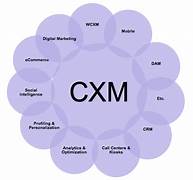
XM Software Providers Set to Replace Point Solutions with Multifunction Suites By 2028, Enterprises Will Transition to Comprehensive CXM Solutions, According to New ISG Research According to new research from Information Services Group (ISG) (Nasdaq: III), companies are expected to shift from various customer experience (CX) point solutions to comprehensive, cross-functional suites by 2028. This transition aims to manage CX at the enterprise level more effectively. Keith Dawson, Director of Customer Experience Research at ISG, explains, “Enterprises recognize the need for platforms that manage the entire customer lifecycle. We are witnessing the rise of tools that integrate communication components with analytic assessments of customer value, loyalty, and intent, marking a significant shift in the marketplace.” The ISG Buyers Guide™ for Customer Experience Management (CXM) defines CXM as a suite of applications on a unified platform that provides a comprehensive view of customer activity and enables management of that activity across departments. The report notes that the mix of applications in a software provider’s suite often reflects their historical expertise and origins. CXM addresses the limitations of traditional Customer Resource Management (CRM) software, which has been more departmental and application-centric. In contrast, CXM focuses on the customer journey and interactions across all channels. The report highlights challenges in comparing similar offerings from different providers due to their varied origins and expertise. The range of functionality across CXM products often reflects their diverse components, users, and use cases. ISG identifies five core areas of platform functionality in CXM software: knowledge management, resource management, automation, analytics, and customer journey management. However, CXM software is still developing, and it is uncommon to find a single solution that excels in all five areas. Many providers start with their core strengths and expand their capabilities over time. The ISG Buyers Guide evaluates CXM software providers based on support for analytics, customer journey management, knowledge management, CRM platform support, operational resource management, and process control and optimization. To be included in the CXM Buyers Guide, products must cover at least three of the four areas: resource management, automation, analytics, and customer journey management. Separate guides on Customer Journey Management (CJM) and Knowledge Management (KM) are available for more specific analysis. For its 2024 Buyers Guides, ISG assessed 19 providers, including Adobe, eGain, Emplifi, Freshworks, Genesys, HubSpot, Microsoft, Nextiva, NICE, Oracle, Qualtrics, Salesforce, SAP, ServiceNow, Sprinklr, SugarCRM, Verint, Zendesk, and Zoho. The top three software providers in each category are: Mark Smith, Partner at ISG Software Research, notes, “Managing customer experience is crucial for every organization, yet many lack the technology to orchestrate the customer journey across channels. The Buyers Guide for CXM offers insights to help businesses understand, optimize, and select software providers that move beyond the limitations of traditional CRM systems.” The ISG Buyers Guides for CXM, CJM, and KM are based on over a year of market research. The research is independent and not influenced by software providers, aiming to help enterprises optimize their software investments. For more details, visit the ISG Buyers Guides to read executive summaries and request full reports. About ISG Software Research ISG Software Research, formerly Ventana Research, delivers expert market research and analysis on business and IT software. The firm provides consulting, advisory, research, and education services for enterprises, software and service providers, and investment firms. For more information and to join the community, visit Ventana Research. About ISG ISG (Information Services Group) (Nasdaq: III) is a global technology research and advisory firm specializing in digital transformation services. With a client base of over 900 organizations, ISG helps clients achieve operational excellence and growth. The firm’s expertise spans AI and automation, cloud and data analytics, sourcing advisory, and more. Founded in 2006 and based in Stamford, Conn., ISG employs 1,600 professionals in over 20 countries. For more information, visit ISG. Like Related Posts Who is Salesforce? Who is Salesforce? Here is their story in their own words. From our inception, we’ve proudly embraced the identity of Read more Salesforce Marketing Cloud Transactional Emails Salesforce Marketing Cloud Transactional Emails are immediate, automated, non-promotional messages crucial to business operations and customer satisfaction, such as order Read more Salesforce Unites Einstein Analytics with Financial CRM Salesforce has unveiled a comprehensive analytics solution tailored for wealth managers, home office professionals, and retail bankers, merging its Financial Read more AI-Driven Propensity Scores AI plays a crucial role in propensity score estimation as it can discern underlying patterns between treatments and confounding variables Read more

Read More
Salesforce and IBM Partnership

Salesforce and IBM Partnership

Salesforce and IBM are advancing their longstanding partnership by focusing on transforming sales and service processes with AI, particularly for organizations in regulated industries that seek to leverage enterprise data for automation. The collaboration aims to deliver pre-built AI agents and tools that integrate seamlessly within customers’ IT environments, enabling them to use their proprietary data while maintaining full control over their systems. By merging Salesforce’s Agentforce, a suite of autonomous agents, with IBM’s watsonx capabilities, the partnership will empower businesses to utilize AI agents within their daily applications. IBM’s watsonx Orchestrate will enhance Agentforce with autonomous agents that improve productivity, security, and regulatory compliance. Additionally, IBM customers will have the ability to interact with these agents via Slack, facilitating dynamic conversational experiences. Planned integrations between Salesforce Data Cloud and IBM Data Gate for watsonx will enable access to business data from IBM Z mainframes and Db2 databases, supporting AI workflows across the Agentforce platform. This integration will enhance data analysis and fuel AI-driven processes. Customers will also benefit from a broader range of AI model and deployment options through integration with IBM watsonx.ai. This will include access to IBM’s Granite foundation models, designed for enterprise applications. Enhancing Business Automation with Tailored Autonomous Agents Through the Agentforce Partner Network, businesses can develop and customize AI agents to interact with various enterprise tools and platforms. These agents are designed to perform multi-step tasks, make decisions based on triggers or interactions, and seek user approval for actions beyond their scope. They will help automate routine tasks, increase efficiency, streamline operations, and enhance customer service. IBM’s watsonx Orchestrate will integrate with Salesforce Agentforce to develop new pre-built agents for specific business challenges. These agents will leverage data and AI from both Salesforce and IBM to address various needs: Expanding Data Integration for AI Salesforce and IBM are also advancing data integration strategies through the Zero Copy integration between Salesforce Data Cloud and watsonx.data. This allows data to remain in place while being utilized for AI use cases, without duplication. Joint customers, particularly in financial services, insurance, manufacturing, and telecommunications, will leverage this integration to access and use mainframe datasets from IBM Z and Db2 databases on Salesforce’s platform. IBM will be the first Zero Copy partner to facilitate data flow between IBM Z and Salesforce Cloud, offering secure access to critical enterprise data and enhancing AI agent functionality. With IBM Z handling over 70% of global transaction value, this partnership ensures high standards of security, privacy, and compliance. Improving Efficiency with Slack and IBM watsonx Orchestrate IBM customers will now engage with watsonx Orchestrate agents directly within Slack, supporting AI app experiences with a new interface. This integration allows for seamless interaction with AI agents, automating tasks and enhancing collaboration across systems without leaving Slack. Expanding AI Model and Deployment Options with watsonx.ai A new integration with watsonx.ai will enable customers to deploy customized large language models (LLMs) within Salesforce Model Builder. This includes access to a range of third-party models and IBM’s Granite foundation models, which offer transparency and compliance with regulatory requirements. IBM Granite models are expected to be available within the Salesforce ecosystem by October. Partnering with IBM Consulting for Tailored AI Solutions IBM Consulting will leverage its expertise in Salesforce and AI to help joint customers accelerate the implementation of Agentforce. Through IBM Consulting Advantage, the AI-powered delivery platform, businesses will receive support in selecting, customizing, deploying, and scaling AI agents to meet specific industry needs. Customer Perspective Tectonic is transforming its service stations into preferred journey stops with the help of Salesforce and IBM. The collaboration offers unprecedented flexibility in AI utilization, enabling Tectonic to deliver hyper-personalized services through Agentforce and IBM’s watsonx AI, enhancing customer engagement and satisfaction. Like Related Posts Who is Salesforce? Who is Salesforce? Here is their story in their own words. From our inception, we’ve proudly embraced the identity of Read more Salesforce Marketing Cloud Transactional Emails Salesforce Marketing Cloud Transactional Emails are immediate, automated, non-promotional messages crucial to business operations and customer satisfaction, such as order Read more Salesforce Unites Einstein Analytics with Financial CRM Salesforce has unveiled a comprehensive analytics solution tailored for wealth managers, home office professionals, and retail bankers, merging its Financial Read more AI-Driven Propensity Scores AI plays a crucial role in propensity score estimation as it can discern underlying patterns between treatments and confounding variables Read more

Read More
IntraEdge Higher Education

IntraEdge Higher Education

PHOENIX–(BUSINESS WIRE)–IntraEdge, Inc., a leading global technology products and services provider, recently announced its expanded investment in itsHigher Education division with the addition of new leadership to bolster their Salesforce service offerings. The new leaders each possess over 20 years of higher education experience and have a proven track record of building innovative and high performing consulting practices. “Our team has a proven track record of success in helping higher education institutions achieve their goals. We look forward to partnering with colleges and universities to leverage the power of Salesforce to improve student outcomes and operational efficiency.” The Higher Education division leadership team consists of Vince Salvato, Todd Edge, and Ryan Clemens. Salvato, who will be leading the division, is a recognized pioneer in Salesforce implementations for higher education. He brings a wealth of experience from his years working with higher education leaders, Salesforce, and ISV Partners. Edge and Clemens have a long history implementing Salesforce and other technologies for higher education leveraging global capabilities to assemble well balanced implementation teams. Together, this team boasts a proven track record of serving over 150 higher education institutions. Their collective history of successful Salesforce and technology implementations within higher education, coupled with IntraEdge’s 3,000+ global resources and complimentary product and service offerings, positions IntraEdge to deliver exceptional solutions. “We are thrilled to welcome Vince, Ryan, and Todd to the IntraEdge team,” said Kal Somani, CEO of IntraEdge. “Their combined experience and knowledge of the higher education landscape make them invaluable assets as we expand our footprint in this industry. By leveraging Salesforce’s powerful platform with IntraEdge’s full breadth of technology capabilities, we are confident in our ability to deliver exceptional solutions that address the unique challenges and opportunities facing higher education institutions.” IntraEdge redefines the typical implementation approach by delivering accelerated, cost-effective, and highly successful implementations. The company’s proven methodology and global delivery capabilities, combined with a team of seasoned higher education experts, will enable institutions to maximize the value of Salesforce while minimizing disruption to campus operations. IntraEdge’s Higher Education division offers a comprehensive suite of Salesforce-based solutions tailored to the specific needs of colleges and universities. With implementation, consulting, and value-add products and services, institutions can maximize the value of their Salesforce investment, including but not limited to Data Integration and Visualization, Digital Experience Strategy, Digital Content Strategy and Development, Managed and Capacity Services, AI Governance and Compliance Software. “We are excited to join IntraEdge and be a part of a world-class higher education practice,” said Salvato, Senior Vice President of Higher Education at IntraEdge. “Our team has a proven track record of success in helping higher education institutions achieve their goals. We look forward to partnering with colleges and universities to leverage the power of Salesforce to improve student outcomes and operational efficiency.” IntraEdge is proud to be a trusted partner to higher education institutions across North America. Our company is committed to delivering exceptional results and exceeding client expectations. Like Related Posts Who is Salesforce? Who is Salesforce? Here is their story in their own words. From our inception, we’ve proudly embraced the identity of Read more Salesforce Marketing Cloud Transactional Emails Salesforce Marketing Cloud Transactional Emails are immediate, automated, non-promotional messages crucial to business operations and customer satisfaction, such as order Read more Salesforce Unites Einstein Analytics with Financial CRM Salesforce has unveiled a comprehensive analytics solution tailored for wealth managers, home office professionals, and retail bankers, merging its Financial Read more AI-Driven Propensity Scores AI plays a crucial role in propensity score estimation as it can discern underlying patterns between treatments and confounding variables Read more

Read More
gettectonic.com