Data Quality Archives - gettectonic.com - Page 5
Impact of Generative AI

Impact of Generative AI

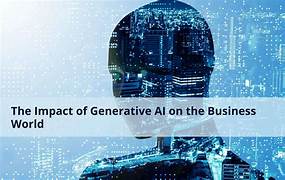
Generative AI has emerged as the most dominant trend in data management and analytics, overshadowing all other technologies. This prominence began with the launch of ChatGPT by OpenAI in November 2022, which significantly advanced the capabilities of large language models (LLMs) and demonstrated the transformative potential of generative AI (GenAI) for enterprises. Generative AI’s impact is profound, particularly in making advanced business intelligence tools accessible to a broader range of employees, not just data scientists and analysts. Before the advent of GenAI, complex data management and analytics platforms required computer science skills, statistical expertise, and extensive data literacy. Generative AI has reduced these barriers, enabling more people to leverage data insights for decision-making. Another key advantage of generative AI is its ability to greatly enhance efficiency. It can automate time-consuming, repetitive tasks previously performed manually by data engineers and experts, acting as an independent agent in managing data processes. The landscape of generative AI has evolved rapidly. Following the launch of ChatGPT, a wave of competing LLMs has emerged. Initially, the transformative potential of these technologies was theoretical, but it is now becoming tangible. Companies like Google are developing tools to help customers build and deploy their own generative AI models and applications. Enterprises are increasingly moving from pilot testing to developing and implementing production models. Generative AI does not operate in isolation. Enterprises are also focusing on complementary aspects such as data quality and governance. Ensuring that the data feeding and training generative AI is reliable is crucial. Additionally, real-time data and automation are essential for making generative AI a proactive technology rather than a reactive one. Generative AI has highlighted the need for a robust data foundation. The main challenge now is ensuring that enterprise data is trusted, governed, and ready for AI applications. With the rise of multimodal data, enterprises require a unified approach to manage and govern diverse data types effectively. In addition to generative AI, other significant trends in data management and analytics include the focus on real-time data processing and automation. Integrating generative AI with real-time data streams and automated systems is expected to drive substantial business transformation. By enabling real-time insights and actions, businesses can achieve a level of operational efficiency previously unattainable. The convergence of these technologies is transforming business operations. Unified and simplified technology stacks, integrating foundational technologies, LLMs, and real-time data platforms, are essential for driving this transformation. The industry is making strides towards creating integrated solutions that support comprehensive data management and analytics. Like Related Posts Who is Salesforce? Who is Salesforce? Here is their story in their own words. From our inception, we’ve proudly embraced the identity of Read more Salesforce Unites Einstein Analytics with Financial CRM Salesforce has unveiled a comprehensive analytics solution tailored for wealth managers, home office professionals, and retail bankers, merging its Financial Read more AI-Driven Propensity Scores AI plays a crucial role in propensity score estimation as it can discern underlying patterns between treatments and confounding variables Read more Tectonic’s Successful Salesforce Track Record Salesforce Technology Services Integrator – Tectonic has successfully delivered Salesforce in a variety of industries including Public Sector, Hospitality, Manufacturing, Read more


Read More
AI and Legacy

AI and Legacy

In most new application builds, AI is rarely considered an active consumer. The prevailing assumption seems to be that AI is just a variation of reporting, which essentially translates to “not my problem” for application developers. In this mindset, the data platform gets treated like an afterthought, receiving the “exhaust fumes” of the application without much concern for data quality. Even when data or AI is acknowledged as important, it’s often sidelined, with data becoming one of the first things sacrificed during the development process. In the past, this was merely a “minor” problem that led to the rise of the data quality industry. AI and Legacy. But as we move forward, this will become a significant issue due to one undeniable fact: AI will be the primary consumer of applications and data. Old Thinking Creates Instant Legacy What this means is that if you’re building a new application—whether it’s a website, ERP, CRM, or anything else—and you’re not considering AI as a user, you’re actively choosing to implement a legacy system. Even if your system has an AI solution baked in, if the core application isn’t designed for a data-driven world, the best you’ll achieve is an AI sidecar—just a nice wrapper, but limited in scope. Tools like Microsoft Copilot or Salesforce Agentforce, for instance, can easily be implemented in a way that minimizes or even eliminates opportunities for AI to thrive. If you’re building applications that treat data as merely a reporting tool and assume AI is a downstream consumer, you’re engaging in legacy thinking in a world increasingly powered by AI. Don’t Build Legacy Systems Avoiding legacy systems isn’t difficult. If you believe AI and data are important, treat them as such from the outset. This boils down to one simple principle: Design for the destination. If you think AI will be a primary consumer of applications in the next one, two, or five years, you should design your applications with that challenge in mind. This means considering AI personas, figuring out how AI assistants will integrate into human workflows, and planning how AI automation bots will function within the system. It also requires embracing a crucial decision: Your design should prioritize data, and assume AI is a primary consumer. This doesn’t mean just designing a robust database schema. It means ensuring your application’s operational reality can accurately reflect the business situation for both human and AI users. It’s not about technical database design—it’s about understanding the business’s accountability for digital accuracy and establishing the mechanisms to maintain that accuracy and represent it effectively. Building Legacy Is a Choice Everyone Is Making To be clear, this isn’t about adopting some “holistic” view or designing for every possible scenario. It’s about designing from a data and digital perspective first. Instead of treating use cases or business processes as the main design focus, the primary design thread should be the ability to reflect the reality of the business. Use cases and business processes still matter at the execution level, but they should not drive application design in a data-driven, AI-enabled world. You must assume that AI will be the primary consumer of your application and design accordingly, rather than focusing solely on human users and screens. Right now, nearly every application is still built as though data is a byproduct of transactions, with the assumption that AI is merely a sidecar, not an active participant. AI and Legacy. In the words of Sir Humphrey, that is a “courageous” decision. Like Related Posts Who is Salesforce? Who is Salesforce? Here is their story in their own words. From our inception, we’ve proudly embraced the identity of Read more Salesforce Marketing Cloud Transactional Emails Salesforce Marketing Cloud Transactional Emails are immediate, automated, non-promotional messages crucial to business operations and customer satisfaction, such as order Read more Salesforce Unites Einstein Analytics with Financial CRM Salesforce has unveiled a comprehensive analytics solution tailored for wealth managers, home office professionals, and retail bankers, merging its Financial Read more AI-Driven Propensity Scores AI plays a crucial role in propensity score estimation as it can discern underlying patterns between treatments and confounding variables Read more

Read More

GenAI in the Enterprise

🔔🔔 Follow us on LinkedIn 🔔🔔 10 Ways GenAI is Transforming the Enterprise Organizations are adopting Generative AI (GenAI) at different paces—some forging ahead with full-scale deployments, while others cautiously experiment with proofs of concept. Regardless of where they stand in their AI journey, enterprises must navigate challenges such as data quality, ethical considerations, compliance requirements, and AI accuracy. To maximize GenAI’s benefits while minimizing risks, companies must ensure sufficient, high-quality data, implement human oversight, and establish mechanisms to validate AI-generated outputs. AI’s success hinges on its ability to work alongside employees, enhancing efficiency without replacing human ingenuity. Despite these challenges, GenAI is already driving enterprise transformation across industries. Here are ten key ways it’s reshaping business operations: 1. Enhancing Customer Service GenAI elevates customer interactions, enabling more natural and intelligent automated support. Chatbots powered by GenAI engage customers conversationally, providing fast and accurate responses by analyzing vast amounts of data. For customer service agents, GenAI serves as a real-time assistant, offering insights and recommendations to improve interactions. According to Gartner, 85% of customer service leaders plan to explore or pilot conversational GenAI systems in 2025. However, research suggests that the most successful implementations will enhance—not replace—human support, striking a balance between automation and human touch. 2. Revolutionizing Knowledge Management GenAI excels at retrieving and analyzing structured and unstructured data, making it a game-changer for enterprise knowledge management. By surfacing relevant insights from vast information repositories, GenAI enables employees to access critical knowledge more efficiently. Forrester Research highlights that while AI-driven knowledge management boosts efficiency, true transformation occurs when it complements human expertise, fostering collaboration and innovation. 3. Optimizing Supply Chain Management With its ability to analyze historical, internal, and external data, GenAI is improving supply chain management by predicting demand, optimizing inventory, mitigating disruptions, and streamlining logistics. Organizations leveraging AI-driven insights can enhance operational efficiency, reduce costs, and drive sustainability by integrating environmental considerations into supply chain decisions. McKinsey & Co. reports that supply chain and inventory management are among the business functions where GenAI delivers the most significant revenue increases. 4. Automating Content Creation GenAI’s content generation capabilities extend beyond simple text creation to include audio, video, and design assets. Enterprises use GenAI for tasks ranging from drafting emails to developing full-scale marketing campaigns, significantly reducing content production time. A recent study by Enterprise Strategy Group found that 35% of businesses cite content creation as a primary benefit of GenAI, highlighting its role in accelerating marketing and communications efforts. 5. Accelerating Software Development GenAI is streamlining software development by generating code, user requirements, and technical documentation. This not only reduces development time for experienced programmers but also democratizes coding by enabling non-technical users to build applications with AI assistance. According to Capgemini Research Institute, AI-assisted coding is expected to account for 37% of all software development by 2026, significantly boosting productivity across industries. 6. Increasing Employee Productivity with AI Assistants AI-powered assistants are helping employees across various functions work smarter and faster. Whether aiding programmers, customer service representatives, or operations teams, GenAI-driven tools enable professionals to complete tasks with greater efficiency. A survey by Enterprise Strategy Group found that increased productivity is the top GenAI benefit, with 60% of respondents reporting measurable improvements in workplace efficiency. 7. Identifying Process Optimization Opportunities Beyond automating individual tasks, GenAI helps organizations rethink and optimize entire workflows. Companies are increasingly using AI to analyze operational processes, identify inefficiencies, and recommend automation opportunities. Rather than merely accelerating existing processes, AI is enabling businesses to redesign workflows from the ground up, unlocking new levels of efficiency. 8. Transforming Research & Development GenAI is playing an emerging role in research and development, particularly in fields like drug discovery and materials science. The technology helps researchers identify promising compounds, explore new innovations, and iterate through potential solutions at unprecedented speeds. While AI-driven R&D is still in its early stages, Gartner reports that GenAI is already improving productivity and cycle times in innovation-heavy industries. 9. Driving Competitive Differentiation and Revenue Growth Forward-thinking organizations are leveraging GenAI to create new products, services, and business models. Some use AI to identify market opportunities, while others integrate AI directly into their offerings. For example, J.P. Morgan’s Quest IndexGPT uses AI to analyze financial news and recommend investment opportunities, showcasing how businesses can differentiate themselves through AI-powered innovation. 10. Advancing Data-Driven Decision-Making By making analytics more accessible, GenAI is democratizing data-driven decision-making. AI-powered tools allow employees across all levels to interact with data conversationally, lowering barriers to data literacy and empowering informed decision-making. Beyond human decision support, GenAI is also paving the way for agentic AI systems—autonomous AI agents capable of making real-time decisions and executing tasks without human intervention. This next-generation AI capability is expected to further accelerate enterprise automation and innovation. The Future of GenAI in the Enterprise As businesses continue their AI adoption journey, GenAI will become an increasingly integral part of operations, driving efficiency, innovation, and competitive advantage. Organizations that strategically integrate GenAI while ensuring ethical oversight and responsible AI governance will be best positioned to harness its full potential. Like Related Posts Who is Salesforce? Who is Salesforce? Here is their story in their own words. From our inception, we’ve proudly embraced the identity of Read more Salesforce Marketing Cloud Transactional Emails Salesforce Marketing Cloud Transactional Emails are immediate, automated, non-promotional messages crucial to business operations and customer satisfaction, such as order Read more Salesforce Unites Einstein Analytics with Financial CRM Salesforce has unveiled a comprehensive analytics solution tailored for wealth managers, home office professionals, and retail bankers, merging its Financial Read more AI-Driven Propensity Scores AI plays a crucial role in propensity score estimation as it can discern underlying patterns between treatments and confounding variables Read more

Read More
Ethical AI Implementation

Ethical AI Implementation

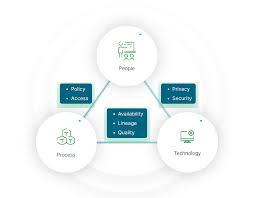
AI technologies are rapidly evolving, becoming a practical solution to support essential business operations. However, creating true business value from AI requires a well-balanced approach that considers people, processes, and technology. Ethical AI Implementation. AI encompasses various forms, including machine learning, deep learning, predictive analytics, natural language processing, computer vision, and automation. To leverage AI’s competitive advantages, companies need a strong foundation and a realistic strategy aligned with their business goals. “Artificial intelligence is multifaceted,” said John Carey, managing director at AArete, a business management consultancy. “There’s often hype and, at times, exaggeration about how ‘intelligent’ AI truly is.” Business Advantages of AI Adoption Recent advancements in generative AI, such as ChatGPT and Dall-E, have showcased AI’s significant impact on businesses. According to a McKinsey Global Survey, global AI adoption surged from around 50% over the past six years to 72% in 2024. Some key benefits of adopting AI include: Prerequisites for AI Implementation Successfully implementing AI can be complex. A detailed understanding of the following prerequisites is crucial for achieving positive results: 13 Steps for Successful AI Implementation Common AI Implementation Mistakes Organizations often stumble by: Key Challenges in Ethical AI Implementation Human-related challenges often present the biggest hurdles. To overcome them, organizations must foster data literacy and build trust among stakeholders. Additionally, challenges around data management, model governance, system integration, and intellectual property need to be addressed. Ensuring Ethical AI Implementation To ensure responsible AI use, companies should: Ethical AI implementation requires a continuous commitment to transparency, fairness, and inclusivity across all levels of the organization. Like Related Posts Who is Salesforce? Who is Salesforce? Here is their story in their own words. From our inception, we’ve proudly embraced the identity of Read more Salesforce Marketing Cloud Transactional Emails Salesforce Marketing Cloud Transactional Emails are immediate, automated, non-promotional messages crucial to business operations and customer satisfaction, such as order Read more Salesforce Unites Einstein Analytics with Financial CRM Salesforce has unveiled a comprehensive analytics solution tailored for wealth managers, home office professionals, and retail bankers, merging its Financial Read more AI-Driven Propensity Scores AI plays a crucial role in propensity score estimation as it can discern underlying patterns between treatments and confounding variables Read more

Read More
AI and Digital Transformation

AI and Digital Transformation

The buzz around AI has become the latest trend, but there’s a deeper truth behind it. While some may joke that AI’s rise means no longer needing to discuss Digital Transformation, the reality is quite the opposite. Communication Service Providers (CSPs) and infrastructure companies that have embraced Digital Transformation are now reaping the rewards of AI. But what exactly is Digital Transformation, and how has it paved the way for AI? Let’s explore. The Digital Transformation Journey Digital transformation is about more than just adopting new technologies. It involves integrating digital technology into every aspect of a business, fundamentally altering how operations are conducted and how value is delivered to customers. This transformation requires a cultural shift, pushing organizations to challenge the status quo, experiment with new ideas, and embrace the possibility of failure. For CSPs that have successfully undergone digital transformation, the benefits are clear: streamlined operations, enhanced customer experiences, and valuable data insights. This transformation has created the ideal environment for AI to thrive, as AI relies on vast amounts of data, particularly structured data. The COVID-19 pandemic accelerated the pace of digital transformation, especially for CSPs. As companies adapted to new ways of working and serving customers, the need for robust digital infrastructure became more apparent. The surge in demand for digital services—driven by remote work, e-learning, and online communication—highlighted the importance of digital agility and the ability to leverage AI to meet rapidly changing customer needs. The pandemic not only pushed CSPs to advance their digital transformation efforts but also to innovate more quickly, ensuring they remain competitive in a fast-evolving digital landscape. The AI and Data Dilemma AI is revolutionizing industries by enabling smarter decision-making, process automation, and personalized customer experiences. However, AI’s effectiveness is heavily dependent on data—clean, well-organized, and easily accessible data. This is where digital transformation becomes crucial. CSPs that have invested in digital transformation have the necessary infrastructure to effectively collect, store, and analyze data, providing the fuel that powers AI. The Consequences of Falling Behind CSPs that have not embraced digital transformation face significant challenges in the AI race. Without a solid digital foundation, these companies struggle to harness AI’s potential. Their data is often siloed, outdated, or simply unusable. Many organizations still operate with multiple billing systems and customer care platforms for each line of business, all functioning in silos without any cross-functional intelligence. Attempting to implement AI on a weak digital foundation is akin to building the house on the sand—it’s doomed to fail. Without digital transformation, companies lack the infrastructure needed to support AI initiatives, resulting in missed opportunities for efficiency gains, cost savings, and competitive advantages. This is a common reason why enterprises fail in AI adoption, with Gartner reporting that over 80% of enterprises struggle with data quality or quantity issues. Real-World Examples Companies like Amazon and Netflix have successfully undergone digital transformation and are now leveraging AI to enhance their services. Amazon uses AI for personalized recommendations and optimizing its supply chain, while Netflix utilizes AI to analyze viewer preferences and recommend content that keeps users engaged. Conversely, companies slow to adopt digital transformation face significant challenges. Traditional retailers, for example, struggle to compete with e-commerce giants. Without the ability to leverage AI for personalized marketing and inventory management, they are losing market share. The Role of IFS IFS, through its flagship product IFS Cloud, offers a unified platform with a consistent data layer, ensuring that all data is clean, well-organized, and accessible. IFS also applies “Industrial AI,” embedding AI into applications where and when it makes sense. This approach ensures that AI evolves with the product and that the necessary AI governance is embedded. By integrating AI in a way that aligns with CSP operations, IFS not only supports AI implementation but also guides organizations through their digital transformation journey in a symbiotic manner. The Path Forward The key takeaway is clear: If an organization hasn’t started its digital transformation journey, the time to begin is now. Embracing change, investing in technology, and fostering a culture that values innovation will position companies to fully leverage AI and maintain a competitive edge. Starting with AI without a strong data foundation can lead to costly investments that fail to deliver the expected efficiencies. Digital transformation is not a one-time project but an ongoing process. Companies must remain open to advances, continuously experiment, and not fear failure. Remember Edison never said he failed. He just discovered another way not to create a light bulb. The future belongs to those who are willing to adapt and evolve. Like Related Posts Who is Salesforce? Who is Salesforce? Here is their story in their own words. From our inception, we’ve proudly embraced the identity of Read more Salesforce Marketing Cloud Transactional Emails Salesforce Marketing Cloud Transactional Emails are immediate, automated, non-promotional messages crucial to business operations and customer satisfaction, such as order Read more Salesforce Unites Einstein Analytics with Financial CRM Salesforce has unveiled a comprehensive analytics solution tailored for wealth managers, home office professionals, and retail bankers, merging its Financial Read more AI-Driven Propensity Scores AI plays a crucial role in propensity score estimation as it can discern underlying patterns between treatments and confounding variables Read more

Read More
Predictive Analytics

Predictive Analytics in Salesforce

Predictive Analytics in Salesforce: Enhancing Decision-Making with AI In an ever-changing business environment, companies seek tools to forecast trends and anticipate challenges, enabling them to remain competitive. Predictive analytics, powered by Salesforce’s AI capabilities, offers a cutting-edge solution for these needs. In this guide, we’ll explore how predictive analytics works and how Salesforce empowers businesses to make smarter, data-driven decisions. What is Predictive Analytics? Predictive analytics uses historical data, statistical modeling, and machine learning to forecast future outcomes. With the vast amount of data organizations generate—ranging from transaction logs to multimedia—unifying this information can be challenging due to data silos. These silos hinder the development of accurate predictive models and limit Salesforce’s ability to deliver actionable insights. The result? Missed opportunities, inefficiencies, and impersonal customer experiences. When organizations implement proper integrations and data management practices, predictive analytics can harness this data to uncover patterns and predict future events. Techniques such as logistic regression, linear regression, neural networks, and decision trees help businesses gain actionable insights that enhance planning and decision-making. Einstein Prediction Builder A key component of the Salesforce Einstein Suite, Einstein Prediction Builder enables users to create custom AI models with minimal coding or data science expertise. Using in-house data, businesses can anticipate trends, forecast customer behavior, and predict outcomes with tailored precision. Key Features of Einstein Prediction Builder Note: Einstein Prediction Builder requires an Enterprise or Unlimited Edition subscription to access. Predictive Model Types in Salesforce Salesforce employs various predictive models tailored to specific needs: Building Custom Predictions Salesforce supports custom predictions tailored to unique business needs, such as forecasting regional sales or calculating appointment attendance rates. Tips for Building Predictions Prescriptive Analytics: Turning Predictions into Actions Predictive insights are only as valuable as the actions they inspire. Einstein Next Best Action bridges this gap by providing context-specific recommendations based on predictions. How Einstein Next Best Action Works Data Quality: The Foundation of Accurate Predictions The effectiveness of predictive analytics depends on the quality of your data. Poor data—whether due to errors, duplicates, or inconsistencies—can skew results and undermine trust. Best Practices for Data Quality Modern tools like DataGroomr can automate data validation and cleaning, ensuring that predictions are based on trustworthy information. Empowering Smarter Decisions with Predictive Analytics Salesforce’s AI-driven predictive analytics transforms decision-making by providing actionable insights from historical data. Businesses can anticipate trends, improve operational efficiency, and deliver personalized customer experiences. As predictive analytics continues to evolve, companies leveraging these tools will gain a competitive edge in an increasingly dynamic marketplace. Embrace the power of predictive analytics in Salesforce to make faster, more strategic decisions and drive sustained success. Like1 Related Posts Who is Salesforce? Who is Salesforce? Here is their story in their own words. From our inception, we’ve proudly embraced the identity of Read more Salesforce Marketing Cloud Transactional Emails Salesforce Marketing Cloud Transactional Emails are immediate, automated, non-promotional messages crucial to business operations and customer satisfaction, such as order Read more Salesforce Unites Einstein Analytics with Financial CRM Salesforce has unveiled a comprehensive analytics solution tailored for wealth managers, home office professionals, and retail bankers, merging its Financial Read more AI-Driven Propensity Scores AI plays a crucial role in propensity score estimation as it can discern underlying patterns between treatments and confounding variables Read more

Read More

How to Hire the Right Salesforce Developer

Maximizing Salesforce: How to Hire the Right Salesforce Developer Salesforce has revolutionized how businesses manage customer relationships, becoming a cornerstone for enhancing customer service and engagement. However, to fully leverage its potential, skilled professionals are needed to customize and develop the platform to meet specific business needs. Hiring the right Salesforce developer is crucial for ensuring your organization gets the most out of this powerful tool. In this guide, we’ll explore key considerations before hiring a Salesforce developer, the steps involved in the hiring process, and tips for effective Salesforce recruitment. How to Hire the Right Salesforce Developer. Understanding Salesforce Developer Roles Before diving into the hiring process, it’s essential to understand the different Salesforce roles: Your business needs may require a combination of these roles. Depending on the complexity of your Salesforce environment, you might need more than just a developer. Key Factors to Consider Before Hiring a Salesforce Developer The most critical factor when hiring a Salesforce developer is their skill set. Salesforce development requires deep knowledge of various technologies and tools. Key skills include: Assessing a candidate’s industry-specific experience can provide insight into their ability to address your business challenges. Salesforce certifications validate a professional’s expertise. Key certifications to look for include: These certifications provide assurance of the candidate’s competency. A strong Salesforce developer should not only possess technical skills but also understand business processes. Developers who can translate business requirements into technical solutions will drive business value. Salesforce development often involves troubleshooting complex issues. Assess a candidate’s problem-solving abilities through technical interviews or practical tests. Strong problem-solvers will be invaluable when unexpected challenges arise. Effective communication is vital for a Salesforce developer. They must explain technical concepts to non-technical stakeholders and document processes clearly for future maintenance. How to Hire the Right Salesforce Developer Start by defining the skills, experience, and certifications needed for the role. A well-defined job description will attract the right candidates. Create job postings that reflect the role’s responsibilities and qualifications. Use relevant keywords like “Salesforce job postings” and “Salesforce employment opportunities” to attract suitable candidates. Screen candidates based on their resumes and initial interviews, looking for a strong match between their experience and your job requirements. Evaluate candidates through practical tests to assess their Salesforce-specific coding skills and problem-solving abilities. Conduct multiple interview rounds: Salesforce Recruitment Tips Use platforms like LinkedIn and Salesforce-specific groups to find candidates and connect with the Salesforce community. Partnering with recruitment agencies that specialize in Salesforce roles can streamline the hiring process. Salesforce professionals are in high demand, so offering competitive salaries and benefits is key to attracting top talent. Identify candidates committed to professional development, as Salesforce is constantly evolving with new features and practices. Highlighting your company’s culture, values, and growth opportunities can attract top talent. Why Choose Tectonic – How to Hire the Right Salesforce Developer? Hiring the right Salesforce developer requires a thorough understanding of your business needs, a clear definition of the required skills, and a meticulous hiring process. By emphasizing these factors, you can ensure you recruit the right talent to drive your Salesforce initiatives. However many Salesforce projects don’t require a long term developer, business analyst, or project manager. Outsourcing these roles to Tectonic can provide a valuable savings in cost and improved project outcomes with a clean CRM in place from day one. At Tectonic, we take pride in being a leading Salesforce provider. Our team of certified Salesforce professionals is equipped with the skills and experience to meet your business demands. Whether you need a developer, administrator, or consultant, Tectonic’s rigorous recruiting process ensures we deliver the best talent. Partner with Tectonic to fully harness the potential of Salesforce and elevate your business to the next level. Contact us today to learn more about our Salesforce staffing solutions and how we can help you achieve your CRM goals. Like Related Posts Who is Salesforce? Who is Salesforce? Here is their story in their own words. From our inception, we’ve proudly embraced the identity of Read more Salesforce Marketing Cloud Transactional Emails Salesforce Marketing Cloud Transactional Emails are immediate, automated, non-promotional messages crucial to business operations and customer satisfaction, such as order Read more Salesforce Unites Einstein Analytics with Financial CRM Salesforce has unveiled a comprehensive analytics solution tailored for wealth managers, home office professionals, and retail bankers, merging its Financial Read more AI-Driven Propensity Scores AI plays a crucial role in propensity score estimation as it can discern underlying patterns between treatments and confounding variables Read more

Read More
Salesforce Einstein Copilot Security

Salesforce Einstein Copilot Security

Salesforce Einstein Copilot Security: How It Works and Key Risks to Mitigate for a Safe Rollout With the official rollout of Salesforce Einstein Copilot, this conversational AI assistant is set to transform how sales, marketing, and customer service teams interact with both customers and internal documentation. Einstein Copilot understands natural language queries, streamlining daily tasks such as answering questions, generating insights, and performing actions across Salesforce to boost productivity. Salesforce Einstein Copilot Security However, alongside the productivity gains, it’s essential to address potential risks and ensure a secure implementation. This Tectonic insight covers: Einstein Copilot Use Cases Einstein Copilot enables users to: All of these actions can be performed with simple, natural language prompts, improving efficiency and outcomes. How Einstein Copilot Works Here’s a simplified breakdown of how Einstein Copilot processes prompts: The Einstein Trust Layer Salesforce has built the Einstein Trust Layer to ensure customer data is secure. Customer data processed by Einstein Copilot is encrypted, and no data is retained on the backend. Sensitive data, such as PII (Personally Identifiable Information), PCI (Payment Card Information), and PHI (Protected Health Information), is masked to ensure privacy. Additionally, the Trust Layer reduces biased, toxic, and unethical outputs by leveraging toxic language detection. Importantly, Salesforce guarantees that customer data will not be used to train the AI models behind Einstein Copilot or be shared with third parties. The Shared Responsibility Model Salesforce’s security approach is based on a shared responsibility model: This collaborative model ensures a higher level of security and trust between Salesforce and its customers. Best Practices for Securing Einstein Copilot Rollout Prepare Your Salesforce Org for Einstein Copilot To ensure a smooth rollout, it’s critical to assess your Salesforce security posture and ready your data. Tools like Salesforce Shield can help organizations by: By following these steps, you can utilize the power of Einstein Copilot while ensuring the security and integrity of your data. Like1 Related Posts Who is Salesforce? Who is Salesforce? Here is their story in their own words. From our inception, we’ve proudly embraced the identity of Read more Salesforce Marketing Cloud Transactional Emails Salesforce Marketing Cloud Transactional Emails are immediate, automated, non-promotional messages crucial to business operations and customer satisfaction, such as order Read more Salesforce Unites Einstein Analytics with Financial CRM Salesforce has unveiled a comprehensive analytics solution tailored for wealth managers, home office professionals, and retail bankers, merging its Financial Read more AI-Driven Propensity Scores AI plays a crucial role in propensity score estimation as it can discern underlying patterns between treatments and confounding variables Read more

Read More
Key Sales Statistics and Trends

Sales Statistics and Trends

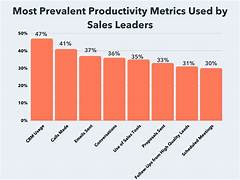
Key Sales Statistics and Trends Sales professionals often face a rapidly evolving industry, with constant changes to navigate. The key to successfully maneuvering through these shifts is a deep understanding of sales data and trends. Here’s a detailed look at the current state of sales, highlighting both opportunities and challenges. Key Sales Statistics and Trends. Revenue Growth Trends Sales Challenges AI and Data Insights Enablement and Training Employee Experience For more insights and detailed statistics, download the full State of Sales Report from Salesforce. Like Related Posts Who is Salesforce? Who is Salesforce? Here is their story in their own words. From our inception, we’ve proudly embraced the identity of Read more Salesforce Marketing Cloud Transactional Emails Salesforce Marketing Cloud Transactional Emails are immediate, automated, non-promotional messages crucial to business operations and customer satisfaction, such as order Read more Salesforce Unites Einstein Analytics with Financial CRM Salesforce has unveiled a comprehensive analytics solution tailored for wealth managers, home office professionals, and retail bankers, merging its Financial Read more AI-Driven Propensity Scores AI plays a crucial role in propensity score estimation as it can discern underlying patterns between treatments and confounding variables Read more

Read More
Training and Testing Data

Training and Testing Data

Data plays a pivotal role in machine learning (ML) and artificial intelligence (AI). Tasks such as recognition, decision-making, and prediction rely on knowledge acquired through training. Much like a parent teaches their child to distinguish between a cat and a bird, or an executive learns to identify business risks hidden within detailed quarterly reports, ML models require structured training using high-quality, relevant data. As AI continues to reshape the modern business landscape, the significance of training data becomes increasingly crucial. What is Training Data? The two primary strengths of ML and AI lie in their ability to identify patterns in data and make informed decisions based on that data. To execute these tasks effectively, models need a reference framework. Training data provides this framework by establishing a baseline against which models can assess new data. For instance, consider the example of image recognition for distinguishing cats from birds. ML models cannot inherently differentiate between objects; they must be taught to do so. In this scenario, training data would consist of thousands of labeled images of cats and birds, highlighting relevant features—such as a cat’s fur, pointed ears, and four legs versus a bird’s feathers, absence of ears, and two feet. Training data is generally extensive and diverse. For the image recognition case, the dataset might include numerous examples of various cats and birds in different poses, lighting conditions, and settings. The data must be consistent enough to capture common traits while being varied enough to represent natural differences, such as cats of different fur colors in various postures like crouching, sitting, standing, and jumping. In business analytics, an ML model first needs to learn the operational patterns of a business by analyzing historical financial and operational data before it can identify problems or recognize opportunities. Once trained, the model can detect unusual patterns, like abnormally low sales for a specific item, or suggest new opportunities, such as a more cost-effective shipping option. After ML models are trained, tested, and validated, they can be applied to real-world data. For the cat versus bird example, a trained model could be integrated into an AI platform that uses real-time camera feeds to identify animals as they appear. How is Training Data Selected? The adage “garbage in, garbage out” resonates particularly well in the context of ML training data; the performance of ML models is directly tied to the quality of their training data. This underscores the importance of data sources, relevance, diversity, and quality for ML and AI developers. Data SourcesTraining data is seldom available off-the-shelf, although this is evolving. Sourcing raw data can be a complex task—imagine locating and obtaining thousands of images of cats and birds for the relatively straightforward model described earlier. Moreover, raw data alone is insufficient for supervised learning; it must be meticulously labeled to emphasize key features that the ML model should focus on. Proper labeling is crucial, as messy or inaccurately labeled data can provide little to no training value. In-house teams can collect and annotate data, but this process can be costly and time-consuming. Alternatively, businesses might acquire data from government databases, open datasets, or crowdsourced efforts, though these sources also necessitate careful attention to data quality criteria. In essence, training data must deliver a complete, diverse, and accurate representation for the intended use case. Data RelevanceTraining data should be timely, meaningful, and pertinent to the subject at hand. For example, a dataset containing thousands of animal images without any cat pictures would be useless for training an ML model to recognize cats. Furthermore, training data must relate directly to the model‘s intended application. For instance, business financial and operational data might be historically accurate and complete, but if it reflects outdated workflows and policies, any ML decisions based on it today would be irrelevant. Data Diversity and BiasA sufficiently diverse training dataset is essential for constructing an effective ML model. If a model’s goal is to identify cats in various poses, its training data should encompass images of cats in multiple positions. Conversely, if the dataset solely contains images of black cats, the model’s ability to identify white, calico, or gray cats may be severely limited. This issue, known as bias, can lead to incomplete or inaccurate predictions and diminish model performance. Data QualityTraining data must be of high quality. Problems such as inaccuracies, missing data, or poor resolution can significantly undermine a model’s effectiveness. For instance, a business’s training data may contain customer names, addresses, and other information. However, if any of these details are incorrect or missing, the ML model is unlikely to produce the expected results. Similarly, low-quality images of cats and birds that are distant, blurry, or poorly lit detract from their usefulness as training data. How is Training Data Utilized in AI and Machine Learning? Training data is input into an ML model, where algorithms analyze it to detect patterns. This process enables the ML model to make more accurate predictions or classifications on future, similar data. There are three primary training techniques: Where Does Reinforcement Learning Fit In? Unlike supervised and unsupervised learning, which rely on predefined training datasets, reinforcement learning adopts a trial-and-error approach, where an agent interacts with its environment. Feedback in the form of rewards or penalties guides the agent’s strategy improvement over time. Whereas supervised learning depends on labeled data and unsupervised learning identifies patterns in raw data, reinforcement learning emphasizes dynamic decision-making, prioritizing ongoing experience over static training data. This approach is particularly effective in fields like robotics, gaming, and other real-time applications. The Role of Humans in Supervised Training The supervised training process typically begins with raw data since comprehensive and appropriately pre-labeled datasets are rare. This data can be sourced from various locations or even generated in-house. Training Data vs. Testing Data Post-training, ML models undergo validation through testing, akin to how teachers assess students after lessons. Test data ensures that the model has been adequately trained and can deliver results within acceptable accuracy and performance ranges. In supervised learning,

Read More
Data Governance Frameworks

Data Governance Frameworks

Examples of Data Governance Frameworks Data governance is not a one-size-fits-all approach. Organizations must carefully choose a framework that aligns with their unique goals, structure, and culture. Data is one of an organization’s most valuable assets, and proper governance is key to unlocking its potential. Without a well-designed framework, companies risk poor data quality, privacy breaches, regulatory noncompliance, and missed insights. A data governance framework provides a structured way to manage data throughout its lifecycle, including policies, processes, and standards to ensure data is accurate, accessible, and secure. By putting clear guidelines in place, organizations can increase trust in their data and improve decision-making. Key Pillars of a Data Governance Frameworks A robust data governance framework typically rests on four key pillars: 1. Center-Out Model The center-out model places a centralized team, such as a data governance council, at the core of the governance process. This group establishes policies and oversees data management across the organization, balancing consistency with flexibility for different departments. The Data Governance Institute’s framework is an example of this model. It focuses on creating a Data Governance Office responsible for managing key governance functions such as setting data policies, assigning data stewards, and monitoring compliance. The framework provides a clear structure while allowing business units some leeway in adapting governance practices to their needs. PwC’s model also adopts a center-out approach, with an emphasis on using data governance to monetize data assets. It highlights the importance of maintaining consistency while minimizing the risk of data silos. 2. Top-Down Model In the top-down model, data governance is driven by executive leadership, ensuring alignment with strategic goals. This model provides authority for enforcing governance standards but may face challenges if business units feel disconnected from the central governance team. McKinsey’s framework exemplifies this approach, focusing on integrating data governance with broader business transformation efforts. Executive leadership plays a key role in ensuring that governance initiatives receive the necessary attention and resources. 3. Hybrid Model The hybrid model combines centralized governance with flexibility for individual business units. It establishes an enterprise-wide framework while allowing departments to adapt governance practices to their specific needs. The Eckerson Group’s Modern Data Governance Framework represents a hybrid approach. It emphasizes the importance of people and culture, alongside technology and processes, and encourages organizations to create a roadmap for governance that evolves as needs change. This model provides a balance between centralized control and decentralized flexibility. 4. Bottom-Up Model In the bottom-up model, data governance is driven by subject matter experts and data stakeholders across the organization. This approach promotes collaboration and buy-in from the people closest to the data, ensuring that governance policies are practical and effective. The DAMA-DMBOK framework, developed by the Data Management Association, is a prime example. Although flexible, it often starts as a bottom-up initiative, driven by IT departments and data experts who later gain executive support. 5. Silo-In Model The silo-in model allows individual business units or departments to create their own governance practices. While this approach addresses localized data issues, it often leads to inconsistencies and challenges when the organization needs to integrate data across the enterprise. Though not widely recommended, the silo-in approach may emerge when specific business units take the initiative to establish governance due to regulatory requirements or data management needs within their domains. However, as organizations mature, they often transition to more holistic frameworks to support cross-functional collaboration and data integration. Choosing the Right Framework Selecting the right data governance framework involves evaluating the organization’s needs, structure, and culture. Whether an organization adopts a center-out, top-down, hybrid, bottom-up, or silo-in approach, success depends on involving key stakeholders, securing executive buy-in, and committing to continuous improvement. By treating data as a critical asset and implementing a governance framework that aligns with its business strategy, an organization can ensure that its data management practices support growth, innovation, and regulatory compliance. Like Related Posts Who is Salesforce? Who is Salesforce? Here is their story in their own words. From our inception, we’ve proudly embraced the identity of Read more Salesforce Marketing Cloud Transactional Emails Salesforce Marketing Cloud Transactional Emails are immediate, automated, non-promotional messages crucial to business operations and customer satisfaction, such as order Read more Salesforce Unites Einstein Analytics with Financial CRM Salesforce has unveiled a comprehensive analytics solution tailored for wealth managers, home office professionals, and retail bankers, merging its Financial Read more AI-Driven Propensity Scores AI plays a crucial role in propensity score estimation as it can discern underlying patterns between treatments and confounding variables Read more

Read More
gettectonic.com