

Data Quality Archives - gettectonic.com - Page 6
Collaborative Business Intelligence

Collaborative Business Intelligence

Collaborative Business Intelligence: Connecting Data and Teams In today’s data-driven world, the ability to interact with business intelligence (BI) tools is essential for making informed decisions. Collaborative business intelligence (BI), also known as social BI, allows users to engage with their organization’s data and communicate with data experts through the same platforms where they already collaborate. While self-service BI empowers users to generate insights, understanding the data’s context is critical to avoid misunderstandings that can derail decision-making. Collaborative BI integrates BI tools with collaboration platforms to bridge the gap between data analysis and communication, reducing the risks of misinterpretation. Traditional Business Intelligence Traditional BI involves the use of technology to analyze data and present insights clearly. Before BI platforms became widespread, data scientists and statisticians handled data analysis, making it challenging for non-technical professionals to digest the insights. BI evolved to automate visualizations, such as charts and dashboards, making data more accessible to business users. Previously, BI reports were typically available only to high-level executives. However, modern self-service BI tools democratize access, enabling more users—regardless of technical expertise—to create reports and visualize data, fostering better decision-making across the organization. The Emergence of Collaborative BI Collaborative BI is a growing trend, combining BI applications with collaboration tools. This approach allows users to work together synchronously or asynchronously within a shared platform, making it easier to discuss data reports in real time or leave comments for others to review. Whether it’s through Slack, Microsoft Teams, or social media apps, users can receive and discuss BI insights within their usual communication channels. This seamless integration of BI and collaboration tools offers a competitive edge, simplifying the process of sharing knowledge and clarifying data without switching between applications. Key Benefits of Collaborative Business Intelligence Leading Collaborative BI Platforms Here’s a look at some of the top collaborative BI platforms driving innovation in the market: Conclusion Collaborative BI empowers organizations by improving decision-making, democratizing data access, optimizing data quality, and ensuring data security. By integrating BI tools with collaboration platforms, businesses can streamline their operations, foster a culture of data-driven decision-making, and enhance overall efficiency. Choosing the right platform is key to maximizing the benefits of collaborative BI. Like Related Posts Who is Salesforce? Who is Salesforce? Here is their story in their own words. From our inception, we’ve proudly embraced the identity of Read more Salesforce Marketing Cloud Transactional Emails Salesforce Marketing Cloud Transactional Emails are immediate, automated, non-promotional messages crucial to business operations and customer satisfaction, such as order Read more Salesforce Unites Einstein Analytics with Financial CRM Salesforce has unveiled a comprehensive analytics solution tailored for wealth managers, home office professionals, and retail bankers, merging its Financial Read more AI-Driven Propensity Scores AI plays a crucial role in propensity score estimation as it can discern underlying patterns between treatments and confounding variables Read more


Read More
Salesforce Org Merge Risks

Salesforce Org Merge Risks

Managing Multiple Salesforce Instances: Challenges and Solutions For growing enterprises, managing multiple Salesforce instances can be a significant challenge. Each instance may house critical business data and processes, which often need to be consolidated, particularly during mergers, acquisitions, or different stages of Salesforce adoption. This consolidation is essential to reduce operating costs and enhance efficiency. Salesforce Org Merge Risks. Salesforce Org Merge Risks Overview Salesforce consolidation involves merging several instances into a single Salesforce organization. This process aims to improve operational efficiency, data visibility, and process standardization while minimizing the total cost of ownership. It may require setting up a new Salesforce organization to facilitate the merger. Typical Salesforce Consolidation Plan A comprehensive consolidation plan typically includes the following steps: Complexity and Benefits of Salesforce Consolidation While Salesforce consolidation offers significant benefits, such as improved efficiency and reduced costs, it is a complex process requiring careful planning and execution. Many companies partner with Salesforce experts, like Tectonic, to navigate the intricacies of consolidation successfully. Salesforce Org Merge Risks Risk 1: Under-Scoping Data Mapping, Migration, and Merging Risk 2: Overlooking Metrics, Measurements, and Reports Risk 3: Limiting Stakeholder Engagement and Change Management Conclusion While meticulous planning cannot guarantee a flawless Salesforce migration, it fosters communication among Salesforce, data, and business leaders, making challenges more manageable. Although managing and consolidating systems might seem straightforward, guiding people, processes, and data through the consolidation process is inherently complex and demanding. Like Related Posts Who is Salesforce? Who is Salesforce? Here is their story in their own words. From our inception, we’ve proudly embraced the identity of Read more Salesforce Marketing Cloud Transactional Emails Salesforce Marketing Cloud Transactional Emails are immediate, automated, non-promotional messages crucial to business operations and customer satisfaction, such as order Read more Salesforce Unites Einstein Analytics with Financial CRM Salesforce has unveiled a comprehensive analytics solution tailored for wealth managers, home office professionals, and retail bankers, merging its Financial Read more AI-Driven Propensity Scores AI plays a crucial role in propensity score estimation as it can discern underlying patterns between treatments and confounding variables Read more
Read More
Predictive Analytics

Predictive Analytics

Industry forecasts predict an annual growth rate of 6% to 7%, fueled by innovations in cloud computing, artificial intelligence (AI), and data engineering. In 2023, the global data analytics market was valued at approximately $41 billion and is expected to surge to $118.5 billion by 2029, with a compound annual growth rate (CAGR) of 27.1%. This significant expansion reflects the growing demand for advanced analytics tools that provide actionable insights. AI has notably enhanced the accuracy of predictive models, enabling marketers to anticipate customer behaviors and preferences with impressive precision. “We’re on the verge of a new era in predictive analytics, with tools like Salesforce Einstein Data Analytics revolutionizing how we harness data-driven insights to transform marketing strategies,” says Koushik Kumar Ganeeb, a Principal Member of Technical Staff at Salesforce Data Cloud and a distinguished Data and AI Architect. Ganeeb’s leadership spans initiatives like AI-powered Salesforce Einstein Data Analytics, Marketing Cloud Connector for Data Cloud, and Intelligence Reporting (Datorama). His expertise includes architecting vast data extraction pipelines that process trillions of transactions daily. These pipelines play a crucial role in the growth strategies of Fortune 500 companies, helping them scale their data operations efficiently by leveraging AI. Ganeeb’s visionary work has propelled Salesforce Einstein Data Analytics into the forefront of business intelligence. Under his guidance, the platform’s advanced capabilities—such as predictive modeling, real-time data analysis, and natural language processing—are now pivotal in transforming how businesses forecast trends, personalize marketing efforts, and make data-driven decisions with unprecedented precision. AI and Machine Learning: The Next Frontier Beginning in 2018, Salesforce Marketing Cloud, a leading engagement platform used by top enterprises, faced challenges in extracting actionable insights and enhancing AI capabilities from rapidly growing data across diverse systems. Ganeeb was tasked with overcoming these hurdles, leading to the development of the Salesforce Einstein Provisioning Process. This process involved the creation of extensive data import jobs and the establishment of standardized patterns based on consumer adoption learning. These automated jobs handle trillions of transactions daily, delivering critical engagement and profile data in real-time to meet the scalability needs of large enterprises. The data flows seamlessly into AI models that generate predictions on a massive scale, such as Engagement Scores and insights into messaging and language usage across the platform. “Integrating AI and machine learning into data analytics through Salesforce Einstein is not just a technological enhancement—it’s a revolutionary shift in how we approach data,” explains Ganeeb. “With our advanced predictive models and real-time data processing, we can analyze vast amounts of data instantly, delivering insights that were previously unimaginable.” This innovative approach empowers organizations to make more informed decisions, driving unprecedented growth and operational efficiency. Real-World Success Stories Under Ganeeb’s technical leadership, Salesforce Einstein Data Analytics has delivered remarkable results across industries by leveraging AI and machine learning to provide actionable insights and enhance business performance. In the past year, leading companies like T-Mobile, Fitbit, and Dell Technologies have reported significant improvements after integrating Einstein. Ganeeb’s proficiency in designing and scaling data engineering solutions has been critical in helping these enterprises optimize performance. “Scalability with Salesforce Einstein Data Analytics goes beyond managing data volumes—it ensures that every data point is converted into actionable insights,” says Ganeeb. His work processing petabytes of data daily underscores his commitment to precision and efficiency in data engineering. Navigating Data Ethics and Quality Despite the rapid growth of predictive analytics, Ganeeb emphasizes the importance of data ethics and quality. “The accuracy of predictive models depends on the integrity of the data,” he notes. Salesforce Einstein Data Analytics addresses this by curating datasets to ensure they are representative and free from bias, maintaining trust while delivering reliable insights. By implementing rigorous data quality checks and ethical considerations, Ganeeb ensures that Einstein Analytics not only delivers actionable insights but also fosters transparency and trust. This balanced approach is key to the responsible use of predictive analytics across various industries. Future Trends in Predictive Analytics The future of predictive analytics looks bright, with AI and machine learning poised to further refine the accuracy and utility of predictive models. “Success lies in embracing technological advancements while maintaining a human touch,” Ganeeb notes. “By combining AI-driven insights with human intuition, businesses can navigate market complexities and uncover new opportunities.” Ganeeb’s contributions to Salesforce Einstein Data Analytics exemplify this balanced approach, integrating cutting-edge technology with human insight to empower businesses to make strategic decisions. His work positions organizations to thrive in a data-driven world, helping them stay agile and competitive in an evolving market. Balancing Benefits and Challenges – Predictive Analytics While predictive analytics offers vast potential, Ganeeb recognizes the challenges. Ensuring data quality, addressing ethical concerns, and maintaining transparency are crucial for its responsible use. “Although challenges remain, the future of AI-based predictive analytics is promising,” Ganeeb asserts. His work with Salesforce Einstein Data Analytics continues to push the boundaries of marketing analytics, enabling businesses to harness the power of AI for transformative growth. Like1 Related Posts Who is Salesforce? Who is Salesforce? Here is their story in their own words. From our inception, we’ve proudly embraced the identity of Read more Salesforce Marketing Cloud Transactional Emails Salesforce Marketing Cloud Transactional Emails are immediate, automated, non-promotional messages crucial to business operations and customer satisfaction, such as order Read more Salesforce Unites Einstein Analytics with Financial CRM Salesforce has unveiled a comprehensive analytics solution tailored for wealth managers, home office professionals, and retail bankers, merging its Financial Read more AI-Driven Propensity Scores AI plays a crucial role in propensity score estimation as it can discern underlying patterns between treatments and confounding variables Read more
Read More
Data Quality Critical

Data Quality Critical

Data quality has never been more critical, and it’s only set to grow in importance with each passing year. The reason? The rise of AI—particularly generative AI. Generative AI offers transformative benefits, from vastly improved efficiency to the broader application of data in decision-making. But these advllucantages hinge on the quality of data feeding the AI. For enterprises to fully capitalize on generative AI, the data driving models and applications must be accurate. If the data is flawed, so are the AI’s outputs. Generative AI models require vast amounts of data to produce accurate responses. Their outputs aren’t based on isolated data points but on aggregated data. Even if the data is high-quality, an insufficient volume could result in an incorrect output, known as an AI hallucination. With so much data needed, automating data pipelines is essential. However, with automation comes the challenge: humans can’t monitor every data point along the pipeline. That makes it imperative to ensure data quality from the outset and to implement output checks along the way, as noted by David Menninger, an analyst at ISG’s Ventana Research. Ignoring data quality when deploying generative AI can lead to not just inaccuracies but biased or even offensive outcomes. “As we’re deploying more and more generative AI, if you’re not paying attention to data quality, you run the risks of toxicity, of bias,” Menninger warns. “You’ve got to curate your data before training the models and do some post-processing to ensure the quality of the results.” Enterprises are increasingly recognizing this, with leaders like Saurabh Abhyankar, chief product officer at MicroStrategy, and Madhukar Kumar, chief marketing officer at SingleStore, noting the heightened emphasis on data quality, not just in terms of accuracy but also security and transparency. The rise of generative AI is driving this urgency. Generative AI’s potential to lower barriers to analytics and broaden access to data has made it a game-changer. Traditional analytics tools have been difficult to master, often requiring coding skills and data literacy training. Despite efforts to simplify these tools, widespread adoption has been limited. Generative AI, however, changes the game by enabling natural language interactions, making it easier for employees to engage with data and derive insights. With AI-powered tools, the efficiency gains are undeniable. Generative AI can take on repetitive tasks, generate code, create data pipelines, and even document processes, allowing human workers to focus on higher-level tasks. Abhyankar notes that this could be as transformational for knowledge workers as the industrial revolution was for manual labor. However, this potential is only achievable with high-quality data. Without it, AI-driven decision-making at scale could lead to ethical issues, misinformed actions, and significant consequences, especially when it comes to individual-level decisions like credit approvals or healthcare outcomes. Ensuring data quality is challenging, but necessary. Organizations can use AI-powered tools to monitor data quality, detect irregularities, and alert users to potential issues. However, as advanced as AI becomes, human oversight remains critical. A hybrid approach, where technology augments human expertise, is essential for ensuring that AI models and applications deliver reliable outputs. As Kumar of SingleStore emphasizes, “Hybrid means human plus AI. There are things AI is really good at, like repetition and automation, but when it comes to quality, humans are still better because they have more context.” Ultimately, while AI offers unprecedented opportunities, it’s clear that data quality is the foundation. Without it, the risks are too great, and the potential benefits could turn into unintended consequences. Like Related Posts Who is Salesforce? Who is Salesforce? Here is their story in their own words. From our inception, we’ve proudly embraced the identity of Read more Salesforce Marketing Cloud Transactional Emails Salesforce Marketing Cloud Transactional Emails are immediate, automated, non-promotional messages crucial to business operations and customer satisfaction, such as order Read more Salesforce Unites Einstein Analytics with Financial CRM Salesforce has unveiled a comprehensive analytics solution tailored for wealth managers, home office professionals, and retail bankers, merging its Financial Read more AI-Driven Propensity Scores AI plays a crucial role in propensity score estimation as it can discern underlying patterns between treatments and confounding variables Read more
Read More
Salesforce Data Quality Challenges and AI Integration

Salesforce Data Quality Challenges and AI Integration

Salesforce Data Quality Challenges and AI Integration Salesforce is an incredibly powerful CRM tool, but like any system, it’s vulnerable to data quality issues if not properly managed. As organizations race to unlock the power of AI to improve sales and service experiences, they are finding that great AI requires great data. Let’s explore some of the most common Salesforce data quality challenges and how resolving them is key to succeeding in the AI era. 1. Duplicate Records Duplicate data can clutter your Salesforce system, leading to reporting inaccuracies and confusing AI-driven insights. Use Salesforce’s built-in deduplication tools or third-party apps that specialize in identifying and merging duplicate records. Implement validation rules to prevent duplicates from entering the system in the first place, ensuring cleaner data that supports accurate AI outputs. 2. Incomplete Data Incomplete data often results in missed opportunities and poor customer insights. This becomes especially problematic in AI applications, where missing data could skew results or lead to incomplete recommendations. Use Salesforce validation rules to make certain fields mandatory, ensuring critical information is captured during data entry. Regularly audit your system to identify missing data and assign tasks to fill in gaps. This ensures that both structured and unstructured data can be effectively leveraged by AI models. 3. Outdated Information Over time, data in Salesforce can become outdated, particularly customer contact details or preferences. Regularly cleanse and update your data using enrichment services that automatically refresh records with current information. For AI to deliver relevant, real-time insights, your data needs to be fresh and up to date. This is especially important when AI systems analyze both structured data (e.g., CRM entries) and unstructured data (e.g., emails or transcripts). 4. Inconsistent Data Formatting Inconsistent data formatting complicates analysis and weakens AI performance. Standardize data entry using picklists, drop-down menus, and validation rules to enforce proper formatting across all fields. A clean, consistent data set helps AI models more effectively interpret and integrate structured and unstructured data, delivering more relevant insights to both customers and employees. 5. Lack of Data Governance Without clear guidelines, it’s easy for Salesforce data quality to degrade, especially when unstructured data is added to the mix. Establish a data governance framework that includes policies for data entry, updates, and regular cleansing. Good data governance ensures that both structured and unstructured data are properly managed, making them usable by AI technologies like Large Language Models (LLMs) and Retrieval Augmented Generation (RAG). The Role of AI in Enhancing Data Management This year, every organization is racing to understand and unlock the power of AI, especially to improve sales and service experiences. However, great AI requires great data. While traditional CRM systems deal primarily with structured data like rows and columns, every business also holds a treasure trove of unstructured data in documents, emails, transcripts, and other formats. Unstructured data offers invaluable AI-driven insights, leading to more comprehensive, customer-specific interactions. For example, when a customer contacts support, AI-powered chatbots can deliver better service by pulling data from both structured (purchase history) and unstructured sources (warranty contracts or past chats). To ensure AI-generated responses are accurate and contextual, companies must integrate both structured and unstructured data into a unified 360-degree customer view. AI Frameworks for Better Data Utilization An effective way to ensure accuracy in AI is with frameworks like Retrieval Augmented Generation (RAG). RAG enhances AI by augmenting Large Language Models with proprietary, real-time data from both structured and unstructured sources. This method allows companies to deliver contextual, trusted, and relevant AI-driven interactions with customers, boosting overall satisfaction and operational efficiency. Tectonic’s Role in Optimizing Salesforce Data for AI To truly unlock the power of AI, companies must ensure that their data is of high quality and accessible to AI systems. Experts like Tectonic provide tailored Salesforce consulting services to help businesses manage and optimize their data. By ensuring data accuracy, completeness, and governance, Tectonic can support companies in preparing their structured and unstructured data for the AI era. Conclusion: The Intersection of Data Quality and AI In the modern era, data quality isn’t just about ensuring clean CRM records; it’s also about preparing your data for advanced AI applications. Whether it’s eliminating duplicates, filling in missing information, or governing data across touchpoints, maintaining high data quality is essential for leveraging AI effectively. For organizations ready to embrace AI, the first step is understanding where all their data resides and ensuring it’s suitable for their generative AI models. With the right data strategy, businesses can unlock the full potential of AI, transforming sales, service, and customer experiences across the board. Like Related Posts Who is Salesforce? Who is Salesforce? Here is their story in their own words. From our inception, we’ve proudly embraced the identity of Read more Salesforce Marketing Cloud Transactional Emails Salesforce Marketing Cloud Transactional Emails are immediate, automated, non-promotional messages crucial to business operations and customer satisfaction, such as order Read more Salesforce Unites Einstein Analytics with Financial CRM Salesforce has unveiled a comprehensive analytics solution tailored for wealth managers, home office professionals, and retail bankers, merging its Financial Read more AI-Driven Propensity Scores AI plays a crucial role in propensity score estimation as it can discern underlying patterns between treatments and confounding variables Read more

Read More
Introducing the New Nonprofit Cloud

Salesforce Transforming Nonprofit Operations with AI

Salesforce Enhances Nonprofit Cloud with Generative AI Capabilities On August 6, 2024, Salesforce announced that its Nonprofit Cloud is now equipped with generative AI capabilities powered by the Einstein 1 Platform. This integration represents the first time Salesforce’s Industry Cloud portfolio has incorporated the Einstein 1 Platform, signaling a broader commitment to embedding AI tools across its product offerings. The update aims to revolutionize nonprofit operations by providing AI-powered tools for personalized donor engagement, operational efficiency, and funding discovery. Key features include AI-generated fundraising proposals and program summaries, which provide concise insights into grant details, donor histories, and program outcomes. Transforming Nonprofit Operations with AI The integration of generative AI into Nonprofit Cloud aligns with Salesforce’s strategy to empower nonprofits to navigate challenges such as donor fatigue, increased operational costs, and rising service demands. Notable enhancements include: Additionally, Salesforce launched Data Cloud for Nonprofits, enabling a unified, real-time view of donor, volunteer, and program data. This innovation breaks down data silos, empowering nonprofits to create tailored outreach strategies and assess program performance effectively. Four Pillars of AI Success Salesforce’s enhancements to Nonprofit Cloud embody its “four-pillar” approach to enterprise AI success: Key Innovations in Nonprofit Cloud Salesforce introduced three groundbreaking innovations to address nonprofit-specific challenges: These features, coupled with Nonprofit Cloud Einstein 1 Edition (which bundles Nonprofit Cloud, Data Cloud, Einstein, Experience Cloud, and Slack), provide nonprofits with comprehensive tools to drive impact. Nonprofit Adoption and Impact Nonprofits are already experiencing the transformative potential of AI. According to Salesforce’s Nonprofit Trends Report, organizations leveraging these AI tools have seen: Julie Fleshman, CEO of the Pancreatic Cancer Action Network, shared her organization’s success with Nonprofit Cloud: “Salesforce has been instrumental in helping us connect patients with specialized healthcare providers and clinical trials, advancing our mission and saving valuable time.” Nonprofit Cloud vs. NPSP While Nonprofit Cloud offers a unified, scalable platform with AI-driven insights and advanced donor management tools, the Nonprofit Success Pack (NPSP) serves as a free, open-source solution for smaller organizations. Here’s a quick comparison: Feature Nonprofit Cloud NPSP Functionality Comprehensive CRM with advanced tools Free app with basic CRM functionality Integration Seamless with other Salesforce products Requires additional configuration Ease of Use User-friendly and designed for nonprofits May require technical expertise Cost Subscription-based Free with optional paid add-ons Scalability Built for growing organizations Requires customization for growth Ideal Users Large and mid-sized nonprofits Small nonprofits Maximizing Fundraising with Nonprofit Cloud Nonprofit Cloud offers nonprofits flexibility and efficiency in managing their fundraising efforts, helping them overcome challenges like donor fatigue and retention. Its advanced features include: By leveraging these tools, nonprofits can improve engagement, strengthen donor relationships, and make data-driven decisions, ultimately amplifying their impact. The Tectonic Role Tectonic has been instrumental in implementing Salesforce Nonprofit Cloud for multiple organizations, ensuring they harness its full potential to optimize operations, engage donors, and achieve their missions. With Salesforce’s AI-driven enhancements and Tectonic’s expertise, nonprofits are poised to navigate challenges, unlock new opportunities, and amplify their societal impact. Like Related Posts Who is Salesforce? Who is Salesforce? Here is their story in their own words. From our inception, we’ve proudly embraced the identity of Read more Salesforce Marketing Cloud Transactional Emails Salesforce Marketing Cloud Transactional Emails are immediate, automated, non-promotional messages crucial to business operations and customer satisfaction, such as order Read more Salesforce Unites Einstein Analytics with Financial CRM Salesforce has unveiled a comprehensive analytics solution tailored for wealth managers, home office professionals, and retail bankers, merging its Financial Read more AI-Driven Propensity Scores AI plays a crucial role in propensity score estimation as it can discern underlying patterns between treatments and confounding variables Read more
Read More
Unlocking Enterprise AI Success

Unlocking Enterprise AI Success

Companies are diving into artificial intelligence. Unlocking enterprise AI success depends on four main factors. Tectonic is here to help you address each. Trust is Important-Trust is Everything Data is everything—it’s reshaping business models and steering the world through health and economic challenges. But data alone isn’t enough; in fact, it can be worse than useless—it’s a risk unless it’s trustworthy. The solution lies in a data trust strategy: one that maximizes data’s potential to create value while minimizing the risks associated with it. Data Trust is Declining, Not Improving Do you believe your company is making its data and data practices more trustworthy? If so, you’re in line with most business leaders. However, there’s a disconnect: consumers don’t share this belief. While 55% of business leaders think consumers trust them with data more than they did two years ago, only 21% of consumers report increased trust in how companies use their data. In fact, 28% say their trust has decreased, and a staggering 76% of global consumers view sharing their data with companies as a “necessary evil.” For companies that manage to build trust in their data, the benefits are substantial. Yet, only 37% of companies with a formal data valuation process involve privacy teams. Integrating privacy is just one aspect of building data trust, but companies that do so are already more than twice as likely as their peers to report returns on investment from key data-driven initiatives, such as developing new products and services, enhancing workforce effectiveness, and optimizing business operations. To truly excel, companies need to create an ongoing system that continually transforms raw information into trusted, business-critical data. Data is the Backbone-Data is the Key Data leaks, as shown below, are a major factor on data trust and quality. As bad as leaked data is to security, data availability is to being a data-driven organization. Extortionist Attack on Costa Rican Government Agencies In an unprecedented event in April 2022, the extortionist group Conti launched a cyberattack on Costa Rican government agencies, demanding a million ransom. The attack crippled much of the country’s IT infrastructure, leading to a declared state of emergency. Lapsus$ Attacks on Okta, Nvidia, Microsoft, Samsung, and Other Companies The Lapsus$ group targeted several major IT companies in 2022, including Okta, Nvidia, Microsoft, and Samsung. Earlier in the year, Okta, known for its account and access management solutions—including multi-factor authentication—was breached. Attack on Swissport International Swissport International, a Swiss provider of air cargo and ground handling services operating at 310 airports across 50 countries, was hit by ransomware. The attack caused numerous flight delays and resulted in the theft of 1.6 TB of data, highlighting the severe consequences of such breaches on global logistics. Attack on Vodafone Portugal Vodafone Portugal, a major telecommunications operator, suffered a cyberattack that disrupted services nationwide, affecting 4G and 5G networks, SMS messaging, and TV services. With over 4 million cellular subscribers and 3.4 million internet users, the impact was widespread across Portugal. Data Leak of Indonesian Citizens In a massive breach, an archive containing data on 105 million Indonesian citizens—about 40% of the country’s population—was put up for sale on a dark web forum. The data, believed to have been stolen from the “General Election Commission,” included full names, birth dates, and other personal information. The Critical Importance of Accurate Data There’s no shortage of maxims emphasizing how data has become one of the most vital resources for businesses and organizations. At Tectonic, we agree that the best decisions are driven by accurate and relevant data. However, we also caution that simply having more data doesn’t necessarily lead to better decision-making. In fact, we argue that data accuracy is far more important than data abundance. Making decisions based on incorrect or irrelevant data is often worse than having too little of the right data. This is why accurate data is crucial, and we’ll explore this concept further in the following sections. Accurate data is information that truly reflects reality or another source of truth. It can be tested against facts or evidence to verify that it represents something as it actually is, such as a person’s contact details or a location’s coordinates. Accuracy is often confused with precision, but they are distinct concepts. Precision refers to how consistent or varied values are relative to one another, typically measured against some other variable. Thus, data can be accurate, precise, both, or neither. Another key factor in data accuracy is the time elapsed between when data is produced and when it is collected and used. The shorter this time frame, the more likely the data is to be accurate. As modern businesses integrate data into more aspects of their operations, they stand to gain significant competitive advantages if done correctly. However, this also means there’s more at stake if the data is inaccurate. The following points will highlight why accurate data is critical to various facets of your company. Ease and speed of access Access speeds are measured in bytes per second (Bps). Slower devices operate in thousands of Bps (kBps), while faster devices can reach millions of Bps (MBps). For example, a hard drive can read and write data at speeds of 300MBps, which is 5,000 times faster than a floppy disk! Fast data refers to data in motion, streaming into applications and computing environments from countless endpoints—ranging from mobile devices and sensor networks to financial transactions, stock tick feeds, logs, retail systems, and telco call routing and authorization systems. Improving data access speeds can significantly enhance operational efficiency by providing timely and accurate data to stakeholders throughout an organization. This can streamline business processes, reduce costs, and boost productivity. However, data access is not just about retrieving information. It plays a crucial role in ensuring data integrity, security, and regulatory compliance. Effective data access strategies help organizations safeguard sensitive information from unauthorized access while making it readily available to those who are authorized. Additionally, the accuracy and availability of data are essential to prevent data silos

Read More
Salesforce Rollups

Salesforce Rollups

70% of Sales Teams Rely on CRM Systems, but 43% Struggle with Data Management—Here’s a Solution CRM platforms like Salesforce have become indispensable tools for modern sales teams aiming to optimize workflows and gain critical insights. Despite their importance, many teams still face challenges with data management, often due to the sheer volume of data that must be processed, organized, and analyzed. This growing need for streamlined data management has paved the way for innovative solutions like automated rollups in Salesforce. Ksolves has developed RollUp Magic, a one-stop solution for seamless Salesforce data management. Why RollUp Magic? RollUp Magic is designed to enhance the efficiency and effectiveness of sales teams by automating the calculation of rollup summaries based on specific criteria. This tool significantly reduces the burden of manual data handling, providing instant access to key metrics and ensuring the power of CRM systems is fully realized. In this insight, we’ll explore how RollUp Magic works, its key features, and how it can boost the efficiency of your sales team. Introduction to Automated Rollups Automated rollups in Salesforce aggregate data across related records without manual intervention, continuously updating key metrics like sums, averages, or counts. This automation not only saves time but also ensures consistency and accuracy in reporting, empowering organizations to make decisions based on the most current data. Manual vs. Automated Rollups Manual Rollups: Automated Rollups: Automated rollups offer a more efficient, accurate, and reliable way to manage and analyze Salesforce data compared to manual methods. Benefits of Automated Rollups for Sales Teams RollUp Magic: The Ultimate Tool for Automated Data Insights RollUp Magic simplifies and automates the data rollup process in Salesforce, allowing businesses to create custom rollups for any data, including lookup relationships. Here’s how RollUp Magic enhances Salesforce capabilities: Key Features of RollUp Magic for Sales Teams Metrics Sales Teams Can Track with RollUp Magic Conclusion Investing in Salesforce automation is a strategic move for any sales team. As industries move towards modern practices, Ksolves’ RollUp Magic emerges as a crucial tool, enabling teams to create rollup summaries for objects with lookup relationships, overcoming the limitations of standard fields. By leveraging Salesforce, sales teams can streamline workflows, enhance cross-department collaboration, and deliver exceptional client experiences. From optimizing deal forecasting to ensuring compliance, Salesforce equips sales professionals with the tools needed to succeed in a rapidly evolving marketplace. Like Related Posts Who is Salesforce? Who is Salesforce? Here is their story in their own words. From our inception, we’ve proudly embraced the identity of Read more Salesforce Marketing Cloud Transactional Emails Salesforce Marketing Cloud Transactional Emails are immediate, automated, non-promotional messages crucial to business operations and customer satisfaction, such as order Read more Salesforce Unites Einstein Analytics with Financial CRM Salesforce has unveiled a comprehensive analytics solution tailored for wealth managers, home office professionals, and retail bankers, merging its Financial Read more AI-Driven Propensity Scores AI plays a crucial role in propensity score estimation as it can discern underlying patterns between treatments and confounding variables Read more

Read More
Rubrick and Salesforce

Rubrick and Salesforce

According to Gartner®, by 2028, 75% of enterprises will view the backup of SaaS applications as a critical necessity, up from just 15% in 2024. Salesforce, a key CRM tool for many of the world’s largest organizations, plays a pivotal role in driving business operations and accelerating revenue growth. Given its central role as the single source of truth for many financial applications, Salesforce users must safeguard against costly downtime caused by accidental errors or cyber events, which can have a cascading impact on interconnected systems. To support these organizations, Rubrik is launching Salesforce Data Protection. Rubrik’s Data Protection Capabilities The new Salesforce Data Protection solution by Rubrik leverages robust security features from Rubrik Security Cloud—a unified platform that integrates data protection across SaaS, cloud, and on-premises environments. This advanced offering builds on Rubrik’s existing data protection solutions for SaaS tools like M365 and Jira. Key Features of Rubrik’s Salesforce Data Protection: Rubrik’s Salesforce Data Protection is now available on the AppExchange and will be showcased at Dreamforce 2024, scheduled for September 17-19 in San Francisco. Like Related Posts Who is Salesforce? Who is Salesforce? Here is their story in their own words. From our inception, we’ve proudly embraced the identity of Read more Salesforce Marketing Cloud Transactional Emails Salesforce Marketing Cloud Transactional Emails are immediate, automated, non-promotional messages crucial to business operations and customer satisfaction, such as order Read more Salesforce Unites Einstein Analytics with Financial CRM Salesforce has unveiled a comprehensive analytics solution tailored for wealth managers, home office professionals, and retail bankers, merging its Financial Read more AI-Driven Propensity Scores AI plays a crucial role in propensity score estimation as it can discern underlying patterns between treatments and confounding variables Read more

Read More
AI Strategy and Tectonic

AI Strategy and Tectonic

AI Strategy and Tectonic Recent advancements in artificial intelligence (AI) have showcased the immense potential of this technology to transform both business and society. However, as organizations scale AI systems, they must ensure these systems are structured and governed responsibly to prevent bias and errors. The widespread use of AI can have significant implications, and without proper safeguards, businesses risk costly outcomes. As your organization leverages diverse datasets to apply machine learning and automate workflows, it’s critical to implement strong guardrails to maintain data quality, ensure compliance, and promote transparency within AI systems. Tectonic is here to help you implement AI responsibly, focusing on areas where it can quickly and ethically deliver real business benefits. Our comprehensive portfolio of enterprise-grade AI products and analytics solutions is designed to minimize the challenges of AI adoption, establish a solid data foundation, and optimize for positive outcomes while ensuring responsible AI use. Global enterprises turn to Tectonic as a trusted partner in their AI transformation journeys. As a leading AI consulting firm, we enhance the value of AI and cloud technologies in driving business transformation. By working with our own advanced AI technologies and an open ecosystem of partners, we deliver AI models on any cloud, all guided by the principles of ethics and trust. Like Related Posts Who is Salesforce? Who is Salesforce? Here is their story in their own words. From our inception, we’ve proudly embraced the identity of Read more Salesforce Unites Einstein Analytics with Financial CRM Salesforce has unveiled a comprehensive analytics solution tailored for wealth managers, home office professionals, and retail bankers, merging its Financial Read more AI-Driven Propensity Scores AI plays a crucial role in propensity score estimation as it can discern underlying patterns between treatments and confounding variables Read more Tectonic’s Successful Salesforce Track Record Salesforce Technology Services Integrator – Tectonic has successfully delivered Salesforce in a variety of industries including Public Sector, Hospitality, Manufacturing, Read more

Read More
Einstein Chatbot

Einstein Chatbot

Businesses have increasingly adopted “chatbots” to provide quick answers to customer queries outside regular business hours or to route customers to the appropriate department after answering preliminary questions. While these chatbots can be useful, they often fall short in delivering the same level of value as human interaction, sometimes leading to frustration. Today, chatbots are advancing significantly, with Salesforce’s Einstein Service Agent leading this evolution. This technology offers notable benefits but also presents challenges that businesses must address for effective implementation. Advantages of Einstein Service Agent Seamless Integration with Salesforce: Unlike standalone AI tools, Einstein Service Agent leverages comprehensive customer profiles, purchase histories, and previous interactions to offer personalized responses. Its integration within established Salesforce workflows allows for rapid deployment, reducing both time and cost associated with implementation. Experience has shown that selecting technologies with built-in CRM or ERP integration is a significant advantage over those requiring separate integration efforts. Built on Salesforce’s Trust Layer: Einstein Service Agent ensures secure handling of customer data, adhering to relevant regulations. This enhances trust among businesses and their customers, facilitating smoother adoption. GenAI Capabilities: The AI can manage complex, multi-step tasks like processing returns or refunds, and deliver tailored responses based on specific customer needs, enhancing the overall customer experience. Scalability Across Salesforce Clouds: Einstein Service Agent is adaptable to various business needs and can evolve as those needs change. Whether a company expands, introduces new services, or shifts its customer service strategy, the agent can be scaled and customized to maintain long-term value and utility. Challenges in Implementing AI Agents Data Quality and Integration: The effectiveness of AI tools relies heavily on the quality of the data they access. Incomplete, outdated, or poorly maintained data can lead to inaccurate or ineffective responses. To address this, businesses should prioritize data quality through regular audits and ensure comprehensive and up-to-date customer information. Change Management and Employee Training: The introduction of AI can lead to resistance from employees concerned about job displacement or unfamiliarity with new technology. Businesses should invest in change management strategies, including clear communication about AI as a complement to, not a replacement for, human agents. Training programs should focus on helping employees work alongside AI tools, enhancing skills where human judgment and empathy are crucial. Balancing Customer Service: Over-reliance on AI may diminish the personal touch essential in customer service. AI should handle straightforward and repetitive inquiries, while more complex or sensitive issues should be escalated to human agents who can provide personalized responses. Considerations for a Successful Deployment Customization and Flexibility: Tailoring the AI to fit unique processes and customer service requirements may require additional configuration or custom development to align with the company’s goals and service expectations. Ethical and Bias Concerns: AI systems can unintentionally perpetuate biases present in their training data, leading to unfair interactions. Businesses must actively identify and mitigate biases, ensuring that their AI operates fairly and equitably. This includes regularly reviewing training data for biases, implementing safeguards, and maintaining a commitment to ethical AI practices. Customer Acceptance and User Experience: Some customers may be hesitant to interact with AI or have negative perceptions of automated service. To improve acceptance, businesses should design user-friendly AI interactions, ensure transparency, and provide clear options for escalating issues to human agents. Einstein Chatbot Implementing AI agents like Salesforce’s Einstein Service Agent can significantly enhance customer service efficiency, personalization, and scalability. However, businesses must carefully navigate challenges related to data quality, change management, and maintaining trust. A thoughtful approach to AI deployment can transform customer service operations and drive business growth. Like Related Posts Who is Salesforce? Who is Salesforce? Here is their story in their own words. From our inception, we’ve proudly embraced the identity of Read more Salesforce Marketing Cloud Transactional Emails Salesforce Marketing Cloud Transactional Emails are immediate, automated, non-promotional messages crucial to business operations and customer satisfaction, such as order Read more Salesforce Unites Einstein Analytics with Financial CRM Salesforce has unveiled a comprehensive analytics solution tailored for wealth managers, home office professionals, and retail bankers, merging its Financial Read more AI-Driven Propensity Scores AI plays a crucial role in propensity score estimation as it can discern underlying patterns between treatments and confounding variables Read more
Read More
Salesforce Enhances Nonprofit Cloud with Generative AI

Salesforce Enhances Nonprofit Cloud with Generative AI

Salesforce Enhances Nonprofit Cloud with Generative AI Capabilities On August 6, 2024, Salesforce Inc. announced that its Nonprofit Cloud platform is the latest in its suite to receive a boost from generative artificial intelligence (AI). This marks a significant milestone as it is the first integration of the Einstein 1 Platform within Salesforce’s Industry Cloud portfolio. The update introduces AI-powered tools designed to help nonprofits enhance operational efficiency, tailor donor engagement, and discover new funding opportunities. Notable features include AI-generated personalized gift proposals and concise summaries of program successes, grant details, donor histories, and more. This move signals Salesforce’s broader strategy to embed AI solutions across its industry-specific offerings, potentially transforming how various sectors leverage AI tools. The new features, such as AI-powered fundraising tools and program summaries, aim to help nonprofits navigate an increasingly challenging landscape by improving efficiency, personalizing donor engagement, and boosting fundraising efforts. Additionally, Salesforce launched Data Cloud for Nonprofits, a new product designed to unify and harmonize data, providing a comprehensive view of donors, volunteers, and program participants. Salesforce’s Nonprofit Cloud, introduced last year, is a specialized version of its renowned customer relationship management (CRM) platform. It offers all the essential CRM features alongside tools tailored for nonprofit organizations. These include donor management capabilities, fundraising tools, and tracking systems for program participation and outcomes. AI-Driven Outreach and Summaries The latest update integrates Salesforce’s Einstein 1 generative AI platform into Nonprofit Cloud, offering AI-powered tools to enhance operational efficiency. For instance, the new fundraising gift proposals feature uses generative AI to create personalized proposals based on an organization’s data, such as previous donor interactions and supported causes. This automation aims to reduce the time needed for nonprofits to solicit financial support. Salesforce Enhances Nonprofit Cloud with Generative AI Aligning With Four Pillars This development aligns with Salesforce’s “four-pillar” approach to enterprise AI success: By integrating the Einstein 1 Platform into Nonprofit Cloud, Salesforce is showcasing its broader AI strategy across its portfolio. Similar integrations could soon follow for other Industry Cloud offerings, potentially accelerating AI adoption in various sectors. Salesforce also introduced the Einstein Summaries feature, which is expected to add significant value by helping nonprofits better understand program success, enhance donor engagement, and simplify the grant review process through AI-generated summaries. Data Cloud for Nonprofits The new Data Cloud for Nonprofits merges structured and unstructured data from various sources into a unified model. This integration enables nonprofits to create comprehensive views of donors, volunteers, and program participants, ultimately helping them assess program performance and fundraising effectiveness. Salesforce unveiled three key innovations for Nonprofit Cloud, each addressing specific challenges in the nonprofit sector: Data Cloud for Nonprofits is available immediately, while the AI-powered fundraising gift proposals and summaries will be generally available this fall. Salesforce also introduced Nonprofit Cloud Einstein 1 Edition, which bundles Nonprofit Cloud, Data Cloud, Einstein, Experience Cloud, and Slack. Nonprofits Embracing AI According to Salesforce, nonprofits are eager for these AI capabilities. The sixth edition of its annual Nonprofit Trends Report highlights the growing need for diversified fundraising strategies and cost reduction. Lori Freeman, Global GM for Salesforce for Nonprofits, emphasized the transformative potential of these innovations: “We’re at a watershed moment for nonprofits. AI is not just another tech trend; it’s a game-changer that could help organizations overcome critical challenges like increased demand for services, rising costs, and donor attrition. By embedding AI directly into Nonprofit Cloud, we’re enabling organizations to streamline their workflows, gain deeper insights, and ultimately increase their impact – all while maintaining the highest standards of data security and trust.” Salesforce’s new Data Cloud for Nonprofits is available now, with AI-powered fundraising gift proposals and summaries features rolling out this fall. Early adopters have already reported positive experiences with the new capabilities. Julie Fleshman, CEO of the Pancreatic Cancer Action Network, praised Nonprofit Cloud for streamlining clinical trial finder and physician database initiatives, stating that Salesforce is helping advance their mission by connecting patients with specialized healthcare providers and relevant clinical trials. Like1 Related Posts Who is Salesforce? Who is Salesforce? Here is their story in their own words. From our inception, we’ve proudly embraced the identity of Read more Salesforce Marketing Cloud Transactional Emails Salesforce Marketing Cloud Transactional Emails are immediate, automated, non-promotional messages crucial to business operations and customer satisfaction, such as order Read more Salesforce Unites Einstein Analytics with Financial CRM Salesforce has unveiled a comprehensive analytics solution tailored for wealth managers, home office professionals, and retail bankers, merging its Financial Read more AI-Driven Propensity Scores AI plays a crucial role in propensity score estimation as it can discern underlying patterns between treatments and confounding variables Read more

Read More
More Cool AI Tools

Demystifying AI: Separating Fact from Fiction

1. The Consciousness Conundrum Myth: AI possesses human-like intelligence and consciousnessReality: Today’s AI, including advanced generative models, operates through pattern recognition—not genuine understanding. These systems process language statistically, without consciousness or emotional experience. Key Insight: AI can write poetry but doesn’t feel inspiration; it analyzes medical images without comprehending suffering. 2. The Future of Work Myth: AI will make human workers obsoleteReality: While AI automates 40-50% of repetitive tasks (McKinsey), it’s creating more jobs than it eliminates. The World Economic Forum predicts AI will generate 97 million new roles by 2025 focused on AI management, training, and ethical oversight. 3. The Bias Blind Spot Myth: AI delivers perfectly objective decisionsReality: A 2023 Stanford study found commercial AI systems exhibit demographic biases at alarming rates. For example: Solution: Regular bias audits and diverse training datasets are essential. 4. Emotional Intelligence Limits Myth: AI experiences human emotionsReality: While sentiment analysis achieves 85-90% accuracy in detecting emotions from text (MIT Tech Review), these systems simulate empathy without experiencing it—like a sophisticated mood ring. 5. The AGI Mirage Myth: Superintelligent AI is imminentReality: Current narrow AI excels at specific tasks but lacks the generalized reasoning of a five-year-old. OpenAI’s GPT-4 scores ~158 on IQ tests (human average: 100), yet fails at basic physical reasoning that toddlers master. 6. Transparency Spectrum Myth: All AI decisions are unexplainableReality: Tools like LIME and SHAP now visualize how models weigh factors in: Emerging Standard: The EU AI Act mandates explainability for high-risk applications. 7. Cost Realities Myth: AI implementation requires massive investmentReality: Cloud-based AI services now offer: 8. The Creativity Gap Myth: AI can replace human ingenuityReality: While AI generates plausible ideas, humans dominate in: 9. The Human-AI Partnership Myth: AI systems are autonomousReality: Every successful AI implementation requires: 10. ROI Realities Myth: AI guarantees business successReality: A 2024 Gartner survey found only 53% of AI projects move past pilot stage. Success factors include: Moving Forward Wisely Understanding these realities helps organizations: “The greatest danger of artificial intelligence isn’t that it will rebel against us, but that we’ll attribute superhuman capabilities to what is ultimately sophisticated pattern matching.”—Adapted from Pedro Domingos, “The Master Algorithm” Like Related Posts Who is Salesforce? Who is Salesforce? Here is their story in their own words. From our inception, we’ve proudly embraced the identity of Read more Salesforce Unites Einstein Analytics with Financial CRM Salesforce has unveiled a comprehensive analytics solution tailored for wealth managers, home office professionals, and retail bankers, merging its Financial Read more AI-Driven Propensity Scores AI plays a crucial role in propensity score estimation as it can discern underlying patterns between treatments and confounding variables Read more Tectonic’s Successful Salesforce Track Record Salesforce Technology Services Integrator – Tectonic has successfully delivered Salesforce in a variety of industries including Public Sector, Hospitality, Manufacturing, Read more
Read More
Managing Data Quality in an AI World

Managing Data Quality in an AI World

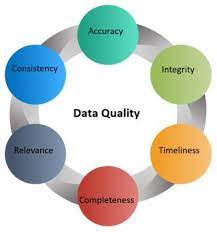
Each year, Monte Carlo surveys real data professionals about the state of their data quality. This year, we turned our gaze to the shadow of AI—and the message was clear. Managing Data Quality in an AI World is getting harder. Data quality risks are evolving — and data quality management isn’t. Among the 200 data professionals polled about the state of enterprise AI, a staggering 91% said they were actively building AI applications, but two out of three admitted to not completely trusting the data these applications are built on. And “not completely” leaves a lot of room for error in the world of AI. Far from pushing the industry toward better habits and more trustworthy outputs, the introduction of GenAI seems to have exacerbated the scope and severity of data quality problems. The Core Issue Why is this happening, and what can we do about it? 2024 State of Reliable AI Survey The Wakefield Research survey, commissioned by Monte Carlo in April 2024, polled 200 data leaders and professionals. It comes as data teams grapple with the adoption of generative AI. The findings highlight several key statistics that indicate the current state of the AI race and professional sentiment about the technology: While AI is widely expected to be among the most transformative technological advancements of the last decade, these findings suggest a troubling disconnect between data teams and business stakeholders. More importantly, they suggest a risk of downward pressure toward AI initiatives without a clear understanding of the data and infrastructure that power them. Managing Data Quality in an AI World. The State of AI Infrastructure—and the Risks It’s Hiding Even before the advent of GenAI, organizations were dealing with exponentially greater volumes of data than in decades past. Since adopting GenAI programs, 91% of data leaders report that both applications and the number of critical data sources have increased even further, deepening the complexity and scale of their data estates in the process. There’s no clear solution for a successful enterprise AI architecture. Survey results reveal how data teams are approaching AI: As the complexity of AI’s architecture and the data that powers it continues to expand, one perennial problem is expanding with it: data quality issues. The Modern Data Quality Problem While data quality has always been a challenge for data teams, this year’s survey results suggest the introduction of GenAI has exacerbated both the scope and severity of the problem. More than half of respondents reported experiencing a data incident that cost their organization more than $100K. And we didn’t even ask how many they experienced. Previous surveys suggest an average of 67 data incidents per month of varying severity. This is a shocking figure when you consider that 70% of data leaders surveyed also reported that it takes longer than four hours to find a data incident—and at least another four hours to resolve it. Managing Data Quality in an AI World But the real deal breaker is this: even with 91% of teams reporting that their critical data sources are expanding, an alarming 54% of teams surveyed still rely on manual testing or have no initiative in place at all to address data quality in their AI. This anemic approach to data quality will have a demonstrable impact on enterprise AI applications and data products in the coming months—allowing more data incidents to slip through the cracks, multiplying hallucinations, diminishing the safety of outputs, and eroding confidence in both the AI and the companies that build them. Is Your Data AI-Ready? While a lot has certainly changed over the last 12 months, one thing remains absolutely clear: if AI is going to succeed, data quality needs to be front and center. “Data is the lifeblood of all AI — without secure, compliant, and reliable data, enterprise AI initiatives will fail before they get off the ground. The most advanced AI projects will prioritize data reliability at each stage of the model development life cycle, from ingestion in the database to fine-tuning or RAG.” Lior Solomon, VP of Data at Drata, The success of AI depends on the data—and the success of the data depends on your team’s ability to efficiently detect and resolve the data quality issues that impact it. By curating and pairing your own first-party context data with modern data quality management solutions like data observability, your team can mitigate the risks of building fast and deliver reliable business value for your stakeholders at every stage of your AI adventure. What can you do to improve data quality management in your organization? Like Related Posts Who is Salesforce? Who is Salesforce? Here is their story in their own words. From our inception, we’ve proudly embraced the identity of Read more Salesforce Unites Einstein Analytics with Financial CRM Salesforce has unveiled a comprehensive analytics solution tailored for wealth managers, home office professionals, and retail bankers, merging its Financial Read more AI-Driven Propensity Scores AI plays a crucial role in propensity score estimation as it can discern underlying patterns between treatments and confounding variables Read more Tectonic’s Successful Salesforce Track Record Salesforce Technology Services Integrator – Tectonic has successfully delivered Salesforce in a variety of industries including Public Sector, Hospitality, Manufacturing, Read more

Read More
gettectonic.com