

Data Quality Archives - gettectonic.com - Page 7
Salesforce Data Migration Tools

Salesforce Data Migration

Salesforce Data Migration: A Key to CRM Success The migration of data into Salesforce is critical for the efficient functioning of Salesforce CRM. When executed correctly, it reduces data duplication, consolidates customer and operational data into a unified platform, and extends CRM capabilities beyond basic functionalities. Proper data migration serves as the foundation for advanced business intelligence and in-depth analytics. On the other hand, poorly managed migration can lead to transferring incorrect, duplicate, or corrupted data, compromising the system’s reliability. An efficient migration process safeguards data integrity, ensures a seamless transfer to Salesforce, and enhances overall organizational performance. What is Data Migration in Salesforce? Salesforce data migration is the process of transferring data from external systems, databases, or platforms into Salesforce. This process captures critical business information and integrates it into Salesforce’s CRM framework securely. The migration process also involves data cleansing, verification, and transforming data into formats compatible with Salesforce’s structure. Why You Need Salesforce Data Migration Importance Data migration is indispensable for companies looking to modernize their operations and enhance performance. With Salesforce, organizations can: Benefits Migrating Data from Legacy Systems to Salesforce Migrating data from legacy systems to Salesforce is essential for scalability and efficient data management. Key advantages include: Salesforce Data Migration Process Data migration involves transferring data into Salesforce to improve customer engagement and operational workflows. The process ensures data accuracy and compatibility with Salesforce’s architecture. Key Steps for Salesforce Data Migration Types of Salesforce Data Migration Top Salesforce Data Migration Tools Data Archiving in Salesforce Salesforce data archiving involves relocating unused or historical data to a separate storage area. This optimizes system performance and ensures easy access for compliance or analysis. Advantages Top Options for Data Archiving Best Practices for Salesforce Data Migration Conclusion Salesforce data migration is a pivotal step in transforming organizational processes and achieving CRM excellence. When done right, it improves efficiency, eliminates data duplication, and ensures accurate information storage. By following best practices, leveraging appropriate tools, and engaging migration specialists, organizations can unlock Salesforce’s full potential for scalability, automation, and advanced analytics. Successful migration paves the way for better decision-making and future growth. Like Related Posts Who is Salesforce? Who is Salesforce? Here is their story in their own words. From our inception, we’ve proudly embraced the identity of Read more Salesforce Marketing Cloud Transactional Emails Salesforce Marketing Cloud Transactional Emails are immediate, automated, non-promotional messages crucial to business operations and customer satisfaction, such as order Read more Salesforce Unites Einstein Analytics with Financial CRM Salesforce has unveiled a comprehensive analytics solution tailored for wealth managers, home office professionals, and retail bankers, merging its Financial Read more AI-Driven Propensity Scores AI plays a crucial role in propensity score estimation as it can discern underlying patterns between treatments and confounding variables Read more

Read More

AI in Radiology

The Transformative Role of Artificial Intelligence in Radiology Artificial intelligence (AI) has revolutionized industries across the globe, and healthcare is no exception. In radiology, AI is playing an increasingly vital role, enhancing everything from workflow efficiency to data analysis and predictive analytics. By leveraging AI, radiology is evolving into a more precise, efficient, and patient-focused field. The Role of AI in Radiology Radiology relies on medical imaging techniques such as X-rays, ultrasounds, computed tomography (CT) scans, and magnetic resonance imaging (MRI) to diagnose and monitor diseases. AI is being extensively researched and implemented to optimize these imaging processes, offering tools that assist radiologists in analyzing complex data and improving diagnostic accuracy. According to Siemens Healthineers, “Artificial intelligence holds significant promise for radiology and is already starting to revolutionize healthcare in many ways. From bridging the gap between the demands of ever-increasing, extremely complex data and the number of radiologists to simplifying data interpretation through sophisticated AI algorithms, AI is a valuable tool that, when combined with the human expertise of radiologists and clinicians, offers vast potential to the healthcare industry.” Applications of AI in Radiology Challenges of AI in Radiology While AI offers significant benefits, its integration into radiology comes with challenges: The Future of AI in Radiology The integration of AI into radiology represents a significant step forward in healthcare. By combining AI’s analytical power with the expertise of radiologists, the field can achieve greater accuracy, efficiency, and patient outcomes. However, addressing challenges related to data quality, regulation, and oversight will require collaboration among AI developers, radiologists, healthcare leaders, and regulators. As AI continues to advance, its role in radiology will expand, offering new opportunities to enhance diagnostic capabilities, streamline workflows, and improve patient care. The future of radiology lies in the synergy between human expertise and AI-driven innovation. Like Related Posts Who is Salesforce? Who is Salesforce? Here is their story in their own words. From our inception, we’ve proudly embraced the identity of Read more Salesforce Unites Einstein Analytics with Financial CRM Salesforce has unveiled a comprehensive analytics solution tailored for wealth managers, home office professionals, and retail bankers, merging its Financial Read more AI-Driven Propensity Scores AI plays a crucial role in propensity score estimation as it can discern underlying patterns between treatments and confounding variables Read more Tectonic’s Successful Salesforce Track Record Salesforce Technology Services Integrator – Tectonic has successfully delivered Salesforce in a variety of industries including Public Sector, Hospitality, Manufacturing, Read more
Read More
RevOps Sute for Salesforce Data Management

RevOps Suite for Salesforce Data Management

Traction Complete Launches Revolutionary “RevOps Data Management Suite for Salesforce” In an era where artificial intelligence (AI) is revolutionizing business, Traction Complete is proud to announce the launch of “The RevOps Data Management Suite for Salesforce.” This groundbreaking suite is the first data management solution designed specifically for Revenue Operations professionals, empowering users to fully leverage their data by ensuring it is clean, connected, and ready for AI adoption. RevOps Sute for Salesforce Data Management. Importance of Data Integrity “The importance of clean and connected data can’t be stressed enough, especially in the age of AI. Without a solid foundation of reliable data, businesses are navigating in the dark, unable to make strategic decisions.” David Nelson, CEO of Traction Complete RevOps Suite for Salesforce Data Management Stephen Daniels, Vice President of Revenue Operations at Cresta, echoes this sentiment: “There is a cost to bad data. If we didn’t have a solution like Traction Complete in the first place to scale off, we would be building on a bad foundation that would cause hundreds of thousands of dollars of headaches in the future.” The Impact of Poor Data Poor data is more than just a nuisance; it’s a significant barrier to success. And it is expensive. It leads to distrust in CRM systems and lost productivity, ultimately impacting business revenue. Traction Complete’s mission is to tackle these challenges head-on, ensuring that data is accurate and seamlessly integrated across the Salesforce platform. This foundation enables businesses to adopt the latest technology seamlessly. Recent findings from McKinsey highlight the critical role of data quality in AI adoption: “Fifty-six percent of companies say ‘inaccuracy’ is the biggest risk posed by adopting generative AI. Yet only 32% of companies have systems in place for mitigating such inaccuracies.” Expertise and Innovation Traction Complete, born from the recently Salesforce-acquired Traction on Demand, draws on over 1.4 million hours of consulting experience to build trusted data management solutions that improve data quality. “At the pace that AI and machine learning are expanding and changing how we operate, businesses can’t afford to overlook the importance of data quality. Any businesses not setting their data foundation right now will be left behind,” adds Nelson. The Future of Data Management As organizations continue to navigate the complexities of digital transformation, the message is clear: the time to invest in data management is now. With the RevOps Data Management Suite for Salesforce, Traction Complete is leading the way, providing the tools necessary for businesses to thrive in the age of AI and beyond. Like1 Related Posts Who is Salesforce? Who is Salesforce? Here is their story in their own words. From our inception, we’ve proudly embraced the identity of Read more Salesforce Marketing Cloud Transactional Emails Salesforce Marketing Cloud Transactional Emails are immediate, automated, non-promotional messages crucial to business operations and customer satisfaction, such as order Read more Salesforce Unites Einstein Analytics with Financial CRM Salesforce has unveiled a comprehensive analytics solution tailored for wealth managers, home office professionals, and retail bankers, merging its Financial Read more AI-Driven Propensity Scores AI plays a crucial role in propensity score estimation as it can discern underlying patterns between treatments and confounding variables Read more
Read More
Salesforce Validation Rules

Salesforce Validation Rules

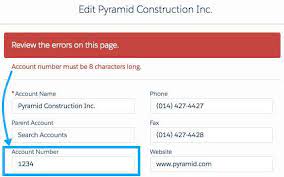
Essential Validation Rules for Salesforce Admins In this post, five essential validation rules that Salesforce admins should implement in their clients’ Salesforce orgs are discussed. Improve the quality of your data using validation rules. Validation rules verify that the data a user enters in a record meets the standards you specify before the user can save the record. Before digging into the specific rules this insight will highlight, let’s briefly review what validation rules are. What are Validation Rules in Salesforce? Validation rules in Salesforce are used to enforce data quality and consistency by validating the data entered by users before it is saved to the database. These rules consist of expressions or formulas that check the data against specified, required criteria. A validation rule can contain a formula or expression that evaluates the data in one or more fields and returns a value of “True” or “False”. Validation rules also include an error message to display to the user when the rule returns a value of “True” due to an invalid value. After you have defined validation rules: You can specify the error message to display when a record fails validation and where to display it. For example, your error message can be “The close date must occur after today’s date.” You can choose to display it near a field or at the top of the page. Like all other error messages, validation rule errors display in red text and begin with the word “Error”. 5 Validation Rules Examples Here are some important validation rules to configure in your Salesforce org: 1. The Account Number Must Be Numeric To ensure that users enter only numeric values in the Account Number field of the Account object, configure the following validation rule: plaintextCopy codeOR( ISBLANK(AccountNumber), NOT(ISNUMBER(AccountNumber)) ) If a text value is entered in the Account Number field, an error message will appear, as shown below: 2. Annual Revenue Range To restrict accounts with an annual revenue greater than a specific number, use the following rule: plaintextCopy codeOR( AnnualRevenue < 0, AnnualRevenue > 1000000 ) If the annual revenue entered exceeds 1 million, an error will be triggered, as illustrated below: 3. Close Date Must Be a Future Date To prevent sales reps from selecting past dates in the Opportunity Close Date field, implement this validation rule: plaintextCopy codeCloseDate < TODAY() Entering a past date in the Opportunity Close Date field will result in the following error: 4. Prevent Open Cases from Being Reset to New To stop service agents from changing the status of open cases to “New,” configure the following validation rule: plaintextCopy codeAND( ISCHANGED(Status), NOT(ISPICKVAL(PRIORVALUE(Status), “New”)), ISPICKVAL(Status, “New”) ) Attempting to reset the status of open cases to “New” will produce this error message: 5. Blank Email or Mobile To ensure that at least one communication detail (email or mobile number) is available on a contact record, use this validation rule: plaintextCopy codeAND( ISBLANK(Email), ISBLANK(MobilePhone) ) Leaving both email and mobile fields empty will generate the following error: Conclusion These validation rules are essential for maintaining data quality in your Salesforce org. If you have additional validation rules in mind, please share them in the comments below so everyone can benefit. Like Related Posts Who is Salesforce? Who is Salesforce? Here is their story in their own words. From our inception, we’ve proudly embraced the identity of Read more Salesforce Marketing Cloud Transactional Emails Salesforce Marketing Cloud Transactional Emails are immediate, automated, non-promotional messages crucial to business operations and customer satisfaction, such as order Read more Salesforce Unites Einstein Analytics with Financial CRM Salesforce has unveiled a comprehensive analytics solution tailored for wealth managers, home office professionals, and retail bankers, merging its Financial Read more AI-Driven Propensity Scores AI plays a crucial role in propensity score estimation as it can discern underlying patterns between treatments and confounding variables Read more

Read More
Deep Dive Summer 24 Release

Deep Dive Summer 24 Release

Deep Dive Summer 24 Release Get ready, Salesforce fans! The Summer ’24 release is here, and it’s like Christmas morning for tech geeks. We’re talking about new features, enhancements, and improvements that will make you wonder how you ever lived without them. This Tectonic insight is your ultimate guide to all the exciting updates, changes, and key considerations for this release. So hang on tight to your keyboards and let’s dive into the Christmas treat bag of goodies coming your way! Key Highlights – Deep Dive Summer 24 Release What’s New in Einstein AI? 1. Einstein for Flow Meet your new best friend for building Salesforce workflows, Salesforce Flow. Just describe what you need in plain English, and Einstein will whip up the workflow for you. For example, say “Notify sales reps when a lead converts,” and boom, it’s done. Automation just got a whole lot easier and way cooler. How to: Einstein for Flow makes complex processes feel like a walk in the park, letting you deliver solutions faster than you can say “workflow.” Considerations: 2. Einstein for Formulas No more tearing your hair out over formula syntax errors. Einstein for Formulas will not only tell you what’s wrong but also suggest fixes, saving you from endless hours of debugging. How to: Einstein for Formulas cuts down errors and speeds up formula creation, making your life exponentially easier. Like easier squared. Easier to the nth degree. Considerations: UI/UX Enhancements 1. Add New Custom Fields to Dynamic Forms-Enabled Pages Say goodbye to limitations! You can now add new custom fields directly to Dynamic Forms-enabled pages, aligning fields with your ever-changing business needs. Considerations: 2. Use Blank Spaces to Align Fields on Dynamic Forms-Enabled Pages Finally, a way to make your Dynamic Forms pages look neat and tidy with blank spaces for perfect alignment. Considerations: 3. Set Conditional Visibility for Individual Tabs in Lightning App Builder Now you can make specific tabs visible based on user profiles, record types, or other criteria. Customization just got a whole lot more precise. Considerations: 4. Create Rich Text Headings in Lightning App Builder Make your headings pop with bold, italic, and varied font sizes. Your Lightning pages are about to get a visual upgrade. Considerations: Flow Updates 1. Automation Lightning App A one-stop shop for managing and executing all your automation tools and processes. Considerations: 2. Lock and Unlock Records with Action Gain more control over your processes by locking records during critical stages and unlocking them when done. Considerations: 3. Check for Matching Records (Upsert) When Creating Records Avoid duplicates by checking for existing records before creating new ones. One can never have too many de-dupe tools. Considerations: 4. Transform Your Data in Flows (Generally Available) Now generally available, perform calculations, data transformations, and more with the Transform element in Flow Builder. Considerations: Admin Enhancements 1. Field History Tracking Manage tracked objects and fields more efficiently with a centralized page in “Setup.” Considerations: 2. See What’s Enabled in Permission Sets and Permission Set Groups (Generally Available) Enhanced permission set viewing improves visibility and control over security configurations. Considerations: 3. Get a Summary of User’s Permissions and Access Quickly view user permissions, public groups, and queues from the user’s detail page. Help and Training Community: Salesforce is simplifying Permission Set management by phasing out Profiles. Data Cloud Vector Database Vector search capabilities allow the creation of searchable “vector embeddings” from unstructured data, enhancing AI applications’ understanding of semantic similarities and context. Considerations: Deep Dive Summer 24 Release The Salesforce Summer ’24 release is packed with features designed to enhance your Salesforce experience. From a sleek new interface to powerful automation tools, enhanced analytics, and expanded integration options, this release aims to elevate workflow efficiency and data protection. Jump into the exciting updates, and let’s make automation simpler and more user-friendly together! Like1 Related Posts Who is Salesforce? Who is Salesforce? Here is their story in their own words. From our inception, we’ve proudly embraced the identity of Read more Salesforce Marketing Cloud Transactional Emails Salesforce Marketing Cloud Transactional Emails are immediate, automated, non-promotional messages crucial to business operations and customer satisfaction, such as order Read more Salesforce Unites Einstein Analytics with Financial CRM Salesforce has unveiled a comprehensive analytics solution tailored for wealth managers, home office professionals, and retail bankers, merging its Financial Read more AI-Driven Propensity Scores AI plays a crucial role in propensity score estimation as it can discern underlying patterns between treatments and confounding variables Read more
Read More
Lakeflow for Data Engineering

Lakeflow for Data Engineering

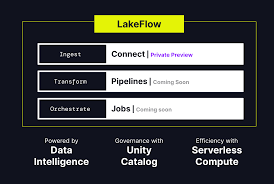
Databricks unveiled Databricks LakeFlow last week, a new tool designed to unify all aspects of data engineering, from data ingestion and transformation to orchestration. What is Databricks LakeFlow? According to Databricks, LakeFlow simplifies the creation and operation of production-grade data pipelines, making it easier for data teams to handle complex data engineering tasks. This solution aims to meet the growing demands for reliable data and AI by providing an efficient and streamlined approach. The Current State of Data Engineering Data engineering is crucial for democratizing data and AI within businesses, yet it remains a challenging field. Data teams must often deal with: How LakeFlow Addresses These Challenges LakeFlow offers a unified experience for all aspects of data engineering, simplifying the entire process: Key Features of LakeFlow LakeFlow comprises three main components: LakeFlow Connect, LakeFlow Pipelines, and LakeFlow Jobs. Availability LakeFlow is entering preview soon, starting with LakeFlow Connect. Customers can register to join the waitlist today. Like1 Related Posts Who is Salesforce? Who is Salesforce? Here is their story in their own words. From our inception, we’ve proudly embraced the identity of Read more Salesforce Marketing Cloud Transactional Emails Salesforce Marketing Cloud Transactional Emails are immediate, automated, non-promotional messages crucial to business operations and customer satisfaction, such as order Read more Salesforce Unites Einstein Analytics with Financial CRM Salesforce has unveiled a comprehensive analytics solution tailored for wealth managers, home office professionals, and retail bankers, merging its Financial Read more AI-Driven Propensity Scores AI plays a crucial role in propensity score estimation as it can discern underlying patterns between treatments and confounding variables Read more
Read More
Databricks LakeFlow

Databricks LakeFlow

Databricks Introduces LakeFlow: Simplifying Data Engineering Databricks, the Data and AI company, yesterday announced the launch of Databricks LakeFlow, a new solution designed to unify and simplify all aspects of data engineering, from data ingestion to transformation and orchestration. LakeFlow enables data teams to efficiently ingest data at scale from databases like MySQL, Postgres, and Oracle, as well as enterprise applications such as Salesforce, Dynamics, SharePoint, Workday, NetSuite, and Google Analytics. Additionally, Databricks is introducing Real Time Mode for Apache Spark, allowing ultra-low latency stream processing. Simplified Data Engineering with LakeFlow LakeFlow automates the deployment, operation, and monitoring of data pipelines at scale, with built-in support for CI/CD and advanced workflows that include triggering, branching, and conditional execution. It integrates data quality checks and health monitoring with alerting systems such as PagerDuty, simplifying the process of building and operating production-grade data pipelines. This efficiency enables data teams to meet the growing demand for reliable data and AI. Tackling Data Pipeline Challenges Data engineering is crucial for democratizing data and AI within businesses but remains complex and challenging. Data teams often struggle with ingesting data from siloed, proprietary systems, and managing intricate logic for data preparation. Failures and latency spikes can disrupt operations and disappoint customers. The deployment of pipelines and monitoring of data quality typically involve disparate tools, complicating the process further. Fragmented solutions lead to low data quality, reliability issues, high costs, and increasing backlogs. LakeFlow addresses these challenges by providing a unified experience on the Databricks Data Intelligence Platform, with deep integrations with Unity Catalog for end-to-end governance and serverless compute for efficient and scalable execution. Key Features of LakeFlow Availability LakeFlow represents the future of unified and intelligent data engineering. The preview phase will begin soon, starting with LakeFlow Connect. Like Related Posts Who is Salesforce? Who is Salesforce? Here is their story in their own words. From our inception, we’ve proudly embraced the identity of Read more Salesforce Marketing Cloud Transactional Emails Salesforce Marketing Cloud Transactional Emails are immediate, automated, non-promotional messages crucial to business operations and customer satisfaction, such as order Read more Salesforce Unites Einstein Analytics with Financial CRM Salesforce has unveiled a comprehensive analytics solution tailored for wealth managers, home office professionals, and retail bankers, merging its Financial Read more AI-Driven Propensity Scores AI plays a crucial role in propensity score estimation as it can discern underlying patterns between treatments and confounding variables Read more

Read More
Zero ETL

Zero ETL

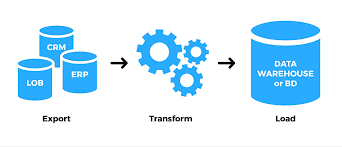
What is Zero-ETL? Zero-ETL represents a transformative approach to data integration and analytics by bypassing the traditional ETL (Extract, Transform, Load) pipeline. Unlike conventional ETL processes, which involve extracting data from various sources, transforming it to fit specific formats, and then loading it into a data repository, Zero-ETL eliminates these steps. Instead, it enables direct querying and analysis of data from its original source, facilitating real-time insights without the need for intermediate data storage or extensive preprocessing. This innovative method simplifies data management, reducing latency and operational costs while enhancing the efficiency of data pipelines. As the demand for real-time analytics and the volume of data continue to grow, ZETL offers a more agile and effective solution for modern data needs. Challenges Addressed by Zero-ETL Benefits of ZETL Use Cases for ZETL In Summary ZETL transforms data management by directly querying and leveraging data in its original format, addressing many limitations of traditional ETL processes. It enhances data quality, streamlines analytics, and boosts productivity, making it a compelling choice for modern organizations facing increasing data complexity and volume. Embracing Zero-ETL can lead to more efficient data processes and faster, more actionable insights, positioning businesses for success in a data-driven world. Components of Zero-ETL ZETL involves various components and services tailored to specific analytics needs and resources: Advantages and Disadvantages of ZETL Comparison: Z-ETL vs. Traditional ETL Feature Zero-ETL Traditional ETL Data Virtualization Seamless data duplication through virtualization May face challenges with data virtualization due to discrete stages Data Quality Monitoring Automated approach may lead to quality issues Better monitoring due to discrete ETL stages Data Type Diversity Supports diverse data types with cloud-based data lakes Requires additional engineering for diverse data types Real-Time Deployment Near real-time analysis with minimal latency Batch processing limits real-time capabilities Cost and Maintenance More cost-effective with fewer components More expensive due to higher computational and engineering needs Scale Scales faster and more economically Scaling can be slow and costly Data Movement Minimal or no data movement required Requires data movement to the loading stage Comparison: Zero-ETL vs. Other Data Integration Techniques Top Zero-ETL Tools Conclusion Transitioning to Zero-ETL represents a significant advancement in data engineering. While it offers increased speed, enhanced security, and scalability, it also introduces new challenges, such as the need for updated skills and cloud dependency. Zero-ETL addresses the limitations of traditional ETL and provides a more agile, cost-effective, and efficient solution for modern data needs, reshaping the landscape of data management and analytics. Like Related Posts Who is Salesforce? Who is Salesforce? Here is their story in their own words. From our inception, we’ve proudly embraced the identity of Read more Salesforce Unites Einstein Analytics with Financial CRM Salesforce has unveiled a comprehensive analytics solution tailored for wealth managers, home office professionals, and retail bankers, merging its Financial Read more AI-Driven Propensity Scores AI plays a crucial role in propensity score estimation as it can discern underlying patterns between treatments and confounding variables Read more Tectonic’s Successful Salesforce Track Record Salesforce Technology Services Integrator – Tectonic has successfully delivered Salesforce in a variety of industries including Public Sector, Hospitality, Manufacturing, Read more

Read More
AI-Powered Smarter Media

AI-Powered Smarter Media

Transforming Retail Media: Personalization and Faster Monetization with Smarter Media Dentsu, a leading growth and transformation partner, has announced a strategic collaboration with Salesforce, the world’s #1 AI-powered CRM, to launch Smarter Media—an innovative solution designed to accelerate retail media monetization through personalized buying experiences powered by AI. Why Smarter Media Matters With shifting consumer priorities, personalized retail experiences are more critical than ever. Salesforce research highlights that: Smarter Media addresses this growing demand by enabling retailers to quickly adapt, offering tailored buying experiences that strengthen customer loyalty while driving revenue. What is Smarter Media? Smarter Media combines the power of Salesforce’s ecosystem—including Media Cloud, Sales Cloud, and Marketing Cloud Engagement—to deliver an end-to-end retail media solution. The platform assesses a brand’s retail media maturity, identifies gaps, and creates a roadmap to optimize media, technology, and skills. The solution simplifies access to advanced media technology, empowering brands to connect with customers 24/7, expand their customer base, and nurture long-term relationships. Key Features and Benefits 1. Comprehensive Assessment 2. AI-Powered Personalization 3. Built for Retail Media Success 4. Quick and Easy Adoption How Smarter Media Works Smarter Media combines Salesforce Sales Cloud’s leading sales and pipeline management tools with Media Cloud’s Advertising Sales Management application. The result is a solution that seamlessly supports both simple and complex retailer models: Real-World Value Across Retail By addressing challenges like fragmented media strategies and inaccessible technology, Smarter Media delivers transformative value for retailers: Driving Innovation Together Paul Lynch, Integrated Solutions Lead for Commerce and Retail at Dentsu UK&I, shared: “Smarter Media will democratize cutting-edge technology for brands by providing a one-stop solution to create personalized buying experiences. In today’s experience economy, maintaining compelling customer relationships has never been more vital.” Christopher Dean, SVP and GM for Communications, Media & Entertainment at Salesforce, added: “By combining Salesforce Media Cloud’s industry-specific solutions with Dentsu’s creative retail media expertise, we’re making advanced media technology accessible for retailers, helping them thrive in a competitive market.” The Future of Retail Media Smarter Media from Dentsu and Salesforce offers a transformative approach to retail media, empowering brands to deliver personalized experiences, improve customer loyalty, and accelerate revenue growth—all while leveraging cutting-edge AI and automation. With its ability to deliver value in just six months, Smarter Media is the ultimate solution for retailers looking to succeed in today’s fast-paced, customer-centric market. Like Related Posts Who is Salesforce? Who is Salesforce? Here is their story in their own words. From our inception, we’ve proudly embraced the identity of Read more Salesforce Marketing Cloud Transactional Emails Salesforce Marketing Cloud Transactional Emails are immediate, automated, non-promotional messages crucial to business operations and customer satisfaction, such as order Read more Salesforce Unites Einstein Analytics with Financial CRM Salesforce has unveiled a comprehensive analytics solution tailored for wealth managers, home office professionals, and retail bankers, merging its Financial Read more AI-Driven Propensity Scores AI plays a crucial role in propensity score estimation as it can discern underlying patterns between treatments and confounding variables Read more
Read More
Engagement Frequency Dashboard

Engagement Frequency Dashboard

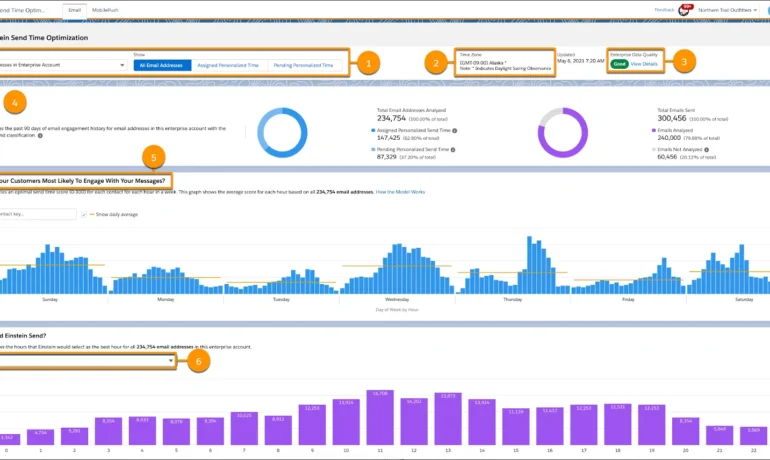
The Einstein Engagement Frequency Dashboard The Einstein Engagement Frequency Dashboard provides a comprehensive overview of your contacts’ email saturation levels. By analyzing this data, you can understand how your email sending frequency influences engagement metrics like opens, clicks, and unsubscribes over time. The What-If analyzer is a handy tool within the dashboard, allowing you to experiment with different sending frequencies to maximize your On Target saturation levels. Accessing the Dashboard To access the Einstein Engagement Frequency Dashboard: Once on the dashboard, you can click “View Details” at the top to check your data quality scores and get tips on how to improve them. This will give you an idea of how reliable your email or mobile engagement data is. Note on Data Quality If Einstein lacks sufficient data for certain contacts, it will assign frequency scores based on global model data. This can sometimes cause discrepancies between the Einstein Engagement Frequency dashboard and activity-level analytics in specific journeys. What-If Analyzer The What-If Analyzer is a feature on the dashboard that allows you to test different future saturation levels based on varying message frequencies. The goal is to increase the number of contacts in the “On Target” range for engagement. The analyzer provides a bar chart that predicts how adjusting your email frequency can shift contacts from being “Saturated” or “Undersaturated” to “On Target.” This tool helps you fine-tune your communication strategy to optimize engagement across your contact base. Like Related Posts Who is Salesforce? Who is Salesforce? Here is their story in their own words. From our inception, we’ve proudly embraced the identity of Read more Salesforce Marketing Cloud Transactional Emails Salesforce Marketing Cloud Transactional Emails are immediate, automated, non-promotional messages crucial to business operations and customer satisfaction, such as order Read more Salesforce Unites Einstein Analytics with Financial CRM Salesforce has unveiled a comprehensive analytics solution tailored for wealth managers, home office professionals, and retail bankers, merging its Financial Read more AI-Driven Propensity Scores AI plays a crucial role in propensity score estimation as it can discern underlying patterns between treatments and confounding variables Read more

Read More
The Autonomous Customer Service Revolution

The Autonomous Customer Service Revolution

The Autonomous Customer Service Revolution: Strategies for Future-Ready Businesses The New Era of Customer Experience Today’s consumers demand instant, personalized service across all channels – a standard that 88% say directly influences their repurchase decisions. Autonomous customer service, powered by cutting-edge AI, is emerging as the transformative solution to meet these expectations while driving operational efficiency. Defining Autonomous Customer Service Unlike traditional AI-assisted service, autonomous systems leverage: “Digital agents represent a quantum leap beyond conventional self-service,” explains Yacov Salomon, SVP of Engineering for Service Cloud. “We’re witnessing a fundamental transformation in how businesses engage customers.” How Autonomous Systems Operate The Human-AI Collaboration Model Contrary to replacement fears, autonomous AI enhances human roles by: “These systems excel at specific tasks with machine precision,” notes Salomon, “while enabling human agents to focus on creative problem-solving and emotional intelligence.” Strategic Advantages Benefit Impact 24/7 Global Availability 40% reduction in after-hours support costs Instant Resolution 3-5x faster response times Personalized Engagement 25% increase in CSAT scores Operational Scalability 10x inquiry capacity without added staff Predictive Insights 15-30% improvement in first-contact resolution Implementation Roadmap Service Cloud: The Autonomous Advantage Salesforce’s AI-powered solution delivers: Einstein Copilot for Service Trusted AI Infrastructure The Next Frontier Emerging innovations will bring: “Customer service is becoming the new growth engine,” predicts Salomon. “Autonomous AI creates revenue opportunities while delivering exceptional experiences at scale.” Getting Started Businesses can immediately: The autonomous revolution isn’t coming—it’s here. Organizations that strategically implement these solutions today will define the customer experience standards of tomorrow. Like Related Posts Who is Salesforce? Who is Salesforce? Here is their story in their own words. From our inception, we’ve proudly embraced the identity of Read more Salesforce Marketing Cloud Transactional Emails Salesforce Marketing Cloud Transactional Emails are immediate, automated, non-promotional messages crucial to business operations and customer satisfaction, such as order Read more Salesforce Unites Einstein Analytics with Financial CRM Salesforce has unveiled a comprehensive analytics solution tailored for wealth managers, home office professionals, and retail bankers, merging its Financial Read more AI-Driven Propensity Scores AI plays a crucial role in propensity score estimation as it can discern underlying patterns between treatments and confounding variables Read more

Read More
Salesforce Informatica Almost

Salesforce Informatica Almost

The Deal That Never Was: Salesforce and Informatica In one of the biggest technology news stories of the year, it was reported in April that Salesforce was on the verge of acquiring cloud data management provider Informatica. Salesforce Informatica Almost. Both Bloomberg and The Wall Street Journal confirmed the story, with Bloomberg predicting that the deal could be finalized within days. Salesforce appeared poised to leverage Informatica’s data integration and management platform to enhance its Data Cloud and Einstein 1 solutions. However, by the following week, reports surfaced that the deal had fallen through due to an inability to agree on terms, with an unnamed Bloomberg source citing a disagreement over price. Neither company has disclosed specific reasons for the failed negotiations, but market reactions were notable, with both companies experiencing share price drops after the news broke. Salesforce has since somewhat recovered from its initial 7% decrease, but Informatica’s stock has continued to decline, now at its lowest point since mid-February. Criticism also emerged within the technology sector. Gaurav Dhillon, Co-Founder of Informatica and current CEO of SnapLogic, was particularly vocal, describing the proposed acquisition as a “real step backward” for Salesforce and expressing concerns about the merger’s impact on Informatica’s users. Dhillon predicted a “rocky road ahead” due to significant overlaps in integration products, specifically highlighting the challenge of merging Informatica’s technology with MuleSoft, an integration platform Salesforce acquired for $6.5 billion in 2018. Dhillon warned that integrating these disparate platforms would be a complex, time-consuming project likely to take more than five years to complete. Industry Analysts Weigh In The topic was recently revisited by leading CX analysts during a CX Today Big CX News discussion. Despite the initial market and industry criticism, many analysts agreed that the acquisition made strategic sense for Salesforce. Martin Schneider, Head of Research at Annuitas Research, emphasized that data quality is a longstanding issue in the CRM sector and described Informatica’s data capabilities as the missing “puzzle piece” for Salesforce’s end-to-end, AI-driven strategy. He stated, “One thing that Informatica does incredibly well is data quality. Having a CDP is one thing, but unless you actually have the data set right, you can’t create a free-flowing customer data value chain.” Michael Fauscette, Founder, CEO & Chief Analyst at Arion Research, echoed this sentiment, highlighting the enhancements Informatica could have brought to the backend of Data Cloud as a missed opportunity. “If you think about what Salesforce has done over the last couple of years with Data Cloud, it really completes that story from the backend,” he said. “The part of how do I get the data prep and make sure the quality is there.” While acknowledging that the price may have been a sticking point, particularly given the overlap with Salesforce’s existing solutions, Zeus Kerravala, Principal Analyst at ZK Research, expressed surprise that Salesforce walked away from the deal. He asserted, “If an acquisition is a good acquisition, you can never pay too much for it.” Kerravala further explained that data quality issues are a significant hindrance to Salesforce’s AI capabilities. “Salesforce customers are notorious for putting bad data into Salesforce, and bad data leads to bad output. If there’s one thing they needed, it was a company like Informatica to help with that.” Conclusion Despite the week-long will-they-won’t-they drama, the potential acquisition of Informatica by Salesforce remains a ‘what if.’ While initial market reactions and industry criticisms suggested that the failed deal might have been for the best, many CX analysts believe it represented a missed opportunity for Salesforce to enhance its data management and AI capabilities. As the dust settles, the implications of this near-acquisition will continue to be a topic of discussion in the CX community. Like Related Posts Who is Salesforce? Who is Salesforce? Here is their story in their own words. From our inception, we’ve proudly embraced the identity of Read more Salesforce Marketing Cloud Transactional Emails Salesforce Marketing Cloud Transactional Emails are immediate, automated, non-promotional messages crucial to business operations and customer satisfaction, such as order Read more Salesforce Unites Einstein Analytics with Financial CRM Salesforce has unveiled a comprehensive analytics solution tailored for wealth managers, home office professionals, and retail bankers, merging its Financial Read more AI-Driven Propensity Scores AI plays a crucial role in propensity score estimation as it can discern underlying patterns between treatments and confounding variables Read more

Read More
Cost of Free Analytics

Cost of Free Analytics

Is It Time to Upgrade Your Web Analytics? For years, you might have relied on free web analytics tools, thinking they do the job or resigning yourself to an “it is what it is” mindset. But what if there’s a better way to truly understand your customers and supercharge your marketing efforts? Upgrading to a premium analytics solution could be a game changer for your brand and your peace of mind. What is the Cost of Free Analytics? It’s time to move beyond those so-called free tools (which aren’t really free when you factor in hidden costs) and invest in a robust analytics solution. The right tool can transform your approach—imagine saying goodbye to the hassle of patching together data or juggling disparate reports. With clear, comprehensive insights into customer interactions, you’ll make smarter, data-driven decisions across your business. The Pitfalls of Free Analytics Tools While free analytics tools might seem like a cost-effective choice, they come with significant drawbacks. They often offer limited functionality, delayed or incomplete data, siloed reporting, and compliance risks. Relying on these tools can lead to guesswork and errors, resulting in costly mistakes. Limited Functionality Free analytics tools barely skim the surface of what’s possible with data collection and reporting. They depend on third-party cookies and route your data through their servers, providing you with only partial insights. Essential features like persistent digital identity tracking, profile building, journey mapping, predictive analytics, and machine learning capabilities are typically missing. In contrast, premium tools leverage advanced algorithms and machine learning to unearth valuable data patterns and insights. For instance, a premium tool might reveal that users who view a product page after watching a related video are significantly more likely to make a purchase—information that could greatly influence your marketing strategy. Subpar Data Quality Free tools often lag in delivering real-time data, giving you an outdated snapshot of customer interactions. Timely data is crucial for agile marketing—without it, you risk missing out on opportunities and wasting ad spend. Stale data leads to missed chances and inefficiencies. Reporting Silos and Inaccuracies Free analytics solutions typically don’t integrate data across your organization, resulting in fragmented and siloed information. Different teams may have access to unaligned reports, often requiring multiple tools to piece together insights. This lack of a unified source of truth makes it impossible to get a comprehensive view of customer interactions across various touchpoints. Organizational Inefficiencies Managing free tools can be resource-intensive. They often require extensive tagging and manual upkeep, leading to increased costs and the risk of inaccurate data due to broken or altered tags. This inefficiency can impact long-term business decisions and strategic planning. Compliance Risks Free tools often involve sending your data to external servers, raising concerns about data loss, latency, and compliance with privacy regulations. These tools process your digital engagement and Personally Identifiable Information (PII) on their servers, complicating the task of maintaining regulatory standards and ensuring data security. The True Cost of Free Tools The reality is, “free” isn’t really free. The hidden costs and risks associated with free analytics tools can outweigh their benefits. While premium analytics solutions may seem expensive at first glance, they offer superior insights and performance improvements that provide a competitive edge. With accurate, real-time data and advanced features, investing in a premium tool is a decision that pays off. Remember, the old adage “nothing’s free” rings true—don’t jeopardize your brand’s success with subpar tools that end up costing more in the long run! Like Related Posts Who is Salesforce? Who is Salesforce? Here is their story in their own words. From our inception, we’ve proudly embraced the identity of Read more Salesforce Marketing Cloud Transactional Emails Salesforce Marketing Cloud Transactional Emails are immediate, automated, non-promotional messages crucial to business operations and customer satisfaction, such as order Read more Salesforce Unites Einstein Analytics with Financial CRM Salesforce has unveiled a comprehensive analytics solution tailored for wealth managers, home office professionals, and retail bankers, merging its Financial Read more AI-Driven Propensity Scores AI plays a crucial role in propensity score estimation as it can discern underlying patterns between treatments and confounding variables Read more

Read More
Train On Your Own Data

Train On Your Own Data

General-purpose large language models (LLMs) offer businesses the convenience of immediate use without requiring any special setup or customization. However, to maximize the potential of LLMs in business environments, organizations can achieve significant benefits by customizing these models through training on their own data. Custom LLMs excel at handling organization-specific tasks that generic LLMs—such as OpenAI’s ChatGPT or Google’s Gemini—may not manage as effectively. By training an LLM on data unique to the enterprise, businesses can fine-tune the model to produce responses that are highly relevant to specific products, workflows, and customer interactions. To determine whether to customize an LLM with organization-specific data, businesses should first explore the various types of LLMs and understand the advantages of fine-tuning a model on custom data sets. Following this, they can proceed with the necessary steps: identifying data sources, cleaning and formatting the data, adjusting model parameters, retraining the model, and testing it in production. Generic vs. Customized LLMs LLMs can be broadly categorized into two types: Training an LLM on custom data doesn’t imply starting from scratch; instead, it often involves fine-tuning a pre-trained generic model with additional training on the organization’s data. This approach allows the model to retain the broad knowledge it acquired during initial training while enhancing its capabilities in areas specific to the business. Benefits of Customizing an LLM The primary reason for retraining or fine-tuning an LLM is to achieve superior performance on business-specific tasks compared to using a generic model. For example, a company that wants to deploy a chatbot for customer support needs an LLM that understands its products in detail. Even if a generic LLM has some familiarity with the product from public data sources, it may lack the depth of knowledge that the company’s internal documentation provides. Without this comprehensive context, a generic LLM might struggle to generate accurate responses when interacting with customers about specific products. Generic models are optimized for broad usability, which means they may not be tailored for the specialized conversations required in business scenarios. Organizations can overcome these limitations by retraining or fine-tuning an LLM with data related to their products and services. During this process, AI teams can also adjust parameters, such as model weights, to influence the type of output the model generates, making it more relevant to the organization’s needs. Steps to Customize an LLM with Organization-Specific Data To customize an LLM with your organization’s data, follow these steps: By following these steps, organizations can transform a generic LLM into a powerful, customized tool tailored to their unique business needs, enhancing efficiency, customer satisfaction, and overall operational effectiveness. Like Related Posts Who is Salesforce? Who is Salesforce? Here is their story in their own words. From our inception, we’ve proudly embraced the identity of Read more Salesforce Marketing Cloud Transactional Emails Salesforce Marketing Cloud Transactional Emails are immediate, automated, non-promotional messages crucial to business operations and customer satisfaction, such as order Read more Salesforce Unites Einstein Analytics with Financial CRM Salesforce has unveiled a comprehensive analytics solution tailored for wealth managers, home office professionals, and retail bankers, merging its Financial Read more AI-Driven Propensity Scores AI plays a crucial role in propensity score estimation as it can discern underlying patterns between treatments and confounding variables Read more

Read More
gettectonic.com