

Digital Transformation Archives - gettectonic.com - Page 8
Digital Transformation for Life Sciences

Digital Transformation for Life Sciences

In hindsight, one remarkable aspect of the COVID crisis was the speed with which vaccines passed through regulatory approval processes to address the pandemic emergency. Approvals that would typically take years were expedited to mere months, a pace not usually seen in the life sciences industry. It was an extraordinary situation, as Paul Shawah, Senior Vice President of Commercial Strategy at Veeva Systems, notes: “There were things that were unnaturally fast during COVID. There was a shifting of priorities, a shifting of focus. In some cases, you had the emergency approvals or the expedited approvals of the vaccines that you saw in the early days, so there was faster growth. Everything was kind of different in the COVID environment.” Today, the industry is not operating at that same rapid pace, but the impact of this acceleration remains significant: “What it did do is it challenged companies to think about why can’t we operate faster at a steady state? There was an old steady state, then there was COVID speed. The industry is trying to get to a new steady state. It won’t be as fast as during COVID because of unique circumstances, but expectations are now much higher. This drives a need to modernize systems, embrace the cloud, become more digital, and improve efficiency.” Companies like Veeva, alongside enterprise giants such as Salesforce, SAP, and Oracle, specialize in this market and play crucial roles in life sciences digitization. According to a McKinsey study, about 45% of tech spending in life sciences goes to three key technologies: applied Artificial Intelligence, industrialized Machine Learning, and Cloud Computing. Over 80% of the top 20 global pharma and medtech companies are operating in the cloud to some extent. However, a study by Accenture found that life sciences firms are among the lowest in achieving benefits from cloud investments, with only 43% satisfied with their results and less than a quarter confident that cloud migration initiatives will deliver the promised value within expected time frames. This presents both a challenge and an opportunity. Frank Defesche, SVP & GM of Life Sciences at Salesforce, sees it as the latter, stating: “The life sciences industry faces increased competition, evolving patient expectations, and ongoing pressure to bring devices and drugs to market faster. With rising drug costs, frustrated doctors, and varying regulatory scrutiny, life sciences organizations must find ways to do more with less.” The industry also contends with an unprecedented influx of data and disparate systems, making it difficult to move quickly. Addressing changes one by one is too slow and costly. Defesche believes that a systemic solution, fueled by connected data and Artificial Intelligence (AI), is key to overcoming these challenges. Paul Shawah of Veeva emphasizes the unique challenges of the life sciences sector: “Life sciences firms primarily do two things: discover and develop medicines, and commercialize them by educating doctors and getting the right drugs to patients. The drug development cycle includes clinical trials, managing everything related to drug safety, the manufacturing process, and ensuring quality. They also manage regulatory registrations. On the commercial side, it’s about reaching out to doctors and healthcare professionals.” Veeva’s Vault platform is designed for life sciences, with customers like Merck, Eli Lilly, and Boehringer Ingelheim. Shawah acknowledges it’s “still relatively early days” for cloud computing adoption but notes successes in areas like CRM, where Veeva achieved over 80% market share by standardizing processes and reducing technical debt. Other areas, like parts of the clinical trials process, remain largely untapped by cloud computing. Shawah sees opportunities to improve patient experiences and make the process more efficient. AI represents a significant area of opportunity. Shawah explains Veeva’s approach: “I’ll break AI into two categories: traditional AI, Machine Learning, and data science, which we’ve been doing for a long time, and generative AI, which is new. We’re focusing on finding use cases that create sustainable, repeatable value. We’re building capabilities into our Vault platform to support AI.” Joe Ferraro, VP of Product, Life Sciences at Salesforce, emphasizes AI’s critical role: “We are born out of the data and AI era, and we’re taking that philosophy into everything we do from a product standpoint. We aim to move from creating a system of record to a system of insight, using data and AI to transform how users interact with software.” Ferraro highlights the need for change: “Organizations told us, ‘Please don’t build the same thing we have now. We are mired in fragmented experiences. Our sales and marketing teams aren’t talking, and our medical and commercial teams don’t understand each other.’ Life Sciences Cloud aims to move the industry from these fragmented experiences to an end-to-end, AI-powered experience engine.” The COVID crisis highlighted the critical role of the life sciences industry. There’s a massive opportunity for digital transformation, whether through specialists like Veeva or enterprise players like Salesforce, Oracle, and SAP. Data must be the foundation of any solution, especially amidst the current AI hype cycle. Ensuring this data is well-managed is a crucial starting point for industry-wide change. Like Related Posts Who is Salesforce? Who is Salesforce? Here is their story in their own words. From our inception, we’ve proudly embraced the identity of Read more Salesforce Marketing Cloud Transactional Emails Salesforce Marketing Cloud Transactional Emails are immediate, automated, non-promotional messages crucial to business operations and customer satisfaction, such as order Read more Salesforce Unites Einstein Analytics with Financial CRM Salesforce has unveiled a comprehensive analytics solution tailored for wealth managers, home office professionals, and retail bankers, merging its Financial Read more AI-Driven Propensity Scores AI plays a crucial role in propensity score estimation as it can discern underlying patterns between treatments and confounding variables Read more


Read More

Digital Marketing Roadmap

Digital transformation is becoming a mantra in business, but how do you embark on this journey? What is the goal? What does it look like? Begin with a digital marketing roadmap. What is the roadmap for digital marketing? A digital marketing roadmap lays out your major areas of focus and ensures iterations stay grounded in that strategy. As you build your digital marketing roadmap, remember the goal is to facilitate: Alignment: A strategy-driven roadmap rallies the team around the work that needs to be done. What are the four phases of digital marketing? Awareness – Content focused on educating your audience. Evaluation – Customers determine whether they need your product. Conversion – Reasons to buy your product. Delight – Keeping your audience engaged. The initial draft is likely straightforward, conceived by visionaries in your organization, outlining the roadmap’s initial steps: This initial draft is a good start but needs refinement before presentation to management for buy-in. The key is to make metrics SMART, following the framework proposed by management theorist Peter F. Drucker: Now, let’s transform the draft into a presentation-worthy strategic roadmap: Strategic Plan Vision Statement: Provide a seamless omnichannel customer experience to become the number 1 seller of our industry. This refined roadmap is more achievable, being both measurable and time-bound. For added effectiveness, consider SMARTER goals, where “E” stands for engagement evaluator and “R” stands for reward. Have an evaluator determine goal achievement and showcase how it impacts the organization in the long run. What are the 5 key elements of digital marketing? The five most important elements of a digital campaign consist of mobile considerations, organic search, social media marketing, content marketing and lead nurturing. All of these elements combined make up a cohesive digital marketing strategy. What is 4Ps vs the 4Cs of digital marketing? 4Ps is Product, Price, Place, and Promotion. On other hand 4Cs is Customer Value, Cost, Conveniece, and Communication. 4Ps is more company centered in other hand 4Cs is more customer focused. Note: For expert assistance with your assessment and strategic roadmap, contact your account executive at Tectonic to explore how our Salesforce team can assist with your planning. Once completed, revisit and tweak your roadmap to ensure customer experience is at its core and goals are SMARTER. Like Related Posts Who is Salesforce? Who is Salesforce? Here is their story in their own words. From our inception, we’ve proudly embraced the identity of Read more Salesforce Marketing Cloud Transactional Emails Salesforce Marketing Cloud Transactional Emails are immediate, automated, non-promotional messages crucial to business operations and customer satisfaction, such as order Read more Salesforce Unites Einstein Analytics with Financial CRM Salesforce has unveiled a comprehensive analytics solution tailored for wealth managers, home office professionals, and retail bankers, merging its Financial Read more AI-Driven Propensity Scores AI plays a crucial role in propensity score estimation as it can discern underlying patterns between treatments and confounding variables Read more
Read More
Salesforce Success Story

Case Study: Flexible CRM for High Growth Sales

Hospitality company needs to enhance their CRM capabilities to match the business with a Flexible CRM for High Growth Sales. Industry: Hospitality – High Tech Client is a hospitality company specialized in a new, modern mode of housing, making it easy to live well — wherever, whenever. Company has homes in over 30 cities across the U.S. and have hosted over 1 million nights of stays. Backed by Airbnb, Comcast, Bowery, and Initialized Capital, they’ve raised $90M in funding. Problem: Implemented : Our solution? Results: Salesforce offers customized solutions for the travel and hospitality industries, assisting companies in this field to provide outstanding client experiences, optimize workflows, and spur expansion. These solutions make use of the Salesforce Customer 360 platform to improve communication, organize data, and give visitors a customized experience. Salesforce offers digital transformation technology for travel, tourist, and hospitality industries. If you are considering a Salesforce hospitality implementation, contact Tectonic today. Like2 Related Posts Who is Salesforce? Who is Salesforce? Here is their story in their own words. From our inception, we’ve proudly embraced the identity of Read more Salesforce Marketing Cloud Transactional Emails Salesforce Marketing Cloud Transactional Emails are immediate, automated, non-promotional messages crucial to business operations and customer satisfaction, such as order Read more Salesforce Unites Einstein Analytics with Financial CRM Salesforce has unveiled a comprehensive analytics solution tailored for wealth managers, home office professionals, and retail bankers, merging its Financial Read more AI-Driven Propensity Scores AI plays a crucial role in propensity score estimation as it can discern underlying patterns between treatments and confounding variables Read more

Read More
Salesforce Success Story

Case Study: Service Cloud Marketing Cloud Hospitality

Resort company builds loyalty and drives sales increase across all sites using data and segmentation. hospitality salesforce service marketing case study. Industry: Hospitality Located at the epicenter of Honolulu’s most exciting neighborhoods, resort offers guaranteed oceanfront panoramic views in guestrooms and luxury suites. The hotel also has its own golf course. Problem: Implemented : Technologies integrated : Our solution? Results: Tectonic has assisted customers in generating a live view of their visitors so they can pleasantly surprise and amuse them with customized service during every engagement. Salesforce offers customized solutions for the travel and hospitality industries, assisting companies in this field to provide outstanding client experiences, optimize workflows, and spur expansion. These solutions make use of the Salesforce Customer 360 platform to improve communication, organize data, and give visitors a customized experience. Salesforce offers digital transformation technology for travel, tourist, and hospitality industries. If you are considering a Salesforce hospitality implementation, contact Tectonic today. Like2 Related Posts Who is Salesforce? Who is Salesforce? Here is their story in their own words. From our inception, we’ve proudly embraced the identity of Read more Salesforce Marketing Cloud Transactional Emails Salesforce Marketing Cloud Transactional Emails are immediate, automated, non-promotional messages crucial to business operations and customer satisfaction, such as order Read more Salesforce Unites Einstein Analytics with Financial CRM Salesforce has unveiled a comprehensive analytics solution tailored for wealth managers, home office professionals, and retail bankers, merging its Financial Read more AI-Driven Propensity Scores AI plays a crucial role in propensity score estimation as it can discern underlying patterns between treatments and confounding variables Read more

Read More
Connected Culture

KPIs of Digital Transformation

If 2020 marked the onset of the pandemic and 2021 was a year of adapting business strategies despite the ongoing challenges, 2022 and the years beyond emerge as the era of digital transformation. If you are currently reading this article, chances are you’ve either initiated, evaluated, or are assessing the value of your digital transformation journey. You need the KPIs of digital transformation to assess your progress. At Tectonic, we recognize the formidable nature of digital transformation for companies across all scales. Our goal is to assist you in establishing key performance indicators (KPIs) to gauge the success of your Salesforce digital transformation project. Adapt or Die Companies must adapt to new technologies as they develop if they want to get ahead of the competition and stay there. Digital transformation involves creating an omnichannel presence for your customers, allowing them access to your company at their convenience. It also entails implementing tools and systems like Salesforce to enable a scalable omnichannel presence. Often, it involves both. Customers today engage with companies through various channels beyond just browsing websites. They download apps, interact on social media, read about companies on other platforms, and seek diverse ways to connect. The tools you employ become mission-critical in creating value for your customers. Meeting the growing demand requires a 360-degree view of your customers and the ability to leverage that data to engage with them wherever they seek your content and information. Over 70 percent of digital initiatives fail; the biggest reasons are unclear goals and inability to track progress. Because digital transformation is a process, not a destination, KPIs are waypoints, not endpoints. Digital transformation is the linchpin to achieving this agility and doing so swiftly. Tectonic hopes to be your partner in this transformation, offering the following KPIs to help you measure success along the way. Tectonic, with a proven track record, employs a carefully designed delivery methodology, refined through client feedback and project learnings. Our success is measured by the same criteria we encourage you to use in evaluating your digital transformation KPIs. Like Related Posts Who is Salesforce? Who is Salesforce? Here is their story in their own words. From our inception, we’ve proudly embraced the identity of Read more Salesforce Marketing Cloud Transactional Emails Salesforce Marketing Cloud Transactional Emails are immediate, automated, non-promotional messages crucial to business operations and customer satisfaction, such as order Read more Salesforce Unites Einstein Analytics with Financial CRM Salesforce has unveiled a comprehensive analytics solution tailored for wealth managers, home office professionals, and retail bankers, merging its Financial Read more AI-Driven Propensity Scores AI plays a crucial role in propensity score estimation as it can discern underlying patterns between treatments and confounding variables Read more
Read More
Salesforce Digital Transformation

Track Your Digital Transformation Progress With These Important KPIs

Effective digital transformation progress has the potential to enhance the competitiveness and agility of enterprises in today’s and the future dynamic market. Most CIOs acknowledge that implementing digital transformation is a challenging endeavor and not a task achievable within a day or a week. It demands a significant commitment from business leaders, comprehensive training, financial investment, adept change management, a well-articulated strategy, and diligent monitoring of Key Performance Indicators (KPIs). A concerning statistic reveals that over 70 percent of digital initiatives fail, primarily due to unclear goals and the inability to monitor progress. Surprisingly, 50 percent of businesses do not define metrics or Key Performance Indicators (KPIs) to measure the success of their digital transformation progress. This lack of measurement makes substantial investments counterproductive. Assessing the right metrics is essential, as it allows businesses to determine whether they are implementing best practices and deriving the intended value from the process. Considering the broad scope of potential transformations within a business, creating KPIs for digital transformation progress to measure success can be challenging. However, identifying and monitoring specific digital transformation KPIs is crucial for gauging progress towards digitization goals. The following are key digital transformation KPIs that can contribute to tracking the journey and drawing closer to achieving digitization objectives: Keeping a vigilant eye on these important digital transformation process KPIs will enable businesses to navigate their digital journey effectively and strive towards achieving successful digitization. Like Related Posts Who is Salesforce? Who is Salesforce? Here is their story in their own words. From our inception, we’ve proudly embraced the identity of Read more Salesforce Marketing Cloud Transactional Emails Salesforce Marketing Cloud Transactional Emails are immediate, automated, non-promotional messages crucial to business operations and customer satisfaction, such as order Read more Salesforce Unites Einstein Analytics with Financial CRM Salesforce has unveiled a comprehensive analytics solution tailored for wealth managers, home office professionals, and retail bankers, merging its Financial Read more AI-Driven Propensity Scores AI plays a crucial role in propensity score estimation as it can discern underlying patterns between treatments and confounding variables Read more

Read More
Salesforce Quickstart

Salesforce Quickstarts Explained

What is a Salesforce Quickstart? Salesforce Quickstarts are great for individual departments or small sales & customer service teams who want to get the most out of their Salesforce investment from day one. Tectonic refers to these as Salesforce Implementation Solutions. Small to medium-sized businesses who are looking for quick deployment and want to get started with Salesforce as soon as possible benefit greatly from Salesforce quickstarts. Quickstart packages have also been called Salesforce Jumpstarts, a program to help businesses quickly and efficiently implement Salesforce. In either case, these programs are an all-in-one solution including everything from initial setup and configuration to training and support. What is a Salesforce Quickstart Package from Tectonic? A Salesforce Quickstart Package is a streamlined implementation process designed for companies seeking swift implementation of Salesforce. This limited engagement focuses on crucial planning, decision-making, standard and custom configurations, and essential user and admin training. It is tailored for small to medium-sized businesses aiming for a prompt Salesforce deployment, covering sales, marketing, service, and more. A QuickStart Implementation is the fastest way to get your organization using Salesforce. It is a limited engagement that provides immediate benefits and a foundation for future digital transformation. Key Benefits What you’ll receive .Partner Assistance in Implementing Salesforce with Quickstart A Salesforce consulting partner, like Tectonic, can assist in assessing needs, configuring Quickstart packages, providing training and support, adopting best practices, and optimizing the Salesforce environment. Tectonic offers ready-to-launch Quickstart packages and Accelerators, ensuring faster system fulfillment, cost reduction, secure scaling, and enhanced customer experience. How do I use trailhead to learn Salesforce after a quickstart? In Trailhead, learning topics are broken down into modules and each module contains units. At the end of a unit, you’ll complete a quiz or hands-on challenge that will earn you points. Once you’ve completed all the units in a module, you’ll get a badge that is displayed on your profile.  Salesforce Trailhead is your first, free choice for Salesforce training.  Trailhead is a fantastic learning platform for new Trailblazers coming into the Salesforce ecosystem and existing Salesforce professionals who want to improve their skills and knowledge. Tectonic is please to announce Salesforce Service Cloud Implementation Solutions. Content updated April 2024. Like1 Related Posts Who is Salesforce? Who is Salesforce? Here is their story in their own words. From our inception, we’ve proudly embraced the identity of Read more Salesforce Marketing Cloud Transactional Emails Salesforce Marketing Cloud Transactional Emails are immediate, automated, non-promotional messages crucial to business operations and customer satisfaction, such as order Read more Salesforce Unites Einstein Analytics with Financial CRM Salesforce has unveiled a comprehensive analytics solution tailored for wealth managers, home office professionals, and retail bankers, merging its Financial Read more AI-Driven Propensity Scores AI plays a crucial role in propensity score estimation as it can discern underlying patterns between treatments and confounding variables Read more

Read More
Salesforce Scheduler

Salesforce Scheduler

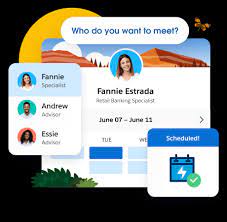
Salesforce Scheduler provides the objects required for appointment scheduling and an app that makes it easy to set up Scheduler. It provides preconfigured, customizable flows and rules that provide appointment booking experience. It also provides business APIs to create appointment booking experiences.

Read More
gettectonic.com