
Dreamforce Archives - gettectonic.com - Page 4

Agentic AI

Agentic AI: The Next Frontier in Business Transformation The AI Maturity Gap: A Wake-Up Call for Businesses Despite massive investments in AI, only 1% of companies believe they’ve reached full maturity, according to recent data. Even with billions poured into Generative AI, Capgemini reports that just 24% of organizations have scaled it across most functions—meaning 76% are still experimenting without significant impact. Enter Agentic AI—the next evolution in artificial intelligence. Unlike today’s reactive, prompt-dependent AI, Agentic AI systems operate autonomously, making decisions, adapting to changes, and executing workflows with minimal human intervention. These agents combine reasoning with automation, transforming not just customer experience (CX) but also revolutionizing how employees work. From firsthand experience in developing proof-of-concepts (PoCs) for incident management, we’ve seen how Agentic AI enhances employee experience (EX), which in turn drives better customer outcomes. The link between EX and CX has never been stronger—improvements in one directly fuel progress in the other. The Internal Revolution: Elevating Employee Experience Agentic AI shifts from rule-based automation to goal-driven autonomy. These agents learn from outcomes, adapt in real time, and make decisions within defined parameters—freeing employees from repetitive tasks and enabling strategic work. Transforming Incident Management We recently worked with a client to develop an Agentic AI solution for Major Incident Management (MIM)—a critical process where delays can lead to revenue loss and reputational damage. The goal? Reduce root-cause identification and resolution time for high-priority incidents (P1/P2). While full results remain confidential, early indicators show: Technical Gains ✔ Faster detection & response✔ Consistent troubleshooting✔ Preserved institutional knowledge✔ Parallel task processing Efficiency Improvements ✔ Reduced Mean Time to Resolution (MTTR)✔ 24/7 operations without fatigue✔ Automated documentation✔ Optimized human resource allocation Business Impact ✔ Better EX & CX✔ Lower operational costs✔ Reduced risk exposure Beyond Incident Management: Vodafone’s AI Leap Vodafone’s hybrid GenAI strategy is already unlocking efficiencies in network management, with AI agents like VINA enabling autonomous operations. Partnering with Google Cloud, Vodafone uses GenAI for network automation, including image-based site assessments for solar panel installations. Additionally, Vodafone is deploying Agentic AI with ServiceNow to predict and mitigate service disruptions, improving both employee workflows and customer service. The CX Cascade Effect: How Internal AI Elevates Customer Experience When internal processes become smarter and faster, customers reap the benefits—through faster resolutions, proactive support, and seamless service. The Cascade in Action Vodafone’s £140M investment in SuperTOBi (a GenAI-powered chatbot built on Microsoft Azure OpenAI) has cut response times and enhanced answer quality. Meanwhile, AI tools analyzing call success rates are helping create “super agents” who improve with each interaction. Other companies seeing success: This shift toward anticipatory service—where AI predicts issues before they arise—is becoming a competitive necessity. The Future: Orchestrating AI Agents at Scale The next frontier is connecting multiple AI agents across internal and customer-facing workflows, enabling end-to-end automation. A Framework for Orchestration Real-World Success Stories Lessons from the Field: How to Succeed with Agentic AI While enthusiasm is high, most companies struggle to extract real business value from GenAI. Agentic AI requires a new mindset. Here’s what works: ✅ Start with well-defined processes (high-volume, measurable tasks)✅ Maintain human oversight (security, compliance, risk mitigation)✅ Prioritize change management (training, communication, overcoming resistance)✅ Build governance frameworks (role-based access, audit trails) Preparing for the Agentic Future: Strategy Over Scale Agentic AI adoption is accelerating fast (Slack reports 233% growth in AI usage in six months). Companies must act strategically: 🔹 Pilot First: Vodafone & Google Cloud’s 2024 hackathon generated 13 real-world use cases—proving rapid experimentation works.🔹 Invest in Platform Capabilities: Pre-built agent skills speed deployment.🔹 Focus on Business Outcomes: This is not just efficiency—it’s transformation. Some firms are even exploring “zero-FTE” departments (fully AI-operated). But the real opportunity lies in human-AI collaboration, not replacement. Final Thoughts: The Competitive Edge Goes to Early Movers Agentic AI isn’t just an incremental upgrade—it’s a paradigm shift toward autonomous, intelligent workflows. Companies that adopt early will outperform competitors in both employee productivity and customer satisfaction. The future isn’t about managing AI—it’s about collaborating with AI agents that think, act, and optimize in real time. The Choice Is Yours: Lead or Follow? The Agentic AI revolution has begun. Will your organization pioneer the change—or play catch-up? Like Related Posts Who is Salesforce? Who is Salesforce? Here is their story in their own words. From our inception, we’ve proudly embraced the identity of Read more Salesforce Unites Einstein Analytics with Financial CRM Salesforce has unveiled a comprehensive analytics solution tailored for wealth managers, home office professionals, and retail bankers, merging its Financial Read more AI-Driven Propensity Scores AI plays a crucial role in propensity score estimation as it can discern underlying patterns between treatments and confounding variables Read more Tectonic’s Successful Salesforce Track Record Salesforce Technology Services Integrator – Tectonic has successfully delivered Salesforce in a variety of industries including Public Sector, Hospitality, Manufacturing, Read more

Read More
salesforce agentforce rapid deployment

Tectonic and Agentforce

Salesforce Agentforce is revolutionizing how businesses deliver personalized and always-available support through powerful, autonomous AI agents. To fully capitalize on this innovative tool, understanding both your business needs and the Salesforce ecosystem is essential. With extensive experience in Salesforce and developing customized AI solutions, Tectonic is well-positioned to help businesses and government agencies visualize a working proof of concept for adopting Agentforce. Together, Tectonic will help companies develop AI agents tailored to their industry, providing 24/7 support for both employees and customers, regardless of location. At Dreamforce 2024, Salesforce unveiled Agentforce, one of the most anticipated AI releases of the year. Built on Salesforce’s advanced AI technology, Agentforce is poised to transform business operations. While Salesforce is known for its exciting announcements, it’s often challenging to discern how these new products apply to your business. So, let’s get past the hype. What does Agentforce really offer, and how can Tectonic help your company take advantage of it today? Key Use Cases for Agentforce CX Agent (Internal Usage) The Customer Experience (CX) Agent is an AI-powered solution designed to enhance customer interactions across various channels. Tectonic’s implementation focuses on providing human agents the information they need from numerous data sources to respond to customer inquiries, resolving issues, and guiding users through processes. By ensuring seamless communication and support, businesses can elevate the overall customer experience and foster loyalty. Customer Service (External Customer Usage) Agentforce transforms customer service operations by deploying AI agents that handle common inquiries, troubleshoot issues, and provide information 24/7. Tectonic’s implementation allows organizations to reduce wait times and enhance service quality, freeing human agents to tackle more complex problems. This shift not only improves operational efficiency but also leads to higher customer satisfaction levels. How Your Business Can Leverage Agentforce Agentforce isn’t just about adding AI—it’s about improving efficiency and reducing the burden on employees. The challenge lies in integrating these AI agents effectively into existing processes. That’s where Tectonic steps in. With a focus on helping businesses quickly realize the value of Agentforce, Tectonic can help you implement a Proof of Concept (POC) to demonstrate how AI could impact operations, whether it’s improving customer service or enhancing sales. Why Start Now? Agentforce’s release has captured the attention of businesses eager to adopt cutting-edge AI technology. However, turning Agentforce into a game-changer requires a practical approach: Availability for these POCs is limited, so now is the time to act if you’re interested in testing Agentforce. This opportunity allows businesses to see firsthand how AI agents can improve efficiency, productivity, and customer experience. How to Get Started Tectonic’s team can walk you through potential use cases and demonstrate how autonomous agents can boost customer service, empower sales teams, optimize marketing, and more. If you’re ready to take the next step, reach out to one of Tectonic’s experts to see how Agentforce can transform your business. Like Related Posts Who is Salesforce? Who is Salesforce? Here is their story in their own words. From our inception, we’ve proudly embraced the identity of Read more Salesforce Marketing Cloud Transactional Emails Salesforce Marketing Cloud Transactional Emails are immediate, automated, non-promotional messages crucial to business operations and customer satisfaction, such as order Read more Salesforce Unites Einstein Analytics with Financial CRM Salesforce has unveiled a comprehensive analytics solution tailored for wealth managers, home office professionals, and retail bankers, merging its Financial Read more AI-Driven Propensity Scores AI plays a crucial role in propensity score estimation as it can discern underlying patterns between treatments and confounding variables Read more


Read More
B2B Customer Service with Agentforce

Agents are the Future of Customer Engagement

Agentic Customer Engagement is Here There was a time when customer service meant going into a brick and mortar building and talking to a person face to face. It was time consuming and did not guarantee a solution. The mail order business brought on the need for the 800 number to contact a merchant. The dot com boom brought customer engagement opportunities directly to our homes. Ios and Android apps brought customer engagement to our fingertips. Yet we still were dependent upon the availability of humans or at least chatbots. Customer service often repressed customer engagement, not enhanced it. Agents, like Salesforce Agentforce, brought 24 7 customer engagement to us no matter where we are, when it is, or how complicated our issue is. And agents improved customer service! What’s next? Robots and drones who deliver our items and answer our questions? Who knows. AI bots are transforming client relationships and customer service. To achieve unparalleled efficiency, these intelligent systems plan and automate difficult activities, make deft decisions, and blend in seamlessly with current workflows. Yes, it’s widely believed that AI agents will play a crucial role in the future of customer engagement, offering personalized, efficient, and consistent experiences across various channels.  Here’s why AI agents are poised to be a key driver in customer engagement: AI agents are becoming smarter every day, using machine learning and natural language processing to predict customer needs, handle complex queries with empathy and offer real-time, personalized assistance. How AI Agents Are Redefining Customer Engagement Marketing is undergoing a seismic transformation. Tectonic shift, if you will. The past decade was dominated by complex tech stacks and data integration—now, AI is shifting the focus back to what truly matters: crafting impactful content and campaigns. Welcome to the era of agentic customer engagement and marketing. The Rise of Marketing Agents Unlike traditional customer service agents handling one-to-one interactions, marketing agents amplify human expertise to engage audiences at scale—whether targeting broad segments or hyper-personalized personas. They ensure consistent, high-quality messaging across every channel while automating the intricate backend work of delivering the right content to the right customer at the right time. This shift is powered by rapid AI advancements: How Agentic Engagement Amplifies Marketing Marketing agents don’t replace human creativity—they extend it. Once strategists set guidelines, approve messaging, and define brand voice, agents execute with precision across channels. At Typeface, for example, AI securely learns brand tones and styles to generate on-brand imagery, text, and videos—ensuring every asset aligns with the company’s identity. Key Capabilities of Marketing Agents The Human-Agent Partnership AI agents don’t replace marketers—they empower them. Humans bring creativity, emotional intelligence, and strategic decision-making; agents handle execution, data processing, and scalability. Marketers will evolve into “agent wranglers”, setting objectives, monitoring performance, and ensuring alignment with business goals. Meanwhile, agents will work in interconnected ecosystems—where a content agent’s blog post triggers a social agent’s promotion, while a performance agent optimizes distribution, and a brand agent tracks reception. Preparing for the Agent Era To stay ahead, businesses should:✅ Start small, think big – Pilot agents in low-risk areas before scaling.✅ Train teams – Ensure marketers understand agent management.✅ Build governance frameworks – Define oversight and intervention protocols.✅ Strengthen data infrastructure – Clean, structured data fuels agent effectiveness.✅ Maintain human oversight – Regularly audit agent outputs for quality and alignment. Work with a Salesforce partner like Tectonic to prepare for the Agent Era. The Future is Agentic The age of AI-driven marketing isn’t coming—it’s here. Companies that embrace agentic engagement will unlock unprecedented efficiency, personalization, and impact. The question isn’t if you’ll adopt AI agents—it’s how soon. Ready to accelerate your strategy? Discover how Agentforce (Salesforce’s agentic layer) can cut deployment time by 16x while boosting accuracy by 70%. The future of marketing isn’t just automated—it’s autonomous, adaptive, and agentic. Are you prepared? The Future of Customer Experience: AI-Driven Efficiency and Innovation Businesses have long understood the connection between operational efficiency and superior customer experience (CX). However, the rapid advancement of AI-powered technologies, including next-generation hardware and virtual agents, is transforming this connection into a measurable driver of value creation. Increasingly well-documented use cases for generative AI (GenAI) demonstrate that companies can simultaneously deliver a vastly superior customer experience at a significantly lower cost-to-serve, resulting in substantial financial gains. From Customer Journeys to Autonomous Customer Missions To achieve this ideal balance, companies are shifting from traditional customer journeys—where users actively manage their own experiences via apps—to a more comprehensive approach driven by trusted autonomous agents. These agents are designed to complete specific tasks with minimal human involvement, creating an entirely new paradigm for customer engagement. While early implementations may be rudimentary, the convergence of hardware and AI will lead to sophisticated, seamless experiences far beyond current capabilities. AI-Enabled Internal and External Transformation AI is already driving transformation both internally and externally. Internally, it streamlines processes, enhances employee experiences, and significantly boosts productivity. In customer service operations, for example, GenAI has driven productivity improvements of 15% to 30%, with some companies targeting up to 80% efficiency gains. Externally, AI is reshaping customer interactions, making them more personalized, efficient, and intuitive. Virtual co-pilots assist customers by answering inquiries, processing returns, and curating tailored offers—freeing human employees to focus on complex issues that require nuanced decision-making. Linking Operational Efficiency to Customer Experience Leading organizations are demonstrating how AI-driven efficiencies translate into enhanced CX. Despite these gains, companies must raise the bar even further to fully capitalize on AI’s potential. The convergence of next-generation hardware with AI-driven automation presents an unprecedented opportunity to redefine customer engagement. From App-Driven Experiences to Autonomous Agents At Dreamforce 2024, Salesforce CEO Marc Benioff highlighted that service employees waste over 40% of their time on repetitive, low-value tasks. Similarly, customers face friction in making significant purchases or planning events. Google research indicates that travelers may engage in over 700 digital touchpoints when planning a trip—a fragmented and often frustrating experience. Imagine instead a network of proprietary and third-party agents seamlessly executing customer missions—such as purchasing a car or planning a vacation—without requiring constant user input. These AI agents

Read More
Rise of Agentic Commerce

Rise of Agentic Commerce

The Rise of Agentic Commerce: How AI Agents Are Reshaping Ecommerce As online retailers experiment with agentic AI to enhance ecommerce, shoppers are already engaging with AI-driven experiences through subscriptions. Meanwhile, businesses are deploying AI agents behind the scenes to streamline their digital storefronts. In 2025, ecommerce platforms aren’t just pitching AI-powered recommendation engines—they’re embracing full-fledged agentic AI solutions. These intelligent agents are changing the way both retailers and consumers interact with digital shopping environments. Tech Giants and Startups Lead the Charge Agentic AI is becoming a key component in the ecommerce tech stack, joining machine learning, AI-powered search, and generative AI. Major players like Google and Meta have already integrated these capabilities, while Amazon and OpenAI are leveraging subscription models to attract users. Startups, as well as integrations for platforms like Shopify and Adobe’s Magento, are also fueling this AI-driven shift. Salesforce made a significant push for agentic AI at its 2024 Dreamforce event, showcasing its Agentforce capabilities. Luxury retailer Saks was an early adopter, using Agentforce to enhance personalization. Just months later, OpenAI introduced its Operator agent, with eBay, Etsy, and Instacart among its first users. But what exactly is agentic commerce, and how does it reshape online shopping? What Is Agentic Commerce? Agentic commerce refers to the use of AI agents in ecommerce. These agents, built on large language models (LLMs), go beyond chatbot-style interactions. They make decisions and execute actions autonomously, transforming how both consumers and merchants engage with online retail. For shoppers, this means AI-powered assistance throughout the learning, discovery, and purchasing journey. For retailers, agentic AI helps automate backend operations, streamlining tasks that previously required manual intervention. Consumers have already embraced AI chatbots in shopping experiences. Salesforce reported that AI-driven interactions boosted retail revenue during the 2024 holiday season. Adobe Analytics echoed this trend in a March 2025 survey, revealing that AI-assisted shopping led to higher engagement. “Online shoppers are seeing the benefits of AI-powered chat interfaces, which reduce the time needed to receive personalized information,” said Vivek Pandya, lead analyst at Adobe Digital Insights. “In Adobe’s survey, 92% of shoppers who used AI said it enhanced their experience, and 87% were more likely to use AI for larger or complex purchases.” Retailers are taking note. A February 2025 survey by Digital Commerce 360 found that AI investment is a top priority, with only 11.11% of ecommerce businesses planning to forgo AI implementation this year. AI-Powered Agents in Action Tech companies are responding to this growing demand. Adobe recently introduced its Experience Platform Agent Orchestrator, designed to manage AI agents across Adobe’s ecosystem and third-party platforms. Adobe’s research underscores the increasing role of AI in shaping customer engagement strategies. “This shift is redefining how businesses approach customer interactions,” Pandya noted. “AI agents are taking on more complex tasks and delivering highly personalized recommendations.” Retailers are already putting agentic commerce to the test. OpenAI’s Operator agent, for example, can autonomously navigate a web browser—searching, typing, and clicking to complete purchases. Users can ask Operator to order groceries, select gifts, or book tickets, streamlining transactions through AI-driven automation. Currently, Operator is available only to OpenAI’s ChatGPT Pro subscribers at $200 per month. However, OpenAI plans to expand access as it refines the technology. “We have a lot of work ahead, but we’re eager to put these tools into people’s hands,” said OpenAI CEO Sam Altman during an Operator demo. “More AI agents will be rolling out in the coming weeks and months.” The Subscription Model for AI-Powered Shopping Amazon is also bringing agentic AI to ecommerce with Alexa+. Priced at $19.99 per month—or free for Amazon Prime members—Alexa+ allows users to make purchases through Amazon.com, Whole Foods, Ticketmaster, and other retailers via voice commands. As these AI-powered tools gain traction, the pressure is on developers to deliver value that justifies their price tags. Whether through subscriptions or seamless integrations, the future of ecommerce is rapidly shifting toward intelligent, automated experiences. Like1 Related Posts Who is Salesforce? Who is Salesforce? Here is their story in their own words. From our inception, we’ve proudly embraced the identity of Read more Salesforce Marketing Cloud Transactional Emails Salesforce Marketing Cloud Transactional Emails are immediate, automated, non-promotional messages crucial to business operations and customer satisfaction, such as order Read more Salesforce Unites Einstein Analytics with Financial CRM Salesforce has unveiled a comprehensive analytics solution tailored for wealth managers, home office professionals, and retail bankers, merging its Financial Read more AI-Driven Propensity Scores AI plays a crucial role in propensity score estimation as it can discern underlying patterns between treatments and confounding variables Read more
Read More
Agentforce Unveiled

Scale Your Marketing with Agentforce

Scale Your Marketing with Agentforce: AI-Powered Automation for Modern Campaigns Traditional marketing systems struggle to keep pace with today’s demand for precision, personalization, and scale. With marketing teams managing complex, multi-platform campaigns, repetitive work quickly becomes a challenge—41% of employee time is spent on low-impact tasks, and 65% of desk workers believe AI will help them focus on more strategic work. Enter Agentforce for Marketers, built with the Atlas Reasoning Engine. These AI-powered agents help businesses scale their workforces on demand, analyzing data, making decisions, and taking proactive action on tasks like answering customer inquiries and qualifying leads. If you’re ready to embrace a new level of efficiency, this Tectonic insight explores how Agentforce can revolutionize your marketing efforts. What is Agentforce for Marketing? Introduced at Dreamforce 2024, Agentforce represents Salesforce’s next evolution in AI. Powered by the Atlas Reasoning Engine, it enhances automation with retrieval-augmented generation (RAG) and contextual decision-making. Salesforce CEO Marc Benioff calls Agentforce “the third wave of AI—moving beyond copilots to highly accurate, low-hallucination customer service agents that actively drive success.” For marketers, this means automation that analyzes vast datasets, connects customer interactions across teams, and provides real-time insights—all while optimizing campaigns, streamlining workflows, and generating personalized content. The Core of Agentforce: Agentforce combines Agent Builder, Model Builder, and Prompt Builder, allowing marketers to: These tools enable seamless, personalized experiences while reducing manual effort. Key Autonomous AI Agents in Agentforce Agentforce’s AI-powered agents cover a wide range of marketing and sales functions, including: Core Features of Agentforce for Marketing Agentforce transforms marketing by delivering AI-driven insights, automating workflows, and personalizing customer experiences at scale. 1. AI-Driven Campaign Insights Agentforce integrates Salesforce Data Cloud and Marketing Cloud Intelligence to analyze customer behavior patterns, optimize targeting strategies, and improve campaign performance. 💡 Only 32% of marketers say they effectively use customer data for personalization. Agentforce closes this gap by providing real-time, actionable insights. 2. Real-Time Data Integration By consolidating insights from CRM records, external platforms, and unstructured sources, Agentforce ensures AI-driven recommendations power marketing automation and personalization. ✅ Example: OpenTable used Agentforce’s data-driven insights to boost customer engagement and increase case resolution rates. 3. Automated Campaign Workflows Agentforce eliminates repetitive tasks like email follow-ups, social media posts, and ad placements, allowing teams to focus on strategy. 💡 Marketers can set up automated email sequences that trigger based on customer behavior—without manual intervention. Use Cases: How Marketers Leverage Agentforce 1. Personalized Email Campaigns Agentforce analyzes customer interactions to send hyper-targeted emails based on past purchases, browsing history, and engagement. ✅ Example: An online retailer sends tailored product recommendations based on recent searches, increasing conversion rates. 2. Omnichannel Campaign Management Agentforce synchronizes messaging across email, social media, and ads, ensuring consistency across platforms like Marketing Cloud and Facebook Ads Manager. ✅ Example: A product launch campaign can automatically schedule email announcements, social media posts, and search ads—all aligned in messaging. 3. Advanced Audience Segmentation Using AI-powered behavioral analysis, Agentforce creates refined audience segments to deliver hyper-personalized marketing. ✅ Example: A luxury retailer identifies VIP customers likely to attend exclusive events and sends personalized invitations. 4. Performance Tracking & Optimization Agentforce continuously monitors engagement metrics, offering AI-driven recommendations for campaign improvements. 💡 This allows marketers to adjust strategies in real time, maximizing impact. Challenges & Considerations 1. Adapting to AI-Powered Marketing Many professionals feel unprepared for AI-driven tools. Organizations should invest in training programs to ease adoption and leverage Salesforce’s low-code tools for a smoother transition. 2. Ethical & Sustainable AI Implementation Responsible AI use is critical. Agentforce includes features to:✅ Mitigate bias in AI-driven processes.✅ Reduce environmental impact by optimizing hardware usage.✅ Ensure accuracy with real-time, dynamic data. 💡 Salesforce’s AI Red Teaming and Ethical AI Maturity Model help businesses implement AI responsibly. The Future of Marketing with Agentforce Agentforce is redefining marketing automation, eliminating repetitive tasks, enhancing personalization, and driving smarter decision-making. If you’re ready to scale your marketing with AI-powered efficiency, Agentforce is your next competitive advantage. Like Related Posts Who is Salesforce? Who is Salesforce? Here is their story in their own words. From our inception, we’ve proudly embraced the identity of Read more Salesforce Marketing Cloud Transactional Emails Salesforce Marketing Cloud Transactional Emails are immediate, automated, non-promotional messages crucial to business operations and customer satisfaction, such as order Read more Salesforce Unites Einstein Analytics with Financial CRM Salesforce has unveiled a comprehensive analytics solution tailored for wealth managers, home office professionals, and retail bankers, merging its Financial Read more AI-Driven Propensity Scores AI plays a crucial role in propensity score estimation as it can discern underlying patterns between treatments and confounding variables Read more
Read More
agentforce digital workforce

How Agentforce Works

Salesforce Agentforce: Everything You Need to Know Salesforce Agentforce represents a paradigm shift from generative AI to agentic AI—a new class of AI capable of autonomous action. Since its launch at Dreamforce in September 2024, Agentforce has redefined the conversation around AI, customer service, and experience management. To meet skyrocketing demand, Salesforce announced plans to hire more than 1,000 employees shortly after the launch. What is Salesforce Agentforce? Agentforce is a next-generation platform layer within the Salesforce ecosystem. While its bots leverage generative AI capabilities, they differ significantly from platforms like ChatGPT or Google Gemini. Agentforce bots are designed not just to generate responses but to act autonomously within predefined organizational guardrails. Unlike traditional chatbots, which follow scripted patterns, Agentforce AI agents are trained on proprietary data, enabling flexible and contextually accurate responses. They also integrate with Salesforce’s Data Cloud, enhancing their capacity to access and utilize customer data effectively. Agentforce combines three core tools—Agent Builder, Model Builder, and Prompt Builder—allowing businesses to create customized bots using low-code tools. Key Features of Agentforce The platform offers ready-to-deploy AI agents tailored for various industries, including: Agentforce officially became available on October 25, 2024, with pricing starting at $2 per conversation, and volume discounts offered for enterprise customers. Salesforce also launched the Agentforce Partner Network, enabling third-party integrations and custom agent designs for expanded functionality. How Agentforce Works Salesforce designed Agentforce for users without deep technical expertise in AI. As CEO Marc Benioff said, “This is AI for the rest of us.” The platform is powered by the upgraded Atlas Reasoning Engine, a component of Salesforce Einstein AI, which mimics human reasoning and planning. Like self-driving cars, Agentforce interprets real-time data to adapt its actions and operates autonomously within its established parameters. Enhanced Atlas Reasoning Engine In December 2024, Salesforce enhanced the Atlas Reasoning Engine with retrieval-augmented generation (RAG) and advanced reasoning capabilities. These upgrades allow agents to: Seamless Integrations with Salesforce Tools Agentforce is deeply integrated with Salesforce’s ecosystem: Key Developments Agentforce Testing Center Launched in December 2024, the Testing Center allows businesses to test agents before deployment, ensuring they are accurate, fast, and aligned with organizational goals. Skill and Integration Library Salesforce introduced a pre-built library for CRM, Slack, Tableau, and MuleSoft integrations, simplifying agent customization. Examples include: Industry-Specific Expansion Agentforce for Retail Announced at the NRF conference in January 2025, this solution offers pre-built skills tailored to retail, such as: Additionally, Salesforce unveiled Retail Cloud with Modern POS, unifying online and offline inventory data. Notable Agentforce Customers Looking Ahead Marc Benioff calls Agentforce “the third wave of AI”, advancing beyond copilots into a new era of autonomous, low-hallucination intelligent agents. With its robust capabilities, Agentforce is positioned to transform how businesses interact with customers, automate workflows, and drive success. Like Related Posts Who is Salesforce? Who is Salesforce? Here is their story in their own words. From our inception, we’ve proudly embraced the identity of Read more Salesforce Marketing Cloud Transactional Emails Salesforce Marketing Cloud Transactional Emails are immediate, automated, non-promotional messages crucial to business operations and customer satisfaction, such as order Read more Salesforce Unites Einstein Analytics with Financial CRM Salesforce has unveiled a comprehensive analytics solution tailored for wealth managers, home office professionals, and retail bankers, merging its Financial Read more AI-Driven Propensity Scores AI plays a crucial role in propensity score estimation as it can discern underlying patterns between treatments and confounding variables Read more

Read More
AI evolves with tools like Agentforce and Atlas

Salesforce Atlas

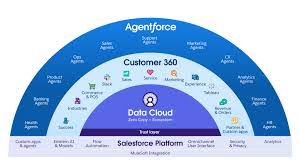
Salesforce Atlas: The Brainpower Behind AI-Driven Transformation A New Era of AI for Enterprise AI is reshaping industries at an unprecedented pace, and agentic AI—AI that can think, plan, and act autonomously—is at the forefront of this revolution. Salesforce is leading the charge with Agentforce, a low-code platform that allows businesses to build, refine, and deploy autonomous AI agents across multiple business functions. At the core of this innovation is Salesforce Atlas, the reasoning engine that empowers Agentforce to tackle complex decision-making tasks just like a human. But Atlas goes further—it continuously learns, adapts, and evolves, setting a new standard for AI-driven enterprises. Let’s explore how Atlas works, its capabilities, and why it’s a game-changer for businesses. Salesforce Atlas: The Reasoning Engine Powering Agentforce Atlas is the intelligent decision-making engine that powers Agentforce’s AI agents. Rather than simply following predefined rules, Atlas evaluates data, refines its approach, and continuously learns from outcomes. When an AI agent encounters a decision point, Atlas asks: ➡️ Do I have enough data to ensure accuracy?✔ If yes, it proceeds with a decision.❌ If no, it seeks additional data or escalates the issue. This iterative learning process ensures that AI agents become more reliable, context-aware, and autonomous over time. Salesforce CEO Marc Benioff teased the potential of Atlas, revealing that: 📊 “We are seeing 90-95% resolution on all service and sales issues with the new Atlas.” That’s a staggering success rate, demonstrating how AI-driven reasoning can transform enterprise efficiency and customer engagement. How Salesforce Atlas Works: The “Flywheel” Process Atlas operates using a structured flywheel process that enables self-improvement and adaptability. Here’s how it works: 1️⃣ Data Retrieval – Atlas pulls structured and unstructured data from the Salesforce Data Cloud.2️⃣ Evaluation – It analyzes the data, generates a plan of action, and assesses whether the plan will drive the desired outcome.3️⃣ Refinement – If the plan isn’t strong enough, Atlas loops back, refines its approach, and iterates until it’s confident in its decision. This cycle repeats continuously, ensuring AI agents deliver accurate, data-driven outcomes that align with business goals. Once a task is completed, Atlas learns from the results, refining its approach to become even smarter over time. The Core Capabilities of Salesforce Atlas Atlas stands out because of its advanced reasoning, adaptive learning, and built-in safeguards—all designed to deliver trustworthy, autonomous AI experiences. 1. Advanced Reasoning & Decision-Making Atlas doesn’t just execute tasks; it thinks critically, determining the best way to approach each challenge. Unlike traditional AI models that follow rigid scripts, Atlas: 🔍 Analyzes real-time data to determine the most effective course of action.📊 Refines its decisions dynamically based on live feedback.🌍 Adapts to changing circumstances to optimize outcomes. At Dreamforce 2024, Marc Benioff demonstrated Atlas’s power by showcasing how it could optimize theme park experiences in real time, analyzing: 🎢 Ride availability👥 Guest preferences🚶 Park flow patterns This real-time decision-making showcases the game-changing potential of agentic AI. 2. Advanced Data Retrieval Atlas leverages Retrieval-Augmented Generation (RAG) to pull highly relevant, verified data from multiple sources. This ensures: ✔ More accurate responses✔ Minimized AI hallucinations✔ Reliable, data-driven insights For example, Saks Fifth Avenue uses Atlas to personalize shopping recommendations for millions of customers—tailoring experiences with precision. 3. Built-in Guardrails for Security & Compliance Salesforce recognizes the importance of AI governance, and Atlas includes robust safeguards to ensure responsible AI usage. 🔐 Ethical AI protocols – Ensures compliance with evolving regulations.🚨 Escalation capabilities – AI knows when to seek human intervention for complex issues.🌍 Hyperforce security – Provides enterprise-grade privacy and security standards. These protections ensure Atlas operates securely, responsibly, and at scale across global enterprises. 4. Reinforcement Learning & Continuous Improvement Atlas doesn’t just process data—it learns from outcomes. 🔄 Refines decisions based on real-world results📈 Optimizes performance over time⚡ Becomes increasingly efficient and tailored to business needs Whether it’s increasing sales conversions, resolving service issues, or optimizing workflows, Atlas ensures AI agents grow smarter with every interaction. Why Salesforce Atlas is a Game-Changer Salesforce Atlas isn’t just another AI tool—it’s the brain behind Salesforce’s next-generation AI ecosystem. With Atlas, businesses can: ✅ Automate complex tasks with AI-driven decision-making.✅ Deliver hyper-personalized customer experiences with confidence.✅ Scale AI-powered workflows across sales, service, and operations.✅ Ensure compliance and trust with built-in governance measures.✅ Adapt AI capabilities to meet evolving business needs. Marc Benioff envisions Atlas as the core of a future where AI and humans collaborate to drive innovation and efficiency. By combining advanced reasoning, dynamic adaptability, and enterprise security, Atlas empowers organizations to work smarter, faster, and more effectively—unlocking the full potential of agentic AI. The future of AI-driven enterprise has arrived. With Salesforce Atlas, businesses can build AI agents that don’t just follow instructions—they think, learn, and evolve. Like Related Posts Who is Salesforce? Who is Salesforce? Here is their story in their own words. From our inception, we’ve proudly embraced the identity of Read more Salesforce Marketing Cloud Transactional Emails Salesforce Marketing Cloud Transactional Emails are immediate, automated, non-promotional messages crucial to business operations and customer satisfaction, such as order Read more Salesforce Unites Einstein Analytics with Financial CRM Salesforce has unveiled a comprehensive analytics solution tailored for wealth managers, home office professionals, and retail bankers, merging its Financial Read more AI-Driven Propensity Scores AI plays a crucial role in propensity score estimation as it can discern underlying patterns between treatments and confounding variables Read more
Read More
Agentforce Redefines Generative AI

Agentforce Redefines Generative AI

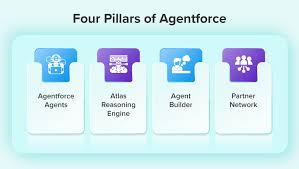
Agentforce: Redefining Generative AI in Salesforce Many Dreamforce attendees who expected to hear about Einstein Copilot were surprised when Salesforce introduced Agentforce just a week before the conference. While it might seem like a rebranding of Copilot, Agentforce marks a significant evolution by enabling more autonomous agents that go beyond summarizing or generating content to perform specific actions. Here’s a breakdown of the transition and what it means for Salesforce users: Key Vocabulary Updates How Agentforce Works Agents take user input, known as an “utterance,” and translate it into actionable steps based on predefined configurations. This allows the system to enhance performance over time while delivering responses tailored to user needs. Understanding Agentforce 1. Topics: Organizing Agent Capabilities Agentforce introduces “Topics,” a new layer of organization that categorizes actions by business function. When a user provides an utterance, the agent identifies the relevant topic first, then determines the best actions to address it. 2. Actions: What Agents Can Do Actions remain largely unchanged from Einstein Copilot. These are tasks agents perform to execute plans. 3. Prompts: The Key to Better Results LLMs rely on prompts to generate outputs, and crafting effective prompts is essential for reducing irrelevant responses and optimizing agent behavior. How Generative AI Enhances Salesforce Agentforce unlocks several benefits across productivity, personalization, standardization, and efficiency: Implementing Agentforce: Tips for Success Getting Started Start by using standard Agent actions. These out-of-the-box tools, such as opportunity summarization or close plan creation, provide a strong foundation. You can make minor adjustments to optimize their performance before diving into more complex custom actions. Testing and Iteration Testing AI agents is different from traditional workflows. Agents must handle various phrasing of the same user request (utterances) while maintaining consistency in responses. The Future of Salesforce with Agentforce As you gain expertise in planning, developing, testing, and deploying Agentforce actions, you’ll unlock new possibilities for transforming your Salesforce experience. With generative AI tools like Agentforce, Salesforce evolves from a traditional point-and-click interface into an intelligent, agent-driven platform with streamlined, conversational workflows. This isn’t just an upgrade — it’s the foundation for reimagining how businesses interact with their CRM in an AI-assisted world. Like Related Posts Who is Salesforce? Who is Salesforce? Here is their story in their own words. From our inception, we’ve proudly embraced the identity of Read more Salesforce Marketing Cloud Transactional Emails Salesforce Marketing Cloud Transactional Emails are immediate, automated, non-promotional messages crucial to business operations and customer satisfaction, such as order Read more Salesforce Unites Einstein Analytics with Financial CRM Salesforce has unveiled a comprehensive analytics solution tailored for wealth managers, home office professionals, and retail bankers, merging its Financial Read more AI-Driven Propensity Scores AI plays a crucial role in propensity score estimation as it can discern underlying patterns between treatments and confounding variables Read more
Read More
Speed to Launch of Agentforce

Speed to Launch of Agentforce

Agentforce isn’t just another AI platform that requires months of customization. At most customers, they quickly saw its power, launching transformative generative AI experiences in just days—no AI engineers needed. For companies with larger admin teams, the benefits can be even greater. Unlike other platforms, Agentforce places a strong emphasis on data privacy, building on the trust that Salesforce is known for, making these virtual assistants invaluable. We began with employee-facing use cases, saving our team several hours per week. Now, with Agentforce, we’re seeing even more opportunities to drive efficiencies and better serve our customers. “We’re excited to leverage Agentforce to completely overhaul recruitment and enrollment at Unity Environmental University. Instead of traditional forms or chatbots, our students will soon engage with an autonomous recruitment agent directly on our website, offering personalized support throughout the college application process.”– Dr. Melik Khoury, President & CEO, Unity Environmental University “For first-generation college students, the 1:385 coach-to-student ratio makes personalized guidance challenging. By integrating Agentforce into our platform, we’re deploying cutting-edge solutions to better support students. These agents enable our coaches to focus on high-touch, personalized experiences while handling vital tasks like sharing deadlines and answering common questions—24/7.”– Siva Kumari, CEO, College Possible “Agentforce offers organizations a unique opportunity to move beyond incremental improvements and achieve exponential ROI. By automating customer interactions, improving outcomes, and reducing costs, it integrates data, flows, and user interfaces to mitigate risks and accelerate value creation. This agent-based platform approach allows businesses to harness AI’s full potential, revolutionizing customer engagement and paving the way for exponential growth.”– Rebecca Wettemann, CEO and Principal Analyst, Valoir “Autonomous agents powered by Salesforce’s Agentforce are revolutionizing customer experiences by providing fast, accurate, and personalized support around the clock. With advanced AI making decisions and taking actions autonomously, businesses can resolve customer issues more efficiently, fostering deeper interactions and enhancing satisfaction. This innovation enables companies to reallocate human resources to more complex tasks, boosting individual productivity and scaling business growth. Agentforce is setting new standards for seamless sales, service, marketing, and commerce interactions, reinforcing its leadership in customer experience.”– Michael Fauscette, CEO and Chief Analyst, Arion Research LLC “The best way to predict the future is to invent it.” — Alan Kay, Computer Science Pioneer Technology progresses in what biologists call punctuated equilibrium, with new capabilities slowly emerging from labs and tinkerers until a breakthrough shifts the axis of possibility. These pioneering feats create new paradigms, unleashing waves of innovation—much like the Apple Macintosh, the iPhone, and the Salesforce Platform, which revolutionized the enterprise software-as-a-service (SaaS) model and sparked an entire industry. The Age of Agentforce Begins At Dreamforce 2024, Salesforce Futures reflected on the launch of Agentforce, inspired by visions like the Apple Knowledge Navigator. In 2023, we used this inspiration to craft our Salesforce 2030 film, which showcased the collaboration between humans and autonomous AI agents. Now, with Agentforce, we’re witnessing that vision come to life. Agentforce is a suite of customizable AI agents and tools built on the Salesforce Platform, offering an elegant solution to the complexity of AI deployment. It addresses the challenges of integrating data, models, infrastructure, and applications into a unified system. With powerful tools like Agent Builder and Model Builder, organizations can easily create, customize, and deploy AI agents. Salesforce’s Atlas Reasoning Engine empowers these agents to handle both routine and complex tasks autonomously. A New Era of AI Innovation At Dreamforce 2024, over 10,000 attendees raced to build their own agents using the “Agent Builder” experience, turning verbal instructions into fully functioning agents in under 15 minutes. This wasn’t just another chatbot—it’s a new breed of AI that could transform how businesses operate and deliver superior customer experiences. Companies like Saks, OpenTable, and Wiley have quickly embraced this technology. As Mick Costigan and David Berthy of Salesforce Futures explain, “When we see signals like this, it pushes us toward the future. Soon, we’ll see complex, multi-agent systems solving higher-order challenges, both in the enterprise and in consumer devices.” Shaping the Future Agentforce isn’t just a product—it’s a platform for experimentation. With hundreds of thousands of Salesforce customers soon gaining access, the full potential of these tools will unfold in ways we can’t yet imagine. As with every major technological shift, the real magic will lie in how people use it. Every interaction, every agent deployed, and every problem solved will shape the future in unexpected ways. Platform Evolution Adam Evans, Salesforce SVP of Product, notes that Agentforce builds on the company’s transformation over the past four years, following the pattern of Salesforce’s original disruption of enterprise software. Unlike traditional solutions, Agentforce eliminates the need for customers to build their own AI infrastructure, providing a ready-to-use solution. At the core of Agentforce is the Atlas Reasoning Engine, delivering results that are twice as relevant and 33% more accurate than competing solutions. This engine integrates Salesforce Data Cloud, Flow for automation, and the Einstein Trust Layer for governance. Early Customer Results Early Agentforce deployments highlight how organizations are using autonomous agents to enhance, rather than replace, human workers: George Pokorny, Senior VP of Global Customer Success at OpenTable, shared, “Just saving two minutes on a ten-minute call lets our service reps focus on strengthening customer relationships, thanks to seamless integration with Service Cloud, giving us a unified view of diner preferences and history.” Like Related Posts Who is Salesforce? Who is Salesforce? Here is their story in their own words. From our inception, we’ve proudly embraced the identity of Read more Salesforce Marketing Cloud Transactional Emails Salesforce Marketing Cloud Transactional Emails are immediate, automated, non-promotional messages crucial to business operations and customer satisfaction, such as order Read more Salesforce Unites Einstein Analytics with Financial CRM Salesforce has unveiled a comprehensive analytics solution tailored for wealth managers, home office professionals, and retail bankers, merging its Financial Read more AI-Driven Propensity Scores AI plays a crucial role in propensity score estimation as it can discern underlying patterns between treatments and confounding variables Read more

Read More

1 Billion Enterprise AI Agents

Inside Salesforce’s Ambition to Deploy 1 Billion Enterprise AI Agents Salesforce is making a bold play in the enterprise AI space with its recently launched Agentforce platform. Introduced at the annual Dreamforce conference, Agentforce is positioned to revolutionize sales, marketing, commerce, and operations with autonomous AI agents, marking a significant evolution from Salesforce’s previous Einstein AI platform. What Makes Agentforce Different? Agentforce operates as more than just a chatbot platform. It uses real-time data and user-defined business rules to proactively manage tasks, aiming to boost efficiency and enhance customer satisfaction. Built on Salesforce’s Data Cloud, the platform simplifies deployment while maintaining powerful customization capabilities: “Salesforce takes care of 80% of the foundational work, leaving customers to focus on the 20% that truly differentiates their business,” explains Adam Forrest, SVP of Marketing at Salesforce. Forrest highlights how Agentforce enables businesses to build custom agents tailored to specific needs by incorporating their own rules and data sources. This user-centric approach empowers admins, developers, and technology teams to deploy AI without extensive technical resources. Early Adoption Across Industries Major brands have already adopted Agentforce for diverse use cases: These real-world applications illustrate Agentforce’s potential to transform workflows in industries ranging from retail to hospitality and education. AI Agents in Marketing: The New Frontier Salesforce emphasizes that Agentforce isn’t just for operations; it’s poised to redefine marketing. AI agents can automate lead qualification, optimize outreach strategies, and enhance personalization. For example, in account-based marketing, agents can analyze customer data to identify high-value opportunities, craft tailored strategies, and recommend optimal engagement times based on user behavior. “AI agents streamline lead qualification by evaluating intent signals and scoring leads, allowing sales teams to focus on high-priority prospects,” says Jonathan Franchell, CEO of B2B marketing agency Ironpaper. Once campaigns are launched, Agentforce monitors performance in real time, offering suggestions to improve ROI and resource allocation. By integrating seamlessly with CRM platforms, the tool also facilitates better collaboration between marketing and sales teams. Beyond B2C applications, AI agents in B2B contexts can evaluate customer-specific needs and provide tailored product or service recommendations, further enhancing client relationships. Enabling Creativity Through Automation By automating repetitive tasks, Agentforce aims to free marketers to focus on strategy and creativity. Dan Gardner, co-founder of Code and Theory, describes this vision: “Agentic AI eliminates friction and dissolves silos in data, organizational structures, and customer touchpoints. The result? Smarter insights, efficient distribution, and more time for creatives to do what they do best: creating.” Competitive Landscape and Challenges Despite its promise, Salesforce faces stiff competition. Microsoft—backed by its integration with OpenAI’s ChatGPT—has unveiled AI tools like Copilot, and other players such as Google, ServiceNow, and HubSpot are advancing their own AI platforms. Salesforce CEO Marc Benioff has not shied away from the rivalry. On the Masters of Scale podcast, he criticized Microsoft for overpromising on products like Copilot, asserting that Salesforce delivers tangible value: “Our tools show users exactly what is possible, what is real, and how easy it is to derive huge value from AI.” Salesforce must also demonstrate Agentforce’s scalability across diverse industries to capture a significant share of the enterprise AI market. A Transformative Vision for the Future Agentforce represents Salesforce’s commitment to bringing AI-powered automation to the forefront of enterprise operations. With its focus on seamless deployment, powerful customization, and real-time capabilities, the platform aims to reshape how businesses interact with customers and optimize internal processes. By targeting diverse use cases and emphasizing accessibility for both technical and non-technical users, Salesforce is betting on Agentforce to drive adoption at scale—and position itself as a leader in the increasingly competitive AI market. Like Related Posts Who is Salesforce? Who is Salesforce? Here is their story in their own words. From our inception, we’ve proudly embraced the identity of Read more Salesforce Marketing Cloud Transactional Emails Salesforce Marketing Cloud Transactional Emails are immediate, automated, non-promotional messages crucial to business operations and customer satisfaction, such as order Read more Salesforce Unites Einstein Analytics with Financial CRM Salesforce has unveiled a comprehensive analytics solution tailored for wealth managers, home office professionals, and retail bankers, merging its Financial Read more AI-Driven Propensity Scores AI plays a crucial role in propensity score estimation as it can discern underlying patterns between treatments and confounding variables Read more
Read More
salesforce agentforce ai powered agentic agents

Marketing Agents for Campaigns

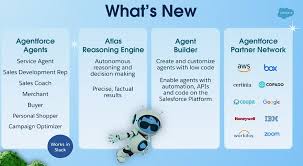
Marketing Agents: The Next Frontier in Campaign Creation and Optimization For years, content creation and distribution have been key challenges for marketers. According to recent research from the Content Marketing Institute, 54% of B2B marketers lack the resources needed to produce high-quality content at scale. Similarly, B2C marketers often struggle to create consistent, repeatable, and scalable processes. On top of these challenges, they must balance resource management to ensure campaigns are efficient, impactful, and engaging enough to stand out from the competition. The solution to these challenges lies in marketing agents, powered by data and AI. These intelligent tools streamline content creation, optimize campaigns, and make marketing processes more efficient. At this year’s Dreamforce, Salesforce introduced Agentforce, a suite of tools designed to create, customize, and deploy marketing agents across the Customer 360 platform. As part of this launch, Agentforce Campaigns is already gaining attention from customers eager to harness its potential. According to Salesforce’s 9th State of Marketing Report, 71% of marketers plan to integrate generative and predictive AI into their workflows within the next 18 months. This insight explores how marketing agents, like those offered in Agentforce, can transform customer engagement while enhancing internal team productivity and collaboration. Redefining Campaign Delivery with Marketing Agents Marketing agents are part of a broader suite of AI-powered virtual assistants that collaborate with humans to streamline workflows and optimize decision-making. These agents analyze data, interpret requests, and execute tasks such as content generation, campaign optimization, and performance analysis. Salesforce’s AI agents are designed to be partners, taking on time-consuming tasks so marketers can focus on high-value, strategic activities. With marketing agents, teams spend less time gathering and managing data and more time delivering personalized, impactful campaigns. A key mindset shift is required to maximize the value of these tools: instead of asking, “How can agents make business as usual more efficient?”, marketers should think, “How can agents transform the way we deliver exceptional customer experiences?” Streamlining Campaign Creation with Agentforce Campaigns 1. Intelligent Recommendations for Focused Action Einstein, Salesforce’s AI engine, analyzes data and provides contextual recommendations to help marketers achieve their goals. Agentforce Campaigns takes this a step further by turning these static recommendations into actionable steps, such as adjusting an audience segment or creating an entirely new campaign. 2. Rapid Campaign Brief Creation Agentforce Campaigns can draft campaign briefs in seconds using natural language prompts. These briefs incorporate organizational goals and marketing guidelines, making them ready for review and sharing within Salesforce. This saves time and ensures alignment from the start. 3. Contextual Content Creation Once a campaign brief is approved, marketing agents can generate campaign content such as emails and landing pages. Agentforce Campaigns automatically drafts subject lines, body copy, and calls to action within branded templates. Content can be refined using natural language commands or manual adjustments to fit the brand’s tone and strategy. 4. Simplified Audience Segmentation Marketers no longer need SQL expertise to build audience segments. With Agentforce Campaigns, they can describe their target audience in natural language, and the AI translates this into the necessary segment attributes. 5. Journey Activation at Scale Marketing agents simplify the process of activating multi-channel campaigns. Using natural language prompts, Agentforce Campaigns can configure a draft journey, complete with personalized content, ready for refinement and deployment. Unlocking New Opportunities with Marketing Agents 6. Unlimited Content Variations Time and budget constraints often limit the number of content variations marketers can produce. Agentforce Campaigns overcomes this limitation by generating multiple personalized content versions in seconds. This allows teams to deliver highly tailored messages for different audience segments without additional effort. 7. Nuanced Segment Exploration Traditional segmentation often depends on data science teams, which may have limited capacity. Marketing agents empower marketers to build their own nuanced segments using natural language. For example, separate churn segments can be created based on engagement scores, location, or purchase history, enabling more precise targeting. 8. A Culture of Testing and Learning Testing often falls by the wayside due to time constraints. Marketing agents make it easy to embed testing into campaigns by automating journey flows, enabling marketers to adopt a culture of continuous experimentation and improvement without increasing workloads. Transforming Marketing with Agentforce By integrating marketing agents into workflows, businesses can improve productivity, enhance personalization, and scale campaigns like never before. Agentforce Campaigns enables marketers to automate routine tasks, explore untapped opportunities, and deliver exceptional customer experiences. Marketers who embrace this shift will not only increase efficiency but also elevate their strategies, creating campaigns that are more targeted, impactful, and scalable. Note: Some features and services mentioned may not yet be available. Customers should base purchase decisions on currently available features. Like Related Posts Who is Salesforce? Who is Salesforce? Here is their story in their own words. From our inception, we’ve proudly embraced the identity of Read more Salesforce Marketing Cloud Transactional Emails Salesforce Marketing Cloud Transactional Emails are immediate, automated, non-promotional messages crucial to business operations and customer satisfaction, such as order Read more Salesforce Unites Einstein Analytics with Financial CRM Salesforce has unveiled a comprehensive analytics solution tailored for wealth managers, home office professionals, and retail bankers, merging its Financial Read more AI-Driven Propensity Scores AI plays a crucial role in propensity score estimation as it can discern underlying patterns between treatments and confounding variables Read more
Read More
Autonomous Agents on the Agentforce Platform

Leveraging Agentforce

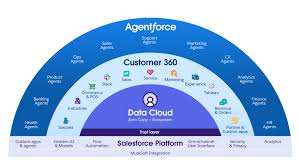
At Dreamforce 2024, Salesforce customers showcased the power of Agentforce by creating over 10,000 autonomous agents, each designed to address specific business challenges. The message was clear: “If you can describe it, Agentforce can do it.” By leveraging Agentforce, customers are able to create a flexible, on-demand digital workforce that operates without limitations, making it easy to build and deploy agents using familiar Salesforce tools and language. Why This Matters: Recent Salesforce research reveals that U.S. consumers often spend up to nine hours interacting with customer service to resolve a single issue. Moreover, 67% of consumers are frustrated when their issues aren’t resolved immediately and may abandon one-third of customer service interactions. This presents a massive opportunity to enhance the customer experience with AI-powered agents. “Piloting Agentforce made a noticeable difference during our busiest period — back-to-school season. We saw a 40% increase in case resolution, surpassing the performance of our old bot. Agentforce helps manage routine tasks, allowing our service teams to focus on more complex cases.” – Kevin Quigley, Director of Process Improvement, Wiley What’s New: Several new solutions are now available to all customers: Going Deeper: Agentforce is fully integrated into the Salesforce Platform, combining powerful data, AI, and the Salesforce Customer 360 ecosystem. This integration unlocks infinite agent capacity and proactive actions across all roles and channels, with full context on every customer interaction. Industry-Specific Examples: Agentforce’s flexibility allows it to serve various industries with tailored solutions: Customer & Analyst Quotes: “Agentforce is enhancing Saks’ ability to provide personalized customer support, automating routine tasks like order tracking, which allows our teams to focus on delivering a high-touch experience.” – Mike Hite, Chief Technology Officer, Saks Global “With Agentforce, OpenTable is automating routine tasks, saving time for our reps to focus on strengthening customer relationships and providing exceptional service to diners and restaurants worldwide.” – George Pokorny, Senior VP of Global Customer Success, OpenTable “By integrating Agentforce with Data Cloud and MuleSoft, we’re unlocking the full potential of our data, driving faster decisions and reimagining how we serve clients.” – Caroline Basyn, Chief Digital & IT Officer, The Adecco Group “Agentforce will revolutionize ezCater’s food management services, blending AI and human interaction to ensure seamless, personalized experiences for every customer.” – Erin DeCesare, CTO, ezCater Like Related Posts Who is Salesforce? Who is Salesforce? Here is their story in their own words. From our inception, we’ve proudly embraced the identity of Read more Salesforce Marketing Cloud Transactional Emails Salesforce Marketing Cloud Transactional Emails are immediate, automated, non-promotional messages crucial to business operations and customer satisfaction, such as order Read more Salesforce Unites Einstein Analytics with Financial CRM Salesforce has unveiled a comprehensive analytics solution tailored for wealth managers, home office professionals, and retail bankers, merging its Financial Read more AI-Driven Propensity Scores AI plays a crucial role in propensity score estimation as it can discern underlying patterns between treatments and confounding variables Read more
Read More
Demandbase Brings Intent Data to Salesforce Prospecting Center

Demandbase Brings Intent Data to Salesforce Prospecting Center

Demandbase Brings Intent Data to Salesforce Prospecting Center, Empowering B2B Sales Teams Demandbase, the leading account-based go-to-market (GTM) platform for B2B enterprises, has partnered with Salesforce to integrate its industry-leading intent data into the Salesforce Sales Cloud Prospecting Center. Leveraging insights derived from over one trillion monthly interactions and 36 billion B2B site visits, this integration empowers sales teams to identify and prioritize accounts most likely to be in-market for their products. With Demandbase’s intent data embedded seamlessly into the Salesforce Prospecting Center, users gain access to an intuitive, customizable interface, enabling go-to-market teams to make data-driven decisions with greater precision and efficiency. “We’re thrilled to deepen our partnership with Salesforce and deliver even more value to our shared customers,” said Michael Wilczak, Chief Strategy & Development Officer at Demandbase. “By embedding our intent data directly into the Salesforce Prospecting Center, we’re enabling sales teams to target the most promising leads, boosting their productivity and success rates. This integration helps our customers maintain laser focus on accounts that are actively signaling buying intent, ultimately driving better outcomes—all within their existing Salesforce environment.” Key Features of the Intent Score Integration “By integrating Demandbase’s Intent Score into the Salesforce Prospecting Center, sales teams can take immediate action to identify and prioritize their next best customers,” said Pawan Kumar Adda, Senior Director of Sales Cloud Product Management at Salesforce. “This empowers sellers to focus on accounts with the highest likelihood of conversion, optimizing their efforts and boosting overall productivity.” The Intent Score feature, unveiled at Dreamforce ‘24, became available to Salesforce customers with Unlimited Edition or higher Sales Cloud subscriptions in October 2024. To learn more about how Intent Score can enhance your GTM strategy, visit the Salesforce Sales Engagement product page. Salesforce, Sales Cloud, Data Cloud, Dreamforce, and other marks are trademarks of Salesforce, Inc. About Demandbase Demandbase is the leading account-based GTM platform for B2B enterprises, enabling teams to identify and engage the right customers with precision. Powered by unified intent data, AI-driven insights, and actionable recommendations, Demandbase helps organizations align their GTM efforts, maximize revenue, and streamline technology stacks. Thousands of companies rely on Demandbase to execute scalable, data-driven strategies. Learn more at www.demandbase.com. Like Related Posts Who is Salesforce? Who is Salesforce? Here is their story in their own words. From our inception, we’ve proudly embraced the identity of Read more Salesforce Marketing Cloud Transactional Emails Salesforce Marketing Cloud Transactional Emails are immediate, automated, non-promotional messages crucial to business operations and customer satisfaction, such as order Read more Salesforce Unites Einstein Analytics with Financial CRM Salesforce has unveiled a comprehensive analytics solution tailored for wealth managers, home office professionals, and retail bankers, merging its Financial Read more AI-Driven Propensity Scores AI plays a crucial role in propensity score estimation as it can discern underlying patterns between treatments and confounding variables Read more

Read More
AI Agents and Digital Transformation

Inventing the Future of Agents

“The best way to predict the future is to invent it.” – Alan Kay, Computer Science PioneerOr, to channel Buzz Lightyear: “To infinity and beyond.” Inventing the Future of Agents The history of computing has always advanced in fits and starts, a pattern biologists call punctuated equilibrium. Revolutionary technologies emerge slowly—nurtured in research labs, garages, and the minds of visionaries—until the moment comes when a breakthrough shifts the axis of possibility. From there, a new paradigm takes shape, unleashing waves of innovation. Think of the Apple Macintosh, the iPhone, and Salesforce’s own Platform, which pioneered enterprise software-as-a-service (SaaS) and sparked an entirely new industry. Each of these milestones reshaped the way we live and work, setting the stage for even greater advances to come. Alan Kay: A Visionary for Computing’s Future One such paradigm-shifter was Alan Kay. In 1971, while working at Xerox PARC, Kay was immersed in an era when computers were room-sized behemoths. At the time, only four of these machines were connected to the fledgling ARPAnet, a precursor to today’s internet. Kay, a skilled musician with a deep appreciation for human-centered design, brought an empathetic and humanistic approach to innovation. In 1972, he introduced the Dynabook—a radical vision for personal computing that was decades ahead of its time. The Dynabook concept featured a battery-powered laptop with a touchscreen, wireless access to global information, and an interface so simple even children could use it. Kay and his team at PARC went on to develop many of the foundational elements of modern personal computing: overlapping windows, graphical user interfaces, and object-oriented programming. Later, while at Apple, Kay helped shape the vision for the groundbreaking 1987 Apple Knowledge Navigator video, which anticipated today’s iPad and iPhone. Agents and Humans: Driving Success Together Fast-forward to today, and we are on the cusp of another technological leap forward: AI agents. Much like Kay’s vision of personal computing, the emergence of intelligent, autonomous agents signals a new chapter in how humans and technology work together. Agentforce: Bringing the Future to the Present This interplay between visionary ideas and emerging technologies was on full display with the launch of Agentforce at Dreamforce 2024. A year earlier, at Dreamforce 2023, Salesforce Futures debuted its Salesforce 2030 film, drawing inspiration from Apple’s Knowledge Navigator. The film offered a glimpse into a world where humans collaborate seamlessly with autonomous AI agents—an aspirational vision of business transformed. Since then, the imagination gap between fiction and reality has narrowed. Salesforce’s work in Agentforce and publications like Personal AI Agents and Agents at Work have explored how agents are already changing business as we know it. These tools are bringing science fiction to life, enabling businesses to achieve unprecedented levels of efficiency, creativity, and success. A New Paradigm in Progress Like the Macintosh, the iPhone, or the Salesforce Platform, the rise of AI agents represents another transformative moment in computing history. By combining vision with technological breakthroughs, we are witnessing the dawn of a new era—one where humans and AI agents work together to push the boundaries of what’s possible. Alan Kay’s timeless wisdom rings true: the future isn’t something we wait for—it’s something we invent. With Agentforce, that future is already here. Inventing the Future of Agents. Are you ready to start Inventing the Future of Agents? Like Related Posts Who is Salesforce? Who is Salesforce? Here is their story in their own words. From our inception, we’ve proudly embraced the identity of Read more Salesforce Marketing Cloud Transactional Emails Salesforce Marketing Cloud Transactional Emails are immediate, automated, non-promotional messages crucial to business operations and customer satisfaction, such as order Read more Salesforce Unites Einstein Analytics with Financial CRM Salesforce has unveiled a comprehensive analytics solution tailored for wealth managers, home office professionals, and retail bankers, merging its Financial Read more AI-Driven Propensity Scores AI plays a crucial role in propensity score estimation as it can discern underlying patterns between treatments and confounding variables Read more

Read More
Agentforce to the Team

Salesforce has officially launched Agentforce

Agentforce goes beyond traditional chatbots and copilots, leveraging advanced reasoning to perform tasks like resolving customer issues, qualifying leads, and optimizing marketing campaigns—all without human intervention. Triggered by data changes, business rules, automations, or API signals, Agentforce executes actions independently. Companies like OpenTable, Saks, and Wiley are already harnessing Agentforce to enhance employee productivity, expand their workforce, and elevate customer experiences.

Read More
Ready or Not Here AI Agents Come

Ready or Not Here AI Agents Come

As organizations embrace the growing presence of AI agents, leaders must address concerns about allowing autonomous systems to operate in sensitive environments. AI agents, often viewed as the future of how enterprises deploy large language models, raise important questions around security and identity management. The rise of agentic AI has been notable in 2024, with Google launching its Vertex AI Agents, Salesforce introducing Agentforce, and AWS rolling out the re Agent for Amazon Bedrock. These agents promise to deliver significant value by executing tasks using natural language commands, reasoning through the best solutions, and taking action without human intervention. However, as Katie Norton, research manager for DevSecOps & Software Supply Chain Security at IDC, highlighted at Venafi’s Machine Identity Conference, AI agents present unique security challenges. Unlike robotic process automation (RPA), AI agents act autonomously, creating a need for secure machine identities, especially as they access sensitive data across multiple systems. Matt McLarty, CTO at Boomi, added that the complexity of managing agentic AI revolves around ensuring proper authentication and authorization. He pointed out scenarios where agents dynamically interact with systems, such as opening support tickets, which require secure verification of agent access rights. While these agents offer significant potential, businesses are not yet prepared to issue credentials for autonomous agents, according to McLarty. The current reliance on existing authentication and authorization systems needs to evolve to support these new AI capabilities. He also emphasized the importance of pairing agents with human oversight, ensuring that access and actions are traceable. As AI advances into its third wave, characterized by autonomous agents capable of reasoning and action, companies need to rethink their approaches to workforce collaboration. These agents will handle low-value, time-consuming tasks, while human workers focus on strategic initiatives. In sales, for example, AI agents will manage customer interactions, schedule meetings, and resolve basic issues, allowing salespeople to build deeper relationships. At Dreamforce 2024, Salesforce unveiled Agentforce, a platform that empowers organizations to build and deploy customized AI agents across service, sales, marketing, and commerce. This suite aims to increase efficiency, productivity, and customer satisfaction. However, for AI agents to succeed, they must complement human skills and operate within established guardrails. Organizations need to implement audit trails to ensure accountability and develop training programs for employees to effectively collaborate with AI. Ultimately, the future of work will feature a hybrid workforce where humans and AI agents work together to drive innovation and success. As companies move forward, they must ensure AI agents understand their limits and recognize when human intervention is necessary. This balance between AI-driven efficiency and human oversight will enable businesses to thrive in an ever-evolving landscape. Like Related Posts Who is Salesforce? Who is Salesforce? Here is their story in their own words. From our inception, we’ve proudly embraced the identity of Read more Salesforce Marketing Cloud Transactional Emails Salesforce Marketing Cloud Transactional Emails are immediate, automated, non-promotional messages crucial to business operations and customer satisfaction, such as order Read more Salesforce Unites Einstein Analytics with Financial CRM Salesforce has unveiled a comprehensive analytics solution tailored for wealth managers, home office professionals, and retail bankers, merging its Financial Read more AI-Driven Propensity Scores AI plays a crucial role in propensity score estimation as it can discern underlying patterns between treatments and confounding variables Read more

Read More
AI Agent Rivalry

AI Agent Rivalry

Microsoft and Salesforce’s AI Agent Rivalry Heats Up The battle for dominance in the AI agent space has escalated, with Salesforce CEO Marc Benioff intensifying his criticism of Microsoft’s AI solutions. Following remarks at Dreamforce 2024, Benioff took to X (formerly Twitter) to call out Microsoft for what he called “rebranding Copilot as ‘agents’ in panic mode.” The AI Agent rivalry winner may be determined not by flashy features but by delivering tangible, transformative outcomes for businesses navigating the complexities of AI adoption. AI Agent Rivalry. Benioff didn’t hold back, labeling Microsoft’s Copilot as “a flop”, citing issues like data leaks, inaccuracies, and requiring customers to build their own large language models (LLMs). In contrast, he touted Salesforce’s Agentforce as a solution that autonomously drives sales, service, marketing, analytics, and commerce without the complications he attributes to Microsoft’s offerings. Microsoft’s Copilot: A New UI for AI Microsoft recently unveiled new autonomous agent capabilities for Copilot Studio and Dynamics 365, positioning these agents as tools to enhance productivity across teams and functions. CEO Satya Nadella described Copilot as “the UI for AI” and emphasized its flexibility, allowing businesses to create, manage, and integrate agents seamlessly. Despite the fanfare, Benioff dismissed Copilot’s updates, likening it to “Clippy 2.0” and claiming it fails to deliver accuracy or transformational impact. Salesforce Expands Agentforce with Strategic Partnerships At Dreamforce 2024, Salesforce unveiled its Agentforce Partner Network, a global ecosystem featuring collaborators like AWS, Google Cloud, IBM, and Workday. The move aims to bolster the capabilities of Agentforce, Salesforce’s AI-driven platform that delivers tailored, autonomous business solutions. Agentforce allows businesses to deploy customizable agents without complex coding. With features like the Agent Builder, users can craft workflows and instructions in natural language, making the platform accessible to both technical and non-technical teams. Flexibility and Customization: Salesforce vs. Microsoft Both Salesforce and Microsoft emphasize AI’s transformative potential, but their approaches differ: Generative AI vs. Predictive AI Salesforce has doubled down on generative AI, with Einstein GPT producing personalized content using CRM data while also providing predictive analytics to forecast customer behavior and sales outcomes. Microsoft, on the other hand, combines generative and predictive AI across its ecosystem. Copilot not only generates content but also performs autonomous decision-making in Dynamics 365 and Azure, positioning itself as a comprehensive enterprise solution. The Rise of Multi-Agent AI Systems The competition between Microsoft and Salesforce reflects a broader trend in AI-driven automation. Companies like OpenAI are experimenting with frameworks like Swarm, which simplifies the creation of interconnected AI agents for tasks such as lead generation and marketing campaign development. Similarly, startups like DevRev are introducing conversational AI builders to design custom agents, offering enterprises up to 95% task accuracy without the need for coding. What Lies Ahead in the AI Agent Landscape? As Salesforce and Microsoft push the boundaries of AI integration, businesses are evaluating these tools for their flexibility, customization, and impact on operations. While Salesforce leads in CRM-focused AI, Microsoft’s integrated approach appeals to enterprises seeking cross-functional AI solutions. In the end, the winner may be determined not by flashy features but by delivering tangible, transformative outcomes for businesses navigating the complexities of AI adoption. AI Agent Rivalry. Like Related Posts Who is Salesforce? Who is Salesforce? Here is their story in their own words. From our inception, we’ve proudly embraced the identity of Read more Salesforce Marketing Cloud Transactional Emails Salesforce Marketing Cloud Transactional Emails are immediate, automated, non-promotional messages crucial to business operations and customer satisfaction, such as order Read more Salesforce Unites Einstein Analytics with Financial CRM Salesforce has unveiled a comprehensive analytics solution tailored for wealth managers, home office professionals, and retail bankers, merging its Financial Read more AI-Driven Propensity Scores AI plays a crucial role in propensity score estimation as it can discern underlying patterns between treatments and confounding variables Read more

Read More
copilots and agentic ai

Copilots and Agentic AI

Agentic AI vs. Copilots: Defining the Future of Generative AI Artificial Intelligence has rapidly evolved, progressing from simple automation to generative models, to copilots. But now, a new player—Agentic AI—has emerged, promising to redefine the AI landscape. Is Agentic AI the next logical step, or will it coexist alongside copilots, each serving distinct roles? Copilots and Agentic AI. Generative AI: Creativity with a Human Touch Since the launch of ChatGPT, generative AI has dominated tech priorities, offering businesses the ability to generate content—text, images, videos, and more—from pre-defined data. However, while revolutionary, generative AI still relies heavily on human input to guide its output, making it a powerful collaborator rather than an autonomous actor. Enter Agentic AI: Autonomy Redefined Agentic AI represents a leap forward, offering systems that possess autonomy and the ability to act independently to achieve pre-defined goals. Unlike generative AI copilots that respond to human prompts, Agentic AI makes decisions, plans actions, and learns from experience. Think of it as Siri or Alexa—enhanced with autonomy and learning capabilities. Gartner recently spotlighted Agentic AI as its top technology trend for 2025, predicting that by 2028, at least 15% of day-to-day work decisions will be made autonomously, up from virtually none today. Agentforce and the Third Wave of AI Salesforce’s “Agentforce,” unveiled at Dreamforce, is a prime example of Agentic AI’s potential. These autonomous agents are designed to augment employees by handling tasks across sales, service, marketing, and commerce. Salesforce CEO Mark Benioff described it as the “Third Wave of AI,” going beyond copilots to deliver intelligent agents deeply embedded into customer workflows. Salesforce aims to empower one billion AI agents by 2025, integrating Agentforce into every aspect of customer success. Benioff took a swipe at competitors’ bolt-on generative AI solutions, emphasizing that Agentforce is deeply embedded for maximum value. The Role of Copilots: Collaboration First While Agentic AI gains traction, copilots like Microsoft’s Copilot Studio and SAP’s Joule remain critical for businesses focused on intelligent augmentation. Copilots act as productivity boosters, working alongside humans to optimize processes, enhance creativity, and provide decision-making support. SAP’s Joule, for example, integrates seamlessly into existing systems to optimize operations while leaving strategic decision-making in human hands. This collaborative model aligns well with businesses prioritizing agility and human oversight. Agentic AI: Opportunities and Challenges Agentic AI’s autonomy offers significant potential for streamlining complex processes, reducing human intervention, and driving productivity. However, it also comes with risks. Eleanor Watson, AI ethics engineer at Singularity University, warns that Agentic AI systems require careful alignment of values and goals to avoid unintended consequences like dangerous shortcuts or boundary violations. In contrast, copilots retain human agency, making them particularly suited for creative and knowledge-based roles where human oversight remains essential. Copilots and Agentic AI The choice between Agentic AI and copilots hinges on an organization’s priorities and risk tolerance. For simpler, task-specific applications, copilots excel by providing assistance without removing human input. Agentic AI, on the other hand, shines in complex, multi-task scenarios where autonomy is key. Dom Couldwell, head of field engineering EMEA at DataStax, emphasizes the importance of understanding when to deploy each model. “Use a copilot for specific, focused tasks. Use Agentic AI for complex, goal-oriented processes involving multiple tasks. And leverage Retrieval Augmented Generation (RAG) in both to provide context to LLMs.” The Road Ahead: Coexistence or Dominance? As AI evolves, Agentic AI and copilots may coexist, serving complementary roles. Businesses seeking full automation and scalability may gravitate toward Agentic AI, while those prioritizing augmented intelligence and human collaboration will continue to rely on copilots. Ultimately, the future of AI will be defined not by one model overtaking the other, but by how well each aligns with the specific needs, goals, and challenges of the organizations adopting them. Like1 Related Posts Who is Salesforce? Who is Salesforce? Here is their story in their own words. From our inception, we’ve proudly embraced the identity of Read more Salesforce Marketing Cloud Transactional Emails Salesforce Marketing Cloud Transactional Emails are immediate, automated, non-promotional messages crucial to business operations and customer satisfaction, such as order Read more Salesforce Unites Einstein Analytics with Financial CRM Salesforce has unveiled a comprehensive analytics solution tailored for wealth managers, home office professionals, and retail bankers, merging its Financial Read more AI-Driven Propensity Scores AI plays a crucial role in propensity score estimation as it can discern underlying patterns between treatments and confounding variables Read more

Read More
2025: The Rise of AI Agents and Industry-Focused Innovation

2025: The Rise of AI Agents and Industry-Focused Innovation

Over the past few years, CX vendors have rapidly integrated generative AI (GenAI) across the customer experience landscape. This wave of innovation has brought advancements like auto-summarization, customer response recommendations, and intent analysis, especially within Contact Center as a Service (CCaaS) solutions. However, as these capabilities become standard, differentiation now hinges on more advanced AI solutions, orchestration of cross-platform workflows, and collection of industry-specific datasets. AI Agents and Industry-Focused Innovation. Agentic AI, where bots autonomously handle tasks without human intervention, is emerging as a critical differentiator. This shift is reshaping sector-specific processes. Take network providers, for instance; they can leverage agentic AI to detect service outages, create affected customer segments, and proactively send alerts. Salesforce exemplifies this trend with its Agentforce platform, which debuted at Dreamforce 2024, introducing 100 pre-configured, autonomous bots designed for specific industries. By 2025, such bots will likely proliferate, expanding across ecosystems like Workday to facilitate cross-functional automation. Toward a More Autonomous Enterprise As autonomous AI agents advance, they are poised to manage complex, multi-step workflows collaboratively. This move will help organizations move closer to an autonomous enterprise model, where human oversight drives the deployment, testing, and optimization of AI agents. In this model, collaboration platforms such as Microsoft Teams, Slack, and Zoom will serve as operational hubs for managing and refining AI-driven processes. While this full vision may take longer to achieve, 2025 promises substantial advancements in sector-specific efficiencies through AI agents. Not all industries, however, are equally poised to benefit; while healthcare, financial services, and retail lead in AI-enabled CX solutions, other sectors such as hospitality, travel, and education still lag. The Need for Sector-Specific Use Case Libraries CX vendors could empower businesses by providing industry-specific AI use case libraries, building confidence in AI-agent-driven experiences. For example, bots in the finance sector could streamline billing, invoice processing, and ledger management, while spotting and correcting errors. Other industries would benefit from AI innovations tailored to their unique challenges, but such solutions will require co-innovation across CX platforms. 2025 Strategic Technology Trends Gartner’s top technology trends for 2025 provide a framework for CIOs aiming to future-proof their organizations. These trends fall into three themes: AI imperatives, new computing frontiers, and human-machine synergy. These trends will push organizations to adopt cloud, AI, and sustainability-focused architectures, despite challenges. As AI capabilities evolve, so will the risks, emphasizing the need for robust security and ethical frameworks. Salesforce charges up its game with its Agentforce platform, which debuted at Dreamforce 2024, introducing 100 pre-configured, autonomous bots designed for specific industries. By 2025, such bots will likely proliferate, expanding across ecosystems like Workday to facilitate cross-functional automation. Preparing for 2025: Upskilling for the Future As organizations embrace these transformative trends, they must also address a persistent skill gap. Pluralsight’s recent survey reveals that 20% of organizations have deployed AI, while 55% are planning to. However, without strategic business alignment, technology adoption won’t necessarily translate to customer value. For organizations, a focus on responsible innovation and proactive skills development in AI, cloud security, and sustainability will be vital. By preparing for these 2025 trends, businesses can navigate the complexities of the tech landscape and position themselves for long-term success. AI Agents and Industry-Focused Innovation As you prepare for 2025. Tectonic can help you align your goals with your road map. Contact us today! Like1 Related Posts Who is Salesforce? Who is Salesforce? Here is their story in their own words. From our inception, we’ve proudly embraced the identity of Read more Salesforce Marketing Cloud Transactional Emails Salesforce Marketing Cloud Transactional Emails are immediate, automated, non-promotional messages crucial to business operations and customer satisfaction, such as order Read more Salesforce Unites Einstein Analytics with Financial CRM Salesforce has unveiled a comprehensive analytics solution tailored for wealth managers, home office professionals, and retail bankers, merging its Financial Read more AI-Driven Propensity Scores AI plays a crucial role in propensity score estimation as it can discern underlying patterns between treatments and confounding variables Read more

Read More
Pioneering AI-Driven Customer Engagement

Pioneering AI-Driven Customer Engagement

With Salesforce at the forefront of the AI revolution, Agentforce, introduced at Dreamforce, represents the next phase in customer service automation. It integrates AI and human collaboration to automate repetitive tasks, freeing human talent for more strategic activities, ultimately improving customer satisfaction. Tallapragada emphasized how this AI-powered tool enables businesses, particularly in the Middle East, to scale operations and enhance efficiency, aligning with the region’s appetite for growth and innovation.

Read More
Democratize Data with Einstein Copilot for Tableau

What is Einstein in Tableau?

In the context of Tableau, “Einstein” refers to a suite of AI-powered features developed by Salesforce. These features, collectively known as Tableau Einstein, are designed to enhance Tableau’s capabilities by incorporating AI into various aspects of data analysis, from data preparation and visualization to prediction and recommendation.  Here’s a more detailed breakdown: In essence, Einstein in Tableau aims to empower users to make smarter decisions by incorporating AI into their data analysis workflows, providing insights, predictions, and recommendations that would otherwise be difficult or time-consuming to uncover manually. Like Related Posts Who is Salesforce? Who is Salesforce? Here is their story in their own words. From our inception, we’ve proudly embraced the identity of Read more Salesforce Marketing Cloud Transactional Emails Salesforce Marketing Cloud Transactional Emails are immediate, automated, non-promotional messages crucial to business operations and customer satisfaction, such as order Read more Salesforce Unites Einstein Analytics with Financial CRM Salesforce has unveiled a comprehensive analytics solution tailored for wealth managers, home office professionals, and retail bankers, merging its Financial Read more AI-Driven Propensity Scores AI plays a crucial role in propensity score estimation as it can discern underlying patterns between treatments and confounding variables Read more

Read More

Agentforce Campaigns

Revolutionizing Content Marketing with Agentforce: AI-Powered Marketing Agents Content creation and distribution have long been challenging for marketers. According to new research from the Content Marketing Institute, 54% of B2B marketers lack the resources to produce quality content at scale. A similar issue plagues the B2C sector, where marketers often struggle to make their efforts repeatable, consistent, or scalable due to the relentless demand for content. On top of this, they must manage resources effectively to deliver efficient, successful campaigns that engage customers and outshine competitors. What’s the solution to these challenges? Marketing agents powered by data and AI, which can create, manage, and optimize campaigns seamlessly. At this year’s Dreamforce, Salesforce unveiled Agentforce, a suite of tools to design and customize AI-powered agents across the Customer 360 platform. A key component of this launch is Agentforce Campaigns, a tool already generating buzz among customers eager to harness its potential. According to Salesforce’s 9th State of Marketing report, 71% of marketers plan to use generative and predictive AI within the next 18 months. In this insight, we’ll explore how marketing agents like those in Agentforce can transform your customer engagement strategies while boosting your team’s productivity and cohesion. What Are Marketing Agents? If you’re new to AI in marketing, it’s important to understand the concept of marketing agents and how they can reshape your approach to campaign execution. Marketing agents are part of a broader family of AI virtual assistants designed to collaborate with humans. These tools leverage data to build and execute plans, analyze tasks, and make decisions. In marketing, they handle activities such as content creation, campaign optimization, and results analysis. Salesforce has developed AI agents to serve as partners within the customer experience. They take on time-consuming, repetitive tasks, freeing marketers to focus on high-value activities. For example, instead of spending hours sourcing and analyzing data, marketers can act on insights immediately. Similarly, rather than crafting endless variations of content, they can devote time to strategic personalization and targeting. The real shift lies in changing your mindset from, “How can these agents help me improve efficiency?” to, “How can these agents help me radically enhance the customer experience?” How Agentforce Campaigns Simplify Marketing Let’s explore some of the groundbreaking features of Agentforce Campaigns and how they streamline campaign creation, execution, and optimization. 1. Intelligent Recommendations That Lead to Action Salesforce’s AI engine, Einstein, already tracks your data and goals, offering contextual recommendations. Agentforce Campaigns elevates this capability by turning static suggestions into actionable steps. For example, it might recommend adjusting your audience, refining an existing campaign, or launching a new one you hadn’t considered. 2. Instant Campaign Briefs Agentforce Campaigns enables you to generate campaign briefs in seconds. By using simple language prompts, you can create a comprehensive brief aligned with your organization’s goals and marketing guidelines. The brief is embedded in Salesforce, making it easy to refine and share with stakeholders for approval. 3. Contextual Content Creation Once your brief is approved, marketing agents can generate content tailored to your brand. From subject lines to body copy and calls to action, Agentforce Campaigns creates branded emails and landing pages within pre-configured templates. Marketers can refine this content using natural language prompts to ensure it aligns with their campaign strategy and tone. 4. Data-Driven Audience Segmentation Agentforce Campaigns simplifies audience segmentation by translating natural language prompts into segment attributes. You don’t need to be a data scientist or SQL expert to create precise target audiences. 5. Personalized Journey Activation Marketing agents can automatically build multi-channel, personalized journey flows based on your campaign brief. Using natural language prompts, you can configure and activate draft journeys with ease. 6. Effortless Content Variations Agentforce Campaigns allows marketers to generate multiple content variations in seconds. This capability enables personalized messaging for different audience segments, such as high-value customers, new prospects, or long-time brand advocates. 7. Expanding Audience Segmentation With AI handling segmentation, marketers can explore nuanced audiences that were previously inaccessible due to limited resources. For instance, you can create churn segments based on engagement scores, location, or purchase history using simple prompts. 8. Building a Culture of Testing and Learning Time constraints often limit testing in marketing campaigns. Agentforce Campaigns automates journey flows, making it easier to embed testing and continuous learning into every campaign. Reimagining Marketing with AI Agentforce Campaigns isn’t just about efficiency—it’s about rethinking how marketing can deliver exceptional customer experiences. By leveraging AI-powered agents, marketers can overcome resource constraints, enhance personalization, and unlock new opportunities for growth. Now is the time to embrace this transformation. With Agentforce, you can move beyond “business as usual” and start building campaigns that resonate with your audience like never before. Like Related Posts Who is Salesforce? Who is Salesforce? Here is their story in their own words. From our inception, we’ve proudly embraced the identity of Read more Salesforce Marketing Cloud Transactional Emails Salesforce Marketing Cloud Transactional Emails are immediate, automated, non-promotional messages crucial to business operations and customer satisfaction, such as order Read more Salesforce Unites Einstein Analytics with Financial CRM Salesforce has unveiled a comprehensive analytics solution tailored for wealth managers, home office professionals, and retail bankers, merging its Financial Read more AI-Driven Propensity Scores AI plays a crucial role in propensity score estimation as it can discern underlying patterns between treatments and confounding variables Read more

Read More
Rise of Agentforce

Rise of Agentforce

The Rise of Agentforce: How AI Agents Are Shaping the Future of Work Salesforce wrapped up its annual Dreamforce conference this September, leaving attendees with more than just memories of John Mulaney’s quips. As the swarms of Waymos ferried participants across a cleaner-than-usual San Francisco, it became clear that AI-powered agents—dubbed Agentforce—are poised to transform the workplace. These agents, controlled within Salesforce’s ecosystem, could significantly change how work is done and how customer experiences are delivered. Dreamforce has always been known for its bold predictions about the future, but this year’s vision of AI-based agents felt particularly compelling. These agents represent the next frontier in workplace automation, but as exciting as this future is, some important questions remain. Reality Check on the Agentforce Vision During his keynote, Salesforce CEO Marc Benioff raised an interesting point: “Why would our agents be so low-hallucinogenic?” While the agents have access to vast amounts of data, workflows, and services, they currently function best within Salesforce’s own environment. Benioff even made the claim that Salesforce pioneered prompt engineering—a statement that, for some, might have evoked a scene from Austin Powers, with Dr. Evil humorously taking credit for inventing the question mark. But can Salesforce fully realize its vision for Agentforce? If they succeed, it could be transformative for how work gets done. However, as with many AI-driven innovations, the real question lies in interoperability. The Open vs. Closed Debate As powerful as Salesforce’s ecosystem is, not all business data and workflows live within it. If the future of work involves a network of AI agents working together, how far can a closed ecosystem like Salesforce’s really go? Apple, Microsoft, Amazon, and other tech giants also have their sights set on AI-driven agents, and the race is on to own this massive opportunity. As we’ve seen in previous waves of technology, this raises familiar debates about open versus closed systems. Without a standard for agents to work together across platforms, businesses could find themselves limited. Closed ecosystems may help solve some problems, but to unlock the full potential of AI agents, they must be able to operate seamlessly across different platforms and boundaries. Looking to the Open Web for Inspiration The solution may lie in the same principles that guide the open web. Just as mobile apps often require a web view to enable an array of outcomes, the same might be necessary in the multi-agent landscape. Tools like Slack’s Block Kit framework allow for simple agent interactions, but they aren’t enough for more complex use cases. Take Clockwise Prism, for example—a sophisticated scheduling agent designed to find meeting times when there’s no obvious availability. When integrated with other agents to secure that critical meeting, businesses will need a flexible interface to explore multiple scheduling options. A web view for agents could be the key. The Need for an Open Multi-Agent Standard Benioff repeatedly stressed that businesses don’t want “DIY agents.” Enterprises seek controlled, repeatable workflows that deliver consistent value—but they also don’t want to be siloed. This is why the future requires an open standard for agents to collaborate across ecosystems and platforms. Imagine initiating a set of work agents from within an Atlassian Jira ticket that’s connected to a Salesforce customer case—or vice versa. For agents to seamlessly interact regardless of the system they originate from, a standard is needed. This would allow businesses to deploy agents in a way that’s consistent, integrated, and scalable. User Experience and Human-in-the-Loop: Crucial Elements for AI Agents A significant insight from the integration of LangChain with Assistant-UI highlighted a crucial factor: user experience (UX). Whether it’s streaming, generative interfaces, or human-in-the-loop functionality, the UX of AI agents is critical. While agents need to respond quickly and efficiently, businesses must have the ability to involve humans in decision-making when necessary. This principle of human-in-the-loop is key to the agent’s scheduling process. While automation is the goal, involving the user at crucial points—such as confirming scheduling options—ensures that the agent remains reliable and adaptable. Any future standard must prioritize this capability, allowing for user involvement where necessary, while also enabling full automation when confidence levels are high. Generative or Native UI? The discussion about user interfaces for agents often leads to a debate between generative UI and native UI. The latter may be the better approach. A native UI, controlled by the responding service or agent, ensures the interface is tailored to the context and specifics of the agent’s task. Whether this UI is rendered using AI or not is an implementation detail that can vary depending on the service. What matters is that the UI feels native to the agent’s task, making the user experience seamless and intuitive. What’s Next? The Push for an Open Multi-Agent Future As we look ahead to the multi-agent future, the need for an open standard is more pressing than ever. At Clockwise, we’ve drafted something we’re calling the Open Multi-Agent Protocol (OMAP), which we hope will foster collaboration and innovation in this space. The future of work is rapidly approaching, where new roles—like Agent Orchestrators—will emerge, enabling people to leverage AI agents in unprecedented ways. While Salesforce’s vision for Agentforce is ambitious, the key to unlocking its full potential lies in creating a standard that allows agents to work together, across platforms, and beyond the boundaries of closed ecosystems. With the right approach, we can create a future where AI agents transform work in ways we’re only beginning to imagine. Like1 Related Posts Who is Salesforce? Who is Salesforce? Here is their story in their own words. From our inception, we’ve proudly embraced the identity of Read more Salesforce Marketing Cloud Transactional Emails Salesforce Marketing Cloud Transactional Emails are immediate, automated, non-promotional messages crucial to business operations and customer satisfaction, such as order Read more Salesforce Unites Einstein Analytics with Financial CRM Salesforce has unveiled a comprehensive analytics solution tailored for wealth managers, home office professionals, and retail bankers, merging its Financial Read more AI-Driven Propensity Scores AI plays a crucial

Read More
How Skechers Solved Its Ecommerce Challenges

How Skechers Solved Its Ecommerce Challenges

Skechers Boosts Direct-to-Consumer Sales with Ecommerce Platform Upgrades Skechers, now a global brand in 2024, credits its recent ecommerce platform upgrades for saving time and increasing direct-to-consumer sales. However, it wasn’t always equipped with the right technology to support its massive growth. During Salesforce’s Dreamforce conference in San Francisco, Eric Cheng, Skechers USA Inc.’s director of ecommerce architecture, shared insights into how key technology decisions helped the brand expand and enhance its website and content capabilities. “Today, we’re present in over 180 countries worldwide,” Cheng said, speaking on stage at the Moscone Center. Skechers’ journey began in 1992, and its expansion has taken the brand across borders, reaching millions of customers worldwide. “We connect hundreds of millions of customers through our retail stores and ecommerce platform to deliver a unique experience,” Cheng noted, emphasizing the need to meet the diverse demands of each market. Skechers ranks No. 273 in the Top 1000, Digital Commerce 360’s ranking of the largest North American e-retailers by online sales, where it is categorized as an Apparel & Accessories retailer. Digital Commerce 360 projects that Skechers will reach 0.65 million in online sales by 2024. Ecommerce Platform Challenges Cheng acknowledged that Skechers’ digital transformation wasn’t immediate: “The journey did not just happen overnight; it took time and effort.” Skechers faced challenges in three key areas: content management, scalability, and customer experience. The legacy system was inadequate, lacking robust tools for efficient content delivery, previewing scheduled content, and handling localization. As Cheng described, launching a marketing page often required the content team to be on standby at midnight—an unsustainable approach for 17 countries. How Skechers Solved Its Ecommerce Challenges To overcome these hurdles, Skechers partnered with Astound Digital. Together, they implemented Salesforce Service Cloud and Manhattan Active Omni for order management. Kyle Montgomery, senior vice president of commerce at Astound Digital, joined Cheng on stage and highlighted the goal: “Their vision was to unify, supply, and scale.” This transformation enabled Skechers to bring 17 countries in Europe, Japan, and North America onto a single platform. Jennifer Lane, Salesforce’s director of success guides, also emphasized the flexibility achieved using Salesforce’s Page Designer and localization solutions from Salesforce’s AppExchange. Integrations with Thomson Reuters for tax, CyberSource for payments, and Salesforce Marketing Cloud for personalization further enhanced Skechers’ capabilities. The Results Cheng highlighted three key improvements after the ecommerce overhaul. First, content creation and localization tools improved operational efficiency by over 500%. The time to launch in new markets was dramatically reduced from five months to just a few weeks. Additionally, Skechers saw a notable sales boost, with a 24.5% increase in its direct-to-consumer segment during Q1 2023. Skechers’ success demonstrates the significant impact of a well-executed ecommerce platform upgrade, allowing the brand to scale globally while improving customer experience and operational efficiency. Contact Tectonic to learn what Salesforce can do for you. Like Related Posts Who is Salesforce? Who is Salesforce? Here is their story in their own words. From our inception, we’ve proudly embraced the identity of Read more Salesforce Marketing Cloud Transactional Emails Salesforce Marketing Cloud Transactional Emails are immediate, automated, non-promotional messages crucial to business operations and customer satisfaction, such as order Read more Salesforce Unites Einstein Analytics with Financial CRM Salesforce has unveiled a comprehensive analytics solution tailored for wealth managers, home office professionals, and retail bankers, merging its Financial Read more AI-Driven Propensity Scores AI plays a crucial role in propensity score estimation as it can discern underlying patterns between treatments and confounding variables Read more

Read More
Third Wave of AI at Salesforce

Third Wave of AI at Salesforce

The Third Wave of AI at Salesforce: How Agentforce is Transforming the Landscape At Dreamforce 2024, Salesforce unveiled several exciting innovations, with Agentforce taking center stage. This insight explores the key changes and enhancements designed to improve efficiency and elevate customer interactions. Introducing Agentforce Agentforce is a customizable AI agent builder that empowers organizations to create and manage autonomous agents for various business tasks. But what exactly is an agent? An agent is akin to a chatbot but goes beyond traditional capabilities. While typical chatbots are restricted to scripted responses and predefined questions, Agentforce agents leverage large language models (LLMs) and generative AI to comprehend customer inquiries contextually. This enables them to make independent decisions, whether processing requests or resolving issues using real-time data from your company’s customer relationship management (CRM) system. The Role of Atlas At the heart of Agentforce’s functionality lies the Atlas reasoning engine, which acts as the operational brain. Unlike standard assistive tools, Atlas is an agentic system with the autonomy to act on behalf of the user. Atlas formulates a plan based on necessary actions and can adjust that plan based on evaluations or new information. When it’s time to engage, Atlas knows which business processes to activate and connects with customers or employees via their preferred channels. This sophisticated approach allows Agentforce to significantly enhance operational efficiency. By automating routine inquiries, it frees up your team to focus on more complex tasks, delivering a smoother experience for both staff and customers. Speed to Value One of Agentforce’s standout features is its emphasis on rapid implementation. Many AI projects can be resource-intensive and take months or even years to launch. However, Agentforce enables quick deployment by leveraging existing Salesforce infrastructure, allowing organizations to implement solutions rapidly and with greater control. Salesforce also offers pre-built Agentforce agents tailored to specific business needs—such as Service Agent, Sales Development Representative Agent, Sales Coach, Personal Shopper Agent, and Campaign Agent—all customizable with the Agent Builder. Agentforce for Service and Sales will be generally available starting October 25, 2024, with certain elements of the Atlas Reasoning Engine rolling out in February 2025. Pricing begins at $2 per conversation, with volume discounts available. Transforming Customer Insights with Data Cloud and Marketing Cloud Dreamforce also highlighted enhancements to Data Cloud, Salesforce’s backbone for all cloud products. The platform now supports processing unstructured data, which constitutes up to 90% of company data often overlooked by traditional reporting systems. With new capabilities for analyzing various unstructured formats—like video, audio, sales demos, customer service calls, and voicemails—businesses can derive valuable insights and make informed decisions across Customer 360. Furthermore, Data Cloud One enables organizations to connect siloed Salesforce instances effortlessly, promoting seamless data sharing through a no-code, point-and-click setup. The newly announced Marketing Cloud Advanced edition serves as the “big sister” to Marketing Cloud Growth, equipping larger marketing teams with enhanced features like Path Experiment, which tests different content strategies across channels, and Einstein Engagement Scoring for deeper insights into customer behavior. Together, these enhancements empower companies to engage customers more meaningfully and measurably across all touchpoints. Empowering the Workforce Through Education Salesforce is committed to making AI accessible for all. They recently announced free instructor-led courses and AI certifications available through 2025, aimed at equipping the Salesforce community with essential AI and data management skills. To support this initiative, Salesforce is establishing AI centers in major cities, starting with London, to provide hands-on training and resources, fostering AI expertise. They also launched a global Agentforce World Tour to promote understanding and adoption of the new capabilities introduced at Dreamforce, featuring repackaged sessions from the conference and opportunities for specialists to answer questions. The Bottom Line What does this mean for businesses? With the rollout of Agentforce, along with enhancements to Data Cloud and Marketing Cloud, organizations can operate more efficiently and connect with customers in more meaningful ways. Coupled with a focus on education through free courses and global outreach, getting on board has never been easier. If you’d like to discuss how we can help your business maximize its potential with Salesforce through data and AI, connect with us and schedule a meeting with our team. Legacy systems can create significant gaps between operations and employee needs, slowing lead processes and resulting in siloed, out-of-sync data that hampers business efficiency. Responding to inquiries within five minutes offers a 75% chance of converting leads into customers, emphasizing the need for rapid, effective marketing responses. Salesforce aims to help customers strengthen relationships, enhance productivity, and boost margins through its premier AI CRM for sales, service, marketing, and commerce, while also achieving these goals internally. Recognizing the complexity of its decade-old processes, including lead assignment across three systems and 2 million lines of custom code, Salesforce took on the role of “customer zero,” leveraging Data Cloud to create a unified view of customers known as the “Customer 360 Truth Profile.” This consolidation of disparate data laid the groundwork for enterprise-wide AI and automation, improving marketing automation and reducing lead time by 98%. As Michael Andrew, SVP of Marketing Decision Science at Salesforce, noted, this initiative enabled the company to provide high-quality leads to its sales team with enriched data and AI scoring while accelerating time to market and enhancing data quality. Embracing Customer Zero “Almost exactly a year ago, we set out with a beginner’s mind to transform our lead automation process with a solution that would send the best leads to the right sales teams within minutes of capturing their data and support us for the next decade,” said Andrew. The initial success metric was “speed to lead,” aiming to reduce the handoff time from 20 minutes to less than one minute. The focus was also on integrating customer and lead data to develop a more comprehensive 360-degree profile for each prospect, enhancing lead assignment and sales rep productivity. Another objective was to boost business agility by cutting the average time to implement assignment changes from four weeks to mere days. Accelerating Success with

Read More
Zendesk Launches AI Agent Builder

The State of AI

The State of AI: How We Got Here (and What’s Next) Artificial intelligence (AI) has evolved from the realm of science fiction into a transformative force reshaping industries and lives around the world. But how did AI develop into the technology we know today, and where is it headed next? At Dreamforce, two of Salesforce’s leading minds in AI—Chief Scientist Silvio Savarese and Chief Futurist Peter Schwartz—offered insights into AI’s past, present, and future. How We Got Here: The Evolution of AI AI’s roots trace back decades, and its journey has been defined by cycles of innovation and setbacks. Peter Schwartz, Salesforce’s Chief Futurist, shared a firsthand perspective on these developments. Having been involved in AI since the 1970s, Schwartz witnessed the first “AI winter,” a period of reduced funding and interest due to the immense challenges of understanding and replicating the human brain. In the 1990s and early 2000s, AI shifted from attempting to mimic human cognition to adopting data-driven models. This new direction opened up possibilities beyond the constraints of brain-inspired approaches. By the 2010s, neural networks re-emerged, revolutionizing AI by enabling systems to process raw data without extensive pre-processing. Savarese, who began his AI research during one of these challenging periods, emphasized the breakthroughs in neural networks and their successor, transformers. These advancements culminated in large language models (LLMs), which can now process massive datasets, generate natural language, and perform tasks ranging from creating content to developing action plans. Today, AI has progressed to a new frontier: large action models. These systems go beyond generating text, enabling AI to take actions, adapt through feedback, and refine performance autonomously. Where We Are Now: The Present State of AI The pace of AI innovation is staggering. Just a year ago, discussions centered on copilots—AI systems designed to assist humans. Now, the conversation has shifted to autonomous AI agents capable of performing complex tasks with minimal human oversight. Peter Schwartz highlighted the current uncertainties surrounding AI, particularly in regulated industries like banking and healthcare. Leaders are grappling with questions about deployment speed, regulatory hurdles, and the broader societal implications of AI. While many startups in the AI space will fail, some will emerge as the giants of the next generation. Salesforce’s own advancements, such as the Atlas Reasoning Engine, underscore the rapid progress. These technologies are shaping products like Agentforce, an AI-powered suite designed to revolutionize customer interactions and operational efficiency. What’s Next: The Future of AI According to Savarese, the future lies in autonomous AI systems, which include two categories: The Road Ahead As AI continues to evolve, it’s clear that its potential is boundless. However, the path forward will require careful navigation of ethical, regulatory, and practical challenges. The key to success lies in innovation, collaboration, and a commitment to creating systems that enhance human capabilities. For Salesforce, the journey has only just begun. With groundbreaking technologies and visionary leadership, the company is not just predicting the future of AI—it’s creating it. The State of AI. Like Related Posts Who is Salesforce? Who is Salesforce? Here is their story in their own words. From our inception, we’ve proudly embraced the identity of Read more Salesforce Marketing Cloud Transactional Emails Salesforce Marketing Cloud Transactional Emails are immediate, automated, non-promotional messages crucial to business operations and customer satisfaction, such as order Read more Salesforce Unites Einstein Analytics with Financial CRM Salesforce has unveiled a comprehensive analytics solution tailored for wealth managers, home office professionals, and retail bankers, merging its Financial Read more AI-Driven Propensity Scores AI plays a crucial role in propensity score estimation as it can discern underlying patterns between treatments and confounding variables Read more

Read More
Battle of Copilots

Battle of Copilots

Salesforce is directly challenging Microsoft in the growing battle of AI copilots, which are designed to enhance customer experience (CX) across key business functions like sales and support. In this competitive landscape, Salesforce is taking on not only Microsoft but also major AI rivals such as Google Gemini, OpenAI GPT, and IBM watsonx. At the heart of this strategy is Salesforce Agentforce, a platform that leverages autonomous decision-making to meet enterprise demands for data and AI abstraction. Salesforce Dreamforce Highlights One of the most significant takeaways from last month’s Dreamforce conference in San Francisco was the unveiling of autonomous agents, bringing advanced GenAI capabilities to the app development process. CEO Marc Benioff and other Salesforce executives made it clear that Salesforce is positioning itself to compete with Microsoft’s Copilot, rebranding and advancing its own AI assistant, previously known as Einstein AI. Microsoft’s stronghold, however, lies in Copilot’s seamless integration with widely used products like Teams, Outlook, PowerPoint, and Word. Furthermore, Microsoft has established itself as a developer’s favorite, especially with GitHub Copilot and the Azure portfolio, which are integral to app modernization in many enterprises. “Salesforce faces an uphill battle in capturing market share from these established players,” says Charlotte Dunlap, Research Director at GlobalData. “Salesforce’s best chance lies in highlighting the autonomous capabilities of Agentforce—enabling businesses to automate more processes, moving beyond basic chatbot functions, and delivering a personalized customer experience.” This emphasis on autonomy is vital, given that many enterprises are still grappling with the complexities of emerging GenAI technologies. Dunlap points out that DevOps teams are struggling to find third-party expertise that understands how GenAI fits within existing IT systems, particularly around security and governance concerns. Salesforce’s focus on automation, combined with the integration prowess of MuleSoft, positions it as a key player in making GenAI tools more accessible and intuitive for businesses. Elevating AI Abstraction and Automation Salesforce has increasingly focused on the idea of abstracting data and AI, exemplified by its Data Cloud and low-level UI capabilities. Now, with models like the Atlas Reasoning Engine, Salesforce is looking to push beyond traditional AI assistants. These tools are designed to automate complex, previously human-dependent tasks, spanning functions like sales, service, and marketing. Simplifying the Developer Experience The true measure of Salesforce’s success in its GenAI strategy will emerge in the coming months. The company is well aware that its ability to simplify the developer experience is critical. Enterprises are looking for more than just AI innovation—they want thought leadership that can help secure budget and executive support for AI initiatives. Many companies report ongoing struggles in gaining that internal buy-in, further underscoring the importance of strong, strategic partnerships with technology providers like Salesforce. In its pursuit to rival Microsoft Copilot, Salesforce’s future hinges on how effectively it can build on its track record of simplifying the developer experience while promoting the unique autonomous qualities of Agentforce. Like Related Posts Who is Salesforce? Who is Salesforce? Here is their story in their own words. From our inception, we’ve proudly embraced the identity of Read more Salesforce Marketing Cloud Transactional Emails Salesforce Marketing Cloud Transactional Emails are immediate, automated, non-promotional messages crucial to business operations and customer satisfaction, such as order Read more Salesforce Unites Einstein Analytics with Financial CRM Salesforce has unveiled a comprehensive analytics solution tailored for wealth managers, home office professionals, and retail bankers, merging its Financial Read more AI-Driven Propensity Scores AI plays a crucial role in propensity score estimation as it can discern underlying patterns between treatments and confounding variables Read more

Read More
AI Agents, Tech's Next Big Bet

AI Agents, Tech’s Next Big Bet

What Marketers Need to Know About AI Agents, Tech’s Next Big Bet Companies like Salesforce and OpenAI are making significant investments in AI agents, which are digital assistants poised to represent the next evolution of artificial intelligence. These agents promise to autonomously handle a variety of tasks, from making reservations to negotiating business deals. During OpenAI’s DevDay event in San Francisco last week, the company showcased a voice bot that successfully ordered 400 chocolate-covered strawberries from a local delivery service, specifying delivery and payment terms with minimal issues. OpenAI CEO Sam Altman stated, “2025 is when agents will work,” highlighting the potential for these technologies to revolutionize workflows. While this may seem futuristic, companies like Salesforce, HubSpot, and Pactum AI are already implementing their own AI agents, though examples from brands like Qantas Airways remain relatively scarce—a point of discussion at Advertising Week New York. What Are AI Agents? AI agents extend beyond mere chatbots. According to Parasvil Patel, a partner at Radical Ventures, they lack a single unifying definition and encompass a wide range of functionalities, from automating workflows to scheduling meetings. The overarching goal, however, is clear: “The ultimate aim is to execute work autonomously,” Patel explained. Currently, AI agents are in the “co-pilot” phase, handling specific tasks such as summarizing meetings. The true breakthrough will occur when they transition to “autopilot,” managing more complex tasks without human intervention. According to Patel, this shift could take up to 24 months. When Did They Emerge? AI agents first gained attention on social media in early 2023, with various startups, including AutoGPT—an open-source application built on OpenAI’s models—promising autonomous capabilities. However, Patel notes that many of these early experiments were not robust enough to be deployed effectively in production environments. How Are Companies Using AI Agents? The appeal of AI agents lies in their ability to save time, enhance efficiency, and free employees from repetitive tasks. For instance, a large distribution company struggling to manage 100,000 suppliers utilized Pactum’s AI, which deploys autonomous agents for negotiations. Instead of seeing negotiations as a dead end, these AI agents continuously customized payment deals based on the speed of suppliers’ goods. This approach led to price discounts, rebates, and allowances. Salesforce has also seen positive results with its AI agents. Its pilot program, AgentForce, launched with five clients—including OpenTable and global publisher Wiley—and achieved a 40% increase in case resolution compared to its previous chatbot for Wiley. At the firm’s Dreamforce event, Salesforce demonstrated AgentForce with Ask Astro, assisting attendees in planning their schedules by suggesting sessions and making reservations. Salesforce’s chief marketing officer, Ariel Kelman, stated that the company has heavily invested in developing its AI agent platform in response to client demand. “What companies are figuring out with generative AI is how to deliver productivity improvements for employees and provide meaningful interactions with customers,” he noted. What About Roadblocks? The journey to fully functional AI agents is not without challenges. Managing different data formats—text, images, and videos—can be complex, as highlighted by William Chen, director of product management for AI & emerging tech at Agora. “Your system is only as good as your data source,” he said. For Salesforce, the challenge lies in the nascent customer adoption of AI agents, with companies just beginning to explore how to leverage them for productivity, according to Kelman. The key challenge is determining what solutions work best for employees and customers across various use cases. Are Jobs at Risk? Not necessarily. AI agents are unlikely to replace jobs in the immediate future. Instead, they allow employees to focus on more strategic and meaningful tasks. Rand explained, “The role of people will shift to configuring the autopilot, rather than flying the plane, which is a positive change.” For example, a major logistics client of Pactum, which previously relied on human negotiators for managing deals with freight providers, can now use AI agents to negotiate more efficiently. This adaptability allows companies to dynamically shift their business strategies based on market conditions. What’s Next? While early adopters of AI agents are seeing initial successes, there’s much more to discover. Salesforce plans to launch its next AI agent later this month: a Sales Development Representative (SDR) designed to manage early-stage sales interactions. Typically, human SDRs follow up on marketing leads through emails and calls, but this AI agent will qualify leads, providing human salespeople with a targeted list of 50 to 100 prospects eager to engage. “Instead of receiving a list of 500 leads, they’ll get a refined list of those who actually want to talk,” Kelman concluded. Like Related Posts Who is Salesforce? Who is Salesforce? Here is their story in their own words. From our inception, we’ve proudly embraced the identity of Read more Salesforce Marketing Cloud Transactional Emails Salesforce Marketing Cloud Transactional Emails are immediate, automated, non-promotional messages crucial to business operations and customer satisfaction, such as order Read more Salesforce Unites Einstein Analytics with Financial CRM Salesforce has unveiled a comprehensive analytics solution tailored for wealth managers, home office professionals, and retail bankers, merging its Financial Read more AI-Driven Propensity Scores AI plays a crucial role in propensity score estimation as it can discern underlying patterns between treatments and confounding variables Read more

Read More
Build Launch and Track Campaigns

Build Launch and Track Campaigns

Revolutionizing Campaigns: How Marketing Agents Empower Your Marketing Team Marketing agents are transforming how businesses create, launch, and track campaigns—delivering better results while boosting internal team productivity and cohesion. With the power of AI and data, these agents act as collaborative partners, enhancing marketing efficiency and creativity in unprecedented ways. A Smarter Approach to Campaign Challenges Marketers have long faced the challenge of creating quality content at scale. According to the Content Marketing Institute, 54% of B2B marketers struggle to meet this demand, while B2C marketers often lack the resources to make their efforts scalable and consistent. On top of this, they must ensure campaigns are efficient, customer-centric, and stand out in a competitive landscape. Enter marketing agents—AI-powered tools that help teams manage and optimize campaigns, from strategy to execution. At Dreamforce 2024, Salesforce unveiled Agentforce, a suite of intelligent agents integrated across the Customer 360 platform, including Agentforce Campaigns. With 71% of marketers planning to adopt generative and predictive AI within the next 18 months, as per Salesforce’s State of Marketing report, tools like Agentforce are poised to redefine how campaigns are built and delivered. How Humans and AI Agents Work Together Marketing agents are AI-powered virtual assistants that collaborate with humans to analyze data, generate insights, and execute marketing plans. Unlike traditional tools, they understand the context behind your needs and suggest actionable solutions—whether that’s creating content, optimizing campaigns, or analyzing results. By automating time-consuming tasks, marketing agents free teams to focus on high-value activities like strategy and personalization. But the key to maximizing their potential lies in shifting your mindset: instead of simply seeking efficiency, aim to transform how you deliver exceptional customer experiences. 8 Ways Agentforce Campaigns Elevates Your Marketing 1. Intelligent Recommendations Agentforce Campaigns turns insights into actions. For example, Marketing Cloud’s Einstein not only tracks your goals but also suggests adjustments or new campaigns tailored to your objectives, helping you stay ahead. 2. Instant Campaign Briefs Building a campaign starts with a solid brief. With Agentforce, you can create one in seconds using natural language prompts. The AI-generated brief incorporates your goals and guidelines, making collaboration and approvals seamless. 3. Contextual Content Creation Agentforce generates emails, landing pages, and calls to action directly aligned with your brand’s tone and campaign goals. Marketers can refine outputs with natural language prompts, ensuring a perfect fit for their strategy. 4. Effortless Audience Segmentation No SQL skills? No problem. Describe your ideal audience in natural language, and Agentforce will translate that into actionable segments—helping you target precisely the right customers. 5. Automated Journey Activation Agentforce simplifies multi-channel journey creation by drafting personalized campaign flows. You can refine, approve, and activate these journeys with ease, saving time while enhancing impact. 6. Unlimited Content Variations AI eliminates content constraints, allowing you to generate multiple variations for personalized campaigns. Target high-value customers, newcomers, or loyal fans with tailored messages—all at scale. 7. Explore Nuanced Segments Agentforce enables marketers to create segments without relying on overburdened data science teams. Dive into deeper audience insights, such as churn rates based on location, age, or past behavior, with just a prompt. 8. Embed Continuous Testing Testing is often deprioritized due to time limitations. Agentforce automates testing workflows, making it easier to incorporate A/B testing and iterative learning into every campaign. Getting Started with Agentforce Campaigns Agentforce Campaigns is available in Marketing Cloud Growth and Advanced Editions, designed to empower businesses of all sizes. By integrating AI-driven tools into your workflow, you can elevate your marketing to new heights—enhancing creativity, efficiency, and customer engagement. Ready to revolutionize your campaigns? Explore how Agentforce can help you win customers and foster a more productive, cohesive marketing team. Salesforce Disclaimer: Unreleased features mentioned here are subject to change and may not become available as described. Make purchasing decisions based on currently available features. Like1 Related Posts Who is Salesforce? Who is Salesforce? Here is their story in their own words. From our inception, we’ve proudly embraced the identity of Read more Salesforce Marketing Cloud Transactional Emails Salesforce Marketing Cloud Transactional Emails are immediate, automated, non-promotional messages crucial to business operations and customer satisfaction, such as order Read more Salesforce Unites Einstein Analytics with Financial CRM Salesforce has unveiled a comprehensive analytics solution tailored for wealth managers, home office professionals, and retail bankers, merging its Financial Read more AI-Driven Propensity Scores AI plays a crucial role in propensity score estimation as it can discern underlying patterns between treatments and confounding variables Read more

Read More
Marketing Cloud and Commerce Cloud Innovations

Marketing Cloud and Commerce Cloud Innovations

What Our Dreamforce Marketing Cloud and Commerce Cloud Innovations Mean for You This year’s Dreamforce was nothing short of amazing. It was exciting to reconnect with fellow Trailblazers, exchange brilliant ideas, and showcase the innovations we’ve been crafting at Salesforce. A recurring theme throughout the event was how businesses can leverage data and AI to forge deeper customer-driven relationships by bringing internal teams closer together. These innovations are designed to transform not only how companies engage with customers but also how their teams work together. Marketing Cloud and Commerce Cloud Innovations. Seamless integration between Marketing, Commerce, Sales, and Service teams is crucial for creating unified customer experiences. Often, customers feel as though they are interacting with separate departments rather than one cohesive company—this is largely due to disconnected technology and processes. But thanks to Salesforce’s advancements in unified data, AI, and automation, those days are numbered. Now, departments can collaborate more effectively, delivering hyper-personalized, frictionless experiences across the entire customer lifecycle. Let’s explore the latest Marketing Cloud and Commerce Cloud innovations announced at Dreamforce 2024 and how they can benefit your business. What You’ll Learn Salesforce Marketing Cloud Innovations These four innovations in Marketing Cloud are built on the Salesforce Platform and powered by Data Cloud, offering marketers a seamless view of customer data across the business. This foundation makes it easier to deliver unified customer experiences, improve handoffs between teams, and measure success more effectively. 1. Agentforce Embedded in Marketing Workflows Agentforce for Marketing combines generative and predictive AI to create an end-to-end campaign experience that marketers can launch and optimize with ease. Here’s how it helps: Example: A marketer looking to prevent customer churn can launch a re-engagement campaign. Agentforce will identify the right audience, craft personalized messages, and optimize delivery based on customer behavior. 2. Empowering Small and Medium Businesses The new Marketing Cloud Advanced Edition brings enhanced AI and automation capabilities to SMBs, enabling them to scale personalization and improve productivity: 3. Automating Data Preparation and Analytics with Einstein Marketing Intelligence (EMI) EMI uses AI and Data Cloud to automate the ingestion, transformation, and analysis of marketing data: 4. Einstein Personalization for 1:1 Experiences Einstein Personalization uses AI to recommend products, content, or services based on individual customer preferences: Example: A service agent could offer a discount on a product a customer was recently viewing, creating a seamless, personalized experience. Salesforce Commerce Cloud Innovations As businesses scale and handle increasing amounts of data, managing complex commerce systems can be a challenge. The new Commerce Cloud updates simplify these complexities by extending unified commerce capabilities across the organization. 1. Simplifying Cross-Functional Commerce Tasks By unifying data from across the business, Commerce Cloud enables better cross-functional collaboration: 2. AI-Powered Commerce Agents with Agentforce Commerce Cloud introduces three AI-powered agents to streamline business processes: 3. Streamlining Checkout for a Faster, Easier Experience With new express payment options like Link by Stripe and Amazon Pay, Commerce Cloud Checkout speeds up transactions and improves conversion rates by 14%. Plus, Buy with Prime integration allows shoppers to use their Amazon Prime accounts for a faster checkout experience, complete with trusted delivery and hassle-free returns. The Future of Unified Commerce Salesforce Commerce Cloud offers a unified platform that brings together sales, service, and marketing, providing a 360-degree view of the entire customer journey. This unified commerce approach enables businesses to deliver seamless B2B and B2C experiences, all powered by a single platform. By integrating enterprise-wide data, trusted AI, and automated workflows, Salesforce helps businesses scale personalized, intelligent experiences across every touchpoint. Every interaction becomes an opportunity for growth, setting the standard for success in today’s customer-driven world. Like Related Posts Who is Salesforce? Who is Salesforce? Here is their story in their own words. From our inception, we’ve proudly embraced the identity of Read more Salesforce Marketing Cloud Transactional Emails Salesforce Marketing Cloud Transactional Emails are immediate, automated, non-promotional messages crucial to business operations and customer satisfaction, such as order Read more Salesforce Unites Einstein Analytics with Financial CRM Salesforce has unveiled a comprehensive analytics solution tailored for wealth managers, home office professionals, and retail bankers, merging its Financial Read more AI-Driven Propensity Scores AI plays a crucial role in propensity score estimation as it can discern underlying patterns between treatments and confounding variables Read more

Read More
Revolution Customer Service with Agentforce

Revolution Customer Service with Agentforce

Agentforce stole the spotlight at Dreamforce, but it’s not just about replacing human workers. Equally significant for Service Cloud was the focus on how AI can be leveraged to make agents, dispatchers, and field service technicians more productive and proactive. Join a conversation to unpack the latest Sales Cloud innovations, with a spotlight on Agentforce for sales followed by a Q&A with Salesblazers. During the Dreamforce Service Cloud keynote, GM Kishan Chetan emphasized the dramatic shift over the past year, with AI moving from theoretical to practical applications. He challenged customer service leaders to embrace AI agents, highlighting that AI-driven solutions can transform customer service from delivering “good” benefits to achieving exponential growth. He noted that AI agents are capable of handling common customer requests like tech support, scheduling, and general inquiries, as well as more complex tasks such as de-escalation, billing inquiries, and even cross-selling and upselling. In practice, research by Valoir shows that most Service Cloud customers are still in the early stages of AI adoption, particularly with generative AI. While progress has accelerated recently, most companies are only seeing incremental gains in individual productivity rather than the exponential improvements highlighted at Dreamforce. To achieve those higher-level returns, customers must move beyond simple automation and summarization to AI-driven transformation, powered by Agentforce. Chetan and his team outlined four key steps to make this transition. “Agentforce represents the Third Wave of AI—advancing beyond copilots to a new era of highly accurate, low-hallucination intelligent agents that actively drive customer success. Unlike other platforms, Agentforce is a revolutionary and trusted solution that seamlessly integrates AI across every workflow, embedding itself deeply into the heart of the customer journey. This means anticipating needs, strengthening relationships, driving growth, and taking proactive action at every touchpoint,” said Marc Benioff, Chair and CEO, Salesforce. “While others require you to DIY your AI, Agentforce offers a fully tailored, enterprise-ready platform designed for immediate impact and scalability. With advanced security features, compliance with industry standards, and unmatched flexibility. Our vision is bold: to empower one billion agents with Agentforce by the end of 2025. This is what AI is meant to be.” In contrast to now-outdated copilots and chatbots that rely on human requests and strugglewith complex or multi-step tasks, Agentforce offers a new level of sophistication by operating autonomously, retrieving the right data on demand, building action plans for any task, and executing these plans without requiring human intervention. Like a self-driving car, Agentforce uses real-time data to adapt to changing conditions and operates independently within an organizations’ customized guardrails, ensuring every customer interaction is informed, relevant, and valuable. And when desired, Agentforce seamlessly hands off to human employees with a summary of the interaction, an overview of the customer’s details, and recommendations for what to do next. Deploy AI agents across channelsAgentforce Service Agent is more than a chatbot—it’s an autonomous AI agent capable of handling both simple and complex requests, understanding text, video, and audio. Customers were invited to build their own Service Agents during Dreamforce, and many took up the challenge. Service-related agents are a natural fit, as research shows Service Cloud customers are generally more prepared for AI adoption due to the volume and quality of customer data available in their CRM systems. Turn insights into actionLaunching in October 2024, Customer Experience Intelligence provides an omnichannel supervisor Wall Board that allows supervisors to monitor conversations in real time, complete with sentiment scores and organized metrics by topics and regions. Supervisors can then instruct Service Agent to dive into root causes, suggest proactive messaging, or even offer discounts. This development represents the next stage of Service Intelligence, combining Data Cloud, Tableau, and Einstein Conversation Mining to give supervisors real-time insights. It mirrors capabilities offered by traditional contact center vendors like Verint, which also blend interaction, sentiment, and other data in real time—highlighting the convergence of contact centers and Service Cloud service operations. Empower teams to become trusted advisorsSalesforce continues to navigate the delicate balance between digital and human agents, especially within Service Cloud. The key lies in the intelligent handoff of customer data when escalating from a digital agent to a human agent. Service Planner guides agents step-by-step through issue resolution, powered by Unified Knowledge. The demo also showcased how Service Agent can merge Commerce and Service by suggesting agents offer complimentary items from a customer’s shopping cart. Enable field teams to be proactiveSalesforce also announced improvements in field service, designed to help dispatchers and field service agents operate more proactively and efficiently. Agentforce for Dispatchers enhances the ability to address urgent appointments quickly. Asset Service Prediction leverages AI to forecast asset failures and upcoming service needs, while AI-generated prework briefs provide field techs with asset health scores and critical information before they arrive on site. Setting a clear roadmap for adopting Agentforce across these four areas is an essential step toward helping customers realize more than just incremental gains in their service operations. Equally important will be helping customers develop a data strategy that harnesses the power of Data Cloud and Salesforce’s partner ecosystem, enabling a truly data-driven service experience. Investments in capabilities like My Service Journeys will also be critical in guiding customers through the process of identifying which AI features will deliver the greatest returns for their specific needs. Agentforce leverages Salesforce’s generative AI, like Einstein GPT, to automate routine tasks, provide real-time insights, and offer personalized recommendations, enhancing efficiency and enabling agents to deliver exceptional customer experiences. Agentforce is not just another traditional chatbot; it is a next-generation, AI-powered solution that understands complex queries and acts autonomously to enhance operational efficiency. Unlike conventional chatbots, Agentforce is intelligent and adaptive, capable of managing a wide range of customer issues with precision. It offers 24/7 support, responds in a natural, human-like manner, and seamlessly escalates to human agents when needed and redefining customer service by delivering faster, smarter, and more effective support experiences. Like1 Related Posts Who is Salesforce? Who is Salesforce? Here is their story in their own words. From our inception,

Read More

Agentforce Autonomous Agents

Agentforce: Transforming Business Operations with Autonomous Agents Agentforce empowers organizations to create and manage autonomous agents that streamline tasks across various business departments. These include Sales Agents, Service Agents, Marketing Agents, Commerce Agents, and Platform Agents—truly delivering on the vision of “an Agentforce in every app.” But how does Agentforce work, and what are the building blocks for configuring these agents? Salesforce emphasizes that Agentforce is built with clicks, not code, making it highly accessible to users. This claim was validated by many attendees at the ‘Agentforce Launchpad’ during Dreamforce, who noted that the tool is as declarative and user-friendly as Salesforce promised. The Building Blocks of Agentforce 1. Agent Builder The journey begins with the Agent Builder within Agentforce Studio. This configuration tool allows users to define their agent’s attributes, such as the avatar, name, and description, using natural language inputs—essentially describing the agent in conversational terms. Salesforce describes it as: “If you can dream it, Agentforce can do it.” The Agent Builder interface comprises: Salesforce also provides out-of-the-box agents, such as Sales Agents, which can be enabled via guided setup. 2. Agent Topics Topics are the foundational building blocks that determine an agent’s scope of work. For example, a topic like “Order Management” grants the agent access to data such as order histories and product specifications. In the Dreamforce keynote, Saks’ service agent demonstrated the importance of topics by resolving customer queries tied to its assigned topics. However, queries outside the defined topics were flagged as “guardrails,” ensuring the agent stayed within its designated scope. 3. Topic Actions Actions, tied to topics, define what an agent can do. These actions are often flows, such as querying a CRM database or triggering automated processes. Users can assign existing actions or create new ones by referencing Apex, Flow, prompts, or MuleSoft APIs. For example, integrating external data sources requires defining a new Agentforce action tied to a MuleSoft API. This allows the agent to query data just as human users would. Testing Agents with the Atlas Reasoning Engine Agentforce’s Atlas Reasoning Engine powers agents with advanced capabilities. Users can test agents within the Agent Builder interface, following the reasoning process step-by-step: Once configured, agents are ready to operate across their assigned communication channels (e.g., email, WhatsApp, voice). Omni Supervisor: Real-Time Agent Monitoring Omni Supervisor, originally a Service Cloud feature, now extends to monitoring agents. It provides insights into overall trends, allows real-time oversight of interactions, and even enables listening to recent conversations. The Role of Data Cloud in Agentforce Data powers Agentforce, enabling agents to provide highly contextual responses. The Data Cloud processes both structured data (e.g., Salesforce records) and unstructured data (e.g., emails, voice memos) using its Vector Database for advanced processing. 1. Retrieval Augmented Generation (RAG) Salesforce employs RAG to enhance the accuracy of agent responses. RAG integrates the Atlas Reasoning Engine with Data Cloud, creating a feedback loop. Data Cloud enriches user prompts by retrieving relevant data, making agent responses more contextual and informed. 2. New Data Streams To enhance Agentforce capabilities, data can be ingested into the platform in three ways: For instance, connecting an order management system like Snowflake is streamlined via Salesforce’s prebuilt connectors. 3. Data Graphs Data Graphs visualize relationships between Data Model Objects (DMOs), enabling users to ensure all necessary data is available for optimal agent performance. Real-time Data Graphs enhance identity resolution, segmentation, and action execution for seamless data flow. Inside Prompt Builder Prompt Builder allows users to create or refine prompts that power Agentforce actions. Low-code tools guide users through the process, offering features such as previewing results and assessing feedback toxicity ratings. Search Index in RAG The Search Index is a critical component of RAG. It retrieves relevant data from Data Cloud to enhance agent reasoning. Search parameters can be configured in three ways: Tectonic’s Thoughts Agentforce, powered by Data Cloud and advanced AI tools like the Atlas Reasoning Engine, represents a new era of automation and efficiency for businesses. Whether through Sales, Service, or Marketing Agents, organizations can leverage this technology to streamline operations, personalize customer experiences, and achieve better outcomes. With over 5,200 customers implementing Agentforce in their sandboxes within the first two days of Dreamforce, the platform is already proving its transformative potential. By 2025 over a billion agents had been created! Agentforce isn’t just about improving efficiency; it’s about redefining what’s possible for business operations. Content updated January 2025. Like Related Posts Who is Salesforce? Who is Salesforce? Here is their story in their own words. From our inception, we’ve proudly embraced the identity of Read more Salesforce Marketing Cloud Transactional Emails Salesforce Marketing Cloud Transactional Emails are immediate, automated, non-promotional messages crucial to business operations and customer satisfaction, such as order Read more Salesforce Unites Einstein Analytics with Financial CRM Salesforce has unveiled a comprehensive analytics solution tailored for wealth managers, home office professionals, and retail bankers, merging its Financial Read more AI-Driven Propensity Scores AI plays a crucial role in propensity score estimation as it can discern underlying patterns between treatments and confounding variables Read more

Read More
Generative AI for Match Commentary

Generative AI for Match Commentary

SAN FRANCISCO (KGO) — Companies are exploring the use of artificial intelligence for sports commentary, showcasing one of the many innovative applications of this technology in the sports arena. ABC7 reporter J.R. Stone recently got a firsthand look at IBM’s integration of Generative AI to analyze and enhance playing abilities during a demonstration at Dreamforce 2024 in San Francisco. This same technology has also been implemented at prestigious events like Wimbledon and the US Open. “This year marks the introduction of Generative AI for match commentary, which utilizes data collected during the games to create real-time analysis and match summaries,” explained Nick Otto from IBM. In a related segment, Salesforce CEO Marc Benioff revealed a new AI system called “Agent Force,” while Senator Scott Wiener introduced a bill focused on AI safety. The AI tracks various metrics, including average ball and swing speeds, as well as performance on forehand and backhand shots. To put the technology to the test, Stone faced off against Otto in a ping-pong match, where Otto emerged victorious with a score of 11-7. After the match, the AI generated an entertaining summary: “Nick’s arm must have felt like a whirlwind, spinning the ball at an average speed of 8.45 mph. J.R. tried to keep up, but his 30 forehand shots and 5.56 mph swing speed were no match.” While the advancements in AI are exciting, UCLA Professor Ramesh Srinivasan emphasizes the need for caution. “This technology is both incredible and concerning because it raises questions about the future of human journalists and commentators,” he noted. Like Related Posts Who is Salesforce? Who is Salesforce? Here is their story in their own words. From our inception, we’ve proudly embraced the identity of Read more Salesforce Marketing Cloud Transactional Emails Salesforce Marketing Cloud Transactional Emails are immediate, automated, non-promotional messages crucial to business operations and customer satisfaction, such as order Read more Salesforce Unites Einstein Analytics with Financial CRM Salesforce has unveiled a comprehensive analytics solution tailored for wealth managers, home office professionals, and retail bankers, merging its Financial Read more AI-Driven Propensity Scores AI plays a crucial role in propensity score estimation as it can discern underlying patterns between treatments and confounding variables Read more

Read More

CriticalRiver Showcases Salesforce Studio at Dreamforce 2024

CriticalRiver Showcases Salesforce Studio at Dreamforce 2024 PLEASANTON, CA, September 16, 2024 /EINPresswire.com/ — At Dreamforce 2024, CriticalRiver’s Salesforce Studio will highlight its expertise in utilizing Salesforce’s powerful tools to drive seamless digital transformations and enhance customer experiences. With Salesforce technologies at the core, CriticalRiver’s Salesforce Studio has enabled organizations to achieve sustainable growth while navigating the complexities of the digital era. “Dreamforce 2024 offers an excellent opportunity to showcase our longstanding partnership with Salesforce,” said Anji Maram, Founder and CEO of CriticalRiver Inc. As part of this partnership, CriticalRiver continues to develop cutting-edge solutions that boost business outcomes for its global clients. “Our Salesforce Studio has empowered our customers worldwide to implement state-of-the-art designs and solutions, helping them evolve and elevate their customer experiences,” added Vikram Lahiri, Global Salesforce Studio Leader. In addition to sharing success stories, the Salesforce Studio Growth & Leadership team will be available for in-depth discussions on emerging trends within the Salesforce ecosystem. Topics will cover the role of AI and automation in customer relationship management, as well as strategies for optimizing Salesforce investments. Join Us in Celebrating Success Trailblazers are invited to an exclusive social hour hosted by CriticalRiver on Tuesday, September 17, 2024, starting at 5 PM. For more information, please visit our website. About CriticalRiver Inc. CriticalRiver Inc. is a global leader in consulting and technology services, transforming businesses with innovative solutions that address complex challenges. Serving top enterprises, including Fortune 100 and 500 companies, CriticalRiver specializes in Digital Transformation, Digital Experience Management, Digital Engagement, and Digital Engineering. Our mission is to simplify, automate, and enhance operations for scalable growth. Recently, CriticalRiver became a 100% employee-owned company, reinforcing its dedication to customer-centricity, employee empowerment, and shared success. For more information about CriticalRiver’s participation at Dreamforce 2024 or to schedule an interview with our leadership team, please contact: contact@criticalriver.com. Contact: Reet Sibia GwariCriticalRiver Inc.+1 844-228-5319 Legal Disclaimer:EIN Presswire provides this content “as is” without any warranties. We do not assume responsibility for the accuracy, completeness, or reliability of the information. If you have concerns regarding this article, please contact the author directly. Like Related Posts Who is Salesforce? Who is Salesforce? Here is their story in their own words. From our inception, we’ve proudly embraced the identity of Read more Salesforce Marketing Cloud Transactional Emails Salesforce Marketing Cloud Transactional Emails are immediate, automated, non-promotional messages crucial to business operations and customer satisfaction, such as order Read more Salesforce Unites Einstein Analytics with Financial CRM Salesforce has unveiled a comprehensive analytics solution tailored for wealth managers, home office professionals, and retail bankers, merging its Financial Read more AI-Driven Propensity Scores AI plays a crucial role in propensity score estimation as it can discern underlying patterns between treatments and confounding variables Read more

Read More
AI Agents and Work

AI Agents and Work

With AI tools becoming increasingly prevalent in workplaces worldwide, the focus has shifted from their novelty to optimizing productivity and effectiveness. AI Agents and Work. At Dreamforce 2024, AI agents were a hot topic, particularly with the launch of Salesforce’s new Agentforce platform. However, Slack also made its mark in the AI space, keen to demonstrate its role in transforming the future of work. TechRadar Pro sat down with Slack CEO Denise Dresser to explore how AI is reshaping the platform and why businesses should embrace this transformation. “Work is Broken” “Work, fundamentally, is broken,” Dresser stated, explaining that many workers spend too much time on what she describes as “the work of work.” This often involves switching between disconnected enterprise apps and navigating through data silos just to access the basic information needed to perform their jobs. Dresser emphasized that AI is poised to relieve much of this burden. She highlighted the “incredible wave” of AI adoption across industries, with over 13,000 AI-powered apps built on Slack. “We’re really investing in ensuring AI works for every worker, driving more productivity,” she said, noting that we’re in one of the most significant periods of change in the workplace, full of both opportunity and questions. Slack’s AI-Powered Enhancements With the support of its parent company, Salesforce, Slack has fully embraced AI, offering a broad range of tools designed to improve productivity. Dresser pointed to Slack’s summarization tools, which streamline workflows by surfacing important items from channels and conversations—tools she finds invaluable in her own workday. In addition, Slack’s Huddles—quick, impromptu meetings—now come with AI enhancements, including a new canvas sidebar that generates summaries, notes, and action items in real-time from a live transcript. Slack AI is also integrated into Workflow Builder, allowing users to automate processes using natural language, eliminating the resistance that some workers may feel toward adopting AI. “Slack is the natural place for work,” Dresser said, explaining that the future of work will involve searching, collaborating, and taking action all within the flow of daily tasks. “That vision has never been more true, and never been more real, because this moment is here.” The Era of AI Agents AI agents represent another major step forward for Slack. Dresser noted that third-party integrations with tools like Adobe, Box, and Workday will help facilitate seamless conversations across multiple apps without the need to switch between them. “The era of agents is a big idea, and it’s happening now,” she remarked. However, Dresser stressed the importance of ensuring a smooth transition, noting that onboarding customers effectively will be key to fulfilling this vision. “We think that’s the future.” Looking Ahead: AI at the Core of Work With the technology now in place, the responsibility lies with workers and managers to leverage AI to enhance their daily routines. “What we focus on is making sure we build a product that people love,” Dresser said, adding, “there’s really no one in the world that can offer the breadth of product that can operate across your entire business at the scale we can.” Dresser concluded with optimism about the future of work: “We’re really excited about this innovation meeting this moment. I don’t think there could be a better time for us, and we’re very optimistic about what’s ahead.” Slack’s AI-powered future is designed to break down barriers, streamline workflows, and make work more efficient for everyone. Like1 Related Posts Who is Salesforce? Who is Salesforce? Here is their story in their own words. From our inception, we’ve proudly embraced the identity of Read more Salesforce Marketing Cloud Transactional Emails Salesforce Marketing Cloud Transactional Emails are immediate, automated, non-promotional messages crucial to business operations and customer satisfaction, such as order Read more Salesforce Unites Einstein Analytics with Financial CRM Salesforce has unveiled a comprehensive analytics solution tailored for wealth managers, home office professionals, and retail bankers, merging its Financial Read more AI-Driven Propensity Scores AI plays a crucial role in propensity score estimation as it can discern underlying patterns between treatments and confounding variables Read more

Read More
AI evolves with tools like Agentforce and Atlas

AI Evolves With Agentforce and Atlas

Not long ago, financial services companies were still struggling with the challenge of customer data trapped in silos. Though it feels like a distant issue, this problem remains for many large organizations unable to integrate different divisions that deal separately with the same customers. Salesforce AI evolves with tools like Agentforce and Atlas. The solution is a concept known as a “single source of truth.” This theme took center stage at Dreamforce 2024 in San Francisco, hosted by Salesforce (NYSE). The event showcased Salesforce’s latest AI innovations, including Agentforce, which is set to revolutionize customer engagement through its advanced AI capabilities. Agentforce, which becomes generally available on October 25, enables businesses to deploy autonomous AI agents to manage a wide variety of tasks. These agents differ from earlier Salesforce-based AI tools by leveraging Atlas, a cutting-edge reasoning engine that allows the bots to think like human beings. Unlike generative AI models, which might write an email based on prompts, Agentforce’s AI agents can answer complex, high-order questions such as, “What should I do with all my customers?” The agents break down these queries into actionable steps—whether that’s sending emails, making phone calls, or texting customers—thanks to the deep capabilities of Atlas. Atlas is at the heart of what makes these AI agents so powerful. It combines multiple large language models (LLMs), large action models (LAMs), and retrieval-augmented generation (RAG) modules, along with REST APIs and connectors to various datasets. This robust system processes user queries through multiple layers, checking for validity and then expanding the query into manageable chunks for processing. Once a query passes through the chit-chat detector—which filters out non-relevant inputs—it enters the evaluation phase, where the AI determines if it has enough data to provide a meaningful answer. If not, the system loops back to the user for more information in a process Salesforce calls the agentic loop. The fewer loops required, the more efficient the AI becomes, making the experience seamless for users. Phil Mui, Senior Vice President of Salesforce AI Research, explained that the AI agents created via Agentforce are powered by the Atlas reasoning engine, which makes use of several key tools like a re-ranker, a refiner, and a response synthesizer. These tools ensure that the AI retrieves, ranks, and synthesizes relevant information to generate high-quality, natural language responses for the user. But Salesforce’s AI agents don’t stop at automation—they also emphasize trust. Before responses reach users, they go through additional checks for toxicity detection, bias prevention, and personally identifiable information (PII) masking. This ensures that the output is both accurate and safe. The potential of Agentforce is massive. According to Wedbush, Salesforce’s AI strategy could generate over $4 billion annually by 2025. Wedbush analysts recently increased their price target for Salesforce stock to $325, reflecting the strong customer reception of Agentforce’s AI ecosystem. While some analysts, such as Yiannis Zourmpanos from Seeking Alpha, have expressed caution due to Salesforce’s high valuation and slower revenue growth, the company’s continued focus on AI and multi-cloud solutions places it in a strong position for the future. Robin Fisher, Salesforce’s head of growth markets for Europe, the Middle East, and Africa, highlighted two major takeaways from Dreamforce for African businesses: the Data Cloud and AI. Data Cloud provides a 360-degree view of the customer, consolidating data into a single source of truth without requiring full data migration. Meanwhile, Agentforce’s autonomous AI agents will drive operational efficiency across industries, especially in markets like Africa. Zuko Mdwaba, Salesforce’s managing director for South Africa, added that the company’s decade-long AI journey is culminating in its most advanced AI offerings yet. This new wave of AI, he said, is transforming not just customer engagement but also internal operations, empowering employees to focus on more strategic tasks while AI handles repetitive ones. The future is clear: as AI evolves with tools like Agentforce and Atlas, businesses across sectors, from banking to retail, are poised to harness the transformative power of autonomous technology and data-driven insights, finally breaking free from the silos of the past. Like1 Related Posts Who is Salesforce? Who is Salesforce? Here is their story in their own words. From our inception, we’ve proudly embraced the identity of Read more Salesforce Marketing Cloud Transactional Emails Salesforce Marketing Cloud Transactional Emails are immediate, automated, non-promotional messages crucial to business operations and customer satisfaction, such as order Read more Salesforce Unites Einstein Analytics with Financial CRM Salesforce has unveiled a comprehensive analytics solution tailored for wealth managers, home office professionals, and retail bankers, merging its Financial Read more AI-Driven Propensity Scores AI plays a crucial role in propensity score estimation as it can discern underlying patterns between treatments and confounding variables Read more

Read More
Spotlight on Agentforce

Spotlight on Agentforce

Agentforce stole the spotlight at Dreamforce, but it’s not just about replacing human workers. Equally significant for Service Cloud was the focus on how AI can be leveraged to make agents, dispatchers, and field service technicians more productive and proactive. During the Dreamforce Service Cloud keynote, GM Kishan Chetan emphasized the dramatic shift over the past year, with AI moving from theoretical to practical applications. He challenged customer service leaders to embrace AI agents, highlighting that AI-driven solutions can transform customer service from delivering “good” benefits to achieving exponential growth. He noted that AI agents are capable of handling common customer requests like tech support, scheduling, and general inquiries, as well as more complex tasks such as de-escalation, billing inquiries, and even cross-selling and upselling. In practice, research by Valoir shows that most Service Cloud customers are still in the early stages of AI adoption, particularly with generative AI. While progress has accelerated recently, most companies are only seeing incremental gains in individual productivity rather than the exponential improvements highlighted at Dreamforce. To achieve those higher-level returns, customers must move beyond simple automation and summarization to AI-driven transformation, powered by Agentforce. Chetan and his team outlined four key steps to make this transition. Deploy AI agents across channelsAgentforce Service Agent is more than a chatbot—it’s an autonomous AI agent capable of handling both simple and complex requests, understanding text, video, and audio. Customers were invited to build their own Service Agents during Dreamforce, and many took up the challenge. Service-related agents are a natural fit, as research shows Service Cloud customers are generally more prepared for AI adoption due to the volume and quality of customer data available in their CRM systems. Turn insights into actionLaunching in October 2024, Customer Experience Intelligence provides an omnichannel supervisor Wall Board that allows supervisors to monitor conversations in real time, complete with sentiment scores and organized metrics by topics and regions. Supervisors can then instruct Service Agent to dive into root causes, suggest proactive messaging, or even offer discounts. This development represents the next stage of Service Intelligence, combining Data Cloud, Tableau, and Einstein Conversation Mining to give supervisors real-time insights. It mirrors capabilities offered by traditional contact center vendors like Verint, which also blend interaction, sentiment, and other data in real time—highlighting the convergence of contact centers and Service Cloud service operations. Empower teams to become trusted advisorsSalesforce continues to navigate the delicate balance between digital and human agents, especially within Service Cloud. The key lies in the intelligent handoff of customer data when escalating from a digital agent to a human agent. Service Planner guides agents step-by-step through issue resolution, powered by Unified Knowledge. The demo also showcased how Service Agent can merge Commerce and Service by suggesting agents offer complimentary items from a customer’s shopping cart. Enable field teams to be proactiveSalesforce also announced improvements in field service, designed to help dispatchers and field service agents operate more proactively and efficiently. Agentforce for Dispatchers enhances the ability to address urgent appointments quickly. Asset Service Prediction leverages AI to forecast asset failures and upcoming service needs, while AI-generated prework briefs provide field techs with asset health scores and critical information before they arrive on site. Setting a clear roadmap for adopting Agentforce across these four areas is an essential step toward helping customers realize more than just incremental gains in their service operations. Equally important will be helping customers develop a data strategy that harnesses the power of Data Cloud and Salesforce’s partner ecosystem, enabling a truly data-driven service experience. Investments in capabilities like My Service Journeys will also be critical in guiding customers through the process of identifying which AI features will deliver the greatest returns for their specific needs. Like Related Posts Who is Salesforce? Who is Salesforce? Here is their story in their own words. From our inception, we’ve proudly embraced the identity of Read more Salesforce Marketing Cloud Transactional Emails Salesforce Marketing Cloud Transactional Emails are immediate, automated, non-promotional messages crucial to business operations and customer satisfaction, such as order Read more Salesforce Unites Einstein Analytics with Financial CRM Salesforce has unveiled a comprehensive analytics solution tailored for wealth managers, home office professionals, and retail bankers, merging its Financial Read more AI-Driven Propensity Scores AI plays a crucial role in propensity score estimation as it can discern underlying patterns between treatments and confounding variables Read more

Read More
Dreamforce 2024 Recap

Dreamforce 2024 Recap

Dreamforce 2024: How John Mulaney, Robot Dogs, and Relevant Programming Took Center StageWhile comedian John Mulaney made headlines at Dreamforce 2024 for playfully roasting Salesforce’s “Trailblazers,” the event was packed with moments that event organizers could learn from. Mulaney’s quips about the “imminently replaceable” workforce in “fleece vests” and his jab that the crowd seemed like “a group that looked at CVS self-checkout and thought, ‘This is the future,’” went viral, but the three-day conference was full of more than just comic relief. Key Takeaways for Event OrganizersDreamforce 2024 delivered a wealth of insights and strategies for anyone in event planning. Here are three lessons that stood out: 1. Stay Relevant with Programming and Attendee Preferences Dreamforce 2024 attracted 45,000 in-person attendees, filling San Francisco’s Moscone Center, thanks in large part to programming that resonated with business leaders’ current priorities—artificial intelligence. Salesforce packed the agenda with AI-focused content, featuring industry experts like Kevin Roose from The New York Times and Casey Newton from The Verge. A standout was the Agentforce Launch Zone, showcasing Salesforce’s new autonomous customer and employee support system. Instead of traditional demos, attendees were invited to create their own AI-powered robots, with 10,000 unique prototypes built on-site—each tailored to the specific needs of participants’ businesses. According to Salesforce, the process took only minutes, showcasing how AI can be embedded deeply into the customer journey. Personalization also took center stage this year, with Personalized Trail Maps allowing attendees to craft their own agendas based on their roles and interests. Dreamforce even introduced reserved seating for “deep learning sessions” and offered first-come, first-served options for larger sessions, like one featuring Matthew McConaughey and Jane Goodall discussing leadership and legacy. 2. Measure Economic Impact Dreamforce is not just a tech conference—it’s a major economic engine for San Francisco. Some key figures from this year’s event include: Tracking these numbers showcases the broader impact of Dreamforce, providing both an economic boost and environmental stewardship. 3. Simplify Where It Matters Even though Dreamforce is a massive event, organizers focused on making it feel approachable. Salesforce maintained its inclusive messaging, emphasizing that everyone—from new users to seasoned pros—was welcome. The “campground” theme for the trade show floor reinforced this, creating a casual, community-oriented environment. Aspirational elements, like a performance from Elton John and AI-driven robot dogs roaming the event, added a futuristic edge. These robot dogs, capable of search-and-rescue missions using infrared sensors, demonstrated the practical applications of AI in real-world scenarios. Yet, despite the high-tech flourishes, simple touchpoints like the Idea Wall—a physical bulletin board where attendees could post handwritten notes—showed that even large-scale events can include low-tech, engaging ways to foster conversation and creativity. Dreamforce also made sure the event reached a global audience through Salesforce+, its streaming platform Over 400 episodes are available online. While this year’s viewership numbers are still pending, millions of virtual attendees tuned in to previous Dreamforce events, and this year likely continued that trend, making the conference accessible to a global audience. For event planners, Dreamforce 2024 proved that staying relevant, tracking impact, and balancing high-tech with human touchpoints are the keys to creating a memorable and effective event. Like Related Posts Who is Salesforce? Who is Salesforce? Here is their story in their own words. From our inception, we’ve proudly embraced the identity of Read more Salesforce Marketing Cloud Transactional Emails Salesforce Marketing Cloud Transactional Emails are immediate, automated, non-promotional messages crucial to business operations and customer satisfaction, such as order Read more Salesforce Unites Einstein Analytics with Financial CRM Salesforce has unveiled a comprehensive analytics solution tailored for wealth managers, home office professionals, and retail bankers, merging its Financial Read more AI-Driven Propensity Scores AI plays a crucial role in propensity score estimation as it can discern underlying patterns between treatments and confounding variables Read more

Read More
Salesforce and Microsoft

Salesforce and Microsoft

Or is it Salesforce versus Microsoft? The Salesforce and Microsoft relationship is evolving. Or is it devolving? Earlier this year, Salesforce rebranded its Einstein Copilot to Agentforce. Following this change, co-founder and CEO Marc Benioff criticized Microsoft Copilot, comparing it to the outdated rules-based assistant “Clippy” from Microsoft Office in the 1990s and 2000s. Benioff’s critiques began on August 28 during the company’s latest quarterly earnings call, where he asserted that Microsoft customers have not seen value from their Copilot investments, referring to it as a “science project.” He reiterated his stance in his Dreamforce keynote, stating that Microsoft Copilot suffers from “a lack of context, skills, and adaptability.” This raises questions about Salesforce’s relationship with Microsoft. When directly asked, Benioff’s response was tinged with sarcasm: “Very good. I love them. They’re great. An impressive company.” He then recounted several of Microsoft’s historical competitive missteps, even referencing the U.S. government’s antitrust case against the company stemming from its battle with Netscape. Microsoft chose not to comment on this story. However, in response to Benioff’s criticisms following the late-August earnings call, Jared Spataro, Microsoft’s corporate vice president for artificial intelligence at work, highlighted that both internal and third-party metrics show a doubling of Copilot daily users in the previous quarter, along with a 60% increase in sales, indicating that Copilot adds value in the workplace. Salesforce reportedly serves about 150,000 customers, while Microsoft boasts an approximately 85% market penetration for productivity applications. This theoretically means that around 127,500 customers could integrate Microsoft 365 with Salesforce for email, calendar, tasks, and contact management. Salesforce claimed more than 25 million end users in 2022, suggesting that approximately 21.5 million users depend on collaboration between Salesforce and Microsoft for their systems to function effectively. “There’s always noise in the system,” said Ian Kahn, a principal at PwC and leader of the firm’s Salesforce practice. “Frankly speaking, I don’t think our clients care about it. You tune out the noise.” Rebecca Wettemann, founder of the research and advisory firm Valoir, noted that while she agrees with some of Benioff’s points—such as the underperformance of Copilots and limited customer deployment—many Salesforce customers are hosted on Microsoft’s Azure cloud. “You’ve got to play both sides,” Wettemann remarked. “You have to be on Azure because it’s one of the biggest public clouds, and people want to be there. But you also have to take potshots at Microsoft. That’s just how it works.” Salesforce’s AI tools are designed specifically for sales, service, marketing, and e-commerce, integrated within the company’s applications. Users can create agents in Slack, and there are many industry-specific tools tailored for different sectors. In contrast, Microsoft’s Copilots are more generalized and are embedded in various applications, featuring a no-code “wizard” interface to pull in data from multiple sources, including Salesforce. Microsoft recently added Copilot agents, AI assistants that automate and execute business processes. While there are similarities between Salesforce’s Agentforce and Microsoft’s Copilot, Benioff’s comparisons may not be entirely fair. Salesforce’s AI is more focused on service, sales, and marketing, whereas Microsoft targets productivity for office workers. That said, this kind of competitive banter is par for the course in the tech industry. As Wettemann pointed out, “If they didn’t make aggressive marketing claims, it wouldn’t be Dreamforce.” Like Related Posts Who is Salesforce? Who is Salesforce? Here is their story in their own words. From our inception, we’ve proudly embraced the identity of Read more Salesforce Marketing Cloud Transactional Emails Salesforce Marketing Cloud Transactional Emails are immediate, automated, non-promotional messages crucial to business operations and customer satisfaction, such as order Read more Salesforce Unites Einstein Analytics with Financial CRM Salesforce has unveiled a comprehensive analytics solution tailored for wealth managers, home office professionals, and retail bankers, merging its Financial Read more AI-Driven Propensity Scores AI plays a crucial role in propensity score estimation as it can discern underlying patterns between treatments and confounding variables Read more

Read More
Salesforce Data Cloud and Zero Copy

Salesforce Data Cloud and Zero Copy

As organizations across industries gather increasing amounts of data from diverse sources, they face the challenge of making that data actionable and deriving real-time insights. With Salesforce Data Cloud and zero copy architecture, organizations can streamline access to data and build dynamic, real-time dashboards that drive value while embedding contextual insights into everyday workflows. A session during Dreamforce 2024 with Joanna McNurlen, Principal Solution Engineer for Data Cloud at Salesforce, discussed how zero copy architecture facilitates the creation of dashboards and workflows that provide near-instant insights, enabling quick decision-making to enhance operational efficiency and competitive advantage. What is zero copy architecture?Traditionally, organizations had to replicate data from one system to another, such as copying CRM data into a data warehouse for analysis. This approach introduces latency, increases storage costs, and often results in inconsistencies between systems. Zero copy architecture eliminates the need for replication and provides a single source of truth for your data. It allows different systems to access data in its original location without duplication across platforms. Instead of using traditional extract, transform, and load (ETL) processes, systems like Salesforce Data Cloud can connect directly with external databases, such as Google Cloud BigQuery, Snowflake, Databricks, or Amazon Redshift, for real-time data access. Zero copy can also facilitate data sharing from within Salesforce to other systems. As Salesforce expands its zero copy partner network, opportunities to easily connect data from various sources will continue to grow. How does zero copy work?Zero copy employs virtual tables that act as blueprints for the data structure, enabling queries to be executed as if the data were local. Changes made in the data warehouse are instantly visible across all connected systems, ensuring users always work with the latest information. While developing dashboards, users can connect directly to the zero copy objects within Data Cloud to create visualizations and reports on top of them. Why is zero copy beneficial?Zero copy allows organizations to analyze data as it is generated, enabling faster responses, smarter decision-making, and enhanced customer experiences. This architecture reduces reliance on data transformation workflows and synchronizations within both Tableau and CRM Analytics, where organizations have historically encountered bottlenecks due to runtimes and platform limits. Various teams can benefit from the following capabilities: Unlocking real-time insights in Salesforce using zero copy architectureZero copy architecture and real-time data are transforming how organizations operate. By eliminating data duplication and providing real-time insights, the use of zero copy in Salesforce Data Cloud empowers organizations to work more efficiently, make informed decisions, and enhance customer experiences. Now is the perfect time to explore how Salesforce Data Cloud and zero copy can elevate your operations. Tectonic, a trusted Salesforce partner, can help you unlock the potential of your data and create new opportunities with the Salesforce platform. Connect with us today to get started. Like Related Posts Who is Salesforce? Who is Salesforce? Here is their story in their own words. From our inception, we’ve proudly embraced the identity of Read more Salesforce Marketing Cloud Transactional Emails Salesforce Marketing Cloud Transactional Emails are immediate, automated, non-promotional messages crucial to business operations and customer satisfaction, such as order Read more Salesforce Unites Einstein Analytics with Financial CRM Salesforce has unveiled a comprehensive analytics solution tailored for wealth managers, home office professionals, and retail bankers, merging its Financial Read more AI-Driven Propensity Scores AI plays a crucial role in propensity score estimation as it can discern underlying patterns between treatments and confounding variables Read more

Read More
AI Leader Salesforce

AI Leader Salesforce

Salesforce Is a Wild Mustang in the AI Race In the bustling world of artificial intelligence, Salesforce Inc. has emerged as an unsurpassed and true leader. “Salesforce?” one might wonder. The company known for its customer relationship management software? How can it be an AI leader if it is only focused on each department or division (or horse) is only focused on its own survival? AI Leader Salesforce. Herds of horses have structure, unique and important roles they each play. While they survival depends greatly on each members’ independece they must remain steadfast in the roles and responsibilities they carry to the entire herd. The lead stallion must be the protector. The lead mare must organize all the mothers and foals into obedient members of the herd. But they must all collaborate. AI Leader Salesforce To stay strong and competetive Salesforce is making bold strides in AI as well. Recently, the company became the first major tech firm to introduce a new class of generative AI tools known as “agents,” which have long been discussed by others but never fully realized. Unlike its competitors, Salesforce is upfront about how these innovative tools might impact employment. This audacious approach could be the key to propelling the company ahead in the AI race, particularly as newer players like OpenAI and Anthropic make their moves. Marc Benioff, Salesforce’s dynamic CEO, is driving this change. Known for his unconventional strategies that helped propel Salesforce to the forefront of the software-as-a-service (SaaS) revolution, Benioff has secured a client base that includes 90% of Fortune 500 companies, such as Walt Disney Co. and Ford Motor Co. Salesforce profits from subscriptions to applications like Sales Cloud and Service Cloud, which help businesses manage their sales and customer service processes. At the recent Dreamforce conference, Salesforce unveiled Agentforce, a new service that enables customers to deploy autonomous AI-powered agents. If Benioff himself is the alpha herd leader, Agentforce may well be the lead mare. Salesforce distinguishes itself by replacing traditional chatbots with these new agents. While chatbots, powered by technologies from companies like OpenAI, Google, and Anthropic, typically handle customer inquiries, agents can perform actions such as filing complaints, booking appointments, or updating shipping addresses. The notion of AI “taking action” might seem risky, given that generative models can sometimes produce erroneous results. Imagine an AI mishandling a booking. However, Salesforce is confident that this won’t be an issue. “Hallucinations go down to zero because [Agentforce] is only allowed to generate content from the sources you’ve trained it on,” says Bill Patterson, corporate strategy director at Salesforce. This approach is touted as more reliable than models that scrape the broader internet, which can include inaccurate information. Salesforce’s willingness to confront a typically sensitive issue — the potential job displacement caused by AI — is also noteworthy. Unlike other AI companies that avoid discussing the impact of cost-cutting on employment, Salesforce openly addresses it. For instance, education publisher John Wiley & Sons Inc. reported that using Agentforce reduced the time spent answering customer inquiries by nearly 50% over three months. This efficiency meant Wiley did not need to hire additional staff for the back-to-school season. In the herd, the leader must acknowledge some of his own offspring will have to join other herds, there is a genetic survival of the fittest factor. I would suspect Benioff will re-train and re-purpose as many of the Salesforce family as he can, rather than seeing them leave the herd. Benioff highlighted this in his keynote, asking, “What if you could surge your service organization and your sales organization without hiring more people?” That’s the promise of Agentforce. And what if? Imagine the herd leader having to be always the alpha, always on guard, always in protective mode. When does he slngeep, eat, rest, and recuperate? Definitely not by bringing in another herd leader. The two inevitably come to arms each excerting their dominance until one is run off by the other, to survive on his own. The herd leader needs to clone himself, create additional herd, or corporate, assets to help him do his job better. Enter the power behind Salesforce’s long history with Artificial Intelligence. The effectiveness of Salesforce’s tools in delivering a return on investment remains to be seen, especially as many businesses struggle to evaluate the success of generative AI. Nonetheless, Salesforce poses a significant challenge to newer firms like OpenAI and Anthropic, which have privately acknowledged their use of Salesforce’s CRM software. For many chief innovation officers, it’s easier to continue leveraging Salesforce’s existing platform rather than adopt new technologies. Like the healthiest of the band of Mustangs, the most skilled and aggressive will thrive and survive. Salesforce’s established presence and broad distribution put it in a strong position at a time when large companies are often hesitant to embrace new tech. Its fearless approach to job displacement suggests the company is poised to profit significantly from its AI venture. As a result, Salesforce may well become a formidable competitor in the AI world. Furthermore taking its own investment in AI education to new heights, one can believe that Salesforce has an eye on people and not just profits. Much like the lead stallion in a wild herd, Salesforce is protecting itself and its biggest asset, its people! By Tectonic’s Salesforce Solutions Architect, Shannan Hearne Like Related Posts Who is Salesforce? Who is Salesforce? Here is their story in their own words. From our inception, we’ve proudly embraced the identity of Read more Salesforce Marketing Cloud Transactional Emails Salesforce Marketing Cloud Transactional Emails are immediate, automated, non-promotional messages crucial to business operations and customer satisfaction, such as order Read more Salesforce Unites Einstein Analytics with Financial CRM Salesforce has unveiled a comprehensive analytics solution tailored for wealth managers, home office professionals, and retail bankers, merging its Financial Read more AI-Driven Propensity Scores AI plays a crucial role in propensity score estimation as it can discern underlying patterns between treatments and confounding variables Read more

Read More
Data Cloud and Autonomous Agents

Data Cloud and Autonomous Agents

Salesforce is building momentum with Data Cloud, the heartbeat of its platform and foundation for Agentforce, fueled by strong business demand for unified data to deliver personalized, contextually relevant, and timely customer experiences across its Customer 360 applications, Flow, analytics, and Agentforce—Salesforce’s groundbreaking suite of autonomous AI agents. This week, Salesforce unveiled a major pivot in its AI strategy during its annual Dreamforce conference. The company is introducing AI tools that can handle tasks without human supervision, alongside a new pricing model. Customers will now pay US per conversation held by Salesforce’s new AI “agents,” which are designed to manage tasks such as customer service and scheduling sales meetings autonomously. This shift in strategy reflects Salesforce’s forward-thinking approach to AI and its potential to transform not only technology but also business models. By focusing on AI agents, Salesforce is responding to a market demand for increased workforce capacity without the need for full-time hires or gig workers—a point emphasized by CEO Marc Benioff during his keynote speech. Building on its predictive Einstein platform, Agentforce represents Salesforce’s next step in AI evolution. “Think of it as the next evolution of our AI wave,” said Muralidhar Krishnaprasad, Salesforce’s president and CTO. “We had AI wave one with Einstein’s predictive capabilities, AI wave two with generative AI copilots, and now we’re entering the age of agents.” Agentforce is designed to augment work by handling tasks across platforms, leveraging Salesforce’s Data Cloud to channel structured and unstructured data into agentic experiences. These agents, powered by the Atlas reasoning engine, use dynamic plans and Retrieval-Augmented Generation (RAG) techniques to address real-time customer questions and deliver actionable insights. Salesforce’s AI agents can operate autonomously, supporting businesses by handling a range of customer interactions and tasks with minimal human intervention. Adding to the AI-driven innovations, Salesforce introduced several new Data Cloud advancements that further enhance an organization’s ability to transform customer experiences using data and AI. These include: Data Cloud continues to drive impressive growth, with a 130% YoY increase in paid customers, processing 2.3 quadrillion records in the second quarter alone. Customers like The Adecco Group, Aston Martin, and Air India rely on Data Cloud to unify their data and deliver personalized, real-time customer experiences. For example, Air India uses Data Cloud to integrate data across its loyalty, reservations, and flight systems, allowing it to manage over 550,000 service cases each month. As AI reshapes the industry, Salesforce’s pivot to autonomous agents and a conversation-based pricing model shows its commitment to leading the charge in enterprise AI adoption, with Data Cloud as its driving force. Despite some software vendors struggling to capitalize on AI advancements, Salesforce’s new model positions it to thrive in a market where AI’s impact is just beginning to unfold. Like Related Posts Who is Salesforce? Who is Salesforce? Here is their story in their own words. From our inception, we’ve proudly embraced the identity of Read more Salesforce Marketing Cloud Transactional Emails Salesforce Marketing Cloud Transactional Emails are immediate, automated, non-promotional messages crucial to business operations and customer satisfaction, such as order Read more Salesforce Unites Einstein Analytics with Financial CRM Salesforce has unveiled a comprehensive analytics solution tailored for wealth managers, home office professionals, and retail bankers, merging its Financial Read more AI-Driven Propensity Scores AI plays a crucial role in propensity score estimation as it can discern underlying patterns between treatments and confounding variables Read more

Read More
Agentforce - AI's New Role in Sales and Service

Agentforce – AI’s New Role in Sales and Service

From Science Fiction to Reality: AI’s Game-Changing Role in Service and Sales AI for service and sales has reached a critical tipping point, driving rapid innovation. At Dreamforce in San Francisco, hosted by Salesforce we explored how Salesforce clients are leveraging CRM, Data Cloud, and AI to extract real business value from their Salesforce investments. In previous years, AI features branded under “Einstein” had been met with skepticism. These features, such as lead scoring, next-best-action suggestions for service agents, and cross-sell/upsell recommendations, often required substantial quality data in the CRM and knowledge base to be effective. However, customer data was frequently unreliable, with duplicate records and missing information, and the Salesforce knowledge base was underused. Building self-service capabilities with chatbots was also challenging, requiring accurate predictions of customer queries and well-structured decision trees. This year’s Dreamforce revealed a transformative shift. The advancements in AI, especially for customer service and sales, have become exceptionally powerful. Companies now need to take notice of Salesforce’s capabilities, which have expanded significantly. Agentforce – AI’s New Role in Sales and Service Some standout Salesforce features include: At Dreamforce, we participated in a workshop where they built an AI agent capable of responding to customer cases using product sheets and company knowledge within 90 minutes. This experience demonstrated how accessible AI solutions have become, no longer requiring developers or LLM experts to set up. The key challenge lies in mapping external data sources to a unified data model in Data Cloud, but once achieved, the potential for customer service and sales is immense. How AI and Data Integrate to Transform Service and Sales Businesses can harness the following integrated components to build a comprehensive solution: Real-World Success and AI Implementation OpenTable shared a successful example of building an AI agent for its app in just two months, using a small team of four. This was a marked improvement from the company’s previous chatbot projects, highlighting the efficiency of the latest AI tools. Most CEOs of large enterprises are exploring AI strategies, whether by developing their own LLMs or using pre-existing models. However, many of these efforts are siloed, and engineering costs are high, leading to clunky transitions between AI and human agents. Tectonic is well-positioned to help our clients quickly deploy AI-powered solutions that integrate seamlessly with their existing CRM and ERP systems. By leveraging AI agents to streamline customer interactions, enhance sales opportunities, and provide smooth handoffs to human agents, businesses can significantly improve customer experiences and drive growth. Tectonic is ready to help businesses achieve similar success with AI-driven innovation. Like Related Posts Who is Salesforce? Who is Salesforce? Here is their story in their own words. From our inception, we’ve proudly embraced the identity of Read more Salesforce Marketing Cloud Transactional Emails Salesforce Marketing Cloud Transactional Emails are immediate, automated, non-promotional messages crucial to business operations and customer satisfaction, such as order Read more Salesforce Unites Einstein Analytics with Financial CRM Salesforce has unveiled a comprehensive analytics solution tailored for wealth managers, home office professionals, and retail bankers, merging its Financial Read more AI-Driven Propensity Scores AI plays a crucial role in propensity score estimation as it can discern underlying patterns between treatments and confounding variables Read more

Read More
Dreamforce 24 Insights

Dreamforce 24 Insights

Three Key Insights You Might Have Missed from Dreamforce ’24 In today’s digital-driven world, interconnected systems are commonplace and essential, making platform integration and unified operations critical. As AI becomes more central, technologies like Salesforce Agentforce AI are drawing increased attention. At Dreamforce ’24, automation and AI were the event’s stars, particularly Salesforce’s plans for Agentforce AI. Dreamforce 24 Insights. Here are three key insights from Dreamforce ’24 that you might have missed: 1. Salesforce’s Automation Plans Could Reshape Its Future Salesforce has a solid reputation for business automation, but now, with agentic systems entering the picture, the company is looking at a transformative opportunity. John Furrier of theCUBE noted during Dreamforce, “Salesforce is positioned to use generative AI to simplify complexity and reduce the steps required to get things done.” As Salesforce integrates generative AI, the emphasis on securing and utilizing data becomes paramount. Christophe Bertrand of theCUBE pointed out that many organizations are not fully utilizing their data. The introduction of Agentforce AI, which aims to leverage this untapped potential, could bring automation to new heights and fundamentally transform how businesses operate. 2. Salesforce Agentforce AI Aims to Integrate Seamlessly Into Business Workflows A major focus of Dreamforce was Salesforce’s new AI offering—Agentforce. According to Muralidhar Krishnaprasad, Salesforce’s CTO, this represents the next stage of AI for the company. While earlier efforts focused on predictive AI (Einstein) and generative AI copilots, Agentforce moves toward more autonomous AI agents. “Our platform will be one of the most comprehensive for agent development,” Krishnaprasad explained. He highlighted that Agentforce will allow businesses to deploy AI agents across various functions—advertising, sales, service, and analytics—creating a seamless AI-driven ecosystem within the Salesforce platform. David Schmaier, president and CPO of Salesforce, added that Agentforce will transform customer interactions by integrating AI agents with Salesforce Data Cloud to deliver more personalized and efficient experiences. 3. Strategic Partnerships Are Streamlining Business and Enhancing Customer Solutions At Dreamforce, partnerships played a key role in Salesforce’s strategy for the future. A collaboration between Salesforce and AWS is streamlining procurement for joint customers through AWS Marketplace. This partnership allows companies to optimize their spend management and simplify the purchasing process for Salesforce products. IBM is also leveraging Agentforce to drive new outcomes through watsonx Orchestrate, as Nick Otto, IBM’s head of global strategic partnerships, explained. Automation and orchestration have been focal points for both IBM and Salesforce. Another partnership with Canva showcased AI-driven data autofill capabilities that integrate with Salesforce CRM. This allows sales teams to create personalized presentations at scale, automating workflows and increasing efficiency, as noted by Canva’s Chief Customer Officer, Rob Giglio. These insights from Dreamforce ’24 highlight the growing importance of AI, automation, and strategic partnerships in shaping the future of business operations with Salesforce at the forefront. Like Related Posts Who is Salesforce? Who is Salesforce? Here is their story in their own words. From our inception, we’ve proudly embraced the identity of Read more Salesforce Marketing Cloud Transactional Emails Salesforce Marketing Cloud Transactional Emails are immediate, automated, non-promotional messages crucial to business operations and customer satisfaction, such as order Read more Salesforce Unites Einstein Analytics with Financial CRM Salesforce has unveiled a comprehensive analytics solution tailored for wealth managers, home office professionals, and retail bankers, merging its Financial Read more AI-Driven Propensity Scores AI plays a crucial role in propensity score estimation as it can discern underlying patterns between treatments and confounding variables Read more

Read More
Is Agentforce Different?

Is Agentforce Different?

The Salesforce hype machine is in full swing, with product announcements like Chatter, Einstein GPT, and Data Cloud, all positioned as revolutionary tools that promise to transform how we work. Is Agentforce Different? However, it’s often difficult to separate fact from fiction in the world of Salesforce. The cloud giant thrives on staying ahead of technological advancements, which means reinventing itself every year with new releases and updates. You could even say three times per year with the major releases. Why Enterprises Need Multiple Salesforce Orgs Over the past decade, Salesforce product launches have been hit or miss—primarily miss. Offerings like IoT Cloud, Work.com, and NFT Cloud have faded into obscurity. This contrasts sharply with Salesforce’s earlier successes, such as Service Cloud, the AppExchange, Force.com, Salesforce Lightning, and Chatter, which defined its first decade in business. One notable exception is Data Cloud. This product has seen significant success and now serves as the cornerstone of Salesforce’s future AI and data strategy. With Salesforce’s growth slowing quarter over quarter, the company must find new avenues to generate substantial revenue. Artificial Intelligence seems to be their best shot at reclaiming a leadership position in the next technological wave. Is Agentforce Different? While Salesforce has been an AI leader for over a decade, the hype surrounding last year’s Dreamforce announcements didn’t deliver the growth the company was hoping for. The Einstein Copilot Studio—comprising Copilot, Prompt Builder, and Model Builder—hasn’t fully lived up to expectations. This can be attributed to a lack of AI readiness among enterprises, the relatively basic capabilities of large language models (LLMs), and the absence of fully developed use cases. In Salesforce’s keynote, it was revealed that over 82 billion flows are launched weekly, compared to just 122,000 prompts executed. While Flow has been around for years, this stat highlights that the use of AI-powered prompts is still far from mainstream—less than one prompt per Salesforce customer per week, on average. When ChatGPT launched at the end of 2022, many predicted the dawn of a new AI era, expecting a swift and dramatic transformation of the workplace. Two years later, it’s clear that AI’s impact has yet to fully materialize, especially when it comes to influencing global productivity and GDP. However, Salesforce’s latest release feels different. While AI Agents may seem new to many, this concept has been discussed in AI circles for decades. Marc Benioff’s recent statements during Dreamforce reflect a shift in strategy, including a direct critique of Microsoft’s Copilot product, signaling the intensifying AI competition. This year’s marketing strategy around Agentforce feels like it could be the transformative shift we’ve been waiting for. While tools like Salesforce Copilot will continue to evolve, agents capable of handling service cases, answering customer questions, and booking sales meetings instantly promise immediate ROI for organizations. Is the Future of Salesforce in the Hands of Agents? Despite the excitement, many questions remain. Are Salesforce customers ready for agents? Can organizations implement this technology effectively? Is Agentforce a real breakthrough or just another overhyped concept? Agentforce may not be vaporware. Reports suggest that its development was influenced by Salesforce’s acquisition of Airkit.AI, a platform that claims to resolve 90% of customer queries. Salesforce has even set up dedicated launchpads at Dreamforce to help customers start building their own agents. Yet concerns remain, especially regarding Salesforce’s complexity, technical debt, and platform sprawl. These issues, highlighted in this year’s Salesforce developer report, cannot be overlooked. Still, it’s hard to ignore Salesforce’s strategic genius. The platform has matured to the point where it offers nearly every functionality an organization could need, though at times the components feel a bit disconnected. For instance: Salesforce is even hinting at usage-based pricing, with a potential $2 charge per conversation—an innovation that could reshape their pricing model. Will Agents Be Salesforce’s Key to Future Growth? With so many unknowns, only time will tell if agents will be the breakthrough Salesforce needs to regain the momentum of its first two decades. Regardless, agents appear to be central to the future of AI. Leading organizations like Copado are also launching their own agents, signaling that this trend will define the next phase of AI innovation. In today’s macroeconomic environment, where companies are overstretched and workforce demands are high, AI’s ability to streamline operations and improve customer service has never been more critical. Whoever cracks customer service AI first could lead the charge in the inevitable AI spending boom. We’re all waiting to see if Salesforce has truly cracked the AI code. But one thing is certain: the race to dominate AI in customer service has begun. And Salsesforce may be at the forefront. Like Related Posts Who is Salesforce? Who is Salesforce? Here is their story in their own words. From our inception, we’ve proudly embraced the identity of Read more Salesforce Marketing Cloud Transactional Emails Salesforce Marketing Cloud Transactional Emails are immediate, automated, non-promotional messages crucial to business operations and customer satisfaction, such as order Read more Salesforce Unites Einstein Analytics with Financial CRM Salesforce has unveiled a comprehensive analytics solution tailored for wealth managers, home office professionals, and retail bankers, merging its Financial Read more AI-Driven Propensity Scores AI plays a crucial role in propensity score estimation as it can discern underlying patterns between treatments and confounding variables Read more

Read More
Agentforce Advances Copilot and Prompt Builder

Agentforce Advances Copilot and Prompt Builder

Agentforce was the highlight of the week in San Francisco during Salesforce’s annual Dreamforce conference—and for good reason! Agentforce Advances Copilot and Prompt Builder and that is truly exciting. Agentforce represents a groundbreaking solution that promises to transform how individuals and organizations interact with their CRM. However, as with any major product announcement, it raises many questions. This was evident during Dreamforce, where admins and developers, eager to dive into Agentforce, had numerous queries. Here’s an in-depth look at what Agentforce is, how it operates, and how organizations can leverage it to automate processes and drive value today. Agentforce Advances Copilot and Prompt Builder Many Dreamforce attendees who anticipated hearing more about Einstein Copilot were surprised by the introduction of Agents just before the event. However, understanding the distinctions between the legacy Einstein Copilot and the new Agentforce is crucial. Agentforce Advances Copilot and Prompt Builder. Agentforce Agents are essentially a rebranding of Copilot Agents but with an essential enhancement: they expand the functionality of Copilot to create autonomous agents capable of tasks such as summarizing or generating content and taking specific actions. Here are some key changes in terminology: Just like Einstein Copilot, Agents use user input—an “utterance”—entered into the Agentforce chat interface. The agent translates this utterance into a series of actions based on configurable instructions, and then executes the plan, providing a response. Understanding Agents: Topics A key difference between Einstein Copilot and Agentforce is the addition of “Topics.” Topics allow for greater flexibility and support a broader range of actions. They organize tasks by business function, helping Agents first determine the appropriate topic and then identify the necessary actions. This topic layer reduces confusion and ensures the correct action is taken. With this structure, Agentforce can support many more custom actions compared to Copilot’s 15-20, significantly expanding capabilities. Understanding Agents: Actions Actions in Agentforce function similarly to those in Einstein Copilot. These are the tasks an agent executes once it has identified the right plan. Out-of-the-box actions are available right away, providing a quick win for organizations looking to implement standard actions like opportunity summarization or sales emails. For more customized use cases, organizations can create bespoke actions using Apex, Flows, Prompts, or Service Catalog items (currently in beta). Understanding Agents: Prompts Whenever an LLM is used, prompts are necessary to provide the right input. Thoughtfully engineered prompts are essential for getting accurate, useful responses from LLMs. This is a key part of leveraging Agent Actions effectively, ensuring better results, reducing errors, and driving productive agent behavior. Prompt Builder plays a crucial role, allowing users to build, test, and refine prompts for Agent Actions, creating a seamless experience between generative AI and Salesforce workflows. How Generative AI and Agentforce Enhance CRM GenAI tools like Agentforce offer exciting enhancements to Salesforce organizations in several ways: However, these benefits are realized only when CRM users adopt and adapt to AI-assisted workflows. Organizations must prioritize change management and training, as most users will need to adjust to this new AI-powered way of working. If your company has already embraced AI, then you are halfway there. If AI hasn’t been introduced to the workforce you need to get started yesterday. Getting Started with Agentforce With all the buzz around Dreamforce, it’s no surprise that many organizations are eager to start using Agentforce. Fortunately, there are immediate opportunities to leverage these tools. The recommended approach is to begin with standard Agent actions, testing out-of-the-box features like opportunity summarization or creating close plans. From there, organizations can make incremental tweaks to customize actions for their specific needs. We have all come to expect that just as quickly as we include agentic ai into our processes and flows, Salesforce will add additional features and capabilities. As teams become more familiar with developing and deploying Agent actions, more complex use cases will become manageable, transforming the traditional point-and-click Salesforce experience into a more intelligent, agent-driven platform. Already I find myself asking, “is this an agent person or an ai-agent”? The day is coming, no doubt, when the question will be reversed. Tectonic’s AI Experts Can Help Interested in learning more about Agentforce or need guidance on getting started? Tectonic specializes in AI and analytics solutions within CRM, helping organizations unlock significant productivity gains through AI-based tools that optimize business processes. We are excited to enable you to enable Agentforce to Advance Copilot and Prompt Builder By Tectonic’s Solutions Architect, Shannan Hearne Like1 Related Posts Who is Salesforce? Who is Salesforce? Here is their story in their own words. From our inception, we’ve proudly embraced the identity of Read more Salesforce Marketing Cloud Transactional Emails Salesforce Marketing Cloud Transactional Emails are immediate, automated, non-promotional messages crucial to business operations and customer satisfaction, such as order Read more Salesforce Unites Einstein Analytics with Financial CRM Salesforce has unveiled a comprehensive analytics solution tailored for wealth managers, home office professionals, and retail bankers, merging its Financial Read more AI-Driven Propensity Scores AI plays a crucial role in propensity score estimation as it can discern underlying patterns between treatments and confounding variables Read more

Read More
Salesforce and OpenAI Advances in AI

Salesforce and OpenAI Advances in AI

With investor enthusiasm for AI beginning to fade, Salesforce is shifting focus to its next AI wave, “Agentforce,” which will be showcased at the Dreamforce customer conference. This announcement comes at a time when Salesforce stock has underperformed, with revenue growth slowing and expectations building that AI-related revenue may not materialize until 2025. Salesforce and OpenAI Advances in AI. The Agentforce platform will be featured at Dreamforce, running from Sept. 17 to Sept. 19, and aims to automate routine business tasks while offering real-time insights and guidance. CEO Marc Benioff noted in a Sept. 12 briefing that Agentforce represents the third wave of AI, moving beyond conversational chatbots to more autonomous agents. Early adopters of the platform include Walt Disney, Kaiser Permanente, Fossil, Wiley, and OpenTable. Meanwhile, Salesforce faces stiff competition. Microsoft is hosting its own AI event, Microsoft 365 Copilot Wave 2, which focuses on business productivity features powered by generative AI. Like Salesforce, Microsoft’s AI tools have yet to demonstrate significant revenue impact, as customers are still testing the technologies. Salesforce is pushing Agentforce as an evolution of its previous Einstein copilot, which integrates conversational AI within its apps. Agentforce aims to take this further by reducing human oversight and improving efficiency in sales, marketing, and customer service roles. The product is scheduled for an October rollout, with a pricing model based on usage—potentially $2 per interaction for complex queries. Analysts have mixed opinions on Agentforce’s potential. Truist Securities sees the AI platform driving future subscription growth, while Barclays believes it could gain more traction than previous AI tools due to its fully autonomous nature. However, others, like Monness Crespi Hardt & Co., remain cautious, noting concerns about Salesforce’s slowing revenue growth in a challenging macroeconomic environment. Salesforce Agentforce PlatformIn its second-quarter earnings call, Salesforce shared promising results from an Agentforce trial, where the platform resolved 90% of patient inquiries for a large healthcare customer. Analysts like Morgan Stanley’s Keith Weiss see Agentforce as a key differentiator for Salesforce, enabling customers to leverage AI at scale with reduced complexity and cost. Despite this optimism, Salesforce still faces challenges. Competitors such as Meta’s AI Studio and ServiceNow are also advancing AI agent technologies. ServiceNow, for instance, emphasizes the need for strict human oversight of AI actions, a sentiment echoed by Salesforce’s chief ethical and humane use officer, Paula Goldman. As the tech industry races to enhance AI autonomy, concerns about the technology’s limitations—such as bias, hallucinations, and decision-making risks—remain central. Experts warn that while AI agents hold great potential, they must be carefully regulated to prevent unintended consequences. Like Related Posts Who is Salesforce? Who is Salesforce? Here is their story in their own words. From our inception, we’ve proudly embraced the identity of Read more Salesforce Marketing Cloud Transactional Emails Salesforce Marketing Cloud Transactional Emails are immediate, automated, non-promotional messages crucial to business operations and customer satisfaction, such as order Read more Salesforce Unites Einstein Analytics with Financial CRM Salesforce has unveiled a comprehensive analytics solution tailored for wealth managers, home office professionals, and retail bankers, merging its Financial Read more AI-Driven Propensity Scores AI plays a crucial role in propensity score estimation as it can discern underlying patterns between treatments and confounding variables Read more

Read More
Copado Unveils AI Agents

Copado Unveils AI Agents

Copado Unveils AI Agents to Automate Key DevOps Tasks for Salesforce Applications Copado has introduced a suite of generative AI agents designed to automate common tasks that DevOps teams frequently encounter when building and deploying applications on Salesforce’s software-as-a-service (SaaS) platform. This announcement comes ahead of the Dreamforce 2024 conference hosted by Salesforce. These AI agents are the result of over a decade of data collection by Copado, according to David Brooks, Copado’s vice president of products. The initial AI agents will focus on code generation and test automation, with future agents tackling user story creation, deployment scripts, and application environment optimization. Unlike AI co-pilot tools that assist with code generation, Copado’s agents will fully automate tasks, Brooks explained. DevOps teams will be able to orchestrate these AI agents to streamline workflows, making best DevOps practices more accessible to a wider range of development teams. As AI continues to reshape DevOps, more tasks will be automated using agentic AI. This approach involves creating AI agents trained on a specific, narrow dataset, ensuring higher accuracy compared to general-purpose large language models (LLMs) that pull data from across the web. While it’s unclear how quickly agentic AI will transform DevOps, Brooks noted that in the future, teams will consist of both human engineers and AI agents assigned to specific tasks. DevOps engineers will still be essential for overseeing the accuracy of these tasks, but many of the repetitive tasks that often lead to burnout will be automated. As the burden of routine work decreases, organizations can expect the pace of code writing and application deployment to significantly accelerate. This could lead to a shift in how DevOps teams approach application backlogs, enabling the deployment of more applications that might have previously been sidelined due to resource constraints. In the interim, Brooks advises DevOps teams to begin identifying which routine tasks can be assigned to AI agents. Doing so will free up human engineers to manage workflows at a scale that was once unimaginable, positioning teams to thrive in the AI-driven future of DevOps. Like Related Posts Who is Salesforce? Who is Salesforce? Here is their story in their own words. From our inception, we’ve proudly embraced the identity of Read more Salesforce Marketing Cloud Transactional Emails Salesforce Marketing Cloud Transactional Emails are immediate, automated, non-promotional messages crucial to business operations and customer satisfaction, such as order Read more Salesforce Unites Einstein Analytics with Financial CRM Salesforce has unveiled a comprehensive analytics solution tailored for wealth managers, home office professionals, and retail bankers, merging its Financial Read more AI-Driven Propensity Scores AI plays a crucial role in propensity score estimation as it can discern underlying patterns between treatments and confounding variables Read more

Read More
Enhancing Customer Experiences with Social Insights

Enhancing Customer Experiences with Social Insights

Sprout Social Announces Integration with Salesforce Agentforce for Service Cloud Sprout Social (SPT) has unveiled a new integration with Salesforce’s (CRM) Agentforce assistant for Service Cloud. This partnership enables joint customers of Salesforce Service Cloud and Sprout Social to gather customer insights from social media and take proactive action to enhance customer experiences. These updates will be highlighted at Dreamforce 2024, where Sprout Social will showcase how AI, social data, and Salesforce can drive revenue, foster customer loyalty, and strengthen brand equity. As a leading provider of cloud-based social media management software, Sprout Social’s integration with Salesforce’s Agentforce assistant empowers businesses to capture social media insights and accelerate decision-making in customer service. These advancements will be a focal point at Dreamforce 2024, where Sprout Social will present on utilizing AI and social data to enhance customer care, build brand loyalty, and grow revenue. Enhancing Customer Experiences with Social Insights Delivering exceptional customer care requires meeting customers where they are—often on social media. This new integration equips businesses with a full view of their customers by combining social data with Agentforce’s AI-powered assistance. By leveraging this combined solution, companies can resolve cases more efficiently and anticipate customer needs, shifting from reactive to proactive customer service strategies. “This extension demonstrates our commitment to AI-driven innovation and our strong partnership with Salesforce,” said Scott Morris, Chief Marketing Officer of Sprout Social. “In today’s landscape, where customer care defines brand success, integrating social insights is crucial for supporting holistic, long-term care strategies and empowering brands to deliver personalized interactions at scale.” The integration expands Agentforce’s capabilities to include social data from major networks and review sites, alongside traditional communication channels like phone and email. This comprehensive view enables service teams to provide a seamless and personalized customer experience. A New Era of AI-Driven Customer Service “Social customer care has become integral to providing quality, end-to-end customer experiences,” said Ryan Nichols, Chief Customer Officer at Salesforce Service Cloud. “Collaborating with Sprout to integrate their platform with Agentforce assistant is a key step in enabling service teams to gain comprehensive customer insights and leverage conversational AI to elevate customer care.” At Dreamforce 2024, Sprout Social will present key sessions, including: The integration, currently in invite-only beta, enhances Agentforce with social data-driven insights, making customer service faster and more proactive. To learn more, contact your Sprout Social representative or visit Sprout Social’s Service Cloud page. Key Features of the Integration: Sprout Social will highlight these features at Dreamforce 2024, with insights on leveraging AI, social data, and Salesforce for enhanced customer care and brand growth. Like Related Posts Who is Salesforce? Who is Salesforce? Here is their story in their own words. From our inception, we’ve proudly embraced the identity of Read more Salesforce Marketing Cloud Transactional Emails Salesforce Marketing Cloud Transactional Emails are immediate, automated, non-promotional messages crucial to business operations and customer satisfaction, such as order Read more Salesforce Unites Einstein Analytics with Financial CRM Salesforce has unveiled a comprehensive analytics solution tailored for wealth managers, home office professionals, and retail bankers, merging its Financial Read more AI-Driven Propensity Scores AI plays a crucial role in propensity score estimation as it can discern underlying patterns between treatments and confounding variables Read more

Read More
Agentforce to the Team

Agentforce to the Team

Salesforce has introduced the Agentforce Atlas Reasoning Engine, a platform designed to perform tasks autonomously with minimal human intervention. Agentforce to the Team changes everything about AI. Businesses can feed the engine data, assign tasks, and step away, as the system is capable of completing work independently. This launch closely follows OpenAI’s recent advancements in artificial intelligence, highlighting the ongoing collaboration between Salesforce and Sam Altman’s firm. Agentforce to the Team-makes me hear “Honey, I’m home”, coming from the front door. The Agentforce Atlas Reasoning Engine is designed to analyze data, make decisions, and execute tasks with high reliability and accuracy, echoing the features of OpenAI’s latest AI model. Salesforce positions this as part of the “Third Wave of AI,” where intelligent agents go beyond assisting humans to actively driving business outcomes without frequent oversight. According to Salesforce CEO Marc Benioff, these agents are deeply integrated into customer workflows, anticipating needs and improving growth by taking proactive action at every touchpoint. Benioff emphasized the revolutionary nature of Agentforce, which he claims will surpass existing AI platforms by offering highly accurate, low-hallucination results. It integrates seamlessly across Salesforce’s ecosystem, benefiting users from industries such as financial services, healthcare, and government. Early adopters, such as Wiley, report a 40% increase in case resolution, with Agentforce handling routine customer service tasks more efficiently than previous chatbots. Disney also saw improved results, noting that Atlas delivered twice the accuracy of other AI tools they had benchmarked. However, the autonomous nature of these agents raises concerns about job displacement, particularly for workers involved in repetitive, low-impact tasks. While Salesforce advocates for reskilling workers to transition into higher-value roles, many organizations struggle to effectively implement such initiatives. The time required to upskill workers may not align with the rapid adoption of AI technologies like Agentforce. Agentforce aims to address common enterprise challenges by offering out-of-the-box solutions for sales, marketing, and customer service roles. The low-code platform allows businesses to customize their AI agents without extensive technical expertise, ensuring that they can scale capacity and improve efficiency. Salesforce plans to showcase Agentforce at its upcoming Dreamforce conference, aiming to onboard 1,000 customers to the platform. The launch signifies Salesforce’s strategic push to dominate the enterprise AI landscape, leveraging its vast data and platform to deliver more value to its customers. Despite its potential, Agentforce introduces new risks, especially in areas like data privacy and ethical AI deployment. Salesforce emphasizes its commitment to addressing these issues by incorporating ethical guardrails, such as toxicity filters. Industry analysts remain cautiously optimistic, noting that while the technology holds promise, the real test will come as more organizations adopt it and integrate it into their workflows. In summary, Salesforce’s Agentforce Atlas Reasoning Engine represents a significant leap in enterprise AI, moving beyond basic AI copilots to fully autonomous agents. While it offers substantial benefits in productivity and efficiency, its impact on the workforce and the challenges of widespread AI adoption will require ongoing attention. By Tectonic’s Shannan Hearne, Solutions Architect Like Related Posts Who is Salesforce? Who is Salesforce? Here is their story in their own words. From our inception, we’ve proudly embraced the identity of Read more Salesforce Marketing Cloud Transactional Emails Salesforce Marketing Cloud Transactional Emails are immediate, automated, non-promotional messages crucial to business operations and customer satisfaction, such as order Read more Salesforce Unites Einstein Analytics with Financial CRM Salesforce has unveiled a comprehensive analytics solution tailored for wealth managers, home office professionals, and retail bankers, merging its Financial Read more AI-Driven Propensity Scores AI plays a crucial role in propensity score estimation as it can discern underlying patterns between treatments and confounding variables Read more

Read More
Slack Expands AI Features

Slack Expands AI Features

Slack is introducing several new AI-driven features, including the integration of AI-powered agents from Salesforce and other leading partners across the platform. The Big Picture: As part of its evolution, the Salesforce-owned company aims to position Slack as a hub where humans collaborate seamlessly with an increasing number of bots and AI agents. Key Updates: Ahead of Salesforce’s Dreamforce conference, Slack announced its support for agents from partners such as Adobe, Anthropic, Cohere, Perplexity, Writer, and more, alongside Salesforce’s own Agentforce. Additionally, Slack is enhancing its AI capabilities, expanding its AI-driven transcription features to include informal video chat sessions, known as “huddles.” Why It Matters: This move aligns with Salesforce’s broader strategy of leveraging generative AI to power autonomous agents that can take independent action, moving beyond the traditional role of AI as a co-pilot merely assisting humans. What They’re Saying: “Slack’s vision of becoming an AI-powered work operating system fits perfectly with the growing role of agents in the workplace,” said Slack CEO Denise Dresser in a statement to Axios. While Dresser didn’t disclose how many paying customers have adopted Slack’s AI features, it’s worth noting that these features require a separate monthly fee. Initially, Slack planned to require companies to pay for AI features for all users or none, but the company later shifted this approach following customer feedback. And Slack Expands AI Features with New Agent Integrations Slack is introducing several new AI-driven features, including the integration of AI-powered agents from Salesforce and other leading partners across the platform. The Big Picture: As part of its evolution, the Salesforce-owned company aims to position Slack as a hub where humans collaborate seamlessly with an increasing number of bots and AI agents. Key Updates: Ahead of Salesforce’s Dreamforce conference, Slack announced its support for agents from partners such as Adobe, Anthropic, Cohere, Perplexity, Writer, and more, alongside Salesforce’s own Agentforce. Additionally, Slack is enhancing its AI capabilities, expanding its AI-driven transcription features to include informal video chat sessions, known as “huddles.” Why It Matters: This move aligns with Salesforce’s broader strategy of leveraging generative AI to power autonomous agents that can take independent action, moving beyond the traditional role of AI as a co-pilot merely assisting humans. What They’re Saying: “Slack’s vision of becoming an AI-powered work operating system fits perfectly with the growing role of agents in the workplace,” said Slack CEO Denise Dresser in a statement to Axios. While Dresser didn’t disclose how many paying customers have adopted Slack’s AI features, it’s worth noting that these features require a separate monthly fee. Initially, Slack planned to require companies to pay for AI features for all users or none, but the company later shifted this approach following customer feedback. Like Related Posts Who is Salesforce? Who is Salesforce? Here is their story in their own words. From our inception, we’ve proudly embraced the identity of Read more Salesforce Marketing Cloud Transactional Emails Salesforce Marketing Cloud Transactional Emails are immediate, automated, non-promotional messages crucial to business operations and customer satisfaction, such as order Read more Salesforce Unites Einstein Analytics with Financial CRM Salesforce has unveiled a comprehensive analytics solution tailored for wealth managers, home office professionals, and retail bankers, merging its Financial Read more AI-Driven Propensity Scores AI plays a crucial role in propensity score estimation as it can discern underlying patterns between treatments and confounding variables Read more

Read More
Salesforce Climbs on Back of AI

Salesforce Climbs on Back of AI

Shares of Salesforce (CRM.N) climbed approximately 4% on Thursday as investors responded positively to the customer relationship management software maker’s strong quarterly performance and its strategic focus on artificial intelligence to fuel growth. Salesforce has been making significant investments to integrate AI technologies into its existing products, including its messaging platform Slack, to enhance functionality and attract more customers. “We continue to see Salesforce as an underappreciated AI winner due to its unique data and early success in developing and deploying GenAI agents,” noted Goldman Sachs analyst Kash Rangan. Despite concerns from Wall Street that reduced cloud spending might impact Salesforce in a challenging economy, the software-as-a-service (SaaS) company exceeded expectations with better-than-anticipated revenue, profit, and margins in the second quarter. Additionally, Salesforce raised its profit forecast for the fiscal year ending January 2025, as margins continue to improve, largely due to restructuring efforts undertaken last year. The stock is currently trading at 24.49 times Wall Street’s profit expectations, compared to 52.11 for SaaS peer ServiceNow and 13.30 for cloud contact center firm Five9 (FIVN.O), according to LSEG data. If the gains hold, Salesforce could add about billion to its market capitalization, bringing its valuation to 8 billion as of Wednesday’s close. However, Barclays analyst Raimo Lenschow cautioned, “We think these results alone are not sufficient to drive a sustainable rally from here. For that, we need additional catalysts, which could come with the new AI solutions,” set to be unveiled at Dreamforce and launched in October. Some analysts suggest that ongoing growth in the coming quarters may be driven by Salesforce’s customer support platform, Agentforce, which has yet to be commercially released. Like Related Posts Who is Salesforce? Who is Salesforce? Here is their story in their own words. From our inception, we’ve proudly embraced the identity of Read more Salesforce Marketing Cloud Transactional Emails Salesforce Marketing Cloud Transactional Emails are immediate, automated, non-promotional messages crucial to business operations and customer satisfaction, such as order Read more Salesforce Unites Einstein Analytics with Financial CRM Salesforce has unveiled a comprehensive analytics solution tailored for wealth managers, home office professionals, and retail bankers, merging its Financial Read more AI-Driven Propensity Scores AI plays a crucial role in propensity score estimation as it can discern underlying patterns between treatments and confounding variables Read more

Read More
Rubrick and Salesforce

Rubrick and Salesforce

According to Gartner®, by 2028, 75% of enterprises will view the backup of SaaS applications as a critical necessity, up from just 15% in 2024. Salesforce, a key CRM tool for many of the world’s largest organizations, plays a pivotal role in driving business operations and accelerating revenue growth. Given its central role as the single source of truth for many financial applications, Salesforce users must safeguard against costly downtime caused by accidental errors or cyber events, which can have a cascading impact on interconnected systems. To support these organizations, Rubrik is launching Salesforce Data Protection. Rubrik’s Data Protection Capabilities The new Salesforce Data Protection solution by Rubrik leverages robust security features from Rubrik Security Cloud—a unified platform that integrates data protection across SaaS, cloud, and on-premises environments. This advanced offering builds on Rubrik’s existing data protection solutions for SaaS tools like M365 and Jira. Key Features of Rubrik’s Salesforce Data Protection: Rubrik’s Salesforce Data Protection is now available on the AppExchange and will be showcased at Dreamforce 2024, scheduled for September 17-19 in San Francisco. Like Related Posts Who is Salesforce? Who is Salesforce? Here is their story in their own words. From our inception, we’ve proudly embraced the identity of Read more Salesforce Marketing Cloud Transactional Emails Salesforce Marketing Cloud Transactional Emails are immediate, automated, non-promotional messages crucial to business operations and customer satisfaction, such as order Read more Salesforce Unites Einstein Analytics with Financial CRM Salesforce has unveiled a comprehensive analytics solution tailored for wealth managers, home office professionals, and retail bankers, merging its Financial Read more AI-Driven Propensity Scores AI plays a crucial role in propensity score estimation as it can discern underlying patterns between treatments and confounding variables Read more

Read More
State of AI

State of AI

With the Dreamforce conference just a few weeks away, AI is set to be a central theme once again. This week, Salesforce offered a preview of what to expect in September with the release of its “Trends in AI for CRM” report. This report consolidates findings from several Salesforce research studies conducted from February last year to April this year. The report’s executive summary highlights four key insights: The Fear of Missing Out (FOMO) An intriguing statistic from Salesforce’s “State of Data and Analytics” report reveals that 77% of business leaders feel a fear of missing out on generative AI. This concern is particularly pronounced among marketers (88%), followed by sales executives (78%) and customer service professionals (73%). Given the continued hype around generative AI, these numbers are likely still relevant or even higher as of July 2024. As Salesforce AI CEO Clara Shih puts it: “The majority of business executives fear they’re missing out on AI’s benefits, and it’s a well-founded concern. Today’s technology world is reminiscent of 1998 for the Internet—full of opportunities but also hype.” Shih adds: “How do we separate the signal from the noise and identify high-impact enterprise use cases?” The Quest for ROI and Value The surge of hype around generative AI over the past 18 months has led to high expectations. While Salesforce has been more responsible in managing user expectations, many executives view generative AI as a cure-all. However, this perspective can be problematic, as “silver bullets” often miss their mark. Recent tech sector developments reflect a shift toward a longer-term view of AI’s impact. Meta’s share price fell when Mark Zuckerberg emphasized AI as a multi-year project, and Alphabet’s Sundar Pichai faced tough questions from Wall Street about the need for continued investment. State of AI Shih notes a growing impatience with the time required to realize AI’s value: “It’s been over 18 months since ChatGPT sparked excitement about AI in business. Many companies are still grappling with building or buying solutions that are not overly siloed and can be customized. The challenge is finding a balance between quick implementation and configurability.” She adds: “The initial belief was that companies could just integrate ChatGPT and see instant transformation. However, there are security risks and practical challenges. For LLMs to be effective, they need contextual data about users and customers.” Conclusion: A Return to the Future Shih likens the current AI landscape to the late 90s Internet boom, noting: “It’s similar to the late 90s when people questioned if the Internet was overhyped. While some investments will not pan out, the transformative potential of successful use cases is enormous. Just as with the Internet, discovering the truly valuable applications of AI may require experimentation and time. We are very much in the 1998 moment for AI now.” Like Related Posts Who is Salesforce? Who is Salesforce? Here is their story in their own words. From our inception, we’ve proudly embraced the identity of Read more Salesforce Marketing Cloud Transactional Emails Salesforce Marketing Cloud Transactional Emails are immediate, automated, non-promotional messages crucial to business operations and customer satisfaction, such as order Read more Salesforce Unites Einstein Analytics with Financial CRM Salesforce has unveiled a comprehensive analytics solution tailored for wealth managers, home office professionals, and retail bankers, merging its Financial Read more AI-Driven Propensity Scores AI plays a crucial role in propensity score estimation as it can discern underlying patterns between treatments and confounding variables Read more

Read More
AI Trust and Optimism

AI Trust and Optimism

Building Trust in AI: A Complex Yet Essential Task The Importance of Trust in AI Trust in artificial intelligence (AI) is ultimately what will make or break the technology. AI Trust and Optimism. Amid the hype and excitement of the past 18 months, it’s widely recognized that human beings need to have faith in this new wave of automation. This trust ensures that AI systems do not overstep boundaries or undermine personal freedoms. However, building this trust is a complicated task, thankfully receiving increasing attention from responsible thought leaders in the field. The Challenge of Responsible AI Development There is a growing concern that in the AI arms race, some individuals and companies prioritize making their technology as advanced as possible without considering long-term human-centric issues or the present-day realities. This concern was highlighted when OpenAI CEO Sam Altman presented AI hallucinations as a feature, not a bug, at last year’s Dreamforce, shortly after Salesforce CEO Marc Benioff emphasized the vital nature of trust. Insights from Salesforce’s Global Study Salesforce recently released the results of a global study involving 6,000 knowledge workers from various companies. The study reveals that while respondents trust AI to manage 43% of their work tasks, they still prefer human intervention in areas such as training, onboarding, and data handling. A notable finding is the difference in trust levels between leaders and rank-and-file workers. Leaders trust AI to handle over half (51%) of their work, while other workers trust it with 40%. Furthermore, 63% of respondents believe human involvement is key to building their trust in AI, though a subset is already comfortable offloading certain tasks to autonomous AI. Specifically: The study predicts that within three years, 41% of global workers will trust AI to operate autonomously, a significant increase from the 10% who feel comfortable with this today. Ethical Considerations in AI Paula Goldman, Salesforce’s Chief Ethical and Humane Use Officer, is responsible for establishing guidelines and best practices for technology adoption. Her interpretation of the study findings indicates that while workers are excited about a future with autonomous AI and are beginning to transition to it, trust gaps still need to be bridged. Goldman notes that workers are currently comfortable with AI handling tasks like writing code, uncovering data insights, and building communications. However, they are less comfortable delegating tasks such as inclusivity, onboarding, training employees, and data security to AI. Salesforce advocates for a “human at the helm” approach to AI. Goldman explains that human oversight builds trust in AI, but the way this oversight is designed must evolve to keep pace with AI’s rapid development. The traditional “human in the loop” model, where humans review every AI-generated output, is no longer feasible even with today’s sophisticated AI systems. Goldman emphasizes the need for more sophisticated controls that allow humans to focus on high-risk, high-judgment decisions while delegating other tasks. These controls should provide a macro view of AI performance and the ability to inspect it, which is crucial. Education and Training Goldman also highlights the importance of educating those steering AI systems. Trust and adoption of technology require that people are enabled to use it successfully. This includes comprehensive knowledge and training to make the most of AI capabilities. Optimism Amidst Skepticism Despite widespread fears about AI, Goldman finds a considerable amount of optimism and curiosity among workers. The study reflects a recognition of AI’s transformative potential and its rapid improvement. However, it is essential to distinguish between genuine optimism and hype-driven enthusiasm. Salesforce’s Stance on AI and Trust Salesforce has taken a strong stance on trust in relation to AI, emphasizing the non-silver bullet nature of this technology. The company acknowledges the balance between enthusiasm and pragmatism that many executives experience. While there is optimism about trusting autonomous AI within three years, this prediction needs to be substantiated with real-world evidence. Some organizations are already leading in generative AI adoption, while many others express interest in exploring its potential in the future. Conclusion Overall, this study contributes significantly to the ongoing debate about AI’s future. The concept of “human at the helm” is compelling and highlights the importance of ethical considerations in the AI-enabled future. Goldman’s role in presenting this research underscores Salesforce’s commitment to responsible AI development. For more insights, check out her blog on the subject. Like Related Posts Who is Salesforce? Who is Salesforce? Here is their story in their own words. From our inception, we’ve proudly embraced the identity of Read more Salesforce Marketing Cloud Transactional Emails Salesforce Marketing Cloud Transactional Emails are immediate, automated, non-promotional messages crucial to business operations and customer satisfaction, such as order Read more Salesforce Unites Einstein Analytics with Financial CRM Salesforce has unveiled a comprehensive analytics solution tailored for wealth managers, home office professionals, and retail bankers, merging its Financial Read more AI-Driven Propensity Scores AI plays a crucial role in propensity score estimation as it can discern underlying patterns between treatments and confounding variables Read more

Read More

Refund the Police

Salesforce CEO Marc Benioff has called for San Francisco to “refund the police,” stating this on X (formerly Twitter) on Thursday. As the largest private employer in San Francisco, Salesforce’s stance carries significant weight. In his detailed tweet, Benioff emphasized the need for the San Francisco Police Department (SFPD) to be fully staffed and funded. “San Francisco must REFUND the Police not continue to DEFUND the Police. Our Police need to be empowered now — not this new terrible decision to end pretext stops. Our SFPD and Sheriffs are the absolute key to a safe and clean San Francisco every day,” he wrote. The Defund The Police movement, which gained traction in 2020, led San Francisco Mayor London Breed to reallocate $120 million from law enforcement to support the city’s Black community. However, Breed’s current budget plan includes funding to add 200 new officers to the SFPD by the end of the year. Benioff argued that the SFPD should have more than 2,000 officers, noting that the number had fallen below 1,400. According to the SFPD’s website, there are currently 1,862 sworn officers. Benioff outlined several other goals for the city, emphasizing the following points: Mayor Breed responded Thursday night, expressing agreement with Benioff’s statements and highlighting measures her office has implemented, including increasing the police budget and raising starting pay for SFPD officers. Benioff has previously voiced concerns about public safety in San Francisco, even threatening to move the 2023 Dreamforce conference out of the city if attendee safety could not be guaranteed. Like Related Posts Who is Salesforce? Who is Salesforce? Here is their story in their own words. From our inception, we’ve proudly embraced the identity of Read more Salesforce Marketing Cloud Transactional Emails Salesforce Marketing Cloud Transactional Emails are immediate, automated, non-promotional messages crucial to business operations and customer satisfaction, such as order Read more Salesforce Unites Einstein Analytics with Financial CRM Salesforce has unveiled a comprehensive analytics solution tailored for wealth managers, home office professionals, and retail bankers, merging its Financial Read more AI-Driven Propensity Scores AI plays a crucial role in propensity score estimation as it can discern underlying patterns between treatments and confounding variables Read more

Read More
Salesforce Agentforce Platform

Salesforce Agentforce Platform

Salesforce CEO Marc Benioff has hinted at the upcoming launch of a new AI and automation platform geared towards customer support. Salesforce Agentforce Platform. In anticipation of September’s Dreamforce event, Benioff used X, formerly Twitter, to offer a sneak peek into the platform, specifically highlighting its customer-facing “Einstein Service Agent.” In his post, Benioff underscores the essential features of the virtual agent, emphasizing how it will seamlessly blend digital and human-assisted support to expedite case resolutions. This blended experience appears to build upon the technology integrated into Salesforce following its acquisition of Airkit.ai in 2023. Airkit.ai provides a low- to no-code bot-building platform that empowers businesses to orchestrate AI-driven conversational experiences. Primarily used for service automation, Airkit enables firms to design and automate complex cross-platform workflows, enhancing automated customer interactions across Salesforce applications. The Einstein Service Agent, positioned within Salesforce’s broader Einstein 1 vision, leverages Data Cloud to create a unified, cross-functional data ecosystem. Benioff hints at the agent’s capability to span service, sales, marketing, and commerce functionalities, underscoring its pivotal role within the Salesforce ecosystem. Expanding on Airkit.ai’s foundational capabilities, Salesforce has integrated Mulesoft to enable insights triggering cross-platform automations, alongside real-time data harmonization within Data Cloud. Moreover, the platform now incorporates generative AI (GenAI), enhancing its ability to interpret text, images, and audio/video for diverse customer engagement scenarios. Despite these advancements, Benioff acknowledges that no virtual agent, even with GenAI augmentation, can resolve every customer query alone. Salesforce ensures omnichannel transfers and human handoffs to address more complex issues effectively. In an era where many vendors offer similar conversational AI capabilities, Salesforce distinguishes itself through ecosystem integration and orchestration. Benioff emphasizes the value of low- to no-code workflow orchestration, democratizing AI technology for non-programmers and fostering an inclusive AI revolution. Expect Benioff to elaborate further on these themes and unveil more details about the Agentforce Platform during his keynote at the 2024 Dreamforce event. Like Related Posts Who is Salesforce? Who is Salesforce? Here is their story in their own words. From our inception, we’ve proudly embraced the identity of Read more Salesforce Marketing Cloud Transactional Emails Salesforce Marketing Cloud Transactional Emails are immediate, automated, non-promotional messages crucial to business operations and customer satisfaction, such as order Read more Salesforce Unites Einstein Analytics with Financial CRM Salesforce has unveiled a comprehensive analytics solution tailored for wealth managers, home office professionals, and retail bankers, merging its Financial Read more AI-Driven Propensity Scores AI plays a crucial role in propensity score estimation as it can discern underlying patterns between treatments and confounding variables Read more

Read More
Einstein Copilot - A Valued Team Member

Einstein Copilot – A Valued Team Member

What Can Salesforce Einstein Copilot AI Really Do? Einstein Copilot – A Valued Team Member To find out, let’s virtually attend a live demo of the service March 2024. The short answer to the question is “whatever your business needs,” but with a common caveat in AI demos: beware of hallucinations. Keeping Data SafeLet’s rewind a bit. Back in September, Salesforce unveiled Einstein Copilot at Dreamforce, emphasizing customer data safety as a key selling point. Salesforce CEO Marc Benioff stated, “Your data isn’t our product.” Then, in February, the product entered public beta. Salesforce re-emphasized that the Einstein Trust Layer, designed to protect customer data, was a critical reason why customers could trust the responses and actions of Salesforce Einstein Copilot. At the demo safety was again a primary focus. Salesforce Product Management leads Gary Brandeleer and Jaswinder Rattanpal highlighted that Einstein is designed to differentiate between sensitive and non-sensitive data and to verify if the end-user has appropriate access rights for their query. These measures prevent leaks of confidential information and also minimize the impact of any potential “hallucinations” by compartmentalizing data. Rattanpal offered a word of caution: “While we have these amazing tools, be careful because we are not at a stage when they can be 100% trusted. Always have a human in the loop, especially when dealing with information that may become public.” Maximizing EfficiencySalesforce’s emphasis on data safety is wise, and its more than 150,000 customers worldwide will appreciate it. However, the real appeal of Einstein Copilot lies in the efficiency it offers. This efficiency stems from two key principles that drive Salesforce’s approach to AI. The first principle is that AI copilots fundamentally change how humans interact with software. Instead of navigating through clicks and menus, users can ask questions and receive answers directly, making software interaction more conversational. This shift can potentially transform software development and reduce the time required to complete tasks, particularly in sales, marketing, and customer service. Users can access Einstein across Salesforce’s interface. One click launches the assistant, which can execute tasks while the user attends to other duties. This reduces the time spent sifting through information to find answers. During the demo, Rattanpal showcased how Einstein could summarize an account’s financial history and populate different fields with data from a single prompt. Customization and AvailabilityThe second principle is the mix of customization and availability. Salesforce aims to allow users to deploy Einstein Copilot across any desired modules and to customize these deployments to suit each customer’s specific needs. Recognizing that its vast customer base has diverse requirements, Salesforce makes Einstein flexible yet grounded in a safety-first approach. Admins can customize Einstein using Copilot Builder, Prompt Builder, and Model Builder, each offering different levels of customization. Standard actions, like “write an email,” require minimal development, while custom actions typically involve more intricate setups. More Than a Copilot: A CoworkerThese capabilities often make Einstein feel more like a valued team member than a mere copilot. During the demo, Brandeleer showed how Einstein could determine whether a sales opportunity was worth pursuing—a subjective query that Einstein backed with a dozen data-driven reasons. This level of analysis, which would take a human hours or days to compile, underscores Einstein’s potential to exceed human efficiency and objectivity. When an AI can provide better answers to subjective questions than a human, it transcends being a simple tool. If it can effectively manage hallucinations, the question becomes: what can’t Einstein do? Salesforce Einstein Copilot stands out not only for its robust data safety measures but also for the significant efficiency and customization it offers. With its advanced capabilities, Einstein has the potential to revolutionize how businesses handle routine and complex tasks, making it an invaluable asset for any organization. Like1 Related Posts Who is Salesforce? Who is Salesforce? Here is their story in their own words. From our inception, we’ve proudly embraced the identity of Read more Salesforce Marketing Cloud Transactional Emails Salesforce Marketing Cloud Transactional Emails are immediate, automated, non-promotional messages crucial to business operations and customer satisfaction, such as order Read more Salesforce Unites Einstein Analytics with Financial CRM Salesforce has unveiled a comprehensive analytics solution tailored for wealth managers, home office professionals, and retail bankers, merging its Financial Read more AI-Driven Propensity Scores AI plays a crucial role in propensity score estimation as it can discern underlying patterns between treatments and confounding variables Read more

Read More
Learning AI

AI Success is a Team Sport

The contemporary workplace is currently experiencing a profound transformation. The Future of Jobs Report from the World Economic Forum predicts that AI will replace approximately 85 million jobs by 2025, while concurrently generating around 97 million AI-related jobs. AI Success is a Team Sport and will require hiring and training people. This significant shift necessitates a reevaluation of work dynamics, introducing new roles that involve collaboration between “humans, machines, and algorithms.” Amidst this transformative period, AI provides opportunities for organizations to reimagine existing roles, offer upskilling opportunities, and design innovative positions to meet evolving needs. For leaders in the data domain, the crucial task is to assess which jobs could benefit from AI. This requires a thorough understanding of organizational tasks, skills, and strategic goals, complemented by a scalable change management process to accommodate the growth of AI initiatives. To pinpoint relevant jobs, the following steps can be taken: Despite 67% of global business leaders considering the use of generative AI, an equal number of IT leaders acknowledge a skills gap among their employees. “I think most business leaders have a good sense of what the key jobs are inside their organizations. Of those key jobs, what are the good candidates for AI? I think it’s important for any executive—data or not—to understand what they are and plan accordingly.” SOLOMON KAHN DATA LEADERSHIP COLLABORATIVE  The implementation of AI necessitates a specialized team, encompassing roles from project managers to domain experts. The composition of the team depends on the project’s complexity, scope, budget, and overall strategic objectives. But to be sure, AI Success is a Team Sport. Key roles for AI initiatives include: AI acts as a disruptor to traditional business practices, and this disruption is viewed positively. The bonuses far outweigh the challenges. The new generation of user-friendly AI technologies, such as generative AI, has moved beyond the hype cycle, offering applications that generate personalized offers and automated chatbots capable of solving complex customer support issues. In this era powered by AI, data leaders play a pivotal role in driving transformative change. Like1 Related Posts Who is Salesforce? Who is Salesforce? Here is their story in their own words. From our inception, we’ve proudly embraced the identity of Read more Salesforce Marketing Cloud Transactional Emails Salesforce Marketing Cloud Transactional Emails are immediate, automated, non-promotional messages crucial to business operations and customer satisfaction, such as order Read more Salesforce Unites Einstein Analytics with Financial CRM Salesforce has unveiled a comprehensive analytics solution tailored for wealth managers, home office professionals, and retail bankers, merging its Financial Read more AI-Driven Propensity Scores AI plays a crucial role in propensity score estimation as it can discern underlying patterns between treatments and confounding variables Read more

Read More
Personalization With Customized AI-Driven Journeys

Personalization With Customized AI-Driven Journeys

AI-Enabled Triggers for Guiding Customer Journeys – Personalization With Customized AI-Driven Journeys Initiate timely and relevant customer experiences that seamlessly lead individuals through their purchasing journey. Employ AI-powered decision-making to identify the most suitable next steps for customers, offering personalized suggestions based on real-time behavior, historical data, and business-specific datasets such as pricing and inventory. Deliver predefined experiences, such as browsing or cart abandonment journeys, while utilizing real-time interactions to determine the optimal content, channel, or offer for each customer. Efficiently extract insights by harnessing behavioral data and advanced analytics to visualize cross-channel customer journeys for both individuals and segments, identifying and resolving key friction points. Elevate customer acquisition, loyalty, and lifetime value by crafting personalized, omni-channel journeys that align with both customer desires and business objectives. Enable trigger-based customer journeys that facilitate immediate responses to customer actions, whether in the physical realm, such as entering a store and connecting to Wi-Fi, or in the virtual space, like visiting a shopping website. The Role of AI in Elevating the Customer Journey AI significantly contributes to heightened customer satisfaction, ultimately leading to improved retention. Address customer pain points in their preferred language and provide solutions tailored to their needs based on purchasing history and previous interactions with customer service. AI’s Influence Across Customer Journey Stages At each stage of the customer journey, AI transforms experiences by delivering personalized interactions from awareness to post-purchase. This transformation is made possible through automation, predictive analytics, and intelligent virtual agents. Transformative Impact of Generative AI on Customer Journeys Generative AI, exemplified by advanced language models like GPT-4, has the potential to revolutionize customer journeys. These models automate communication and content creation, dynamically adjusting tone and style to match customer preferences. For instance, Grammarly’s tone detector adapts communication based on the recipient’s profile and interaction history. Continuous Iteration and AI in Customer Journey Mapping In the era of digitization, AI-driven personalization surpasses traditional customer journey mapping based on a few personas. Organizations must harness AI and machine learning to create personalized journeys that enhance user experiences. The iterative improvement process involves collecting comprehensive data, utilizing AI for analysis and insights, implementing changes, and evaluating results through key performance indicators. Netflix: An AI Success Story Netflix serves as a prime example of AI success, continuously analyzing user behavior and preferences to refine content recommendation algorithms. This approach enhances personalization, leading to increased customer engagement and satisfaction. Integrating Generative AI into Existing Systems To fully capitalize on generative AI, integration into existing systems and processes is crucial. This may entail developing APIs to connect AI tools with customer relationship management (CRM) systems and content management systems. Testing and Continuous Enhancement Implementing AI-driven personalization necessitates a robust testing and evaluation process. Clearly defined key performance indicators and analytics capabilities are essential for measuring effectiveness and making continuous improvements. Like2 Related Posts Who is Salesforce? Who is Salesforce? Here is their story in their own words. From our inception, we’ve proudly embraced the identity of Read more Salesforce Marketing Cloud Transactional Emails Salesforce Marketing Cloud Transactional Emails are immediate, automated, non-promotional messages crucial to business operations and customer satisfaction, such as order Read more Salesforce Unites Einstein Analytics with Financial CRM Salesforce has unveiled a comprehensive analytics solution tailored for wealth managers, home office professionals, and retail bankers, merging its Financial Read more AI-Driven Propensity Scores AI plays a crucial role in propensity score estimation as it can discern underlying patterns between treatments and confounding variables Read more

Read More
Virtual Event Management Plan

Virtual Event Management Plan

Have You Recently Attended an Information-Packed Webinar? Think back to your experience: from how you first learned about the event to its promotion and eventual execution. It might seem like organizing a webinar is straightforward, but… Virtual event management requires meticulous planning, from the initial concept and promotion to post-event tasks. Read on to discover how you can plan your online events in Salesforce with ease and what you’ll need for success. What is Virtual Event Management Plan in Salesforce? Virtual event management encompasses all the activities needed to ensure your online event runs smoothly. It’s how you prepare to share your insights—or those of other experts—virtually. Why plan your events in Salesforce? All your data stays integrated within your CRM, allowing you to manage every aspect of your event, from registration and ticketing to marketing and attendee engagement, without the hassle of multiple tools or disorganized planning. Types of Virtual Event Management Plans in Salesforce Choosing the right virtual event format can be overwhelming, but here are some common options: How to Plan Virtual Events in Salesforce: A 4-Step Guide 1. Create a Virtual Event Concept When planning a virtual event, don’t treat it like an in-person one. Virtual events require their own set of strategies. Start by answering these questions: Remember, seasonal holidays or other events can impact attendance. Avoid scheduling events during low-attendance periods, like the summer or late December. 2. Select an Event Management Tool You need the right technology to manage online events effectively. Salesforce offers robust functionality for this. When selecting a tool for Salesforce event management, look for these features: 3. Outline Content and Strategy Crafting a virtual event that resonates with your audience requires more than just setting a date and topic. You need a compelling content strategy. Here’s how to make it work: 4. Design an Event Microsite Like in-person events, virtual ones benefit from a dedicated event page or microsite. On your Salesforce Experience Cloud site, you can: The Ultimate Virtual Events Checklist Final Thoughts Virtual event management isn’t daunting if approached wisely. With a clear plan, engaging content, and the right tools, success is within reach. Follow these steps, and your next virtual event will be a breeze. Like Related Posts Who is Salesforce? Who is Salesforce? Here is their story in their own words. From our inception, we’ve proudly embraced the identity of Read more Salesforce Marketing Cloud Transactional Emails Salesforce Marketing Cloud Transactional Emails are immediate, automated, non-promotional messages crucial to business operations and customer satisfaction, such as order Read more Salesforce Unites Einstein Analytics with Financial CRM Salesforce has unveiled a comprehensive analytics solution tailored for wealth managers, home office professionals, and retail bankers, merging its Financial Read more AI-Driven Propensity Scores AI plays a crucial role in propensity score estimation as it can discern underlying patterns between treatments and confounding variables Read more

Read More
Organizational AI Change Management

Organizational AI Change Management

The Future of AI: Transforming Organizational Culture and Decision-Making When envisioning the future, the greatest impact and necessary changes from AI will occur within organizations, not just through technology. Organizational AI Change Management will be a top down, but all the way down, process. AI’s influence extends beyond procedural steps, fundamentally altering organizational decision-making. Rethinking Organizational Structure AI demands a new perspective on organizational structure rather than just focusing on process or technology. This isn’t about achieving “AGI” or other speculative advancements, but about understanding AI’s true role in organizational change. Many companies aim to become “Data & AI Driven,” but what does that entail? Fundamentally, it means integrating technology into the business, where data reflects organizational reality, and AI is interwoven with roles and responsibilities. Cultural Shift Towards a 50% AI World Transitioning to a 50% AI-driven world involves more than adopting new technology or processes; it requires a profound cultural shift within the organization. People, Process, and Technology: A Holistic View A traditional Venn diagram of “People,” “Process,” and “Technology” illustrates governance, service models, and automation at their intersections. However, achieving true AI integration necessitates focusing on the overlaps and cultural changes, not just the components themselves. Cultural Foundations First For AI to succeed, organizations must start with cultural transformation. Changing how people think is the biggest challenge in any transformation process. AI’s Role in Decision-Making AI primarily impacts decisions, not just processes or technology. Processes, while essential, are merely tools for execution. AI calls for a paradigm shift, as it assumes decision-making roles, traditionally held by humans, within clear boundaries and domains of control. Organizational Accountability and AI Businesses must adapt to a model where AI operates under delegated authority from specific individuals, necessitating a shift in accountability and management. This approach redefines AI as a partner in decision-making rather than a mere tool. Digital Transformation and AI Integration Incorporating AI requires a new digital framework, moving beyond ad-hoc data and historical knowledge to a dynamic, organizationally-centric data platform. This “metamirror” provides a digital representation of the business, necessary for AI to function effectively. AI-Driven Organizational Models In this new model, both people and AIs operate within defined roles, with AIs accountable to their human counterparts. Organizational changes, such as promotions or departures, directly impact AI roles and responsibilities. The Organization as an Organism Richie Etwaru’s concept of an organization as an “organism” highlights the dynamic, interactive nature of AI-driven entities. This model integrates roles, processes, and technology into a cohesive, responsive system. Managing Change in an AI-Integrated World Managing change in an AI-driven world blurs the lines between technology and business functions. AI skills become integral to organizational roles, fundamentally altering how change is approached and managed. Preparing for a 50% AI Future A shift towards a 50% AI-driven world necessitates rethinking business culture. Being “Data & AI Driven” means the business takes responsibility for its data and integrates AI as a strategic partner. This requires a cultural transformation where data accuracy and AI alignment with business objectives are paramount. Embracing a Data & AI Culture To thrive in a 50% AI world, organizations must embrace a Data & AI culture. This involves taking accountability for data, ensuring AI’s decisions reflect reality, and aligning AI with business goals. Without this cultural shift, businesses risk merely using AI technology without fully integrating it into their strategic framework. aIn summary, achieving true AI integration means transforming the organizational culture, redefining roles and responsibilities, and creating a robust digital infrastructure that supports AI’s dynamic decision-making capabilities. Like Related Posts Who is Salesforce? Who is Salesforce? Here is their story in their own words. From our inception, we’ve proudly embraced the identity of Read more Salesforce Marketing Cloud Transactional Emails Salesforce Marketing Cloud Transactional Emails are immediate, automated, non-promotional messages crucial to business operations and customer satisfaction, such as order Read more Salesforce Unites Einstein Analytics with Financial CRM Salesforce has unveiled a comprehensive analytics solution tailored for wealth managers, home office professionals, and retail bankers, merging its Financial Read more AI-Driven Propensity Scores AI plays a crucial role in propensity score estimation as it can discern underlying patterns between treatments and confounding variables Read more

Read More
Salesforce Data Cloud

Salesforce Data Cloud License Offer

At Dreamforce 2023, Salesforce announced that Data Cloud free licenses are now included for all Enterprise Edition or above customers so they can become familiar with the new capabilities and develop use case ideas for Salesforce Data Cloud. Salesforce Data Cloud License Offer! Are you taking advantage of Salesforce Data Cloud’s customer 360 capabilities when it comes to intuitive, fast, efficient customer service? Today is the day! With the Salesforce Data Cloud Offer you can take advantage now! Data Cloud is the fastest growing organically built product in Salesforce’s history (Salesforce built it themselves, not via acquisitions). Data Cloud could be described as the ‘Holy Grail of CRM’, meaning that the data problem that’s existed since the earliest days of CRM is now finally solved. This is truly a 360 degree customer view. Why is Data Cloud important? A data cloud gives you an infrastructure for efficient data management across multiple systems at any scale. You can ensure data is available to anyone who needs it without compromising data integrity or security. There’s never been a better time to partner with Tectonic to explore Salesforce Data Cloud for your data and your business. Take advantage of the Data Cloud License Offer today. Like1 Related Posts Who is Salesforce? Who is Salesforce? Here is their story in their own words. From our inception, we’ve proudly embraced the identity of Read more Salesforce Marketing Cloud Transactional Emails Salesforce Marketing Cloud Transactional Emails are immediate, automated, non-promotional messages crucial to business operations and customer satisfaction, such as order Read more Salesforce Unites Einstein Analytics with Financial CRM Salesforce has unveiled a comprehensive analytics solution tailored for wealth managers, home office professionals, and retail bankers, merging its Financial Read more AI-Driven Propensity Scores AI plays a crucial role in propensity score estimation as it can discern underlying patterns between treatments and confounding variables Read more

Read More
Einstein 1 Unveiled

Salesforce Einstein 1 Platform

Welcome to the dawn of a bold new era in enterprise Artificial Intelligence, where the world demands a platform unlike any other. Enter Salesforce Einstein 1, the pinnacle of innovation, designed to navigate terabytes of disparate data seamlessly, offer freedom in AI model selection, and integrate directly into your workflow—all while upholding customer trust. Einstein 1 Platform serves as the nexus of your data, AI, CRM, development, and security needs, consolidating them into a singular, robust framework. This empowers IT, administrators, and developers alike with an adaptable AI platform, facilitating rapid development of transformative applications and automation. Within Einstein 1 lies an array of artificial intelligence tools, reflecting the modular architecture of the core Salesforce platform. From standardized to custom solutions, Einstein 1 caters to diverse needs. Examples include out-of-the-box AI features like sales email generation in Sales Cloud and service replies in Service Cloud. Since its unveiling as Genie, now Data Cloud, at Dreamforce ‘22, Salesforce has propelled this product to the forefront of its mission. The conversation has shifted from Customer 360 to encompass AI + CRM + Data—a strategic pivot poised for success in 2024 and beyond. But what does this transformation entail? Data Cloud has been a focal point of Salesforce’s narrative, hailed as a groundbreaking CDP innovation. The recent Q4 earnings call unveiled remarkable achievements: Gartner’s endorsement further solidifies Salesforce’s position, elevating it as a leader in the Magic Quadrant, surpassing rivals like Twilio and Adobe. This achievement is remarkable given Salesforce’s relatively recent CDP certification from the CDP Institute. However, understanding the significance of Data Cloud amidst a sea of CRM solutions may elude many. Yet, the resurgence of data underscores its importance. CRMs, while pivotal for sales, support, and marketing functions, fall short in managing the breadth of modern data collection, storage, and dissemination. Enter the CDP—a dedicated platform for aggregating customer data across every touchpoint throughout the customer lifecycle. Unlike CRMs, which traditionally served as the single source of truth, CDPs offer a comprehensive view, ingesting data from myriad sources. Two key attributes distinguish CDPs and Data Cloud: Yet, amidst this data revolution, the role of artificial intelligence cannot be understated. Einstein 1, formerly known as Salesforce Customer 360, epitomizes this synergy between AI, CRM, and Data. Einstein 1 boasts a diverse array of AI tools, from pre-built features to customizable solutions housed within the Einstein 1 Studio. This enables users to craft tailored AI functionality, seamlessly integrated with Salesforce’s ecosystem. Moreover, Salesforce’s agnostic approach to LLMs empowers users to harness the full potential of AI. Whether leveraging Salesforce’s proprietary LLM or integrating third-party or proprietary models, Einstein 1 ensures flexibility and innovation. As AI continues to permeate every facet of business and personal life, Salesforce’s strategic focus on Data Cloud and Einstein could propel the company to unprecedented growth. In the ever-evolving landscape of enterprise AI, Salesforce remains at the forefront, poised to redefine the future of customer engagement and business intelligence. Like Related Posts Who is Salesforce? Who is Salesforce? Here is their story in their own words. From our inception, we’ve proudly embraced the identity of Read more Salesforce Marketing Cloud Transactional Emails Salesforce Marketing Cloud Transactional Emails are immediate, automated, non-promotional messages crucial to business operations and customer satisfaction, such as order Read more Salesforce Unites Einstein Analytics with Financial CRM Salesforce has unveiled a comprehensive analytics solution tailored for wealth managers, home office professionals, and retail bankers, merging its Financial Read more AI-Driven Propensity Scores AI plays a crucial role in propensity score estimation as it can discern underlying patterns between treatments and confounding variables Read more

Read More
Marketing Cloud Growth and Advanced Editions

Marketing Cloud Growth and Advanced Editions

While Growth Edition is tailored to small businesses looking to get started with robust marketing automation, Advanced Edition caters to companies that need more sophisticated tools to scale personalization efforts, improve customer engagement, and streamline workflows. It offers additional features, including real-time journey testing, predictive AI for customer scoring, and advanced SMS capabilities, allowing businesses to enhance every touchpoint with their customers.

Read More
Salesforce Einstein Copilot

Introducing Salesforce Einstein Copilot

Einstein Copilot introduces a cutting-edge generative A. Powered by a conversational assistant seamlessly embedded within every Salesforce application. Its strategically enhancing workflow and yielding substantial gains in productivity. Announced at Dreamforce 2023, in case you missed it, read on. The newly integrated Einstein 1 Data Cloud, part of the Einstein 1 Platform, allows customers to establish a unified customer profile. By connecting any data source. This integration infuses AI, automation, and analytics into every customer experience, fostering a comprehensive approach. Salesforce Einstein Copilot Studio Einstein Copilot Studio provides organizations with the flexibility to tailor Einstein Copilot. A Salesforce tool used according to specific business requirements. It incorporates the Einstein Trust Layer, ensuring the protection of sensitive data while leveraging trusted information to enhance generative AI responses. Unlike other generative AI copilot solutions, Einstein Copilot is natively integrated into the world’s leading AI CRM – Salesforce. Seamlessly tapping into data from various Salesforce applications. This integration ensures more accurate AI-powered recommendations and content generation. Data Cloud The Data Cloud serves as the foundation for Einstein Copilot. Data Cloud offers real-time, consolidated views of customers or entities. With Data Cloud, creating a data graph is simplified, enabling the generation of AI-powered apps with a single click, eliminating the need for manual data queries or joins. Einstein Trust Layer The Einstein Trust Layer, an integral part of the Einstein 1 Platform, ensures the secure retrieval of relevant data from Data Cloud. Before sending it to the Language Model (LLM), proprietary, sensitive, or confidential information is masked, maintaining a high level of data security and compliance. Copilot for Sales aligns with existing CRM access controls and user permissions. Salesforce requires ensuring administrators and users have the necessary permissions for customization and data management within Copilot for Sales. Salesforce Copilot service functions similarly to other generative AI tools in the customer experience landscape, responding to customer queries automatically with personalized answers grounded in company data. Einstein Copilot & Search, anticipated for availability from February 2024, is set to leverage Data Cloud unstructured support. It will be ushering in a new era where Generative AI-based apps redefine the user interface. Thereby allowing seamless interactions and conversations with applications. This transformative shift signifies a significant milestone in Enterprise Software, with Salesforce actively participating in this evolving landscape. Copilot for Sales How is Copilot for Sales different from Copilot for Microsoft 365? Microsoft Copilot for Sales is an AI assistant designed for sellers that brings together the capabilities of Copilot for Microsoft 365 with seller-specific insights and workflows. What Salesforce just did is drop the GPT name and go with Copilot, By endorsing the Microsoft branding it announced earlier this year with Microsoft Copilot for Microsoft 365 and CoPilot for Dynamics 365. Like Related Posts Who is Salesforce? Who is Salesforce? Here is their story in their own words. From our inception, we’ve proudly embraced the identity of Read more Salesforce Marketing Cloud Transactional Emails Salesforce Marketing Cloud Transactional Emails are immediate, automated, non-promotional messages crucial to business operations and customer satisfaction, such as order Read more Salesforce Unites Einstein Analytics with Financial CRM Salesforce has unveiled a comprehensive analytics solution tailored for wealth managers, home office professionals, and retail bankers, merging its Financial Read more AI-Driven Propensity Scores AI plays a crucial role in propensity score estimation as it can discern underlying patterns between treatments and confounding variables Read more

Read More
Data Cloud Free Licenses

Data Cloud Free Licenses

Salesforce Announces Data Cloud Free Licenses at Dreamforce 2023 At Dreamforce 2023, Salesforce announced that free Data Cloud licenses are now included for all Enterprise Edition or above customers to help them familiarize themselves with new capabilities and develop use case ideas. Starting September 19th, 2023, Enterprise Edition and above customers can get started with Data Cloud Provisioning at no cost by signing up under Your Account. Data Cloud Provisioning includes: Unlimited Plus Edition customers will get access to 2,500,000 Data Service credits. Two Tableau Creator licenses are a separate line item and can be quoted by your Salesforce Account Executive. Salesforce has been focusing on large data and AI tools for several years, acquiring Tableau, accelerating their Einstein AI tools, and significantly extending the Data Cloud product. Data Cloud allows you to easily harmonize data, analyze it in Tableau, and make it actionable across marketing, sales, and service. What Can I Do with Data Cloud? Data Cloud enables customers to start with one of three use cases: Across these use cases, customers can ingest data from multiple sources, unify data with identity resolution, calculate insights, visualize data in Tableau (with the provisioning of the Tableau Cloud – Creator for Data Cloud SKU), and view consolidated data on the contact record. Differences Between Data Cloud and Data Cloud Provisioning Functionality: Data Cloud Provisioning includes all the features of the existing Data Cloud offerings, except Segmentation and Activation. Credits for Segmentation and Activation can be purchased as add-ons through Marketing Cloud account teams. Capacity: Both include 1 TB of data storage, 1 Data Cloud admin, 100 internal Data Cloud identity users, 1,000 Data Cloud PSL, and 5 integration users. Entitlement: Data Cloud Provisioning entitlement is the same for all Enterprise Edition and above customers. Additional Information Sandbox Availability: Data Cloud is not available in Sandbox orgs; it can only be provisioned to an existing production org. Professional Edition Access: Data Cloud Provisioning is not available to Professional Edition customers. Existing Data Cloud or CDP Customers: Those with an existing Data Cloud or CDP tenant cannot sign up for Data Cloud Provisioning. Unlimited Edition Plus Bundle Customers: Data Cloud Provisioning is not available, as the bundle includes a Data Cloud tenant. Edition Information: Check your Salesforce org’s edition in Setup > Company Information > Organization Edition. Government Cloud: Data Cloud Provisioning is not available. Non-Profit Customers: Data Cloud Provisioning is available. Industry Cloud Customers: Industry Cloud customers with Enterprise Edition and above are eligible. ISV Partners: Data Cloud Provisioning is not accessible via Your Account in ISV Enterprise Edition orgs. ISV Partners need to create a support case with the Partner Ops team to request provisioning. Existing Tableau Customers: Tableau Cloud – Creator for Data Cloud is intended to provision a new Tableau tenant (aka site). Multiple Instances: Only one Data Cloud Provisioning instance is allowed per account/tenant. Access to Tableau Cloud – Creator for Data Cloud: To get access, you must have or include on the same quote any of the following: Like Related Posts Who is Salesforce? Who is Salesforce? Here is their story in their own words. From our inception, we’ve proudly embraced the identity of Read more Salesforce Marketing Cloud Transactional Emails Salesforce Marketing Cloud Transactional Emails are immediate, automated, non-promotional messages crucial to business operations and customer satisfaction, such as order Read more Salesforce Unites Einstein Analytics with Financial CRM Salesforce has unveiled a comprehensive analytics solution tailored for wealth managers, home office professionals, and retail bankers, merging its Financial Read more AI-Driven Propensity Scores AI plays a crucial role in propensity score estimation as it can discern underlying patterns between treatments and confounding variables Read more

Read More
Salesforce Net Zero Enhancements

Salesforce Net Zero Enhancements

Salesforce AI Innovations Boost ESG Reporting in Net Zero Cloud Powered by Einstein, Net Zero Cloud’s generative AI capabilities will suggest reliable, auto-generated responses for ESG reports – Salesforce Net Zero Enhancements CSRD Report Builder automates reporting, and Materiality Assessment empowers ESG managers to identify most relevant ESG topics Global sports brand Rossignol Group uses Net Zero Cloud to track its carbon footprint; joins 1t.org with commitment to plant 100,000 trees Today at Dreamforce 2023, Salesforce unveiled new Einstein features for Net Zero Cloud to make corporate environmental, social, and governance (ESG) reporting easier for companies as they navigate a rapidly evolving regulatory landscape.  Beginning in 2024, approximately 50,000 companies — including many large, multinationals based in the United States — must comply with the Corporate Sustainability Reporting Directive (CSRD). This includes disclosing both climate-related financial risks and societal impact, along with scope 3 or the emissions generated by a company’s supply chain. The company also introduced two new capabilities for Net Zero Cloud — CSRD Report Builder and Materiality Assessment. The Report Builder automates CSRD report generation, and Materiality Assessment helps organizations determine what is material – both to their business and broader societal impact, the “double materiality” assessment that is a requirement of CSRD. Integrate a complete sustainability management solution into your organization Like Related Posts Who is Salesforce? Who is Salesforce? Here is their story in their own words. From our inception, we’ve proudly embraced the identity of Read more Salesforce Marketing Cloud Transactional Emails Salesforce Marketing Cloud Transactional Emails are immediate, automated, non-promotional messages crucial to business operations and customer satisfaction, such as order Read more Salesforce Unites Einstein Analytics with Financial CRM Salesforce has unveiled a comprehensive analytics solution tailored for wealth managers, home office professionals, and retail bankers, merging its Financial Read more AI-Driven Propensity Scores AI plays a crucial role in propensity score estimation as it can discern underlying patterns between treatments and confounding variables Read more

Read More
Crucial Role of Data and Integration in AI at Dreamforce

The Crucial Role of Data and Integration in AI at Dreamforce

Understanding The Crucial Role of Data and Integration in AI at Dreamforce At this year’s Dreamforce, AI is the star of the show, but two essential supporting actors are data and integration. Enterprises are increasingly recognizing the importance of unifying their diverse data sources for effective analysis and swift action, and the race to harness AI makes this integration even more critical. Integration is key not only for merging data but also for automating end-to-end processes, enabling organizations to move faster and deliver better outcomes to customers. Crucial Role of Data and Integration in AI at Dreamforce. It’s no surprise that MuleSoft, acquired by Salesforce five years ago, is now a major contributor to Salesforce’s growth. Brian Millham, President and COO at Salesforce, highlighted this during the company’s recent Q2 earnings call: “In Q2, nearly half of our greater than $1 million deals included MuleSoft. As customers integrate data from all sources to drive efficiency, growth, and insights, MuleSoft has become mission-critical and was included in half of our top 10 deals.” Breaking Down Silos Param Kahlon, EVP and General Manager for Automation and Integration at Salesforce, recently discussed the investments customers are making in data and integration. He emphasized the importance of breaking down operational silos: “We are in the business of breaking silos across systems to ensure that data can travel seamlessly through multiple systems and people for processes like order-to-cash or procure-to-pay. Our technology connects these dots.” The surge in AI interest has increased the urgency to act, as Kahlon explained: “Creating data repositories for AI algorithms requires real-time data across silos, driving significant demand for our integration solutions.” Consolidating Data Enterprises have long struggled with data consolidation due to monolithic application stacks with separate data stores. This has been a challenge even within Salesforce’s own products. Last year, Salesforce introduced a Customer Data Platform (CDP) called Data Cloud, which includes a real-time data layer named Genie. Kahlon elaborated on its significance: “Data Cloud’s strength lies in its understanding and storage of Salesforce metadata. This native integration allows for real-time actions within Salesforce, enhancing the ability to aggregate, reason over, and act on data.” For example, when a customer contacts a bank, Data Cloud can compile their ATM usage, website interactions, and recent support cases, providing the agent with a comprehensive view to better assist the customer. Leveraging Metadata for AI Salesforce’s metadata layer, which has been fine-tuned over two decades, gives it a distinct advantage. Kahlon noted: “This metadata-based architecture allows us to create meaningful AI algorithms that are natively consumed within Salesforce, enabling visualization and action based on real-time data.” This is crucial for training the underlying Large Language Model (LLM) accurately, ensuring generated content is contextually grounded and trustworthy. Kahlon emphasized: “The trust layer is essential. We need to ensure no hallucination or toxicity in the LLM’s responses, and that communications align with our company’s values.” Real-Time Data and API Management Data Cloud’s ability to connect to other data sources like Snowflake without duplicating data is a significant benefit. Kahlon commented: “Duplicating data is not desirable. Customers need real-time access to the actual source of truth.” On the integration front, APIs have simplified connecting applications and data sources. However, managing API sprawl is crucial. Kahlon explained: “Standardizing API use and publishing them in a centralized portal is essential for reusability and consistency. Low-code platforms and connectors are becoming increasingly relevant, enabling business users to access data without relying on IT.” Automation and AI The demand for automation is growing, and low-code tools are vital. Instead of integration experts being overwhelmed, organizations should establish Centers for Excellence to focus on creating reusable connectors and automations. Kahlon added: “Companies need low-code tools to involve more business users in the transformation journey without slowing down due to legacy applications.” In the future, AI may further ease the workload on integration specialists. MuleSoft recently introduced an API Experience Hub to make APIs discoverable, and AI might eventually help monitor execution logs and manage APIs more effectively. Kahlon concluded: “AI could help developers find and use APIs efficiently, enhancing security and governance while simplifying access to data across the organization.” Like Related Posts Who is Salesforce? Who is Salesforce? Here is their story in their own words. From our inception, we’ve proudly embraced the identity of Read more Salesforce Marketing Cloud Transactional Emails Salesforce Marketing Cloud Transactional Emails are immediate, automated, non-promotional messages crucial to business operations and customer satisfaction, such as order Read more Salesforce Unites Einstein Analytics with Financial CRM Salesforce has unveiled a comprehensive analytics solution tailored for wealth managers, home office professionals, and retail bankers, merging its Financial Read more AI-Driven Propensity Scores AI plays a crucial role in propensity score estimation as it can discern underlying patterns between treatments and confounding variables Read more

Read More
Salesforce Lightning and Hyperforce

Difference Between Salesforce Lightning and Hyperforce

Salesforce Lightning Platform and Hyperforce: An Overview The Lightning Platform forms the core infrastructure of Salesforce, while Hyperforce is a new infrastructure model provided by the CRM platform. Salesforce Lightning Salesforce Lightning elevates customization with its modern and flexible framework. It offers a powerful drag-and-drop interface called the Lightning App Builder, enabling users to design custom homepages, record pages, and dashboards effortlessly. Salesforce Hyperforce Introduced at Dreamforce in December 2020 and recently made generally available, Hyperforce is an architectural enhancement to Salesforce’s platform designed for the public cloud. It offers several benefits, including scalability, global reach, and increased control over data residency. As part of the Salesforce Customer 360 platform, Hyperforce brings enhanced flexibility, scalability, and performance to the cloud. Key Benefits of Hyperforce: Hyperforce Migration Migrating to Hyperforce does not require additional costs. Once migrated, organizations will not experience significant changes, and non-Hyperforce services will continue to run. This code-based offering enhances speed, reliability, and global performance. Reasons to Migrate to Hyperforce: Hyperforce and Public Cloud Platforms Hyperforce can run on public cloud platforms like AWS, GCP, and Azure, representing a shift from traditional Salesforce-hosted data centers. The Data Cloud and Marketing Cloud are also built on Hyperforce, offering businesses a powerful platform for customer interactions and relationship management. Hyperforce vs. Shield Hyperforce provides volume-level encryption by default for data at rest, while Shield Platform Encryption operates in parallel, offering additional encryption features. Hyperforce Migration: Mandatory Upgrade Migrating to Hyperforce is not optional, as Salesforce has declared this architecture as its future. The migration process will occur over time, and organizations will need to prepare for it. If migration timing is not suitable, businesses should contact their Salesforce account agent. Data Residency and Migration Issues: While Hyperforce is expanding, more countries need to support data residency to have a truly international impact. Some migration issues may include Einstein loading problems, bot disruptions, and glitches with the Smartcomm managed package. Basic troubleshooting can resolve minor issues, but technical considerations like manual endpoint management may be time-consuming and costly. Hyperforce Assistant The Hyperforce Assistant provides a step-by-step guide to upgrade from Salesforce-managed physical data centers to Hyperforce, ensuring admins feel confident about the migration process. By adopting Hyperforce, businesses can enhance their customer data management with innovative solutions, ensuring robust security, scalability, and efficiency in their operations. Like Related Posts Who is Salesforce? Who is Salesforce? Here is their story in their own words. From our inception, we’ve proudly embraced the identity of Read more Salesforce Marketing Cloud Transactional Emails Salesforce Marketing Cloud Transactional Emails are immediate, automated, non-promotional messages crucial to business operations and customer satisfaction, such as order Read more Salesforce Unites Einstein Analytics with Financial CRM Salesforce has unveiled a comprehensive analytics solution tailored for wealth managers, home office professionals, and retail bankers, merging its Financial Read more AI-Driven Propensity Scores AI plays a crucial role in propensity score estimation as it can discern underlying patterns between treatments and confounding variables Read more

Read More
Salesforce Data Cloud Explained

Salesforce Data Cloud Explained

Salesforce Data Cloud, previously recognized as Salesforce CDP/Genie, made its debut at Dreamforce 2022, hailed by Salesforce as one of the most significant innovations in the company’s history. A hyperscale data platform built into Salesforce. Activate all your customer data across Salesforce applications with Data Cloud. Data Cloud facilitates the intake and storage of real-time data streams on a massive scale, empowering automated tasks that result in highly personalized experiences. Data can be sourced from diverse Salesforce data outlets, including Mulesoft, Marketing Cloud, and others, along with customers’ proprietary applications and data sources. Subsequently, it can dynamically respond to this real-time data by automating actions across Salesforce CRM, Marketing Cloud, Commerce, and more, inclusive of automating actions through Salesforce Flow. What is the Salesforce data cloud? Data Cloud is the fastest growing organically built product in Salesforce’s history (i.e. Salesforce built it themselves, not via acquisitions). Data Cloud could be described as the ‘Holy Grail of CRM’, meaning that the data problem that’s existed since the infancy of CRM is now finally solvable. Data Cloud is the foundation that speeds up the connectivity between different ‘clouds’ across the platform. However, Data Cloud is also a product that can be purchased. While not all Salesforce customers have licensed Data Cloud, being at the foundation means they are still taking advantage of Data Cloud to a degree – but this all becomes even stronger with Data Cloud as a personalization and data unification platform. What is the history of Data Cloud? Salesforce has gone through several iterations with naming its CDP product: Customer 360 Audiences → Salesforce CDP → Marketing Cloud Customer Data Platform → Salesforce Genie → Salesforce Data Cloud. In some instances, changes were made because the name just didn’t stick – but what’s more important to note, is that some of the name changes were to indicate the significant developments that happened to the product. Salesforce Data Cloud Differentiators Data Cloud, in itself, is impressive. While many organizations would consider it expensive, if you were to flip the argument on its head, by buying your own data warehouse, building the star schema, and paying for ongoing compute storage, you’d be looking to spend 5 to 10 times more than what Salesforce is charging for Data Cloud. Plus, data harmonization works best when your CRM data is front and center. There are other key differentiators that helps Data Cloud to stand out from the crowd: Is data cloud a data lakehouse? That means that Data Cloud is now not just a really good CDP, it’s now a data lake which will be used in sales and service use cases. But it also means that we can start to fundamentally move some of our higher-scale consumer products like Marketing and Commerce onto the platform. Is Snowflake a data Lakehouse? Snowflake offers customers the ability to ingest data to a managed repository, in what’s commonly referred to as a data warehouse architecture, but also gives customers the ability to read and write data in cloud object storage, functioning as a data lake query engine. What is the benefit of Salesforce data cloud? Data Cloud empowers Salesforce Sales Cloud with AI capabilities and automation that quickly closes deals and boosts productivity across every channel. It drives customer data from all the touchpoints and unifies it separately in individual customer profiles. Salesforce Data Cloud is a powerful data warehouse solution that allows companies to effectively manage and analyze their data. What is the difference between Salesforce CDP and data lake? Talking abut Salesforce CDP is a little bit like a history lesson. While a CDP provides a unified, structured view of customer data, a data lake, on the other hand, is more of a raw, unstructured storage repository that holds a vast amount of data (more than just customer data) in its native format until it’s needed. Like1 Related Posts Who is Salesforce? Who is Salesforce? Here is their story in their own words. From our inception, we’ve proudly embraced the identity of Read more Salesforce Marketing Cloud Transactional Emails Salesforce Marketing Cloud Transactional Emails are immediate, automated, non-promotional messages crucial to business operations and customer satisfaction, such as order Read more Salesforce Unites Einstein Analytics with Financial CRM Salesforce has unveiled a comprehensive analytics solution tailored for wealth managers, home office professionals, and retail bankers, merging its Financial Read more AI-Driven Propensity Scores AI plays a crucial role in propensity score estimation as it can discern underlying patterns between treatments and confounding variables Read more

Read More
Salesforce Flow

Einstein GPT Integration with Flow and Data Cloud Now Available

Salesforce has recently unveiled exciting new capabilities for Flow, Einstein GPT Integration with Flow and Data Cloud. Introducing Einstein GPT and Data Cloud features to its growing family of automation tools. This development empowers everyday administrators, eliminating the need for extensive engineering teams to harness large datasets for automation purposes. The groundbreaking aspect lies in the ability to achieve this in real-time, using a user-friendly interface without the need for coding. Introduction to Einstein GPT: Einstein GPT builds upon ChatGPT technology, combining public and private AI models with CRM data within Salesforce. This allows users to pose natural-language prompts directly within Salesforce CRM, receiving AI-generated content that adapts continuously to changing customer information and needs. The learning capability of Einstein GPT ensures ongoing improvement based on user input, aligning with best practices. Einstein GPT for Flow: When integrated with Salesforce Flow, Einstein GPT enables users to create and modify automations through a conversational interface, simplifying the flow creation process significantly. This fusion lowers barriers for non-technical users, enhancing the overall experience with Flow Builder and ensuring adherence to best practices. Key benefits of Einstein GPT for Flow include: Pricing details for Einstein GPT products are pending confirmation, and Salesforce will soon announce pilot program dates to broaden accessibility. Data Cloud for Flow: Introduced at Dreamforce 2022, Salesforce Data Cloud, formerly Genie, facilitates highly personalized customer experiences in real-time. Serving as a command center for customer data, Data Cloud integrates real-time data streams with Salesforce data, powering Flow with actionable insights. By combining Data Cloud with Flow, users can automate complex workflows and trigger actions based on real-time changes without the need for extensive IT involvement. This approach streamlines the process of designing, building, and testing custom integrations, reducing the burden on IT teams. Key advantages of Data Cloud for Flow include: These announcements bring forth transformative capabilities, making data utilization more accessible and streamlining the automation process within Salesforce. The combination of Einstein GPT and Data Cloud for Flow opens up possibilities for creating personalized and interconnected customer experiences across different sectors. Like1 Related Posts Who is Salesforce? Who is Salesforce? Here is their story in their own words. From our inception, we’ve proudly embraced the identity of Read more Salesforce Marketing Cloud Transactional Emails Salesforce Marketing Cloud Transactional Emails are immediate, automated, non-promotional messages crucial to business operations and customer satisfaction, such as order Read more Salesforce Unites Einstein Analytics with Financial CRM Salesforce has unveiled a comprehensive analytics solution tailored for wealth managers, home office professionals, and retail bankers, merging its Financial Read more AI-Driven Propensity Scores AI plays a crucial role in propensity score estimation as it can discern underlying patterns between treatments and confounding variables Read more

Read More
Salesforce Whatsapp Integration

New Salesforce Whatsapp Integrations

Salesforce has unveiled its roadmap for upcoming WhatsApp integrations tailored for marketing and service teams. WhatsApp, a widely-used mobile messaging app with over 2.2 billion monthly active users and a daily message count exceeding 100 billion, has demonstrated remarkable international reach, fostering instant and effective communication across borders without reliance on local telecom providers. New Salesforce Whatsapp Integrations While WhatsApp integration was not previously available as a standard feature in Salesforce, the recent partnership announcement at Dreamforce ’22 prompted swift action. The integration will harness the WhatsApp Business Platform API, a cloud-based service provided by Meta (WhatsApp’s owner) for businesses at no cost in 2022. This API enhances end-to-end experiences, streamlining scalable business processes. For Salesforce + WhatsApp in Service: WhatsApp for Service can be utilized through Digital Engagement, an add-on for Service Cloud. Also Salesforce’s Contact Center for Communications within Communications Cloud. WhatsApp for Service Cloud is expected to be generally available (GA) starting March 16, 2023. For Salesforce + WhatsApp in Marketing: The WhatsApp for Marketing Cloud Rich Media support is anticipated to be generally available (GA) in the second half of 2023. As consumer demand for WhatsApp continues to surge, specialized integrations, like those tailored for Salesforce. By address the growing need for organizations to connect WhatsApp with their business-critical systems. The collaboration underscores Salesforce’s commitment to meeting evolving communication demands and leveraging the popularity of WhatsApp for enhanced customer interactions. Struggling to integrate WhatsApp in your Salesforce ecosystem? Tectonic can help. Like2 Related Posts Who is Salesforce? Who is Salesforce? Here is their story in their own words. From our inception, we’ve proudly embraced the identity of Read more Salesforce Marketing Cloud Transactional Emails Salesforce Marketing Cloud Transactional Emails are immediate, automated, non-promotional messages crucial to business operations and customer satisfaction, such as order Read more Salesforce Unites Einstein Analytics with Financial CRM Salesforce has unveiled a comprehensive analytics solution tailored for wealth managers, home office professionals, and retail bankers, merging its Financial Read more AI-Driven Propensity Scores AI plays a crucial role in propensity score estimation as it can discern underlying patterns between treatments and confounding variables Read more

Read More
Salesforce Genie

Genie Salesforce

Salesforce Genie is a real-time platform that synthesizes customer data, enabling organizations to meet their customer requirements and expectations as and when they change. What is the difference between Salesforce Genie and CDP? Data activation protocols are followed by the Salesforce Customer Data Platform. This helps in order to segment the audience and activate the data. With Genie, you are able to unify your data and resolve customer identity issues. What is the Genie platform? Genie is an online sales platform that allows you to leverage the strengths of traditional marketing. With online marketing and direct mail into successful multi-channel campaigns. Combine data, marketing and tracking in one place. Always with a team of data marketing experts only a phone call away for support. It makes it easier for businesses to decode and make sense of all their data from all systems, channels, or data streams. It also integrates data from each step in the customer’s experience into a unified customer profile record. Therefore helping create one single view of the customer. Have you ever called a support line and spent unnecessary time talking the agent through your purchase history to get the right level of support? Or when an ecommerce site states the shirts that you have been eyeing for are finally in stock, but they’re still out of stock when you get to the store? These are familiar scenarios for most of us. We expect every experience to be connected and updated in real time. When they aren’t, we’re disappointed. Salesforce Genie was first announced by Salesforce at Dreamforce ‘22. Like1 Related Posts Who is Salesforce? Who is Salesforce? Here is their story in their own words. From our inception, we’ve proudly embraced the identity of Read more Salesforce Marketing Cloud Transactional Emails Salesforce Marketing Cloud Transactional Emails are immediate, automated, non-promotional messages crucial to business operations and customer satisfaction, such as order Read more Salesforce Unites Einstein Analytics with Financial CRM Salesforce has unveiled a comprehensive analytics solution tailored for wealth managers, home office professionals, and retail bankers, merging its Financial Read more AI-Driven Propensity Scores AI plays a crucial role in propensity score estimation as it can discern underlying patterns between treatments and confounding variables Read more

Read More
gettectonic.com