Dreamforce Archives - gettectonic.com - Page 6
Personalization With Customized AI-Driven Journeys

Personalization With Customized AI-Driven Journeys

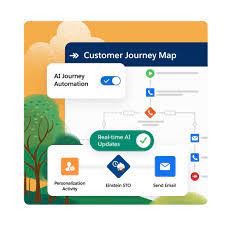
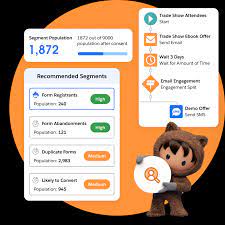
AI-Enabled Triggers for Guiding Customer Journeys – Personalization With Customized AI-Driven Journeys Initiate timely and relevant customer experiences that seamlessly lead individuals through their purchasing journey. Employ AI-powered decision-making to identify the most suitable next steps for customers, offering personalized suggestions based on real-time behavior, historical data, and business-specific datasets such as pricing and inventory. Deliver predefined experiences, such as browsing or cart abandonment journeys, while utilizing real-time interactions to determine the optimal content, channel, or offer for each customer. Efficiently extract insights by harnessing behavioral data and advanced analytics to visualize cross-channel customer journeys for both individuals and segments, identifying and resolving key friction points. Elevate customer acquisition, loyalty, and lifetime value by crafting personalized, omni-channel journeys that align with both customer desires and business objectives. Enable trigger-based customer journeys that facilitate immediate responses to customer actions, whether in the physical realm, such as entering a store and connecting to Wi-Fi, or in the virtual space, like visiting a shopping website. The Role of AI in Elevating the Customer Journey AI significantly contributes to heightened customer satisfaction, ultimately leading to improved retention. Address customer pain points in their preferred language and provide solutions tailored to their needs based on purchasing history and previous interactions with customer service. AI’s Influence Across Customer Journey Stages At each stage of the customer journey, AI transforms experiences by delivering personalized interactions from awareness to post-purchase. This transformation is made possible through automation, predictive analytics, and intelligent virtual agents. Transformative Impact of Generative AI on Customer Journeys Generative AI, exemplified by advanced language models like GPT-4, has the potential to revolutionize customer journeys. These models automate communication and content creation, dynamically adjusting tone and style to match customer preferences. For instance, Grammarly’s tone detector adapts communication based on the recipient’s profile and interaction history. Continuous Iteration and AI in Customer Journey Mapping In the era of digitization, AI-driven personalization surpasses traditional customer journey mapping based on a few personas. Organizations must harness AI and machine learning to create personalized journeys that enhance user experiences. The iterative improvement process involves collecting comprehensive data, utilizing AI for analysis and insights, implementing changes, and evaluating results through key performance indicators. Netflix: An AI Success Story Netflix serves as a prime example of AI success, continuously analyzing user behavior and preferences to refine content recommendation algorithms. This approach enhances personalization, leading to increased customer engagement and satisfaction. Integrating Generative AI into Existing Systems To fully capitalize on generative AI, integration into existing systems and processes is crucial. This may entail developing APIs to connect AI tools with customer relationship management (CRM) systems and content management systems. Testing and Continuous Enhancement Implementing AI-driven personalization necessitates a robust testing and evaluation process. Clearly defined key performance indicators and analytics capabilities are essential for measuring effectiveness and making continuous improvements. Like2 Related Posts Who is Salesforce? Who is Salesforce? Here is their story in their own words. From our inception, we’ve proudly embraced the identity of Read more Salesforce Marketing Cloud Transactional Emails Salesforce Marketing Cloud Transactional Emails are immediate, automated, non-promotional messages crucial to business operations and customer satisfaction, such as order Read more Salesforce Unites Einstein Analytics with Financial CRM Salesforce has unveiled a comprehensive analytics solution tailored for wealth managers, home office professionals, and retail bankers, merging its Financial Read more AI-Driven Propensity Scores AI plays a crucial role in propensity score estimation as it can discern underlying patterns between treatments and confounding variables Read more

Read More
Virtual Event Management Plan

Virtual Event Management Plan

Have You Recently Attended an Information-Packed Webinar? Think back to your experience: from how you first learned about the event to its promotion and eventual execution. It might seem like organizing a webinar is straightforward, but… Virtual event management requires meticulous planning, from the initial concept and promotion to post-event tasks. Read on to discover how you can plan your online events in Salesforce with ease and what you’ll need for success. What is Virtual Event Management Plan in Salesforce? Virtual event management encompasses all the activities needed to ensure your online event runs smoothly. It’s how you prepare to share your insights—or those of other experts—virtually. Why plan your events in Salesforce? All your data stays integrated within your CRM, allowing you to manage every aspect of your event, from registration and ticketing to marketing and attendee engagement, without the hassle of multiple tools or disorganized planning. Types of Virtual Event Management Plans in Salesforce Choosing the right virtual event format can be overwhelming, but here are some common options: How to Plan Virtual Events in Salesforce: A 4-Step Guide 1. Create a Virtual Event Concept When planning a virtual event, don’t treat it like an in-person one. Virtual events require their own set of strategies. Start by answering these questions: Remember, seasonal holidays or other events can impact attendance. Avoid scheduling events during low-attendance periods, like the summer or late December. 2. Select an Event Management Tool You need the right technology to manage online events effectively. Salesforce offers robust functionality for this. When selecting a tool for Salesforce event management, look for these features: 3. Outline Content and Strategy Crafting a virtual event that resonates with your audience requires more than just setting a date and topic. You need a compelling content strategy. Here’s how to make it work: 4. Design an Event Microsite Like in-person events, virtual ones benefit from a dedicated event page or microsite. On your Salesforce Experience Cloud site, you can: The Ultimate Virtual Events Checklist Final Thoughts Virtual event management isn’t daunting if approached wisely. With a clear plan, engaging content, and the right tools, success is within reach. Follow these steps, and your next virtual event will be a breeze. Like Related Posts Who is Salesforce? Who is Salesforce? Here is their story in their own words. From our inception, we’ve proudly embraced the identity of Read more Salesforce Marketing Cloud Transactional Emails Salesforce Marketing Cloud Transactional Emails are immediate, automated, non-promotional messages crucial to business operations and customer satisfaction, such as order Read more Salesforce Unites Einstein Analytics with Financial CRM Salesforce has unveiled a comprehensive analytics solution tailored for wealth managers, home office professionals, and retail bankers, merging its Financial Read more AI-Driven Propensity Scores AI plays a crucial role in propensity score estimation as it can discern underlying patterns between treatments and confounding variables Read more

Read More
Organizational AI Change Management

Organizational AI Change Management

The Future of AI: Transforming Organizational Culture and Decision-Making When envisioning the future, the greatest impact and necessary changes from AI will occur within organizations, not just through technology. Organizational AI Change Management will be a top down, but all the way down, process. AI’s influence extends beyond procedural steps, fundamentally altering organizational decision-making. Rethinking Organizational Structure AI demands a new perspective on organizational structure rather than just focusing on process or technology. This isn’t about achieving “AGI” or other speculative advancements, but about understanding AI’s true role in organizational change. Many companies aim to become “Data & AI Driven,” but what does that entail? Fundamentally, it means integrating technology into the business, where data reflects organizational reality, and AI is interwoven with roles and responsibilities. Cultural Shift Towards a 50% AI World Transitioning to a 50% AI-driven world involves more than adopting new technology or processes; it requires a profound cultural shift within the organization. People, Process, and Technology: A Holistic View A traditional Venn diagram of “People,” “Process,” and “Technology” illustrates governance, service models, and automation at their intersections. However, achieving true AI integration necessitates focusing on the overlaps and cultural changes, not just the components themselves. Cultural Foundations First For AI to succeed, organizations must start with cultural transformation. Changing how people think is the biggest challenge in any transformation process. AI’s Role in Decision-Making AI primarily impacts decisions, not just processes or technology. Processes, while essential, are merely tools for execution. AI calls for a paradigm shift, as it assumes decision-making roles, traditionally held by humans, within clear boundaries and domains of control. Organizational Accountability and AI Businesses must adapt to a model where AI operates under delegated authority from specific individuals, necessitating a shift in accountability and management. This approach redefines AI as a partner in decision-making rather than a mere tool. Digital Transformation and AI Integration Incorporating AI requires a new digital framework, moving beyond ad-hoc data and historical knowledge to a dynamic, organizationally-centric data platform. This “metamirror” provides a digital representation of the business, necessary for AI to function effectively. AI-Driven Organizational Models In this new model, both people and AIs operate within defined roles, with AIs accountable to their human counterparts. Organizational changes, such as promotions or departures, directly impact AI roles and responsibilities. The Organization as an Organism Richie Etwaru’s concept of an organization as an “organism” highlights the dynamic, interactive nature of AI-driven entities. This model integrates roles, processes, and technology into a cohesive, responsive system. Managing Change in an AI-Integrated World Managing change in an AI-driven world blurs the lines between technology and business functions. AI skills become integral to organizational roles, fundamentally altering how change is approached and managed. Preparing for a 50% AI Future A shift towards a 50% AI-driven world necessitates rethinking business culture. Being “Data & AI Driven” means the business takes responsibility for its data and integrates AI as a strategic partner. This requires a cultural transformation where data accuracy and AI alignment with business objectives are paramount. Embracing a Data & AI Culture To thrive in a 50% AI world, organizations must embrace a Data & AI culture. This involves taking accountability for data, ensuring AI’s decisions reflect reality, and aligning AI with business goals. Without this cultural shift, businesses risk merely using AI technology without fully integrating it into their strategic framework. aIn summary, achieving true AI integration means transforming the organizational culture, redefining roles and responsibilities, and creating a robust digital infrastructure that supports AI’s dynamic decision-making capabilities. Like Related Posts Who is Salesforce? Who is Salesforce? Here is their story in their own words. From our inception, we’ve proudly embraced the identity of Read more Salesforce Marketing Cloud Transactional Emails Salesforce Marketing Cloud Transactional Emails are immediate, automated, non-promotional messages crucial to business operations and customer satisfaction, such as order Read more Salesforce Unites Einstein Analytics with Financial CRM Salesforce has unveiled a comprehensive analytics solution tailored for wealth managers, home office professionals, and retail bankers, merging its Financial Read more AI-Driven Propensity Scores AI plays a crucial role in propensity score estimation as it can discern underlying patterns between treatments and confounding variables Read more

Read More
Salesforce Data Cloud

Salesforce Data Cloud License Offer

At Dreamforce 2023, Salesforce announced that Data Cloud free licenses are now included for all Enterprise Edition or above customers so they can become familiar with the new capabilities and develop use case ideas for Salesforce Data Cloud. Salesforce Data Cloud License Offer! Are you taking advantage of Salesforce Data Cloud’s customer 360 capabilities when it comes to intuitive, fast, efficient customer service? Today is the day! With the Salesforce Data Cloud Offer you can take advantage now! Data Cloud is the fastest growing organically built product in Salesforce’s history (Salesforce built it themselves, not via acquisitions). Data Cloud could be described as the ‘Holy Grail of CRM’, meaning that the data problem that’s existed since the earliest days of CRM is now finally solved. This is truly a 360 degree customer view. Why is Data Cloud important? A data cloud gives you an infrastructure for efficient data management across multiple systems at any scale. You can ensure data is available to anyone who needs it without compromising data integrity or security. There’s never been a better time to partner with Tectonic to explore Salesforce Data Cloud for your data and your business. Take advantage of the Data Cloud License Offer today. Like1 Related Posts Who is Salesforce? Who is Salesforce? Here is their story in their own words. From our inception, we’ve proudly embraced the identity of Read more Salesforce Marketing Cloud Transactional Emails Salesforce Marketing Cloud Transactional Emails are immediate, automated, non-promotional messages crucial to business operations and customer satisfaction, such as order Read more Salesforce Unites Einstein Analytics with Financial CRM Salesforce has unveiled a comprehensive analytics solution tailored for wealth managers, home office professionals, and retail bankers, merging its Financial Read more AI-Driven Propensity Scores AI plays a crucial role in propensity score estimation as it can discern underlying patterns between treatments and confounding variables Read more

Read More
Einstein 1 Unveiled

Salesforce Einstein 1 Platform

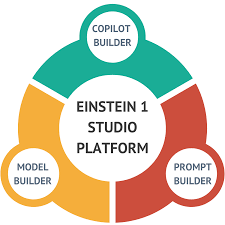
Welcome to the dawn of a bold new era in enterprise Artificial Intelligence, where the world demands a platform unlike any other. Enter Salesforce Einstein 1, the pinnacle of innovation, designed to navigate terabytes of disparate data seamlessly, offer freedom in AI model selection, and integrate directly into your workflow—all while upholding customer trust. Einstein 1 Platform serves as the nexus of your data, AI, CRM, development, and security needs, consolidating them into a singular, robust framework. This empowers IT, administrators, and developers alike with an adaptable AI platform, facilitating rapid development of transformative applications and automation. Within Einstein 1 lies an array of artificial intelligence tools, reflecting the modular architecture of the core Salesforce platform. From standardized to custom solutions, Einstein 1 caters to diverse needs. Examples include out-of-the-box AI features like sales email generation in Sales Cloud and service replies in Service Cloud. Since its unveiling as Genie, now Data Cloud, at Dreamforce ‘22, Salesforce has propelled this product to the forefront of its mission. The conversation has shifted from Customer 360 to encompass AI + CRM + Data—a strategic pivot poised for success in 2024 and beyond. But what does this transformation entail? Data Cloud has been a focal point of Salesforce’s narrative, hailed as a groundbreaking CDP innovation. The recent Q4 earnings call unveiled remarkable achievements: Gartner’s endorsement further solidifies Salesforce’s position, elevating it as a leader in the Magic Quadrant, surpassing rivals like Twilio and Adobe. This achievement is remarkable given Salesforce’s relatively recent CDP certification from the CDP Institute. However, understanding the significance of Data Cloud amidst a sea of CRM solutions may elude many. Yet, the resurgence of data underscores its importance. CRMs, while pivotal for sales, support, and marketing functions, fall short in managing the breadth of modern data collection, storage, and dissemination. Enter the CDP—a dedicated platform for aggregating customer data across every touchpoint throughout the customer lifecycle. Unlike CRMs, which traditionally served as the single source of truth, CDPs offer a comprehensive view, ingesting data from myriad sources. Two key attributes distinguish CDPs and Data Cloud: Yet, amidst this data revolution, the role of artificial intelligence cannot be understated. Einstein 1, formerly known as Salesforce Customer 360, epitomizes this synergy between AI, CRM, and Data. Einstein 1 boasts a diverse array of AI tools, from pre-built features to customizable solutions housed within the Einstein 1 Studio. This enables users to craft tailored AI functionality, seamlessly integrated with Salesforce’s ecosystem. Moreover, Salesforce’s agnostic approach to LLMs empowers users to harness the full potential of AI. Whether leveraging Salesforce’s proprietary LLM or integrating third-party or proprietary models, Einstein 1 ensures flexibility and innovation. As AI continues to permeate every facet of business and personal life, Salesforce’s strategic focus on Data Cloud and Einstein could propel the company to unprecedented growth. In the ever-evolving landscape of enterprise AI, Salesforce remains at the forefront, poised to redefine the future of customer engagement and business intelligence. Like Related Posts Who is Salesforce? Who is Salesforce? Here is their story in their own words. From our inception, we’ve proudly embraced the identity of Read more Salesforce Marketing Cloud Transactional Emails Salesforce Marketing Cloud Transactional Emails are immediate, automated, non-promotional messages crucial to business operations and customer satisfaction, such as order Read more Salesforce Unites Einstein Analytics with Financial CRM Salesforce has unveiled a comprehensive analytics solution tailored for wealth managers, home office professionals, and retail bankers, merging its Financial Read more AI-Driven Propensity Scores AI plays a crucial role in propensity score estimation as it can discern underlying patterns between treatments and confounding variables Read more

Read More
Marketing Cloud Growth and Advanced Editions

Marketing Cloud Growth and Advanced Editions

While Growth Edition is tailored to small businesses looking to get started with robust marketing automation, Advanced Edition caters to companies that need more sophisticated tools to scale personalization efforts, improve customer engagement, and streamline workflows. It offers additional features, including real-time journey testing, predictive AI for customer scoring, and advanced SMS capabilities, allowing businesses to enhance every touchpoint with their customers.

Read More
Salesforce Einstein Copilot

Introducing Salesforce Einstein Copilot

Einstein Copilot introduces a cutting-edge generative A. Powered by a conversational assistant seamlessly embedded within every Salesforce application. Its strategically enhancing workflow and yielding substantial gains in productivity. Announced at Dreamforce 2023, in case you missed it, read on. The newly integrated Einstein 1 Data Cloud, part of the Einstein 1 Platform, allows customers to establish a unified customer profile. By connecting any data source. This integration infuses AI, automation, and analytics into every customer experience, fostering a comprehensive approach. Salesforce Einstein Copilot Studio Einstein Copilot Studio provides organizations with the flexibility to tailor Einstein Copilot. A Salesforce tool used according to specific business requirements. It incorporates the Einstein Trust Layer, ensuring the protection of sensitive data while leveraging trusted information to enhance generative AI responses. Unlike other generative AI copilot solutions, Einstein Copilot is natively integrated into the world’s leading AI CRM – Salesforce. Seamlessly tapping into data from various Salesforce applications. This integration ensures more accurate AI-powered recommendations and content generation. Data Cloud The Data Cloud serves as the foundation for Einstein Copilot. Data Cloud offers real-time, consolidated views of customers or entities. With Data Cloud, creating a data graph is simplified, enabling the generation of AI-powered apps with a single click, eliminating the need for manual data queries or joins. Einstein Trust Layer The Einstein Trust Layer, an integral part of the Einstein 1 Platform, ensures the secure retrieval of relevant data from Data Cloud. Before sending it to the Language Model (LLM), proprietary, sensitive, or confidential information is masked, maintaining a high level of data security and compliance. Copilot for Sales aligns with existing CRM access controls and user permissions. Salesforce requires ensuring administrators and users have the necessary permissions for customization and data management within Copilot for Sales. Salesforce Copilot service functions similarly to other generative AI tools in the customer experience landscape, responding to customer queries automatically with personalized answers grounded in company data. Einstein Copilot & Search, anticipated for availability from February 2024, is set to leverage Data Cloud unstructured support. It will be ushering in a new era where Generative AI-based apps redefine the user interface. Thereby allowing seamless interactions and conversations with applications. This transformative shift signifies a significant milestone in Enterprise Software, with Salesforce actively participating in this evolving landscape. Copilot for Sales How is Copilot for Sales different from Copilot for Microsoft 365? Microsoft Copilot for Sales is an AI assistant designed for sellers that brings together the capabilities of Copilot for Microsoft 365 with seller-specific insights and workflows. What Salesforce just did is drop the GPT name and go with Copilot, By endorsing the Microsoft branding it announced earlier this year with Microsoft Copilot for Microsoft 365 and CoPilot for Dynamics 365. Like Related Posts Who is Salesforce? Who is Salesforce? Here is their story in their own words. From our inception, we’ve proudly embraced the identity of Read more Salesforce Marketing Cloud Transactional Emails Salesforce Marketing Cloud Transactional Emails are immediate, automated, non-promotional messages crucial to business operations and customer satisfaction, such as order Read more Salesforce Unites Einstein Analytics with Financial CRM Salesforce has unveiled a comprehensive analytics solution tailored for wealth managers, home office professionals, and retail bankers, merging its Financial Read more AI-Driven Propensity Scores AI plays a crucial role in propensity score estimation as it can discern underlying patterns between treatments and confounding variables Read more

Read More
Data Cloud Free Licenses

Data Cloud Free Licenses

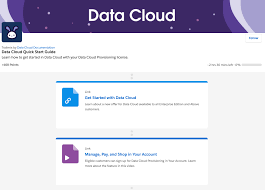
Salesforce Announces Data Cloud Free Licenses at Dreamforce 2023 At Dreamforce 2023, Salesforce announced that free Data Cloud licenses are now included for all Enterprise Edition or above customers to help them familiarize themselves with new capabilities and develop use case ideas. Starting September 19th, 2023, Enterprise Edition and above customers can get started with Data Cloud Provisioning at no cost by signing up under Your Account. Data Cloud Provisioning includes: Unlimited Plus Edition customers will get access to 2,500,000 Data Service credits. Two Tableau Creator licenses are a separate line item and can be quoted by your Salesforce Account Executive. Salesforce has been focusing on large data and AI tools for several years, acquiring Tableau, accelerating their Einstein AI tools, and significantly extending the Data Cloud product. Data Cloud allows you to easily harmonize data, analyze it in Tableau, and make it actionable across marketing, sales, and service. What Can I Do with Data Cloud? Data Cloud enables customers to start with one of three use cases: Across these use cases, customers can ingest data from multiple sources, unify data with identity resolution, calculate insights, visualize data in Tableau (with the provisioning of the Tableau Cloud – Creator for Data Cloud SKU), and view consolidated data on the contact record. Differences Between Data Cloud and Data Cloud Provisioning Functionality: Data Cloud Provisioning includes all the features of the existing Data Cloud offerings, except Segmentation and Activation. Credits for Segmentation and Activation can be purchased as add-ons through Marketing Cloud account teams. Capacity: Both include 1 TB of data storage, 1 Data Cloud admin, 100 internal Data Cloud identity users, 1,000 Data Cloud PSL, and 5 integration users. Entitlement: Data Cloud Provisioning entitlement is the same for all Enterprise Edition and above customers. Additional Information Sandbox Availability: Data Cloud is not available in Sandbox orgs; it can only be provisioned to an existing production org. Professional Edition Access: Data Cloud Provisioning is not available to Professional Edition customers. Existing Data Cloud or CDP Customers: Those with an existing Data Cloud or CDP tenant cannot sign up for Data Cloud Provisioning. Unlimited Edition Plus Bundle Customers: Data Cloud Provisioning is not available, as the bundle includes a Data Cloud tenant. Edition Information: Check your Salesforce org’s edition in Setup > Company Information > Organization Edition. Government Cloud: Data Cloud Provisioning is not available. Non-Profit Customers: Data Cloud Provisioning is available. Industry Cloud Customers: Industry Cloud customers with Enterprise Edition and above are eligible. ISV Partners: Data Cloud Provisioning is not accessible via Your Account in ISV Enterprise Edition orgs. ISV Partners need to create a support case with the Partner Ops team to request provisioning. Existing Tableau Customers: Tableau Cloud – Creator for Data Cloud is intended to provision a new Tableau tenant (aka site). Multiple Instances: Only one Data Cloud Provisioning instance is allowed per account/tenant. Access to Tableau Cloud – Creator for Data Cloud: To get access, you must have or include on the same quote any of the following: Like Related Posts Who is Salesforce? Who is Salesforce? Here is their story in their own words. From our inception, we’ve proudly embraced the identity of Read more Salesforce Marketing Cloud Transactional Emails Salesforce Marketing Cloud Transactional Emails are immediate, automated, non-promotional messages crucial to business operations and customer satisfaction, such as order Read more Salesforce Unites Einstein Analytics with Financial CRM Salesforce has unveiled a comprehensive analytics solution tailored for wealth managers, home office professionals, and retail bankers, merging its Financial Read more AI-Driven Propensity Scores AI plays a crucial role in propensity score estimation as it can discern underlying patterns between treatments and confounding variables Read more

Read More
Salesforce Net Zero Enhancements

Salesforce Net Zero Enhancements

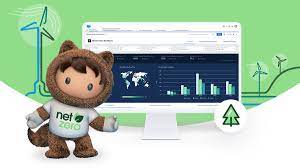
Salesforce AI Innovations Boost ESG Reporting in Net Zero Cloud Powered by Einstein, Net Zero Cloud’s generative AI capabilities will suggest reliable, auto-generated responses for ESG reports – Salesforce Net Zero Enhancements CSRD Report Builder automates reporting, and Materiality Assessment empowers ESG managers to identify most relevant ESG topics Global sports brand Rossignol Group uses Net Zero Cloud to track its carbon footprint; joins 1t.org with commitment to plant 100,000 trees Today at Dreamforce 2023, Salesforce unveiled new Einstein features for Net Zero Cloud to make corporate environmental, social, and governance (ESG) reporting easier for companies as they navigate a rapidly evolving regulatory landscape.  Beginning in 2024, approximately 50,000 companies — including many large, multinationals based in the United States — must comply with the Corporate Sustainability Reporting Directive (CSRD). This includes disclosing both climate-related financial risks and societal impact, along with scope 3 or the emissions generated by a company’s supply chain. The company also introduced two new capabilities for Net Zero Cloud — CSRD Report Builder and Materiality Assessment. The Report Builder automates CSRD report generation, and Materiality Assessment helps organizations determine what is material – both to their business and broader societal impact, the “double materiality” assessment that is a requirement of CSRD. Integrate a complete sustainability management solution into your organization Like Related Posts Who is Salesforce? Who is Salesforce? Here is their story in their own words. From our inception, we’ve proudly embraced the identity of Read more Salesforce Marketing Cloud Transactional Emails Salesforce Marketing Cloud Transactional Emails are immediate, automated, non-promotional messages crucial to business operations and customer satisfaction, such as order Read more Salesforce Unites Einstein Analytics with Financial CRM Salesforce has unveiled a comprehensive analytics solution tailored for wealth managers, home office professionals, and retail bankers, merging its Financial Read more AI-Driven Propensity Scores AI plays a crucial role in propensity score estimation as it can discern underlying patterns between treatments and confounding variables Read more

Read More
Crucial Role of Data and Integration in AI at Dreamforce

The Crucial Role of Data and Integration in AI at Dreamforce

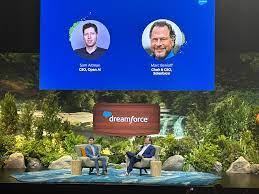
Understanding The Crucial Role of Data and Integration in AI at Dreamforce At this year’s Dreamforce, AI is the star of the show, but two essential supporting actors are data and integration. Enterprises are increasingly recognizing the importance of unifying their diverse data sources for effective analysis and swift action, and the race to harness AI makes this integration even more critical. Integration is key not only for merging data but also for automating end-to-end processes, enabling organizations to move faster and deliver better outcomes to customers. Crucial Role of Data and Integration in AI at Dreamforce. It’s no surprise that MuleSoft, acquired by Salesforce five years ago, is now a major contributor to Salesforce’s growth. Brian Millham, President and COO at Salesforce, highlighted this during the company’s recent Q2 earnings call: “In Q2, nearly half of our greater than $1 million deals included MuleSoft. As customers integrate data from all sources to drive efficiency, growth, and insights, MuleSoft has become mission-critical and was included in half of our top 10 deals.” Breaking Down Silos Param Kahlon, EVP and General Manager for Automation and Integration at Salesforce, recently discussed the investments customers are making in data and integration. He emphasized the importance of breaking down operational silos: “We are in the business of breaking silos across systems to ensure that data can travel seamlessly through multiple systems and people for processes like order-to-cash or procure-to-pay. Our technology connects these dots.” The surge in AI interest has increased the urgency to act, as Kahlon explained: “Creating data repositories for AI algorithms requires real-time data across silos, driving significant demand for our integration solutions.” Consolidating Data Enterprises have long struggled with data consolidation due to monolithic application stacks with separate data stores. This has been a challenge even within Salesforce’s own products. Last year, Salesforce introduced a Customer Data Platform (CDP) called Data Cloud, which includes a real-time data layer named Genie. Kahlon elaborated on its significance: “Data Cloud’s strength lies in its understanding and storage of Salesforce metadata. This native integration allows for real-time actions within Salesforce, enhancing the ability to aggregate, reason over, and act on data.” For example, when a customer contacts a bank, Data Cloud can compile their ATM usage, website interactions, and recent support cases, providing the agent with a comprehensive view to better assist the customer. Leveraging Metadata for AI Salesforce’s metadata layer, which has been fine-tuned over two decades, gives it a distinct advantage. Kahlon noted: “This metadata-based architecture allows us to create meaningful AI algorithms that are natively consumed within Salesforce, enabling visualization and action based on real-time data.” This is crucial for training the underlying Large Language Model (LLM) accurately, ensuring generated content is contextually grounded and trustworthy. Kahlon emphasized: “The trust layer is essential. We need to ensure no hallucination or toxicity in the LLM’s responses, and that communications align with our company’s values.” Real-Time Data and API Management Data Cloud’s ability to connect to other data sources like Snowflake without duplicating data is a significant benefit. Kahlon commented: “Duplicating data is not desirable. Customers need real-time access to the actual source of truth.” On the integration front, APIs have simplified connecting applications and data sources. However, managing API sprawl is crucial. Kahlon explained: “Standardizing API use and publishing them in a centralized portal is essential for reusability and consistency. Low-code platforms and connectors are becoming increasingly relevant, enabling business users to access data without relying on IT.” Automation and AI The demand for automation is growing, and low-code tools are vital. Instead of integration experts being overwhelmed, organizations should establish Centers for Excellence to focus on creating reusable connectors and automations. Kahlon added: “Companies need low-code tools to involve more business users in the transformation journey without slowing down due to legacy applications.” In the future, AI may further ease the workload on integration specialists. MuleSoft recently introduced an API Experience Hub to make APIs discoverable, and AI might eventually help monitor execution logs and manage APIs more effectively. Kahlon concluded: “AI could help developers find and use APIs efficiently, enhancing security and governance while simplifying access to data across the organization.” Like Related Posts Who is Salesforce? Who is Salesforce? Here is their story in their own words. From our inception, we’ve proudly embraced the identity of Read more Salesforce Marketing Cloud Transactional Emails Salesforce Marketing Cloud Transactional Emails are immediate, automated, non-promotional messages crucial to business operations and customer satisfaction, such as order Read more Salesforce Unites Einstein Analytics with Financial CRM Salesforce has unveiled a comprehensive analytics solution tailored for wealth managers, home office professionals, and retail bankers, merging its Financial Read more AI-Driven Propensity Scores AI plays a crucial role in propensity score estimation as it can discern underlying patterns between treatments and confounding variables Read more

Read More
Salesforce Lightning and Hyperforce

Difference Between Salesforce Lightning and Hyperforce

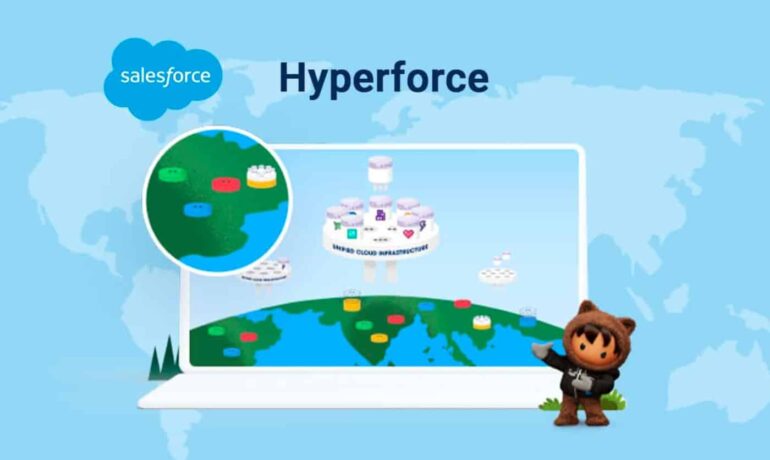
Salesforce Lightning Platform and Hyperforce: An Overview The Lightning Platform forms the core infrastructure of Salesforce, while Hyperforce is a new infrastructure model provided by the CRM platform. Salesforce Lightning Salesforce Lightning elevates customization with its modern and flexible framework. It offers a powerful drag-and-drop interface called the Lightning App Builder, enabling users to design custom homepages, record pages, and dashboards effortlessly. Salesforce Hyperforce Introduced at Dreamforce in December 2020 and recently made generally available, Hyperforce is an architectural enhancement to Salesforce’s platform designed for the public cloud. It offers several benefits, including scalability, global reach, and increased control over data residency. As part of the Salesforce Customer 360 platform, Hyperforce brings enhanced flexibility, scalability, and performance to the cloud. Key Benefits of Hyperforce: Hyperforce Migration Migrating to Hyperforce does not require additional costs. Once migrated, organizations will not experience significant changes, and non-Hyperforce services will continue to run. This code-based offering enhances speed, reliability, and global performance. Reasons to Migrate to Hyperforce: Hyperforce and Public Cloud Platforms Hyperforce can run on public cloud platforms like AWS, GCP, and Azure, representing a shift from traditional Salesforce-hosted data centers. The Data Cloud and Marketing Cloud are also built on Hyperforce, offering businesses a powerful platform for customer interactions and relationship management. Hyperforce vs. Shield Hyperforce provides volume-level encryption by default for data at rest, while Shield Platform Encryption operates in parallel, offering additional encryption features. Hyperforce Migration: Mandatory Upgrade Migrating to Hyperforce is not optional, as Salesforce has declared this architecture as its future. The migration process will occur over time, and organizations will need to prepare for it. If migration timing is not suitable, businesses should contact their Salesforce account agent. Data Residency and Migration Issues: While Hyperforce is expanding, more countries need to support data residency to have a truly international impact. Some migration issues may include Einstein loading problems, bot disruptions, and glitches with the Smartcomm managed package. Basic troubleshooting can resolve minor issues, but technical considerations like manual endpoint management may be time-consuming and costly. Hyperforce Assistant The Hyperforce Assistant provides a step-by-step guide to upgrade from Salesforce-managed physical data centers to Hyperforce, ensuring admins feel confident about the migration process. By adopting Hyperforce, businesses can enhance their customer data management with innovative solutions, ensuring robust security, scalability, and efficiency in their operations. Like Related Posts Who is Salesforce? Who is Salesforce? Here is their story in their own words. From our inception, we’ve proudly embraced the identity of Read more Salesforce Marketing Cloud Transactional Emails Salesforce Marketing Cloud Transactional Emails are immediate, automated, non-promotional messages crucial to business operations and customer satisfaction, such as order Read more Salesforce Unites Einstein Analytics with Financial CRM Salesforce has unveiled a comprehensive analytics solution tailored for wealth managers, home office professionals, and retail bankers, merging its Financial Read more AI-Driven Propensity Scores AI plays a crucial role in propensity score estimation as it can discern underlying patterns between treatments and confounding variables Read more

Read More
Salesforce Data Cloud Explained

Salesforce Data Cloud Explained

Salesforce Data Cloud, previously recognized as Salesforce CDP/Genie, made its debut at Dreamforce 2022, hailed by Salesforce as one of the most significant innovations in the company’s history. A hyperscale data platform built into Salesforce. Activate all your customer data across Salesforce applications with Data Cloud. Data Cloud facilitates the intake and storage of real-time data streams on a massive scale, empowering automated tasks that result in highly personalized experiences. Data can be sourced from diverse Salesforce data outlets, including Mulesoft, Marketing Cloud, and others, along with customers’ proprietary applications and data sources. Subsequently, it can dynamically respond to this real-time data by automating actions across Salesforce CRM, Marketing Cloud, Commerce, and more, inclusive of automating actions through Salesforce Flow. What is the Salesforce data cloud? Data Cloud is the fastest growing organically built product in Salesforce’s history (i.e. Salesforce built it themselves, not via acquisitions). Data Cloud could be described as the ‘Holy Grail of CRM’, meaning that the data problem that’s existed since the infancy of CRM is now finally solvable. Data Cloud is the foundation that speeds up the connectivity between different ‘clouds’ across the platform. However, Data Cloud is also a product that can be purchased. While not all Salesforce customers have licensed Data Cloud, being at the foundation means they are still taking advantage of Data Cloud to a degree – but this all becomes even stronger with Data Cloud as a personalization and data unification platform. What is the history of Data Cloud? Salesforce has gone through several iterations with naming its CDP product: Customer 360 Audiences → Salesforce CDP → Marketing Cloud Customer Data Platform → Salesforce Genie → Salesforce Data Cloud. In some instances, changes were made because the name just didn’t stick – but what’s more important to note, is that some of the name changes were to indicate the significant developments that happened to the product. Salesforce Data Cloud Differentiators Data Cloud, in itself, is impressive. While many organizations would consider it expensive, if you were to flip the argument on its head, by buying your own data warehouse, building the star schema, and paying for ongoing compute storage, you’d be looking to spend 5 to 10 times more than what Salesforce is charging for Data Cloud. Plus, data harmonization works best when your CRM data is front and center. There are other key differentiators that helps Data Cloud to stand out from the crowd: Is data cloud a data lakehouse? That means that Data Cloud is now not just a really good CDP, it’s now a data lake which will be used in sales and service use cases. But it also means that we can start to fundamentally move some of our higher-scale consumer products like Marketing and Commerce onto the platform. Is Snowflake a data Lakehouse? Snowflake offers customers the ability to ingest data to a managed repository, in what’s commonly referred to as a data warehouse architecture, but also gives customers the ability to read and write data in cloud object storage, functioning as a data lake query engine. What is the benefit of Salesforce data cloud? Data Cloud empowers Salesforce Sales Cloud with AI capabilities and automation that quickly closes deals and boosts productivity across every channel. It drives customer data from all the touchpoints and unifies it separately in individual customer profiles. Salesforce Data Cloud is a powerful data warehouse solution that allows companies to effectively manage and analyze their data. What is the difference between Salesforce CDP and data lake? Talking abut Salesforce CDP is a little bit like a history lesson. While a CDP provides a unified, structured view of customer data, a data lake, on the other hand, is more of a raw, unstructured storage repository that holds a vast amount of data (more than just customer data) in its native format until it’s needed. Like1 Related Posts Who is Salesforce? Who is Salesforce? Here is their story in their own words. From our inception, we’ve proudly embraced the identity of Read more Salesforce Marketing Cloud Transactional Emails Salesforce Marketing Cloud Transactional Emails are immediate, automated, non-promotional messages crucial to business operations and customer satisfaction, such as order Read more Salesforce Unites Einstein Analytics with Financial CRM Salesforce has unveiled a comprehensive analytics solution tailored for wealth managers, home office professionals, and retail bankers, merging its Financial Read more AI-Driven Propensity Scores AI plays a crucial role in propensity score estimation as it can discern underlying patterns between treatments and confounding variables Read more

Read More
Salesforce Flow

Einstein GPT Integration with Flow and Data Cloud Now Available

Salesforce has recently unveiled exciting new capabilities for Flow, Einstein GPT Integration with Flow and Data Cloud. Introducing Einstein GPT and Data Cloud features to its growing family of automation tools. This development empowers everyday administrators, eliminating the need for extensive engineering teams to harness large datasets for automation purposes. The groundbreaking aspect lies in the ability to achieve this in real-time, using a user-friendly interface without the need for coding. Introduction to Einstein GPT: Einstein GPT builds upon ChatGPT technology, combining public and private AI models with CRM data within Salesforce. This allows users to pose natural-language prompts directly within Salesforce CRM, receiving AI-generated content that adapts continuously to changing customer information and needs. The learning capability of Einstein GPT ensures ongoing improvement based on user input, aligning with best practices. Einstein GPT for Flow: When integrated with Salesforce Flow, Einstein GPT enables users to create and modify automations through a conversational interface, simplifying the flow creation process significantly. This fusion lowers barriers for non-technical users, enhancing the overall experience with Flow Builder and ensuring adherence to best practices. Key benefits of Einstein GPT for Flow include: Pricing details for Einstein GPT products are pending confirmation, and Salesforce will soon announce pilot program dates to broaden accessibility. Data Cloud for Flow: Introduced at Dreamforce 2022, Salesforce Data Cloud, formerly Genie, facilitates highly personalized customer experiences in real-time. Serving as a command center for customer data, Data Cloud integrates real-time data streams with Salesforce data, powering Flow with actionable insights. By combining Data Cloud with Flow, users can automate complex workflows and trigger actions based on real-time changes without the need for extensive IT involvement. This approach streamlines the process of designing, building, and testing custom integrations, reducing the burden on IT teams. Key advantages of Data Cloud for Flow include: These announcements bring forth transformative capabilities, making data utilization more accessible and streamlining the automation process within Salesforce. The combination of Einstein GPT and Data Cloud for Flow opens up possibilities for creating personalized and interconnected customer experiences across different sectors. Like1 Related Posts Who is Salesforce? Who is Salesforce? Here is their story in their own words. From our inception, we’ve proudly embraced the identity of Read more Salesforce Marketing Cloud Transactional Emails Salesforce Marketing Cloud Transactional Emails are immediate, automated, non-promotional messages crucial to business operations and customer satisfaction, such as order Read more Salesforce Unites Einstein Analytics with Financial CRM Salesforce has unveiled a comprehensive analytics solution tailored for wealth managers, home office professionals, and retail bankers, merging its Financial Read more AI-Driven Propensity Scores AI plays a crucial role in propensity score estimation as it can discern underlying patterns between treatments and confounding variables Read more

Read More
Salesforce Whatsapp Integration

New Salesforce Whatsapp Integrations

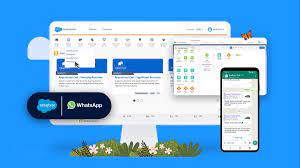
Salesforce has unveiled its roadmap for upcoming WhatsApp integrations tailored for marketing and service teams. WhatsApp, a widely-used mobile messaging app with over 2.2 billion monthly active users and a daily message count exceeding 100 billion, has demonstrated remarkable international reach, fostering instant and effective communication across borders without reliance on local telecom providers. New Salesforce Whatsapp Integrations While WhatsApp integration was not previously available as a standard feature in Salesforce, the recent partnership announcement at Dreamforce ’22 prompted swift action. The integration will harness the WhatsApp Business Platform API, a cloud-based service provided by Meta (WhatsApp’s owner) for businesses at no cost in 2022. This API enhances end-to-end experiences, streamlining scalable business processes. For Salesforce + WhatsApp in Service: WhatsApp for Service can be utilized through Digital Engagement, an add-on for Service Cloud. Also Salesforce’s Contact Center for Communications within Communications Cloud. WhatsApp for Service Cloud is expected to be generally available (GA) starting March 16, 2023. For Salesforce + WhatsApp in Marketing: The WhatsApp for Marketing Cloud Rich Media support is anticipated to be generally available (GA) in the second half of 2023. As consumer demand for WhatsApp continues to surge, specialized integrations, like those tailored for Salesforce. By address the growing need for organizations to connect WhatsApp with their business-critical systems. The collaboration underscores Salesforce’s commitment to meeting evolving communication demands and leveraging the popularity of WhatsApp for enhanced customer interactions. Struggling to integrate WhatsApp in your Salesforce ecosystem? Tectonic can help. Like2 Related Posts Who is Salesforce? Who is Salesforce? Here is their story in their own words. From our inception, we’ve proudly embraced the identity of Read more Salesforce Marketing Cloud Transactional Emails Salesforce Marketing Cloud Transactional Emails are immediate, automated, non-promotional messages crucial to business operations and customer satisfaction, such as order Read more Salesforce Unites Einstein Analytics with Financial CRM Salesforce has unveiled a comprehensive analytics solution tailored for wealth managers, home office professionals, and retail bankers, merging its Financial Read more AI-Driven Propensity Scores AI plays a crucial role in propensity score estimation as it can discern underlying patterns between treatments and confounding variables Read more

Read More
gettectonic.com