Dreamforce Archives - gettectonic.com - Page 5
Enhancing Customer Experiences with Social Insights

Enhancing Customer Experiences with Social Insights

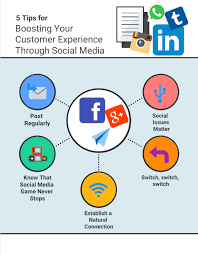
Sprout Social Announces Integration with Salesforce Agentforce for Service Cloud Sprout Social (SPT) has unveiled a new integration with Salesforce’s (CRM) Agentforce assistant for Service Cloud. This partnership enables joint customers of Salesforce Service Cloud and Sprout Social to gather customer insights from social media and take proactive action to enhance customer experiences. These updates will be highlighted at Dreamforce 2024, where Sprout Social will showcase how AI, social data, and Salesforce can drive revenue, foster customer loyalty, and strengthen brand equity. As a leading provider of cloud-based social media management software, Sprout Social’s integration with Salesforce’s Agentforce assistant empowers businesses to capture social media insights and accelerate decision-making in customer service. These advancements will be a focal point at Dreamforce 2024, where Sprout Social will present on utilizing AI and social data to enhance customer care, build brand loyalty, and grow revenue. Enhancing Customer Experiences with Social Insights Delivering exceptional customer care requires meeting customers where they are—often on social media. This new integration equips businesses with a full view of their customers by combining social data with Agentforce’s AI-powered assistance. By leveraging this combined solution, companies can resolve cases more efficiently and anticipate customer needs, shifting from reactive to proactive customer service strategies. “This extension demonstrates our commitment to AI-driven innovation and our strong partnership with Salesforce,” said Scott Morris, Chief Marketing Officer of Sprout Social. “In today’s landscape, where customer care defines brand success, integrating social insights is crucial for supporting holistic, long-term care strategies and empowering brands to deliver personalized interactions at scale.” The integration expands Agentforce’s capabilities to include social data from major networks and review sites, alongside traditional communication channels like phone and email. This comprehensive view enables service teams to provide a seamless and personalized customer experience. A New Era of AI-Driven Customer Service “Social customer care has become integral to providing quality, end-to-end customer experiences,” said Ryan Nichols, Chief Customer Officer at Salesforce Service Cloud. “Collaborating with Sprout to integrate their platform with Agentforce assistant is a key step in enabling service teams to gain comprehensive customer insights and leverage conversational AI to elevate customer care.” At Dreamforce 2024, Sprout Social will present key sessions, including: The integration, currently in invite-only beta, enhances Agentforce with social data-driven insights, making customer service faster and more proactive. To learn more, contact your Sprout Social representative or visit Sprout Social’s Service Cloud page. Key Features of the Integration: Sprout Social will highlight these features at Dreamforce 2024, with insights on leveraging AI, social data, and Salesforce for enhanced customer care and brand growth. Like Related Posts Who is Salesforce? Who is Salesforce? Here is their story in their own words. From our inception, we’ve proudly embraced the identity of Read more Salesforce Marketing Cloud Transactional Emails Salesforce Marketing Cloud Transactional Emails are immediate, automated, non-promotional messages crucial to business operations and customer satisfaction, such as order Read more Salesforce Unites Einstein Analytics with Financial CRM Salesforce has unveiled a comprehensive analytics solution tailored for wealth managers, home office professionals, and retail bankers, merging its Financial Read more AI-Driven Propensity Scores AI plays a crucial role in propensity score estimation as it can discern underlying patterns between treatments and confounding variables Read more

Read More
Agentforce to the Team

Agentforce to the Team

Salesforce has introduced the Agentforce Atlas Reasoning Engine, a platform designed to perform tasks autonomously with minimal human intervention. Agentforce to the Team changes everything about AI. Businesses can feed the engine data, assign tasks, and step away, as the system is capable of completing work independently. This launch closely follows OpenAI’s recent advancements in artificial intelligence, highlighting the ongoing collaboration between Salesforce and Sam Altman’s firm. Agentforce to the Team-makes me hear “Honey, I’m home”, coming from the front door. The Agentforce Atlas Reasoning Engine is designed to analyze data, make decisions, and execute tasks with high reliability and accuracy, echoing the features of OpenAI’s latest AI model. Salesforce positions this as part of the “Third Wave of AI,” where intelligent agents go beyond assisting humans to actively driving business outcomes without frequent oversight. According to Salesforce CEO Marc Benioff, these agents are deeply integrated into customer workflows, anticipating needs and improving growth by taking proactive action at every touchpoint. Benioff emphasized the revolutionary nature of Agentforce, which he claims will surpass existing AI platforms by offering highly accurate, low-hallucination results. It integrates seamlessly across Salesforce’s ecosystem, benefiting users from industries such as financial services, healthcare, and government. Early adopters, such as Wiley, report a 40% increase in case resolution, with Agentforce handling routine customer service tasks more efficiently than previous chatbots. Disney also saw improved results, noting that Atlas delivered twice the accuracy of other AI tools they had benchmarked. However, the autonomous nature of these agents raises concerns about job displacement, particularly for workers involved in repetitive, low-impact tasks. While Salesforce advocates for reskilling workers to transition into higher-value roles, many organizations struggle to effectively implement such initiatives. The time required to upskill workers may not align with the rapid adoption of AI technologies like Agentforce. Agentforce aims to address common enterprise challenges by offering out-of-the-box solutions for sales, marketing, and customer service roles. The low-code platform allows businesses to customize their AI agents without extensive technical expertise, ensuring that they can scale capacity and improve efficiency. Salesforce plans to showcase Agentforce at its upcoming Dreamforce conference, aiming to onboard 1,000 customers to the platform. The launch signifies Salesforce’s strategic push to dominate the enterprise AI landscape, leveraging its vast data and platform to deliver more value to its customers. Despite its potential, Agentforce introduces new risks, especially in areas like data privacy and ethical AI deployment. Salesforce emphasizes its commitment to addressing these issues by incorporating ethical guardrails, such as toxicity filters. Industry analysts remain cautiously optimistic, noting that while the technology holds promise, the real test will come as more organizations adopt it and integrate it into their workflows. In summary, Salesforce’s Agentforce Atlas Reasoning Engine represents a significant leap in enterprise AI, moving beyond basic AI copilots to fully autonomous agents. While it offers substantial benefits in productivity and efficiency, its impact on the workforce and the challenges of widespread AI adoption will require ongoing attention. By Tectonic’s Shannan Hearne, Solutions Architect Like Related Posts Who is Salesforce? Who is Salesforce? Here is their story in their own words. From our inception, we’ve proudly embraced the identity of Read more Salesforce Marketing Cloud Transactional Emails Salesforce Marketing Cloud Transactional Emails are immediate, automated, non-promotional messages crucial to business operations and customer satisfaction, such as order Read more Salesforce Unites Einstein Analytics with Financial CRM Salesforce has unveiled a comprehensive analytics solution tailored for wealth managers, home office professionals, and retail bankers, merging its Financial Read more AI-Driven Propensity Scores AI plays a crucial role in propensity score estimation as it can discern underlying patterns between treatments and confounding variables Read more

Read More
Slack Expands AI Features

Slack Expands AI Features

Slack is introducing several new AI-driven features, including the integration of AI-powered agents from Salesforce and other leading partners across the platform. The Big Picture: As part of its evolution, the Salesforce-owned company aims to position Slack as a hub where humans collaborate seamlessly with an increasing number of bots and AI agents. Key Updates: Ahead of Salesforce’s Dreamforce conference, Slack announced its support for agents from partners such as Adobe, Anthropic, Cohere, Perplexity, Writer, and more, alongside Salesforce’s own Agentforce. Additionally, Slack is enhancing its AI capabilities, expanding its AI-driven transcription features to include informal video chat sessions, known as “huddles.” Why It Matters: This move aligns with Salesforce’s broader strategy of leveraging generative AI to power autonomous agents that can take independent action, moving beyond the traditional role of AI as a co-pilot merely assisting humans. What They’re Saying: “Slack’s vision of becoming an AI-powered work operating system fits perfectly with the growing role of agents in the workplace,” said Slack CEO Denise Dresser in a statement to Axios. While Dresser didn’t disclose how many paying customers have adopted Slack’s AI features, it’s worth noting that these features require a separate monthly fee. Initially, Slack planned to require companies to pay for AI features for all users or none, but the company later shifted this approach following customer feedback. And Slack Expands AI Features with New Agent Integrations Slack is introducing several new AI-driven features, including the integration of AI-powered agents from Salesforce and other leading partners across the platform. The Big Picture: As part of its evolution, the Salesforce-owned company aims to position Slack as a hub where humans collaborate seamlessly with an increasing number of bots and AI agents. Key Updates: Ahead of Salesforce’s Dreamforce conference, Slack announced its support for agents from partners such as Adobe, Anthropic, Cohere, Perplexity, Writer, and more, alongside Salesforce’s own Agentforce. Additionally, Slack is enhancing its AI capabilities, expanding its AI-driven transcription features to include informal video chat sessions, known as “huddles.” Why It Matters: This move aligns with Salesforce’s broader strategy of leveraging generative AI to power autonomous agents that can take independent action, moving beyond the traditional role of AI as a co-pilot merely assisting humans. What They’re Saying: “Slack’s vision of becoming an AI-powered work operating system fits perfectly with the growing role of agents in the workplace,” said Slack CEO Denise Dresser in a statement to Axios. While Dresser didn’t disclose how many paying customers have adopted Slack’s AI features, it’s worth noting that these features require a separate monthly fee. Initially, Slack planned to require companies to pay for AI features for all users or none, but the company later shifted this approach following customer feedback. Like Related Posts Who is Salesforce? Who is Salesforce? Here is their story in their own words. From our inception, we’ve proudly embraced the identity of Read more Salesforce Marketing Cloud Transactional Emails Salesforce Marketing Cloud Transactional Emails are immediate, automated, non-promotional messages crucial to business operations and customer satisfaction, such as order Read more Salesforce Unites Einstein Analytics with Financial CRM Salesforce has unveiled a comprehensive analytics solution tailored for wealth managers, home office professionals, and retail bankers, merging its Financial Read more AI-Driven Propensity Scores AI plays a crucial role in propensity score estimation as it can discern underlying patterns between treatments and confounding variables Read more

Read More
Salesforce Climbs on Back of AI

Salesforce Climbs on Back of AI

Shares of Salesforce (CRM.N) climbed approximately 4% on Thursday as investors responded positively to the customer relationship management software maker’s strong quarterly performance and its strategic focus on artificial intelligence to fuel growth. Salesforce has been making significant investments to integrate AI technologies into its existing products, including its messaging platform Slack, to enhance functionality and attract more customers. “We continue to see Salesforce as an underappreciated AI winner due to its unique data and early success in developing and deploying GenAI agents,” noted Goldman Sachs analyst Kash Rangan. Despite concerns from Wall Street that reduced cloud spending might impact Salesforce in a challenging economy, the software-as-a-service (SaaS) company exceeded expectations with better-than-anticipated revenue, profit, and margins in the second quarter. Additionally, Salesforce raised its profit forecast for the fiscal year ending January 2025, as margins continue to improve, largely due to restructuring efforts undertaken last year. The stock is currently trading at 24.49 times Wall Street’s profit expectations, compared to 52.11 for SaaS peer ServiceNow and 13.30 for cloud contact center firm Five9 (FIVN.O), according to LSEG data. If the gains hold, Salesforce could add about billion to its market capitalization, bringing its valuation to 8 billion as of Wednesday’s close. However, Barclays analyst Raimo Lenschow cautioned, “We think these results alone are not sufficient to drive a sustainable rally from here. For that, we need additional catalysts, which could come with the new AI solutions,” set to be unveiled at Dreamforce and launched in October. Some analysts suggest that ongoing growth in the coming quarters may be driven by Salesforce’s customer support platform, Agentforce, which has yet to be commercially released. Like Related Posts Who is Salesforce? Who is Salesforce? Here is their story in their own words. From our inception, we’ve proudly embraced the identity of Read more Salesforce Marketing Cloud Transactional Emails Salesforce Marketing Cloud Transactional Emails are immediate, automated, non-promotional messages crucial to business operations and customer satisfaction, such as order Read more Salesforce Unites Einstein Analytics with Financial CRM Salesforce has unveiled a comprehensive analytics solution tailored for wealth managers, home office professionals, and retail bankers, merging its Financial Read more AI-Driven Propensity Scores AI plays a crucial role in propensity score estimation as it can discern underlying patterns between treatments and confounding variables Read more

Read More
Rubrick and Salesforce

Rubrick and Salesforce

According to Gartner®, by 2028, 75% of enterprises will view the backup of SaaS applications as a critical necessity, up from just 15% in 2024. Salesforce, a key CRM tool for many of the world’s largest organizations, plays a pivotal role in driving business operations and accelerating revenue growth. Given its central role as the single source of truth for many financial applications, Salesforce users must safeguard against costly downtime caused by accidental errors or cyber events, which can have a cascading impact on interconnected systems. To support these organizations, Rubrik is launching Salesforce Data Protection. Rubrik’s Data Protection Capabilities The new Salesforce Data Protection solution by Rubrik leverages robust security features from Rubrik Security Cloud—a unified platform that integrates data protection across SaaS, cloud, and on-premises environments. This advanced offering builds on Rubrik’s existing data protection solutions for SaaS tools like M365 and Jira. Key Features of Rubrik’s Salesforce Data Protection: Rubrik’s Salesforce Data Protection is now available on the AppExchange and will be showcased at Dreamforce 2024, scheduled for September 17-19 in San Francisco. Like Related Posts Who is Salesforce? Who is Salesforce? Here is their story in their own words. From our inception, we’ve proudly embraced the identity of Read more Salesforce Marketing Cloud Transactional Emails Salesforce Marketing Cloud Transactional Emails are immediate, automated, non-promotional messages crucial to business operations and customer satisfaction, such as order Read more Salesforce Unites Einstein Analytics with Financial CRM Salesforce has unveiled a comprehensive analytics solution tailored for wealth managers, home office professionals, and retail bankers, merging its Financial Read more AI-Driven Propensity Scores AI plays a crucial role in propensity score estimation as it can discern underlying patterns between treatments and confounding variables Read more
Read More
State of AI

State of AI

With the Dreamforce conference just a few weeks away, AI is set to be a central theme once again. This week, Salesforce offered a preview of what to expect in September with the release of its “Trends in AI for CRM” report. This report consolidates findings from several Salesforce research studies conducted from February last year to April this year. The report’s executive summary highlights four key insights: The Fear of Missing Out (FOMO) An intriguing statistic from Salesforce’s “State of Data and Analytics” report reveals that 77% of business leaders feel a fear of missing out on generative AI. This concern is particularly pronounced among marketers (88%), followed by sales executives (78%) and customer service professionals (73%). Given the continued hype around generative AI, these numbers are likely still relevant or even higher as of July 2024. As Salesforce AI CEO Clara Shih puts it: “The majority of business executives fear they’re missing out on AI’s benefits, and it’s a well-founded concern. Today’s technology world is reminiscent of 1998 for the Internet—full of opportunities but also hype.” Shih adds: “How do we separate the signal from the noise and identify high-impact enterprise use cases?” The Quest for ROI and Value The surge of hype around generative AI over the past 18 months has led to high expectations. While Salesforce has been more responsible in managing user expectations, many executives view generative AI as a cure-all. However, this perspective can be problematic, as “silver bullets” often miss their mark. Recent tech sector developments reflect a shift toward a longer-term view of AI’s impact. Meta’s share price fell when Mark Zuckerberg emphasized AI as a multi-year project, and Alphabet’s Sundar Pichai faced tough questions from Wall Street about the need for continued investment. State of AI Shih notes a growing impatience with the time required to realize AI’s value: “It’s been over 18 months since ChatGPT sparked excitement about AI in business. Many companies are still grappling with building or buying solutions that are not overly siloed and can be customized. The challenge is finding a balance between quick implementation and configurability.” She adds: “The initial belief was that companies could just integrate ChatGPT and see instant transformation. However, there are security risks and practical challenges. For LLMs to be effective, they need contextual data about users and customers.” Conclusion: A Return to the Future Shih likens the current AI landscape to the late 90s Internet boom, noting: “It’s similar to the late 90s when people questioned if the Internet was overhyped. While some investments will not pan out, the transformative potential of successful use cases is enormous. Just as with the Internet, discovering the truly valuable applications of AI may require experimentation and time. We are very much in the 1998 moment for AI now.” Like Related Posts Who is Salesforce? Who is Salesforce? Here is their story in their own words. From our inception, we’ve proudly embraced the identity of Read more Salesforce Marketing Cloud Transactional Emails Salesforce Marketing Cloud Transactional Emails are immediate, automated, non-promotional messages crucial to business operations and customer satisfaction, such as order Read more Salesforce Unites Einstein Analytics with Financial CRM Salesforce has unveiled a comprehensive analytics solution tailored for wealth managers, home office professionals, and retail bankers, merging its Financial Read more AI-Driven Propensity Scores AI plays a crucial role in propensity score estimation as it can discern underlying patterns between treatments and confounding variables Read more
Read More
AI Trust and Optimism

AI Trust and Optimism

Building Trust in AI: A Complex Yet Essential Task The Importance of Trust in AI Trust in artificial intelligence (AI) is ultimately what will make or break the technology. AI Trust and Optimism. Amid the hype and excitement of the past 18 months, it’s widely recognized that human beings need to have faith in this new wave of automation. This trust ensures that AI systems do not overstep boundaries or undermine personal freedoms. However, building this trust is a complicated task, thankfully receiving increasing attention from responsible thought leaders in the field. The Challenge of Responsible AI Development There is a growing concern that in the AI arms race, some individuals and companies prioritize making their technology as advanced as possible without considering long-term human-centric issues or the present-day realities. This concern was highlighted when OpenAI CEO Sam Altman presented AI hallucinations as a feature, not a bug, at last year’s Dreamforce, shortly after Salesforce CEO Marc Benioff emphasized the vital nature of trust. Insights from Salesforce’s Global Study Salesforce recently released the results of a global study involving 6,000 knowledge workers from various companies. The study reveals that while respondents trust AI to manage 43% of their work tasks, they still prefer human intervention in areas such as training, onboarding, and data handling. A notable finding is the difference in trust levels between leaders and rank-and-file workers. Leaders trust AI to handle over half (51%) of their work, while other workers trust it with 40%. Furthermore, 63% of respondents believe human involvement is key to building their trust in AI, though a subset is already comfortable offloading certain tasks to autonomous AI. Specifically: The study predicts that within three years, 41% of global workers will trust AI to operate autonomously, a significant increase from the 10% who feel comfortable with this today. Ethical Considerations in AI Paula Goldman, Salesforce’s Chief Ethical and Humane Use Officer, is responsible for establishing guidelines and best practices for technology adoption. Her interpretation of the study findings indicates that while workers are excited about a future with autonomous AI and are beginning to transition to it, trust gaps still need to be bridged. Goldman notes that workers are currently comfortable with AI handling tasks like writing code, uncovering data insights, and building communications. However, they are less comfortable delegating tasks such as inclusivity, onboarding, training employees, and data security to AI. Salesforce advocates for a “human at the helm” approach to AI. Goldman explains that human oversight builds trust in AI, but the way this oversight is designed must evolve to keep pace with AI’s rapid development. The traditional “human in the loop” model, where humans review every AI-generated output, is no longer feasible even with today’s sophisticated AI systems. Goldman emphasizes the need for more sophisticated controls that allow humans to focus on high-risk, high-judgment decisions while delegating other tasks. These controls should provide a macro view of AI performance and the ability to inspect it, which is crucial. Education and Training Goldman also highlights the importance of educating those steering AI systems. Trust and adoption of technology require that people are enabled to use it successfully. This includes comprehensive knowledge and training to make the most of AI capabilities. Optimism Amidst Skepticism Despite widespread fears about AI, Goldman finds a considerable amount of optimism and curiosity among workers. The study reflects a recognition of AI’s transformative potential and its rapid improvement. However, it is essential to distinguish between genuine optimism and hype-driven enthusiasm. Salesforce’s Stance on AI and Trust Salesforce has taken a strong stance on trust in relation to AI, emphasizing the non-silver bullet nature of this technology. The company acknowledges the balance between enthusiasm and pragmatism that many executives experience. While there is optimism about trusting autonomous AI within three years, this prediction needs to be substantiated with real-world evidence. Some organizations are already leading in generative AI adoption, while many others express interest in exploring its potential in the future. Conclusion Overall, this study contributes significantly to the ongoing debate about AI’s future. The concept of “human at the helm” is compelling and highlights the importance of ethical considerations in the AI-enabled future. Goldman’s role in presenting this research underscores Salesforce’s commitment to responsible AI development. For more insights, check out her blog on the subject. Like Related Posts Who is Salesforce? Who is Salesforce? Here is their story in their own words. From our inception, we’ve proudly embraced the identity of Read more Salesforce Marketing Cloud Transactional Emails Salesforce Marketing Cloud Transactional Emails are immediate, automated, non-promotional messages crucial to business operations and customer satisfaction, such as order Read more Salesforce Unites Einstein Analytics with Financial CRM Salesforce has unveiled a comprehensive analytics solution tailored for wealth managers, home office professionals, and retail bankers, merging its Financial Read more AI-Driven Propensity Scores AI plays a crucial role in propensity score estimation as it can discern underlying patterns between treatments and confounding variables Read more
Read More

Refund the Police

Salesforce CEO Marc Benioff has called for San Francisco to “refund the police,” stating this on X (formerly Twitter) on Thursday. As the largest private employer in San Francisco, Salesforce’s stance carries significant weight. In his detailed tweet, Benioff emphasized the need for the San Francisco Police Department (SFPD) to be fully staffed and funded. “San Francisco must REFUND the Police not continue to DEFUND the Police. Our Police need to be empowered now — not this new terrible decision to end pretext stops. Our SFPD and Sheriffs are the absolute key to a safe and clean San Francisco every day,” he wrote. The Defund The Police movement, which gained traction in 2020, led San Francisco Mayor London Breed to reallocate $120 million from law enforcement to support the city’s Black community. However, Breed’s current budget plan includes funding to add 200 new officers to the SFPD by the end of the year. Benioff argued that the SFPD should have more than 2,000 officers, noting that the number had fallen below 1,400. According to the SFPD’s website, there are currently 1,862 sworn officers. Benioff outlined several other goals for the city, emphasizing the following points: Mayor Breed responded Thursday night, expressing agreement with Benioff’s statements and highlighting measures her office has implemented, including increasing the police budget and raising starting pay for SFPD officers. Benioff has previously voiced concerns about public safety in San Francisco, even threatening to move the 2023 Dreamforce conference out of the city if attendee safety could not be guaranteed. Like Related Posts Who is Salesforce? Who is Salesforce? Here is their story in their own words. From our inception, we’ve proudly embraced the identity of Read more Salesforce Marketing Cloud Transactional Emails Salesforce Marketing Cloud Transactional Emails are immediate, automated, non-promotional messages crucial to business operations and customer satisfaction, such as order Read more Salesforce Unites Einstein Analytics with Financial CRM Salesforce has unveiled a comprehensive analytics solution tailored for wealth managers, home office professionals, and retail bankers, merging its Financial Read more AI-Driven Propensity Scores AI plays a crucial role in propensity score estimation as it can discern underlying patterns between treatments and confounding variables Read more

Read More
Salesforce Agentforce Platform

Salesforce Agentforce Platform

Salesforce CEO Marc Benioff has hinted at the upcoming launch of a new AI and automation platform geared towards customer support. Salesforce Agentforce Platform. In anticipation of September’s Dreamforce event, Benioff used X, formerly Twitter, to offer a sneak peek into the platform, specifically highlighting its customer-facing “Einstein Service Agent.” In his post, Benioff underscores the essential features of the virtual agent, emphasizing how it will seamlessly blend digital and human-assisted support to expedite case resolutions. This blended experience appears to build upon the technology integrated into Salesforce following its acquisition of Airkit.ai in 2023. Airkit.ai provides a low- to no-code bot-building platform that empowers businesses to orchestrate AI-driven conversational experiences. Primarily used for service automation, Airkit enables firms to design and automate complex cross-platform workflows, enhancing automated customer interactions across Salesforce applications. The Einstein Service Agent, positioned within Salesforce’s broader Einstein 1 vision, leverages Data Cloud to create a unified, cross-functional data ecosystem. Benioff hints at the agent’s capability to span service, sales, marketing, and commerce functionalities, underscoring its pivotal role within the Salesforce ecosystem. Expanding on Airkit.ai’s foundational capabilities, Salesforce has integrated Mulesoft to enable insights triggering cross-platform automations, alongside real-time data harmonization within Data Cloud. Moreover, the platform now incorporates generative AI (GenAI), enhancing its ability to interpret text, images, and audio/video for diverse customer engagement scenarios. Despite these advancements, Benioff acknowledges that no virtual agent, even with GenAI augmentation, can resolve every customer query alone. Salesforce ensures omnichannel transfers and human handoffs to address more complex issues effectively. In an era where many vendors offer similar conversational AI capabilities, Salesforce distinguishes itself through ecosystem integration and orchestration. Benioff emphasizes the value of low- to no-code workflow orchestration, democratizing AI technology for non-programmers and fostering an inclusive AI revolution. Expect Benioff to elaborate further on these themes and unveil more details about the Agentforce Platform during his keynote at the 2024 Dreamforce event. Like Related Posts Who is Salesforce? Who is Salesforce? Here is their story in their own words. From our inception, we’ve proudly embraced the identity of Read more Salesforce Marketing Cloud Transactional Emails Salesforce Marketing Cloud Transactional Emails are immediate, automated, non-promotional messages crucial to business operations and customer satisfaction, such as order Read more Salesforce Unites Einstein Analytics with Financial CRM Salesforce has unveiled a comprehensive analytics solution tailored for wealth managers, home office professionals, and retail bankers, merging its Financial Read more AI-Driven Propensity Scores AI plays a crucial role in propensity score estimation as it can discern underlying patterns between treatments and confounding variables Read more

Read More
Einstein Copilot - A Valued Team Member

Einstein Copilot – A Valued Team Member

What Can Salesforce Einstein Copilot AI Really Do? Einstein Copilot – A Valued Team Member To find out, let’s virtually attend a live demo of the service March 2024. The short answer to the question is “whatever your business needs,” but with a common caveat in AI demos: beware of hallucinations. Keeping Data SafeLet’s rewind a bit. Back in September, Salesforce unveiled Einstein Copilot at Dreamforce, emphasizing customer data safety as a key selling point. Salesforce CEO Marc Benioff stated, “Your data isn’t our product.” Then, in February, the product entered public beta. Salesforce re-emphasized that the Einstein Trust Layer, designed to protect customer data, was a critical reason why customers could trust the responses and actions of Salesforce Einstein Copilot. At the demo safety was again a primary focus. Salesforce Product Management leads Gary Brandeleer and Jaswinder Rattanpal highlighted that Einstein is designed to differentiate between sensitive and non-sensitive data and to verify if the end-user has appropriate access rights for their query. These measures prevent leaks of confidential information and also minimize the impact of any potential “hallucinations” by compartmentalizing data. Rattanpal offered a word of caution: “While we have these amazing tools, be careful because we are not at a stage when they can be 100% trusted. Always have a human in the loop, especially when dealing with information that may become public.” Maximizing EfficiencySalesforce’s emphasis on data safety is wise, and its more than 150,000 customers worldwide will appreciate it. However, the real appeal of Einstein Copilot lies in the efficiency it offers. This efficiency stems from two key principles that drive Salesforce’s approach to AI. The first principle is that AI copilots fundamentally change how humans interact with software. Instead of navigating through clicks and menus, users can ask questions and receive answers directly, making software interaction more conversational. This shift can potentially transform software development and reduce the time required to complete tasks, particularly in sales, marketing, and customer service. Users can access Einstein across Salesforce’s interface. One click launches the assistant, which can execute tasks while the user attends to other duties. This reduces the time spent sifting through information to find answers. During the demo, Rattanpal showcased how Einstein could summarize an account’s financial history and populate different fields with data from a single prompt. Customization and AvailabilityThe second principle is the mix of customization and availability. Salesforce aims to allow users to deploy Einstein Copilot across any desired modules and to customize these deployments to suit each customer’s specific needs. Recognizing that its vast customer base has diverse requirements, Salesforce makes Einstein flexible yet grounded in a safety-first approach. Admins can customize Einstein using Copilot Builder, Prompt Builder, and Model Builder, each offering different levels of customization. Standard actions, like “write an email,” require minimal development, while custom actions typically involve more intricate setups. More Than a Copilot: A CoworkerThese capabilities often make Einstein feel more like a valued team member than a mere copilot. During the demo, Brandeleer showed how Einstein could determine whether a sales opportunity was worth pursuing—a subjective query that Einstein backed with a dozen data-driven reasons. This level of analysis, which would take a human hours or days to compile, underscores Einstein’s potential to exceed human efficiency and objectivity. When an AI can provide better answers to subjective questions than a human, it transcends being a simple tool. If it can effectively manage hallucinations, the question becomes: what can’t Einstein do? Salesforce Einstein Copilot stands out not only for its robust data safety measures but also for the significant efficiency and customization it offers. With its advanced capabilities, Einstein has the potential to revolutionize how businesses handle routine and complex tasks, making it an invaluable asset for any organization. Like1 Related Posts Who is Salesforce? Who is Salesforce? Here is their story in their own words. From our inception, we’ve proudly embraced the identity of Read more Salesforce Marketing Cloud Transactional Emails Salesforce Marketing Cloud Transactional Emails are immediate, automated, non-promotional messages crucial to business operations and customer satisfaction, such as order Read more Salesforce Unites Einstein Analytics with Financial CRM Salesforce has unveiled a comprehensive analytics solution tailored for wealth managers, home office professionals, and retail bankers, merging its Financial Read more AI-Driven Propensity Scores AI plays a crucial role in propensity score estimation as it can discern underlying patterns between treatments and confounding variables Read more

Read More
Learning AI

AI Success is a Team Sport

The contemporary workplace is currently experiencing a profound transformation. The Future of Jobs Report from the World Economic Forum predicts that AI will replace approximately 85 million jobs by 2025, while concurrently generating around 97 million AI-related jobs. AI Success is a Team Sport and will require hiring and training people. This significant shift necessitates a reevaluation of work dynamics, introducing new roles that involve collaboration between “humans, machines, and algorithms.” Amidst this transformative period, AI provides opportunities for organizations to reimagine existing roles, offer upskilling opportunities, and design innovative positions to meet evolving needs. For leaders in the data domain, the crucial task is to assess which jobs could benefit from AI. This requires a thorough understanding of organizational tasks, skills, and strategic goals, complemented by a scalable change management process to accommodate the growth of AI initiatives. To pinpoint relevant jobs, the following steps can be taken: Despite 67% of global business leaders considering the use of generative AI, an equal number of IT leaders acknowledge a skills gap among their employees. “I think most business leaders have a good sense of what the key jobs are inside their organizations. Of those key jobs, what are the good candidates for AI? I think it’s important for any executive—data or not—to understand what they are and plan accordingly.” SOLOMON KAHN DATA LEADERSHIP COLLABORATIVE  The implementation of AI necessitates a specialized team, encompassing roles from project managers to domain experts. The composition of the team depends on the project’s complexity, scope, budget, and overall strategic objectives. But to be sure, AI Success is a Team Sport. Key roles for AI initiatives include: AI acts as a disruptor to traditional business practices, and this disruption is viewed positively. The bonuses far outweigh the challenges. The new generation of user-friendly AI technologies, such as generative AI, has moved beyond the hype cycle, offering applications that generate personalized offers and automated chatbots capable of solving complex customer support issues. In this era powered by AI, data leaders play a pivotal role in driving transformative change. Like1 Related Posts Who is Salesforce? Who is Salesforce? Here is their story in their own words. From our inception, we’ve proudly embraced the identity of Read more Salesforce Marketing Cloud Transactional Emails Salesforce Marketing Cloud Transactional Emails are immediate, automated, non-promotional messages crucial to business operations and customer satisfaction, such as order Read more Salesforce Unites Einstein Analytics with Financial CRM Salesforce has unveiled a comprehensive analytics solution tailored for wealth managers, home office professionals, and retail bankers, merging its Financial Read more AI-Driven Propensity Scores AI plays a crucial role in propensity score estimation as it can discern underlying patterns between treatments and confounding variables Read more

Read More
gettectonic.com