

EGI Archives - gettectonic.com - Page 7
AI Agent Revolution

The Salesforce AI Agent Maturity Model

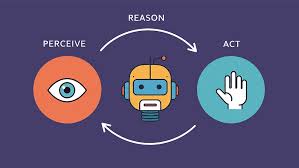
The Salesforce AI Agent Maturity Model: A Roadmap for Scaling Intelligent Automation With 84% of CIOs believing AI will be as transformative as the internet, strategic adoption is no longer optional—it’s a competitive imperative. Yet many organizations struggle with where to begin, how to scale AI agents, and how to measure success. To help enterprises navigate this challenge, Salesforce has introduced the Agentic Maturity Model, a four-stage framework that guides businesses from basic automation to advanced, multi-agent ecosystems. “While agents can be deployed quickly, scaling them effectively requires a thoughtful, phased approach,” said Shibani Ahuja, SVP of Enterprise IT Strategy at Salesforce. “This model provides a clear roadmap to help organizations progress toward higher levels of AI maturity.” How Leading Companies Are Using the Framework Wiley: Building a Future-Ready AI Foundation “Visionary leadership is essential in today’s rapidly evolving AI landscape,” said Kevin Quigley, Director of Process Improvement at Wiley. “Salesforce’s framework ensures the building blocks we create today will support our long-term AI strategy.” Alpine Intel: Accelerating Efficiency in Insurance “Every minute saved counts in our high-volume claims business,” said Kelly Bentubo, Director of Architecture at Alpine Intel. “This model brings clarity to scaling AI—helping us move from time-saving automations to advanced multi-agent applications.” The Four Levels of Agentic Maturity Level 0: Fixed Rules & Repetitive Tasks (Chatbots & Co-pilots) What it is: Basic automation with no reasoning—think FAQ bots or scripted workflows.Example: A chatbot handling password resets via predefined decision trees. How to Advance to Level 1:✔ Identify rigid processes ripe for AI reasoning.✔ Measure time/cost savings from automation.✔ Start with low-risk, employee-facing agents. Level 1: Information Retrieval Agents What it is: AI that fetches data and suggests actions (but doesn’t act alone).Example: A support agent recommending troubleshooting steps from a knowledge base. How to Advance to Level 2:✔ Shift from recommendations to autonomous actions.✔ Improve data quality and governance.✔ Track metrics like case deflection and CSAT. Level 2: Simple Orchestration (Single Domain) What it is: Agents automating multi-step tasks within one system.Example: Scheduling meetings + sending follow-ups using calendar/email data. How to Advance to Level 3:✔ Choose between specialized agents or a “mega-agent.”✔ Extend capabilities with API integrations.✔ Design scalable architecture for future growth. Level 3: Complex Orchestration (Cross-Domain) What it is: AI coordinating workflows across departments (e.g., sales + service).Example: An agent analyzing CRM, support tickets, and financial data to optimize deals. How to Advance to Level 4:✔ Build a universal communication layer for agents.✔ Implement dynamic agent discovery & governance.✔ Measure ROI via cost savings and revenue impact. Level 4: Multi-Agent Ecosystems What it is: AI teams collaborating across systems with human oversight.Example: Agents processing orders, managing inventory, and routing feedback in real time. Maximizing Value:✔ Strengthen security for ecosystem-wide AI.✔ Develop new business models powered by agent collaboration.✔ Track revenue growth, retention, and operational efficiency. Beyond Technology: Key Implementation Factors “AI success hinges on more than just tech,” notes Ahuja. Organizations must: By addressing these pillars, businesses can accelerate AI adoption—turning experimentation into scalable, measurable value. Contact Tectonic today to harness the power of AI and move along the AI Agent maturity continuum. Like Related Posts Who is Salesforce? Who is Salesforce? Here is their story in their own words. From our inception, we’ve proudly embraced the identity of Read more Salesforce Marketing Cloud Transactional Emails Salesforce Marketing Cloud Transactional Emails are immediate, automated, non-promotional messages crucial to business operations and customer satisfaction, such as order Read more Salesforce Unites Einstein Analytics with Financial CRM Salesforce has unveiled a comprehensive analytics solution tailored for wealth managers, home office professionals, and retail bankers, merging its Financial Read more AI-Driven Propensity Scores AI plays a crucial role in propensity score estimation as it can discern underlying patterns between treatments and confounding variables Read more
Read More
Informatica, Agentforce, and Salesforce

Informatica, Agentforce, and Salesforce

Informatica and Salesforce Deepen AI Partnership to Power Smarter Customer Experiences Las Vegas, [May, 2025] – At Informatica World, Informatica (NYSE: INFA) announced an expanded collaboration with Salesforce to integrate its Intelligent Data Management Cloud (IDMC) with Salesforce Agentforce, enabling enterprises to deploy AI agents fueled by trusted, real-time customer data. Bringing Trusted Data to AI-Powered Workflows The integration centers on Informatica’s Master Data Management (MDM), which distills fragmented customer data into unified, accurate “golden records.” These records will enhance Agentforce AI agents—used by sales and service teams—to deliver: “Data is foundational for agentic AI,” said Tyler Carlson, SVP of Business Development at Salesforce. “With Informatica’s MDM, Salesforce customers can ground AI interactions in high-quality data for more targeted service and engagement.” Key Capabilities (Available H2 2025 on Salesforce AppExchange) “This is about action, not just insights,” emphasized Rik Tamm-Daniels, GVP of Strategic Ecosystems at Informatica. “We’re embedding reliable enterprise data directly into Agentforce to drive measurable outcomes.” Why It Matters As AI agents handle more customer interactions, data quality becomes critical. This partnership ensures Agentforce operates on clean, governed data—reducing hallucinations and bias while improving relevance. The MDM SaaS tools for Agentforce will enter pilot testing soon, with general availability slated for late 2025. Like Related Posts Who is Salesforce? Who is Salesforce? Here is their story in their own words. From our inception, we’ve proudly embraced the identity of Read more Salesforce Marketing Cloud Transactional Emails Salesforce Marketing Cloud Transactional Emails are immediate, automated, non-promotional messages crucial to business operations and customer satisfaction, such as order Read more Salesforce Unites Einstein Analytics with Financial CRM Salesforce has unveiled a comprehensive analytics solution tailored for wealth managers, home office professionals, and retail bankers, merging its Financial Read more AI-Driven Propensity Scores AI plays a crucial role in propensity score estimation as it can discern underlying patterns between treatments and confounding variables Read more
Read More
designing ai agents the right way

Designing AI Agents the Right Way

Designing AI agents effectively involves a structured approach, starting with defining clear objectives and aligning them with business needs. It also requires careful data collection and preparation, selecting the right machine learning models, and crafting a robust architecture. Finally, building in feedback loops and prioritizing continuous monitoring and improvement are crucial for success.  Here’s a more detailed breakdown: 1. Define Objectives and Purpose: 2. Data Collection and Preparation: 3. Choose the Right Models and Tools: 4. Design the Agent Architecture: 5. Training and Refinement: 6. Testing and Validation: 7. Deployment, Monitoring, and Iteration: 8. Key Considerations: By following these principles, you can design AI agents that are not only effective but also robust, scalable, and aligned with your business objectives. Like Related Posts Who is Salesforce? Who is Salesforce? Here is their story in their own words. From our inception, we’ve proudly embraced the identity of Read more Salesforce Unites Einstein Analytics with Financial CRM Salesforce has unveiled a comprehensive analytics solution tailored for wealth managers, home office professionals, and retail bankers, merging its Financial Read more AI-Driven Propensity Scores AI plays a crucial role in propensity score estimation as it can discern underlying patterns between treatments and confounding variables Read more Tectonic’s Successful Salesforce Track Record Salesforce Technology Services Integrator – Tectonic has successfully delivered Salesforce in a variety of industries including Public Sector, Hospitality, Manufacturing, Read more

Read More
Patient Misidentification

Patient Misidentification

Patient Misidentification: A Costly Challenge for Healthcare—Can the MATCH IT Act Help? The Growing Problem of Patient Misidentification Patient misidentification poses serious risks to interoperability, patient safety, and privacy. Without widely adopted industry standards for patient matching, errors and duplicate records persist, leading to medical mistakes, denied claims, and increased costs. The Financial and Clinical Toll Research highlights the staggering financial impact of patient misidentification: Beyond financial losses, misidentification leads to: Legislative Action: The MATCH IT Act To address these issues, U.S. Representatives Mike Kelly (R-Pa.) and Bill Foster (D-Ill.) reintroduced the Patient Matching and Transparency in Certified Health IT (MATCH IT) Act in March 2025 (originally proposed in February 2024). Key Goals of the MATCH IT Act Industry Support The Patient ID Now coalition—including AHIMA, HIMSS, CHIME, and Intermountain Health—endorses the MATCH IT Act, calling it a critical step toward:✔ Reducing misidentification errors✔ Improving patient privacy✔ Strengthening interoperability The Road Ahead If passed, the MATCH IT Act could transform patient matching by:✅ Setting clear standards for health IT systems✅ Reducing costly errors and claim denials✅ Enhancing patient safety and data exchange As healthcare embraces AI and digital transformation, standardized patient identification is more crucial than ever. Will this legislation be the solution the industry needs? Key Takeaway: Patient misidentification is a billion-dollar problem—but with structured policies like the MATCH IT Act, healthcare may finally see better accuracy, safety, and cost savings. Like Related Posts Who is Salesforce? Who is Salesforce? Here is their story in their own words. From our inception, we’ve proudly embraced the identity of Read more Salesforce Unites Einstein Analytics with Financial CRM Salesforce has unveiled a comprehensive analytics solution tailored for wealth managers, home office professionals, and retail bankers, merging its Financial Read more AI-Driven Propensity Scores AI plays a crucial role in propensity score estimation as it can discern underlying patterns between treatments and confounding variables Read more Tectonic’s Successful Salesforce Track Record Salesforce Technology Services Integrator – Tectonic has successfully delivered Salesforce in a variety of industries including Public Sector, Hospitality, Manufacturing, Read more
Read More
AI evolves with tools like Agentforce and Atlas

Salesforce Doubles Down on Agentic AI to Transform Partner Ecosystem

Salesforce is making a major push into agentic artificial intelligence with its newest offering, Agentforce for Partner Community, now integrated directly into the Salesforce Partner Community platform, according to Channel Futures. Lynne Zaledonis, EVP of Customer Success and Partner Marketing at Salesforce, hailed the tool as a “game-changing innovation” that enables consulting and systems integrator partners to tap into round-the-clock AI support, streamline operations, and accelerate case resolution through real-time conversational assistance. Unlike traditional chatbots, Agentforce doesn’t just fetch technical and programmatic answers—it can also execute actions, such as extending Trial Orgs. By tackling workflow inefficiencies and breaking down data silos, Salesforce aims to equip partners with the tools needed to guide clients through every stage of AI adoption, from initial assessment to full implementation. As consulting partners roll out Agentforce, Zaledonis noted that this shift toward AI-driven operations is reshaping business models and demanding new skill sets. To support partners in this transition, Salesforce is rolling out workshops, certifications, and strategic playbooks—helping them adapt, monetize, and spearhead the move toward an AI-powered future. Like Related Posts Who is Salesforce? Who is Salesforce? Here is their story in their own words. From our inception, we’ve proudly embraced the identity of Read more Salesforce Marketing Cloud Transactional Emails Salesforce Marketing Cloud Transactional Emails are immediate, automated, non-promotional messages crucial to business operations and customer satisfaction, such as order Read more Salesforce Unites Einstein Analytics with Financial CRM Salesforce has unveiled a comprehensive analytics solution tailored for wealth managers, home office professionals, and retail bankers, merging its Financial Read more AI-Driven Propensity Scores AI plays a crucial role in propensity score estimation as it can discern underlying patterns between treatments and confounding variables Read more

Read More
Whoever cracks reliable, scalable atomic power first could gain an insurmountable edge in the AI arms race.

Nuclear Energy’s Resurgence

Nuclear Energy’s Resurgence: Can It Power the AI Revolution? The Nuclear Renaissance Takes Shape As the world grapples with soaring energy demands from AI and electrification, nuclear power is experiencing an unexpected revival. The reopening of plants and new investments suggest a shifting energy landscape—but can supply keep pace with the explosive demand for clean, reliable power? A Long-Planned Comeback Aniket Shah, Jefferies’ Global Head of Sustainability and Transition Strategy, notes that the nuclear resurgence isn’t sudden. The U.S. has been laying the groundwork for years through strategic partnerships, recognizing nuclear’s critical role in the energy transition. Key Drivers of the Nuclear Boom: The Execution Challenge Despite momentum, Shah warns of hurdles: Why AI is Fueling Nuclear’s Second Act The Power Demand Shock Durgesh Chopra, Evercore ISI Managing Director, highlights AI and electrification as the twin engines of energy demand. Data centers alone could double U.S. electricity consumption growth by 2030, per McKinsey. Why Utilities Are Betting on Nuclear: A Golden Era for Utilities? After a decade of stagnant demand, utilities now face a historic opportunity: The Road Ahead: Can Nuclear Scale Fast Enough? Opportunities ✅ SMRs & Advanced Reactors: Faster to deploy than traditional plants.✅ Tech’s Deep Pockets: Microsoft, Google, and Amazon are bankrolling innovation.✅ Policy Momentum: The U.S. recently streamlined nuclear approvals. Risks ⚠️ Labor Gaps: Training programs must expand rapidly.⚠️ Supply Chain Bottlenecks: Rare earth metals and reactor components face shortages.⚠️ Public Perception: Overcoming nuclear’s stigma remains a hurdle. The Bottom Line Nuclear energy is no longer a relic of the past—it’s becoming the keystone of AI’s future. While challenges persist, the alignment of tech investment, policy support, and energy economics suggests atomic power is poised for a lasting comeback. For investors, utilities, and tech giants alike, the message is clear: The race to scale nuclear is on. Whoever cracks the code first will power the next era of innovation. Like Related Posts Who is Salesforce? Who is Salesforce? Here is their story in their own words. From our inception, we’ve proudly embraced the identity of Read more Salesforce Unites Einstein Analytics with Financial CRM Salesforce has unveiled a comprehensive analytics solution tailored for wealth managers, home office professionals, and retail bankers, merging its Financial Read more AI-Driven Propensity Scores AI plays a crucial role in propensity score estimation as it can discern underlying patterns between treatments and confounding variables Read more Tectonic’s Successful Salesforce Track Record Salesforce Technology Services Integrator – Tectonic has successfully delivered Salesforce in a variety of industries including Public Sector, Hospitality, Manufacturing, Read more
Read More

Salesforce Tackles Enterprise AI Reliability with Enterprise General Intelligence (EGI)

As businesses increasingly adopt AI, a critical challenge has emerged: inconsistent performance in real-world applications. Salesforce calls this phenomenon “jagged intelligence”—where AI excels in controlled environments but falters under dynamic enterprise demands. To address this, Salesforce is pioneering Enterprise General Intelligence (EGI), a new framework designed to ensure AI is not just powerful but reliable, consistent, and safe for business use. Why Enterprise AI Needs a New Approach Traditional AI benchmarks often fail to reflect real-world enterprise needs. Issues like: …have made many companies hesitant to fully deploy AI at scale. Salesforce’s EGI rethinks AI alignment for enterprises, prioritizing:✔ Consistency – Reliable performance across diverse business cases✔ Specialization – Task-specific AI models over generic LLMs✔ Safety & Governance – Built-in guardrails for compliance Key Innovations Powering EGI 1. SIMPLE: Measuring AI Consistency Salesforce’s SIMPLE dataset (225 reasoning questions) evaluates how AI performs under varying conditions—helping identify and fix inconsistencies before deployment. 2. CRMArena: Real-World AI Testing This benchmarking framework simulates authentic CRM scenarios (service agents, analysts, managers) to ensure AI adapts to real business needs—not just lab conditions. 3. SFR-Embedding: Smarter Enterprise AI A new embedding model (ranked #1 on MTEB’s 56-dataset benchmark) enhances AI’s ability to understand complex business data, improving decision-making in Salesforce Data Cloud. 4. xLAM V2: AI That Takes Action Unlike text-only LLMs, Large Action Models (xLAM V2) predict and execute enterprise tasks—optimizing everything from inventory management to financial forecasting with high precision. 5. SFR-Guard & ContextualJudgeBench: AI Safety Co-Innovation: Doubling AI Accuracy with Customer Feedback Salesforce’s customer-driven development has already doubled AI accuracy in key applications. Itai Asseo, Senior Director of Incubation & Brand Strategy at Salesforce: “By working directly with enterprises, we’ve refined AI to outperform competitors in real-world use cases—boosting both performance and trust.” The Future of Enterprise AI Salesforce’s EGI framework is setting a new standard: AI that works as reliably in business as it does in theory. For telecom and tech leaders, this means:✅ Fewer AI surprises – Consistent, predictable outputs✅ Higher ROI – Specialized models for key workflows✅ Stronger compliance – Built-in governance & safety As AI evolves, Salesforce is ensuring enterprises don’t just adopt AI—they can depend on it. Next Steps: The era of reliable enterprise AI is here. Like Related Posts Who is Salesforce? Who is Salesforce? Here is their story in their own words. From our inception, we’ve proudly embraced the identity of Read more Salesforce Marketing Cloud Transactional Emails Salesforce Marketing Cloud Transactional Emails are immediate, automated, non-promotional messages crucial to business operations and customer satisfaction, such as order Read more Salesforce Unites Einstein Analytics with Financial CRM Salesforce has unveiled a comprehensive analytics solution tailored for wealth managers, home office professionals, and retail bankers, merging its Financial Read more AI-Driven Propensity Scores AI plays a crucial role in propensity score estimation as it can discern underlying patterns between treatments and confounding variables Read more

Read More
AI Project Planning by Workflows

Salesforce Flow Explained

Salesforce Flow: The No-Code Automation Powerhouse Salesforce Flow revolutionizes business process automation by enabling visual, click-based workflow design—eliminating the need for complex coding. From simple task automation to intricate multi-system integrations, Flow empowers admins and business users to streamline operations, enhance accuracy, and boost productivity—all within the Salesforce ecosystem. Why Salesforce Flow? Key Benefits ✅ No-Code Simplicity – Build complex automations with drag-and-drop ease, reducing reliance on developers.✅ End-to-End Automation – Handle data updates, approvals, user guidance, and external integrations seamlessly.✅ Error Reduction – Minimize manual entry mistakes with automated, logic-driven workflows.✅ Flexible Triggers – Run flows on demand, on schedule, or in response to real-time record changes.✅ Enhanced User Experience – Guide employees through processes with intuitive, step-by-step screens. Types of Salesforce Flows & When to Use Them Flow Type Best For Screen Flows Interactive user interfaces (e.g., onboarding wizards, guided data entry). Record-Triggered Flows Auto-updating records on creation/modification (e.g., lead scoring, SLA tracking). Schedule-Triggered Flows Recurring tasks (e.g., nightly data syncs, batch record updates). Auto-Launched Flows API-triggered automations or sub-processes within larger workflows. Platform Event Flows Real-time integrations with external systems (e.g., ERP, payment gateways). Top Use Cases for Salesforce Flow 1. Automated Data Management 2. Smarter Approval Workflows 3. Guided User Journeys 4. Seamless Integrations 5. Advanced Business Logic Flow vs. Process Builder vs. Apex: Which to Use? Tool Complexity Best For Limitations Flow Low to High End-to-end automation, UI-guided processes. Not for ultra-high-volume transactions. Process Builder Low Simple record-triggered actions. Limited logic capabilities. Apex (Code) High Custom logic, heavy computations. Requires developer expertise. Pro Tip: Salesforce recommends migrating from Process Builder to Flow, as it offers greater flexibility and future-proofing. Getting Started with Salesforce Flow The Future of Automation Is Clicks, Not Code Salesforce Flow puts enterprise-grade automation in the hands of non-developers, accelerating digital transformation. By reducing manual work, cutting errors, and ensuring process consistency, it’s a game-changer for CRM efficiency. Ready to automate? Start with a simple Record-Triggered Flow today and scale up as your needs grow! Key Takeaways:✔ No-code automation for admins & business users.✔ Five flow types cover everything from UI guides to backend integrations.✔ Replaces Process Builder as Salesforce’s recommended automation tool.✔ Critical for CRM efficiency—saves time, reduces errors, and enforces best practices. Like Related Posts Who is Salesforce? Who is Salesforce? Here is their story in their own words. From our inception, we’ve proudly embraced the identity of Read more Salesforce Marketing Cloud Transactional Emails Salesforce Marketing Cloud Transactional Emails are immediate, automated, non-promotional messages crucial to business operations and customer satisfaction, such as order Read more Salesforce Unites Einstein Analytics with Financial CRM Salesforce has unveiled a comprehensive analytics solution tailored for wealth managers, home office professionals, and retail bankers, merging its Financial Read more AI-Driven Propensity Scores AI plays a crucial role in propensity score estimation as it can discern underlying patterns between treatments and confounding variables Read more

Read More
AI Adoption Not Even Across the Board

State of AI Adoption in 2024

The State of AI Adoption in 2024: Trends, Impacts, and Industry Shifts AI Goes Mainstream: Adoption Reaches Tipping Point The AI revolution has transitioned from experimentation to enterprise-wide implementation, with adoption rates accelerating across industries. Current data reveals a watershed moment in business technology: Key Adoption Metrics Sector-by-Sector Breakdown Early Adopter Industries (60%+ adoption) Emerging Adopters (30-50% adoption) Late Adopters (<30%) Geographic Note: Colorado, Florida and Utah lead U.S. adoption while Mississippi and Maine trail significantly. The Generative AI Boom The 2023-2024 period saw explosive growth in specific technologies: Proven Business Impact Organizations report tangible benefits from AI integration: The Global Perspective While U.S. adoption lags at 33% (Exploding Topics), international markets show stronger uptake: The Road Ahead Three critical trends emerging: “We’ve passed the inflection point where AI advantage separates market leaders from laggards.”— AI Strategy Report 2024 Organizations that accelerate adoption while addressing ethical, security and workforce challenges will define the next era of competitive advantage. The question is no longer if to adopt AI, but how fast to scale impact. Like Related Posts Who is Salesforce? Who is Salesforce? Here is their story in their own words. From our inception, we’ve proudly embraced the identity of Read more Salesforce Unites Einstein Analytics with Financial CRM Salesforce has unveiled a comprehensive analytics solution tailored for wealth managers, home office professionals, and retail bankers, merging its Financial Read more AI-Driven Propensity Scores AI plays a crucial role in propensity score estimation as it can discern underlying patterns between treatments and confounding variables Read more Tectonic’s Successful Salesforce Track Record Salesforce Technology Services Integrator – Tectonic has successfully delivered Salesforce in a variety of industries including Public Sector, Hospitality, Manufacturing, Read more

Read More
agentic revolution

The Agentic AI Revolution

The Agentic AI Revolution: Reskilling and Trust as Competitive Imperatives The rise of agentic AI—autonomous systems capable of independent decision-making—isn’t just another tech trend; it’s a fundamental shift in how businesses operate. With AI agents projected to unlock $6 trillion in digital labor value, companies that fail to adapt risk being outpaced by AI-driven competitors. To thrive in this new era, business leaders must focus on two critical pillars: 1. Reskilling for the Age of AI Collaboration The Urgent Skills Gap Key Competencies for the AI Era ✅ Human-AI Collaboration – Managing AI agents, prompt engineering, and oversight✅ Strategic Thinking – Shifting from routine tasks to big-picture planning✅ Leadership & Management – Overseeing AI “teams” and decision flows A Call to Action for Businesses “With AI handling routine coding, developers can now focus on system architecture and innovation—but only if we equip them for this shift.” 2. Trust: The Foundation of AI Adoption The Risks of Unchecked AI Building a Trusted AI Framework 🛡️ Guardrails & Escalation Protocols – Define when AI must defer to humans🔐 Data Protection – Ensure compliance with zero-retention LLM policies (e.g., Einstein Trust Layer)📊 Transparency Tools – Give employees visibility into AI decision logic Salesforce’s Approach: Agentforce The Path Forward: AI + Humans in Partnership Why This Matters Now Key Takeaways for Leaders Linda SaundersCountry Manager & Senior Director of Solution Engineering, Africa | Salesforce “The future belongs to businesses that combine AI’s efficiency with human ingenuity—guided by an unwavering commitment to trust.” Ready to lead in the agentic AI era? The AI revolution isn’t coming—it’s here. The question is: Will your organization be a disruptor or disrupted? Like Related Posts Who is Salesforce? Who is Salesforce? Here is their story in their own words. From our inception, we’ve proudly embraced the identity of Read more Salesforce Marketing Cloud Transactional Emails Salesforce Marketing Cloud Transactional Emails are immediate, automated, non-promotional messages crucial to business operations and customer satisfaction, such as order Read more Salesforce Unites Einstein Analytics with Financial CRM Salesforce has unveiled a comprehensive analytics solution tailored for wealth managers, home office professionals, and retail bankers, merging its Financial Read more AI-Driven Propensity Scores AI plays a crucial role in propensity score estimation as it can discern underlying patterns between treatments and confounding variables Read more

Read More
Agentic AI is Here

The Rise of Agentic AI

Beyond Predictive Models: The Rise of Agentic AI Agentic AI represents a fundamental shift from passive language models to dynamic systems capable of perception, reasoning, and action across digital and physical environments. Unlike traditional AI that merely predicts text, agentic architectures interact with the world, learn from feedback, and coordinate multiple specialized agents to solve complex problems. This evolution is built on three core principles: Core Principles of Agentic AI 1. Causality & Adaptive Decision-Making Traditional AI systems rely on statistical patterns, often producing plausible but incorrect responses. Agentic AI models cause-and-effect relationships, enabling iterative refinement when faced with unexpected outcomes. Example Applications: 2. Multimodal World Interaction Modern agentic systems integrate text, vision, and sensor data to interact with complex environments. Real-World Implementations: 3. Multi-Agent Collaboration Next-generation frameworks deploy specialized sub-agents that work in parallel rather than relying on single monolithic models. Implementation Examples: Key Components of Agentic Systems 1. Modular Skill Architectures Modern platforms enable: Use Case Scenario:A business intelligence agent that pulls real-time market data, analyzes trends, and generates reports while maintaining data governance standards 2. Multi-Agent Orchestration Advanced frameworks provide: Practical Application:Software development environments where coding, debugging, and security validation occur simultaneously through coordinated AI agents 3. Visual Environment Interaction Cutting-edge solutions bridge the gap between AI and graphical interfaces by: Implementation Example:Intelligent process automation that navigates legacy systems and modern applications without manual scripting Advanced Implementation Patterns 1. Knowledge-Enhanced Agents Example Implementation:Customer service systems that access order history, product details, and support documentation before responding 2. Human Oversight Integration Use Case:Medical diagnostic support that flags uncertain cases for professional review 3. Persistent Context Management Application Example:Project management assistants that track progress, dependencies, and timelines over weeks or months Industry Applications Sector Agentic AI Solutions Software Development Automated testing, debugging, and deployment pipelines Healthcare Integrated diagnostic systems combining multiple data sources Education Adaptive learning systems with personalized tutoring Financial Services Real-time fraud detection and risk analysis Manufacturing Dynamic process optimization and quality control Current Challenges & Research Directions Getting Started with Agentic AI For organizations beginning their agentic AI journey: The Path Forward Agentic AI represents a fundamental evolution from conversational systems to active, adaptive problem-solvers. By combining causal reasoning, specialized collaboration, and real-world interaction, these systems are moving us closer to truly intelligent automation. The future belongs to AI systems that don’t just process information – but perceive, decide, and act in dynamic environments. Organizations that embrace this paradigm today will be positioned to lead in the AI-powered economy of tomorrow. Like Related Posts Who is Salesforce? Who is Salesforce? Here is their story in their own words. From our inception, we’ve proudly embraced the identity of Read more Salesforce Unites Einstein Analytics with Financial CRM Salesforce has unveiled a comprehensive analytics solution tailored for wealth managers, home office professionals, and retail bankers, merging its Financial Read more AI-Driven Propensity Scores AI plays a crucial role in propensity score estimation as it can discern underlying patterns between treatments and confounding variables Read more Tectonic’s Successful Salesforce Track Record Salesforce Technology Services Integrator – Tectonic has successfully delivered Salesforce in a variety of industries including Public Sector, Hospitality, Manufacturing, Read more
Read More
Salesforce Launches AI-Powered Agentforce for HR Service to Transform Employee Support

Salesforce Launches AI-Powered Agentforce for HR Service to Transform Employee Support

Salesforce Inc. (NYSE: CRM) today unveiled Agentforce for HR Service, a new AI-powered solution designed to revolutionize employee support by automating routine HR tasks and delivering personalized, conversational assistance. Built on Salesforce’s existing HR Service platform, Agentforce for HR Service integrates directly into Slack and Employee Portals, enabling workers to manage common requests—such as time-off approvals, benefits updates, and payroll inquiries—through natural language interactions. For more sensitive or complex issues, the AI seamlessly hands off conversations to human HR representatives with full context, ensuring a smooth transition. AI as a Digital HR Partner HR teams are under increasing pressure, with 57% of professionals reporting they are overcapacity, according to a 2024 Society for Human Resource Management (SHRM) study. Agentforce aims to alleviate this strain by handling high-volume, repetitive tasks while allowing HR specialists to focus on strategic initiatives and employee well-being. Key capabilities include: Proven Results at Salesforce Salesforce has already deployed Agentforce for HR internally, reporting a 96% self-service resolution rate across nearly 10 million employee inquiries. “The future of work is humans and agents collaborating,” said Nathalie Scardino, President and Chief People Officer at Salesforce. “We’re leading this shift by empowering HR teams to scale support while maintaining a human touch.” Industry Adoption Underway Early adopters like Indeed Inc. are already using Agentforce to streamline hiring and employee support. Analysts see strong potential for AI to redefine HR efficiency. “HR, like every department, is being asked to do more with less,” noted Rebecca Wettemann, Principal Analyst at Valoir. “Agentforce enables HR teams to deliver faster, more consistent support by centralizing data and automating workflows.” Availability Agentforce for HR Service is now available via the Agentforce Platform, HR Service Console, and Employee Portal, with Slack integration coming in June. For more details, visit Salesforce.com. About SalesforceSalesforce is the global leader in CRM, empowering companies to connect with customers in a whole new way. For more information, visit Salesforce News. Why This Matters Salesforce’s latest innovation underscores its commitment to AI-driven productivity, positioning HR as the next frontier for agentic AI adoption. Like Related Posts Who is Salesforce? Who is Salesforce? Here is their story in their own words. From our inception, we’ve proudly embraced the identity of Read more Salesforce Marketing Cloud Transactional Emails Salesforce Marketing Cloud Transactional Emails are immediate, automated, non-promotional messages crucial to business operations and customer satisfaction, such as order Read more Salesforce Unites Einstein Analytics with Financial CRM Salesforce has unveiled a comprehensive analytics solution tailored for wealth managers, home office professionals, and retail bankers, merging its Financial Read more AI-Driven Propensity Scores AI plays a crucial role in propensity score estimation as it can discern underlying patterns between treatments and confounding variables Read more

Read More
Analytics tools like Einstein Analytics can identify patterns and trends in patient data, helping healthcare providers optimize workflows and improve the effectiveness of care delivery.

Healthcare Payers Turn to Data Analytics for Cost Savings and Improved Outcomes

Facing persistent financial and staffing pressures, healthcare payers are increasingly adopting data analytics platforms to streamline operations, reduce costs, and enhance member outcomes. A new April 2025 report from KLAS Research offers its first evaluation of payer experiences with these solutions, highlighting key vendors and emerging trends. The Growing Role of Data Analytics in Payer Operations With healthcare organizations under constant pressure to improve efficiency and decision-making, data analytics tools provide critical visibility into claims data, utilization patterns, and financial performance. These platforms enable payers to: While KLAS’ research in this space is still evolving, the initial report assesses three leading vendors, with plans to expand coverage as more data becomes available. Key Vendor Performances 1. MedInsight – Best in KLAS 2025 (Score: 85.8) 2. MedeAnalytics (Score: 87.1) 3. Clarify Health Solutions 4. Salesforce Health Cloud Looking Ahead: Expanding the Vendor Landscape Additional players like CareJourney (acquired by Arcadia in 2024), Cedar Gate Technologies, and Cognizant are expected to be evaluated in future KLAS reports as more performance data emerges. The Bottom Line As payers seek greater efficiency and data-driven decision-making, analytics platforms are becoming indispensable. While MedInsight and MedeAnalytics lead in early adoption, the competitive landscape is still evolving—making future KLAS insights critical for payer organizations evaluating their options. Next Steps: With the right analytics partner, payers can unlock cost savings, operational efficiencies, and better member outcomes—key priorities in today’s challenging healthcare environment. Like Related Posts Who is Salesforce? Who is Salesforce? Here is their story in their own words. From our inception, we’ve proudly embraced the identity of Read more Salesforce Marketing Cloud Transactional Emails Salesforce Marketing Cloud Transactional Emails are immediate, automated, non-promotional messages crucial to business operations and customer satisfaction, such as order Read more Salesforce Unites Einstein Analytics with Financial CRM Salesforce has unveiled a comprehensive analytics solution tailored for wealth managers, home office professionals, and retail bankers, merging its Financial Read more AI-Driven Propensity Scores AI plays a crucial role in propensity score estimation as it can discern underlying patterns between treatments and confounding variables Read more

Read More
Model Context Protocol

Model Context Protocol

The AI Revolution Has Arrived: Meet MCP, the Protocol Changing Everything Imagine an AI that doesn’t just respond—it understands. It reads your emails, analyzes your databases, knows your business inside out, and acts on live data—all through a single universal standard. That future is here, and it’s called MCP (Model Context Protocol). Already adopted by OpenAI, Google, Microsoft, and more, MCP is about to redefine how we work with AI—forever. No More Copy-Paste AI Picture this: You ask your AI assistant about Q3 performance. Instead of scrambling through spreadsheets, Slack threads, and CRM reports, the AI already knows. It pulls real-time sales figures, checks customer feedback, and delivers a polished analysis—in seconds. This isn’t sci-fi. It’s happening today, thanks to MCP. The Problem With Today’s AI: Isolated Intelligence Most AI models are like geniuses locked in a library—brilliant but cut off from the real world. Every time you copy-paste data into ChatGPT or upload files to Claude, you’re working around a fundamental flaw: AI lacks context. For businesses, deploying AI means endless custom integrations: MCP: The Universal Language for AI Introduced by Anthropic in late 2024, MCP is the USB-C of AI—a single standard connecting any AI to any data source. Here’s how it works: Instead of building N×M connections (every AI × every data source), you build N + M—one integration per AI model and one per data source. MCP in Action: The Future of Work Why MCP Changes Everything The MCP Ecosystem is Exploding In less than a year, MCP has been adopted by: Beyond RAG: Real-Time Knowledge Traditional RAG (Retrieval-Augmented Generation) relies on stale vector databases. MCP changes the game: Security & Governance Built In The Next Frontier: AI Agents & Workflow Automation MCP enables AI agents that don’t just follow scripts—they adapt. The Time to Act is Now MCP isn’t just another API—it’s the foundation for true AI integration. The question isn’t if you’ll adopt it, but how fast. Welcome to the era of connected intelligence. Like Related Posts Who is Salesforce? Who is Salesforce? Here is their story in their own words. From our inception, we’ve proudly embraced the identity of Read more Salesforce Marketing Cloud Transactional Emails Salesforce Marketing Cloud Transactional Emails are immediate, automated, non-promotional messages crucial to business operations and customer satisfaction, such as order Read more Salesforce Unites Einstein Analytics with Financial CRM Salesforce has unveiled a comprehensive analytics solution tailored for wealth managers, home office professionals, and retail bankers, merging its Financial Read more AI-Driven Propensity Scores AI plays a crucial role in propensity score estimation as it can discern underlying patterns between treatments and confounding variables Read more

Read More
gettectonic.com