Einstein Analytics Archives - gettectonic.com
Salesforce prompt builder

Mastering Salesforce Prompt Builder

Mastering Salesforce Prompt Builder: The Complete Guide to AI-Powered Productivity Why Prompt Engineering Matters in the Salesforce Ecosystem As Salesforce doubles down on generative and agentic AI investments, teams across the ecosystem are racing to implement AI solutions. Yet many struggle with: Enter Prompt Builder — Salesforce’s native tool for declarative, no-code prompt engineering. This insight walks through everything from setup to advanced techniques. Understanding Prompts: The Foundation of Salesforce AI What Exactly is a Prompt? A prompt is a structured instruction that guides AI to generate relevant, consistent responses. In Salesforce, prompts can: Example Prompt Use Case: “As a sales assistant (ROLE), draft a 100-word follow-up email (TASK) for [Contact.Name] about [Opportunity.Name]. Use a professional but friendly tone and include next steps (FORMAT).” Getting Started with Prompt Builder Enablement Checklist Pro Tip: Refresh your browser after enabling to access Prompt Builder. Building Your First Prompt: A Step-by-Step Walkthrough Step 1: Configure Prompt Details Field Description Prompt Type Choose from: Sales Email, Field Generation, Record Summary, Knowledge Answers, or Flex Templates Name/API Name Unique identifiers for your prompt Related Object The Salesforce object this prompt will reference Step 2: Craft the Prompt Template Apply the Role-Task-Format framework: Advanced Techniques: Step 3: Test & Iterate Step 4: Activate & Deploy Embed prompts in: Prompt Engineering Best Practices 1. Design with Purpose 2. Implement Guardrails Risk Solution Hallucinations Add “When unsure, respond: ‘I don’t have enough context’” Tone inconsistencies Specify: “Use [brand] voice guidelines from Knowledge Article #123” Data leakage Leverage CRM data grounding and Einstein Trust Layer 3. Measure & Optimize Track key metrics via Agentforce Analytics:✅ Prompt usage frequency✅ User acceptance rates✅ Downstream KPIs (e.g., case resolution time) Scaling AI Responsibly Governance Framework DevOps Integration Beyond Prompts: The Bigger AI Picture While Prompt Builder excels at generative tasks, combine it with: Like Related Posts Who is Salesforce? Who is Salesforce? Here is their story in their own words. From our inception, we’ve proudly embraced the identity of Read more Salesforce Marketing Cloud Transactional Emails Salesforce Marketing Cloud Transactional Emails are immediate, automated, non-promotional messages crucial to business operations and customer satisfaction, such as order Read more Salesforce Unites Einstein Analytics with Financial CRM Salesforce has unveiled a comprehensive analytics solution tailored for wealth managers, home office professionals, and retail bankers, merging its Financial Read more AI-Driven Propensity Scores AI plays a crucial role in propensity score estimation as it can discern underlying patterns between treatments and confounding variables Read more

Read More
Analytics tools like Einstein Analytics can identify patterns and trends in patient data, helping healthcare providers optimize workflows and improve the effectiveness of care delivery.

Healthcare Payers Turn to Data Analytics for Cost Savings and Improved Outcomes

Facing persistent financial and staffing pressures, healthcare payers are increasingly adopting data analytics platforms to streamline operations, reduce costs, and enhance member outcomes. A new April 2025 report from KLAS Research offers its first evaluation of payer experiences with these solutions, highlighting key vendors and emerging trends. The Growing Role of Data Analytics in Payer Operations With healthcare organizations under constant pressure to improve efficiency and decision-making, data analytics tools provide critical visibility into claims data, utilization patterns, and financial performance. These platforms enable payers to: While KLAS’ research in this space is still evolving, the initial report assesses three leading vendors, with plans to expand coverage as more data becomes available. Key Vendor Performances 1. MedInsight – Best in KLAS 2025 (Score: 85.8) 2. MedeAnalytics (Score: 87.1) 3. Clarify Health Solutions 4. Salesforce Health Cloud Looking Ahead: Expanding the Vendor Landscape Additional players like CareJourney (acquired by Arcadia in 2024), Cedar Gate Technologies, and Cognizant are expected to be evaluated in future KLAS reports as more performance data emerges. The Bottom Line As payers seek greater efficiency and data-driven decision-making, analytics platforms are becoming indispensable. While MedInsight and MedeAnalytics lead in early adoption, the competitive landscape is still evolving—making future KLAS insights critical for payer organizations evaluating their options. Next Steps: With the right analytics partner, payers can unlock cost savings, operational efficiencies, and better member outcomes—key priorities in today’s challenging healthcare environment. Like Related Posts Who is Salesforce? Who is Salesforce? Here is their story in their own words. From our inception, we’ve proudly embraced the identity of Read more Salesforce Marketing Cloud Transactional Emails Salesforce Marketing Cloud Transactional Emails are immediate, automated, non-promotional messages crucial to business operations and customer satisfaction, such as order Read more Salesforce Unites Einstein Analytics with Financial CRM Salesforce has unveiled a comprehensive analytics solution tailored for wealth managers, home office professionals, and retail bankers, merging its Financial Read more AI-Driven Propensity Scores AI plays a crucial role in propensity score estimation as it can discern underlying patterns between treatments and confounding variables Read more

Read More
What is Up with Salesforce Analytics?

What is Up with Salesforce Analytics?

Tableau/CRM Analytics, Tableau Next, and Marketing Intelligence represent different facets of a unified analytics platform built on the Salesforce ecosystem. They offer various levels of integration and AI-driven capabilities for data analysis and insights, catering to diverse user needs within organizations.  Let’s break it down: Tableau/CRM Analytics (formerly Einstein Analytics): Tableau Next: Marketing Intelligence: Relationship and Integration: In essence, Tableau/CRM Analytics provides a foundational layer for CRM-specific analytics, while Tableau Next and Marketing Intelligence build upon that foundation to offer more advanced and AI-driven insights across the entire organization, according to Salesforce.  Like Related Posts Who is Salesforce? Who is Salesforce? Here is their story in their own words. From our inception, we’ve proudly embraced the identity of Read more Salesforce Marketing Cloud Transactional Emails Salesforce Marketing Cloud Transactional Emails are immediate, automated, non-promotional messages crucial to business operations and customer satisfaction, such as order Read more Salesforce Unites Einstein Analytics with Financial CRM Salesforce has unveiled a comprehensive analytics solution tailored for wealth managers, home office professionals, and retail bankers, merging its Financial Read more AI-Driven Propensity Scores AI plays a crucial role in propensity score estimation as it can discern underlying patterns between treatments and confounding variables Read more

Read More
advanced analytics

Maximizing Sales Performance with Salesforce Sales Analytics

Salesforce, a leading CRM platform, provides powerful sales analytics tools that empower businesses to make data-driven decisions, boost productivity, and drive revenue growth. This guide highlights the importance of Salesforce Sales Analytics, its key features, and how to leverage them to optimize your sales team’s performance. Key Features of Salesforce Sales Analytics 1. Reports and Dashboards Salesforce’s reporting capabilities enable users to create custom dashboards and reports for real-time insights into lead conversion, sales performance, and other critical metrics. These visual tools help businesses track trends and make informed decisions effortlessly. 2. Einstein Analytics Powered by AI and machine learning, Einstein Analytics offers: 3. Sales Cloud Analytics Sales Cloud Analytics helps businesses: 4. Forecasting Tools Salesforce’s AI-powered forecasting tools provide accurate revenue projections by analyzing: How Different Teams Benefit from Sales Analytics ✅ Executives – Gain a high-level view of sales, service, and pipeline performance with real-time dashboards highlighting key business metrics. ✅ Sales Managers – Monitor team performance, track quota attainment, analyze pipeline changes, and optimize sales cycles to accelerate deal closures. ✅ Sales Representatives – Get insights into personal sales performance, pipeline activities, and quota attainment, allowing for quicker decision-making and identification of new business opportunities. ✅ Operations Teams – Analyze sales performance by customer, region, and source to optimize negotiation strategies and business development efforts. Setting Up the Salesforce Sales Analytics App 1. Launch Analytics Studio Navigate to Analytics Studio via the Sales Home page and click on the Apps button. 2. Search for Sales Analytics If the Sales Analytics App does not appear by default, use the search bar to locate it. 3. Access the Default Dashboard The default dashboard provides key metrics, including: 4. Customize Widgets Modify data representation by selecting the Edit button and customizing widgets to align with your business needs. 5. Adjust Goal Widgets Update goal widgets to match your sales targets and business objectives. 6. Explore Additional Dashboards Salesforce offers role-specific dashboards for Sales Managers, Executives, and other stakeholders to gain tailored insights. 7. Utilize the Lens Feature for Visualizations Leverage Lens to create object-specific visualizations, such as opportunities by time, stage, owner, and more. Conclusion Integrating Salesforce Sales Analytics with Tableau CRM creates a comprehensive Business Intelligence (BI) solution. However, businesses looking for a simpler or more cost-effective alternative may consider exporting Salesforce data into third-party analytics platforms for additional flexibility and ease of use. By leveraging Salesforce Sales Analytics, businesses can enhance forecasting, improve decision-making, and drive sales performance with real-time insights. Like1 Related Posts Who is Salesforce? Who is Salesforce? Here is their story in their own words. From our inception, we’ve proudly embraced the identity of Read more Salesforce Marketing Cloud Transactional Emails Salesforce Marketing Cloud Transactional Emails are immediate, automated, non-promotional messages crucial to business operations and customer satisfaction, such as order Read more Salesforce Unites Einstein Analytics with Financial CRM Salesforce has unveiled a comprehensive analytics solution tailored for wealth managers, home office professionals, and retail bankers, merging its Financial Read more AI-Driven Propensity Scores AI plays a crucial role in propensity score estimation as it can discern underlying patterns between treatments and confounding variables Read more

Read More
AI-Driven Salesforce Explained

AI-Driven Salesforce Explained

AI-driven Salesforce refers to the integration of Artificial Intelligence (AI) into Salesforce’s Customer Relationship Management (CRM) platform to enhance its capabilities, automate processes, and deliver smarter, data-driven insights. Salesforce has embedded AI into its ecosystem through Salesforce Einstein, its proprietary AI technology. Here’s a breakdown of how AI drives Salesforce: 1. What is AI-Driven Salesforce? AI-driven Salesforce leverages machine learning, natural language processing (NLP), predictive analytics, and automation to help businesses make smarter decisions, improve customer experiences, and streamline operations. It transforms raw data into actionable insights and automates repetitive tasks, enabling teams to focus on strategic activities. 2. Key Features of AI-Driven Salesforce a) Salesforce Einstein Einstein is the AI layer built into Salesforce that powers intelligent features across the platform. Key capabilities include: b) AI-Powered Insights c) Personalization d) Automation e) Predictive Intelligence 3. Benefits of AI-Driven Salesforce a) Enhanced Customer Experience b) Increased Efficiency c) Data-Driven Decision Making d) Improved Sales Performance e) Scalability 4. Use Cases of AI-Driven Salesforce a) Sales b) Marketing c) Customer Service d) Commerce 5. The Future of AI in Salesforce In summary, AI-driven Salesforce empowers businesses to work smarter, not harder, by leveraging data and automation to deliver better customer experiences and drive growth. It’s a game-changer for sales, marketing, service, and beyond! Content updated January 2025. Like1 Related Posts Who is Salesforce? Who is Salesforce? Here is their story in their own words. From our inception, we’ve proudly embraced the identity of Read more Salesforce Marketing Cloud Transactional Emails Salesforce Marketing Cloud Transactional Emails are immediate, automated, non-promotional messages crucial to business operations and customer satisfaction, such as order Read more Salesforce Unites Einstein Analytics with Financial CRM Salesforce has unveiled a comprehensive analytics solution tailored for wealth managers, home office professionals, and retail bankers, merging its Financial Read more AI-Driven Propensity Scores AI plays a crucial role in propensity score estimation as it can discern underlying patterns between treatments and confounding variables Read more

Read More
Salesforce Lightning

Salesforce Lightning vs. Classic

Salesforce Lightning vs. Classic: The 2025 Decision Guide The Critical Choice for Modern Businesses As Salesforce phases out Classic (no updates since 2023), Lightning emerges as the only future-proof option with AI, mobile optimization, and superior analytics. Here’s what you need to know to make the right decision. Key Differences at a Glance Feature Lightning (2015+) Classic (Legacy) Interface Modern, component-based, drag-and-drop Text-heavy, tab-based Performance 50% faster load times, single-page app Slows with large datasets AI Integration Einstein AI for predictions & automation None Mobile Support Fully responsive design Limited functionality Customization Lightning App Builder, LWC components Rigid, requires coding (Visualforce) Security LockerService for component isolation Basic security protocols Analytics Interactive dashboards, real-time filters Static reports Why Lightning Dominates in 2025 1. Productivity Boost 2. AI-Powered Insights 3. Future-Proof Architecture 4. Cost Efficiency When Classic Might Still Work Consider Classic only if: Migration Made Simple Salesforce provides: The Verdict ✅ Choose Lightning if: You want AI, mobile access, and a scalable platform.⚠ Avoid Classic: It’s outdated, unsupported, and hampers growth. Next Steps: Pro Tip: Use Lightning Adoption Dashboards to track migration progress. Need help transitioning?  Contact Tectonic. Like1 Related Posts Who is Salesforce? Who is Salesforce? Here is their story in their own words. From our inception, we’ve proudly embraced the identity of Read more Salesforce Marketing Cloud Transactional Emails Salesforce Marketing Cloud Transactional Emails are immediate, automated, non-promotional messages crucial to business operations and customer satisfaction, such as order Read more Salesforce Unites Einstein Analytics with Financial CRM Salesforce has unveiled a comprehensive analytics solution tailored for wealth managers, home office professionals, and retail bankers, merging its Financial Read more AI-Driven Propensity Scores AI plays a crucial role in propensity score estimation as it can discern underlying patterns between treatments and confounding variables Read more

Read More
Salesforce Sales Cloud Einstein

Salesforce Sales Cloud Einstein

Transforming Sales with Salesforce Sales Cloud Einstein In today’s data-driven business world, artificial intelligence (AI) is revolutionizing sales and customer relationship strategies. As the leading customer relationship management (CRM) platform, Salesforce introduces Sales Cloud Einstein, an AI-powered solution embedded within its Sales Cloud platform. This tool empowers businesses to streamline workflows, predict sales outcomes, and optimize customer engagement. This comprehensive insight explores the features, benefits, and costs of Sales Cloud Einstein, helping you determine how it can elevate your company’s sales performance. Key Features of Salesforce Sales Cloud Einstein Sales Cloud Einstein is packed with powerful AI-driven features, enabling sales teams to work smarter and close deals faster. Here are the key features: 1. Einstein Lead Scoring Automatically scores leads based on their likelihood to convert, using historical CRM data and patterns detected by AI. Key Metrics Impact Engagement history Prioritizes leads with recent activity Lead source Scores leads based on successful origins Demographics Highlights high-performing attributes like industry 2. Einstein Opportunity Scoring Assigns scores to opportunities in the pipeline, predicting their likelihood to close. Factor Impact on Scoring Stage progression Higher scores for quickly advancing deals Deal size Larger deals with strong progression rank higher Customer engagement Consistent interactions improve scores 3. Einstein Forecasting Delivers accurate sales forecasts by analyzing historical data, pipeline trends, and anomalies. Metric Value Added Pipeline health Predicts future revenue Win rate analysis Estimates likelihood of success Historical trends Enhances accuracy over time 4. Einstein Activity Capture Automatically logs customer interactions—emails, meetings, and calls—into Salesforce, reducing manual data entry. 5. Einstein Insights Provides actionable recommendations for the next best actions to close deals, using engagement history and deal data. 6. Einstein Email Insights Highlights key action items from emails using natural language processing (NLP). 7. Einstein Automated Contacts Detects and adds new contacts to Salesforce from emails and interactions, keeping records up to date. Benefits of Salesforce Sales Cloud Einstein Sales Cloud Einstein delivers a wide range of benefits: Costs of Salesforce Sales Cloud Einstein Sales Cloud Einstein is available as an add-on for Sales Cloud Enterprise or included in the Unlimited edition. Edition Cost (per user/month) Einstein Features Sales Cloud Enterprise $150 – $175 Lead Scoring, Opportunity Scoring, Activity Capture Sales Cloud Unlimited $300+ Full Einstein capabilities Add-On Pricing for Enterprise Edition: Feature Estimated Cost (per user/month) Einstein Forecasting $50 – $100 Einstein Activity Capture Available as an add-on Custom solutions (e.g., Einstein Discovery) may involve additional costs depending on the project scope and licensing requirements. Is Sales Cloud Einstein Right for Your Business? Sales Cloud Einstein is ideal if you: Final Thoughts Salesforce Sales Cloud Einstein is a game-changing tool that leverages AI to transform sales processes. With its powerful features and benefits, Einstein empowers businesses to boost productivity, enhance customer engagement, and drive revenue growth. Ready to integrate Einstein into your operations? Contact us for a personalized consultation and see how AI can elevate your sales performance. Like Related Posts Who is Salesforce? Who is Salesforce? Here is their story in their own words. From our inception, we’ve proudly embraced the identity of Read more Salesforce Marketing Cloud Transactional Emails Salesforce Marketing Cloud Transactional Emails are immediate, automated, non-promotional messages crucial to business operations and customer satisfaction, such as order Read more Salesforce Unites Einstein Analytics with Financial CRM Salesforce has unveiled a comprehensive analytics solution tailored for wealth managers, home office professionals, and retail bankers, merging its Financial Read more AI-Driven Propensity Scores AI plays a crucial role in propensity score estimation as it can discern underlying patterns between treatments and confounding variables Read more

Read More
Life of a Salesforce Admin in the AI Era

Life of a Salesforce Admin in the AI Era

The life of Salesforce admins is rapidly evolving as artificial intelligence (AI) becomes integral to business operations. Let’s examine the Life of a Salesforce Admin in the AI Era. By 2025, the Salesforce admin’s role will expand beyond managing CRM systems to include leveraging AI tools to enhance efficiency, boost productivity, and maintain security. While this future offers exciting opportunities, it also comes with new responsibilities that require admins to adapt and learn. So, what will Salesforce admins need to succeed in this AI-driven landscape? The Salesforce Admin’s Role in 2025 In 2025, Salesforce admins will be at the forefront of digital transformation, helping organizations harness the full potential of the Salesforce ecosystem and AI-powered tools. These AI tools will automate processes, predict trends, and improve overall efficiency. Many professionals are already enrolling in Salesforce Administrator courses focused on AI and automation, equipping them with the essential skills to thrive in this new era. Key Responsibilities in Life of a Salesforce Admin in the AI Era 1. AI Integration and Optimization Admins will be responsible for integrating AI tools like Salesforce Einstein AI into workflows, ensuring they’re properly configured and tailored to the organization’s needs. Core tasks include: 2. Automating Processes with AI AI will revolutionize automation, making complex workflows more efficient. Admins will need to: 3. Data Management and Predictive Analytics Admins will leverage AI to manage data and generate predictive insights. Key responsibilities include: 4. Enhancing Security and Compliance AI-powered security tools will help admins proactively protect systems. Responsibilities include: 5. Supporting AI-Driven Customer Experiences Admins will deploy AI tools that enhance customer interactions. Their responsibilities include: 6. Continuous Learning and Upskilling As AI evolves, so too must Salesforce admins. Key learning areas include: 7. Collaboration with Cross-Functional Teams Admins will work closely with IT, marketing, and sales teams to deploy AI solutions organization-wide. Their collaborative efforts will include: Skills Required for Future Salesforce Admins 1. AI and Machine Learning Proficiency Admins will need to understand how AI models like Einstein AI function and how to deploy them. While not requiring full data science expertise, a solid grasp of AI concepts—such as predictive analytics and machine learning—will be essential. 2. Advanced Data Management and Analysis Managing large datasets and ensuring data accuracy will be critical as admins work with AI tools. Proficiency in data modeling, SQL, SOQL, and ETL processes will be vital for handling AI-powered data management. 3. Automation and Process Optimization AI-enhanced automation will become a key responsibility. Admins must master tools like Salesforce Flow and Einstein Automate to build intelligent workflows and ensure smooth process automation. 4. Security and Compliance Expertise With AI-driven security protocols, admins will need to stay updated on data privacy regulations and deploy tools that ensure compliance and prevent data breaches. 5. Collaboration and Leadership Admins will lead the implementation of AI tools across departments, requiring strong collaboration and leadership skills to align AI-driven solutions with business objectives. Advanced Certifications for AI-Era Admins To stay competitive, Salesforce admins will need to pursue advanced certifications. Key certifications include: Tectonic’s Thoughts The Salesforce admin role is transforming as AI becomes an essential part of the platform. By mastering AI tools, optimizing processes, ensuring security, and continuously upskilling, Salesforce admins can become pivotal players in driving digital transformation. The future is bright for those who embrace the AI-powered Salesforce landscape and position themselves at the forefront of innovation. Like Related Posts Who is Salesforce? Who is Salesforce? Here is their story in their own words. From our inception, we’ve proudly embraced the identity of Read more Salesforce Marketing Cloud Transactional Emails Salesforce Marketing Cloud Transactional Emails are immediate, automated, non-promotional messages crucial to business operations and customer satisfaction, such as order Read more Salesforce Unites Einstein Analytics with Financial CRM Salesforce has unveiled a comprehensive analytics solution tailored for wealth managers, home office professionals, and retail bankers, merging its Financial Read more AI-Driven Propensity Scores AI plays a crucial role in propensity score estimation as it can discern underlying patterns between treatments and confounding variables Read more

Read More
Salesforce Certified AI Associate

Salesforce Certified AI Associate

The Salesforce Certified AI Associate certification is a professional credential that demonstrates your knowledge of artificial intelligence (AI) and its application within Salesforce platforms. This certification is perfect for individuals aiming to enhance their ability to use AI to drive business outcomes. Key topics covered in the certification include: Trailblazer Trailhead for Salesforce Certified AI Associate Like Related Posts Who is Salesforce? Who is Salesforce? Here is their story in their own words. From our inception, we’ve proudly embraced the identity of Read more Salesforce Marketing Cloud Transactional Emails Salesforce Marketing Cloud Transactional Emails are immediate, automated, non-promotional messages crucial to business operations and customer satisfaction, such as order Read more Salesforce Unites Einstein Analytics with Financial CRM Salesforce has unveiled a comprehensive analytics solution tailored for wealth managers, home office professionals, and retail bankers, merging its Financial Read more AI-Driven Propensity Scores AI plays a crucial role in propensity score estimation as it can discern underlying patterns between treatments and confounding variables Read more

Read More
Predictive Analytics

Predictive Analytics

Industry forecasts predict an annual growth rate of 6% to 7%, fueled by innovations in cloud computing, artificial intelligence (AI), and data engineering. In 2023, the global data analytics market was valued at approximately $41 billion and is expected to surge to $118.5 billion by 2029, with a compound annual growth rate (CAGR) of 27.1%. This significant expansion reflects the growing demand for advanced analytics tools that provide actionable insights. AI has notably enhanced the accuracy of predictive models, enabling marketers to anticipate customer behaviors and preferences with impressive precision. “We’re on the verge of a new era in predictive analytics, with tools like Salesforce Einstein Data Analytics revolutionizing how we harness data-driven insights to transform marketing strategies,” says Koushik Kumar Ganeeb, a Principal Member of Technical Staff at Salesforce Data Cloud and a distinguished Data and AI Architect. Ganeeb’s leadership spans initiatives like AI-powered Salesforce Einstein Data Analytics, Marketing Cloud Connector for Data Cloud, and Intelligence Reporting (Datorama). His expertise includes architecting vast data extraction pipelines that process trillions of transactions daily. These pipelines play a crucial role in the growth strategies of Fortune 500 companies, helping them scale their data operations efficiently by leveraging AI. Ganeeb’s visionary work has propelled Salesforce Einstein Data Analytics into the forefront of business intelligence. Under his guidance, the platform’s advanced capabilities—such as predictive modeling, real-time data analysis, and natural language processing—are now pivotal in transforming how businesses forecast trends, personalize marketing efforts, and make data-driven decisions with unprecedented precision. AI and Machine Learning: The Next Frontier Beginning in 2018, Salesforce Marketing Cloud, a leading engagement platform used by top enterprises, faced challenges in extracting actionable insights and enhancing AI capabilities from rapidly growing data across diverse systems. Ganeeb was tasked with overcoming these hurdles, leading to the development of the Salesforce Einstein Provisioning Process. This process involved the creation of extensive data import jobs and the establishment of standardized patterns based on consumer adoption learning. These automated jobs handle trillions of transactions daily, delivering critical engagement and profile data in real-time to meet the scalability needs of large enterprises. The data flows seamlessly into AI models that generate predictions on a massive scale, such as Engagement Scores and insights into messaging and language usage across the platform. “Integrating AI and machine learning into data analytics through Salesforce Einstein is not just a technological enhancement—it’s a revolutionary shift in how we approach data,” explains Ganeeb. “With our advanced predictive models and real-time data processing, we can analyze vast amounts of data instantly, delivering insights that were previously unimaginable.” This innovative approach empowers organizations to make more informed decisions, driving unprecedented growth and operational efficiency. Real-World Success Stories Under Ganeeb’s technical leadership, Salesforce Einstein Data Analytics has delivered remarkable results across industries by leveraging AI and machine learning to provide actionable insights and enhance business performance. In the past year, leading companies like T-Mobile, Fitbit, and Dell Technologies have reported significant improvements after integrating Einstein. Ganeeb’s proficiency in designing and scaling data engineering solutions has been critical in helping these enterprises optimize performance. “Scalability with Salesforce Einstein Data Analytics goes beyond managing data volumes—it ensures that every data point is converted into actionable insights,” says Ganeeb. His work processing petabytes of data daily underscores his commitment to precision and efficiency in data engineering. Navigating Data Ethics and Quality Despite the rapid growth of predictive analytics, Ganeeb emphasizes the importance of data ethics and quality. “The accuracy of predictive models depends on the integrity of the data,” he notes. Salesforce Einstein Data Analytics addresses this by curating datasets to ensure they are representative and free from bias, maintaining trust while delivering reliable insights. By implementing rigorous data quality checks and ethical considerations, Ganeeb ensures that Einstein Analytics not only delivers actionable insights but also fosters transparency and trust. This balanced approach is key to the responsible use of predictive analytics across various industries. Future Trends in Predictive Analytics The future of predictive analytics looks bright, with AI and machine learning poised to further refine the accuracy and utility of predictive models. “Success lies in embracing technological advancements while maintaining a human touch,” Ganeeb notes. “By combining AI-driven insights with human intuition, businesses can navigate market complexities and uncover new opportunities.” Ganeeb’s contributions to Salesforce Einstein Data Analytics exemplify this balanced approach, integrating cutting-edge technology with human insight to empower businesses to make strategic decisions. His work positions organizations to thrive in a data-driven world, helping them stay agile and competitive in an evolving market. Balancing Benefits and Challenges – Predictive Analytics While predictive analytics offers vast potential, Ganeeb recognizes the challenges. Ensuring data quality, addressing ethical concerns, and maintaining transparency are crucial for its responsible use. “Although challenges remain, the future of AI-based predictive analytics is promising,” Ganeeb asserts. His work with Salesforce Einstein Data Analytics continues to push the boundaries of marketing analytics, enabling businesses to harness the power of AI for transformative growth. Like1 Related Posts Who is Salesforce? Who is Salesforce? Here is their story in their own words. From our inception, we’ve proudly embraced the identity of Read more Salesforce Marketing Cloud Transactional Emails Salesforce Marketing Cloud Transactional Emails are immediate, automated, non-promotional messages crucial to business operations and customer satisfaction, such as order Read more Salesforce Unites Einstein Analytics with Financial CRM Salesforce has unveiled a comprehensive analytics solution tailored for wealth managers, home office professionals, and retail bankers, merging its Financial Read more AI-Driven Propensity Scores AI plays a crucial role in propensity score estimation as it can discern underlying patterns between treatments and confounding variables Read more

Read More
What is Salesforce Health Cloud

Explore Salesforce Health Cloud

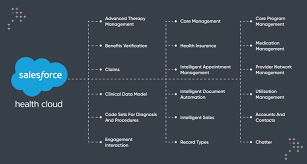
Empower Your Healthcare Team with Salesforce Health Cloud Equip your healthcare team with comprehensive 360-degree views that help connect and engage every patient, member, employee, and partner. Explore Salesforce Health Cloud Explore Health Cloud Understanding the capabilities of this platform is the first step to transforming your organization’s patient management. Let’s explore what Health Cloud offers to various types of healthcare organizations. Introducing Salesforce Health Cloud: A CRM Solution for Patient Management Over 600 companies, including industry leaders like Lilly, Pacific Clinics, United Healthcare, Progyny, Stanley Healthcare, and Humana, trust Salesforce Health Cloud for their patient management needs. As the healthcare industry rapidly evolves, effective patient information management is essential. This insight looks into Salesforce Health Cloud’s capabilities, features, integration options, and benefits, including its security architecture. What is Health Cloud? Salesforce Health Cloud is a cloud-based technology designed specifically for the healthcare industry. It centralizes patient information, giving healthcare professionals a complete view of patient records, enabling more effective treatments and better patient care. Key Capabilities of Salesforce Health Cloud Salesforce Health Cloud is a robust platform offering key capabilities such as: Salesforce in the Healthcare Industry Salesforce is increasingly popular among healthcare organizations for several reasons: Salesforce Health Platform Features Salesforce Health Cloud offers three main sets of features: Salesforce Health Cloud Architecture The architecture of Salesforce Health Cloud includes: Salesforce Health Cloud Security Salesforce Health Cloud is designed to securely manage healthcare data, featuring: Revolutionizing Healthcare Delivery with Salesforce Health Cloud Salesforce Health Cloud is designed for healthcare organizations to automate processes and provide personalized patient care. Since its launch in 2016, Health Cloud has evolved to address the complexities of the healthcare industry, including the introduction of Customer 360 for Health, an AI-driven healthcare solution. Why Choose Salesforce Health Cloud? Salesforce Health Cloud connects healthcare teams to ensure that patients receive the right care, supported by multi-layered security to protect sensitive patient data. It integrates clinical and non-clinical patient data, streamlining workflows and enhancing patient satisfaction. Top Features of Salesforce Health Cloud Key features include Patient 360, Care Plans, Care Coordination, Health Timeline, and Einstein Analytics for Healthcare, among others. Salesforce has also introduced AI-powered innovations under the Patient 360 for Health initiative, enhancing patient care and operational efficiency. Integration with MuleSoft Salesforce Health Cloud’s integration with MuleSoft allows organizations to connect with existing healthcare systems, ensuring accurate and up-to-date patient information, unlocking the full potential of their data, and improving decision-making. Conclusion Salesforce Health Cloud is more than just a platform—it’s a comprehensive solution for managing doctor-patient interactions, recordkeeping, and delivering personalized care. By leveraging Health Cloud, healthcare organizations can transform patient experiences, streamline processes, and ensure data security and compliance, positioning themselves for a brighter future in healthcare. Like Related Posts Who is Salesforce? Who is Salesforce? Here is their story in their own words. From our inception, we’ve proudly embraced the identity of Read more Salesforce Marketing Cloud Transactional Emails Salesforce Marketing Cloud Transactional Emails are immediate, automated, non-promotional messages crucial to business operations and customer satisfaction, such as order Read more Salesforce Unites Einstein Analytics with Financial CRM Salesforce has unveiled a comprehensive analytics solution tailored for wealth managers, home office professionals, and retail bankers, merging its Financial Read more AI-Driven Propensity Scores AI plays a crucial role in propensity score estimation as it can discern underlying patterns between treatments and confounding variables Read more

Read More
Trust Einstein Copilot for Tableau

Trust Einstein Copilot for Tableau

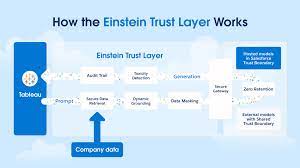
Are you prepared to utilize the capabilities of Einstein Copilot to expand your organization’s analytical advantages? This robust tool facilitates data exploration, insights generation, and visualization development at an unprecedented pace. However, before immersing yourself in its capabilities, it’s crucial to grasp how Einstein Copilot upholds Tableau and Salesforce’s core value: Trust. Let’s discover how the Einstein Trust Layer safeguards your data, ensures result accuracy, and facilitates auditing, addressing common questions and concerns raised by our customers.Trust Einstein Copilot for Tableau. What is Einstein Copilot for Tableau? Using generative AI and statistical analysis, Einstein Copilot for Tableau is able to understand the context of your data to create and suggest relevant business questions to help kickstart your analysis. A smart, conversational assistant for Tableau users, Einstein Copilot for Tableau automates data curation—the organization and integration of data collected from various sources—by generating calculations and metadata descriptions. Einstein Copilot for Tableau can fill data gaps and enhance analysis by creating synthetic datasets where real data is limited. Einstein Copilot helps you anticipate outcomes with predictive analytics that simulate diverse scenarios and uncover hidden correlations. Additionally, generative models can increase data privacy by producing non-traceable data for analysis.  Fulfilling the promise of generative AI, Einstein Copilot for Tableau presents an efficient, insightful, and ethical approach to data analytics. Think of it as an intelligent assistant integrated into the Tableau suite of products to make everyone successful in their analysis workflow—whether they’re an experienced data analyst or a data explorer. As your intelligent analytics AI assistant, Einstein Copilot for Tableau guides you through the process of creating data visualizations in Tableau by assisting you with recommended questions, conversational data exploration, guided calculation creation, and more. Understanding the Einstein Trust Layer The Einstein Trust Layer constitutes a secure AI architecture embedded within the Salesforce platform. Comprising agreements, security technology, and data privacy controls, it ensures the safety of your data while exploring generative AI solutions. Built upon the Einstein Trust Layer, Einstein Copilot for Tableau and other Tableau AI features inherit its security, governance, and Trust capabilities. The Einstein Trust Layer is a secure AI architecture, built into the Salesforce platform. It is a set of agreements, security technology, and data and privacy controls used to keep your company safe while you explore generative AI solutions. Tableau has been on the journey to help people see and understand their data for over two decades. Thanks to data analysts, this mission has been a success and will continue to be a success. Data analysts are the backbone of organizations that champion data culture, capture business requirements, prep data, and create data content for end users. Data Access and Privacy Who Accesses Your Data? A primary concern among our customers revolves around data access. Rest assured, the Einstein Trust Layer enforces strict policies to safeguard your organization’s data. Third-party LLM providers, including Open AI and Azure Open AI, adhere to a zero data retention policy. This means that data sent to LLMs isn’t stored; once processed, both the prompt and response are promptly forgotten. Additionally, each Einstein Copilot for Tableau customer receives their own Data Cloud instance, securely storing prompts and responses for auditing purposes. Data Residency and Access Control Einstein Copilot for Tableau respects permissions, row-level security, and data policies within Tableau Cloud, ensuring that only authorized personnel within your organization access specific data. Whether using Einstein Copilot or not, data access is restricted based on organizational roles and permissions. Data Handling and Processing Data Sent Outside of Tableau Cloud Site Einstein Copilot for Tableau operates within the confines of your Tableau site, scanning connected data sources to create a summary context. This summarized data is sent to third-party LLM providers for vectorization, enabling accurate interpretation of user queries. Importantly, the zero data retention policy ensures that summarized data is forgotten post-vectorization. Personally Identifiable Information (PII) Data To enhance data privacy, Einstein Copilot for Tableau employs data masking for PII data. This technique replaces sensitive information with placeholder text, ensuring privacy without sacrificing context. While our detection models strive for accuracy, continuous evaluation and refinement are paramount to maintain trust. Result Trustworthiness Ensuring Safe and Accurate Results Einstein Copilot for Tableau employs Toxicity Confidence Scoring to identify harmful inputs and responses. By combining rule-based filters and AI models, potentially harmful content is filtered and flagged for review. Furthermore, accuracy benchmarks ensure that generated results align closely with human-authored ones, bolstering trust in the platform. Future Trust Enhancements Trust remains an ongoing focus for our teams. Initiatives such as a BYO LLM solution and improved disambiguation capabilities are underway to further enhance trustworthiness. Continuous feedback, testing, and iteration drive our efforts to maintain your trust in Einstein Copilot for Tableau and the Einstein Trust Layer. Data analysis and data-driven decision-making have been part of the vocabulary in organizations over the years. And, while data analysis is one of the most in-demand tech skills sought by employers today, not everyone in an organization has “analyst” in their job title—myself included. Yet, so many of us use data daily to make informed decisions. The rise of generative AI presents a significant opportunity for us to bring transformative benefits to analytics. Businesses are eager to embrace generative AI because it can help save time, provide faster insights, and empower analysts to be even more productive with an AI assistant—freeing analysts to focus on delivering high-quality, data-driven insights. Is Tableau replacing Einstein analytics? Einstein Analytics has a new name. Say hello to Tableau CRM. Everything about how it works stays the same, just with that snazzy new name. When Tableau joined the Salesforce family, we brought together analytics capabilities of incredible depth and power. What is the difference between Einstein analytics and Tableau? If you’re only planning on analyzing Salesforce data, Einstein Analytics would probably make the most sense for you. However, if you need to analyze information that is coming from all over the place, Tableau will give your users more options. Tableau GPT infuses automation in every part of analytics – from preparation to communicating

Read More
gettectonic.com