Einstein Copilot Archives - gettectonic.com - Page 3
Copilots in the Workplace

Copilots in the Workplace

The Rise of AI-Powered Copilots in the Workplace: The New Age of Office Helpers As more businesses embrace AI tools, the tech world is buzzing with a new kind of office assistant: the AI-powered copilot. These digital sidekicks are here to revolutionize how we interact with information—think of them as the high-tech, caffeine-free version of your office buddy who always knows where the stapler is. Copilots in the Workplace are here. AI-powered copilots use large language models (LLMs) to help users wade through vast amounts of data, often with the grace of a caffeinated librarian. By facilitating conversations instead of requiring precise queries, these tools let you ask for help without needing to channel your inner tech wizard. Hugo Sarrazin, Chief Product and Technology Officer at UKG, points out that many of these AI copilots are essentially “search functions dressed up in a snazzy new outfit.” UKG’s own digital assistant, UKG Bryte, made its debut last November—just in time to help you find out why your vacation request hasn’t been approved yet. These AI assistants offer an enhanced chatbot experience by understanding a wide range of queries through generative AI. Imagine asking your chatbot, “Hey, what’s the deadline for open enrollment?” and getting a response that doesn’t involve translating your question into a techie dialect. “Generative AI isn’t stuck on keywords and rigid queries. It’s like a magic eight ball with a PhD,” Sarrazin explains. Traditional systems often force users through pre-set menus and workflows—kind of like a bureaucratic maze—but copilots let you skip the detours and get straight to the point. With AI copilots, you can ask in plain language and receive useful answers without needing to consult a human. Picture this: an HR chatbot that knows exactly what the per diem is for your conference, or which days you’re free for the next company holiday—like having a personal assistant who never needs a coffee break. Salesforce employees, for instance, are getting a taste of this futuristic help with their Einstein copilot. Since the introduction of Einstein, Salesforce has seen an uptick in productivity and a drop in mundane tasks. Nathalie Scardino, Salesforce’s Chief People Officer, says the company has been working to seamlessly integrate AI tools into daily workflows—because nothing says “we care” like a virtual assistant who understands your workload better than you do. After Salesforce acquired Slack in 2020, the Einstein-powered Slack app launched in February. This tool helps with scheduling, document summarization, and general inquiries, effectively turning your to-do list into a “done” list. Research showed that desk workers spend 41% of their time on tasks that aren’t exactly rocket science, and Einstein is here to tackle those chores. Scardino and Salesforce’s CIO, Juan Perez, have been busy ensuring that AI tools fit perfectly into the company’s workflow. Einstein is also making waves in HR by integrating with Basecamp, Salesforce’s hub for employee info. This integration has answered over 88,000 queries and cut resolution times from two days to just 30 minutes—making it the office hero you didn’t know you needed. “The big win here is bringing all those disparate systems together and making information accessible without needing a PhD,” Scardino quips. “No more hopping between six systems just to find out about your healthcare benefits.” In this brave new world of AI-assisted work, copilots like Einstein are proving that getting the right information quickly is no longer a sci-fi dream. They’re here to make our office lives smoother, smarter, and a little less dependent on those old-fashioned human helpers. Like1 Related Posts Who is Salesforce? Who is Salesforce? Here is their story in their own words. From our inception, we’ve proudly embraced the identity of Read more Salesforce Marketing Cloud Transactional Emails Salesforce Marketing Cloud Transactional Emails are immediate, automated, non-promotional messages crucial to business operations and customer satisfaction, such as order Read more Salesforce Unites Einstein Analytics with Financial CRM Salesforce has unveiled a comprehensive analytics solution tailored for wealth managers, home office professionals, and retail bankers, merging its Financial Read more AI-Driven Propensity Scores AI plays a crucial role in propensity score estimation as it can discern underlying patterns between treatments and confounding variables Read more

Read More
Everyone Is Implementing AI

Everyone Is Implementing AI

AI is undoubtedly a generational change in software, with its full trajectory still unpredictable. There is a perceived divide between the “Haves” and “Have Nots.” Companies like OpenAI, Microsoft, and Databricks are seen as understanding AI’s potential, with Nvidia providing the necessary hardware support. Many hot start-ups are Gen AI native, continuing to attract unicorn valuations. Meanwhile, several SaaS leaders appear to be lagging behind. We say, Everyone Is Implementing AI. Marc Benioff stated in their latest quarterly call: “Now, we’re working with thousands of customers to power generative AI use cases with our Einstein Copilot, our prompt builder, our Einstein Studio, all of which went live in the first quarter. And we’ve closed hundreds of copilot deals since this incredible technology has gone GA. And in just the last few months, we’re seeing Einstein Copilot develop higher levels of capability. We are absolutely delighted and cannot be more excited about the success that we’re seeing with our customers with this great new capability.” Everyone Is Implementing AI However, it remains unclear whether simply adding AI to classic B2B SaaS products accelerates growth. Despite significant investments in AI, companies like Salesforce, Asana, and ZoomInfo are growing at less than 10% annually. The main point is that while “AI Washing” might impress some investors, AI must significantly accelerate revenue growth to achieve more than market parity. It is essential to see how AI can add real value and integrate it effectively. But AI alone may not be a growth accelerant. Everyone Is Implementing AI Recent data from Emergence Capital shows that 60% of VC-backed SaaS companies have already released GenAI features, with another 24% planning to do so. Achieving “AI Parity” is crucial, but simply adding GenAI features may not be disruptive in the B2B space. Companies must go further to stand out, despite the challenges. Like Related Posts Who is Salesforce? Who is Salesforce? Here is their story in their own words. From our inception, we’ve proudly embraced the identity of Read more Salesforce Marketing Cloud Transactional Emails Salesforce Marketing Cloud Transactional Emails are immediate, automated, non-promotional messages crucial to business operations and customer satisfaction, such as order Read more Salesforce Unites Einstein Analytics with Financial CRM Salesforce has unveiled a comprehensive analytics solution tailored for wealth managers, home office professionals, and retail bankers, merging its Financial Read more AI-Driven Propensity Scores AI plays a crucial role in propensity score estimation as it can discern underlying patterns between treatments and confounding variables Read more

Read More
Einstein Service Agent is Coming

Einstein Service Agent is Coming

Salesforce is entering the AI agent arena with a new service built on its Einstein AI platform. Introducing the Einstein Service Agent, a generative AI-powered self-service tool designed for end customers. This agent provides a conversational AI interface to answer questions and resolve various issues. Similar to the employee-facing Einstein Copilot used internally within organizations, the Einstein Service Agent can take action on behalf of users, such as processing product returns or issuing refunds. It can handle both simple and complex multi-step interactions, leveraging approved company workflows already established in Salesforce. Initially, Einstein Service Agent will be deployed for customer service scenarios, with plans to expand to other Salesforce clouds in the future. What sets Einstein Service Agents apart from other AI-driven workflows is their seamless integration with Salesforce’s existing customer data and workflows. “Einstein Service Agent is a generative AI-powered, self-service conversational experience built on our Einstein trust layer and platform,” Clara Shih, CEO of Salesforce AI, told VentureBeat. “Everything is grounded in our trust layer, as well as all the customer data and official business workflows that companies have been adding into Salesforce for the last 25 years.” Distinguishing AI Agent from AI Copilot Over the past year, Salesforce has detailed various aspects of its generative AI efforts, including the development of the Einstein Copilot, which became generally available at the end of April. The Einstein Copilot enables a wide range of conversational AI experiences for Salesforce users, focusing on direct users of the Salesforce platform. “Einstein Copilot is employee-facing, for salespeople, customer service reps, marketers, and knowledge workers,” Shih explained. “Einstein Service Agent is for our customers’ customers, for their self-service.” The concept of a conversational AI bot answering basic customer questions isn’t new, but Shih emphasized that Einstein Service Agent is different. It benefits from all the data and generative AI work Salesforce has done in recent years. This agent approach is not just about answering simple questions but also about delivering knowledge-based responses and taking action. With a copilot, multiple AI engines and responses can be chained together. The AI agent approach also chains AI models together. For Shih, the difference is a matter of semantics. “It’s a spectrum toward more and more autonomy,” Shih said. Driving AI Agent Approach with Customer Workflows As an example, Shih mentioned that Salesforce is working with a major apparel company as a pilot customer for Einstein Service Agent. If a customer places an online order and receives the wrong item, they could call the retailer during business hours for assistance from a human agent, who might be using the Einstein Copilot. If the customer reaches out when human agents aren’t available or chooses a self-service route, Einstein Service Agent can step in. The customer will be able to ask about the issue and, if enabled in the workflow, get a resolution. The workflow that understands who the customer is and how to handle the issue is already part of the Salesforce Service Cloud. Shih explained that Einstein Studio is where all administrative and configuration work for Einstein AI, including Service Agents, takes place, utilizing existing Salesforce data. The Einstein Service Agent provides a new layer for customers to interact with existing logic to solve issues. “Everything seemingly that the company has invested in over the last 25 years has come to light in the last 18 months, allowing customers to securely take advantage of generative AI in a trusted way,” Shih said. Like Related Posts Who is Salesforce? Who is Salesforce? Here is their story in their own words. From our inception, we’ve proudly embraced the identity of Read more Salesforce Marketing Cloud Transactional Emails Salesforce Marketing Cloud Transactional Emails are immediate, automated, non-promotional messages crucial to business operations and customer satisfaction, such as order Read more Salesforce Unites Einstein Analytics with Financial CRM Salesforce has unveiled a comprehensive analytics solution tailored for wealth managers, home office professionals, and retail bankers, merging its Financial Read more AI-Driven Propensity Scores AI plays a crucial role in propensity score estimation as it can discern underlying patterns between treatments and confounding variables Read more

Read More
Generative AI for Tableau

Generative AI for Tableau

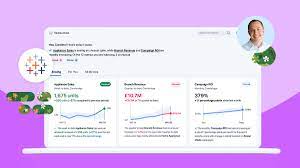
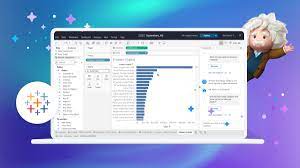
Tableau’s first generative AI assistant is now generally available. Generative AI for Tableau brings data prep to the masses. Earlier this month, Tableau launched its second platform update of 2024, announcing that its first two GenAI assistants would be available by the end of July, with a third set for release in August. The first of these, Einstein Copilot for Tableau Prep, became generally available on July 10. Tableau initially unveiled its plans to develop generative AI capabilities in May 2023 with the introduction of Tableau Pulse and Tableau GPT. Pulse, an insight generator that monitors data for metric changes and uses natural language to alert users, became generally available in February. Tableau GPT, now renamed Einstein Copilot for Tableau, moved into beta testing in April. Following Einstein Copilot for Tableau Prep, Einstein Copilot for Tableau Catalog is expected to be generally available before the end of July. Einstein Copilot for Tableau Web Authoring is set to follow by the end of August. With these launches, Tableau joins other data management and analytics vendors like AWS, Domo, Microsoft, and MicroStrategy, which have already made generative AI assistants generally available. Other companies, such as Qlik, DBT Labs, and Alteryx, have announced similar plans but have not yet moved their products out of preview. Tableau’s generative AI capabilities are comparable to those of its competitors, according to Doug Henschen, an analyst at Constellation Research. In some areas, such as data cataloging, Tableau’s offerings are even more advanced. “Tableau is going GA later than some of its competitors. But capabilities are pretty much in line with or more extensive than what you’re seeing from others,” Henschen said. In addition to the generative AI assistants, Tableau 2024.2 includes features such as embedding Pulse in applications. Based in Seattle and a subsidiary of Salesforce, Tableau has long been a prominent analytics vendor. Its first 2024 platform update highlighted the launch of Pulse, while the final 2023 update introduced new embedded analytics capabilities. Generative AI assistants are proliferating due to their potential to enable non-technical workers to work with data and increase efficiency for data experts. Historically, the complexity of analytics platforms, requiring coding and data literacy, has limited their widespread adoption. Studies indicate that only about one-quarter of employees regularly work with data. Vendors have attempted to overcome this barrier by introducing natural language processing (NLP) and low-code/no-code features. However, NLP features have been limited by small vocabularies requiring specific business phrasing, while low-code/no-code features only support basic tasks. Generative AI has the potential to change this dynamic. Large language models like ChatGPT and Google Gemini offer extensive vocabularies and can interpret user intent, enabling true natural language interactions. This makes data exploration and analysis accessible to non-technical users and reduces coding requirements for data experts. In response to advancements in generative AI, many data management and analytics vendors, including Tableau, have made it a focal point of their product development. Tech giants like AWS, Google, and Microsoft, as well as specialized vendors, have heavily invested in generative AI. Einstein Copilot for Tableau Prep, now generally available, allows users to describe calculations in natural language, which the tool interprets to create formulas for calculated fields in Tableau Prep. Previously, this required expertise in objects, fields, functions, and limitations. Einstein Copilot for Tableau Catalog, set for release later this month, will enable users to add descriptions for data sources, workbooks, and tables with one click. In August, Einstein Copilot for Tableau Web Authoring will allow users to explore data in natural language directly from Tableau Cloud Web Authoring, producing visualizations, formulating calculations, and suggesting follow-up questions. Tableau’s generative AI assistants are designed to enhance efficiency and productivity for both experts and generalists. The assistants streamline complex data modeling and predictive analysis, automate routine data prep tasks, and provide user-friendly interfaces for data visualization and analysis. “Whether for an expert or someone just getting started, the goal of Einstein Copilot is to boost efficiency and productivity,” said Mike Leone, an analyst at TechTarget’s Enterprise Strategy Group. The planned generative AI assistants for different parts of Tableau’s platform offer unique value in various stages of the data and AI lifecycle, according to Leone. Doug Henschen noted that the generative AI assistants for Tableau Web Authoring and Tableau Prep are similar to those being introduced by other vendors. However, the addition of a generative AI assistant for data cataloging represents a unique differentiation for Tableau. “Einstein Copilot for Tableau Catalog is unique to Tableau among analytics and BI vendors,” Henschen said. “But it’s similar to GenAI implementations being done by a few data catalog vendors.” Beyond the generative AI assistants, Tableau’s latest update includes: Among these non-Copilot capabilities, making Pulse embeddable is particularly significant. Extending generative AI capabilities to work applications will make them more effective. “Embedding Pulse insights within day-to-day applications promises to open up new possibilities for making insights actionable for business users,” Henschen said. Multi-fact relationships are also noteworthy, enabling users to relate datasets with shared dimensions and informing applications that require large amounts of high-quality data. “Multi-fact relationships are a fascinating area where Tableau is really just getting started,” Leone said. “Providing ways to improve accuracy, insights, and context goes a long way in building trust in GenAI and reducing hallucinations.” While Tableau has launched its first generative AI assistant and will soon release more, the vendor has not yet disclosed pricing for the Copilots and related features. The generative AI assistants are available through a bundle named Tableau+, a premium Tableau Cloud offering introduced in June. Beyond the generative AI assistants, Tableau+ includes advanced management capabilities, simplified data governance, data discovery features, and integration with Salesforce Data Cloud. Generative AI is compute-intensive and costly, so it’s not surprising that Tableau customers will have to pay extra for these capabilities. Some vendors are offering generative AI capabilities for free to attract new users, but Henschen believes costs will eventually be incurred. “Customers will want to understand the cost implications of adding these new capabilities,”

Read More
Slack Integrating AI Into Platform

Slack Integrating AI Into Platform

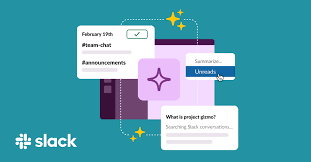
Slack’s CEO Denise Dresser announced that AI will soon be integrated into every aspect of the platform, enabling users to manage tasks and launch new projects without leaving the application. This announcement highlights a significant shift towards enhancing productivity and collaboration within Slack using advanced AI capabilities. Slack Integrating AI Into Platform. During a media session following her keynote at Salesforce’s World Tour event in Boston, Dresser outlined her vision for AI in Slack. Having taken on her role six months ago after years with Salesforce, she emphasized the integration of Slack with Salesforce’s Einstein Copilot. Acquired by Salesforce in late 2020, Slack aims to provide a unified experience for users by leveraging AI to manage both structured and unstructured data. The goal is to help users quickly find key conversations and turn them into actionable tasks and projects. Dresser noted the challenges in navigating chat histories and identifying important moments, which AI integration aims to address. Slack Integrating AI Into Platform “AI can significantly drive productivity,” Dresser said. “With Slack AI Search, Slack becomes your organization’s long-term memory. It allows users to easily find what they need through generative summaries, which was a major breakthrough for us.” Dresser highlighted the rapid adoption of AI and its integration into Slack’s functionality, leading to an evolution in skills such as prompt engineering and natural language processing. These advancements enable tasks like software creation without traditional coding methods. She pointed out the rapid growth in AI adoption, comparing it to the adoption rates of ChatGPT, mobile phones, and Facebook. Dresser believes this trend will continue as people experience productivity improvements with AI. AI will be embedded in various Slack features, including Canvas, Workflow, and Huddle, providing seamless assistance within the application. Users may not even realize they are interacting with AI, as it will naturally enhance Slack’s functionality. For instance, instead of manually searching through messages, AI will highlight the most important summaries. Dresser also mentioned the newly launched Slack Lists feature, which automatically captures and surfaces key parts of channel conversations. She stressed the importance of reducing the need to switch between different applications, which can drain time and productivity. “We have millions of people working in Slack; why leave Slack?” she said. “We wanted to integrate capabilities for tasks, lists, and projects directly into Slack, starting right within conversations.” In the future, Slack will also suggest relevant chat channels for project purposes, providing users with powerful insights and capabilities. Dresser noted that while only about a third of employees currently use AI-powered platforms, those who do report an average 81% increase in productivity by eliminating mundane tasks. As AI continues to be embedded into Slack and Salesforce tools, Dresser acknowledged the challenge of maintaining the platform’s beloved feel and integrity. “We’ve already integrated Slack, Sales Elevate, and Salesforce. Copilot’s integration will be excellent,” she said. “We have focused on preserving the unique Slack experience, even while enhancing it with new architectural integrations. Our goal is to ensure that Slack remains efficient and productive while staying true to its core identity.” Like Related Posts Who is Salesforce? Who is Salesforce? Here is their story in their own words. From our inception, we’ve proudly embraced the identity of Read more Salesforce Marketing Cloud Transactional Emails Salesforce Marketing Cloud Transactional Emails are immediate, automated, non-promotional messages crucial to business operations and customer satisfaction, such as order Read more Salesforce Unites Einstein Analytics with Financial CRM Salesforce has unveiled a comprehensive analytics solution tailored for wealth managers, home office professionals, and retail bankers, merging its Financial Read more AI-Driven Propensity Scores AI plays a crucial role in propensity score estimation as it can discern underlying patterns between treatments and confounding variables Read more

Read More

AI and Consumer Goods Cloud

Salesforce’s latest “rolling thunder” of AI enhancements brings significant innovations to Consumer Goods Cloud, leveraging the power of the Einstein AI platform already integrated into Sales Cloud and Service Cloud. These enhancements are designed to optimize planning and execution for consumer goods companies. Salesforce Consumer Goods Cloud is an industry-specific solution that helps consumer goods companies streamline their route-to-market processes. By unifying trade promotion management and retail execution capabilities on a single platform, it enables seamless collaboration between headquarters and field teams. Utilizing Salesforce’s core CRM functionality and the Einstein AI platform, Consumer Goods Cloud empowers companies with data-driven insights and intelligent automation to drive profitable growth. “Consumer goods companies are laser-focused on profitable growth. With the latest Salesforce innovations for Consumer Goods Cloud, they can unify consumer and customer data to plan promotions precisely, equip every field rep with tools to increase sales and reduce downtime, and integrate trusted AI into every service agent’s workflow to solve problems and upsell more frequently,” explained Rob Garf, VP and GM of Retail and Consumer Goods at Salesforce. “In short, every consumer goods company can now transform into an AI Enterprise.” What’s New in Consumer Goods Cloud The latest updates in Consumer Goods Cloud focus on integrating Salesforce’s Data Cloud with Einstein generative AI capabilities, enhancing three key areas: Data Cloud for Consumer Goods: Account managers can now unify account and industry data to build rich customer profiles, segment accounts to the individual store level, and design hyper-localized assortment and promotion plans. For instance, a soft drink distributor can identify which citrus-flavored sodas are most popular in specific Mexican convenience stores and optimize replenishment accordingly. Einstein Copilot Account Summarization: Within the service console, agents can access AI-generated account summaries, eliminating the need to switch between screens and knowledge articles. Summaries include last interactions, order history, satisfaction scores, and promotion details, enabling agents to resolve inquiries quickly and upsell intelligently. Consumer Goods Cloud Einstein 1 for Sales: This AI-powered enhancement package provides sales managers, field reps, merchandisers, and delivery drivers with productivity and revenue-boosting insights. Real-time notifications and recommendations on stock levels, replenishment, special handling needs, and payment collection keep field teams responsive and effective. The Salesforce Embedded AI Difference Salesforce’s strategy of embedding AI via a unified Einstein platform offers several advantages: Consistency: With Einstein already integrated into Sales and Service Clouds, Salesforce can efficiently extend proven AI tools to industry-specific use cases, benefiting users with familiar interfaces and interaction paradigms. Completeness: Embedding AI at the platform level allows Salesforce to enhance the entire workflow from planning to execution. Consumer goods companies can apply intelligent insights to both back-office processes like promotion management and field activities like stock checks and payment collection. Continuous Innovation: The Einstein platform enables rapid deployment of Salesforce’s latest generative AI advancements across all clouds, ensuring customers always have access to state-of-the-art capabilities. Mars Snacking, one of the world’s largest consumer goods companies, is already benefiting from Salesforce’s AI-powered industry cloud. “At Mars Snacking, we are on an ambitious journey to rewire and almost double the size of our business by 2030,” said Bartek Kononiuk, Global Head of Product – Trade Promotion Management. “Consumer Goods Cloud and Trade Promotion Management will enable us to improve our business processes, data availability, and user experience in critical growth-enabling areas.” AI Innovation Comes at a Cost As the consumer goods industry strives to meet rapidly evolving buyer expectations, Salesforce’s embedded AI solutions for Consumer Goods Cloud offer timely advantages. By democratizing access to generative AI and data management capabilities, Salesforce enables companies of all sizes to optimize decision-making, boost field productivity, and drive profitable growth. However, these advanced functionalities come with significant costs. Salesforce’s Einstein AI enhancements often have substantial per-user surcharges, sometimes exceeding $100 per month. For large deployments involving thousands of employees, these expenses can quickly escalate. Consumer goods companies must carefully evaluate the productivity and revenue gains against the added licensing costs. Additionally, while Salesforce is leading the way in enterprise generative AI, the technology is still maturing. Early adopters may encounter instances where the AI delivers suboptimal results. Salesforce’s Trust Layer aims to mitigate these risks, but companies should approach generative AI with a clear understanding of its current limitations. The ongoing enhancements in Salesforce’s Einstein portfolio present a promising yet costly opportunity for customers to evolve into full-fledged AI Enterprises. As the costs and benefits become clearer, consumer goods companies will need to strategically decide where and how aggressively to deploy these advanced capabilities. Those that find the right balance could gain a significant competitive edge in the rapidly changing digital landscape. Like Related Posts Who is Salesforce? Who is Salesforce? Here is their story in their own words. From our inception, we’ve proudly embraced the identity of Read more Salesforce Marketing Cloud Transactional Emails Salesforce Marketing Cloud Transactional Emails are immediate, automated, non-promotional messages crucial to business operations and customer satisfaction, such as order Read more Salesforce Unites Einstein Analytics with Financial CRM Salesforce has unveiled a comprehensive analytics solution tailored for wealth managers, home office professionals, and retail bankers, merging its Financial Read more AI-Driven Propensity Scores AI plays a crucial role in propensity score estimation as it can discern underlying patterns between treatments and confounding variables Read more

Read More
Life Sciences Cloud Organizing Clinical Trials and Outreach

Life Sciences Cloud Organizing Clinical Trials and Outreach

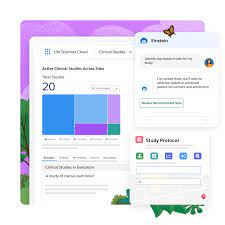
Salesforce CRM announced today its expansion into the life sciences sector with the launch of a new cloud platform designed to enhance engagement between medical technology providers, pharmaceutical companies, patients, and healthcare professionals. The Salesforce Life Sciences Cloud platform, now available, integrates advanced artificial intelligence capabilities from the Einstein 1 Platform. These AI capabilities aim to streamline clinical operations and processes by harnessing insights from all aspects of organizational data. Life Sciences Cloud Organizing Clinical Trials and Outreach. One of the primary benefits of the Life Sciences Cloud platform is its ability to optimize clinical trials, particularly in streamlining the recruitment and enrollment of participants. By leveraging AI, the platform can identify and match qualified candidates for clinical trials based on specific prescreening and eligibility criteria, significantly reducing the time traditionally spent on these processes. The platform facilitates the creation of personalized online portals for each clinical trial, making it easier for eligible patients to discover and enroll in trials relevant to them. It also simplifies the enrollment process through customizable e-consent forms. Using Einstein Copilot, an AI assistant, organizations can automate the identification of potential trial participants based on criteria such as proximity to trial sites, drawing data from sources like spreadsheets and electronic health records. This capability enhances efficiency by proactively reaching out to suitable candidates. Life Sciences Cloud Organizing Clinical Trials and Outreach Salesforce emphasizes the platform’s potential to alleviate common challenges in clinical trials, where recruitment delays and participant retention issues often hinder progress. By addressing these inefficiencies, Life Sciences Cloud aims to improve the operational timelines and success rates of clinical trials. Beyond clinical trials, the platform features a pilot patient benefits verification tool that helps organizations swiftly assess pharmaceutical costs and eligibility for financial assistance. Integrated with Einstein Copilot, this tool supports bulk re-verifications, ensuring continuous access to treatments for patients requiring periodic authorizations. Additionally, the platform includes a pilot patient program outcome management module, which automates the evaluation of educational and support programs’ impact on patients. This module aids in enhancing patient engagement and adherence to treatment plans by sending automated reminders and analyzing the effectiveness of engagement strategies. Salesforce’s Life Sciences Cloud also offers robust data analytics capabilities, leveraging Salesforce Data Cloud and MuleSoft for Life Sciences to unify structured and unstructured data sources. This unified data model provides comprehensive profiles for each patient and healthcare provider, enabling personalized interactions and informed decision-making. Frank Defesche, Senior Vice President and General Manager of Life Sciences at Salesforce, highlighted the platform’s role in enabling life sciences organizations to navigate challenges such as rising drug costs and regulatory complexities. He emphasized AI’s transformative potential in optimizing operational processes and prioritizing patient-centric approaches across the industry. Overall, Salesforce’s Life Sciences Cloud represents a significant advancement in leveraging AI-driven technologies to enhance efficiency, engagement, and outcomes within the life sciences sector. Like Related Posts Who is Salesforce? Who is Salesforce? Here is their story in their own words. From our inception, we’ve proudly embraced the identity of Read more Salesforce Marketing Cloud Transactional Emails Salesforce Marketing Cloud Transactional Emails are immediate, automated, non-promotional messages crucial to business operations and customer satisfaction, such as order Read more Salesforce Unites Einstein Analytics with Financial CRM Salesforce has unveiled a comprehensive analytics solution tailored for wealth managers, home office professionals, and retail bankers, merging its Financial Read more AI-Driven Propensity Scores AI plays a crucial role in propensity score estimation as it can discern underlying patterns between treatments and confounding variables Read more

Read More
AI Yes Gen AI No

AI Yes Gen AI No

The race in generative AI may conclude sooner than anticipated, despite it barely starting for most. Consider the role of generative AI as a supportive assistant, aiding users across dashboards, messaging platforms, and datasets by summarizing documents, chats, and answering queries in natural language. AI Yes Gen AI No. At PegaWorld, significant attention was drawn to Pega’s Knowledge Buddy, an assistant integrated with LLM, specifically OpenAI on Azure, tailored to organization-specific data. CTO Don Schuerman emphasized the practicality of Pega’s solution: “Knowledge Buddy solves many enterprise problems, but it’s not the only RAG-based product out there. Everyone’s got one.” Indeed, major companies each boast their AI assistants: Adobe with AI Assistant, Salesforce with Einstein Copilot, Microsoft with Copilot, HubSpot with various AI assistants, Oracle’s Digital Assistant, and SAP’s Joule. Possessing an AI assistant is now a necessity, not a differentiator, as it has become standard across competitors. Generative AI tools like text and image generators have garnered public interest due to their accessibility. For instance, tools like Google Gemini enable anyone to create, blurring the lines between creator roles. The prevalence of generative AI across over 14,000 martech products is notable, exemplified by MarTechBot, which leverages AI to answer queries and generate images based on MarTech’s vast archive. While text and image generation capabilities rapidly advance, offering these tools is becoming a norm rather than a novelty. Soon, lacking these capabilities will be akin to a supermarket not selling eggs. Does this signify the end of the AI arms race? While generative AI will continue to evolve, it is becoming ubiquitous as a fundamental requirement. However, it’s crucial to distinguish the generative AI arms race from the broader AI landscape. Non-generative AI, such as predictive analytics and classification AI used in digital asset management systems, plays a critical role. This statistical AI analyzes data at scale to derive insights, recommend products, or guide customers through complex journeys. Pega exemplifies this with its AI-driven decisioning and workflow automation, predicting optimal actions for specific challenges, which is distinct from the generative AI focus seen in competitors like Salesforce, Adobe, and Oracle. Looking forward, while generative AI will permeate everyday applications, the true transformative AI for enterprises might lie in refined predictive AI or fully autonomous AI capable of unsupervised business decision-making. In conclusion, while text and image generation will become commonplace, their revolutionary impact may wane compared to the potential of other AI applications poised to redefine enterprise capabilities. Like Related Posts Who is Salesforce? Who is Salesforce? Here is their story in their own words. From our inception, we’ve proudly embraced the identity of Read more Salesforce Marketing Cloud Transactional Emails Salesforce Marketing Cloud Transactional Emails are immediate, automated, non-promotional messages crucial to business operations and customer satisfaction, such as order Read more Salesforce Unites Einstein Analytics with Financial CRM Salesforce has unveiled a comprehensive analytics solution tailored for wealth managers, home office professionals, and retail bankers, merging its Financial Read more AI-Driven Propensity Scores AI plays a crucial role in propensity score estimation as it can discern underlying patterns between treatments and confounding variables Read more

Read More
Democratize Data with Einstein Copilot for Tableau

Democratize Data with Einstein Copilot for Tableau

Most workers today recognize the importance of rich data analytics in their jobs. However, 33% struggle to understand and generate insights from data. To address this, Salesforce has introduced Einstein Copilot for Tableau, which allows users of all skill levels to create complex data visualizations without extensive learning or coding. Democratize Data with Einstein Copilot for Tableau. Launched in April 2024, the beta version of this AI assistant features a user-friendly interface that simplifies the process with questions or simple commands. This facilitates the quick creation of comprehensive data presentations, including reports, dashboards, and various charts. Democratize Data with Einstein Copilot for Tableau Einstein Copilot for Tableau leverages a combination of AI technologies—natural language processing (NLP), machine learning (ML), and generative AI—to provide actionable insights. NLP enables conversational and intuitive interactions, while ML models process user queries and analyze data. Generative AI drives cognitive reasoning, planning, and creates insights, recommendations, and diagrams based on user inputs. By integrating with Tableau Cloud, Einstein Copilot accesses historical proprietary data, enables advanced data analysis, and translates user intent into actionable insights. It relies on Tableau’s analytics infrastructure to execute code and displays results through user-friendly visualizations and dashboards. Additionally, the Einstein Trust Layer secures and protects private data in Einstein Copilot. It authorizes inbound requests, ensuring users have necessary permissions to access specific data and safeguards model outputs to prevent the disclosure of confidential information. How Einstein Copilot for Tableau Transforms Requests into Insights To understand how Einstein Copilot for Tableau turns requests into actionable insights, let’s walk through each step of the interaction process: Einstein Copilot for Tableau democratizes access to data analytics, enabling all users to harness the power of data without needing extensive technical knowledge. Like1 Related Posts Who is Salesforce? Who is Salesforce? Here is their story in their own words. From our inception, we’ve proudly embraced the identity of Read more Salesforce Marketing Cloud Transactional Emails Salesforce Marketing Cloud Transactional Emails are immediate, automated, non-promotional messages crucial to business operations and customer satisfaction, such as order Read more Salesforce Unites Einstein Analytics with Financial CRM Salesforce has unveiled a comprehensive analytics solution tailored for wealth managers, home office professionals, and retail bankers, merging its Financial Read more AI-Driven Propensity Scores AI plays a crucial role in propensity score estimation as it can discern underlying patterns between treatments and confounding variables Read more

Read More
AI for Marketing and Retail

AI for Marketing and Retail

Salesforce Expands AI Capabilities for Marketing and Retail with Einstein Copilot Salesforce is making waves in the marketing and retail sectors by enhancing its Einstein Copilot feature, bringing advanced AI tools even closer to its users. AI for Marketing and Retail. For those unfamiliar with Salesforce, it offers Einstein 1, a comprehensive platform integrating AI and machine learning across its various applications. Einstein Copilot, a part of this platform, functions as an AI-powered assistant designed to provide real-time assistance, automate tasks, and deliver contextual insights to boost productivity. New Additions: Einstein Copilot for Marketers and Merchants Salesforce has recently announced two exciting additions: Einstein Copilot for Marketers and Einstein Copilot for Merchants. Einstein Copilot for Marketers: Einstein Copilot for Merchants: Availability Einstein Copilot for Marketers is set to be generally available this summer, while Einstein Copilot for Merchants will enter the beta stage in the autumn. Leadership Insight “With the Einstein 1 Platform, we’re giving organizations the power to unify all of their data on one trusted platform,” said Ariel Kelman, President and CMO of Salesforce. “This is the key to getting results from generative AI that are actually useful in driving your business forward.” About Salesforce Founded in 1999, Salesforce is a cloud-based software company renowned as one of the best CRM software providers. With over 72,000 employees globally and an annual revenue of .49 billion, Salesforce continues to lead in innovation and customer satisfaction. Like Related Posts Who is Salesforce? Who is Salesforce? Here is their story in their own words. From our inception, we’ve proudly embraced the identity of Read more Salesforce Marketing Cloud Transactional Emails Salesforce Marketing Cloud Transactional Emails are immediate, automated, non-promotional messages crucial to business operations and customer satisfaction, such as order Read more Salesforce Unites Einstein Analytics with Financial CRM Salesforce has unveiled a comprehensive analytics solution tailored for wealth managers, home office professionals, and retail bankers, merging its Financial Read more AI-Driven Propensity Scores AI plays a crucial role in propensity score estimation as it can discern underlying patterns between treatments and confounding variables Read more

Read More
Gen AI Unleased With Vector Database

Gen AI Unleased With Vector Database

Salesforce Unveils Data Cloud Vector Database with GenAI Integration Salesforce has officially launched its Data Cloud Vector Database, leveraging GenAI to rapidly process a company’s vast collection of PDFs, emails, transcripts, online reviews, and other unstructured data. Gen AI Unleased With Vector Database. Rahul Auradkar, Executive Vice President and General Manager of Salesforce Unified Data Services and Einstein Units, highlighted the efficiency gains in a one-on-one briefing with InformationWeek. Auradkar demonstrated the new capabilities through a live demo, showcasing the potential of the Data Cloud Vector Database. Enhanced Efficiency and Data Utilization The new Data Cloud integrates with the Einstein 1 platform, combining unstructured and structured data for rapid analysis by sales, marketing, and customer service teams. This integration significantly enhances the accuracy of Einstein Copilot, Salesforce’s enterprise conversational AI assistant. Gen AI Unleased With Vector Database Auradkar demonstrated how a customer service query could retrieve multiple relevant results within seconds. This process, which typically takes hours of manual effort, now leverages unstructured data, which makes up 90% of customer data, to deliver swift and accurate results. “This advancement allows our customers to harness the full potential of 90% of their enterprise data—unstructured data that has been underutilized or siloed—to drive use cases, AI, automation, and analytics experiences across both structured and unstructured data,” Auradkar explained. Comprehensive Data Management Using Salesforce’s Einstein 1 platform, Data Cloud enables users to ingest, store, unify, index, and perform semantic queries on unstructured data across all applications. This data encompasses diverse unstructured content from websites, social media platforms, and other sources, resulting in more accurate outcomes and insights. Auradkar emphasized, “This represents an order of magnitude improvement in productivity and customer satisfaction. For instance, a large shipping company with thousands of customer cases can now categorize and access necessary information far more efficiently.” Additional Announcements Salesforce also introduced several new AI and Data Cloud features: Auradkar noted that these innovations enhance Salesforce’s competitive edge by prioritizing flexibility and enabling customers to take control of their data. “We’ll continue on this journey,” Auradkar said. “Our future investments will focus on how this product evolves and scales. We’re building significant flexibility for our customers to use any model they choose, including any large language model.” For more insights and updates, visit Salesforce’s official announcements and stay tuned for further developments. Like1 Related Posts Who is Salesforce? Who is Salesforce? Here is their story in their own words. From our inception, we’ve proudly embraced the identity of Read more Salesforce Marketing Cloud Transactional Emails Salesforce Marketing Cloud Transactional Emails are immediate, automated, non-promotional messages crucial to business operations and customer satisfaction, such as order Read more Salesforce Unites Einstein Analytics with Financial CRM Salesforce has unveiled a comprehensive analytics solution tailored for wealth managers, home office professionals, and retail bankers, merging its Financial Read more AI-Driven Propensity Scores AI plays a crucial role in propensity score estimation as it can discern underlying patterns between treatments and confounding variables Read more

Read More
Data Cloud Vector Database and Hyperforce

Data Cloud Vector Database and Hyperforce

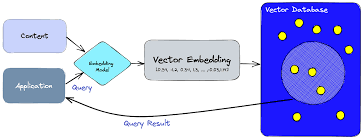
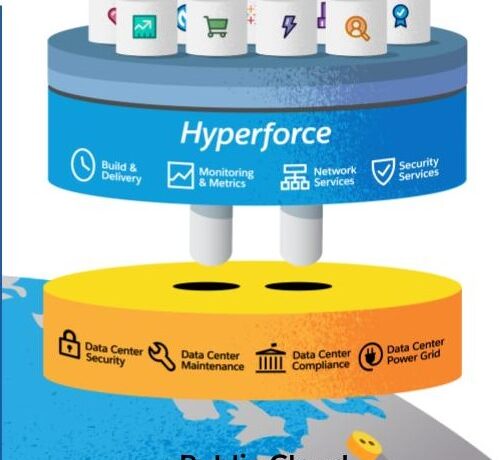
Salesforce World Tour Highlights: Data Cloud Vector Database and Hyperforce At the Salesforce World Tour on June 6, 2024, at the Excel Centre in east London, the focus was on advancements in the Data Cloud and Slack platforms. The event, sponsored by AWS, Cognizant, Deloitte, and PWC, showcased significant innovations, particularly for GenAI enthusiasts. Data Cloud Vector Database and Hyperforce. Vector Database in Data Cloud A key highlight was the announcement of the general availability of a Vector Database capability within the Data Cloud, integrated into the Einstein 1 Platform. This capability enhances Salesforce’s CRM platform, Customer 360, by combining structured and unstructured data about end-users. The Vector Database collects, ingests, and unifies data, allowing enterprises to deploy GenAI across all applications without needing to fine-tune an off-the-shelf large language model (LLM). Addressing Data Fragmentation Salesforce reports that approximately 80% of customer data is dispersed across various corporate departments in an unstructured format, trapped in PDFs, emails, chat conversations, and transcripts. The Vector Database unifies this fragmented data, creating a comprehensive profile of the customer journey. This unified approach not only improves customer engagement but also enhances organizational agility. By consolidating data from all corporate silos, companies can quickly and efficiently address issues such as product recalls and returns. Hyperforce: Enhancing Data Residency and Compliance During the keynote, Salesforce emphasized the importance of personalization in customer engagement and the benefits of deploying GenAI in customer-facing sectors. The event highlighted the need to overcome the fear and mistrust of GenAI and showcased how enterprises can enhance employee productivity through upskilling in GenAI technologies. One notable announcement was the general availability of Hyperforce, a solution designed to address data residency issues by integrating all Salesforce applications under the same compliance, security, privacy, and scalability standards. Built for the public cloud and composed of code rather than hardware, Hyperforce ensures safe delivery of applications worldwide, offering a common layer for deploying all application stacks and handling data compliance in a fragmented technology landscape. Salesforce AI Center The Salesforce AI Center was also introduced at the event. The first of its kind, located in the Blue Fin Building near Blackfriars, London, this center will support AI experts, Salesforce partners, and customers, facilitating training and upskilling programs. Set to open on June 18, 2024, the center aims to upskill 100,000 developers worldwide and is part of Salesforce’s $4 billion investment in the UK and Ireland. Industry Reactions and Future Prospects GlobalData senior analyst Beatriz Valle commented on Salesforce’s continued integration of GenAI across its portfolio, including platforms like Tableau, Einstein for analytics, and Slack for collaboration. According to Salesforce, the Data Cloud tool leverages all metadata in the Einstein 1 Platform, connecting unstructured and structured data, reducing the need for fine-tuning LLMs, and enhancing the accuracy of results delivered by Einstein Copilot, Salesforce’s conversational AI assistant. Vector databases, while not new, have gained prominence due to the GenAI revolution. They power the retrieval-augmented generation (RAG) technique, linking proprietary data with large language models like OpenAI’s GPT-4, enabling enterprises to generate more accurate results. Competitors such as Oracle, Amazon, Microsoft, and Google also offer vector databases, but Salesforce’s early investments in GenAI are proving fruitful with the launch of the Data Cloud Vector Database. Data Cloud Vector Database and Hyperforce Salesforce’s AI-powered integration solutions, highlighted during the World Tour, underscore the company’s commitment to advancing digital transformation. By leveraging GenAI and innovative tools like the Vector Database and Hyperforce, Salesforce is enabling enterprises to overcome the challenges of data fragmentation and compliance, paving the way for a more agile and competitive digital future. Like Related Posts Who is Salesforce? Who is Salesforce? Here is their story in their own words. From our inception, we’ve proudly embraced the identity of Read more Salesforce Marketing Cloud Transactional Emails Salesforce Marketing Cloud Transactional Emails are immediate, automated, non-promotional messages crucial to business operations and customer satisfaction, such as order Read more Salesforce Unites Einstein Analytics with Financial CRM Salesforce has unveiled a comprehensive analytics solution tailored for wealth managers, home office professionals, and retail bankers, merging its Financial Read more AI-Driven Propensity Scores AI plays a crucial role in propensity score estimation as it can discern underlying patterns between treatments and confounding variables Read more

Read More
Consumer Chatbot Technology

Consumer Chatbot Technology

The Reality Behind AI Chatbots and the Path to Autonomous AI In the rush to adopt the latest Consumer Chatbot Technology, it’s easy to overlook a fundamental reality: consumer chatbot technology isn’t ready for enterprise use—and it likely never will be. The reason is simple: AI assistants are only as effective as the data that powers them. Most large language models (LLMs) are trained on data from public websites, which lack the specific business and customer data that enterprises need. This means consumer bots can’t adequately assist employees in selling products, marketing merchandise, or improving productivity, as they lack the necessary personalization and business context. To achieve the vision of AI that goes beyond simple chatbots performing basic tasks—like drafting emails, essays, blogs, or graphics—to a more advanced role where AI acts autonomously and addresses business-critical needs, a different approach is needed. This vision involves AI taking action with minimal human intervention, using digital agents to identify and respond to these needs. At Salesforce, we are pursuing a clear path to AI that not only takes action but also automates routine tasks, all while adhering to established business rules, permissions, and context. Instead of relying solely on LLMs, which primarily focus on generating human-like text, future AI assistants will depend on large action models (LAMs) that integrate decision-making and action-taking capabilities. The Journey Toward AI Autonomy Our journey towards this vision began with the Salesforce Data Cloud, a robust data engine built on the Einstein 1 Platform. This platform integrates data from across the enterprise and third-party repositories, enabling companies to activate their data, automate workflows, personalize customer interactions, and develop smarter AI solutions. Recognizing the shift from generative AI to autonomous AI, Salesforce introduced Einstein Copilot, the industry’s first conversational, enterprise-class AI assistant. Integrated across the Salesforce ecosystem, Einstein Copilot utilizes an organization’s data, whether it’s behind a firewall or in an external data lake, to act as a reasoning engine. It interprets user intents, interacts with the most suitable AI model, solves problems, generates relevant content, and provides decision-making support. Expanding the Role of AI in Business Since its launch in February 2024, Salesforce has been expanding Einstein Copilot’s library of actions to meet specific business needs in sales, service, marketing, data analysis, and industries like ecommerce, financial services, healthcare, and education. These “actions” are akin to LEGO blocks—discrete tasks that can be assembled to achieve desired project outcomes. For example, a sales representative might use Einstein Copilot to generate a personalized close plan, gain insights into why a deal may not close, or review whether pricing was discussed in a recent call. Einstein Copilot then orchestrates these tasks, provides recommendations, and compiles everything into a detailed report. The ultimate goal is for AI not only to gather and organize information but also to take proactive action. Imagine a sales representative instructing their digital agent to set up meetings with top prospects in a specific territory. The AI could not only identify suitable contacts but also suggest meeting times, plan travel schedules, draft emails, and even create talking points—all of which it could execute autonomously with the representative’s approval. Tectonic dreams of the day AI is smart enough to interpret our search engine typos and produce the results for what we were actually looking for! The Future of AI Autonomy The possibilities for semi-autonomous or fully autonomous AI are vast. As we continue to develop and refine these technologies, the potential for AI to transform business processes and decision-making becomes increasingly tangible. At Salesforce, they are committed to leading this charge, ensuring that our AI solutions not only meet but exceed the expectations of enterprises worldwide. Salesforce is in a strong position to deliver on all of them because of the volume and breadth of data housed in Data Cloud, the heavy workflow traffic in our Customer 360 CRM, and the fact we’ve delivered an enterprise-class copilot that is rapidly expanding its library of actions. It will not happen overnight. The technology needs to advance, organizations and people have to be able to trust AI and be trained to use it in the right ways, and more work will need to be done to ensure the right balance between human involvement and AI autonomy. But with our continued investment in CRM, data, and trusted AI, we will achieve that vision before too long. Salesforce is in a strong position to deliver on all of them because of the volume and breadth of data housed in Data Cloud, the heavy workflow traffic in our Customer 360 CRM, and the fact we’ve delivered an enterprise-class copilot that is rapidly expanding its library of actions. Jayesh Govindarajan, Senior Vice President, Salesforce AI Like Related Posts Who is Salesforce? Who is Salesforce? Here is their story in their own words. From our inception, we’ve proudly embraced the identity of Read more Salesforce Marketing Cloud Transactional Emails Salesforce Marketing Cloud Transactional Emails are immediate, automated, non-promotional messages crucial to business operations and customer satisfaction, such as order Read more Salesforce Unites Einstein Analytics with Financial CRM Salesforce has unveiled a comprehensive analytics solution tailored for wealth managers, home office professionals, and retail bankers, merging its Financial Read more AI-Driven Propensity Scores AI plays a crucial role in propensity score estimation as it can discern underlying patterns between treatments and confounding variables Read more

Read More
Trust Einstein Copilot for Tableau

Trust Einstein Copilot for Tableau

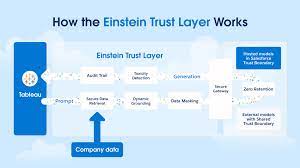
Are you prepared to utilize the capabilities of Einstein Copilot to expand your organization’s analytical advantages? This robust tool facilitates data exploration, insights generation, and visualization development at an unprecedented pace. However, before immersing yourself in its capabilities, it’s crucial to grasp how Einstein Copilot upholds Tableau and Salesforce’s core value: Trust. Let’s discover how the Einstein Trust Layer safeguards your data, ensures result accuracy, and facilitates auditing, addressing common questions and concerns raised by our customers.Trust Einstein Copilot for Tableau. What is Einstein Copilot for Tableau? Using generative AI and statistical analysis, Einstein Copilot for Tableau is able to understand the context of your data to create and suggest relevant business questions to help kickstart your analysis. A smart, conversational assistant for Tableau users, Einstein Copilot for Tableau automates data curation—the organization and integration of data collected from various sources—by generating calculations and metadata descriptions. Einstein Copilot for Tableau can fill data gaps and enhance analysis by creating synthetic datasets where real data is limited. Einstein Copilot helps you anticipate outcomes with predictive analytics that simulate diverse scenarios and uncover hidden correlations. Additionally, generative models can increase data privacy by producing non-traceable data for analysis.  Fulfilling the promise of generative AI, Einstein Copilot for Tableau presents an efficient, insightful, and ethical approach to data analytics. Think of it as an intelligent assistant integrated into the Tableau suite of products to make everyone successful in their analysis workflow—whether they’re an experienced data analyst or a data explorer. As your intelligent analytics AI assistant, Einstein Copilot for Tableau guides you through the process of creating data visualizations in Tableau by assisting you with recommended questions, conversational data exploration, guided calculation creation, and more. Understanding the Einstein Trust Layer The Einstein Trust Layer constitutes a secure AI architecture embedded within the Salesforce platform. Comprising agreements, security technology, and data privacy controls, it ensures the safety of your data while exploring generative AI solutions. Built upon the Einstein Trust Layer, Einstein Copilot for Tableau and other Tableau AI features inherit its security, governance, and Trust capabilities. The Einstein Trust Layer is a secure AI architecture, built into the Salesforce platform. It is a set of agreements, security technology, and data and privacy controls used to keep your company safe while you explore generative AI solutions. Tableau has been on the journey to help people see and understand their data for over two decades. Thanks to data analysts, this mission has been a success and will continue to be a success. Data analysts are the backbone of organizations that champion data culture, capture business requirements, prep data, and create data content for end users. Data Access and Privacy Who Accesses Your Data? A primary concern among our customers revolves around data access. Rest assured, the Einstein Trust Layer enforces strict policies to safeguard your organization’s data. Third-party LLM providers, including Open AI and Azure Open AI, adhere to a zero data retention policy. This means that data sent to LLMs isn’t stored; once processed, both the prompt and response are promptly forgotten. Additionally, each Einstein Copilot for Tableau customer receives their own Data Cloud instance, securely storing prompts and responses for auditing purposes. Data Residency and Access Control Einstein Copilot for Tableau respects permissions, row-level security, and data policies within Tableau Cloud, ensuring that only authorized personnel within your organization access specific data. Whether using Einstein Copilot or not, data access is restricted based on organizational roles and permissions. Data Handling and Processing Data Sent Outside of Tableau Cloud Site Einstein Copilot for Tableau operates within the confines of your Tableau site, scanning connected data sources to create a summary context. This summarized data is sent to third-party LLM providers for vectorization, enabling accurate interpretation of user queries. Importantly, the zero data retention policy ensures that summarized data is forgotten post-vectorization. Personally Identifiable Information (PII) Data To enhance data privacy, Einstein Copilot for Tableau employs data masking for PII data. This technique replaces sensitive information with placeholder text, ensuring privacy without sacrificing context. While our detection models strive for accuracy, continuous evaluation and refinement are paramount to maintain trust. Result Trustworthiness Ensuring Safe and Accurate Results Einstein Copilot for Tableau employs Toxicity Confidence Scoring to identify harmful inputs and responses. By combining rule-based filters and AI models, potentially harmful content is filtered and flagged for review. Furthermore, accuracy benchmarks ensure that generated results align closely with human-authored ones, bolstering trust in the platform. Future Trust Enhancements Trust remains an ongoing focus for our teams. Initiatives such as a BYO LLM solution and improved disambiguation capabilities are underway to further enhance trustworthiness. Continuous feedback, testing, and iteration drive our efforts to maintain your trust in Einstein Copilot for Tableau and the Einstein Trust Layer. Data analysis and data-driven decision-making have been part of the vocabulary in organizations over the years. And, while data analysis is one of the most in-demand tech skills sought by employers today, not everyone in an organization has “analyst” in their job title—myself included. Yet, so many of us use data daily to make informed decisions. The rise of generative AI presents a significant opportunity for us to bring transformative benefits to analytics. Businesses are eager to embrace generative AI because it can help save time, provide faster insights, and empower analysts to be even more productive with an AI assistant—freeing analysts to focus on delivering high-quality, data-driven insights. Is Tableau replacing Einstein analytics? Einstein Analytics has a new name. Say hello to Tableau CRM. Everything about how it works stays the same, just with that snazzy new name. When Tableau joined the Salesforce family, we brought together analytics capabilities of incredible depth and power. What is the difference between Einstein analytics and Tableau? If you’re only planning on analyzing Salesforce data, Einstein Analytics would probably make the most sense for you. However, if you need to analyze information that is coming from all over the place, Tableau will give your users more options. Tableau GPT infuses automation in every part of analytics – from preparation to communicating

Read More
gettectonic.com