
Generative AI Archives - gettectonic.com - Page 33
Salesforce Chat GPT

What’s Happening with ChatGPT and Salesforce

ChatGPT and Salesforce The integration of ChatGPT with Salesforce presents an opportunity to streamline organizational processes, resulting in significant time savings. This integration not only enhances CRM data management with generative AI but also takes the customer experience to new heights. Integration Process: To integrate ChatGPT with Salesforce, the typical process involves creating an account on the OpenAI platform and generating an API key. These steps ensure successful integration by providing API access and authentication credentials. It’s crucial to treat the API key with the same security measures as a password to safeguard the integration. Salesforce and OpenAI Collaboration: While Salesforce offers access to AI through its Einstein GPT suite of products, Salesforce Admins and Developers have also begun directly integrating with OpenAI’s APIs and various AppExchange apps. They are incorporating these tools into their offerings to introduce new AI-powered features, enhancing their platforms’ capabilities. Role of ChatGPT and Salesforce Admins: ChatGPT does not aim to replace Salesforce Admins but rather to augment their effectiveness and productivity. Admins with strong analytical and administrative skills can leverage ChatGPT to expedite configuration tasks. However, mastering the collaboration with ChatGPT is essential to enhance the quality of results. Understanding ChatGPT: ChatGPT, developed by OpenAI, represents a breakthrough in AI beyond conventional chatbots. It operates on the OpenAI GPT-3.5 family of large language models, incorporating both supervised and reinforcement learning techniques. Backed by OpenAI, ChatGPT employs natural language processing (NLP) to interact conversationally, mirroring human dialogue. OpenAI, founded in San Francisco, boasts substantial support from industry leaders like Microsoft. OpenAI and GPT-4: OpenAI recently unveiled GPT-4, the latest iteration of its popular ChatGPT model. GPT-4 boasts enhanced capabilities, including image processing and increased word processing capacity. With millions of users since its launch, ChatGPT continues to evolve, offering unparalleled NLP functionality. Top Use Cases for ChatGPT in Salesforce: Explore the potential of ChatGPT and Salesforce with features and scenarios, including natural language processing, chatbots, predictive sales, personalized communication, and analysis of conversational data. Einstein GPT: Salesforce introduces Einstein GPT, the world’s first generative AI for CRM. Einstein GPT enables the generation of tailored content from CRM data, ensuring relevance in every interaction, be it emails, reports, knowledge articles, or code snippets. Community Insights: As the AI landscape, particularly ChatGPT, continues to evolve, it’s essential to understand its implications for the Salesforce ecosystem. The Salesforce community acknowledges the power of ChatGPT as a sophisticated chatbot built on advanced AI technology, poised to revolutionize various Salesforce roles and experiences. What is Salesforce doing with ChatGPT? The integration between ChatGPT and Salesforce can optimize a significant portion of organizational processes, resulting in considerable time savings. This not only enhances CRM data management, now powered by generative AI, but also elevates the customer experience to a new level. Can we integrate ChatGPT with Salesforce? This typically involves creating an account on the OpenAI platform and generating an API key. To set up your API access and authentication credentials for a successful ChatGPT for Salesforce integration, follow the steps below. Treat your API key like a password to protect the security of your integration. Is Salesforce using OpenAI? While Salesforce enables customers to access it via its Einstein GPT suite of products, Salesforce Admins and Developers have also started integrating directly with OpenAI’s APIs and the many AppExchange apps. They are now embedding it into their offerings to deliver new AI-powered features. ChatGPT has shown the world the potential of AI beyond simple chatbots. Join Tectonic on the AI journey and learn about How to use ChatGPT for Salesforce, Its use cases, Integration and how you can implement it in Salesforce. Salesforce’s new marketing message is AI + Data + CRM. It all adds up to customer magic. At the heart of this magic is Generative AI or GPT, not ChatGPT. Of course, AI advancements will mean very different things across the wide variety of Salesforce roles and day-to-day experiences. With more and more “GPT” tools being launched each week, how is the Salesforce community using the Chat variety in their day-to-day roles, and how do they see it evolving over the coming months and years? ChatGPT is nothing more than a chatbot, akin to Einstein bots. However, it’s a powerful one! Built on the OpenAI GPT-3.5 family of large language models and both supervised and reinforcement learning techniques, ChatGPT was trained on a vast amount of internet text with a cutoff in January 2022. It has been optimized for natural language processing tasks such as text generation, question answering, translation, and text classification. The technology behind ChatGPT is advanced and continues to evolve, relying on machine learning and deep learning techniques. Like Related Posts Who is Salesforce? Who is Salesforce? Here is their story in their own words. From our inception, we’ve proudly embraced the identity of Read more Salesforce Marketing Cloud Transactional Emails Salesforce Marketing Cloud Transactional Emails are immediate, automated, non-promotional messages crucial to business operations and customer satisfaction, such as order Read more Salesforce Unites Einstein Analytics with Financial CRM Salesforce has unveiled a comprehensive analytics solution tailored for wealth managers, home office professionals, and retail bankers, merging its Financial Read more AI-Driven Propensity Scores AI plays a crucial role in propensity score estimation as it can discern underlying patterns between treatments and confounding variables Read more
Read More
what is tableau gpt

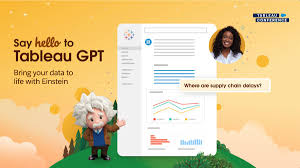
What is Tableau GPT

Tableau GPT is a suite of AI-powered features within the Tableau platform designed to simplify and democratize data analysis. It leverages generative AI to automate tasks, generate insights, and make data more accessible to a wider range of users, including those with less technical expertise.  Key features and capabilities of Tableau GPT: How Tableau GPT benefits users: Like Related Posts Who is Salesforce? Who is Salesforce? Here is their story in their own words. From our inception, we’ve proudly embraced the identity of Read more Salesforce Unites Einstein Analytics with Financial CRM Salesforce has unveiled a comprehensive analytics solution tailored for wealth managers, home office professionals, and retail bankers, merging its Financial Read more AI-Driven Propensity Scores AI plays a crucial role in propensity score estimation as it can discern underlying patterns between treatments and confounding variables Read more Tectonic’s Successful Salesforce Track Record Salesforce Technology Services Integrator – Tectonic has successfully delivered Salesforce in a variety of industries including Public Sector, Hospitality, Manufacturing, Read more

Read More
Tools to Liberate Salesforce Data

Caring For Utility Customers

Have you ever considered what your utility customers go through when trying to resolve an issue? Imagine being a customer facing a higher-than-expected bill. You navigate the website for answers but find none. Frustrated, you call customer service, enduring the automated phone system and long hold times. Once connected, you must repeat your information and wait while the agent figures out what you couldn’t. Eventually, the agent informs you that your bill is high because you used more energy last month and therefore still owe the billed amount. What you don’t see is the agent scrambling through multiple screens and systems to understand the bill change. Knowing the customer’s past billing history, recent weather conditions, or potential meter issues would help immensely. Lacking the necessary information frustrates customers and flusters agents. However, with artificial intelligence (AI), this experience can be greatly improved. Enter Artificial Intelligence As a utility company, each customer call adds up, and inefficient processes prolong call times and slow resolutions, impacting satisfaction. Utilities leveraging predictive analytics and generative AI are transforming the customer experience. By integrating AI into customer service, you can make the customer experience more intuitive and less frustrating. Internally, AI simplifies operations, reduces costs, and improves satisfaction for both employees and customers. What AI Can Do for Your Utility’s Customer Service AI’s capability to analyze vast amounts of data aligns perfectly with utilities’ needs — from historical usage and weather data to detecting unusual consumption spikes that often trigger customer service calls. AI can proactively send personalized notifications to customers explaining likely reasons for higher consumption before their bill arrives. It can also offer individualized recommendations and links to relevant services, programs, or rate plans, preventing calls and increasing engagement in cost-saving utility programs. Virtual assistants on your website and mobile app can understand customer questions, provide clear explanations, and deliver instant, accurate responses in natural language. AI in Utilities for Customer Service in Action Consider this scenario: as a customer, you call customer service and are greeted by a virtual agent that validates your identity and attempts to troubleshoot your issue. If unsuccessful, it transfers you to a live agent. Before connecting, the live agent sees all your relevant customer details, including what you’ve already tried on the web or mobile app. Generative AI supports the agent with a script and guides them in diagnosing and solving your issue. At the end of the call, AI drafts a call summary, updates relevant knowledge articles, and creates a follow-up email with links to recommended programs or services. Proactive communication with clear, detailed information reduces frustration and confusion, potentially resolving issues without needing a live agent. This AI-driven support enhances customer satisfaction and engagement. For the utility, AI-driven support reduces call volume, improves agent effectiveness, speeds up call resolution, lowers operational costs, and boosts agent satisfaction. Ready to Dip Your Toe into AI? We’re Here for You Embracing AI not only addresses immediate challenges but also sets the stage for a more efficient and customer-centric future in the utilities sector, creating a win-win scenario for both customers and utility companies. With AI-powered tools like Salesforce Energy and Utilities Cloud, you can recommend next best actions, provide knowledge articles to support agents and customers, and deploy chatbots for better online self-service options. These capabilities improve customer service and key performance indicators (KPIs). Implementing AI in customer service might seem daunting. Here are some initial steps to help you get started: Feeling overwhelmed? Don’t worry — we have Professional Services and AI Coaches to guide you every step of the way. Your AI journey will be structured, supported, and geared towards tangible success. Let’s embark on this journey together, enhancing efficiency, customer satisfaction, and sustainable growth in the utilities sector. Content updated August 1014. Like Related Posts Who is Salesforce? Who is Salesforce? Here is their story in their own words. From our inception, we’ve proudly embraced the identity of Read more Salesforce Marketing Cloud Transactional Emails Salesforce Marketing Cloud Transactional Emails are immediate, automated, non-promotional messages crucial to business operations and customer satisfaction, such as order Read more Salesforce Unites Einstein Analytics with Financial CRM Salesforce has unveiled a comprehensive analytics solution tailored for wealth managers, home office professionals, and retail bankers, merging its Financial Read more AI-Driven Propensity Scores AI plays a crucial role in propensity score estimation as it can discern underlying patterns between treatments and confounding variables Read more

Read More
Need for AI Workers Never So Great

Need for AI Workers Never So Great

Salesforce’s UK & Ireland chief, Zahra Bahrololoumi, emphasized the urgent need for companies to train their staff on the effective and safe use of artificial intelligence tools, speaking to City A.M. The Need for AI Workers Never So Great. Bahrololoumi highlighted the increasing demand for “highly skilled people” capable of utilizing trustworthy data sources and protecting sensitive information, noting that this need has “never been more clear nor urgent.” Her comments coincide with the release of a Salesforce survey revealing that over 60 percent of individuals who use or plan to use generative AI at work feel they lack the skills to do so “accurately and safely.” Additionally, 70 percent of workers believe their employers are not fully leveraging generative AI’s potential, and more than half desire proper AI training. Salesforce, which also owns the business messaging platform Slack, has urged the government to enhance national access to digital skills training. The survey, conducted in collaboration with YouGov, included 1,384 full-time UK employees from various industries. Artificial intelligence (AI) is used in many aspects of life, including the workplace, retail, and healthcare. AI can help people understand how technology can improve their lives through products and services. AI skills can also set you apart at an interview. Like Related Posts Who is Salesforce? Who is Salesforce? Here is their story in their own words. From our inception, we’ve proudly embraced the identity of Read more Salesforce Marketing Cloud Transactional Emails Salesforce Marketing Cloud Transactional Emails are immediate, automated, non-promotional messages crucial to business operations and customer satisfaction, such as order Read more Salesforce Unites Einstein Analytics with Financial CRM Salesforce has unveiled a comprehensive analytics solution tailored for wealth managers, home office professionals, and retail bankers, merging its Financial Read more AI-Driven Propensity Scores AI plays a crucial role in propensity score estimation as it can discern underlying patterns between treatments and confounding variables Read more

Read More
Generative AI Regulations

Salesforce, Data Science, and Generative AI

Is Salesforce utilized in the field of data science? Salesforce data science and Generative AI Data Science-as-a-Service (DSaaS) democratizes access to machine learning through the Salesforce Data Management Platform, enabling widespread adoption of data science capabilities. Utilizing Salesforce for Data Science Empowerment: The integration of Salesforce into data science represents a transformative endeavor aimed at democratizing machine learning through Data Science-as-a-Service (DSaaS). By leveraging the Salesforce Data Management Platform, the objective is to empower individuals across various domains with the potential of data science. Democratization of Data Science: DSaaS introduces a versatile workbench that capitalizes on machine learning to refine segmentation, enhance activation strategies, and uncover deeper insights. Through robust analytics tools, users can gain profound insights into individual customer behaviors. Supported by a formidable 20-petabyte analytics environment and a real-time big data infrastructure, data-driven analytics are taken to unprecedented levels. Harnessing Modeling Resources: Data owners enjoy the flexibility to harness their data, algorithms, and models either within the Salesforce Data Management Platform or within their independent environments. Spearheading this initiative is the Salesforce Unified Intelligence Platform (UIP) team, constructing a centralized data intelligence platform aimed at enriching business insights, enhancing user experience, improving product quality, and optimizing operational efficiency, all while upholding the core value of trust embedded in the Salesforce platform. Salesforce Data Science and Generative AI Emphasizing Security and Design: Security stands as a cornerstone of the Salesforce platform, with the UIP’s evolution tracing back to a transition from a colossal Hadoop cluster to UIP in public clouds. The architectural journey prioritized data classification early on, engaging in meticulous reviews with legal and security experts to classify data intended for storage within UIP. Adopting the “zero-trust infrastructure” principle, the architecture is fortified against both internal and external threats, ensuring robust defense mechanisms against potential data breaches. Unlocking Data Science Potential through DSaaS: DSaaS serves as a catalyst in democratizing machine learning through the Salesforce Data Management Platform, spotlighting the pivotal role of data science in fostering generative AI and cultivating trustworthy AI. Data scientists play a critical role in ensuring data quality and organization to steer clear of issues such as biased or irrelevant outcomes. Navigating Data Science Challenges: Despite the transformative potential of data science, businesses encounter various challenges including managing diverse data sources, scarcity of skilled professionals, data privacy and security concerns, data cleansing complexities, and effectively communicating findings to non-technical stakeholders. Proposed Solutions: Addressing these challenges involves leveraging data integration tools, investing in the upskilling and reskilling of data professionals, implementing robust data privacy measures, employing data governance tools for data cleansing, and honing communication skills for reporting findings to non-technical stakeholders. The success of generative AI hinges on well-organized data, and data science is pivotal in achieving this. Whether utilizing AI tools built with the expertise of data scientists or building a data science team, businesses can navigate the evolving landscape of AI and data science with confidence. Content updated March 2024. Like1 Related Posts Who is Salesforce? Who is Salesforce? Here is their story in their own words. From our inception, we’ve proudly embraced the identity of Read more Salesforce Marketing Cloud Transactional Emails Salesforce Marketing Cloud Transactional Emails are immediate, automated, non-promotional messages crucial to business operations and customer satisfaction, such as order Read more Salesforce Unites Einstein Analytics with Financial CRM Salesforce has unveiled a comprehensive analytics solution tailored for wealth managers, home office professionals, and retail bankers, merging its Financial Read more AI-Driven Propensity Scores AI plays a crucial role in propensity score estimation as it can discern underlying patterns between treatments and confounding variables Read more
Read More
Use Salesforce Einstein Copilot

Marketing GPT and Commerce GPT Announcement

Salesforce Introduces Marketing GPT and Commerce GPT to Revolutionize Personalized Campaigns and Shopping Experiences with Generative AI San Francisco — June 7, 2023 — Salesforce (NYSE: CRM), the global CRM leader, announced today at Connections its latest innovations, Marketing GPT and Commerce GPT, which combine generative AI with real-time data from Data Cloud. These groundbreaking products aim to transform how businesses engage with customers by delivering personalized experiences across every touchpoint. Significance: Generative AI is driving efficiency and productivity for businesses, with 60% of marketers acknowledging its transformative potential. However, concerns about accuracy and quality remain prevalent, highlighting the importance of trusted customer data for effective generative AI implementation. What’s new: Marketing GPT empowers marketers to create personalized, relevant experiences using generative AI and trusted first-party data from Data Cloud. With Marketing GPT and Data Cloud, marketers can: Commerce GPT enables companies to deliver customized shopping experiences throughout the buyer’s journey with auto-generated insights and recommendations based on unified real-time data from Data Cloud. With Commerce GPT and Data Cloud, brands can: Salesforce partners like DEPT®, Media.Monks, NeuraFlash, and Slalom are building a generative AI ecosystem with new accelerators, language models, and integrations to simplify Marketing GPT and Commerce GPT implementation for businesses. Soundbites: Availability: Like1 Related Posts Who is Salesforce? Who is Salesforce? Here is their story in their own words. From our inception, we’ve proudly embraced the identity of Read more Salesforce Marketing Cloud Transactional Emails Salesforce Marketing Cloud Transactional Emails are immediate, automated, non-promotional messages crucial to business operations and customer satisfaction, such as order Read more Salesforce Unites Einstein Analytics with Financial CRM Salesforce has unveiled a comprehensive analytics solution tailored for wealth managers, home office professionals, and retail bankers, merging its Financial Read more AI-Driven Propensity Scores AI plays a crucial role in propensity score estimation as it can discern underlying patterns between treatments and confounding variables Read more

Read More
Salesforce Einstein and Einstein Automate

AI Fundamentals

The concept of Artificial Intelligence (AI) has long been a fascination for storytellers and sci-fi enthusiasts. However, for a considerable period, most individuals didn’t give AI much serious consideration, perceiving it as a distant futuristic sci-fi possibility. Nevertheless, researchers and computer scientists have been actively working to transform the dream of AI into a tangible reality, leading some to insist that we have already entered the Age of AI. The AI Fundamentals explained. While the extent of AI’s integration into our daily lives remains uncertain, it is evident that meaningful conversations about AI require a shared vocabulary and a solid foundation of core concepts. Presently, asking ten people to define artificial intelligence is likely to yield ten different answers. This insight attempts to establish a common understanding by exploring AI’s current capabilities and digging into the methodologies employed by computer scientists in creating remarkable AI systems. AI Fundamentals Defining AI proves challenging due to distorted perceptions influenced by science fiction narratives portraying AI as a potentially malevolent force. Additionally, our tendency to benchmark AI against human intelligence contributes to this challenge. And I don’t want AI to be able to write a blog post as well as me! Acknowledging the vast spectrum of intelligence in the animal kingdom, as well as the diversity in human intelligence, prompts a need to view artificial intelligence through a similar lens. As humans we may think we are a lot smarter than a bird. But I don’t know how to fly, do you? AI Capabilities Recognizing specific AI capabilities tailored to distinct tasks is crucial, dispelling the notion of a universally proficient AI, known as general AI, which remains a distant goal. AI currently exists in specialized forms, each excelling at particular jobs. Key AI capabilities fall into several categories: It’s safe to say, artificial intelligence encompasses computer abilities associated with human intuition, inference, and reasoning. Presently, AI skills are highly specialized, covering categories like numeric predictions and language processing. The evolving landscape of AI offers a glimpse into the transformative potential of this technology, emphasizing its current application in specific domains. Like1 Related Posts Who is Salesforce? Who is Salesforce? Here is their story in their own words. From our inception, we’ve proudly embraced the identity of Read more Salesforce Marketing Cloud Transactional Emails Salesforce Marketing Cloud Transactional Emails are immediate, automated, non-promotional messages crucial to business operations and customer satisfaction, such as order Read more Salesforce Unites Einstein Analytics with Financial CRM Salesforce has unveiled a comprehensive analytics solution tailored for wealth managers, home office professionals, and retail bankers, merging its Financial Read more AI-Driven Propensity Scores AI plays a crucial role in propensity score estimation as it can discern underlying patterns between treatments and confounding variables Read more
Read More
Benioff Dreams of AI Making Messaging Intelligent

Benioff Dreams of AI Making Messaging Intelligent

During the company’s recent earnings call, Salesforce CEO Marc Benioff spoke about the “revolutionary” impacts of generative AI, emphasizing the immense potential it holds for the tech industry. Benioff Dreams of AI Making Messaging Intelligent. Benioff highlighted Salesforce’s integration of OpenAI’s ChatGPT platform into Slack, the workplace messaging app owned by Salesforce. This integration aims to enhance Slack’s capabilities by enabling features such as conversation summarization, research assistance, and message drafting directly within the platform. Benioff expressed his vision for Slack to become intelligent itself, leveraging the wealth of data stored within the platform. He emphasized the transformative potential of generative AI in providing intelligent support to users, potentially revolutionizing customer service interactions and business operations. Salesforce’s clients, including Gucci, are already leveraging AI to enhance customer service experiences, reflecting the growing adoption of AI-driven solutions across various industries. Generative AI offers benefits such as time-saving automation of routine tasks, efficient research gathering, and concise information delivery, benefiting individuals in personal, professional, and academic contexts. However, concerns regarding the ethical implications of generative AI have also surfaced, including issues related to deepfake images, bias, and potential job displacement. Some advocate for stricter regulation and careful assessment of AI’s risks before further development. Benioff Dreams of AI Making Messaging Intelligent Despite these concerns, Benioff remains optimistic about the transformative potential of generative AI, describing it as a revolution that will reshape the world in unprecedented ways. He believes that we are only at the beginning of this AI revolution, with much more innovation and transformation yet to come. Like Related Posts Who is Salesforce? Who is Salesforce? Here is their story in their own words. From our inception, we’ve proudly embraced the identity of Read more Salesforce Marketing Cloud Transactional Emails Salesforce Marketing Cloud Transactional Emails are immediate, automated, non-promotional messages crucial to business operations and customer satisfaction, such as order Read more Salesforce Unites Einstein Analytics with Financial CRM Salesforce has unveiled a comprehensive analytics solution tailored for wealth managers, home office professionals, and retail bankers, merging its Financial Read more AI-Driven Propensity Scores AI plays a crucial role in propensity score estimation as it can discern underlying patterns between treatments and confounding variables Read more
Read More
Salesforce Sales Cloud

Salesforce Sales Cloud GPT

What is Salesforce Sales Cloud GPT? Salesforce’s Einstein GPT is a robust AI tool that seamlessly integrates both public and private AI models with CRM data. This unique synergy allows users to articulate natural-language queries directly within the Salesforce CRM environment, resulting in continuously adapted AI-generated content tailored to evolving customer information and requirements. Salesforce Sales Cloud GPT The suite encompasses a suite of powerful Artificial Intelligence (AI) products, including the Einstein service, the workplace-messaging app Slack, and the data analysis software Tableau. Notably, it unveils a compelling array of natural language tools slated for release in 2023, such as Sales GPT for personalized emails, Service GPT for service messages and chatbots, and Marketing GPT for refined audience targeting. Furthermore, the AI Cloud is meticulously crafted to host extensive language models from various providers such as AWS, Anthropic, and Cohere. Salesforce’s commitment to AI startups is further underscored by a substantial $500 million injection into its venture capital fund. Impact on Sales Cloud with AI and EinsteinGPT: Sales Cloud undergoes a transformative impact through AI, notably EinsteinGPT. Anchored in principles of Trust, Security, and Privacy, Salesforce introduces the Einstein Trust Layer within its AI Cloud offering to assuage privacy concerns. This layer ensures adaptability and transparency while upholding stringent standards for data privacy, security, and compliance. EinsteinGPT for Sales Cloud emerges as a game-changing innovation, serving as a personalized assistant within Salesforce CRM to streamline sales processes. Leveraging Generative AI, it transcends mere data analysis by generating novel content, ideas, and approaches. Key features encompass Einstein GPT, Einstein Conversation Insights, and Einstein Relationship Insights. Industries Experience Tangible Impact: Salesforce’s substantial investments in AI are reshaping the landscape of sales and customer engagement. As EinsteinGPT becomes an integral part of the platform, the anticipation of new and innovative use cases signals a significant leap forward in AI accessibility. Tectonic is please to announce our Sales Cloud Implementation Solutions. Like1 Related Posts Who is Salesforce? Who is Salesforce? Here is their story in their own words. From our inception, we’ve proudly embraced the identity of Read more Salesforce Marketing Cloud Transactional Emails Salesforce Marketing Cloud Transactional Emails are immediate, automated, non-promotional messages crucial to business operations and customer satisfaction, such as order Read more Salesforce Unites Einstein Analytics with Financial CRM Salesforce has unveiled a comprehensive analytics solution tailored for wealth managers, home office professionals, and retail bankers, merging its Financial Read more AI-Driven Propensity Scores AI plays a crucial role in propensity score estimation as it can discern underlying patterns between treatments and confounding variables Read more
Read More

Race to AI for CX

AI emerges as a transformative force revolutionizing the customer experience (CX) landscape in the dynamic world of global e-commerce. Its ability to handle extensive data and facilitate large-scale automation empowers brands to offer tailored and seamless CX journeys, fostering customer loyalty and satisfaction. The great race to AI for CX is upon us. In the era of rapid technological advancements, organizations worldwide are in a race to integrate AI-driven capabilities across their operations. The widespread adoption of AI is fueled by its recognition not just as a technological advancement but as a strategic imperative. Businesses invest in AI to enhance operational productivity, reduce costs, elevate customer experiences, and maintain competitiveness. AI’s impact on customer experience extends to substantial improvements in Customer Relationship Management (CRM) systems. Automation of tasks like data entry, lead scoring, and follow-up reminders, coupled with intelligent insights such as predicting high-converting leads, empowers sales teams to optimize their efforts. Considering the pivotal role customers play for every business, CRM has become a launchpad for AI-led transformations throughout enterprises. Businesses swiftly integrate AI-powered experiences into sales, marketing, service, and e-commerce use cases. However, for AI investments to meet expectations, they must be built on robust data practices and trust. Data readiness, reflecting an organization’s preparedness to access and use quality data across its business, is crucial for successful AI outcomes. Ensuring trust in AI, free from data-security concerns or incorrect outcomes, is equally essential. Many companies, lacking mature data practices for advanced AI capabilities like generative AI (genAI), express significant trust concerns; nevertheless, the imperative to progress prompts continued AI investments. The deployment of AI-powered chatbots enables customer service teams to deliver convenient, 24/7 support. These chatbots, exemplified by Zendesk bots, operate round the clock, offering real-time assistance even when support agents are offline. Generative AI-powered conversational bots enhance customer self-service, reduce resolution times, and improve satisfaction by maintaining case-specific tonality and context in real time. Personalized marketing, beyond being a trend, has become a cornerstone strategy for businesses aiming to establish profound connections with their audiences. Crafting messages that resonate personally not only captures attention but also cultivates conversations and fosters lasting brand loyalty. In a digital age where user experience can make or break a brand, strategic partnerships become crucial. The race to AI for CX is on and you can’t afford to be left behind. Enhancing digital user experiences often requires collaboration with specialized partners. Regpack, a versatile payment and registration solution, exemplifies this approach by collaborating with Webeo, specialists in B2B website personalization. This partnership resulted in a 565% increase in site conversion, a 302% rise in average time spent on the site, and a significant 30% drop in bounce rates. Webeo’s personalization software enabled Regpack to identify and adapt to the diverse needs of its clientele through advanced behavioral personalization techniques. Race to AI for CX AI’s impact on marketing extends beyond being an add-on tool, serving as a fundamental game-changer for crafting bespoke customer experiences. AI seamlessly bridges the digital and physical realms, particularly in ecommerce and retail sectors, dynamically adapting products and content based on consumer behavior. AI-driven technologies interpret vast data points, allowing brands to offer hyper-personalized interactions. Real-time data analysis and pattern recognition capabilities make AI a powerful tool for creating engaging and emotionally resonant personalized experiences. In essence, AI architects a new era in marketing, where experiences are not merely personalized but dynamically respond to evolving consumer desires and expectations. Leveraging AI, brands can create narratives that consumers feel intrinsically part of, fostering profound connections. For instance, Calian IT & Cyber Solutions employs personalized marketing tactics to understand and address the unique challenges and needs of each business they serve, fostering strong, long-term relationships with clients. The key takeaway for marketers is clear – the era of generic messaging is fading. A more nuanced, data-driven, and empathetic approach is emerging. Brands that embrace this shift, continuously innovate, and create experiences that customers feel a part of will thrive. As technology advances and consumer expectations evolve, mastering the art of personalization becomes crucial to redefine the marketing landscape. Key Strategies for Exceptional Customer Experience with AI: AI and Customer Experience (CX): AI impacts the entire customer journey, from predictive and prescriptive analytics to sentiment analysis, journey mapping assistance, orchestration, dynamic pricing, virtual try-ons, and augmented reality, providing an interactive and engaging shopping experience. AI and Employee Experience (EX): Efficiencies introduced by AI in employee tasks directly benefit customers. When repetitive tasks are automated, employees gain time for critical and value-added tasks, leading to increased productivity, reduced workload, fewer errors, and improved job satisfaction. Delivering Exceptional Customer Experience with AI: As customer expectations evolve, AI offers a scalable approach for brands to exceed expectations, resulting in memorable customer experiences shaped by clear communication, seamless journeys, and engaging personalized interactions. The transformative potential of AI for CX success is evident in its ability to reshape the marketing landscape. Like1 Related Posts Who is Salesforce? Who is Salesforce? Here is their story in their own words. From our inception, we’ve proudly embraced the identity of Read more Salesforce Marketing Cloud Transactional Emails Salesforce Marketing Cloud Transactional Emails are immediate, automated, non-promotional messages crucial to business operations and customer satisfaction, such as order Read more Salesforce Unites Einstein Analytics with Financial CRM Salesforce has unveiled a comprehensive analytics solution tailored for wealth managers, home office professionals, and retail bankers, merging its Financial Read more AI-Driven Propensity Scores AI plays a crucial role in propensity score estimation as it can discern underlying patterns between treatments and confounding variables Read more
Read More
Tableau Pulse and Tableau GPT

Announcing Tableau Pulse and Tableau GPT

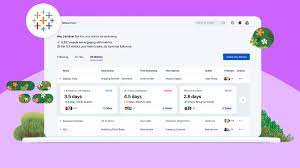
It’s fair to say that many are familiar with ChatGPT, the groundbreaking Large Language Model from OpenAI that has transformed how we work and interact with AI. At TC 2023, Tableau announced a new tool called Tableau GPT. But what exactly is Tableau GPT, and how does it fit into Tableau’s suite of products? Announcing Tableau Pulse and Tableau GPT. Tableau GPT Tableau GPT is an assistant leveraging the advanced capabilities of generative AI to simplify and democratize data analysis. Built from Einstein GPT, a Salesforce product developed in collaboration with OpenAI, Tableau GPT integrates generative AI into Tableau’s user experience. This integration aims to help users work smarter, learn faster, and communicate more effectively. During the Devs on Stage segment of the keynote at TC, Matthew Miller, Senior Director of Product Management, showcased Tableau GPT’s ability to generate calculations. For example, with a prompt like “Extract email addresses from JSON,” Tableau GPT quickly produces a calculation that users can copy into the calculation window. Tableau Pulse Tableau GPT also powers a new tool called Tableau Pulse, designed to generate powerful insights swiftly. Tableau Pulse provides “data digests” on a personalized metrics homepage, offering a curated, ‘newsfeed’-like experience of key KPIs. As users interact with Pulse, it learns to deliver more personalized results based on their interests. For example, Tableau Pulse highlights metrics that require attention, derived from recent data trends identified by Tableau GPT. The tool provides the latest metric values, visual trends, and AI-generated insights for user-selected KPIs. Tableau Pulse also enables users to ask questions about their data in natural language. For instance, when asked, “What is driving change in Appliance Sales?” Tableau Pulse responded with a brief answer and visualization. Further inquiries, such as “What else should I know about air fryers?” revealed that the “inventory fill rate” for air fryers is forecasted to fall below a set threshold, providing actionable insights that users can share across their organization. Future Impact and Availability Tableau GPT and Pulse promise to revolutionize interactions with Tableau products, enabling quicker visualization creation and making data accessible to non-technical users. Salesforce announced that Tableau Pulse and Tableau GPT would enter pilot testing later this year. When they do, we’ll be ready to share new insights. Follow us on LinkedIn to stay updated on all the latest developments and features in Tableau! Like Related Posts Who is Salesforce? Who is Salesforce? Here is their story in their own words. From our inception, we’ve proudly embraced the identity of Read more Salesforce Marketing Cloud Transactional Emails Salesforce Marketing Cloud Transactional Emails are immediate, automated, non-promotional messages crucial to business operations and customer satisfaction, such as order Read more Salesforce Unites Einstein Analytics with Financial CRM Salesforce has unveiled a comprehensive analytics solution tailored for wealth managers, home office professionals, and retail bankers, merging its Financial Read more AI-Driven Propensity Scores AI plays a crucial role in propensity score estimation as it can discern underlying patterns between treatments and confounding variables Read more

Read More
Slack and AI

Just When You Thought We Were GPT’d Out, Here Comes Slack and Generative AI

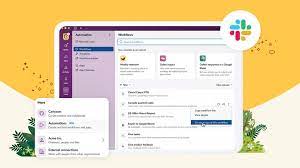
Since its public introduction in 2014, Slack has transformed from its original concept, a searchable log of all conversation and knowledge, into a comprehensive productivity platform that has reshaped how work and co-working is conducted. Get ready! Here comes Slack and Generative AI! In a recent release, Salesforce Slack unveiled a next-generation platform. A platform designed to facilitate seamless automation and integration for users of all technical levels, regardless of coding proficiency. This platform simplifies the utilization of data within Slack, offering enhanced automation and intelligence, allowing for the creation of no-code workflows, custom integrations, and the incorporation of generative AI. Steve Wood, Slack’s SVP of Product and Platform, highlights the significance of placing automation and generative AI tools directly into users’ hands as a pivotal step in Slack’s journey to redefine not only how people work but also how machines and humans interact in the future. Wood delves into the unique features of the new Slack platform, emphasizing its modular architecture grounded in building blocks like functions, triggers, and workflows. These components are remixable, reusable, and seamlessly integrate with the data flow within Slack. The platform enables developers to create tailored solutions, such as integrating with Salesforce, fostering more efficient collaboration, and automating workflows across various business functions. The introduction of generative AI, like Slack GPT, further enhances the platform’s capabilities.  Slack GPT can use Einstein GPT to gain actionable data from Salesforce Customer 360 and Data Cloud.  Wood underscores the potential of this combination to revolutionize work interactions by simplifying automation into reusable building blocks, accessible to both humans and machines. He emphasizes the transformative power of pairing data with AI and automation, anticipating a significant shift in how technology is leveraged in the workplace. Slack and GPT Wood also explains the recent Slack GPT news, detailing its native integration into the Slack user experience. Slack GPT brings generative AI directly into the platform, allowing users to summarize conversations, catch up on missed messages, and edit content effortlessly. The integration of Einstein GPT into Slack expands the conversational interface to Customer 360, providing real-time customer insights directly in Slack. This can be used to automatically generate case summaries based on data from Service Cloud AND Slack. As AI evolves over time, Wood shares his excitement about observing how people utilize Slack GPT in real-world scenarios. The focus remains on empowering platform users through native generative AI and leveraging data and behaviors to enhance the product continuously. Historical Content Wood emphasizes the historical context stored within Slack, highlighting the collective past as a valuable resource for future decision-making. Integrating AI technologies into this rich dataset within Slack presents a substantial opportunity for improving workflows and tools. Regarding the integration of Slack with Salesforce Customer 360, Wood stresses the importance of having relevant information easily accessible in one place. Slack serves as the hub where work occurs, and by incorporating generative AI, the platform aims to enhance transparency, alignment, and effectiveness in decision-making. Drawing in and analyzing the data from Slack as well as the other Salesforce platforms provides vital customer information. In reflection on the rapid adoption of this technology, Wood acknowledges the unique challenges presented by the unknown behavior of generative AI. Stability, accuracy, and safety are top concerns, with ethical and responsible development practices crucial for building trust. The future, as Wood sees it, hinges on maintaining a commitment to ethical development, ensuring customers feel confident in trusting the transformative capabilities of generative AI in the workplace and the Slack platform. Like1 Related Posts Who is Salesforce? Who is Salesforce? Here is their story in their own words. From our inception, we’ve proudly embraced the identity of Read more Salesforce Marketing Cloud Transactional Emails Salesforce Marketing Cloud Transactional Emails are immediate, automated, non-promotional messages crucial to business operations and customer satisfaction, such as order Read more Salesforce Unites Einstein Analytics with Financial CRM Salesforce has unveiled a comprehensive analytics solution tailored for wealth managers, home office professionals, and retail bankers, merging its Financial Read more AI-Driven Propensity Scores AI plays a crucial role in propensity score estimation as it can discern underlying patterns between treatments and confounding variables Read more

Read More
Salesforce's Get Ready for AI Report

CoMarketing is Here

A New Era: Introducing CoMarketing Clouds is here. Original source articl written by Jim Lundy of Aragon Research. CoMarketing Clouds (CMCs), a new category identified by Aragon, has emerged as a response to the demand for an integrated stack powered by Generative AI. Here are some key insights into this groundbreaking category: CoMarketing Clouds – A Revolution in Marketing In just five months, marketers have witnessed the prowess of Generative AI in content creation, even without a specific focus on marketing. This new era of Clouds are poised to revolutionize marketing strategies. Yesterday, Aragon unveiled this innovative category. You can find the press release here and a summary of the research note here. Dispelling Misconceptions: CoMarketing as a Trend Contrary to misconceptions, Co Marketing Clouds are not a passing trend. With the marketing landscape crowded with standalone solutions that promise campaign and journey automation but fall short, CMCs offer a substantial shift in how marketers approach content creation, campaign generation, and automation. The Timing is Perfect -CoMarketing is here: Embracing CoMarketing Now The rise of Co Marketing Clouds is driven by one factor: automation. Marketers can now leverage automation to a significant degree, marking a pivotal moment in marketing evolution. Expect a flurry of announcements from various CMC providers in the near future. CoMarketing is New and Here to Stay Generative AI holds immense potential to streamline marketers’ daily operations, particularly in engaging with prospects and buyers. Aragon has a track record of identifying groundbreaking categories, dating back to Digital Transaction Management in 2014. CoMarketing Clouds may very well be one of the defining AI-powered categories of our time, and we are committed to monitoring and reporting on its evolution. Like1 Related Posts Salesforce Marketing Cloud Transactional Emails Salesforce Marketing Cloud Transactional Emails are immediate, automated, non-promotional messages crucial to business operations and customer satisfaction, such as order Read more Salesforce Unites Einstein Analytics with Financial CRM Salesforce has unveiled a comprehensive analytics solution tailored for wealth managers, home office professionals, and retail bankers, merging its Financial Read more AI-Driven Propensity Scores AI plays a crucial role in propensity score estimation as it can discern underlying patterns between treatments and confounding variables Read more Tectonic’s Successful Salesforce Track Record Salesforce Technology Services Integrator – Tectonic has successfully delivered Salesforce in a variety of industries including Public Sector, Hospitality, Manufacturing, Read more

Read More
Salesforce Data Cloud Explained

Salesforce Data Cloud Explained

Salesforce Data Cloud, previously recognized as Salesforce CDP/Genie, made its debut at Dreamforce 2022, hailed by Salesforce as one of the most significant innovations in the company’s history. A hyperscale data platform built into Salesforce. Activate all your customer data across Salesforce applications with Data Cloud. Data Cloud facilitates the intake and storage of real-time data streams on a massive scale, empowering automated tasks that result in highly personalized experiences. Data can be sourced from diverse Salesforce data outlets, including Mulesoft, Marketing Cloud, and others, along with customers’ proprietary applications and data sources. Subsequently, it can dynamically respond to this real-time data by automating actions across Salesforce CRM, Marketing Cloud, Commerce, and more, inclusive of automating actions through Salesforce Flow. What is the Salesforce data cloud? Data Cloud is the fastest growing organically built product in Salesforce’s history (i.e. Salesforce built it themselves, not via acquisitions). Data Cloud could be described as the ‘Holy Grail of CRM’, meaning that the data problem that’s existed since the infancy of CRM is now finally solvable. Data Cloud is the foundation that speeds up the connectivity between different ‘clouds’ across the platform. However, Data Cloud is also a product that can be purchased. While not all Salesforce customers have licensed Data Cloud, being at the foundation means they are still taking advantage of Data Cloud to a degree – but this all becomes even stronger with Data Cloud as a personalization and data unification platform. What is the history of Data Cloud? Salesforce has gone through several iterations with naming its CDP product: Customer 360 Audiences → Salesforce CDP → Marketing Cloud Customer Data Platform → Salesforce Genie → Salesforce Data Cloud. In some instances, changes were made because the name just didn’t stick – but what’s more important to note, is that some of the name changes were to indicate the significant developments that happened to the product. Salesforce Data Cloud Differentiators Data Cloud, in itself, is impressive. While many organizations would consider it expensive, if you were to flip the argument on its head, by buying your own data warehouse, building the star schema, and paying for ongoing compute storage, you’d be looking to spend 5 to 10 times more than what Salesforce is charging for Data Cloud. Plus, data harmonization works best when your CRM data is front and center. There are other key differentiators that helps Data Cloud to stand out from the crowd: Is data cloud a data lakehouse? That means that Data Cloud is now not just a really good CDP, it’s now a data lake which will be used in sales and service use cases. But it also means that we can start to fundamentally move some of our higher-scale consumer products like Marketing and Commerce onto the platform. Is Snowflake a data Lakehouse? Snowflake offers customers the ability to ingest data to a managed repository, in what’s commonly referred to as a data warehouse architecture, but also gives customers the ability to read and write data in cloud object storage, functioning as a data lake query engine. What is the benefit of Salesforce data cloud? Data Cloud empowers Salesforce Sales Cloud with AI capabilities and automation that quickly closes deals and boosts productivity across every channel. It drives customer data from all the touchpoints and unifies it separately in individual customer profiles. Salesforce Data Cloud is a powerful data warehouse solution that allows companies to effectively manage and analyze their data. What is the difference between Salesforce CDP and data lake? Talking abut Salesforce CDP is a little bit like a history lesson. While a CDP provides a unified, structured view of customer data, a data lake, on the other hand, is more of a raw, unstructured storage repository that holds a vast amount of data (more than just customer data) in its native format until it’s needed. Like1 Related Posts Who is Salesforce? Who is Salesforce? Here is their story in their own words. From our inception, we’ve proudly embraced the identity of Read more Salesforce Marketing Cloud Transactional Emails Salesforce Marketing Cloud Transactional Emails are immediate, automated, non-promotional messages crucial to business operations and customer satisfaction, such as order Read more Salesforce Unites Einstein Analytics with Financial CRM Salesforce has unveiled a comprehensive analytics solution tailored for wealth managers, home office professionals, and retail bankers, merging its Financial Read more AI-Driven Propensity Scores AI plays a crucial role in propensity score estimation as it can discern underlying patterns between treatments and confounding variables Read more

Read More
Feedback Management

Einstein for Feedback Management

Einstein for Feedback Management: AI-Driven Insights for Smarter Decisions Salesforce introduces Einstein for Feedback Management, a next-generation solution that leverages generative AI to revolutionize how businesses collect, analyze, and act on customer and employee feedback. AI-Optimized Surveys for Higher Engagement ✔ Effortless Survey Creation – Generate tailored surveys in seconds using AI-powered question suggestions.✔ Personalized Questioning – Adapt surveys dynamically based on audience demographics and past interactions.✔ Higher Response Rates – Optimize survey length, tone, and structure to maximize participation. Break Language Barriers with AI-Powered Translations ✔ Global Reach – Instantly translate surveys into multiple languages while preserving meaning and cultural relevance.✔ Improved Accuracy – AI ensures high-quality translations, eliminating inconsistencies in multilingual feedback. Seamless Integration with Salesforce Einstein for Feedback Management automatically syncs with Salesforce data to:✔ Pre-fill surveys with known customer details for hyper-personalized experiences.✔ Auto-update CRM records with real-time feedback, eliminating manual data entry.✔ Trigger automated follow-ups (e.g., service tickets, loyalty rewards) based on responses. End-to-End Feedback Intelligence ✔ Omnichannel Distribution – Deploy surveys via email, chatbots, service portals, and more.✔ Journey Analytics – Map feedback across the entire customer lifecycle for deeper insights.✔ NPS & CSAT Tracking – Monitor satisfaction trends and identify improvement areas.✔ AI-Powered Dashboards – Get instant visualizations of feedback trends with Einstein Analytics. Why Feedback Management Matters Now According to Salesforce’s State of the Connected Customer Report: Ashish Kothari, SVP of Product Management at Salesforce Industries, emphasizes: “Real-time feedback is the key to unlocking personalized experiences. As customer expectations evolve, businesses need agile tools to capture and act on insights instantly. Einstein for Feedback Management turns raw data into actionable intelligence—helping companies make smarter decisions at every touchpoint.” The Future of Intelligent Feedback With AI-driven automation, seamless CRM integration, and global scalability, Einstein for Feedback Management empowers businesses to:🔹 Close the experience gap by understanding customer needs in real time.🔹 Drive operational efficiency with automated data capture and workflows.🔹 Build loyalty by acting on feedback at scale. Ready to transform feedback into action? Learn more! Part of the Salesforce Einstein 1 Platform—where AI meets CRM to deliver smarter, faster outcomes. Content updated March 2024. Like Related Posts Who is Salesforce? Who is Salesforce? Here is their story in their own words. From our inception, we’ve proudly embraced the identity of Read more Salesforce Marketing Cloud Transactional Emails Salesforce Marketing Cloud Transactional Emails are immediate, automated, non-promotional messages crucial to business operations and customer satisfaction, such as order Read more Salesforce Unites Einstein Analytics with Financial CRM Salesforce has unveiled a comprehensive analytics solution tailored for wealth managers, home office professionals, and retail bankers, merging its Financial Read more AI-Driven Propensity Scores AI plays a crucial role in propensity score estimation as it can discern underlying patterns between treatments and confounding variables Read more

Read More
gettectonic.com