

Guardrails Archives - gettectonic.com
agentforce testing center

Agentforce Testing Center

A New Framework for Reliable AI Agent Testing Testing traditional software is well understood, but AI agents introduce unique challenges. Their responses can vary based on interactions, memory, tool access, and sometimes inherent randomness. This unpredictability makes agent testing difficult—especially when repeatability, safety, and clarity are critical. Enter the Agentforce Testing Center. Agentforce Testing Center (ATC), part of Salesforce’s open-source Agentforce ecosystem, provides a structured framework to simulate, test, and monitor AI agent behavior before deployment. It supports real-world scenarios, tool mocking, memory control, guardrails, and test coverage—bringing testing discipline to dynamic agent environments. This insight explores how ATC works, its key differences from traditional testing, and how to set it up for Agentforce-based agents. We’ll cover test architecture, mock tools, memory injection, coverage tracking, and real-world use cases in SaaS, fintech, and HR. Why AI Agents Need a New Testing Paradigm? AI agents powered by LLMs don’t follow fixed instructions—they reason, adapt, and interact with tools and memory. Traditional testing frameworks assume: ✅ Deterministic inputs/outputs✅ Predefined state machines✅ Synchronous, linear flows But agentic systems are: ❌ Probabilistic (LLM outputs vary)❌ Stateful (memory affects decisions)❌ Non-deterministic (tasks may take different paths) Without proper testing, hallucinations, tool misuse, or logic loops can slip into production. Agentforce Testing Center bridges this gap by simulating realistic, repeatable agent behavior. What Is Agentforce Testing Center? ATC is a testing framework for Agentforce-based AI agents, offering: How ATC Works: Architecture & Testing Flow ATC wraps the Agentforce agent loop in a controlled testing environment: Step-by-Step Setup 1. Install Agentforce + ATC bash Copy Download pip install agentforce atc *(Requires Python 3.8+)* 2. Define a Test Scenario python Copy Download from atc import TestScenario scenario = TestScenario( name=”Customer Support Ticket”, goal=”Resolve a refund request”, memory_seed={“prior_chat”: “User asked about refund policy”} ) 3. Mock Tools python Copy Download scenario.mock_tool( name=”payment_api”, mock_response={“status”: “refund_approved”} ) 4. Add Assertions python Copy Download scenario.add_assertion( condition=lambda output: “refund” in output.lower(), error_message=”Agent failed to process refund” ) 5. Run & Analyze python Copy Download results = scenario.run() print(results.report()) Sample Output: text Copy Download ✅ Test Passed: Refund processed correctly 🛑 Tool Misuse: Called CRM API without permission ⚠️ Coverage Gap: Missing fallback logic Advanced Testing Patterns 1. Loop Detection Prevent agents from repeating actions indefinitely: python Copy Download scenario.add_guardrail(max_steps=10) 2. Regression Testing for LLM Upgrades Compare outputs between model versions: python Copy Download scenario.compare_versions( current_model=”gpt-4″, previous_model=”gpt-3.5″ ) 3. Multi-Agent Testing Validate workflows with multiple agents (e.g., research → writer → reviewer): python Copy Download scenario.test_agent_flow( agents=[researcher, writer, reviewer], expected_output=”Accurate, well-structured report” ) Best Practices for Agent Testing Real-World Use Cases Industry Agent Use Case Test Scenario SaaS Sales Copilot Generate follow-up email for healthcare lead Fintech Fraud Detection Bot Flag suspicious wire transfer HR Tech Resume Screener Rank top candidates with Python skills The Future of Agent Testing As AI agents move from prototypes to production, reliable testing is critical. Agentforce Testing Center provides: ✔ Controlled simulations (memory, tools, scenarios)✔ Actionable insights (coverage, guardrails, regressions)✔ CI/CD integration (automate safety checks) Start testing early—unchecked agents quickly become technical debt. Ready to build trustworthy AI agents?Agentforce Testing Center ensures they behave as expected—before they reach users. Like Related Posts Who is Salesforce? Who is Salesforce? Here is their story in their own words. From our inception, we’ve proudly embraced the identity of Read more Salesforce Marketing Cloud Transactional Emails Salesforce Marketing Cloud Transactional Emails are immediate, automated, non-promotional messages crucial to business operations and customer satisfaction, such as order Read more Salesforce Unites Einstein Analytics with Financial CRM Salesforce has unveiled a comprehensive analytics solution tailored for wealth managers, home office professionals, and retail bankers, merging its Financial Read more AI-Driven Propensity Scores AI plays a crucial role in propensity score estimation as it can discern underlying patterns between treatments and confounding variables Read more


Read More
salesforce for manufacturing

Modern Procurement

Modern Procurement: A Strategic Lever for Business Success Procurement has always been complex, but today’s economic pressures—inflation, shifting tariffs, sustainability mandates, and compliance demands—make it more critical than ever. Many organizations still rely on fragmented processes and disconnected systems, leading to uncontrolled spending, compliance risks, and missed savings opportunities. The solution? A strategic, tech-driven approach to procurement. According to The Economist Impact, 38% of procurement leaders rank digital transformation as a top priority today—a figure expected to rise to 54% within five years. Empowering Team Buyers: The First Step to Smarter Procurement Departmental buyers play a crucial role in company spending, yet many lack the tools to make efficient, policy-compliant purchases. Modern e-procurement platforms, like Amazon Business, empower these users with: ✅ Guided buying to steer purchases toward preferred vendors✅ Built-in policy controls to enforce compliance✅ Streamlined workflows to reduce off-contract spending When equipped with the right tools, team buyers become agents of change—driving adoption, uncovering savings, and helping procurement operate more strategically. Fabiola Duenas, CEO of Forza Real Estate Group–Keller Williams Houston, shares how Amazon Business transformed her team’s purchasing: “Our agents now spend far less time sourcing items and managing expenses. Amazon Business provides a seamless, centralized platform—freeing up time to focus on clients rather than procurement headaches.” Three Strategies for Modernizing Procurement 1. Centralize Procurement for Greater Control Decentralized spending leads to maverick buying, inflated costs, and compliance gaps. By consolidating procurement on a single platform, businesses can: ✔ Standardize processes across departments✔ Enforce policy compliance with automated guardrails✔ Reduce tail spend by consolidating vendors Joseph Strumolo, Head of Global Source-to-Pay at Vacasa, explains how centralization drove savings: “By channeling all spend through Amazon Business and eliminating personal credit card use, we reduced costs by 7.7% while improving visibility and rebate eligibility.” 2. Automate to Free Up Strategic Focus Manual procurement processes—approval chasing, reorder tracking, invoice matching—waste time and introduce errors. Automation shifts the focus from tactical tasks to strategic decision-making. Heidi Banks, Senior Director at Jabil, highlights the impact of integrating Amazon Business with Coupa: “95% of our POs now route automatically, eliminating manual intervention. This efficiency gain allows procurement teams to focus on strategic sourcing rather than administrative work.” 3. Leverage Real-Time Analytics for Smarter Decisions Visibility into spending patterns, supplier performance, and compliance gaps is essential for data-driven procurement. Modern platforms provide: 📊 Real-time dashboards to track spending trends🔍 Anomaly detection to flag policy violations📈 Performance analytics to optimize supplier relationships Jabil saw immediate results: “After implementing Amazon Business’ Guided Buying, we saw a 4% increase in preferred vendor spending—and later drove 40% more spend to strategic suppliers.” Procurement: No Longer a Back-Office Function, but a Strategic Driver The role of procurement is evolving—from a cost center to a growth enabler. By embracing centralization, automation, and data-driven insights, businesses can: 🔹 Reduce risk with stronger compliance🔹 Cut costs through smarter spending🔹 Enhance agility in volatile markets The future of procurement is connected, intelligent, and strategic—and the time to modernize is now. Is your procurement function ready to drive business success? Like Related Posts Who is Salesforce? Who is Salesforce? Here is their story in their own words. From our inception, we’ve proudly embraced the identity of Read more Salesforce Unites Einstein Analytics with Financial CRM Salesforce has unveiled a comprehensive analytics solution tailored for wealth managers, home office professionals, and retail bankers, merging its Financial Read more AI-Driven Propensity Scores AI plays a crucial role in propensity score estimation as it can discern underlying patterns between treatments and confounding variables Read more Tectonic’s Successful Salesforce Track Record Salesforce Technology Services Integrator – Tectonic has successfully delivered Salesforce in a variety of industries including Public Sector, Hospitality, Manufacturing, Read more
Read More
AI Agents Are the Future of Enterprise

Persona-Centric Intelligence at Scale

The CIO’s Playbook for AI Success: Persona-Centric Intelligence at Scale The New Imperative: AI That Works the Way Your Teams Do In today’s digital-first economy, AI isn’t just a tool—it’s the operating system of modern business. But too many enterprises treat AI as a one-size-fits-all solution, leading to low adoption, wasted investment, and fragmented value. The winning strategy? Persona-based AI—designing intelligence that adapts to how different roles actually work. From Siloed to Strategic: The Evolution of Enterprise AI The Problem With Platform-Locked AI Most organizations deploy AI in disconnected pockets—Salesforce for sales, Workday for HR, SAP for finance. This creates:🔴 Duplicated efforts (multiple AI models doing similar tasks)🔴 Inconsistent insights (CRM AI says one thing, ERP AI another)🔴 Vendor lock-in (intelligence trapped in specific systems) The Solution: System-Agnostic Intelligence Forward-thinking CIOs are shifting to centralized AI “as a service”—decoupling intelligence from individual platforms to power seamless, cross-functional workflows. Example: 4 Pillars of a Persona-Based AI Strategy 1. Role-Specific Intelligence AI should augment, not disrupt existing workflows:🔹 Sales Reps: Real-time deal coaching, automated lead scoring🔹 Customer Support: AI-generated case summaries, sentiment-triggered escalations🔹 HR Teams: Smart resume screening, personalized onboarding bots Real-World Impact: *”Salesforce’s Agentforce cuts rep ramp time by 40% with AI role-plays tailored to each rep’s deal pipeline.”* 2. Generative AI That Works Behind the Scenes GenAI isn’t just for drafting emails—it’s automating high-value workflows:✔ Marketing: Dynamically localizing campaign creatives✔ Legal: Auto-redlining contracts against playbooks✔ IT: Converting trouble tickets into executable scripts Key Consideration: Guardrails matter—implement strict controls for data privacy and IP protection. 3. Edge AI for Real-Time Action Smart Cities Example:📍 Problem: Mumbai’s traffic gridlock costs $22B/year in lost productivity📍 AI Solution: Edge-powered cameras + sensors dynamically reroute vehicles without cloud latency📍 Outcome: 30% faster emergency response times Enterprise Use Cases: 4. Intelligent Automation: The Silent Productivity Engine Combining RPA + AI automates complex processes end-to-end:🔸 Finance: Invoice matching → fraud detection → payment approvals🔸 Supply Chain: Demand forecasting → autonomous PO generation🔸 IT: Self-healing network alerts → auto-remediation The CIO Action Plan 1. Audit Existing AI Deployments 2. Build a Central AI Layer 3. Start With High-Impact Personas Prioritize roles where AI drives measurable ROI:🎯 Field Service Techs: AR-guided repairs + parts forecasting🎯 Account Managers: Churn risk alerts + upsell scripts 4. Measure What Matters Track persona-specific metrics: The Future Is Adaptive The next frontier? “Living Intelligence”—AI that evolves with user behavior: *”By 2026, persona-driven AI will boost enterprise productivity by 35%.”*—Gartner “The best AI doesn’t feel like AI—it feels like a smarter way to work.” Like Related Posts Who is Salesforce? Who is Salesforce? Here is their story in their own words. From our inception, we’ve proudly embraced the identity of Read more Salesforce Marketing Cloud Transactional Emails Salesforce Marketing Cloud Transactional Emails are immediate, automated, non-promotional messages crucial to business operations and customer satisfaction, such as order Read more Salesforce Unites Einstein Analytics with Financial CRM Salesforce has unveiled a comprehensive analytics solution tailored for wealth managers, home office professionals, and retail bankers, merging its Financial Read more AI-Driven Propensity Scores AI plays a crucial role in propensity score estimation as it can discern underlying patterns between treatments and confounding variables Read more

Read More
Mulesoft

Salesforce’s MuleSoft Paves the Way for Autonomous AI Agents in Enterprise IT

AI agents are coming to the enterprise—and MuleSoft is building the roads they’ll run on. As AI agents emerge as the next evolution of workplace automation, MuleSoft—Salesforce’s integration powerhouse—is rolling out new standards to bring order to the chaos. The company recently introduced two key protocols, Model Context Protocol (MCP) and Agent2Agent (A2A), designed to help AI agents operate autonomously across enterprise systems while maintaining security and oversight. This builds on Salesforce’s Agentforce toolkit, now in its third iteration, which provides developers with the building blocks to create AI agents within the Salesforce ecosystem. The latest update adds a centralized control hub and support for MCP and A2A—two emerging standards that could help AI agents work together seamlessly, even when built by different vendors. Why MuleSoft? The Missing Link for AI Agents MuleSoft, acquired by Salesforce in 2018, originally specialized in connecting siloed enterprise systems via APIs. Now, it’s applying that same expertise to AI agents, ensuring they can access data, execute tasks, and collaborate without requiring custom integrations for every new bot. The two new protocols serve distinct roles: But autonomy requires guardrails. MuleSoft’s Flex Gateway acts as a traffic controller, determining which agents can access what data, what actions they’re permitted to take, and when to terminate an interaction. This lets enterprises retrofit existing APIs for agent use without overhauling their infrastructure. How AI Agents Could Reshape Workflows A typical use case might look like this: This kind of multi-agent collaboration could automate complex workflows—but only if the agents play by the same rules. The Challenge: Agents Are Still Unpredictable While the vision is compelling, AI agents remain more promise than product. Unlike traditional software, agents interpret, learn, and adapt—which makes them powerful but also prone to unexpected behavior. Early adopters like AstraZeneca (testing agents for research and sales) and Cisco Meraki (using MuleSoft’s “AI Chain” to connect LLMs with partner portals) are still in experimental phases. MuleSoft COO Ahyoung An acknowledges the hesitation: many enterprises are intrigued but wary of the risks. Early implementations have revealed issues like agents stuck in infinite loops or processes that fail to terminate. To ease adoption, MuleSoft is offering training programs, entry-level pricing for SMBs, and stricter security controls. The Bigger Picture: Who Controls the Interface Controls the Market Salesforce isn’t trying to build the best AI agent—it’s building the platform that connects them all. Much like early cloud providers didn’t just sell storage but the tools to manage it, MuleSoft aims to be the orchestration layer for enterprise AI. The two protocols are set for general release in July. If successful, they could help turn today’s fragmented AI experiments into a scalable ecosystem of autonomous agents—with MuleSoft at the center. Key Takeaways: ✅ MuleSoft’s new protocols (MCP & A2A) standardize how AI agents interact with systems and each other.✅ Flex Gateway provides governance, ensuring agents operate within defined boundaries.✅ Early use cases show promise, but widespread adoption hinges on reliability and security.✅ Salesforce is positioning MuleSoft as the “operating system” for enterprise AI agents. The bottom line: AI agents are coming—and MuleSoft is laying the groundwork to make them enterprise-ready. Like Related Posts Who is Salesforce? Who is Salesforce? Here is their story in their own words. From our inception, we’ve proudly embraced the identity of Read more Salesforce Marketing Cloud Transactional Emails Salesforce Marketing Cloud Transactional Emails are immediate, automated, non-promotional messages crucial to business operations and customer satisfaction, such as order Read more Salesforce Unites Einstein Analytics with Financial CRM Salesforce has unveiled a comprehensive analytics solution tailored for wealth managers, home office professionals, and retail bankers, merging its Financial Read more AI-Driven Propensity Scores AI plays a crucial role in propensity score estimation as it can discern underlying patterns between treatments and confounding variables Read more

Read More
Salesforce prompt builder

Mastering Salesforce Prompt Builder

Mastering Salesforce Prompt Builder: The Complete Guide to AI-Powered Productivity Why Prompt Engineering Matters in the Salesforce Ecosystem As Salesforce doubles down on generative and agentic AI investments, teams across the ecosystem are racing to implement AI solutions. Yet many struggle with: Enter Prompt Builder — Salesforce’s native tool for declarative, no-code prompt engineering. This insight walks through everything from setup to advanced techniques. Understanding Prompts: The Foundation of Salesforce AI What Exactly is a Prompt? A prompt is a structured instruction that guides AI to generate relevant, consistent responses. In Salesforce, prompts can: Example Prompt Use Case: “As a sales assistant (ROLE), draft a 100-word follow-up email (TASK) for [Contact.Name] about [Opportunity.Name]. Use a professional but friendly tone and include next steps (FORMAT).” Getting Started with Prompt Builder Enablement Checklist Pro Tip: Refresh your browser after enabling to access Prompt Builder. Building Your First Prompt: A Step-by-Step Walkthrough Step 1: Configure Prompt Details Field Description Prompt Type Choose from: Sales Email, Field Generation, Record Summary, Knowledge Answers, or Flex Templates Name/API Name Unique identifiers for your prompt Related Object The Salesforce object this prompt will reference Step 2: Craft the Prompt Template Apply the Role-Task-Format framework: Advanced Techniques: Step 3: Test & Iterate Step 4: Activate & Deploy Embed prompts in: Prompt Engineering Best Practices 1. Design with Purpose 2. Implement Guardrails Risk Solution Hallucinations Add “When unsure, respond: ‘I don’t have enough context’” Tone inconsistencies Specify: “Use [brand] voice guidelines from Knowledge Article #123” Data leakage Leverage CRM data grounding and Einstein Trust Layer 3. Measure & Optimize Track key metrics via Agentforce Analytics:✅ Prompt usage frequency✅ User acceptance rates✅ Downstream KPIs (e.g., case resolution time) Scaling AI Responsibly Governance Framework DevOps Integration Beyond Prompts: The Bigger AI Picture While Prompt Builder excels at generative tasks, combine it with: Like Related Posts Who is Salesforce? Who is Salesforce? Here is their story in their own words. From our inception, we’ve proudly embraced the identity of Read more Salesforce Marketing Cloud Transactional Emails Salesforce Marketing Cloud Transactional Emails are immediate, automated, non-promotional messages crucial to business operations and customer satisfaction, such as order Read more Salesforce Unites Einstein Analytics with Financial CRM Salesforce has unveiled a comprehensive analytics solution tailored for wealth managers, home office professionals, and retail bankers, merging its Financial Read more AI-Driven Propensity Scores AI plays a crucial role in propensity score estimation as it can discern underlying patterns between treatments and confounding variables Read more

Read More
Future of Hyper-Personalization

Future of Hyper-Personalization

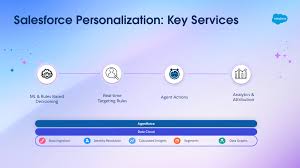
The Future of Hyper-Personalization: Salesforce’s AI-Powered Revolution From Static Campaigns to Real-Time Individualization In today’s digital interaction world, 73% of customers expect companies to understand their unique needs (based on Salesforce Research). Salesforce is answering this demand with a transformative approach to personalization, blending AI, real-time data, and cross-channel orchestration into a seamless system. The Future of Hyper-Personalization is here! The Evolution of Salesforce Personalization From Evergage to AI-Native: A Timeline Key Limitations of Legacy Solutions Introducing Salesforce Personalization: AI at the Core 3 Breakthrough Capabilities How It Works: The Technical Magic Core Components Head-to-Head: Legacy vs. Next-Gen Feature Marketing Cloud Personalization Salesforce Personalization AI Foundation Rules-based Generative + Predictive Data Source Primarily 1st-party Unified (1st/2nd/3rd-party) Channel Coverage Web-centric Omnichannel Setup Complexity High (IT-dependent) Low-code Optimization Manual A/B testing Autonomous AI Proven Impact: Early Results Implementation Roadmap For New Adopters For Existing Marketing Cloud Personalization Users The Future Vision Salesforce is advancing toward: “We’re moving from ‘right message, right time’ to ‘right message before they ask’”— Salesforce CPO Your Next Steps “The last decade was about collecting customer data. This decade is about activating it with intelligence.” Like Related Posts Who is Salesforce? Who is Salesforce? Here is their story in their own words. From our inception, we’ve proudly embraced the identity of Read more Salesforce Marketing Cloud Transactional Emails Salesforce Marketing Cloud Transactional Emails are immediate, automated, non-promotional messages crucial to business operations and customer satisfaction, such as order Read more Salesforce Unites Einstein Analytics with Financial CRM Salesforce has unveiled a comprehensive analytics solution tailored for wealth managers, home office professionals, and retail bankers, merging its Financial Read more AI-Driven Propensity Scores AI plays a crucial role in propensity score estimation as it can discern underlying patterns between treatments and confounding variables Read more

Read More
Dawn of Agentic Marketing

Dawn of Agentic Marketing

The Dawn of Agentic Marketing: How AI is Revolutionizing Campaign Execution Breaking the Marketing Gridlock Today’s marketers face an impossible equation:📈 59% more content demand year-over-year⏰ 68% shorter campaign timelines🔄 42% of time wasted on tool-switching and rework The result? Burned-out teams delivering generic campaigns at the speed of bureaucracy. The Salesforce + Typeface Breakthrough This partnership delivers the first end-to-end agentic marketing system that combines: Salesforce’s Intelligence✔ Real-time customer segments from Data Cloud✔ Predictive engagement scoring✔ Closed-loop performance data Typeface’s Creative Engine✔ AI-generated, brand-governed content✔ Multi-channel campaign assembly✔ Collaborative Spaces for human-AI teamwork How Agentic Marketing Works in Practice 1. Insight → Instant Audience (0-60 in Seconds) “Show me high-intent leads who abandoned carts after viewing summer collections” → AI parses 23 data points across CRM, web, and email→ Delivers segmented audiences with predicted conversion likelihood 2. AI-Assisted Campaign Creation *”What took 3 designers a week now happens before coffee cools” – CMO, Fortune 100 Retailer* 3. Human + AI Co-Creation Typeface Spaces enables:✍️ Real-time team editing🎨 Brand compliance guardrails🔍 Side-by-side variant testing 4. One-Click Omnichannel Launch Publish directly to:✉️ Marketing Cloud emails📱 Paid social platforms🌐 CMS-powered web pages No more:❌ Manual asset transfers❌ Platform-specific reformatting❌ Version control nightmares Proven Results That Matter Metric Improvement Campaign Speed 4 weeks → 3 days Email CTR +93% Production Costs -62% Personalization Depth 3 segments → 28 segments Why This Changes Everything The Future Is Already Here “Agentic marketing isn’t coming—it’s deployed. Our AI handles 60% of campaign execution, while my team focuses on customer journey strategy.”– VP of Digital, Global CPG Brand The age of guesswork is over. The era of insight-driven, AI-accelerated marketing has arrived. Like Related Posts Who is Salesforce? Who is Salesforce? Here is their story in their own words. From our inception, we’ve proudly embraced the identity of Read more Salesforce Marketing Cloud Transactional Emails Salesforce Marketing Cloud Transactional Emails are immediate, automated, non-promotional messages crucial to business operations and customer satisfaction, such as order Read more Salesforce Unites Einstein Analytics with Financial CRM Salesforce has unveiled a comprehensive analytics solution tailored for wealth managers, home office professionals, and retail bankers, merging its Financial Read more AI-Driven Propensity Scores AI plays a crucial role in propensity score estimation as it can discern underlying patterns between treatments and confounding variables Read more
Read More
AI in Networking

The AI Workforce Revolution

The AI Workforce Revolution: How to Lead in the Age of Agentic Automation The Blended Workforce Era is Here AI agent adoption is projected to surge 327% in the next two years, transforming every industry. Managers will soon oversee teams where AI agents work alongside humans—handling tasks from customer service to data analysis. But success isn’t just about deploying AI—it’s about leading a high-performing hybrid workforce. Here’s how to prepare. 1. Address Employee Concerns Early AI anxiety is real. Proactively:✔ Communicate AI’s role—it’s for repetitive tasks (scheduling, data processing), not replacements.✔ Upskill teams for AI-augmented roles (creativity, judgment, strategy).✔ Follow Salesforce’s model: Host Agentforce Learning Days to train employees on AI collaboration. “The future of work isn’t humans vs. AI—it’s humans with AI.” — Jenny Simmons, VP of Learning, Salesforce 2. Onboard AI Agents Like a Pro Forget HR paperwork—AI integration is technical: Human Onboarding AI Agent Onboarding Training & mentorship Configuration & data setup Adapts to ambiguity Needs precise guardrails Needs motivation Requires monitoring & KPIs Key Steps: 3. Master AI Workforce Management Essential Skills for Hybrid Leaders 🔹 AI Delegation – Assign tasks based on strengths (AI = speed, humans = judgment).🔹 Data Literacy – Understand what fuels AI (data sources, biases, gaps).🔹 Ethical Oversight – Know when to override AI (e.g., financial advice for retirees). Example: An AI suggests a high-risk investment—but a human advisor knows the client prefers stability. 4. Build a Culture of Co-Creation ✅ Involve employees in AI rollout—make them co-pilots, not bystanders.✅ Celebrate AI-human wins (e.g., faster service, better insights).✅ Position AI as an enhancer—not a replacement. The Bottom Line The best leaders won’t just manage people—they’ll orchestrate human-AI symphonies. By upskilling teams, refining oversight, and fostering collaboration, you’ll unlock unprecedented productivity and innovation. 🚀 Next Steps: “The companies that thrive won’t just adopt AI—they’ll reimagine work around it.” Like Related Posts Who is Salesforce? Who is Salesforce? Here is their story in their own words. From our inception, we’ve proudly embraced the identity of Read more Salesforce Marketing Cloud Transactional Emails Salesforce Marketing Cloud Transactional Emails are immediate, automated, non-promotional messages crucial to business operations and customer satisfaction, such as order Read more Salesforce Unites Einstein Analytics with Financial CRM Salesforce has unveiled a comprehensive analytics solution tailored for wealth managers, home office professionals, and retail bankers, merging its Financial Read more AI-Driven Propensity Scores AI plays a crucial role in propensity score estimation as it can discern underlying patterns between treatments and confounding variables Read more

Read More

How Reasoning Engines Are Transforming Enterprise Intelligence

The Next Evolution of Business AI: How Reasoning Engines Are Transforming Enterprise Intelligence Beyond Automation: AI That Thinks Like Your Best Employee Today’s business AI does far more than just automate boring, repetitive tasks—it’s drafting strategic emails, generating campaign briefs, and synthesizing complex customer calls. But what separates cutting-edge AI from basic chatbots? The ability to reason. Salesforce’s Agentforce, powered by the revolutionary Atlas Reasoning Engine, represents a quantum leap in enterprise AI—the first system capable of human-like analysis, decision-making, and problem-solving at scale. Why Reasoning Changes Everything Traditional AI assistants operate on: Atlas introduces System 2 Thinking to enterprise AI: “This isn’t automation—it’s augmentation. Atlas handles the cognitive heavy lifting so teams can focus on relationship-building.”—Salesforce AI Product Lead The Atlas Difference: How Enterprise-Grade Reasoning Works 1. Dynamic Problem-Solving Framework 2. Three Layers of Intelligence Reasoning Type Use Case Business Impact Deductive (Facts → Conclusion) Compliance checks 90% faster policy validation Inductive (Patterns → Insight) Sales forecasting 40% more accurate predictions Abductive (Partial data → Probable answer) Customer issue resolution 65% first-contact resolution 3. Enterprise-Grade Guardrails Real-World Impact Across Business Functions Customer Service Sales Enablement Operations The Future of Autonomous Business Agents Agentforce isn’t just another chatbot—it’s the first self-improving AI employee: “Our service team now resolves 40% more cases daily without adding headcount. Atlas handles the routine while humans focus on complex relationships.”—CIO, Global Financial Services Firm Your Next Step The era of reasoning AI is here. Discover how Agentforce can transform: Like Related Posts Who is Salesforce? Who is Salesforce? Here is their story in their own words. From our inception, we’ve proudly embraced the identity of Read more Salesforce Marketing Cloud Transactional Emails Salesforce Marketing Cloud Transactional Emails are immediate, automated, non-promotional messages crucial to business operations and customer satisfaction, such as order Read more Salesforce Unites Einstein Analytics with Financial CRM Salesforce has unveiled a comprehensive analytics solution tailored for wealth managers, home office professionals, and retail bankers, merging its Financial Read more AI-Driven Propensity Scores AI plays a crucial role in propensity score estimation as it can discern underlying patterns between treatments and confounding variables Read more
Read More

Salesforce Industry Clouds

Salesforce Industry Clouds: Tailored Solutions for Public Sector Transformation Government-Specific CRM Built for the Digital Era Salesforce Public Sector Solutions (PSS) represents a paradigm shift in government technology, offering purpose-built applications that combine the power of CRM with public sector operational needs. This comprehensive suite enables agencies to modernize constituent services while maintaining rigorous compliance standards. Core Differentiators Public Sector Solutions Architecture 1. Foundation Layer ![Government Cloud Infrastructure] 2. Government Data Model Standard Object Enhanced Capability Case Violation tracking, benefit eligibility Account Citizen/business entity differentiation Inspection Mobile checklist workflows 3. Prebuilt Applications Diagram Code Download License & Permits Dynamic Forms Fee Automation Grants Mgmt Application Portal Disbursement Tracking Key Solution Areas 🆘 Emergency Program Management 📑 License & Permit Management 🔍 Inspection Management 💰 Grants Management Implementation Framework Phased Rollout Approach Add-On Modules Proven Outcomes BioMADE Case StudyChallenge: 9-month grant approval cyclesSolution: PSS Grants Management + DocuSignResults: Local Government Impact python Copy Download # Productivity metrics after PSS adoption print(f”Case resolution time: {before_hrs}hrs → {after_hrs}hrs”) print(f”Constituent satisfaction: {before_score} → {after_score}”) Typical Output:Case resolution time: 72hrs → 18hrsConstituent satisfaction: 62% → 89% Why Governments Choose Salesforce “PSS allowed us to stand up pandemic relief programs in 11 days – something that previously took 11 months.”— State CIO, Northeast U.S. Like Related Posts Who is Salesforce? Who is Salesforce? Here is their story in their own words. From our inception, we’ve proudly embraced the identity of Read more Salesforce Marketing Cloud Transactional Emails Salesforce Marketing Cloud Transactional Emails are immediate, automated, non-promotional messages crucial to business operations and customer satisfaction, such as order Read more Salesforce Unites Einstein Analytics with Financial CRM Salesforce has unveiled a comprehensive analytics solution tailored for wealth managers, home office professionals, and retail bankers, merging its Financial Read more AI-Driven Propensity Scores AI plays a crucial role in propensity score estimation as it can discern underlying patterns between treatments and confounding variables Read more
Read More

Salesforce Tackles Enterprise AI Reliability with Enterprise General Intelligence (EGI)

As businesses increasingly adopt AI, a critical challenge has emerged: inconsistent performance in real-world applications. Salesforce calls this phenomenon “jagged intelligence”—where AI excels in controlled environments but falters under dynamic enterprise demands. To address this, Salesforce is pioneering Enterprise General Intelligence (EGI), a new framework designed to ensure AI is not just powerful but reliable, consistent, and safe for business use. Why Enterprise AI Needs a New Approach Traditional AI benchmarks often fail to reflect real-world enterprise needs. Issues like: …have made many companies hesitant to fully deploy AI at scale. Salesforce’s EGI rethinks AI alignment for enterprises, prioritizing:✔ Consistency – Reliable performance across diverse business cases✔ Specialization – Task-specific AI models over generic LLMs✔ Safety & Governance – Built-in guardrails for compliance Key Innovations Powering EGI 1. SIMPLE: Measuring AI Consistency Salesforce’s SIMPLE dataset (225 reasoning questions) evaluates how AI performs under varying conditions—helping identify and fix inconsistencies before deployment. 2. CRMArena: Real-World AI Testing This benchmarking framework simulates authentic CRM scenarios (service agents, analysts, managers) to ensure AI adapts to real business needs—not just lab conditions. 3. SFR-Embedding: Smarter Enterprise AI A new embedding model (ranked #1 on MTEB’s 56-dataset benchmark) enhances AI’s ability to understand complex business data, improving decision-making in Salesforce Data Cloud. 4. xLAM V2: AI That Takes Action Unlike text-only LLMs, Large Action Models (xLAM V2) predict and execute enterprise tasks—optimizing everything from inventory management to financial forecasting with high precision. 5. SFR-Guard & ContextualJudgeBench: AI Safety Co-Innovation: Doubling AI Accuracy with Customer Feedback Salesforce’s customer-driven development has already doubled AI accuracy in key applications. Itai Asseo, Senior Director of Incubation & Brand Strategy at Salesforce: “By working directly with enterprises, we’ve refined AI to outperform competitors in real-world use cases—boosting both performance and trust.” The Future of Enterprise AI Salesforce’s EGI framework is setting a new standard: AI that works as reliably in business as it does in theory. For telecom and tech leaders, this means:✅ Fewer AI surprises – Consistent, predictable outputs✅ Higher ROI – Specialized models for key workflows✅ Stronger compliance – Built-in governance & safety As AI evolves, Salesforce is ensuring enterprises don’t just adopt AI—they can depend on it. Next Steps: The era of reliable enterprise AI is here. Like Related Posts Who is Salesforce? Who is Salesforce? Here is their story in their own words. From our inception, we’ve proudly embraced the identity of Read more Salesforce Marketing Cloud Transactional Emails Salesforce Marketing Cloud Transactional Emails are immediate, automated, non-promotional messages crucial to business operations and customer satisfaction, such as order Read more Salesforce Unites Einstein Analytics with Financial CRM Salesforce has unveiled a comprehensive analytics solution tailored for wealth managers, home office professionals, and retail bankers, merging its Financial Read more AI-Driven Propensity Scores AI plays a crucial role in propensity score estimation as it can discern underlying patterns between treatments and confounding variables Read more
Read More
Create a Service Provider Portal in PSS

Salesforce Industry Clouds: Tailored Solutions for Public Sector Transformation

Salesforce Public Sector Solutions (PSS) represents a paradigm shift in government technology, offering purpose-built applications that combine the power of CRM with public sector operational needs. This comprehensive suite enables agencies to modernize constituent services while maintaining rigorous compliance standards. Core Differentiators Public Sector Solutions Architecture 1. Foundation Layer ![Government Cloud Infrastructure] 2. Government Data Model Standard Object Enhanced Capability Case Violation tracking, benefit eligibility Account Citizen/business entity differentiation Inspection Mobile checklist workflows 3. Prebuilt Applications Diagram Code Download License & Permits Dynamic Forms Fee Automation Grants Mgmt Application Portal Disbursement Tracking Key Solution Areas 🆘 Emergency Program Management 📑 License & Permit Management 🔍 Inspection Management 💰 Grants Management Implementation Framework Phased Rollout Approach Add-On Modules Proven Outcomes BioMADE Case StudyChallenge: 9-month grant approval cyclesSolution: PSS Grants Management + DocuSignResults: Local Government Impact python Copy Download # Productivity metrics after PSS adoption print(f”Case resolution time: {before_hrs}hrs → {after_hrs}hrs”) print(f”Constituent satisfaction: {before_score} → {after_score}”) Typical Output:Case resolution time: 72hrs → 18hrsConstituent satisfaction: 62% → 89% Why Governments Choose Salesforce “PSS allowed us to stand up pandemic relief programs in 11 days – something that previously took 11 months.”— State CIO, Northeast U.S. Like Related Posts Who is Salesforce? Who is Salesforce? Here is their story in their own words. From our inception, we’ve proudly embraced the identity of Read more Salesforce Marketing Cloud Transactional Emails Salesforce Marketing Cloud Transactional Emails are immediate, automated, non-promotional messages crucial to business operations and customer satisfaction, such as order Read more Salesforce Unites Einstein Analytics with Financial CRM Salesforce has unveiled a comprehensive analytics solution tailored for wealth managers, home office professionals, and retail bankers, merging its Financial Read more AI-Driven Propensity Scores AI plays a crucial role in propensity score estimation as it can discern underlying patterns between treatments and confounding variables Read more

Read More
gettectonic.com