
Integrations Archives - gettectonic.com - Page 6
Enhance Business Communication with Accurate Email Verification in Salesforce

Enhance Business Communication with Accurate Email Verification in Salesforce

Email is the backbone of business communication, powering client interactions, customer engagement, and marketing campaigns. However, inaccurate email data can hurt your marketing efforts, damage your sender reputation, and lead to wasted resources. Verifying email addresses in Salesforce ensures data accuracy, improves deliverability, and strengthens overall communication efficiency. This guide explores how to easily verify email addresses in Salesforce, including a seamless solution—VTM (Verify the Email)—designed to simplify the process. How to Verify User Email Addresses in Salesforce Salesforce provides a built-in feature for verifying user email addresses when setting up accounts. This ensures that the email is active and functional. Here’s how: 1️⃣ Access Salesforce Setup – Navigate to the Setup Menu in Salesforce.2️⃣ Find the User Profile – Go to the Administration page, select Users, and choose the specific user account that needs verification.3️⃣ Trigger the Verification Email – When an email address is updated, Salesforce sends an automated verification email to the user.4️⃣ Confirm the Email – The user must click the link in the email to complete verification. While this method ensures the validity of user emails, it’s limited to Salesforce accounts. What about verifying emails for leads, contacts, and accounts? That’s where VTM comes in. Why Email Verification Matters in Salesforce Before diving into how VTM enhances verification, let’s explore why email validation is crucial: ✅ Improved Deliverability – Invalid email addresses cause bounces, harming your sender reputation and lowering future email success rates. ✅ Data Accuracy – Keeping Salesforce records clean ensures your team engages with valid contacts, reducing inefficiencies and missed opportunities. ✅ Compliance & Trust – Verifying emails helps maintain compliance with GDPR, CAN-SPAM, and other regulations, protecting your business from legal risks. ✅ Cost Efficiency – Many email marketing tools charge per email sent. Verifying addresses prevents wasted spending on invalid contacts. Given these challenges, VTM offers a scalable, automated solution for seamless email verification directly within Salesforce. How VTM Streamlines Email Verification in Salesforce Verify Email Addresses Without Sending Emails VTM checks the existence, domain status, and active mailbox availability of an email address—without sending actual emails. This prevents spam filter triggers and ensures verification happens discreetly. Batch Verification for Large Datasets Managing a large database? VTM enables bulk verification, allowing users to validate thousands of email addresses at once. This ensures your Salesforce data stays accurate and reliable, improving email campaign success rates. Real-Time Email Validation VTM performs instant email verification when new addresses are added to Salesforce. This proactive approach helps sales and marketing teams avoid bad data before campaigns even begin. Ensure Compliance with Email Regulations VTM helps businesses meet email security and compliance standards, ensuring verified addresses align with GDPR, CAN-SPAM, and other email regulations. This protects your organization from potential penalties while maintaining customer trust. Boost Marketing ROI Invalid email addresses can cause even the best-planned campaigns to fail. By verifying emails with VTM, businesses increase open rates, click-through rates, and overall campaign ROI. Seamless Salesforce Integration VTM operates entirely within Salesforce, offering a user-friendly experience with no need to switch between platforms. Its intuitive interface makes email verification simple and efficient for all users. Take Control of Your Email Data in Salesforce Ensuring email accuracy is key to business success. Whether you’re looking to improve deliverability, reduce bounces, or enhance campaign efficiency, VTM provides a powerful solution to keep your Salesforce data clean and reliable. Like Related Posts Who is Salesforce? Who is Salesforce? Here is their story in their own words. From our inception, we’ve proudly embraced the identity of Read more Salesforce Marketing Cloud Transactional Emails Salesforce Marketing Cloud Transactional Emails are immediate, automated, non-promotional messages crucial to business operations and customer satisfaction, such as order Read more Salesforce Unites Einstein Analytics with Financial CRM Salesforce has unveiled a comprehensive analytics solution tailored for wealth managers, home office professionals, and retail bankers, merging its Financial Read more AI-Driven Propensity Scores AI plays a crucial role in propensity score estimation as it can discern underlying patterns between treatments and confounding variables Read more


Read More
The Event-Driven Paradigm for Next-Generation AI Agents

The Event-Driven Paradigm for Next-Generation AI Agents

The Infrastructure Imperative for AI Evolution The enterprise landscape stands at an inflection point where AI agents promise autonomous decision-making and adaptive workflows at scale. However, the critical barrier to realizing this potential isn’t model sophistication—it’s architectural. True agentic systems require: These requirements fundamentally represent an infrastructure challenge that demands event-driven architecture (EDA) as the foundational framework for agent deployment and scaling. The Three Waves of AI Evolution First Wave: Predictive Models Characterized by: These deterministic systems excelled at specialized tasks but proved rigid and unscalable across business functions. Second Wave: Generative Models Marked by breakthroughs in: However, these models remained constrained by: Third Wave: Agentic Systems Emerging capabilities include: This evolution shifts focus from model architecture to system architecture, where EDA becomes the critical enabler. The Compound AI Advantage Modern agent systems combine multiple architectural components: This compound approach overcomes the limitations of standalone models through: Event-Driven Architecture: The Nervous System for Agents Core EDA Principles for AI Systems Implementation Benefits Architectural Patterns for Agentic Systems 1. Reflective Processing <img src=”reflection-pattern.png” width=”400″ alt=”Reflection design pattern diagram”> Agents employ meta-cognition to: 2. Dynamic Tool Orchestration <img src=”tool-use-pattern.png” width=”400″ alt=”Tool use design pattern diagram”> Capabilities include: 3. Hierarchical Planning <img src=”planning-pattern.png” width=”400″ alt=”Planning design pattern diagram”> Features: 4. Collaborative Multi-Agent Systems <img src=”multi-agent-pattern.png” width=”400″ alt=”Multi-agent collaboration diagram”> Enables: The Enterprise Integration Challenge Critical Success Factors Implementation Roadmap Phase 1: Foundation Phase 2: Capability Expansion Phase 3: Optimization The Competitive Imperative Enterprise readiness data reveals: Early adopters of event-driven agent architectures gain: The transition to agentic operations represents not just technological evolution but fundamental business transformation. Organizations that implement EDA foundations today will dominate the AI-powered enterprise landscape of tomorrow. Those failing to adapt risk joining the legacy systems they currently maintain—as historical footnotes in the annals of digital transformation. Like Related Posts Who is Salesforce? Who is Salesforce? Here is their story in their own words. From our inception, we’ve proudly embraced the identity of Read more Salesforce Unites Einstein Analytics with Financial CRM Salesforce has unveiled a comprehensive analytics solution tailored for wealth managers, home office professionals, and retail bankers, merging its Financial Read more AI-Driven Propensity Scores AI plays a crucial role in propensity score estimation as it can discern underlying patterns between treatments and confounding variables Read more Tectonic’s Successful Salesforce Track Record Salesforce Technology Services Integrator – Tectonic has successfully delivered Salesforce in a variety of industries including Public Sector, Hospitality, Manufacturing, Read more

Read More
salesforce end to end

Salesforce and Google Announcement

Salesforce (NYSE:CRM) has entered into a deal with Google (NASDAQ:GOOGL) to offer its customer relations management software, Agentforce artificial intelligence assistants, and Data Cloud offerings through Google Cloud, the companies announced today. Google and Salesforce already have many of the same clients, and this new deal will allow for more product integration between Google Workspace and Salesforce’s customer relationship management and AI offerings. Salesforce already uses Amazon (AMZN) Web Services for much of its cloud computing. “Our mutual customers have asked us to be able to work more seamlessly across Salesforce and Google Cloud, and this expanded partnership will help them accelerate their AI transformations with agentic AI, state-of-the-art AI models, data analytics, and more,” said Thomas Kurian, CEO of Google Cloud. The deal is expected to total $2.5B over the next seven years, according to a report by Bloomberg. Salesforce and Google today announced a major expansion of their strategic partnership, delivering choice in the models and capabilities businesses use to build and deploy AI-powered agents. In today’s constantly evolving AI landscape, innovations like autonomous agents are emerging so quickly that businesses struggle to keep pace. This expanded partnership provides crucial flexibility, empowering customers to develop tailored AI solutions that meet their specific needs, rather than being locked into a single model provider. Google Cloud is at the forefront of enterprise AI innovation with millions of developers building with Google’s cutting-edge Gemini models and on Google Cloud’s AI-optimized infrastructure. This expanded partnership will empower Salesforce customers to build Agentforce agents using Gemini and to deploy Salesforce on Google Cloud. This is an expansion of the existing partnership that allows customers to use data from Data Cloud and Google BigQuery bi-directionally via zero-copy technology—further equipping customers with the data, AI, trust, and actions they need to bring autonomous agents into their businesses. Additionally, this integration empowers Agentforce agents with the ability to reference up-to-the-minute data, news, current events, and credible citations, substantially enhancing their contextual awareness and ability to deliver accurate, evidence-backed responses. For example, in supply chain management and logistics, an agent built with Agentforce could track shipments and monitor inventory levels in Salesforce Commerce Cloud and proactively identify potential disruptions using real-time data from Google Search, including weather conditions, port congestion, and geopolitical events. Availability is expected in the coming months. AI: Unlocking the Power of Choice and Flexibility with Gemini and Agentforce Businesses need the freedom to choose the best models for their needs rather than be locked into one vendor. In 2025, Google’s Gemini models will also be available for prompt building and reasoning directly within Agentforce. With Gemini and Agentforce, businesses will benefit from: For example, an insurance customer can submit a claim with photos of the damage and an audio voicemail from a witness. Agentforce, using Gemini, can then help the insurance provider deliver better customer experiences by processing all these inputs, assessing the claim’s validity, and even using text-to-speech to contact the customer with a resolution, streamlining the traditionally lengthy claims process. Availability is expected this year. Trust: Salesforce Platform deployed on Google Cloud Customers will be able to use Salesforce’s unified platform (Agentforce, Data Cloud, Customer 360) on Google Cloud’s highly secure, AI-optimized infrastructure, benefiting from features like dynamic grounding, zero data retention, and toxicity detection provided by the Einstein Trust Layer. Once Salesforce products are available on Google Cloud, customers will also have the ability to procure Salesforce offerings through the Google Cloud Marketplace, opening up new possibilities for global businesses to optimize their investments across Salesforce and Google Cloud and benefiting thousands of existing joint customers. Action: Enhanced Employee Productivity and Customer Service with AI-Powered Integrations Millions use Salesforce and Google Cloud daily. This partnership prioritizes choice and flexibility, enabling seamless cross-platform work. New and deeper connections between platforms like Salesforce Service Cloud and Google Cloud’s Customer Engagement Suite, as well as Slack and Google Workspace, will empower AI agents and service representatives with unified data access, streamlined workflows, and advanced AI capabilities, regardless of platform. Salesforce and Google Cloud are deeply integrating their customer service platforms—Salesforce Service Cloud and Google Cloud’s Customer Engagement Suite—to create a seamless and intelligent support experience. Expected later this year, this unified approach empowers AI agents in Service Cloud with: Salesforce and Google Cloud are also exploring deeper integrations between Slack and Google Workspace, boosting productivity and creating a more cohesive digital workspace for teams and organizations. The companies are currently exploring use cases such as: Expanding Partnership Capabilities and Integrations This partnership goes beyond core product integrations to deliver a more connected and intelligent data foundation for businesses. Expected availability throughout 2025: This landmark partnership between Salesforce and Google represents a strategic paradigm shift in enterprise AI deployment, emphasizing infrastructure innovation, AI capability enhancement, and enterprise value. The integration of Google Search grounding provides a unique competitive advantage, offering real-time, factual responses backed by the world’s most comprehensive search engine. The companies are committed to ongoing innovation and deeper collaboration to empower businesses with even more powerful solutions. Like1 Related Posts Who is Salesforce? Who is Salesforce? Here is their story in their own words. From our inception, we’ve proudly embraced the identity of Read more Salesforce Marketing Cloud Transactional Emails Salesforce Marketing Cloud Transactional Emails are immediate, automated, non-promotional messages crucial to business operations and customer satisfaction, such as order Read more Salesforce Unites Einstein Analytics with Financial CRM Salesforce has unveiled a comprehensive analytics solution tailored for wealth managers, home office professionals, and retail bankers, merging its Financial Read more AI-Driven Propensity Scores AI plays a crucial role in propensity score estimation as it can discern underlying patterns between treatments and confounding variables Read more

Read More
Conga and Salesforce

Conga Strengthens Partnership with Salesforce

Conga has enhanced its Revenue Lifecycle Management solution by integrating with Salesforce Foundations, a free add-on available to all Salesforce CRM customers. What is Salesforce Foundations? Salesforce Foundations is a no-cost upgrade designed to bring powerful cross-departmental capabilities to every Salesforce customer. It includes features spanning: Additionally, Foundations offers access to thousands of prebuilt third-party extensions and integrations via Salesforce AppExchange, including extended free trials of Conga products at no extra cost. What This Partnership Means for Customers With Conga’s integration into Salesforce Foundations, customers can: Executive Perspectives Brian Landsman, Executive Vice President of Partnerships at Salesforce, stated: “I am thrilled to have one of our top ISV partners like Conga collaborating with us on Salesforce Foundations. Our launch partner apps provide customers with key functionality and enhance their experience through thousands of pre-built third-party extensions and integrations.” Noel Goggin, CEO and Culture Leader at Conga, shared: “We’re excited to collaborate with Salesforce, offering customers seamless access to third-party apps like Conga to enhance their systems and better automate processes across their organizations. By integrating Conga’s solutions, businesses can streamline operations, increase productivity, and drive greater customer engagement, ultimately fueling growth. Conga’s products empower customers to optimize their revenue processes and stay competitive in an evolving market.” The Bigger Picture This collaboration underscores Conga’s commitment to empowering Salesforce customers with tools that simplify processes and enhance operational efficiency. By integrating its solutions with Salesforce Foundations, Conga helps businesses unlock greater value, improve customer engagement, and drive growth in an ever-changing marketplace. Like Related Posts Who is Salesforce? Who is Salesforce? Here is their story in their own words. From our inception, we’ve proudly embraced the identity of Read more Salesforce Marketing Cloud Transactional Emails Salesforce Marketing Cloud Transactional Emails are immediate, automated, non-promotional messages crucial to business operations and customer satisfaction, such as order Read more Salesforce Unites Einstein Analytics with Financial CRM Salesforce has unveiled a comprehensive analytics solution tailored for wealth managers, home office professionals, and retail bankers, merging its Financial Read more AI-Driven Propensity Scores AI plays a crucial role in propensity score estimation as it can discern underlying patterns between treatments and confounding variables Read more

Read More
Navigating the New Era of Agentic Customer Engagement

Navigating the New Era of Agentic Customer Engagement

Marketing is undergoing a seismic shift—from the tech-stack heavy approaches of the past decade to AI-driven, agentic customer engagement. No longer bogged down by complex integrations and data wrangling, marketers can now focus on what truly matters: creating meaningful, personalized customer experiences at scale. Welcome to the age of AI marketing agents—intelligent systems that learn from human expertise, then execute strategies autonomously. Unlike traditional customer service bots (which handle 1:1 interactions), marketing agents amplify human-approved content, campaigns, and branding across millions of touchpoints, ensuring consistency and precision at every step. Why Agentic Engagement is the Future The rapid evolution of AI has unlocked unprecedented capabilities: For marketers, this means:✔ Hyper-personalization at scale✔ Faster time-to-market for campaigns✔ Data-driven decision-making with AI-powered insights✔ More time for creativity & strategy (less manual execution) How AI Agents Enhance Marketing Marketing agents don’t replace humans—they augment them. Here’s how: 1. Agentic Content 2. Agentic Campaign Planning 3. Agentic Branding 4. Agentic Creative 5. Agentic Optimization The Human-Agent Partnership The best outcomes happen when human creativity meets AI efficiency: The Agent-to-Agent Ecosystem Imagine: This interconnected system creates a self-optimizing marketing engine. How to Prepare for the Agentic Future 1. Start Small, Scale Smart 2. Upskill Your Team 3. Strengthen Data Infrastructure 4. Establish Governance 5. Keep Humans in the Loop The Bottom Line Agentic engagement isn’t just another tech trend—it’s a fundamental shift in marketing. Companies that embrace it will:🚀 Launch campaigns faster🎯 Deliver hyper-relevant experiences📈 Drive higher ROI with AI-powered optimization The future belongs to marketers who harness AI agents as force multipliers—freeing teams to focus on strategy, storytelling, and innovation. Ready to step into the agentic era? Start experimenting today. Like Related Posts Who is Salesforce? Who is Salesforce? Here is their story in their own words. From our inception, we’ve proudly embraced the identity of Read more Salesforce Marketing Cloud Transactional Emails Salesforce Marketing Cloud Transactional Emails are immediate, automated, non-promotional messages crucial to business operations and customer satisfaction, such as order Read more Salesforce Unites Einstein Analytics with Financial CRM Salesforce has unveiled a comprehensive analytics solution tailored for wealth managers, home office professionals, and retail bankers, merging its Financial Read more AI-Driven Propensity Scores AI plays a crucial role in propensity score estimation as it can discern underlying patterns between treatments and confounding variables Read more
Read More
ChatGPT 5.0 is Coming

ChatGPT Search

OpenAI’s ChatGPT Search: Everything You Need to Know ChatGPT Search is OpenAI’s generative AI-powered search engine, designed to provide real-time information while eliminating the limitations of traditional language models’ knowledge cutoffs. It combines conversational AI with real-time web search, offering up-to-date insights, summaries, and more. Here’s a deep dive into what makes ChatGPT Search unique and how it compares to existing solutions like Google. Overcoming Knowledge Cutoffs Earlier iterations of OpenAI’s models, like GPT-4 (October 2023 cutoff) and GPT-3 (September 2021 cutoff), lacked the ability to access real-time data, a significant drawback for users seeking the latest information. By integrating live search capabilities, ChatGPT Search resolves this issue. Unlike traditional search engines like Google, which continuously crawl and update web indexes, ChatGPT combines the strengths of its GPT-4o model with live web access, bridging the gap between generative AI and real-time search. What Is ChatGPT Search? Launched on October 31, 2024, after being prototyped as “SearchGPT,” ChatGPT Search pairs OpenAI’s advanced language models with live web search. Initially available to ChatGPT Plus and Team users, it will expand to Enterprise, Education, and free-tier users by early 2025. Key Features of ChatGPT Search How Does It Work? ChatGPT Search leverages the following technologies: Accessing ChatGPT Search ChatGPT Search is accessible through multiple platforms: Why ChatGPT Search Challenges Google While Google dominates the search market, OpenAI’s ChatGPT Search introduces key differentiators: AI-Powered Search Engine Comparison Search Engine Platform Integration Publisher Collaboration Ads Cost ChatGPT Search OpenAI infrastructure Strong media partnerships Ad-free Free (Premium tiers planned) Google AI Overviews Google infrastructure SEO-focused partnerships Ads included Free Bing AI Microsoft infrastructure SEO-focused partnerships Ads included Free Perplexity AI Independent, standalone Basic attribution Ad-free Free; $20/month premium You.com Multi-mode AI assistant Basic attribution Ad-free Free; premium available Brave Search Independent index Basic attribution Ad-free Free The Roadmap for ChatGPT Search OpenAI has ambitious plans to refine and expand ChatGPT Search, including: Conclusion ChatGPT Search marks a pivotal shift in how users interact with AI and access information. By combining the generative power of GPT-4o with real-time search, OpenAI has created a tool that rivals traditional search engines with conversational AI, summarized insights, and ad-free functionality. As OpenAI continues to refine the platform, ChatGPT Search is poised to redefine the way we find and interact with information—offering a glimpse into the future of search. Like Related Posts Who is Salesforce? Who is Salesforce? Here is their story in their own words. From our inception, we’ve proudly embraced the identity of Read more Salesforce Unites Einstein Analytics with Financial CRM Salesforce has unveiled a comprehensive analytics solution tailored for wealth managers, home office professionals, and retail bankers, merging its Financial Read more AI-Driven Propensity Scores AI plays a crucial role in propensity score estimation as it can discern underlying patterns between treatments and confounding variables Read more Tectonic’s Successful Salesforce Track Record Salesforce Technology Services Integrator – Tectonic has successfully delivered Salesforce in a variety of industries including Public Sector, Hospitality, Manufacturing, Read more
Read More
Agentforce Redefines Generative AI

The Rise of Agentic AI: Balancing Innovation and Trust

Agentic AI is transforming industries, and Salesforce’s Agentforce is proving to be a catalyst for both economic growth and workforce empowerment. For companies like Wiley, Agentforce has increased case resolutions by 40%, surpassing the performance of its previous chatbot and allowing employees to focus on more complex cases. However, a new Salesforce white paper emphasizes that simply deploying AI agents isn’t enough to drive productivity and build trust—they must operate within well-defined frameworks that ensure responsible AI adoption. “AI has the potential to enhance trust, efficiency, and effectiveness in our institutions,” said Eric Loeb, EVP of Global Government Affairs at Salesforce. “Salesforce research shows 90% of constituents are open to using AI agents for government services, drawn by benefits like 24/7 access, faster response times, and streamlined processes.” Key Considerations for Policymakers in the Age of AI Agents To strike a balance between risk and opportunity, the Salesforce white paper outlines critical areas policymakers must address: 🔹 Human-AI Collaboration – Employees must develop new skills to configure, manage, and oversee AI agents, ensuring they can be easily programmed and adapted for various tasks. 🔹 Reliability & Guardrails – AI agents must be engineered with fail-safes that enable clear handoffs to human workers and mechanisms to detect and correct AI hallucinations. 🔹 Cross-Domain Fluency – AI must be designed to interpret and act on data from diverse sources, making seamless enterprise-wide integrations essential. 🔹 Transparency & Explainability – Users must know when they’re interacting with AI, and regulators need visibility into how decisions are made to ensure compliance and accountability. 🔹 Data Governance & Privacy – AI agents often require access to sensitive information. Strong privacy and security safeguards are crucial to maintaining trust. 🔹 Security & AI Safety – AI systems must be resilient against adversarial attacks that attempt to manipulate or deceive them into producing inaccurate outputs. 🔹 Ethical AI Use – Companies should establish clear ethical guidelines to govern AI behavior, ensuring responsible deployment and human-AI collaboration. 🔹 Agent-to-Agent Interactions – Standardized protocols and security measures must be in place to ensure controlled, predictable AI behavior and auditability of decisions. Building an Agent-Ready Ecosystem While AI agents represent the next wave of enterprise innovation, policy frameworks must evolve to foster responsible adoption. Policymakers must look beyond AI development and equip the workforce with the skills needed to work alongside these digital assistants. “It’s no longer a question of whether AI agents should be part of the workforce—but how to optimize human and digital labor to achieve the best outcomes,” said Loeb. “Governments must implement policies that ensure AI agents are deployed responsibly, creating more meaningful and productive work environments.” Next Steps Salesforce’s white paper provides a roadmap for policymakers navigating the agentic AI revolution. By focusing on risk-based approaches, transparency, and robust safety measures, businesses and governments alike can unlock the full potential of AI agents—while ensuring trust, accountability, and innovation. Like Related Posts Who is Salesforce? Who is Salesforce? Here is their story in their own words. From our inception, we’ve proudly embraced the identity of Read more Salesforce Marketing Cloud Transactional Emails Salesforce Marketing Cloud Transactional Emails are immediate, automated, non-promotional messages crucial to business operations and customer satisfaction, such as order Read more Salesforce Unites Einstein Analytics with Financial CRM Salesforce has unveiled a comprehensive analytics solution tailored for wealth managers, home office professionals, and retail bankers, merging its Financial Read more AI-Driven Propensity Scores AI plays a crucial role in propensity score estimation as it can discern underlying patterns between treatments and confounding variables Read more

Read More
agentforce digital workforce

How Agentforce Works

Salesforce Agentforce: Everything You Need to Know Salesforce Agentforce represents a paradigm shift from generative AI to agentic AI—a new class of AI capable of autonomous action. Since its launch at Dreamforce in September 2024, Agentforce has redefined the conversation around AI, customer service, and experience management. To meet skyrocketing demand, Salesforce announced plans to hire more than 1,000 employees shortly after the launch. What is Salesforce Agentforce? Agentforce is a next-generation platform layer within the Salesforce ecosystem. While its bots leverage generative AI capabilities, they differ significantly from platforms like ChatGPT or Google Gemini. Agentforce bots are designed not just to generate responses but to act autonomously within predefined organizational guardrails. Unlike traditional chatbots, which follow scripted patterns, Agentforce AI agents are trained on proprietary data, enabling flexible and contextually accurate responses. They also integrate with Salesforce’s Data Cloud, enhancing their capacity to access and utilize customer data effectively. Agentforce combines three core tools—Agent Builder, Model Builder, and Prompt Builder—allowing businesses to create customized bots using low-code tools. Key Features of Agentforce The platform offers ready-to-deploy AI agents tailored for various industries, including: Agentforce officially became available on October 25, 2024, with pricing starting at $2 per conversation, and volume discounts offered for enterprise customers. Salesforce also launched the Agentforce Partner Network, enabling third-party integrations and custom agent designs for expanded functionality. How Agentforce Works Salesforce designed Agentforce for users without deep technical expertise in AI. As CEO Marc Benioff said, “This is AI for the rest of us.” The platform is powered by the upgraded Atlas Reasoning Engine, a component of Salesforce Einstein AI, which mimics human reasoning and planning. Like self-driving cars, Agentforce interprets real-time data to adapt its actions and operates autonomously within its established parameters. Enhanced Atlas Reasoning Engine In December 2024, Salesforce enhanced the Atlas Reasoning Engine with retrieval-augmented generation (RAG) and advanced reasoning capabilities. These upgrades allow agents to: Seamless Integrations with Salesforce Tools Agentforce is deeply integrated with Salesforce’s ecosystem: Key Developments Agentforce Testing Center Launched in December 2024, the Testing Center allows businesses to test agents before deployment, ensuring they are accurate, fast, and aligned with organizational goals. Skill and Integration Library Salesforce introduced a pre-built library for CRM, Slack, Tableau, and MuleSoft integrations, simplifying agent customization. Examples include: Industry-Specific Expansion Agentforce for Retail Announced at the NRF conference in January 2025, this solution offers pre-built skills tailored to retail, such as: Additionally, Salesforce unveiled Retail Cloud with Modern POS, unifying online and offline inventory data. Notable Agentforce Customers Looking Ahead Marc Benioff calls Agentforce “the third wave of AI”, advancing beyond copilots into a new era of autonomous, low-hallucination intelligent agents. With its robust capabilities, Agentforce is positioned to transform how businesses interact with customers, automate workflows, and drive success. Like Related Posts Who is Salesforce? Who is Salesforce? Here is their story in their own words. From our inception, we’ve proudly embraced the identity of Read more Salesforce Marketing Cloud Transactional Emails Salesforce Marketing Cloud Transactional Emails are immediate, automated, non-promotional messages crucial to business operations and customer satisfaction, such as order Read more Salesforce Unites Einstein Analytics with Financial CRM Salesforce has unveiled a comprehensive analytics solution tailored for wealth managers, home office professionals, and retail bankers, merging its Financial Read more AI-Driven Propensity Scores AI plays a crucial role in propensity score estimation as it can discern underlying patterns between treatments and confounding variables Read more

Read More
bring your own channel with salesforce

Bring Your Own Channel With Salesforce

Bring Your Own Channel: Seamlessly Connect Your Preferred Communication Tools to Salesforce Unified Customer Engagement on Your Terms Salesforce’s Bring Your Own Channel (BYOC) solutions empower businesses to integrate their preferred messaging and contact center platforms while maintaining a consistent agent experience within Salesforce. This flexible approach lets you leverage best-of-breed communication tools without sacrificing Salesforce’s powerful CRM capabilities. Two Powerful Integration Options 1. Bring Your Own Channel for Messaging (Generally Available) 2. Bring Your Own Channel for CCaaS Key Capabilities & Enhancements For Developers Enhanced Messaging Features Operational Improvements Why Choose Bring Your Own Channel? ✔ Preserve your existing tech investments while gaining Salesforce integration✔ Maintain agent efficiency with consistent Salesforce UI✔ Enhance customer experiences with richer messaging options✔ Future-proof your architecture with flexible API-driven connections “BYOC gives us the best of both worlds – our preferred communication channels with Salesforce’s powerful CRM capabilities.”— Enterprise Contact Center Director Transform your customer engagement with the freedom to choose your channels and the power of Salesforce. Like Related Posts Who is Salesforce? Who is Salesforce? Here is their story in their own words. From our inception, we’ve proudly embraced the identity of Read more Salesforce Marketing Cloud Transactional Emails Salesforce Marketing Cloud Transactional Emails are immediate, automated, non-promotional messages crucial to business operations and customer satisfaction, such as order Read more Salesforce Unites Einstein Analytics with Financial CRM Salesforce has unveiled a comprehensive analytics solution tailored for wealth managers, home office professionals, and retail bankers, merging its Financial Read more AI-Driven Propensity Scores AI plays a crucial role in propensity score estimation as it can discern underlying patterns between treatments and confounding variables Read more

Read More
Rule-Based vs. Machine Learning Deduplication Approaches

Rule-Based vs. Machine Learning Deduplication Approaches

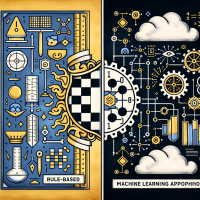
Choosing the Right Tool for Salesforce Deduplication: Rule-Based vs. Machine Learning Approaches When you browse Salesforce AppExchange for a deduplication solution, you’re presented with two primary options: rule-based deduplication tools or machine learning-powered applications. Both have their strengths, but understanding their methods will help you make an informed decision. Below, we’ll explore these approaches and their pros and cons to guide your choice. Why Salesforce’s Built-in Deduplication Falls Short Salesforce, while a powerful CRM, doesn’t excel at large-scale deduplication. Its native tools are limited to basic, rule-based matching, which may struggle with complexities like typos, inconsistent formatting, or unstructured data. Additionally, Salesforce’s deduplication features lack the scalability required for organizations dealing with large datasets or multiple data sources (e.g., third-party integrations, legacy systems). Businesses often need supplemental tools to address overlapping records or inconsistencies effectively. How Rule-Based Deduplication Works Popular rule-based tools on AppExchange, such as Cloudingo, DemandTools, DataGroomr, and Duplicate Check, require users to create filters that define what constitutes a duplicate. For example: Ultimately, the user manually defines the rules, deciding how duplicates are identified and handled. Benefits of Rule-Based Deduplication Drawbacks of Rule-Based Deduplication How Machine Learning-Based Deduplication Works Machine learning (ML)-powered tools rely on algorithms to identify patterns and relationships in data, detecting duplicates that may not be apparent through rigid rules. Key Features of ML Deduplication Techniques Used Benefits of ML-Based Deduplication Drawbacks of ML-Based Deduplication When to Choose Rule-Based vs. Machine Learning Deduplication Choose Rule-Based Deduplication If: Choose Machine Learning-Based Deduplication If: Selecting the Right Deduplication Tool When evaluating tools on AppExchange, consider these factors: Tectonic’s Closing Thoughts Rule-based and machine learning-based deduplication each serve distinct purposes. The right choice depends on your data’s complexity, the resources available, and your organization’s goals. Whether you’re seeking a quick, transparent solution or a powerful, scalable tool, AppExchange offers options to meet your needs and help maintain a clean Salesforce data environment. Like Related Posts Who is Salesforce? Who is Salesforce? Here is their story in their own words. From our inception, we’ve proudly embraced the identity of Read more Salesforce Marketing Cloud Transactional Emails Salesforce Marketing Cloud Transactional Emails are immediate, automated, non-promotional messages crucial to business operations and customer satisfaction, such as order Read more Salesforce Unites Einstein Analytics with Financial CRM Salesforce has unveiled a comprehensive analytics solution tailored for wealth managers, home office professionals, and retail bankers, merging its Financial Read more AI-Driven Propensity Scores AI plays a crucial role in propensity score estimation as it can discern underlying patterns between treatments and confounding variables Read more
Read More
Financial Services Sector

Fundingo Outshines Mortgage Automator

Why Fundingo Outshines Mortgage Automator: A Salesforce-Based Perspective Introduction In the dynamic world of loan servicing and mortgage management, businesses face increasing demands for flexibility, efficiency, and scalability. While Mortgage Automator is a well-known provider, many users encounter significant challenges, including inflexible loan structures and cumbersome reporting processes. Fundingo, a Salesforce-native solution, addresses these issues head-on with a modern, adaptable, and user-friendly approach to loan management. Pain Points of Mortgage Automator Despite its established presence, Mortgage Automator comes with notable limitations: Fundingo’s Competitive Edge Fundingo offers a suite of advantages designed for modern lending institutions, making it the superior choice: Head-to-Head Comparison Feature Fundingo Mortgage Automator Flexibility High – Supports diverse loan products Limited – Rigid loan structures Reporting Automated and user-friendly Complex and manual processes Integrations Seamless with Salesforce ecosystem Poor integration capabilities Scalability Cost-effective, built-in scalability Expensive add-ons hinder growth Security & Compliance SOC 1 certified Basic security measures Summary Fundingo emerges as the ideal solution for modern loan servicing and mortgage management. By addressing the common challenges associated with Mortgage Automator—rigid loan structures, manual processes, and costly add-ons—Fundingo provides a flexible, scalable, and secure alternative. Its Salesforce-native design, built-in CRM, mobile accessibility, exceptional uptime, and robust security measures make it the best competitor in the market, empowering financial institutions to deliver exceptional service while optimizing operational efficiency. Like Related Posts Who is Salesforce? Who is Salesforce? Here is their story in their own words. From our inception, we’ve proudly embraced the identity of Read more Salesforce Marketing Cloud Transactional Emails Salesforce Marketing Cloud Transactional Emails are immediate, automated, non-promotional messages crucial to business operations and customer satisfaction, such as order Read more Salesforce Unites Einstein Analytics with Financial CRM Salesforce has unveiled a comprehensive analytics solution tailored for wealth managers, home office professionals, and retail bankers, merging its Financial Read more AI-Driven Propensity Scores AI plays a crucial role in propensity score estimation as it can discern underlying patterns between treatments and confounding variables Read more

Read More
salesforce agentforce ai powered agentic agents

Agentforce 2.0

Salesforce, the leading CRM provider, is set to launch Agentforce 2.0 in February 2025—an AI-powered toolset designed as a “digital labor platform for building a limitless workforce for the enterprise.” Agentforce 2.0 is a comprehensive AI system that enhances teams with autonomous AI agents embedded in everyday workflows. Among its key offerings are AI-driven agents for Sales Development and Sales Coaching, with pricing starting at $2 per conversation. With this release, Salesforce introduces a library of pre-built skills and workflow integrations, enabling rapid customization and seamless deployment within Slack. Marc Benioff, Chair and CEO of Salesforce, stated, “We’re seamlessly bringing together AI, data, apps, and automation with humans to reshape how work gets done. Agentforce 2.0 cements our position as the leader in digital labor solutions, allowing any company to build a limitless workforce that can truly transform their business.” Agentforce 2.0 includes pre-built AI skills across CRM, Slack, Tableau, and partner-developed integrations via the AppExchange. Customers can further extend Agentforce’s capabilities using MuleSoft, enabling low-code workflows that integrate with any system. The release also introduces an enhanced Agent Builder, which interprets natural language instructions—such as “Onboard New Product Managers”—to automatically generate new AI agents. These agents combine pre-made skills with custom logic built directly in Salesforce, offering unmatched flexibility and efficiency. Additionally, Agentforce 2.0 features Tableau Skills for advanced analytics and insights, further empowering businesses to harness AI-driven decision-making. Like1 Related Posts Who is Salesforce? Who is Salesforce? Here is their story in their own words. From our inception, we’ve proudly embraced the identity of Read more Salesforce Marketing Cloud Transactional Emails Salesforce Marketing Cloud Transactional Emails are immediate, automated, non-promotional messages crucial to business operations and customer satisfaction, such as order Read more Salesforce Unites Einstein Analytics with Financial CRM Salesforce has unveiled a comprehensive analytics solution tailored for wealth managers, home office professionals, and retail bankers, merging its Financial Read more AI-Driven Propensity Scores AI plays a crucial role in propensity score estimation as it can discern underlying patterns between treatments and confounding variables Read more

Read More
gettectonic.com