Licensing Archives - gettectonic.com - Page 2
Licensing and Permitting with Salesforce Public Sector Solutions

Licensing and Permitting with Salesforce Public Sector Solutions

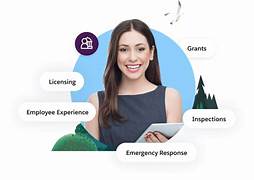
Licensing, Permitting, and Inspections Inspections are a crucial part of the licensing and permitting process, whether they involve a new home, a business seeking to open, or a follow-up based on a public complaint. Licensing and Permitting with Salesforce Public Sector Solutions aids in the critical steps in the process. Inspections can also be used independently for other assessments related to regulatory requirements, safety, and auditing. Assignments Inspections can be assigned with just a few clicks. The application reviewer or inspection dispatcher can quickly designate an inspector and schedule the visit. Mobile Inspections Public Sector Mobile Inspection automatically notifies inspectors of their daily visit plans on their mobile devices. Inspectors can use filters to view other days or prioritize tasks based on urgency and status. Inspector Checklists Configurable inspection checklists help ensure that inspectors don’t miss any steps during their onsite visits, enhancing community safety and reducing the need for follow-up inspections. Assessment Indicators Inspectors document compliance or violations against regulatory codes using configurable fields. They can also upload files, videos, or pictures from their mobile devices to support their assessments. Regulatory Codes Inspectors can easily reference relevant regulatory codes to verify their assessments, ensuring accuracy and compliance. Digital Signatures Digital signatures are captured on-site, eliminating the need for additional paperwork and streamlining the inspection process. No more emails, stamps, or standing in line. Enforcement Compliance officers can follow up on violations and create enforcement actions to ensure that stakeholders address any oustanding issues. Unified View Government agencies can access a unified 360 degree view of all relevant information in one place, enabling them to track resolution progress and assess final compliance. Experience Portal Throughout the process, stakeholders can stay informed about the status of their inspection and communicate with agency employees to ask questions or provide updates. Salesforce Experience Cloud provides an easy to apply solution to a constituent portal. Licensing and Permitting with Salesforce Public Sector Solutions With Salesforce Licensing and Permitting you can download and install process libraries that contain components for automating licensing and permitting workflows saving more time.  Public Sector Solutions provides OmniScript flows and components that automate these licensing and permitting workflows. Some components are available directly in Public Sector Solutions; others are not built-in and require that you download them from GitHub. Like1 Related Posts Who is Salesforce? Who is Salesforce? Here is their story in their own words. From our inception, we’ve proudly embraced the identity of Read more Salesforce Marketing Cloud Transactional Emails Salesforce Marketing Cloud Transactional Emails are immediate, automated, non-promotional messages crucial to business operations and customer satisfaction, such as order Read more Salesforce Unites Einstein Analytics with Financial CRM Salesforce has unveiled a comprehensive analytics solution tailored for wealth managers, home office professionals, and retail bankers, merging its Financial Read more AI-Driven Propensity Scores AI plays a crucial role in propensity score estimation as it can discern underlying patterns between treatments and confounding variables Read more


Read More

AI and Consumer Goods Cloud

Salesforce’s latest “rolling thunder” of AI enhancements brings significant innovations to Consumer Goods Cloud, leveraging the power of the Einstein AI platform already integrated into Sales Cloud and Service Cloud. These enhancements are designed to optimize planning and execution for consumer goods companies. Salesforce Consumer Goods Cloud is an industry-specific solution that helps consumer goods companies streamline their route-to-market processes. By unifying trade promotion management and retail execution capabilities on a single platform, it enables seamless collaboration between headquarters and field teams. Utilizing Salesforce’s core CRM functionality and the Einstein AI platform, Consumer Goods Cloud empowers companies with data-driven insights and intelligent automation to drive profitable growth. “Consumer goods companies are laser-focused on profitable growth. With the latest Salesforce innovations for Consumer Goods Cloud, they can unify consumer and customer data to plan promotions precisely, equip every field rep with tools to increase sales and reduce downtime, and integrate trusted AI into every service agent’s workflow to solve problems and upsell more frequently,” explained Rob Garf, VP and GM of Retail and Consumer Goods at Salesforce. “In short, every consumer goods company can now transform into an AI Enterprise.” What’s New in Consumer Goods Cloud The latest updates in Consumer Goods Cloud focus on integrating Salesforce’s Data Cloud with Einstein generative AI capabilities, enhancing three key areas: Data Cloud for Consumer Goods: Account managers can now unify account and industry data to build rich customer profiles, segment accounts to the individual store level, and design hyper-localized assortment and promotion plans. For instance, a soft drink distributor can identify which citrus-flavored sodas are most popular in specific Mexican convenience stores and optimize replenishment accordingly. Einstein Copilot Account Summarization: Within the service console, agents can access AI-generated account summaries, eliminating the need to switch between screens and knowledge articles. Summaries include last interactions, order history, satisfaction scores, and promotion details, enabling agents to resolve inquiries quickly and upsell intelligently. Consumer Goods Cloud Einstein 1 for Sales: This AI-powered enhancement package provides sales managers, field reps, merchandisers, and delivery drivers with productivity and revenue-boosting insights. Real-time notifications and recommendations on stock levels, replenishment, special handling needs, and payment collection keep field teams responsive and effective. The Salesforce Embedded AI Difference Salesforce’s strategy of embedding AI via a unified Einstein platform offers several advantages: Consistency: With Einstein already integrated into Sales and Service Clouds, Salesforce can efficiently extend proven AI tools to industry-specific use cases, benefiting users with familiar interfaces and interaction paradigms. Completeness: Embedding AI at the platform level allows Salesforce to enhance the entire workflow from planning to execution. Consumer goods companies can apply intelligent insights to both back-office processes like promotion management and field activities like stock checks and payment collection. Continuous Innovation: The Einstein platform enables rapid deployment of Salesforce’s latest generative AI advancements across all clouds, ensuring customers always have access to state-of-the-art capabilities. Mars Snacking, one of the world’s largest consumer goods companies, is already benefiting from Salesforce’s AI-powered industry cloud. “At Mars Snacking, we are on an ambitious journey to rewire and almost double the size of our business by 2030,” said Bartek Kononiuk, Global Head of Product – Trade Promotion Management. “Consumer Goods Cloud and Trade Promotion Management will enable us to improve our business processes, data availability, and user experience in critical growth-enabling areas.” AI Innovation Comes at a Cost As the consumer goods industry strives to meet rapidly evolving buyer expectations, Salesforce’s embedded AI solutions for Consumer Goods Cloud offer timely advantages. By democratizing access to generative AI and data management capabilities, Salesforce enables companies of all sizes to optimize decision-making, boost field productivity, and drive profitable growth. However, these advanced functionalities come with significant costs. Salesforce’s Einstein AI enhancements often have substantial per-user surcharges, sometimes exceeding $100 per month. For large deployments involving thousands of employees, these expenses can quickly escalate. Consumer goods companies must carefully evaluate the productivity and revenue gains against the added licensing costs. Additionally, while Salesforce is leading the way in enterprise generative AI, the technology is still maturing. Early adopters may encounter instances where the AI delivers suboptimal results. Salesforce’s Trust Layer aims to mitigate these risks, but companies should approach generative AI with a clear understanding of its current limitations. The ongoing enhancements in Salesforce’s Einstein portfolio present a promising yet costly opportunity for customers to evolve into full-fledged AI Enterprises. As the costs and benefits become clearer, consumer goods companies will need to strategically decide where and how aggressively to deploy these advanced capabilities. Those that find the right balance could gain a significant competitive edge in the rapidly changing digital landscape. Like Related Posts Who is Salesforce? Who is Salesforce? Here is their story in their own words. From our inception, we’ve proudly embraced the identity of Read more Salesforce Marketing Cloud Transactional Emails Salesforce Marketing Cloud Transactional Emails are immediate, automated, non-promotional messages crucial to business operations and customer satisfaction, such as order Read more Salesforce Unites Einstein Analytics with Financial CRM Salesforce has unveiled a comprehensive analytics solution tailored for wealth managers, home office professionals, and retail bankers, merging its Financial Read more AI-Driven Propensity Scores AI plays a crucial role in propensity score estimation as it can discern underlying patterns between treatments and confounding variables Read more
Read More

An Eye on AI

Humans often cast uneasy glances over their shoulders as artificial intelligence (AI) rapidly advances, achieving feats once exclusive to human intellect. An Eye on AI should ease their troubled minds. AI-driven chatbots can now pass rigorous exams like the bar and medical licensing tests, generate tailored images and summaries from complex texts, and simulate human-like interactions. Yet, amidst these advancements, concerns loom large — fears of widespread job loss, existential threats to humanity, and the specter of machines surpassing human control to safeguard their own existence. Skeptics of these doomsday scenarios argue that today’s AI lacks true cognition. They assert that AI, including sophisticated chatbots, operates on predictive algorithms that generate responses based on patterns in data inputs rather than genuine understanding. Even as AI capabilities evolve, it remains tethered to processing inputs into outputs without cognitive reasoning akin to human thought processes. So, are we venturing into perilous territory or merely witnessing incremental advancements in technology? Perhaps both. While the prospect of creating a malevolent AI akin to HAL 9000 from “2001: A Space Odyssey” seems far-fetched, there is a prudent assumption that human ingenuity, prioritizing survival, would prevent engineering our own demise through AI. Yet, the existential question remains — are we sufficiently safeguarded against ourselves? Doubts about AI’s true cognitive abilities persist despite its impressive functionalities. While AI models like large language models (LLMs) operate on vast amounts of data to simulate human reasoning and context awareness, they fundamentally lack consciousness. AI’s creativity, exemplified by its ability to invent new ideas or solve complex problems, remains a simulated mimicry rather than authentic intelligence. Moreover, AI’s domain-specific capabilities are constrained by its training data and programming limitations, unlike human cognition which adapts dynamically to diverse and novel situations. AI excels in pattern recognition tasks, from diagnosing diseases to classifying images, yet it does so without comprehending the underlying concepts or contexts. For instance, in medical diagnostics or art authentication, AI can achieve remarkable accuracy in identifying patterns but lacks the interpretative skills and contextual understanding that humans possess. This limitation underscores the necessity for human oversight and critical judgment in areas where AI’s decisions impact significant outcomes. The evolution of AI, rooted in neural network technologies and deep learning paradigms, marks a profound shift in how we approach complex tasks traditionally performed by human experts. However, AI’s reliance on data patterns and algorithms highlights its inherent limitations in achieving genuine cognitive understanding or autonomous decision-making. In conclusion, while AI continues to transform industries and enhance productivity, its capabilities are rooted in computational algorithms rather than conscious reasoning. As we navigate the future of AI integration, maintaining a balance between leveraging its efficiencies and preserving human expertise and oversight remains paramount. Ultimately, the intersection of AI and human intelligence will define the boundaries of technological advancement and ethical responsibility in the years to come. Like Related Posts Who is Salesforce? Who is Salesforce? Here is their story in their own words. From our inception, we’ve proudly embraced the identity of Read more Salesforce Unites Einstein Analytics with Financial CRM Salesforce has unveiled a comprehensive analytics solution tailored for wealth managers, home office professionals, and retail bankers, merging its Financial Read more AI-Driven Propensity Scores AI plays a crucial role in propensity score estimation as it can discern underlying patterns between treatments and confounding variables Read more Tectonic’s Successful Salesforce Track Record Salesforce Technology Services Integrator – Tectonic has successfully delivered Salesforce in a variety of industries including Public Sector, Hospitality, Manufacturing, Read more
Read More
Salesforce government and public sector solutions

License Training Requirements in Public Sector Solutions

License Training Requirements in Public Sector Solutions. Get the most of your license and permitting Salesforce solution. Set up the training courses, course offerings, and exams that individuals must complete to qualify for professional and occupational licenses. To issue professional or occupational licenses, many regulatory authorities require that licensees first complete a course of study or pass an exam. Licensing tests assess a test taker’s knowledge of the health and public safety measures that protect consumers within their scope of practice. The tests ensure that licensees understand the basic skills required to work safely and not harm a consumer. For example, barbers and hair stylists must pass a written examination. Certified public accountants, licensed clinical social workers, pharmacists, registered dental hygienists, and other professionals must complete board-approved education courses and pass an examination. In Public Sector Solutions, these objects represent training and testing requirements for professional and occupational licenses. Training Course A course that’s required for an individual to complete to qualify for an occupational or professional license. Includes the course name, a description, and total credits and hours. Course Offering An instance of a training course, including its name, a description, the location, and the start and end dates. Examination Information about authorized examinations that qualify an individual for a professional or occupational license or permit, including the name, description, and status. Training Course Participant A training course completed by a person. Includes details such as the participant’s name, the course offering ID, the name of the institution that offered the training, and the result. Personal Education Information about the professional education for a person who’s applying for a professional or occupational license or permit. Includes the person’s contact ID, the name of the degree and the educational institution, the education level, graduation date, and status. Personal Examination Information about an examination taken by a person who’s applying for a professional or occupational license or permit. Includes the person’s contact ID, the name of the exam and the institution that offered the exam, and the result score, completion date, and effective to and from dates. License Training Requirements in Public Sector Solutions Like Related Posts Who is Salesforce? Who is Salesforce? Here is their story in their own words. From our inception, we’ve proudly embraced the identity of Read more Salesforce Marketing Cloud Transactional Emails Salesforce Marketing Cloud Transactional Emails are immediate, automated, non-promotional messages crucial to business operations and customer satisfaction, such as order Read more Salesforce Unites Einstein Analytics with Financial CRM Salesforce has unveiled a comprehensive analytics solution tailored for wealth managers, home office professionals, and retail bankers, merging its Financial Read more AI-Driven Propensity Scores AI plays a crucial role in propensity score estimation as it can discern underlying patterns between treatments and confounding variables Read more

Read More
Salesforce Flow Builder

Salesforce Flow Builder

Salesforce Flow Builder: Key Limitations & Workarounds (2024 Guide) While Salesforce Flow Builder is a powerful automation tool, it comes with important technical constraints that every admin and developer should understand. Here’s a concise breakdown of the most critical limitations and practical solutions: Core Limitations of Flow Builder 1. Execution Limits 2. Query & Data Operation Constraints 3. Performance Boundaries 4. Structural Constraints 5. Execution Order Challenges Additional Considerations Pro Tips for Optimization “The best flows are simple flows. When you hit these limits, it’s often a sign to reevaluate your architecture.” – Salesforce Architect’s Handbook Understanding these boundaries will help you design more efficient automations while knowing when to transition to code-based solutions. Like Related Posts Who is Salesforce? Who is Salesforce? Here is their story in their own words. From our inception, we’ve proudly embraced the identity of Read more Salesforce Marketing Cloud Transactional Emails Salesforce Marketing Cloud Transactional Emails are immediate, automated, non-promotional messages crucial to business operations and customer satisfaction, such as order Read more Salesforce Unites Einstein Analytics with Financial CRM Salesforce has unveiled a comprehensive analytics solution tailored for wealth managers, home office professionals, and retail bankers, merging its Financial Read more AI-Driven Propensity Scores AI plays a crucial role in propensity score estimation as it can discern underlying patterns between treatments and confounding variables Read more
Read More
Successful Salesforce Implementation

Successful Salesforce Implementation

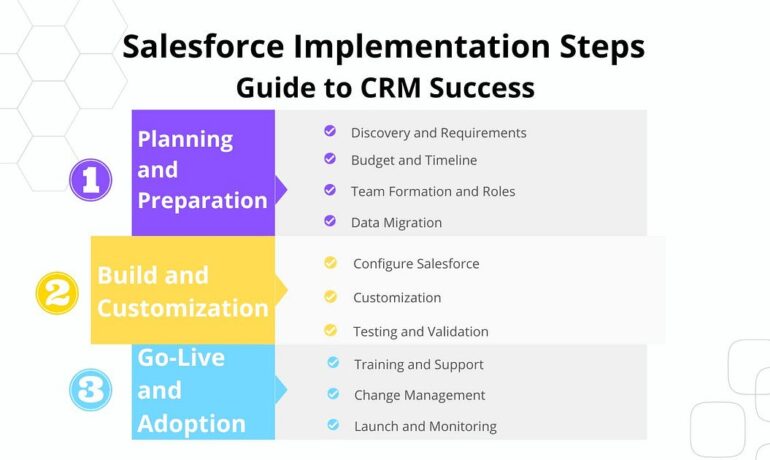
Unlocking the Potential of Salesforce: A Guide to Corporate Success Are you ready to explore the world of Successful Salesforce Implementation? In this Tectonic insight, we’ll explore how to leverage Salesforce to its fullest potential for your corporate success. Whether you’re a small startup or a large corporation, keep reading for practical advice and real-world insights to make Salesforce implementation work for you! What is Salesforce? Salesforce acts as a digital headquarters for organizations, organizing all client information, such as names, purchases, and contact methods. It’s also an Internet application that helps organizations manage customer relationships more effectively by sorting customer details, tracking sales leads, and automating tasks to ease customer interactions. Salesforce is cloudbased, so it is accessible from anywhere. Why Implement Salesforce Now? Implementing Salesforce offers numerous benefits for organizations across various industries: Overall, Salesforce improves how organizations manage customer relationships and utilize data for growth, but effective implementation requires thoughtful planning and customization. Types of Salesforce Implementation Sales Cloud Implementation Sales Cloud is Salesforce’s CRM platform designed to manage sales, leads, and customer interactions. Service Cloud Implementation Service Cloud helps companies provide excellent customer service and support. Marketing Cloud Implementation Marketing Cloud Engagement simplifies marketing efforts, helping businesses connect with customers across various channels. Each type of Salesforce implementation offers unique benefits and challenges, depending on the organization’s needs and goals. CRM Implementation Considerations Implementing a CRM system is a significant move for any business. Here are important things to remember: Step-by-Step Guide to Implement Salesforce Successfully Benefits of a Successful Salesforce Implementation Conclusion Implementing Salesforce is more than adding a powerful CRM system; it’s a journey to greater efficiency, productivity, and customer satisfaction. By thoughtfully planning and customizing Salesforce, organizations can enhance operations, deepen customer relationships, and drive sustainable growth. Embrace the possibilities of Salesforce implementation to chart a course for lasting success and innovation in the modern business landscape. Like Related Posts Who is Salesforce? Who is Salesforce? Here is their story in their own words. From our inception, we’ve proudly embraced the identity of Read more Salesforce Marketing Cloud Transactional Emails Salesforce Marketing Cloud Transactional Emails are immediate, automated, non-promotional messages crucial to business operations and customer satisfaction, such as order Read more Salesforce Unites Einstein Analytics with Financial CRM Salesforce has unveiled a comprehensive analytics solution tailored for wealth managers, home office professionals, and retail bankers, merging its Financial Read more AI-Driven Propensity Scores AI plays a crucial role in propensity score estimation as it can discern underlying patterns between treatments and confounding variables Read more
Read More
Salesforce Dedicated Data Model for Public Sector

Salesforce Dedicated Data Model for Public Sector

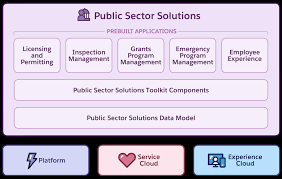
Public Sector Solutions Data Model Overview The Salesforce Dedicated Data Model for Public Sector leverages a suite of standard Salesforce objects to manage and structure data across various domains such as licensing, permitting, inspections, case management, benefit administration, grantmaking, and more. These objects are designed to facilitate efficient application processing, regulatory compliance, and service delivery within government agencies. Key Features Salesforce Dedicated Data Model for Public Sector Public Sector Solutions Standard Objects The data model includes a comprehensive set of objects tailored to support: Getting Started To implement and utilize the Public Sector Solutions data model effectively: Learn More Discover how Public Sector Solutions empowers government agencies in delivering efficient and effective public services. From automating approval workflows to enhancing constituent engagement, explore the capabilities tailored to meet the diverse needs of public sector organizations. Like Related Posts Who is Salesforce? Who is Salesforce? Here is their story in their own words. From our inception, we’ve proudly embraced the identity of Read more Salesforce Marketing Cloud Transactional Emails Salesforce Marketing Cloud Transactional Emails are immediate, automated, non-promotional messages crucial to business operations and customer satisfaction, such as order Read more Salesforce Unites Einstein Analytics with Financial CRM Salesforce has unveiled a comprehensive analytics solution tailored for wealth managers, home office professionals, and retail bankers, merging its Financial Read more AI-Driven Propensity Scores AI plays a crucial role in propensity score estimation as it can discern underlying patterns between treatments and confounding variables Read more
Read More
License and Permitting Management for Businesses

Streamlining Public Sector Licensing, Permitting, and Inspections with Salesforce

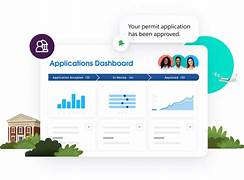
Salesforce Public Sector Solutions enhances the efficiency of licensing, permitting, and inspection processes. From online application submission to automated review and approval, the platform streamlines every step, ensuring a seamless experience for both government agencies and constituents. At the core of these processes are two key application types, represented as objects: Constituent Accounts and Business Representation Each applicant is represented by an Account object: Business accounts store essential details such as company name, URL, addresses, number of employees, industry, and more. They are closely linked to: Together, these objects provide a comprehensive view of the business and its stakeholders. Application Submission and Processing Constituents apply for licenses and permits through an Experience Cloud portal. The application process is built using OmniStudio, which facilitates guided, interactive user experiences. Regulatory Authorities and Compliance Licensing and permitting are governed by regulatory authorities, each with specific requirements. These entities and their rules are structured within Public Sector Solutions using various objects: Example:The Board of Barbering and Cosmetology (Regulatory Authority) grants: Inspections, Violations, and Fees Government agencies inspect businesses and residences to ensure compliance. The inspection process involves: Junction objects facilitate many-to-many relationships, ensuring regulatory codes, violations, and assessment indicators are interconnected. Managing Multiple Licenses and Dependencies Many businesses require multiple permits, often issued in a specific sequence. The Business Regulatory Authorization Type Dependency object manages these dependencies, allowing agencies to enforce structured licensing processes. For example, a restaurant may require: The Experience Cloud portal displays these dependencies, enabling businesses to understand and complete the necessary steps efficiently. Streamlined Inspections with Action Plans Public Sector Solutions enhances inspector efficiency with Action Plans, which outline predefined tasks for each inspection. Handling Public Complaints Public complaints against businesses are managed within the Public Complaint object. Complaints trigger regulatory investigations involving: By integrating these elements, Public Sector Solutions ensures that licensing, permitting, and regulatory compliance processes are efficient, transparent, and easily managed. Like Related Posts Who is Salesforce? Who is Salesforce? Here is their story in their own words. From our inception, we’ve proudly embraced the identity of Read more Salesforce Marketing Cloud Transactional Emails Salesforce Marketing Cloud Transactional Emails are immediate, automated, non-promotional messages crucial to business operations and customer satisfaction, such as order Read more Salesforce Unites Einstein Analytics with Financial CRM Salesforce has unveiled a comprehensive analytics solution tailored for wealth managers, home office professionals, and retail bankers, merging its Financial Read more AI-Driven Propensity Scores AI plays a crucial role in propensity score estimation as it can discern underlying patterns between treatments and confounding variables Read more
Read More
New Nonprofit Cloud

The New Nonprofit Cloud

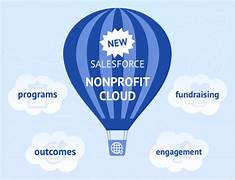
Salesforce.org recently announced the “New Nonprofit Cloud,” and Lori Freeman shared this update in the Trailblazer Community. Here’s a summary of the key points: Salesforce.org is rolling out an entirely new suite of technology solutions for nonprofits over the next few years, collectively named “Nonprofit Cloud.” These solutions will not be based on, nor compatible with, current offerings like NPSP. For now, there is no immediate need to focus on “Nonprofit Cloud.” Importantly, Nonprofit Pricing remains unchanged, with ten free licenses still available. However, licenses for the 11th and subsequent users under Nonprofit Cloud will be more expensive than standard licenses. There’s much more to this announcement, some of which wasn’t included in the official communication. It’s worth discussing these aspects in detail. Pricing Salesforce’s value for nonprofits lies in the Power of Us program, which donates the first ten licenses free of charge, and in the discounts applied to other Salesforce products. This remains unchanged. Before TrailblazerDX, assurances were given that this would not change. A question was raised during True To The Core, seeking a public commitment from Salesforce. Parker Harris’ response, along with Lori’s post and other communications, provide confidence in Salesforce’s ongoing support for nonprofits, though one should always remain cautious when relying on corporate commitments. However, pricing beyond the free licenses is not straightforward, likely due to Salesforce.org’s integration with Industries. Even Salesforce.org staff might not fully grasp the intricacies of licensing and pricing yet. What’s understood is that Nonprofit Cloud will be its own SKU, essentially bundling a Sales Cloud license, a Service Cloud license, and access to Industries-based functionality. All ten licenses granted to new organizations on the Nonprofit Cloud will include this entire bundle. This means that the P10 License Grant has expanded, as this bundle is more expensive and comes with additional technology. For the 11th license and beyond, organizations can choose: This pricing reflects no change from current rates. The uncertainty lies in what functionality will be unavailable to users with only a Lightning Enterprise Edition license compared to those on a Nonprofit Cloud license, and even more so for users on Platform licenses. The extent of “Industries” functions these users will lose, and what parts of the yet-to-be-seen Nonprofit Cloud application will be inaccessible, remain unknown. The Technology The newly announced Nonprofit Cloud is not yet ready for immediate use. Migration to this new platform should not be rushed, as it will be a significant undertaking with no immediate benefits. It’s expected that most organizations will delay this transition for several years, possibly more. If your current system is functioning well, there’s no need to fix it. If you are ready to make the jump, Tectonic is here to assist. For organizations starting fresh, the decision is challenging: This is not an easy choice, and one might be torn between the first and third options. To the extent that “it” can be purchased, few have seen what “it” truly is. When released, it will be a “minimum viable product,” with some cynics possibly viewing it as a “paid beta.” While one might hope for a “minimum lovable product,” it’s best not to hold your breath. Initial rollouts will include program management, followed by impact measurement, with fundraising features not expected until fall. It’s likely none of these will have full feature parity with their current equivalents, although they should offer some new, appealing features. Salesforce has also stated there are no plans for a new payment processing platform akin to Elevate. There’s still much uncertainty about what the actual Nonprofit Cloud product will offer. It’s barely available for anyone to test. Although there’s some way for partners to access a learning environment, it’s clear that what’s coming in the next few releases will be minimum viable, so there’s no urgency to adopt it. The only certainty is that Nonprofit Cloud will use Person Accounts, marking a significant data model shift. While this may require some adjustment, it’s not likely to be a major issue for most organizations due to storage increases in recent years. The plan is to ignore Nonprofit Cloud for at least a year, possibly two or three. Eventually, it might mature enough to consider adoption. Timing of Announcements It’s important to note that many did not learn of this on 3/14. Salesforce.org had embargoed meetings with Salesforce MVPs, partners, and possibly larger nonprofit customers starting in late fall 2022. Salesforce.org made some communication missteps that caused significant concern. There were initial fears about whether the Power of Us donation would disappear or if certain offerings would become more expensive. Then there were technical concerns about compatibility and the costs associated with migrating to the new platform, compounded by uncertainty over whether organizations would be forced to migrate. The layoffs at Salesforce, which seemed to disproportionately impact Salesforce.org, added to the anxiety. The absorption of Salesforce.org, the integration of the Power of Us Hub into the broader Trailblazer Community, the shift to Industries core architecture, and the layoffs all raised questions about whether nonprofits are now viewed as “just another industry vertical” by Salesforce. However, it’s clear from the above discussion that those fears and questions have been addressed. This detachment didn’t come immediately, so it’s understandable if others need time to reach this level of perspective. Holding this information under NDA was challenging, as it was more of a discussion opener than a concrete announcement. It’s a relief to finally discuss this openly. What Does this Announcement Signal About Salesforce.org? Salesforce—or even Salesforce.org—has never been an altruistic entity. Marc Benioff, in his books and keynotes, positions himself as a capitalist, believing that “business is the greatest force for good.” Salesforce is a capitalist enterprise, a multi-billion dollar corporation that exists to make money. It’s essential to recognize this reality. The 1-1-1 model and Salesforce’s support for nonprofits are commendable, but it’s crucial to see these actions for what they are—noblesse oblige. Salesforce.org was once a “social enterprise,” but perhaps its evolution has made this term

Read More
Einstein Discovery

Einstein Discovery Analysis

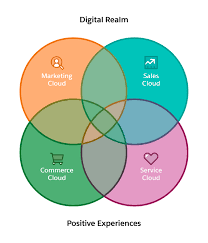
Elevate Your Business Outcomes with Einstein Discovery Analysis Einstein Discovery revolutionizes your approach to predictive analytics, allowing you to effortlessly build reliable machine learning models without any coding. Reduce reliance on data science teams with an intuitive model-building wizard and streamlined monitoring process. Transition swiftly from data to actionable insights, ensuring every decision is guided by intelligence. Enhance Your Business Intelligence with Einstein Discovery Incorporate statistical modeling and machine learning into your business intelligence with Einstein Discovery. Seamlessly integrated into your Salesforce environment, operationalize data analysis, predictions, and enhancements with clicks, not code. Developers can utilize the Einstein Prediction Service to access predictions programmatically, while data specialists can predict outcomes within recipes and dataflows. Tableau users can also leverage Einstein Discovery predictions and improvements directly within Tableau. Advanced Analytics Made Simple with Einstein Discovery Einstein Discovery offers a comprehensive suite of business analytics tailored to your specific data needs. Licensing and Permission Requirements for Einstein Discovery To utilize Einstein Discovery, your organization needs the appropriate license, with user accounts assigned relevant permissions. Supported Use Cases and Implementation Tasks Einstein Discovery solutions effectively address common business use cases, typically involving a series of defined implementation tasks. Key Differentiation: Einstein Analytics vs. Einstein Discovery While Einstein Analytics integrates predictive and analytical capabilities within Sales, Service, and Marketing clouds, Einstein Discovery is specifically focused on providing actionable insights and data-driven stories. Key Benefits of Einstein Discovery Supported Data Integration and Functionality Einstein Discovery enables direct integration and import of data from external sources like Hadoop, Oracle, and Microsoft SQL Server. It extracts data from diverse sources, leveraging AI, ML, and statistical intelligence to identify patterns and generate informed predictions. Enhanced Features Einstein Discovery seamlessly integrates insights into Tableau workflows, unlocks insights from unstructured data, fine-tunes prediction accuracy with trending data, handles missing values in datasets, accelerates prediction processing with high-volume writeback, and offers enhanced settings panels for efficient prediction management. Partner with Tectonic for Expert Guidance Collaborate with experienced Salesforce services providers like Tectonic to maximize the benefits of Einstein Discovery, ensuring a seamless implementation process and ongoing support. Empower Your Business with Einstein Discovery Einstein Discovery delivers automated data analysis, interactive visualizations, and predictive insights to elevate decision-making and optimize business operations. Unlock the power of AI-driven analytics within your Salesforce ecosystem to accelerate growth and gain a competitive edge. Like Related Posts Who is Salesforce? Who is Salesforce? Here is their story in their own words. From our inception, we’ve proudly embraced the identity of Read more Salesforce Marketing Cloud Transactional Emails Salesforce Marketing Cloud Transactional Emails are immediate, automated, non-promotional messages crucial to business operations and customer satisfaction, such as order Read more Salesforce Unites Einstein Analytics with Financial CRM Salesforce has unveiled a comprehensive analytics solution tailored for wealth managers, home office professionals, and retail bankers, merging its Financial Read more AI-Driven Propensity Scores AI plays a crucial role in propensity score estimation as it can discern underlying patterns between treatments and confounding variables Read more
Read More
Salesforce Quickstart

Step By Step Guide to a Salesforce Quickstart

Salesforce Implementation with a Tectonic Quickstart: Step-by-Step Salesforce Quickstart Guide. Step 1: Define Your Business Requirements Step 2: Choose the Appropriate Salesforce Products Step 3: Choose the Right Salesforce Quickstart Package Step 4: Prepare Your Data Step 5: Customize Your Quickstart Package Step 6: Train Your Users Step 7: Monitor and Optimize Your Processes Benefits of Salesforce Implementation with QuickStart Package Is it time for your business to get up and running on Salesforce? Contact Tectonic about our Salesforce Quickstart solutions today. Salesforce quickstarts are also known as Salesforce Implementation Solutions. Content updated December 2024. Like1 Related Posts Who is Salesforce? Who is Salesforce? Here is their story in their own words. From our inception, we’ve proudly embraced the identity of Read more Salesforce Marketing Cloud Transactional Emails Salesforce Marketing Cloud Transactional Emails are immediate, automated, non-promotional messages crucial to business operations and customer satisfaction, such as order Read more Salesforce Unites Einstein Analytics with Financial CRM Salesforce has unveiled a comprehensive analytics solution tailored for wealth managers, home office professionals, and retail bankers, merging its Financial Read more AI-Driven Propensity Scores AI plays a crucial role in propensity score estimation as it can discern underlying patterns between treatments and confounding variables Read more
Read More
gettectonic.com