Lists Archives - gettectonic.com - Page 7
Education Cloud AI Innovations

Education Cloud AI Innovations

Salesforce AI Innovations: Empowering Student Success and Faculty Efficiency Salesforce is introducing new Education Cloud AI Innovations, AI-powered tools designed to streamline the educational journey, enabling students to chart clear paths to graduation, translate their coursework into resume-ready skills, and connect with mentors who can guide them toward their career goals. Enhancing Faculty and Staff Efficiency with AI New generative AI capabilities are set to automate time-consuming tasks for faculty and staff, allowing them to focus on what matters most—driving student success. Personalizing Student Experiences with AI Institutions like the University of Nevada Las Vegas and Texas Tech are leveraging Salesforce for Education to create personalized student experiences and improve staff efficiency through AI-driven solutions. Salesforce Introduces AI-Powered Student Success Tools for Education Cloud Today, Salesforce unveiled cutting-edge AI tools for Education Cloud, including Intelligent Degree Planning and Skills Generator. These innovations are designed to help institutions craft personalized graduation pathways, translate coursework into tangible skills, and facilitate impactful mentorship programs. Additionally, Salesforce introduced Data Cloud for Education and Einstein Copilot Recruitment & Admissions Actions. These tools will enable institutions to automate routine tasks, enhance recruitment and enrollment processes, and bolster student support. Why It Matters Education professionals face the highest burnout rates across industries, and students are feeling the impact—only 11% of college students believe they are workforce-ready. As the education sector approaches an enrollment cliff, confidence in the value of a college degree is declining, and educators are leaving the profession in significant numbers. Schools must find ways to reduce staff workload while improving student experiences and outcomes. Explore Education Cloud Elevate the educational experience with the #1 AI CRM for learner and institution success. DIVE IN AI Innovation for Lifelong Student Success The new AI capabilities for Education Cloud, built on Salesforce’s Einstein 1 Platform, will help higher education and K-12 institutions unlock the power of their data to deliver trusted AI solutions. These innovations are designed to improve staff efficiency while enhancing student experiences and learning outcomes. Key features include: AI in Action for Faculty and Staff Salesforce is delivering new AI and data tools to automate tasks related to recruitment, enrollment, and student experience management. New features include: With these industry-specific AI and data tools, Education Cloud is poised to help K-12 and higher education institutions offer more individualized support to every student while increasing operational efficiency and reducing staff burnout. The Salesforce Perspective “Every institution wants to provide the best possible experiences for their students and staff. With industry-specific AI and data tools, Education Cloud will help K-12 and higher ed institutions offer more personalized support to every student while increasing efficiency and helping to reduce staff burnout. This will free educators and staff to focus on improving student outcomes, such as career readiness, well-being, and graduation rates.”— Bala Subramanian, VP & GM of Education Like Related Posts Who is Salesforce? Who is Salesforce? Here is their story in their own words. From our inception, we’ve proudly embraced the identity of Read more Salesforce Marketing Cloud Transactional Emails Salesforce Marketing Cloud Transactional Emails are immediate, automated, non-promotional messages crucial to business operations and customer satisfaction, such as order Read more Salesforce Unites Einstein Analytics with Financial CRM Salesforce has unveiled a comprehensive analytics solution tailored for wealth managers, home office professionals, and retail bankers, merging its Financial Read more AI-Driven Propensity Scores AI plays a crucial role in propensity score estimation as it can discern underlying patterns between treatments and confounding variables Read more


Read More
Discover Service Capabilities with My Service Journey

Discover Service Capabilities with My Service Journey (Beta)

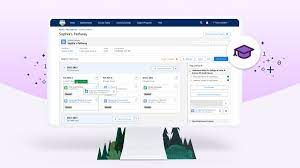
Discover Service Capabilities with My Service Journey Take your Service Cloud implementation from good to great with My Service Journey. Get the Salesforce point of view on achieving your business goals in various Service areas, such as the Help Site or Agent Console. With My Service Journey, you can explore Service Cloud capabilities tailored to your business goals, edition, new features, Einstein functionalities, and more. Where: This change applies to Lightning Experience in Enterprise and Unlimited editions. NOTE: This feature is a Beta Service. Customers may opt to try this Beta Service at their discretion. Any use of the Beta Service is subject to the applicable Beta Services Terms provided at Agreements and Terms. How: Launch My Service Journey from the App Launcher. Every day, your customers interact with your brand across multiple channels, forming service journeys that shape opinions, loyalty, and future purchase intent. My Service Journey details the full feature set of Service Cloud, helping you quickly determine how Salesforce can further your business goals. Accessible to all users, My Service Journey lists cloud functionalities, referred to as capabilities. Available in the App Launcher, My Service Journey filters capabilities by the business area most relevant to you, the ones available in your Salesforce edition, or the newest ones. You can also identify Quick Wins—capabilities with no or low implementation barriers—to get started right away. If you find a relevant capability, you can save it or share it with team members. If you discover a capability you need but don’t have access to, reach out to Salesforce account executives directly in My Service Journey. Einstein for Feedback Management Get Insightful Perspectives from Summaries of Survey Responses Unlock a comprehensive understanding of your survey data with generative AI summarizing responses and providing nuanced insights. Use data maps to create or update records with these summaries, which offer a thorough grasp of your audience’s perspectives. For example, you can create summaries of responses from your customer base, partners, and prospects. These summaries are tailored to the survey question types, providing a comprehensive overview of audience insights. Get Deeper Insights from Survey Responses Access the comprehensive Natural Language Processing Insights dashboard for a detailed analysis of survey results based on sentiments, extracted entities, and key phrases. Use this analysis to assess trends and monitor frequently appearing key phrases and entities in survey responses. Like Related Posts Who is Salesforce? Who is Salesforce? Here is their story in their own words. From our inception, we’ve proudly embraced the identity of Read more Salesforce Marketing Cloud Transactional Emails Salesforce Marketing Cloud Transactional Emails are immediate, automated, non-promotional messages crucial to business operations and customer satisfaction, such as order Read more Salesforce Unites Einstein Analytics with Financial CRM Salesforce has unveiled a comprehensive analytics solution tailored for wealth managers, home office professionals, and retail bankers, merging its Financial Read more AI-Driven Propensity Scores AI plays a crucial role in propensity score estimation as it can discern underlying patterns between treatments and confounding variables Read more
Read More
Salesforce Experience Cloud Summer 24 Release Notes

Salesforce Experience Cloud Summer 24 Release Notes

Customization is key, and Experience Cloud is here to help you deliver. Salesforce Experience Cloud Summer 24 Release Notes. Integrate enhanced LWR sites with Data Cloud to gain deeper insights into site visitor interactions. Elevate your site with new styling features for forms and buttons, streamlined search options, and increased control over the layout and spacing of your LWR sites. Improve your visitor login experience with a new integration framework for headless login and guest user identity flows. Stay productive on the go with a collection of updates to the Mobile Publisher app. Salesforce Experience Cloud Summer 24 Release Notes Like Related Posts Who is Salesforce? Who is Salesforce? Here is their story in their own words. From our inception, we’ve proudly embraced the identity of Read more Salesforce Marketing Cloud Transactional Emails Salesforce Marketing Cloud Transactional Emails are immediate, automated, non-promotional messages crucial to business operations and customer satisfaction, such as order Read more Salesforce Unites Einstein Analytics with Financial CRM Salesforce has unveiled a comprehensive analytics solution tailored for wealth managers, home office professionals, and retail bankers, merging its Financial Read more AI-Driven Propensity Scores AI plays a crucial role in propensity score estimation as it can discern underlying patterns between treatments and confounding variables Read more

Read More
Impact of AI Agents Across Key Sectors in 2024

Impact of AI Agents Across Key Sectors in 2024

Sophisticated autonomous digital entities are already transforming our lives, industries, and the way we engage with technology. What will be the Impact of AI Agents Across Key Sectors in 2024? While much attention has been given to Generative AI (Gen AI), the next major leap forward comes from AI Agents. This emerging technology is set to revolutionize how we work and interact with the world. How AI Agents Will Shape Daily Life AI Agents: An OverviewAI Agents, also called digital assistants or AI-driven entities, are advanced systems designed to perform tasks and provide services autonomously. They use machine learning, natural language processing, and other AI technologies to understand user needs, solve problems, and complete tasks without direct human intervention. The Impact of AI Agents Across Key Sectors in 2024 Personalization and AssistanceAI Agents are increasingly embedded in our personal and professional routines. By learning our preferences, habits, and needs, they offer personalized recommendations, such as curating music playlists, suggesting films, or creating custom workout plans. Their ability to deliver tailored assistance makes everyday life more seamless and enjoyable. Healthcare AdvancementsIn healthcare, AI Agents are making a significant impact. They can analyze medical records, provide diagnostic insights, and assist with treatment planning. Multi-modal agents even process medical imaging to aid in diagnoses, marking a groundbreaking advancement for both healthcare professionals and patients. Efficiency in BusinessAI Agents are transforming business operations by improving customer service through 24/7 automated chatbots and streamlining processes in supply chain management, human resources, and data analysis. These systems help optimize operations and support more informed decision-making. Education and LearningIn education, AI Agents offer personalized learning experiences tailored to each student’s needs, helping them learn at their own pace. Teachers also benefit, as AI Agents provide insights to customize instruction and track student progress. Enhanced CybersecurityAs cybersecurity threats evolve, AI Agents play a key role in identifying and mitigating risks. They detect anomalies in real-time, helping organizations protect their data and systems from breaches and attacks. Environmental ImpactAI Agents are contributing to sustainability by optimizing energy consumption in buildings, improving waste management, and monitoring environmental changes. Their role in addressing climate change is increasingly critical. Research and InnovationIn fields like drug discovery and climate modeling, AI Agents accelerate research by processing and analyzing vast amounts of data. Their involvement speeds up discoveries and innovation across multiple domains. Impact of AI Agents Across Key Sectors in 2024 In 2024, AI Agents have become much more than just digital assistants; they are driving transformative change across industries and daily life. Their ability to understand, adapt, and respond to human needs makes technology more efficient, personalized, and accessible. However, as AI Agents continue to evolve, it is crucial to consider ethical concerns and promote responsible use. With mindful integration, AI Agents hold the promise of a more connected, sustainable, and innovative future. If you are ready to explore AI Agents in your business, contact Tectonic today. Like Related Posts Who is Salesforce? Who is Salesforce? Here is their story in their own words. From our inception, we’ve proudly embraced the identity of Read more Salesforce Unites Einstein Analytics with Financial CRM Salesforce has unveiled a comprehensive analytics solution tailored for wealth managers, home office professionals, and retail bankers, merging its Financial Read more AI-Driven Propensity Scores AI plays a crucial role in propensity score estimation as it can discern underlying patterns between treatments and confounding variables Read more Tectonic’s Successful Salesforce Track Record Salesforce Technology Services Integrator – Tectonic has successfully delivered Salesforce in a variety of industries including Public Sector, Hospitality, Manufacturing, Read more
Read More
Ethical and Responsible AI

Ethical and Responsible AI

Responsible AI and ethical AI are closely connected, with each offering complementary yet distinct principles for the development and use of AI systems. Organizations that aim for success must integrate both frameworks, as they are mutually reinforcing. Responsible AI emphasizes accountability, transparency, and adherence to regulations. Ethical AI—sometimes called AI ethics—focuses on broader moral values like fairness, privacy, and societal impact. In recent discussions, the significance of both has come to the forefront, encouraging organizations to explore the unique advantages of integrating these frameworks. While Responsible AI provides the practical tools for implementation, ethical AI offers the guiding principles. Without clear ethical grounding, responsible AI initiatives can lack purpose, while ethical aspirations cannot be realized without concrete actions. Moreover, ethical AI concerns often shape the regulatory frameworks responsible AI must comply with, showing how deeply interwoven they are. By combining ethical and responsible AI, organizations can build systems that are not only compliant with legal requirements but also aligned with human values, minimizing potential harm. The Need for Ethical AI Ethical AI is about ensuring that AI systems adhere to values and moral expectations. These principles evolve over time and can vary by culture or region. Nonetheless, core principles—like fairness, transparency, and harm reduction—remain consistent across geographies. Many organizations have recognized the importance of ethical AI and have taken initial steps to create ethical frameworks. This is essential, as AI technologies have the potential to disrupt societal norms, potentially necessitating an updated social contract—the implicit understanding of how society functions. Ethical AI helps drive discussions about this evolving social contract, establishing boundaries for acceptable AI use. In fact, many ethical AI frameworks have influenced regulatory efforts, though some regulations are being developed alongside or ahead of these ethical standards. Shaping this landscape requires collaboration among diverse stakeholders: consumers, activists, researchers, lawmakers, and technologists. Power dynamics also play a role, with certain groups exerting more influence over how ethical AI takes shape. Ethical AI vs. Responsible AI Ethical AI is aspirational, considering AI’s long-term impact on society. Many ethical issues have emerged, especially with the rise of generative AI. For instance, machine learning bias—when AI outputs are skewed due to flawed or biased training data—can perpetuate inequalities in high-stakes areas like loan approvals or law enforcement. Other concerns, like AI hallucinations and deepfakes, further underscore the potential risks to human values like safety and equality. Responsible AI, on the other hand, bridges ethical concerns with business realities. It addresses issues like data security, transparency, and regulatory compliance. Responsible AI offers practical methods to embed ethical aspirations into each phase of the AI lifecycle—from development to deployment and beyond. The relationship between the two is akin to a company’s vision versus its operational strategy. Ethical AI defines the high-level values, while responsible AI offers the actionable steps needed to implement those values. Challenges in Practice For modern organizations, efficiency and consistency are key, and standardized processes are the norm. This applies to AI development as well. Ethical AI, while often discussed in the context of broader societal impacts, must be integrated into existing business processes through responsible AI frameworks. These frameworks often include user-friendly checklists, evaluation guides, and templates to help operationalize ethical principles across the organization. Implementing Responsible AI To fully embed ethical AI within responsible AI frameworks, organizations should focus on the following areas: By effectively combining ethical and responsible AI, organizations can create AI systems that are not only technically and legally sound but also morally aligned and socially responsible. Content edited October 2024. Like Related Posts Who is Salesforce? Who is Salesforce? Here is their story in their own words. From our inception, we’ve proudly embraced the identity of Read more Salesforce Marketing Cloud Transactional Emails Salesforce Marketing Cloud Transactional Emails are immediate, automated, non-promotional messages crucial to business operations and customer satisfaction, such as order Read more Salesforce Unites Einstein Analytics with Financial CRM Salesforce has unveiled a comprehensive analytics solution tailored for wealth managers, home office professionals, and retail bankers, merging its Financial Read more AI-Driven Propensity Scores AI plays a crucial role in propensity score estimation as it can discern underlying patterns between treatments and confounding variables Read more

Read More
Tectonic at a Glance

AI Product Management Tools

Embracing AI in Product Management: Your New Best Friend, Not a Replacement-Original published by https://zedaio.medium.com/ Amid the lively debates about AI taking over product management roles, let’s set the record straight: AI is here as an ally, not a replacement. It’s about leveraging AI to amplify our capabilities, streamline mundane tasks, and make room for the creative and strategic aspects of product management. AI Product Management Tools. Here are seven AI tools that will automate your daily routines, offering support that transforms the way you manage products. Ready to upgrade your product management game with AI by your side? Let’s dive in! 1. Zeda.io Zeda.io is one of the best AI tools for product managers. It offers a complete suite of features that help you in feedback management, strategic planning, and closing the loop. It is a perfect tool if you are striving to balance your customer needs and business goals. With integrations like Slack, Gong, Teams, Salesforce, and more, you can gather and manage customer feedback effortlessly. Its unique AI technology generates valuable, actionable insights by categorizing all the feedback, helping you uncover pressing customer issues and decide what to build next. Key Features: 2. ChatGPT An obvious choice, ChatGPT can automate many of your tasks. It helps make sense of vague product user feedback, create PRDs, release notes, and other documents. The key is to use the right prompts and GPT plugins tailored for product managers. Key Features: 3. Notion AI Notion is a cloud-based productivity and collaboration tool that provides various organizational tools, including task management, project tracking, to-do lists, bookmarking, and more. Notion’s AI can assist product managers in several ways. Key Features: 4. Uizard Uizard is a user interface design tool that uses AI to quickly and efficiently create wireframes, mockups, and prototypes in minutes. The tool’s advanced deep-learning algorithms analyze images provided by product teams and managers to create design themes. Key Features: 5. ClickUp ClickUp is a cloud-based tool that helps teams manage their work effectively, offering features like task management, time tracking, file sharing, and communication tools. ClickUp is highly customizable and offers multiple AI tools that integrate seamlessly into workflows. Key Features: 6. Delibr Delibr is an excellent tool for AI product teams to collaborate effectively during the feature refinement process. It helps capture, synthesize, and organize feedback from diverse sources, enabling informed decision-making and creating high-quality documentation. Key Features: 7. Fireflies.ai Fireflies.ai enhances meeting productivity by transcribing, summarizing, and analyzing voice conversations. It integrates with major video-conferencing platforms and offers various ways to capture meetings, including a Chrome extension and direct uploads. Key Features: AI Product Management Tools Embracing AI in product management doesn’t mean diminishing the value of human insight; it’s about enhancing our capabilities and efficiency. The seven AI tools outlined here offer a glimpse into a future where technology and creativity intersect, empowering product managers to achieve more in less time. By integrating suitable tools into your workflow, you can focus on innovation and strategy, ensuring your products not only meet but exceed user expectations. Let AI be your ally to achieve greater heights and product success. Like Related Posts Who is Salesforce? Who is Salesforce? Here is their story in their own words. From our inception, we’ve proudly embraced the identity of Read more Salesforce Marketing Cloud Transactional Emails Salesforce Marketing Cloud Transactional Emails are immediate, automated, non-promotional messages crucial to business operations and customer satisfaction, such as order Read more Salesforce Unites Einstein Analytics with Financial CRM Salesforce has unveiled a comprehensive analytics solution tailored for wealth managers, home office professionals, and retail bankers, merging its Financial Read more AI-Driven Propensity Scores AI plays a crucial role in propensity score estimation as it can discern underlying patterns between treatments and confounding variables Read more
Read More
Salesforce AI Introduces SFR-Judge

Steps to AI Implementation

“You don’t have to sell people on the potential. What you do have to sell people on is how do we go about it.”— Deep Srivastav, Data Leadership Collaborative Developing an Effective AI Strategy: A Seven-Step Framework A well-defined AI strategy is the foundation for success. It provides clarity on vision, purpose, and goals while ensuring teams understand the steps needed to get there. By adopting a data-driven approach with measurable objectives and key performance indicators (KPIs), businesses can foster seamless collaboration and maximize AI’s impact. Key Steps to Building a Successful AI Strategy 1. Define Clear Business Objectives Start by aligning AI initiatives with overarching business goals. Clearly outline what success looks like and identify areas where AI can drive the most value. 2. Assess Your Data Readiness Evaluate the quality, quantity, and accessibility of your data. Identify gaps that could impact AI performance and ensure you have a strong data foundation for accurate insights. 3. Identify and Prioritize AI Use Cases Determine which business processes can benefit from AI, balancing short-term wins with long-term strategic projects. Focus on use cases that align with your objectives and offer the highest return on investment. 4. Build a Multidisciplinary Team AI success requires expertise across multiple domains. Assemble a team that includes data scientists, business strategists, engineers, and ethics specialists to guide AI development and deployment. 5. Choose the Right AI Technologies Select AI tools and platforms that match your business needs. Consider scalability, security, integration capabilities, and ease of deployment when evaluating your technology stack. 6. Pilot with Proof-of-Concept Projects Start small by running controlled pilot projects to test feasibility, validate assumptions, and refine your approach. This minimizes risk while providing valuable insights before scaling AI across the organization. 7. Monitor, Evaluate, and Improve AI is not a one-time implementation—it requires continuous monitoring and refinement. Track performance, gather stakeholder feedback, and iterate based on data-driven insights to optimize outcomes. Key Considerations for AI Implementation ✅ Ethical AI & Bias MitigationEstablish guidelines to ensure AI operates fairly, transparently, and responsibly, addressing potential biases and privacy concerns. ✅ Change Management & Stakeholder Buy-inEffectively communicate AI’s role within the organization, ensuring employees understand its benefits and adapt to new workflows. ✅ Security & ComplianceImplement robust security measures to safeguard data and adhere to industry regulations, ensuring responsible AI adoption. By following these steps, organizations can create an AI strategy that not only drives innovation but also delivers measurable business impact while mitigating risks. The key to AI success isn’t just recognizing its potential—it’s about executing it the right way. Like Related Posts Who is Salesforce? Who is Salesforce? Here is their story in their own words. From our inception, we’ve proudly embraced the identity of Read more Salesforce Unites Einstein Analytics with Financial CRM Salesforce has unveiled a comprehensive analytics solution tailored for wealth managers, home office professionals, and retail bankers, merging its Financial Read more AI-Driven Propensity Scores AI plays a crucial role in propensity score estimation as it can discern underlying patterns between treatments and confounding variables Read more Tectonic’s Successful Salesforce Track Record Salesforce Technology Services Integrator – Tectonic has successfully delivered Salesforce in a variety of industries including Public Sector, Hospitality, Manufacturing, Read more
Read More
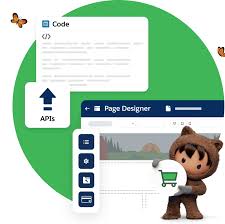
Salesforce Integrated Ecommerce Storefronts

Salesforce eCommerce & Commerce Cloud

Salesforce eCommerce & Commerce Cloud: Everything You Need to Know What is Salesforce eCommerce? Salesforce eCommerce, powered by Salesforce Commerce Cloud, is a comprehensive, cloud-based solution that helps businesses scale, create intelligent shopping experiences, and drive revenue growth. A Unified Digital Commerce Platform Salesforce Commerce Cloud encompasses: With Commerce Cloud, businesses can build and manage their entire eCommerce operation—from responsive storefronts to complex logistics like shipping and inventory tracking. Key Features of Salesforce Commerce Cloud Commerce Cloud Digital Create fully responsive, omnichannel eCommerce websites with advanced search capabilities, secure mobile payments, and personalized customer journeys. Storefront Reference Architecture (SFRA) Launch professional eCommerce sites quickly using best-in-class tools, pre-built wireframes, and integrated digital technologies for easy customization and maintenance. Endless Aisle Enhance the shopping experience with pre-ordering, wishlists, back-in-stock alerts, and exclusive online promotions—reducing lost sales and improving inventory management. Commerce Portals Build account portals, loyalty programs, and customer communities to foster long-term engagement and brand loyalty. Order Management Optimize order processing with automated payments, easy returns, real-time order tracking, and a seamless purchasing experience. Intuitive Platform Leverage no-code tools, commerce APIs, and built-in templates to design eCommerce experiences without deep technical expertise. Unified Commerce Deliver a seamless shopping experience across digital and physical channels, ensuring consistency and convenience for customers. How Salesforce eCommerce Benefits Your Business AI-Powered Predictive Intelligence Commerce Cloud integrates Einstein AI, offering:✅ Personalized product recommendations✅ Automated marketing insights✅ Cart abandonment reduction✅ Smart search enhancements Personalized Customer Journeys Tailor every interaction with AI-driven recommendations, customized content, and omnichannel engagement strategies. Seamless Multi-Storefront Management Easily manage multiple brands, international storefronts, and localized experiences with multi-currency, multi-language, and cross-border commerce capabilities. Scalability Without Limits Handle high transaction volumes, traffic spikes, and expansive product catalogs with ease as your business grows. 24/7 Support & Strategic Guidance Benefit from Salesforce’s extensive support ecosystem, including advisory services, webinars, and AI-driven best practices to accelerate success. Salesforce Commerce Cloud + Marketing Cloud: The Perfect Pairing Salesforce eCommerce seamlessly integrates with Salesforce Marketing Cloud, enabling businesses to:🔹 Automate retargeting and abandoned cart recovery campaigns🔹 Personalize customer engagement at scale🔹 Track and analyze customer behaviors in real-time🔹 Enhance product recommendations with AI-powered insights By combining Commerce Cloud and Marketing Cloud, businesses can craft end-to-end, data-driven shopping experiences that drive higher conversion rates and customer satisfaction. Ready to Transform Your eCommerce Strategy? Whether launching a new online store or optimizing an established brand, Salesforce eCommerce offers limitless possibilities. Let’s explore how Commerce Cloud, AI, and automation can elevate your business. Like Related Posts Who is Salesforce? Who is Salesforce? Here is their story in their own words. From our inception, we’ve proudly embraced the identity of Read more Salesforce Marketing Cloud Transactional Emails Salesforce Marketing Cloud Transactional Emails are immediate, automated, non-promotional messages crucial to business operations and customer satisfaction, such as order Read more Salesforce Unites Einstein Analytics with Financial CRM Salesforce has unveiled a comprehensive analytics solution tailored for wealth managers, home office professionals, and retail bankers, merging its Financial Read more AI-Driven Propensity Scores AI plays a crucial role in propensity score estimation as it can discern underlying patterns between treatments and confounding variables Read more
Read More
Hubspot vs Salesforce

Hubspot vs Salesforce

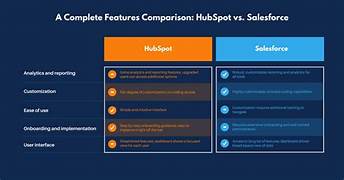
HubSpot began as a marketing automation solution tailored for small businesses, but it has since grown into a comprehensive Enterprise CRM, integrating marketing, sales, CMS, and service functionalities. While Salesforce continues to be a popular choice for CRM, more teams are increasingly turning to HubSpot for its marketing automation capabilities. HubSpot is a leading platform in CRM, marketing, sales, and customer service software, with a clear mission: to empower companies to optimize their sales processes and drive growth. HubSpot offers a range of resources centered around its five main products or “Hubs,” with the Marketing Hub and Sales Hub being the most prominent. HubSpot vs. Salesforce: Key Differences Salesforce is known for its robust reporting and extensive customization options. In contrast, HubSpot offers a smoother learning curve, a more intuitive interface, and a comprehensive suite of marketing and sales tools, all available at an accessible price point, including a free tier. Integrating HubSpot with Salesforce Integrating HubSpot with Salesforce allows you to streamline operations, creating a seamless and efficient connection between the two platforms without the need for complex technical setup. Key Benefits of HubSpot-Salesforce Integration: Enhanced Data Management The HubSpot-Salesforce integration simplifies and accelerates data management by eliminating manual data transfers and reducing the risk of errors. Syncing all relevant business data to HubSpot in just a few clicks provides deep insights into customer interactions and preferences, enabling you to deliver personalized experiences that boost engagement and foster customer loyalty. Empowering Sales Teams The integration enables seamless bi-directional synchronization, giving your sales team critical lead intelligence. By customizing record syncing and providing lead scores from HubSpot to Salesforce, sales teams can prioritize their outreach efforts more effectively, ultimately leading to increased deal closures. Bridging the Gap Between Marketing and Sales Close the gap between marketing and sales by using Salesforce data to personalize emails, segment databases, and send emails on behalf of sales representatives. The integration eliminates the need for manual exporting and importing of lists and campaign responses, while also allowing you to track revenue from closed-won deals in HubSpot, attributing campaigns directly to the revenue they generate. Like Related Posts Who is Salesforce? Who is Salesforce? Here is their story in their own words. From our inception, we’ve proudly embraced the identity of Read more Salesforce Marketing Cloud Transactional Emails Salesforce Marketing Cloud Transactional Emails are immediate, automated, non-promotional messages crucial to business operations and customer satisfaction, such as order Read more Salesforce Unites Einstein Analytics with Financial CRM Salesforce has unveiled a comprehensive analytics solution tailored for wealth managers, home office professionals, and retail bankers, merging its Financial Read more AI-Driven Propensity Scores AI plays a crucial role in propensity score estimation as it can discern underlying patterns between treatments and confounding variables Read more

Read More

Audience Builder Marketing Cloud

Marketing Cloud Audience Builder dynamically generates targeted audiences from contacts stored in your account based on attribute and behavioral values. These audiences can be used to target or exclude contacts from your marketing activities. In today’s world, where a staggering 347.3 billion emails are sent globally every day, email inboxes have become increasingly cluttered. In your specific niche, you’re not the only one trying to reach your target audience; numerous others are vying for their attention. With consumers having a multitude of options, marketers bear the responsibility of positioning themselves in a way that makes it impossible for potential customers to overlook them. Achieving this requires embracing customer-centricity, which involves deeply engaging with different buyer personas by segmenting your contact list based on various parameters such as age, gender, location, interests, preferences, past purchases, browsing history, and position in the sales funnel. However, manually managing this segmentation, especially with a large contact list, can be overwhelming. This is where a dependable tool like Salesforce Marketing Cloud’s Audience Builder proves invaluable. The SFMC Audience Builder empowers marketers to create granular segmentation frameworks based on demographic and behavioral data, making the execution of targeted campaigns effortless. It dynamically generates targeted audiences by utilizing contacts in your account and leveraging behavioral values and stored attributes as guiding parameters. In this overview, we aim to provide a comprehensive understanding of SFMC’s Audience Builder. Key Entities and Terminologies: Like Related Posts Who is Salesforce? Who is Salesforce? Here is their story in their own words. From our inception, we’ve proudly embraced the identity of Read more Salesforce Marketing Cloud Transactional Emails Salesforce Marketing Cloud Transactional Emails are immediate, automated, non-promotional messages crucial to business operations and customer satisfaction, such as order Read more Salesforce Unites Einstein Analytics with Financial CRM Salesforce has unveiled a comprehensive analytics solution tailored for wealth managers, home office professionals, and retail bankers, merging its Financial Read more AI-Driven Propensity Scores AI plays a crucial role in propensity score estimation as it can discern underlying patterns between treatments and confounding variables Read more

Read More
gettectonic.com