

Logistics Archives - gettectonic.com - Page 2
AI Agent Revolution

AI Agent Revolution

The AI Agent Revolution: How AWS, Salesforce, and Oracle See the Future of Work Executives from AWS, Salesforce, and Oracle believe artificial intelligence (AI) agents are set to redefine work in ways many may not expect. These AI-driven systems promise to streamline operations, enhance productivity, and transform the way businesses interact with technology. The Future of AI Agents in Action Imagine a world where: Swami Sivasubramanian, AWS’s vice president of agentic AI, describes this shift as a fundamental leap forward. Unlike earlier AI models, these agents don’t just generate content—they reason, plan, and execute tasks. They can research, pay bills, manage enterprise applications, and break down high-level objectives into actionable steps. Sivasubramanian envisions a “fully AI world” where agents autonomously make decisions, automate workflows, and coordinate with minimal human oversight. But, as he points out, this isn’t a distant future—it’s happening now. Companies like Genentech are using AI agents to accelerate drug research, cutting timelines by nearly five years. Moody’s has reduced its credit risk reporting process from a week to under an hour. These breakthroughs illustrate the vast potential of AI-driven automation. Salesforce’s ‘Limitless Labor’ Approach Salesforce is also at the forefront of AI agent adoption with Agentforce, a platform that has seen overwhelming demand since its launch. More than 5,000 customers signed up in its first full quarter, signaling a strong appetite for AI-driven automation. Adam Evans, EVP and GM of Salesforce AI, describes AI agents as creating a “limitless labor” pool. These agents are already supporting Salesforce’s own customers, resolving 97% of inquiries without human intervention. The next evolution, according to Evans, involves AI agents acting as brand ambassadors—not just answering questions, but understanding customer needs, driving sales, and providing personalized support. Salesforce categorizes AI agents into three types: Early adopters like Wiley Publishing have reported a 40% increase in customer satisfaction due to AI-driven customer service, while Pfizer is leveraging AI agents in life sciences. To support this transformation, Salesforce has introduced flexible pricing models, allowing companies to transition from traditional seat-based pricing to AI consumption-based structures. AI Agents as the New Enterprise Interface Oracle sees AI agents as the future interface for enterprise software, eliminating the need for users to adapt to complex systems. “Let’s stop adapting ourselves to computers and make them adapt to us,” said Miranda Nash, group vice president at Oracle AI. In this vision, users no longer navigate Oracle’s software through menus—they simply ask questions, and AI agents handle the rest through sophisticated, multi-agent workflows. Oracle is embedding AI agents across key business functions, including: As AI transforms work, Nash, Evans, and Sivasubramanian acknowledge concerns about job displacement. However, they emphasize that AI agents augment human roles rather than replace them. At Salesforce, employees previously assigned to repetitive support tasks are now moving into higher-value roles like customer success and sales. Meanwhile, AWS’s AI deployment has saved Amazon 4,500 developer years’ worth of work and over $250 million in capital expenses. “The only option now is to get in the cloud, embrace AI agents, and meet the future of work,” Nash concluded. Like Related Posts Who is Salesforce? Who is Salesforce? Here is their story in their own words. From our inception, we’ve proudly embraced the identity of Read more Salesforce Marketing Cloud Transactional Emails Salesforce Marketing Cloud Transactional Emails are immediate, automated, non-promotional messages crucial to business operations and customer satisfaction, such as order Read more Salesforce Unites Einstein Analytics with Financial CRM Salesforce has unveiled a comprehensive analytics solution tailored for wealth managers, home office professionals, and retail bankers, merging its Financial Read more AI-Driven Propensity Scores AI plays a crucial role in propensity score estimation as it can discern underlying patterns between treatments and confounding variables Read more


Read More
Agentic AI: The Next Frontier in Intelligent Automation

Agentic AI: The Next Frontier in Intelligent Automation

Artificial intelligence is undergoing a paradigm shift—from passive tools to autonomous, decision-making systems. At the heart of this evolution is Agentic AI, a revolutionary framework that combines AI agents, large language models (LLMs), contextual protocols, and integrations to deliver self-directed, goal-driven intelligence. This isn’t just automation—it’s AI that thinks, adapts, and executes with human-like sophistication. What Is Agentic AI? Agentic AI is a holistic, autonomous system that orchestrates intelligent decision-making. Unlike traditional AI, which follows predefined scripts, Agentic AI: ✅ Processes data dynamically✅ Interacts with users & systems✅ Executes tasks independently✅ Adapts to changing environments It’s the operating system for next-gen AI, blending reasoning, language understanding, and action-taking into a single, cohesive architecture. The 5 Core Components of Agentic AI 1. The AI Agent: The Brain Behind the Operation 2. Large Language Models (LLMs): The Communication Layer 3. Model Context Protocol (MCP): The Rulebook for AI 4. Specialized Tools: The Execution Engine 5. Integrations: The Connective Tissue Why Agentic AI Changes Everything 🔹 Beyond Chatbots & Scripted Automation Traditional AI follows rules—Agentic AI makes decisions. 🔹 Industry Transformations 🔹 The Future: AI as a Strategic Partner We’re entering an era where AI doesn’t just assist—it collaborates, reasons, and innovates. The Road Ahead Agentic AI isn’t just another tech trend—it’s the future of intelligent systems. As adoption grows, expect: 🚀 Smarter workflows (less human oversight needed)🚀 Faster problem-solving (real-time adaptation)🚀 New business models (AI-driven enterprises) The question isn’t if Agentic AI will reshape industries—it’s how soon. Let’s build the future—one intelligent agent at a time. Like Related Posts Who is Salesforce? Who is Salesforce? Here is their story in their own words. From our inception, we’ve proudly embraced the identity of Read more Salesforce Unites Einstein Analytics with Financial CRM Salesforce has unveiled a comprehensive analytics solution tailored for wealth managers, home office professionals, and retail bankers, merging its Financial Read more AI-Driven Propensity Scores AI plays a crucial role in propensity score estimation as it can discern underlying patterns between treatments and confounding variables Read more Tectonic’s Successful Salesforce Track Record Salesforce Technology Services Integrator – Tectonic has successfully delivered Salesforce in a variety of industries including Public Sector, Hospitality, Manufacturing, Read more

Read More
Predictive Analytics for Business Potential

Predictive Analytics for Business Potential

Maximizing Business Potential with Predictive Analytics Every business generates vast amounts of data daily, yet not all leverage it effectively. Predictive analytics transforms raw data into actionable insights, enabling companies to forecast demand, reduce operational costs, and enhance customer engagement. Whether through AI-powered models, machine learning algorithms, or cloud-based analytics, predictive analytics is reshaping business strategies. Organizations that integrate predictive analytics into decision-making can anticipate challenges, seize new opportunities, and outperform competitors. This insight explores the significance of predictive analytics and how businesses can harness its power to gain a competitive edge. The Expanding Influence of Predictive Analytics Predictive analytics is revolutionizing industries, driving innovation, and transforming data into strategic advantages. Transforming Industries with Predictive Analytics Predictive analytics is now a cornerstone of modern industries, facilitating smarter decision-making through data-driven insights. By analyzing historical data, businesses can forecast trends, anticipate customer behaviors, and optimize operations. Sectors such as healthcare, retail, and finance are leveraging predictive tools to maintain competitiveness. For example: As industries adopt these solutions, predictive analytics continues to redefine efficiency and innovation. Key Trends in Predictive Analytics Adoption The widespread adoption of predictive analytics is fueled by advancements in AI, big data, and machine learning. Businesses are capitalizing on these trends to sharpen their competitive edge. Notable developments include: As predictive analytics tools become more sophisticated, they are becoming integral to business strategies, helping companies unlock untapped potential. Overcoming Implementation Challenges Despite its benefits, implementing predictive analytics poses challenges, such as data silos, integration complexities, and skill gaps. To address these issues, organizations should: By overcoming these barriers, businesses can fully harness predictive analytics to drive efficiency, innovation, and growth. Predictive Data Modeling for Smarter Decision-Making Predictive data modeling transforms raw data into strategic insights, improving forecasting and operational decision-making. Understanding Predictive Data Modeling Predictive data modeling employs statistical techniques and machine learning algorithms to analyze historical data and predict future trends. Its core components include: By applying these models, businesses can refine their strategies with data-backed insights, improving efficiency and competitiveness. The Role of Data Quality in Predictive Accuracy The effectiveness of predictive models depends on data quality. Inconsistent or outdated data can lead to unreliable predictions, affecting decision-making. Key steps to ensure high data quality include: High-quality data enhances predictive models, enabling businesses to make informed, confident decisions. Enhancing Forecasting with Predictive Data Modeling Predictive data modeling improves forecasting accuracy by analyzing historical trends and projecting future outcomes. Benefits include: Retailers optimize inventory, while manufacturers align production with demand fluctuations, demonstrating the strategic value of predictive modeling. Driving Business Growth with Predictive Analytics Why Businesses Should Adopt Predictive Analytics Now In today’s competitive landscape, predictive analytics is essential for staying ahead. By leveraging data, algorithms, and machine learning, businesses can anticipate risks and opportunities, optimizing strategies while reducing uncertainty. Retailers, for instance, use predictive insights to forecast seasonal demand spikes, ensuring optimal stock levels. As AI advances, predictive analytics is more accessible than ever, making now the ideal time for adoption. Enhancing Decision-Making and Efficiency Predictive analytics eliminates guesswork, empowering leaders with data-backed decisions. Benefits include: These advantages drive sustainable growth and competitive advantage across industries. Seamlessly Integrating Predictive Analytics into Business Workflows To maximize impact, predictive analytics must integrate into existing workflows. Steps for successful adoption include: By embedding predictive analytics into workflows, businesses enhance agility and decision-making capabilities. AI-Powered Predictive Analytics for Competitive Advantage Why AI Predictive Analytics is Transformative AI-powered predictive analytics delivers insights beyond traditional methods, processing vast datasets rapidly to identify complex patterns and trends. Applications include: With AI continuously learning and refining predictions, businesses gain a dynamic advantage. Enhancing Accuracy with AI AI refines predictions by analyzing diverse data sources, including text, images, and videos. Examples include: Advanced AI techniques, such as natural language processing and neural networks, ensure businesses derive actionable insights, driving smarter strategies and better results. Machine Learning’s Role in Predictive Analytics Machine learning (ML) is foundational to predictive analytics, continuously improving model accuracy. Examples include: By leveraging ML, businesses enhance their predictive capabilities, ensuring long-term competitive success. Enhancing Enterprise Solutions with Predictive Analytics Transforming SAP Systems with Predictive Analytics SAP systems integrated with predictive analytics unlock actionable insights from vast datasets. Benefits include: By embedding predictive capabilities, SAP users can optimize operations and drive proactive decision-making. Empowering Salesforce with Predictive Insights Salesforce predictive analytics enhances decision-making across marketing, sales, and customer service. Key capabilities include: With Salesforce Einstein, businesses can streamline operations, boost performance, and foster deeper customer engagement. Predictive analytics is a game-changer, reshaping industries, optimizing operations, and unlocking new growth opportunities. Businesses that embrace predictive analytics today will be well-positioned to navigate future challenges and lead in the data-driven economy. Like Related Posts Who is Salesforce? Who is Salesforce? Here is their story in their own words. From our inception, we’ve proudly embraced the identity of Read more Salesforce Marketing Cloud Transactional Emails Salesforce Marketing Cloud Transactional Emails are immediate, automated, non-promotional messages crucial to business operations and customer satisfaction, such as order Read more Salesforce Unites Einstein Analytics with Financial CRM Salesforce has unveiled a comprehensive analytics solution tailored for wealth managers, home office professionals, and retail bankers, merging its Financial Read more AI-Driven Propensity Scores AI plays a crucial role in propensity score estimation as it can discern underlying patterns between treatments and confounding variables Read more
Read More
salesforce end to end

Salesforce and Google Announcement

Salesforce (NYSE:CRM) has entered into a deal with Google (NASDAQ:GOOGL) to offer its customer relations management software, Agentforce artificial intelligence assistants, and Data Cloud offerings through Google Cloud, the companies announced today. Google and Salesforce already have many of the same clients, and this new deal will allow for more product integration between Google Workspace and Salesforce’s customer relationship management and AI offerings. Salesforce already uses Amazon (AMZN) Web Services for much of its cloud computing. “Our mutual customers have asked us to be able to work more seamlessly across Salesforce and Google Cloud, and this expanded partnership will help them accelerate their AI transformations with agentic AI, state-of-the-art AI models, data analytics, and more,” said Thomas Kurian, CEO of Google Cloud. The deal is expected to total $2.5B over the next seven years, according to a report by Bloomberg. Salesforce and Google today announced a major expansion of their strategic partnership, delivering choice in the models and capabilities businesses use to build and deploy AI-powered agents. In today’s constantly evolving AI landscape, innovations like autonomous agents are emerging so quickly that businesses struggle to keep pace. This expanded partnership provides crucial flexibility, empowering customers to develop tailored AI solutions that meet their specific needs, rather than being locked into a single model provider. Google Cloud is at the forefront of enterprise AI innovation with millions of developers building with Google’s cutting-edge Gemini models and on Google Cloud’s AI-optimized infrastructure. This expanded partnership will empower Salesforce customers to build Agentforce agents using Gemini and to deploy Salesforce on Google Cloud. This is an expansion of the existing partnership that allows customers to use data from Data Cloud and Google BigQuery bi-directionally via zero-copy technology—further equipping customers with the data, AI, trust, and actions they need to bring autonomous agents into their businesses. Additionally, this integration empowers Agentforce agents with the ability to reference up-to-the-minute data, news, current events, and credible citations, substantially enhancing their contextual awareness and ability to deliver accurate, evidence-backed responses. For example, in supply chain management and logistics, an agent built with Agentforce could track shipments and monitor inventory levels in Salesforce Commerce Cloud and proactively identify potential disruptions using real-time data from Google Search, including weather conditions, port congestion, and geopolitical events. Availability is expected in the coming months. AI: Unlocking the Power of Choice and Flexibility with Gemini and Agentforce Businesses need the freedom to choose the best models for their needs rather than be locked into one vendor. In 2025, Google’s Gemini models will also be available for prompt building and reasoning directly within Agentforce. With Gemini and Agentforce, businesses will benefit from: For example, an insurance customer can submit a claim with photos of the damage and an audio voicemail from a witness. Agentforce, using Gemini, can then help the insurance provider deliver better customer experiences by processing all these inputs, assessing the claim’s validity, and even using text-to-speech to contact the customer with a resolution, streamlining the traditionally lengthy claims process. Availability is expected this year. Trust: Salesforce Platform deployed on Google Cloud Customers will be able to use Salesforce’s unified platform (Agentforce, Data Cloud, Customer 360) on Google Cloud’s highly secure, AI-optimized infrastructure, benefiting from features like dynamic grounding, zero data retention, and toxicity detection provided by the Einstein Trust Layer. Once Salesforce products are available on Google Cloud, customers will also have the ability to procure Salesforce offerings through the Google Cloud Marketplace, opening up new possibilities for global businesses to optimize their investments across Salesforce and Google Cloud and benefiting thousands of existing joint customers. Action: Enhanced Employee Productivity and Customer Service with AI-Powered Integrations Millions use Salesforce and Google Cloud daily. This partnership prioritizes choice and flexibility, enabling seamless cross-platform work. New and deeper connections between platforms like Salesforce Service Cloud and Google Cloud’s Customer Engagement Suite, as well as Slack and Google Workspace, will empower AI agents and service representatives with unified data access, streamlined workflows, and advanced AI capabilities, regardless of platform. Salesforce and Google Cloud are deeply integrating their customer service platforms—Salesforce Service Cloud and Google Cloud’s Customer Engagement Suite—to create a seamless and intelligent support experience. Expected later this year, this unified approach empowers AI agents in Service Cloud with: Salesforce and Google Cloud are also exploring deeper integrations between Slack and Google Workspace, boosting productivity and creating a more cohesive digital workspace for teams and organizations. The companies are currently exploring use cases such as: Expanding Partnership Capabilities and Integrations This partnership goes beyond core product integrations to deliver a more connected and intelligent data foundation for businesses. Expected availability throughout 2025: This landmark partnership between Salesforce and Google represents a strategic paradigm shift in enterprise AI deployment, emphasizing infrastructure innovation, AI capability enhancement, and enterprise value. The integration of Google Search grounding provides a unique competitive advantage, offering real-time, factual responses backed by the world’s most comprehensive search engine. The companies are committed to ongoing innovation and deeper collaboration to empower businesses with even more powerful solutions. Like1 Related Posts Who is Salesforce? Who is Salesforce? Here is their story in their own words. From our inception, we’ve proudly embraced the identity of Read more Salesforce Marketing Cloud Transactional Emails Salesforce Marketing Cloud Transactional Emails are immediate, automated, non-promotional messages crucial to business operations and customer satisfaction, such as order Read more Salesforce Unites Einstein Analytics with Financial CRM Salesforce has unveiled a comprehensive analytics solution tailored for wealth managers, home office professionals, and retail bankers, merging its Financial Read more AI-Driven Propensity Scores AI plays a crucial role in propensity score estimation as it can discern underlying patterns between treatments and confounding variables Read more

Read More
Python-Based Reasoning

Python-Based Reasoning

Introducing a Python-Based Reasoning Engine for Deterministic AI As the demand for deterministic systems grows reviving foundational ideas for the age of large language models (LLMs) is here. The Challenge One of the critical issues with modern AI systems is establishing constraints around how they validate and reason about incoming data. As we increasingly rely on stochastic LLMs to process unstructured data, enforcing rules and guardrails becomes vital for ensuring reliability and consistency. The Solution Thus a company has developed a Python-based reasoning and validation framework inspired by Pydantic, designed to empower developers and non-technical domain experts to create sophisticated rule engines. The system is: By transforming Standard Operating Procedures (SOPs) and business guardrails into enforceable code, this symbolic reasoning framework addresses the need for structured, interpretable, and reliable AI systems. Key Features System Architecture The framework includes five core components: Types of Engines Case Studies 1. Validation Engine: Mining Company Compliance A mining company needed to validate employee qualifications against region-specific requirements. The system was configured to check rules such as minimum age and required certifications for specific roles. Input Example:Employee data and validation rules were modeled as JSON: jsonCopy code{ “employees”: [ { “name”: “Sarah”, “age”: 25, “documents”: [{ “type”: “safe_handling_at_work” }] }, { “name”: “John”, “age”: 17, “documents”: [{ “type”: “heavy_lifting” }] } ], “rules”: [ { “type”: “min_age”, “parameters”: { “min_age”: 18 } } ] } Output:Violations, such as “Minimum age must be 18,” were flagged immediately, enabling quick remediation. 2. Reasoning Engine: Solving the River Crossing Puzzle To showcase its capabilities, we modeled the classic river crossing puzzle, where a farmer must transport a wolf, a goat, and a cabbage across a river without leaving incompatible items together. Steps Taken: Enhanced Scenario:Adding a new rule—“Wolf cannot be left with a chicken”—created an unsolvable scenario. By introducing a compensatory rule, “Farmer can carry two items at once,” the system adapted and solved the puzzle with fewer moves. Developer Insights The system supports rapid iteration and debugging. For example, adding rules is as simple as defining Python classes: pythonCopy codeclass GoatCabbageRule(Rule): def evaluate(self, state): return not (state.goat == state.cabbage and state.farmer != state.goat) def get_description(self): return “Goat cannot be left alone with cabbage” Real-World Impact This framework accelerates development by enabling non-technical stakeholders to contribute to rule creation through natural language, with developers approving and implementing these rules. This process reduces development time by up to 5x and adapts seamlessly to varied use cases, from logistics to compliance. 🔔🔔 Follow us on LinkedIn 🔔🔔 Like Related Posts Who is Salesforce? Who is Salesforce? Here is their story in their own words. From our inception, we’ve proudly embraced the identity of Read more Salesforce Marketing Cloud Transactional Emails Salesforce Marketing Cloud Transactional Emails are immediate, automated, non-promotional messages crucial to business operations and customer satisfaction, such as order Read more Salesforce Unites Einstein Analytics with Financial CRM Salesforce has unveiled a comprehensive analytics solution tailored for wealth managers, home office professionals, and retail bankers, merging its Financial Read more AI-Driven Propensity Scores AI plays a crucial role in propensity score estimation as it can discern underlying patterns between treatments and confounding variables Read more

Read More
AI is revolutionizing BI by transforming it from a retrospective tool into a proactive, real-time decision-making engine.

AI in Business Intelligence

AI in Business Intelligence: Applications, Benefits, and Challenges AI is rapidly transforming business intelligence (BI) by enhancing analytics capabilities and streamlining processes. This shift is reshaping how organizations leverage data for decision-making. Here’s an in-depth look at how AI complements BI, its advantages, and the challenges it introduces. The Evolution of Business Intelligence with AI BI has traditionally focused on aggregating historical and current data to provide insights into business operations—a process known as descriptive analytics. However, many decision-makers seek more: insights into future trends (predictive analytics) and actionable recommendations (prescriptive analytics). AI bridges this gap. With advanced tools like natural language processing (NLP) and machine learning (ML), AI enables businesses to move beyond static dashboards to dynamic, real-time insights. It also simplifies complex analytics, making data more accessible to business users and fostering more informed, proactive decision-making. Key Benefits of AI in Business Intelligence AI brings significant benefits to BI, including: Real-World Applications of AI in BI AI’s integration into BI goes beyond internal efficiency, delivering external value by enhancing customer experiences and driving business growth. Notable applications include: Challenges of AI in Business Intelligence Despite its potential, integrating AI into BI comes with challenges: Best Practices for AI-Driven BI To successfully integrate AI with BI, organizations should: Future Trends in AI and BI AI is expected to augment rather than replace BI, enhancing its capabilities while keeping human expertise central. Emerging trends include: Conclusion AI is revolutionizing BI by transforming it from a retrospective tool into a proactive, real-time decision-making engine. While challenges remain, thoughtful implementation and adherence to best practices can help organizations unlock AI’s full potential in BI. By integrating AI into existing BI workflows, businesses can drive innovation, improve decision-making, and create more agile and data-driven operations. Like Related Posts Who is Salesforce? Who is Salesforce? Here is their story in their own words. From our inception, we’ve proudly embraced the identity of Read more Salesforce Unites Einstein Analytics with Financial CRM Salesforce has unveiled a comprehensive analytics solution tailored for wealth managers, home office professionals, and retail bankers, merging its Financial Read more AI-Driven Propensity Scores AI plays a crucial role in propensity score estimation as it can discern underlying patterns between treatments and confounding variables Read more Tectonic’s Successful Salesforce Track Record Salesforce Technology Services Integrator – Tectonic has successfully delivered Salesforce in a variety of industries including Public Sector, Hospitality, Manufacturing, Read more

Read More
Python-Based Reasoning Engine

Python-Based Reasoning Engine

Introducing a Python-Based Reasoning Engine for Deterministic AI In the age of large language models (LLMs), there’s a growing need for deterministic systems that enforce rules and constraints while reasoning about information. We’ve developed a Python-based reasoning and validation framework that bridges the gap between traditional rule-based logic and modern AI capabilities, inspired by frameworks like Pydantic. This approach is designed for developers and non-technical experts alike, making it easy to build complex rule engines that translate natural language instructions into enforceable code. Our fine-tuned model automates the creation of rules while ensuring human oversight for quality and conflict detection. The result? Faster implementation of rule engines, reduced developer overhead, and flexible extensibility across domains. The Framework at a Glance Our system consists of five core components: To analogize, this framework operates like a game of chess: Our framework supports two primary use cases: Key Features and Benefits Case Studies Validation Engine: Ensuring Compliance A mining company needed to validate employee qualifications based on age, region, and role. Example Data Structure: jsonCopy code{ “employees”: [ { “name”: “Sarah”, “age”: 25, “role”: “Manager”, “documents”: [“safe_handling_at_work”, “heavy_lifting”] }, { “name”: “John”, “age”: 17, “role”: “Laborer”, “documents”: [“heavy_lifting”] } ] } Rules: jsonCopy code{ “rules”: [ { “type”: “min_age”, “parameters”: { “min_age”: 18 } }, { “type”: “dozer_operator”, “parameters”: { “document_type”: “dozer_qualification” } } ] } Outcome:The system flagged violations, such as employees under 18 or missing required qualifications, ensuring compliance with organizational rules. Reasoning Engine: Solving the River Crossing Puzzle The classic river crossing puzzle demonstrates the engine’s reasoning capabilities. Problem Setup:A farmer must ferry a goat, a wolf, and a cabbage across a river, adhering to specific constraints (e.g., the goat cannot be left alone with the cabbage). Steps: Output:The engine generated a solution in 0.0003 seconds, showcasing its efficiency in navigating complex logic. Advanced Features: Dynamic Rule Expansion The system supports real-time rule adjustments. For instance, adding a “wolf cannot be left with a chicken” constraint introduces a conflict. By extending rules (e.g., allowing the farmer to carry two items), the engine dynamically resolves previously unsolvable scenarios. Sample Code Snippet: pythonCopy codeclass CarryingCapacityRule(Rule): def evaluate(self, state): items_moved = sum(1 for item in [‘wolf’, ‘goat’, ‘cabbage’, ‘chicken’] if getattr(state, item) == state.farmer) return items_moved <= 2 def get_description(self): return “Farmer can carry up to two items at a time” Result:The adjusted engine solved the puzzle in three moves, down from seven, while maintaining rule integrity. Collaborative UI for Rule Creation Our user interface empowers domain experts to define rules without writing code. Developers validate these rules, which are then seamlessly integrated into the system. Visual Workflow: Like Related Posts Who is Salesforce? Who is Salesforce? Here is their story in their own words. From our inception, we’ve proudly embraced the identity of Read more Salesforce Unites Einstein Analytics with Financial CRM Salesforce has unveiled a comprehensive analytics solution tailored for wealth managers, home office professionals, and retail bankers, merging its Financial Read more AI-Driven Propensity Scores AI plays a crucial role in propensity score estimation as it can discern underlying patterns between treatments and confounding variables Read more Tectonic’s Successful Salesforce Track Record Salesforce Technology Services Integrator – Tectonic has successfully delivered Salesforce in a variety of industries including Public Sector, Hospitality, Manufacturing, Read more

Read More
Integrate Digital Delivery and Human Connection

Types of Salesforce Integration

Types of Salesforce Integration: A Comprehensive Guide As a leading CRM platform, Salesforce is often required to integrate with other systems to deliver a seamless experience and ensure efficient business operations. Whether it’s syncing data, automating workflows, or enabling real-time communication, Salesforce provides robust integration methods tailored to various needs. In this guide, we’ll explore the different types of Salesforce integrations, their practical applications, and how to choose the right approach for your business. Why Integrate Salesforce? Integrating Salesforce with other systems empowers businesses to: Types of Salesforce Integration 1. Data Integration Ensures data consistency between Salesforce and external systems, enabling seamless synchronization. 2. Process Integration Links workflows across systems, ensuring actions in one system trigger automated processes in another. 3. User Interface (UI) Integration Combines multiple applications into a single interface for a unified user experience. 4. Application Integration Connects Salesforce with external apps for real-time data exchange and functional synchronization. 5. Real-Time Integration Facilitates instant synchronization of data and events between Salesforce and external systems. 6. Batch Integration Processes large data volumes in chunks, typically during off-peak hours. 7. Hybrid Integration Combines multiple integration types, such as real-time and batch, to handle complex requirements. Tools for Salesforce Integration Native Salesforce Tools: Third-Party Tools: Best Practices for Salesforce Integration Conclusion Salesforce integration is essential for streamlining operations and unlocking business potential. With options like data, process, and real-time integration, Salesforce offers the flexibility to meet diverse needs. By adopting the right integration approach and adhering to best practices, businesses can create a unified, efficient ecosystem, enhancing operations and improving customer experience. Whether integrating with ERP systems, marketing tools, or support platforms, Salesforce provides the tools to make integration seamless and impactful. Like Related Posts Who is Salesforce? Who is Salesforce? Here is their story in their own words. From our inception, we’ve proudly embraced the identity of Read more Salesforce Marketing Cloud Transactional Emails Salesforce Marketing Cloud Transactional Emails are immediate, automated, non-promotional messages crucial to business operations and customer satisfaction, such as order Read more Salesforce Unites Einstein Analytics with Financial CRM Salesforce has unveiled a comprehensive analytics solution tailored for wealth managers, home office professionals, and retail bankers, merging its Financial Read more AI-Driven Propensity Scores AI plays a crucial role in propensity score estimation as it can discern underlying patterns between treatments and confounding variables Read more

Read More
AI Agents, Tech's Next Big Bet

Business Intelligence and AI

AI in Business Intelligence: Uses, Benefits, and Challenges AI tools are increasingly becoming integral to Business Intelligence (BI) systems, enhancing analytics capabilities and streamlining tasks. In this article, we explore how AI can bring new value to BI processes and what to consider as this integration continues to evolve. AI’s Role in Business Intelligence Business Intelligence tools, such as dashboards and interactive reports, have traditionally focused on analyzing historical and current data to describe business performance—known as descriptive analytics. While valuable, many business users seek more than just a snapshot of past performance. They also want predictive insights (forecasting future trends) and prescriptive guidance (recommendations for action). Historically, implementing these advanced capabilities was challenging due to their complexity, but AI simplifies this process. By leveraging AI’s analytical power and natural language processing (NLP), businesses can move from descriptive to predictive and prescriptive analytics, enabling proactive decision-making. AI-powered BI systems also offer the advantage of real-time data analysis, providing up-to-date insights that help businesses respond quickly to changing conditions. Additionally, AI can automate routine tasks, boosting efficiency across business operations. Benefits of Using AI in BI Initiatives The integration of AI into BI systems brings several key benefits, including: Examples of AI Applications in BI AI’s role in BI is not limited to internal process improvements. It can significantly enhance customer experience (CX) and support business growth. Here are a few examples: Challenges of Implementing AI in BI While the potential for AI in BI is vast, there are several challenges companies must address: Best Practices for Deploying AI in BI To maximize the benefits of AI in BI, companies should follow these best practices: Future Trends to Watch AI is not poised to replace traditional BI tools but to augment them with new capabilities. In the future, we can expect: In conclusion, AI is transforming business intelligence by turning data analysis from a retrospective activity into a forward-looking, real-time process. While challenges remain, such as data governance, ethical concerns, and skill shortages, AI’s potential to enhance BI systems and drive business success is undeniable. By following best practices and staying abreast of industry developments, businesses can harness AI to unlock new opportunities and deliver better insights. Like Related Posts Who is Salesforce? Who is Salesforce? Here is their story in their own words. From our inception, we’ve proudly embraced the identity of Read more Salesforce Unites Einstein Analytics with Financial CRM Salesforce has unveiled a comprehensive analytics solution tailored for wealth managers, home office professionals, and retail bankers, merging its Financial Read more AI-Driven Propensity Scores AI plays a crucial role in propensity score estimation as it can discern underlying patterns between treatments and confounding variables Read more Tectonic’s Successful Salesforce Track Record Salesforce Technology Services Integrator – Tectonic has successfully delivered Salesforce in a variety of industries including Public Sector, Hospitality, Manufacturing, Read more
Read More

5 Attributes of an Agent

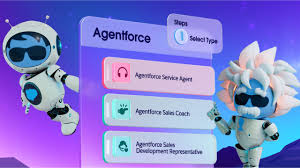
Defining the Role of AI Agents To successfully implement AI agents, organizations must clearly define their function across these five key areas: The Evolution of Agentic Automation Agentic automation represents a major shift in how enterprises leverage AI to drive productivity and efficiency. By seamlessly integrating AI agents, human employees, and automation technologies, businesses can orchestrate complex workflows from start to finish. AI agents are transforming customer service and business operations. These intelligent systems can plan and execute tasks, make informed decisions, and integrate with existing workflows to deliver superior efficiency. With the right AI strategy, businesses can elevate customer experiences by offering proactive, personalized, and highly responsive solutions. The Need for AI Agents Businesses today face mounting challenges: AI agents like Agentforce provide a scalable solution by automating interactions, streamlining processes, and ensuring continuous availability. Let’s explore what AI agents are, how they work, and how to deploy them successfully. What is an AI Agent? An AI agent is an intelligent system that autonomously interacts with customers, processes data, and executes actions without human intervention. Powered by machine learning and natural language processing (NLP), AI agents can: Unlike traditional automation, AI agents learn from interactions, refine their responses, and adapt to evolving business needs. Imagine if every employee—from the CEO to the newest sales rep—had an AI-powered assistant. With today’s AI advancements, that vision is becoming a reality. The Impact of Generative AI Agents More companies are embracing generative AI agents that leverage trusted customer data to deliver real-time insights. Tasks that once required extensive manual effort—like data analysis, trend forecasting, and customer support—can now be automated, freeing employees to focus on higher-value work. Beyond customer service, AI agents help businesses scale, meet key performance indicators, and solve problems before they escalate. The potential of this technology is just beginning to unfold. How AI Agents Work AI agents operate through a four-step process: By integrating these capabilities, AI agents can autonomously manage tasks like product recommendations, troubleshooting, and proactive follow-ups—allowing human employees to focus on strategic initiatives. Types of AI Agents Not all AI agents function the same way. Businesses can leverage different types of agents based on their operational needs: The Future of AI Agents AI-driven automation is redefining the way businesses operate. From enhancing customer experiences to optimizing internal workflows, AI agents are becoming indispensable tools for modern enterprises. As organizations invest in AI strategies, the key question remains: Are you ready to harness the full potential of AI agents to drive business success? Contact Tectonic today! By Tectonic Marketing Operations Director, Shannan Hearne Like Related Posts Who is Salesforce? Who is Salesforce? Here is their story in their own words. From our inception, we’ve proudly embraced the identity of Read more Salesforce Marketing Cloud Transactional Emails Salesforce Marketing Cloud Transactional Emails are immediate, automated, non-promotional messages crucial to business operations and customer satisfaction, such as order Read more Salesforce Unites Einstein Analytics with Financial CRM Salesforce has unveiled a comprehensive analytics solution tailored for wealth managers, home office professionals, and retail bankers, merging its Financial Read more AI-Driven Propensity Scores AI plays a crucial role in propensity score estimation as it can discern underlying patterns between treatments and confounding variables Read more
Read More
rise of digital workers

Rise of Digital Workers

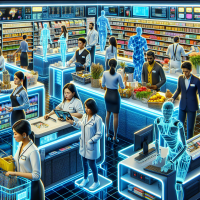
The Rise of Digital Workers: Unlocking a New Era of Opportunity Over the past two years, advancements in artificial intelligence have sparked a revolution in how humans work, live, and connect. While impressive generative AI models have garnered significant attention, a new paradigm of autonomous AI agents is emerging, promising transformative changes to industries and societies alike. Unlike traditional “predictive AI,” which analyzes data for recommendations, and “generative AI,” which creates content based on learned patterns, autonomous AI agents go a step further. These agents operate independently, executing tasks, making decisions, and even negotiating with other agents. This evolution introduces an intelligent digital workforce capable of scaling operations, reducing costs, and enhancing productivity. Consider a large retailer during the holiday season. Instead of relying on human workers or pre-programmed software to address customer inquiries or update inventory, autonomous agents can seamlessly manage customer interactions, monitor stock levels, reorder items, and coordinate shipping—all without human intervention. This level of automation represents a groundbreaking shift, enabling businesses to operate on an unprecedented scale. Expanding the Reach of Digital Labor Autonomous AI agents are breaking traditional barriers of human availability and physical constraints, enabling businesses to scale globally and more efficiently. These digital workers are not limited by geography, opening opportunities previously restricted to specific locations. However, this shift comes with challenges. Ensuring trust, accountability, and transparency in AI systems is critical. Equally important is investing in human-centric skills such as creativity, critical thinking, and adaptability, which remain uniquely human. Sustainability is another concern, as AI-driven technologies place increasing demands on energy and resources. By addressing these issues, societies can unlock the full potential of digital labor while safeguarding the planet and human values. Transforming Everyday Lives Beyond businesses, autonomous agents are poised to transform personal lives. Personalized agents can act as tutors for students, guiding them through their learning journeys. For individuals, these agents can manage everyday tasks, from scheduling appointments to coordinating complex logistics. In healthcare, AI agents are already alleviating administrative burdens on providers. For example, intelligent agents can handle patient communications, monitor progress, and schedule follow-ups, freeing doctors and nurses to focus on complex cases. Such innovations hold the potential to revolutionize patient care and improve outcomes across the board. Navigating Disruption and Change Like any transformative technology, the rise of autonomous agents will bring disruptions. Some industries will struggle to adapt, and jobs will inevitably evolve—or, in some cases, disappear. History shows, however, that technological revolutions often create far more opportunities than they displace. For example, the U.S. workforce grew by over 100 million jobs between 1950 and 2020, many in industries that didn’t exist before. The key lies in preparing workers for new roles through education and training. Autonomous agents are essential in addressing global challenges such as labor shortages and stagnant productivity growth. They amplify human capabilities, driving innovation and boosting economic output. For example, in the third quarter of 2024, U.S. productivity rose by 2.2%, fueled in part by AI advancements. Driving Innovation and Collaboration AI agents are also fostering innovation, sparking the creation of new companies and industries. More than 5,000 AI-focused startups have emerged in the past decade in the U.S. alone. This trend mirrors the technological revolutions driven by past innovations like microchips, the internet, and smartphones. However, effectively harnessing agentic AI requires collaboration among governments, businesses, nonprofits, and academia. Initiatives like the G7’s framework for AI accountability and the Bletchley Declaration emphasize transparency, safety, and data privacy, offering critical guardrails as AI adoption accelerates. A Vision for the Future Autonomous agents represent a powerful force for change, offering unprecedented opportunities for businesses and individuals alike. By leveraging these technologies responsibly and investing in human potential, societies can ensure a future of abundance and progress. As Marc Benioff, CEO of Salesforce, emphasizes, “AI has the potential to elevate every company, fuel economic growth, uplift communities, and lead to a future of abundance. If trust is our north star, agents will empower us to make a meaningful impact at an unprecedented scale.” Like Related Posts Who is Salesforce? Who is Salesforce? Here is their story in their own words. From our inception, we’ve proudly embraced the identity of Read more Salesforce Marketing Cloud Transactional Emails Salesforce Marketing Cloud Transactional Emails are immediate, automated, non-promotional messages crucial to business operations and customer satisfaction, such as order Read more Salesforce Unites Einstein Analytics with Financial CRM Salesforce has unveiled a comprehensive analytics solution tailored for wealth managers, home office professionals, and retail bankers, merging its Financial Read more AI-Driven Propensity Scores AI plays a crucial role in propensity score estimation as it can discern underlying patterns between treatments and confounding variables Read more

Read More
Is the Future Agentic for ERP?

Agentic AI Explained

Agentic AI: Autonomous Intelligence for Dynamic Problem-Solving What Is Agentic AI? Agentic AI refers to artificial intelligence systems designed to operate autonomously, pursuing defined goals with minimal human oversight. Unlike traditional AI, which follows predefined rules, agentic AI learns, adapts, and makes independent decisions—functioning as a proactive “agent” rather than a reactive tool. Core Characteristics of Agentic AI Feature Description Autonomy Operates independently, making decisions without constant human input. Goal-Driven Behavior Actively pursues objectives, optimizing actions for efficiency and success. Adaptive Learning Continuously improves by processing new data and adjusting strategies. Complex Problem-Solving Handles multi-step challenges by analyzing context and long-term implications. Multi-Technique Integration Combines machine learning, generative AI, NLP, and reasoning models for advanced decision-making. Agentic AI vs. Traditional AI Aspect Traditional AI Agentic AI Decision-Making Follows predefined rules; requires human input. Makes autonomous decisions. Adaptability Limited learning capabilities. Continuously evolves based on experience. Task Scope Narrow, task-specific automation. Broad, goal-oriented problem-solving. Human Dependency High (needs supervision). Low (self-sufficient). Key Applications of Agentic AI 1. Customer Service 2. Business Intelligence 3. Software Development 4. Cybersecurity 5. Autonomous Systems The Future of Agentic AI Agentic AI represents a paradigm shift—moving beyond automation to proactive, self-improving intelligence. As these systems advance, they will:✔ Reduce operational costs by minimizing human oversight.✔ Enhance efficiency through dynamic adaptation.✔ Unlock new possibilities in healthcare, logistics, and scientific research. Challenges to Address: Final Thoughts Agentic AI is redefining how intelligent systems interact with the world—not just executing tasks, but strategizing, learning, and acting independently. Businesses adopting this technology will gain a competitive edge through smarter, faster, and more adaptive solutions. Like Related Posts Who is Salesforce? Who is Salesforce? Here is their story in their own words. From our inception, we’ve proudly embraced the identity of Read more Salesforce Unites Einstein Analytics with Financial CRM Salesforce has unveiled a comprehensive analytics solution tailored for wealth managers, home office professionals, and retail bankers, merging its Financial Read more AI-Driven Propensity Scores AI plays a crucial role in propensity score estimation as it can discern underlying patterns between treatments and confounding variables Read more Tectonic’s Successful Salesforce Track Record Salesforce Technology Services Integrator – Tectonic has successfully delivered Salesforce in a variety of industries including Public Sector, Hospitality, Manufacturing, Read more
Read More
iot and salesforce einstein

IoT and Salesforce Einstein

IoT and Salesforce Einstein: Revolutionizing Data-Driven Decision Making The combination of Internet of Things (IoT) and Salesforce Einstein is transforming how businesses collect, analyze, and act on data. By integrating IoT devices with Salesforce’s AI-powered Einstein platform, organizations can unlock real-time insights, automate processes, and deliver personalized customer experiences. Let’s dive into how IoT and Salesforce Einstein work together and the benefits they bring to businesses. What is IoT? The Internet of Things (IoT) refers to a network of physical devices (e.g., sensors, wearables, smart appliances, industrial machines) that are connected to the internet and can collect, share, and act on data. These devices generate vast amounts of data, which can be used to monitor performance, predict issues, and optimize operations. What is Salesforce Einstein? Salesforce Einstein is an AI layer integrated into the Salesforce platform. It uses machine learning, predictive analytics, and natural language processing to provide intelligent insights, automate tasks, and enhance decision-making. Einstein powers features like predictive lead scoring, personalized recommendations, and automated workflows. How IoT and Salesforce Einstein Work Together When IoT devices are connected to Salesforce Einstein, the data they generate can be analyzed in real-time to drive actionable insights. Here’s how the integration works: Key Use Cases of IoT and Salesforce Einstein 1. Predictive Maintenance 2. Smart Customer Service 3. Personalized Marketing 4. Supply Chain Optimization 5. Smart Cities and Utilities Benefits of Combining IoT and Salesforce Einstein 1. Real-Time Insights 2. Proactive Problem Solving 3. Enhanced Customer Experiences 4. Operational Efficiency 5. Competitive Advantage How to Get Started with IoT and Salesforce Einstein The Future of IoT and Salesforce Einstein As IoT and AI technologies continue to evolve, their integration will become even more powerful. Future trends include: Conclusion The combination of IoT and Salesforce Einstein is a game-changer for businesses looking to harness the power of data. By integrating IoT devices with Einstein’s AI capabilities, organizations can gain real-time insights, automate processes, and deliver exceptional customer experiences. Whether you’re in manufacturing, retail, healthcare, or any other industry, IoT and Salesforce Einstein can help you stay ahead of the curve and drive innovation. Start exploring the possibilities today and unlock the full potential of IoT and Salesforce Einstein! Like Related Posts Who is Salesforce? Who is Salesforce? Here is their story in their own words. From our inception, we’ve proudly embraced the identity of Read more Salesforce Marketing Cloud Transactional Emails Salesforce Marketing Cloud Transactional Emails are immediate, automated, non-promotional messages crucial to business operations and customer satisfaction, such as order Read more Salesforce Unites Einstein Analytics with Financial CRM Salesforce has unveiled a comprehensive analytics solution tailored for wealth managers, home office professionals, and retail bankers, merging its Financial Read more AI-Driven Propensity Scores AI plays a crucial role in propensity score estimation as it can discern underlying patterns between treatments and confounding variables Read more

Read More
DHS Introduces AI Framework to Protect Critical Infrastructure

DHS Introduces AI Framework to Protect Critical Infrastructure

The Department of Homeland Security (DHS) has unveiled the Roles and Responsibilities Framework for Artificial Intelligence in Critical Infrastructure, a voluntary set of guidelines designed to ensure the safe and secure deployment of AI across the systems that power daily life. From energy grids to water systems, transportation, and communications, critical infrastructure increasingly relies on AI for enhanced efficiency and resilience. While AI offers transformative potential—such as detecting earthquakes, optimizing energy usage, and streamlining logistics—it also introduces new vulnerabilities. Framework Overview The framework, developed with input from cloud providers, AI developers, critical infrastructure operators, civil society, and public sector organizations, builds on DHS’s broader policies from 2023, which align with White House directives. It aims to provide a shared roadmap for balancing AI’s benefits with its risks. AI Vulnerabilities in Critical Infrastructure The DHS framework categorizes vulnerabilities into three key areas: The guidelines also address sector-specific vulnerabilities and offer strategies to ensure AI strengthens resilience while minimizing misuse risks. Industry and Government Support Arvind Krishna, Chairman and CEO of IBM, lauded the framework as a “powerful tool” for fostering responsible AI development. “We look forward to working with DHS to promote shared and individual responsibilities in advancing trusted AI systems.” Marc Benioff, CEO of Salesforce, emphasized the framework’s role in fostering collaboration among stakeholders while prioritizing trust and accountability. “Salesforce is committed to humans and AI working together to advance critical infrastructure industries in the U.S. We support this framework as a vital step toward shaping the future of AI in a safe and sustainable manner.” DHS Secretary Alejandro N. Mayorkas highlighted the urgency of proactive action. “AI offers a once-in-a-generation opportunity to improve the strength and resilience of U.S. critical infrastructure, and we must seize it while minimizing its potential harms. The framework, if widely adopted, will help ensure the safety and security of critical services.” DHS Recommendations for Stakeholders A Call to Action DHS encourages widespread adoption of the framework to build safer, more resilient critical infrastructure. By prioritizing trust, transparency, and collaboration, this initiative aims to guide the responsible integration of AI into essential systems, ensuring they remain secure and effective as technology continues to evolve. Like Related Posts Who is Salesforce? Who is Salesforce? Here is their story in their own words. From our inception, we’ve proudly embraced the identity of Read more Salesforce Marketing Cloud Transactional Emails Salesforce Marketing Cloud Transactional Emails are immediate, automated, non-promotional messages crucial to business operations and customer satisfaction, such as order Read more Salesforce Unites Einstein Analytics with Financial CRM Salesforce has unveiled a comprehensive analytics solution tailored for wealth managers, home office professionals, and retail bankers, merging its Financial Read more AI-Driven Propensity Scores AI plays a crucial role in propensity score estimation as it can discern underlying patterns between treatments and confounding variables Read more

Read More
gettectonic.com