
Logistics Archives - gettectonic.com - Page 3
Agentic AI Race

Transforming Business Operations Through Autonomous Intelligence

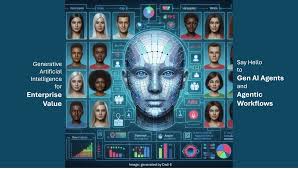
Understanding Agentic AI Agentic AI represents a paradigm shift in artificial intelligence, moving beyond static automation to dynamic systems capable of independent decision-making and real-time adaptation. Unlike traditional rule-based automation, these AI agents can: According to Thadeous Goodwyn of Booz Allen Hamilton, agentic AI achieves objectives by breaking them into subtasks delegated to specialized AI models. This capability is accelerating rapidly due to advances in large language models and generative AI. 10 Transformative Use Cases of Agentic AI 1. Cybersecurity & Risk Management AI agents are revolutionizing security operations by: 2. Supply Chain Optimization Agentic AI transforms logistics by: 3. Advanced Customer Service Beyond basic chatbots, agentic AI enhances support by: 4. Call Center Automation Modern contact centers leverage agentic AI to: 5. Scientific Discovery & R&D In research applications, AI agents: 6. Defense Logistics Planning Military applications include: 7. Smart Manufacturing Agentic systems streamline production by: 8. Utility Infrastructure Management Energy providers use agentic AI for: 9. Multimedia Content Creation Beyond basic generation, agentic AI: 10. Knowledge Management Modern retrieval systems: Implementation Considerations While 26% of enterprises are actively exploring agentic AI (per Deloitte), adoption requires addressing: The Future of Autonomous Operations As noted by industry experts, agentic AI represents more than incremental improvement – it enables fundamentally new ways of working. Organizations that successfully implement these systems will gain: ✔ Enhanced operational resilience✔ Improved decision velocity✔ Greater process efficiency✔ New competitive advantages The transition requires careful planning but offers transformative potential across virtually every industry sector. As the technology matures, agentic AI will increasingly become the cornerstone of intelligent business operations. Like Related Posts Who is Salesforce? Who is Salesforce? Here is their story in their own words. From our inception, we’ve proudly embraced the identity of Read more Salesforce Unites Einstein Analytics with Financial CRM Salesforce has unveiled a comprehensive analytics solution tailored for wealth managers, home office professionals, and retail bankers, merging its Financial Read more AI-Driven Propensity Scores AI plays a crucial role in propensity score estimation as it can discern underlying patterns between treatments and confounding variables Read more Tectonic’s Successful Salesforce Track Record Salesforce Technology Services Integrator – Tectonic has successfully delivered Salesforce in a variety of industries including Public Sector, Hospitality, Manufacturing, Read more

Read More
How Graph Databases and AI Agents Are Redefining Modern Data Strategy

How Graph Databases and AI Agents Are Redefining Modern Data Strategy

The Data Tightrope: How Graph Databases and AI Agents Are Redefining Modern Data Strategy The Data Leader’s Dilemma: Speed vs. Legacy Today’s data leaders face an impossible balancing act: The gap between expectation and reality is widening. Businesses demand faster insights, deeper connections, and decisions that can’t wait—yet traditional databases weren’t built for this dynamic world. The Problem with Traditional Databases Relational databases force data into predefined tables, stripping away context and relationships. Need to analyze new connections? Prepare for:✔ Schema redesigns✔ Costly ETL pipelines✔ Slow, complex joins Result: Data becomes siloed, insights are delayed, and innovation stalls. Graph Databases: The Flexible Future of Data What Makes Graphs Different? Unlike rigid tables, graph databases store data as: Example: An e-commerce graph instantly reveals: No joins. No schema redesigns. Just direct, real-time traversal. Why Graphs Are Winning Now The Next Leap: AI-Powered, Self-Evolving Graphs Static graphs are powerful—but AI agents make them intelligent. How AI Agents Supercharge Graphs From Static Data to Living Knowledge Traditional graphs:❌ Manually updated❌ Fixed structure❌ Limited to known queries AI-augmented graphs:✅ Self-learning (adds/removes connections dynamically)✅ Adapts to new questions✅ Gets smarter with every query The Business Impact: Smarter, Faster, Cheaper 1. Break Down Silos Without Rebuilding Pipelines 2. Autonomous Decision-Making 3. Democratized Intelligence The Future: Graphs as Invisible Infrastructure In 2–3 years, AI-powered graphs will be as essential as cloud storage—ubiquitous, self-maintaining, and silently powering:✔ Hyper-personalized customer experiences✔ Real-time risk mitigation✔ Cross-functional insights How to Start Today The Bottom Line Static data is dead. The future belongs to dynamic, self-learning graphs powered by AI. The question isn’t if you’ll adopt this approach—it’s how fast you can start. → Innovators will leverage graphs as competitive moats.→ Laggards will drown in unconnected data. Like Related Posts Who is Salesforce? Who is Salesforce? Here is their story in their own words. From our inception, we’ve proudly embraced the identity of Read more Salesforce Unites Einstein Analytics with Financial CRM Salesforce has unveiled a comprehensive analytics solution tailored for wealth managers, home office professionals, and retail bankers, merging its Financial Read more AI-Driven Propensity Scores AI plays a crucial role in propensity score estimation as it can discern underlying patterns between treatments and confounding variables Read more Tectonic’s Successful Salesforce Track Record Salesforce Technology Services Integrator – Tectonic has successfully delivered Salesforce in a variety of industries including Public Sector, Hospitality, Manufacturing, Read more

Read More

AI-Powered Dynamic Scheduling

Revolutionizing Field Service: How Intelligent Scheduling Solves a $260,000/Hour Problem The High-Stakes World of Field Service Operations In today’s 24/7 service economy, every minute of technician downtime costs enterprises dearly. Aberdeen Group research reveals that unplanned equipment downtime costs manufacturers $260,000 per hour in lost productivity. Yet most field service organizations remain trapped in scheduling chaos: The consequences cascade through operations: missed SLAs, frustrated customers, burned-out technicians, and eroded profit margins. For global manufacturers maintaining critical infrastructure, these inefficiencies aren’t just costly—they threaten business continuity. The Scheduling Bottleneck Breaking Field Service Dispatchers face an impossible juggling act:✔ Matching 100+ technician skills to complex jobs✔ Optimizing routes across continents✔ Accommodating urgent priority tickets✔ Maintaining regulatory compliance Legacy systems—often spreadsheet-based—collapse under this complexity. The result? ✖ Wrong technicians dispatched✖ Critical jobs delayed by days✖ Fuel and overtime costs skyrocketing✖ Compliance risks from inaccurate logs The Solution: AI-Powered Dynamic Scheduling Enter Sandip Patel, a Salesforce Architect whose Custom Slot Scheduler for Field Service Lightning (FSL) is transforming global service operations. Built for manufacturing giant Saint-Gobain, this intelligent system: “Traditional scheduling is chess played with static pieces,” Patel explains. “We built a system where every piece moves dynamically in response to the game.” Measurable Results That Redefine Service Excellence Patel’s solution delivered transformational outcomes for Saint-Gobain: Metric Improvement Scheduling Accuracy ↑ 35% First-Time Fix Rate ↑ 28% Customer Satisfaction ↑ 22 points Technician Productivity ↑ 40% Overtime Costs ↓ 32% The system’s self-learning algorithms continuously improve, analyzing historical data to predict: The Future of Intelligent Field Service As the field service management market grows to 6 billion by 2026 (IDC), Patel’s work establishes a new benchmark. The principles apply across industries: “Where others see complexity, we see patterns,” says Patel, now adapting these concepts for healthcare at United Techno Solutions. “The future belongs to systems that think as fast as the field moves.” For enterprises drowning in scheduling chaos, the message is clear: intelligent automation isn’t optional—it’s the only way to survive in the service economy. The technology exists. The ROI is proven. The question is no longer “if” but “how fast” organizations can implement these solutions. Like Related Posts Who is Salesforce? Who is Salesforce? Here is their story in their own words. From our inception, we’ve proudly embraced the identity of Read more Salesforce Marketing Cloud Transactional Emails Salesforce Marketing Cloud Transactional Emails are immediate, automated, non-promotional messages crucial to business operations and customer satisfaction, such as order Read more Salesforce Unites Einstein Analytics with Financial CRM Salesforce has unveiled a comprehensive analytics solution tailored for wealth managers, home office professionals, and retail bankers, merging its Financial Read more AI-Driven Propensity Scores AI plays a crucial role in propensity score estimation as it can discern underlying patterns between treatments and confounding variables Read more

Read More

The Future of ERP: Agile, Modular, and Built for Growth

In today’s fast-moving business landscape, agility separates industry leaders from the rest. Outdated, monolithic ERP systems can’t keep up—they lock companies into rigid workflows instead of adapting to their needs. Enter modular ERP, a modern approach that combines enterprise-grade structure with the flexibility businesses demand. And when built natively on Salesforce, it becomes a game-changer—delivering seamless integration, real-time insights, and unmatched scalability. Why Legacy ERP Systems Are Failing Businesses Traditional ERP solutions were designed as one-size-fits-all systems, promising to handle everything from finance to supply chain in a single platform. But in reality, they often create more problems than they solve: For dynamic industries like manufacturing, distribution, and retail, these limitations lead to inefficiencies, delayed decisions, and rising operational costs. What Makes Modular ERP Different? Modular ERP redefines enterprise software by allowing businesses to deploy only what they need—and scale when ready. Think of it as a customizable toolkit: start with core functions like inventory or financials, then add supply chain, procurement, or manufacturing modules as your business grows. This approach eliminates the risks of a full-scale ERP overhaul while maximizing ROI—no bloat, no unnecessary features, just what you need to run smarter. Why Salesforce Is the Ideal ERP Foundation Salesforce is the world’s #1 CRM, but its power extends far beyond sales. As an ERP platform, it offers: ✅ Real-time data sync across sales, finance, logistics, and operations✅ True cloud scalability with enterprise-grade security✅ Low-code customization for rapid deployment✅ Seamless integration with Salesforce apps and third-party tools✅ Mobile-friendly access for today’s hybrid workforce When ERP is built natively on Salesforce businesses get the best of both worlds: the depth of enterprise resource planning and the agility of the Salesforce ecosystem. 5 Key Benefits of Modular ERP on Salesforce Real-World Impact: A Manufacturer’s Success Story A mid-sized industrial parts manufacturer was struggling with siloed systems—their legacy ERP couldn’t adapt to remote work or shifting demand. By implementing Salesforce, they: ✔ Cut inventory costs by 25% with real-time tracking✔ Reduced production cycle times by 18%✔ Gained end-to-end operational visibility✔ Scaled effortlessly by adding supply chain and finance modules later The Bottom Line: ERP That Works for You The future of ERP isn’t monolithic—it’s modular, cloud-based, and built for change. With ERP on Salesforce, businesses can finally break free from rigid systems and embrace a solution that evolves with them. Ready to modernize your operations? The right ERP shouldn’t hold you back—it should propel you forward. Like Related Posts Who is Salesforce? Who is Salesforce? Here is their story in their own words. From our inception, we’ve proudly embraced the identity of Read more Salesforce Marketing Cloud Transactional Emails Salesforce Marketing Cloud Transactional Emails are immediate, automated, non-promotional messages crucial to business operations and customer satisfaction, such as order Read more Salesforce Unites Einstein Analytics with Financial CRM Salesforce has unveiled a comprehensive analytics solution tailored for wealth managers, home office professionals, and retail bankers, merging its Financial Read more AI-Driven Propensity Scores AI plays a crucial role in propensity score estimation as it can discern underlying patterns between treatments and confounding variables Read more

Read More
The Rise of Ambient AI Agents

The Rise of Ambient AI Agents

Beyond Chat: The Rise of Ambient AI Agents Most AI applications today follow the familiar “chat UX” pattern—open ChatGPT, Claude, or another interface, type a message, wait for a response, then continue the conversation. While this feels natural (we’re used to texting), it creates a bottleneck that limits AI’s true potential. Every time you need an AI to do something, you must: You become the bottleneck in a system designed to make you more efficient. It’s like having a brilliant research assistant who only works when you’re standing over their shoulder, micromanaging every step. The Problem with Chat-Based AI 1. Serial, Not Parallel Chat-based AI forces you into a one-conversation-at-a-time model. While you’re discussing database optimization, you can’t simultaneously have another AI monitoring deployments or analyzing customer feedback. You waste time context-switching between chat windows instead of focusing on strategy. 2. Human Scalability Limits You can’t scale yourself when every AI interaction requires active participation. Your AI sits idle while you’re in meetings, sleeping, or focused elsewhere—even as your systems generate events that could benefit from real-time analysis. 3. Contradicts Autonomous Systems In my research paper The Age of AgentOps, I described how biological organisms don’t wait for conscious commands to regulate temperature, fight infections, or heal wounds. Your immune system doesn’t ask permission before attacking a virus—it responds automatically. Similarly, truly autonomous AI should act on ambient signals without human initiation. Chat works for information retrieval, but as AI evolves to deploy code, manage workflows, and coordinate systems, the request-response model becomes a fundamental constraint. Ambient Agents: The Shift from Pull to Push What Are Ambient Agents? Ambient agents represent a shift from “pull” (you request, AI responds) to “push” (AI acts proactively based on environmental signals). Traditional AI (Pull) Ambient AI (Push) Waits for your command Acts on real-time data Reactive by design Proactive & autonomous One task at a time Parallel operations Key Characteristics The Human-in-the-Loop Revolution Ambient agents don’t eliminate human involvement—they optimize it. The best systems follow three interaction patterns: This mirrors how skilled human assistants work—proactive but deferring when necessary. Real-World Applications 1. Email Management Agents like LangChain’s system prioritize emails, draft responses, and flag urgent messages—learning your preferences over time. 2. E-Commerce & Negotiation Imagine: 3. Infrastructure Monitoring Instead of waking engineers with vague alerts, agents: 4. Supply Chain Optimization B2B agents autonomously: The Future: Autonomous Business Operations In 24–36 months, ambient agents will be mainstream. Early adopters will gain three key advantages: How to Start Now The Invisible Revolution The best technology fades into the background. Ambient agents won’t replace humans—they’ll free us from being the bottleneck. The question isn’t if this shift will happen—it’s whether you’ll lead or lag behind. The future belongs to those who master coordination, not just operation. Like Related Posts Who is Salesforce? Who is Salesforce? Here is their story in their own words. From our inception, we’ve proudly embraced the identity of Read more Salesforce Unites Einstein Analytics with Financial CRM Salesforce has unveiled a comprehensive analytics solution tailored for wealth managers, home office professionals, and retail bankers, merging its Financial Read more AI-Driven Propensity Scores AI plays a crucial role in propensity score estimation as it can discern underlying patterns between treatments and confounding variables Read more Tectonic’s Successful Salesforce Track Record Salesforce Technology Services Integrator – Tectonic has successfully delivered Salesforce in a variety of industries including Public Sector, Hospitality, Manufacturing, Read more

Read More
The Agentic Future

The Agentic Future

The “agentic future” refers to a future where AI agents play a significant role in various aspects of life, including work, decision-making, and even personal tasks. This future envisions AI agents as autonomous entities capable of making decisions, planning actions, and executing tasks without direct human supervision, essentially functioning as assistants or collaborators rather than just tools.  Here’s a look at what this future might entail: 1. Autonomous AI Assistants: 2. AI as a Collaborative Partner: 3. Challenges and Considerations: 4. Examples of Agentic AI in Action: 5. The Rise of Multi-Agent Systems: In conclusion, the “agentic future” is a vision of a world where AI agents are integrated into various aspects of life, enhancing productivity, personalization, and decision-making. While challenges and considerations remain, the potential for innovation and transformation is significant. Like Related Posts Who is Salesforce? Who is Salesforce? Here is their story in their own words. From our inception, we’ve proudly embraced the identity of Read more Salesforce Unites Einstein Analytics with Financial CRM Salesforce has unveiled a comprehensive analytics solution tailored for wealth managers, home office professionals, and retail bankers, merging its Financial Read more AI-Driven Propensity Scores AI plays a crucial role in propensity score estimation as it can discern underlying patterns between treatments and confounding variables Read more Tectonic’s Successful Salesforce Track Record Salesforce Technology Services Integrator – Tectonic has successfully delivered Salesforce in a variety of industries including Public Sector, Hospitality, Manufacturing, Read more

Read More
AI Agents and Open APIs

The Future of AI Agents

The Future of AI Agents: A Symphony of Digital Intelligence Forget simple chatbots—tomorrow’s AI agents will be force multipliers, seamlessly integrating into our workflows, anticipating needs, and orchestrating complex tasks with near-human intuition. Powered by platforms like Agentforce (Salesforce’s AI agent builder), these agents will evolve in five transformative ways: 1. Beyond Text: Multimodal AI That Sees, Hears, and Understands Today’s AI agents mostly process text, but the future belongs to multimodal AI—agents that interpret images, audio, and video, unlocking richer, real-world applications. How? Neural networks convert voice, images, and video into tokens that LLMs understand. Salesforce AI Research’s xGen-MM-Vid is already pioneering video comprehension. Soon, agents will respond to spoken commands, like:“Analyze Q2 sales KPIs—revenue growth, churn, CAC—summarize key insights, and recommend two fixes.”This isn’t just about speed; it’s about uncovering hidden patterns in data that humans might miss. 2. Agent-to-Agent (A2A) Collaboration: The Rise of AI Teams Today’s AI agents work solo. Tomorrow, specialized agents will collaborate like a well-oiled team, multiplying efficiency. Human oversight remains critical—not for micromanagement, but for ethics, strategy, and alignment with human goals. 3. Orchestrator Agents: The AI “Managers” of Tomorrow Teams need leaders—enter orchestrator agents, which coordinate specialized AIs like a restaurant GM oversees staff. Example: A customer service request triggers: The orchestrator integrates all inputs into a seamless, on-brand response. Why it matters: Orchestrators make AI systems scalable and adaptable. New tools? Just plug them in—no rebuilds required. 4. Smarter Reasoning: AI That Thinks Like You Today’s AI follows basic commands. Tomorrow’s will analyze, infer, and strategize like a human colleague. Example: A marketing AI could: Key Advances: As Anthropic’s Jared Kaplan notes, future agents will know when deep reasoning is needed—and when it’s overkill. 5. Infinite Memory: AI That Never Forgets Current AI has the memory of a goldfish—each interaction starts from scratch. Future agents will retain context across sessions, like a human recalling notes. Impact: The Bottom Line The next generation of AI agents won’t just assist—they’ll augment human potential, turning complex workflows into effortless collaborations. With multimodal perception, team intelligence, advanced reasoning, and infinite memory, they’ll redefine productivity across industries. The future isn’t just AI—it’s AI working for you, with you, and ahead of you. Like Related Posts Who is Salesforce? Who is Salesforce? Here is their story in their own words. From our inception, we’ve proudly embraced the identity of Read more Salesforce Marketing Cloud Transactional Emails Salesforce Marketing Cloud Transactional Emails are immediate, automated, non-promotional messages crucial to business operations and customer satisfaction, such as order Read more Salesforce Unites Einstein Analytics with Financial CRM Salesforce has unveiled a comprehensive analytics solution tailored for wealth managers, home office professionals, and retail bankers, merging its Financial Read more AI-Driven Propensity Scores AI plays a crucial role in propensity score estimation as it can discern underlying patterns between treatments and confounding variables Read more

Read More
When Will Quantum Computing Be Ready?

When Will Quantum Computing Be Ready?

When Will Quantum Computing Be Ready? The Answer Is More Complex Than You Think Quantum computing doesn’t have a single “launch date”—it’s arriving in stages, with different milestones depending on how you define “availability.” The Quantum Computing Landscape Today Right now, hundreds of quantum computers exist worldwide, deployed by companies like IBM, D-Wave, IonQ, and Quantinuum. They’re accessible via: But today’s quantum machines are mostly used for research, experimentation, and skill-building—not yet for real-world commercial advantage. The Quantum Readiness Spectrum: 4 Key Milestones 1️⃣ Quantum Supremacy (Achieved in Niche Cases) 2️⃣ Quantum Economic Advantage (2025-2027) 3️⃣ Quantum Computational Advantage (2028-2030+) 4️⃣ Quantum Practicality (Ongoing Adoption) What’s Accelerating (or Slowing) Quantum’s Progress? ✅ Positive Signs ⚠️ Remaining Challenges The Bottom Line: When Should Businesses Prepare? 🔹 Now: Experiment with cloud-based quantum access (IBM, AWS, Azure).🔹 2025-2027: Watch for quantum economic advantage in optimization, chemistry, and AI.🔹 2030+: Expect broad commercial impact in finance, logistics, and materials science. “Quantum computing won’t arrive with a bang—it’ll seep into industries, one breakthrough at a time.”— McKinsey Quantum Research, 2024 Want to stay ahead? Start piloting quantum use cases today—before your competitors do. Like Related Posts Who is Salesforce? Who is Salesforce? Here is their story in their own words. From our inception, we’ve proudly embraced the identity of Read more Salesforce Marketing Cloud Transactional Emails Salesforce Marketing Cloud Transactional Emails are immediate, automated, non-promotional messages crucial to business operations and customer satisfaction, such as order Read more Salesforce Unites Einstein Analytics with Financial CRM Salesforce has unveiled a comprehensive analytics solution tailored for wealth managers, home office professionals, and retail bankers, merging its Financial Read more AI-Driven Propensity Scores AI plays a crucial role in propensity score estimation as it can discern underlying patterns between treatments and confounding variables Read more

Read More

How AI Can Help Canadian Manufacturers Stay Competitive in a Changing Economy

Canada’s manufacturing sector faces mounting pressures—from a weak Canadian dollar to persistent supply chain disruptions. According to Salesforce’s Trends in Manufacturing Report, 63% of Canadian manufacturers say supply chain issues that began years ago still linger today, while unexpected equipment downtime costs large producers 8% of annual revenue. To navigate these challenges and future-proof operations, Canadian manufacturers must embrace AI-driven modernization—leveraging data intelligence, predictive analytics, and autonomous AI agents to boost efficiency, cut costs, and unlock new revenue streams. The Data Accessibility Challenge While 84% of Canadian manufacturers recognize the need to modernize, many struggle to extract real value from their digital investments. Key findings reveal: The problem? Siloed data prevents manufacturers from delivering real-time insights to frontline workers and AI tools—hindering predictive maintenance, inventory optimization, and customer service improvements. How AI Agents Drive Manufacturing Efficiency To maximize AI’s impact, manufacturers need a unified data platform (like Salesforce’s Manufacturing Data Cloud) that integrates: Autonomous AI agents (powered by natural language processing) can then automate decision-making, such as:✅ Detecting sales contract deviations and auto-correcting pricing or fulfillment issues.✅ Predicting equipment failures and scheduling proactive maintenance.✅ Optimizing stock levels by auto-reordering when inventory dips. 3 Key Areas Where AI Delivers Immediate ROI The Path Forward: Building an AI-Ready Foundation With economic uncertainty looming, Canadian manufacturers must act now to:🔹 Break down data silos (integrate IoT, ERP, and CRM systems).🔹 Deploy AI agents for autonomous decision-making in sales, maintenance, and logistics.🔹 Train teams to work alongside AI—not against it. The bottom line? AI isn’t just a competitive advantage—it’s becoming a necessity for survival in modern manufacturing. By harnessing connected data and intelligent automation, Canadian manufacturers can cut costs, boost productivity, and secure their future in an unpredictable global market. Ready to modernize? Start by auditing your data infrastructure—because AI is only as powerful as the insights it can access. Tectonic can help. Like Related Posts Who is Salesforce? Who is Salesforce? Here is their story in their own words. From our inception, we’ve proudly embraced the identity of Read more Salesforce Marketing Cloud Transactional Emails Salesforce Marketing Cloud Transactional Emails are immediate, automated, non-promotional messages crucial to business operations and customer satisfaction, such as order Read more Salesforce Unites Einstein Analytics with Financial CRM Salesforce has unveiled a comprehensive analytics solution tailored for wealth managers, home office professionals, and retail bankers, merging its Financial Read more AI-Driven Propensity Scores AI plays a crucial role in propensity score estimation as it can discern underlying patterns between treatments and confounding variables Read more

Read More
salesforce starter

Essential Teams Every SMB Needs

Lean & Mean: The Essential Teams Every SMB Needs to Thrive Gone are the days when success required massive budgets and bloated teams. Today’s most competitive small and medium businesses (SMBs) run lean, agile operations—often with remote teams, strategic outsourcing, and smart automation. But while you can cut costs, you can’t cut corners on these six core teams—the engine that keeps your business moving forward. 1. Sales & Customer Acquisition: Your Growth Engine Mission: Turn prospects into paying customers. Key Focus Areas: ✅ Lead generation – Find your ideal customers (social media, referrals, targeted outreach).✅ Pipeline management – Never let a hot lead slip through the cracks.✅ Closing deals – Guide buyers with confidence. Pro Tip: A CRM like Salesforce Starter Suite automates follow-ups, tracks leads, and uses AI to predict the best next steps. 2. Finance & Accounting: Your Money Guardians Mission: Keep cash flowing and finances healthy. Key Focus Areas: ✅ Bookkeeping – Track income, expenses, and profits.✅ Invoicing & payments – Get paid faster, pay vendors on time.✅ Tax compliance – Avoid penalties with organized records. Pro Tip: Tools like QuickBooks automate invoicing, expense tracking, and financial reporting. 3. Marketing & Branding: Your Storytellers Mission: Make sure the right people know (and love) your business. Key Focus Areas: ✅ Content marketing – Blogs, social media, videos that build trust.✅ Multi-channel campaigns – Email, social, SEO, ads.✅ Brand consistency – Same look, voice, and vibe everywhere. Pro Tip: With AI-powered tools like Agentforce, you can launch campaigns in minutes—just give a prompt, and it drafts emails, schedules posts, and optimizes engagement. 4. Operations & Logistics: Your Efficiency Experts Mission: Keep everything running smoothly behind the scenes. Key Focus Areas: ✅ Inventory management – Avoid stockouts or overstocking.✅ Supply chain optimization – Faster, cheaper deliveries.✅ Process automation – Reduce manual work. Pro Tip: Platforms like ShipBob automate order fulfillment, while Salesforce Operations Hub streamlines workflows. 5. Customer Support & Success: Your Retention Army Mission: Keep customers happy so they keep coming back. Key Focus Areas: ✅ Quick response times – Solve issues fast.✅ Proactive check-ins – Ensure customers succeed with your product.✅ Self-service options – FAQs, chatbots, tutorials. Pro Tip: Agentforce AI assistants handle 24/7 support, answering FAQs and escalating only when needed. 6. People & Culture: Your Team Builders Mission: Attract, retain, and empower top talent. Key Focus Areas: ✅ Hiring & onboarding – Find people who fit your culture.✅ Payroll & benefits – Keep employees happy.✅ Employee engagement – Foster a great workplace. Pro Tip: Salesforce Employee Service Management automates HR workflows, so your team spends less time on admin. How to Structure Your SMB for Success You don’t need corporate-level bureaucracy—just clarity, flexibility, and the right tools. 5 Steps to Build a Scalable Team Structure: 1️⃣ Identify core functions – What’s essential? (Sales, finance, marketing, ops, support, HR).2️⃣ Assign (or outsource) key roles – No need to hire full-time if a tool or freelancer can do it.3️⃣ Encourage cross-team collaboration – Break silos; share insights.4️⃣ Automate repetitive work – Free up time for high-value tasks.5️⃣ Stay adaptable – Evolve roles as you grow. The Bottom Line:With lean teams + smart tech, SMBs can punch above their weight. Starter Suite brings sales, service, marketing, and operations into one platform—so you stay nimble as you scale. 🚀 Want to optimize your small biz? Explore Salesforce for SMBs #SmallBusiness #Entrepreneurship #Salesforce #AI #BusinessGrowth Like Related Posts Who is Salesforce? Who is Salesforce? Here is their story in their own words. From our inception, we’ve proudly embraced the identity of Read more Salesforce Marketing Cloud Transactional Emails Salesforce Marketing Cloud Transactional Emails are immediate, automated, non-promotional messages crucial to business operations and customer satisfaction, such as order Read more Salesforce Unites Einstein Analytics with Financial CRM Salesforce has unveiled a comprehensive analytics solution tailored for wealth managers, home office professionals, and retail bankers, merging its Financial Read more AI-Driven Propensity Scores AI plays a crucial role in propensity score estimation as it can discern underlying patterns between treatments and confounding variables Read more

Read More
Salesforce Unveils Agentforce for Consumer Goods

Salesforce Unveils Agentforce for Consumer Goods

Salesforce Unveils Agentforce for Consumer Goods: Accelerating AI Adoption in Retail San Francisco, [April 2025] – Just eight days after launching Agentforce for Field Service, Salesforce has introduced Agentforce for Consumer Goods—a tailored solution designed to help brands quickly deploy AI agents across four key sectors: customer service, key account management, retail sales, and field operations. Unlike previous editions that offered pre-built AI agents for specific roles, this release provides a library of industry-specific skills and actions, empowering consumer goods companies to rapidly customize and deploy their own AI assistants. Why Agentforce for Consumer Goods? While businesses could already build agents on the standard Agentforce platform, this industry-focused edition accelerates deployment with:✔ Pre-configured skills for customer service, sales, and field teams✔ Faster implementation with ready-made automation components✔ Lower-risk experimentation for brands new to agentic AI “Salesforce is curating a smooth onboarding experience for companies entering the agentic AI era,” says Martin Schneider, VP & Principal Analyst at Constellation Research. “This gives quick wins—building confidence before diving into advanced multi-agent workflows.” Key Use Cases for Consumer Goods Brands 🛎️ AI-Powered Customer Service Agents Example: A rep at a home appliance company can ask an AI agent to check a customer’s product health—if maintenance is due, the agent drafts a service quote in seconds. 📈 Smarter Sales Assistants Example: If an account’s order volume drops unexpectedly, an AI agent can recommend new products to pitch, helping sales teams react faster. 🚚 Optimized Field Operations Example: When a customer requests a replacement, an AI agent instantly books delivery, assigns the nearest driver, and updates schedules—no manual input needed. The Bigger Picture: Salesforce’s Agentforce Momentum This launch follows: With 5,000+ customers already on Agentforce, industry-specific editions like this lower the barrier to entry—letting more brands test AI agents in low-stakes scenarios before scaling. What’s Next? Expect more vertical-focused Agentforce releases in 2025, building on earlier launches like Agentforce for Retail. For now, consumer goods brands have a new toolkit to turn repetitive tasks into automated workflows—freeing teams to focus on growth. Ready to explore AI agents for your business? Contact Tectonic today! Like Related Posts Who is Salesforce? Who is Salesforce? Here is their story in their own words. From our inception, we’ve proudly embraced the identity of Read more Salesforce Marketing Cloud Transactional Emails Salesforce Marketing Cloud Transactional Emails are immediate, automated, non-promotional messages crucial to business operations and customer satisfaction, such as order Read more Salesforce Unites Einstein Analytics with Financial CRM Salesforce has unveiled a comprehensive analytics solution tailored for wealth managers, home office professionals, and retail bankers, merging its Financial Read more AI-Driven Propensity Scores AI plays a crucial role in propensity score estimation as it can discern underlying patterns between treatments and confounding variables Read more

Read More

Agentforce Aids Distribution

Good360’s manual processes slowed their ability to distribute essential goods to communities in crisis. Agentforce will speed up distribution and automate donation matching for greater impact. About Good360 Good360 is a nonprofit organization on a mission to close the need gap. They work with corporate donors and nonprofit partners to put essential items like clothing and household items to great use. The Challenge for Good360 Manual processes hinder Good360’s efforts to get product donations to the people who need them. Good360 has been bridging the gap between surplus and demand since 1983, when it was founded to help distribute million worth of donated office equipment to nonprofits. What started as a single act of generosity has grown into a nationwide operation that’s distributed more than $18 billion in essential products, helped more than 100 million people, and kept all those excess goods out of landfills in the process. With millions of people in the U.S. living in poverty and natural disasters increasing in frequency and intensity, demand for their services will only continue to grow. From distributing emergency supplies to communities devastated by Hurricane Helene in Georgia to bringing comfort to NICU families in Florida, Good360’s impact is widely varied and deeply felt. Their challenge isn’t typically a lack of donations, rather, it’s ensuring that donations reach the right people at the right time. When a corporation notifies Good360 that a donation is ready, the matching team must manually search their network of tens of thousands of nonprofit partners to assess which ones have an urgent need for that type of donation. Then, they have to calculate possible shipping distances, contact the nonprofit to check whether the donation is still essential, and verify the shipping destination. Good360’s work plays a significant role in disaster recovery where every second counts. Even though this work is urgent, only two employees are dedicated to coordinating disaster-related donation matching. “The people who join Good360 are motivated to make a difference, they’re laser-focused on furthering our mission” said Stephane Moulec, Good360’s Chief Technology Officer. “Operations are part of what we do, but anything that streamlines admin so our employees can spend more time on building relationships with nonprofit partners and affected communities is a huge win.” With thousands of truckloads of goods coming in every year, this laborious matching process constrained the number of donations they were able to accept and distribute. “Globally, a significant amount of goods that could be matched to disaster survivors end up going to the landfill,” said Moulec. “Good360 is here to change that.” Good360 is determined to maximize every donation while reducing their carbon footprint and keeping operational costs low. They knew that with the right solution, they could increase the number of donations they’re able to accept, streamline distribution, and ensure critical supplies reach people faster. How Salesforce Helps Good360 Agentforce-powered resource matching is expected to triple Good360’s disaster recovery impact. Good360 is taking their mission to the next level with Agentforce — the agentic layer of the Salesforce Platform. To get goods to disaster-affected communities faster, they’re building a resource-matching agent that automates the donation routing process. Agentforce prioritizes communities that could use the donation most while recommending the nearest location, to reduce fuel consumption. Powered by Data Cloud, which harmonizes data from Nonprofit Cloud and third-party systems like NetSuite, Agentforce will instantly analyze donor, partner nonprofit, community, and logistics data to generate a curated list of top matches for each donation. Nonprofit Cloud unifies data for incoming donations, nonprofit profiles, and fundraising, while the prebuilt connection with NetSuite streamlines inventory, procurement, and business transactions — which will give Agentforce access to critical operational and financial data. Plus, Agentforce’s deep integration with Nonprofit Cloud ensures every donation is properly cataloged and placed where it makes the most sense, considering everything from travel distance and storage to cause alignment. “It was so fast and easy to ground our agents in the right data and test as we went,” said Lashowna Dukes, Good360’s Senior Salesforce Administrator. “We were confident in the logic of the outputs.” For example, if a sportswear company donates 15,000 pairs of unworn children’s shoes to a post-hurricane recovery effort, Agentforce will compile a list of nearby nonprofit partners that supply clothing to children. Instead of manually sorting through their network of tens of thousands of partner nonprofits, the matching team can immediately start outreach based on Agentforce’s recommendations. Once a nonprofit is selected, Agentforce will automatically update Nonprofit Cloud records, schedule shipments with third-party transportation vendors, and provide real-time email updates through Nonprofit Cloud to both the donor and recipient nonprofit. Its integration with Salesforce Maps allows Good360 to visualize the locations of donated products and partner nonprofits, making it easier to optimize routes and reduce transportation emissions. “With resource-matching agents, we’ll transform how we allocate and ship donations, reduce waste, cut our carbon footprint, and deliver disaster relief,” said Moulec. “We estimate this will save our employees over 1,000 hours annually, allowing them to focus on critical frontline response.” With Agentforce, Good360 will be able to connect disaster-affected communities with essential supplies up to three times faster with a goal of reducing its carbon footprint by 20%. It was so fast and easy to ground our agents in the right data and test as we went. We knew we could trust the outputs. Lashowna Dukes Senior Salesforce Administrator, Good360 AI agents will give Good360 the power to scale their impact without stretching their staff. Optimized resource matching is just the start. Good360 sees big potential for Agentforce to support fundraising by handling research, data collection, and impact analysis — freeing up staff to focus on building relationships with donors and nonprofit partners. With hundreds of corporate donors and tens of thousands of nonprofit partners, Agentforce can help Good360 tap into their full network more consistently — something that isn’t possible with manual processes. For example, it can turn unstructured inputs like chats and emails with donors and nonprofit partners into insights for better

Read More

AI Agents Explained

AI agents represent a transformative technological advancement that is reshaping business dynamics, going beyond simple automation to address more complex challenges. This insight provides an in-depth exploration of AI agents, covering their functions, operations, and types, such as reflex, goal-based, utility-based, and learning agents. The commercial advantages of AI agents, including cost-effectiveness, scalability, and efficiency, are highlighted, with examples and applications across various industries to demonstrate their impact on business operations and customer experiences. What Are AI Agents? AI agents are sophisticated computer programs designed to autonomously make decisions based on inputs, enabling them to execute tasks independently. These agents are particularly adept at managing operations in uncertain environments, positioning them as critical steps toward artificial general intelligence—where machines can perform any intellectual task comparable to humans. Modern AI agents offer flexible solutions that significantly enhance business efficiency and customer service. How AI Agents Operate AI agents function as more than just tools; they are dynamic participants redefining how organizations interact with both digital and physical environments. Their core functions include learning, reasoning, and planning, which empower them to make informed decisions and take actions in complex scenarios. For companies aiming to fully leverage these capabilities, AI agents are indispensable. Components of AI Agents AI agents consist of several key components that enable them to function effectively in their environments. These components are crucial for developing intelligent agents capable of operating independently across various contexts: Types of AI Agents Understanding the different types of AI agents is crucial for businesses to select the most appropriate agent for their specific needs: Benefits of AI Agents for Businesses Incorporating AI agents into business operations can deliver numerous benefits, significantly impacting the bottom line. AI agents are revolutionizing corporate operations by enhancing customer experiences and operational efficiency, helping businesses thrive and stay competitive in today’s economy. Key benefits include: Applications of AI Agents AI agents are versatile tools with applications across various sectors: Examples of AI Agents AI agents are revolutionizing various industries with specialized applications: Future Trends in AI Agents The evolution of AI agents continues to shape industries, with future trends expected to redefine their capabilities and applications: AI Agents Transforming Customer Experience (CX) AI agents are key drivers in transforming customer experience (CX), offering more personalized, efficient, and seamless interactions. The integration of natural language processing (NLP) in AI agents enhances automation and personalization in customer engagements. Chatbots and voice assistants provide quick, accurate responses, strengthening brand presence and customer loyalty. AI agents also gather and analyze customer data to offer tailored services, predict customer needs, and provide proactive support. Conclusion AI agents are powerful tools for businesses, offering numerous benefits and applications across industries. They enhance customer experiences, streamline operations, and enable intelligent decision-making. Organizations should stay informed about the different types, benefits, applications, and examples of AI agents to fully leverage their potential for growth and innovation. Tectonic, a leading AI development company, provides customized solutions to meet the unique needs of clients across various industries. Their expertise includes integrating AI-powered chatbots, implementing predictive analytics, and exploring generative AI for creative content generation. Businesses can partner with Tectonic to embark on their AI journey and unlock new opportunities for success. Like Related Posts Who is Salesforce? Who is Salesforce? Here is their story in their own words. From our inception, we’ve proudly embraced the identity of Read more Salesforce Unites Einstein Analytics with Financial CRM Salesforce has unveiled a comprehensive analytics solution tailored for wealth managers, home office professionals, and retail bankers, merging its Financial Read more AI-Driven Propensity Scores AI plays a crucial role in propensity score estimation as it can discern underlying patterns between treatments and confounding variables Read more Tectonic’s Successful Salesforce Track Record Salesforce Technology Services Integrator – Tectonic has successfully delivered Salesforce in a variety of industries including Public Sector, Hospitality, Manufacturing, Read more

Read More
top ai sales tools

Salesforce’s 7 Top AI Sales Tools and Software for 2025

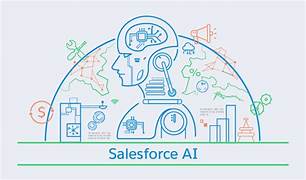
Based on Erin Hueffner, Writer, Salesblazer. article Your AI Sales Tools can double the sales calls generated from inbound leads! They can convert 40% more customers! AI-driven automation can eliminate many time-consuming and repetitive tasks and accelerate workflows. Sales AI tools often use algorithms to automate sales operations, like adding information from customer calls and emails to a CRM database. AI can also streamline several key follow-ups to prospects after a sales call. Reclaim Your Selling Time with AI Sales Tools What if you could spend less time on admin and more time closing deals? Manual tasks like updating CRMs, drafting emails, and compiling reports drain productivity—and our State of Sales research shows 67% of reps risk missing quotas, partly due to inefficient tech stacks. AI sales tools are changing the game. By automating workflows, analyzing data, and personalizing outreach, they empower teams to focus on what truly drives revenue: building relationships and sealing deals. Here’s how AI is revolutionizing sales—and the top tools to help your team work smarter. What Are AI Sales Tools? AI sales tools leverage automation, machine learning, and predictive analytics to:✅ Eliminate busywork (data entry, scheduling, note-taking)✅ Uncover insights (lead scoring, deal forecasts, market trends)✅ Enhance engagement (personalized emails, call coaching, real-time recommendations) For SMBs, AI acts as a smart assistant; for enterprises, it scales into predictive forecasting and pipeline optimization. The result? Reps spend less time on logistics and more time selling. How AI Sales Tools Work These tools integrate with your CRM to: The impact is clear: 83% of AI-powered teams grew revenue last year vs. 66% without AI. 9 Top AI Sales Tools (Rated 4+ Stars) Curated from G2 and Capterra, these platforms excel in usability, features, and ROI. 1. Salesforce (Sales Cloud) 2. Outreach 3. Apollo.io 4. Pipedrive 5. Gong 6. Salesloft 7. APE AI 8. Clari 9. Instantly AI 5 Must-Have AI Sales Tool Features Trends Shaping AI Sales Tools in 2024 🔮 Deeper Analytics: AI spots hidden pipeline opportunities.🤖 Autonomous Assistants: Tools like Agentforce handle lead nurturing 24/7.🔒 Tighter Security: Encryption and privacy controls are non-negotiable.🛠️ Bias Guardrails: AI outputs are fact-checked to maintain trust. How to Choose the Right Tool The Bottom Line AI sales tools aren’t just about efficiency—they’re revenue multipliers. By automating grunt work and sharpening strategy, they help teams: Ready to upgrade your sales stack? The right AI tool can turn missed quotas into exceeded targets. Key Takeaways: Which sales task would you automate first? Let us know in the comments. Like Related Posts Who is Salesforce? Who is Salesforce? Here is their story in their own words. From our inception, we’ve proudly embraced the identity of Read more Salesforce Marketing Cloud Transactional Emails Salesforce Marketing Cloud Transactional Emails are immediate, automated, non-promotional messages crucial to business operations and customer satisfaction, such as order Read more Salesforce Unites Einstein Analytics with Financial CRM Salesforce has unveiled a comprehensive analytics solution tailored for wealth managers, home office professionals, and retail bankers, merging its Financial Read more AI-Driven Propensity Scores AI plays a crucial role in propensity score estimation as it can discern underlying patterns between treatments and confounding variables Read more
Read More
AI Agent Revolution

AI Agent Revolution

The AI Agent Revolution: How AWS, Salesforce, and Oracle See the Future of Work Executives from AWS, Salesforce, and Oracle believe artificial intelligence (AI) agents are set to redefine work in ways many may not expect. These AI-driven systems promise to streamline operations, enhance productivity, and transform the way businesses interact with technology. The Future of AI Agents in Action Imagine a world where: Swami Sivasubramanian, AWS’s vice president of agentic AI, describes this shift as a fundamental leap forward. Unlike earlier AI models, these agents don’t just generate content—they reason, plan, and execute tasks. They can research, pay bills, manage enterprise applications, and break down high-level objectives into actionable steps. Sivasubramanian envisions a “fully AI world” where agents autonomously make decisions, automate workflows, and coordinate with minimal human oversight. But, as he points out, this isn’t a distant future—it’s happening now. Companies like Genentech are using AI agents to accelerate drug research, cutting timelines by nearly five years. Moody’s has reduced its credit risk reporting process from a week to under an hour. These breakthroughs illustrate the vast potential of AI-driven automation. Salesforce’s ‘Limitless Labor’ Approach Salesforce is also at the forefront of AI agent adoption with Agentforce, a platform that has seen overwhelming demand since its launch. More than 5,000 customers signed up in its first full quarter, signaling a strong appetite for AI-driven automation. Adam Evans, EVP and GM of Salesforce AI, describes AI agents as creating a “limitless labor” pool. These agents are already supporting Salesforce’s own customers, resolving 97% of inquiries without human intervention. The next evolution, according to Evans, involves AI agents acting as brand ambassadors—not just answering questions, but understanding customer needs, driving sales, and providing personalized support. Salesforce categorizes AI agents into three types: Early adopters like Wiley Publishing have reported a 40% increase in customer satisfaction due to AI-driven customer service, while Pfizer is leveraging AI agents in life sciences. To support this transformation, Salesforce has introduced flexible pricing models, allowing companies to transition from traditional seat-based pricing to AI consumption-based structures. AI Agents as the New Enterprise Interface Oracle sees AI agents as the future interface for enterprise software, eliminating the need for users to adapt to complex systems. “Let’s stop adapting ourselves to computers and make them adapt to us,” said Miranda Nash, group vice president at Oracle AI. In this vision, users no longer navigate Oracle’s software through menus—they simply ask questions, and AI agents handle the rest through sophisticated, multi-agent workflows. Oracle is embedding AI agents across key business functions, including: As AI transforms work, Nash, Evans, and Sivasubramanian acknowledge concerns about job displacement. However, they emphasize that AI agents augment human roles rather than replace them. At Salesforce, employees previously assigned to repetitive support tasks are now moving into higher-value roles like customer success and sales. Meanwhile, AWS’s AI deployment has saved Amazon 4,500 developer years’ worth of work and over $250 million in capital expenses. “The only option now is to get in the cloud, embrace AI agents, and meet the future of work,” Nash concluded. Like Related Posts Who is Salesforce? Who is Salesforce? Here is their story in their own words. From our inception, we’ve proudly embraced the identity of Read more Salesforce Marketing Cloud Transactional Emails Salesforce Marketing Cloud Transactional Emails are immediate, automated, non-promotional messages crucial to business operations and customer satisfaction, such as order Read more Salesforce Unites Einstein Analytics with Financial CRM Salesforce has unveiled a comprehensive analytics solution tailored for wealth managers, home office professionals, and retail bankers, merging its Financial Read more AI-Driven Propensity Scores AI plays a crucial role in propensity score estimation as it can discern underlying patterns between treatments and confounding variables Read more

Read More
Agentic AI: The Next Frontier in Intelligent Automation

Agentic AI: The Next Frontier in Intelligent Automation

Artificial intelligence is undergoing a paradigm shift—from passive tools to autonomous, decision-making systems. At the heart of this evolution is Agentic AI, a revolutionary framework that combines AI agents, large language models (LLMs), contextual protocols, and integrations to deliver self-directed, goal-driven intelligence. This isn’t just automation—it’s AI that thinks, adapts, and executes with human-like sophistication. What Is Agentic AI? Agentic AI is a holistic, autonomous system that orchestrates intelligent decision-making. Unlike traditional AI, which follows predefined scripts, Agentic AI: ✅ Processes data dynamically✅ Interacts with users & systems✅ Executes tasks independently✅ Adapts to changing environments It’s the operating system for next-gen AI, blending reasoning, language understanding, and action-taking into a single, cohesive architecture. The 5 Core Components of Agentic AI 1. The AI Agent: The Brain Behind the Operation 2. Large Language Models (LLMs): The Communication Layer 3. Model Context Protocol (MCP): The Rulebook for AI 4. Specialized Tools: The Execution Engine 5. Integrations: The Connective Tissue Why Agentic AI Changes Everything 🔹 Beyond Chatbots & Scripted Automation Traditional AI follows rules—Agentic AI makes decisions. 🔹 Industry Transformations 🔹 The Future: AI as a Strategic Partner We’re entering an era where AI doesn’t just assist—it collaborates, reasons, and innovates. The Road Ahead Agentic AI isn’t just another tech trend—it’s the future of intelligent systems. As adoption grows, expect: 🚀 Smarter workflows (less human oversight needed)🚀 Faster problem-solving (real-time adaptation)🚀 New business models (AI-driven enterprises) The question isn’t if Agentic AI will reshape industries—it’s how soon. Let’s build the future—one intelligent agent at a time. Like Related Posts Who is Salesforce? Who is Salesforce? Here is their story in their own words. From our inception, we’ve proudly embraced the identity of Read more Salesforce Unites Einstein Analytics with Financial CRM Salesforce has unveiled a comprehensive analytics solution tailored for wealth managers, home office professionals, and retail bankers, merging its Financial Read more AI-Driven Propensity Scores AI plays a crucial role in propensity score estimation as it can discern underlying patterns between treatments and confounding variables Read more Tectonic’s Successful Salesforce Track Record Salesforce Technology Services Integrator – Tectonic has successfully delivered Salesforce in a variety of industries including Public Sector, Hospitality, Manufacturing, Read more

Read More
Predictive Analytics for Business Potential

Predictive Analytics for Business Potential

Maximizing Business Potential with Predictive Analytics Every business generates vast amounts of data daily, yet not all leverage it effectively. Predictive analytics transforms raw data into actionable insights, enabling companies to forecast demand, reduce operational costs, and enhance customer engagement. Whether through AI-powered models, machine learning algorithms, or cloud-based analytics, predictive analytics is reshaping business strategies. Organizations that integrate predictive analytics into decision-making can anticipate challenges, seize new opportunities, and outperform competitors. This insight explores the significance of predictive analytics and how businesses can harness its power to gain a competitive edge. The Expanding Influence of Predictive Analytics Predictive analytics is revolutionizing industries, driving innovation, and transforming data into strategic advantages. Transforming Industries with Predictive Analytics Predictive analytics is now a cornerstone of modern industries, facilitating smarter decision-making through data-driven insights. By analyzing historical data, businesses can forecast trends, anticipate customer behaviors, and optimize operations. Sectors such as healthcare, retail, and finance are leveraging predictive tools to maintain competitiveness. For example: As industries adopt these solutions, predictive analytics continues to redefine efficiency and innovation. Key Trends in Predictive Analytics Adoption The widespread adoption of predictive analytics is fueled by advancements in AI, big data, and machine learning. Businesses are capitalizing on these trends to sharpen their competitive edge. Notable developments include: As predictive analytics tools become more sophisticated, they are becoming integral to business strategies, helping companies unlock untapped potential. Overcoming Implementation Challenges Despite its benefits, implementing predictive analytics poses challenges, such as data silos, integration complexities, and skill gaps. To address these issues, organizations should: By overcoming these barriers, businesses can fully harness predictive analytics to drive efficiency, innovation, and growth. Predictive Data Modeling for Smarter Decision-Making Predictive data modeling transforms raw data into strategic insights, improving forecasting and operational decision-making. Understanding Predictive Data Modeling Predictive data modeling employs statistical techniques and machine learning algorithms to analyze historical data and predict future trends. Its core components include: By applying these models, businesses can refine their strategies with data-backed insights, improving efficiency and competitiveness. The Role of Data Quality in Predictive Accuracy The effectiveness of predictive models depends on data quality. Inconsistent or outdated data can lead to unreliable predictions, affecting decision-making. Key steps to ensure high data quality include: High-quality data enhances predictive models, enabling businesses to make informed, confident decisions. Enhancing Forecasting with Predictive Data Modeling Predictive data modeling improves forecasting accuracy by analyzing historical trends and projecting future outcomes. Benefits include: Retailers optimize inventory, while manufacturers align production with demand fluctuations, demonstrating the strategic value of predictive modeling. Driving Business Growth with Predictive Analytics Why Businesses Should Adopt Predictive Analytics Now In today’s competitive landscape, predictive analytics is essential for staying ahead. By leveraging data, algorithms, and machine learning, businesses can anticipate risks and opportunities, optimizing strategies while reducing uncertainty. Retailers, for instance, use predictive insights to forecast seasonal demand spikes, ensuring optimal stock levels. As AI advances, predictive analytics is more accessible than ever, making now the ideal time for adoption. Enhancing Decision-Making and Efficiency Predictive analytics eliminates guesswork, empowering leaders with data-backed decisions. Benefits include: These advantages drive sustainable growth and competitive advantage across industries. Seamlessly Integrating Predictive Analytics into Business Workflows To maximize impact, predictive analytics must integrate into existing workflows. Steps for successful adoption include: By embedding predictive analytics into workflows, businesses enhance agility and decision-making capabilities. AI-Powered Predictive Analytics for Competitive Advantage Why AI Predictive Analytics is Transformative AI-powered predictive analytics delivers insights beyond traditional methods, processing vast datasets rapidly to identify complex patterns and trends. Applications include: With AI continuously learning and refining predictions, businesses gain a dynamic advantage. Enhancing Accuracy with AI AI refines predictions by analyzing diverse data sources, including text, images, and videos. Examples include: Advanced AI techniques, such as natural language processing and neural networks, ensure businesses derive actionable insights, driving smarter strategies and better results. Machine Learning’s Role in Predictive Analytics Machine learning (ML) is foundational to predictive analytics, continuously improving model accuracy. Examples include: By leveraging ML, businesses enhance their predictive capabilities, ensuring long-term competitive success. Enhancing Enterprise Solutions with Predictive Analytics Transforming SAP Systems with Predictive Analytics SAP systems integrated with predictive analytics unlock actionable insights from vast datasets. Benefits include: By embedding predictive capabilities, SAP users can optimize operations and drive proactive decision-making. Empowering Salesforce with Predictive Insights Salesforce predictive analytics enhances decision-making across marketing, sales, and customer service. Key capabilities include: With Salesforce Einstein, businesses can streamline operations, boost performance, and foster deeper customer engagement. Predictive analytics is a game-changer, reshaping industries, optimizing operations, and unlocking new growth opportunities. Businesses that embrace predictive analytics today will be well-positioned to navigate future challenges and lead in the data-driven economy. Like Related Posts Who is Salesforce? Who is Salesforce? Here is their story in their own words. From our inception, we’ve proudly embraced the identity of Read more Salesforce Marketing Cloud Transactional Emails Salesforce Marketing Cloud Transactional Emails are immediate, automated, non-promotional messages crucial to business operations and customer satisfaction, such as order Read more Salesforce Unites Einstein Analytics with Financial CRM Salesforce has unveiled a comprehensive analytics solution tailored for wealth managers, home office professionals, and retail bankers, merging its Financial Read more AI-Driven Propensity Scores AI plays a crucial role in propensity score estimation as it can discern underlying patterns between treatments and confounding variables Read more

Read More
salesforce end to end

Salesforce and Google Announcement

Salesforce (NYSE:CRM) has entered into a deal with Google (NASDAQ:GOOGL) to offer its customer relations management software, Agentforce artificial intelligence assistants, and Data Cloud offerings through Google Cloud, the companies announced today. Google and Salesforce already have many of the same clients, and this new deal will allow for more product integration between Google Workspace and Salesforce’s customer relationship management and AI offerings. Salesforce already uses Amazon (AMZN) Web Services for much of its cloud computing. “Our mutual customers have asked us to be able to work more seamlessly across Salesforce and Google Cloud, and this expanded partnership will help them accelerate their AI transformations with agentic AI, state-of-the-art AI models, data analytics, and more,” said Thomas Kurian, CEO of Google Cloud. The deal is expected to total $2.5B over the next seven years, according to a report by Bloomberg. Salesforce and Google today announced a major expansion of their strategic partnership, delivering choice in the models and capabilities businesses use to build and deploy AI-powered agents. In today’s constantly evolving AI landscape, innovations like autonomous agents are emerging so quickly that businesses struggle to keep pace. This expanded partnership provides crucial flexibility, empowering customers to develop tailored AI solutions that meet their specific needs, rather than being locked into a single model provider. Google Cloud is at the forefront of enterprise AI innovation with millions of developers building with Google’s cutting-edge Gemini models and on Google Cloud’s AI-optimized infrastructure. This expanded partnership will empower Salesforce customers to build Agentforce agents using Gemini and to deploy Salesforce on Google Cloud. This is an expansion of the existing partnership that allows customers to use data from Data Cloud and Google BigQuery bi-directionally via zero-copy technology—further equipping customers with the data, AI, trust, and actions they need to bring autonomous agents into their businesses. Additionally, this integration empowers Agentforce agents with the ability to reference up-to-the-minute data, news, current events, and credible citations, substantially enhancing their contextual awareness and ability to deliver accurate, evidence-backed responses. For example, in supply chain management and logistics, an agent built with Agentforce could track shipments and monitor inventory levels in Salesforce Commerce Cloud and proactively identify potential disruptions using real-time data from Google Search, including weather conditions, port congestion, and geopolitical events. Availability is expected in the coming months. AI: Unlocking the Power of Choice and Flexibility with Gemini and Agentforce Businesses need the freedom to choose the best models for their needs rather than be locked into one vendor. In 2025, Google’s Gemini models will also be available for prompt building and reasoning directly within Agentforce. With Gemini and Agentforce, businesses will benefit from: For example, an insurance customer can submit a claim with photos of the damage and an audio voicemail from a witness. Agentforce, using Gemini, can then help the insurance provider deliver better customer experiences by processing all these inputs, assessing the claim’s validity, and even using text-to-speech to contact the customer with a resolution, streamlining the traditionally lengthy claims process. Availability is expected this year. Trust: Salesforce Platform deployed on Google Cloud Customers will be able to use Salesforce’s unified platform (Agentforce, Data Cloud, Customer 360) on Google Cloud’s highly secure, AI-optimized infrastructure, benefiting from features like dynamic grounding, zero data retention, and toxicity detection provided by the Einstein Trust Layer. Once Salesforce products are available on Google Cloud, customers will also have the ability to procure Salesforce offerings through the Google Cloud Marketplace, opening up new possibilities for global businesses to optimize their investments across Salesforce and Google Cloud and benefiting thousands of existing joint customers. Action: Enhanced Employee Productivity and Customer Service with AI-Powered Integrations Millions use Salesforce and Google Cloud daily. This partnership prioritizes choice and flexibility, enabling seamless cross-platform work. New and deeper connections between platforms like Salesforce Service Cloud and Google Cloud’s Customer Engagement Suite, as well as Slack and Google Workspace, will empower AI agents and service representatives with unified data access, streamlined workflows, and advanced AI capabilities, regardless of platform. Salesforce and Google Cloud are deeply integrating their customer service platforms—Salesforce Service Cloud and Google Cloud’s Customer Engagement Suite—to create a seamless and intelligent support experience. Expected later this year, this unified approach empowers AI agents in Service Cloud with: Salesforce and Google Cloud are also exploring deeper integrations between Slack and Google Workspace, boosting productivity and creating a more cohesive digital workspace for teams and organizations. The companies are currently exploring use cases such as: Expanding Partnership Capabilities and Integrations This partnership goes beyond core product integrations to deliver a more connected and intelligent data foundation for businesses. Expected availability throughout 2025: This landmark partnership between Salesforce and Google represents a strategic paradigm shift in enterprise AI deployment, emphasizing infrastructure innovation, AI capability enhancement, and enterprise value. The integration of Google Search grounding provides a unique competitive advantage, offering real-time, factual responses backed by the world’s most comprehensive search engine. The companies are committed to ongoing innovation and deeper collaboration to empower businesses with even more powerful solutions. Like1 Related Posts Who is Salesforce? Who is Salesforce? Here is their story in their own words. From our inception, we’ve proudly embraced the identity of Read more Salesforce Marketing Cloud Transactional Emails Salesforce Marketing Cloud Transactional Emails are immediate, automated, non-promotional messages crucial to business operations and customer satisfaction, such as order Read more Salesforce Unites Einstein Analytics with Financial CRM Salesforce has unveiled a comprehensive analytics solution tailored for wealth managers, home office professionals, and retail bankers, merging its Financial Read more AI-Driven Propensity Scores AI plays a crucial role in propensity score estimation as it can discern underlying patterns between treatments and confounding variables Read more

Read More
Python-Based Reasoning

Python-Based Reasoning

Introducing a Python-Based Reasoning Engine for Deterministic AI As the demand for deterministic systems grows reviving foundational ideas for the age of large language models (LLMs) is here. The Challenge One of the critical issues with modern AI systems is establishing constraints around how they validate and reason about incoming data. As we increasingly rely on stochastic LLMs to process unstructured data, enforcing rules and guardrails becomes vital for ensuring reliability and consistency. The Solution Thus a company has developed a Python-based reasoning and validation framework inspired by Pydantic, designed to empower developers and non-technical domain experts to create sophisticated rule engines. The system is: By transforming Standard Operating Procedures (SOPs) and business guardrails into enforceable code, this symbolic reasoning framework addresses the need for structured, interpretable, and reliable AI systems. Key Features System Architecture The framework includes five core components: Types of Engines Case Studies 1. Validation Engine: Mining Company Compliance A mining company needed to validate employee qualifications against region-specific requirements. The system was configured to check rules such as minimum age and required certifications for specific roles. Input Example:Employee data and validation rules were modeled as JSON: jsonCopy code{ “employees”: [ { “name”: “Sarah”, “age”: 25, “documents”: [{ “type”: “safe_handling_at_work” }] }, { “name”: “John”, “age”: 17, “documents”: [{ “type”: “heavy_lifting” }] } ], “rules”: [ { “type”: “min_age”, “parameters”: { “min_age”: 18 } } ] } Output:Violations, such as “Minimum age must be 18,” were flagged immediately, enabling quick remediation. 2. Reasoning Engine: Solving the River Crossing Puzzle To showcase its capabilities, we modeled the classic river crossing puzzle, where a farmer must transport a wolf, a goat, and a cabbage across a river without leaving incompatible items together. Steps Taken: Enhanced Scenario:Adding a new rule—“Wolf cannot be left with a chicken”—created an unsolvable scenario. By introducing a compensatory rule, “Farmer can carry two items at once,” the system adapted and solved the puzzle with fewer moves. Developer Insights The system supports rapid iteration and debugging. For example, adding rules is as simple as defining Python classes: pythonCopy codeclass GoatCabbageRule(Rule): def evaluate(self, state): return not (state.goat == state.cabbage and state.farmer != state.goat) def get_description(self): return “Goat cannot be left alone with cabbage” Real-World Impact This framework accelerates development by enabling non-technical stakeholders to contribute to rule creation through natural language, with developers approving and implementing these rules. This process reduces development time by up to 5x and adapts seamlessly to varied use cases, from logistics to compliance. 🔔🔔 Follow us on LinkedIn 🔔🔔 Like Related Posts Who is Salesforce? Who is Salesforce? Here is their story in their own words. From our inception, we’ve proudly embraced the identity of Read more Salesforce Marketing Cloud Transactional Emails Salesforce Marketing Cloud Transactional Emails are immediate, automated, non-promotional messages crucial to business operations and customer satisfaction, such as order Read more Salesforce Unites Einstein Analytics with Financial CRM Salesforce has unveiled a comprehensive analytics solution tailored for wealth managers, home office professionals, and retail bankers, merging its Financial Read more AI-Driven Propensity Scores AI plays a crucial role in propensity score estimation as it can discern underlying patterns between treatments and confounding variables Read more

Read More
AI is revolutionizing BI by transforming it from a retrospective tool into a proactive, real-time decision-making engine.

AI in Business Intelligence

AI in Business Intelligence: Applications, Benefits, and Challenges AI is rapidly transforming business intelligence (BI) by enhancing analytics capabilities and streamlining processes. This shift is reshaping how organizations leverage data for decision-making. Here’s an in-depth look at how AI complements BI, its advantages, and the challenges it introduces. The Evolution of Business Intelligence with AI BI has traditionally focused on aggregating historical and current data to provide insights into business operations—a process known as descriptive analytics. However, many decision-makers seek more: insights into future trends (predictive analytics) and actionable recommendations (prescriptive analytics). AI bridges this gap. With advanced tools like natural language processing (NLP) and machine learning (ML), AI enables businesses to move beyond static dashboards to dynamic, real-time insights. It also simplifies complex analytics, making data more accessible to business users and fostering more informed, proactive decision-making. Key Benefits of AI in Business Intelligence AI brings significant benefits to BI, including: Real-World Applications of AI in BI AI’s integration into BI goes beyond internal efficiency, delivering external value by enhancing customer experiences and driving business growth. Notable applications include: Challenges of AI in Business Intelligence Despite its potential, integrating AI into BI comes with challenges: Best Practices for AI-Driven BI To successfully integrate AI with BI, organizations should: Future Trends in AI and BI AI is expected to augment rather than replace BI, enhancing its capabilities while keeping human expertise central. Emerging trends include: Conclusion AI is revolutionizing BI by transforming it from a retrospective tool into a proactive, real-time decision-making engine. While challenges remain, thoughtful implementation and adherence to best practices can help organizations unlock AI’s full potential in BI. By integrating AI into existing BI workflows, businesses can drive innovation, improve decision-making, and create more agile and data-driven operations. Like Related Posts Who is Salesforce? Who is Salesforce? Here is their story in their own words. From our inception, we’ve proudly embraced the identity of Read more Salesforce Unites Einstein Analytics with Financial CRM Salesforce has unveiled a comprehensive analytics solution tailored for wealth managers, home office professionals, and retail bankers, merging its Financial Read more AI-Driven Propensity Scores AI plays a crucial role in propensity score estimation as it can discern underlying patterns between treatments and confounding variables Read more Tectonic’s Successful Salesforce Track Record Salesforce Technology Services Integrator – Tectonic has successfully delivered Salesforce in a variety of industries including Public Sector, Hospitality, Manufacturing, Read more

Read More
Python-Based Reasoning Engine

Python-Based Reasoning Engine

Introducing a Python-Based Reasoning Engine for Deterministic AI In the age of large language models (LLMs), there’s a growing need for deterministic systems that enforce rules and constraints while reasoning about information. We’ve developed a Python-based reasoning and validation framework that bridges the gap between traditional rule-based logic and modern AI capabilities, inspired by frameworks like Pydantic. This approach is designed for developers and non-technical experts alike, making it easy to build complex rule engines that translate natural language instructions into enforceable code. Our fine-tuned model automates the creation of rules while ensuring human oversight for quality and conflict detection. The result? Faster implementation of rule engines, reduced developer overhead, and flexible extensibility across domains. The Framework at a Glance Our system consists of five core components: To analogize, this framework operates like a game of chess: Our framework supports two primary use cases: Key Features and Benefits Case Studies Validation Engine: Ensuring Compliance A mining company needed to validate employee qualifications based on age, region, and role. Example Data Structure: jsonCopy code{ “employees”: [ { “name”: “Sarah”, “age”: 25, “role”: “Manager”, “documents”: [“safe_handling_at_work”, “heavy_lifting”] }, { “name”: “John”, “age”: 17, “role”: “Laborer”, “documents”: [“heavy_lifting”] } ] } Rules: jsonCopy code{ “rules”: [ { “type”: “min_age”, “parameters”: { “min_age”: 18 } }, { “type”: “dozer_operator”, “parameters”: { “document_type”: “dozer_qualification” } } ] } Outcome:The system flagged violations, such as employees under 18 or missing required qualifications, ensuring compliance with organizational rules. Reasoning Engine: Solving the River Crossing Puzzle The classic river crossing puzzle demonstrates the engine’s reasoning capabilities. Problem Setup:A farmer must ferry a goat, a wolf, and a cabbage across a river, adhering to specific constraints (e.g., the goat cannot be left alone with the cabbage). Steps: Output:The engine generated a solution in 0.0003 seconds, showcasing its efficiency in navigating complex logic. Advanced Features: Dynamic Rule Expansion The system supports real-time rule adjustments. For instance, adding a “wolf cannot be left with a chicken” constraint introduces a conflict. By extending rules (e.g., allowing the farmer to carry two items), the engine dynamically resolves previously unsolvable scenarios. Sample Code Snippet: pythonCopy codeclass CarryingCapacityRule(Rule): def evaluate(self, state): items_moved = sum(1 for item in [‘wolf’, ‘goat’, ‘cabbage’, ‘chicken’] if getattr(state, item) == state.farmer) return items_moved <= 2 def get_description(self): return “Farmer can carry up to two items at a time” Result:The adjusted engine solved the puzzle in three moves, down from seven, while maintaining rule integrity. Collaborative UI for Rule Creation Our user interface empowers domain experts to define rules without writing code. Developers validate these rules, which are then seamlessly integrated into the system. Visual Workflow: Like Related Posts Who is Salesforce? Who is Salesforce? Here is their story in their own words. From our inception, we’ve proudly embraced the identity of Read more Salesforce Unites Einstein Analytics with Financial CRM Salesforce has unveiled a comprehensive analytics solution tailored for wealth managers, home office professionals, and retail bankers, merging its Financial Read more AI-Driven Propensity Scores AI plays a crucial role in propensity score estimation as it can discern underlying patterns between treatments and confounding variables Read more Tectonic’s Successful Salesforce Track Record Salesforce Technology Services Integrator – Tectonic has successfully delivered Salesforce in a variety of industries including Public Sector, Hospitality, Manufacturing, Read more

Read More
Integrate Digital Delivery and Human Connection

Types of Salesforce Integration

Types of Salesforce Integration: A Comprehensive Guide As a leading CRM platform, Salesforce is often required to integrate with other systems to deliver a seamless experience and ensure efficient business operations. Whether it’s syncing data, automating workflows, or enabling real-time communication, Salesforce provides robust integration methods tailored to various needs. In this guide, we’ll explore the different types of Salesforce integrations, their practical applications, and how to choose the right approach for your business. Why Integrate Salesforce? Integrating Salesforce with other systems empowers businesses to: Types of Salesforce Integration 1. Data Integration Ensures data consistency between Salesforce and external systems, enabling seamless synchronization. 2. Process Integration Links workflows across systems, ensuring actions in one system trigger automated processes in another. 3. User Interface (UI) Integration Combines multiple applications into a single interface for a unified user experience. 4. Application Integration Connects Salesforce with external apps for real-time data exchange and functional synchronization. 5. Real-Time Integration Facilitates instant synchronization of data and events between Salesforce and external systems. 6. Batch Integration Processes large data volumes in chunks, typically during off-peak hours. 7. Hybrid Integration Combines multiple integration types, such as real-time and batch, to handle complex requirements. Tools for Salesforce Integration Native Salesforce Tools: Third-Party Tools: Best Practices for Salesforce Integration Conclusion Salesforce integration is essential for streamlining operations and unlocking business potential. With options like data, process, and real-time integration, Salesforce offers the flexibility to meet diverse needs. By adopting the right integration approach and adhering to best practices, businesses can create a unified, efficient ecosystem, enhancing operations and improving customer experience. Whether integrating with ERP systems, marketing tools, or support platforms, Salesforce provides the tools to make integration seamless and impactful. Like Related Posts Who is Salesforce? Who is Salesforce? Here is their story in their own words. From our inception, we’ve proudly embraced the identity of Read more Salesforce Marketing Cloud Transactional Emails Salesforce Marketing Cloud Transactional Emails are immediate, automated, non-promotional messages crucial to business operations and customer satisfaction, such as order Read more Salesforce Unites Einstein Analytics with Financial CRM Salesforce has unveiled a comprehensive analytics solution tailored for wealth managers, home office professionals, and retail bankers, merging its Financial Read more AI-Driven Propensity Scores AI plays a crucial role in propensity score estimation as it can discern underlying patterns between treatments and confounding variables Read more

Read More
AI Agents, Tech's Next Big Bet

Business Intelligence and AI

AI in Business Intelligence: Uses, Benefits, and Challenges AI tools are increasingly becoming integral to Business Intelligence (BI) systems, enhancing analytics capabilities and streamlining tasks. In this article, we explore how AI can bring new value to BI processes and what to consider as this integration continues to evolve. AI’s Role in Business Intelligence Business Intelligence tools, such as dashboards and interactive reports, have traditionally focused on analyzing historical and current data to describe business performance—known as descriptive analytics. While valuable, many business users seek more than just a snapshot of past performance. They also want predictive insights (forecasting future trends) and prescriptive guidance (recommendations for action). Historically, implementing these advanced capabilities was challenging due to their complexity, but AI simplifies this process. By leveraging AI’s analytical power and natural language processing (NLP), businesses can move from descriptive to predictive and prescriptive analytics, enabling proactive decision-making. AI-powered BI systems also offer the advantage of real-time data analysis, providing up-to-date insights that help businesses respond quickly to changing conditions. Additionally, AI can automate routine tasks, boosting efficiency across business operations. Benefits of Using AI in BI Initiatives The integration of AI into BI systems brings several key benefits, including: Examples of AI Applications in BI AI’s role in BI is not limited to internal process improvements. It can significantly enhance customer experience (CX) and support business growth. Here are a few examples: Challenges of Implementing AI in BI While the potential for AI in BI is vast, there are several challenges companies must address: Best Practices for Deploying AI in BI To maximize the benefits of AI in BI, companies should follow these best practices: Future Trends to Watch AI is not poised to replace traditional BI tools but to augment them with new capabilities. In the future, we can expect: In conclusion, AI is transforming business intelligence by turning data analysis from a retrospective activity into a forward-looking, real-time process. While challenges remain, such as data governance, ethical concerns, and skill shortages, AI’s potential to enhance BI systems and drive business success is undeniable. By following best practices and staying abreast of industry developments, businesses can harness AI to unlock new opportunities and deliver better insights. Like Related Posts Who is Salesforce? Who is Salesforce? Here is their story in their own words. From our inception, we’ve proudly embraced the identity of Read more Salesforce Unites Einstein Analytics with Financial CRM Salesforce has unveiled a comprehensive analytics solution tailored for wealth managers, home office professionals, and retail bankers, merging its Financial Read more AI-Driven Propensity Scores AI plays a crucial role in propensity score estimation as it can discern underlying patterns between treatments and confounding variables Read more Tectonic’s Successful Salesforce Track Record Salesforce Technology Services Integrator – Tectonic has successfully delivered Salesforce in a variety of industries including Public Sector, Hospitality, Manufacturing, Read more

Read More

5 Attributes of an Agent

Defining the Role of AI Agents To successfully implement AI agents, organizations must clearly define their function across these five key areas: The Evolution of Agentic Automation Agentic automation represents a major shift in how enterprises leverage AI to drive productivity and efficiency. By seamlessly integrating AI agents, human employees, and automation technologies, businesses can orchestrate complex workflows from start to finish. AI agents are transforming customer service and business operations. These intelligent systems can plan and execute tasks, make informed decisions, and integrate with existing workflows to deliver superior efficiency. With the right AI strategy, businesses can elevate customer experiences by offering proactive, personalized, and highly responsive solutions. The Need for AI Agents Businesses today face mounting challenges: AI agents like Agentforce provide a scalable solution by automating interactions, streamlining processes, and ensuring continuous availability. Let’s explore what AI agents are, how they work, and how to deploy them successfully. What is an AI Agent? An AI agent is an intelligent system that autonomously interacts with customers, processes data, and executes actions without human intervention. Powered by machine learning and natural language processing (NLP), AI agents can: Unlike traditional automation, AI agents learn from interactions, refine their responses, and adapt to evolving business needs. Imagine if every employee—from the CEO to the newest sales rep—had an AI-powered assistant. With today’s AI advancements, that vision is becoming a reality. The Impact of Generative AI Agents More companies are embracing generative AI agents that leverage trusted customer data to deliver real-time insights. Tasks that once required extensive manual effort—like data analysis, trend forecasting, and customer support—can now be automated, freeing employees to focus on higher-value work. Beyond customer service, AI agents help businesses scale, meet key performance indicators, and solve problems before they escalate. The potential of this technology is just beginning to unfold. How AI Agents Work AI agents operate through a four-step process: By integrating these capabilities, AI agents can autonomously manage tasks like product recommendations, troubleshooting, and proactive follow-ups—allowing human employees to focus on strategic initiatives. Types of AI Agents Not all AI agents function the same way. Businesses can leverage different types of agents based on their operational needs: The Future of AI Agents AI-driven automation is redefining the way businesses operate. From enhancing customer experiences to optimizing internal workflows, AI agents are becoming indispensable tools for modern enterprises. As organizations invest in AI strategies, the key question remains: Are you ready to harness the full potential of AI agents to drive business success? Contact Tectonic today! By Tectonic Marketing Operations Director, Shannan Hearne Like Related Posts Who is Salesforce? Who is Salesforce? Here is their story in their own words. From our inception, we’ve proudly embraced the identity of Read more Salesforce Marketing Cloud Transactional Emails Salesforce Marketing Cloud Transactional Emails are immediate, automated, non-promotional messages crucial to business operations and customer satisfaction, such as order Read more Salesforce Unites Einstein Analytics with Financial CRM Salesforce has unveiled a comprehensive analytics solution tailored for wealth managers, home office professionals, and retail bankers, merging its Financial Read more AI-Driven Propensity Scores AI plays a crucial role in propensity score estimation as it can discern underlying patterns between treatments and confounding variables Read more

Read More
rise of digital workers

Rise of Digital Workers

The Rise of Digital Workers: Unlocking a New Era of Opportunity Over the past two years, advancements in artificial intelligence have sparked a revolution in how humans work, live, and connect. While impressive generative AI models have garnered significant attention, a new paradigm of autonomous AI agents is emerging, promising transformative changes to industries and societies alike. Unlike traditional “predictive AI,” which analyzes data for recommendations, and “generative AI,” which creates content based on learned patterns, autonomous AI agents go a step further. These agents operate independently, executing tasks, making decisions, and even negotiating with other agents. This evolution introduces an intelligent digital workforce capable of scaling operations, reducing costs, and enhancing productivity. Consider a large retailer during the holiday season. Instead of relying on human workers or pre-programmed software to address customer inquiries or update inventory, autonomous agents can seamlessly manage customer interactions, monitor stock levels, reorder items, and coordinate shipping—all without human intervention. This level of automation represents a groundbreaking shift, enabling businesses to operate on an unprecedented scale. Expanding the Reach of Digital Labor Autonomous AI agents are breaking traditional barriers of human availability and physical constraints, enabling businesses to scale globally and more efficiently. These digital workers are not limited by geography, opening opportunities previously restricted to specific locations. However, this shift comes with challenges. Ensuring trust, accountability, and transparency in AI systems is critical. Equally important is investing in human-centric skills such as creativity, critical thinking, and adaptability, which remain uniquely human. Sustainability is another concern, as AI-driven technologies place increasing demands on energy and resources. By addressing these issues, societies can unlock the full potential of digital labor while safeguarding the planet and human values. Transforming Everyday Lives Beyond businesses, autonomous agents are poised to transform personal lives. Personalized agents can act as tutors for students, guiding them through their learning journeys. For individuals, these agents can manage everyday tasks, from scheduling appointments to coordinating complex logistics. In healthcare, AI agents are already alleviating administrative burdens on providers. For example, intelligent agents can handle patient communications, monitor progress, and schedule follow-ups, freeing doctors and nurses to focus on complex cases. Such innovations hold the potential to revolutionize patient care and improve outcomes across the board. Navigating Disruption and Change Like any transformative technology, the rise of autonomous agents will bring disruptions. Some industries will struggle to adapt, and jobs will inevitably evolve—or, in some cases, disappear. History shows, however, that technological revolutions often create far more opportunities than they displace. For example, the U.S. workforce grew by over 100 million jobs between 1950 and 2020, many in industries that didn’t exist before. The key lies in preparing workers for new roles through education and training. Autonomous agents are essential in addressing global challenges such as labor shortages and stagnant productivity growth. They amplify human capabilities, driving innovation and boosting economic output. For example, in the third quarter of 2024, U.S. productivity rose by 2.2%, fueled in part by AI advancements. Driving Innovation and Collaboration AI agents are also fostering innovation, sparking the creation of new companies and industries. More than 5,000 AI-focused startups have emerged in the past decade in the U.S. alone. This trend mirrors the technological revolutions driven by past innovations like microchips, the internet, and smartphones. However, effectively harnessing agentic AI requires collaboration among governments, businesses, nonprofits, and academia. Initiatives like the G7’s framework for AI accountability and the Bletchley Declaration emphasize transparency, safety, and data privacy, offering critical guardrails as AI adoption accelerates. A Vision for the Future Autonomous agents represent a powerful force for change, offering unprecedented opportunities for businesses and individuals alike. By leveraging these technologies responsibly and investing in human potential, societies can ensure a future of abundance and progress. As Marc Benioff, CEO of Salesforce, emphasizes, “AI has the potential to elevate every company, fuel economic growth, uplift communities, and lead to a future of abundance. If trust is our north star, agents will empower us to make a meaningful impact at an unprecedented scale.” Like Related Posts Who is Salesforce? Who is Salesforce? Here is their story in their own words. From our inception, we’ve proudly embraced the identity of Read more Salesforce Marketing Cloud Transactional Emails Salesforce Marketing Cloud Transactional Emails are immediate, automated, non-promotional messages crucial to business operations and customer satisfaction, such as order Read more Salesforce Unites Einstein Analytics with Financial CRM Salesforce has unveiled a comprehensive analytics solution tailored for wealth managers, home office professionals, and retail bankers, merging its Financial Read more AI-Driven Propensity Scores AI plays a crucial role in propensity score estimation as it can discern underlying patterns between treatments and confounding variables Read more

Read More
Is the Future Agentic for ERP?

Agentic AI Explained

Agentic AI: Autonomous Intelligence for Dynamic Problem-Solving What Is Agentic AI? Agentic AI refers to artificial intelligence systems designed to operate autonomously, pursuing defined goals with minimal human oversight. Unlike traditional AI, which follows predefined rules, agentic AI learns, adapts, and makes independent decisions—functioning as a proactive “agent” rather than a reactive tool. Core Characteristics of Agentic AI Feature Description Autonomy Operates independently, making decisions without constant human input. Goal-Driven Behavior Actively pursues objectives, optimizing actions for efficiency and success. Adaptive Learning Continuously improves by processing new data and adjusting strategies. Complex Problem-Solving Handles multi-step challenges by analyzing context and long-term implications. Multi-Technique Integration Combines machine learning, generative AI, NLP, and reasoning models for advanced decision-making. Agentic AI vs. Traditional AI Aspect Traditional AI Agentic AI Decision-Making Follows predefined rules; requires human input. Makes autonomous decisions. Adaptability Limited learning capabilities. Continuously evolves based on experience. Task Scope Narrow, task-specific automation. Broad, goal-oriented problem-solving. Human Dependency High (needs supervision). Low (self-sufficient). Key Applications of Agentic AI 1. Customer Service 2. Business Intelligence 3. Software Development 4. Cybersecurity 5. Autonomous Systems The Future of Agentic AI Agentic AI represents a paradigm shift—moving beyond automation to proactive, self-improving intelligence. As these systems advance, they will:✔ Reduce operational costs by minimizing human oversight.✔ Enhance efficiency through dynamic adaptation.✔ Unlock new possibilities in healthcare, logistics, and scientific research. Challenges to Address: Final Thoughts Agentic AI is redefining how intelligent systems interact with the world—not just executing tasks, but strategizing, learning, and acting independently. Businesses adopting this technology will gain a competitive edge through smarter, faster, and more adaptive solutions. Like Related Posts Who is Salesforce? Who is Salesforce? Here is their story in their own words. From our inception, we’ve proudly embraced the identity of Read more Salesforce Unites Einstein Analytics with Financial CRM Salesforce has unveiled a comprehensive analytics solution tailored for wealth managers, home office professionals, and retail bankers, merging its Financial Read more AI-Driven Propensity Scores AI plays a crucial role in propensity score estimation as it can discern underlying patterns between treatments and confounding variables Read more Tectonic’s Successful Salesforce Track Record Salesforce Technology Services Integrator – Tectonic has successfully delivered Salesforce in a variety of industries including Public Sector, Hospitality, Manufacturing, Read more

Read More
iot and salesforce einstein

IoT and Salesforce Einstein

IoT and Salesforce Einstein: Revolutionizing Data-Driven Decision Making The combination of Internet of Things (IoT) and Salesforce Einstein is transforming how businesses collect, analyze, and act on data. By integrating IoT devices with Salesforce’s AI-powered Einstein platform, organizations can unlock real-time insights, automate processes, and deliver personalized customer experiences. Let’s dive into how IoT and Salesforce Einstein work together and the benefits they bring to businesses. What is IoT? The Internet of Things (IoT) refers to a network of physical devices (e.g., sensors, wearables, smart appliances, industrial machines) that are connected to the internet and can collect, share, and act on data. These devices generate vast amounts of data, which can be used to monitor performance, predict issues, and optimize operations. What is Salesforce Einstein? Salesforce Einstein is an AI layer integrated into the Salesforce platform. It uses machine learning, predictive analytics, and natural language processing to provide intelligent insights, automate tasks, and enhance decision-making. Einstein powers features like predictive lead scoring, personalized recommendations, and automated workflows. How IoT and Salesforce Einstein Work Together When IoT devices are connected to Salesforce Einstein, the data they generate can be analyzed in real-time to drive actionable insights. Here’s how the integration works: Key Use Cases of IoT and Salesforce Einstein 1. Predictive Maintenance 2. Smart Customer Service 3. Personalized Marketing 4. Supply Chain Optimization 5. Smart Cities and Utilities Benefits of Combining IoT and Salesforce Einstein 1. Real-Time Insights 2. Proactive Problem Solving 3. Enhanced Customer Experiences 4. Operational Efficiency 5. Competitive Advantage How to Get Started with IoT and Salesforce Einstein The Future of IoT and Salesforce Einstein As IoT and AI technologies continue to evolve, their integration will become even more powerful. Future trends include: Conclusion The combination of IoT and Salesforce Einstein is a game-changer for businesses looking to harness the power of data. By integrating IoT devices with Einstein’s AI capabilities, organizations can gain real-time insights, automate processes, and deliver exceptional customer experiences. Whether you’re in manufacturing, retail, healthcare, or any other industry, IoT and Salesforce Einstein can help you stay ahead of the curve and drive innovation. Start exploring the possibilities today and unlock the full potential of IoT and Salesforce Einstein! Like Related Posts Who is Salesforce? Who is Salesforce? Here is their story in their own words. From our inception, we’ve proudly embraced the identity of Read more Salesforce Marketing Cloud Transactional Emails Salesforce Marketing Cloud Transactional Emails are immediate, automated, non-promotional messages crucial to business operations and customer satisfaction, such as order Read more Salesforce Unites Einstein Analytics with Financial CRM Salesforce has unveiled a comprehensive analytics solution tailored for wealth managers, home office professionals, and retail bankers, merging its Financial Read more AI-Driven Propensity Scores AI plays a crucial role in propensity score estimation as it can discern underlying patterns between treatments and confounding variables Read more

Read More
DHS Introduces AI Framework to Protect Critical Infrastructure

DHS Introduces AI Framework to Protect Critical Infrastructure

The Department of Homeland Security (DHS) has unveiled the Roles and Responsibilities Framework for Artificial Intelligence in Critical Infrastructure, a voluntary set of guidelines designed to ensure the safe and secure deployment of AI across the systems that power daily life. From energy grids to water systems, transportation, and communications, critical infrastructure increasingly relies on AI for enhanced efficiency and resilience. While AI offers transformative potential—such as detecting earthquakes, optimizing energy usage, and streamlining logistics—it also introduces new vulnerabilities. Framework Overview The framework, developed with input from cloud providers, AI developers, critical infrastructure operators, civil society, and public sector organizations, builds on DHS’s broader policies from 2023, which align with White House directives. It aims to provide a shared roadmap for balancing AI’s benefits with its risks. AI Vulnerabilities in Critical Infrastructure The DHS framework categorizes vulnerabilities into three key areas: The guidelines also address sector-specific vulnerabilities and offer strategies to ensure AI strengthens resilience while minimizing misuse risks. Industry and Government Support Arvind Krishna, Chairman and CEO of IBM, lauded the framework as a “powerful tool” for fostering responsible AI development. “We look forward to working with DHS to promote shared and individual responsibilities in advancing trusted AI systems.” Marc Benioff, CEO of Salesforce, emphasized the framework’s role in fostering collaboration among stakeholders while prioritizing trust and accountability. “Salesforce is committed to humans and AI working together to advance critical infrastructure industries in the U.S. We support this framework as a vital step toward shaping the future of AI in a safe and sustainable manner.” DHS Secretary Alejandro N. Mayorkas highlighted the urgency of proactive action. “AI offers a once-in-a-generation opportunity to improve the strength and resilience of U.S. critical infrastructure, and we must seize it while minimizing its potential harms. The framework, if widely adopted, will help ensure the safety and security of critical services.” DHS Recommendations for Stakeholders A Call to Action DHS encourages widespread adoption of the framework to build safer, more resilient critical infrastructure. By prioritizing trust, transparency, and collaboration, this initiative aims to guide the responsible integration of AI into essential systems, ensuring they remain secure and effective as technology continues to evolve. Like Related Posts Who is Salesforce? Who is Salesforce? Here is their story in their own words. From our inception, we’ve proudly embraced the identity of Read more Salesforce Marketing Cloud Transactional Emails Salesforce Marketing Cloud Transactional Emails are immediate, automated, non-promotional messages crucial to business operations and customer satisfaction, such as order Read more Salesforce Unites Einstein Analytics with Financial CRM Salesforce has unveiled a comprehensive analytics solution tailored for wealth managers, home office professionals, and retail bankers, merging its Financial Read more AI-Driven Propensity Scores AI plays a crucial role in propensity score estimation as it can discern underlying patterns between treatments and confounding variables Read more

Read More
Commerce Cloud and Agentic AI

Gen X and Millennials Lead in Embracing Agentic AI

Gen X and Millennials Lead in Embracing Agentic AI: Salesforce Report Generation X and millennials are showing greater openness to adopting agentic artificial intelligence (AI), according to Salesforce’s State of the AI Connected Customer report. Agentic AI refers to autonomous agents capable of independently making decisions and performing tasks, learning and adapting from experiences without direct human supervision. This technology is making significant inroads across industries, with applications ranging from personalized recommendations and inventory management in retail to supply chain optimization in logistics. It also finds use in healthcare, finance, telecom, IT, and customer service. Generational Differences in AI Adoption The report highlights that millennials (57%) and Gen Xers (58%) in India are more inclined to embrace AI agents for faster and more proactive customer service compared to Gen Z (51%) and Baby Boomers (42%). These autonomous agents enhance customer experiences by delivering personalized and relevant content, which resonates more with the tech-savvy Gen X and millennial demographics. Who Are These Generations? Building Trust in the AI Era The report reveals a sharp decline in consumer trust, with trust levels at their lowest in eight years. Over half of the respondents feel companies are less trustworthy than a year ago and believe businesses mishandle customer data. Arun Parameswaran, SVP & Managing Director, Sales and Distribution at Salesforce India, emphasized the critical role of trust in AI strategies: “As we enter a new era of intelligent customer engagement, brands that prioritize trust in their AI strategies will be best positioned to deliver impactful, lasting connections.” Transparency, according to the report, is key to restoring consumer confidence in the AI-driven era. Companies that adopt responsible AI practices, particularly in the design and deployment of agentic AI, can foster stronger customer relationships. Global Perspective The findings are based on a survey of 15,015 consumers across India, Australia, Brazil, Canada, Denmark, Finland, France, Germany, Ireland, Italy, Japan, Netherlands, Norway, Singapore, Spain, Sweden, the UK, and the US. As businesses increasingly integrate agentic AI into their operations, understanding generational attitudes and prioritizing ethical AI practices will be essential for fostering trust and delivering exceptional customer experiences. Like Related Posts Who is Salesforce? Who is Salesforce? Here is their story in their own words. From our inception, we’ve proudly embraced the identity of Read more Salesforce Marketing Cloud Transactional Emails Salesforce Marketing Cloud Transactional Emails are immediate, automated, non-promotional messages crucial to business operations and customer satisfaction, such as order Read more Salesforce Unites Einstein Analytics with Financial CRM Salesforce has unveiled a comprehensive analytics solution tailored for wealth managers, home office professionals, and retail bankers, merging its Financial Read more AI-Driven Propensity Scores AI plays a crucial role in propensity score estimation as it can discern underlying patterns between treatments and confounding variables Read more

Read More
Agentic AI Race

Agentforce Accelerator to Empower Nonprofits

Salesforce Introduces Agentforce Accelerator to Empower Nonprofits Salesforce has unveiled the Salesforce Accelerator — Agents for Impact, a groundbreaking initiative aimed at helping nonprofits harness the power of Agentforce. This suite of AI-driven tools enables organizations to build and deploy autonomous AI agents that can perform critical tasks across various functions. Through a combination of technology, funding, and expertise, the accelerator aims to empower nonprofits to enhance operational efficiency and amplify their impact in an AI-driven future. Why It Matters Nonprofits often face challenges such as staffing shortages and burnout, limiting their ability to address pressing social and environmental issues. AI agents can play a transformative role by augmenting nonprofit teams, enabling them to: While the potential is significant, developing and implementing AI solutions often remains financially and technically inaccessible for many nonprofits. How the Accelerator Works The Salesforce Accelerator — Agents for Impact bridges this gap by providing a comprehensive support package: Nonprofits from all focus areas can apply for the accelerator starting October 29, 2024, with selected organizations notified by December. Track Record of Impact The Agents for Impact initiative builds on Salesforce’s broader accelerator program, which has provided million since 2022 to support innovative nonprofit solutions in areas like AI, education, and climate action. Scaling Nonprofit Potential With the launch of Salesforce Accelerator — Agents for Impact, nonprofits now have unprecedented opportunities to adopt AI-driven solutions that enhance efficiency and scale their missions. This program reflects Salesforce’s ongoing commitment to empowering organizations to drive meaningful change in an increasingly AI-powered world. Like1 Related Posts Who is Salesforce? Who is Salesforce? Here is their story in their own words. From our inception, we’ve proudly embraced the identity of Read more Salesforce Marketing Cloud Transactional Emails Salesforce Marketing Cloud Transactional Emails are immediate, automated, non-promotional messages crucial to business operations and customer satisfaction, such as order Read more Salesforce Unites Einstein Analytics with Financial CRM Salesforce has unveiled a comprehensive analytics solution tailored for wealth managers, home office professionals, and retail bankers, merging its Financial Read more AI-Driven Propensity Scores AI plays a crucial role in propensity score estimation as it can discern underlying patterns between treatments and confounding variables Read more

Read More
What Should Enterprises Build with Agentic AI?

What Should Enterprises Build with Agentic AI?

The rise of agentic AI has dominated recent discussions in enterprise technology, sparking debates over its transformative potential and practical applications. Just weeks ago, few had heard of the term. Now, every tech vendor is racing to stake their claim in this emerging space, positioning agentic AI as the successor to AI co-pilots. While co-pilots assist users with tasks, agentic AI represents the next step: delegating tasks to intelligent agents capable of independent execution, akin to assigning work to a junior colleague. But beyond the buzz, the pressing questions remain: Cutting Through the Hype Recent launches provide a snapshot of how enterprises are beginning to deploy agentic AI. Salesforce’s Agentforce, Asana’s AI Studio, and Atlassian’s Rovo AI Assistant all emphasize the ability of these agents to streamline workflows by interpreting unstructured data and automating complex tasks. These tools promise flexibility over previous rigid, rule-based systems. For example, instead of painstakingly scripting every step, users can instruct an agent to “follow documented policies, analyze data, and propose actions,” reserving human approval for final execution. However, the performance of these agents hinges on data quality and system robustness. Salesforce’s Marc Benioff, for instance, critiques Microsoft’s Copilot for lacking a robust data model, emphasizing Salesforce’s own structured approach as a competitive edge. Similarly, Asana and Atlassian highlight the structured work graphs underpinning their platforms as critical for accurate and reliable outputs. Key Challenges Despite the promise, there are significant challenges to deploying agentic AI effectively: Early Wins and Future Potential Early adopters are seeing value in high-volume, repetitive scenarios such as customer service. For example: However, these successes represent low-hanging fruit. The true promise lies in rethinking how enterprises work. As one panelist at Atlassian’s event noted: “We shouldn’t just use this AI to enhance existing processes. We should ask whether these are the processes we want for the future.” The Path Forward The transformative potential of agentic AI will depend on broader process standardization. Just as standardized shipping containers revolutionized logistics, and virtual containers transformed IT operations, similar breakthroughs in process design could unlock exponential gains for AI-driven workflows. For now, enterprises should: Conclusion Agentic AI holds immense potential, but its real power lies in enabling enterprises to question and redesign how work gets done. While it may still be in its early days, businesses that align their AI investments with strategic goals—and not just immediate fixes—will be best positioned to thrive in this new era of intelligent automation. Like1 Related Posts Who is Salesforce? Who is Salesforce? Here is their story in their own words. From our inception, we’ve proudly embraced the identity of Read more Salesforce Marketing Cloud Transactional Emails Salesforce Marketing Cloud Transactional Emails are immediate, automated, non-promotional messages crucial to business operations and customer satisfaction, such as order Read more Salesforce Unites Einstein Analytics with Financial CRM Salesforce has unveiled a comprehensive analytics solution tailored for wealth managers, home office professionals, and retail bankers, merging its Financial Read more AI-Driven Propensity Scores AI plays a crucial role in propensity score estimation as it can discern underlying patterns between treatments and confounding variables Read more

Read More
Salesforce Flow Tests

Salesforce Flow is Here

Hello, Salesforce Flow. Goodbye, Workflow Rules and Process Builder. As Bob Dylan famously sang, “The times they are a-changin’.” If your nonprofit is still relying on Workflow Rules and Process Builder to automate tasks in Salesforce, it’s time to prepare for change. These tools are being retired, but there’s no need to panic—Salesforce Flow, a more powerful, versatile automation tool, is ready to take the lead. Why Move to Salesforce Flow? Salesforce is consolidating its automation features into one unified platform: Flow. This shift comes with significant benefits for nonprofits: What This Means for Nonprofits While existing Workflow Rules and Process Builders will still function for now, Salesforce plans to end support by December 31, 2025. This means no more updates or bug fixes, and unsupported automations could break unexpectedly soon after the deadline. To avoid disruptions, nonprofits should start migrating their automations to Flow sooner rather than later. How to Transition to Salesforce Flow Resources to Simplify Migration: Planning Your Migration: Start by auditing your existing automations to determine which Workflow Rules and Process Builders need to be transitioned. Think strategically about how to improve processes and leverage Flow’s expanded capabilities. What Can Flow Do for Your Nonprofit? Salesforce Flow empowers nonprofits to automate processes in innovative ways: Don’t Go It Alone Transitioning to Salesforce Flow may seem overwhelming, but it’s a chance to elevate your nonprofit’s automation capabilities. Whether you need help with migration tools, strategic planning, or Flow development, you don’t have to do it alone. Reach out to our support team or contact us to get started. Together, we can make this transition seamless and set your nonprofit up for long-term success with Salesforce Flow. Like1 Related Posts Who is Salesforce? Who is Salesforce? Here is their story in their own words. From our inception, we’ve proudly embraced the identity of Read more Salesforce Marketing Cloud Transactional Emails Salesforce Marketing Cloud Transactional Emails are immediate, automated, non-promotional messages crucial to business operations and customer satisfaction, such as order Read more Salesforce Unites Einstein Analytics with Financial CRM Salesforce has unveiled a comprehensive analytics solution tailored for wealth managers, home office professionals, and retail bankers, merging its Financial Read more AI-Driven Propensity Scores AI plays a crucial role in propensity score estimation as it can discern underlying patterns between treatments and confounding variables Read more

Read More
Multi AI Agent Systems

Multi AI Agent Systems

Building Multi-AI Agent Systems: A Comprehensive Guide As technology advances at an unprecedented pace, Multi-AI Agent systems are emerging as a transformative approach to creating more intelligent and efficient applications. This guide delves into the significance of Multi-AI Agent systems and provides a step-by-step tutorial on building them using advanced frameworks like LlamaIndex and CrewAI. What Are Multi-AI Agent Systems? Multi-AI Agent systems are a groundbreaking development in artificial intelligence. Unlike single AI agents that operate independently, these systems consist of multiple autonomous agents that collaborate to tackle complex tasks or solve intricate problems. Key Features of Multi-AI Agent Systems: Applications of Multi-AI Agent Systems: Multi-agent systems are versatile and impactful across industries, including: The Workflow of a Multi-AI Agent System Building an effective Multi-AI Agent system requires a structured approach. Here’s how it works: Building Multi-AI Agent Systems with LlamaIndex and CrewAI Step 1: Define Agent Roles Clearly define the roles, goals, and specializations of each agent. For example: Step 2: Initiate the Workflow Establish a seamless workflow for agents to perform their tasks: Step 3: Leverage CrewAI for Collaboration CrewAI enhances collaboration by enabling autonomous agents to work together effectively: Step 4: Integrate LlamaIndex for Data Handling Efficient data management is crucial for agent performance: Understanding AI Inference and Training Multi-AI Agent systems rely on both AI inference and training: Key Differences: Aspect AI Training AI Inference Purpose Builds the model. Uses the model for tasks. Process Data-driven learning. Real-time decision-making. Compute Needs Resource-intensive. Optimized for efficiency. Both processes are essential: training builds the agents’ capabilities, while inference ensures swift, actionable results. Tools for Multi-AI Agent Systems LlamaIndex An advanced framework for efficient data handling: CrewAI A collaborative platform for building autonomous agents: Practical Example: Multi-AI Agent Workflow Conclusion Building Multi-AI Agent systems offers unparalleled opportunities to create intelligent, responsive, and efficient applications. By defining clear agent roles, leveraging tools like CrewAI and LlamaIndex, and integrating robust workflows, developers can unlock the full potential of these systems. As industries continue to embrace this technology, Multi-AI Agent systems are set to revolutionize how we approach problem-solving and task execution. Like Related Posts Who is Salesforce? Who is Salesforce? Here is their story in their own words. From our inception, we’ve proudly embraced the identity of Read more Salesforce Unites Einstein Analytics with Financial CRM Salesforce has unveiled a comprehensive analytics solution tailored for wealth managers, home office professionals, and retail bankers, merging its Financial Read more AI-Driven Propensity Scores AI plays a crucial role in propensity score estimation as it can discern underlying patterns between treatments and confounding variables Read more Tectonic’s Successful Salesforce Track Record Salesforce Technology Services Integrator – Tectonic has successfully delivered Salesforce in a variety of industries including Public Sector, Hospitality, Manufacturing, Read more

Read More
New Salesforce Maps Experience Auto-Enabled in Winter ‘25 (October) Release

Christmas 2024

With artificial Christmas trees and holiday inflatables already appearing alongside Halloween decorations at big-box retailers, (and in neighbors’ yards before the first drop of pumpkin spice has been sipped) it’s clear that the holiday season is beginning earlier than ever this year. However, according to a new forecast from Salesforce, the expected holiday sales boost may be somewhat modest. Salesforce projects a 2 percent increase in overall sales for November and December, a slight drop from the 3 percent increase seen in 2023. The forecast highlights that consumers are facing higher debt due to elevated interest rates and inflation, which is likely to diminish their purchasing power compared to recent years. About 40 percent of shoppers plan to cut back on spending this year, while just under half intend to maintain their current spending levels. Adding to the challenge is the brief holiday shopping window between Thanksgiving and Christmas this year—only 27 days, the shortest since 2019. This data comes from Salesforce’s analysis of over 1.5 billion global shoppers across 64 countries, with a focus on 12 key markets including the U.S., Canada, U.K., Germany, and France. Shopping Trends and Strategies In terms of shopping habits, bargain hunters are expected to turn to platforms like Temu, Shein, and other Chinese-owned apps, with nearly one in five holiday purchases anticipated from these sources. TikTok is seeing rapid growth as a sales platform, with a 24 percent increase in shoppers making purchases through the app since April. For businesses, the focus on price is likely to intensify. Two-thirds of global shoppers will let cost dictate their shopping decisions this year, compared to 46 percent in 2020. Less than a third will prioritize product quality over price when selecting gifts. This trend suggests a busy Black Friday and Cyber Monday, with two-thirds of shoppers planning to delay major purchases until Cyber Week to seek out bargains. Salesforce forecasts an average discount of 30 percent in the U.S. during this period. Caila Schwartz, director of strategy and consumer insights at Salesforce, notes, “This season will be competitive, intense, and focused heavily on pricing and discounting strategies.” Shipping and Technology Challenges The shipping industry also poses a potential challenge, with container shipping costs becoming increasingly unstable. Brands and retailers are expected to incur an additional $197 billion in middle-mile expenses—a 97 percent increase from last year. To counter the threat from discount online retailers, stores with online capabilities should enhance their in-store pickup options. Salesforce predicts that buy online, pick up in store (BOPIS) will account for up to one-third of online orders globally in the week leading up to Christmas. Additionally, while still emerging, artificial intelligence (AI) is expected to play a role in holiday sales, with 18 percent of global orders influenced by predictive and generative AI, according to Salesforce. As retailers navigate these complexities, strategic pricing and efficient logistics will be key to capturing consumer attention and driving holiday sales. Like Related Posts Who is Salesforce? Who is Salesforce? Here is their story in their own words. From our inception, we’ve proudly embraced the identity of Read more Salesforce Marketing Cloud Transactional Emails Salesforce Marketing Cloud Transactional Emails are immediate, automated, non-promotional messages crucial to business operations and customer satisfaction, such as order Read more Salesforce Unites Einstein Analytics with Financial CRM Salesforce has unveiled a comprehensive analytics solution tailored for wealth managers, home office professionals, and retail bankers, merging its Financial Read more AI-Driven Propensity Scores AI plays a crucial role in propensity score estimation as it can discern underlying patterns between treatments and confounding variables Read more

Read More
AI Agents, Tech's Next Big Bet

AI Agents, Tech’s Next Big Bet

What Marketers Need to Know About AI Agents, Tech’s Next Big Bet Companies like Salesforce and OpenAI are making significant investments in AI agents, which are digital assistants poised to represent the next evolution of artificial intelligence. These agents promise to autonomously handle a variety of tasks, from making reservations to negotiating business deals. During OpenAI’s DevDay event in San Francisco last week, the company showcased a voice bot that successfully ordered 400 chocolate-covered strawberries from a local delivery service, specifying delivery and payment terms with minimal issues. OpenAI CEO Sam Altman stated, “2025 is when agents will work,” highlighting the potential for these technologies to revolutionize workflows. While this may seem futuristic, companies like Salesforce, HubSpot, and Pactum AI are already implementing their own AI agents, though examples from brands like Qantas Airways remain relatively scarce—a point of discussion at Advertising Week New York. What Are AI Agents? AI agents extend beyond mere chatbots. According to Parasvil Patel, a partner at Radical Ventures, they lack a single unifying definition and encompass a wide range of functionalities, from automating workflows to scheduling meetings. The overarching goal, however, is clear: “The ultimate aim is to execute work autonomously,” Patel explained. Currently, AI agents are in the “co-pilot” phase, handling specific tasks such as summarizing meetings. The true breakthrough will occur when they transition to “autopilot,” managing more complex tasks without human intervention. According to Patel, this shift could take up to 24 months. When Did They Emerge? AI agents first gained attention on social media in early 2023, with various startups, including AutoGPT—an open-source application built on OpenAI’s models—promising autonomous capabilities. However, Patel notes that many of these early experiments were not robust enough to be deployed effectively in production environments. How Are Companies Using AI Agents? The appeal of AI agents lies in their ability to save time, enhance efficiency, and free employees from repetitive tasks. For instance, a large distribution company struggling to manage 100,000 suppliers utilized Pactum’s AI, which deploys autonomous agents for negotiations. Instead of seeing negotiations as a dead end, these AI agents continuously customized payment deals based on the speed of suppliers’ goods. This approach led to price discounts, rebates, and allowances. Salesforce has also seen positive results with its AI agents. Its pilot program, AgentForce, launched with five clients—including OpenTable and global publisher Wiley—and achieved a 40% increase in case resolution compared to its previous chatbot for Wiley. At the firm’s Dreamforce event, Salesforce demonstrated AgentForce with Ask Astro, assisting attendees in planning their schedules by suggesting sessions and making reservations. Salesforce’s chief marketing officer, Ariel Kelman, stated that the company has heavily invested in developing its AI agent platform in response to client demand. “What companies are figuring out with generative AI is how to deliver productivity improvements for employees and provide meaningful interactions with customers,” he noted. What About Roadblocks? The journey to fully functional AI agents is not without challenges. Managing different data formats—text, images, and videos—can be complex, as highlighted by William Chen, director of product management for AI & emerging tech at Agora. “Your system is only as good as your data source,” he said. For Salesforce, the challenge lies in the nascent customer adoption of AI agents, with companies just beginning to explore how to leverage them for productivity, according to Kelman. The key challenge is determining what solutions work best for employees and customers across various use cases. Are Jobs at Risk? Not necessarily. AI agents are unlikely to replace jobs in the immediate future. Instead, they allow employees to focus on more strategic and meaningful tasks. Rand explained, “The role of people will shift to configuring the autopilot, rather than flying the plane, which is a positive change.” For example, a major logistics client of Pactum, which previously relied on human negotiators for managing deals with freight providers, can now use AI agents to negotiate more efficiently. This adaptability allows companies to dynamically shift their business strategies based on market conditions. What’s Next? While early adopters of AI agents are seeing initial successes, there’s much more to discover. Salesforce plans to launch its next AI agent later this month: a Sales Development Representative (SDR) designed to manage early-stage sales interactions. Typically, human SDRs follow up on marketing leads through emails and calls, but this AI agent will qualify leads, providing human salespeople with a targeted list of 50 to 100 prospects eager to engage. “Instead of receiving a list of 500 leads, they’ll get a refined list of those who actually want to talk,” Kelman concluded. Like Related Posts Who is Salesforce? Who is Salesforce? Here is their story in their own words. From our inception, we’ve proudly embraced the identity of Read more Salesforce Marketing Cloud Transactional Emails Salesforce Marketing Cloud Transactional Emails are immediate, automated, non-promotional messages crucial to business operations and customer satisfaction, such as order Read more Salesforce Unites Einstein Analytics with Financial CRM Salesforce has unveiled a comprehensive analytics solution tailored for wealth managers, home office professionals, and retail bankers, merging its Financial Read more AI-Driven Propensity Scores AI plays a crucial role in propensity score estimation as it can discern underlying patterns between treatments and confounding variables Read more

Read More
Nvidia and Salesforce

Nvidia and Salesforce

Salesforce and Nvidia have announced a groundbreaking collaboration to push the boundaries of AI, transforming both customer and employee experiences. Redefining AI in Enterprise Software As businesses worldwide face the complexities and costs of integrating AI into their operations, Salesforce and Nvidia are stepping in with a strategic partnership designed to redefine AI capabilities. This collaboration merges Salesforce’s extensive CRM and enterprise software expertise with Nvidia’s advanced AI and high-performance computing technologies. The goal is to create a new generation of AI agents and avatars that can operate autonomously, grasp complex business contexts, and engage with humans in a more natural, intuitive manner. Marc Benioff, Chair and CEO of Salesforce, states: “Together with Nvidia, we’re spearheading the third wave of the AI revolution—moving beyond copilots to a seamless integration of humans and intelligent agents driving customer success.” Enhancing Salesforce’s Platform The partnership focuses on integrating Nvidia’s accelerated computing and AI software to enhance Salesforce’s platform performance. Key to this effort is the optimization of Salesforce Data Cloud, which harmonizes structured and unstructured customer data in real time. Nvidia’s full-stack accelerated computing platform will significantly increase compute resources, leading to faster insights and improved AI performance across Salesforce’s offerings. AI-Powered Avatars and Beyond A major innovation from this collaboration is the development of AI-powered avatars. By combining Nvidia ACE, a suite of digital human technologies, with Salesforce’s new Agentforce platform, the companies aim to create more engaging, human-like experiences for interactions with customers and employees. These avatars will leverage multi-modal AI models for speech recognition, text-to-speech, and contextual visual responses, potentially revolutionizing business communication. Nvidia founder and CEO Jensen Huang envisions a future where “every company, every job will be enhanced by a wide range of AI agents—assistants that will transform how we work.” He adds, “Nvidia and Salesforce are uniting our technologies to accelerate the development of AI agents, supercharging productivity for companies.” Transforming Business Operations The Salesforce-Nvidia partnership is more than a technological alliance; it’s a strategic move to meet the increasing demand for AI-driven enterprise solutions. The collaboration positions both companies at the forefront of the AI revolution in enterprise software, aiming to reshape how businesses interact with customers and manage their operations. Key facts include: Real-World Applications The potential applications of this technology are extensive. For example: Looking Ahead As Salesforce and Nvidia’s partnership unfolds, it promises not only technological advancements but a fundamental shift in how businesses leverage AI for growth, efficiency, and customer satisfaction. Marc Benioff highlights the potential: “By combining Nvidia’s AI platform with Agentforce, we’re amplifying AI performance and creating dynamic digital avatars, delivering more engaging, intelligent, and immersive customer experiences than ever before.” This collaboration is set to lead the third wave of the AI revolution, integrating humans and intelligent agents to drive unprecedented customer success. Like Related Posts Who is Salesforce? Who is Salesforce? Here is their story in their own words. From our inception, we’ve proudly embraced the identity of Read more Salesforce Marketing Cloud Transactional Emails Salesforce Marketing Cloud Transactional Emails are immediate, automated, non-promotional messages crucial to business operations and customer satisfaction, such as order Read more Salesforce Unites Einstein Analytics with Financial CRM Salesforce has unveiled a comprehensive analytics solution tailored for wealth managers, home office professionals, and retail bankers, merging its Financial Read more AI-Driven Propensity Scores AI plays a crucial role in propensity score estimation as it can discern underlying patterns between treatments and confounding variables Read more

Read More

GenAI in the Enterprise

🔔🔔 Follow us on LinkedIn 🔔🔔 10 Ways GenAI is Transforming the Enterprise Organizations are adopting Generative AI (GenAI) at different paces—some forging ahead with full-scale deployments, while others cautiously experiment with proofs of concept. Regardless of where they stand in their AI journey, enterprises must navigate challenges such as data quality, ethical considerations, compliance requirements, and AI accuracy. To maximize GenAI’s benefits while minimizing risks, companies must ensure sufficient, high-quality data, implement human oversight, and establish mechanisms to validate AI-generated outputs. AI’s success hinges on its ability to work alongside employees, enhancing efficiency without replacing human ingenuity. Despite these challenges, GenAI is already driving enterprise transformation across industries. Here are ten key ways it’s reshaping business operations: 1. Enhancing Customer Service GenAI elevates customer interactions, enabling more natural and intelligent automated support. Chatbots powered by GenAI engage customers conversationally, providing fast and accurate responses by analyzing vast amounts of data. For customer service agents, GenAI serves as a real-time assistant, offering insights and recommendations to improve interactions. According to Gartner, 85% of customer service leaders plan to explore or pilot conversational GenAI systems in 2025. However, research suggests that the most successful implementations will enhance—not replace—human support, striking a balance between automation and human touch. 2. Revolutionizing Knowledge Management GenAI excels at retrieving and analyzing structured and unstructured data, making it a game-changer for enterprise knowledge management. By surfacing relevant insights from vast information repositories, GenAI enables employees to access critical knowledge more efficiently. Forrester Research highlights that while AI-driven knowledge management boosts efficiency, true transformation occurs when it complements human expertise, fostering collaboration and innovation. 3. Optimizing Supply Chain Management With its ability to analyze historical, internal, and external data, GenAI is improving supply chain management by predicting demand, optimizing inventory, mitigating disruptions, and streamlining logistics. Organizations leveraging AI-driven insights can enhance operational efficiency, reduce costs, and drive sustainability by integrating environmental considerations into supply chain decisions. McKinsey & Co. reports that supply chain and inventory management are among the business functions where GenAI delivers the most significant revenue increases. 4. Automating Content Creation GenAI’s content generation capabilities extend beyond simple text creation to include audio, video, and design assets. Enterprises use GenAI for tasks ranging from drafting emails to developing full-scale marketing campaigns, significantly reducing content production time. A recent study by Enterprise Strategy Group found that 35% of businesses cite content creation as a primary benefit of GenAI, highlighting its role in accelerating marketing and communications efforts. 5. Accelerating Software Development GenAI is streamlining software development by generating code, user requirements, and technical documentation. This not only reduces development time for experienced programmers but also democratizes coding by enabling non-technical users to build applications with AI assistance. According to Capgemini Research Institute, AI-assisted coding is expected to account for 37% of all software development by 2026, significantly boosting productivity across industries. 6. Increasing Employee Productivity with AI Assistants AI-powered assistants are helping employees across various functions work smarter and faster. Whether aiding programmers, customer service representatives, or operations teams, GenAI-driven tools enable professionals to complete tasks with greater efficiency. A survey by Enterprise Strategy Group found that increased productivity is the top GenAI benefit, with 60% of respondents reporting measurable improvements in workplace efficiency. 7. Identifying Process Optimization Opportunities Beyond automating individual tasks, GenAI helps organizations rethink and optimize entire workflows. Companies are increasingly using AI to analyze operational processes, identify inefficiencies, and recommend automation opportunities. Rather than merely accelerating existing processes, AI is enabling businesses to redesign workflows from the ground up, unlocking new levels of efficiency. 8. Transforming Research & Development GenAI is playing an emerging role in research and development, particularly in fields like drug discovery and materials science. The technology helps researchers identify promising compounds, explore new innovations, and iterate through potential solutions at unprecedented speeds. While AI-driven R&D is still in its early stages, Gartner reports that GenAI is already improving productivity and cycle times in innovation-heavy industries. 9. Driving Competitive Differentiation and Revenue Growth Forward-thinking organizations are leveraging GenAI to create new products, services, and business models. Some use AI to identify market opportunities, while others integrate AI directly into their offerings. For example, J.P. Morgan’s Quest IndexGPT uses AI to analyze financial news and recommend investment opportunities, showcasing how businesses can differentiate themselves through AI-powered innovation. 10. Advancing Data-Driven Decision-Making By making analytics more accessible, GenAI is democratizing data-driven decision-making. AI-powered tools allow employees across all levels to interact with data conversationally, lowering barriers to data literacy and empowering informed decision-making. Beyond human decision support, GenAI is also paving the way for agentic AI systems—autonomous AI agents capable of making real-time decisions and executing tasks without human intervention. This next-generation AI capability is expected to further accelerate enterprise automation and innovation. The Future of GenAI in the Enterprise As businesses continue their AI adoption journey, GenAI will become an increasingly integral part of operations, driving efficiency, innovation, and competitive advantage. Organizations that strategically integrate GenAI while ensuring ethical oversight and responsible AI governance will be best positioned to harness its full potential. Like Related Posts Who is Salesforce? Who is Salesforce? Here is their story in their own words. From our inception, we’ve proudly embraced the identity of Read more Salesforce Marketing Cloud Transactional Emails Salesforce Marketing Cloud Transactional Emails are immediate, automated, non-promotional messages crucial to business operations and customer satisfaction, such as order Read more Salesforce Unites Einstein Analytics with Financial CRM Salesforce has unveiled a comprehensive analytics solution tailored for wealth managers, home office professionals, and retail bankers, merging its Financial Read more AI-Driven Propensity Scores AI plays a crucial role in propensity score estimation as it can discern underlying patterns between treatments and confounding variables Read more

Read More
Ambient Invisible Intelligence

Ambient Invisible Intelligence

Ambient Invisible Intelligence (AII): The Silent Revolution in Smart Technology Redefining Human-Technology Interaction Ambient Invisible Intelligence (AII) represents the next evolution of smart systems – technology that works silently in the background, anticipating needs and delivering intelligent support without disruption. Unlike traditional AI that requires commands, AII creates an always-on, context-aware digital ecosystem that blends seamlessly into our environments. Core Principles of AII Systems 1. Unobtrusive Operation 2. Contextual Intelligence 3. Predictive Assistance Transformative Applications Across Industries Industry AII Implementation Impact Healthcare Ambient Clinical Intelligence (ACI) for automated medical documentation Reduces clinician burnout by 40% while improving record accuracy Smart Cities Adaptive traffic systems + energy optimization networks Lowers urban energy consumption by 25-30% Retail 4.0 Emotion-aware product displays + autonomous inventory drones Increases conversion rates by 18% while cutting stockouts Pharma Logistics Self-monitoring cold chain packaging + compliance bots Reduces vaccine spoilage by 90% Workplace Meeting transcription + automated workflow triggers Boosts team productivity by 35% The Technology Behind the Invisible AII systems combine: “Where traditional AI shouts for attention, AII whispers solutions at exactly the right moment.”— MIT Technology Review Implementation Challenges The Future of AII By 2027, Gartner predicts 60% of professional workflows will incorporate ambient intelligence features. The ultimate goal? Technology that enhances human capability while remaining virtually undetectable – the perfect digital assistant that’s always present but never intrusive. Are your systems ready for the invisible intelligence revolution? Like Related Posts Who is Salesforce? Who is Salesforce? Here is their story in their own words. From our inception, we’ve proudly embraced the identity of Read more Salesforce Unites Einstein Analytics with Financial CRM Salesforce has unveiled a comprehensive analytics solution tailored for wealth managers, home office professionals, and retail bankers, merging its Financial Read more AI-Driven Propensity Scores AI plays a crucial role in propensity score estimation as it can discern underlying patterns between treatments and confounding variables Read more Tectonic’s Successful Salesforce Track Record Salesforce Technology Services Integrator – Tectonic has successfully delivered Salesforce in a variety of industries including Public Sector, Hospitality, Manufacturing, Read more

Read More
Choose Salesforce for SMS

Choose Salesforce for SMS

Why Integrating SMS with Salesforce Transforms Business Communication Effective communication is crucial in today’s fast-paced business environment. A company’s success often hinges on its ability to interact seamlessly with customers—whether through personalized service, timely updates, or the latest product offerings. Choose Salesforce for SMS. Today’s customers demand a seamless, omnichannel experience that goes beyond traditional communication methods like flyers and emails. They expect real-time, two-way interactions, which is where Salesforce SMS apps come into play. These apps, which integrate smoothly with existing CRM systems, are transforming how businesses engage with their customers. 5 Reasons to Integrate SMS with Salesforce Integrating SMS with Salesforce offers numerous benefits, primarily enhancing customer-facing efficiency and effectiveness. Here are five key advantages: SMS for Salesforce enables businesses to provide immediate customer support. For instance, logistics companies can use SMS to notify customers about delivery statuses or appointment updates in real time. SMS boasts an impressive open rate—over 95% within the first three minutes—making it a highly effective medium for increasing marketing engagement compared to email. You can even couple Salesforce SMS with tools like geofencing to send notifications via SMS when they are in the store. Integrating SMS with Salesforce allows for streamlined automation of processes such as order updates and appointment reminders. This reduces the need for manual intervention, boosts productivity, and frees up resources for more strategic tasks. Automated texts can be scheduled based on customer behavior or sales stages, optimizing workflows and enhancing efficiency. With a response rate of approximately 45%, SMS is highly effective for engaging customers. It facilitates prompt replies due to its immediate nature. Sales and marketing teams can leverage SMS for direct interactions, while retailers can use it to distribute discount codes and drive quick responses. Additionally, SMS is ideal for important notifications, enhancing customer service. By integrating SMS with Salesforce, businesses can tailor their messages to address specific customer needs and preferences. This personalization fosters stronger customer relationships and improves conversion rates. For example, a travel agency can send personalized vacation recommendations, while financial advisors can provide client-specific updates and advice. Salesforce’s integration with SMS allows for robust tracking and analysis of customer interactions and campaign effectiveness. Marketing teams can refine their strategies by reviewing metrics such as open rates, click-through rates, and conversion rates from SMS campaigns. Additionally, customer support teams can evaluate response times and resolution rates to improve service efficiency. How to Implement SMS in Salesforce To send and receive texts via Salesforce, you have several options: Salesforce offers two primary SMS solutions: Mobile Studio and Digital Engagement. For more tailored functionality, you can use Salesforce API or another API provider to develop a custom texting solution. While this offers greater flexibility and avoids extra costs, it involves significant development time and expense. Opting for a Salesforce-native SMS app from the Salesforce AppExchange can be advantageous. These apps, designed specifically for SMS within Salesforce, often offer: These native apps also come with dedicated customer support, making them a cost-effective and efficient choice. Best Practices for SMS Communication While SMS boasts high engagement rates, it’s essential to follow best practices to maintain a positive customer experience: Ensure compliance with data privacy regulations like GDPR and CCPA by securing clear consent from customers before sending SMS. Automate re-opt-in processes to maintain compliance. Send messages during the recipient’s regular business hours to avoid disturbing them at inconvenient times. Stay in touch with your audience regularly but avoid overwhelming them with excessive messages. Provide valuable content to keep engagement high. Use the same number for messaging to help customers recognize your communications and build trust. Respond promptly and courteously to customer replies. Provide clear, detailed responses to inquiries. Acknowledge and reward outstanding customer actions with thoughtful messages or gestures, such as donations to their favorite charities. Even a thank you for your purchase message can contain a surprise such as a coupon or a notification that a free gift is included with their order. Use SMS to highlight important announcements, events, or opportunities, tapping into the fear of missing out to drive engagement. SMS is the perfect omnichannel tool to incorporate into all your Salesforce journeys. Balance promotional content with conversational engagement to avoid appearing pushy and to keep the communication enjoyable for customers. People are much happier to get news they can use rather than advertisements. Encourage further engagement by including clear, actionable steps in your SMS messages, such as signing up for a free trial or using a discount code. A call to action must be designed with smaller screen views in mind. Include an easy way for recipients to unsubscribe from future messages to comply with legal requirements and respect customer preferences. By integrating SMS with Salesforce and adhering to these best practices, businesses can enhance their communication strategies, foster better customer relationships, and drive greater engagement. Like1 Related Posts Who is Salesforce? Who is Salesforce? Here is their story in their own words. From our inception, we’ve proudly embraced the identity of Read more Salesforce Marketing Cloud Transactional Emails Salesforce Marketing Cloud Transactional Emails are immediate, automated, non-promotional messages crucial to business operations and customer satisfaction, such as order Read more Salesforce Unites Einstein Analytics with Financial CRM Salesforce has unveiled a comprehensive analytics solution tailored for wealth managers, home office professionals, and retail bankers, merging its Financial Read more AI-Driven Propensity Scores AI plays a crucial role in propensity score estimation as it can discern underlying patterns between treatments and confounding variables Read more

Read More
Salesforce Success Story

Case Study: Salesforce Advanced Forcasting and Streamline Operations Yields Big Change and Bigger Results

Case Study: Salesforce Advanced Forcsting and Streamline Operations Yields Big Change and Bigger Results

Read More
Unlocking Enterprise AI Success

Unlocking Enterprise AI Success

Companies are diving into artificial intelligence. Unlocking enterprise AI success depends on four main factors. Tectonic is here to help you address each. Trust is Important-Trust is Everything Data is everything—it’s reshaping business models and steering the world through health and economic challenges. But data alone isn’t enough; in fact, it can be worse than useless—it’s a risk unless it’s trustworthy. The solution lies in a data trust strategy: one that maximizes data’s potential to create value while minimizing the risks associated with it. Data Trust is Declining, Not Improving Do you believe your company is making its data and data practices more trustworthy? If so, you’re in line with most business leaders. However, there’s a disconnect: consumers don’t share this belief. While 55% of business leaders think consumers trust them with data more than they did two years ago, only 21% of consumers report increased trust in how companies use their data. In fact, 28% say their trust has decreased, and a staggering 76% of global consumers view sharing their data with companies as a “necessary evil.” For companies that manage to build trust in their data, the benefits are substantial. Yet, only 37% of companies with a formal data valuation process involve privacy teams. Integrating privacy is just one aspect of building data trust, but companies that do so are already more than twice as likely as their peers to report returns on investment from key data-driven initiatives, such as developing new products and services, enhancing workforce effectiveness, and optimizing business operations. To truly excel, companies need to create an ongoing system that continually transforms raw information into trusted, business-critical data. Data is the Backbone-Data is the Key Data leaks, as shown below, are a major factor on data trust and quality. As bad as leaked data is to security, data availability is to being a data-driven organization. Extortionist Attack on Costa Rican Government Agencies In an unprecedented event in April 2022, the extortionist group Conti launched a cyberattack on Costa Rican government agencies, demanding a million ransom. The attack crippled much of the country’s IT infrastructure, leading to a declared state of emergency. Lapsus$ Attacks on Okta, Nvidia, Microsoft, Samsung, and Other Companies The Lapsus$ group targeted several major IT companies in 2022, including Okta, Nvidia, Microsoft, and Samsung. Earlier in the year, Okta, known for its account and access management solutions—including multi-factor authentication—was breached. Attack on Swissport International Swissport International, a Swiss provider of air cargo and ground handling services operating at 310 airports across 50 countries, was hit by ransomware. The attack caused numerous flight delays and resulted in the theft of 1.6 TB of data, highlighting the severe consequences of such breaches on global logistics. Attack on Vodafone Portugal Vodafone Portugal, a major telecommunications operator, suffered a cyberattack that disrupted services nationwide, affecting 4G and 5G networks, SMS messaging, and TV services. With over 4 million cellular subscribers and 3.4 million internet users, the impact was widespread across Portugal. Data Leak of Indonesian Citizens In a massive breach, an archive containing data on 105 million Indonesian citizens—about 40% of the country’s population—was put up for sale on a dark web forum. The data, believed to have been stolen from the “General Election Commission,” included full names, birth dates, and other personal information. The Critical Importance of Accurate Data There’s no shortage of maxims emphasizing how data has become one of the most vital resources for businesses and organizations. At Tectonic, we agree that the best decisions are driven by accurate and relevant data. However, we also caution that simply having more data doesn’t necessarily lead to better decision-making. In fact, we argue that data accuracy is far more important than data abundance. Making decisions based on incorrect or irrelevant data is often worse than having too little of the right data. This is why accurate data is crucial, and we’ll explore this concept further in the following sections. Accurate data is information that truly reflects reality or another source of truth. It can be tested against facts or evidence to verify that it represents something as it actually is, such as a person’s contact details or a location’s coordinates. Accuracy is often confused with precision, but they are distinct concepts. Precision refers to how consistent or varied values are relative to one another, typically measured against some other variable. Thus, data can be accurate, precise, both, or neither. Another key factor in data accuracy is the time elapsed between when data is produced and when it is collected and used. The shorter this time frame, the more likely the data is to be accurate. As modern businesses integrate data into more aspects of their operations, they stand to gain significant competitive advantages if done correctly. However, this also means there’s more at stake if the data is inaccurate. The following points will highlight why accurate data is critical to various facets of your company. Ease and speed of access Access speeds are measured in bytes per second (Bps). Slower devices operate in thousands of Bps (kBps), while faster devices can reach millions of Bps (MBps). For example, a hard drive can read and write data at speeds of 300MBps, which is 5,000 times faster than a floppy disk! Fast data refers to data in motion, streaming into applications and computing environments from countless endpoints—ranging from mobile devices and sensor networks to financial transactions, stock tick feeds, logs, retail systems, and telco call routing and authorization systems. Improving data access speeds can significantly enhance operational efficiency by providing timely and accurate data to stakeholders throughout an organization. This can streamline business processes, reduce costs, and boost productivity. However, data access is not just about retrieving information. It plays a crucial role in ensuring data integrity, security, and regulatory compliance. Effective data access strategies help organizations safeguard sensitive information from unauthorized access while making it readily available to those who are authorized. Additionally, the accuracy and availability of data are essential to prevent data silos

Read More
Salesforce on AI

Salesforce on AI

Marketing success hinges on delivering consistent, timely, and engaging content. According to the Salesforce State of Marketing report, 78% of high-performing marketers identify data as their most critical asset for creating cohesive customer journeys. Yet, only 49% report having a unified view of customer data sources. This disconnect highlights a significant challenge many marketing teams face in effectively leveraging their data. For organizations already invested in Salesforce, incorporating AI-driven business intelligence (BI) tools offers numerous benefits. These include reduced time to deliver insights, enhanced automation, increased innovation, improved agility, and cost savings. However, realizing these benefits depends on having high-quality data and robust data strategies. This insight explores AI-driven BI from a Salesforce perspective, highlighting its benefits, applications, and future trends. By understanding the potential of AI in BI, organizations can better harness their data to drive success and innovation. The Role of AI in Business Intelligence Integrating AI into BI systems elevates data analysis by offering deeper insights and predictive capabilities. Here’s how AI enhances BI: These examples demonstrate AI’s ability to improve BI systems by enhancing data accuracy, providing real-time insights, and improving forecasting. Salesforce’s AI Capabilities in BI Salesforce’s AI capabilities in BI are embodied in the versatile tool, Salesforce Einstein. Easily integrated with BI, Einstein automates tasks and delivers personalized insights. Companies using Einstein have reported a 20% increase in sales productivity. Here’s how Einstein can be utilized in various scenarios: These examples illustrate how Salesforce’s AI tools, particularly Einstein, can transform BI by automating routine tasks and delivering personalized insights, ultimately driving customer satisfaction and business growth. Future Trends in AI and BI The future of AI and BI promises even more advanced capabilities and innovations. As AI evolves, so too will the tools for BI. Here are some trends expected to emerge in the near future: These trends show that AI and BI are evolving rapidly. Companies that stay ahead of these developments will be well-positioned to leverage AI for greater innovation and efficiency. Next Steps AI-powered BI, especially with Salesforce, is transforming how businesses operate by providing deeper insights and better decision-making capabilities. To stay competitive and foster innovation, organizations must embrace AI. The quest is no longer just to be data-driven. It is to be data-decisioned. Here are some actionable steps: By taking these steps, businesses can fully leverage AI-driven BI and maintain a competitive edge in the fast-evolving digital playinf field of AI. Like Related Posts Who is Salesforce? Who is Salesforce? Here is their story in their own words. From our inception, we’ve proudly embraced the identity of Read more Salesforce Marketing Cloud Transactional Emails Salesforce Marketing Cloud Transactional Emails are immediate, automated, non-promotional messages crucial to business operations and customer satisfaction, such as order Read more Salesforce Unites Einstein Analytics with Financial CRM Salesforce has unveiled a comprehensive analytics solution tailored for wealth managers, home office professionals, and retail bankers, merging its Financial Read more AI-Driven Propensity Scores AI plays a crucial role in propensity score estimation as it can discern underlying patterns between treatments and confounding variables Read more

Read More
Salesforce Data and AI Prevent Food Waste

Salesforce Data and AI Prevent Food Waste

FareShare’s Tech-Driven Fight Against Food Waste and Insecurity Every year, around 10 million tons of perfectly edible surplus food goes to waste in the UK, while millions struggle to afford to have enough to eat. This waste not only exacerbates food poverty but also has a significant environmental impact, with greenhouse gases from rotten or wasted food accounting for about half of all global food system emissions. Salesforce Data and AI Prevent Food Waste. Charity FareShare is acutely aware of the severity of the situation. CEO George Wright emphasizes, “If food waste was a country, it would be the third biggest producer of global greenhouse gas emissions behind America and China.” Globally, 30% of food is wasted, and in the UK, it’s 25%, encompassing food thrown away at home, ploughed back into the ground, or wasted in the hospitality and retail industries. FareShare, which started 30 years ago, originally aimed to tackle this issue by redistributing surplus food that would otherwise go to waste. Now, FareShare operates 35 warehouses across the United Kingdom, employing around 600 people and 15,000 volunteers. They collect surplus food from 700 food companies and work with 8,500 charities to redistribute it to school clubs, community centers, and faith groups. Growth Amid Crisis Although FareShare had grown into a national organization, it was still relatively small when COVID-19 hit. Wright explains, “FareShare was about £3 million in terms of fundraising. COVID came and everything boomed.” During the pandemic, demand for FareShare’s services skyrocketed. Collaborations with high-profile figures like footballer Marcus Rashford brought more focus and support. The charity’s fundraising surged from £3 million to as high as £75 million before stabilizing at around £23 million. The amount of food distributed increased from 5,000 tons in the early days to 55,000 tons. The cost-of-living crisis has further exacerbated food insecurity, with the number of people in need more than doubling from six million to 13 million. Wright notes, “The bottom 20% of our society is economically cut adrift. Therefore, we’ve seen demand explode for more and more food. Last year, we did 55,000 tons, that’s 130 million meals. We could easily double or treble that if we had access to the food and the finance.” Salesforce Data and AI Prevent Food Waste To meet this growing demand, FareShare is ramping up its use of technology, particularly Salesforce. Over the past seven years, FareShare has utilized Salesforce’s Sales and Service Cloud to manage customer contacts and some food offers. Recently, FareShare conducted a full review of its operations and technology use, deciding to significantly increase its investment in Salesforce. FareShare is now exploring how Nonprofit Cloud and Data Cloud can benefit the organization. Wright explains, “Why reinvent the wheel? If there’s something great out there, use it and use it quickly.” Nonprofit Cloud provides FareShare with a unified view of its supporters, enabling better management of food and monetary donors. Data Cloud offers a centralized data source, replacing disparate spreadsheets, to improve data management. The aim is to have a holistic view of supporters, including donation history and preferences, to enhance their experience and demonstrate the impact of their contributions. AI components within Salesforce further boost productivity by suggesting tailored communications, drastically reducing the time required for tasks like crafting donor emails. Future Prospects FareShare is in the early stages of integrating Nonprofit Cloud and Data Cloud, aiming to establish these key systems before expanding into the full Salesforce ecosystem. Wright emphasizes the broader benefits of this partnership: “We’re not just getting the tools, we’re getting ways of working.” The primary objective for the additional Salesforce technology is improving fundraising. FareShare needs enhanced tech to scale its supporter base, generate more income, and effectively communicate the impact of donations. Wright envisions leveraging the wider Salesforce ecosystem to connect surplus food with charities in need, optimizing logistics to maximize social impact and minimize costs. The Bigger Picture FareShare sees AI playing a crucial role in tackling food waste and sustainability, potentially linking food sources and surplus across the country to charities in need. Wright concludes, “There’s more food wasted than we tackle and more charities that need more food. If we could connect those with a logistics solution, we could optimize for maximum use of food, minimum use of miles to get it to them. Maximum social impact, minimal cost. There’s a big tech opportunity there.” By harnessing the power of technology and strategic partnerships, FareShare aims to continue its mission to reduce food waste and food insecurity, creating a more sustainable and equitable future. Salesforce Data and AI Prevent Food Waste Like Related Posts Who is Salesforce? Who is Salesforce? Here is their story in their own words. From our inception, we’ve proudly embraced the identity of Read more Salesforce Marketing Cloud Transactional Emails Salesforce Marketing Cloud Transactional Emails are immediate, automated, non-promotional messages crucial to business operations and customer satisfaction, such as order Read more Salesforce Unites Einstein Analytics with Financial CRM Salesforce has unveiled a comprehensive analytics solution tailored for wealth managers, home office professionals, and retail bankers, merging its Financial Read more AI-Driven Propensity Scores AI plays a crucial role in propensity score estimation as it can discern underlying patterns between treatments and confounding variables Read more

Read More
Agentic AI is Here

Agentic AI is Here

Embracing the Era of Agentic AI: Redefining Autonomous Systems A new paradigm in artificial intelligence, known as “Agentic Artificial Intelligence,” is poised to revolutionize the capabilities of the known autonomous universe. This cutting-edge technology represents a significant leap forward in AI-driven decision-making and action, promising transformative impacts across various industries including healthcare, manufacturing, IT, finance, marketing, and HR. Agents are the way to go! There is no two ways about this. Looking into the progression of the Large Language Model based applications since last year, its not hard to see that the Agentic Process (agents as reusable, specific and dedicated single unit of work) — would be the way to build Gen AI applications. What is Agentic AI? Agentic Artificial Intelligence marks a departure from traditional AI models that primarily focus on passive observation and analysis. Unlike its predecessors, which often require human intervention to execute tasks, Agentic AI systems possess the autonomy to initiate actions independently based on their assessments. This allows them to navigate much more complex environments and undertake tasks with a level of initiative and adaptability previously unseen. At least outside of sci-fy movies. Real-World Applications of Agentic Artificial Intelligence Healthcare In healthcare, Agentic AI systems are transforming patient care. These systems autonomously monitor vital signs, administer medication, and assist in surgical procedures with unparalleled precision. By augmenting healthcare professionals’ capabilities, these AI-driven agents enhance patient outcomes and streamline care processes. Augmenting is the key word, here. Manufacturing and Logistics In manufacturing and logistics, Agentic AI optimizes operations and boosts efficiency. Intelligent agents handle predictive maintenance of machinery, autonomous inventory management, and robotic assembly. Leveraging advanced algorithms and sensor technologies, these systems anticipate issues, coordinate complex workflows, and adapt to real-time production demands, driving a shift towards fully autonomous production environments. Customer Service Within enterprises, AI agents are revolutionizing business operations across various departments. In customer service, AI-powered chatbots with Agentic Artificial Intelligence capabilities engage with customers in natural language, providing personalized assistance and resolving queries efficiently. This enhances customer satisfaction and allows human agents to focus on more complex tasks. Marketing and Sales Agentic Artificial Intelligence empowers marketing and sales teams to analyze vast datasets, identify trends, and personalize campaigns with unprecedented precision. By understanding customer behavior and preferences at a granular level, AI agents optimize advertising strategies, maximize conversion rates, and drive revenue growth. Finance and Accounting In finance and accounting, Agentic AI streamlines processes like invoice processing, fraud detection, and risk management. These AI-driven agents analyze financial data in real time, flag anomalies, and provide insights that enable faster, more informed decision-making, thereby improving operational efficiency. Ethical Considerations of Agentic Artificial Intelligence The rise of Agentic AI also brings significant ethical and societal challenges. Concerns about data privacy, algorithmic bias, and job displacement necessitate robust regulation and ethical frameworks to ensure responsible and equitable deployment of AI technologies. Navigating the Future with Agentic AI The advent of Agentic AI ushers in a new era of autonomy and innovation in artificial intelligence. As these intelligent agents permeate various facets of our lives and enterprises, they present both challenges and opportunities. To navigate this new world, we must approach it with foresight, responsibility, and a commitment to harnessing technology for the betterment of humanity. Like1 Related Posts Who is Salesforce? Who is Salesforce? Here is their story in their own words. From our inception, we’ve proudly embraced the identity of Read more Salesforce Marketing Cloud Transactional Emails Salesforce Marketing Cloud Transactional Emails are immediate, automated, non-promotional messages crucial to business operations and customer satisfaction, such as order Read more Salesforce Unites Einstein Analytics with Financial CRM Salesforce has unveiled a comprehensive analytics solution tailored for wealth managers, home office professionals, and retail bankers, merging its Financial Read more AI-Driven Propensity Scores AI plays a crucial role in propensity score estimation as it can discern underlying patterns between treatments and confounding variables Read more

Read More
MuleSoft B2B and B2C With AI

MuleSoft B2B and B2C With AI

Salesforce yesterday announced new solutions to help streamline and accelerate end-to-end order lifecycle management: MuleSoft’s Anypoint Partner Manager with Intelligent Document Processing (IDP) and MuleSoft Accelerator for Salesforce Order Management. MuleSoft B2B and B2C With AI. Together, these business-to-business (B2B) and business-to-consumer (B2C) integration solutions make it easier to connect essential data across third-party applications, Salesforce OMS, and partner ecosystems – all within MuleSoft. Enhanced with AI, these new solutions help IT teams unify data from multiple data and system sources to achieve end-to-end order visibility, improved efficiency, and customer satisfaction. Why it matters: IT teams are inundated with requests to integrate disparate systems and adopt different technologies. And IT teams in retail, consumer goods, manufacturing, logistics, and healthcare must manage the thousands of daily transactions between suppliers and buyers across the supply chain ecosystem. To add to the complexity, 75% of B2B digital sales occur via standardized Electronic Data Interchange (EDI) and specialized solutions are needed to handle these transactions. Go deeper: Anypoint Partner Manager with IDP is a cloud-native B2B integration solution that accelerates partner onboarding and operational management of both API and EDI-based transactions through the commerce and supply chain lifecycle. It provides visibility tools to accurately monitor the health of partner transactions along with key business and operational insights like overall order frequency and volume, shipment statuses, and more. By utilizing IDP, developers can leverage AI to extract, read, and store unstructured data from documents such as invoice and purchase order PDFs, surfacing it in systems of record and order management systems like Salesforce OMS. IT and business teams can rapidly develop integrations and APIs, monitor and manage their performance, and secure them in compliance with partner requirements, all through a single pane of glass. New capabilities of MuleSoft B2B and B2C With AI include: MuleSoft Accelerator for Salesforce OMS makes it easier and faster to achieve end-to-end order visibility across channels from a centralized hub. The accelerator includes pre-built APIs, connectors, implementation templates, and other technical assets for Anypoint Platform to unify B2B orders with Salesforce OMS and connect all B2B and B2C orders to enterprise resource planning (ERP) systems. By leveraging the available out-of-the-box integration assets, customers can significantly reduce the development time required for integrating systems and accelerate time to market. MuleSoft B2B and B2C With AI. New capabilities of this offering include: Industry Use Cases: Customer perspective: “We were struggling with disjointed technology that was causing order and shipping delays while hampering our ability to innovate across our ecosystem,” said Jeff Blank, VP, Finance & Infrastructure at Jillamy. “MuleSoft’s Anypoint Partner Manager helped accelerate our partner onboarding processes with seamless B2B integration and more efficient management of our EDI transactions.” Salesforce perspective: “B2B and B2C integrations are critical to the success of supply chain management. From getting berries out of the farm or medical devices to hospitals, organizations across the globe are looking for a unified solution to manage and securely monitor their business partner transactions. With Anypoint Partner Manager and MuleSoft Accelerator for OMS, our customers can use our technology to build a composable business ecosystem that meets business partner compliance standards and drives end-to-end supply chain and commerce processes with efficiency, visibility, and speed.” – Andrew Comstock, VP, Product Management With Anypoint Partner Manager and MuleSoft Accelerator for OMS, our customers can use our technology to build a composable business ecosystem that meets business partner compliance standards and drives end-to-end supply chain and commerce processes with efficiency, visibility, and speed. Andrew Comstock, VP, Product Management Like Related Posts Who is Salesforce? Who is Salesforce? Here is their story in their own words. From our inception, we’ve proudly embraced the identity of Read more Salesforce Marketing Cloud Transactional Emails Salesforce Marketing Cloud Transactional Emails are immediate, automated, non-promotional messages crucial to business operations and customer satisfaction, such as order Read more Salesforce Unites Einstein Analytics with Financial CRM Salesforce has unveiled a comprehensive analytics solution tailored for wealth managers, home office professionals, and retail bankers, merging its Financial Read more AI-Driven Propensity Scores AI plays a crucial role in propensity score estimation as it can discern underlying patterns between treatments and confounding variables Read more

Read More
Salesforce and Loop

Salesforce and Loop

Loop, the premier returns and reverse logistics platform, has extended its acclaimed returns management software to merchants using Salesforce Commerce Cloud, marking a significant expansion beyond Shopify’s realm. This integration offers enterprise merchants on Salesforce Commerce Cloud access to Loop’s renowned returns management solution, effectively easing the complexities associated with customer returns. Merchants leveraging Salesforce Commerce Cloud will now have the advantage of Loop’s user-friendly returns management software, facilitating streamlined reverse logistics processes. This integration aims to bolster profit margins by reducing the costs associated with returns and providing customers with a modern, exchange-centric returns experience. Key benefits for merchants include: Jonathan Poma, CEO of Loop, expressed enthusiasm about extending Loop’s acclaimed returns solution to Salesforce Commerce Cloud merchants, citing the increasing demand from brands outside the Shopify ecosystem. He highlighted Loop’s commitment to delivering a seamless experience characterized by ease of use, operational efficiency, and cost savings. Loop’s integration with Salesforce Commerce Cloud enables merchants to effortlessly manage item exchanges, synchronize order data, automate returns processes, leverage analytics for continuous improvement, and more. Merchants operating on Salesforce Commerce Cloud can explore early adoption opportunities by scheduling a demo with Loop’s team. Loop will also be present at Salesforce Connections 2024 in Chicago, inviting interested parties to schedule meetings to discover how Loop can streamline reverse logistics processes and reduce costs associated with returns. About Loop: Loop is a leading post-purchase platform specializing in returns, exchanges, and reverse logistics for over 3,500 renowned brands worldwide. With innovative features like Workflows, Instant Exchanges, Shop Now, and Bonus Credit, Loop empowers brands to unlock cost savings, enhance customer lifetime value, and retain more revenue. Having processed over 40 million returns to date, Loop continues to redefine post-purchase experiences. Learn more at www.loopreturns.com. Like Related Posts Who is Salesforce? Who is Salesforce? Here is their story in their own words. From our inception, we’ve proudly embraced the identity of Read more Salesforce Marketing Cloud Transactional Emails Salesforce Marketing Cloud Transactional Emails are immediate, automated, non-promotional messages crucial to business operations and customer satisfaction, such as order Read more Salesforce Unites Einstein Analytics with Financial CRM Salesforce has unveiled a comprehensive analytics solution tailored for wealth managers, home office professionals, and retail bankers, merging its Financial Read more AI-Driven Propensity Scores AI plays a crucial role in propensity score estimation as it can discern underlying patterns between treatments and confounding variables Read more

Read More
More Sustainable and Equitable Future Through AI

More Sustainable and Equitable Future Through AI

Salesforce has unveiled a series of initiatives aimed at fostering a more sustainable and equitable future through AI. The company has introduced its Sustainable AI Policy Principles, a framework designed to guide AI regulation with a focus on minimizing environmental impact and promoting climate innovation. Additionally, Salesforce has selected five new nonprofits for its Salesforce Accelerator – AI for Impact, which targets climate action. This initiative will enable these purpose-driven organizations to harness AI solutions to tackle the pressing challenges of climate change. Why It Matters Prioritizing responsible AI development is crucial for leveraging technology to make a positive impact while ensuring that equity and sustainability remain central. Salesforce Sustainable AI Policy PrinciplesRead Them Here Key Aspects of the Principles The Sustainable AI Policy Principles extend Salesforce’s commitment to advocating for science-based policies that support a just and equitable transition to a 1.5-degree future. These principles offer best practices for lawmakers and regulators on: Salesforce is also the first tech company to support the Transformational AI to Modernize the Economy (TAME) legislation, which aims to enhance AI’s role in predicting and responding to extreme weather events. The AI for Impact Accelerator The AI for Impact cohort will support climate-focused nonprofits with technology, investments, and philanthropy to develop AI solutions that benefit the environment. Alongside product donations and $2 million in funding, these organizations will work on AI-powered initiatives in three crucial areas: Participants will also receive a year of pro bono consulting from Salesforce experts in strategy, planning, responsible AI use, data strategy, and technical architecture. Accelerator Participants Include: Moving Forward Suzanne DiBianca, EVP and Chief Impact Officer at Salesforce, emphasizes the importance of developing equitable and sustainable AI technology. “With AI transforming our lives and work, it is vital to ensure the technology is developed responsibly. We are excited to support climate nonprofits committed to sustainable AI innovation and advocate for clear policies that guide responsible AI development.” Quotes from Participants: Together, these efforts aim to accelerate the positive impact of technology, ensuring it benefits everyone and supports a sustainable future. Like Related Posts Who is Salesforce? Who is Salesforce? Here is their story in their own words. From our inception, we’ve proudly embraced the identity of Read more Salesforce Marketing Cloud Transactional Emails Salesforce Marketing Cloud Transactional Emails are immediate, automated, non-promotional messages crucial to business operations and customer satisfaction, such as order Read more Salesforce Unites Einstein Analytics with Financial CRM Salesforce has unveiled a comprehensive analytics solution tailored for wealth managers, home office professionals, and retail bankers, merging its Financial Read more AI-Driven Propensity Scores AI plays a crucial role in propensity score estimation as it can discern underlying patterns between treatments and confounding variables Read more

Read More
Salesforce Slack and AI

Salesforce Slack and AI

Salesforce, the customer relationship management software giant, has announced the availability of Slack AI to all paid Slack customers with expanded language support. Slack AI utilizes a company’s conversational data to assist end users and employees in quickly grasping processes and communications. It generates summaries and introduces new search capabilities based on the client company’s conversations. Slack, a workplace messaging and productivity app, was acquired by Salesforce for approximately $28 billion in 2021. It competes directly with Microsoft’s Teams and Google Chat. The Slack AI add-on is now available for all paid Slack plans (Pro and Business+) at $10 per user per month. It supports English, Spanish, and Japanese languages initially, with more languages coming soon. This development allows businesses of all sizes to leverage an intuitive AI experience seamlessly integrated with Slack, enhancing productivity within the platform. Previously, Slack AI was accessible only to large enterprises paying for Slack. The latest features of Slack AI include a recap feature providing daily morning digests with channel summaries, personalized search answers, and conversation summaries. According to internal analysis, customers using Slack AI in pilot programs are saving an average of 97 minutes per user each week by leveraging AI to find answers, distill knowledge, and generate ideas. One of Slack’s customers, Beyond Better Foods, a healthy dessert brand, uses Slack AI extensively for logistics planning. Their operations team benefits from enhanced search capabilities and channel recaps, saving time and improving focus. Andy Kung, Vice President of Operations at Beyond Better Foods, shared his experience: “When I need to get my CEO a fast answer at 2 pm on a Friday, I can use Slack AI’s search function. I’ve only been using Slack AI for about a month, but it’s already helped me quickly find answers countless times, and AI is saving me at least 30 minutes a day.” This announcement marks a significant step in making Slack AI accessible to a broader range of businesses, empowering them to work smarter and more efficiently within the Slack platform. Like Related Posts Who is Salesforce? Who is Salesforce? Here is their story in their own words. From our inception, we’ve proudly embraced the identity of Read more Salesforce Marketing Cloud Transactional Emails Salesforce Marketing Cloud Transactional Emails are immediate, automated, non-promotional messages crucial to business operations and customer satisfaction, such as order Read more Salesforce Unites Einstein Analytics with Financial CRM Salesforce has unveiled a comprehensive analytics solution tailored for wealth managers, home office professionals, and retail bankers, merging its Financial Read more AI-Driven Propensity Scores AI plays a crucial role in propensity score estimation as it can discern underlying patterns between treatments and confounding variables Read more

Read More
AI Project Planning by Data

AI Project Planning by Data

Starting with Data Step 1: Identify Core Data Stores Begin by listing the primary data sources tied to the business functions you are investigating. While it may be unrealistic to catalog every possible data source within the company, the task becomes manageable by narrowing the focus to specific departments (e.g., customer service, marketing, legal) or broader goals (e.g., “increasing manufacturing efficiency” or “improving customer loyalty and cart value”). Step 2: Align Data with Business Processes For each data set, hypothesize how it might enhance or streamline business workflows. Consider questions like: By linking the data to these business use cases, you start to uncover the potential value of integrating data into key workflows. Step 3: Validate Business Cases with Experts Once you’ve identified how data could be valuable, collaborate with data scientists and subject matter experts (SMEs) to review and refine your hypotheses. Create a formal list of use cases that clearly outline how data, algorithms, and business workflows could come together to add value or automate a process. This ensures a practical approach for leveraging data to drive business outcomes. Like Related Posts Who is Salesforce? Who is Salesforce? Here is their story in their own words. From our inception, we’ve proudly embraced the identity of Read more Salesforce Marketing Cloud Transactional Emails Salesforce Marketing Cloud Transactional Emails are immediate, automated, non-promotional messages crucial to business operations and customer satisfaction, such as order Read more Salesforce Unites Einstein Analytics with Financial CRM Salesforce has unveiled a comprehensive analytics solution tailored for wealth managers, home office professionals, and retail bankers, merging its Financial Read more AI-Driven Propensity Scores AI plays a crucial role in propensity score estimation as it can discern underlying patterns between treatments and confounding variables Read more

Read More
Salesforce Integrated Ecommerce Storefronts

Salesforce eCommerce & Commerce Cloud

Salesforce eCommerce & Commerce Cloud: Everything You Need to Know What is Salesforce eCommerce? Salesforce eCommerce, powered by Salesforce Commerce Cloud, is a comprehensive, cloud-based solution that helps businesses scale, create intelligent shopping experiences, and drive revenue growth. A Unified Digital Commerce Platform Salesforce Commerce Cloud encompasses: With Commerce Cloud, businesses can build and manage their entire eCommerce operation—from responsive storefronts to complex logistics like shipping and inventory tracking. Key Features of Salesforce Commerce Cloud Commerce Cloud Digital Create fully responsive, omnichannel eCommerce websites with advanced search capabilities, secure mobile payments, and personalized customer journeys. Storefront Reference Architecture (SFRA) Launch professional eCommerce sites quickly using best-in-class tools, pre-built wireframes, and integrated digital technologies for easy customization and maintenance. Endless Aisle Enhance the shopping experience with pre-ordering, wishlists, back-in-stock alerts, and exclusive online promotions—reducing lost sales and improving inventory management. Commerce Portals Build account portals, loyalty programs, and customer communities to foster long-term engagement and brand loyalty. Order Management Optimize order processing with automated payments, easy returns, real-time order tracking, and a seamless purchasing experience. Intuitive Platform Leverage no-code tools, commerce APIs, and built-in templates to design eCommerce experiences without deep technical expertise. Unified Commerce Deliver a seamless shopping experience across digital and physical channels, ensuring consistency and convenience for customers. How Salesforce eCommerce Benefits Your Business AI-Powered Predictive Intelligence Commerce Cloud integrates Einstein AI, offering:✅ Personalized product recommendations✅ Automated marketing insights✅ Cart abandonment reduction✅ Smart search enhancements Personalized Customer Journeys Tailor every interaction with AI-driven recommendations, customized content, and omnichannel engagement strategies. Seamless Multi-Storefront Management Easily manage multiple brands, international storefronts, and localized experiences with multi-currency, multi-language, and cross-border commerce capabilities. Scalability Without Limits Handle high transaction volumes, traffic spikes, and expansive product catalogs with ease as your business grows. 24/7 Support & Strategic Guidance Benefit from Salesforce’s extensive support ecosystem, including advisory services, webinars, and AI-driven best practices to accelerate success. Salesforce Commerce Cloud + Marketing Cloud: The Perfect Pairing Salesforce eCommerce seamlessly integrates with Salesforce Marketing Cloud, enabling businesses to:🔹 Automate retargeting and abandoned cart recovery campaigns🔹 Personalize customer engagement at scale🔹 Track and analyze customer behaviors in real-time🔹 Enhance product recommendations with AI-powered insights By combining Commerce Cloud and Marketing Cloud, businesses can craft end-to-end, data-driven shopping experiences that drive higher conversion rates and customer satisfaction. Ready to Transform Your eCommerce Strategy? Whether launching a new online store or optimizing an established brand, Salesforce eCommerce offers limitless possibilities. Let’s explore how Commerce Cloud, AI, and automation can elevate your business. Like Related Posts Who is Salesforce? Who is Salesforce? Here is their story in their own words. From our inception, we’ve proudly embraced the identity of Read more Salesforce Marketing Cloud Transactional Emails Salesforce Marketing Cloud Transactional Emails are immediate, automated, non-promotional messages crucial to business operations and customer satisfaction, such as order Read more Salesforce Unites Einstein Analytics with Financial CRM Salesforce has unveiled a comprehensive analytics solution tailored for wealth managers, home office professionals, and retail bankers, merging its Financial Read more AI-Driven Propensity Scores AI plays a crucial role in propensity score estimation as it can discern underlying patterns between treatments and confounding variables Read more

Read More
AI Project Planning by Workflows

AI Project Planning by Workflows

Starting with Workflows-AI Project Planning by Workflows Step 1: Identify Key Business Processes Begin by listing out the most critical and repetitive processes in the business. This includes: Step 2: Pinpoint AI Integration Opportunities Break down each business process to identify specific decision points where AI can add value. Examples include: Step 3: Determine Relevant Data Sources Next, brainstorm the types of data that could help solve these problems. Organize potential data sources by factors such as: Step 4: Evaluate Data Viability Once you’ve matched problems with potential data sources, assess the practicality of using that data. Investigate the quality, accessibility, and relevance of the data to ensure it aligns with the business use case. AI Project Planning by Workflows. Like Related Posts Who is Salesforce? Who is Salesforce? Here is their story in their own words. From our inception, we’ve proudly embraced the identity of Read more Salesforce Marketing Cloud Transactional Emails Salesforce Marketing Cloud Transactional Emails are immediate, automated, non-promotional messages crucial to business operations and customer satisfaction, such as order Read more Salesforce Unites Einstein Analytics with Financial CRM Salesforce has unveiled a comprehensive analytics solution tailored for wealth managers, home office professionals, and retail bankers, merging its Financial Read more AI-Driven Propensity Scores AI plays a crucial role in propensity score estimation as it can discern underlying patterns between treatments and confounding variables Read more

Read More
Big Data and Data Visualization

Big Data and Data Visualization Explained

Data Visualization: Turning Complex Data into Clear Insights Data visualization is the practice of converting information into visual formats, such as maps or graphs, to make data more accessible and understandable. The primary purpose of data visualization is to highlight patterns, trends, and outliers within large data sets, allowing users to quickly glean insights. The term is often used interchangeably with information graphics, information visualization, and statistical graphics. The Role of Data Visualization in Data Science Data visualization is a crucial step in the data science process. After data is collected, processed, and modeled, it must be visualized to draw meaningful conclusions. It’s also a key component of data presentation architecture, a discipline focused on efficiently identifying, manipulating, formatting, and delivering data. Importance Across Professions Data visualization is essential across various fields. Teachers use it to display student performance, computer scientists to explore AI advancements, and executives to communicate information to stakeholders. In big data projects, visualization tools are vital for quickly summarizing large datasets, helping businesses make informed decisions. In advanced analytics, visualization is equally important. Data scientists use it to monitor and ensure the accuracy of predictive models and machine learning algorithms. Visual representations of complex algorithms are often easier to interpret than numerical outputs. Historical Context of Data Visualization Data visualization has evolved significantly over the centuries, long before the advent of modern technology. Today, its importance is more pronounced, as it enables quick and effective communication of information in a universally understandable manner. Why Data Visualization Matters Data visualization provides a straightforward way to communicate information, regardless of the viewer’s expertise. This universality makes it easier for employees to make decisions based on visual insights. Visualization offers numerous benefits for businesses, including: Advantages of Data Visualization Key benefits include: Challenges and Disadvantages Despite its advantages, data visualization has some challenges: Data Visualization in the Era of Big Data With the rise of big data, visualization has become more critical. Companies leverage machine learning to analyze vast amounts of data, and visualization tools help present this data in a comprehensible way. Big data visualization often employs advanced techniques, such as heat maps and fever charts, beyond the standard pie charts and graphs. However, challenges remain, including: Examples of Data Visualization Techniques Early computer-based data visualizations often relied on Microsoft Excel to create tables, bar charts, or pie charts. Today, more advanced techniques include: Common Use Cases for Data Visualization Data visualization is widely used across various industries, including: The Science Behind Data Visualization The effectiveness of data visualization is rooted in how humans process information. Daniel Kahneman and Amos Tversky’s research identified two methods of information processing: Visualization Tools and Vendors Data visualization tools are widely used for business intelligence reporting. These tools generate interactive dashboards that track performance across key metrics. Users can manipulate these visualizations to explore data in greater depth, and indicators alert them to data updates or important events. Businesses might use visualization of data software to monitor marketing campaigns or track KPIs. As tools evolve, they increasingly serve as front ends for sophisticated big data environments, assisting data engineers and scientists in exploratory analysis. Popular data visualization tools include Domo, Klipfolio, Looker, Microsoft Power BI, Qlik Sense, Tableau, and Zoho Analytics. While Microsoft Excel remains widely used, newer tools offer more advanced capabilities. Data visualization is a vital subset of the broader field of data analytics, offering powerful tools for understanding and leveraging business data across all sectors. Like Related Posts Who is Salesforce? Who is Salesforce? Here is their story in their own words. From our inception, we’ve proudly embraced the identity of Read more Salesforce Marketing Cloud Transactional Emails Salesforce Marketing Cloud Transactional Emails are immediate, automated, non-promotional messages crucial to business operations and customer satisfaction, such as order Read more Salesforce Unites Einstein Analytics with Financial CRM Salesforce has unveiled a comprehensive analytics solution tailored for wealth managers, home office professionals, and retail bankers, merging its Financial Read more AI-Driven Propensity Scores AI plays a crucial role in propensity score estimation as it can discern underlying patterns between treatments and confounding variables Read more

Read More
Salesforce for Transportation and Logistics

Transportation, Logistics, The Cloud, and CRM

Transportation and logistics and crm. Typically, the state of transportation and logistics (T&L) mirrors the state of the economy, with FedEx earnings serving as a reliable indicator of how the rest of the players in the industry are doing. However, the past few years have been anything but normal. The pandemic led to a surge in demand, marked by container-filled ports and a nationwide hunt for truck drivers. After navigating two years of high intensity, T&L now faces challenges such as inflation, the Ukraine war, ongoing supply chain disruptions, the threat of recession, climbing interest rates, higher fuel costs, and overly cautious consumer behavior. Where are the Challenges? Compounding these issues is a staffing crisis in the industry, with a global shortage of warehouse workers, dock personnel, drivers, pilots, and rail crews that is expected to persist. In such uncertain times, successful transportation and logistics companies are taking strategic steps to future-proof themselves. One key strategy involves unifying customer data on a single platform to enhance efficiency and readiness for various scenarios. Smart transportation and logistics organizations plan for best, expected, and worst-case scenarios by monitoring critical signals such as capacity in key lanes, customer spending by lane, and customer lifetime value. Unifying customer data across sales, service, and operations enables informed decision-making, focusing investments where needed and optimizing resources. Manual Processes Despite this, much of T&L business, especially in sales, marketing, and customer service, relies on manual processes like phone calls, spreadsheets, and email. Centralized customer data is crucial for applying intelligence and analytics to process trends, segmenting customers, and analyzing their value. Companies investing in data unification report significant cost savings and efficiency benefits, including a 25% reduction in IT costs. Centralized customer data is also leveraged to enhance shipper experiences. T&L leaders use artificial intelligence (AI) to predict customer retention and potential churn, allowing proactive steps to be taken. Real-time data intelligence empowers customer service agents to make informed decisions swiftly. Access to shipper-specific on-time delivery performance provides valuable insights and strengthens client relationships. Transportation and Logistics and CRM More than half of T&L organizations are investing in cloud connectivity and data sharing, with 18% deriving the most value in sales and marketing, customer relationship management (CRM), distribution, and end-to-end visibility. These strategic investments are proving instrumental in navigating the complexities of the current economic landscape. Is it time to explore Salesforce CRM for your company? Contact Tectonic today. Like2 Related Posts Who is Salesforce? Who is Salesforce? Here is their story in their own words. From our inception, we’ve proudly embraced the identity of Read more Salesforce Marketing Cloud Transactional Emails Salesforce Marketing Cloud Transactional Emails are immediate, automated, non-promotional messages crucial to business operations and customer satisfaction, such as order Read more Salesforce Unites Einstein Analytics with Financial CRM Salesforce has unveiled a comprehensive analytics solution tailored for wealth managers, home office professionals, and retail bankers, merging its Financial Read more AI-Driven Propensity Scores AI plays a crucial role in propensity score estimation as it can discern underlying patterns between treatments and confounding variables Read more

Read More
AI All Grown Up

Understanding Generative AI and Predictive AI

Understanding Generative AI and Predictive AI: A Synergistic Approach Artificial Intelligence (AI) is broadly categorized into two key branches: Generative AI and Predictive AI. Both play a crucial role across various industries, from healthcare and fintech to logistics and education. Their impact is undeniable, driving efficiency, accuracy, and innovation. However, this is not a debate about Generative AI versus Predictive AI. Instead, it is an exploration of both branches and how they contribute to technological advancement. Let’s dive in. Generative AI vs. Predictive AI: An Overview Generative AI has been around for decades, with early iterations like Generative Adversarial Networks (GANs) and Variational Autoencoders (VAEs). While these earlier models saw limited enterprise adoption, the success of ChatGPT demonstrated the vast potential of Generative AI in producing articulate, human-like content. Conversely, Predictive AI is widely used across industries to correlate data and support decision-making. It is particularly prevalent in applications like cybersecurity, inventory management, and digital twin technology. Businesses increasingly recognize the benefits of both AI branches. From automating processes to creating digital replicas for scenario testing, AI applications continue to evolve. The goal now is not to compare Generative AI and Predictive AI, but to understand their mechanisms and potential for seamless integration. Are you fully leveraging AI in your enterprise? If not, or if you have questions, feel free to reach out. Now, let’s delve into how these AI branches work. What is Generative AI? Generative AI is transforming industries by producing text, code, music, and even videos. Companies use it to analyze vast datasets and generate content instantaneously. Key Applications of Generative AI: By 2026, over 80% of businesses are expected to incorporate Generative AI into their workflows. While implementation can be complex, expert guidance can help streamline the process. How Does Generative AI Work? Generative AI leverages machine learning (ML) and big data to analyze input forms—such as text, images, or sound—and learn their structures. Once trained, it generates new content without merely replicating existing data, making it a powerful tool for innovation. Generative AI in Action: If you’re uncertain about how to implement Generative AI in your business, consulting with experts can provide clarity. What is Predictive AI? Predictive AI, or predictive analytics, forecasts future outcomes based on historical data. It empowers businesses to make informed decisions by identifying patterns and trends. Key Applications of Predictive AI: Predictive AI improves decision-making capabilities by analyzing large datasets and refining machine learning algorithms. Integrating it with other analytics tools enhances its effectiveness and mitigates implementation challenges. Predictive AI in Action: Predictive AI’s ability to anticipate market trends and consumer behavior makes it a valuable tool for businesses looking to stay ahead. Generative AI vs. Predictive AI: Key Differences While Generative AI focuses on creating new content based on learned data patterns, Predictive AI forecasts future outcomes using historical data. These two models are not competing forces; rather, they complement each other in building comprehensive business strategies. Both models require a strong foundation in data governance and cybersecurity to ensure ethical and effective AI implementation. The Future of AI: Generative vs. Predictive According to McKinsey, the combined impact of Generative and Predictive AI could contribute up to $4.4 trillion annually to the global economy. What’s Next for AI? Generative AI: Predictive AI: Both Generative and Predictive AI are poised to shape the future of AI-driven industries. Businesses that embrace both models will gain a competitive edge in innovation and strategic decision-making. Conclusion Generative and Predictive AI are not opposing technologies; they are complementary forces that drive efficiency, accuracy, and creativity. Their applications span numerous industries, proving their immense value in today’s tech-driven world. Navigating AI implementation can be complex, but expert guidance can simplify the process. If you have questions about integrating AI into your business, consulting with professionals can help you harness its full potential. The future of business is deeply intertwined with AI—taking the right steps today will ensure success in the years ahead. Let Tectonic take you to the AI world. Like Related Posts Who is Salesforce? Who is Salesforce? Here is their story in their own words. From our inception, we’ve proudly embraced the identity of Read more Salesforce Marketing Cloud Transactional Emails Salesforce Marketing Cloud Transactional Emails are immediate, automated, non-promotional messages crucial to business operations and customer satisfaction, such as order Read more Salesforce Unites Einstein Analytics with Financial CRM Salesforce has unveiled a comprehensive analytics solution tailored for wealth managers, home office professionals, and retail bankers, merging its Financial Read more AI-Driven Propensity Scores AI plays a crucial role in propensity score estimation as it can discern underlying patterns between treatments and confounding variables Read more

Read More

Event Consumers: The Responsive Core of Event-Driven Architecture Fundamentals of Event Consumers Event consumers are the reactive components in event-driven architecture (EDA) that subscribe to event channels and execute actions when state changes occur. These can be: They monitor for business-critical occurrences like: How Event-Driven Architecture Works Core EDA Characteristics ![EDA Architecture Diagram showing event flow from producers through routers to consumers] The Event Consumer Ecosystem Component Role Examples Event Producers Generate state change notifications POS systems, IoT sensors, API gateways Event Routers Channel events to appropriate consumers Kafka, AWS EventBridge, Azure Service Bus Event Consumers Execute business logic in response CRM systems, fraud detection services Event Processors Transform and analyze event streams AWS Lambda, Azure Functions Key Benefits of Event Consumers Event Delivery Models Publish-Subscribe (Pub/Sub) Event Streaming Industry-Specific Implementations E-Commerce Financial Services Healthcare Manufacturing Implementation Best Practices Future Evolution Emerging patterns in event consumption: “Event consumers are becoming the central nervous system of digital business,” says Gartner VP Analyst Mark Beyer. “Organizations that master event-driven patterns achieve 3-5x faster response to market changes compared to traditional architectures.” Like Related Posts Who is Salesforce? Who is Salesforce? Here is their story in their own words. From our inception, we’ve proudly embraced the identity of Read more Salesforce Unites Einstein Analytics with Financial CRM Salesforce has unveiled a comprehensive analytics solution tailored for wealth managers, home office professionals, and retail bankers, merging its Financial Read more AI-Driven Propensity Scores AI plays a crucial role in propensity score estimation as it can discern underlying patterns between treatments and confounding variables Read more Tectonic’s Successful Salesforce Track Record Salesforce Technology Services Integrator – Tectonic has successfully delivered Salesforce in a variety of industries including Public Sector, Hospitality, Manufacturing, Read more

Read More
Salesforce Order Management

Salesforce Order Management Explained

What is Salesforce Order Management? It’s a platform for managing orders, customer records, fulfillment, inventory visibility, payments and invoicing, and customer care.

Read More
gettectonic.com