

Logistics Archives - gettectonic.com - Page 4
Agentic AI is Here

Agentic AI is Here

Embracing the Era of Agentic AI: Redefining Autonomous Systems A new paradigm in artificial intelligence, known as “Agentic Artificial Intelligence,” is poised to revolutionize the capabilities of the known autonomous universe. This cutting-edge technology represents a significant leap forward in AI-driven decision-making and action, promising transformative impacts across various industries including healthcare, manufacturing, IT, finance, marketing, and HR. Agents are the way to go! There is no two ways about this. Looking into the progression of the Large Language Model based applications since last year, its not hard to see that the Agentic Process (agents as reusable, specific and dedicated single unit of work) — would be the way to build Gen AI applications. What is Agentic AI? Agentic Artificial Intelligence marks a departure from traditional AI models that primarily focus on passive observation and analysis. Unlike its predecessors, which often require human intervention to execute tasks, Agentic AI systems possess the autonomy to initiate actions independently based on their assessments. This allows them to navigate much more complex environments and undertake tasks with a level of initiative and adaptability previously unseen. At least outside of sci-fy movies. Real-World Applications of Agentic Artificial Intelligence Healthcare In healthcare, Agentic AI systems are transforming patient care. These systems autonomously monitor vital signs, administer medication, and assist in surgical procedures with unparalleled precision. By augmenting healthcare professionals’ capabilities, these AI-driven agents enhance patient outcomes and streamline care processes. Augmenting is the key word, here. Manufacturing and Logistics In manufacturing and logistics, Agentic AI optimizes operations and boosts efficiency. Intelligent agents handle predictive maintenance of machinery, autonomous inventory management, and robotic assembly. Leveraging advanced algorithms and sensor technologies, these systems anticipate issues, coordinate complex workflows, and adapt to real-time production demands, driving a shift towards fully autonomous production environments. Customer Service Within enterprises, AI agents are revolutionizing business operations across various departments. In customer service, AI-powered chatbots with Agentic Artificial Intelligence capabilities engage with customers in natural language, providing personalized assistance and resolving queries efficiently. This enhances customer satisfaction and allows human agents to focus on more complex tasks. Marketing and Sales Agentic Artificial Intelligence empowers marketing and sales teams to analyze vast datasets, identify trends, and personalize campaigns with unprecedented precision. By understanding customer behavior and preferences at a granular level, AI agents optimize advertising strategies, maximize conversion rates, and drive revenue growth. Finance and Accounting In finance and accounting, Agentic AI streamlines processes like invoice processing, fraud detection, and risk management. These AI-driven agents analyze financial data in real time, flag anomalies, and provide insights that enable faster, more informed decision-making, thereby improving operational efficiency. Ethical Considerations of Agentic Artificial Intelligence The rise of Agentic AI also brings significant ethical and societal challenges. Concerns about data privacy, algorithmic bias, and job displacement necessitate robust regulation and ethical frameworks to ensure responsible and equitable deployment of AI technologies. Navigating the Future with Agentic AI The advent of Agentic AI ushers in a new era of autonomy and innovation in artificial intelligence. As these intelligent agents permeate various facets of our lives and enterprises, they present both challenges and opportunities. To navigate this new world, we must approach it with foresight, responsibility, and a commitment to harnessing technology for the betterment of humanity. Like1 Related Posts Who is Salesforce? Who is Salesforce? Here is their story in their own words. From our inception, we’ve proudly embraced the identity of Read more Salesforce Marketing Cloud Transactional Emails Salesforce Marketing Cloud Transactional Emails are immediate, automated, non-promotional messages crucial to business operations and customer satisfaction, such as order Read more Salesforce Unites Einstein Analytics with Financial CRM Salesforce has unveiled a comprehensive analytics solution tailored for wealth managers, home office professionals, and retail bankers, merging its Financial Read more AI-Driven Propensity Scores AI plays a crucial role in propensity score estimation as it can discern underlying patterns between treatments and confounding variables Read more
Read More
MuleSoft B2B and B2C With AI

MuleSoft B2B and B2C With AI

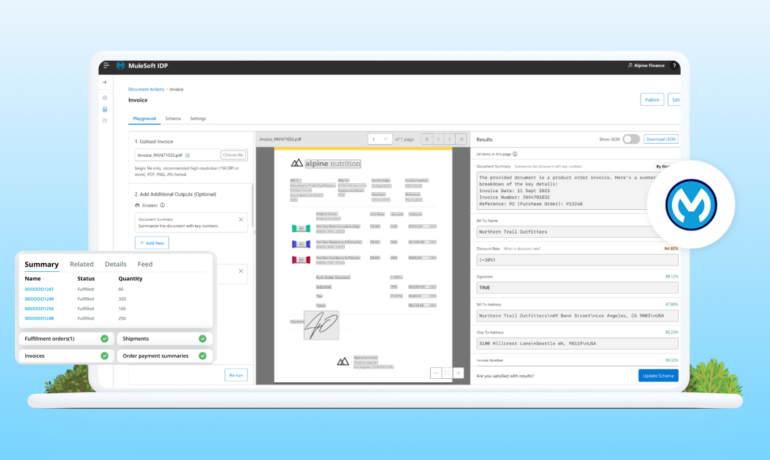
Salesforce yesterday announced new solutions to help streamline and accelerate end-to-end order lifecycle management: MuleSoft’s Anypoint Partner Manager with Intelligent Document Processing (IDP) and MuleSoft Accelerator for Salesforce Order Management. MuleSoft B2B and B2C With AI. Together, these business-to-business (B2B) and business-to-consumer (B2C) integration solutions make it easier to connect essential data across third-party applications, Salesforce OMS, and partner ecosystems – all within MuleSoft. Enhanced with AI, these new solutions help IT teams unify data from multiple data and system sources to achieve end-to-end order visibility, improved efficiency, and customer satisfaction. Why it matters: IT teams are inundated with requests to integrate disparate systems and adopt different technologies. And IT teams in retail, consumer goods, manufacturing, logistics, and healthcare must manage the thousands of daily transactions between suppliers and buyers across the supply chain ecosystem. To add to the complexity, 75% of B2B digital sales occur via standardized Electronic Data Interchange (EDI) and specialized solutions are needed to handle these transactions. Go deeper: Anypoint Partner Manager with IDP is a cloud-native B2B integration solution that accelerates partner onboarding and operational management of both API and EDI-based transactions through the commerce and supply chain lifecycle. It provides visibility tools to accurately monitor the health of partner transactions along with key business and operational insights like overall order frequency and volume, shipment statuses, and more. By utilizing IDP, developers can leverage AI to extract, read, and store unstructured data from documents such as invoice and purchase order PDFs, surfacing it in systems of record and order management systems like Salesforce OMS. IT and business teams can rapidly develop integrations and APIs, monitor and manage their performance, and secure them in compliance with partner requirements, all through a single pane of glass. New capabilities of MuleSoft B2B and B2C With AI include: MuleSoft Accelerator for Salesforce OMS makes it easier and faster to achieve end-to-end order visibility across channels from a centralized hub. The accelerator includes pre-built APIs, connectors, implementation templates, and other technical assets for Anypoint Platform to unify B2B orders with Salesforce OMS and connect all B2B and B2C orders to enterprise resource planning (ERP) systems. By leveraging the available out-of-the-box integration assets, customers can significantly reduce the development time required for integrating systems and accelerate time to market. MuleSoft B2B and B2C With AI. New capabilities of this offering include: Industry Use Cases: Customer perspective: “We were struggling with disjointed technology that was causing order and shipping delays while hampering our ability to innovate across our ecosystem,” said Jeff Blank, VP, Finance & Infrastructure at Jillamy. “MuleSoft’s Anypoint Partner Manager helped accelerate our partner onboarding processes with seamless B2B integration and more efficient management of our EDI transactions.” Salesforce perspective: “B2B and B2C integrations are critical to the success of supply chain management. From getting berries out of the farm or medical devices to hospitals, organizations across the globe are looking for a unified solution to manage and securely monitor their business partner transactions. With Anypoint Partner Manager and MuleSoft Accelerator for OMS, our customers can use our technology to build a composable business ecosystem that meets business partner compliance standards and drives end-to-end supply chain and commerce processes with efficiency, visibility, and speed.” – Andrew Comstock, VP, Product Management With Anypoint Partner Manager and MuleSoft Accelerator for OMS, our customers can use our technology to build a composable business ecosystem that meets business partner compliance standards and drives end-to-end supply chain and commerce processes with efficiency, visibility, and speed. Andrew Comstock, VP, Product Management Like Related Posts Who is Salesforce? Who is Salesforce? Here is their story in their own words. From our inception, we’ve proudly embraced the identity of Read more Salesforce Marketing Cloud Transactional Emails Salesforce Marketing Cloud Transactional Emails are immediate, automated, non-promotional messages crucial to business operations and customer satisfaction, such as order Read more Salesforce Unites Einstein Analytics with Financial CRM Salesforce has unveiled a comprehensive analytics solution tailored for wealth managers, home office professionals, and retail bankers, merging its Financial Read more AI-Driven Propensity Scores AI plays a crucial role in propensity score estimation as it can discern underlying patterns between treatments and confounding variables Read more

Read More
Salesforce and Loop

Salesforce and Loop

Loop, the premier returns and reverse logistics platform, has extended its acclaimed returns management software to merchants using Salesforce Commerce Cloud, marking a significant expansion beyond Shopify’s realm. This integration offers enterprise merchants on Salesforce Commerce Cloud access to Loop’s renowned returns management solution, effectively easing the complexities associated with customer returns. Merchants leveraging Salesforce Commerce Cloud will now have the advantage of Loop’s user-friendly returns management software, facilitating streamlined reverse logistics processes. This integration aims to bolster profit margins by reducing the costs associated with returns and providing customers with a modern, exchange-centric returns experience. Key benefits for merchants include: Jonathan Poma, CEO of Loop, expressed enthusiasm about extending Loop’s acclaimed returns solution to Salesforce Commerce Cloud merchants, citing the increasing demand from brands outside the Shopify ecosystem. He highlighted Loop’s commitment to delivering a seamless experience characterized by ease of use, operational efficiency, and cost savings. Loop’s integration with Salesforce Commerce Cloud enables merchants to effortlessly manage item exchanges, synchronize order data, automate returns processes, leverage analytics for continuous improvement, and more. Merchants operating on Salesforce Commerce Cloud can explore early adoption opportunities by scheduling a demo with Loop’s team. Loop will also be present at Salesforce Connections 2024 in Chicago, inviting interested parties to schedule meetings to discover how Loop can streamline reverse logistics processes and reduce costs associated with returns. About Loop: Loop is a leading post-purchase platform specializing in returns, exchanges, and reverse logistics for over 3,500 renowned brands worldwide. With innovative features like Workflows, Instant Exchanges, Shop Now, and Bonus Credit, Loop empowers brands to unlock cost savings, enhance customer lifetime value, and retain more revenue. Having processed over 40 million returns to date, Loop continues to redefine post-purchase experiences. Learn more at www.loopreturns.com. Like Related Posts Who is Salesforce? Who is Salesforce? Here is their story in their own words. From our inception, we’ve proudly embraced the identity of Read more Salesforce Marketing Cloud Transactional Emails Salesforce Marketing Cloud Transactional Emails are immediate, automated, non-promotional messages crucial to business operations and customer satisfaction, such as order Read more Salesforce Unites Einstein Analytics with Financial CRM Salesforce has unveiled a comprehensive analytics solution tailored for wealth managers, home office professionals, and retail bankers, merging its Financial Read more AI-Driven Propensity Scores AI plays a crucial role in propensity score estimation as it can discern underlying patterns between treatments and confounding variables Read more
Read More
More Sustainable and Equitable Future Through AI

More Sustainable and Equitable Future Through AI

Salesforce has unveiled a series of initiatives aimed at fostering a more sustainable and equitable future through AI. The company has introduced its Sustainable AI Policy Principles, a framework designed to guide AI regulation with a focus on minimizing environmental impact and promoting climate innovation. Additionally, Salesforce has selected five new nonprofits for its Salesforce Accelerator – AI for Impact, which targets climate action. This initiative will enable these purpose-driven organizations to harness AI solutions to tackle the pressing challenges of climate change. Why It Matters Prioritizing responsible AI development is crucial for leveraging technology to make a positive impact while ensuring that equity and sustainability remain central. Salesforce Sustainable AI Policy PrinciplesRead Them Here Key Aspects of the Principles The Sustainable AI Policy Principles extend Salesforce’s commitment to advocating for science-based policies that support a just and equitable transition to a 1.5-degree future. These principles offer best practices for lawmakers and regulators on: Salesforce is also the first tech company to support the Transformational AI to Modernize the Economy (TAME) legislation, which aims to enhance AI’s role in predicting and responding to extreme weather events. The AI for Impact Accelerator The AI for Impact cohort will support climate-focused nonprofits with technology, investments, and philanthropy to develop AI solutions that benefit the environment. Alongside product donations and $2 million in funding, these organizations will work on AI-powered initiatives in three crucial areas: Participants will also receive a year of pro bono consulting from Salesforce experts in strategy, planning, responsible AI use, data strategy, and technical architecture. Accelerator Participants Include: Moving Forward Suzanne DiBianca, EVP and Chief Impact Officer at Salesforce, emphasizes the importance of developing equitable and sustainable AI technology. “With AI transforming our lives and work, it is vital to ensure the technology is developed responsibly. We are excited to support climate nonprofits committed to sustainable AI innovation and advocate for clear policies that guide responsible AI development.” Quotes from Participants: Together, these efforts aim to accelerate the positive impact of technology, ensuring it benefits everyone and supports a sustainable future. Like Related Posts Who is Salesforce? Who is Salesforce? Here is their story in their own words. From our inception, we’ve proudly embraced the identity of Read more Salesforce Marketing Cloud Transactional Emails Salesforce Marketing Cloud Transactional Emails are immediate, automated, non-promotional messages crucial to business operations and customer satisfaction, such as order Read more Salesforce Unites Einstein Analytics with Financial CRM Salesforce has unveiled a comprehensive analytics solution tailored for wealth managers, home office professionals, and retail bankers, merging its Financial Read more AI-Driven Propensity Scores AI plays a crucial role in propensity score estimation as it can discern underlying patterns between treatments and confounding variables Read more

Read More
Salesforce Slack and AI

Salesforce Slack and AI

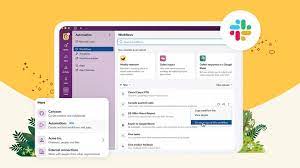
Salesforce, the customer relationship management software giant, has announced the availability of Slack AI to all paid Slack customers with expanded language support. Slack AI utilizes a company’s conversational data to assist end users and employees in quickly grasping processes and communications. It generates summaries and introduces new search capabilities based on the client company’s conversations. Slack, a workplace messaging and productivity app, was acquired by Salesforce for approximately $28 billion in 2021. It competes directly with Microsoft’s Teams and Google Chat. The Slack AI add-on is now available for all paid Slack plans (Pro and Business+) at $10 per user per month. It supports English, Spanish, and Japanese languages initially, with more languages coming soon. This development allows businesses of all sizes to leverage an intuitive AI experience seamlessly integrated with Slack, enhancing productivity within the platform. Previously, Slack AI was accessible only to large enterprises paying for Slack. The latest features of Slack AI include a recap feature providing daily morning digests with channel summaries, personalized search answers, and conversation summaries. According to internal analysis, customers using Slack AI in pilot programs are saving an average of 97 minutes per user each week by leveraging AI to find answers, distill knowledge, and generate ideas. One of Slack’s customers, Beyond Better Foods, a healthy dessert brand, uses Slack AI extensively for logistics planning. Their operations team benefits from enhanced search capabilities and channel recaps, saving time and improving focus. Andy Kung, Vice President of Operations at Beyond Better Foods, shared his experience: “When I need to get my CEO a fast answer at 2 pm on a Friday, I can use Slack AI’s search function. I’ve only been using Slack AI for about a month, but it’s already helped me quickly find answers countless times, and AI is saving me at least 30 minutes a day.” This announcement marks a significant step in making Slack AI accessible to a broader range of businesses, empowering them to work smarter and more efficiently within the Slack platform. Like Related Posts Who is Salesforce? Who is Salesforce? Here is their story in their own words. From our inception, we’ve proudly embraced the identity of Read more Salesforce Marketing Cloud Transactional Emails Salesforce Marketing Cloud Transactional Emails are immediate, automated, non-promotional messages crucial to business operations and customer satisfaction, such as order Read more Salesforce Unites Einstein Analytics with Financial CRM Salesforce has unveiled a comprehensive analytics solution tailored for wealth managers, home office professionals, and retail bankers, merging its Financial Read more AI-Driven Propensity Scores AI plays a crucial role in propensity score estimation as it can discern underlying patterns between treatments and confounding variables Read more
Read More
AI Project Planning by Data

AI Project Planning by Data

Starting with Data Step 1: Identify Core Data Stores Begin by listing the primary data sources tied to the business functions you are investigating. While it may be unrealistic to catalog every possible data source within the company, the task becomes manageable by narrowing the focus to specific departments (e.g., customer service, marketing, legal) or broader goals (e.g., “increasing manufacturing efficiency” or “improving customer loyalty and cart value”). Step 2: Align Data with Business Processes For each data set, hypothesize how it might enhance or streamline business workflows. Consider questions like: By linking the data to these business use cases, you start to uncover the potential value of integrating data into key workflows. Step 3: Validate Business Cases with Experts Once you’ve identified how data could be valuable, collaborate with data scientists and subject matter experts (SMEs) to review and refine your hypotheses. Create a formal list of use cases that clearly outline how data, algorithms, and business workflows could come together to add value or automate a process. This ensures a practical approach for leveraging data to drive business outcomes. Like Related Posts Who is Salesforce? Who is Salesforce? Here is their story in their own words. From our inception, we’ve proudly embraced the identity of Read more Salesforce Marketing Cloud Transactional Emails Salesforce Marketing Cloud Transactional Emails are immediate, automated, non-promotional messages crucial to business operations and customer satisfaction, such as order Read more Salesforce Unites Einstein Analytics with Financial CRM Salesforce has unveiled a comprehensive analytics solution tailored for wealth managers, home office professionals, and retail bankers, merging its Financial Read more AI-Driven Propensity Scores AI plays a crucial role in propensity score estimation as it can discern underlying patterns between treatments and confounding variables Read more

Read More
Salesforce Integrated Ecommerce Storefronts

Salesforce eCommerce & Commerce Cloud

Salesforce eCommerce & Commerce Cloud: Everything You Need to Know What is Salesforce eCommerce? Salesforce eCommerce, powered by Salesforce Commerce Cloud, is a comprehensive, cloud-based solution that helps businesses scale, create intelligent shopping experiences, and drive revenue growth. A Unified Digital Commerce Platform Salesforce Commerce Cloud encompasses: With Commerce Cloud, businesses can build and manage their entire eCommerce operation—from responsive storefronts to complex logistics like shipping and inventory tracking. Key Features of Salesforce Commerce Cloud Commerce Cloud Digital Create fully responsive, omnichannel eCommerce websites with advanced search capabilities, secure mobile payments, and personalized customer journeys. Storefront Reference Architecture (SFRA) Launch professional eCommerce sites quickly using best-in-class tools, pre-built wireframes, and integrated digital technologies for easy customization and maintenance. Endless Aisle Enhance the shopping experience with pre-ordering, wishlists, back-in-stock alerts, and exclusive online promotions—reducing lost sales and improving inventory management. Commerce Portals Build account portals, loyalty programs, and customer communities to foster long-term engagement and brand loyalty. Order Management Optimize order processing with automated payments, easy returns, real-time order tracking, and a seamless purchasing experience. Intuitive Platform Leverage no-code tools, commerce APIs, and built-in templates to design eCommerce experiences without deep technical expertise. Unified Commerce Deliver a seamless shopping experience across digital and physical channels, ensuring consistency and convenience for customers. How Salesforce eCommerce Benefits Your Business AI-Powered Predictive Intelligence Commerce Cloud integrates Einstein AI, offering:✅ Personalized product recommendations✅ Automated marketing insights✅ Cart abandonment reduction✅ Smart search enhancements Personalized Customer Journeys Tailor every interaction with AI-driven recommendations, customized content, and omnichannel engagement strategies. Seamless Multi-Storefront Management Easily manage multiple brands, international storefronts, and localized experiences with multi-currency, multi-language, and cross-border commerce capabilities. Scalability Without Limits Handle high transaction volumes, traffic spikes, and expansive product catalogs with ease as your business grows. 24/7 Support & Strategic Guidance Benefit from Salesforce’s extensive support ecosystem, including advisory services, webinars, and AI-driven best practices to accelerate success. Salesforce Commerce Cloud + Marketing Cloud: The Perfect Pairing Salesforce eCommerce seamlessly integrates with Salesforce Marketing Cloud, enabling businesses to:🔹 Automate retargeting and abandoned cart recovery campaigns🔹 Personalize customer engagement at scale🔹 Track and analyze customer behaviors in real-time🔹 Enhance product recommendations with AI-powered insights By combining Commerce Cloud and Marketing Cloud, businesses can craft end-to-end, data-driven shopping experiences that drive higher conversion rates and customer satisfaction. Ready to Transform Your eCommerce Strategy? Whether launching a new online store or optimizing an established brand, Salesforce eCommerce offers limitless possibilities. Let’s explore how Commerce Cloud, AI, and automation can elevate your business. Like Related Posts Who is Salesforce? Who is Salesforce? Here is their story in their own words. From our inception, we’ve proudly embraced the identity of Read more Salesforce Marketing Cloud Transactional Emails Salesforce Marketing Cloud Transactional Emails are immediate, automated, non-promotional messages crucial to business operations and customer satisfaction, such as order Read more Salesforce Unites Einstein Analytics with Financial CRM Salesforce has unveiled a comprehensive analytics solution tailored for wealth managers, home office professionals, and retail bankers, merging its Financial Read more AI-Driven Propensity Scores AI plays a crucial role in propensity score estimation as it can discern underlying patterns between treatments and confounding variables Read more
Read More
AI Project Planning by Workflows

AI Project Planning by Workflows

Starting with Workflows-AI Project Planning by Workflows Step 1: Identify Key Business Processes Begin by listing out the most critical and repetitive processes in the business. This includes: Step 2: Pinpoint AI Integration Opportunities Break down each business process to identify specific decision points where AI can add value. Examples include: Step 3: Determine Relevant Data Sources Next, brainstorm the types of data that could help solve these problems. Organize potential data sources by factors such as: Step 4: Evaluate Data Viability Once you’ve matched problems with potential data sources, assess the practicality of using that data. Investigate the quality, accessibility, and relevance of the data to ensure it aligns with the business use case. AI Project Planning by Workflows. Like Related Posts Who is Salesforce? Who is Salesforce? Here is their story in their own words. From our inception, we’ve proudly embraced the identity of Read more Salesforce Marketing Cloud Transactional Emails Salesforce Marketing Cloud Transactional Emails are immediate, automated, non-promotional messages crucial to business operations and customer satisfaction, such as order Read more Salesforce Unites Einstein Analytics with Financial CRM Salesforce has unveiled a comprehensive analytics solution tailored for wealth managers, home office professionals, and retail bankers, merging its Financial Read more AI-Driven Propensity Scores AI plays a crucial role in propensity score estimation as it can discern underlying patterns between treatments and confounding variables Read more
Read More
Big Data and Data Visualization

Big Data and Data Visualization Explained

Data Visualization: Turning Complex Data into Clear Insights Data visualization is the practice of converting information into visual formats, such as maps or graphs, to make data more accessible and understandable. The primary purpose of data visualization is to highlight patterns, trends, and outliers within large data sets, allowing users to quickly glean insights. The term is often used interchangeably with information graphics, information visualization, and statistical graphics. The Role of Data Visualization in Data Science Data visualization is a crucial step in the data science process. After data is collected, processed, and modeled, it must be visualized to draw meaningful conclusions. It’s also a key component of data presentation architecture, a discipline focused on efficiently identifying, manipulating, formatting, and delivering data. Importance Across Professions Data visualization is essential across various fields. Teachers use it to display student performance, computer scientists to explore AI advancements, and executives to communicate information to stakeholders. In big data projects, visualization tools are vital for quickly summarizing large datasets, helping businesses make informed decisions. In advanced analytics, visualization is equally important. Data scientists use it to monitor and ensure the accuracy of predictive models and machine learning algorithms. Visual representations of complex algorithms are often easier to interpret than numerical outputs. Historical Context of Data Visualization Data visualization has evolved significantly over the centuries, long before the advent of modern technology. Today, its importance is more pronounced, as it enables quick and effective communication of information in a universally understandable manner. Why Data Visualization Matters Data visualization provides a straightforward way to communicate information, regardless of the viewer’s expertise. This universality makes it easier for employees to make decisions based on visual insights. Visualization offers numerous benefits for businesses, including: Advantages of Data Visualization Key benefits include: Challenges and Disadvantages Despite its advantages, data visualization has some challenges: Data Visualization in the Era of Big Data With the rise of big data, visualization has become more critical. Companies leverage machine learning to analyze vast amounts of data, and visualization tools help present this data in a comprehensible way. Big data visualization often employs advanced techniques, such as heat maps and fever charts, beyond the standard pie charts and graphs. However, challenges remain, including: Examples of Data Visualization Techniques Early computer-based data visualizations often relied on Microsoft Excel to create tables, bar charts, or pie charts. Today, more advanced techniques include: Common Use Cases for Data Visualization Data visualization is widely used across various industries, including: The Science Behind Data Visualization The effectiveness of data visualization is rooted in how humans process information. Daniel Kahneman and Amos Tversky’s research identified two methods of information processing: Visualization Tools and Vendors Data visualization tools are widely used for business intelligence reporting. These tools generate interactive dashboards that track performance across key metrics. Users can manipulate these visualizations to explore data in greater depth, and indicators alert them to data updates or important events. Businesses might use visualization of data software to monitor marketing campaigns or track KPIs. As tools evolve, they increasingly serve as front ends for sophisticated big data environments, assisting data engineers and scientists in exploratory analysis. Popular data visualization tools include Domo, Klipfolio, Looker, Microsoft Power BI, Qlik Sense, Tableau, and Zoho Analytics. While Microsoft Excel remains widely used, newer tools offer more advanced capabilities. Data visualization is a vital subset of the broader field of data analytics, offering powerful tools for understanding and leveraging business data across all sectors. Like Related Posts Who is Salesforce? Who is Salesforce? Here is their story in their own words. From our inception, we’ve proudly embraced the identity of Read more Salesforce Marketing Cloud Transactional Emails Salesforce Marketing Cloud Transactional Emails are immediate, automated, non-promotional messages crucial to business operations and customer satisfaction, such as order Read more Salesforce Unites Einstein Analytics with Financial CRM Salesforce has unveiled a comprehensive analytics solution tailored for wealth managers, home office professionals, and retail bankers, merging its Financial Read more AI-Driven Propensity Scores AI plays a crucial role in propensity score estimation as it can discern underlying patterns between treatments and confounding variables Read more

Read More
Salesforce for Transportation and Logistics

Transportation, Logistics, The Cloud, and CRM

Transportation and logistics and crm. Typically, the state of transportation and logistics (T&L) mirrors the state of the economy, with FedEx earnings serving as a reliable indicator of how the rest of the players in the industry are doing. However, the past few years have been anything but normal. The pandemic led to a surge in demand, marked by container-filled ports and a nationwide hunt for truck drivers. After navigating two years of high intensity, T&L now faces challenges such as inflation, the Ukraine war, ongoing supply chain disruptions, the threat of recession, climbing interest rates, higher fuel costs, and overly cautious consumer behavior. Where are the Challenges? Compounding these issues is a staffing crisis in the industry, with a global shortage of warehouse workers, dock personnel, drivers, pilots, and rail crews that is expected to persist. In such uncertain times, successful transportation and logistics companies are taking strategic steps to future-proof themselves. One key strategy involves unifying customer data on a single platform to enhance efficiency and readiness for various scenarios. Smart transportation and logistics organizations plan for best, expected, and worst-case scenarios by monitoring critical signals such as capacity in key lanes, customer spending by lane, and customer lifetime value. Unifying customer data across sales, service, and operations enables informed decision-making, focusing investments where needed and optimizing resources. Manual Processes Despite this, much of T&L business, especially in sales, marketing, and customer service, relies on manual processes like phone calls, spreadsheets, and email. Centralized customer data is crucial for applying intelligence and analytics to process trends, segmenting customers, and analyzing their value. Companies investing in data unification report significant cost savings and efficiency benefits, including a 25% reduction in IT costs. Centralized customer data is also leveraged to enhance shipper experiences. T&L leaders use artificial intelligence (AI) to predict customer retention and potential churn, allowing proactive steps to be taken. Real-time data intelligence empowers customer service agents to make informed decisions swiftly. Access to shipper-specific on-time delivery performance provides valuable insights and strengthens client relationships. Transportation and Logistics and CRM More than half of T&L organizations are investing in cloud connectivity and data sharing, with 18% deriving the most value in sales and marketing, customer relationship management (CRM), distribution, and end-to-end visibility. These strategic investments are proving instrumental in navigating the complexities of the current economic landscape. Is it time to explore Salesforce CRM for your company? Contact Tectonic today. Like2 Related Posts Who is Salesforce? Who is Salesforce? Here is their story in their own words. From our inception, we’ve proudly embraced the identity of Read more Salesforce Marketing Cloud Transactional Emails Salesforce Marketing Cloud Transactional Emails are immediate, automated, non-promotional messages crucial to business operations and customer satisfaction, such as order Read more Salesforce Unites Einstein Analytics with Financial CRM Salesforce has unveiled a comprehensive analytics solution tailored for wealth managers, home office professionals, and retail bankers, merging its Financial Read more AI-Driven Propensity Scores AI plays a crucial role in propensity score estimation as it can discern underlying patterns between treatments and confounding variables Read more

Read More
AI All Grown Up

Understanding Generative AI and Predictive AI

Understanding Generative AI and Predictive AI: A Synergistic Approach Artificial Intelligence (AI) is broadly categorized into two key branches: Generative AI and Predictive AI. Both play a crucial role across various industries, from healthcare and fintech to logistics and education. Their impact is undeniable, driving efficiency, accuracy, and innovation. However, this is not a debate about Generative AI versus Predictive AI. Instead, it is an exploration of both branches and how they contribute to technological advancement. Let’s dive in. Generative AI vs. Predictive AI: An Overview Generative AI has been around for decades, with early iterations like Generative Adversarial Networks (GANs) and Variational Autoencoders (VAEs). While these earlier models saw limited enterprise adoption, the success of ChatGPT demonstrated the vast potential of Generative AI in producing articulate, human-like content. Conversely, Predictive AI is widely used across industries to correlate data and support decision-making. It is particularly prevalent in applications like cybersecurity, inventory management, and digital twin technology. Businesses increasingly recognize the benefits of both AI branches. From automating processes to creating digital replicas for scenario testing, AI applications continue to evolve. The goal now is not to compare Generative AI and Predictive AI, but to understand their mechanisms and potential for seamless integration. Are you fully leveraging AI in your enterprise? If not, or if you have questions, feel free to reach out. Now, let’s delve into how these AI branches work. What is Generative AI? Generative AI is transforming industries by producing text, code, music, and even videos. Companies use it to analyze vast datasets and generate content instantaneously. Key Applications of Generative AI: By 2026, over 80% of businesses are expected to incorporate Generative AI into their workflows. While implementation can be complex, expert guidance can help streamline the process. How Does Generative AI Work? Generative AI leverages machine learning (ML) and big data to analyze input forms—such as text, images, or sound—and learn their structures. Once trained, it generates new content without merely replicating existing data, making it a powerful tool for innovation. Generative AI in Action: If you’re uncertain about how to implement Generative AI in your business, consulting with experts can provide clarity. What is Predictive AI? Predictive AI, or predictive analytics, forecasts future outcomes based on historical data. It empowers businesses to make informed decisions by identifying patterns and trends. Key Applications of Predictive AI: Predictive AI improves decision-making capabilities by analyzing large datasets and refining machine learning algorithms. Integrating it with other analytics tools enhances its effectiveness and mitigates implementation challenges. Predictive AI in Action: Predictive AI’s ability to anticipate market trends and consumer behavior makes it a valuable tool for businesses looking to stay ahead. Generative AI vs. Predictive AI: Key Differences While Generative AI focuses on creating new content based on learned data patterns, Predictive AI forecasts future outcomes using historical data. These two models are not competing forces; rather, they complement each other in building comprehensive business strategies. Both models require a strong foundation in data governance and cybersecurity to ensure ethical and effective AI implementation. The Future of AI: Generative vs. Predictive According to McKinsey, the combined impact of Generative and Predictive AI could contribute up to $4.4 trillion annually to the global economy. What’s Next for AI? Generative AI: Predictive AI: Both Generative and Predictive AI are poised to shape the future of AI-driven industries. Businesses that embrace both models will gain a competitive edge in innovation and strategic decision-making. Conclusion Generative and Predictive AI are not opposing technologies; they are complementary forces that drive efficiency, accuracy, and creativity. Their applications span numerous industries, proving their immense value in today’s tech-driven world. Navigating AI implementation can be complex, but expert guidance can simplify the process. If you have questions about integrating AI into your business, consulting with professionals can help you harness its full potential. The future of business is deeply intertwined with AI—taking the right steps today will ensure success in the years ahead. Let Tectonic take you to the AI world. Like Related Posts Who is Salesforce? Who is Salesforce? Here is their story in their own words. From our inception, we’ve proudly embraced the identity of Read more Salesforce Marketing Cloud Transactional Emails Salesforce Marketing Cloud Transactional Emails are immediate, automated, non-promotional messages crucial to business operations and customer satisfaction, such as order Read more Salesforce Unites Einstein Analytics with Financial CRM Salesforce has unveiled a comprehensive analytics solution tailored for wealth managers, home office professionals, and retail bankers, merging its Financial Read more AI-Driven Propensity Scores AI plays a crucial role in propensity score estimation as it can discern underlying patterns between treatments and confounding variables Read more
Read More

Event Consumers: The Responsive Core of Event-Driven Architecture Fundamentals of Event Consumers Event consumers are the reactive components in event-driven architecture (EDA) that subscribe to event channels and execute actions when state changes occur. These can be: They monitor for business-critical occurrences like: How Event-Driven Architecture Works Core EDA Characteristics ![EDA Architecture Diagram showing event flow from producers through routers to consumers] The Event Consumer Ecosystem Component Role Examples Event Producers Generate state change notifications POS systems, IoT sensors, API gateways Event Routers Channel events to appropriate consumers Kafka, AWS EventBridge, Azure Service Bus Event Consumers Execute business logic in response CRM systems, fraud detection services Event Processors Transform and analyze event streams AWS Lambda, Azure Functions Key Benefits of Event Consumers Event Delivery Models Publish-Subscribe (Pub/Sub) Event Streaming Industry-Specific Implementations E-Commerce Financial Services Healthcare Manufacturing Implementation Best Practices Future Evolution Emerging patterns in event consumption: “Event consumers are becoming the central nervous system of digital business,” says Gartner VP Analyst Mark Beyer. “Organizations that master event-driven patterns achieve 3-5x faster response to market changes compared to traditional architectures.” Like Related Posts Who is Salesforce? Who is Salesforce? Here is their story in their own words. From our inception, we’ve proudly embraced the identity of Read more Salesforce Unites Einstein Analytics with Financial CRM Salesforce has unveiled a comprehensive analytics solution tailored for wealth managers, home office professionals, and retail bankers, merging its Financial Read more AI-Driven Propensity Scores AI plays a crucial role in propensity score estimation as it can discern underlying patterns between treatments and confounding variables Read more Tectonic’s Successful Salesforce Track Record Salesforce Technology Services Integrator – Tectonic has successfully delivered Salesforce in a variety of industries including Public Sector, Hospitality, Manufacturing, Read more

Read More
Salesforce Order Management

Salesforce Order Management Explained

What is Salesforce Order Management? It’s a platform for managing orders, customer records, fulfillment, inventory visibility, payments and invoicing, and customer care.

Read More
gettectonic.com