

Salesforce Implementation Archives - gettectonic.com - Page 3
July Changes to Marketing Cloud

July Changes to Marketing Cloud Growth

You now have access to the new Marketing app, which includes the latest version of Marketing Cloud Growth. This new app replaces the previous Marketing app, now named Marketing (Original). July Changes to Marketing Cloud Growth. What do I need to do – July Changes to Marketing Cloud? To access the new Marketing app, open the App Launcher and select Marketing. For all accounts provisioned prior to Summer ’24, the new Marketing app will be created and it will maintain most of the settings from the Marketing (Original) app. It includes access to all your campaigns and reports. However, you must reconfigure the user access and recreate the customizations that you want to keep. After finishing the setup of the new Marketing app, remove user access to the Marketing (Original) app to avoid using outdated tools. The new Marketing app retains most settings from the Marketing (Original) app, including access to all your campaigns and reports. However, you will need to reconfigure user access and recreate any customizations you want to keep. Learn more in Help. After setting up the new Marketing app, remove user access to the Marketing (Original) app to avoid using outdated tools. Why is this change happening? Beginning Summer ’24 release, Marketing Cloud Growth customers will have access to a new Marketing app. This app replaces the previous Marketing app for Marketing Cloud Growth, which will be renamed Marketing (Original). Newly provisioned accounts will have the Marketing app only.We’ve improved the back end to provide a more streamlined user experience. What if I don’t take action? We will eventually stop supporting the Marketing (Original) app, which may impact your business. Further details will be announced later. How can I get more information? If you have questions regarding the changes to the Marketing app, contact Salesforce Customer Support. Like Related Posts Who is Salesforce? Who is Salesforce? Here is their story in their own words. From our inception, we’ve proudly embraced the identity of Read more Salesforce Marketing Cloud Transactional Emails Salesforce Marketing Cloud Transactional Emails are immediate, automated, non-promotional messages crucial to business operations and customer satisfaction, such as order Read more Salesforce Unites Einstein Analytics with Financial CRM Salesforce has unveiled a comprehensive analytics solution tailored for wealth managers, home office professionals, and retail bankers, merging its Financial Read more AI-Driven Propensity Scores AI plays a crucial role in propensity score estimation as it can discern underlying patterns between treatments and confounding variables Read more

Read More
Enhance Payer Patient Education

Enhance Payer Patient Education

Data and Technology Strategies Enhance Payer Patient Education Analytics platforms, omnichannel engagement tools, telehealth, and other technological advancements have become essential in driving successful, enhanced payer patient education. Cathy Moffitt, MD, a pediatrician with 15 years of experience in the pediatric emergency department and now the senior vice president and Aetna chief medical officer at CVS Health, understands the critical role of patient education. “Education is empowerment. It is engagement. It is very critical to making patients more equipped to handle their healthcare journey,” Moffitt said in an episode of Healthcare Strategies. “Even overseeing a large payer like Aetna, I still believe tremendously in health education.” Enhance Payer Patient Education For large payers, effective patient education begins with data analytics and a deep understanding of their member population. Through data, payers can identify key insights, including when members are most receptive to educational materials. “People are more open to hear you and to be educated and empowered when they need help right then,” Moffitt explained. Timing is crucial—offering educational resources when they’re most relevant to a member’s immediate needs increases the likelihood that the information will be absorbed and acted upon. Aetna’s Next Best Action initiative, launched in 2018, exemplifies this approach. Through this program, Aetna employees reach out to members with specific conditions, offering guidance on the next best steps for managing their health. By providing education at a time when members are most open to it, the initiative ensures that patient education is both timely and impactful. In addition to timing, payer data can shape patient education by providing insights into a member’s demographics, including race, sexual orientation, gender identity, ethnicity, and location. Tailoring educational efforts to these factors ensures that communication is accessible and resonates with members. To better connect with a diverse member base, Aetna has integrated translator services into its customer support and trained representatives on sensitivity to sexual orientation and gender identity. Additionally, updating the provider directory to reflect demographic data is crucial. When members see providers who share their language, culture, and experiences, they are more likely to engage with and retain the educational materials provided. “Understanding, in a multicultural and multifactorial way, who our members are and trying to help understand what they need…as well as understanding both acute and chronic illness from an actionability standpoint, where we can best engage to good effect as we reach out to people—that’s the cornerstone of our intent and our philosophy around how we scrub data,” Moffitt shared. With over 20 years in the healthcare industry, both as a provider and now in a payer role, Moffitt has observed key trends and identified strengths and weaknesses in patient education efforts. She noted that the most successful patient education initiatives have been in mental health and preventive care, with technology playing a crucial role in both areas. Patient education has significantly reduced the stigma around mental healthcare and highlighted the importance of mental wellness. Telemedicine has vastly improved access to care, particularly in mental health, Moffitt noted. In preventive care, more people are now aware of the benefits of cancer screenings, vaccines, wellness visits, and other preventive measures. Moffitt suggested that the increased use of home health visits and retail clinics has contributed to these improvements, particularly among Aetna’s members. Looking ahead, Moffitt predicted that customized engagement is the next frontier for patient education. Members increasingly want educational materials delivered in a personalized and streamlined manner that suits their preferences. Omnichannel engagement solutions will be vital in meeting this demand. While significant progress has been made in enabling members to receive educational materials through various channels such as email, text, and phone calls, Moffitt anticipates even more advancements in the future. “I can’t tell you exactly where we’re going to be in 10 years because I wouldn’t have been able to tell you 10 years ago where we are now, but we will continue to respond and meet the demands with the technological commitments that we’re making,” Moffitt said. Like1 Related Posts Who is Salesforce? Who is Salesforce? Here is their story in their own words. From our inception, we’ve proudly embraced the identity of Read more Salesforce Marketing Cloud Transactional Emails Salesforce Marketing Cloud Transactional Emails are immediate, automated, non-promotional messages crucial to business operations and customer satisfaction, such as order Read more Salesforce Unites Einstein Analytics with Financial CRM Salesforce has unveiled a comprehensive analytics solution tailored for wealth managers, home office professionals, and retail bankers, merging its Financial Read more AI-Driven Propensity Scores AI plays a crucial role in propensity score estimation as it can discern underlying patterns between treatments and confounding variables Read more
Read More
Implementing Salesforce Education Cloud

Implementing Salesforce Education Cloud

Client OverviewThe client is a leading educational institution offering a wide array of programs, from undergraduate degrees to continuing education. With around 15,000 students and a global alumni network of over 50,000, they are dedicated to delivering a holistic educational experience while nurturing lifelong relationships with their alumni. ChallengesBefore implementing Salesforce Education Cloud, the client faced several large challenges: ObjectivesThe institution sought to achieve the following with Salesforce Education Cloud: Solution: Salesforce Education Expertise Strategy and Planning Design and Wireframing Development Testing Deployment Results: Before and After Aspect Before After Data Management Fragmented across multiple systems Centralized in Salesforce Education Cloud Communication Disjointed communication processes Streamlined internal and external channels Alumni Engagement Outdated tools for managing alumni relationships Modern tools for enhanced engagement Before and after Salesforce Education Cloud Quantifiable OutcomesWith Salesforce Education Cloud, the client achieved: Implementing Salesforce Education CloudBy implementing Salesforce Education Cloud, the Salesforce partner delivered a transformative solution that surpassed the institution’s objectives. The integration of centralized data, enhanced communication processes, and modern alumni management tools led to: These impressive results highlight Tectonic’s commitment to providing expert Salesforce solutions that aid education clients achieve their strategic goals. Contact us today. Like Related Posts Who is Salesforce? Who is Salesforce? Here is their story in their own words. From our inception, we’ve proudly embraced the identity of Read more Salesforce Marketing Cloud Transactional Emails Salesforce Marketing Cloud Transactional Emails are immediate, automated, non-promotional messages crucial to business operations and customer satisfaction, such as order Read more Salesforce Unites Einstein Analytics with Financial CRM Salesforce has unveiled a comprehensive analytics solution tailored for wealth managers, home office professionals, and retail bankers, merging its Financial Read more AI-Driven Propensity Scores AI plays a crucial role in propensity score estimation as it can discern underlying patterns between treatments and confounding variables Read more

Read More
Salesforce Workday Partnership

Salesforce Workday Partnership

Salesforce and Workday Partner to Launch AI-Powered Employee Service Agent Salesforce (NYSE: CRM), the leading AI CRM platform, and Workday, Inc. (NASDAQ: WDAY), a leader in enterprise cloud applications for finance and HR, today announced a strategic partnership to develop a new AI-powered employee service agent. This solution will enhance employee experiences by automating routine tasks, providing personalized support, and delivering data-driven insights across Salesforce and Workday platforms. A Unified Data Foundation for Enhanced Employee Services The partnership will integrate HR and financial data from Workday with CRM data from Salesforce, creating a unified data foundation. This integration will enable the development of AI-driven use cases that increase productivity, reduce costs, and improve the employee experience. A key feature will be the seamless incorporation of Workday into Slack, allowing for enhanced automation and collaboration around HR and financial records, using AI. The new AI employee service agent, built on Salesforce’s Agentforce Platform and Einstein AI, alongside Workday AI, will cater to various employee service needs, such as onboarding, health benefits management, and career development. This agent will utilize a company’s data to interact with employees in natural language, offering personalized support and executing tasks based on trusted business rules and permissions. Enhancing Employee and Customer Success “The AI opportunity lies in augmenting employees and delivering exceptional customer experiences. Our collaboration with Workday will empower businesses to create remarkable experiences using generative and autonomous AI, allowing employees to efficiently find answers, learn new skills, solve problems, and take actions.” Marc Benioff, Chair and CEO of Salesforce Carl Eschenbach, CEO of Workday, highlighted the integration’s benefits: “By combining our platforms, data, and AI capabilities, we empower customers to deliver unmatched AI-powered employee experiences, leading to happier customers and substantial business value.” Key Features of the Partnership Benefits for Employees and Employers For Employees: For Employers: Sal Companieh, Chief Digital and Information Officer at Cushman & Wakefield, noted the strategic advantage: “The integration of Workday and Salesforce will streamline workflows and deliver more personalized, AI-powered employee experiences, significantly enhancing our operational efficiency.” “The shared data foundation between Workday and Salesforce will enable these partners to deliver transformative AI capabilities, enhancing employee experiences and driving business performance.” R “Ray” Wang, CEO of Constellation Research, Inc. About Workday Workday is a leading enterprise platform that helps organizations manage their most important assets – their people and money. The Workday platform is built with AI at the core to help customers elevate people, supercharge work, and move their business forever forward. Workday is used by more than 10,500 organizations around the world and across industries – from medium-sized businesses to more than 60% of the Fortune 500. For more information about Workday, visit workday.com. Like Related Posts Who is Salesforce? Who is Salesforce? Here is their story in their own words. From our inception, we’ve proudly embraced the identity of Read more Salesforce Marketing Cloud Transactional Emails Salesforce Marketing Cloud Transactional Emails are immediate, automated, non-promotional messages crucial to business operations and customer satisfaction, such as order Read more Salesforce Unites Einstein Analytics with Financial CRM Salesforce has unveiled a comprehensive analytics solution tailored for wealth managers, home office professionals, and retail bankers, merging its Financial Read more AI-Driven Propensity Scores AI plays a crucial role in propensity score estimation as it can discern underlying patterns between treatments and confounding variables Read more

Read More
Boost Payer Patient Education

Boost Payer Patient Education

As a pediatrician with 15 years of experience in the pediatric emergency department, Cathy Moffitt, MD, understands the critical role of patient education. Now, as Senior Vice President and Aetna Chief Medical Officer at CVS Health, she applies that knowledge to the payer space. “Education is empowerment. It’s engagement. It’s crucial for equipping patients to navigate their healthcare journey. Now, overseeing a large payer like Aetna, I still firmly believe in the power of health education,” Moffitt shared on an episode of Healthcare Strategies. At a payer organization like Aetna, patient education begins with data analytics to better understand the member population. According to Moffitt, key insights from data can help payers determine the optimal time to share educational materials with members. “People are most receptive to education when they need help in the moment,” she explained. If educational opportunities are presented when members aren’t focused on their health needs, the information is less likely to resonate. Aetna’s Next Best Action initiative, launched in 2018, embodies this timing-driven approach. In this program, Aetna employees proactively reach out to members with specific conditions to provide personalized guidance on managing their health. This often includes educational resources delivered at the right moment when members are most open to learning. Data also enables payers to tailor educational efforts to a member’s demographics, including race, sexual orientation, gender identity, ethnicity, and location. By factoring in these elements, payers can ensure their communications are relevant and easy to understand. To enhance this personalized approach, Aetna offers translation services and provides customer service training focused on sensitivity to sexual orientation and gender identity. In addition, updating the provider directory to reflect a diverse network helps members feel more comfortable with their care providers, making them more likely to engage with educational resources. “Understanding our members’ backgrounds and needs, whether it’s acute or chronic illness, allows us to engage them more effectively,” Moffitt said. “This is the foundation of our approach to leveraging data for meaningful patient education.” With over two decades in both provider and payer roles, Moffitt has observed key trends in patient education, particularly its success in mental health and preventive care. She highlighted the role of technology in these areas. Efforts to educate patients about mental health have reduced stigma and increased awareness of mental wellness. Telemedicine has significantly improved access to mental healthcare, according to Moffitt. In preventive care, more people are aware of the importance of cancer screenings, vaccines, wellness visits, and other preventive measures. Moffitt pointed to the rising use of home health visits and retail clinics as contributing factors for Aetna members. Looking ahead, Moffitt sees personalized engagement as the future of patient education. Members increasingly want information tailored to their preferences, delivered through their preferred channels—whether by email, text, phone, or other methods. Omnichannel solutions will be essential to meeting this demand, and while healthcare has already made progress, Moffitt expects even more innovation in the years to come. “I can’t predict exactly where we’ll be in 10 years, just as I couldn’t have predicted where we are now a decade ago,” Moffitt said. “But we will continue to evolve and meet the needs of our members with the technological advancements we’re committed to.” Contact Us To discover how Salesforce can advance your patient payer education, contact Tectonic today. Like Related Posts Who is Salesforce? Who is Salesforce? Here is their story in their own words. From our inception, we’ve proudly embraced the identity of Read more Salesforce Marketing Cloud Transactional Emails Salesforce Marketing Cloud Transactional Emails are immediate, automated, non-promotional messages crucial to business operations and customer satisfaction, such as order Read more Salesforce Unites Einstein Analytics with Financial CRM Salesforce has unveiled a comprehensive analytics solution tailored for wealth managers, home office professionals, and retail bankers, merging its Financial Read more AI-Driven Propensity Scores AI plays a crucial role in propensity score estimation as it can discern underlying patterns between treatments and confounding variables Read more
Read More
Data Cloud - Facts and Fiction

Data Cloud – Facts and Fiction

Salesforce Data Cloud: Debunking Myths and Unveiling Facts If you’ve been active on LinkedIn, attending recent Salesforce events, or even watching a myriad of sporting events, you’ve likely noticed that Salesforce has evolved beyond just CRM. It’s now CRM + DATA + AI. Although Salesforce has always incorporated these elements, with Einstein AI and data being integral to CRM, the latest innovation lies in the Data Cloud. Data Cloud – Facts and Fiction Data Cloud, formerly known as Salesforce Genie, represents Salesforce’s latest evolution, focusing on enabling organizations to scale and grow in an era where data is the new currency. It is the fastest-growing product in Salesforce’s history, pushing new boundaries of innovation by providing better access to data and actionable insights. As Data Cloud rapidly develops, potential clients often have questions about its function and how it can address their challenges. Here are some common myths about Data Cloud and the facts that debunk them. Myth: Data Cloud Requires MuleSoft Fact: While MuleSoft Anypoint Platform can accelerate connecting commonly used data sources, it is not required for Data Cloud. Data Cloud can ingest data from multiple systems and platforms using several out-of-the-box (OOTB) connectors, including SFTPs, Snowflake, AWS, and more. Salesforce designs its solutions to work seamlessly together, but Data Cloud also offers connector options for non-Salesforce products, ensuring flexibility and integration capabilities beyond the Salesforce ecosystem. Myth: Data Cloud Will De-Duplicate Your Data Fact: Harmonizing data in Data Cloud means standardizing your data model rather than de-duplicating it. Data Cloud maps fields to a common data model and performs “Identity Resolution,” using rules to match individuals based on attributes like email, address, device ID, or phone number. This process creates a Unified Individual ID without automatically de-duplicating Salesforce records. Salesforce intentionally does not function as a Master Data Management (MDM) system. Myth: Data Cloud Will Create a Golden Record Fact: Data Cloud does not create a single, updated record synchronized across all systems (a “golden record”). Instead, it retains original source information, identifies matches across systems, and uses this data to facilitate engagements, known as the Data Cloud Key Ring. For instance, it can recognize an individual across different systems and provide personalized experiences without overwriting original data. Myth: You Can’t Ingest Custom Objects from Salesforce Fact: During the data ingestion process, you can select which objects to ingest from your Salesforce CRM Org, including custom objects. The system identifies the API names of the objects and fields from the data source. Ensuring the Data Cloud integration user has access to the necessary information (similar to assigning Permission Sets) allows you to ingest and map custom objects accordingly. Myth: Data Cloud Requires a Data Scientist and Takes a Long Time to Implement Fact: While implementing Data Cloud involves ingesting, mapping data, running identity resolution, and generating insights, it does not necessarily require a data scientist. Skilled Salesforce Admins can often manage data integration from third-party applications. Effective Data Cloud implementation requires thorough planning and preparation, akin to prepping a room before painting. Identifying use cases and understanding data sources in advance can streamline the implementation process. Myth: Data Cloud is Expensive Fact: Data Cloud operates on a consumption-based pricing model. Engaging in strategic conversations with Salesforce Account Executives can help understand the financial implications. Emphasizing the value of a comprehensive data strategy and considering the five V’s of Big Data—Volume, Variety, Veracity, Value, and Velocity—ensures that your data supports meaningful business outcomes and KPIs. In Summary Salesforce Data Cloud represents a significant evolution in managing and leveraging data within your organization. It helps break down data silos, providing actionable insights to drive organizational goals. Despite initial misconceptions, implementing Data Cloud does not require extensive coding skills or a data scientist. Instead, thorough planning and preparation can streamline the process and maximize efficiency. Understanding the value of a comprehensive data strategy is crucial, as data becomes the new currency. Addressing the five V’s of Big Data ensures that your data supports meaningful business outcomes and KPIs. At Tectonic, our team of certified professionals is ready to assist you on this journey. We offer a Salesforce Implementation Solution package to help you get hands-on with the tool and explore its capabilities. Whether you need help understanding your data sources or defining use cases, our data practice can provide the expertise you need. Talk to Tectonic about Data Cloud and discover how our tailored solutions can help you harness the full potential of your data. Like Related Posts Who is Salesforce? Who is Salesforce? Here is their story in their own words. From our inception, we’ve proudly embraced the identity of Read more Salesforce Marketing Cloud Transactional Emails Salesforce Marketing Cloud Transactional Emails are immediate, automated, non-promotional messages crucial to business operations and customer satisfaction, such as order Read more Salesforce Unites Einstein Analytics with Financial CRM Salesforce has unveiled a comprehensive analytics solution tailored for wealth managers, home office professionals, and retail bankers, merging its Financial Read more AI-Driven Propensity Scores AI plays a crucial role in propensity score estimation as it can discern underlying patterns between treatments and confounding variables Read more

Read More
Salesforce Validation Rules

Salesforce Validation Rules

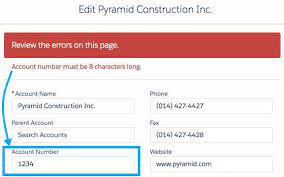
Essential Validation Rules for Salesforce Admins In this post, five essential validation rules that Salesforce admins should implement in their clients’ Salesforce orgs are discussed. Improve the quality of your data using validation rules. Validation rules verify that the data a user enters in a record meets the standards you specify before the user can save the record. Before digging into the specific rules this insight will highlight, let’s briefly review what validation rules are. What are Validation Rules in Salesforce? Validation rules in Salesforce are used to enforce data quality and consistency by validating the data entered by users before it is saved to the database. These rules consist of expressions or formulas that check the data against specified, required criteria. A validation rule can contain a formula or expression that evaluates the data in one or more fields and returns a value of “True” or “False”. Validation rules also include an error message to display to the user when the rule returns a value of “True” due to an invalid value. After you have defined validation rules: You can specify the error message to display when a record fails validation and where to display it. For example, your error message can be “The close date must occur after today’s date.” You can choose to display it near a field or at the top of the page. Like all other error messages, validation rule errors display in red text and begin with the word “Error”. 5 Validation Rules Examples Here are some important validation rules to configure in your Salesforce org: 1. The Account Number Must Be Numeric To ensure that users enter only numeric values in the Account Number field of the Account object, configure the following validation rule: plaintextCopy codeOR( ISBLANK(AccountNumber), NOT(ISNUMBER(AccountNumber)) ) If a text value is entered in the Account Number field, an error message will appear, as shown below: 2. Annual Revenue Range To restrict accounts with an annual revenue greater than a specific number, use the following rule: plaintextCopy codeOR( AnnualRevenue < 0, AnnualRevenue > 1000000 ) If the annual revenue entered exceeds 1 million, an error will be triggered, as illustrated below: 3. Close Date Must Be a Future Date To prevent sales reps from selecting past dates in the Opportunity Close Date field, implement this validation rule: plaintextCopy codeCloseDate < TODAY() Entering a past date in the Opportunity Close Date field will result in the following error: 4. Prevent Open Cases from Being Reset to New To stop service agents from changing the status of open cases to “New,” configure the following validation rule: plaintextCopy codeAND( ISCHANGED(Status), NOT(ISPICKVAL(PRIORVALUE(Status), “New”)), ISPICKVAL(Status, “New”) ) Attempting to reset the status of open cases to “New” will produce this error message: 5. Blank Email or Mobile To ensure that at least one communication detail (email or mobile number) is available on a contact record, use this validation rule: plaintextCopy codeAND( ISBLANK(Email), ISBLANK(MobilePhone) ) Leaving both email and mobile fields empty will generate the following error: Conclusion These validation rules are essential for maintaining data quality in your Salesforce org. If you have additional validation rules in mind, please share them in the comments below so everyone can benefit. Like Related Posts Who is Salesforce? Who is Salesforce? Here is their story in their own words. From our inception, we’ve proudly embraced the identity of Read more Salesforce Marketing Cloud Transactional Emails Salesforce Marketing Cloud Transactional Emails are immediate, automated, non-promotional messages crucial to business operations and customer satisfaction, such as order Read more Salesforce Unites Einstein Analytics with Financial CRM Salesforce has unveiled a comprehensive analytics solution tailored for wealth managers, home office professionals, and retail bankers, merging its Financial Read more AI-Driven Propensity Scores AI plays a crucial role in propensity score estimation as it can discern underlying patterns between treatments and confounding variables Read more

Read More
Securing SaaS

Securing SaaS

Obsidian Security recently discussed the complexity of enforcing Single Sign-On (SSO) within Salesforce and frequently encountering misconfigurations. Notably, 60% of Obsidian’s customers initially have local access without Multi-Factor Authentication (MFA) configured for Salesforce, highlighting a significant security gap that Obsidian diligently works to secure. Securing SaaS. The Hidden Vulnerability Application owners who manage Salesforce daily often remain unaware of this misconfiguration. Despite their deep knowledge of Salesforce management, local access without MFA presents an overlooked vulnerability. This situation raises concerns about the security of other SaaS applications, especially those without developed expertise or knowledge. If you have concerns about your configuration, Tectonic can help. Attacker Focus and Trends Attackers have historically targeted the Identity Provider (IdP) space, focusing on providers like Okta, Microsoft Entra, and Ping. This strategy offers maximal impact, as compromising an IdP grants broad access across multiple applications. Developing expertise to breach a few IdPs is more efficient than learning the diverse local access pathways of numerous SaaS vendors. Over the past 12 months, nearly 100% of the breaches that required Obsidian’s intervention through CrowdStrike or other incident response partners were IdP-focused. Notably, 70% of these breaches involved subverting MFA, often through methods like SIM swapping. In instances where local access bypasses the IdP, 95% of the time it lacks MFA. Recent discussions around Snowflake have brought attention to “shadow authentication,” defined as unsanctioned means to authenticate a user within an application. Obsidian Security has observed an increase in brute force attacks against SaaS applications via local access pathways over the last two weeks, indicating a growing awareness of this attack vector. Future Expectations Attackers continually seek easy and efficient pathways. Over the next 12 months, local access or shadow authentication is expected to become a major attack vector. Organizations must proactively secure these pathways as attackers shift their focus. What You Can Do How Obsidian Helps Salesforce Security partners offers robust solutions to address these challenges: By leveraging partner capabilities, organizations can enhance their security posture, protecting against evolving threats targeting local access and shadow authentication. The post “The Growing Importance of Securing Local Access in SaaS Applications” appeared first on Obsidian Security. Like Related Posts Who is Salesforce? Who is Salesforce? Here is their story in their own words. From our inception, we’ve proudly embraced the identity of Read more Salesforce Marketing Cloud Transactional Emails Salesforce Marketing Cloud Transactional Emails are immediate, automated, non-promotional messages crucial to business operations and customer satisfaction, such as order Read more Salesforce Unites Einstein Analytics with Financial CRM Salesforce has unveiled a comprehensive analytics solution tailored for wealth managers, home office professionals, and retail bankers, merging its Financial Read more AI-Driven Propensity Scores AI plays a crucial role in propensity score estimation as it can discern underlying patterns between treatments and confounding variables Read more
Read More
Patterns for Trust in AI

Patterns for Trust in AI

The advent of AI has introduced a layer of complexity to the concept of trust, intertwining technology with societal and individual concerns in various ways. Patterns for Trust in AI address some of these concerns. Ultimately, this erosion of trust poses formidable obstacles to innovation and responsible development within teams. To foster trust and mitigate these challenges, the adoption of design patterns emerges as a viable solution: Design patterns encapsulate solutions to common problems in a manner that’s easily replicable by others, offering a framework for creating trustworthy services. While design patterns streamline user experiences, they should also introduce a judicious level of friction to: Like Related Posts AI-Driven Propensity Scores AI plays a crucial role in propensity score estimation as it can discern underlying patterns between treatments and confounding variables Read more Tectonic’s Successful Salesforce Track Record Salesforce Technology Services Integrator – Tectonic has successfully delivered Salesforce in a variety of industries including Public Sector, Hospitality, Manufacturing, Read more Lookup Relationship in Salesforce What is Lookup relationship in Salesforce? Salesforce’s lookup relationships is a significant capability that allows users to connect two objects Read more The Evolution of Industrial Revolutions History of First Four Industrial Revolutions Throughout history, humanity has always relied on technology. Although the technology of each era Read more

Read More
Salesforce Success Story

Case Study: Salesforce Health Services Modernization

Modernizing Public Health using Salesforce Client is the largest tribally-operated health care system in the United States, with almost 160 full-time providers and over 2,200 health services employees. Committed to improving patient access, this Tribal Nation has invested substantially in technology, building new facilities and expanding existing locations. The primary hospital and nine health centers are dedicated to providing world-class patient care. Salesforce Health Services Modernization “The Gadugi Portal and Salesforce technology is helping us get to our citizens quicker by streamlining the application process, and enabling us to have updated records that are online and easily accessible to our citizens to truly help them recover in their greatest time of need” Client Implemented – Case Study: Salesforce Health Services Modernization The Problem: The Solution: The Results: Ready to explore a Salesforce implementation with Health Cloud, MuleSoft, and Experience Cloud for your government or public sector entity? Contact Tectonic today. Like1 Related Posts Who is Salesforce? Who is Salesforce? Here is their story in their own words. From our inception, we’ve proudly embraced the identity of Read more Salesforce Marketing Cloud Transactional Emails Salesforce Marketing Cloud Transactional Emails are immediate, automated, non-promotional messages crucial to business operations and customer satisfaction, such as order Read more Salesforce Unites Einstein Analytics with Financial CRM Salesforce has unveiled a comprehensive analytics solution tailored for wealth managers, home office professionals, and retail bankers, merging its Financial Read more AI-Driven Propensity Scores AI plays a crucial role in propensity score estimation as it can discern underlying patterns between treatments and confounding variables Read more
Read More
Net Promoter Score Explained

Net Promoter Score Explained

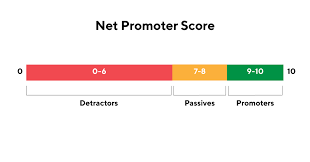
When a friend or colleague takes the time to tell you about a product or service, you probably pay attention. Your friend is more reliable than a Yelp review, right? Word of mouth is the most common way people hear about brands. But how can you tell if your existing customers like your company enough to recommend it to their friends? One way is by tracking your Net Promoter Score (NPS). Is NPS really the best way to measure customer loyalty? Some service leaders aren’t convinced. We wanted to explore the pros and cons of this popular (and sometimes controversial) metric by reviewing what it is, why it’s important, and why some Service Trailblazers choose to measure loyalty in other ways. What is a Net Promoter Score? The Net Promoter Score is a customer experience metric that captures how likely a customer is to recommend your products, services, or brand. Created by Fred Reichheld in 2003, NPS has since been widely adopted. To find NPS, businesses ask customers: “On a scale from 0 to 10, how likely would you be to recommend our company to a friend or colleague?” Typically, companies follow up with an open-ended question to understand why a customer chose their score. Customers are categorized as promoters, passives, or detractors based on their scores: By understanding these categories, businesses can gain insights into customer loyalty and take action to improve customer experiences and foster stronger relationships. How to Calculate Net Promoter Score A company’s NPS is calculated by subtracting the percentage of detractors from the percentage of promoters. For instance, if you have responses from 100 customers, with 30 promoters and 18 detractors, your NPS would be 12. Why is the Net Promoter Score Important? Companies use NPS to gain insights into individual customer experiences and understand the overall perception of their products, services, and brand. NPS feedback helps address individual issues, enhance product offerings, and apply customer service principles effectively. An improving NPS indicates positive changes that matter to customers, while a sudden drop signals potential issues that need attention. What is a Good Net Promoter Score? NPS can range from -100 to +100. While anything above 0 indicates more promoters than detractors, industry-specific benchmarks provide a more nuanced view. For example, the average NPS in the insurance industry is 74, whereas in healthcare, it’s only 45. According to Bain & Company, the creators of NPS, a score above 0 is considered good. Scores over 20 are favorable, over 50 are excellent, and above 80 are world-class. Comparing your NPS to industry benchmarks helps gauge your customer experience relative to competitors, though it’s important to consider the context, such as company size and market scope. What is a Bad Net Promoter Score? Any NPS below zero is considered bad, as it means more customers are dissatisfied than satisfied. A significantly lower NPS compared to competitors may indicate the need to re-evaluate your customer service experience and address gaps that cause dissatisfaction. What Can You Measure Using NPS? NPS provides insights into: Bain & Company’s data shows that companies with long-term profitable growth have an NPS twice as high as the average company. How to Run Surveys and Collect Feedback Running an NPS survey involves asking a single question, collecting responses, and calculating your NPS. Surveys can be distributed via email, text, in-store, or online at checkout, using a survey builder or NPS app for automation. When to Run NPS Surveys The timing of NPS surveys varies: Staggering surveys over time can provide a more organic picture of customer satisfaction. How to Collect NPS Feedback Following up with an open-ended question like, “What’s the primary reason for your score?” helps gather actionable insights. This feedback can highlight areas for improvement and strengths to build on. How to Improve Your Net Promoter Score Improving NPS requires both individual and broad strategies: Implementing Net Promoter Score Invest in NPS survey software that integrates with your CRM platform. Automate survey distribution and workflows to manage responses efficiently. Designate responsibilities for customer follow-ups and NPS analysis. Measuring Your NPS is Just the Beginning Your NPS provides valuable insights into customer loyalty and satisfaction. However, the follow-through on these insights is crucial for engaging customers and delivering better experiences. Measuring your NPS is the first step towards enhancing your overall customer experience. Like Related Posts Who is Salesforce? Who is Salesforce? Here is their story in their own words. From our inception, we’ve proudly embraced the identity of Read more Salesforce Marketing Cloud Transactional Emails Salesforce Marketing Cloud Transactional Emails are immediate, automated, non-promotional messages crucial to business operations and customer satisfaction, such as order Read more Salesforce Unites Einstein Analytics with Financial CRM Salesforce has unveiled a comprehensive analytics solution tailored for wealth managers, home office professionals, and retail bankers, merging its Financial Read more AI-Driven Propensity Scores AI plays a crucial role in propensity score estimation as it can discern underlying patterns between treatments and confounding variables Read more
Read More
Salesforce Data Cloud

Tracking Money Flows with Data Cloud

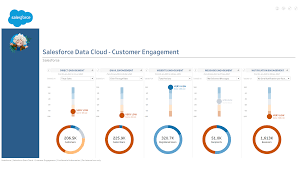
In the digital era, banks face a significant challenge: obtaining a clear, reliable, and accurate understanding of their customers amidst a vast amount of fragmented data spread across different systems. Tracking Money Flows with Data Cloud. Despite the abundance of data, it often fails to provide a complete or accurate narrative. Simple questions like “Did a customer’s funds remain within the bank or exit entirely?” can be surprisingly challenging to answer due to this fragmented data. This disjointed view of customer behavior obstructs banks from leveraging valuable data to make informed decisions and enhance client engagement. Data Cloud and Data Strategy The solution lies not just in the data itself but in developing a robust strategy to consolidate customer data and make it actionable. By breaking down data silos and constructing comprehensive customer profiles, banks can unlock the true potential of their information. This leads to a deeper comprehension of their clients, enabling them to make intelligent decisions that drive engagement, predict customer needs, and manage attrition risks effectively. In today’s intricate economic landscape, this data-driven approach isn’t merely advantageous—it’s essential for banks to stay competitive and achieve sustained success. Tracking Money and Money Flows with Data Cloud Consider the case of William to illustrate the impact of data analytics. William, a sophisticated investor, continuously shifted his funds seeking the best returns. This presented a challenge for his bank, whose legacy systems were ill-equipped to track his dynamic financial activities effectively. The bank’s inability to follow William’s money hindered marketing and attrition management efforts. They needed to understand if funds were truly leaving the institution or just relocating within its ecosystem. The introduction of Data Cloud transformed the bank’s capabilities. By consolidating disparate data sources, they gained real-time insights into William’s financial activities, allowing them to understand his relationship with the bank better and make more reliable attrition predictions. Armed with this knowledge, the bank personalized their approach to William, showcasing tailored offerings aligned with his financial objectives. This personalized engagement transformed their relationship from transactional to collaborative, reducing attrition risk and maximizing mutual benefit. William’s case became a model for the bank, demonstrating the power of unifying data silos to understand customers’ financial behavior comprehensively. In today’s financial environment, overcoming fragmented data is paramount. Data Cloud offers a winning solution: Harnessing the abundance of data is crucial. By leveraging tools like Data Cloud, banks can unravel the mysteries of customer behavior and optimize their operations effectively. Like Related Posts Who is Salesforce? Who is Salesforce? Here is their story in their own words. From our inception, we’ve proudly embraced the identity of Read more Salesforce Marketing Cloud Transactional Emails Salesforce Marketing Cloud Transactional Emails are immediate, automated, non-promotional messages crucial to business operations and customer satisfaction, such as order Read more Salesforce Unites Einstein Analytics with Financial CRM Salesforce has unveiled a comprehensive analytics solution tailored for wealth managers, home office professionals, and retail bankers, merging its Financial Read more AI-Driven Propensity Scores AI plays a crucial role in propensity score estimation as it can discern underlying patterns between treatments and confounding variables Read more

Read More
Blockers to IT Success and Salesforce Implementation Solutions

Blockers to IT Success and Salesforce Implementation Solutions

The CIO’s website recently delved into the primary obstacles to achieving success in IT. Tectonic echoes these concerns and offers insights and remedies based on our Salesforce Implementation Solutions. Issues such as data challenges, technical debt, and talent shortages can significantly hinder the progress of IT organizations and departments in executing high-value projects. Several CIOs have shared their approaches to tackling these challenges. Tectonic poses solutions based upon the Salesforce ecosystem. Carm Taglienti, Chief Data Officer and Distinguished Engineer at Insight, reflects on the dual nature of the recent surge in artificial intelligence (AI). While AI advancements have undoubtedly enhanced efficiency and productivity across technology departments, lines of business, and business units, the rapid proliferation of AI technologies, particularly generative AI, has disrupted numerous IT plans. Taglienti emphasizes the need for organizations to adapt swiftly to these technological shifts to avoid derailing critical projects. Tectonic recently looked at challenges the public sector face in regards to AI. Read more here. The rapid evolution of technology poses a continuous challenge for IT leaders. The relentless pace of technological advancements, exemplified by the rise of AI, demands proactive resource allocation to stay competitive. Ryan Downing, CIO of Principal Financial Group, underscores the necessity of adopting a strategic approach to navigate the complexities of multicloud environments effectively. Tectonic echoes the multicloud challenge. We address this for our clients with Salesforce implementation, optimization, consulting, and ongoing managed services. Salesforce remains the world’s number one CRM solution for a reason. Cloud solutions for marketing, personalization, patient data privacy, manufacturing, feedback management, and more are just a small sampling of the IT solutions Salesforce and Tectonic present. Unaddressed data issues pose a significant impediment to realizing the full potential of analytics, automation, and AI. Many organizations are grappling with legacy systems and inadequate data management practices, hindering their progress in succesfully deploying advanced technologies. Working with a Salesforce partner can address this challenge. The scarcity of skilled talent remains a pressing concern for CIOs, as highlighted in the State of the CIO Study by Foundry. Despite efforts to train internal staff and leverage contractors, filling critical tech positions remains challenging, impeding transformation initiatives. Managed services providers help address this skill gap. Technical debt and legacy systems present additional hurdles for IT departments. The maintenance of outdated infrastructure drains resources and limits innovation, forcing CIOs to strike a delicate balance between modernization efforts and operational demands. Addressing cybersecurity threats and compliance with evolving regulations further strains IT resources, necessitating proactive measures to safeguard organizational assets and maintain regulatory compliance. Striking the right balance between sustaining existing operations, fostering growth, and driving transformative initiatives is another challenge facing CIOs. Scott Saccal of Cambrex emphasizes the importance of aligning resource allocation with strategic objectives to avoid market displacement. The allure of new technologies, coupled with executive pressure to explore shiny objects, can divert focus from core priorities, hampering strategic execution. Shadow IT and the lack of organizational agility pose additional barriers to IT success, highlighting the need for CIOs to foster collaboration, align IT initiatives with business goals, and cultivate a culture of adaptability within their departments. ‘Shadow IT’ refers to the unsanctioned use of software, hardware, or other systems and services within an organization, often without the knowledge of that organization’s information technology (IT) department. CIOs must navigate a myriad of challenges, from technological disruptions to talent shortages, while maintaining a laser focus on strategic objectives to drive organizational success in an ever-evolving digital landscape. Tectonic is here to consult and achieve your IT challenges. Contact us today. Like1 Related Posts Who is Salesforce? Who is Salesforce? Here is their story in their own words. From our inception, we’ve proudly embraced the identity of Read more Salesforce Marketing Cloud Transactional Emails Salesforce Marketing Cloud Transactional Emails are immediate, automated, non-promotional messages crucial to business operations and customer satisfaction, such as order Read more Salesforce Unites Einstein Analytics with Financial CRM Salesforce has unveiled a comprehensive analytics solution tailored for wealth managers, home office professionals, and retail bankers, merging its Financial Read more AI-Driven Propensity Scores AI plays a crucial role in propensity score estimation as it can discern underlying patterns between treatments and confounding variables Read more

Read More
gettectonic.com